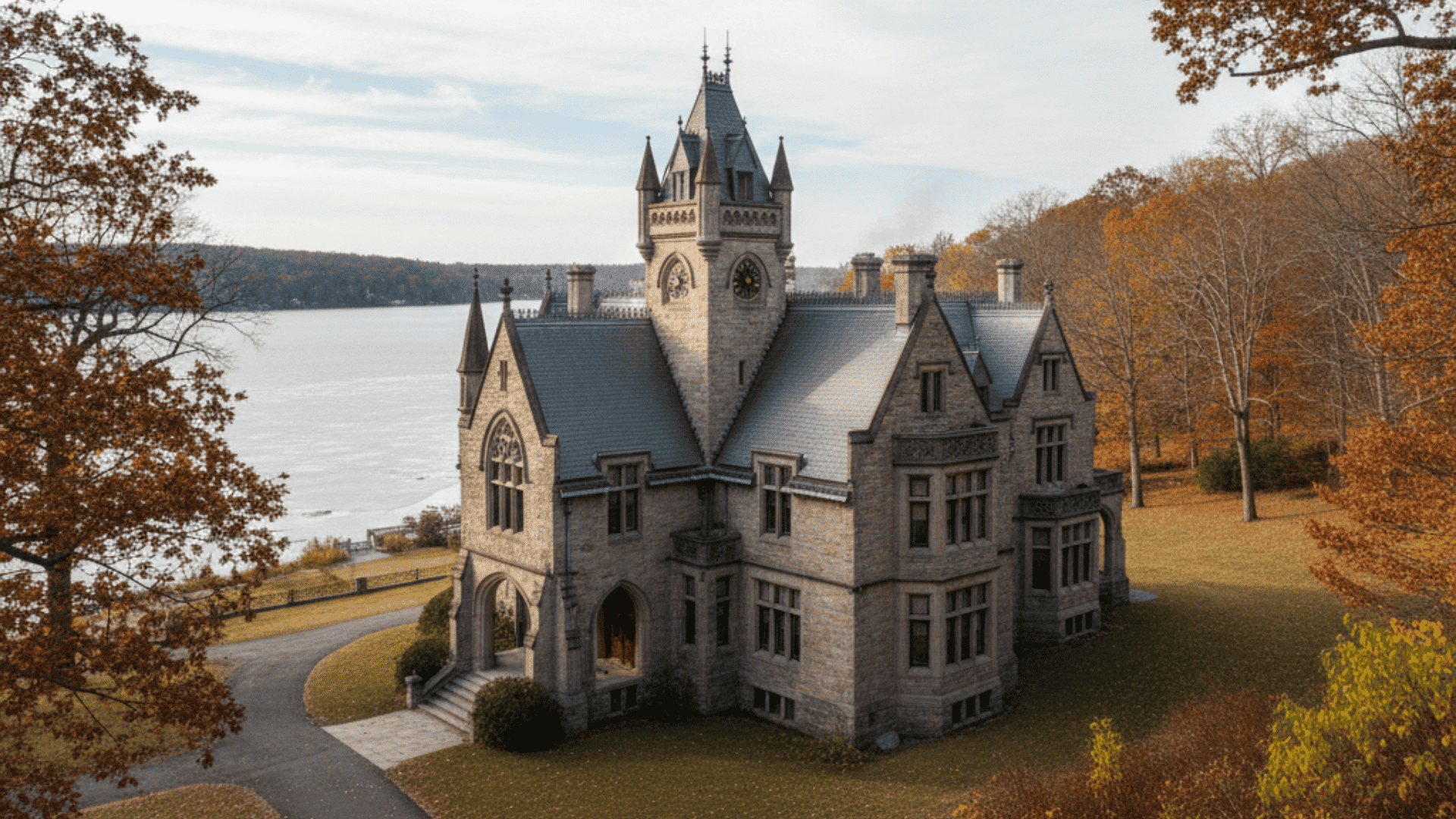
Have you ever driven past a house that looks like it belongs in a fairy tale? Maybe it had steep pointed roofs, tall narrow windows, or fancy wooden trim that made you slow down for a second look. You might have been looking at a Gothic Revival house.
These romantic homes borrowed their look from medieval castles and cathedrals. They became wildly popular in America during the 1800s. Today, they stand out in neighborhoods as reminders of a time when builders valued drama and ornament.
A Gothic Revival house tells a story. It speaks to our love of history, craftsmanship, and distinctive design.
If you’re thinking about buying one, restoring one, or just curious about the style, understanding these homes helps you appreciate the American historic building legacy.
Let’s find out what makes these houses so special.
What is a Gothic Revival House?
A Gothic Revival house is a home built in a style that borrows design elements from medieval Gothic cathedrals and churches. This style became popular in the United States and Europe during the 1800s.
These houses feature pointed arches, steep roofs, and decorative trim, giving them a romantic, castle-like appearance.
While the real Gothic building style dates back to the Middle Ages, Gothic Revival houses are newer buildings that imitate that historic look.
The style works well for both grand mansions and modest cottages. You’ll recognize these homes by their vertical emphasis and ornate details that draw the eye upward.
Gothic Revival History And Timeline
Gothic Revival building style has a rich history that spans more than two centuries. Understanding this timeline helps explain why these houses look the way they do.
1. Origins In England (1740s-1750s)
Gothic Revival began in England during the mid-1700s. Wealthy landowners grew tired of the formal classical building style. They wanted something more romantic and scenic.
Horace Walpole started the movement in 1749. He transformed his villa, Strawberry Hill, into a Gothic fantasy. His project showed that medieval styles could work for comfortable modern homes.
2. Early Adoption In America (1800s-1830s)
The style crossed the Atlantic in the early 1800s. American designers saw Gothic Revival as a fresh alternative to Greek Revival designs.
Early American examples were rare and mostly appeared on churches and college buildings. A few wealthy families built Gothic Revival houses, but the style had not yet caught on widely.
3. Peak Popularity (1840-1880)
Gothic Revival exploded in popularity during the 1840s. Pattern books by Alexander Jackson Davis and Andrew Jackson Downing spread the style across America.
These books showed builders how to create Gothic Revival houses at different price points. Middle-class families could now afford wood versions with Gothic details. Thousands of Gothic Revival houses went up in cities, towns, and rural areas.
4. Decline And Legacy (1880s-Present)
After 1880, the Gothic Revival gradually fell out of fashion. New Victorian styles, such as Queen Anne and Romanesque Revival, took over.
The style never completely disappeared. Churches continued using Gothic elements well into the 20th century. Today, original Gothic Revival houses are valued as historic landmarks. Many have been preserved and restored.
Carpenter Gothic vs High-Style Gothic Revival
Use this table to spot Carpenter Gothic and High-Style Gothic Revival by materials, scale, details, and common settings quickly today.
| Key Difference | Carpenter Gothic | High-Style Gothic Revival |
|---|---|---|
| Building Type | Small houses, cottages, parsonages | Large homes, churches, schools, civic buildings |
| Main Material | Wood framing with wood siding | Mostly brick or stone, sometimes stucco over masonry |
| Signature Look | Board-and-batten siding, scroll-sawn trim on gables and porches | More true-to-Gothic detailing like stone carving, window tracery, and stronger vertical massing |
| Ornament Method | Cut wood trim made with saws, often repeating patterns | Crafted masonry details, carved elements, complex window and door surrounds |
| Window Details | Pointed-arch windows are common but usually simpler | Pointed-arch windows are often larger and more complex, and tracery is more likely |
| Scale And Complexity | Lighter, simpler forms, fewer major projections | Bigger footprints, more complex shapes, towers, or prominent projections are more common |
| Who Built It | Often, local builders use pattern-book guidance | Often purpose-built with more specialized planning and skilled trades |
| Cost And Access | Lower cost, easier to build, more common in small towns and rural areas | Higher cost, more common in wealthier settings and institutions |
Characteristics of the Gothic Revival House
Gothic Revival houses share several key features that set them apart from other home styles. These details work together to create a distinctive medieval look.
- Vertical Emphasis: Everything about a Gothic Revival house reaches upward. Windows are tall and narrow. Rooflines are steep and pointed. Even the siding on wood houses runs vertically.
- Pointed Arches: The pointed arch is the most recognizable element of the Gothic Revival. You’ll see these arches in windows, doorways, and porch openings.
- Steep Roofs And Gables: Gothic Revival roofs pitch sharply, often at 45 degrees or steeper. Cross gables are common, creating a roofline with multiple peaks. These steep angles give the houses their castle-like appearance while also shedding rain and snow efficiently.
- Decorative Trim: Ornate trim defines the Gothic Revival style. Vergeboards feature elaborate cutout patterns along gable edges. Finials top the peaks. Carved details appear throughout the exterior.
- Board-And-Batten Siding: Many wood Gothic Revival houses use board-and-batten siding. Wide vertical boards are joined by narrow strips covering the seams.
- Asymmetrical Layout: Unlike symmetrical Greek Revival homes, Gothic Revival houses often feature irregular floor plans. Towers, wings, and projecting bays create interesting shapes.
Gothic Revival House Interior Details
Gothic Revival homes feature distinctive interior elements that capture the medieval spirit of the original Gothic period.
1. Wooden Elements and Trim
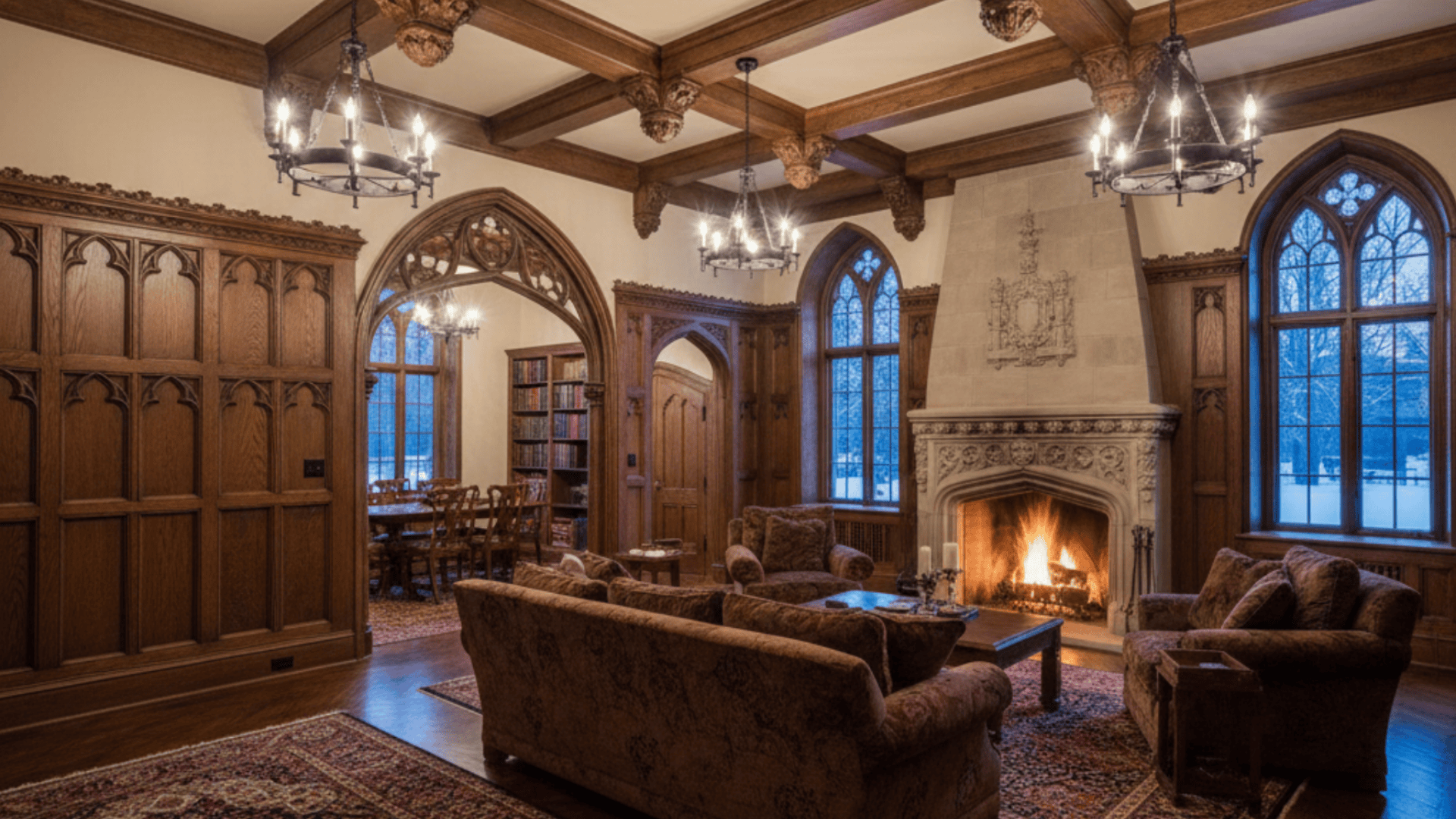
Dark-stained oak, walnut, and mahogany appear throughout these homes as primary materials. Ornate carved trim surrounds doorways and windows with intricate detail.
Wood paneling often reaches partway up walls, called wainscoting. Exposed wooden beams crisscross the ceilings, adding warmth and creating an authentic medieval atmosphere.
2. Ceiling Design
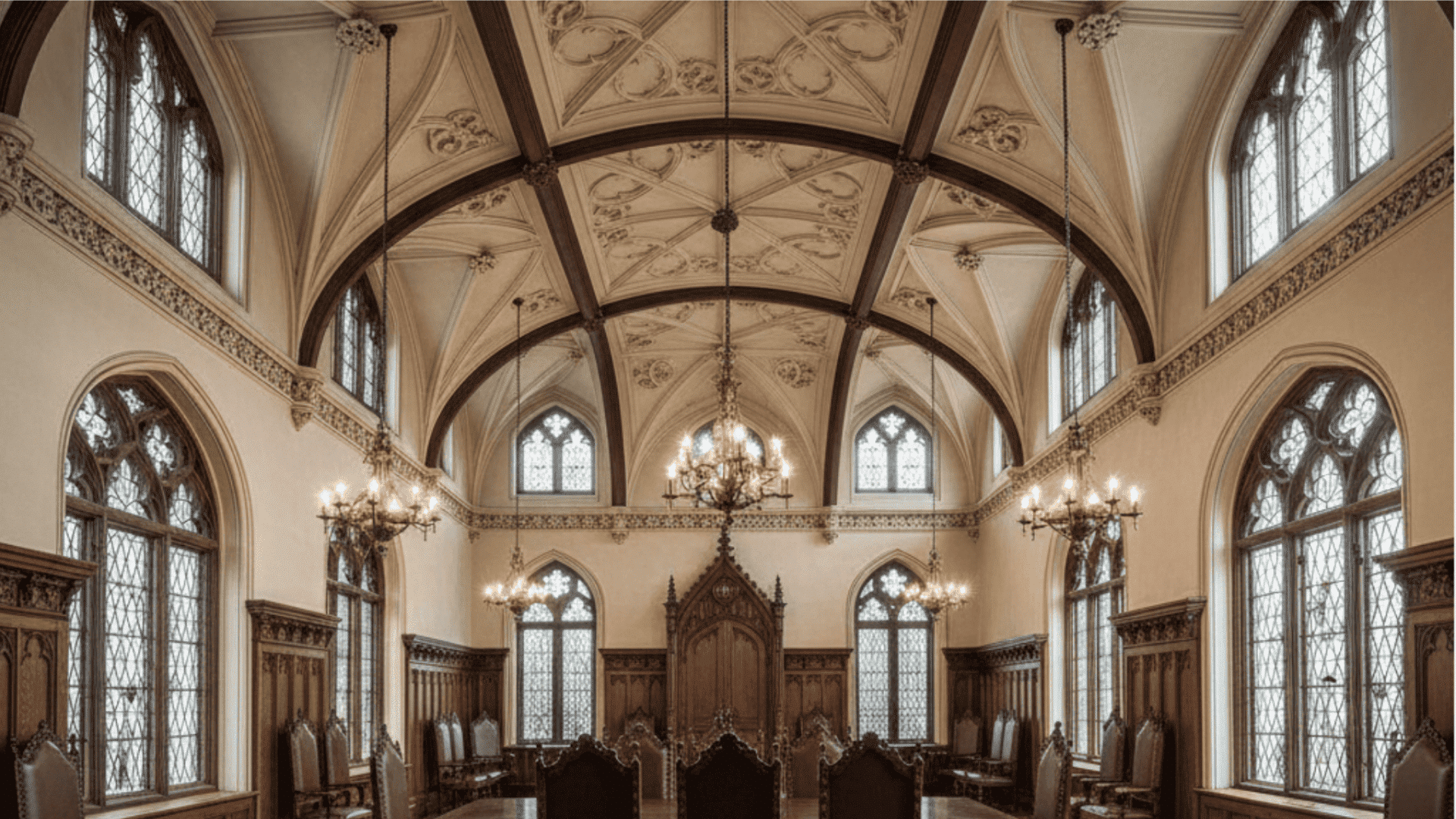
Gothic Revival ceilings tend to be high, creating a dramatic visual impact. Many rooms feature vaulted or coffered ceiling structures.
Decorative plasterwork includes geometric patterns and Gothic tracery designs. Wooden beams divide the ceiling into distinct sections. The height emphasizes the grandeur of the Gothic building style.
3. Doorways and Doors
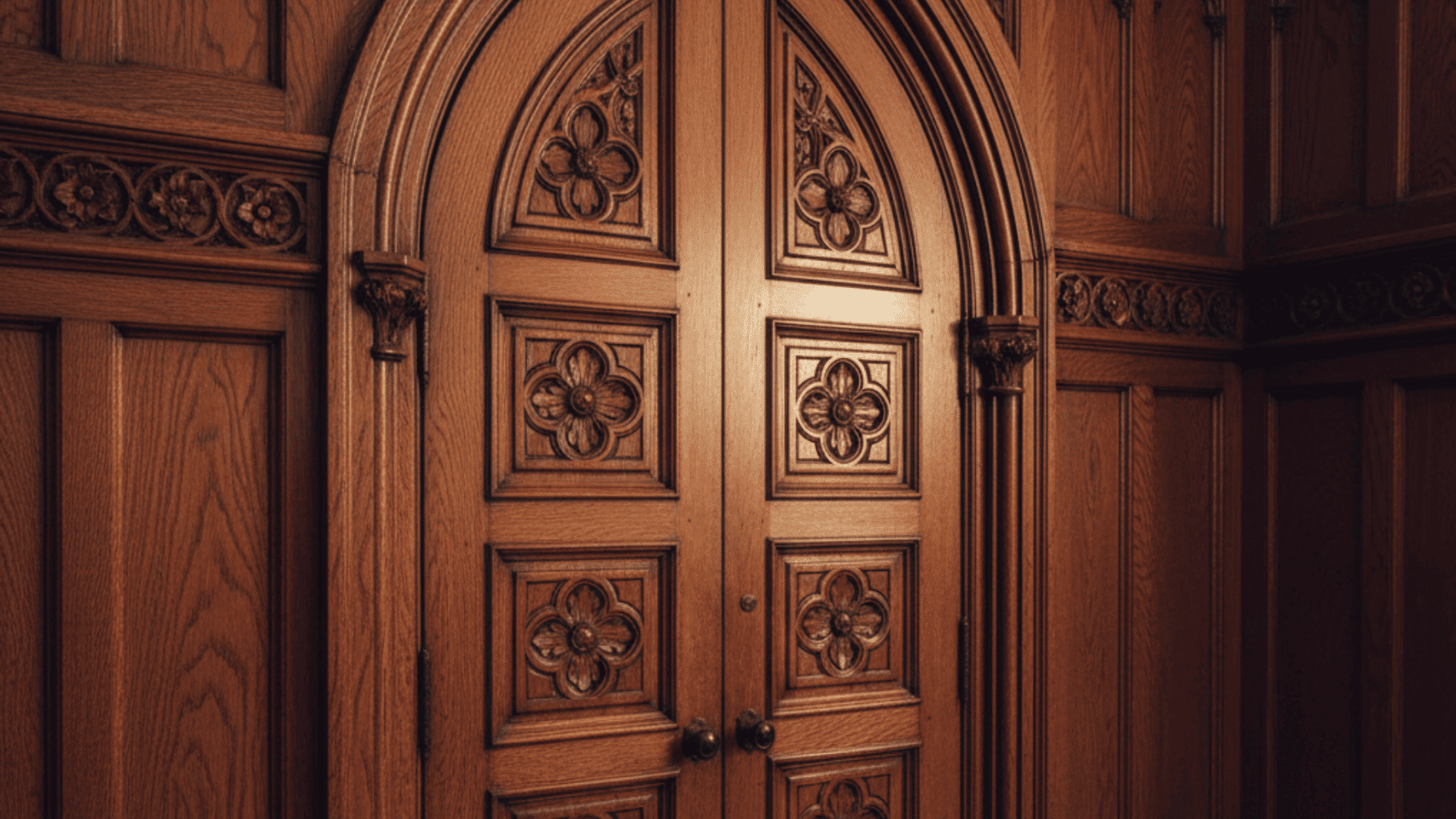
Interior doors often feature pointed arch tops, the hallmark of Gothic design. Heavy wooden doors include carved panels with Gothic-inspired patterns and motifs.
Door frames have elaborate trim, columns, and carved details. The solid construction reflects medieval building techniques. These doors add character to every room transition.
4. Windows
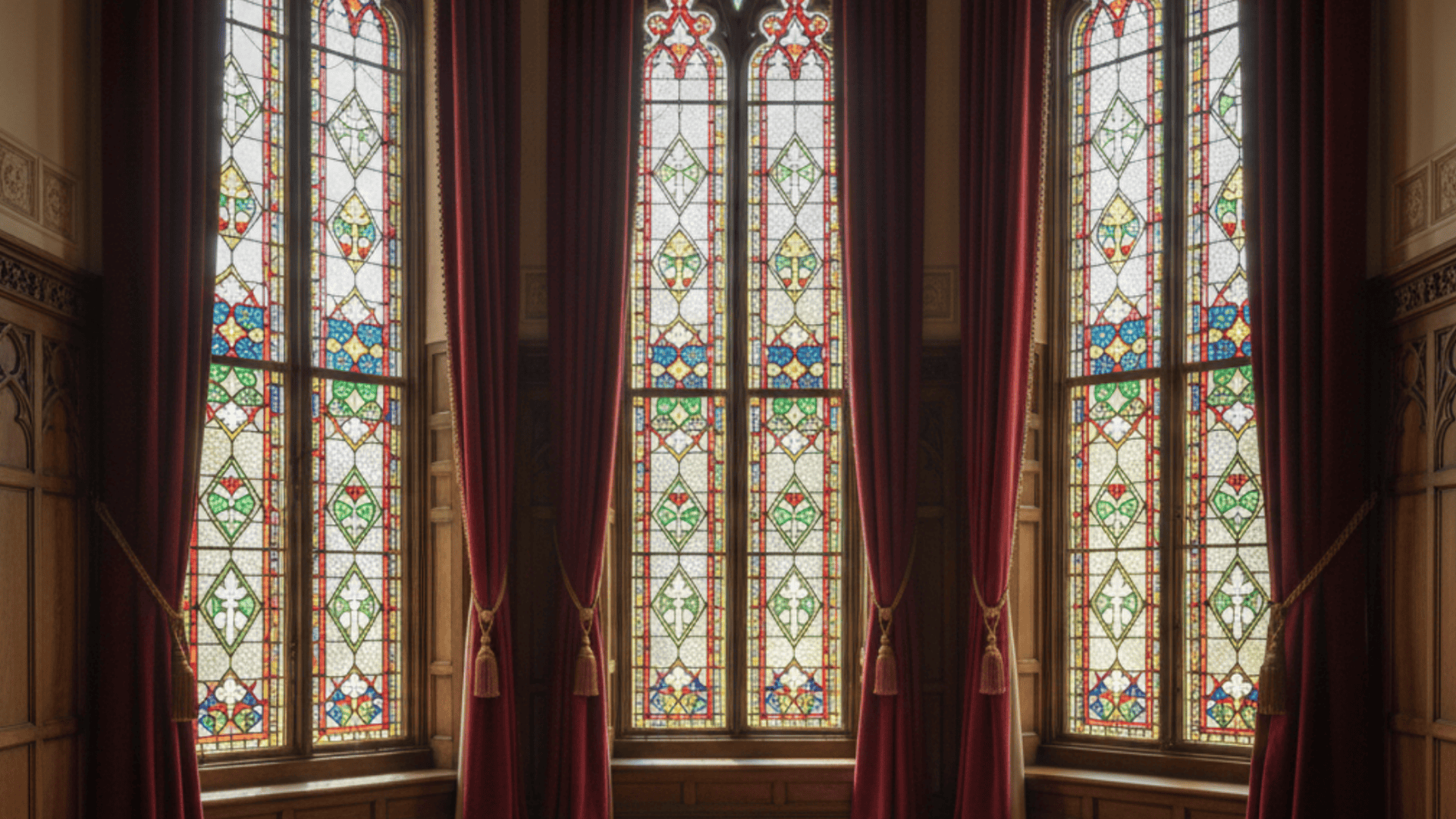
Tall, narrow windows feature pointed arches at the top section. Stained glass shows geometric patterns, nature scenes, or religious imagery throughout.
Heavy draperies in velvet, brocade, and damask hang from decorative rods. The windows allow filtered light to create atmospheric effects.
5. Staircases
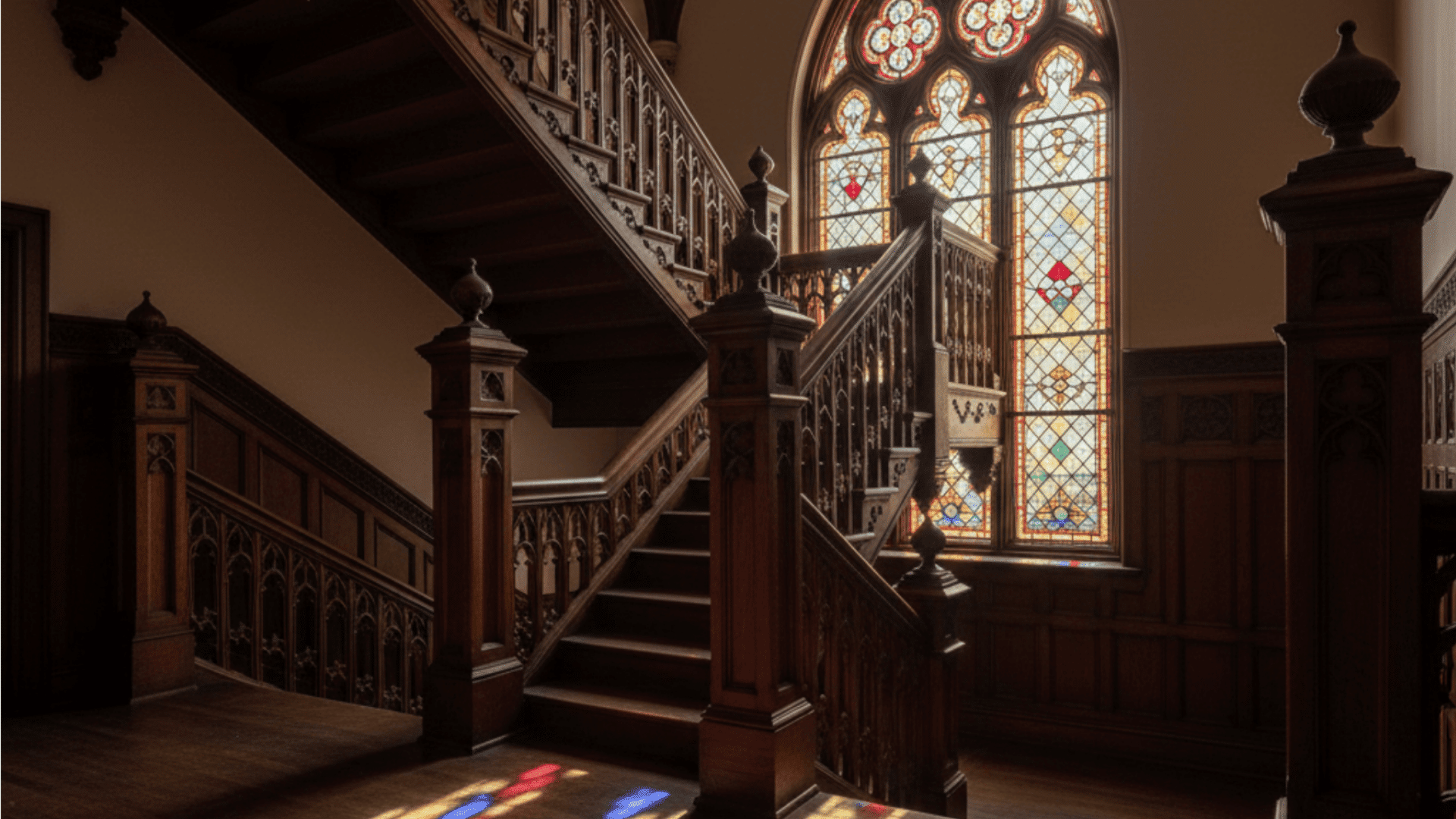
Grand staircases feature dark wood, substantial newel posts, and railings. Carved balusters display intricate Gothic patterns and medieval motifs.
Many staircases feature a landing with a large stained-glass window. The steps create an impressive entry statement. Handrails show skilled craftsmanship and detailed work.
6. Color Palettes
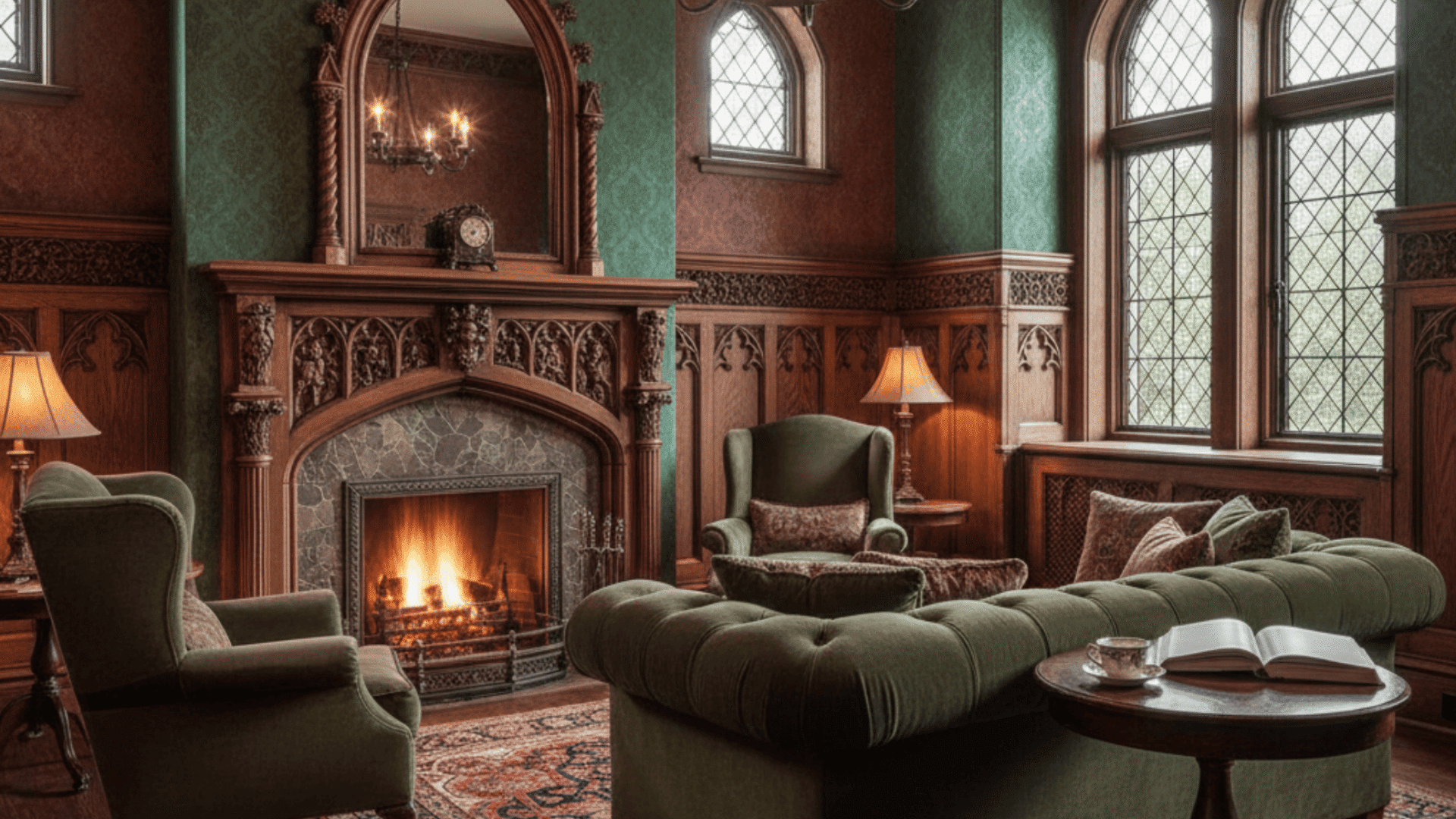
Gothic Revival interiors use rich, deep colors throughout the home. Common choices include burgundy, forest green, deep blue, and chocolate brown.
Walls are painted or covered with damask designs and Gothic-inspired prints. Trim appears in dark stains that complement the palette. Colors create warmth and historical authenticity.
7. Lighting Fixtures
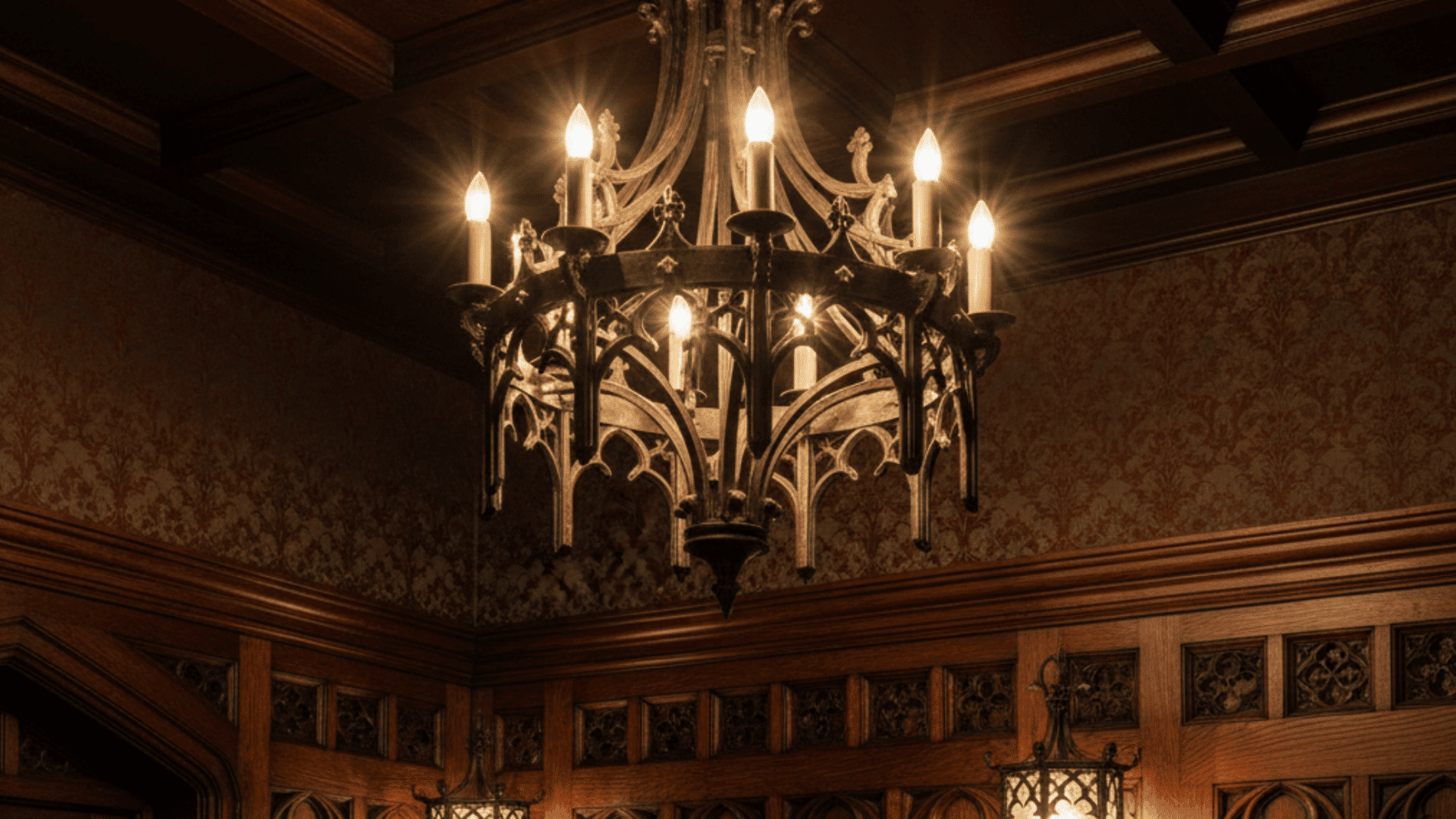
Chandeliers and pendant lights feature pointed arches and medieval details throughout. Wall sconces look like candle holders or lanterns from the period.
Many fixtures include decorative glass shades in amber or colored tones. Wrought iron is often used in ornate patterns and designs. The lighting enhances the Gothic atmosphere effectively.
8. Flooring
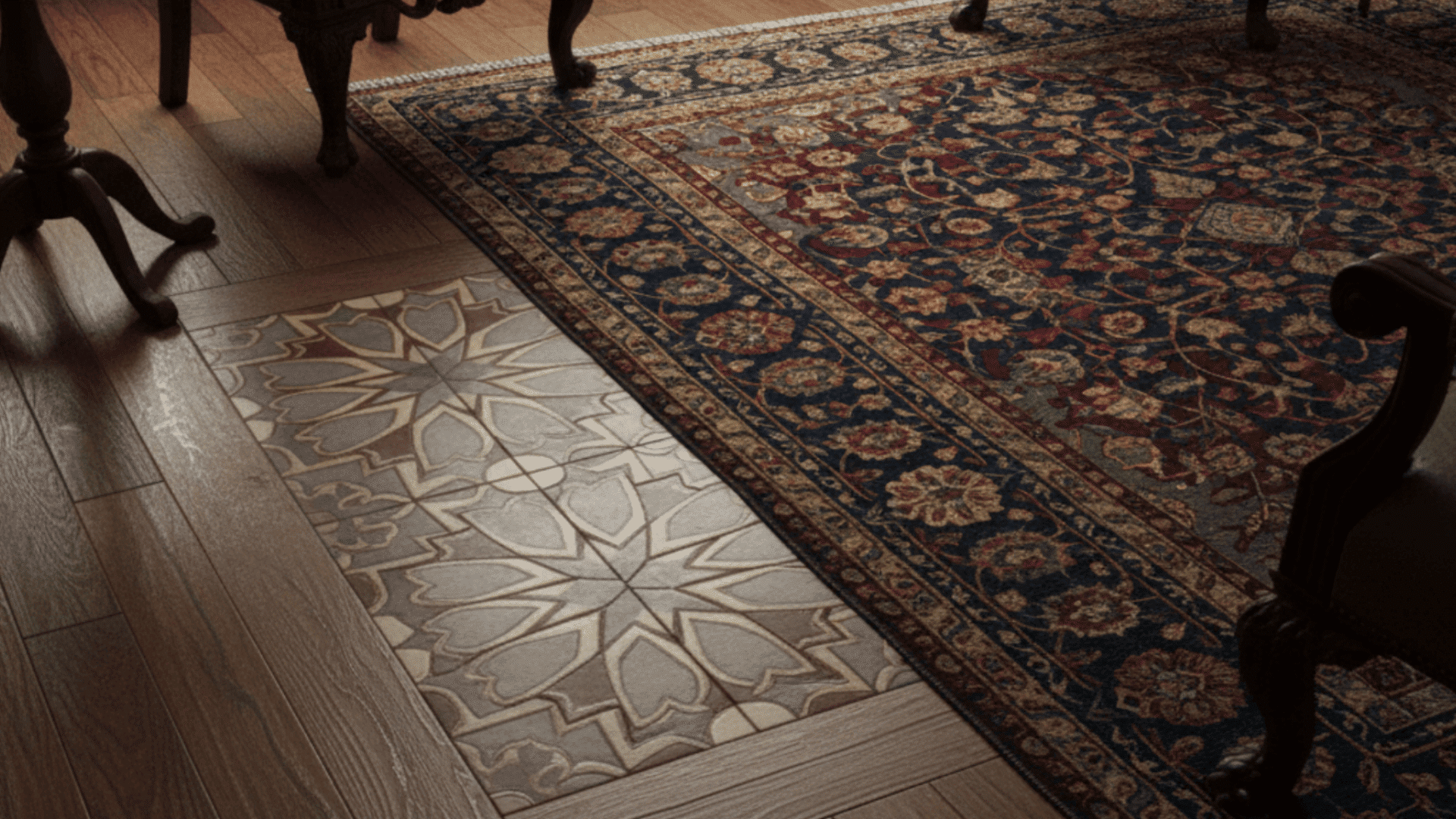
Hardwood floors in oak and other dark woods create the foundation. Some rooms feature decorative tile work with geometric patterns and designs.
Area rugs in rich colors and ornate patterns define seating areas. Stone or slate appears in entryways and high-traffic spaces. Flooring materials age beautifully over time.
Gothic Revival house interiors echo the style’s romantic spirit, focusing on vertical proportions, rich materials, and handcrafted details.
Gothic Revival House Exterior Details
Gothic Revival houses stand out with their distinctive medieval-inspired features. These design elements transform ordinary homes into impressive structures that recall European castles and cathedrals.
9. Steeply Pitched Roofs
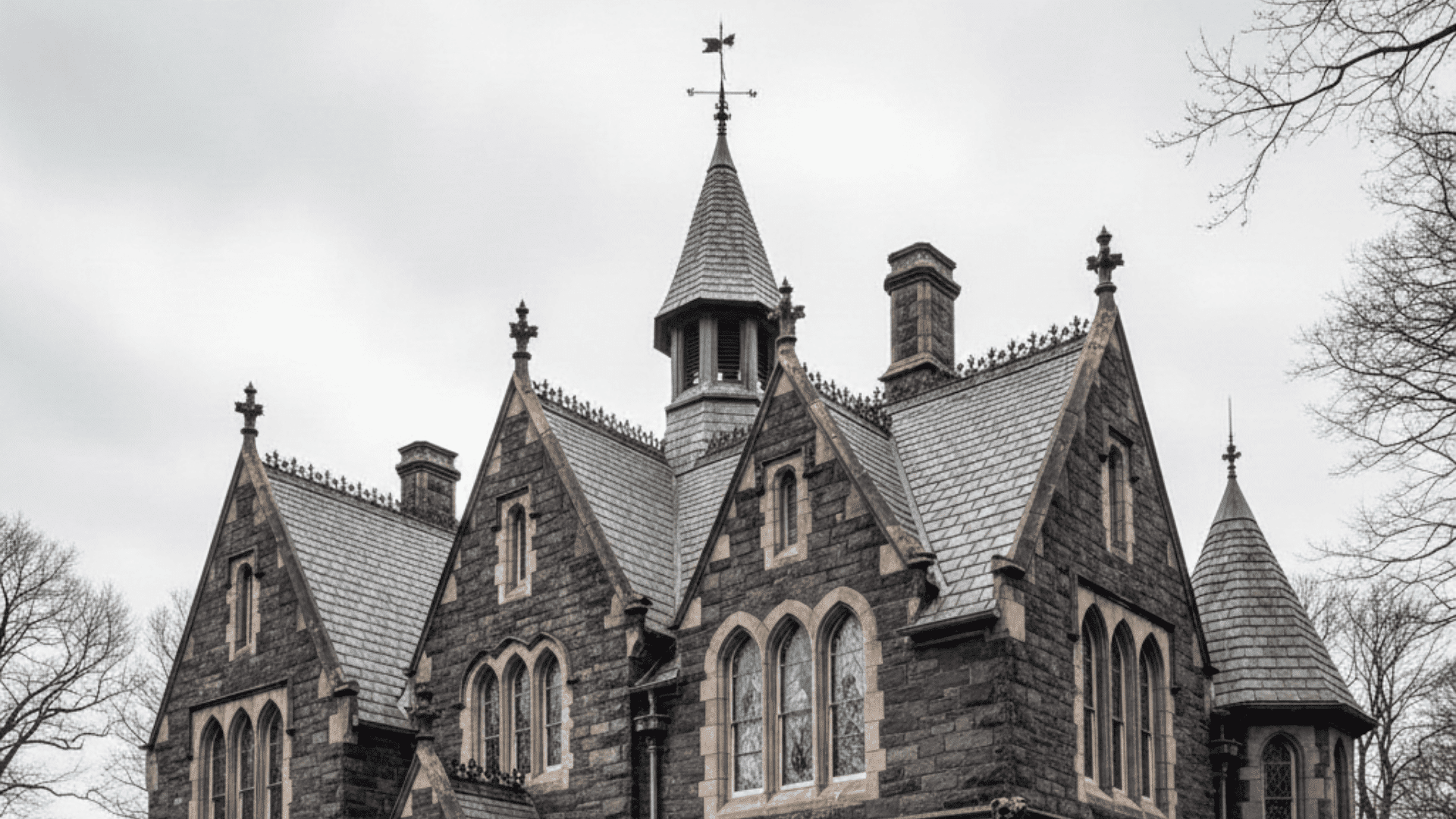
Gothic Revival roofs rise at sharp angles, often exceeding 45 degrees. The steep pitch allows snow and rain to slide off easily. Multiple gables create varied rooflines with visual interest.
Cross-gabled designs add complexity and depth to the structure. These dramatic rooflines distinguish Gothic Revival from other building styles.
10. Decorative Bargeboards
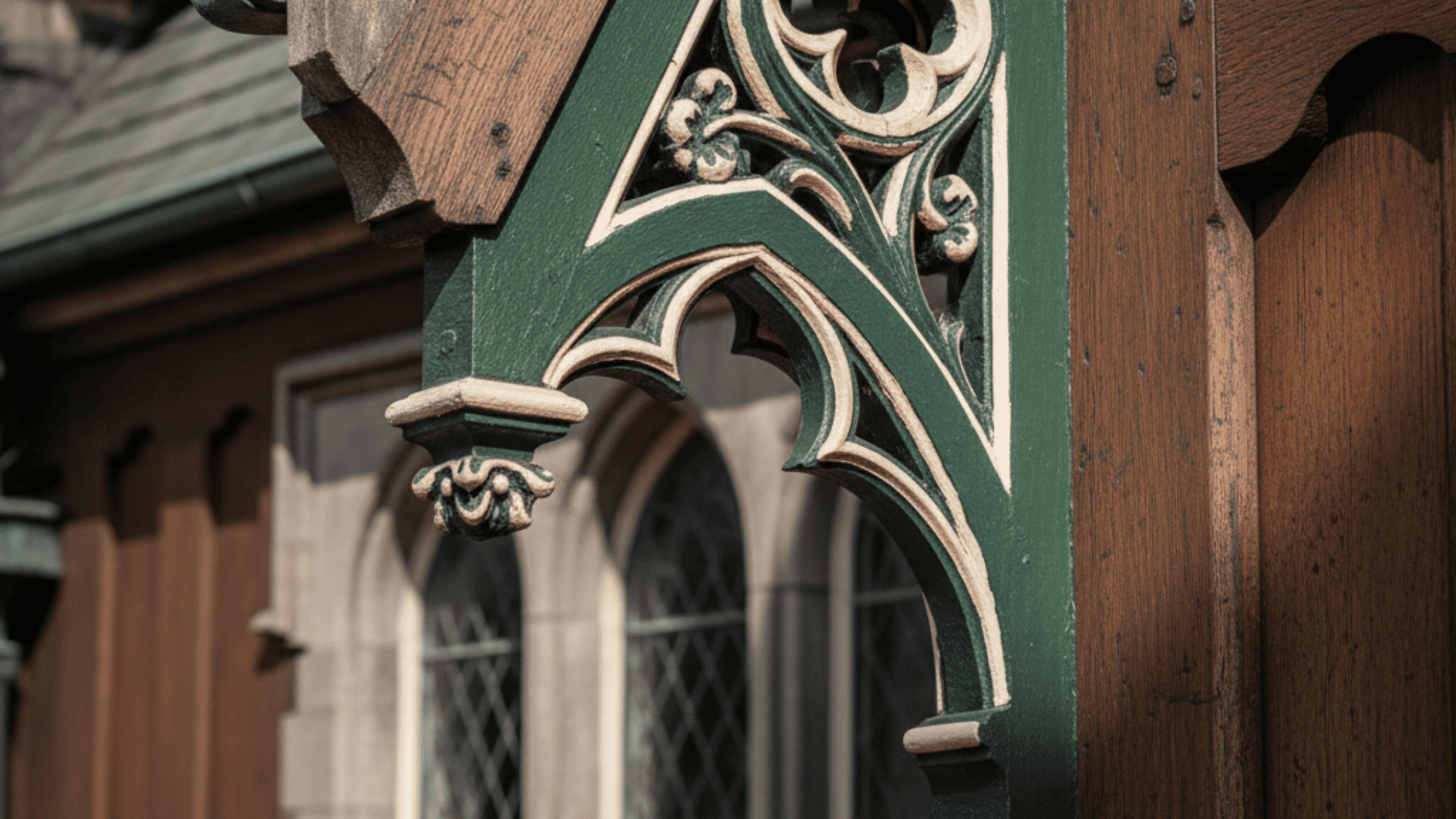
Ornate wooden trim, called bargeboards, decorates the gable edges. Craftsmen carved these boards with intricate patterns and cutout designs.
Common motifs include trefoils, quatrefoils, and flowing vine patterns. The bargeboards hang vertically along the roof edges, emphasizing the roofline. They add delicate detail to the bold roof structure.
11. Towers and Turrets
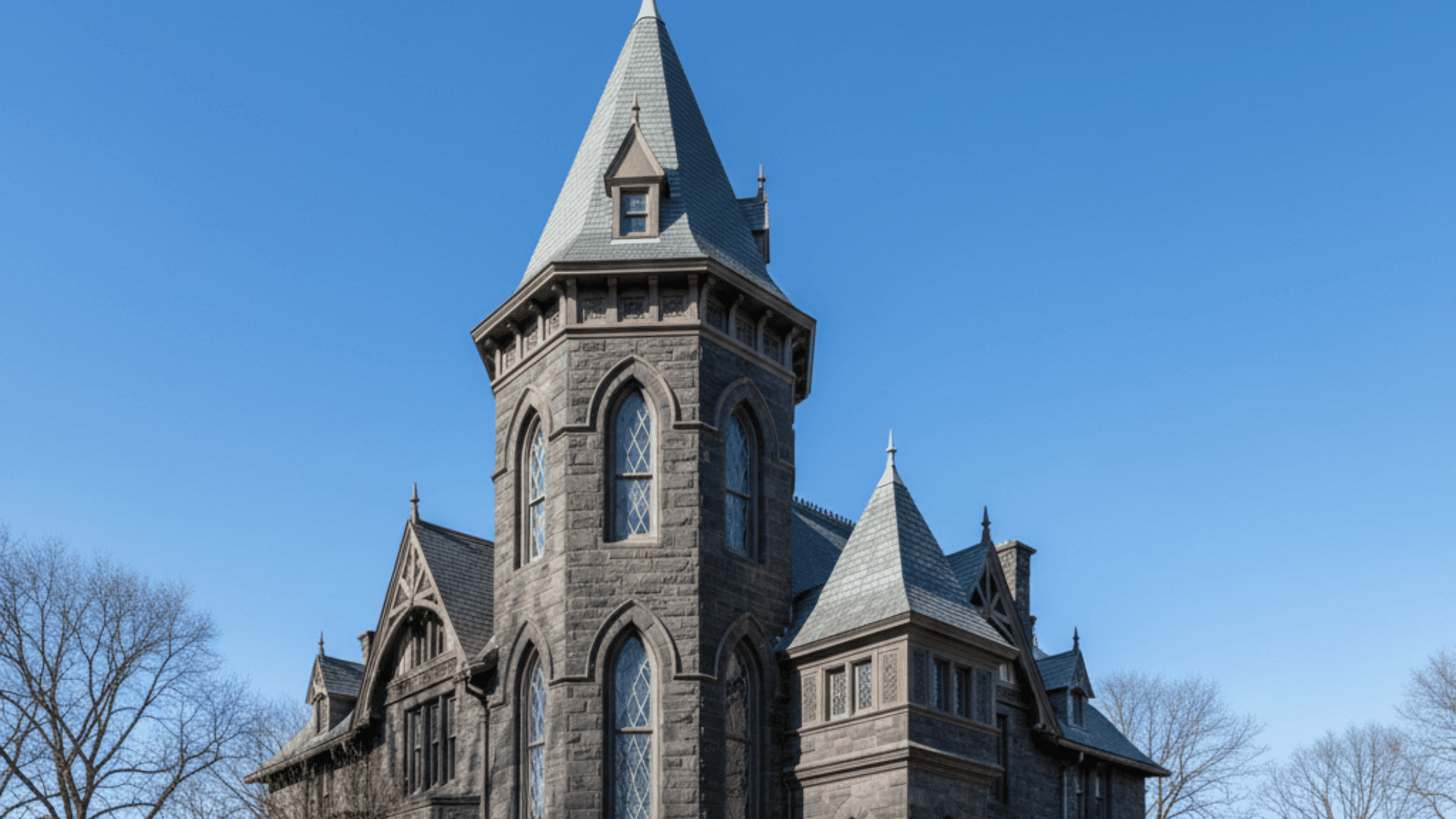
Round or octagonal towers rise from corners or center sections. These vertical elements reference medieval castle design.
Turrets often contain spiral staircases or small, intimate rooms. Conical or pyramidal roofs top these structures. Towers create dramatic focal points on the building.
12. Grouped Chimneys
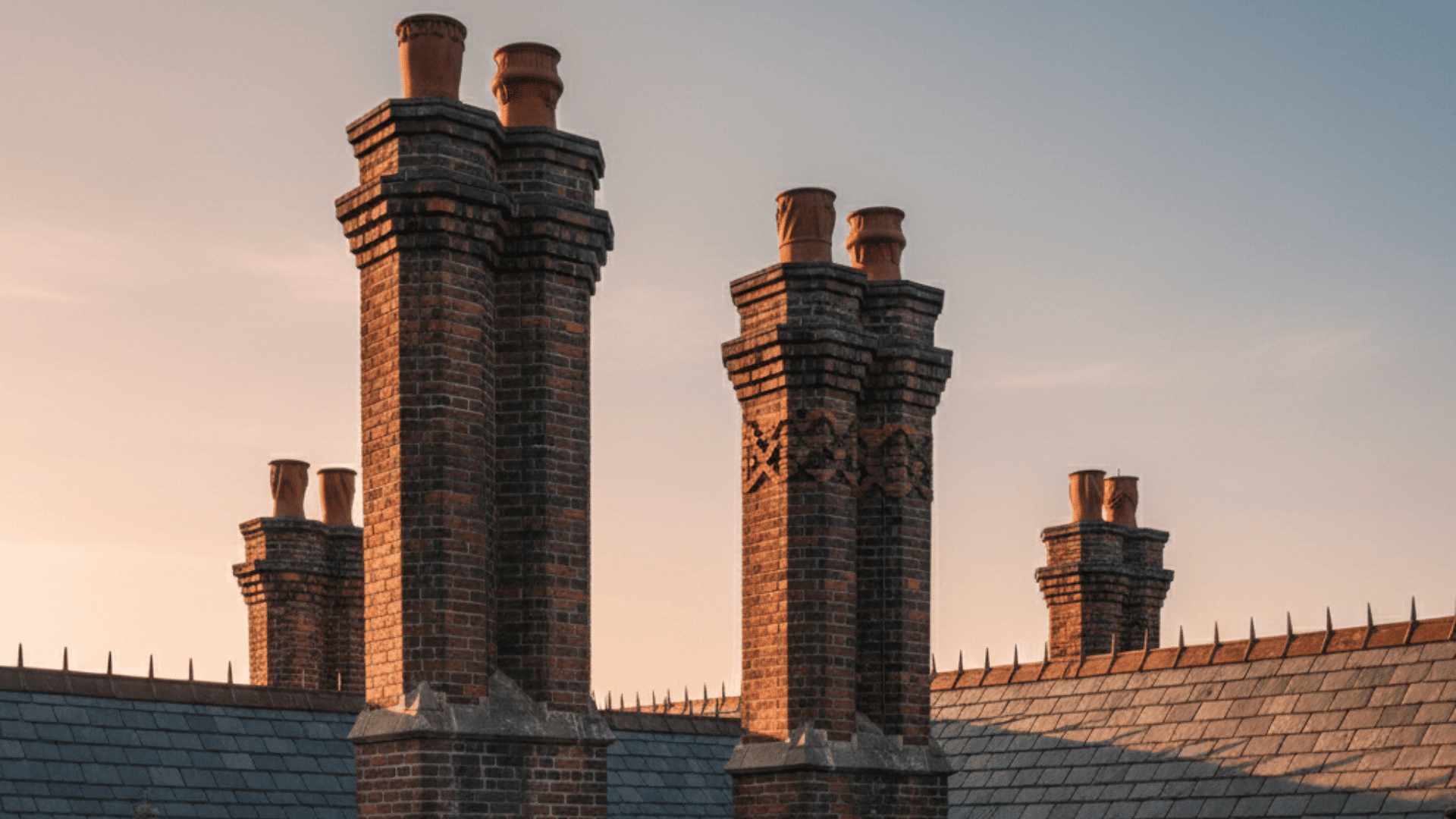
Tall chimneys cluster together in decorative arrangements on the roofline. Brick or stone construction features decorative corbelling and patterns.
Chimney pots add height and ornamental detail at the top. Multiple flues serve fireplaces throughout the house. These prominent features emphasize the vertical character of Gothic design.
13. Stone or Brick Construction
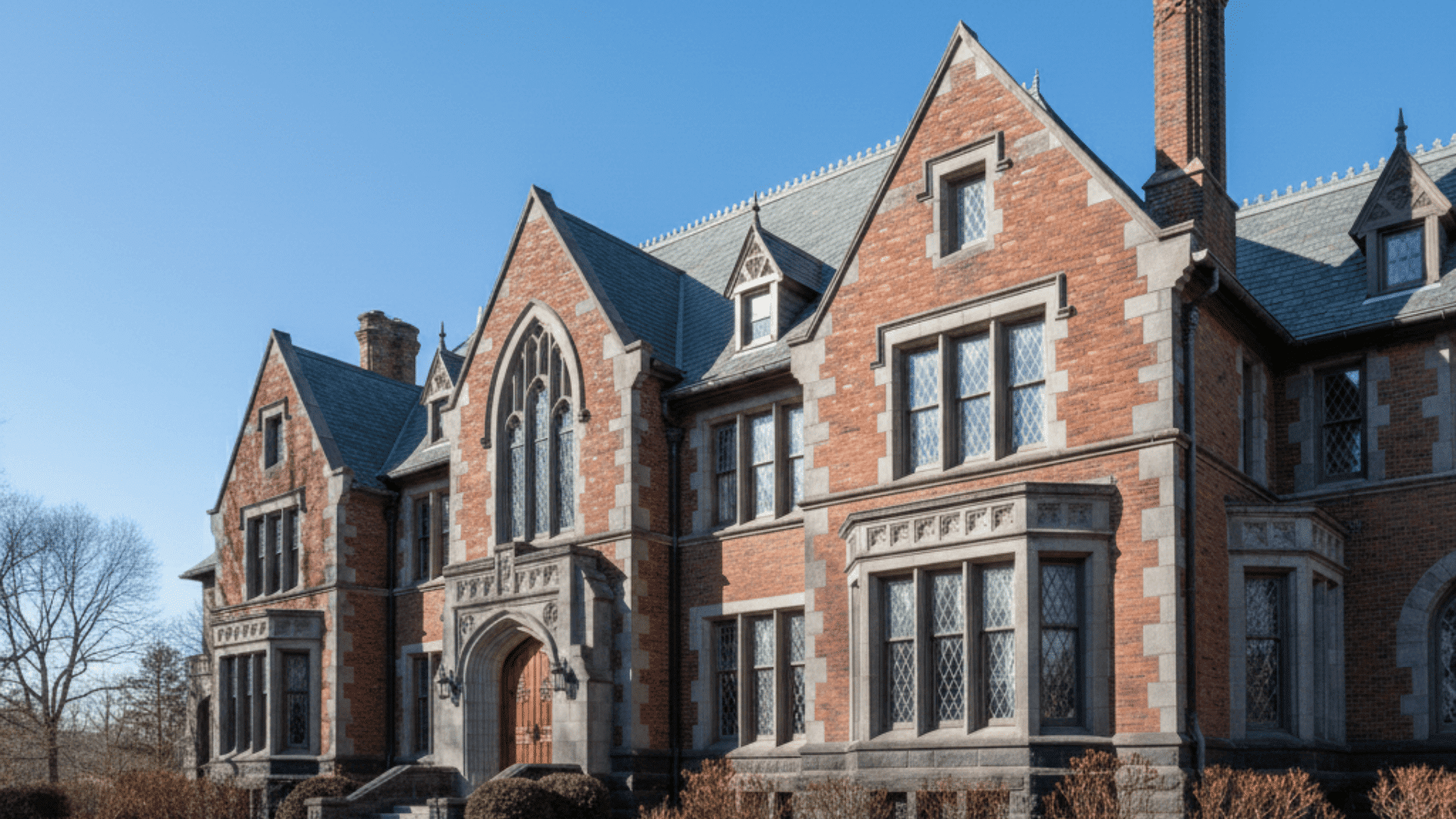
Durable masonry materials create authentic Gothic Revival exteriors that endure. Brick appears in red, tan, or dark brown tones.
Stone facing uses limestone, sandstone, or local fieldstone varieties. Many homes combine different materials for texture and visual contrast. The solid construction withstands weather and time gracefully.
14. Porches
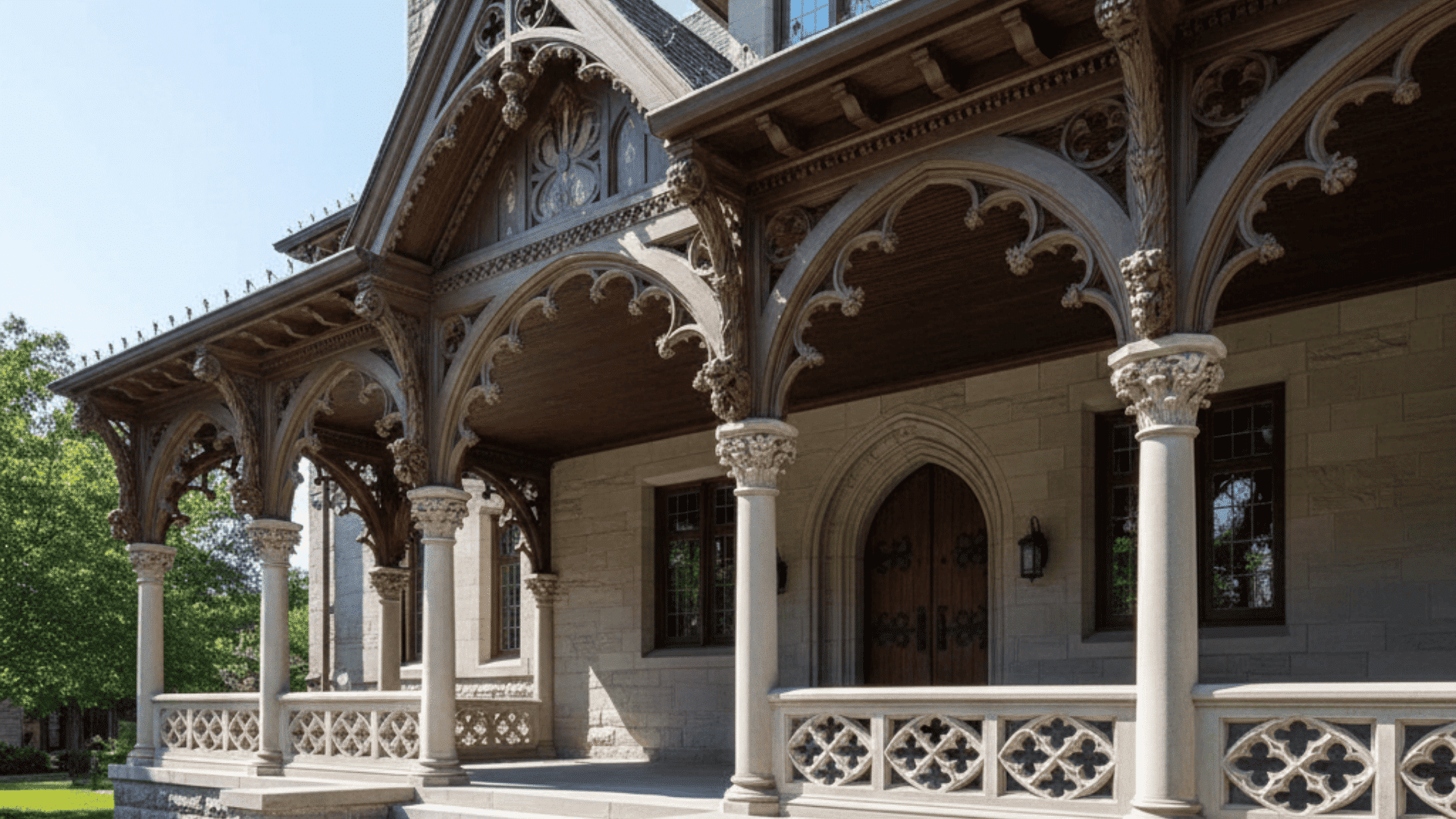
Covered porches feature pointed arch openings and decorative columns. Carved wooden brackets support porch roofs with ornamental flair.
Balustrades include Gothic-inspired cutout patterns and designs. Many porches wrap around corners or span the front facade. They provide an outdoor living space with building character.
15. Finials and Crockets
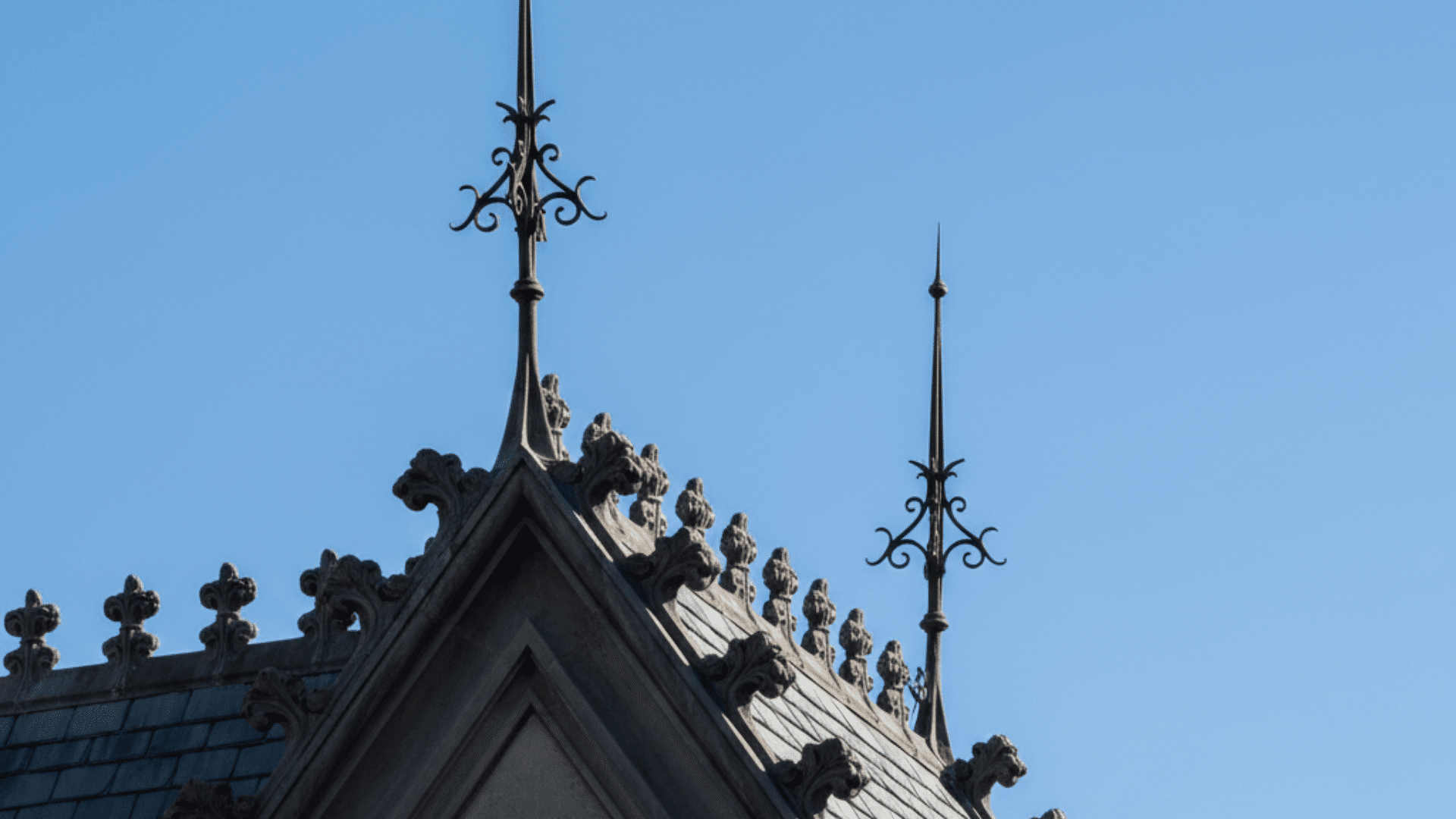
Pointed decorative elements top gables, towers, and roof peaks. Finials rise vertically, creating sharp silhouettes against the sky.
Crockets are small carved details that climb along roof edges. These ornaments often feature leaf, flower, or abstract designs. They add finishing touches to the roofline composition.
16. Vergeboard Trim
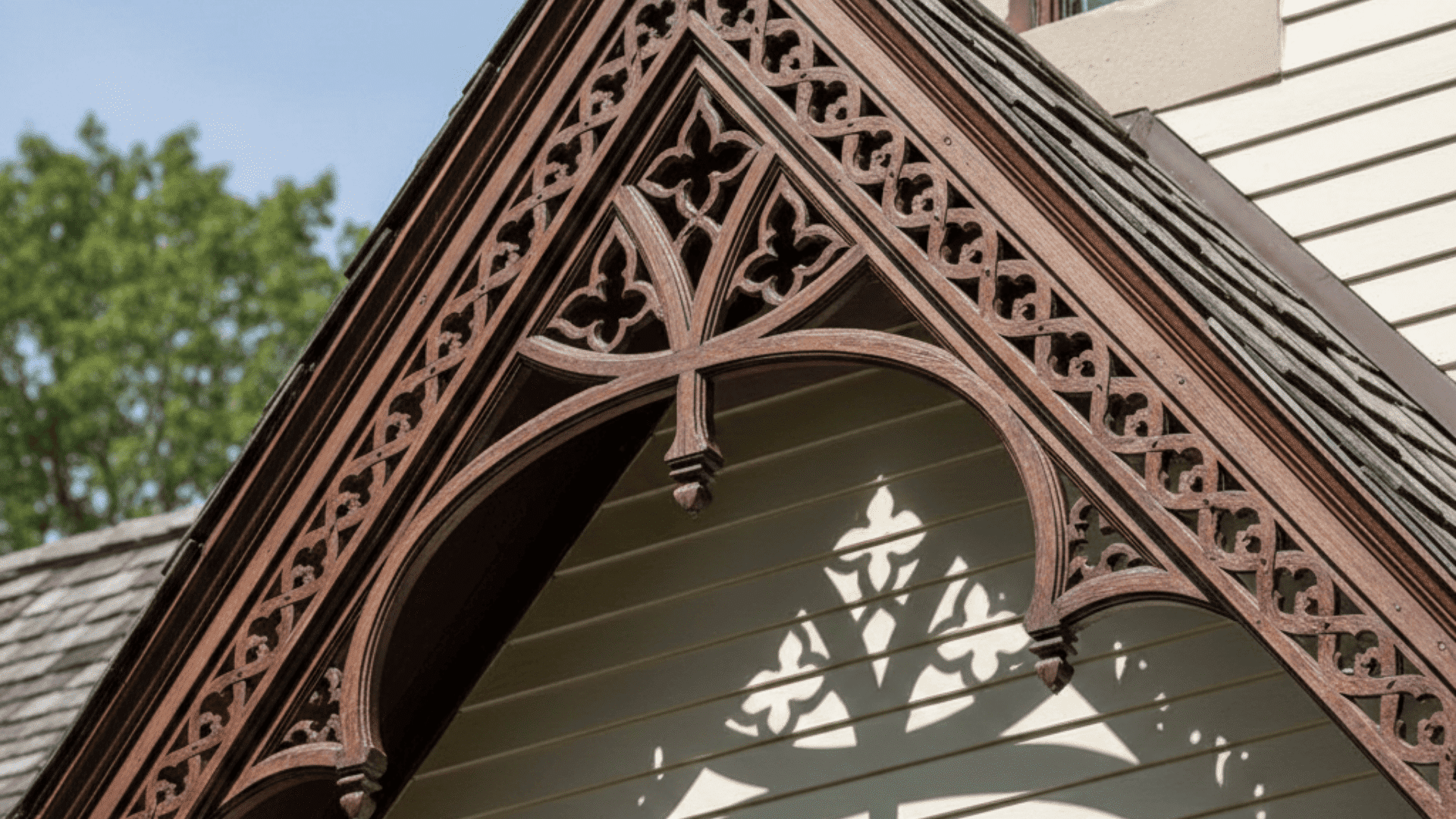
Decorative boards trim the sloping edges of gables with ornate patterns. Craftsmen created fretwork designs using scroll saws and hand tools. The openwork patterns cast interesting shadows on the underlying surfaces.
Vergeboards often match or complement bargeboard designs. They emphasize the dramatic roofline from every viewing angle.
17. Multi-Color Slate Roofs
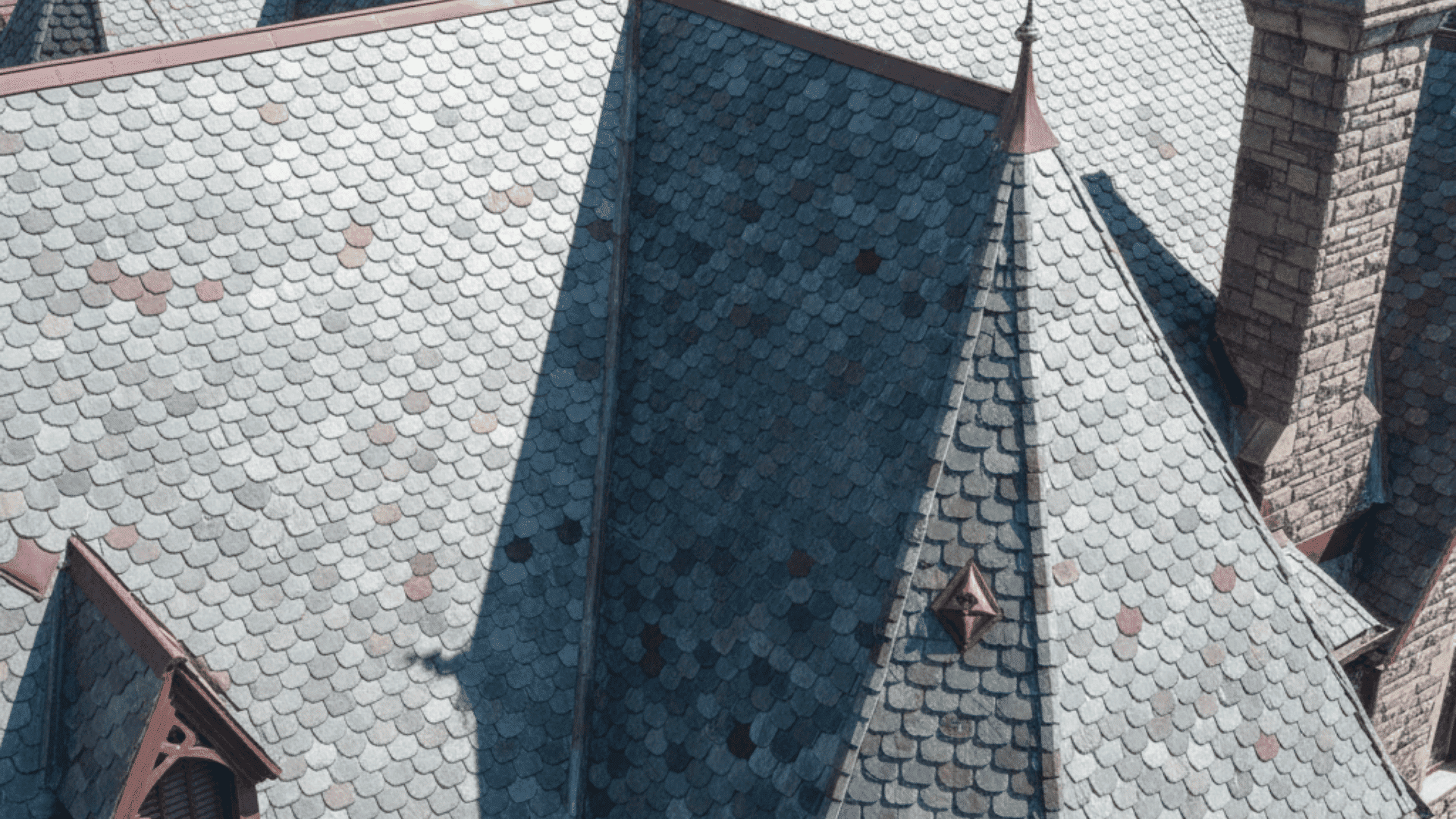
Patterned slate roofing creates visual interest across the roof surface. Different colored slates are arranged in geometric or diamond patterns. Common colors include gray, green, purple, and red tones.
The durable material lasts for many decades with proper maintenance. Decorative roofing reinforces the home’s distinctive character.
Gothic Revival house exteriors are all about drama and craftsmanship, blending medieval inspiration with romantic 19th-century design. From steep gables and pointed arches.
Gothic Revival and Other Victorian Styles
These are the key differences between the Gothic Revival and other Victorian house styles, based on their most noticeable features.
| Basis | Gothic Revival | Other Victorian Styles |
|---|---|---|
| Overall Look | Tall, vertical feel; sharp peaks and “upward” lines dominate. | More mixed shapes; often wider and busier with varied massing. |
| Roofline | Very steep roofs with strong cross gables and pointed peaks. | Varies: hipped roofs, mansards, complex roof mixes, and less “church-like” peaks. |
| Window Shape | Tall, narrow windows; pointed-arch tops are common. | Many window types: bay windows, large sash, rectangular or rounded arches. |
| Arches | Pointed arches on doors, windows, and porch openings. | Rounded, segmental, or no arches, depending on the style. |
| Trim And Ornament | Bargeboards/vergeboards, finials, and Gothic cutout patterns. | Brackets, spindlework, turned posts, patterned shingles, mixed surface decor. |
| Materials | Wood (often Carpenter Gothic) or masonry with Gothic details. | Mixed materials and textures: brick, wood, stone, shingles, stucco, combos. |
| Towers | Narrow towers or turrets may appear, often with pointed caps. | Towers are common in Queen Anne style, often rounder and more varied in form. |
| Porches | Pointed arches, Gothic cutouts, bracketed supports. | Wraparound porches, turned columns, and spindle details are common. |
| Motifs | Medieval-inspired shapes, such as trefoils and tracery-style patterns. | Wider motif range: classical brackets, sunbursts, spindles, decorative panels. |
Famous Gothic Revival Houses To Know
Several Gothic Revival houses have achieved landmark status. These buildings represent the best of the style and remain open to the public.
1. Strawberry Hill House (England)
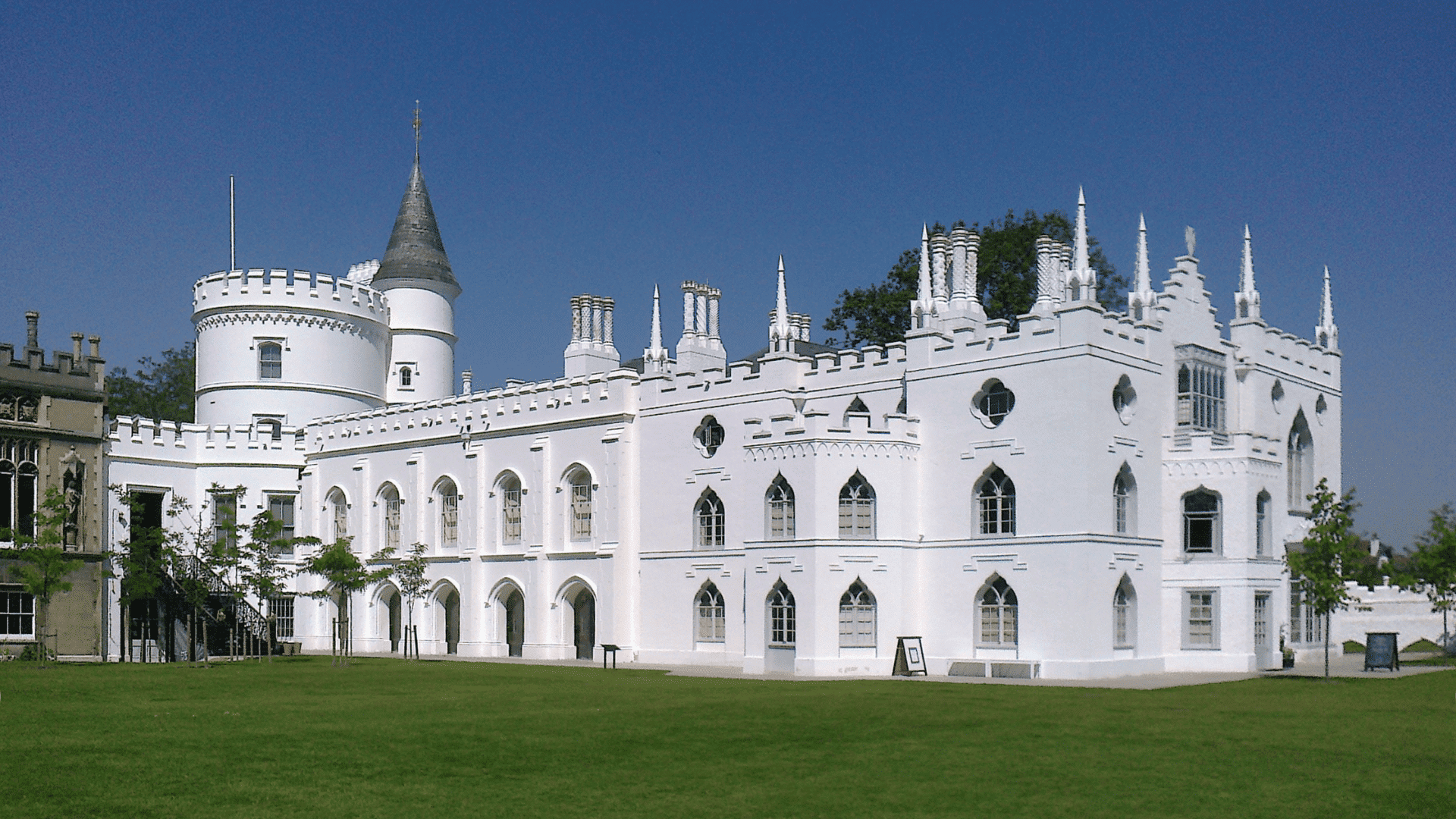
Strawberry Hill House stands in Twickenham, England. Horace Walpole purchased the property in 1747 and spent decades transforming it into a Gothic Revival masterpiece.
The house features pointed-arch windows, decorative tracery, and elaborate plasterwork. It influenced the Gothic Revival building style for generations by proving that medieval styles could work for modern homes. Today, Strawberry Hill is open to the public as a museum.
2. Lyndhurst (Tarrytown, New York)
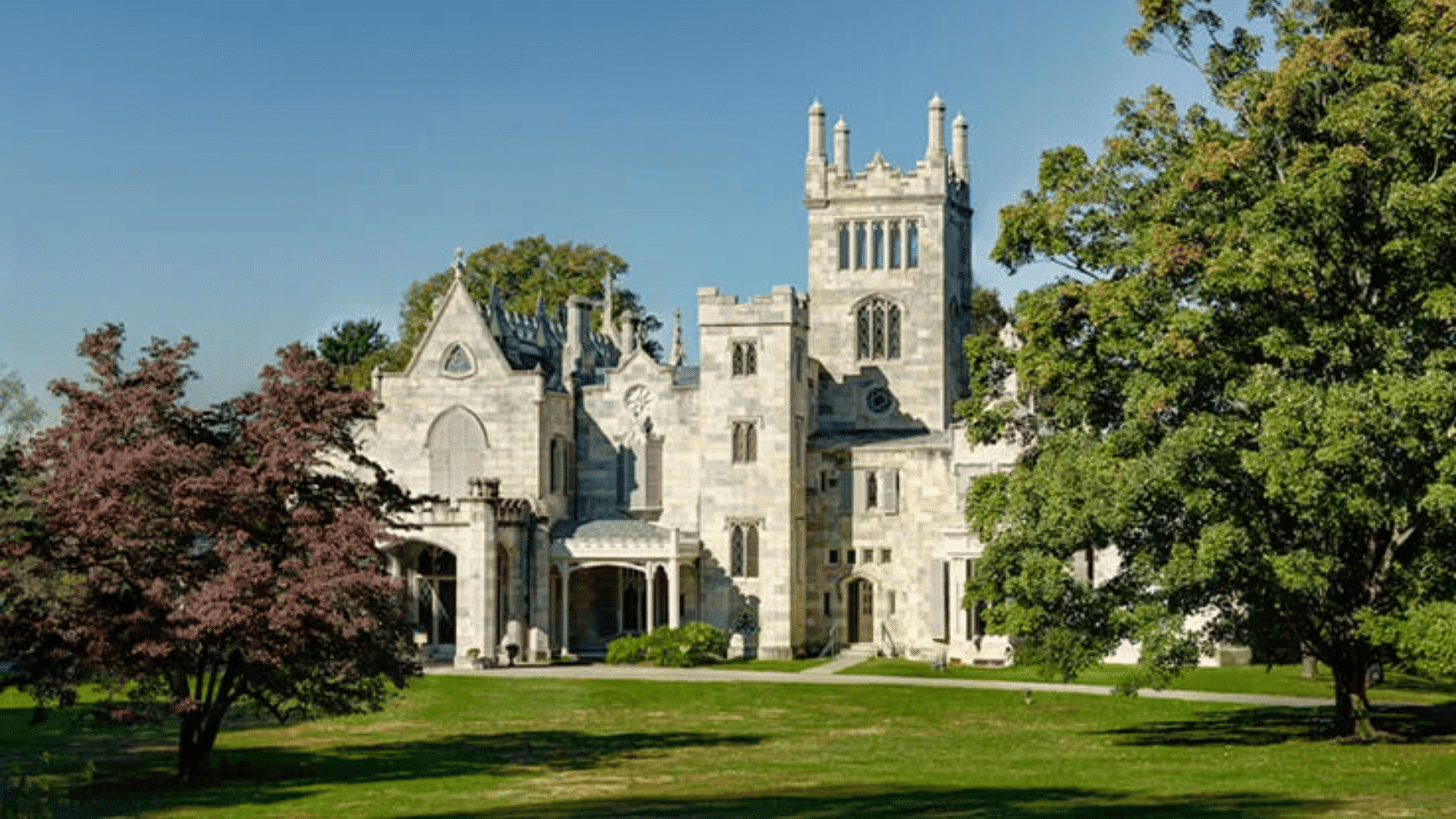
Lyndhurst is one of America’s finest Gothic Revival houses. Designer Alexander Jackson Davis designed it in 1838 for William Paulding on the Hudson River in Tarrytown, New York.
The mansion features asymmetrical massing, pointed-arch windows, steep gables, and a prominent tower. Interior spaces include Gothic vaulted ceilings, ornate woodwork, and stained glass windows. Lyndhurst now operates as a National Trust Historic Site.
3. Roseland Cottage (Woodstock, Connecticut)
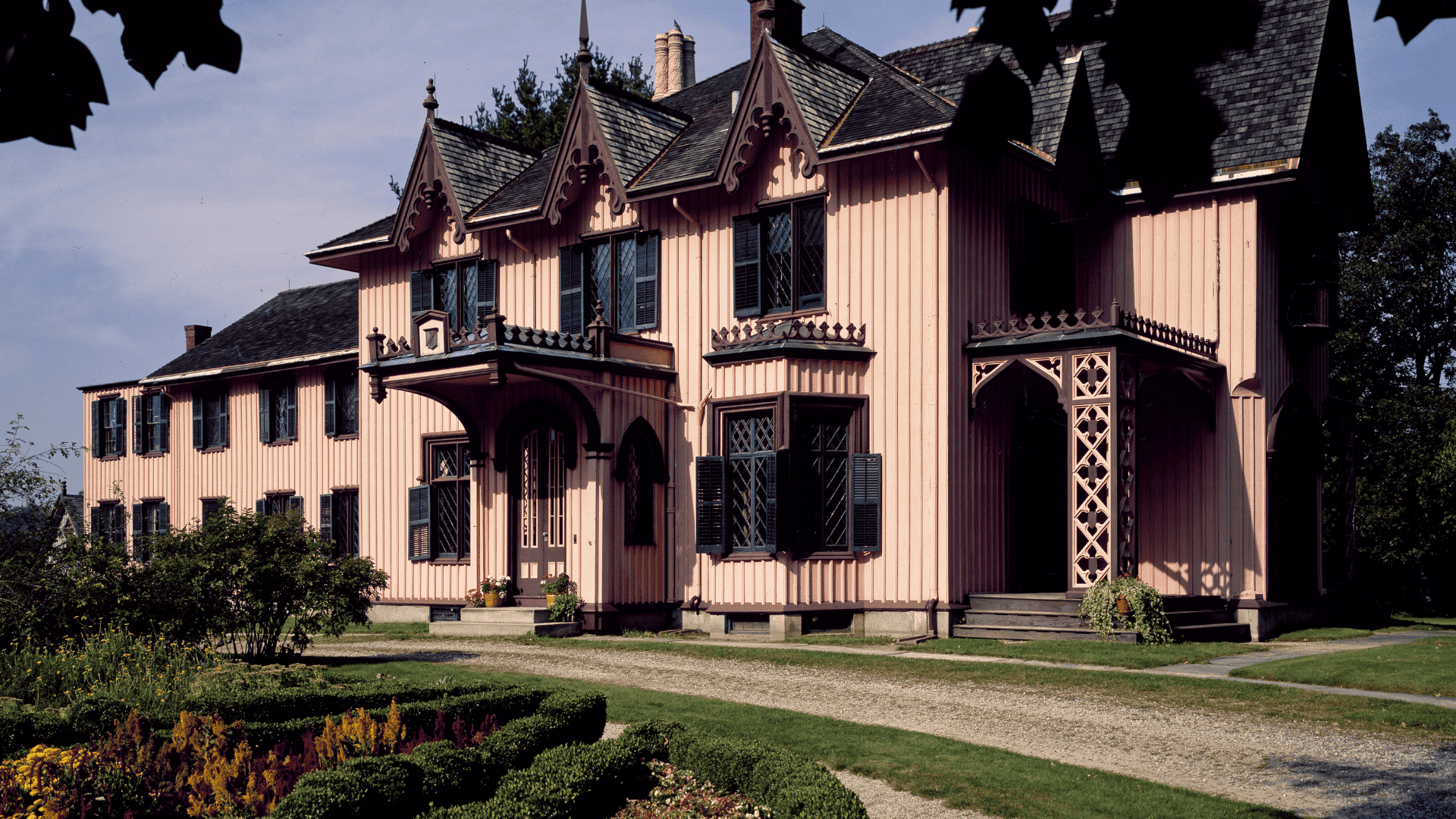
Roseland Cottage shows Gothic Revival in wood rather than stone. Built in 1846 for Henry and Lucy Bowen as a summer retreat, it sits in Woodstock, Connecticut.
The house features board-and-batten siding painted in bright pink with steep gables and decorative bargeboards. Historic New England operates it as a museum that shows how middle-class families embraced the Gothic Revival style.
Conclusion
Gothic Revival houses remain among the most recognizable in American architecture. Their pointed arches, steep gables, and decorative trim create a distinctive medieval character that stands out even today.
Understanding the history helps you appreciate why these houses look the way they do. From Horace Walpole’s English villa to wooden cottages across America, the style adapted to different budgets and materials while keeping its romantic spirit.
If you spot lancet windows, board-and-batten siding, or elaborate vergeboards, you now know what makes a house Gothic Revival. These design details tell stories about the people who built them and the era that valued scenic beauty.
The next time you see a Gothic Revival house in your neighborhood, take a closer look. What details catch your eye? Share your favorite Gothic Revival finding in the comments below.
Frequently Asked Questions
Who Is the Father of Gothic Style?
Abbot Suger of Saint-Denis is considered the father of the Gothic building style. He rebuilt the Abbey of Saint-Denis near Paris in the 1140s, introducing key Gothic elements like pointed arches and ribbed vaults.
What are the Five Gothic Elements?
The five main Gothic elements are pointed arches, ribbed vaults, flying buttresses, large stained glass windows, and vertical emphasis. These features work together to create height and bring light into Gothic buildings.
What Is the Difference Between Horror and Gothic?
Gothic is a literary and building style featuring mystery, dark settings, and psychological tension. Horror focuses primarily on fear and shocking events. Gothic emphasizes atmosphere and dread, while horror aims to terrify.