Twin homes are one of those real estate terms that fly right over most people’s heads. They walk past these houses every day and think they’re just regular homes.
But when someone asks what a twin home is, most folks draw a blank. They’re not quite single-family houses, and they’re not townhouses either.
They fall somewhere in between, which is why so many buyers get confused when they start house hunting. Real estate agents mention twin homes, and people just nod along, pretending to understand.
The truth is, there’s a specific reason these homes are called “twins,” and once you know it, you’ll start spotting them everywhere. Ready to find out what makes a twin home actually twin?
What Is a Twin House?
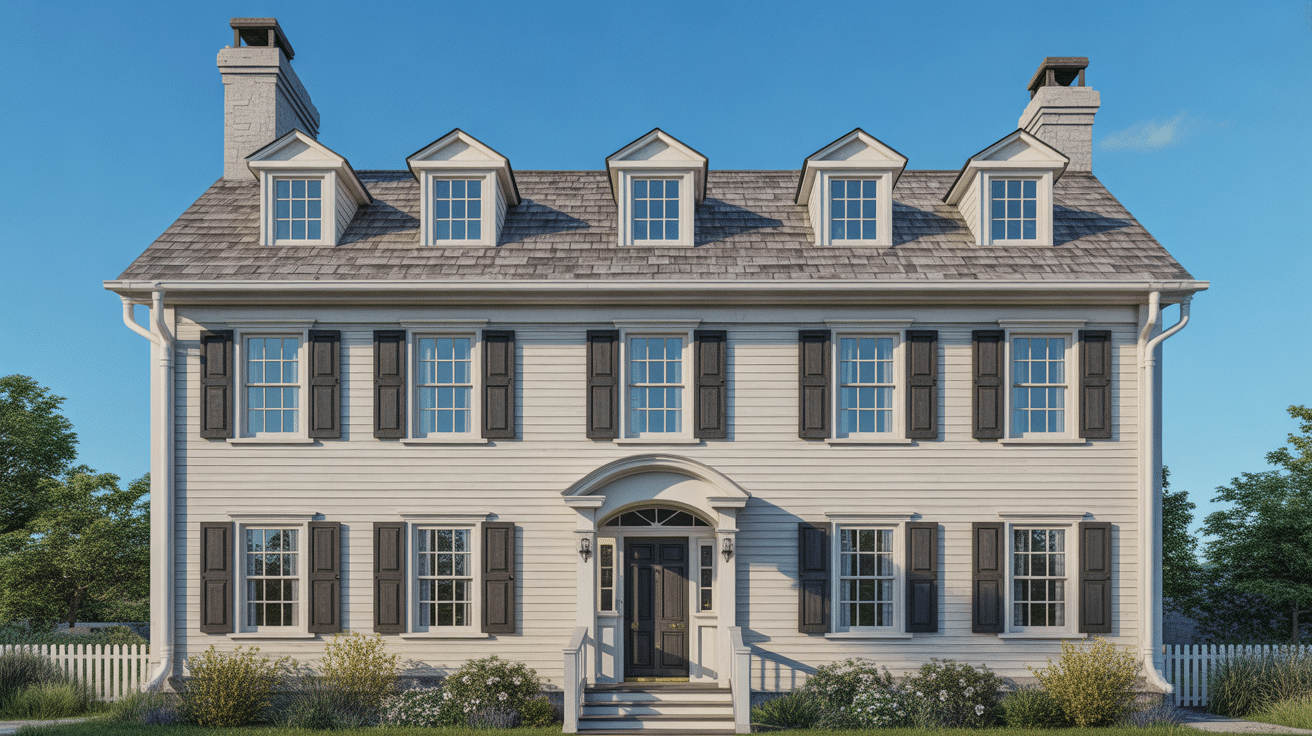
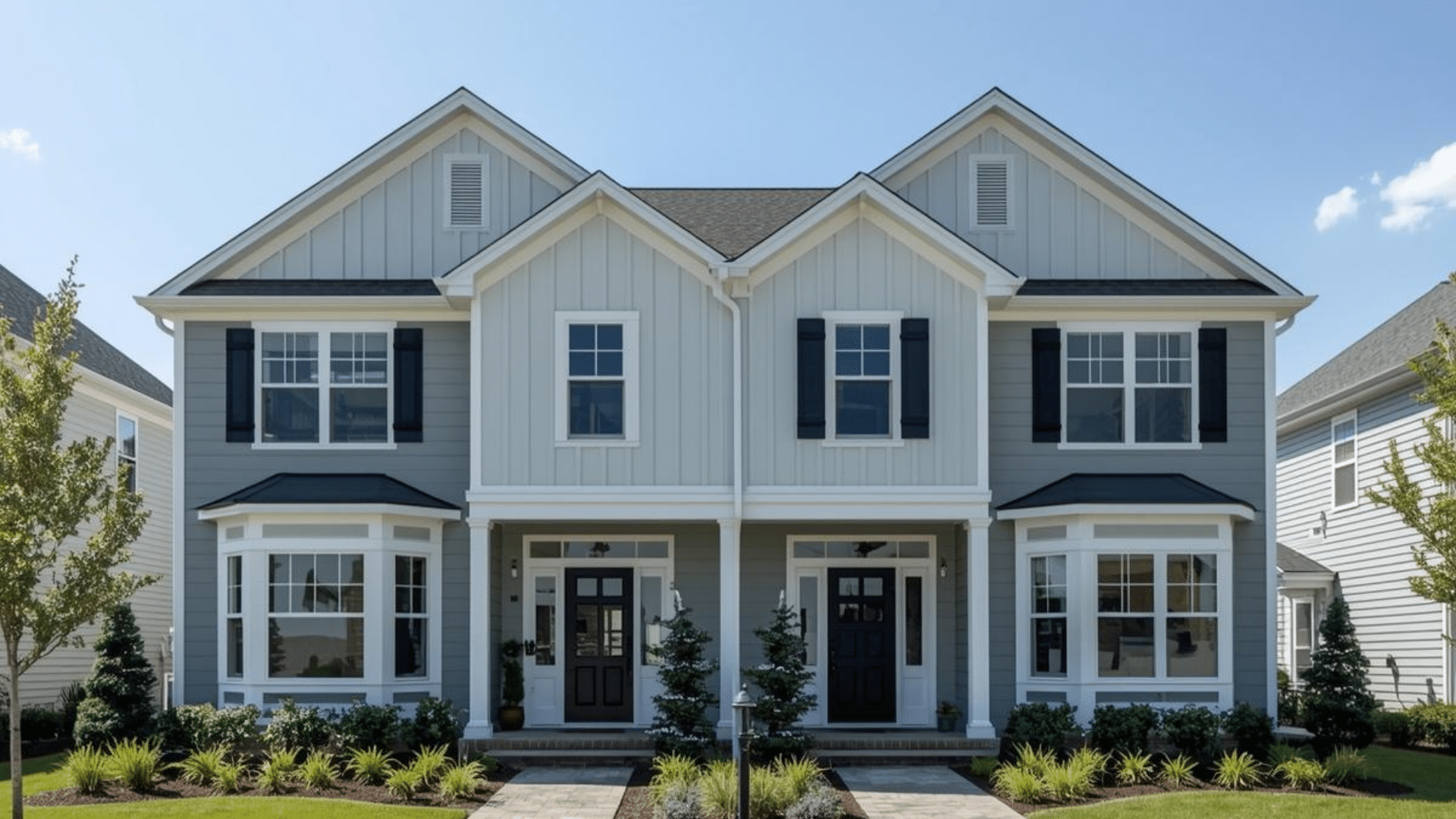
A twin home is basically two houses that share one common wall. Think of it like this two separate homes built side by side, but they’re attached in the middle.
Each owner has their own property, their own yard, and their own entrance. The only thing they share is that one wall running down the center. Some people call them semi-detached homes because they’re partially connected.
But unlike townhouses, where multiple units line up in a row, twin homes come in pairs. That’s it. Just two. Each home usually mirrors the other in design, which is where the “twin” name comes from.
They look like identical siblings sitting next to each other. And the best part? People get more space than a townhouse but pay less than a detached single-family home.
Not to be confused with: Twin homes share only one wall with one neighbor. “Semi-detached” (common in Canada and the UK) means the same as twin home. Always verify the deed to confirm the exact structure.
Twin Home vs Duplex vs Townhouse: What Is the Difference?
People often confuse twin homes with duplexes and townhouses, but the lot and layout differ. Here’s a complete difference between a twin home, duplexes, and townhouses
| Difference | Twin Home | Duplex | Townhouse |
|---|---|---|---|
| Lot setup | Often, two separate lots | Often, one lot for the whole building | Often separate lots in a row-style community; the lot size is usually small |
| Deed/ownership | Each side typically has its own deed | Commonly, one owner owns both units (can vary) | Each home typically has its own deed |
| Shared walls | One shared wall | May share a wall (side-by-side) or a floor/ceiling (stacked) | Usually shares walls on both sides (middle units) |
| Typical layout | Almost always side-by-side | Side-by-side or stacked (up/down) | Row-style attached homes, often multi-level |
| Yard/outdoor space | Often has a private yard | Varies; stacked setups often have less private outdoor space | Often small patio/yard or none; may have shared green space |
| Sell separately | Usually, yes, sell your side on its own | Often harder unless set up as condos | Usually, yes, sell your unit like a single home |
Pros of Living in A Twin Home
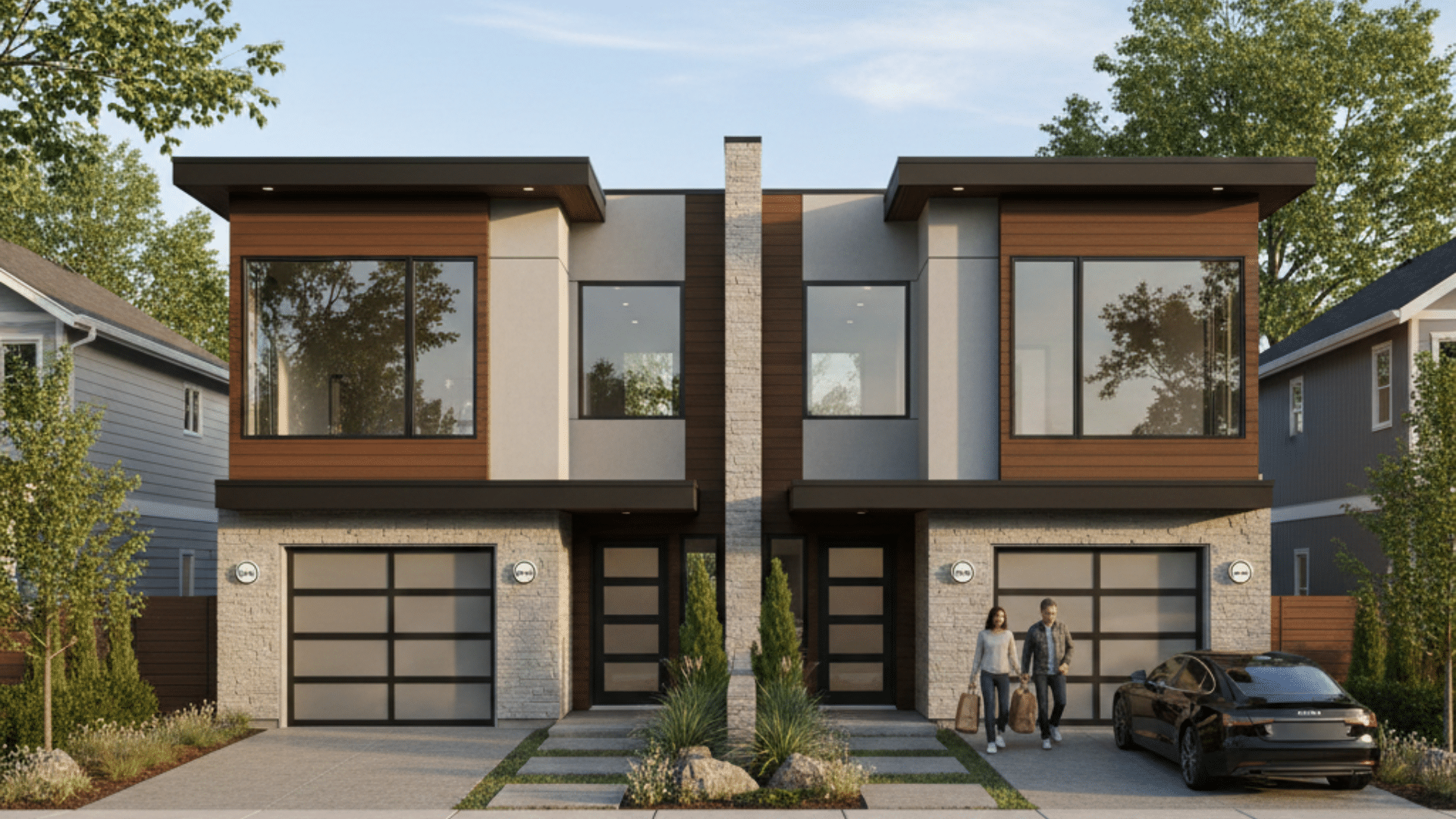
Twin homes offer several benefits that make them attractive to many homebuyers, especially those seeking a balance between affordability and independence. Here are the key advantages of choosing a twin home.
- Lower purchase price: Twin homes often cost less than detached houses in the same neighborhood. The shared construction costs bring down the price, making homeownership more accessible for first-time buyers and those on a budget.
- Less exterior maintenance: You have fewer exterior walls to maintain compared to a detached home. Your yard is typically smaller, which means less mowing, landscaping, and seasonal upkeep.
- More privacy than townhouses: Since you share only one wall with one neighbor, twin homes feel more private than townhouses, where you might have neighbors on both sides.
- Own entrance and yard: Unlike condos or apartments, you get your own front door, separate entrance, and private outdoor space. This creates a true single-family home feel.
- Community feel with independence: Twin homes offer a sense of community while maintaining separate ownership and control over your property.
Cons of Living in A Twin Home
While twin homes offer many benefits, they also have potential drawbacks that buyers should consider. Understanding these challenges helps you make an informed decision about whether this housing style fits your lifestyle.
- Noise through the shared wall: Sound can travel between units, depending on the wall’s thickness and insulation quality. Late-night TV, conversations, or music from your neighbor can become disruptive.
- Shared wall repair coordination: If the common wall needs repairs, you’ll have to coordinate with your neighbor and possibly split costs. This can be challenging if you don’t agree or if they’re slow to respond.
- Smaller yards and lots: Twin-home lots are typically narrower than detached-home lots. Your backyard may be modest in size, limiting outdoor activities or the space for gardening.
- Limited parking: Many twin homes have single-car garages or driveways. Guest parking can be tight, especially in dense neighborhoods.
- Potential resale challenges: If your neighbor’s side looks neglected or poorly maintained, it can affect your home’s curb appeal and resale value.
Twin Homes as Investment Properties
Twin homes are solid investments for people looking to rent out property. They’re cheaper to buy than detached houses, which means lower upfront costs.
And renters love them because they get more privacy than an apartment or townhouse. The maintenance costs are reasonable, too, since there’s less exterior to worry about.
Investors can also buy both sides of a twin home and rent them out separately, which doubles the income potential.
The rental market for twin homes remains fairly steady because families want the single-home feel without the hefty price tag. Plus, these properties tend to hold their value well in growing neighborhoods.
What to Know Before Buying a Twin House
Buying a twin home isn’t quite the same as buying a regular house. There are extra things to check and questions to ask before signing anything. Smart buyers do their homework on the shared wall situation and neighborhood rules.
- Check the shared wall agreement: Buyers need to read the legal documents that explain maintenance responsibilities and cost-sharing between neighbors.
- Inspect both sides if possible: Problems on the neighbor’s side can affect the buyer’s home, so a thorough inspection matters.
- Review HOA fees and rules: Some twin home communities charge monthly fees that cover shared expenses and enforce design standards.
- Meet the neighbor: Living that close to someone means compatibility counts, so a quick introduction helps avoid future headaches.
- Compare pricing carefully: Twin homes should cost less than detached houses in the same area, so buyers should make sure they’re getting a fair deal.
Who Should Consider a Twin Home?
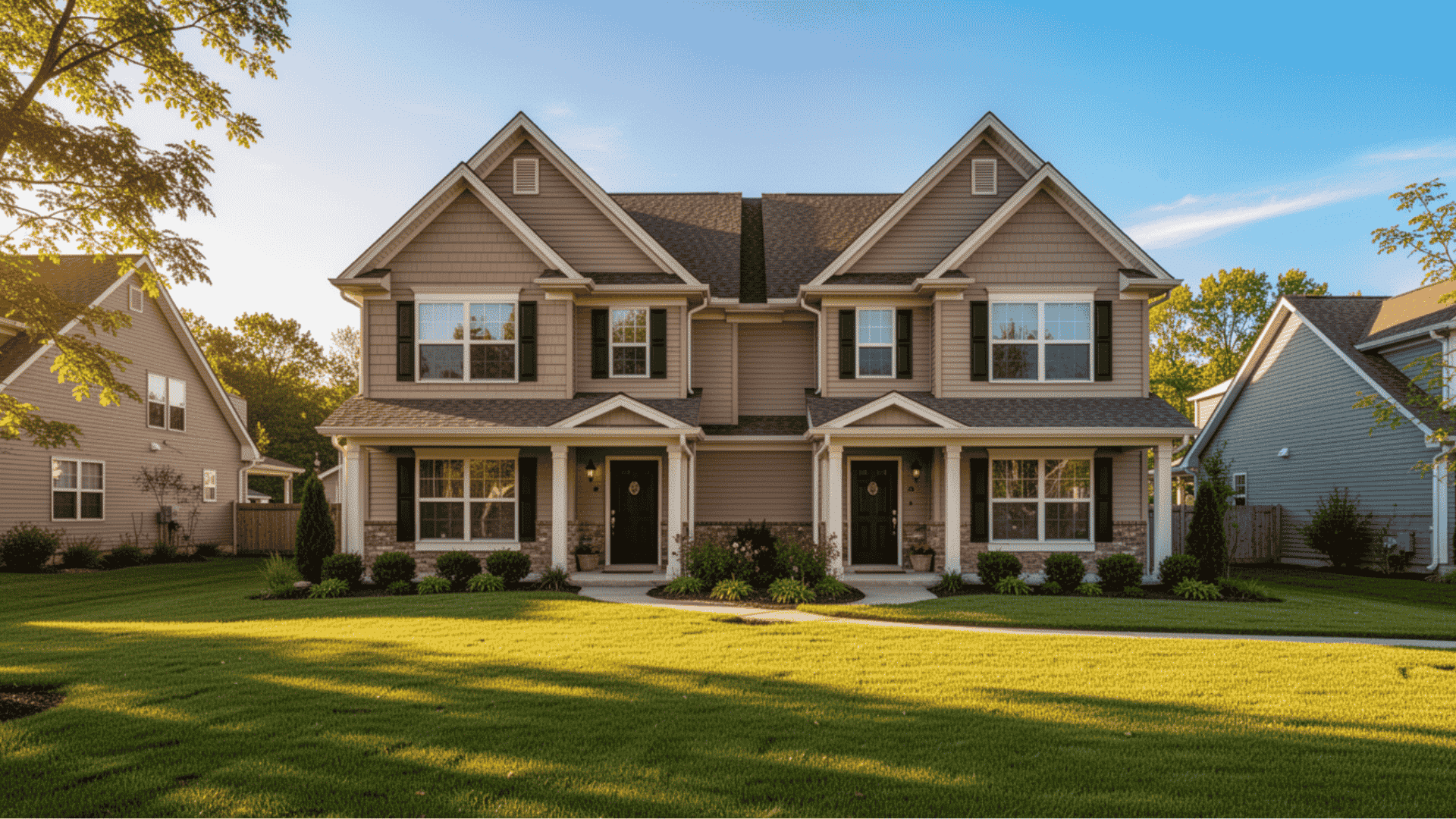
Twin homes offer a unique middle ground between single-family houses and townhomes, but they’re not the right fit for everyone. Here’s who typically likes twin home living and who might want to look elsewhere.
Who Should Consider It:
- Want more privacy than a townhome at a lower cost than a detached home
- Prefer less yard maintenance but still want to own land
- Are comfortable sharing one wall and coordinating with a neighbor
- Want to avoid high HOA fees while having some community structure
- Are first-time homebuyers building equity on a budget
- Don’t mind occasional noise from the shared wall
Who Should Avoid It:
- Need complete privacy with zero shared responsibilities
- Want total control over exterior design without neighbor approval
- Are highly sensitive to noise through walls
- Don’t want to coordinate repairs or split maintenance costs
- Want a large private yard or extensive outdoor space
- Prefer maximum resale flexibility (detached homes appeal to more buyers)
Twin Home Maintenance Rules
Twin home maintenance can get tricky because of that shared wall. Most neighborhoods have specific rules about upkeep, so it’s smart to check the local regulations before buying.
- The shared wall is a joint responsibility: Both owners need to agree on repairs, painting, or any structural work that affects it.
- Exterior maintenance stays separate: Each homeowner takes care of their own roof, siding, gutters, and front yard.
- Yard boundaries must be respected: Fences, landscaping, and outdoor structures can’t cross property lines without permission.
- HOA rules might apply: Some twin home communities have homeowner associations that set standards for lawn care and exterior appearance.
- Noise considerations matter: Since there’s a shared wall, being mindful of sound levels helps keep neighbor relations friendly.
Conclusion
Twin homes might not be the most talked-about housing option, but they deserve attention. Now that the question of what a twin home is has been answered, buyers can make smarter decisions about whether this style fits their needs.
These properties offer a middle ground that works for many people, more space than a townhouse, less expense than a detached home.
The shared wall situation isn’t as complicated as it sounds once someone understands the rules. And for investors, twin homes present opportunities that shouldn’t be ignored.
The key is doing the research upfront. Talk to neighbors. Read those agreements. Ask the hard questions. Twin homes could be exactly what someone’s looking for in their next property purchase.
Ready to find twin homes in your area? Start your search today to see whether this unique housing style fits your lifestyle and budget.
Frequently Asked Questions
What Are the Common Issues with Twin Houses?
Noise through the shared wall and coordination challenges for repairs are most common. Limited parking and smaller yards also present issues for some buyers.
What Is the Biggest Red Flag in A Home Inspection?
Foundation cracks or structural problems in the shared wall are the biggest red flags, as they affect both homes and require expensive coordinated repairs.
What Is a Twin Residence?
A twin residence is two side-by-side houses sharing one wall with separate ownership. Each has its own entrance, yard, and deed, functioning as independent single-family homes.