Hinge types may seem like a small detail, but they quietly affect how doors, cabinets, gates, and furniture work each day.
From how a door opens to how a cabinet shuts, the right choice supports ease of use, safety, and steady performance over time. Below, the hinge types are explained clearly and simply, making the details easy to follow.
Hinges matter because they carry weight, guide movement, and influence how often parts need repair or adjustment. An incorrect match can cause sagging, noise, or premature damage, while a good fit keeps things working as expected.
As you read on, you will learn about different types of hinges, how they are designed, where they are used, and how to choose options that suit real needs in homes and everyday projects.
What Are Hinges?
Hinges are small moving parts that connect two solid pieces and allow them to open and close in a controlled way. You often see them on doors, cabinet fronts, boxes, and lids.
One side of the hinge attaches to a fixed surface, while the other connects to the moving part. When the door or panel is pushed, the hinge guides the motion so it swings smoothly instead of falling or shifting.
Even though hinges are simple in shape, they do an important job. They help support weight, keep edges aligned, and control how far something can open.
How Do Hinges Work?
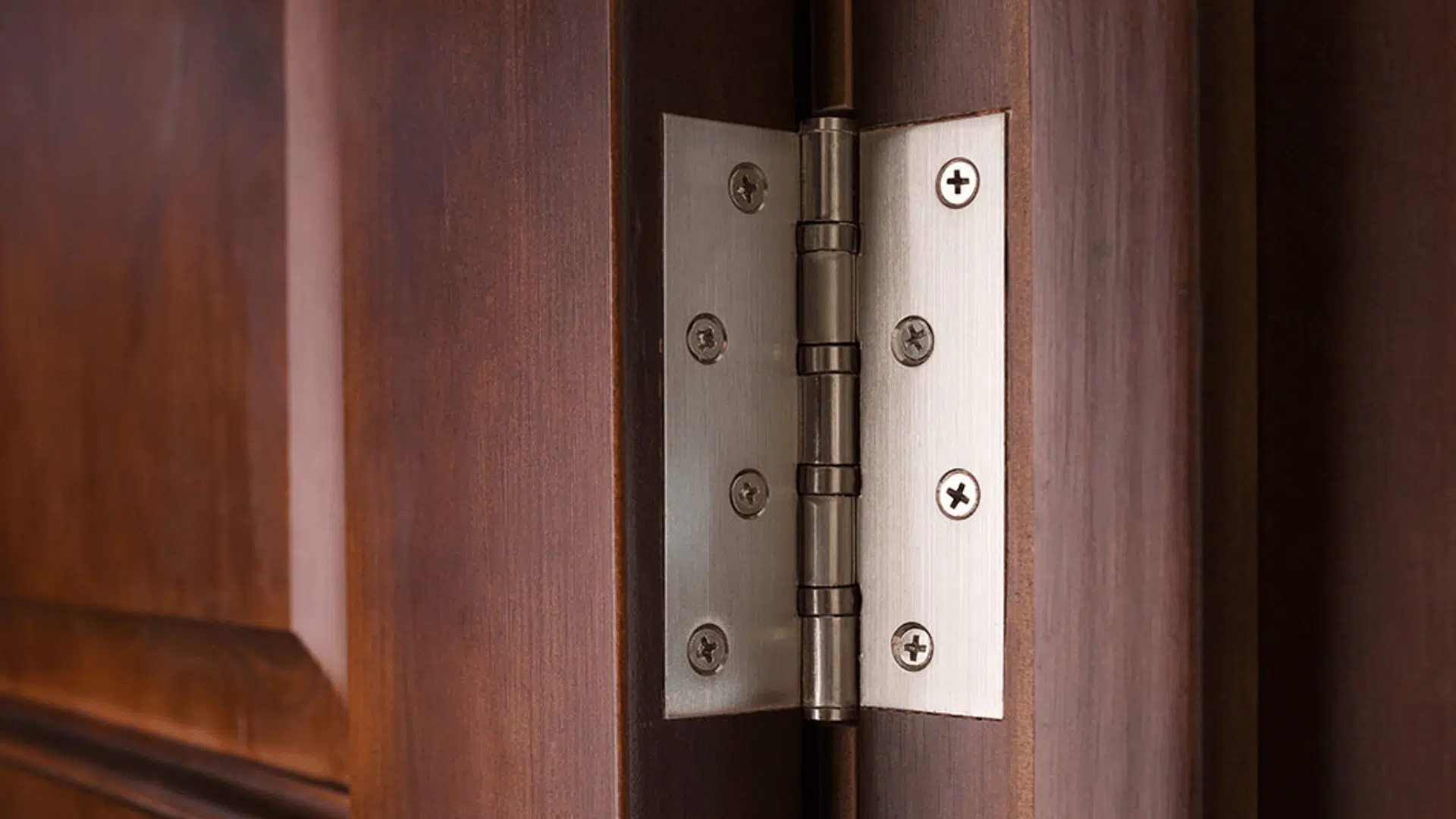
Hinges work by joining two flat pieces, called plates, with a thin rod known as a pin. One plate stays fixed, and the other moves.
When you push a door or lid, the plates rotate around the pin, allowing the item to swing open and close smoothly. You can picture it like two cards held together by a pencil, turning around the center.
The design of a hinge affects how it moves. Some hinges are made to swing wide, while others move slowly or stop at a set point.
The size, shape, and build of a hinge decide how much weight it can hold and how easy the movement feels.
Different Types Of Hinges(with Design, Application, and Types)
In this section, common hinge designs and their applications are outlined, along with the types available, to help you understand which option fits each purpose.
1. Butt Hinge
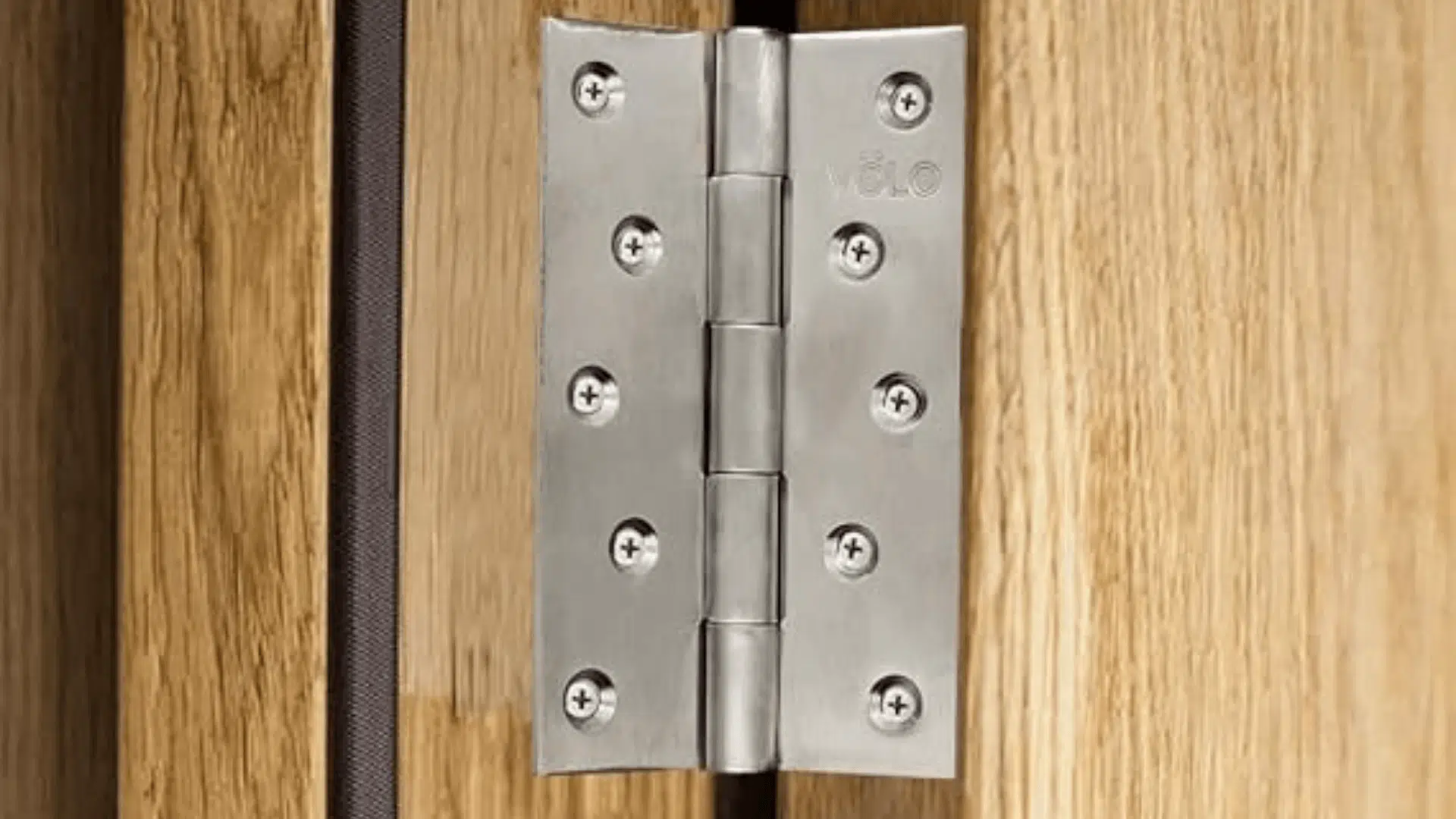
A butt hinge is a widely used hinge type made of two flat metal leaves connected by a central pin, with one leaf fixed to the door and the other to the frame, allowing smooth, controlled movement.
Application: It is commonly used for interior and exterior doors, cabinet doors, and windows because of its simple design, good strength, and ease of installation.
Common Types of Butt Hinges
- Full Mortise: Both hinge leaves sit within cutouts in the door and frame for a clean, flush fit.
- Half Mortise: One leaf is set into the door or frame, while the other stays on the surface.
- Surface Mount: Both leaves sit on the surface, making installation quick and simple without cutting.
2. Ball-Bearing Hinge
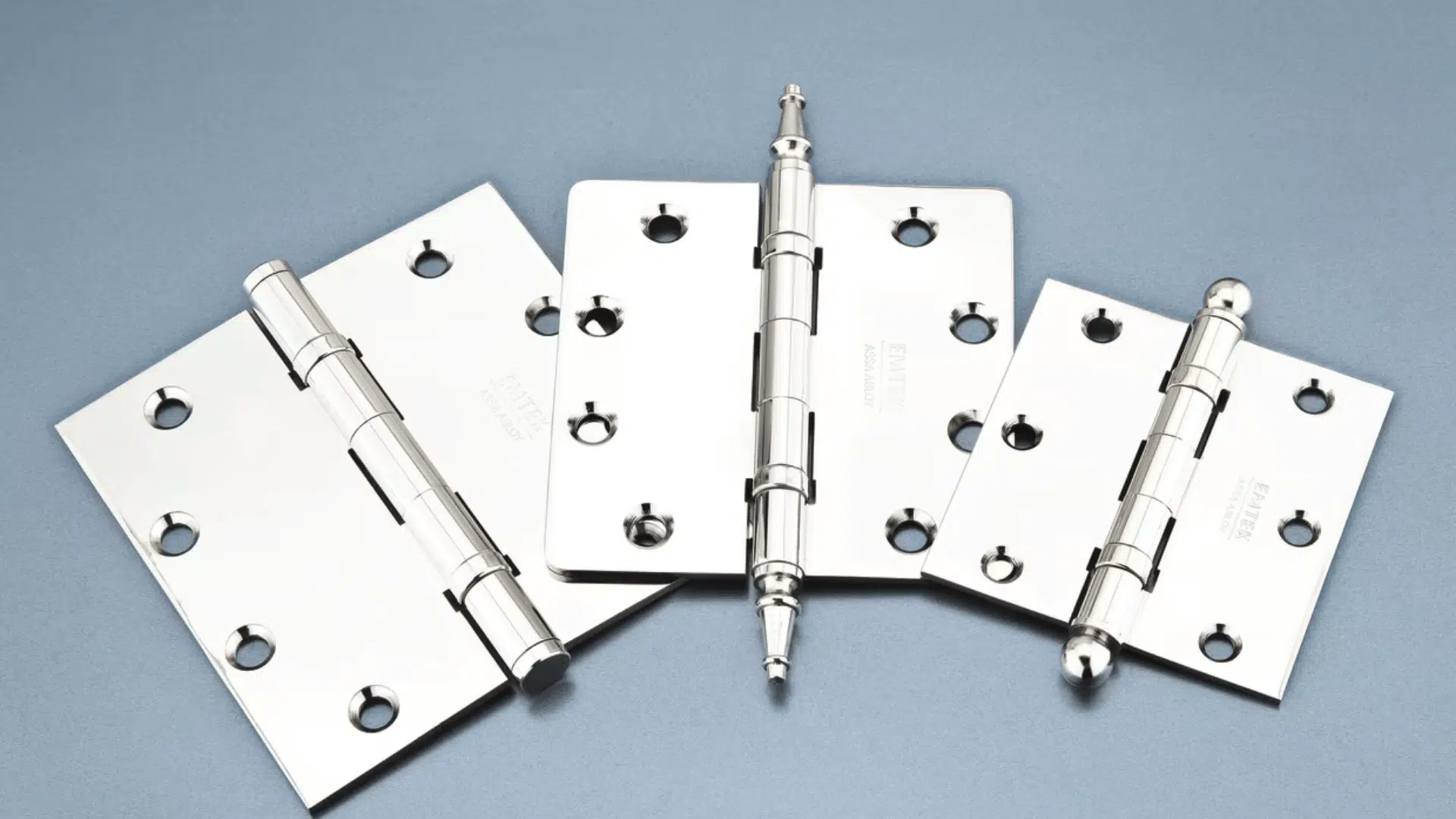
This hinge is similar to a butt hinge but includes small ball bearings inside the joint, which reduce friction and help the hinge move smoothly even under heavy weight.
Application: Ball-bearing hinges are used on heavy doors and doors that are opened often, such as in offices or commercial spaces, because they last longer and help reduce noise from frequent use.
3. Continuous (Piano) Hinge
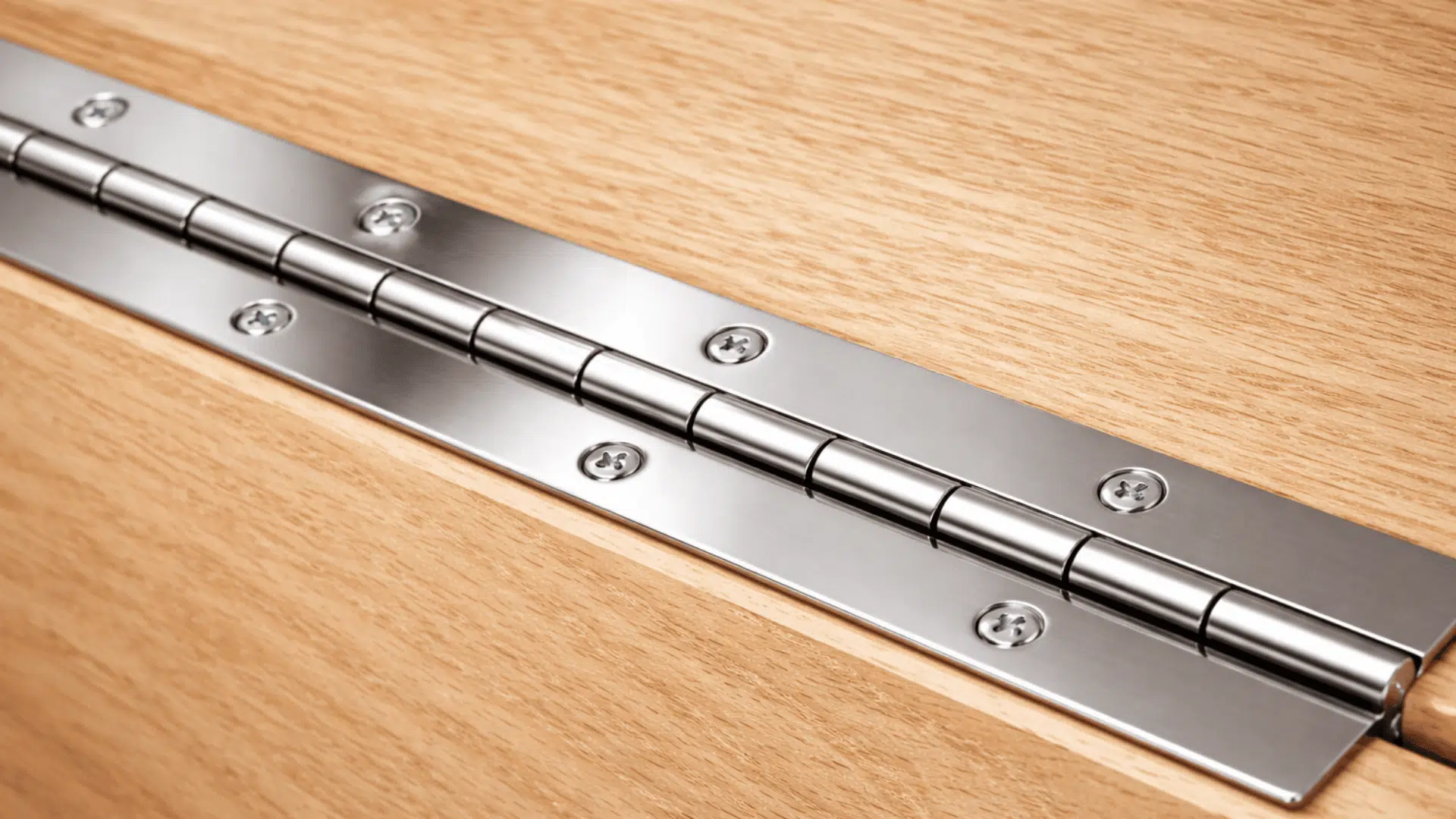
A continuous hinge runs along the entire edge of a door or lid, distributing the weight evenly along its length for better support.
Application: It is commonly used on piano lids, storage chests, tool boxes, and long panels because the full-length design helps prevent sagging and adds strength and stability over time.
4. Spring Hinge
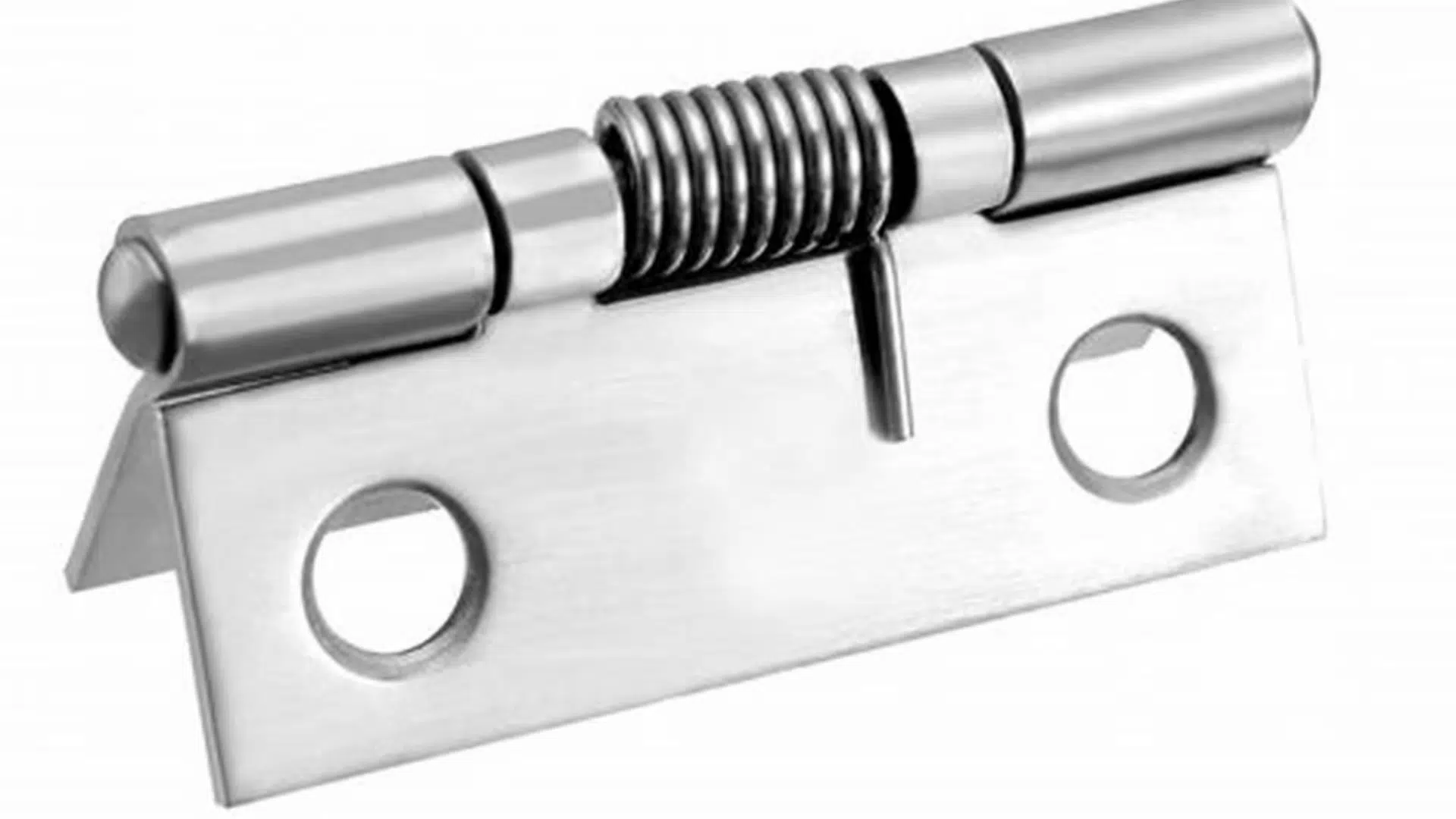
A spring hinge contains a built-in spring that pulls the door closed after it is opened, tightening and releasing as the door moves.
Application: It is often used on kitchen, swing, and utility doors because it helps doors close on their own without the need for extra hardware.
5. Double-Action Spring Hinge
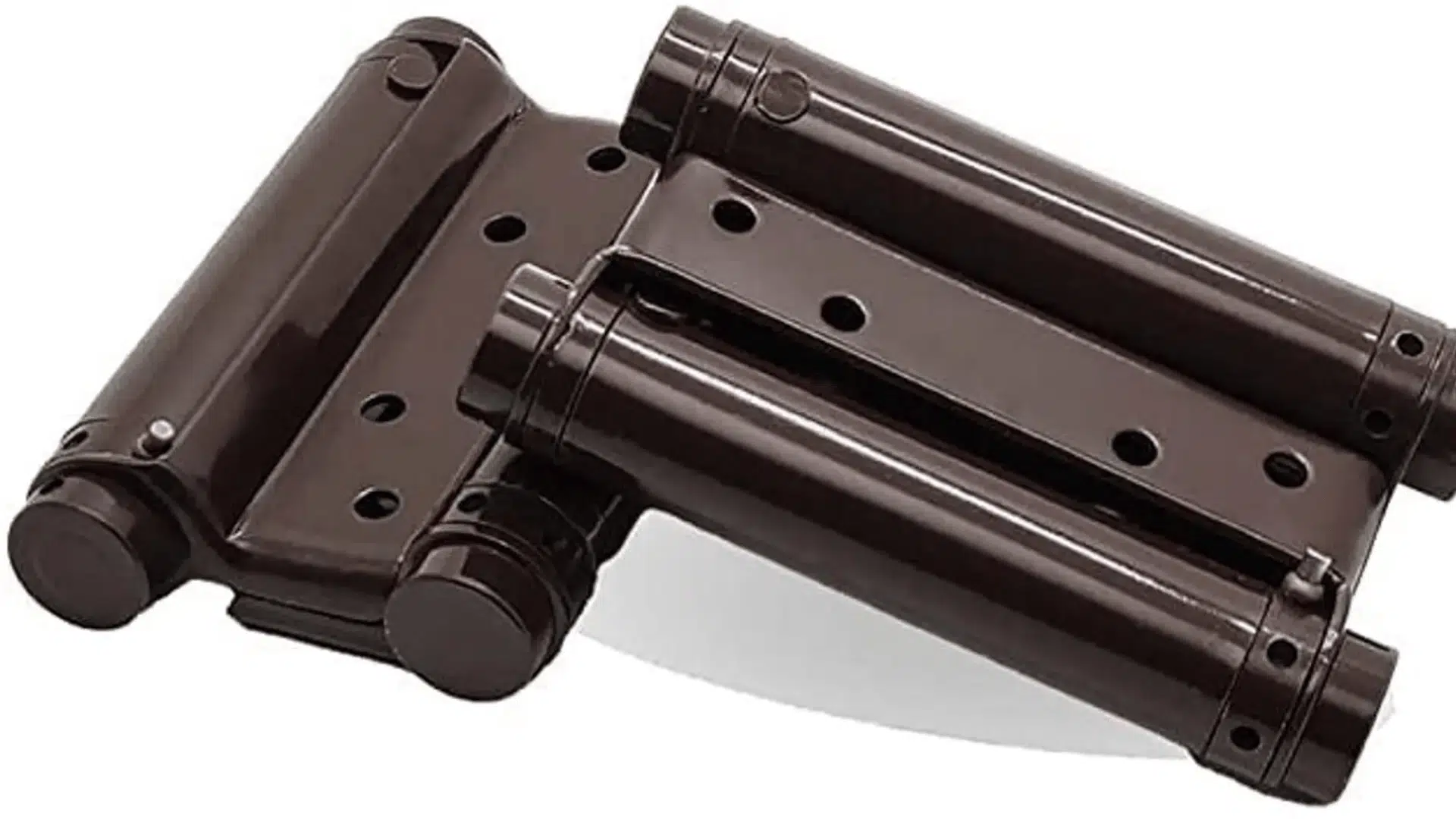
This hinge allows a door to swing in both directions and return to the center, with springs inside controlling the movement from either side.
Application: Double-action spring hinges are commonly used on café or saloon-style doors and work well in busy areas where people move through from both sides.
6. Concealed Hinge
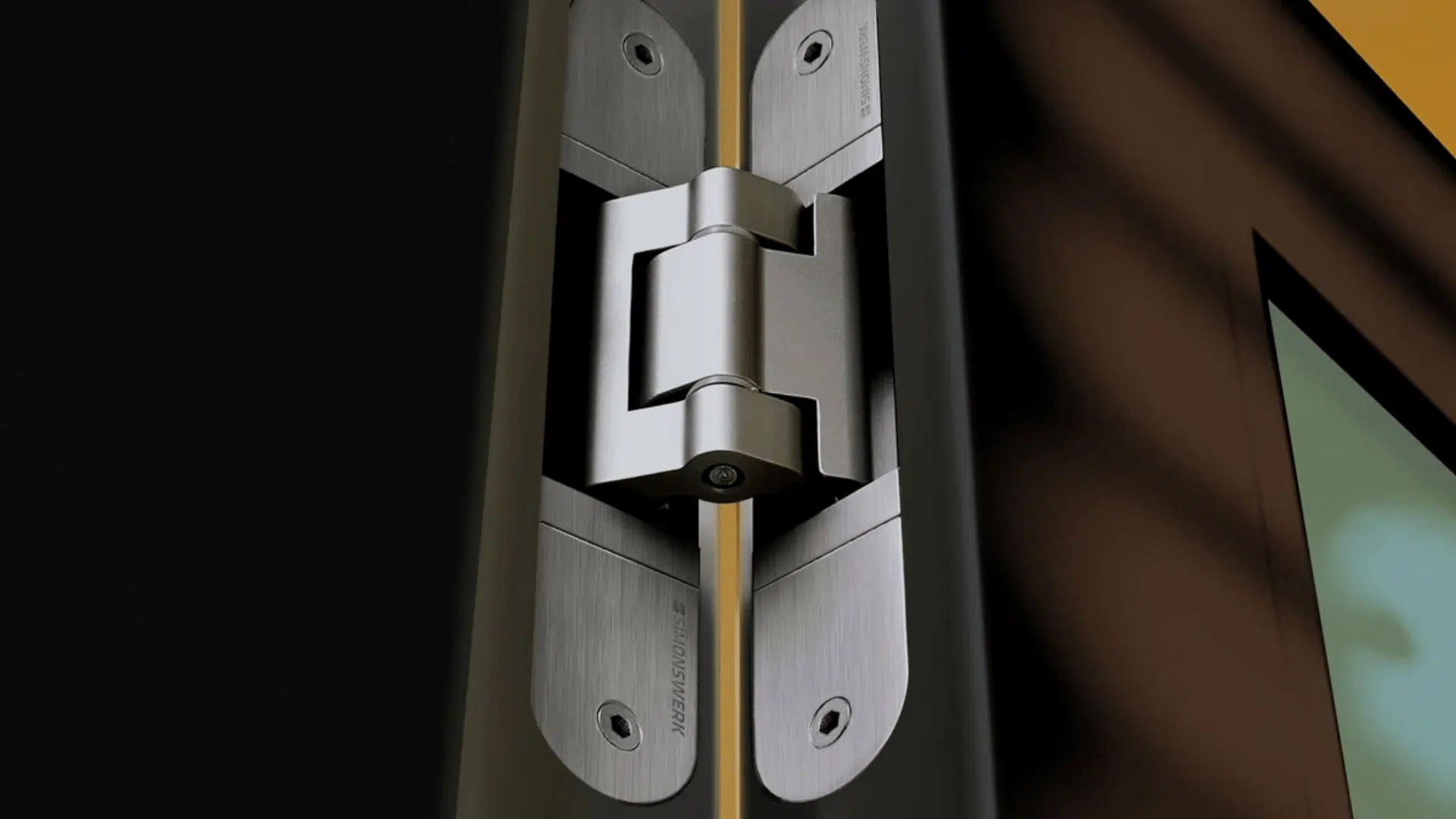
A concealed hinge is hidden from view when the door is closed, with most of the hinge sitting inside the door and cabinet body to keep the outside surface clean and simple while allowing smooth movement.
Application: It is widely used in modern cabinets and clean-looking furniture, especially in kitchens, wardrobes, and storage units where a neat finish matters.
Many versions also allow small adjustments for better door alignment.
7. Pivot Hinge
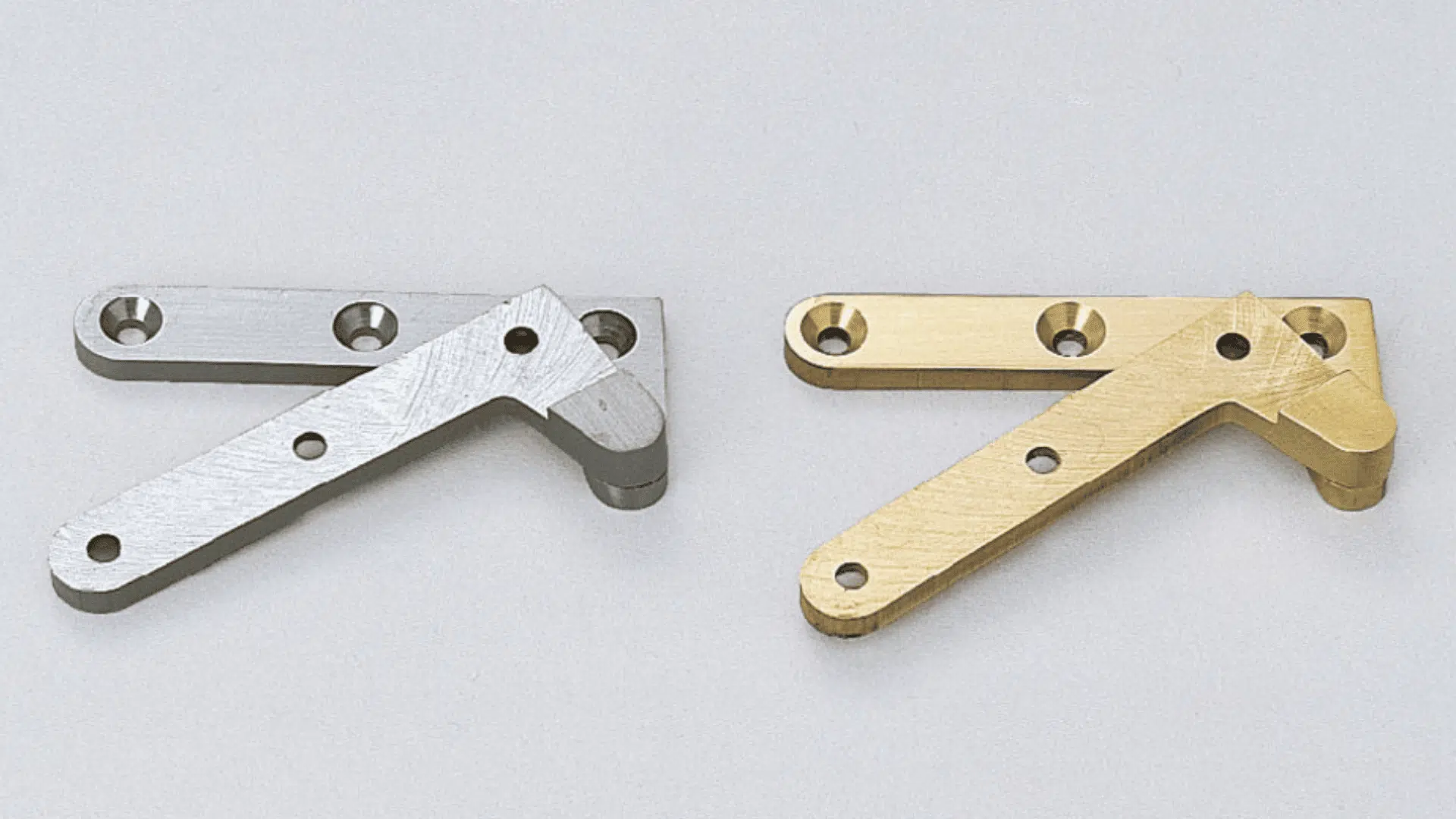
A pivot hinge rotates on points fixed at the top and bottom of a door rather than at the side, shifting the weight downward to help the door move more smoothly.
Application: These are often used on heavy doors and inset doors, where side-mounted hinges may not support the weight well, allowing for wide, controlled door movement.
8. Barrel Hinge
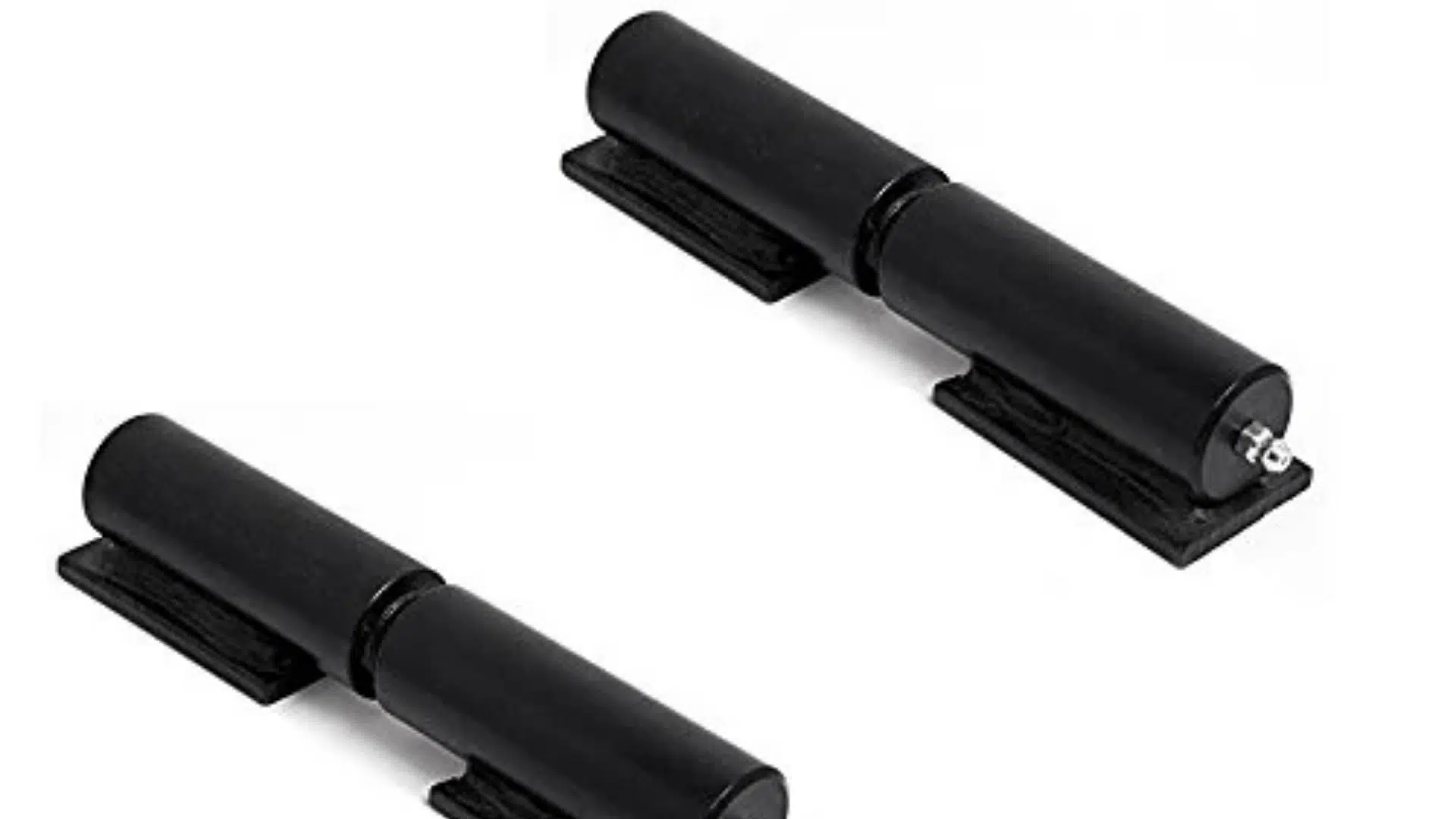
A barrel hinge is small and round, with most of the hinge hidden inside the door and frame, so only a small part is visible when the door is closed.
Application: It is used on small boxes, cabinets, and light doors where space is limited and a simple look is needed, making it common in furniture and storage pieces.
9. Strap Hinge
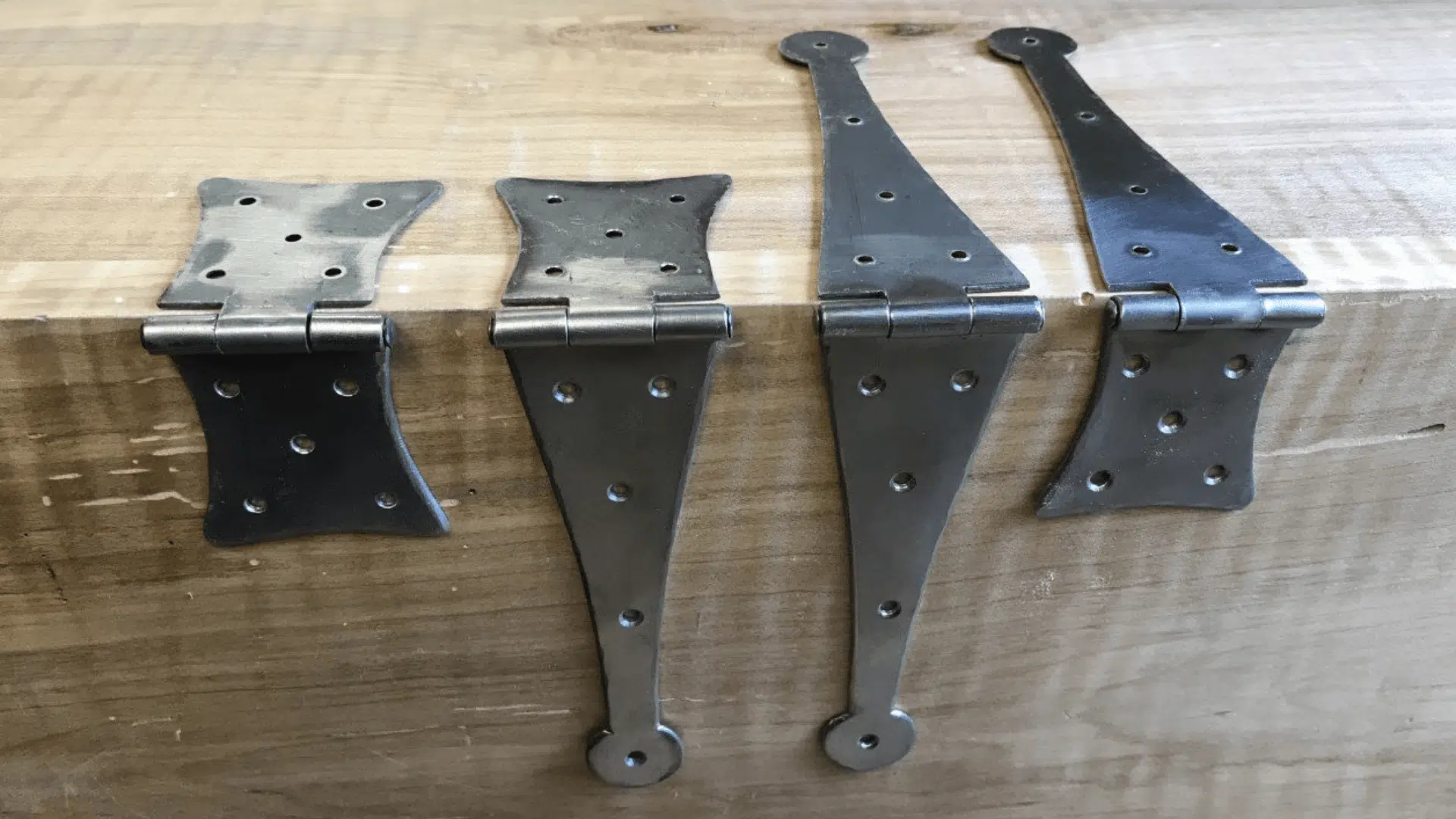
A strap hinge has long, flat arms that spread across the surface of a door or gate, helping support weight over a wider area.
Application: These are commonly used on gates, sheds, and barn doors because they provide strong support, are easy to see, and add a traditional, rustic look to the structure.
10. Butterfly Hinge
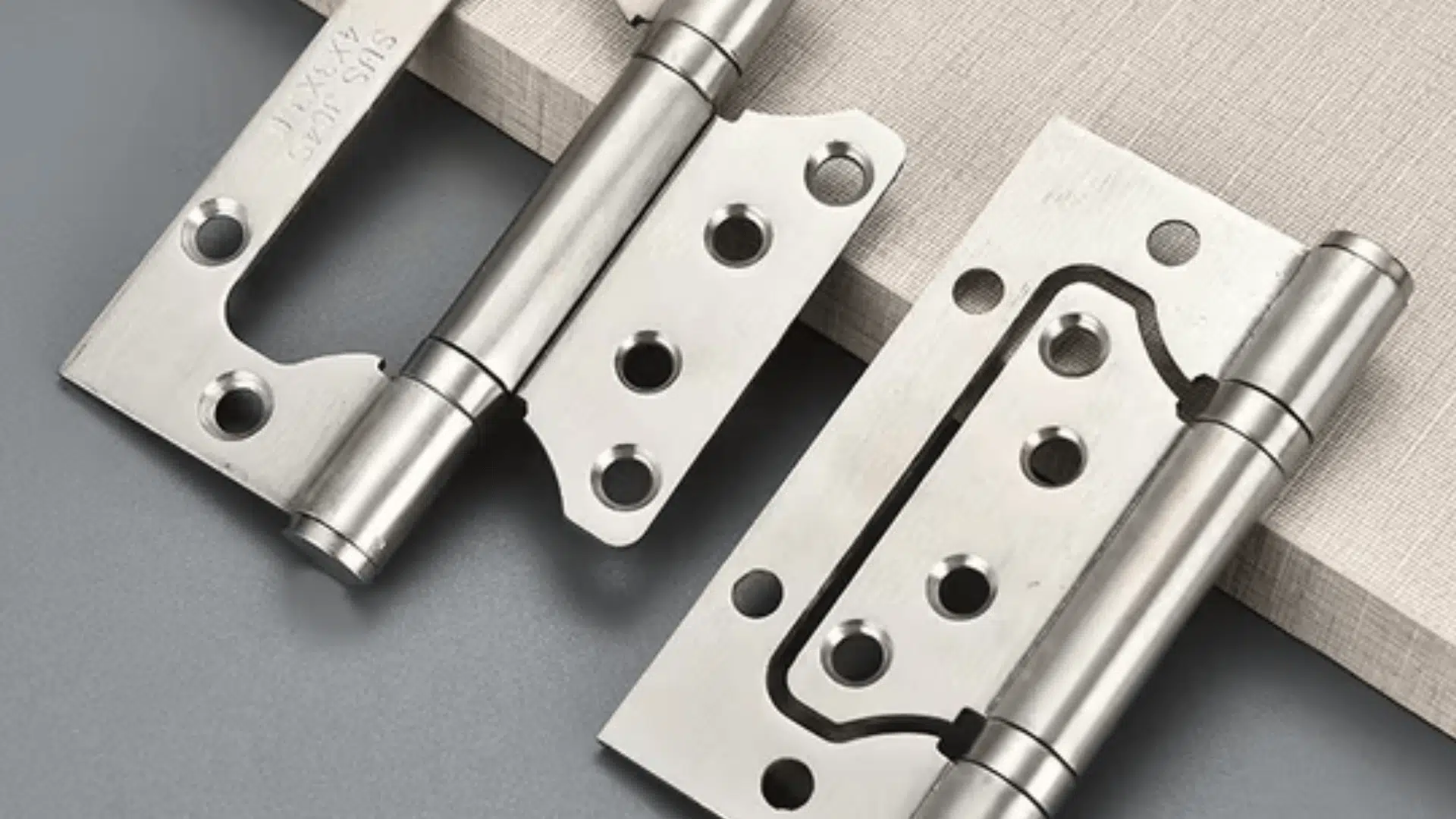
A butterfly hinge has a wide, decorative shape that resembles butterfly wings when opened, remaining visible and adding visual detail to the surface.
Application: It is mainly used on light furniture, such as doors, cabinets, and small chests, where appearance matters as much as function, and the door weight is low.
11. European Hinge
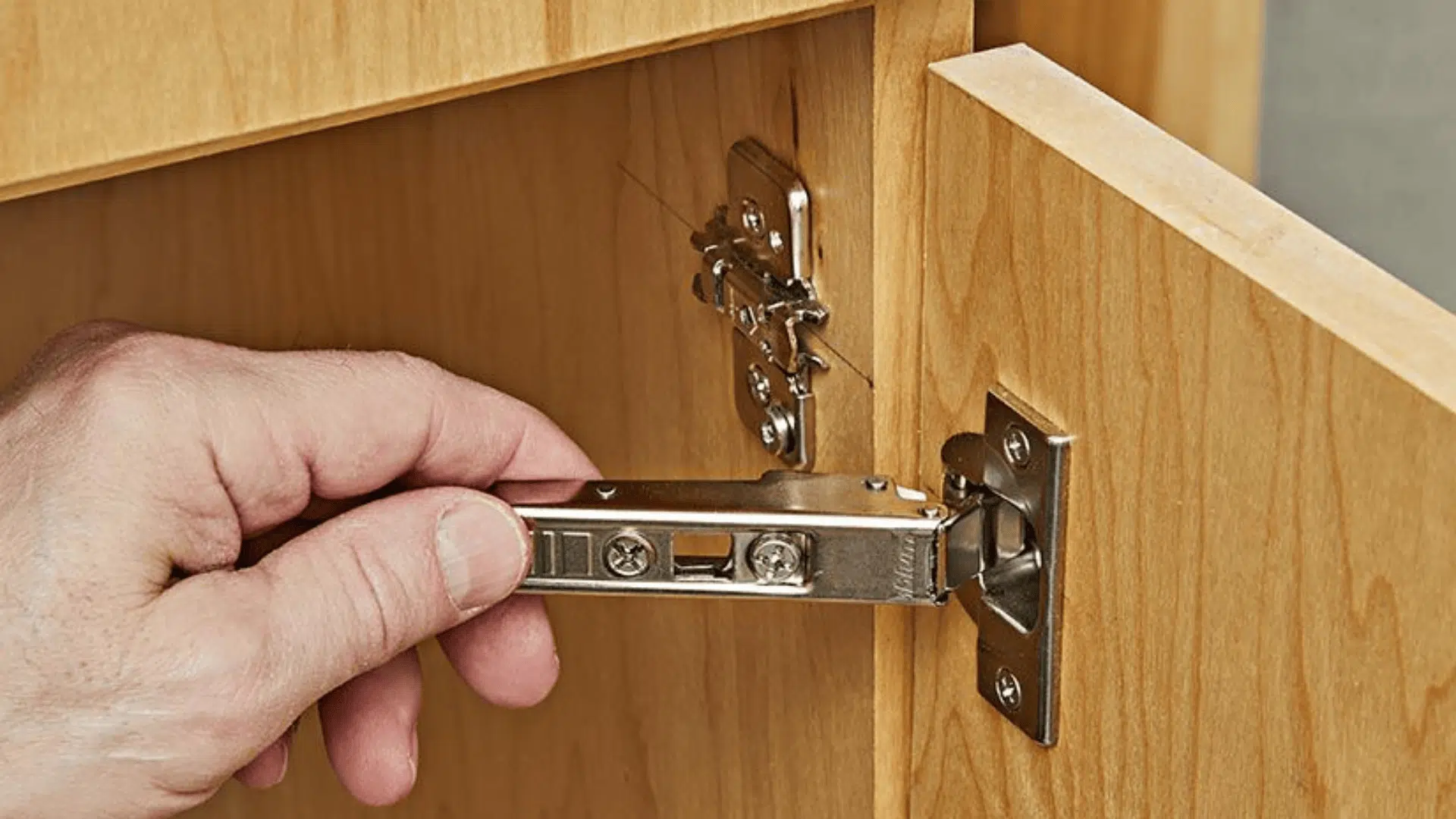
A European hinge, also called a cup hinge, is mostly hidden inside the door and cabinet body and uses a round cup drilled into the back of the door to allow smooth and controlled movement.
Application: European Hinge is widely used in kitchen cabinets and modern furniture because it creates a clean look and often allows easy door alignment without removing the hinge.
12. Decorative Cabinet Hinge
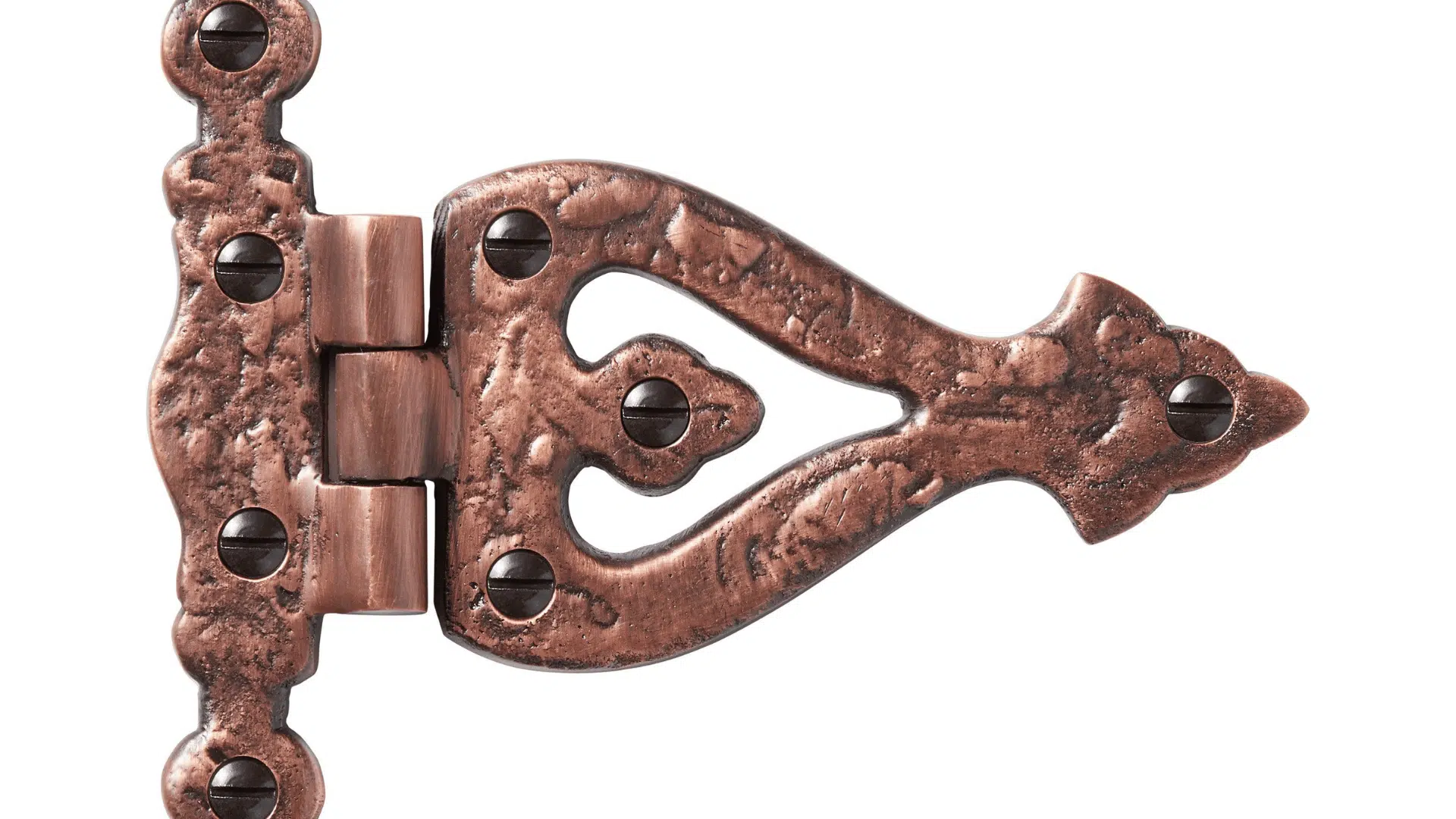
This hinge has a decorative shape with visible curves or patterns and stays on the outside of the door, becoming part of the overall look.
Application: It is used on furniture where appearance matters, such as display cabinets and vintage-style pieces, and works best with light doors.
13. Offset Hinge
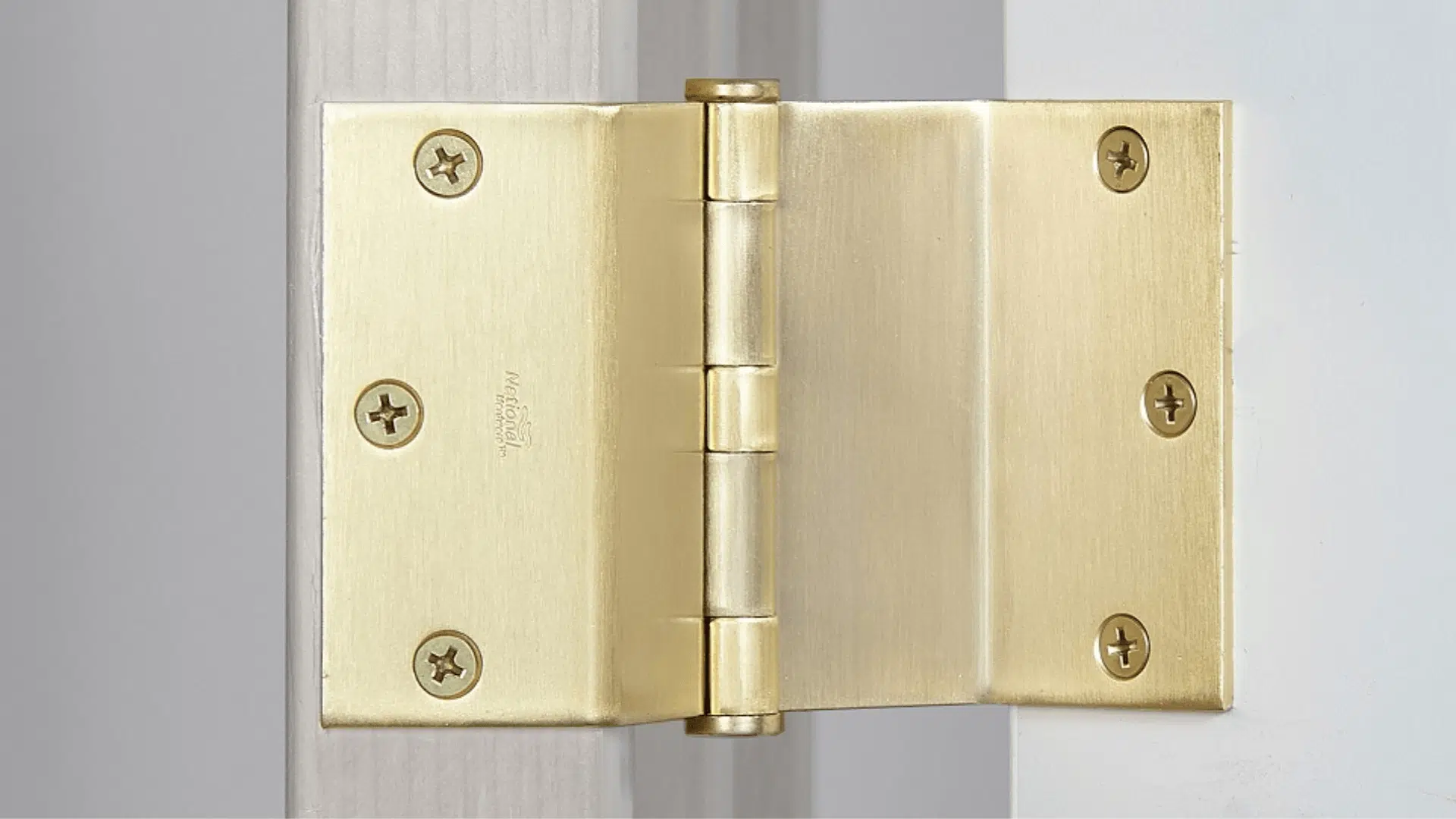
An offset hinge has leaves that are not aligned in a straight line, allowing the door to move away from the frame as it opens.
Application: It is used on doors that need extra clearance, such as those with thick frames or added trim, to help the open fully without hitting nearby surfaces.
14. Flag Hinge
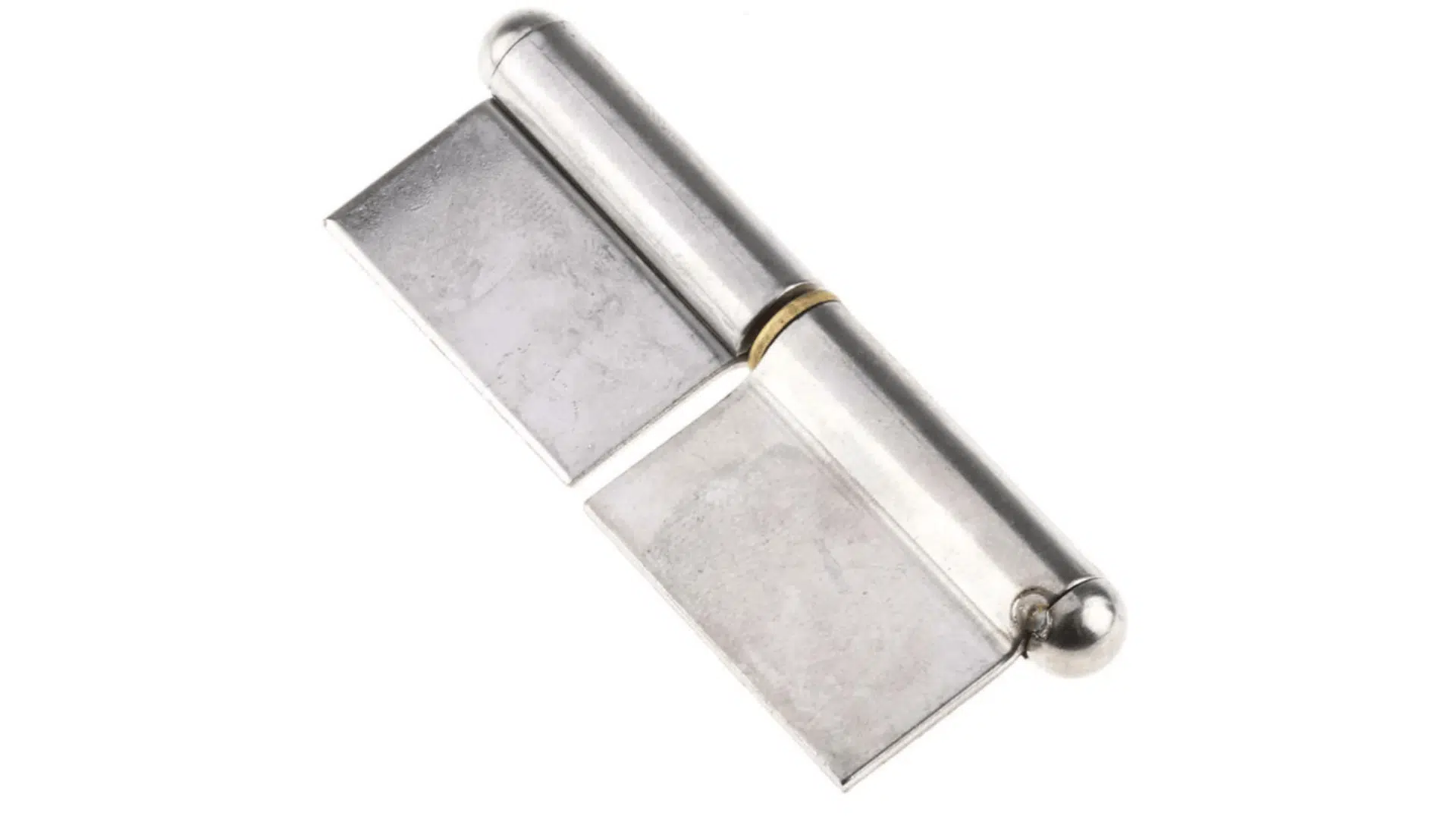
A flag hinge has L-shaped leaves that provide a strong and stable connection, with one part fixed to the frame and the other to the door.
Application: Flag Hinges are used on furniture, cabinets, and gates, and some designs allow easy door removal, making them useful when doors need to be taken off for access or repairs.
15. Buttress Hinge
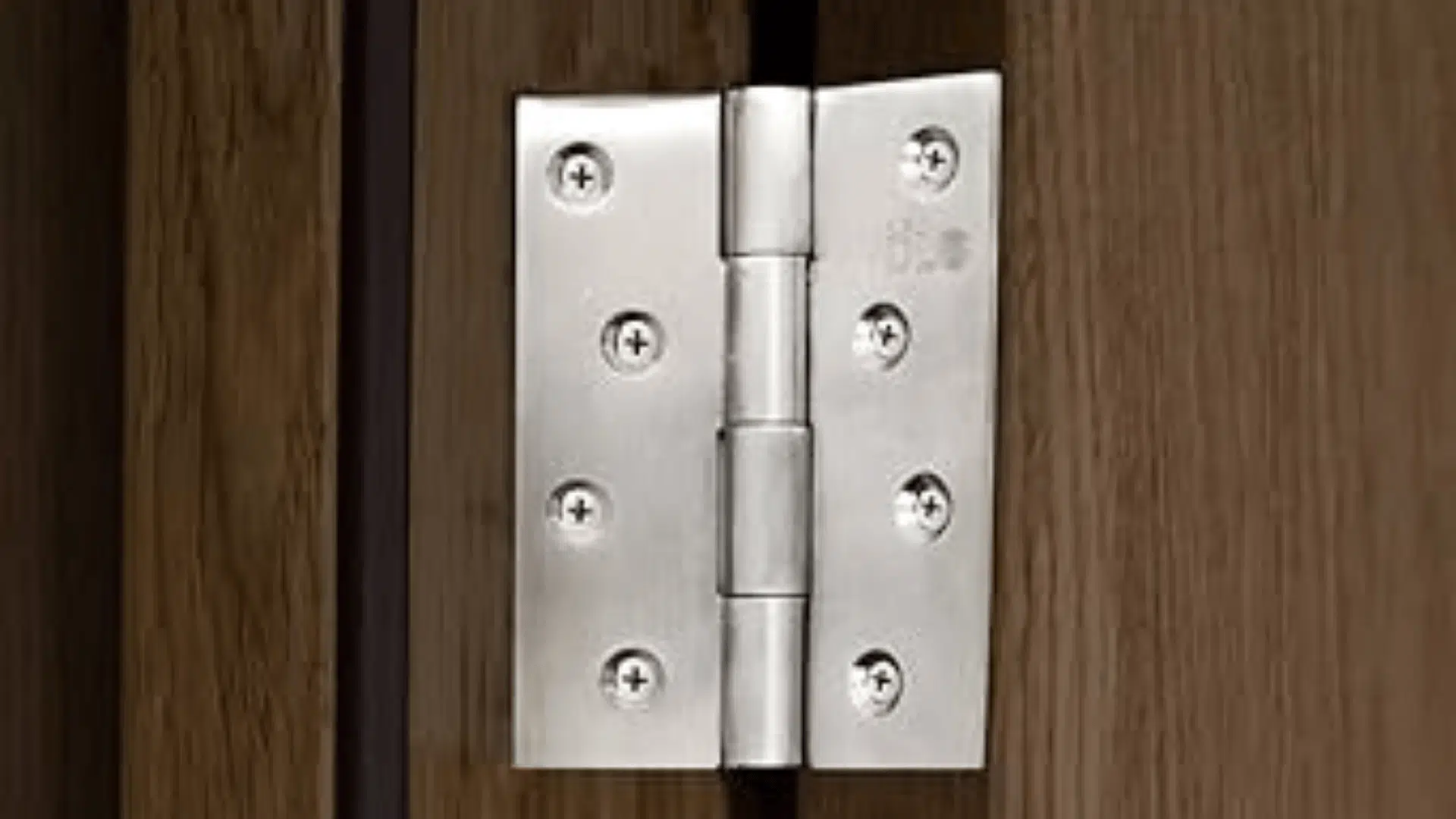
A buttress hinge uses thick, triangular plates to support heavy loads, with the shape helping to spread force across the hinge surface.
Application: It is commonly used on large doors found on sheds, barns, and storage buildings.
16. Cabinet Wrap-Around Hinge
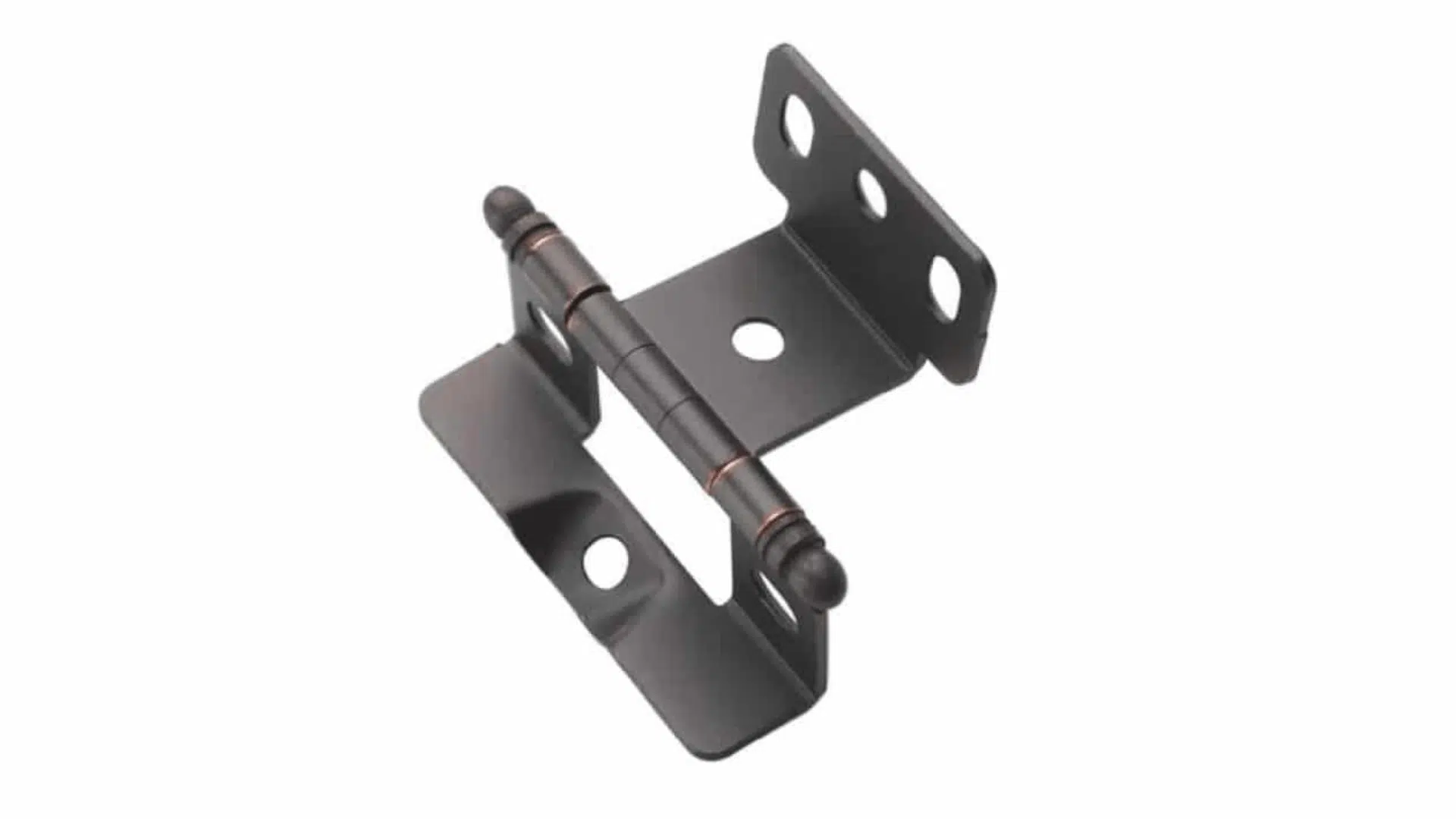
A wrap-around hinge bends around the edge of the cabinet frame, holding onto both the front and side surfaces to add extra grip and stability.
Application: A wraparound hinge is used on cabinet doors where strong support is needed, especially on older cabinets or doors that require added strength without complex fittings.
17. Inset Cabinet Hinge
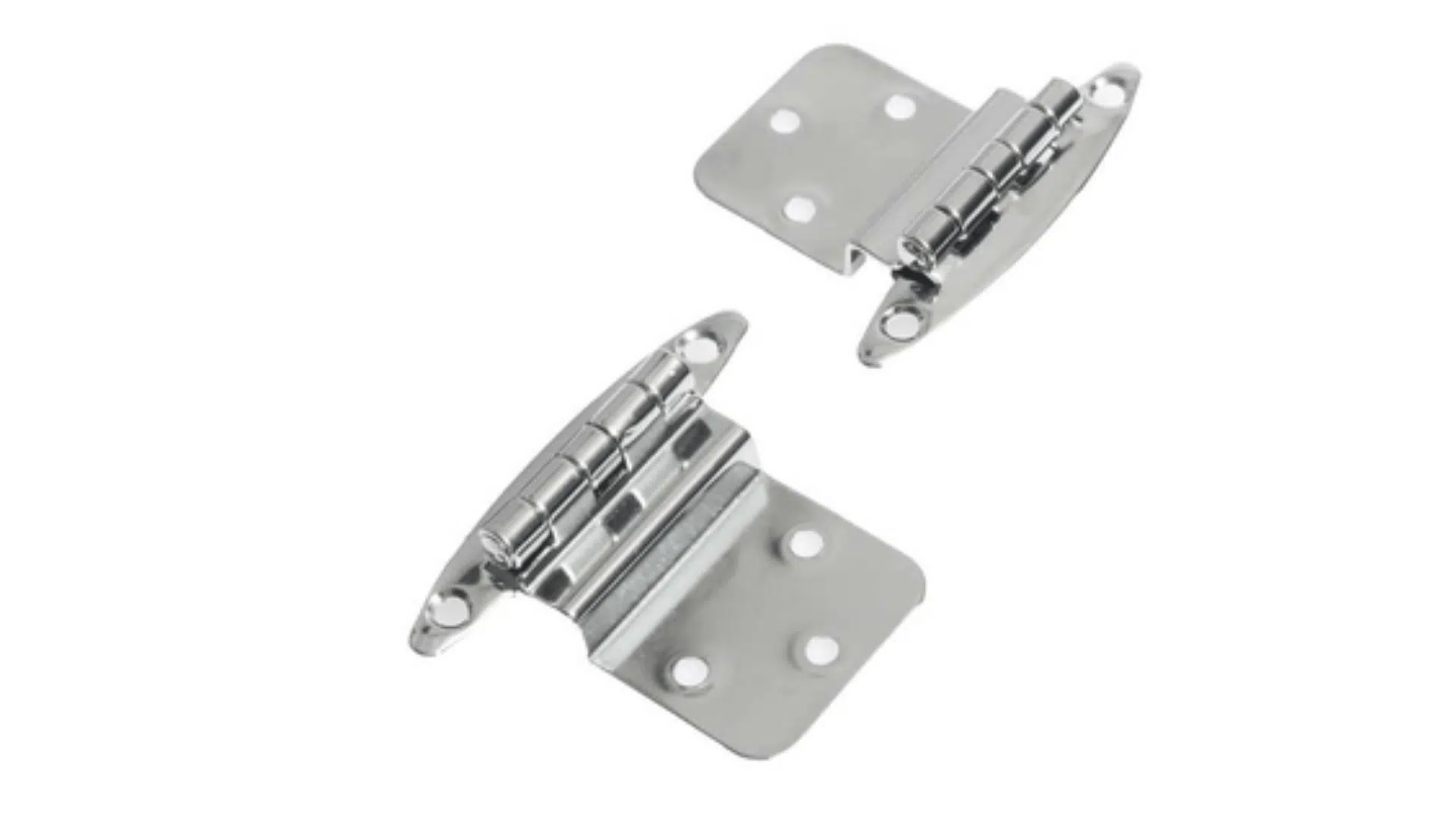
An inset cabinet hinge is designed to fit flush within the cabinet frame, allowing the door to sit level with the frame when closed for a neat, balanced look.
Application: It is used on cabinet doors where the door fits within the frame opening, and it is common in kitchens and storage cabinets that need a clean, classic layout.
18. Partial-Overlay Cabinet Hinge
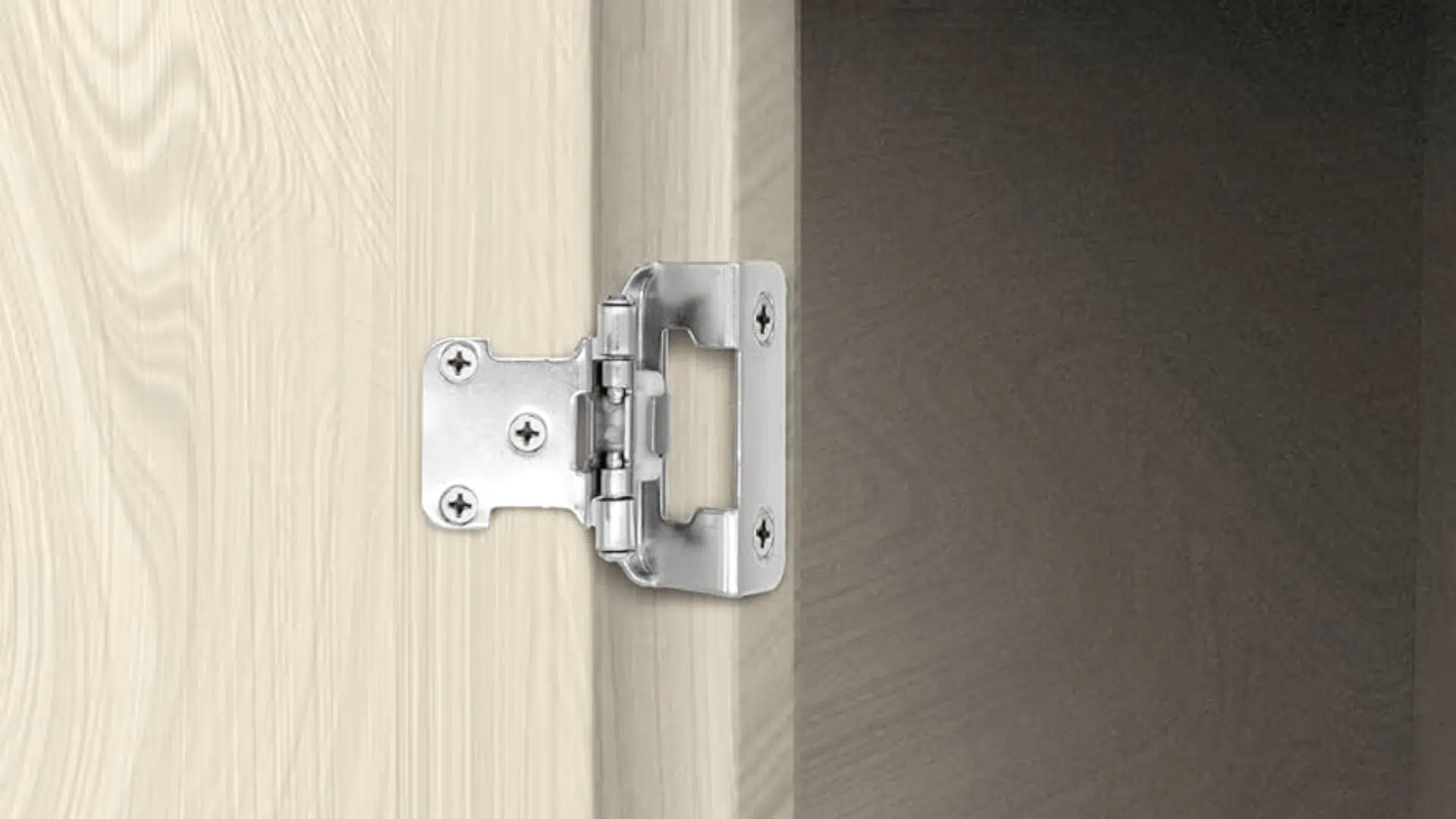
A partial-overlay hinge allows the door to cover only part of the cabinet frame, leaving some of the frame visible when the door is closed.
Application: It is often used in kitchen cabinets, where multiple doors share a single frame, helping to save space and control door movement.
19. Full-Overlay Cabinet Hinge
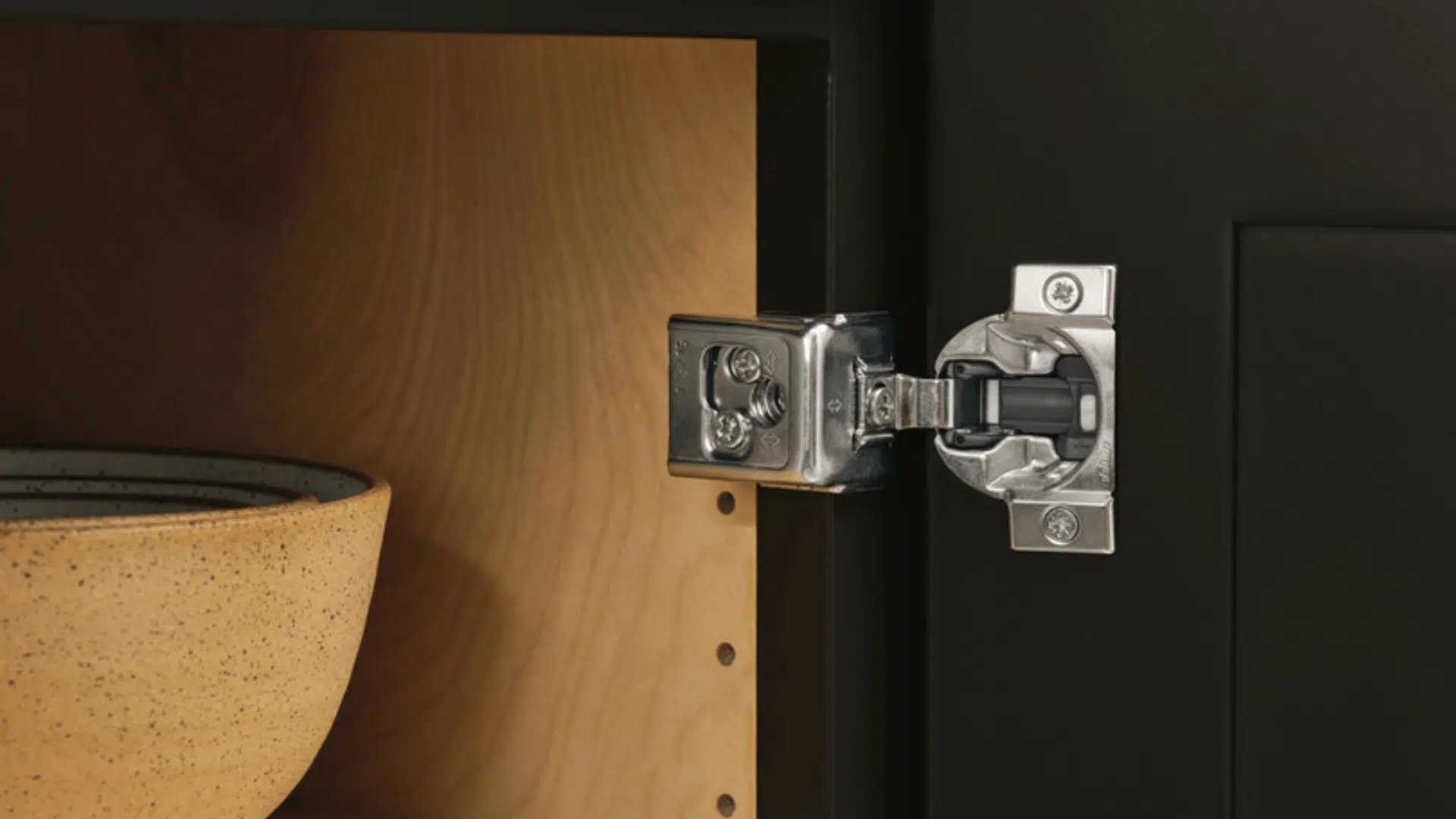
A full-overlay hinge lets the door cover the entire cabinet frame, pulling the door fully over the frame to create a smooth, flat surface.
Application: It is used to create a clean cabinet front and is common in modern kitchens and furniture where simple lines are preferred.
20. Soft-Close Hinge
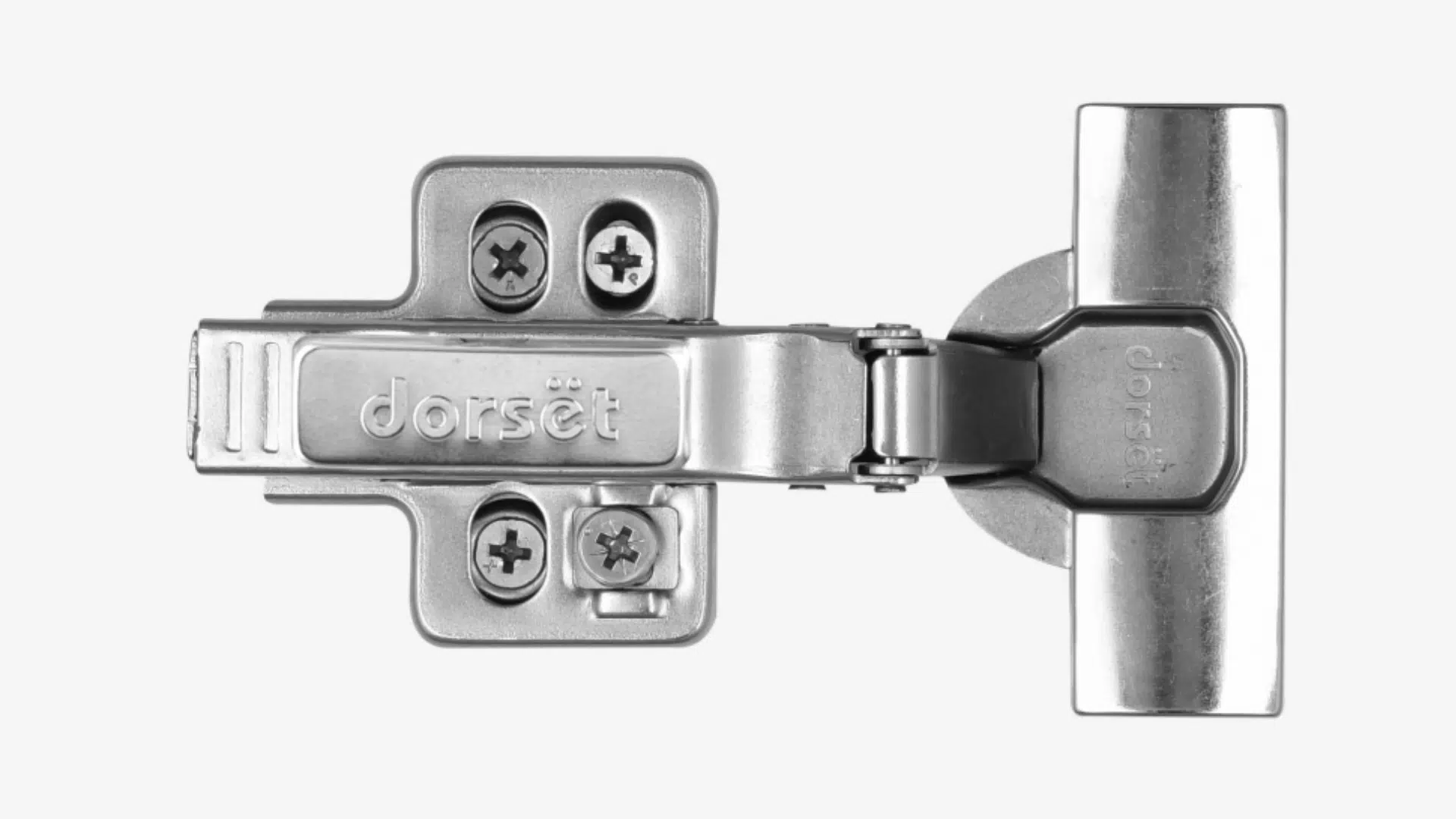
A soft-close hinge includes a built-in mechanism that slows the door as it closes, helping prevent slamming and reducing impact on the cabinet.
Application: It is used on cabinets where quiet closing is important, such as in kitchens and bedrooms, and also helps reduce wear over time.
21. Lift-Off Hinge
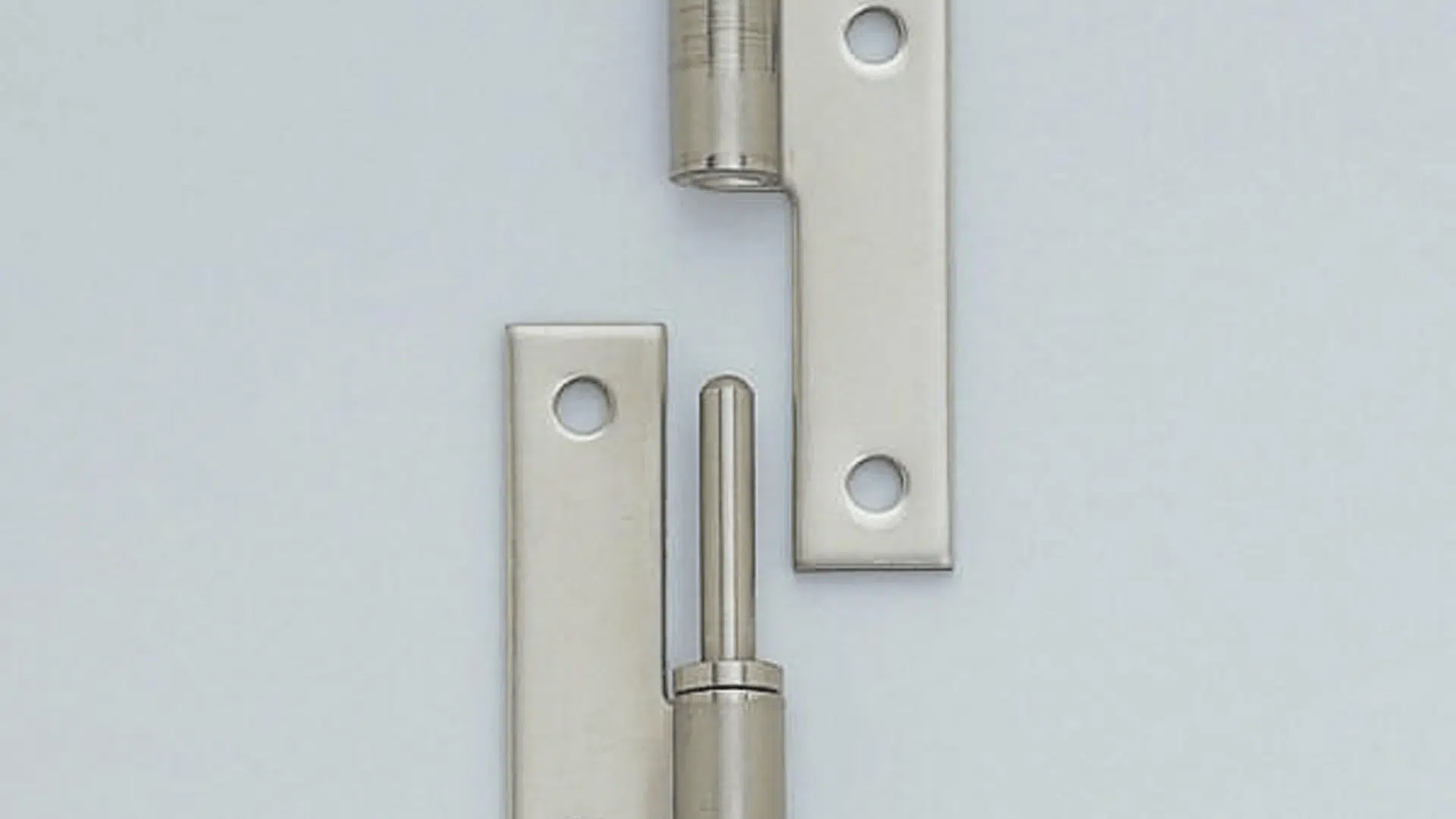
A lift-off hinge allows a door to be removed by lifting it upward without using tools, as the hinge separates into two parts.
Application: It is useful for doors that need easy removal, such as access panels or cabinets that require regular cleaning or maintenance.
22. Knife Hinge
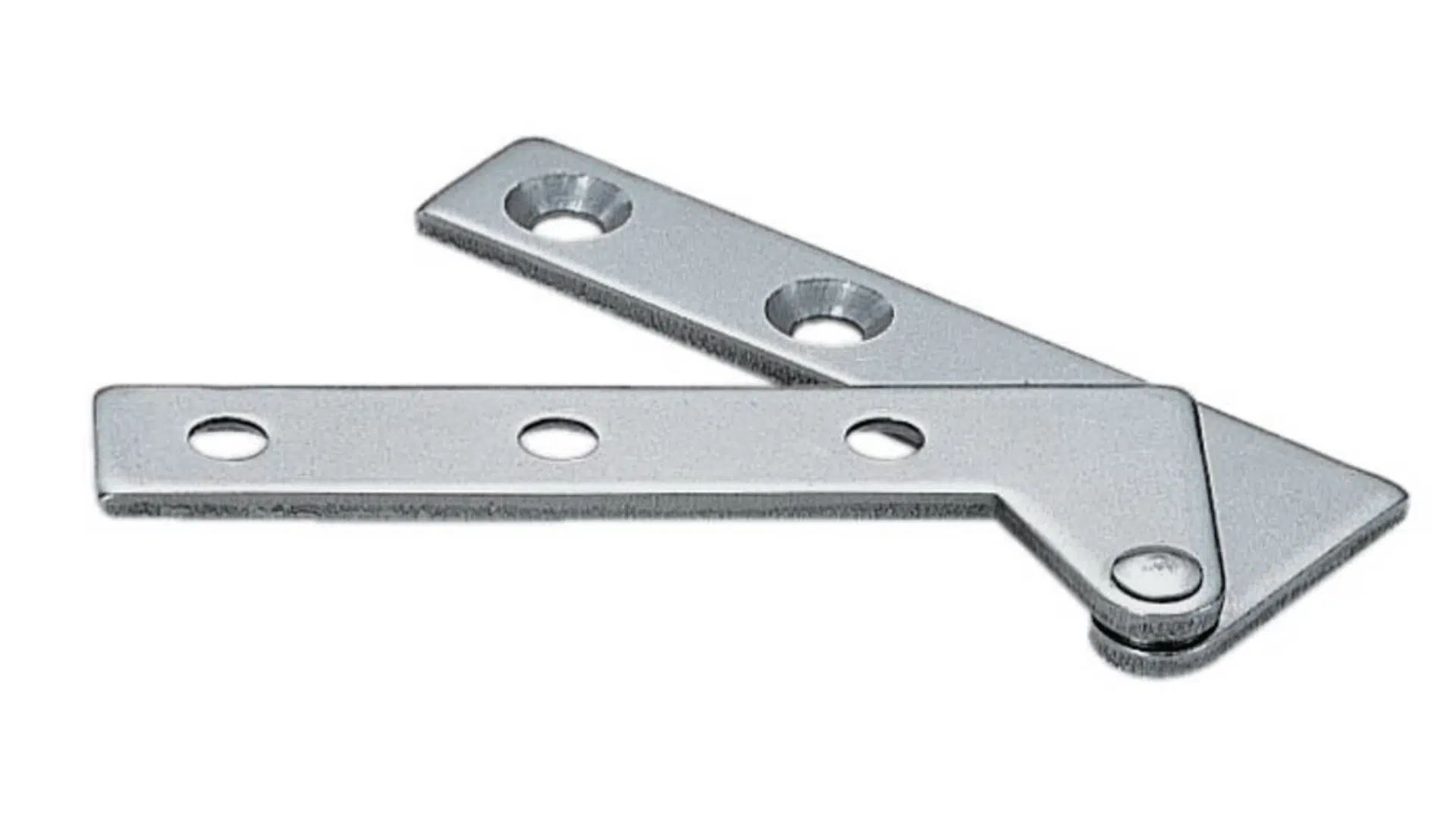
A knife hinge has a long, thin blade that fits into a narrow slot in the door and frame, keeping most of the hinge hidden when the door is closed.
Application: Knife hinges are used in wardrobes and furniture where a hidden hinge is preferred and works best on light- to medium-weight doors.
23. Corner Hinge
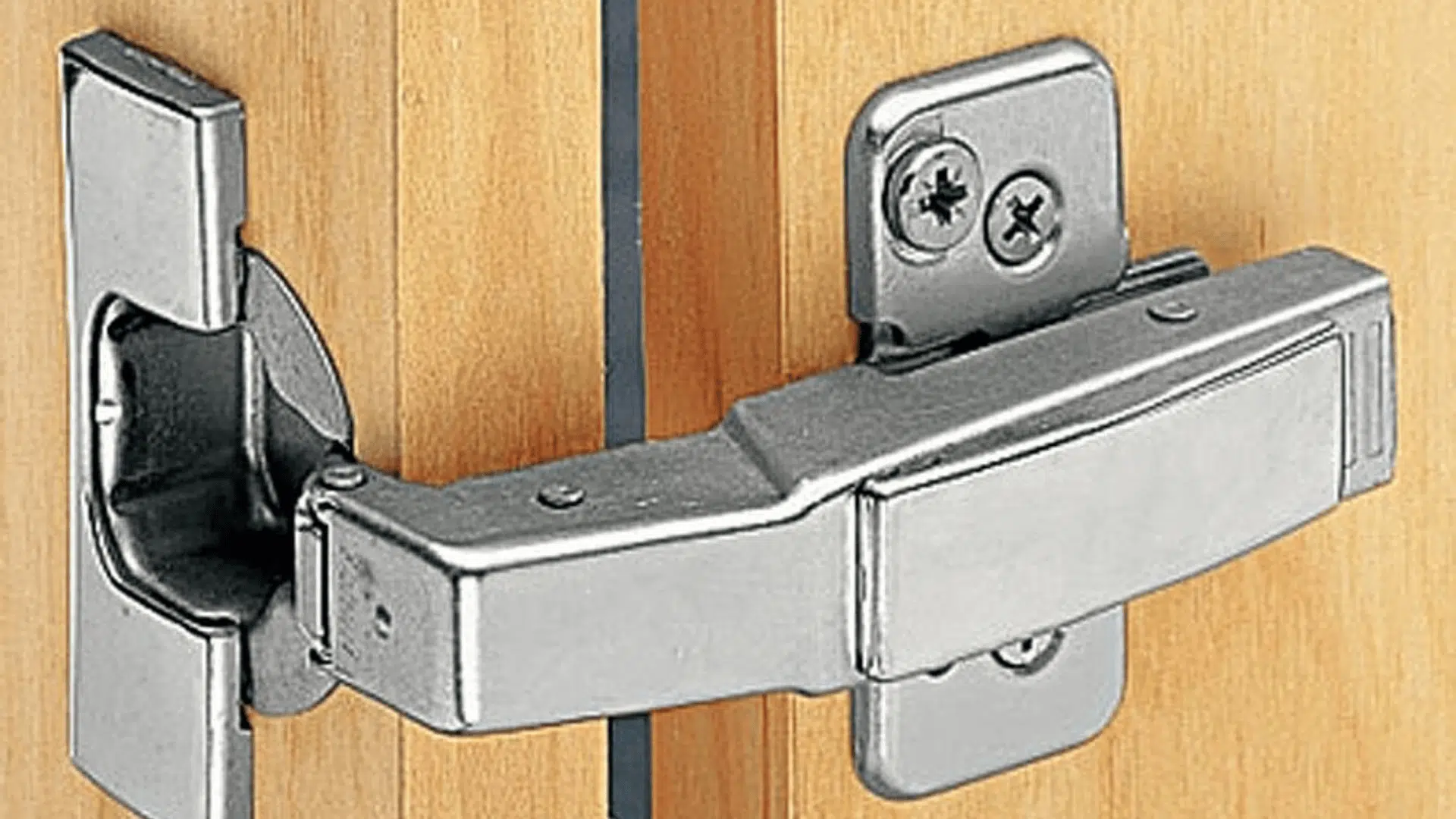
A corner hinge is shaped to work with doors that meet at an L-shaped angle, allowing smooth movement while keeping the door aligned with the cabinet corners.
Application: It is primarily used in corner cabinets, especially in kitchens, where it allows doors to open without hitting nearby panels or handles.
24. Magnetic Hinge
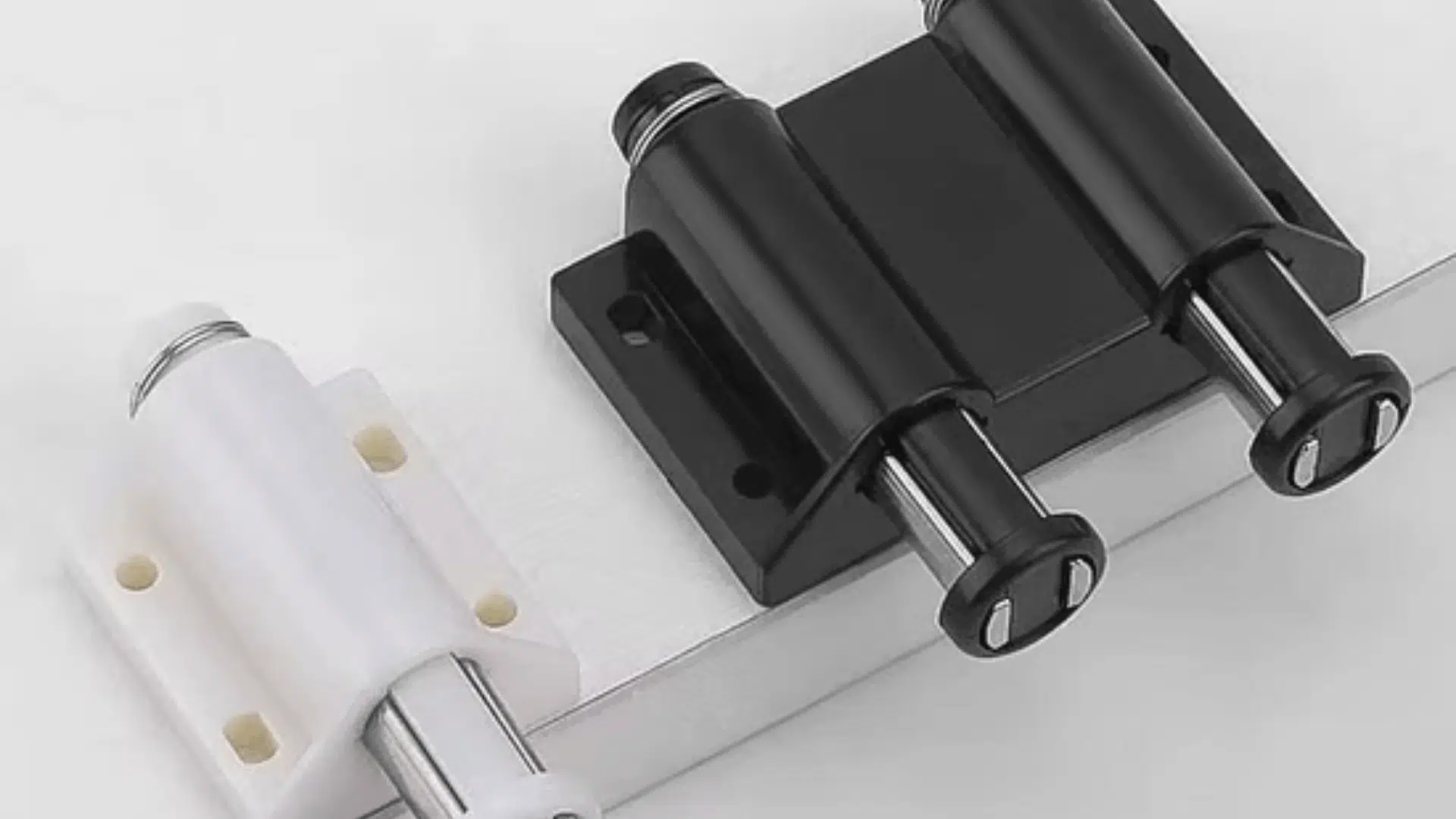
A magnetic hinge uses built-in magnets to guide and hold the door in place, with the hinge supporting movement and the magnet adding control.
Application: It is used on specialty doors, such as display units or light panels, to help keep doors closed securely without extra catches.
25. Geared Continuous Hinge
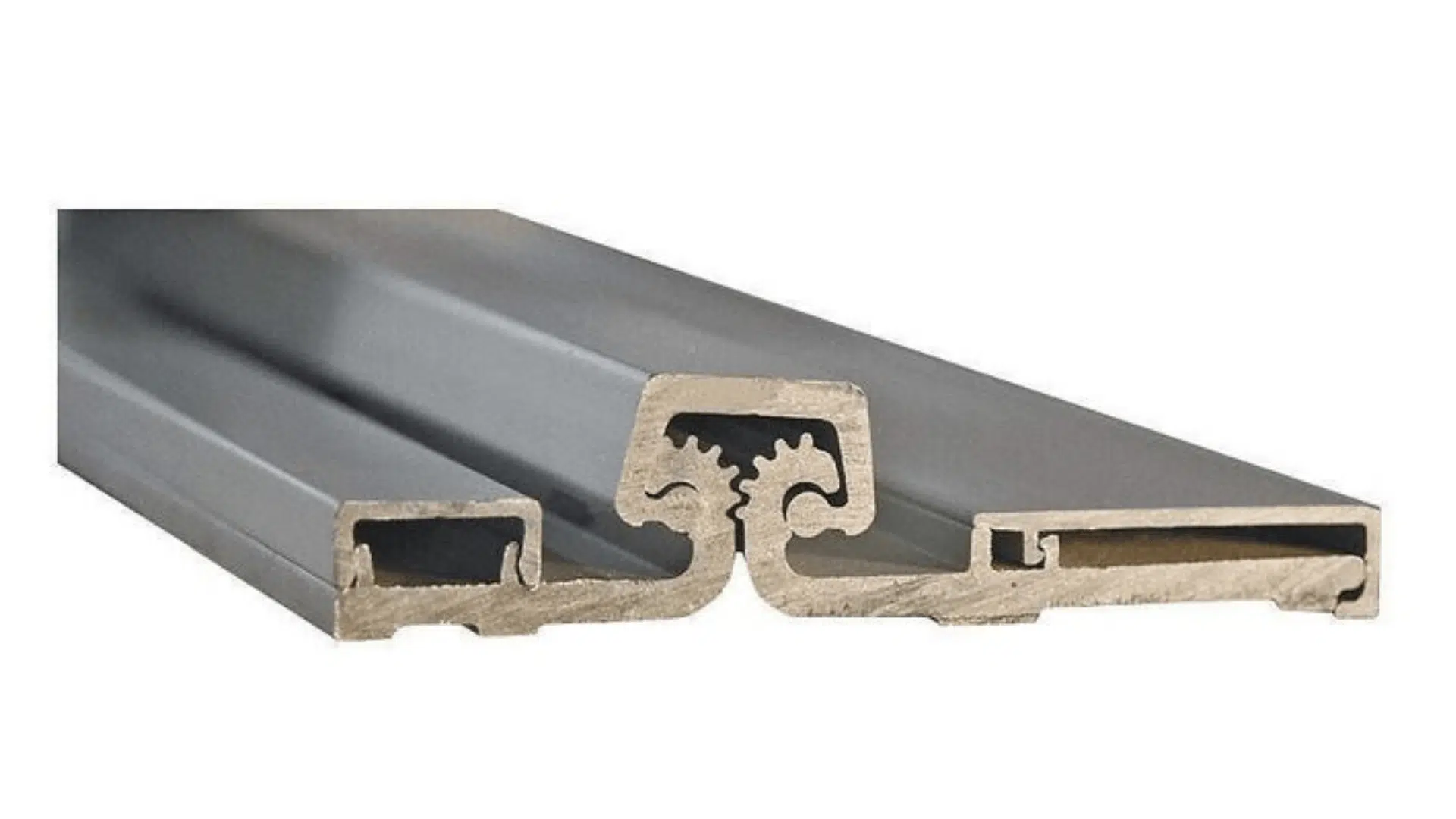
A geared continuous hinge runs along the full height of the door and uses internal gears to control movement, spreading weight evenly across the door.
Application: Geared Continuous Hinge on high-traffic doors in places like schools, hospitals, and airports, where it handles frequent use while keeping movement smooth and controlled.
How to Choose the Right Hinge Types for Different Uses
Choosing the right hinge is about matching simple needs with the right design so doors and cabinets work well and last longer. Here’s how you can pick the right hinge:
- Check the Size of the Door – Larger doors need bigger hinges to stay balanced. A hinge that is too small may not support the door properly.
- Think About the Weight – Heavy doors need strong hinges, while light doors work fine with simple ones. Matching the weight helps the door move smoothly.
- Choose the Right Material – For indoor use, basic metal hinges work well. For outdoor or damp areas, moisture-resistant materials last longer.
- Look at How Often It Will Be Used – Doors opened many times a day need hinges built for frequent movement. Light-use doors do not need heavy designs.
- Match the Hinge to the Door Type – Cabinets, gates, and room doors all need different hinge styles. Using the right type improves fit and movement.
- Start Simple if Unsure – Beginners should choose common hinge styles. Professionals can select advanced options based on exact needs.
When size, weight, material, and use all match the hinge choice, everyday movement becomes easier and more reliable.
Final Thoughts
Choosing the right hinge may seem simple, but hinge types play an important role in how doors, cabinets, and panels function every day.
From light household use to heavy or high-traffic areas, each hinge type has a specific purpose. Understanding the different hinge types helps prevent sagging, stiffness, and early wear.
A wide range of hinge types is covered, including concealed, pivot, cabinet, decorative, and heavy-duty options. When the hinge matches the door’s size, weight, and use, movement stays smooth and reliable over time.
If you are planning a repair or new installation, choosing the right hinge types can save time and help everyday items work better. Have a specific hinge in mind? Share it in the comments!
Frequently Asked Questions
Are All Hinges Visible When a Door is Closed?
No. Some hinge types, such as concealed and knife hinges, remain hidden when the door is closed. Others are meant to be seen.
Can the Wrong Hinge Cause Door Problems?
Yes. Using the wrong hinge can lead to sagging, uneven movement, or noise over time.
Why are There so Many Types of Hinges?
Different hinge types exist because doors and panels vary in size, weight, and use. Each design solves a specific movement or support need.