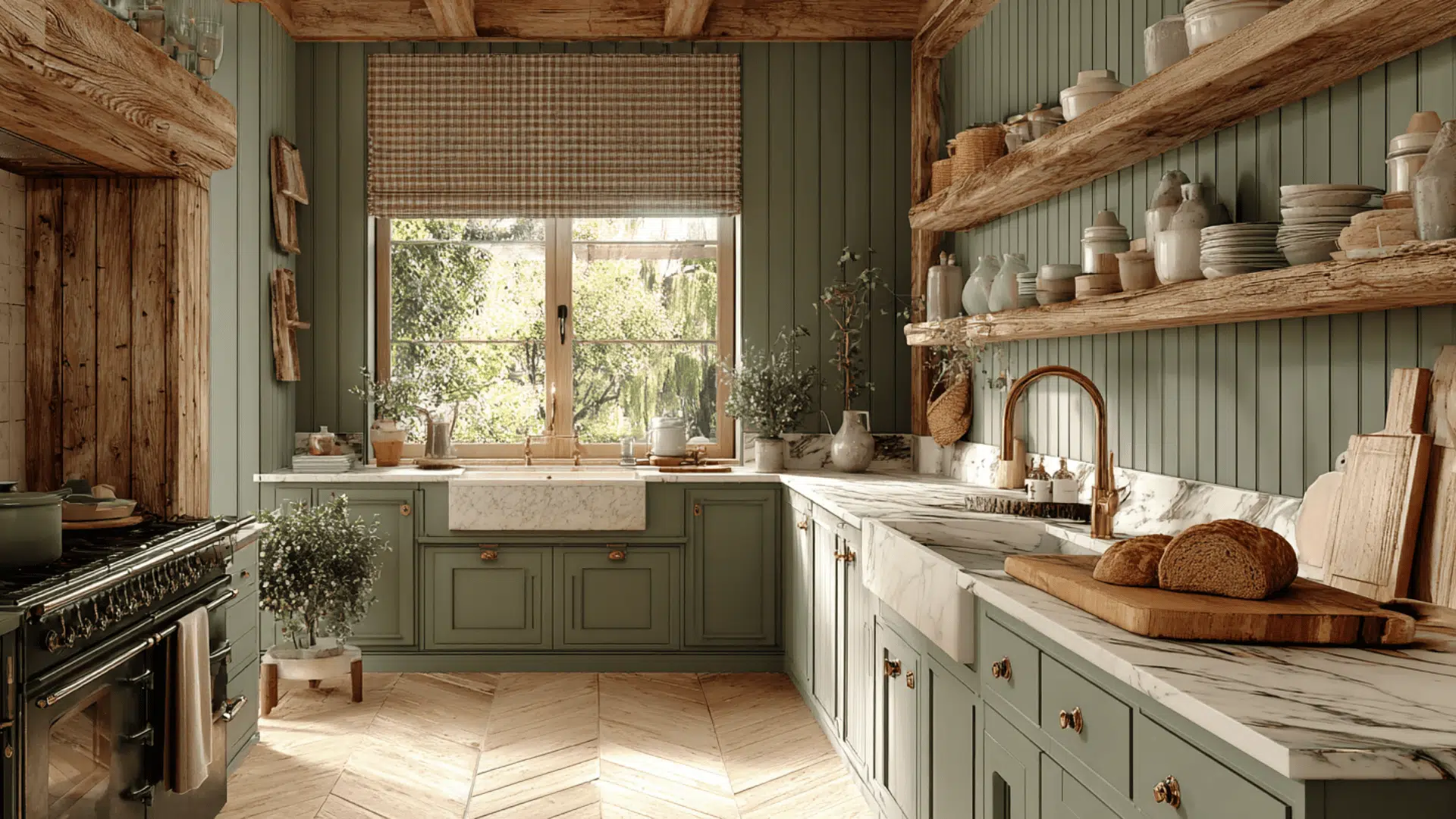
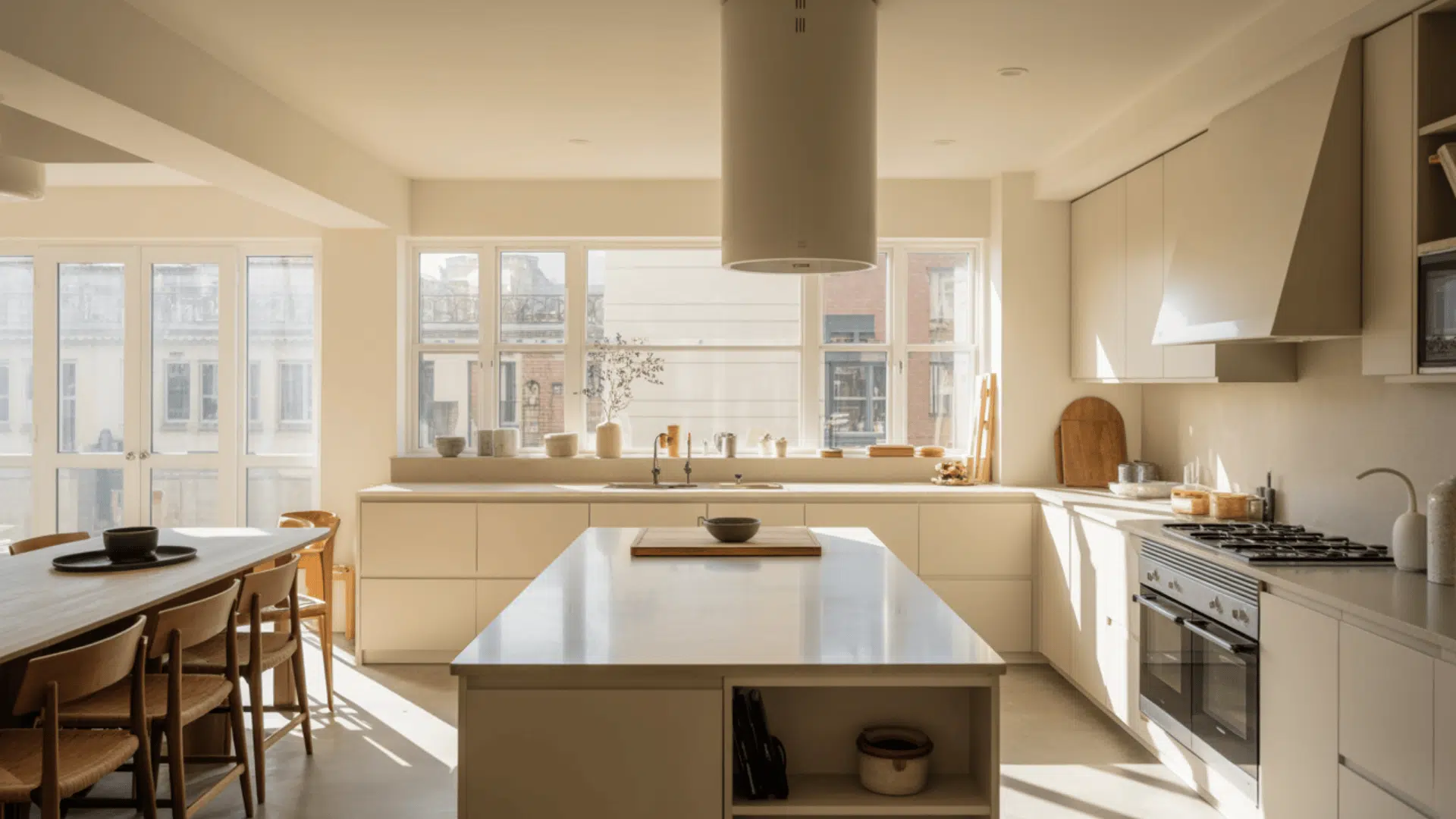
Finding the perfect kitchen island size can feel like solving a puzzle. Make it too big, and it eats up the whole room. Go too small, and it barely helps with day-to-day life.
I’ve watched plenty of people stand right in the middle of their kitchen with a tape measure in hand, trying to picture what will actually work once the cabinets are in and the stools are pulled out.
Here’s the truth: there’s no one-size-fits-all answer. Kitchen island size depends on the space you have, how people move through it, and what you truly need the extra surface for.
Some families need a breakfast bar that becomes the hub for homework and coffee. Others want storage galore because their cabinets are bursting at the seams.
But most people don’t realize there’s a sweet spot that can make a kitchen feel effortless instead of exhausting.
Why Kitchen Island Size Matters
Getting the kitchen island dimensions right affects everything. It affects how smoothly dinner cooks on a busy weeknight and whether three people can prep side by side or constantly bump into each other.
A properly sized island creates natural traffic flow. People can grab snacks, prep vegetables, or hang out and chat without that cramped, “everyone move!” feeling.
But an oversized island turns your kitchen into an obstacle course. And once it’s installed, there’s no “undo” button. I’ve had clients try to save money by skipping the planning stage, then regret it every single day once they realize they can’t open the dishwasher comfortably or squeeze past someone sitting at the island.
The right dimensions mean the difference between a kitchen that works beautifully and one that frustrates you at every turn.
Standard Kitchen Island Dimensions
Most kitchen islands are 36 to 48 inches wide and 72 to 96 inches long. The height is typically 36 inches, which matches standard countertops.
That said, these numbers aren’t set in stone. Some homes have space to go bigger, while others need a scaled-down version that still adds function without swallowing the room.
The key is leaving enough breathing room around the island. In most layouts, you’ll want at least 42 to 48 inches of clearance on all sides. That space allows cabinet doors to swing open and gives people room to pass by comfortably.
Designers call this the “work zone,” but honestly, it’s just common sense. Nobody wants to slide sideways through their own kitchen like it’s a narrow hallway.
Critical Clearance Requirements
Kitchen island size means nothing if you can’t move around it comfortably. Clearance space is what determines whether your kitchen flows smoothly or feels like a cramped maze.
- Minimum 42 inches between island and counters: This allows cabinet doors to open fully and gives one person enough room to pass by without turning sideways.
- 48 inches for high-traffic kitchens: If multiple cooks are working, or kids are constantly running through, that extra six inches prevents collisions and keeps everyone sane.
- 36 inches for tight spaces only: Some small kitchens can squeeze by with less, but it will feel snug, and cabinet access becomes trickier.
- 54-60 inches behind seated areas: Bar stools need pullout space, plus room for people to walk behind without bumping into seated diners.
- 9-12 inches of overhang for seating: Knees need somewhere to go. This depth gives comfortable leg room without feeling cramped.
Kitchen Island Types and Their Ideal Dimensions
Not all islands are created equal. Different styles serve different purposes, and each has its own size requirements. Choosing the right type depends on what matters most: extra storage, seating space, prep room, or flexibility.
1. Standard Stationary Island
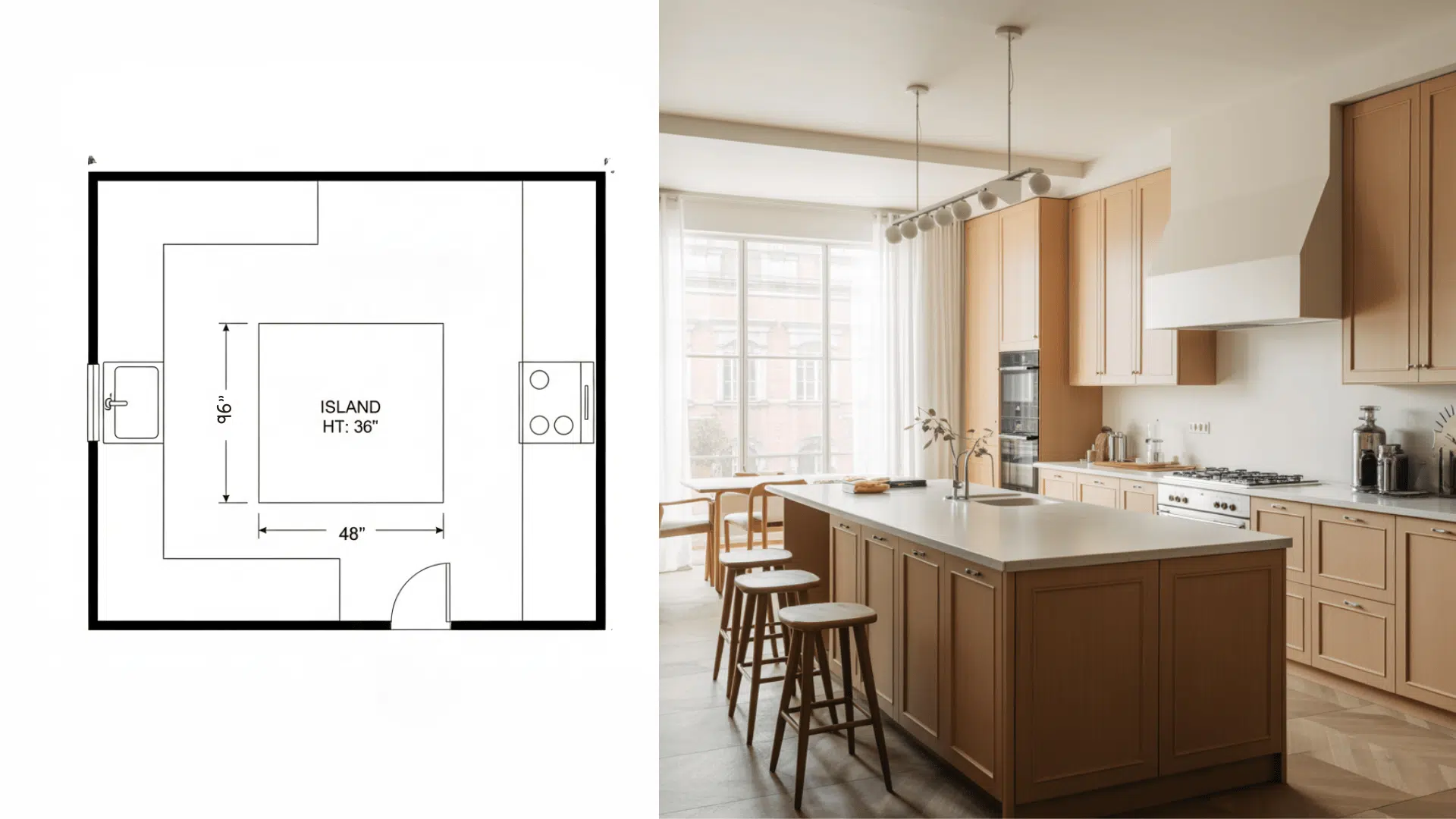
This is the classic choice most people picture. It’s permanently installed and offers maximum stability and storage potential. It anchors the kitchen and serves as the main workspace for everyday cooking.
- Dimensions: 40-48 inches wide, 80-96 inches long, 36 inches high
- Best for: Medium to large kitchens with open floor plans
- Pros: Plenty of storage, a stable work surface, and can include appliances
- Cons: Permanent placement requires professional installation
- Design and Style Tip: I usually match cabinetry to the existing kitchen for a cohesive look, but using a contrasting color can make the island feel like a design feature instead of “just another cabinet box.”
2. Rolling/Portable Island
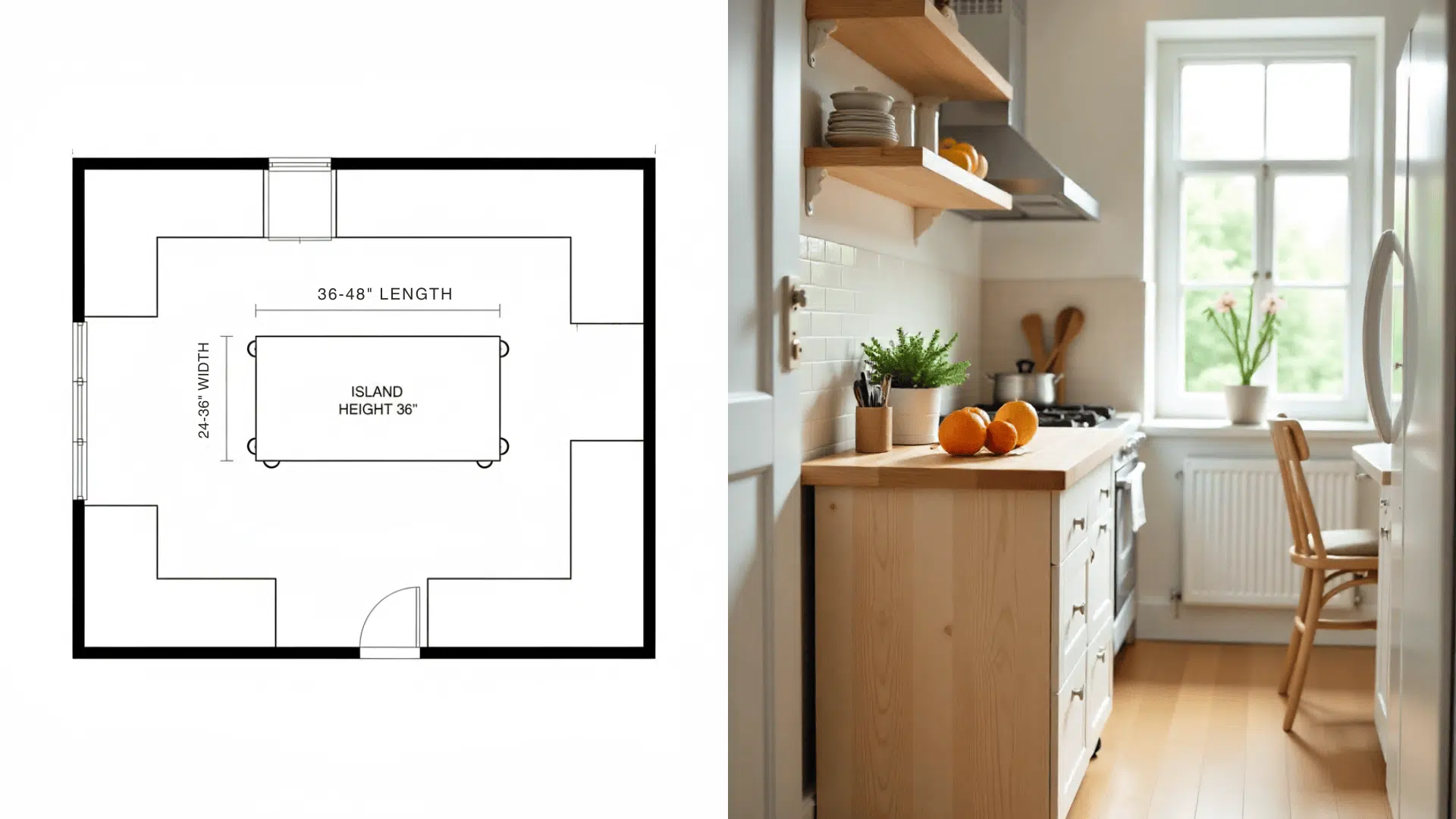
A movable option that offers flexibility, especially when space is tight. These islands sit on wheels or casters, so they can shift around as needed. It’s a great option for renters or anyone who likes to rearrange.
- Dimensions: 24-36 inches wide, 36-48 inches long, 34-36 inches high
- Best for: Small kitchens, apartments, temporary solutions
- Pros: Moveable, affordable, no installation needed
- Cons: Less stable, limited storage, can’t support heavy appliances
- Design and Style Tip: A butcher block top is always a win here; it adds warmth and texture, and it gives the kitchen that “collected over time” charm.
3. L-Shaped Island
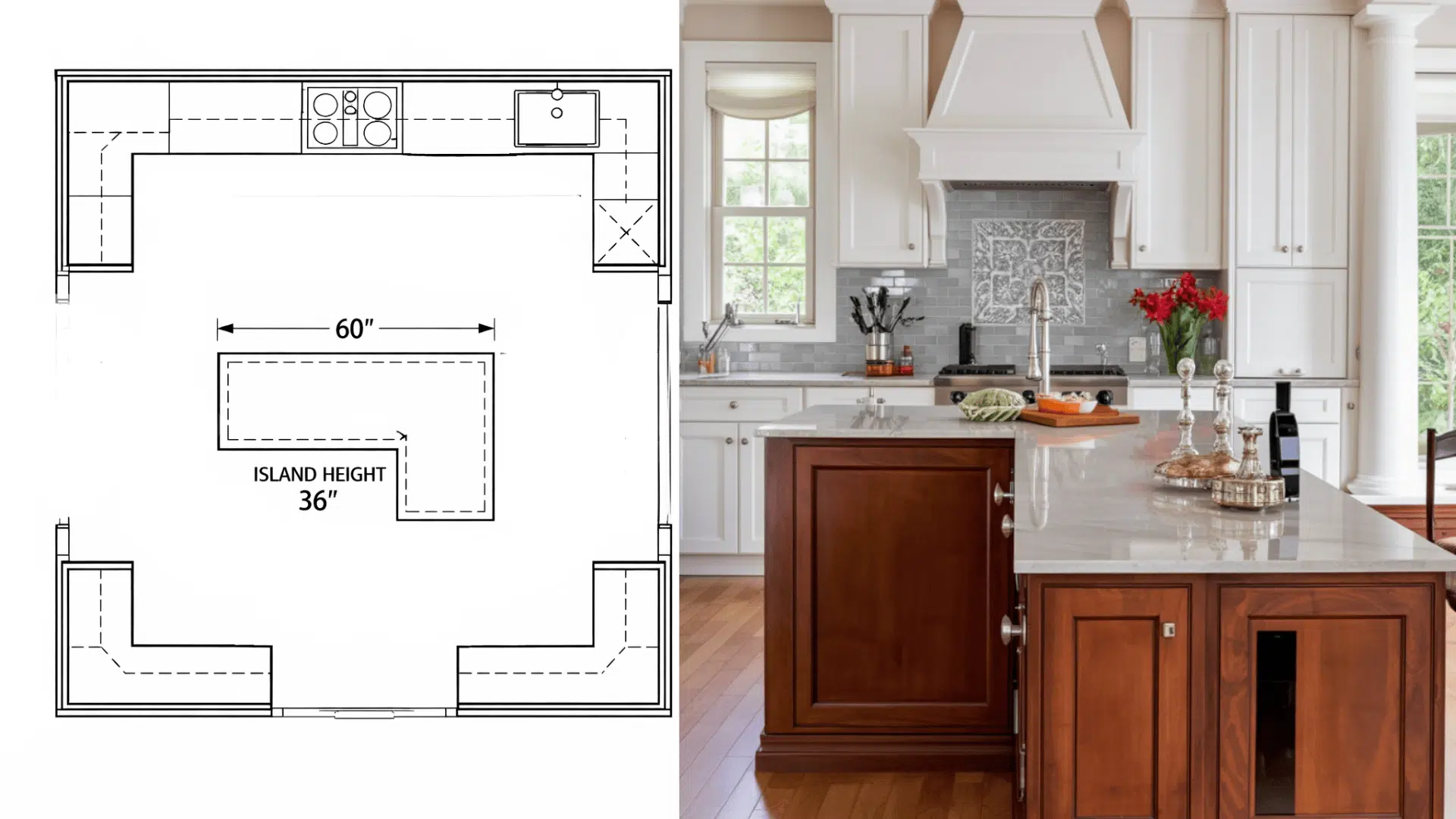
This configuration wraps around to create two work zones. One side might handle food prep while the other becomes a seating or drop zone for groceries, school bags, and mail.
- Dimensions: 48-60 inches on each side, 36 inches high
- Best for: Large, open kitchens with multiple cooks
- Pros: Defines separate zones, maximizes counter space, and encourages interaction
- Cons: Takes up significant floor space, and corners can be awkward
- Design and Style Tip: I often recommend pendant lights above each section. It visually separates the zones and makes the island feel intentional instead of oversized.
4. Rectangular/Galley Islands
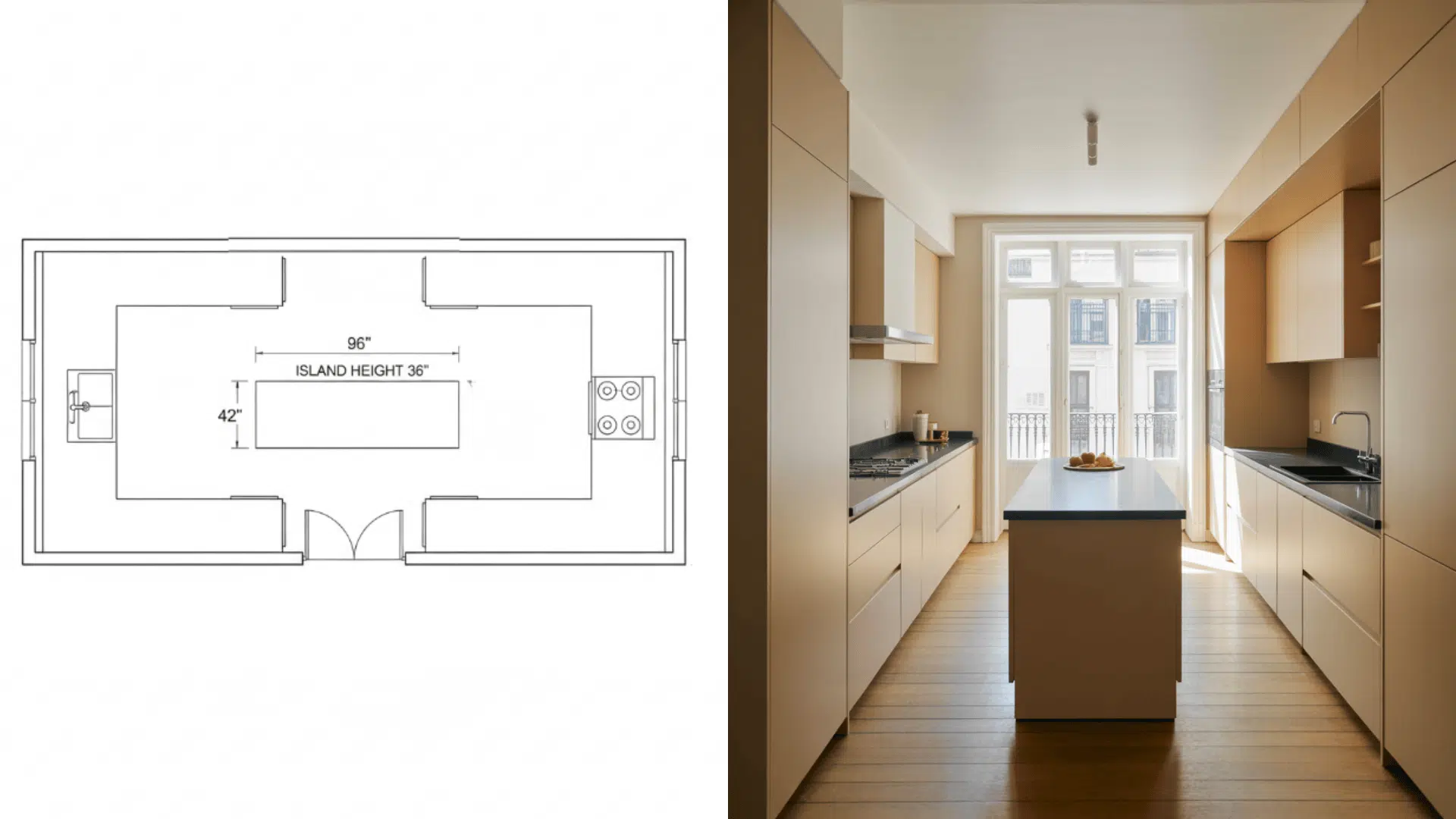
Long and narrow islands that work well in galley-style kitchens. They run parallel to existing counters and can create an efficient work triangle when planned correctly.
- Dimensions: 24-30 inches wide, 72-96 inches long, 36 inches high
- Best for: Narrow kitchens, galley layouts, tight walkways
- Pros: Space-efficient, maintains traffic flow, provides ample counter length
- Cons: Limited seating options, feels cramped if too wide
- Design and Style Tip: Keep it sleek with minimal hardware and lighter countertops so the room doesn’t get that “tunnel effect.”
5. Square Islands
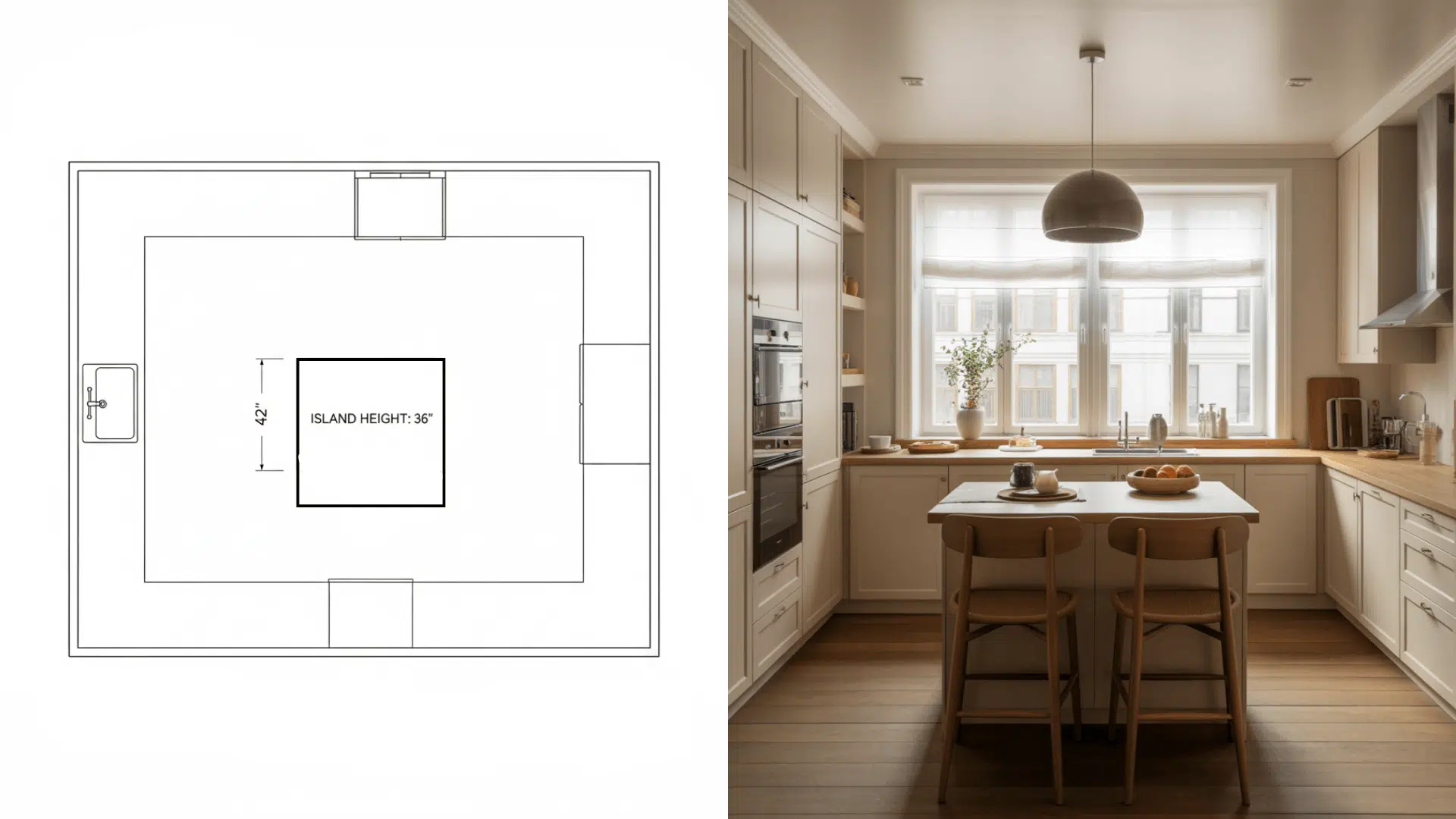
Compact and balanced, square islands fit beautifully in smaller spaces. All four sides are accessible, so it’s easy to approach from any angle.
- Dimensions: 36-48 inches on all sides, 36 inches high
- Best for: Small to medium kitchens, square-shaped rooms
- Pros: Balanced look, equal access from all sides, fits tight spaces
- Cons: Less counter space than rectangular options, limited seating
- Design and Style Tip: Adding open shelving on one side is a great way to make it feel styled, with cookbooks, baskets, or a few pretty bowls doing wonders here.
6. Islands with Seating
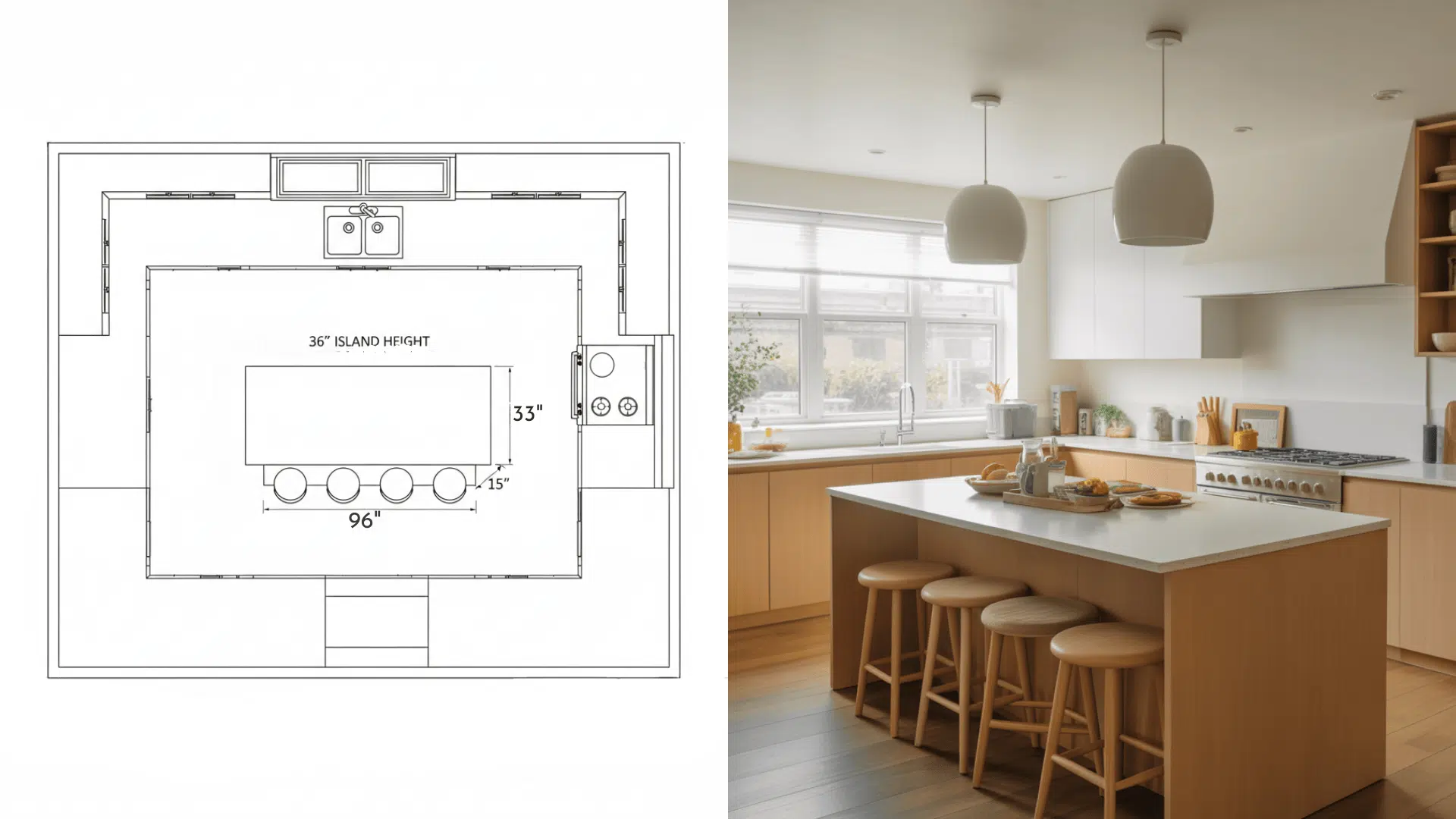
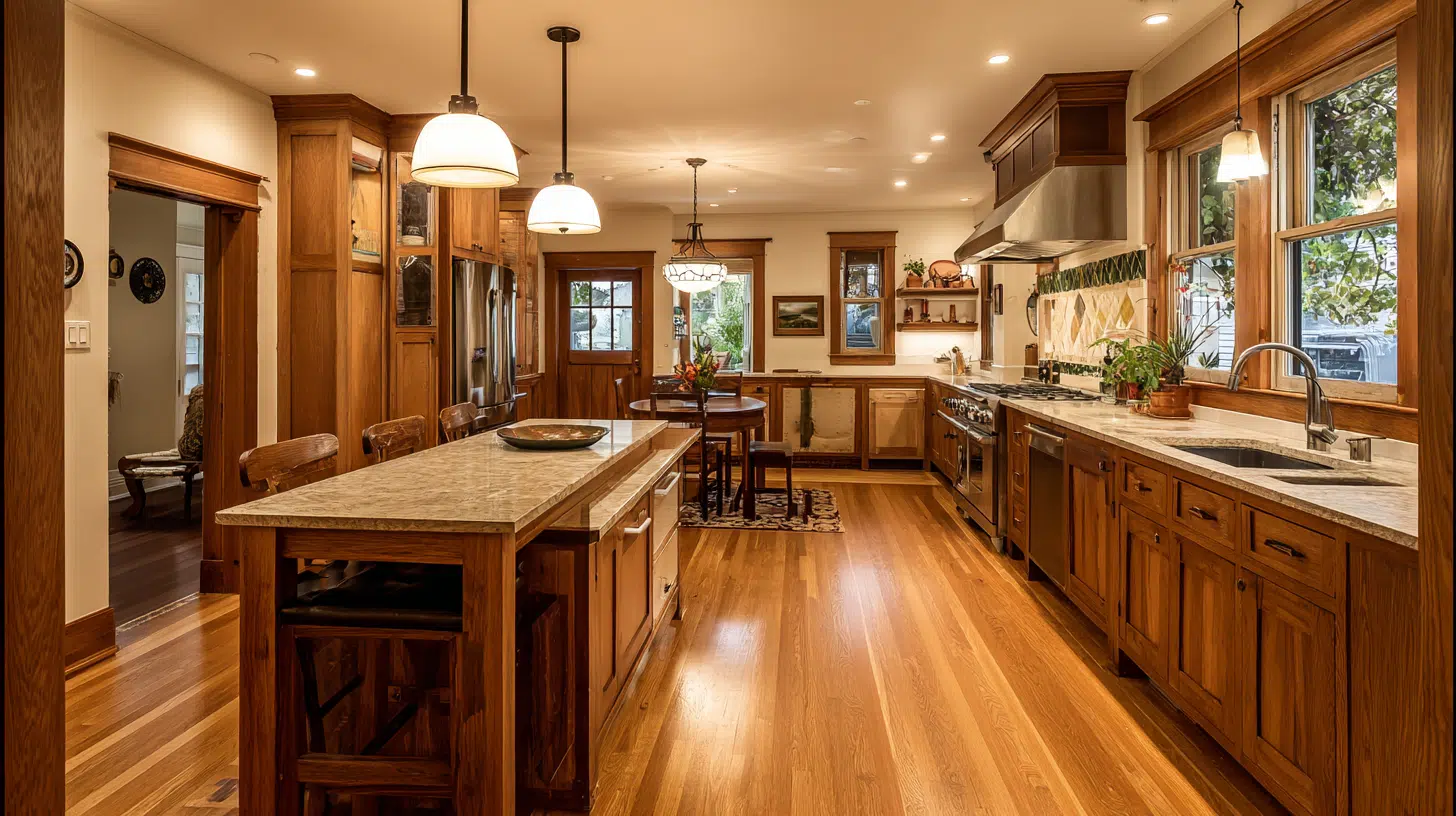
These islands include an overhang for barstools or chairs. This is where families end up gathering for quick breakfasts, casual meals, and conversations while cooking happens.
- Dimensions: 42-48 inches wide (includes 12-15 inch overhang), 72-96 inches long, 36-42 inches high
- Best for: Families, homes without dining rooms, entertaining
- Pros: Casual dining spot, encourages interaction, saves space
- Cons: Requires extra clearance, reduces storage underneath overhang
- Design and Style Tip: Plan 24 inches of width per person and choose stools that fully tuck under the counter. It keeps the walkway clean and prevents that “chair clutter” look.
7. Islands with Sink or Cooktop
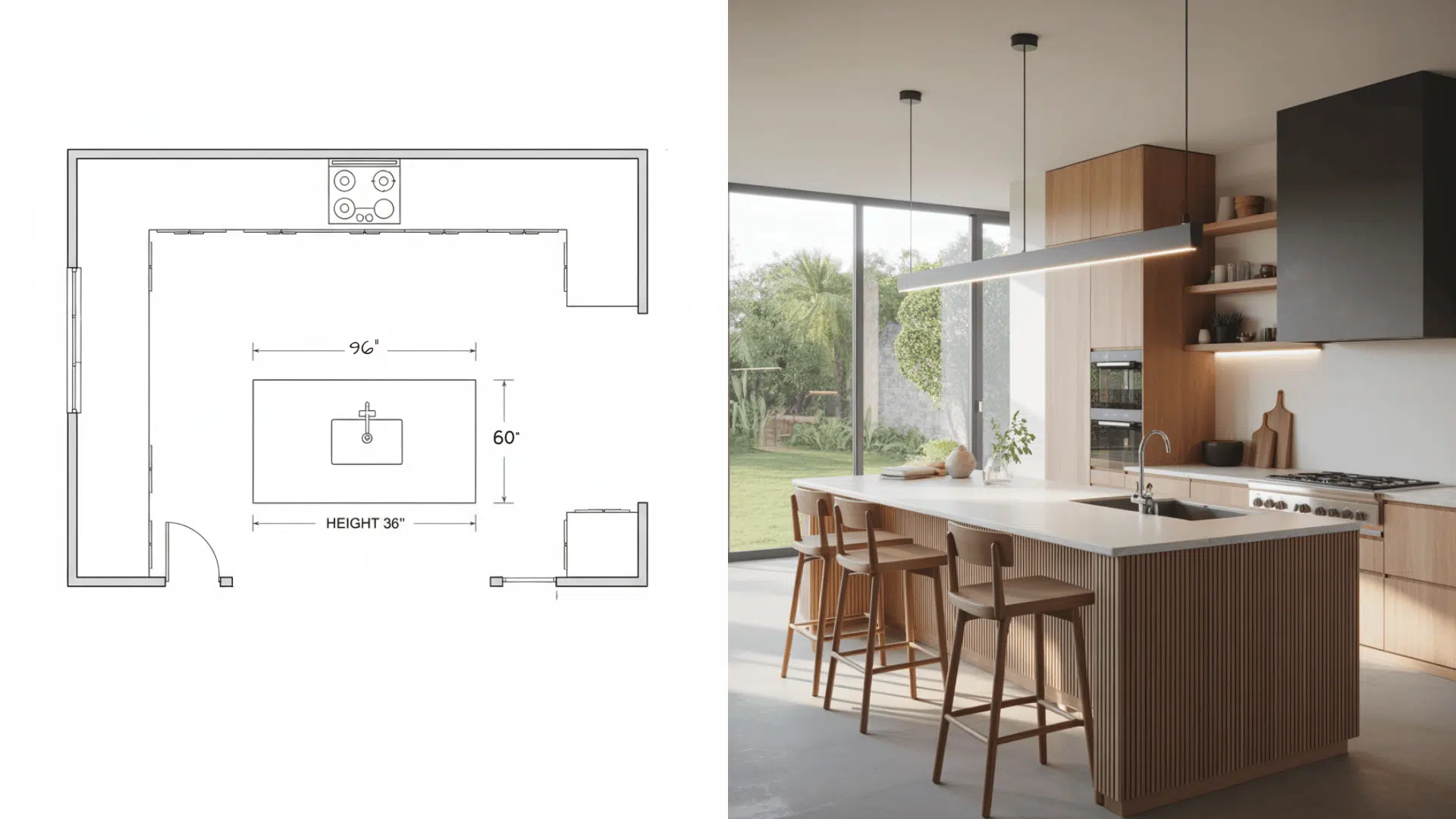
Adding a sink or cooktop turns the island into a true work station and allows the cook to face the room instead of staring at a wall. I love this setup for people who cook often and want a kitchen that feels social.
- Dimensions: 48-60 inches wide, 72-96 inches long, 36 inches high
- Best for: Avid cooks, large kitchens, multi-cook households
- Pros: Efficient work triangle, social cooking, adds home value
- Cons: Requires plumbing or gas lines, more expensive installation
- Design and Style Tip: A small prep sink often makes more sense than a full-size one. It saves counter space and still gives you that convenience factor.
8. Storage-Focused Islands
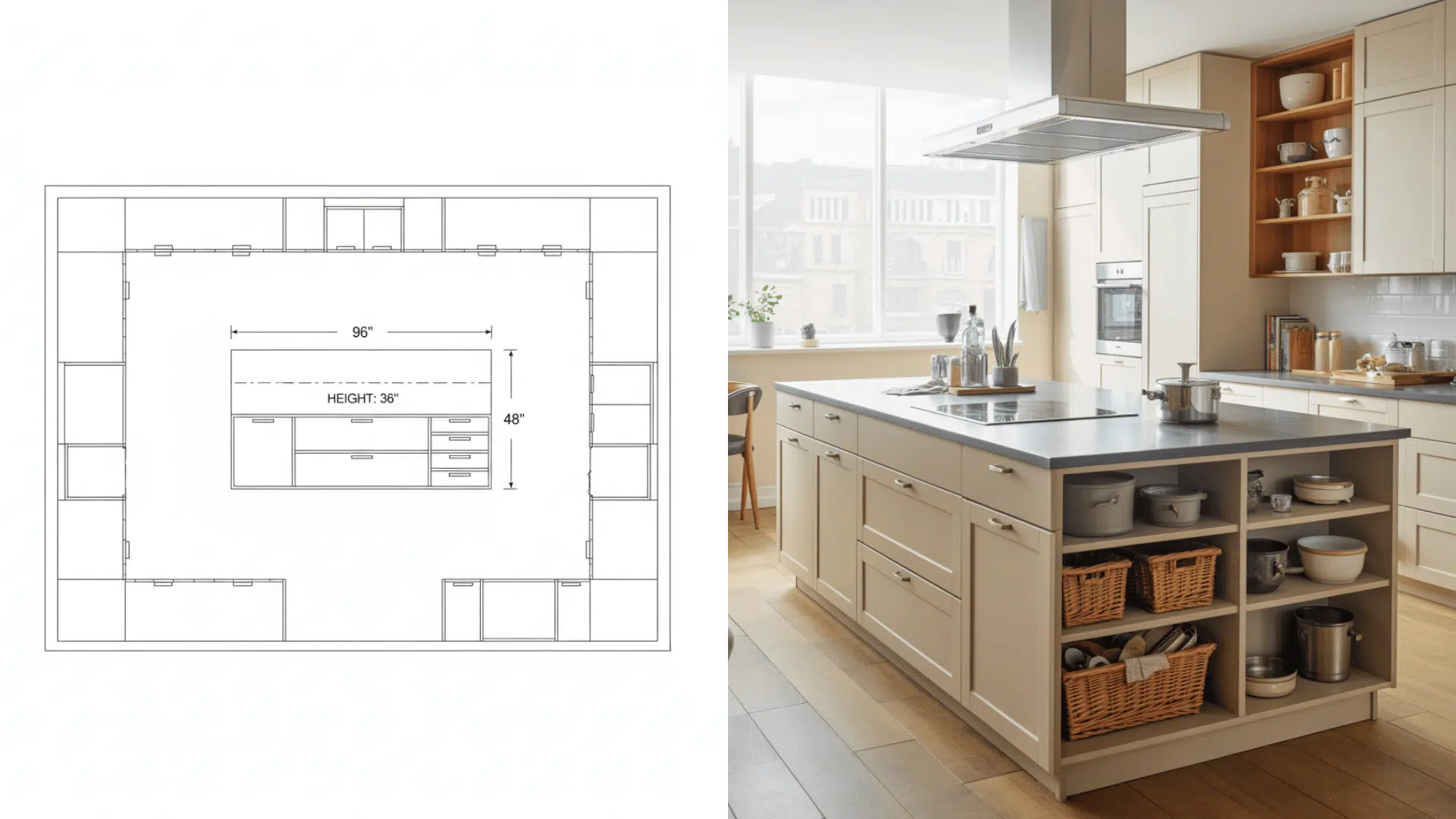
These islands prioritize organization cabinets, drawers, shelves, and every possible nook. If there’s never enough storage in your kitchen, this style can be a game-changer.
- Dimensions: 36-48 inches wide, 72-96 inches long, 36 inches high (with full cabinet depth)
- Best for: Small kitchens lacking cabinet space, organized households
- Pros: Maximizes storage, reduces clutter, hides appliances
- Cons: Heavier and more expensive, less flexible design
- Design and Style Tip: Mixing closed cabinets with a bit of open shelving breaks up the visual heaviness and gives you a spot for styling.
9. Two-Tier Island
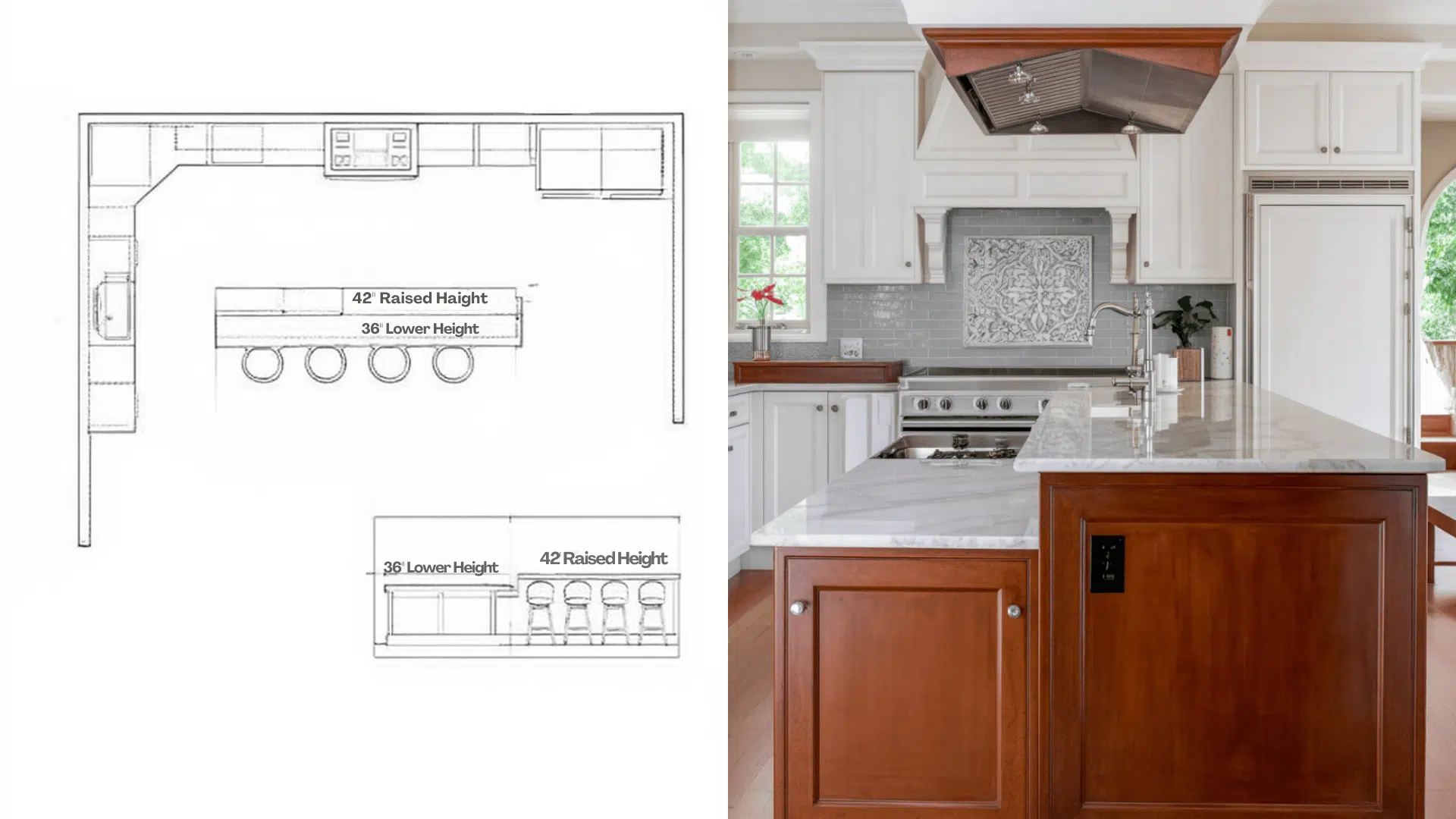
Two different heights in one island: the lower level for prep and the raised section to hide mess and create bar-height seating. It can be a great solution for busy families.
- Dimensions: 36 inches high (base), 42 inches high (raised section), 48-60 inches wide
- Best for: Families who want casual dining and a workspace combined
- Pros: Hides clutter, creates visual interest, separates functions
- Cons: More expensive, reduces usable counter space slightly
- Design and Style Tip: Waterfall edges on the raised section create a clean, modern statement, especially in contemporary kitchens.
Each kitchen island type brings something different to the table. The goal is matching the dimensions and style to what your space can handle and what your household actually needs day to day.
Measure for Your Perfect Kitchen Island Size
Measuring might not be glamorous, but it’s the only way to avoid costly mistakes. A tape measure and some painter’s tape can save you years of daily frustration.
- Map out the entire kitchen floor: Measure wall to wall, then mark where cabinets, appliances, and doorways sit. This eliminates guesswork later.
- Use painter’s tape to outline the island: Tape the exact shape and size on the floor. Walk around it for a few days to see how it feels.
- Test appliance door swings: Open the dishwasher, oven, and fridge near the taped outline. If doors hit the imaginary island, it’s too big.
- Measure twice, order once: Double-check everything before ordering materials or having contractors start work. One wrong number can turn a dream island into a headache.
- Account for future needs: Households change. Entertaining habits evolve. Wider paths might become important later.
To calculate the maximum kitchen island size, measure the open floor area where the island will go, then subtract twice your desired clearance from each measurement. So:
It’s simple, but incredibly effective. |
Common Mistakes to Avoid
Even with careful planning, I have seen people still mess up kitchen island size in predictable ways. These mistakes keep popping up, and they’re totally preventable.
- Placing the island too far from the stove, sink, and fridge creates wasted steps and unnecessary effort during meal prep.
- Forgetting electrical outlets happens more often than you’d think. Islands need power for small appliances, chargers, and laptops.
- Choosing a gorgeous island that doesn’t function well is a common Pinterest trap. If it’s too small or oddly shaped, it won’t help your daily routine.
- Skipping a test layout leads to regret. Cardboard boxes or painter’s tape can reveal problems before installation.
- Going with shallow cabinets for looks is another big one. Shallow storage might look sleek, but it won’t hold pots, pans, and mixing bowls. Deep storage wins every time.
Summing It Up
Choosing the right kitchen island size doesn’t have to feel overwhelming. With the right measurements, clearance guidelines, and a clear understanding of island types, it becomes a confident decision, not a stressful one.
The dimensions matter, but lifestyle matters just as much. How your family cooks, entertains, moves through the kitchen, and uses the space daily should drive every choice.
When the island is sized correctly, the whole kitchen changes. It goes from “technically functional” to genuinely enjoyable. It becomes the heart of the home where life happens, meals, conversations, late-night snacks, and everyday memories.
So grab the tape measure, map it out, and don’t settle for an island that doesn’t fit how you really live. Ready to design the perfect island? Start measuring today and turn your kitchen into the space it deserves to be.
Frequently Asked Questions
What Is A Good Size For A Kitchen Island?
A good size for a kitchen island depends on your kitchen space and how you plan to use it. For most homes, an island that is 36 to 48 inches wide and 6 to 8 feet long (72–96 inches) works well.
Is A 7 Foot Island Too Small?
No, a 7-foot island (84 inches long) is not too small. In fact, it is a very practical and popular size. It offers plenty of counter space and can usually seat 3 people comfortably, depending on the width.
What Is The Golden Ratio For Kitchen Islands?
There is no official “golden ratio,” but designers often follow a rule of thumb: The island should not take up more than 10–15% of the total kitchen floor area.
Is A 4 Foot Kitchen Island Too Small?
A 4-foot island (48 inches long) is small, but not too small. It works well in compact kitchens or apartments. It can handle basic prep tasks and may seat 1–2 people, depending on the width.