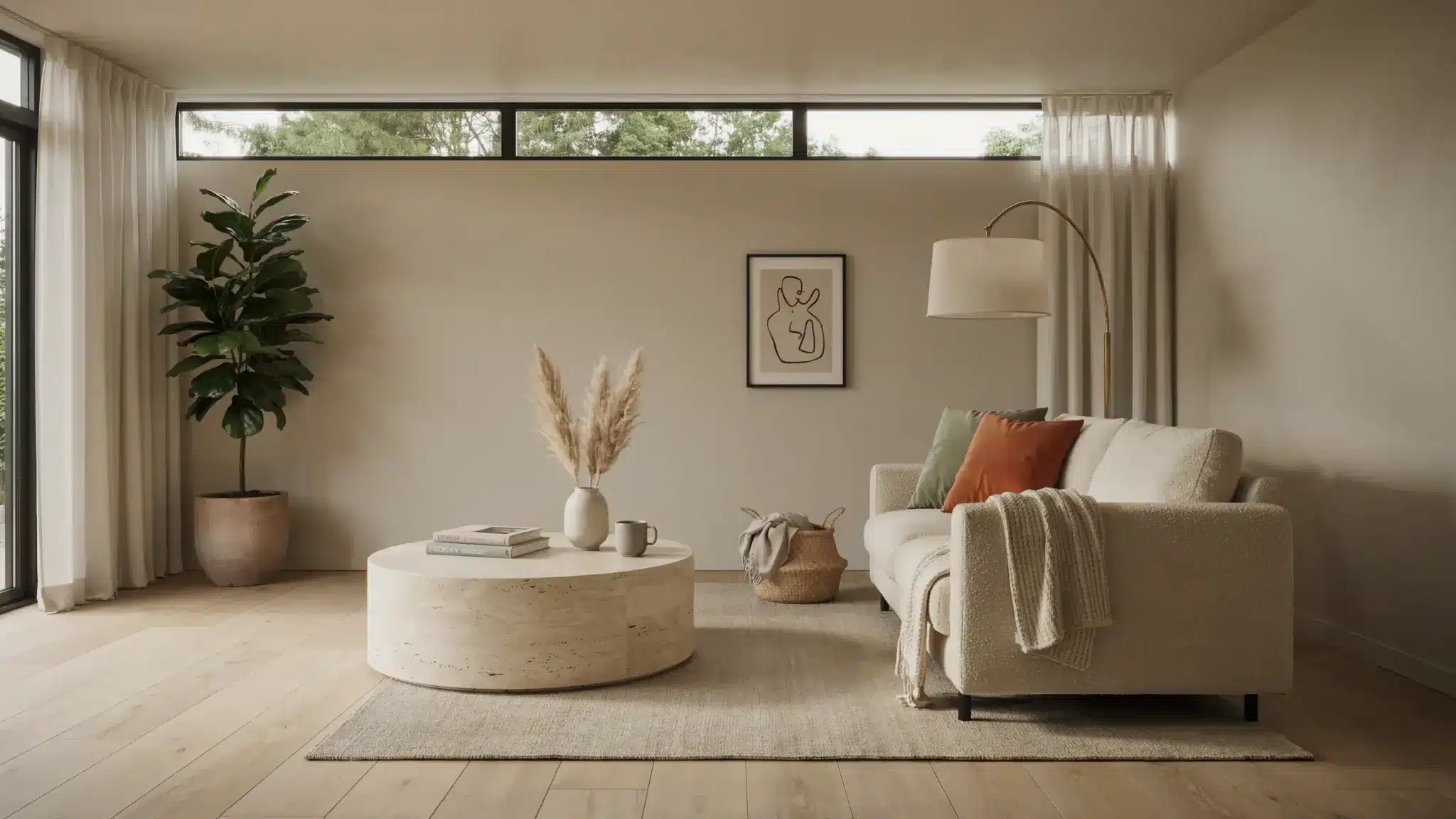
Cathedral ceilings are often seen as the fastest way to make a home feel open, bright, and impressive. The height pulls the eye upward, light spreads better, and rooms can feel larger than they are.
Because of this, many people assume a cathedral ceiling will always improve both style and comfort. In practice, that idea does not always hold up once the space is used every day.
When the design is rushed, problems can show up with lighting, temperature control, noise, and overall balance in the room. But when the details are planned well, cathedral ceilings can feel calm, timeless, and comfortable for years.
It helps to know what a cathedral ceiling is, how it differs from a vaulted ceiling, and which choices lead to the best results. With the right approach, you can get the dramatic look without the common headaches.
What Is a Cathedral Ceiling?
A cathedral ceiling slopes upward on two matching sides and meets at a centered peak, following the roofline above. This symmetrical shape makes rooms feel taller and more open without adding another level.
The slope typically starts at the top of the walls and rises evenly, helping daylight travel deeper into the space. Design features like beams, skylights, and tall windows often emphasize the height.
For everyday comfort, plan insulation, airflow, and lighting carefully so the room feels warm, balanced, and easy to live in.
Pros and Cons at a Glance
Cathedral ceilings look stunning, but daily comfort depends on smart planning, especially insulation, airflow, lighting placement, and upkeep.
| Pros | Cons |
|---|---|
| Feels taller and more spacious | Can trap heat above the seating |
| Brighter with tall windows/skylights | Needs excellent insulation |
| Strong architectural focal point | More echo in hard-surface rooms |
| Makes small rooms feel bigger | Lighting/cleaning harder to access |
| Boosts buyer appeal | HVAC venting must be planned |
With the right details, cathedral ceilings stay bright, comfortable, and beautiful, without the drafts, echoes, or maintenance hassles.
What Is a Vaulted Ceiling?
A vaulted ceiling rises above standard flat-ceiling height to create a more open, lifted feel. Unlike cathedral ceilings, a vault doesn’t need perfect symmetry or a centered peak; it can slope one way, curve, form an arch, or shift off-center for added visual interest.
In many homes, the interior ceiling is framed to achieve the vaulted look even when the exterior roofline stays the same.
Vaulted ceilings are popular in feature rooms because they add height, brightness, and personality, but they work best when comfort details like insulation, airflow, and lighting are planned early.
Pros and Cons at a Glance
Vaulted ceilings add instant drama and flexibility, but comfort and cost depend on smart framing, insulation, airflow, and lighting choices.
| Pros | Cons |
|---|---|
| Flexible shapes (angled, curved, offset) | Can look unbalanced in some layouts |
| Adds height and architectural impact | Often costs more to frame/engineer |
| Great for feature rooms (entry, great room) | More tricky to insulate well |
| Sometimes possible without changing the roofline | Can feel echo-prone or “hollow.” |
| Highlights beams, skylights, and chandeliers | May overwhelm smaller rooms |
When planned well, a vaulted ceiling feels airy and intentional, bringing style and light without sacrificing comfort or efficiency in the long term.
Choosing Between Cathedral and Vaulted Ceilings
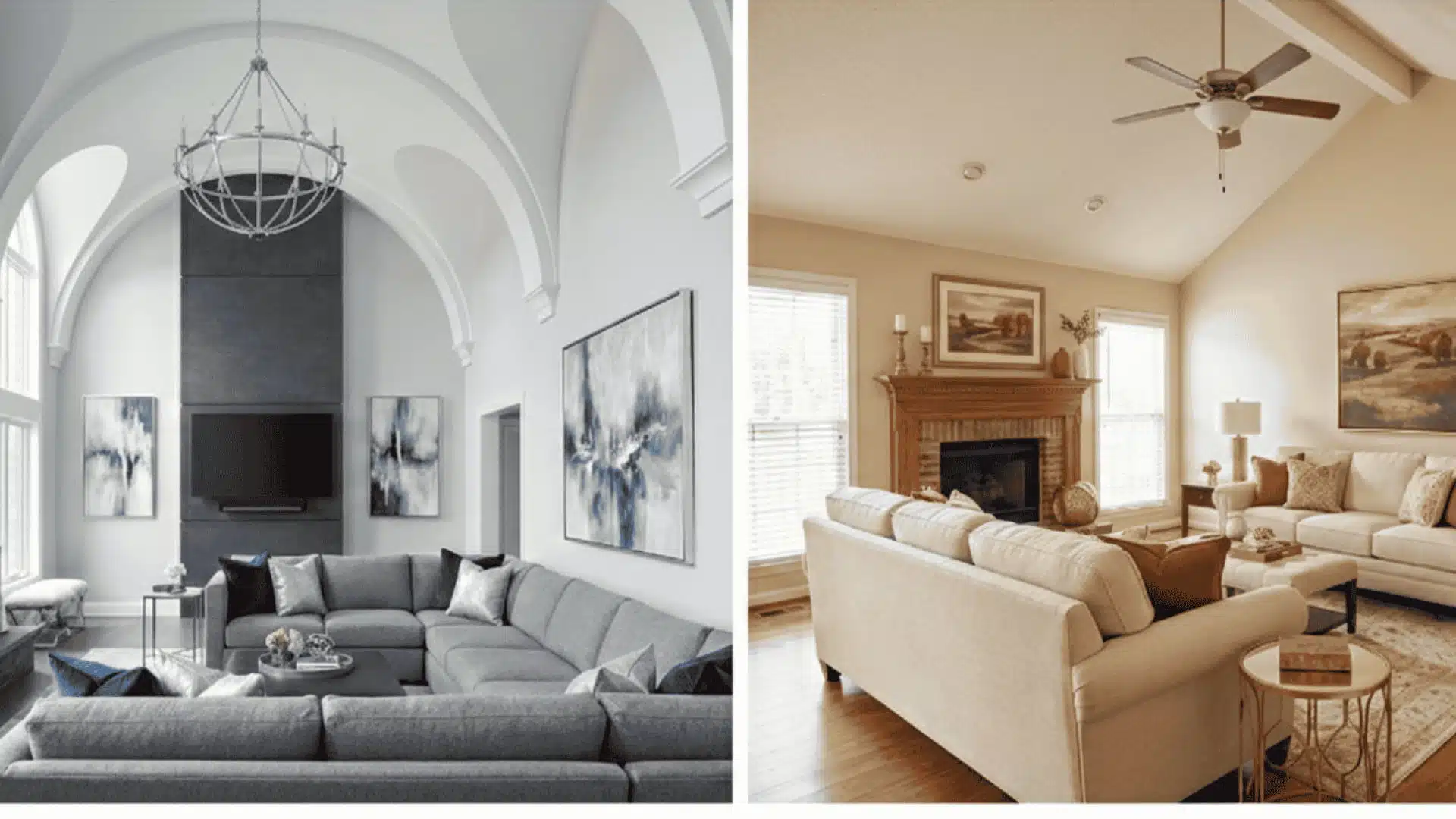
Cathedral and vaulted ceilings are often used interchangeably, but their design characteristics and visual impact are different. The clearest way to compare them is to focus on how they read inside a room.
1. Ceiling Shape and Form
A cathedral ceiling has a consistent, mirrored shape that feels structured and predictable. The lines rise evenly, creating a clean, balanced look that’s easy to visually follow.
A vaulted ceiling allows more variety in form. It can shift direction, curve, or change angles, which often makes the ceiling feel more expressive and visually dynamic.
2. Visual Focus and Emphasis
Cathedral ceilings naturally guide attention toward a single, clear focal point. The height feels centered, which supports a composed and organized look.
Vaulted ceilings can spread attention across the space. Because the height may shift or curve, the ceiling can feel more dramatic and less anchored to a single central point.
3. Sense of Balance in the Room
Cathedral ceilings tend to create a calm and harmonious atmosphere. The symmetry gives the room a stable, settled feeling.
Vaulted ceilings can feel bold and energetic. Depending on the shape, they may feel intentionally dramatic or more visually intense.
4. Relationship to the Home’s Overall Design
Cathedral ceilings usually feel cohesive with traditional, clean, and orderly interiors. They support spaces that aim for simplicity, structure, and timeless appeal.
Vaulted ceilings often suit spaces designed for a stronger architectural impact. Their flexibility makes them popular in feature areas where the ceiling is meant to stand out.
If you prefer clean lines and symmetry, a cathedral ceiling offers balance and structure. If you want design flexibility and a stronger architectural statement, a vaulted ceiling may be the better choice.
Things to Consider Before Installing a Cathedral Ceiling
A cathedral ceiling can completely transform a space, but thoughtful planning makes the difference between subtle and stressful.
Before committing, consider how structure, comfort, lighting, and maintenance will affect your home long after construction is finished.
- Insulation and ventilation: A well-insulated roof assembly and smart venting help prevent heat loss and gain and uneven temperatures.
- Heating and cooling strategy: Make sure HVAC supply/returns actually serve the living zone, not just the highest point of the room.
- Lighting plan: Cathedral ceilings need layered lighting (ambient, task, and accent) so evenings don’t feel dim or shadowy.
- Sound control: Tall rooms can echo. Soft finishes (rugs, curtains, upholstery) and textured surfaces help soften noise.
- Maintenance access: Consider bulb changes, fan cleaning, and window treatments; areas with high ceilings need practical solutions.
- Ceiling fan placement: A properly sized fan with the right downrod improves airflow and comfort year-round.
- Proportions and balance: Extra height should match the room’s size and layout so it feels airy rather than hollow.
When these practical details are addressed early, a cathedral ceiling feels intentional and comfortable, not drafty or difficult to manage. Smart planning ensures the added height enhances everyday living instead of creating long-term challenges.
Cathedral Ceiling Ideas That Feel Warm and Finished
Cathedral ceilings already add height and drama, but the right design details make them feel finished and comfortable.
These ideas help you add warmth, balance, and style so the ceiling looks intentional rather than empty. Mix and match based on your home’s vibe, lighting, and daily needs.
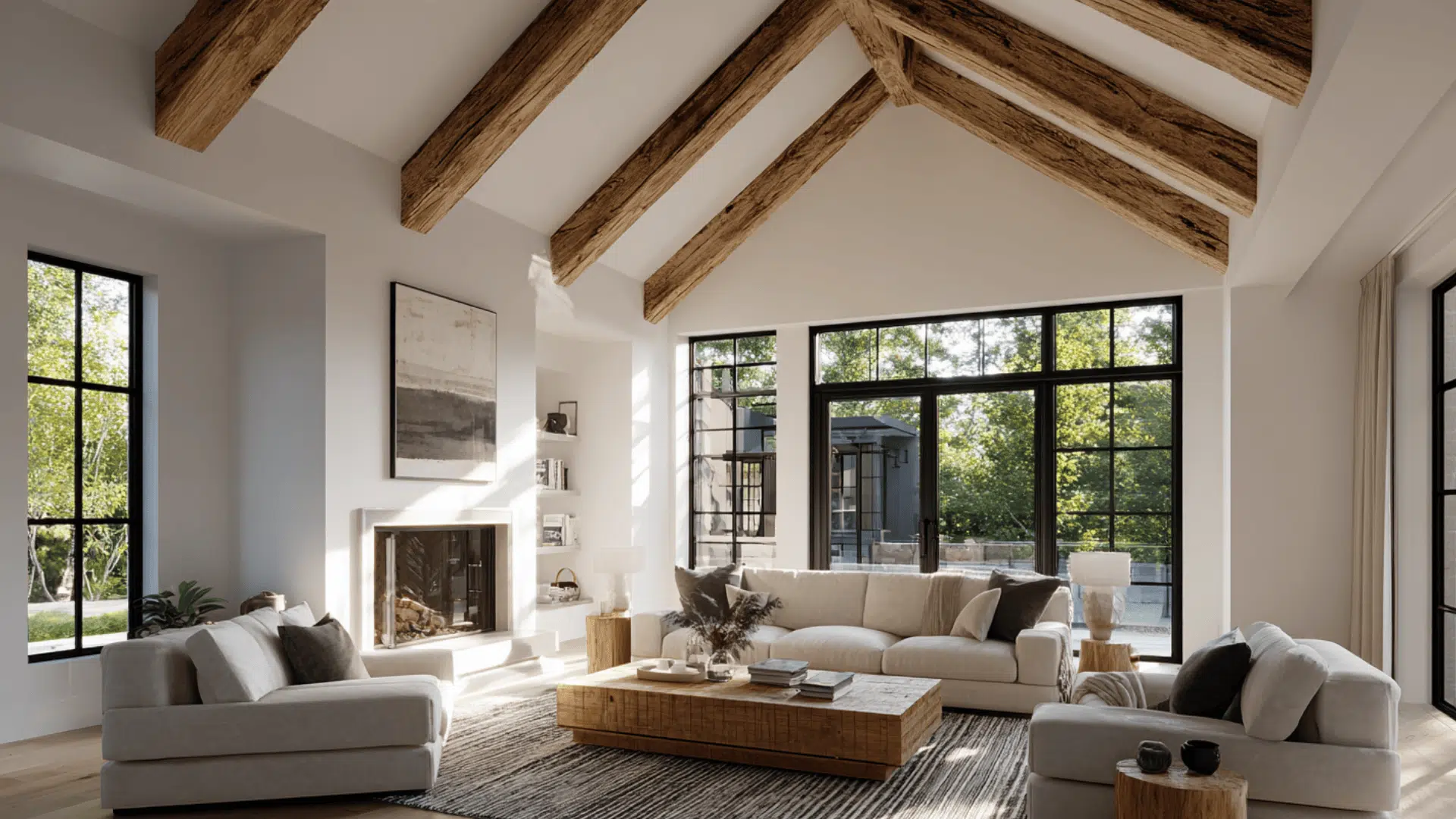
1. Exposed Wooden Beams

Exposed beams instantly add structure to a cathedral ceiling. They visually “frame” the height, making the space feel grounded instead of hollow.
Wood also adds warmth and texture, helping tall rooms feel cozy and lived-in, especially when the rest of the palette is light and simple.
Pro tip: Match the beam’s tone to another element in the room so it feels cohesive rather than a separate feature.
2. White Shiplap Ceiling
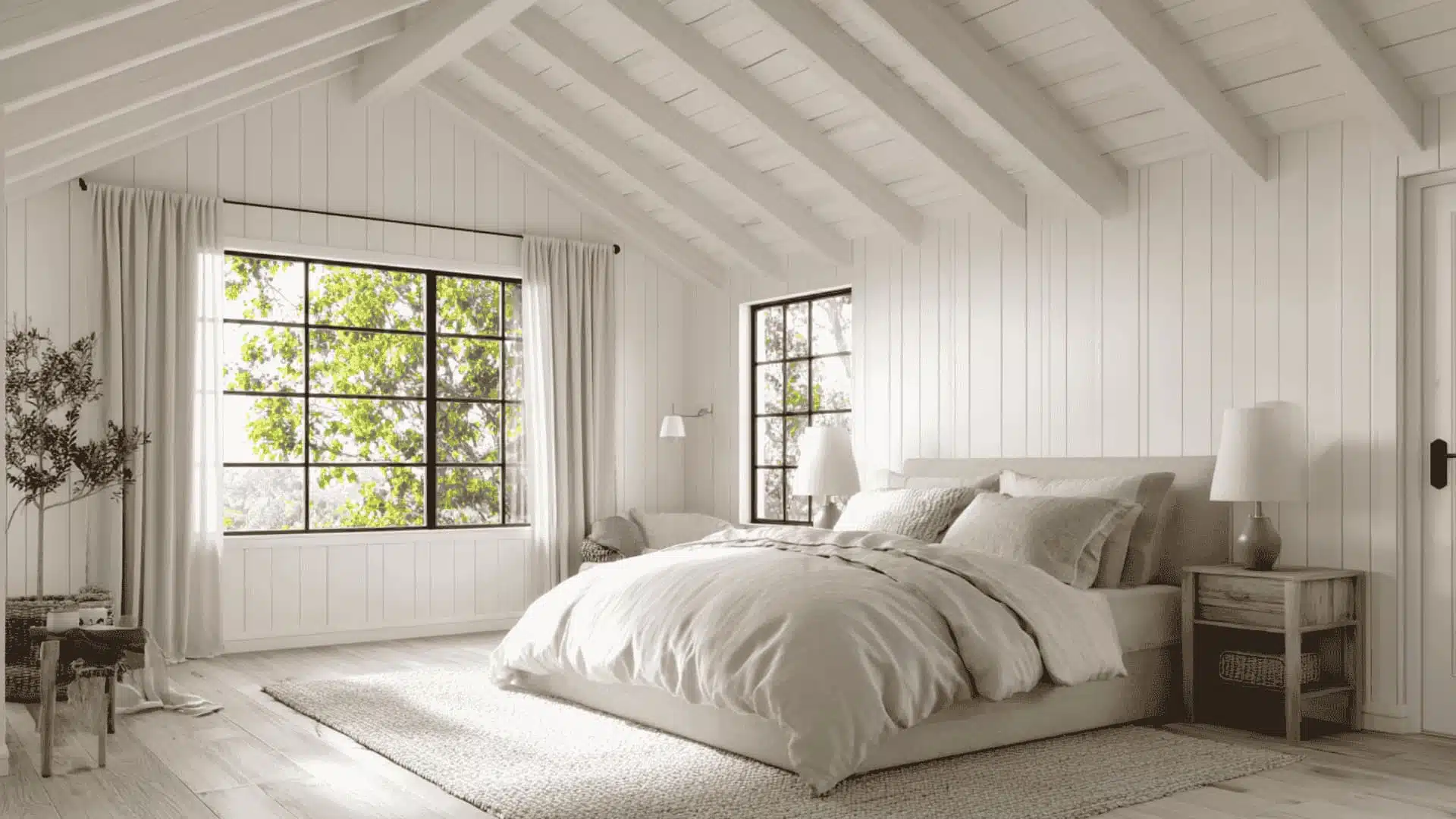
White shiplap adds subtle texture without making the ceiling feel heavy. It’s a great choice when you want the height of a cathedral ceiling but still prefer a calm, cozy look.
The lines also gently guide the eye upward, making the room feel taller yet still relaxed.
Pro tip: Use a low-sheen paint (matte or eggshell) to reduce glare and keep the finish looking smooth.
3. Floor-to-Ceiling Windows

If you want maximum “open and bright,” tall windows are one of the most dramatic upgrades. They make the ceiling height feel purposeful and bring in daylight that fills the full volume of the room.
This works especially well in living rooms, dining spaces, and open layouts where you want an airy centerpiece.
Pro tip: Motorized shades or high-mounted curtain tracks help you control brightness without turning it into a maintenance headache.
4. Skylights

Skylights make cathedral ceilings feel even more expansive by bringing light from above rather than just from the walls. They’re especially helpful in homes where vertical windows are limited.
When placed thoughtfully, skylights brighten the room evenly and make the ceiling feel like a feature, day or night.
Pro tip: Choose skylights with shades (manual or motorized) so you can control heat and glare during peak sun hours.
5. Statement Chandelier
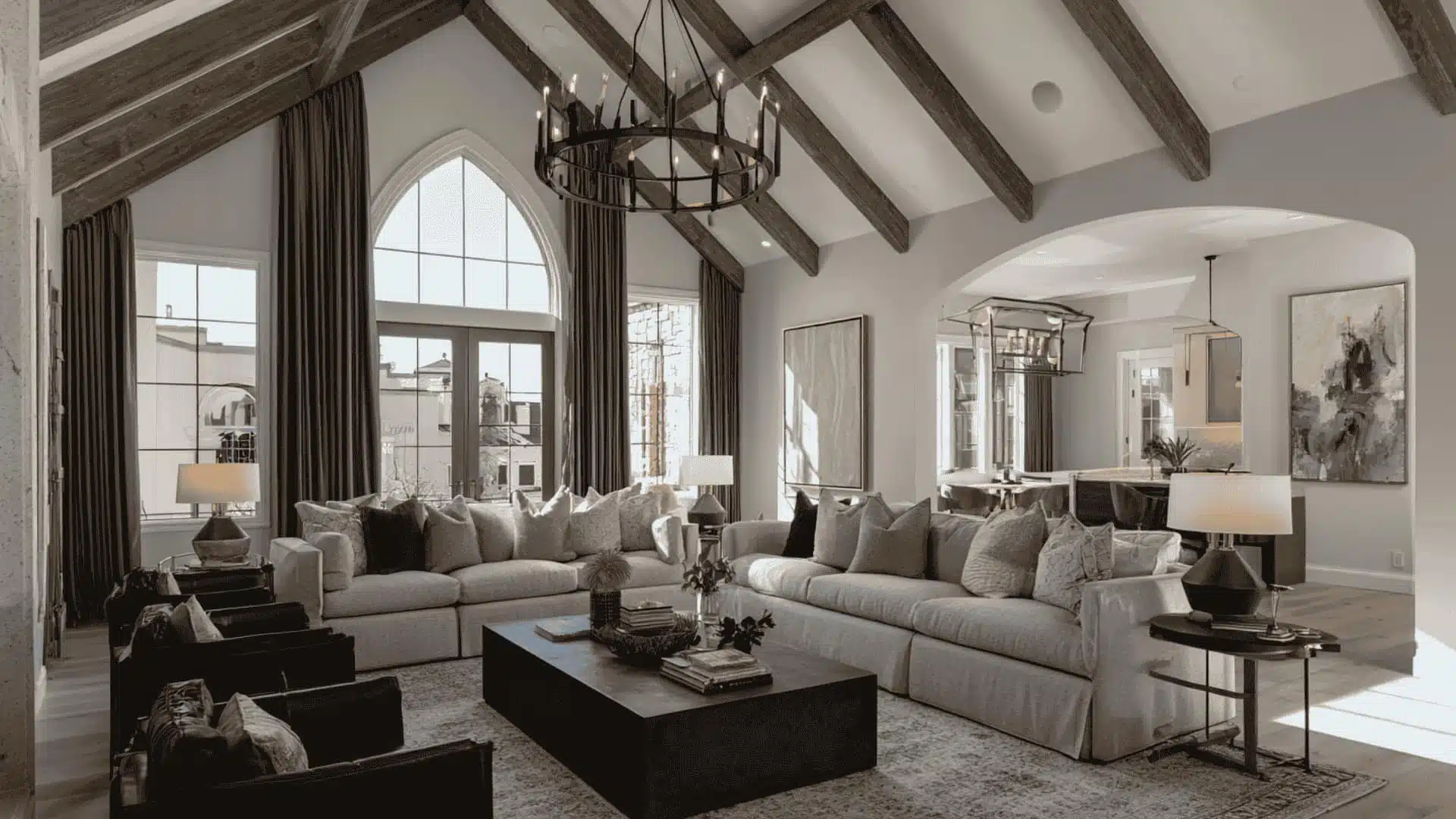
A statement chandelier “fills” the vertical space and helps the room feel balanced. Without a central feature, cathedral ceilings can sometimes feel empty at night.
A chandelier adds personality and creates a visual anchor, especially in living rooms, entryways, or over a dining table.
Pro tip: Hang it at a practical height, not near the ceiling peak, so the room feels connected and cozy.
6. Tongue-and-Groove Wood Panels
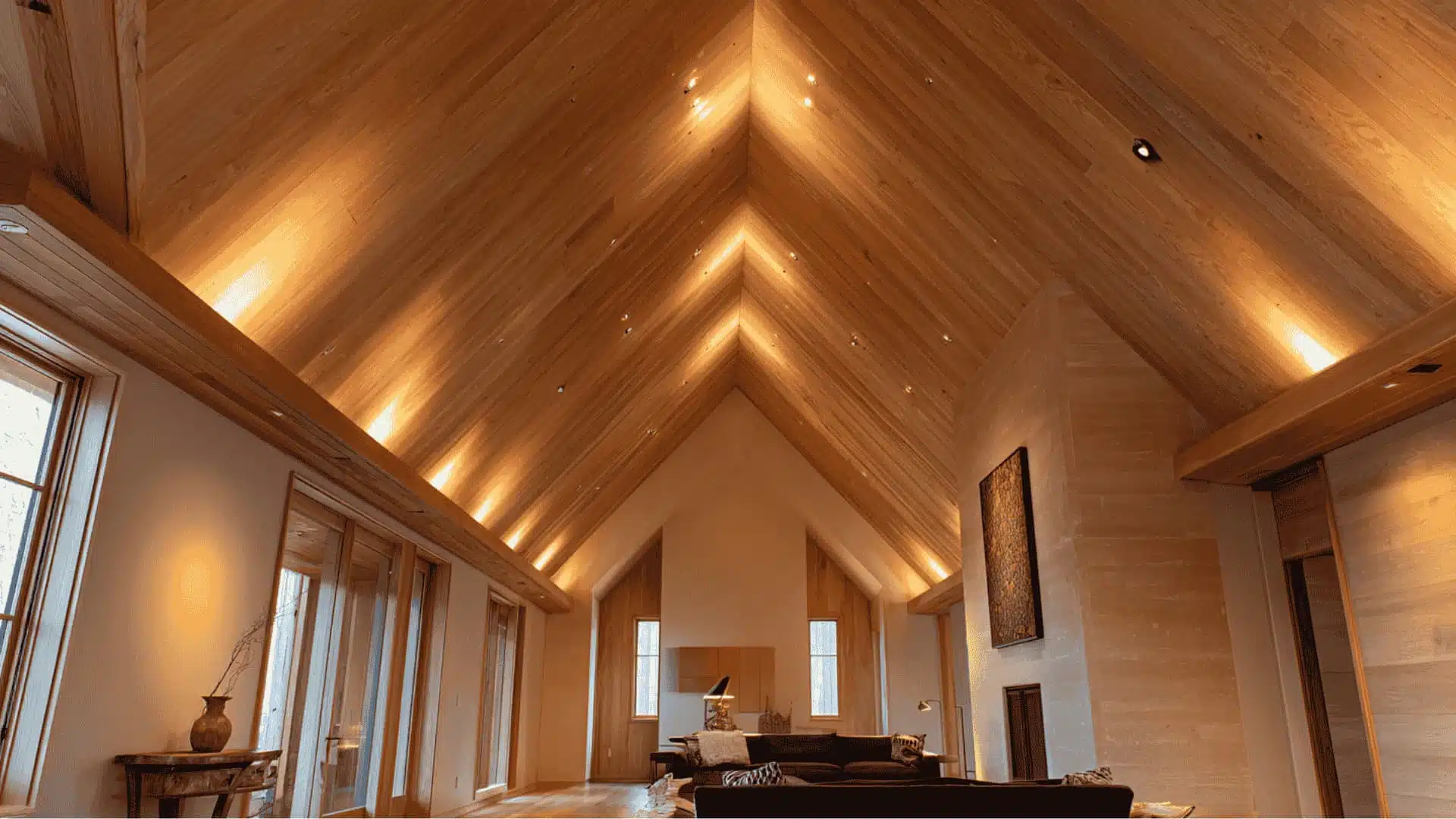
Tongue-and-groove panels bring warmth and a timeless finish that suits rustic, modern farmhouse, and even clean contemporary homes.
Unlike shiplap, tongue-and-groove often feels more seamless and refined, creating a calm wood “canopy” that makes the height feel inviting instead of cold.
Pro tip: Balance wood ceilings with lighter walls or trim to keep the room from feeling darker than expected.
7. Dark Painted Ceiling
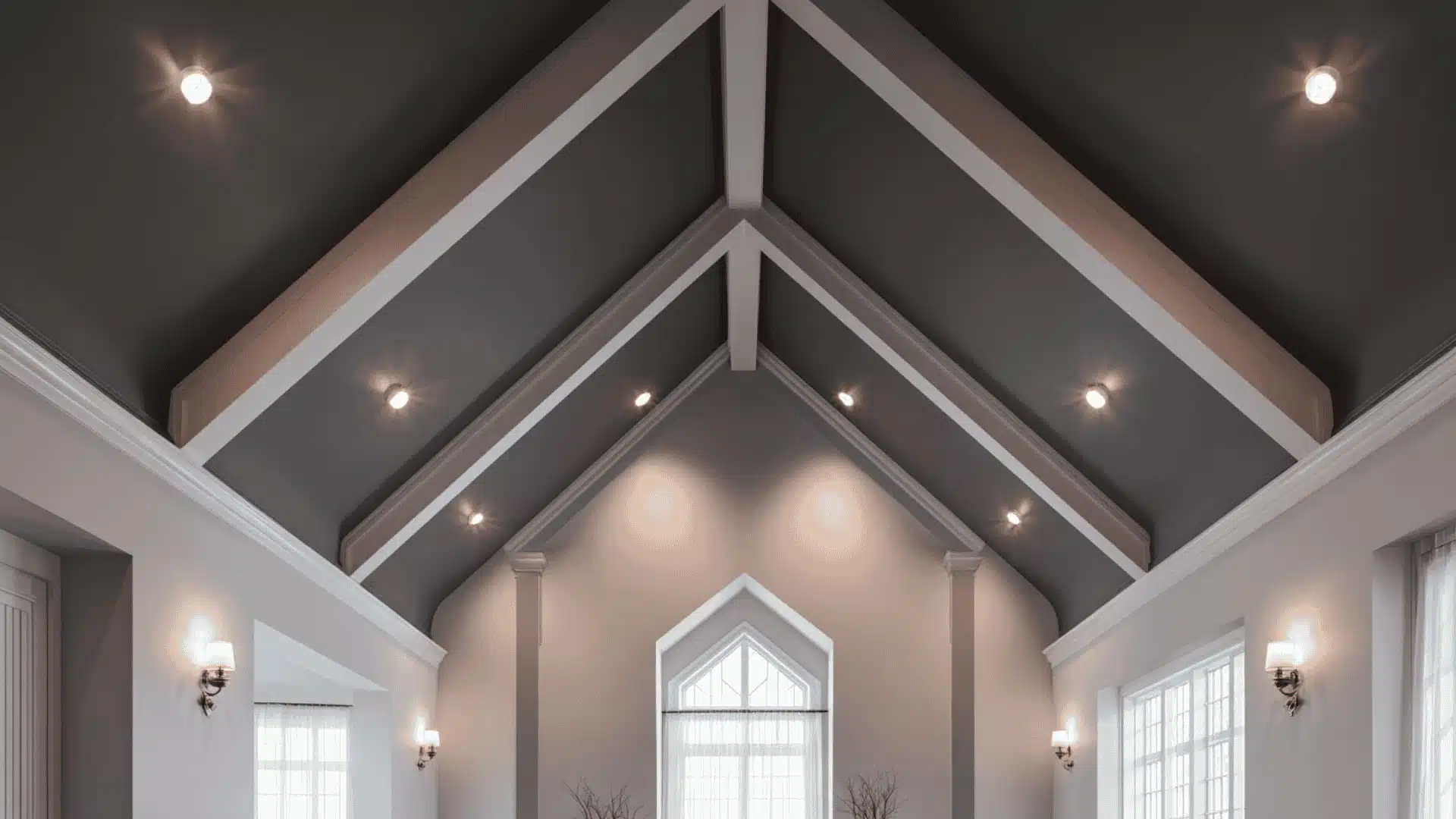
A dark ceiling can look surprisingly elegant in tall spaces. Instead of making the room feel smaller, it can add depth and make the ceiling feel intentionally designed.
Dark paint also reduces the “empty” feeling that some cathedral ceilings can have, especially in rooms with lots of bright daylight.
Pro tip: Use layered lighting. Dark ceilings need warm light to keep the room feeling welcoming.
8. Modern Minimalist Style
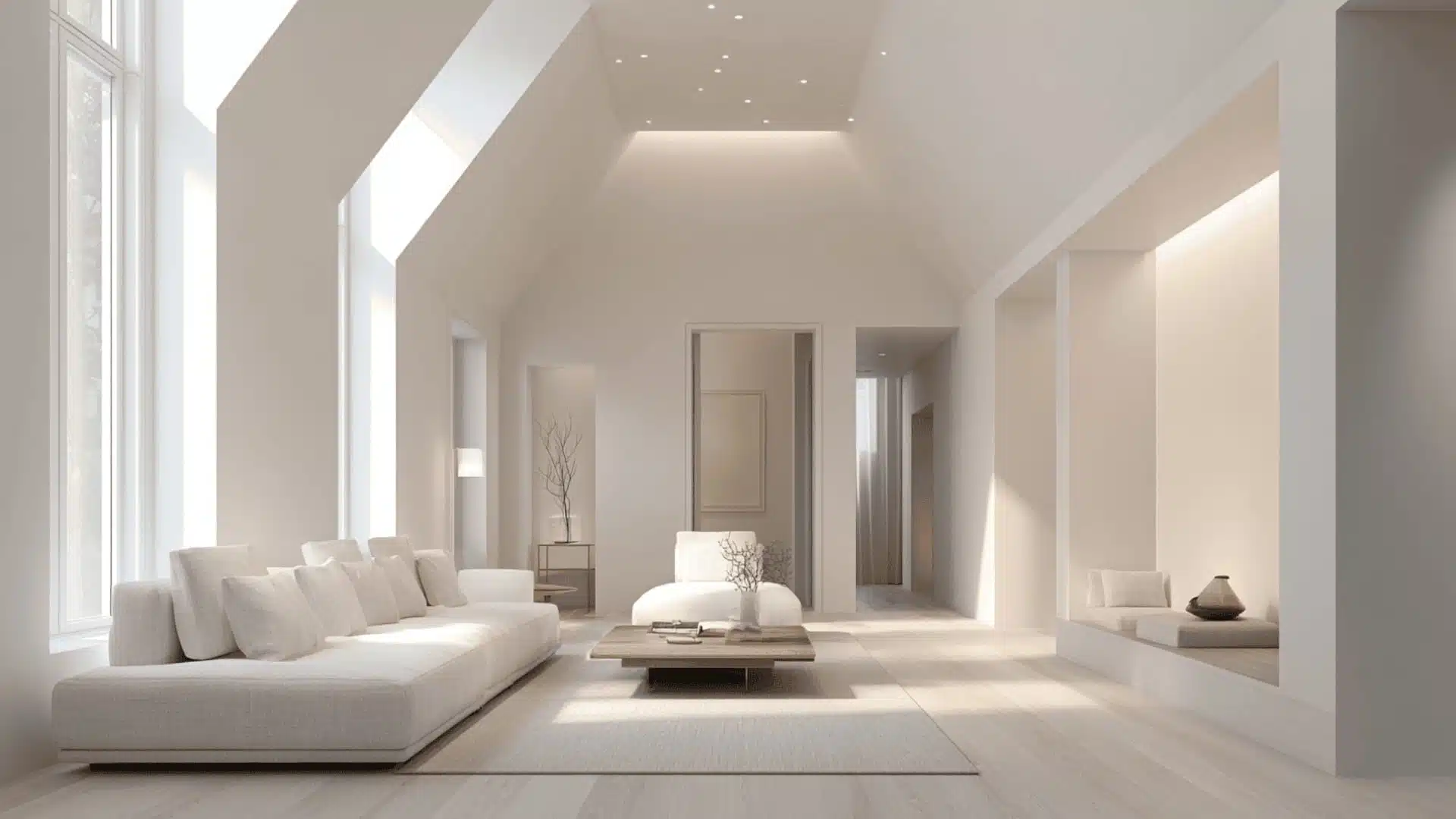
Minimalist cathedral ceilings look best when the lines stay clean and the palette stays simple. The height becomes the feature, no heavy trim needed.
This style pairs well with hidden lighting, neutral textures, and a few strong statement pieces, such as a large artwork or a sculptural light fixture.
Pro tip: Use recessed lights along the slopes to avoid harsh shadows and keep the room evenly lit without cluttering the ceiling.
9. Industrial Metal Beams
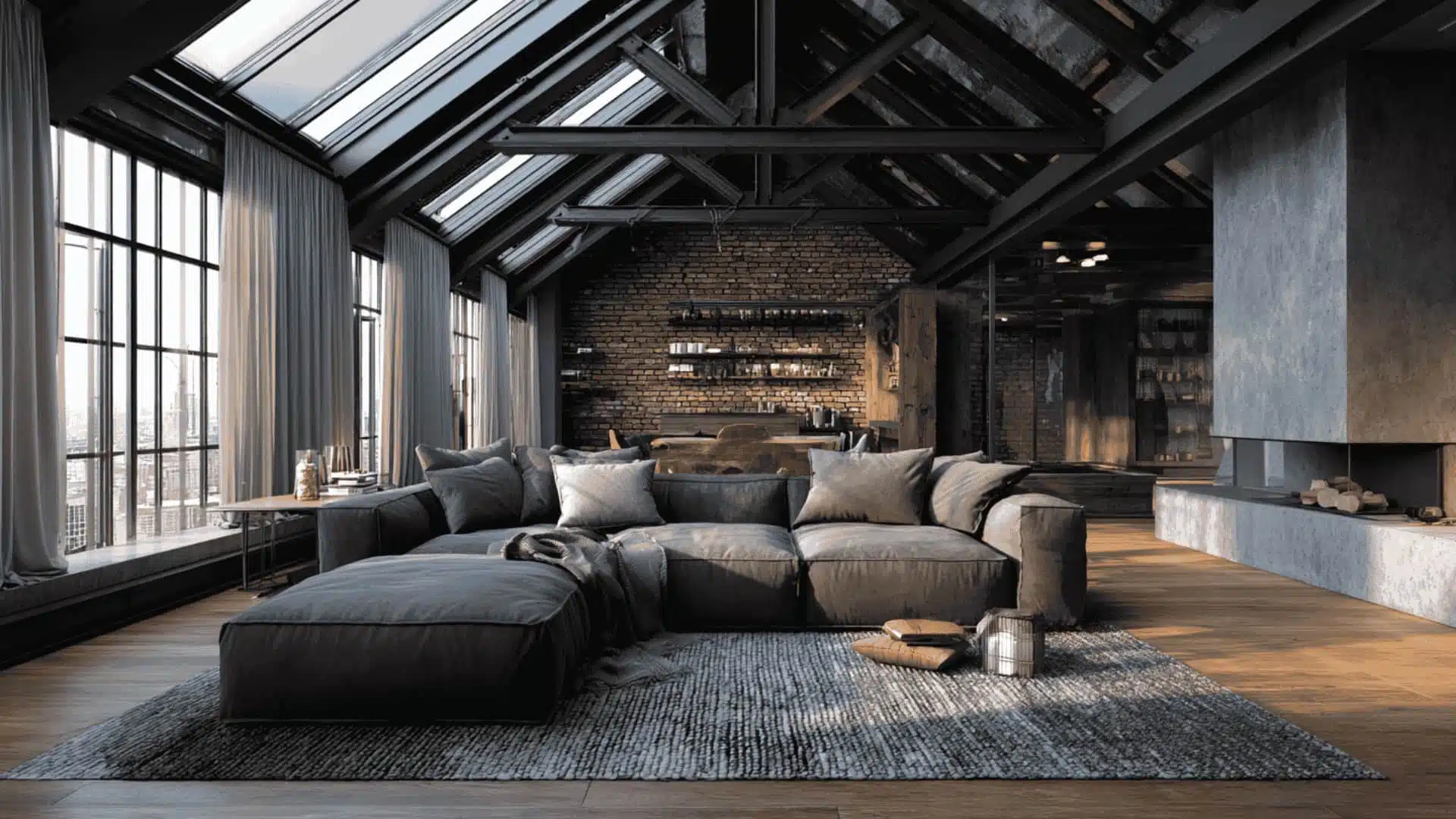
Metal beams add bold contrast and a modern edge, especially in open-concept spaces. They can make a cathedral ceiling feel more “architectural,” and they pair beautifully with brick, concrete finishes, leather, and warm wood.
Even faux beams can create a similar look if the structure doesn’t allow real steel.
Pro tip: Balance the industrial feel with soft textures; rugs, curtains, and upholstered seating, to reduce echo and keep the room comfortable.
10. Cathedral Bedroom Design

Cathedral ceilings in bedrooms feel best when the design leans cozy. Soft finishes, warm tones, and gentle lighting help the height feel restful rather than cold.
Wood accents, shiplap, or a subtle ceiling color can also make the space feel more intimate without losing the airy effect.
Pro tip: Use layered lighting, bedside lamps, wall sconces, and a dimmable overhead to make the room feel relaxing at night.
11. Stone Fireplace Accent
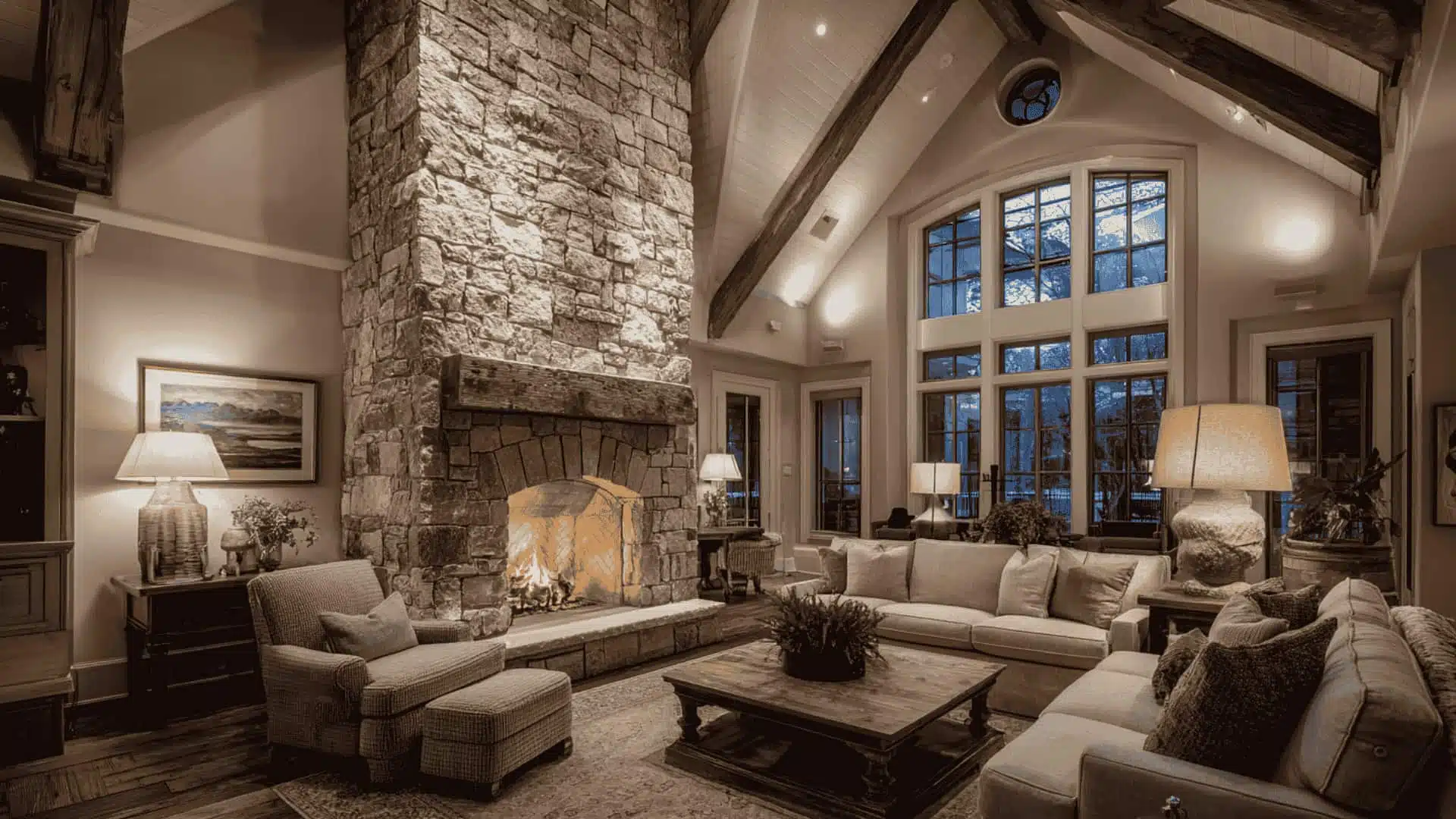
A stone fireplace is a natural match for cathedral ceilings because it visually “holds” the height. It creates a strong vertical focal point, adds texture, and brings warmth, both visually and literally.
This works especially well in living rooms where you want the room to feel grounded and balanced.
Pro tip: If the ceiling is very tall, extend the fireplace surround upward, or add a mantel so the wall doesn’t feel cut off.
12. Cathedral Ceiling with Ceiling Fan
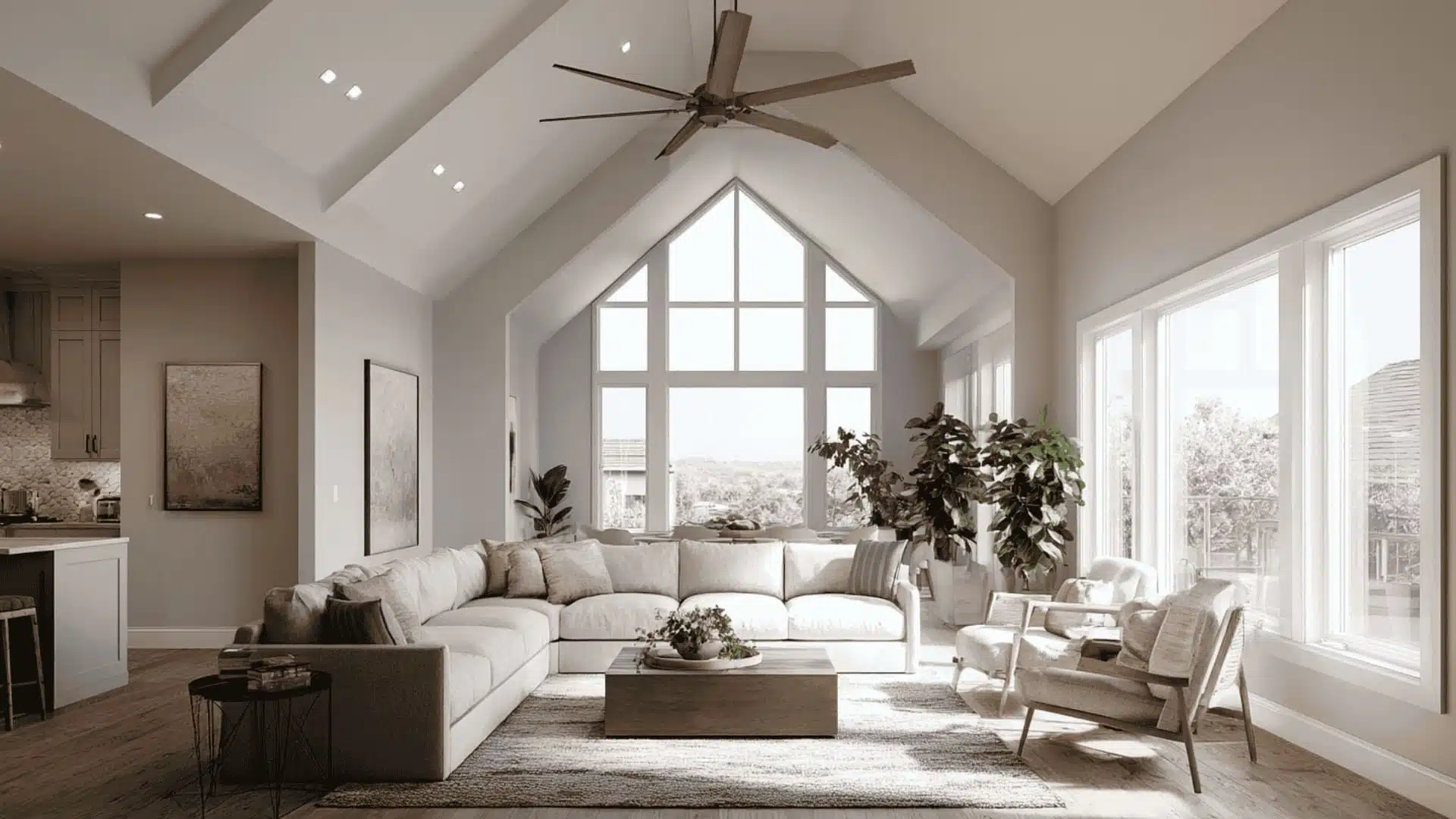
A ceiling fan is one of the smartest comfort upgrades for cathedral ceilings. Since warm air rises, fans help circulate air back into the living zone, making the room feel more comfortable in both summer and winter.
Fans also visually fill space without adding heavy décor.
Pro tip: Choose the right downrod length so the fan sits at an effective height, not too close to the peak
13. Coastal Style Cathedral Ceiling

Coastal style works beautifully with cathedral ceilings because both emphasize light, openness, and breezy comfort. White ceilings, pale wood accents, and relaxed textures (linen, woven shades, light rugs) make the space feel fresh without looking stark.
This is a great option if you want airy and cozy at the same time.
Pro tip: Stick to a simple palette: white, sand tones, and one soft accent color. It keeps the room feeling calm rather than busy.
Best Lighting Ideas for Cathedral Ceilings
Lighting matters more in tall rooms because shadows and dark corners appear quickly. The goal is to light the living zone, not just the ceiling peak.
- Choose a main light that fits the room: Chandeliers work well in living rooms and entryways; pendants are great over tables or islands.
- Add recessed lights along the slopes: Place them to cover seating areas and edges for even light. Use dimmers for flexibility.
- Use skylights with shade control: They help reduce glare and control heat during intense sun hours.
With the right mix of main lighting, recessed fills, and controllable natural light, cathedral ceilings stay bright and welcoming after sunset.
Wrap Up
Cathedral ceilings can add beauty, light, and a strong sense of space, but they work best when design and function are planned together.
Understanding the ceiling type, choosing the right lighting, and planning for comfort make a lasting difference.
From living rooms to kitchens and even small bathrooms, the right choices help avoid common problems while keeping the dramatic look people love. When done thoughtfully, cathedral ceilings feel balanced, comfortable, and timeless rather than overwhelming.
If you’re considering this ceiling style, planning ahead is the key to success.
Found these ideas helpful? Save this guide for future reference or pass it along to someone planning a home upgrade.
Frequently Asked Questions?
Are Cathedral Ceilings Energy Efficient?
They can be, but it depends on insulation and airflow. With good insulation, proper venting, and a ceiling fan, comfort is easier to maintain.
Can You Add a Cathedral Ceiling to An Existing Home?
Often Yes, but It Depends on The Roof Structure Above the Room. Some Homes Need More Framing Changes, Which Can Raise the Cost.
What’s the Best Lighting Setup for Cathedral Ceilings?
A mix usually works best: one main light (a chandelier or pendant), recessed lights along the ceiling slopes, and dimmers. This keeps the room bright without harsh glare.