You’ve probably walked past a Georgian building without realizing it. Those stately brick homes with perfectly matched windows? That’s Georgian architecture at work.
This refined style dominated the English-speaking world for over a century. The buildings look formal yet welcoming, balanced without being boring.
Georgian architecture isn’t just about pretty facades. It represents a shift in how people thought about design and city planning. They believed beauty came from proportion, not fancy decoration.
Understanding this architecture helps you see familiar streets with fresh eyes.
What is Georgian Architecture?
Georgian architecture is a building style known for its balanced design and classical restraint. This architectural approach emphasizes proportion, symmetry, and restrained decoration.
The style creates buildings that feel orderly and refined without excessive ornament. The look is formal but not fancy.
Georgian buildings rely on mathematical relationships between parts rather than decorative flourishes. Windows, doors, and other elements follow strict spacing rules that create visual harmony.
Built around symmetry and strict proportions, inspired by ancient Roman design and ratios, they create visual harmony.
These balanced relationships make buildings feel calm and orderly, and the standardized layouts also make them easier to build and repeat across growing cities.
Historical Background of Georgian Architecture
Georgian architecture is named for Britain’s Hanoverian era, when four kings named George ruled from 1714 to 1830.
At the beginning of George I’s reign in 1714, the earliest Georgian buildings appeared, continuing architectural trends that had already developed in the late Stuart period under strong Palladian influence.
George II kept the style growing through the mid-1700s. During George III’s long reign from 1760 to 1820, Georgian design reached its height, and George IV, first as Prince Regent, lent his name to the Regency era.
As Britain expanded overseas, the style travelled widely. The American colonies adopted it in the 1700s, leaving strong examples in Boston and Philadelphia.
Ireland shaped a distinctive version too, with Dublin’s brick townhouses, while parts of Europe adapted the Georgian balance to local traditions across the continent.
What Makes a Georgian Style Home Unique?
Georgian-style homes stand apart because they shaped how we think about good design. The style proved that beauty doesn’t require elaborate decoration. Instead, it comes from getting the fundamentals right.
- Design Philosophy: Georgian architecture favored proportion over ornament, replacing irregular buildings with clear, repeatable design rules.
- Standards for Urban Living: Georgian planning organized growing cities with straight streets, consistent spacing, and improved light and airflow.
- Foundation For Modern Design: Georgian proportions still influence homes today because symmetry feels calm and familiar.
- Style Endurance: Georgian design endures for its balance, order, craftsmanship, and Enlightenment ideals of reason and proportion.
Georgian architecture’s significance extends beyond individual buildings, shaping how we think about design, urban planning, and the built environment we encounter daily.
Key Features of Georgian Architecture
Georgian architecture is defined by coordinated design features that create a distinct, balanced look. Recognizing these elements reveals the deliberate proportions and planning behind both exterior and interior details.
1. Exterior Features
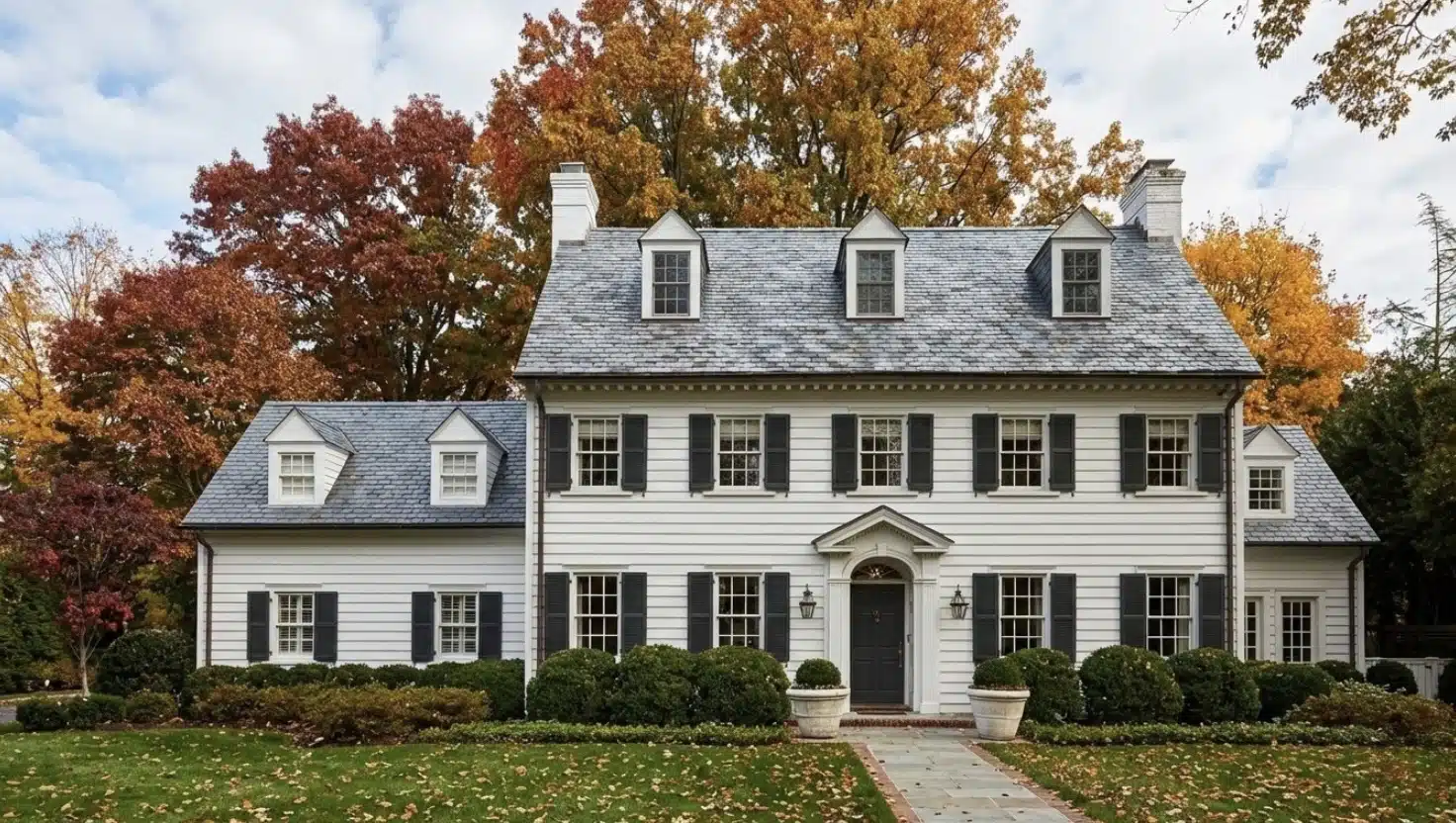
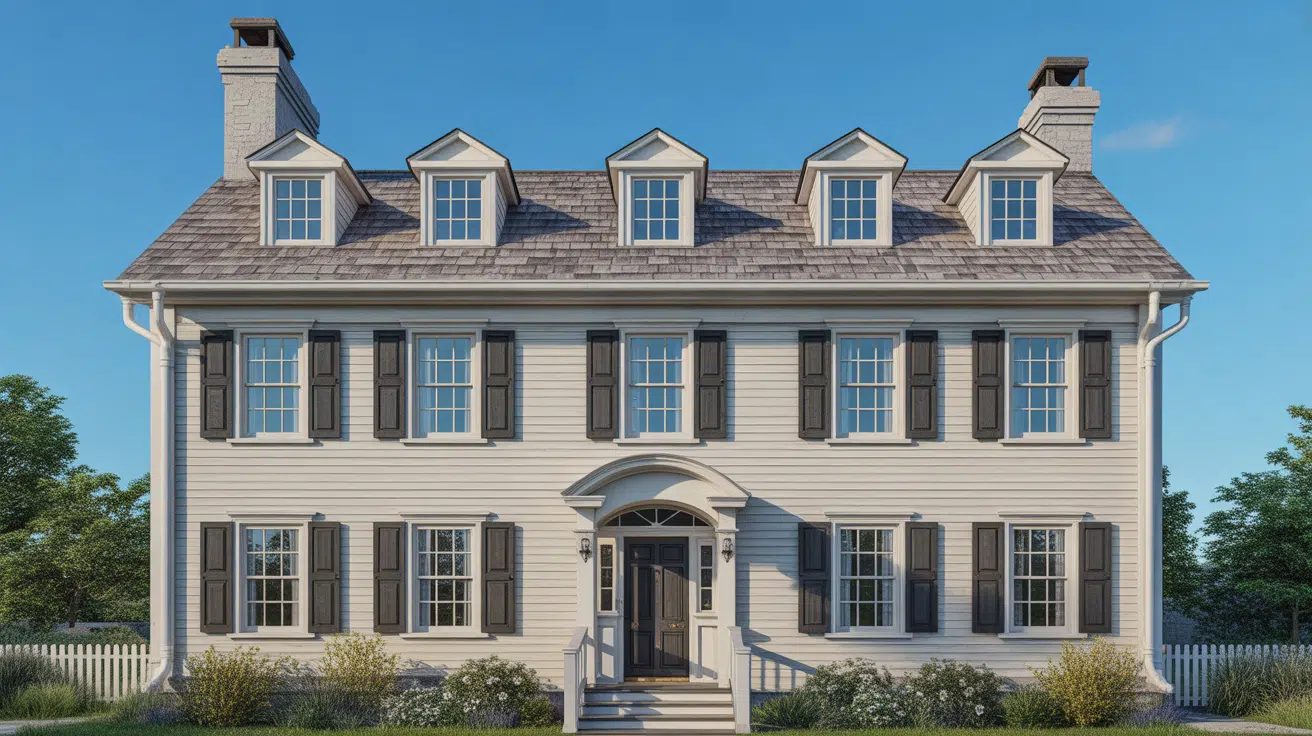
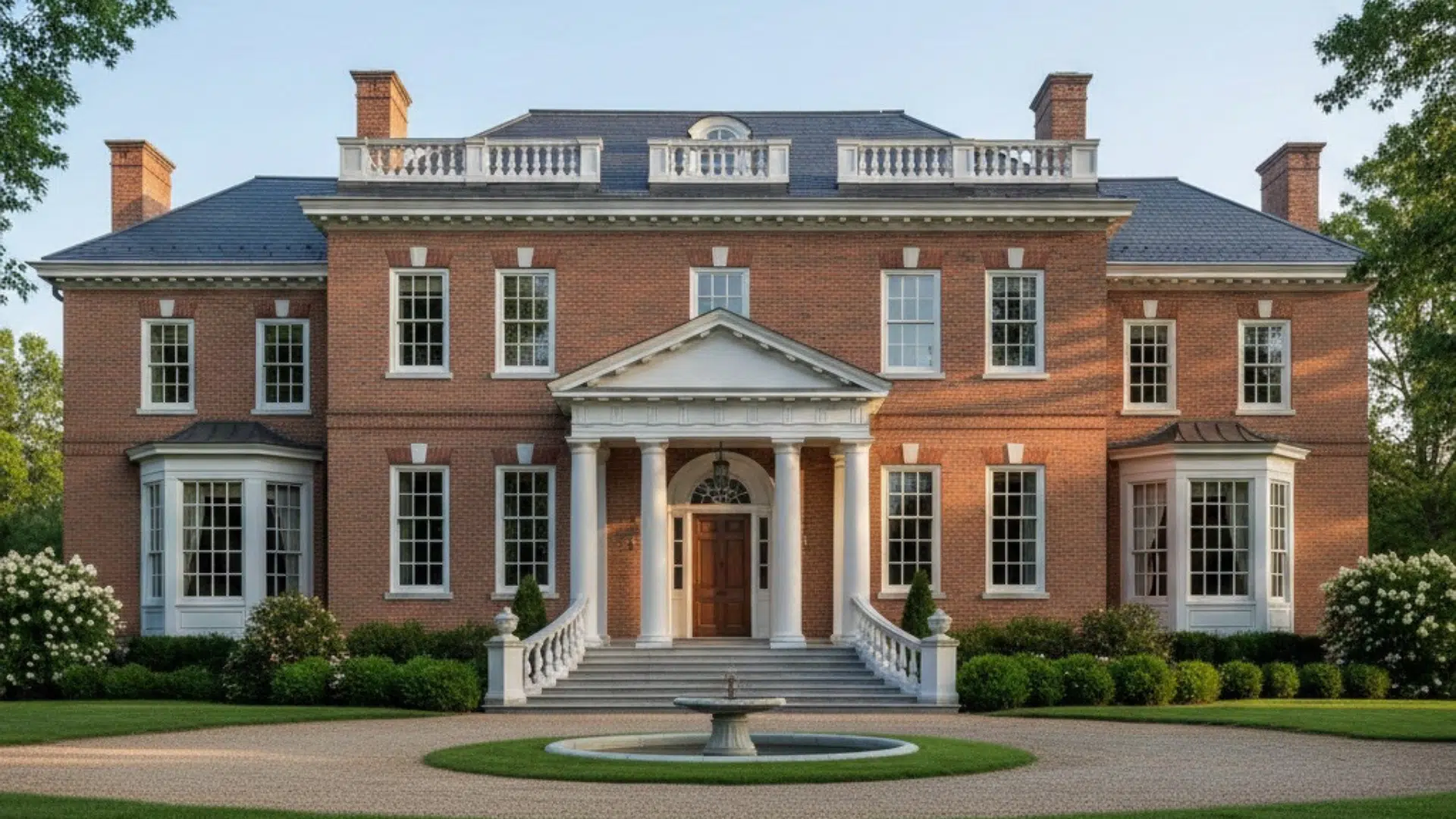
Georgian architecture features a perfectly symmetrical facade with evenly spaced, matching windows, usually built in brick laid in Flemish or English bond.
Roofs are low-hipped or side-gabled with end chimneys, and entrances often include transoms or fanlights, pilasters, a pediment, and paneled doors.
2. Window And Door Details
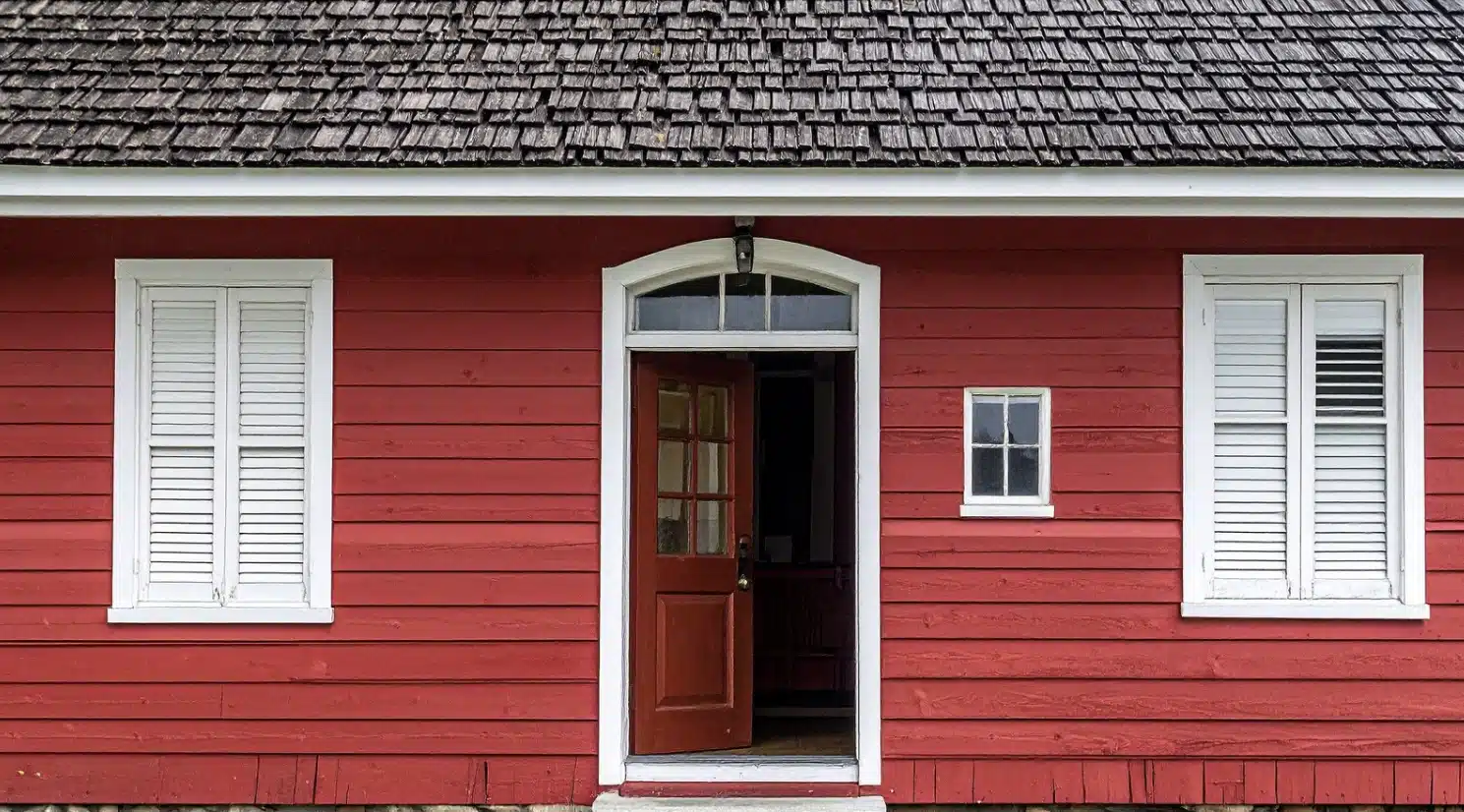
Georgian homes feature tall sliding sash windows with small panes divided by muntins, often six early on, later nine or twelve.
These windows follow strict proportions, are taller than wide, and usually shrink on upper floors. Their repeating grid and symmetry create rhythm, order, and a sense of careful craftsmanship.
3. Interior Features
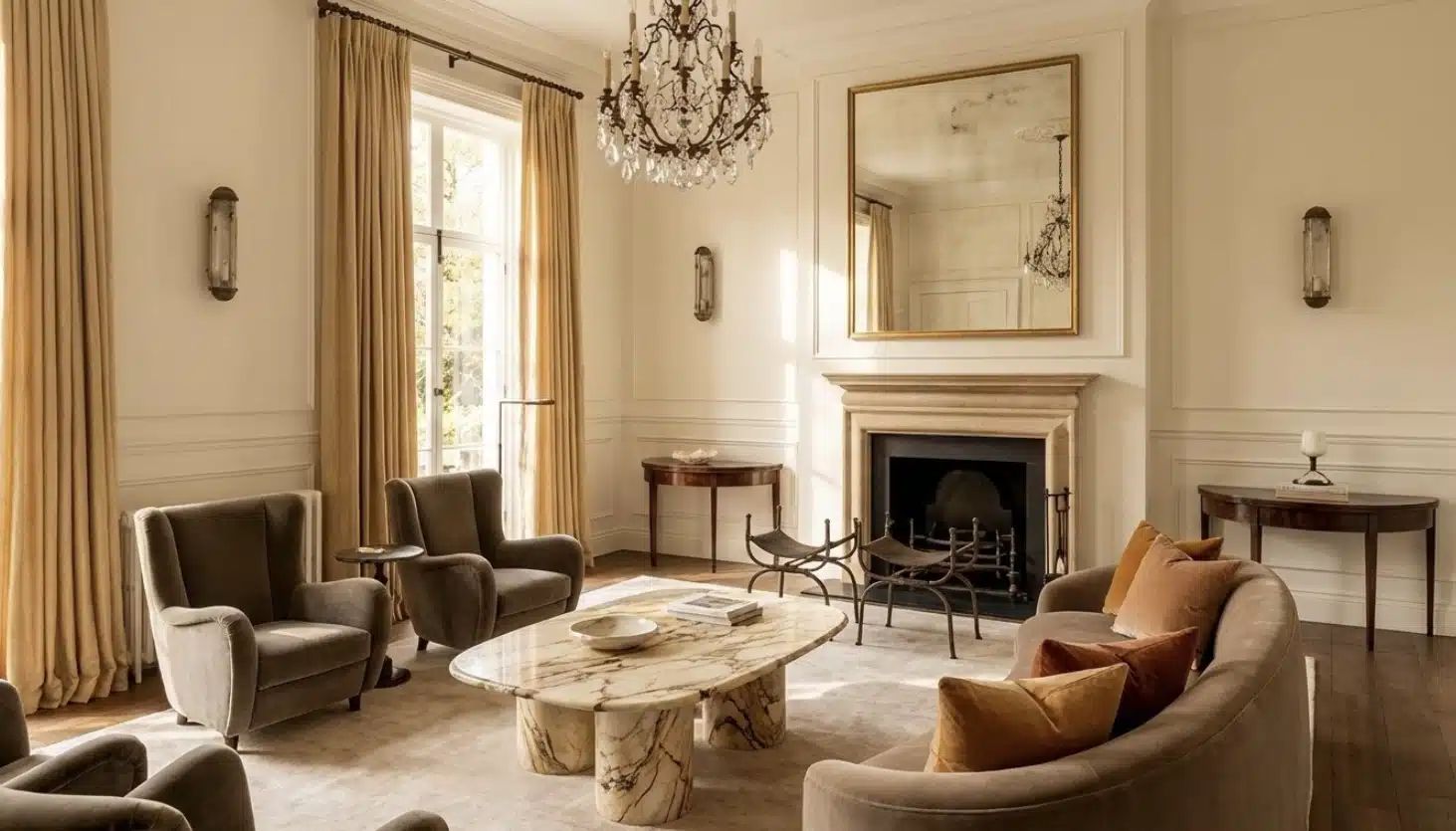
Georgian interiors reflect the same symmetry as the exterior, with rooms arranged around a central hall or staircase, main rooms at the front, and service spaces behind.
Simple ratios, aligned doorways, centered windows and fireplaces, plus restrained plasterwork and refined stairs, create quiet elegance.
Types of Georgian Homes
Georgian architecture adapted to different settings and purposes while maintaining its core principles. Each type reflects local needs while following the same commitment to symmetry and classical proportion.
1. Georgian Townhouses And Terraces
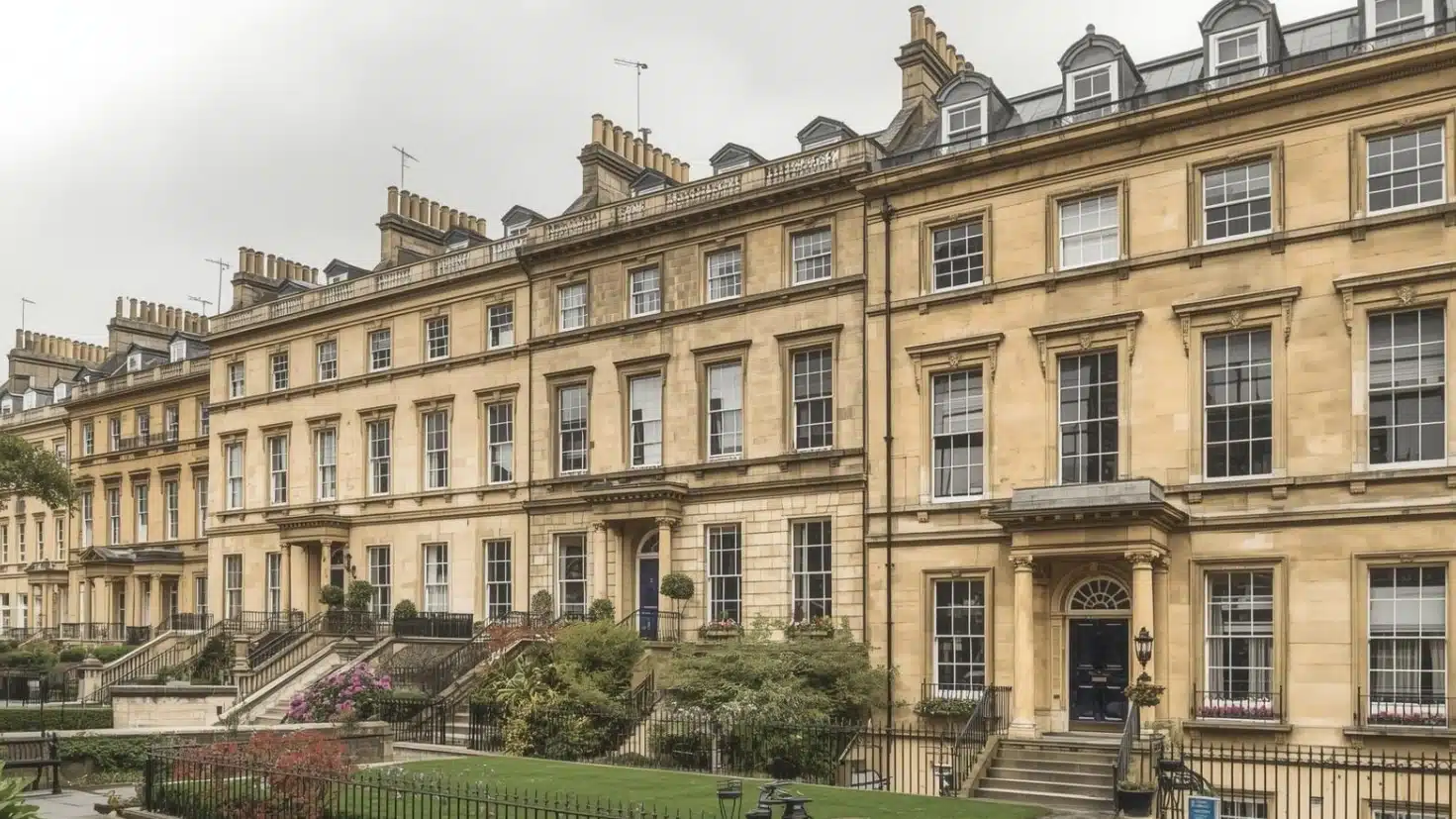
Georgian terraces emerged as fast-growing cities needed efficient housing. Identical rowhouses shared walls to save space and reduce costs, creating unified streetscapes, ordered squares, and three- to four-story townhouses with narrow frontages.
2. Georgian Country Houses
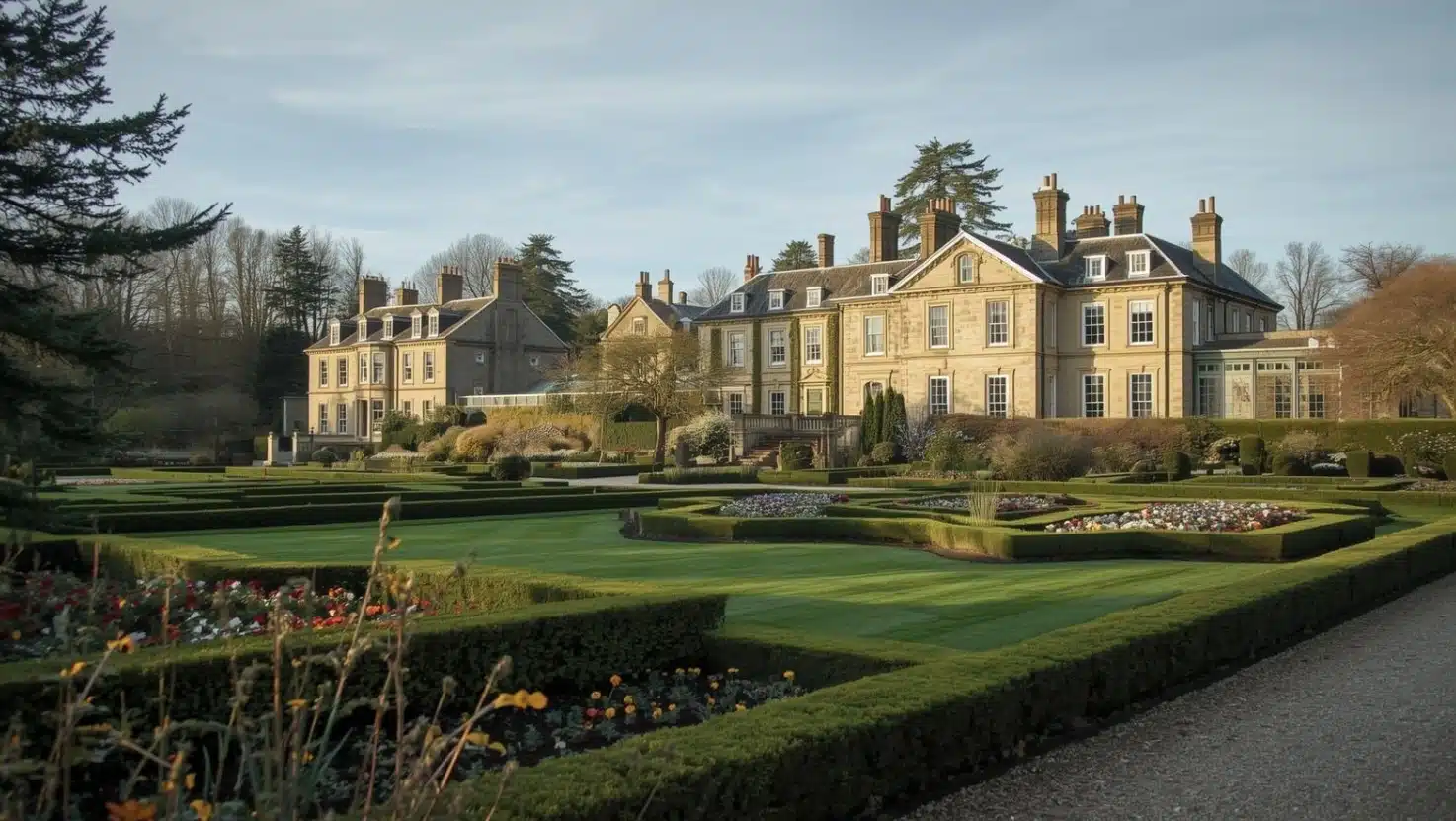
Georgian country houses were grand, wide estates with central blocks and symmetrical wings, often featuring classical porticos. Interiors and landscaped parks were designed together to express power, taste, and proportion.
3. Georgian Architecture in the United States

Georgian architecture reached the American colonies in the early 1700s, blending British symmetry and classical proportions with local materials. Regional versions used wood in New England and raised brick homes in the South.
Common Look-Alikes
Several architectural styles share similarities with Georgian design, which can create confusion. Knowing the key differences helps you identify authentic Georgian architecture and distinguish it from related styles.
4. Georgian vs. Federal
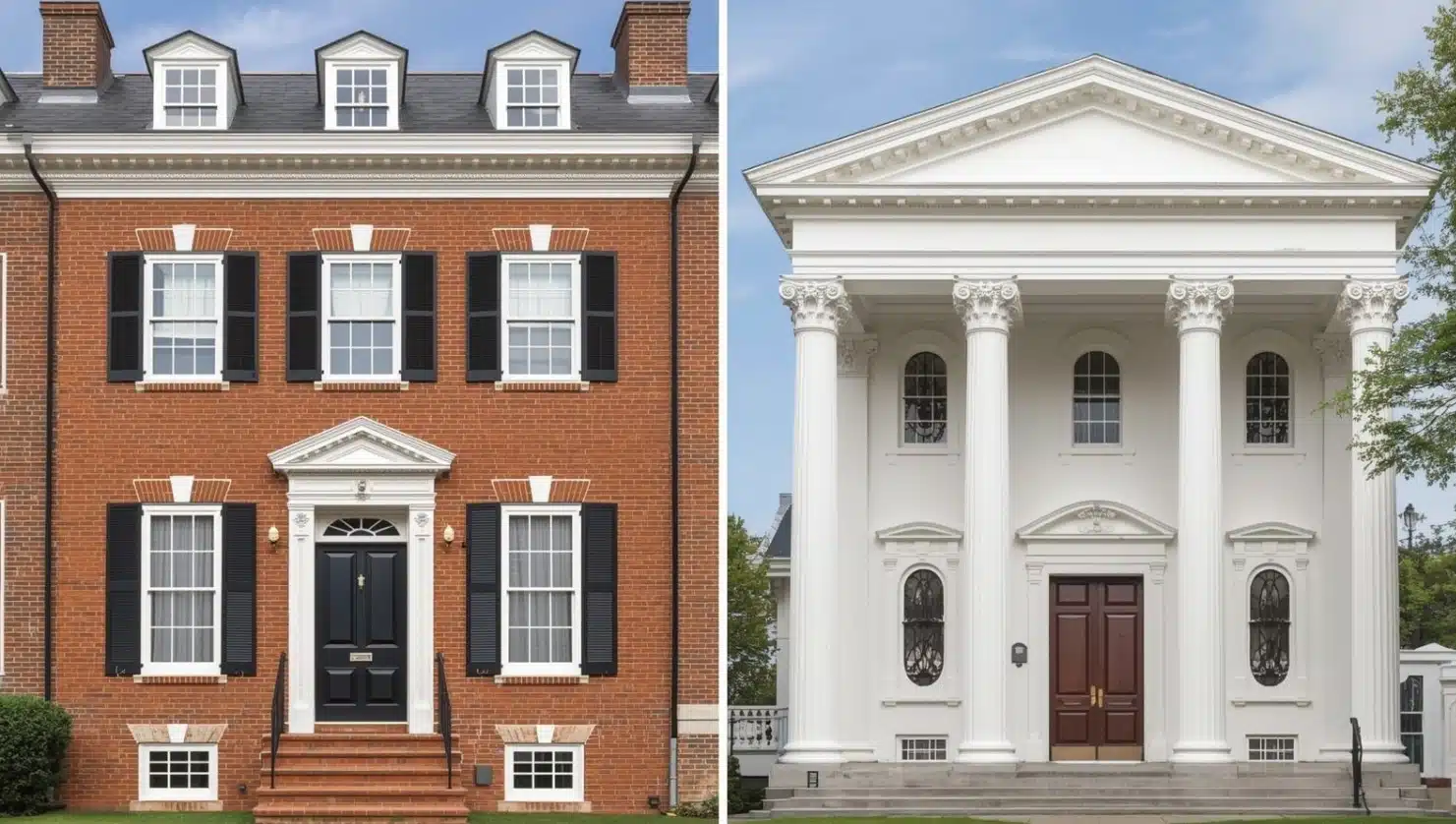
Federal style succeeded Georgian in America (about 1780–1820) and looks lighter and more refined. It often uses elliptical fanlights, thinner window muntins, and added ornamentation, such as swags and garlands, unlike the Georgian sturdier, balanced feel.
5. Georgian vs. Greek Revival
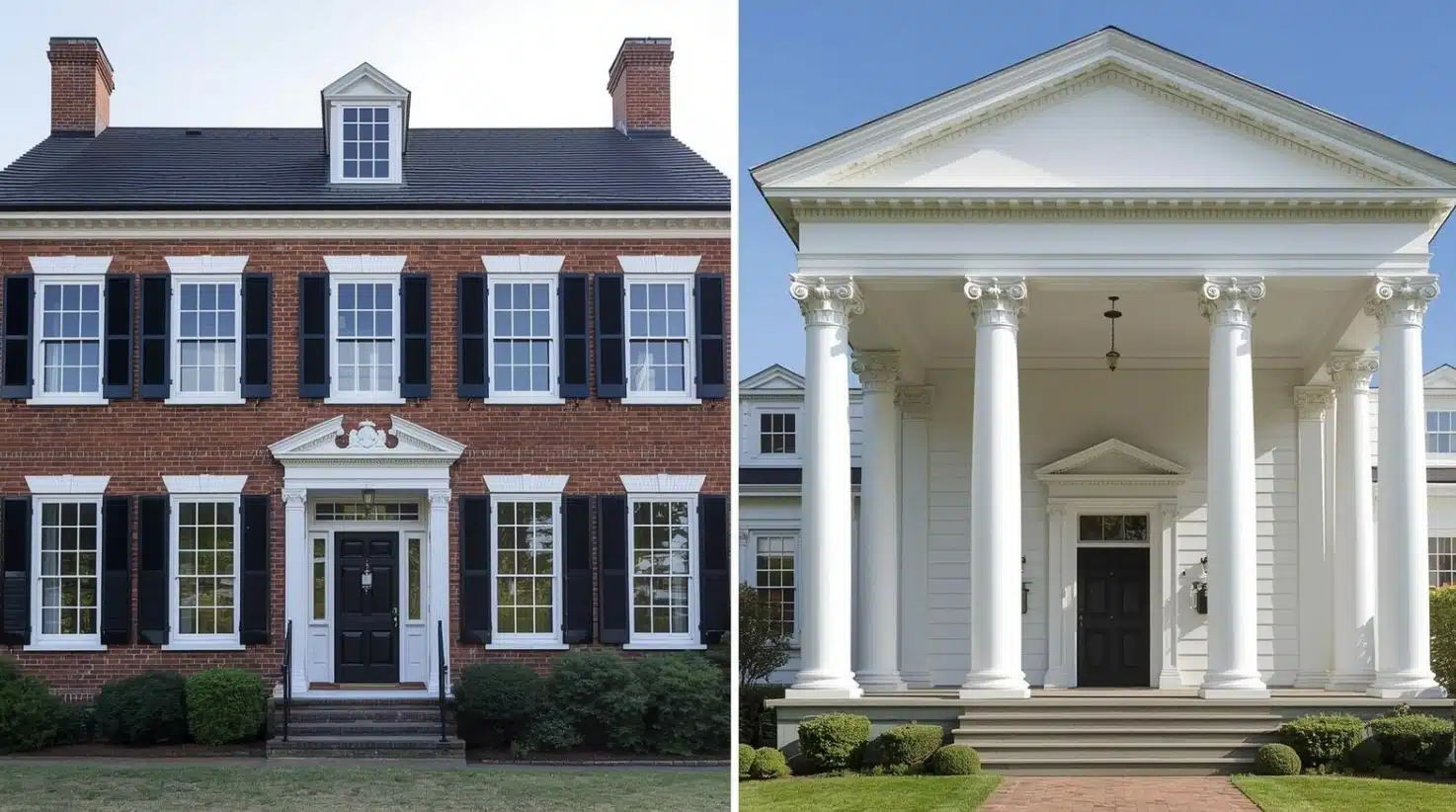
Greek Revival peaked in the 1830s–1840s and is easy to spot for its full temple-front look, often with large columns across the facade. It uses heavier, bolder classical details, while Georgian remains more restrained, using subtle classical elements rather than dramatic columned fronts.
6. Georgian vs. Colonial Revival
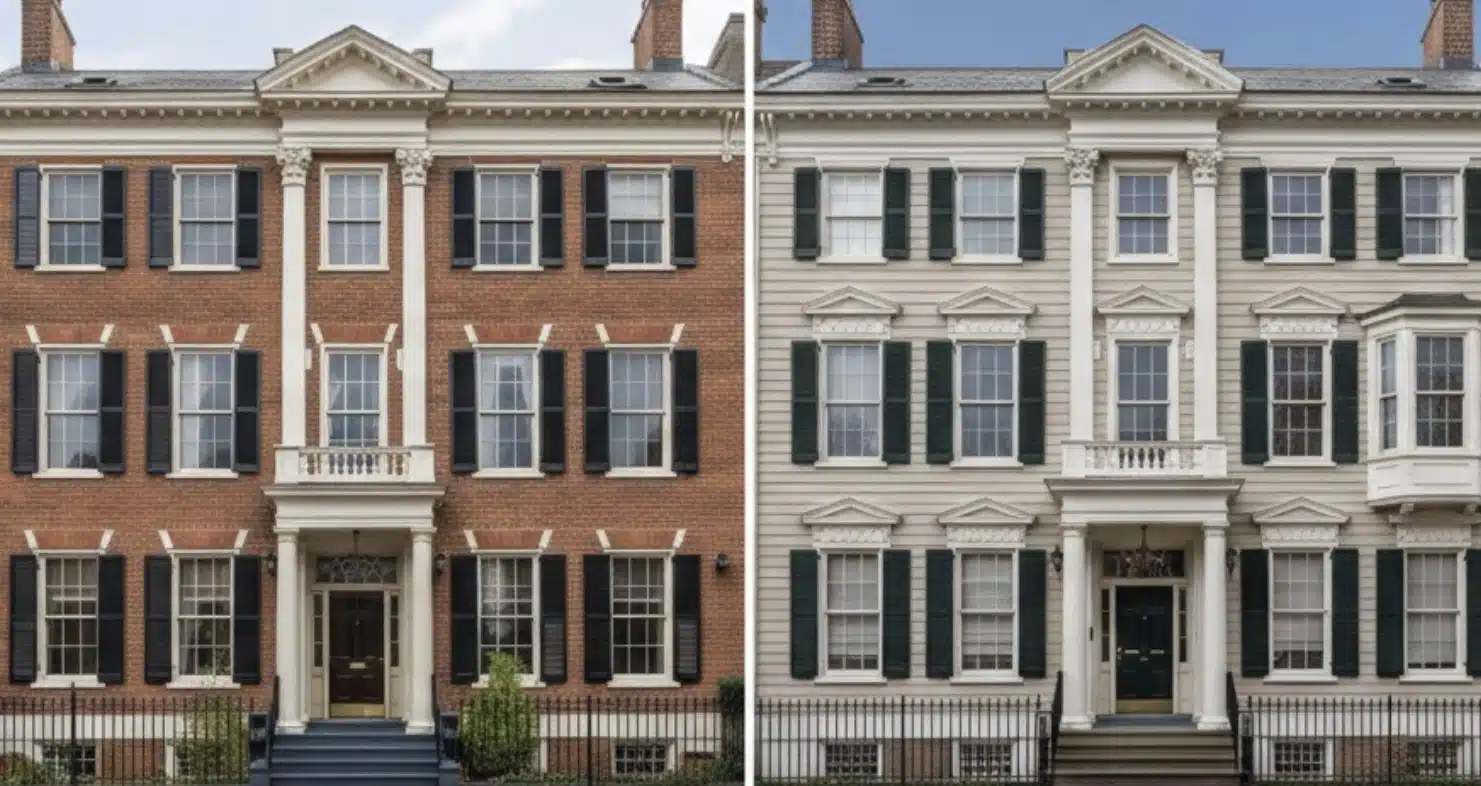
Colonial Revival (late 1800s-early 1900s) often copies Georgian forms but uses newer materials and looser rules, sometimes adding asymmetrical wings. Original Georgian stays strictly proportional and symmetrical.
7. Georgian vs. Victorian
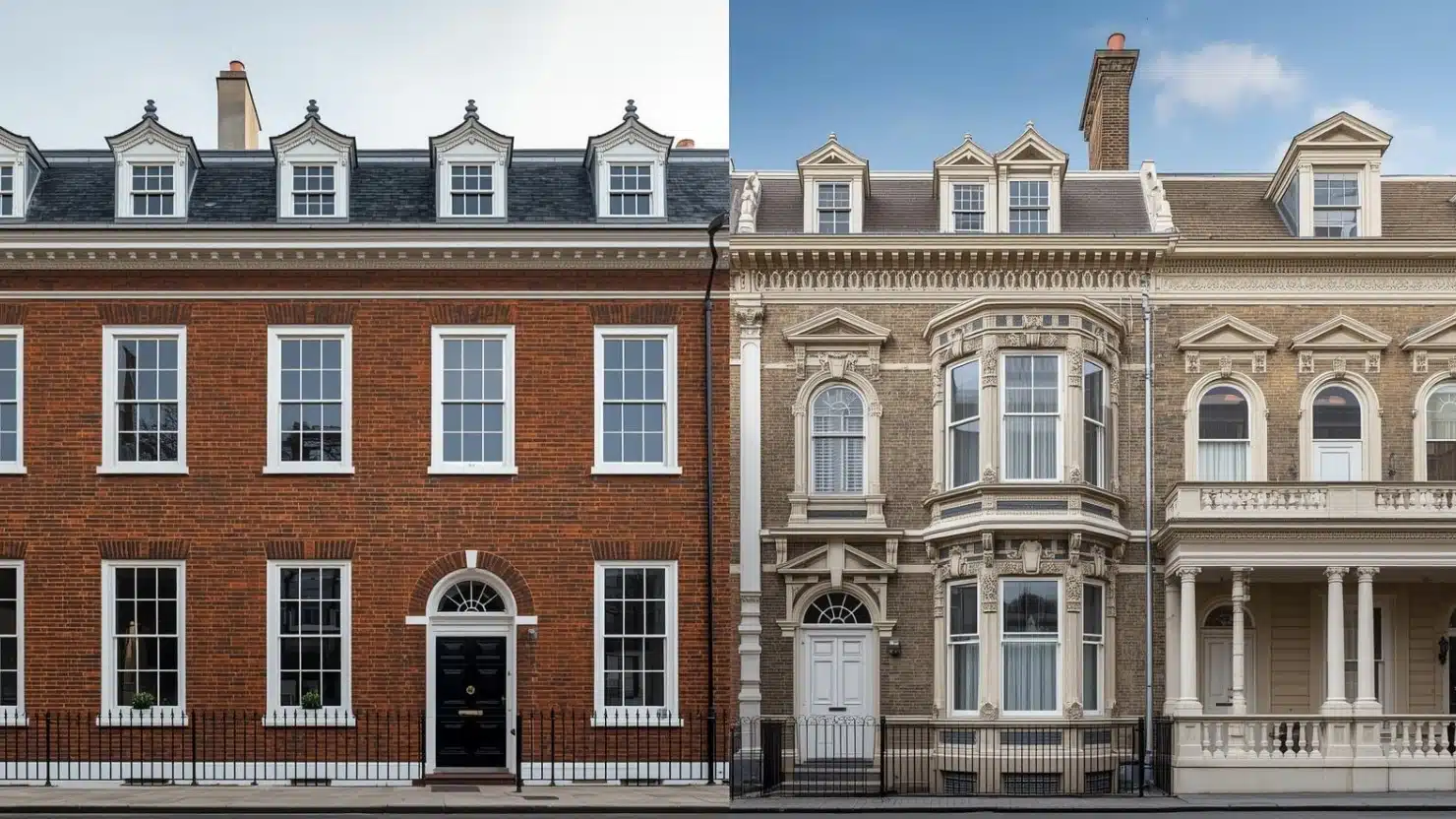
Victorian homes from the mid to late 1800s deliberately break Georgian rules. Victorian architecture embraces asymmetry, variety, and abundant ornament. Bay windows, towers, and wrap-around porches appear frequently. Color schemes use multiple contrasting hues.
Here are a few modern Victorian decor ideas if you like that layered, detailed look
How to Identify a Georgian Style Home Quickly
Spotting Georgian architecture becomes easy once you know what to look for. These five key features help you identify the style at a glance.
- Perfect Symmetry: Georgian facades rely on perfect symmetry: both sides mirror exactly, with matching windows in size, number, and placement.
- Centered Entry: Georgian homes feature a centered front door, often with a fanlight or transom, framed by pilasters or simple columns.
- Window Rhythm: Georgian windows align in neat rows, tall and rectangular with multi-pane grids. Upper floors often have slightly smaller windows.
- Brick or Stone Construction: Georgian exteriors are usually red or brown brick, with stone on grander homes. The masonry feels solid; wood siding is rare.
- Restrained Classical Details: Georgian style uses restrained ornament: simple cornices, modest quoins, and occasional small door pediments. Details support the design, not overwhelm it.
These characteristics work together to create the unmistakable Georgian look that has endured for centuries across the English-speaking world.
Georgian Style Home Visual Ideas and Inspiration
Georgian architecture offers various design possibilities for modern homeowners. These ideas show how to incorporate Georgian principles into your home while meeting contemporary needs.
1. Georgian Home With Formal Front Garden
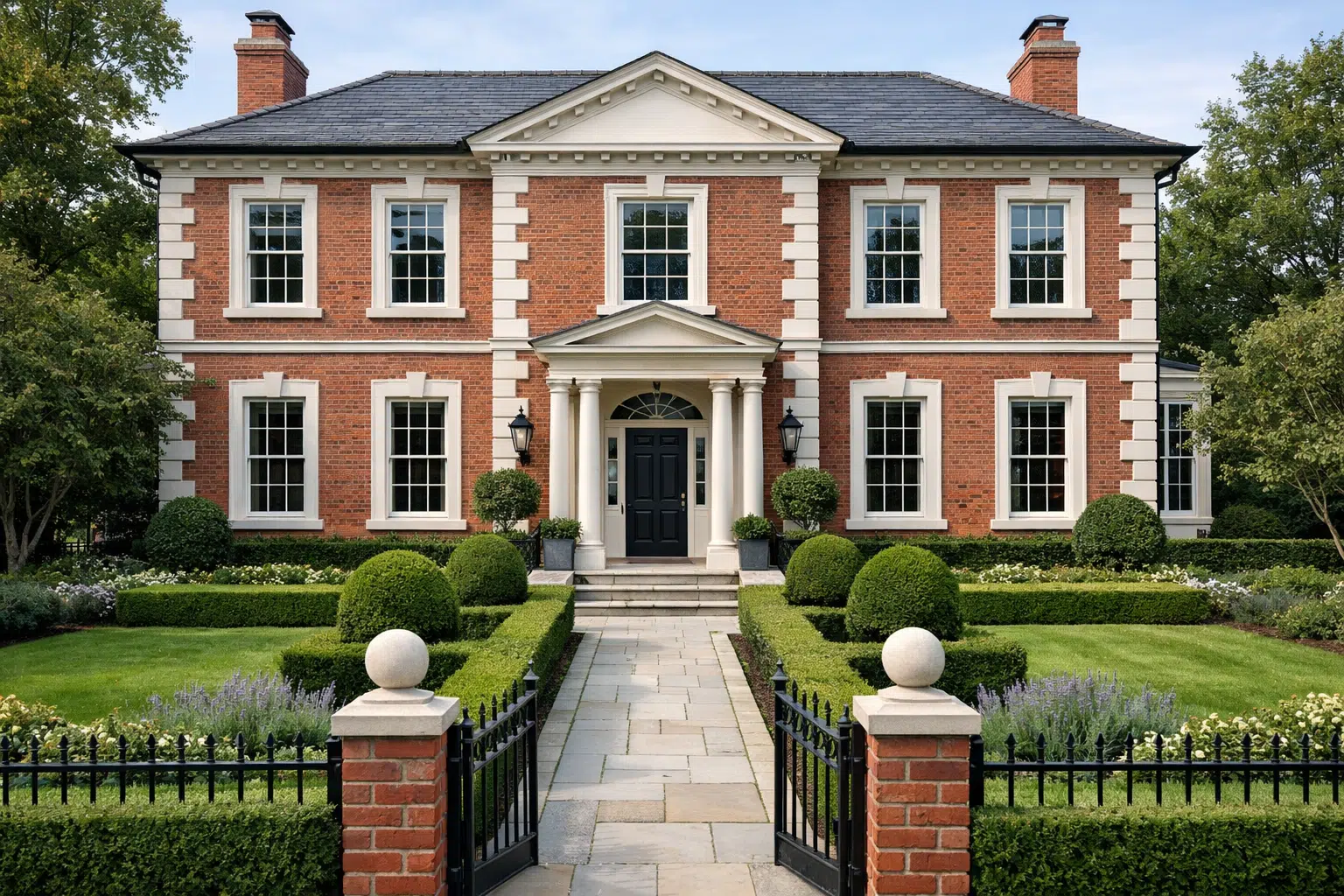
A symmetrical Georgian facade paired with a tidy, formal front garden. Clipped hedges, straight paths, and balanced planting keep everything looking polished and classic.
2. Modern Home Inspired By Georgian Architecture
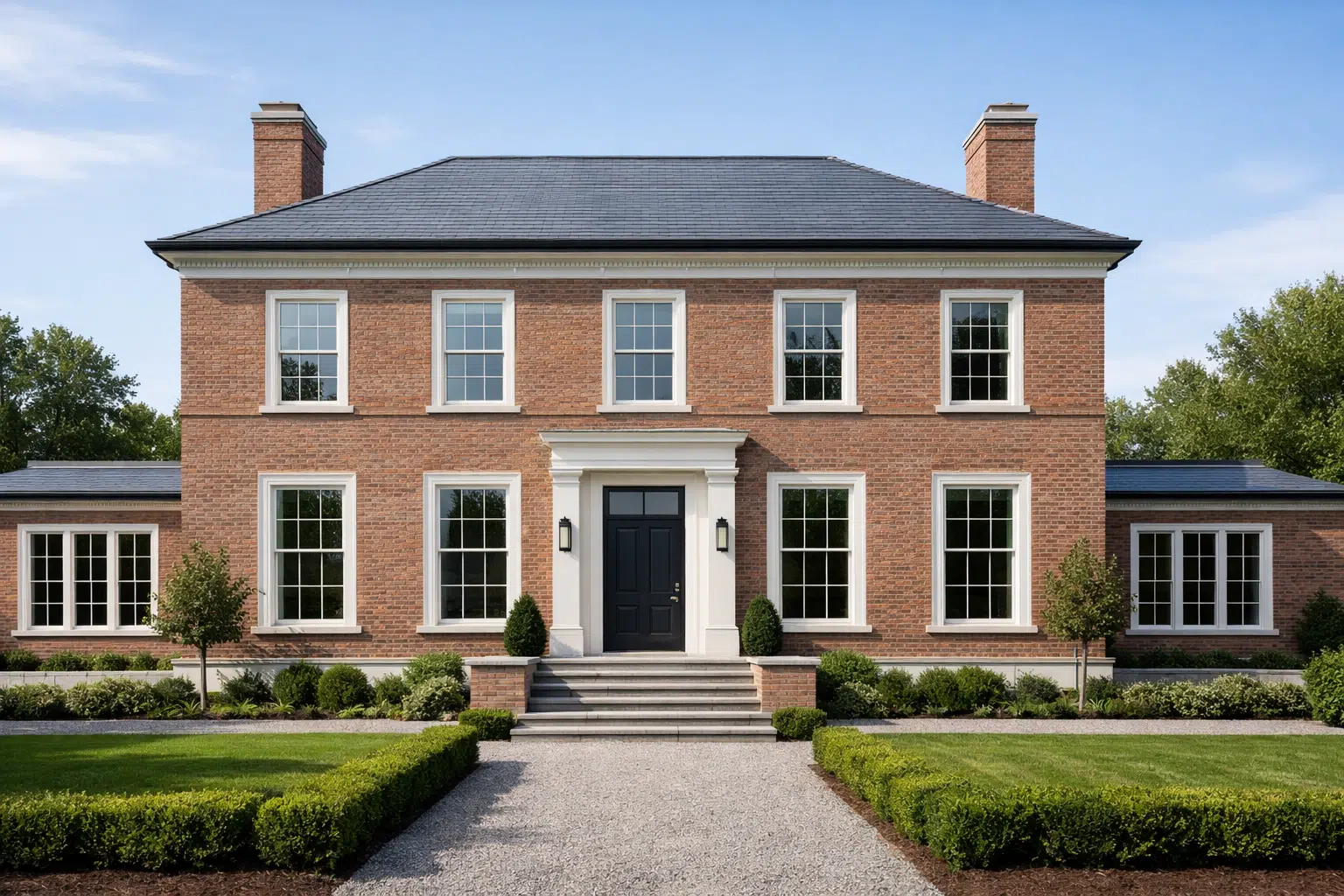
A contemporary build that borrows Georgian symmetry and proportions.
Crisp details and modern materials give it a fresh edge, while the layout still feels enduring and orderly.
3. Georgian Townhouse Doorway Detail
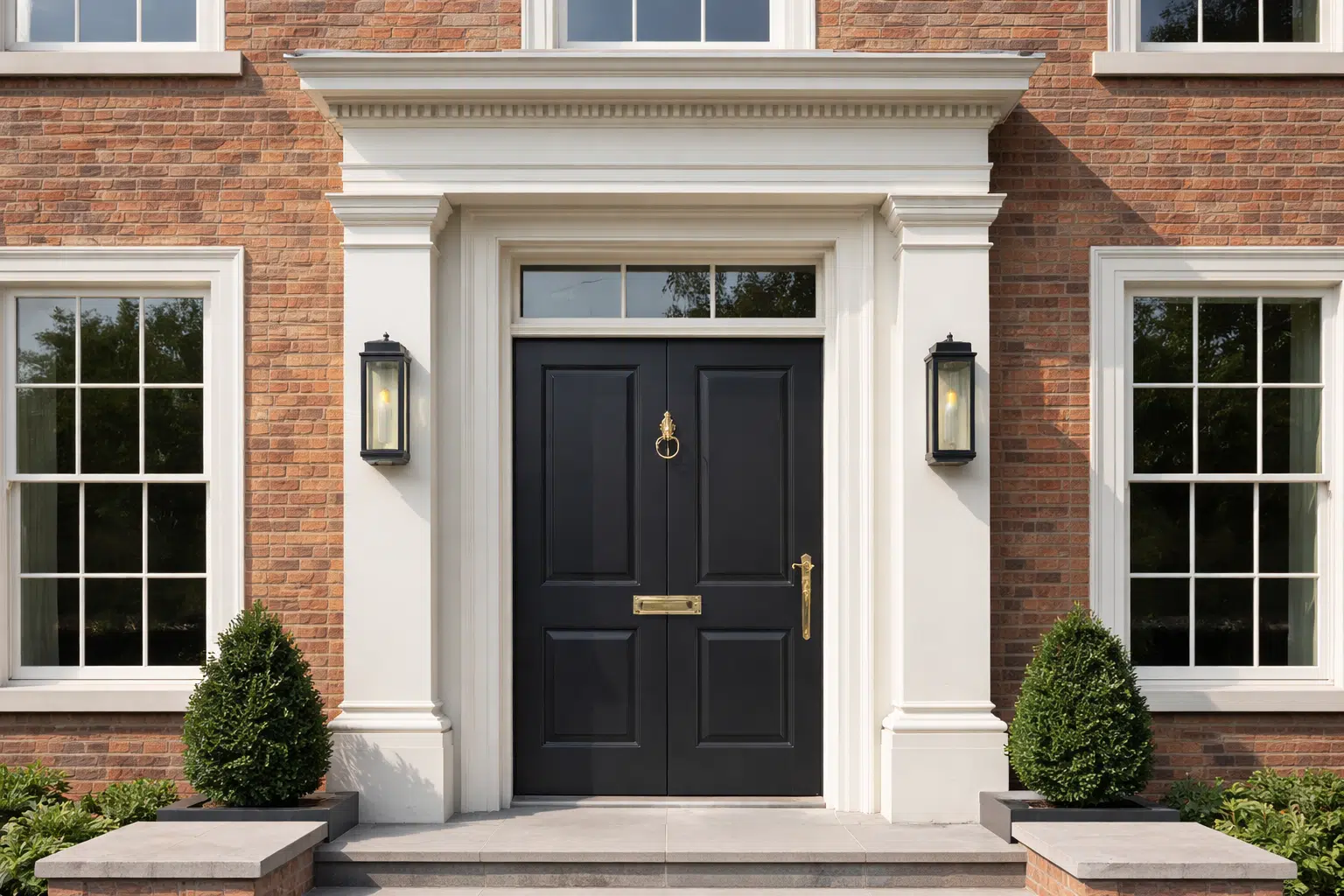
A refined entrance with features like a fanlight, pilasters, and decorative trim. It creates a strong focal point and instantly adds a sense of heritage and good craftsmanship.
4. Georgian Staircase With Natural Light
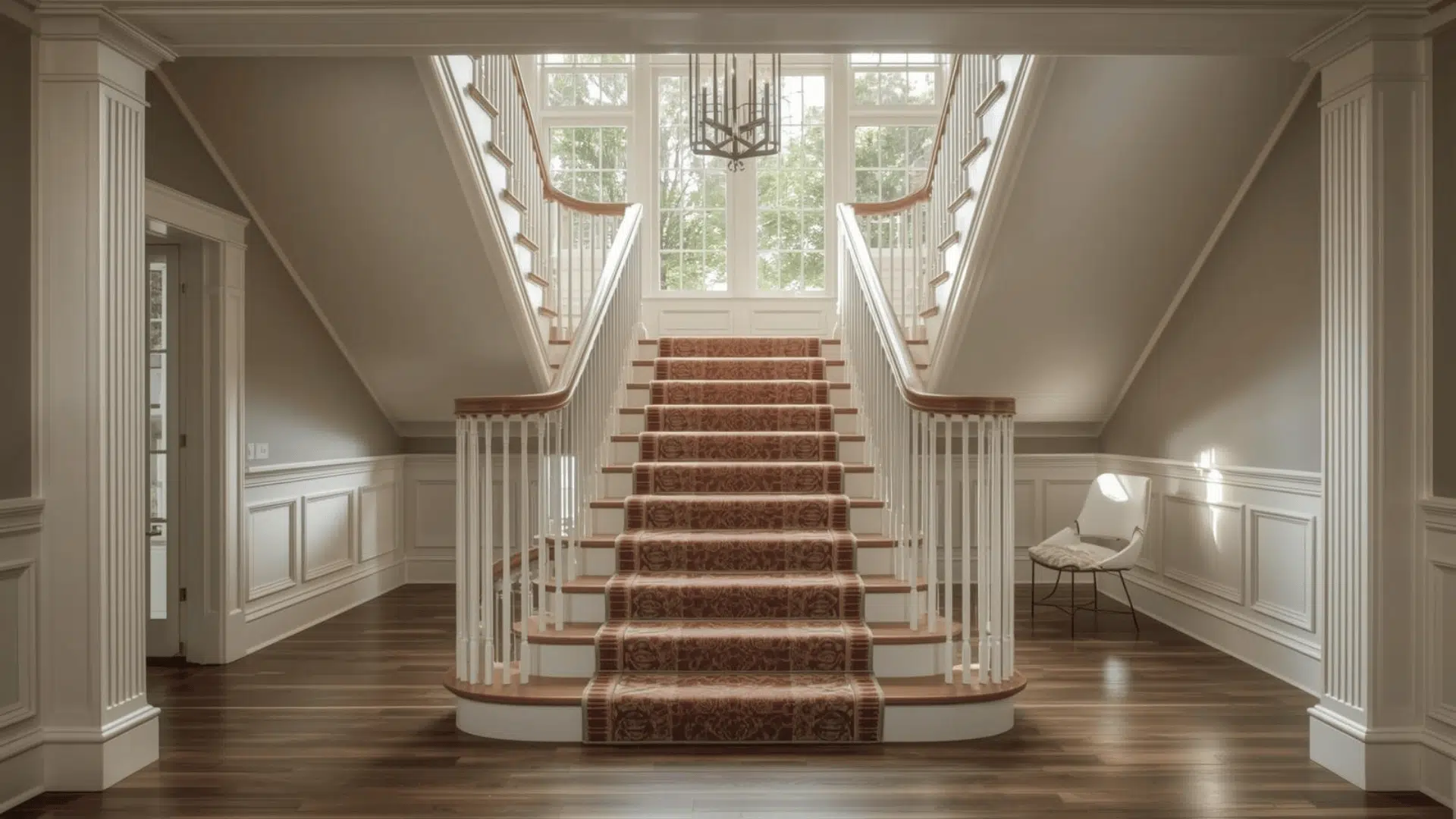
A graceful staircase brightened by natural light from tall windows or a skylight. The space feels open and airy, with elegant lines that suit both traditional and updated interiors.
Conclusion
Georgian architecture remains one of history’s most influential building styles.
From the terraced streets of London to colonial homes in America, Georgian buildings shaped how we experience urban spaces. The style proved that thoughtful design doesn’t need excessive decoration to make an impact.
If you are admiring a grand country estate or a modest townhouse, Georgian architecture always tells a story of order, reason, and lasting beauty. These principles transcend their 18th-century origins.
Next time you notice a perfectly balanced brick facade with evenly spaced windows, you’ll recognize the Georgian influence at work. What Georgian buildings have you spotted in your neighborhood?
Share what you have noticed in the comments below!