Stairs are one of those parts of a home that most people overlook. They just walk up and down without a second thought.
But what if the staircase could become one of the most eye-catching spots in the house? Tile on stairs makes that possible. It adds style, texture, and personality to any space.
Going bold or keeping things simple, tiled stairs can handle both with ease. From the best tile types to color ideas and safety tips, everything needed is covered right here.
No design background is required to follow along. By the end, choosing the perfect tile for the stairs will feel simple. A staircase that feels more finished is closer than it seems. Let’s start by finding the perfect tile for the stairs today.
What Makes Tile on Stairs a Good Design Choice?
Tile on stairs offers several practical benefits that make it worth considering. These surfaces resist wear and tear from daily foot traffic better than many other materials.
They also handle moisture well, which is important for entryways and basements. Cleaning tiled stairs takes minimal effort; a quick wipe usually does the job.
Beyond function, tile lets you express your style. You can mix colors to create patterns or stick with neutral tones for a clean look.
Different textures add visual interest while providing a safe grip. Glossy finishes reflect light and make spaces feel larger. Matte tiles give a more subtle, modern feel.
The design possibilities are wide-ranging. If you prefer bold geometric patterns or simple, classic layouts, tile on stairs adapts to your vision.
Best Tile Types for Stairs
Choosing the right tile type for your stairs depends on your style, budget, and the level of wear and tear you expect. Each material has its own strengths, so knowing the basics helps make a smarter choice.
| Type | Used For |
|---|---|
| Porcelain Tiles | High-traffic stairs, entryways, and homes that need water and stain resistance |
| Ceramic Tiles | Indoor stairs on a budget, where moisture exposure is low to moderate |
| Natural Stone Tiles | Premium look stairs, statement staircases, and areas where natural texture is desired |
| Mosaic Tiles | Decorative stair risers, accent sections, and custom pattern designs |
| Textured Tiles | Safer stairs needing extra grip, especially in busy homes or slip-prone areas |
Safety and Edge Details for Tile on Stairs
Keeping your tiled stairs safe and well-finished requires attention to small but important details that protect every step. A few smart choices during planning and installation can make a big difference in both looks and safety for years to come.
- Choose Slip-Resistant Tiles: Matte, textured tiles provide a better grip than glossy surfaces. This matters most on treads where feet land daily. Always check the slip rating before buying tile for stairs.
- Install Proper Nosing: Nosing is the edge piece that covers the front of each tread. It protects the tile from wear and adds a clean finish. Metal or wooden nosing options complement most tiled stair designs.
- Use a matching grout color: It affects both appearance and safety. A matching grout tone keeps the surface uniform and visually clean. Epoxy grout works best for stairs as it resists moisture and staining.
- Seal The Tiles Regularly: Sealing protects tile on stairs from moisture and dirt buildup. Apply a quality sealant every six to twelve months. This keeps your tiled stairs looking fresh and lasting longer.
- Consider Tile Edging Options: Exposed tile edges can look unfinished and feel sharp. Use trim pieces or bullnose tiles to create smooth, safe edges. This detail adds a polished finish to your entire staircase design.
Ways To Design Stairs With Tiles
Where you place tile on stairs changes the entire look and feel of the space. Each option offers different visual effects and practical benefits, so picking the right spot matters more than most people think.
1. Riser-Only Tile Designs
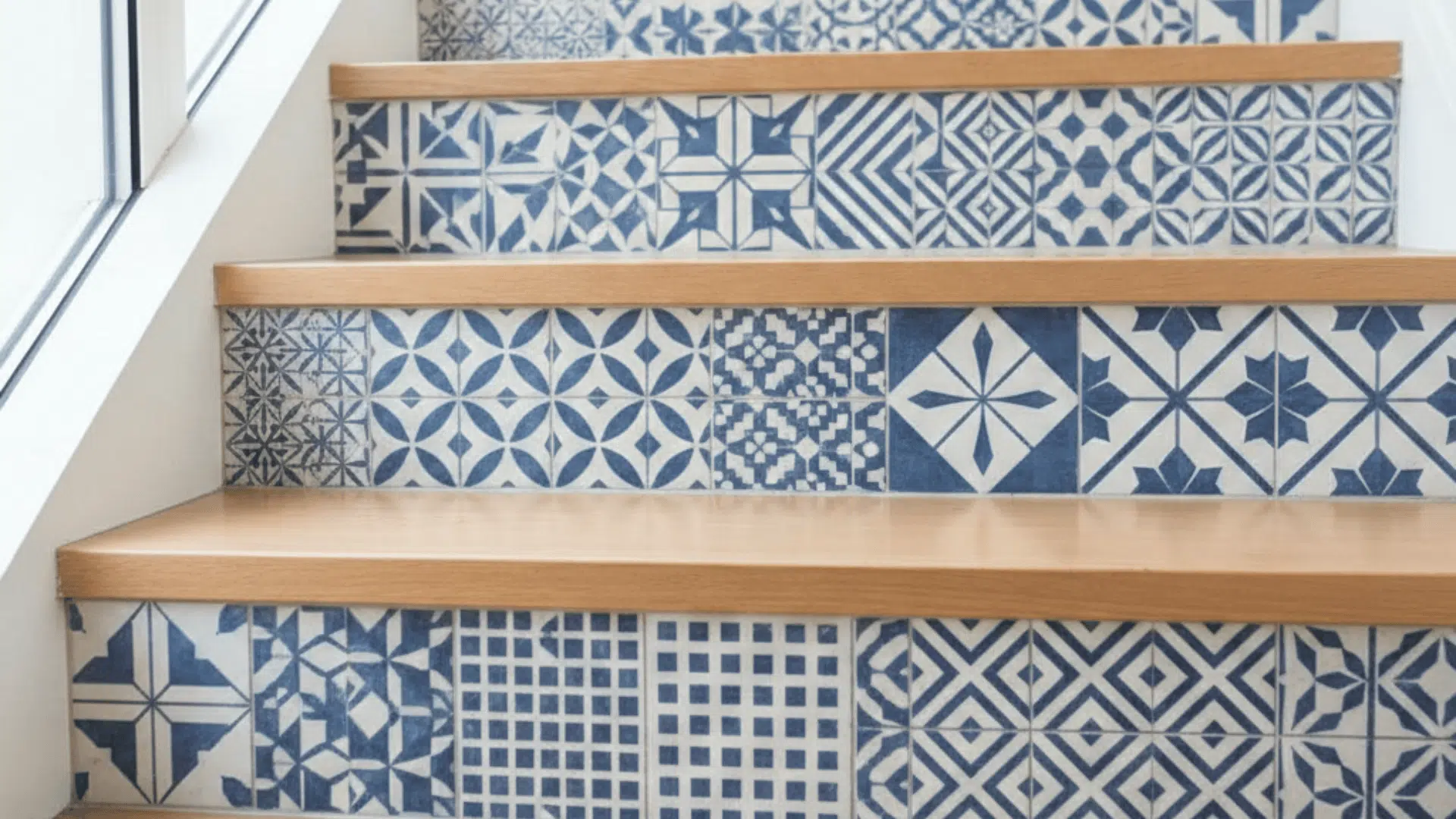
Tiling just the risers gives you visual impact with less work. Use patterned or colorful tiles while keeping wood on the treads. This approach costs less than covering the entire staircase. The contrast between materials adds depth and character.
Many homeowners choose decorative tiles with geometric patterns for risers. You can use different tile designs on each riser for a gallery effect.
2. Tread Tile Designs
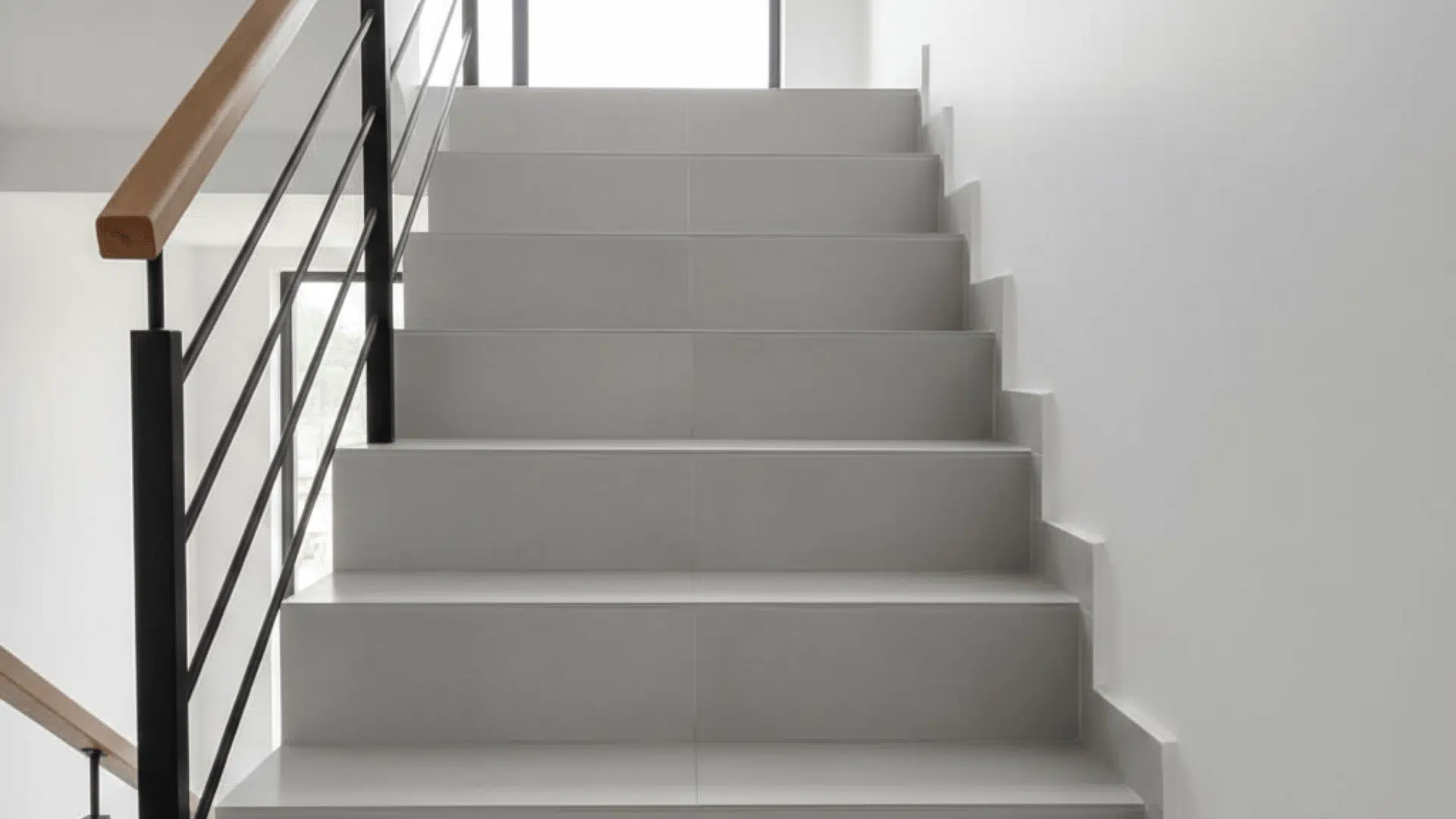
Tile on stairs treads creates a clean, contemporary feel. Use slip-resistant tiles for safety. Larger format tiles reduce grout lines and give a streamlined appearance.
Pair tiled treads with painted or stained risers for contrast. Wood-look porcelain tiles blend warmth with durability. Choose tiles with a texture or matte finish to prevent slipping.
3. Full Tiled Stairs
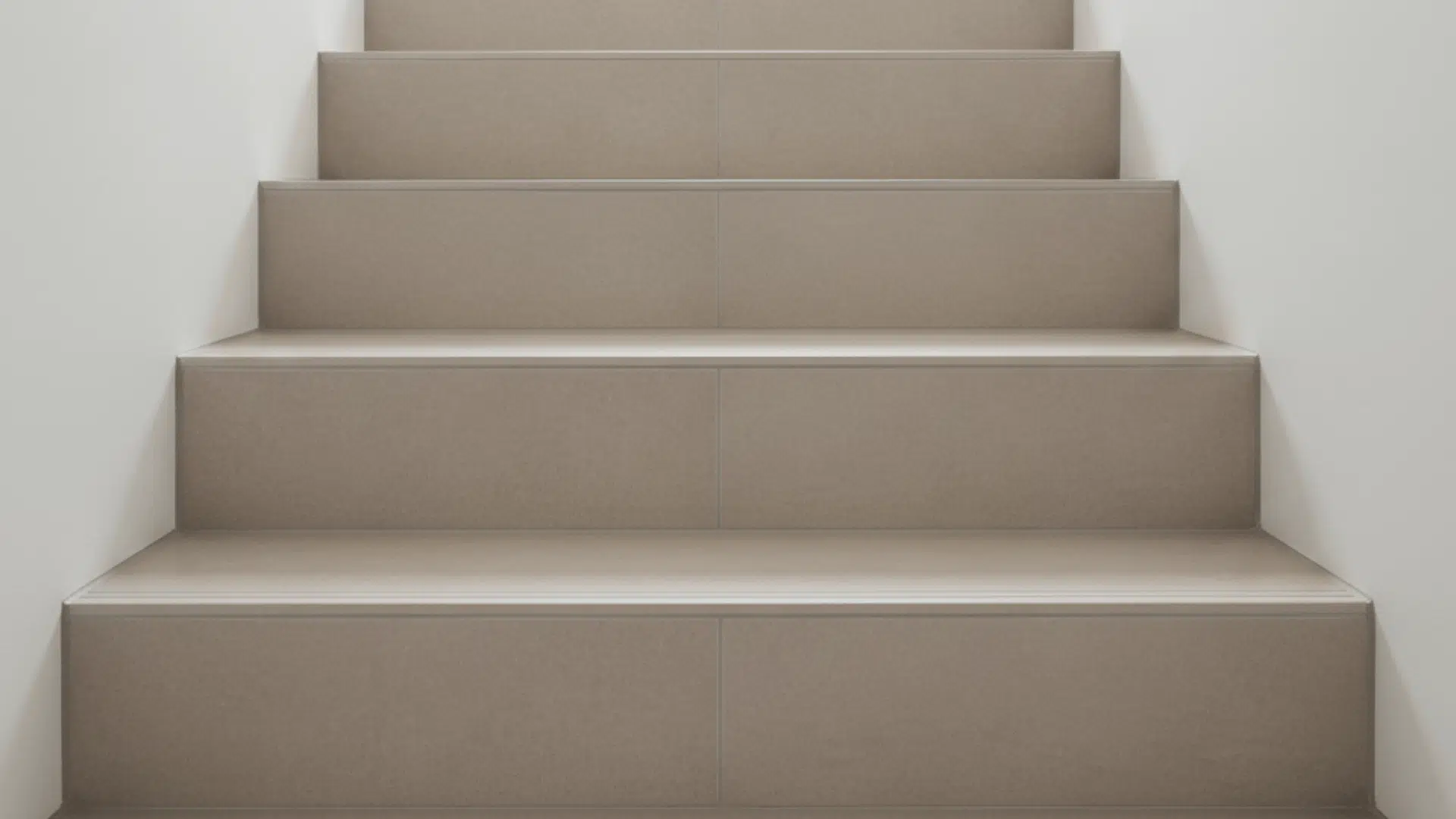
Covering both treads and risers with tile makes a strong design statement. Use the same tile throughout for unity, or mix patterns on risers with solid treads for balance.
Full tiled stairs work especially well in Mediterranean or modern homes. Stone tiles give a classic appearance. This option requires more planning for proper installation.
Tiled Stairs Ideas by Style
Choose a style that matches your home’s personality. Every house has its own vibe, and the right tile can match it perfectly. These popular looks help you quickly narrow down your tile options for stairs without feeling lost.
4. Modern Tiled Stairs
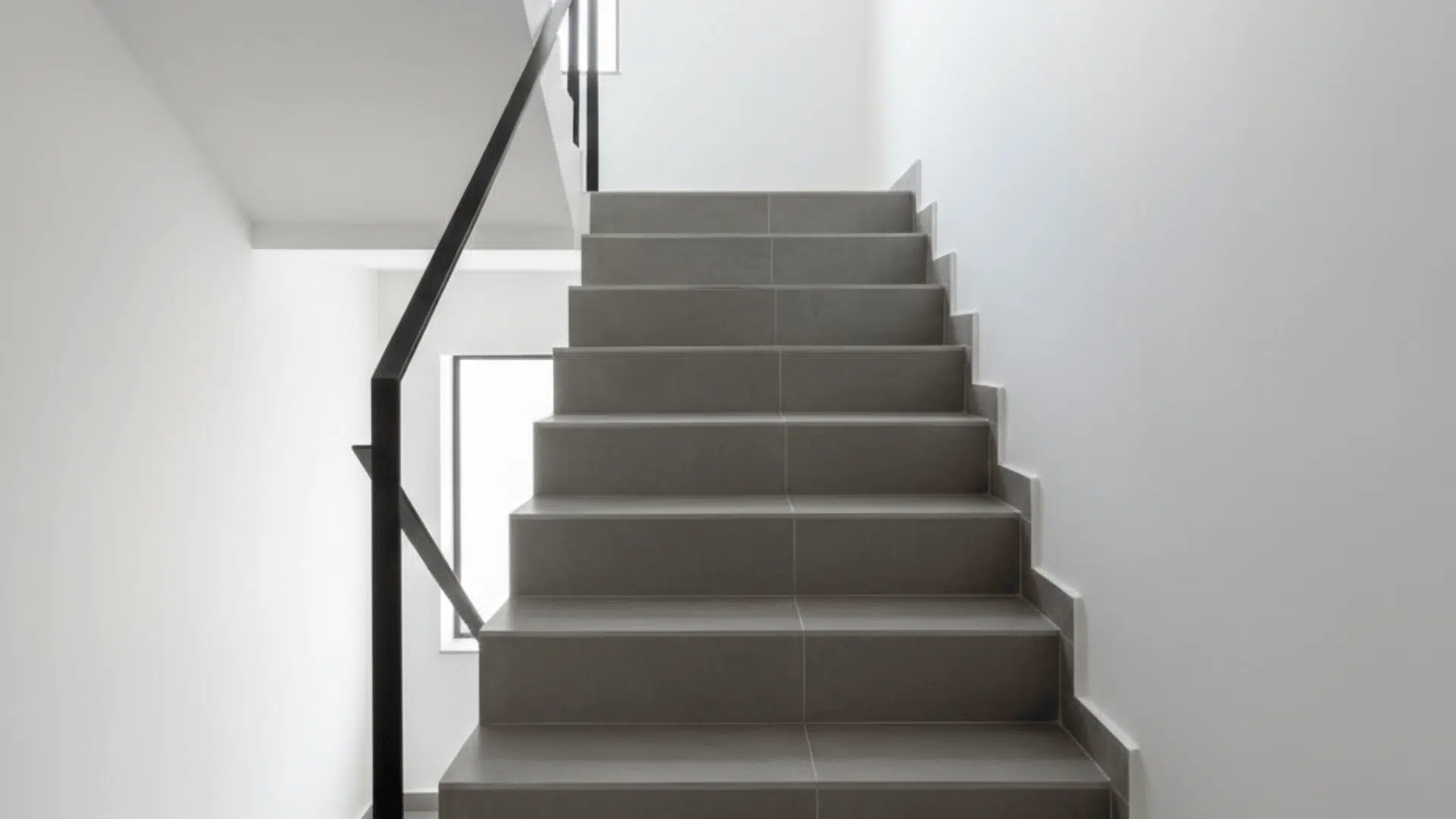
Modern designs focus on clean lines and minimal patterns. Large-format tiles in neutral grays, whites, or blacks work best. Solid colors create a sleek, uncluttered appearance.
Consider concrete-look porcelain or smooth matte finishes. Keep grout lines thin and consistent. Pair tiled treads with simple metal railings for a contemporary edge.
5. Mediterranean and Moroccan-Inspired Stairs
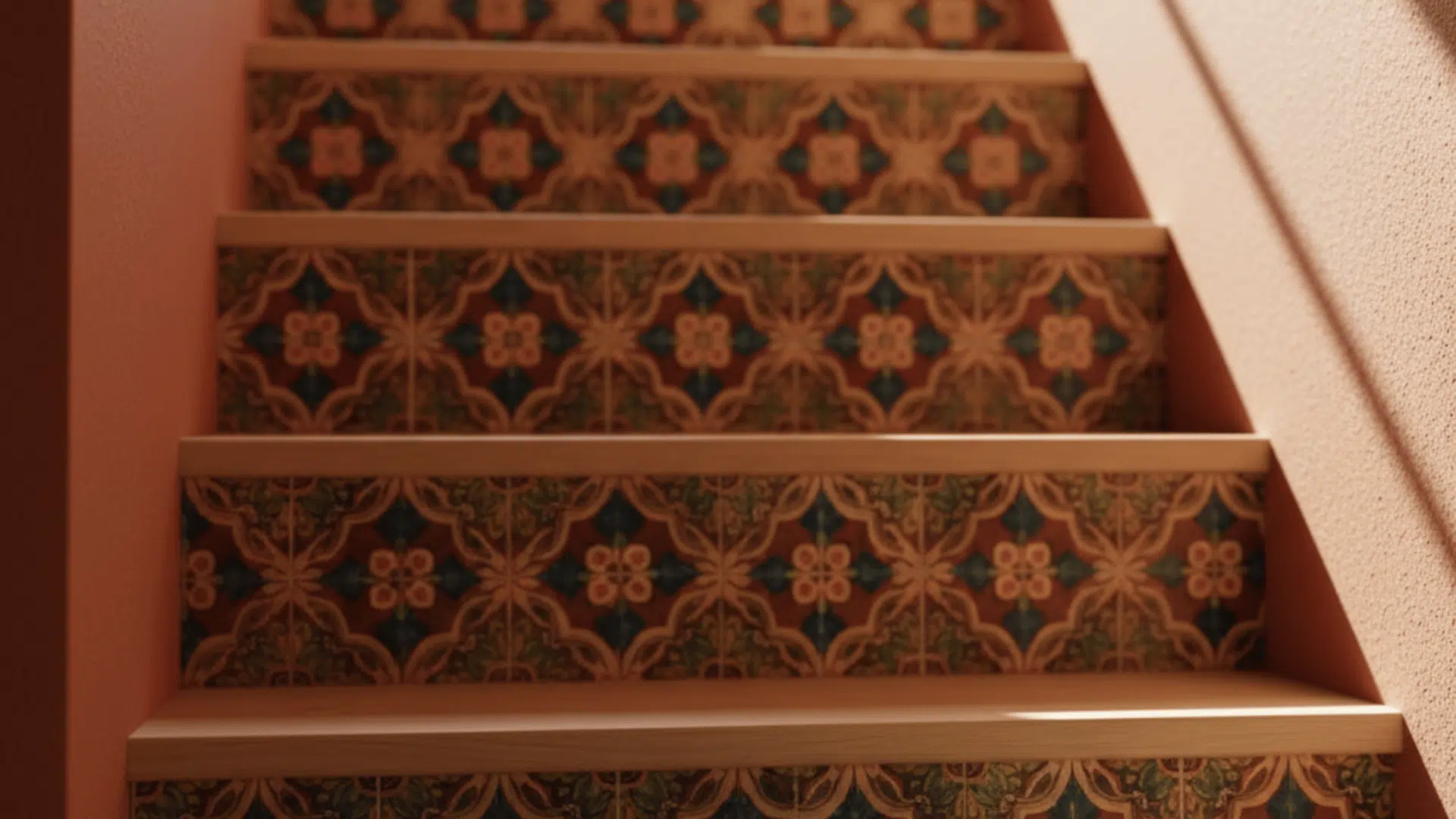
These styles embrace bold colors and intricate patterns. Hand-painted tiles with geometric or floral designs bring authentic charm. Mix blues, yellows, and terracotta tones for warmth.
Use patterned tiles on risers while keeping treads simple. Zellige or encaustic cement tiles capture the traditional look. Each riser can feature a different pattern for visual interest.
6. Farmhouse and Cottage Stairs
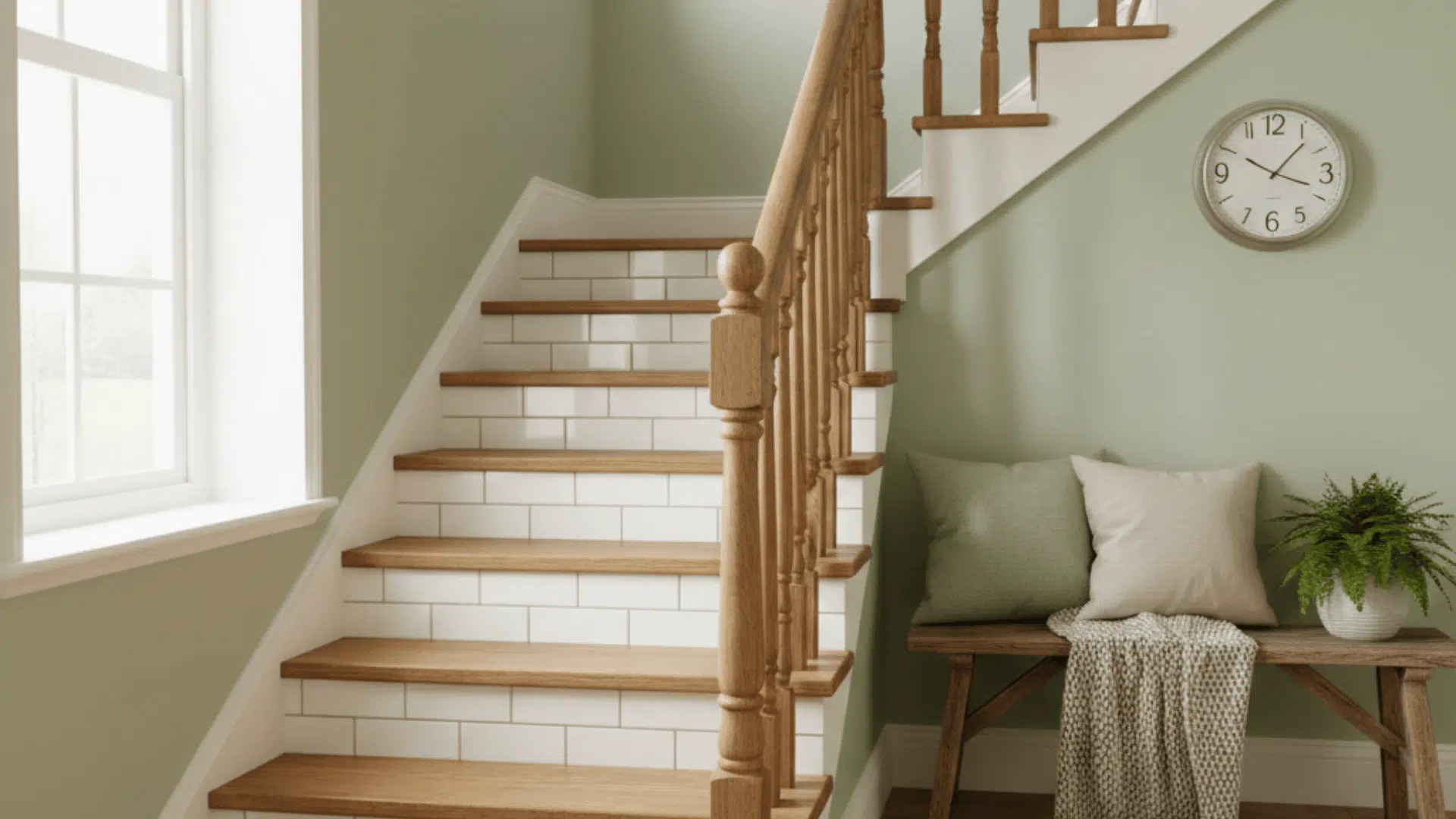
Farmhouse tiled stairs combine rustic warmth with practical design. Choose subway tiles in white or cream for a classic feel. Wood-look porcelain tiles blend well with country interiors.
Soft, weathered colors like sage green or pale blue add cottage charm. Pair tiles with wood treads for a mixed-material approach. Simple patterns keep the look cozy and inviting.
7. Coastal and Airy Stairs
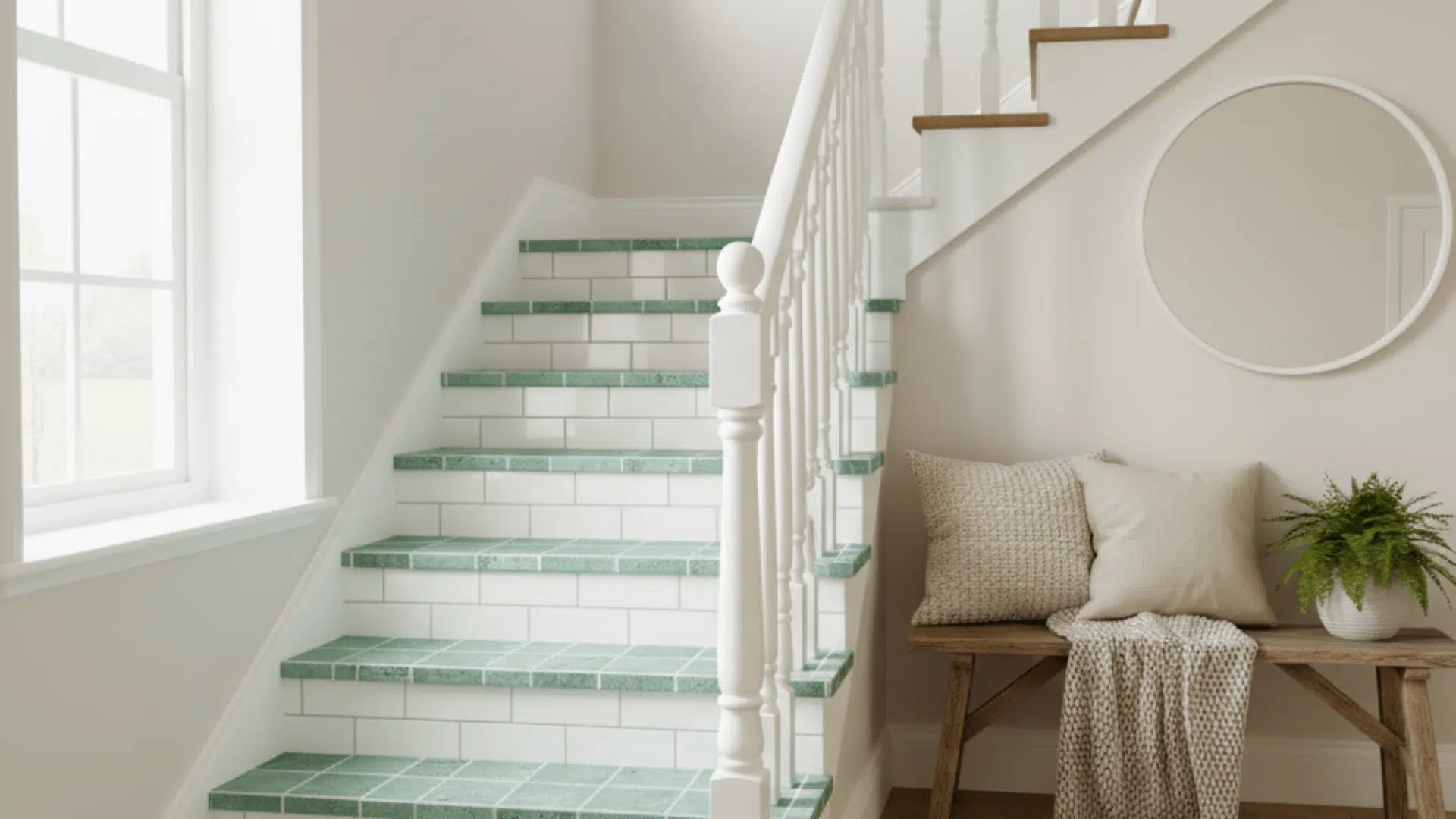
Coastal designs use light, breezy colors that reflect beach living. White, seafoam, and sandy beige tiles create an open feel. Glass tiles add subtle shimmer and light reflection.
Choose tiles with a slight texture to mimic natural materials. Blue and white patterns evoke a nautical vibe. Keep the overall palette light to maximize the airy effect.
8. Industrial and Urban Stairs
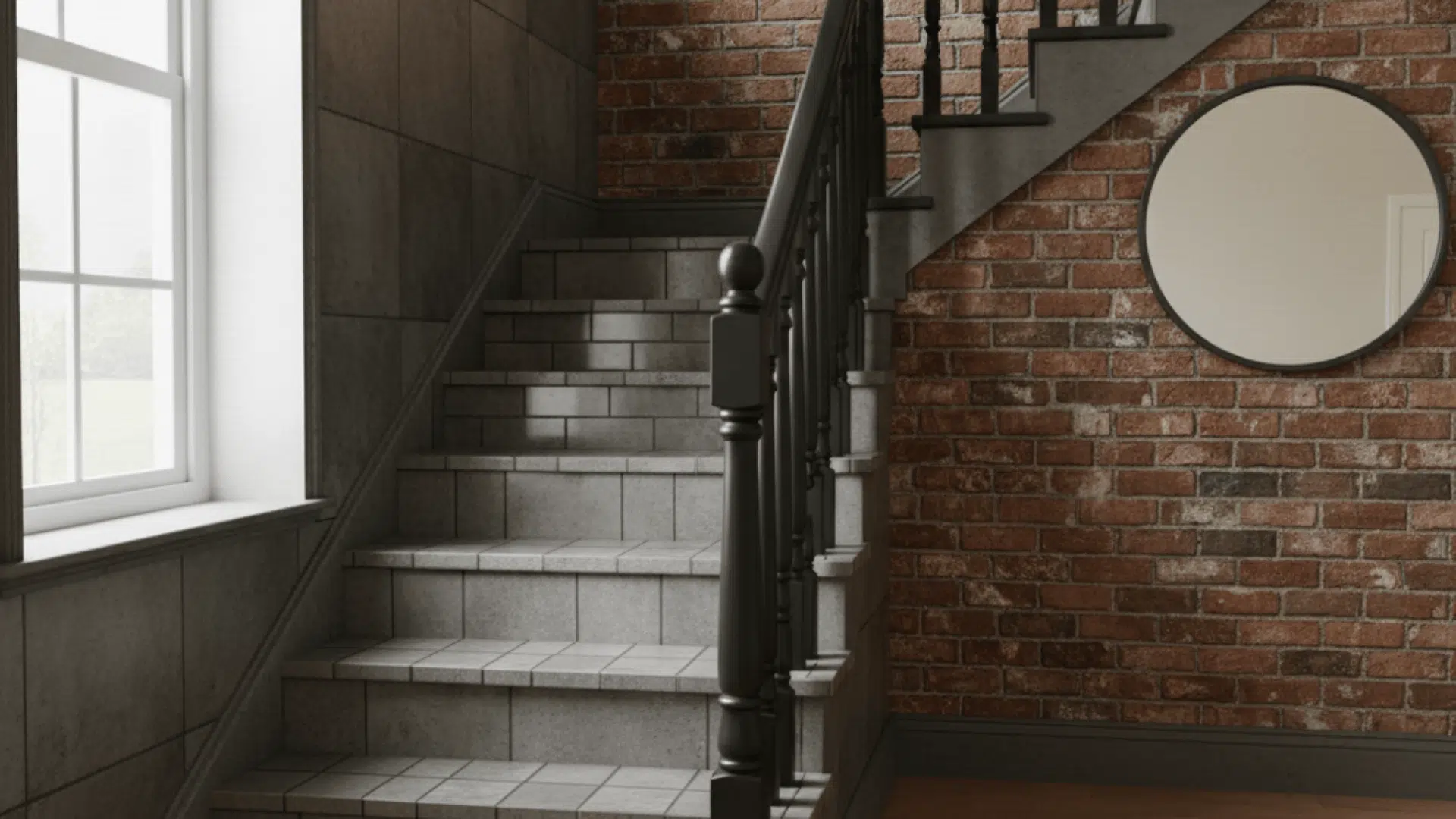
Industrial style favors raw, unfinished looks with modern edges. Concrete tiles or gray stone create an urban look. Matte black tiles paired with metal accents work well.
Exposed textures and darker tones define this approach. Large-format tiles reduce visual clutter. Combine tile on stairs with metal or wood for an edgy, loft-inspired feel.
9. Black, White, and High Contrast
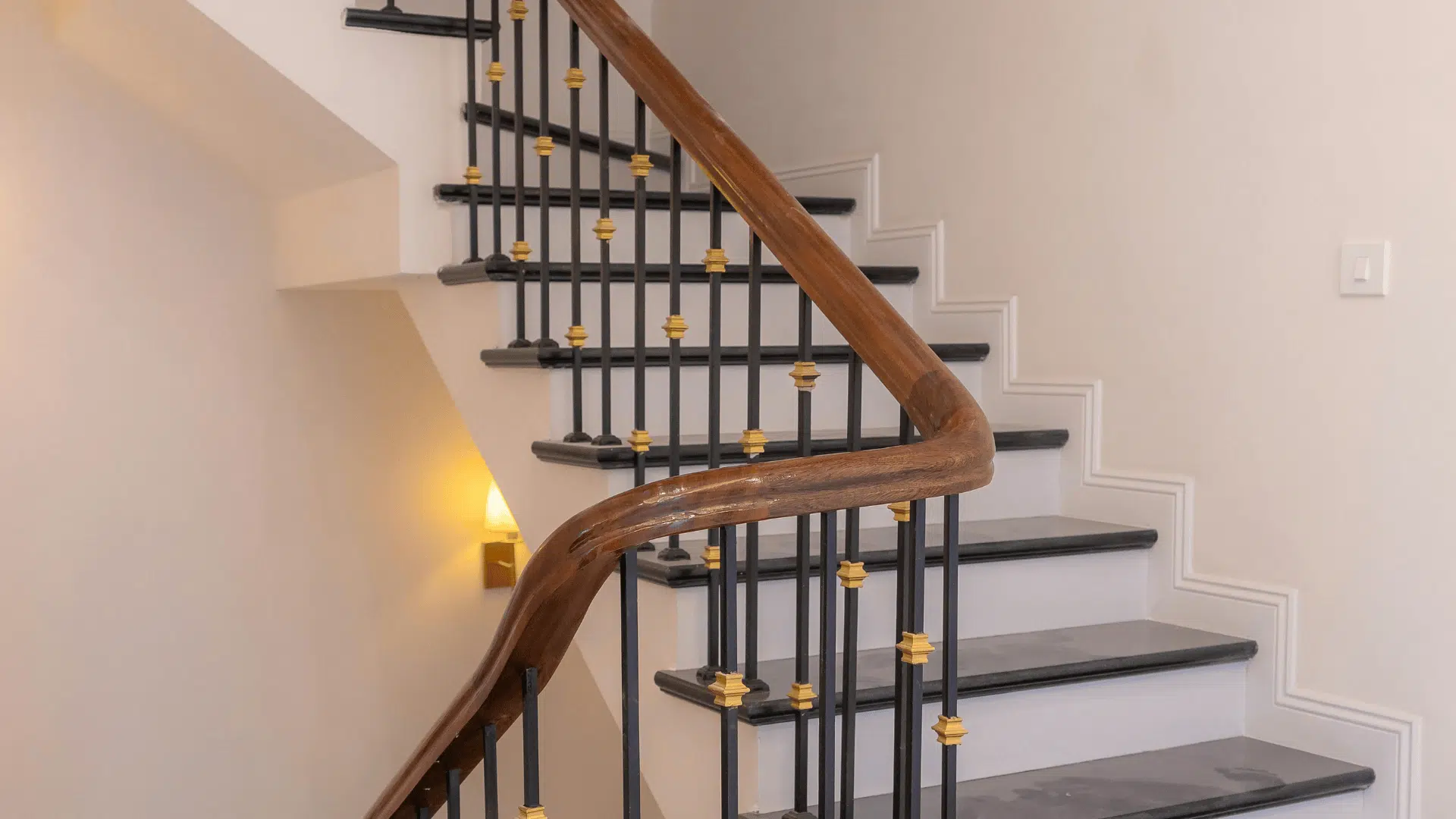
Black-and-white tile on stairs never goes out of style. This combination creates a sharp, eye-catching visual effect. Use white tiles on treads and black on risers for maximum contrast.
Pair with simple railings to let the colors stand out. Gray grout between white tiles gives a modern, polished finish.
10. Soft Neutrals and Warm Earth Tones
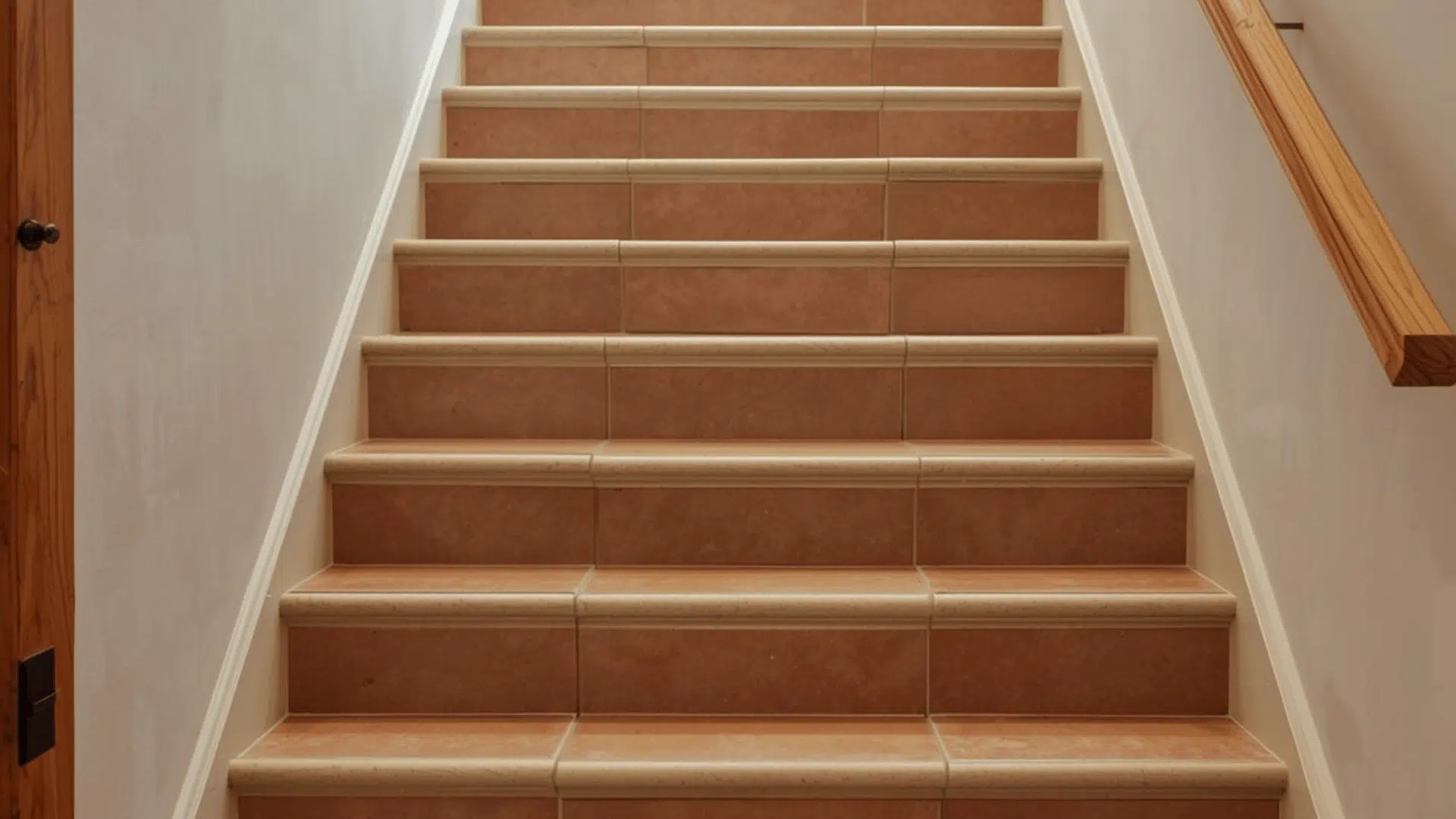
Neutral colors bring calm and warmth to any staircase. Think beige, cream, taupe, and soft browns for a grounded feel. These shades blend naturally with wooden or metal railings.
Warm earth tones like terracotta and clay add depth without being too bold. Mix two or three neutral shades for subtle visual layers. This palette works well in cozy, family-friendly homes.
11. Bold Color Pops
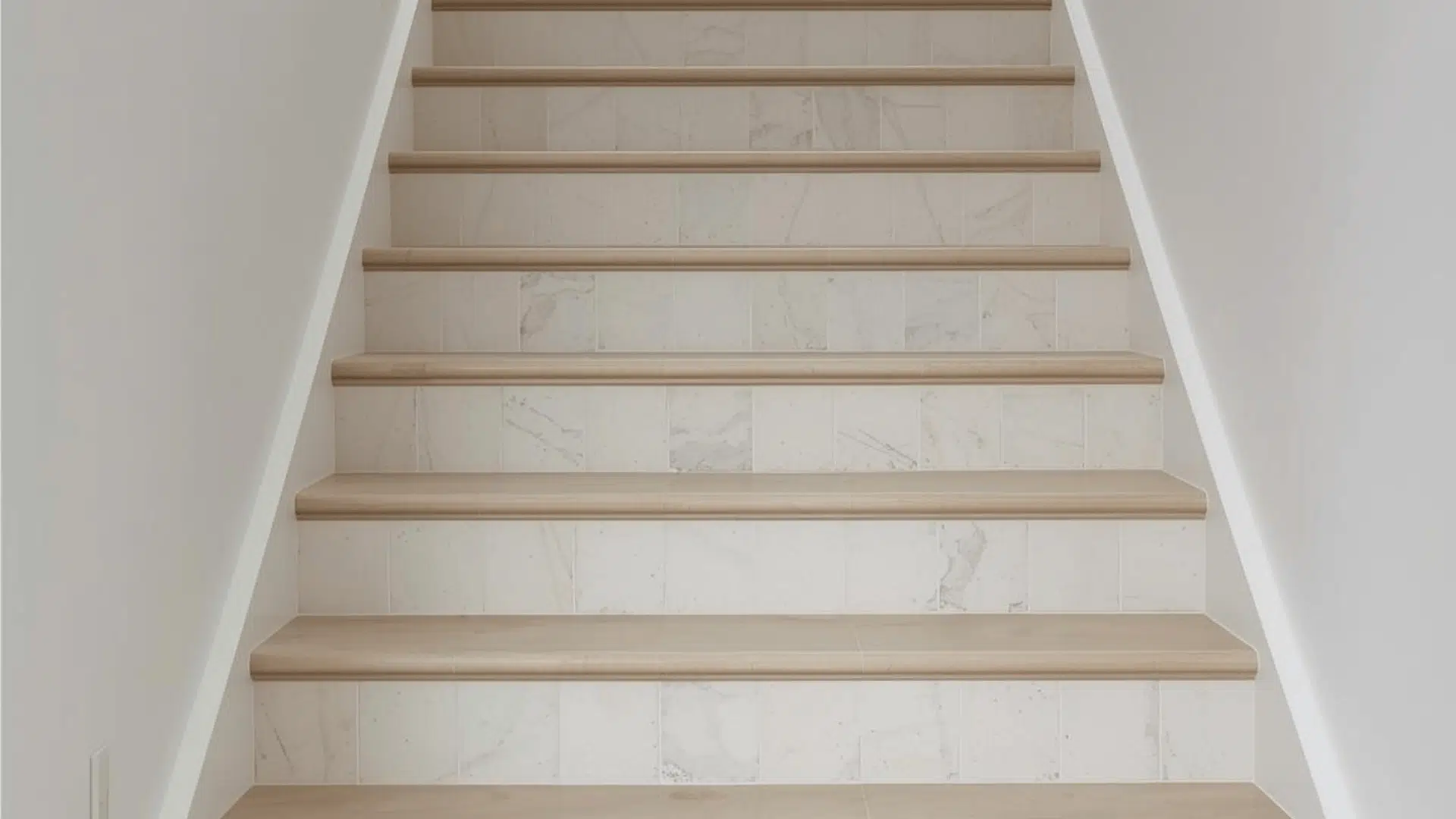
Adding bold colors to the tile on the stairs creates a focal point. Use vibrant tiles on risers while keeping treads in a neutral shade. Deep blues, greens, or burnt orange make a strong visual statement.
One or two bold colors are enough to make an impact. Balance bright tiles with simple surrounding elements. This approach lets you add personality without overwhelming the space.
12. Stripes and Runner-Look Tile Layouts
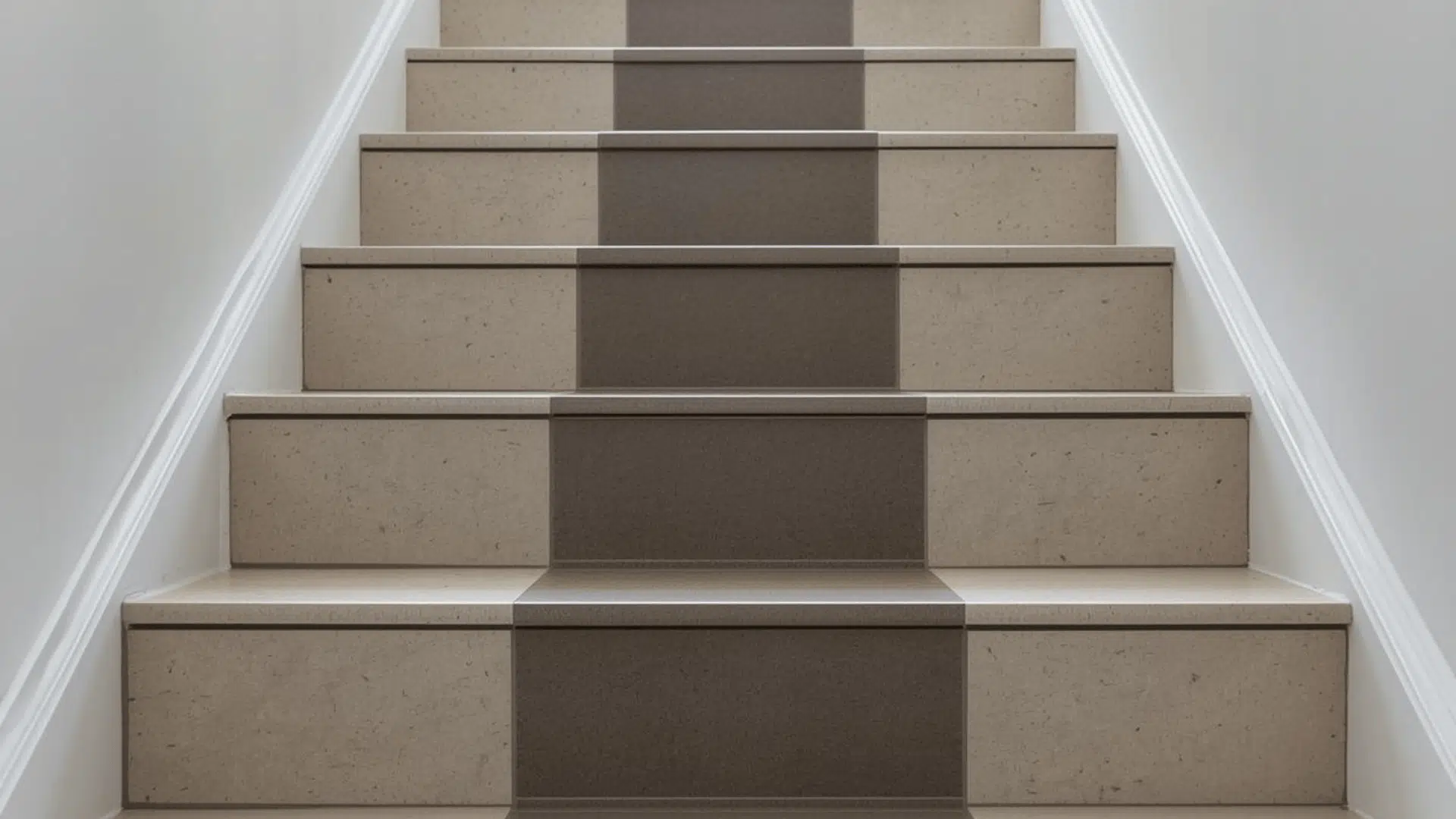
Stripe patterns on tile on stairs mimic the look of a classic carpet runner. This layout draws the eye upward and adds movement.
Use two contrasting colors in alternating rows for a clean effect. Keep the stripe width consistent for a polished, intentional look.
13. Mosaic and Small-Format Patterns
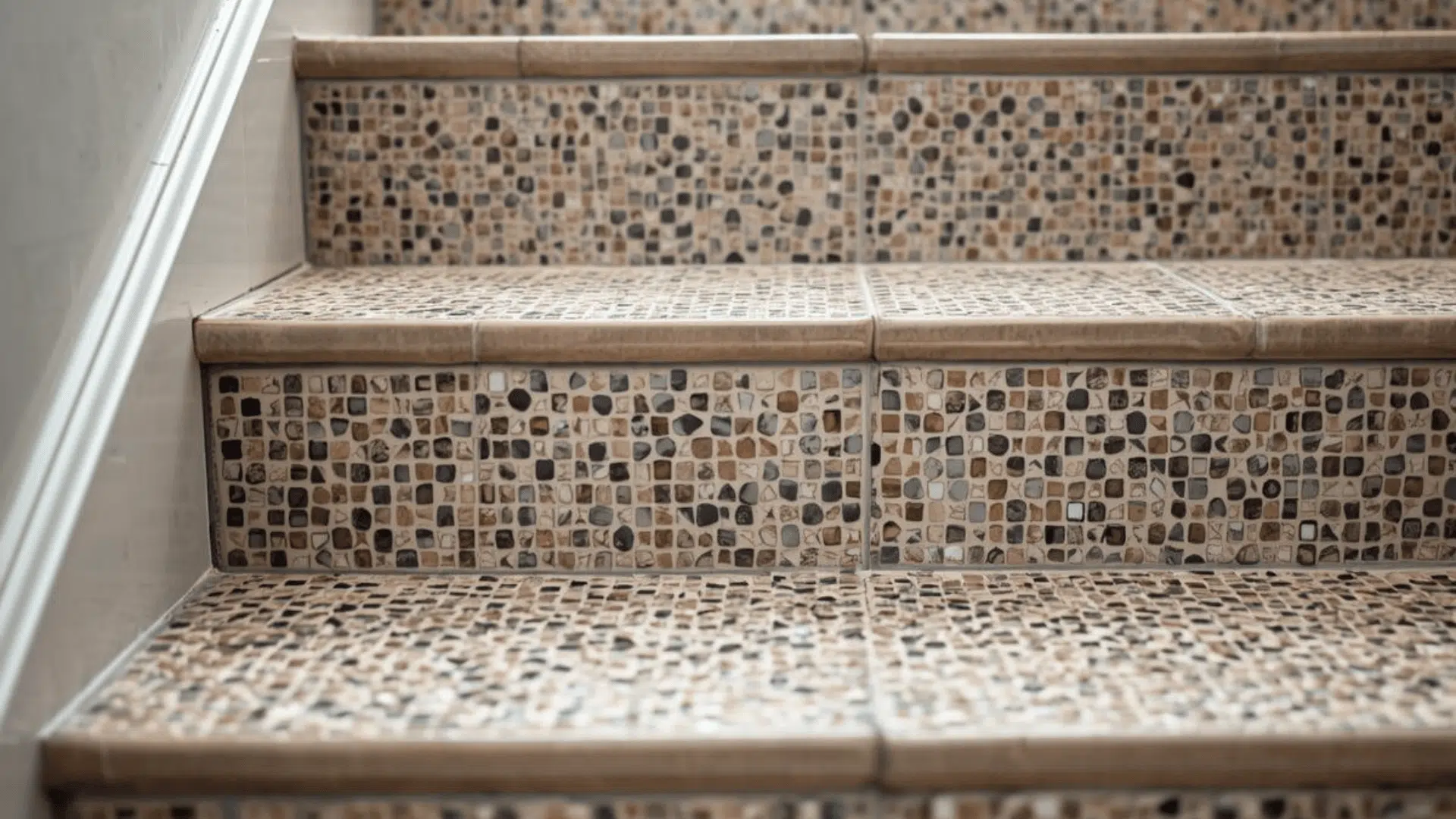
Small mosaic tiles offer a wide range of pattern possibilities for tiled stairs. Geometric shapes like hexagons or diamonds create visual depth.
Mix colors within the mosaic for a layered effect. These tiles work best on risers with minimal foot traffic.
14. Handmade-Look Texture
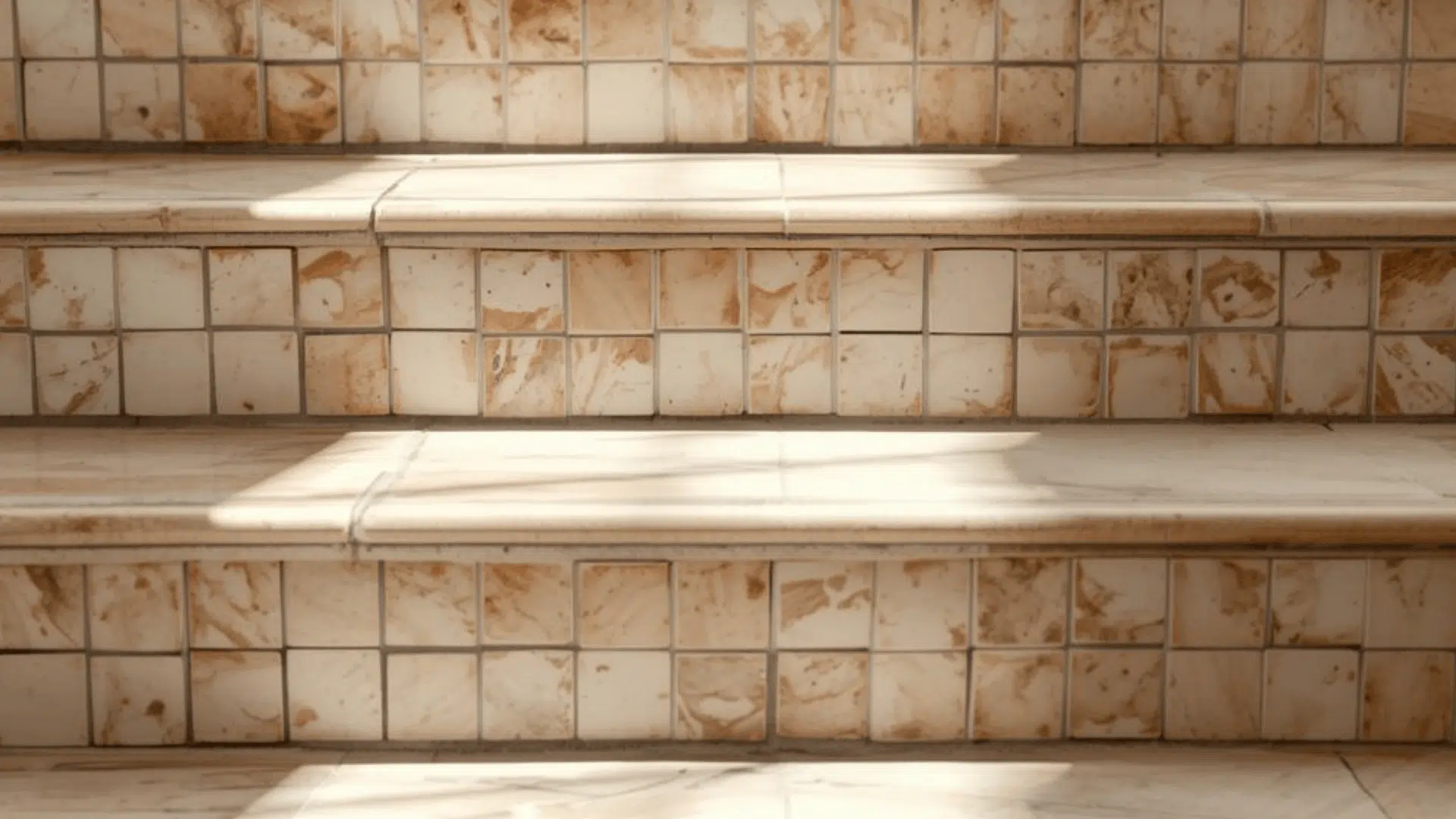
Handmade-style tiles bring warmth and character to your staircase. Each tile has slight imperfections that add organic charm.
Zellige and encaustic cement tiles are popular choices. Their uneven surfaces catch light in unique ways, highlighting the natural texture.
Design Rules that Keep Tiled Stairs Looking Clean
A few simple design rules help your tile on stairs look well-planned and visually balanced every single time. Following these tips makes the whole process easier and keeps your tiled stairs looking clean and put together for a long time.
- Match Tile Scale To Stair Width: Small staircases need smaller or simpler tile patterns. Large bold tiles on narrow stairs can feel crowded. Wider staircases handle bigger tiles and bolder designs with ease.
- Repeat One Element Across Floors: Pick one shared element, such as grout color, tile tone, or shape. Repeat it on every floor for a cohesive, connected look. This simple trick makes your design feel intentional.
- Use Landings As Breaks: Landings give your eye a natural resting point. Use solid or neutral tiles on landing areas to prevent the design from feeling too busy.
- Photo Inspiration Gallery: Browse platforms like Houzz or Pinterest for real visual ideas. Save photos that match your style and stair layout. This helps you communicate your vision to installers with clarity.
Final Thoughts
Tile on stairs is one of the easiest ways to upgrade a home without a full renovation. The right tile type, color, and pattern can completely change how a staircase feels and looks.
If the chosen style is modern, coastal, or farmhouse, tiled stairs add both beauty and durability to any space. Safety features such as slip-resistant tiles and proper nosing make the design both practical and stylish.
The key is to start small, trust the eye, and let the personality of the space guide every choice. These ideas and design rules make the process feel less overwhelming and more enjoyable.
Which tile style feels like the best match for the staircase? Share thoughts in the comments below.