Have you ever noticed a house that looks like it was carved from a single piece of wood? Maybe it had rounded turrets, wide porches, and walls covered in weathered shingles flowing together seamlessly.
You might have been looking at a Shingle Style home. These houses appeared in America’s seaside resort towns during the late 1800s.
Wealthy families built them as summer “cottages,” trading heavy Victorian decoration for something modern: flowing shapes wrapped entirely in wood shingles.
That continuous shingled surface makes these homes feel unified and distinct. A Shingle Style home represents a turning point in American design.
If you’re thinking about buying one, restoring one, or just curious about the style, understanding these homes helps you appreciate American architectural innovation.
What Are Shingle Style Homes?
A Shingle Style home isn’t just a house with shingles. It’s defined by shingles covering broad wall surfaces and often parts of the roof, creating a smooth, continuous “envelope” that makes the building feel like one unified volume.
Most classic examples were built between 1880 and 1900 in coastal New England and other summer resort communities.
This style is considered one of America’s earliest high-style architectural movements because it drew on local New England colonial forms and natural materials rather than copying European designs.
It represented a deliberate shift away from heavily ornamented Victorian surfaces toward something simpler and more honest.
The Origins of Shingle Style Architecture
Shingle Style didn’t appear out of nowhere. It grew from several influences coming together in the 1880s: existing Victorian trends, renewed interest in colonial American buildings, and ideas borrowed from Japanese design.
1. Origins and Early Influences
Shingle Style emerged in the 1880s when American architects began looking beyond standard Victorian formulas for something more natural and less cluttered.
By combining colonial New England buildings, Queen Anne complexity, and international design ideas, they created a distinctly American style suited to informal resort living.
2. Queen Anne Roots
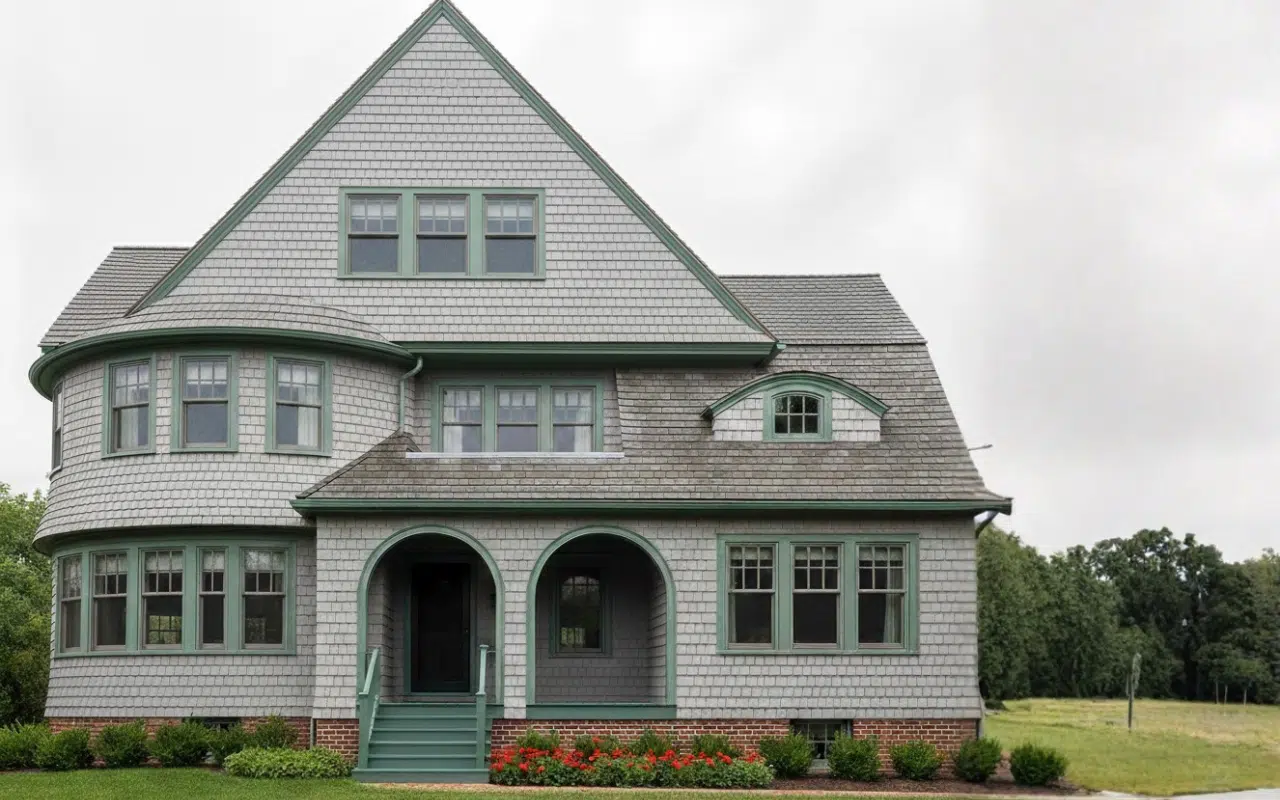
Shingle Style developed alongside Queen Anne architecture and often retains its complexity, such as towers or turrets, while reducing the “busy” surface ornamentation.
Instead of mixing materials and colors, these homes wrap everything in a single, unifying layer of wood shingles, creating a calmer, more cohesive appearance.
3. Colonial Revival
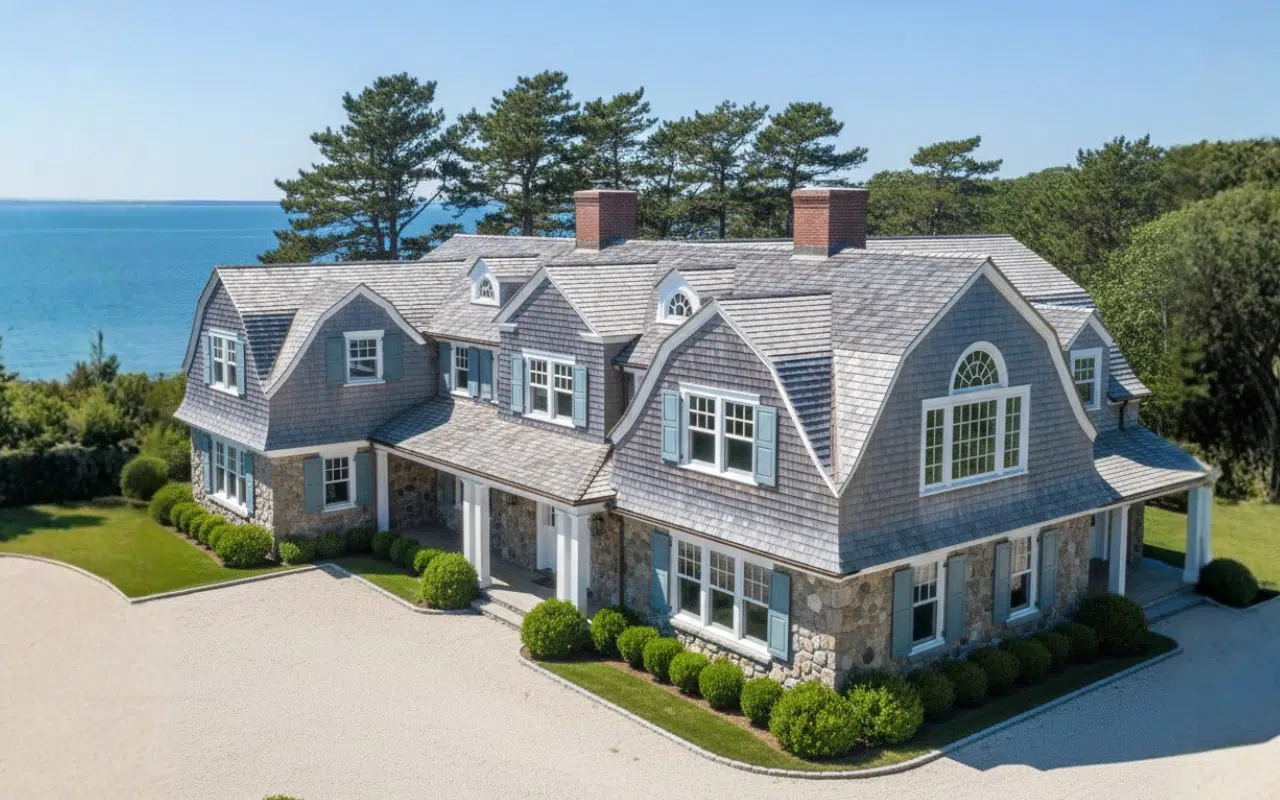
Shingle Style reflects renewed interest in early American colonial architecture, including simple shingled surfaces and familiar roof shapes like gambrels found in older New England buildings.
That colonial influence was part of a wider national interest following the 1876 Centennial, when Americans began to value their architectural heritage.
4. The Japanese Connection
In the 1880s, some leading firms incorporated Japanese-inspired ideas, with Stanford White using Japanese-style screens in the Newport Casino after Americans were exposed to Japanese house displays during the 1876 Centennial.
The Isaac Bell House in Newport blends multiple influences, including Japanese elements, which contribute to its significance in American design history.
These influences merged to create something distinctly American: a style that balanced Victorian complexity, colonial simplicity, and Japanese refinement, perfectly capturing the informal elegance of late 19th-century coastal resort living.
Key Features of Shingle Style Homes
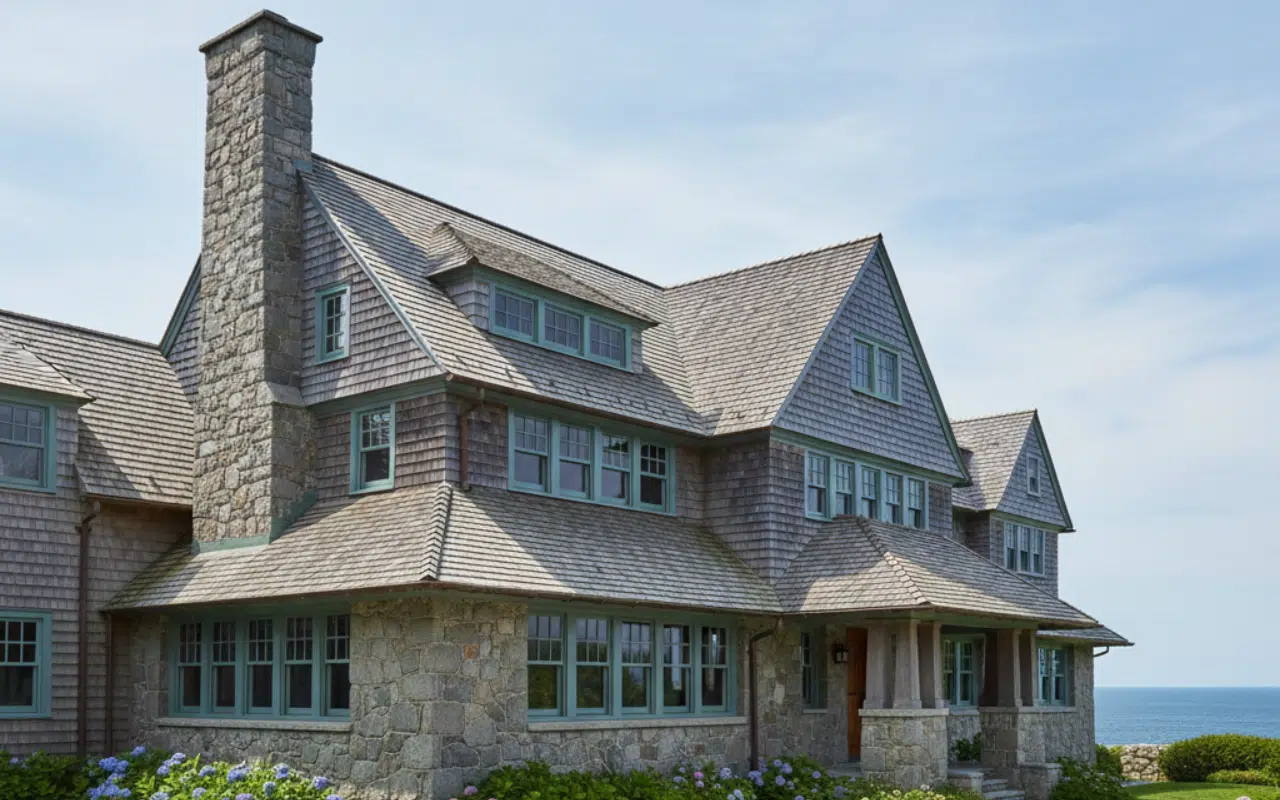
Once you know what to look for, Shingle Style homes stand out immediately. Their combination of continuous shingled surfaces, sweeping rooflines, and integrated porches creates a look unlike any other Victorian-era architecture.
- The Sculptural Exterior: Wood shingles wrap walls in one continuous surface with little trim. Eyebrow dormers add a soft, wave-like roof lift. Subtle shingle patterns may appear on gables, but details remain calm rather than busy, unlike Victorian homes.
- Rooflines and Massive Forms: Large roof shapes, such as gambrels and complex gables, unify the entire house. The William G. Low House is known for one long dominant gable.
- Grouped Windows and Deep Porches: Windows are often grouped horizontally to match the long, low form. Porches sit under the main roof or in deep recesses, not tacked on.
- Open Interior Layouts: Interiors feel more connected, with central halls and shared living spaces. Built-ins like window seats and reading nooks are common. Finishes are natural and restrained, mirroring the exterior’s simple, quiet character.
Key Architectural Elements of Shingle Style Homes
Shingle Style homes feel calm, cohesive, and crafted, thanks to their continuous surfaces and bold roof shapes. They balance relaxed comfort with strong structure, which is why the look still works in modern builds and renovations today.
Exterior Features:
- Continuous wood shingle cladding with minimal trim
- Sweeping rooflines with complex gables or gambrels
- Eyebrow dormers and subtle curves in the roof shape
- Deep porches set under the main roof or tucked into recesses
- Grouped windows, often in horizontal bands, to match long forms
- Large chimneys and grounded, solid massing
Interior Design Characteristics:
- More open, connected floor plans than typical Victorian homes
- Central halls or main living rooms that organize the layout
- Built-ins like window seats, shelves, and reading nooks
- Natural light is emphasized through grouped windows
- Simple, restrained detailing that feels warm, not fussy
- Cozy gathering spaces designed for everyday living
Materials Commonly Used:
- Cedar or other wood shingles for exterior cladding
- Natural stone for foundations, chimneys, or first-floor grounding
- Wood framing and exposed wood details in key areas
- Plaster or wood paneling for softer interior finishes
- Brick or stone accents around fireplaces
- Natural stain finishes that highlight grain and texture
These elements work together to create a home that feels unified from every angle. The result is a style that looks classic, lives comfortably, and blends well with nature-rich settings.
Notable Shingle Style Landmarks
These landmark buildings show the Shingle Style at its finest and help define what it can achieve. Each one played a role in establishing the style’s reputation and influence.
1. The Isaac Bell House (Rhode Island)
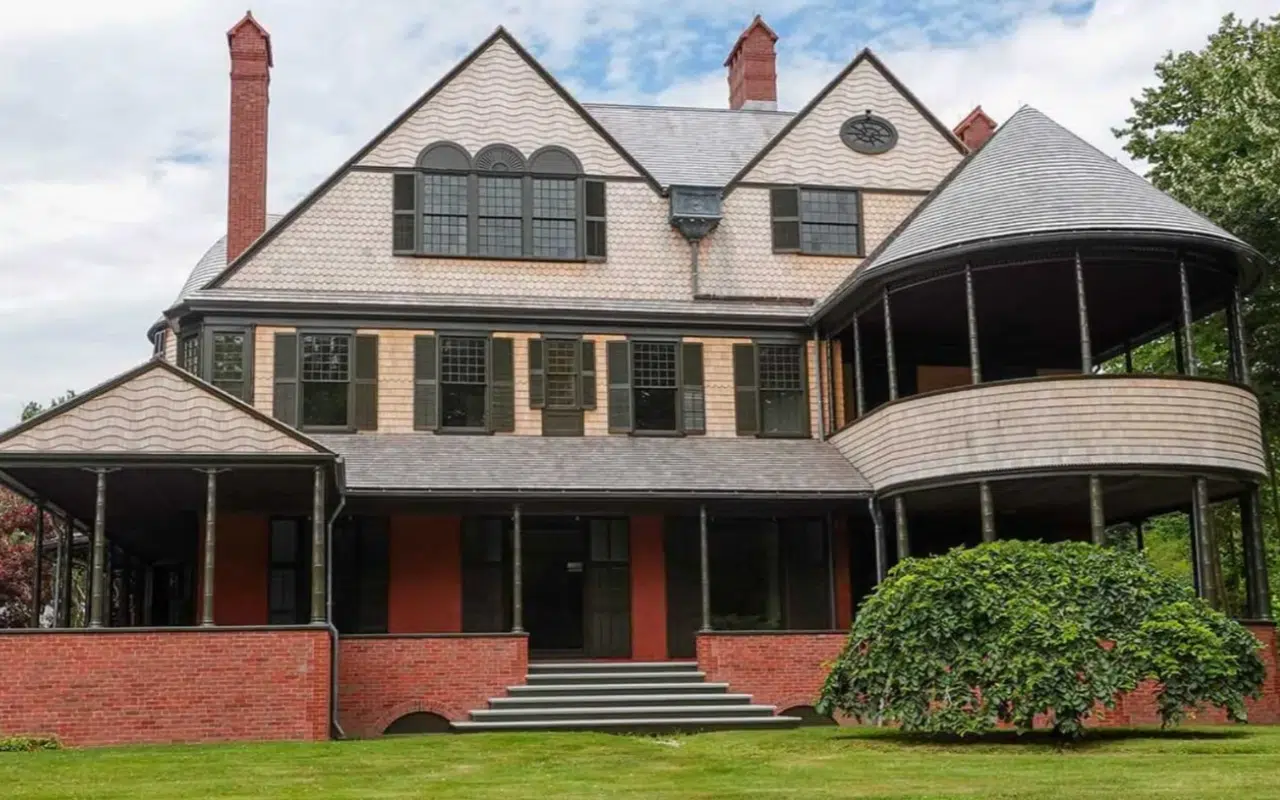
Designed by McKim, Mead & White, the Isaac Bell House is regularly cited as one of the finest surviving examples of Shingle Style in the U.S.
The house is noted for blending international and American influences, including Japanese-inspired elements. Its open floor plan and continuous shingled exterior demonstrate the style’s key principles and remain preserved today for visitors.
2. The William G. Low House
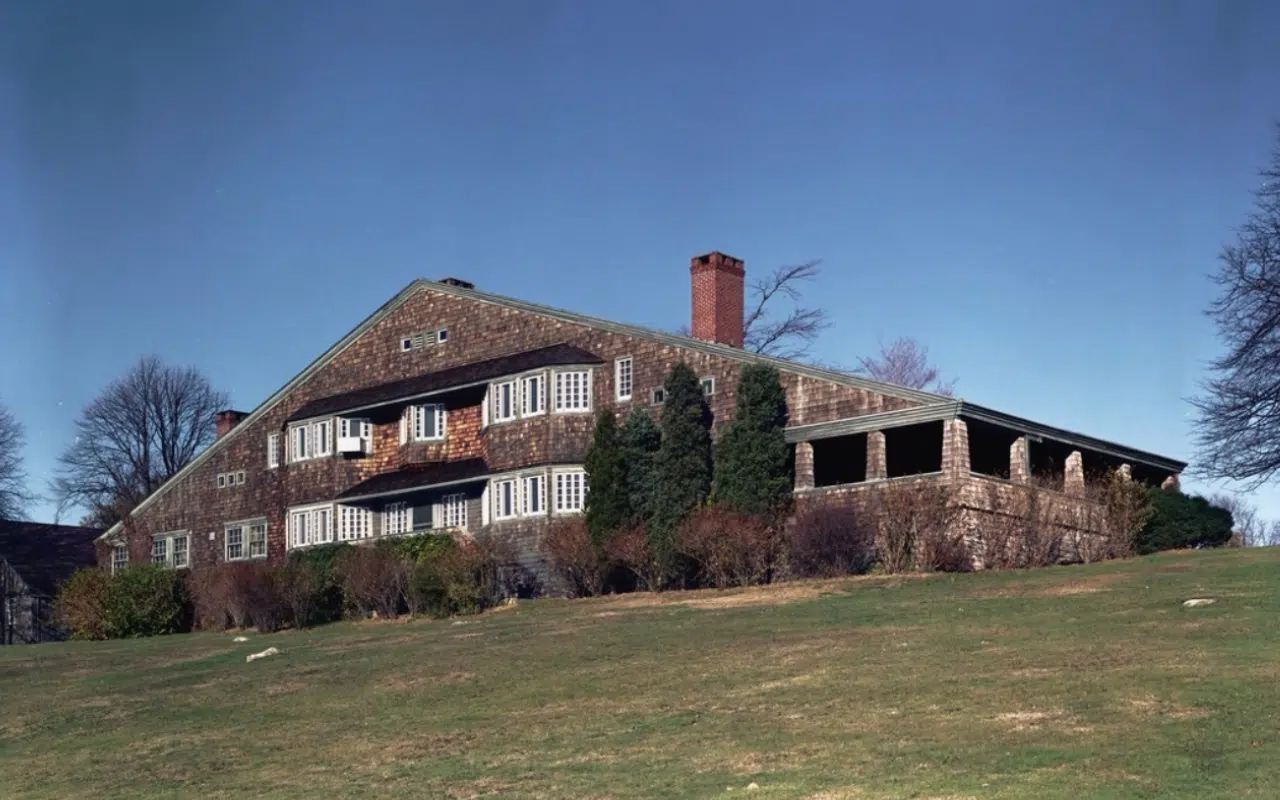
Built in 1886 to 1887 in Bristol, Rhode Island, and designed by Charles McKim, this house is widely recognized for its single long gable.
It serves as an “extreme example” of Shingle Style ideas, showing how far architects could push the concept of unified massing. The sweeping roofline dominates the structure, creating a bold architectural statement.
3. The Narragansett Pier Casino (The Towers Remnant)

The Narragansett Pier Casino complex was built between 1883 and 1886 and designed by McKim, Mead & White as a major resort social center.
Only “The Towers” portion remains today after a fire destroyed much of the original structure. It is often described as an example of Victorian Shingle style architecture associated with that resort era.
These three landmarks represent the pinnacle of Shingle Style achievement, demonstrating how masterful architects transformed simple materials and concepts into buildings that continue to inspire designers and captivate visitors today.
Shingle Style Vs. TheOthers
Shingle Style shares features with other late 19th-century styles, which can make identification tricky. Here’s how to tell them apart quickly.
| Feature | Shingle Style | Queen Anne | Colonial Revival | Craftsman |
|---|---|---|---|---|
| Exterior | Wood shingles cover the walls and the roof | Decorative trim, multiple textures | Symmetrical facade, clapboard siding | Low-pitched roofs, exposed beams |
| Era | 1880s-1900s | 1880s-1910s | 1880s-1950s | 1905-1930s |
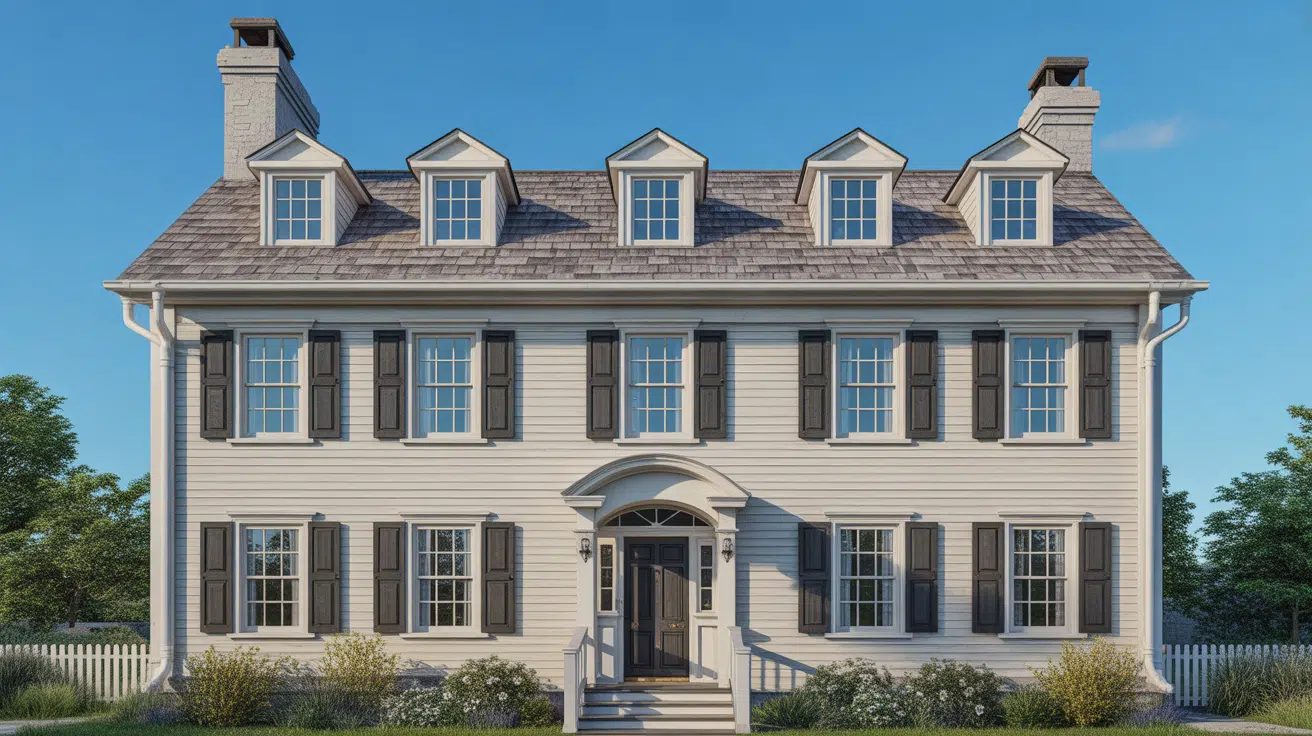
| Details | Continuous flow, turrets, irregular rooflines | Ornate spindles, wraparound porches | Centered door, shuttered windows | Handcrafted details, wide porches |
| Feel | Organic and coastal | Elaborate and Victorian | Formal and traditional | Warm and natural |
Why Shingle Style Homes Are Still Popular
Shingle Style homes remain popular because they feel both classic and relaxed without looking plain.
The continuous shingle exterior creates a clean, unified look that weathers beautifully over time, developing rich patina and character. Big rooflines and deep porches add comfort and strong curb appeal.
Inside, open layouts work well for modern families who want connected living spaces. Built-ins and natural wood details provide warmth without feeling overdone.
These homes adapt to various settings, looking at home along coastlines, in wooded areas, or in suburban neighborhoods. The emphasis on natural materials and honest craftsmanship appeals to homeowners who value quality over trends.
Conclusion
Shingle Style homes represent a distinctive chapter in American architecture. With their flowing shingled exteriors, sweeping rooflines, and unified forms, they offer a refreshing departure from the ornate Victorian styles that dominated the era.
Born in the 1880s seaside resort towns, these homes masterfully blend colonial American simplicity, Queen Anne complexity, and Japanese refinement into something unmistakably original.
What makes them special is their focus on natural materials and organic form over decoration. The signature eyebrow dormers, integrated porches, and shingles curving gracefully around corners reveal architects who valued harmony over ornamentation.
Next time you visit a coastal New England town, challenge yourself to spot these shingled landmarks. Can you identify the gambrel roofs, asymmetrical forms, and wraparound porches?