You look around the room and think, “It just needs something.” Not new furniture. Not a complete makeover. Just a few changes that make it feel finished.
That’s usually how DIY room decor starts. A small budget, a few basic tools, and the need to make a space work better without overcomplicating it.
And the truth is, DIY isn’t only about saving money. The projects that make the biggest difference are often the simplest ones: adding structure to a blank wall, fixing lighting that feels harsh at night, or creating one spot where clutter finally has a place to land.
The ideas ahead are the kind I actually use when a room feels off. I stick to simple materials, basic tools, and steps that do not turn into a week-long project.
No copying random trends, just practical updates that fit the room and feel personal. Start with one project, see what shifts, then decide what the space needs next.
DIY Room Decor Ideas
DIY home decor is a hands-on way to refresh a room using what you already have or can easily source, like a quick paint update, a simple build, a fabric swap, or a thrifted piece you personalize. They make a space feel more practical and personal without spending much.
1. Bike Display
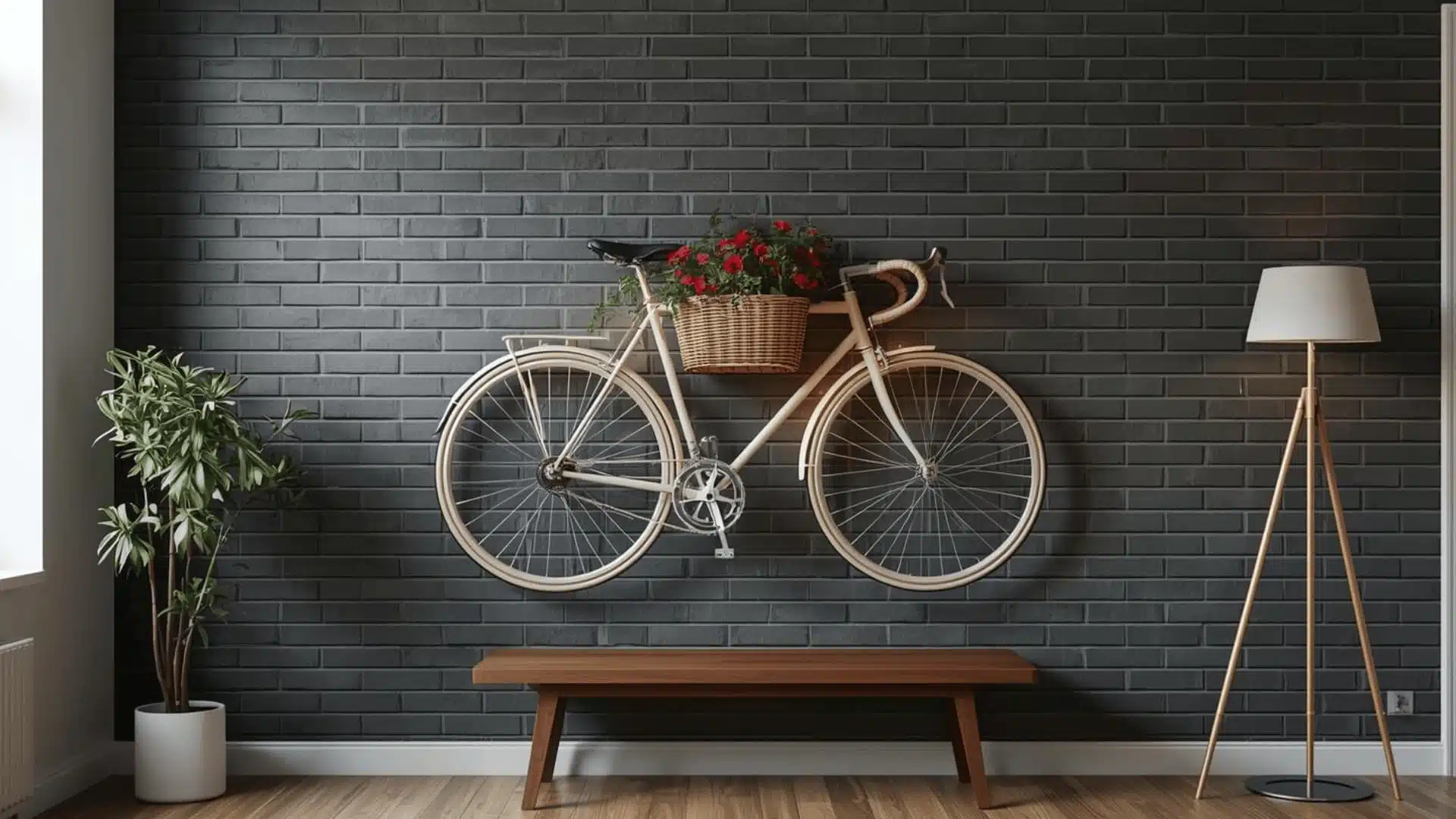
I usually mount a wall hook or a simple rack into the studs, then position your bike so it stands out as a feature rather than clutter.
This works especially well in an entryway, hallway, office, or even a bedroom corner where floor space is limited. It also protects the bike from getting knocked over and makes it easier to keep the area tidy.
To make it look planned, I keep the hardware finish consistent with nearby hooks or shelving, and I leave a little breathing room around the bike so it doesn’t feel cramped.
2. Picture Ledges
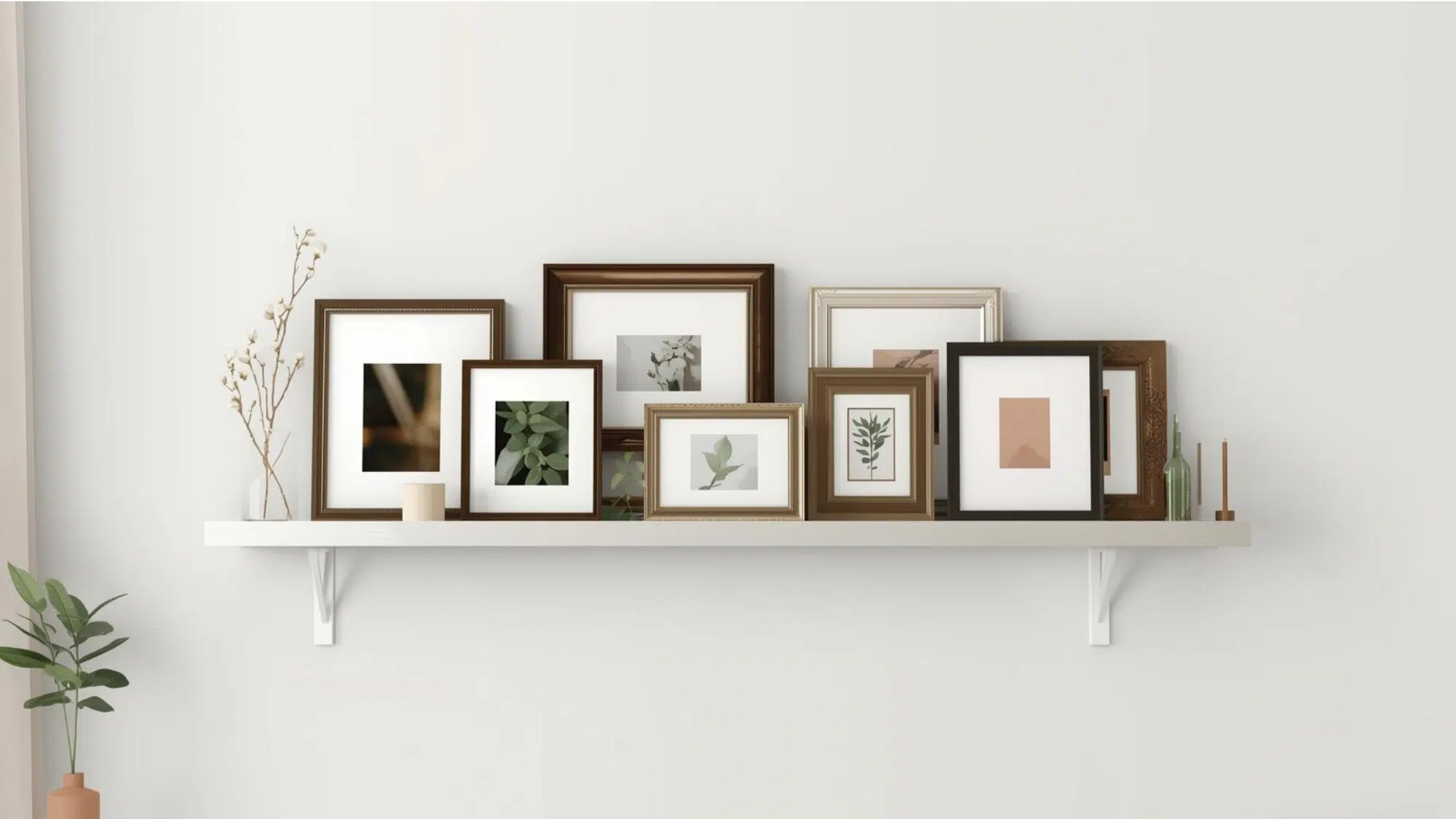
Instead of hanging ten frames, I install one or two narrow picture ledges. It turns wall art into something flexible. Frames can overlap, sizes can mix, and the wall still looks styled. I like it because the wall stays fresh without new holes.
To make it look intentional, I keep the color story tight. I choose frames in one finish, then add at most one contrast finish.
I also limit the number of objects on the ledge to one small piece per shelf, such as a candle or a small vase, to keep it clean.
3. Floating Shelf Moment
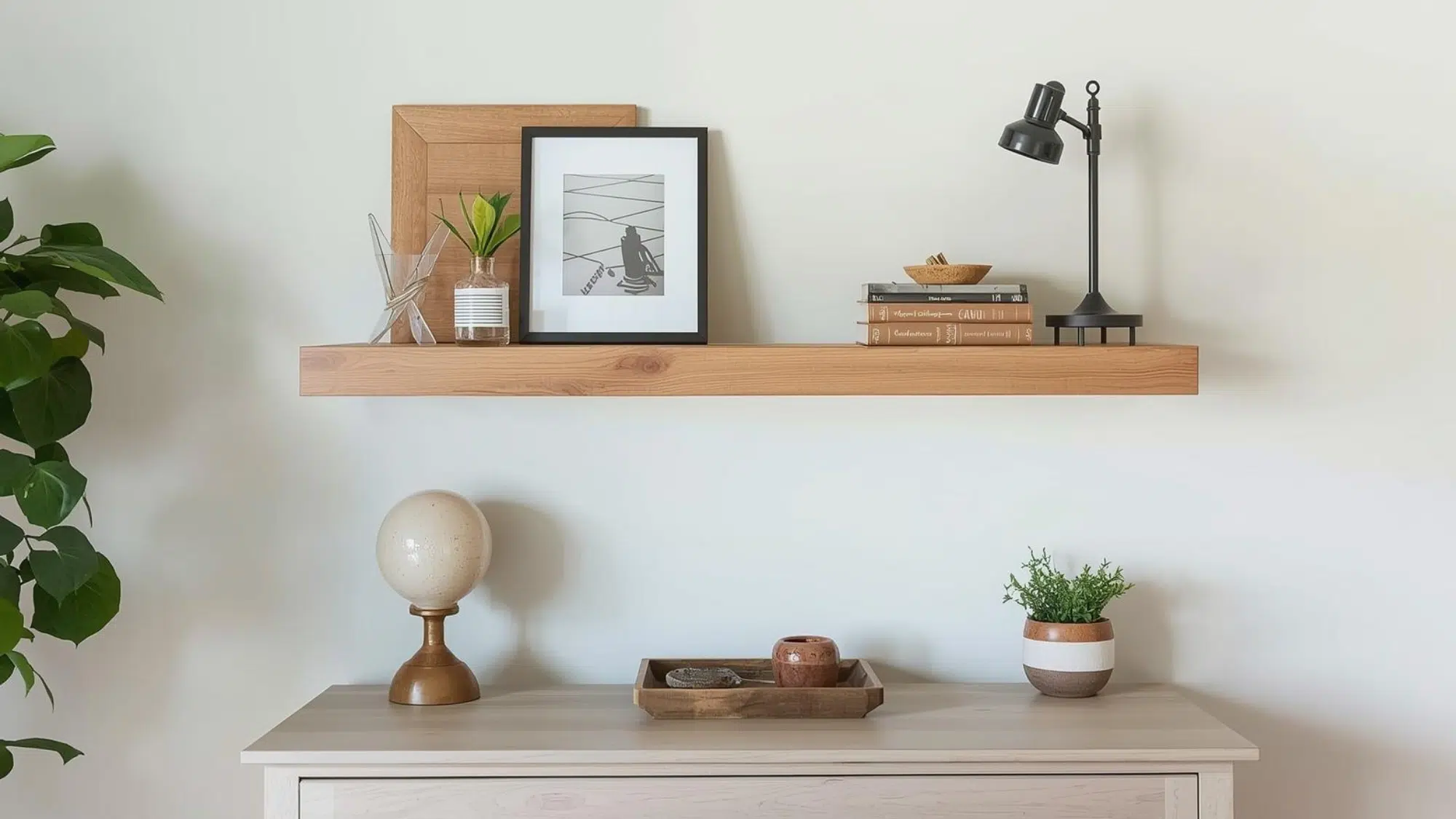
A single shelf above a console can do the work of a full gallery wall. I hang the shelf, then style it with one tall item, one mid-height item, and one low item.
That height change is what makes it read as designed. If everything is the same height, it looks like clutter.
The shelf also gives the room a place for daily items while keeping the room tidy. Keys, a small tray, and a book can live there without spreading across every surface.
4. Framed Mirror
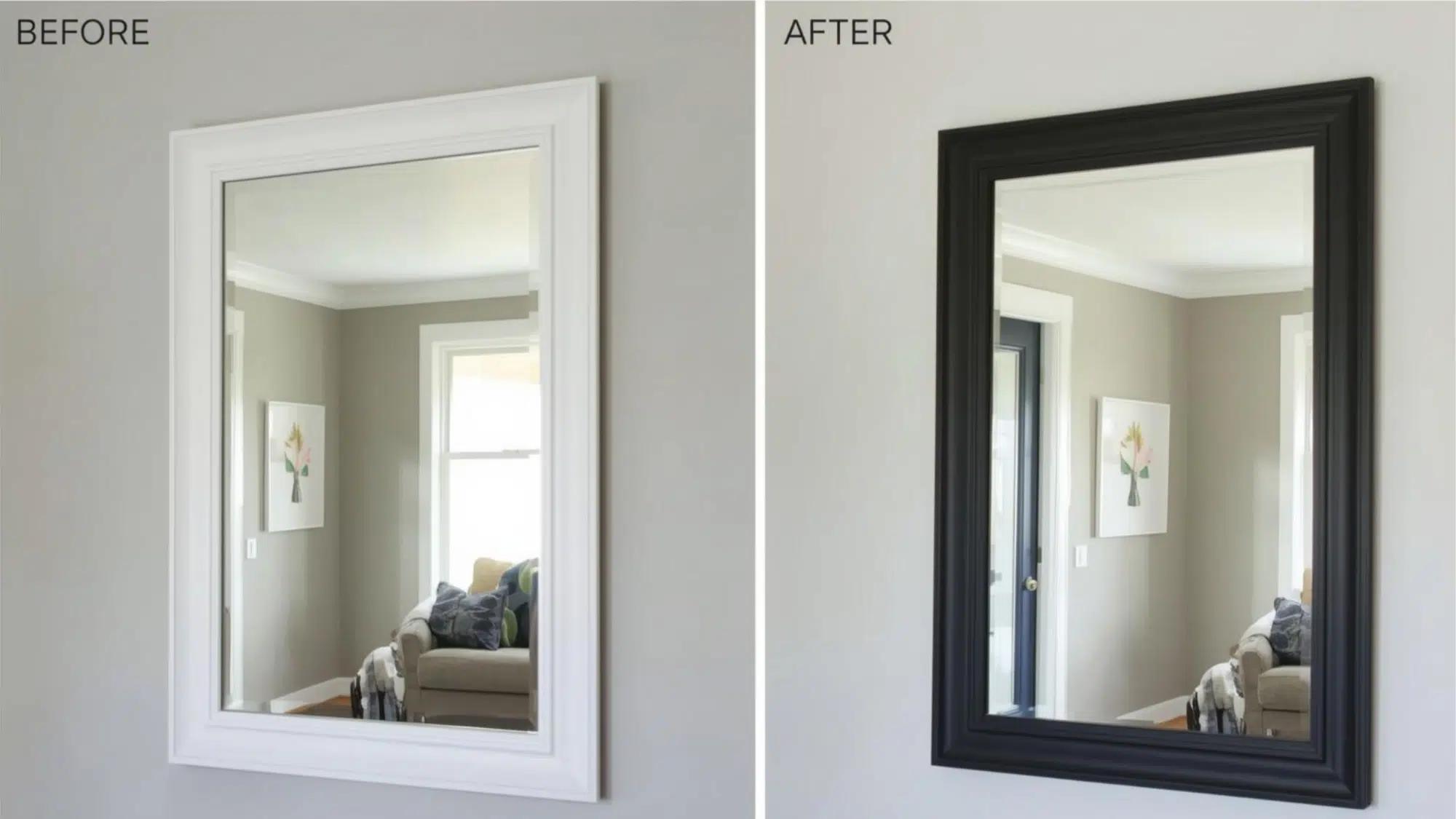
Mirrors are functional, but they can look random if they lack a clear edge. I frame a plain mirror with trim so it reads like an intentional piece, not a leftover.
This is especially helpful in entryways, living rooms, and dining corners where you want light bounce without adding more objects.
The finish depends on the room. If the room already has a lot going on, I paint the frame the wall color so it blends and feels calm. If the room needs contrast, I use a darker frame color to anchor the wall.
5. Painted Pot

A DIY painting pot is an easy project that turns a plain terracotta or ceramic pot into a piece of decor. I use simple color blocks, stripes, or a half-dip design, then seal it to ensure it withstands daily handling.
It works well on shelves, windowsills, desks, and entry tables, and it is a quick way to tie a room’s colors together without adding more clutter.
6. Canopy Frame With Sheer Panels
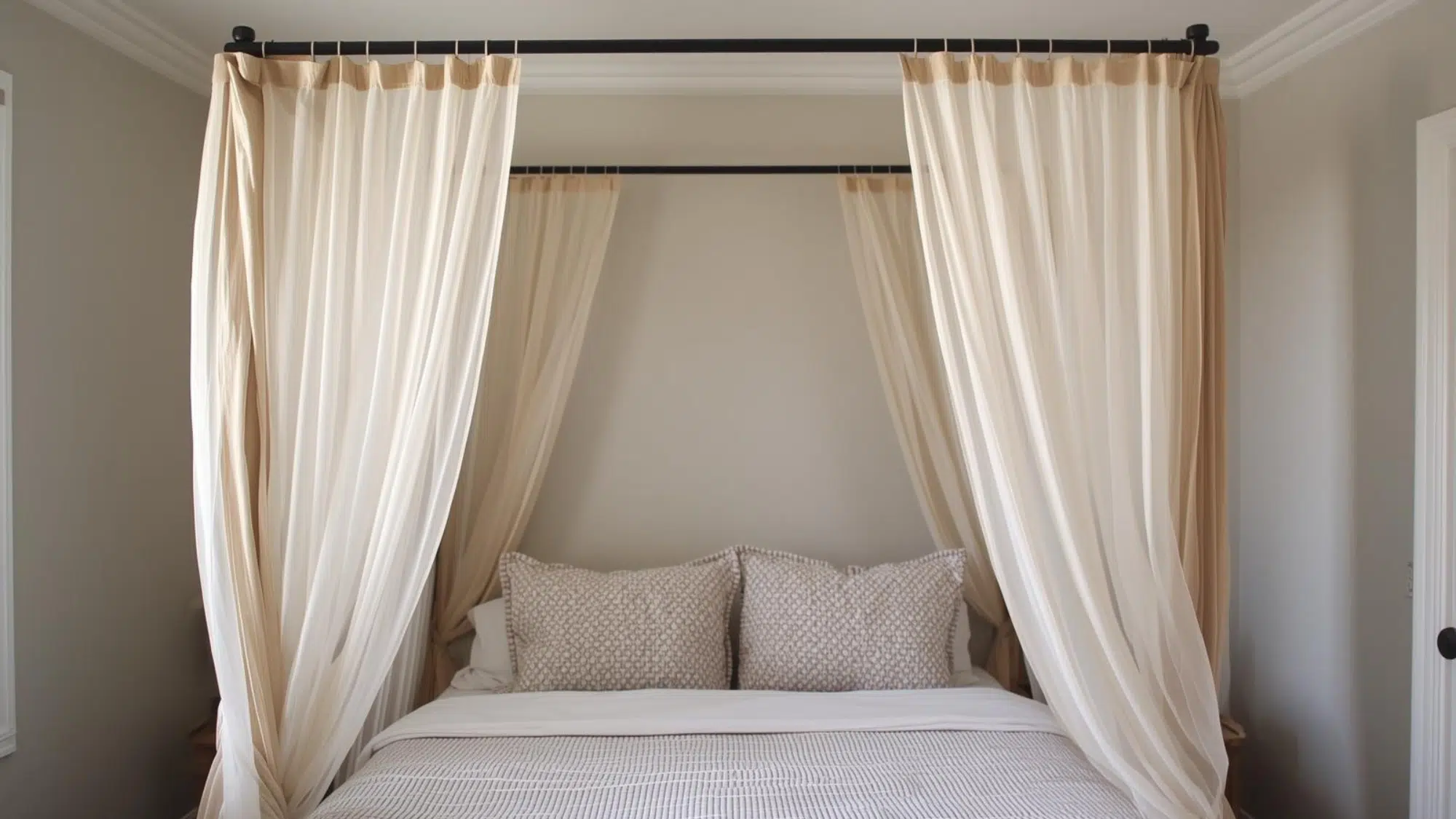
When a bedroom feels plain, I like adding height around the bed without changing the furniture. A DIY canopy frame does that.
I mount four slim curtain rods or lightweight conduit pipes to form a rectangle above the bed, then hang sheer panels on two sides.
It creates a soft boundary around the bed and makes the whole space feel more intentional, even if the rest of the room is simple.
If the room is small, I stick to one sheer layer and keep the color close to the wall so the canopy adds shape without visual clutter.
7. Hidden Glow Lighting
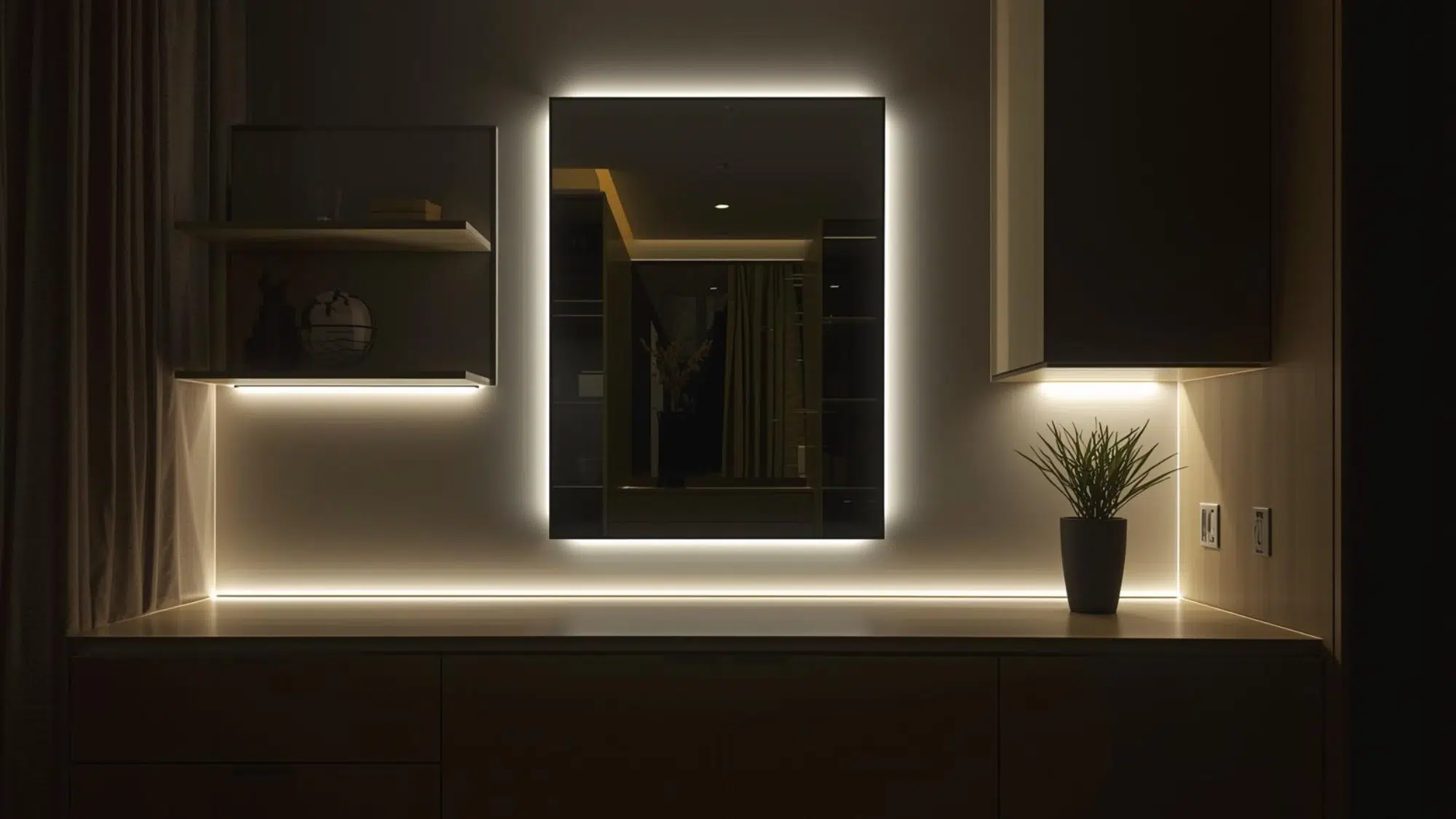
An overhead light alone can make a room feel harsh at night. I add hidden strip lighting behind a shelf, behind a mirror, or under a cabinet edge to add a softer layer to the room.
The goal is glow, not visibility of the light source. The “designer” move is placement. I hide the strip so you never see the light dots.
You only see the reflected glow on the wall, which makes the room feel calmer and more complete.
DIY Bedroom Decor Ideas
DIY bedroom decor ideas focus on cozy, budget-friendly upgrades that make your room feel more comfortable and put-together, like better lighting, simple wall accents, refreshed bedding, and easy storage improvements.
8. Painted Headboard
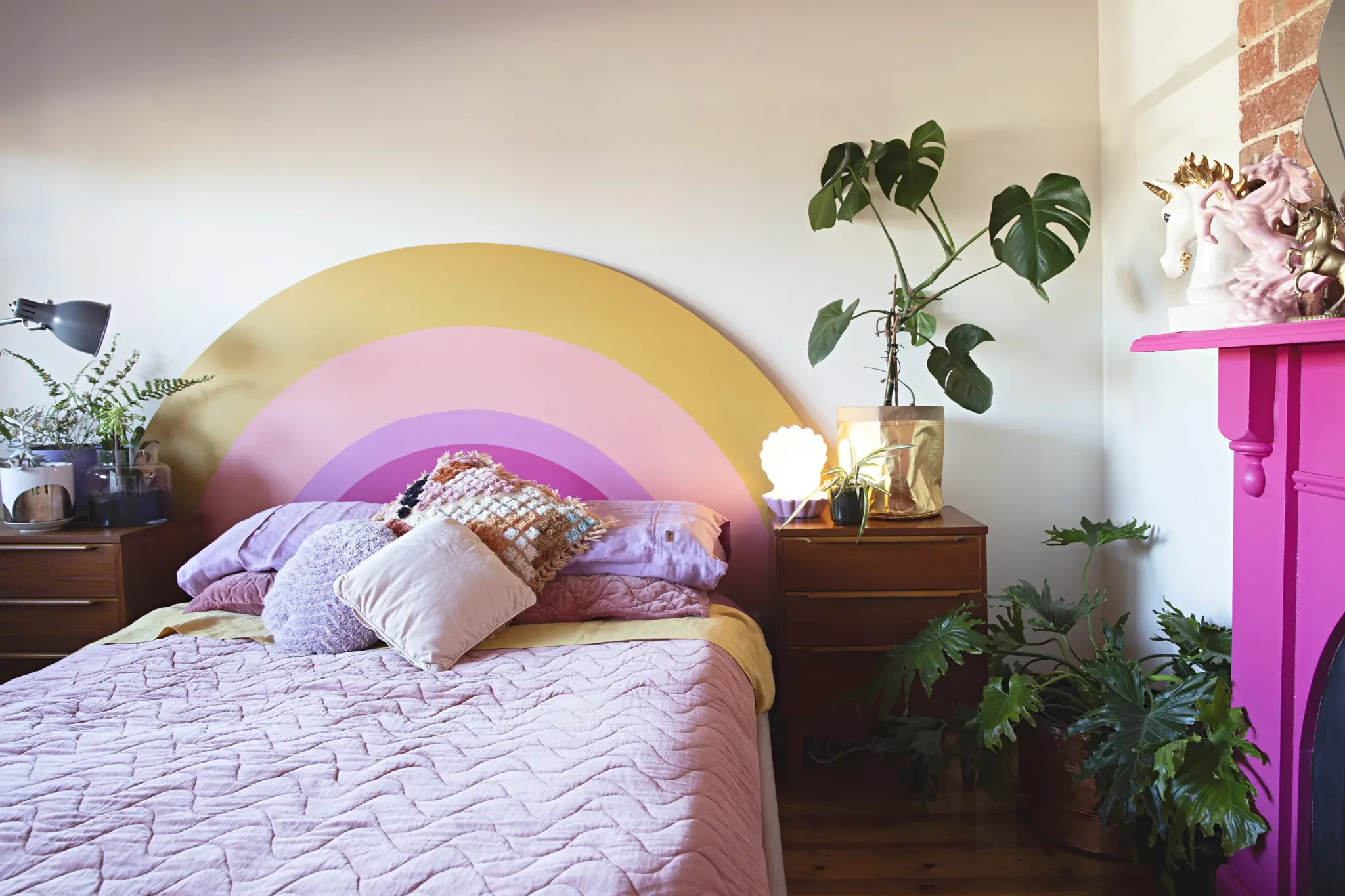
When a bed wall feels blank, I often paint a headboard shape first. It is fast, but it can look truly designed if the scale is right. I make the shape wider than the bed and slightly taller than the pillows stacked upright.
That creates a proper frame for the bed. The finish matters. I keep edges clean and corners consistent.
If I choose an arch, I keep the curve smooth and centered on the bed, not the wall. That small decision makes the whole room feel more intentional.
9. Wall Sconces
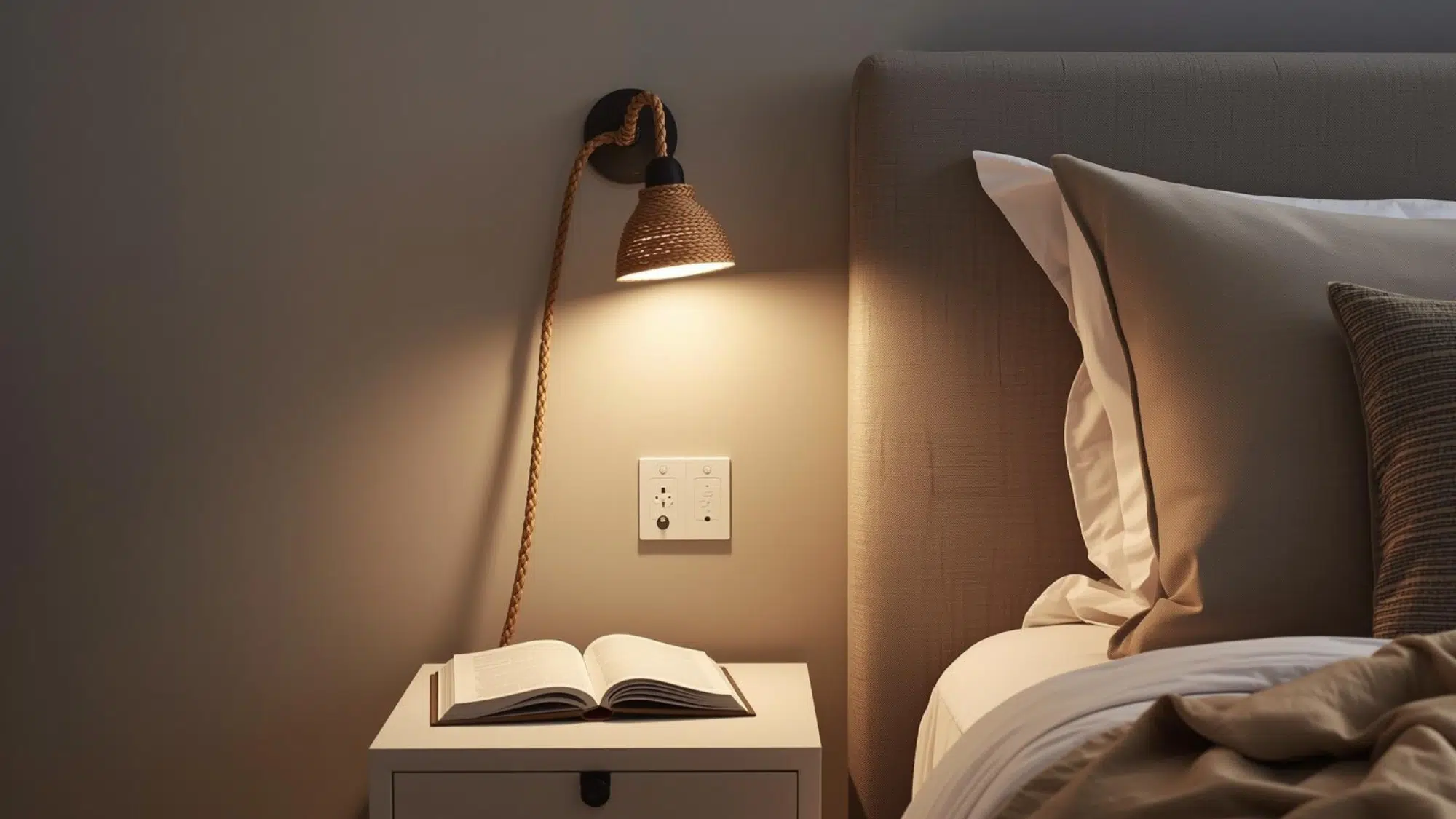
Bedside lamps eat up surface space. Plug-in sconces move the light to where it belongs and keep the nightstand usable.
The critical detail is cord management. A rope cord cover that matches the wall makes the setup look planned.
I also place sconces based on use. If the bed is used for reading, I position the sconce so the light falls on the book rather than directly into the eyes. That is a comfort upgrade that also looks better.
10. Statement Gallery Wall
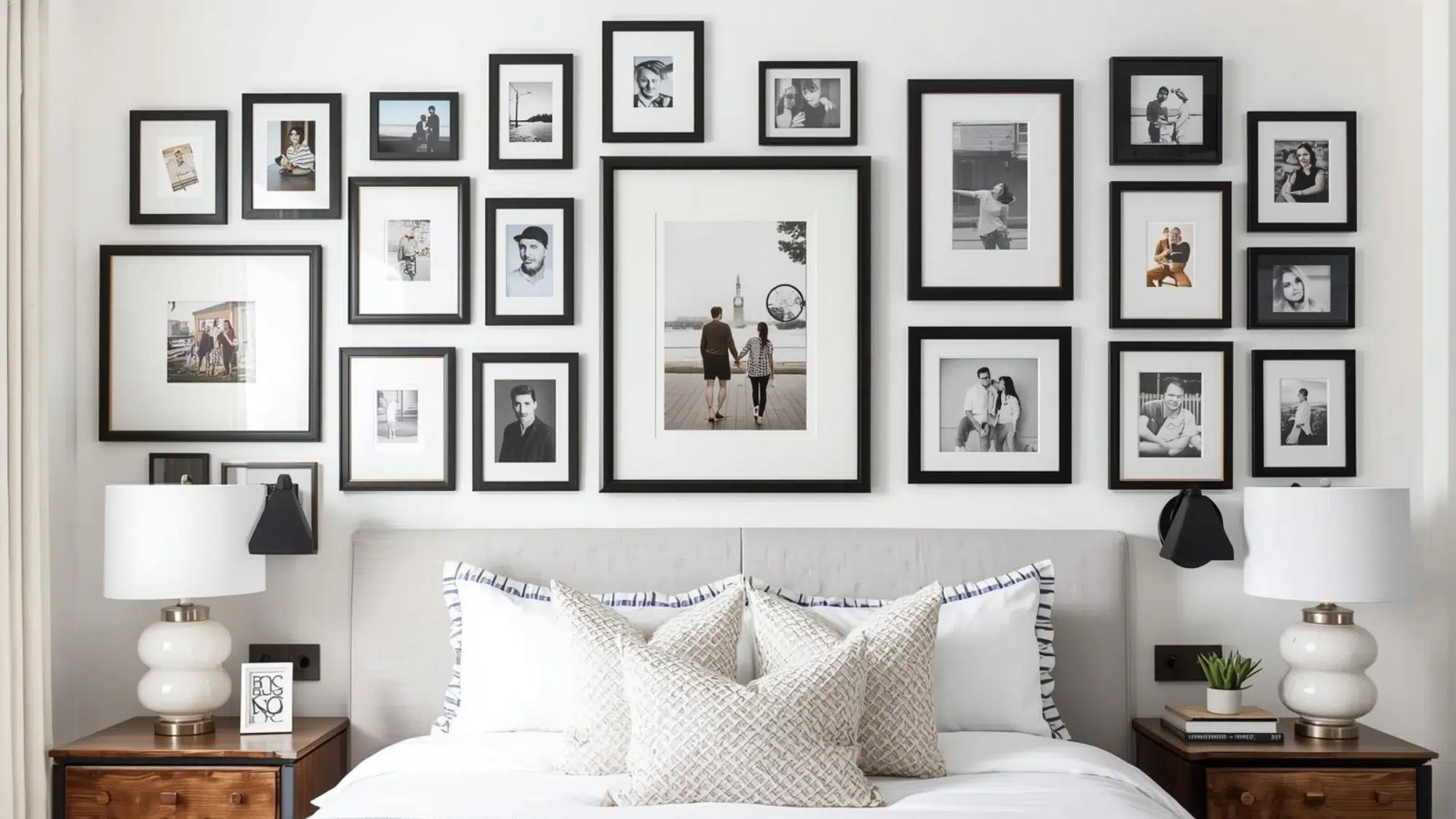
A gallery wall can make a bedroom feel finished without adding more furniture. I keep it cohesive by using black frames, then mix personal photos with a couple of simple prints or small mementos.
The key is consistent spacing and a clear layout. I start with one “anchor” frame near the center and build around it, then hang the whole arrangement wide enough to match the bed area so it looks intentional.
11. Hanging Dresser Mirror
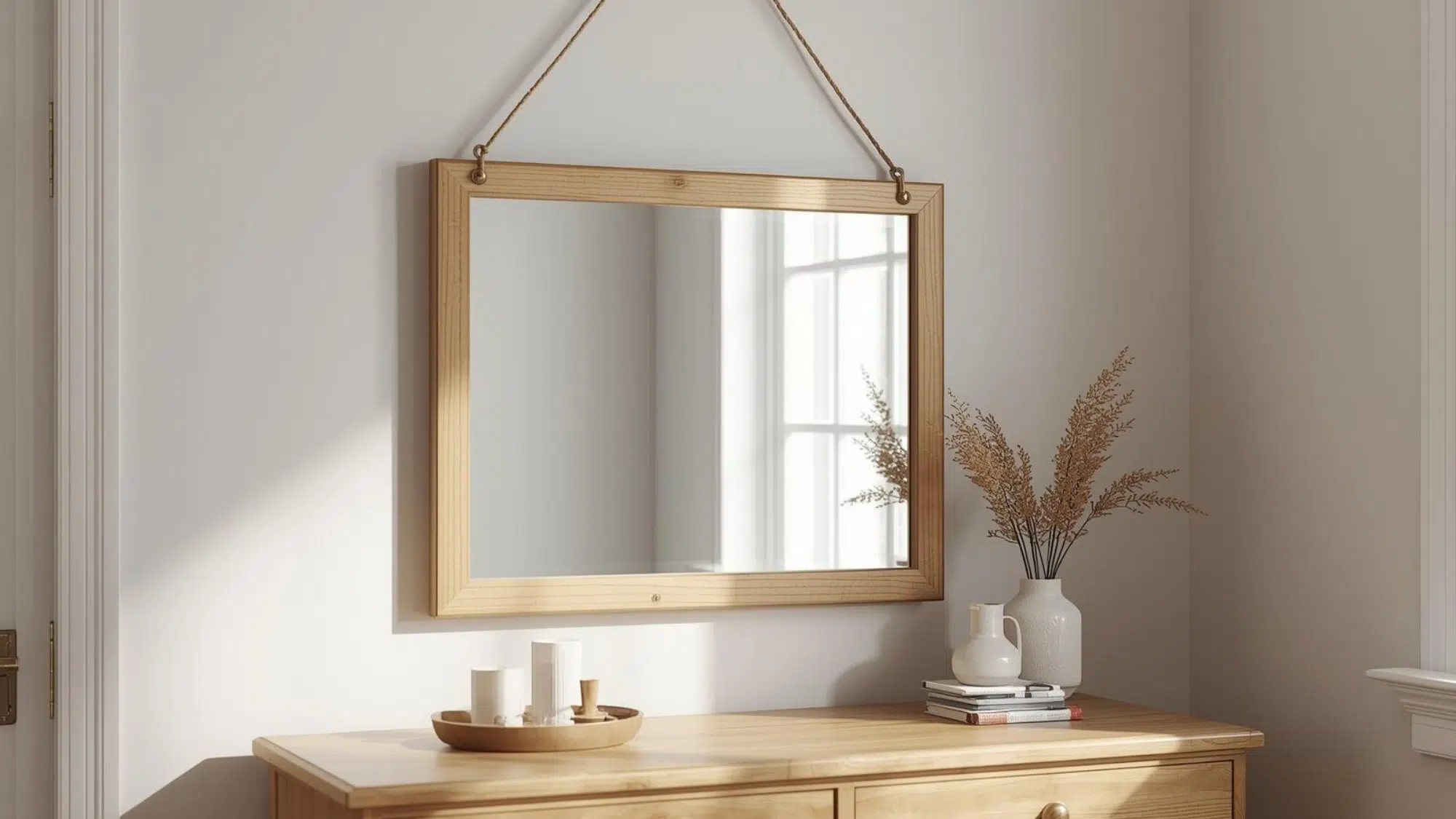
I hang a larger mirror above the dresser to add height and bounce light around the room. I leave a small, even gap above the dresser top so it looks intentional, not like it was placed at the last minute.
A simple frame keeps it clean, and I center it on the dresser so the whole wall feels balanced. If the dresser is wide, I choose a mirror that matches its scale and doesn’t feel undersized.
12. Create A Small Vanity Corner
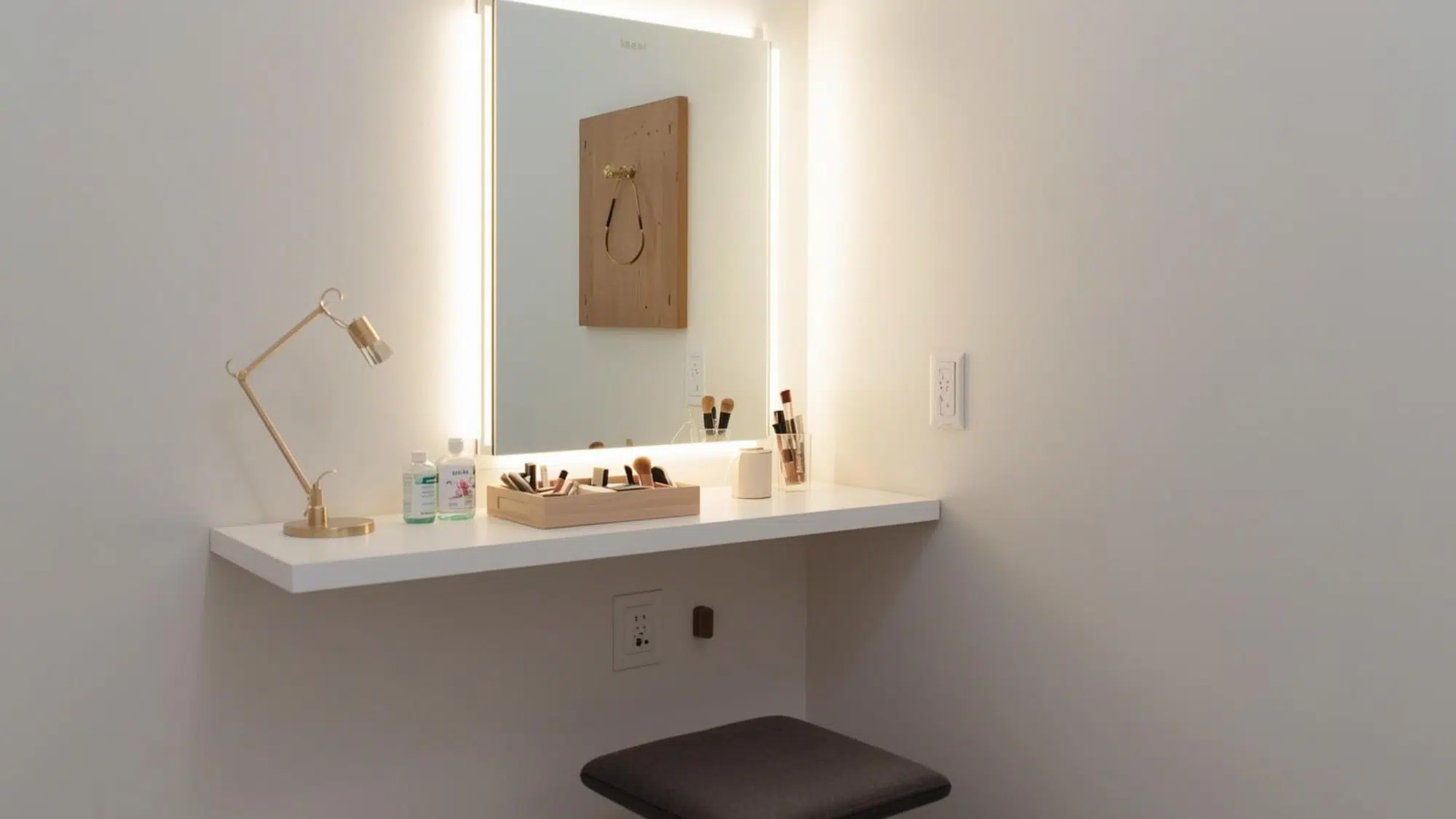
I like creating a small vanity corner when a bedroom needs a clear “getting ready” spot without adding bulky furniture.
I mount a slim wall shelf at a comfortable height, then hang a mirror above it to balance the setup. A small stool tucks underneath to keep the floor open.
The shelf holds only the basics, like a tray for daily items and one small container for brushes. A plug-in wall light or nearby lamp makes it practical for mornings and evenings.
13. Make A Bench At The Foot Of The Bed
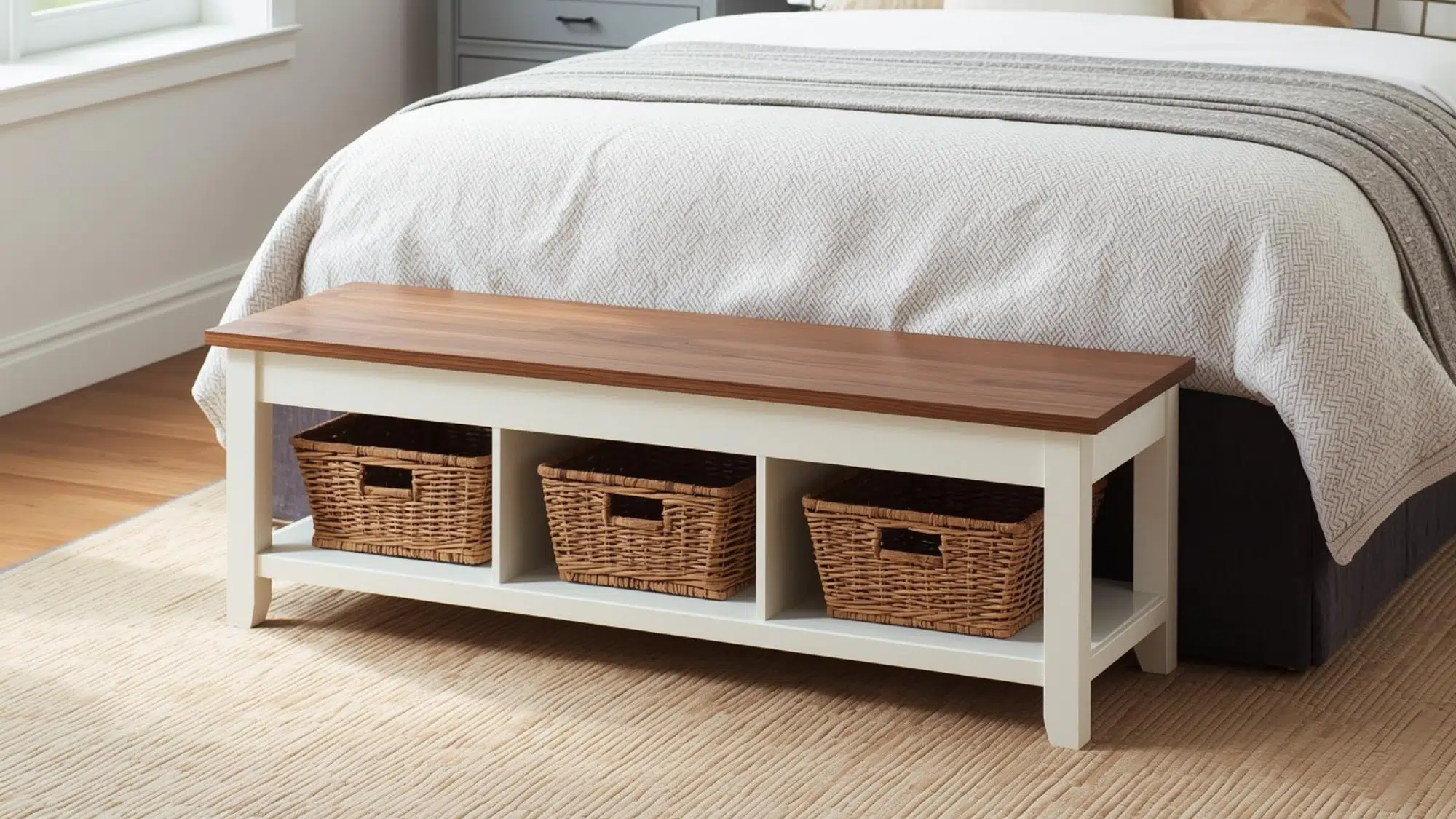
I like adding a bench at the foot of the bed because it makes the room feel finished and gives a clear landing spot for daily items. I built it with a simple flat seat and clean legs, keeping the height just below the mattress so it looks proportional.
It works for putting on shoes, folding a throw, or placing a worn but not dirty outfit. If storage is needed, I leave space under the counter for baskets. A stained wood top or painted base helps it match the room.
14. Peel-And-Stick Backsplash Upgrade
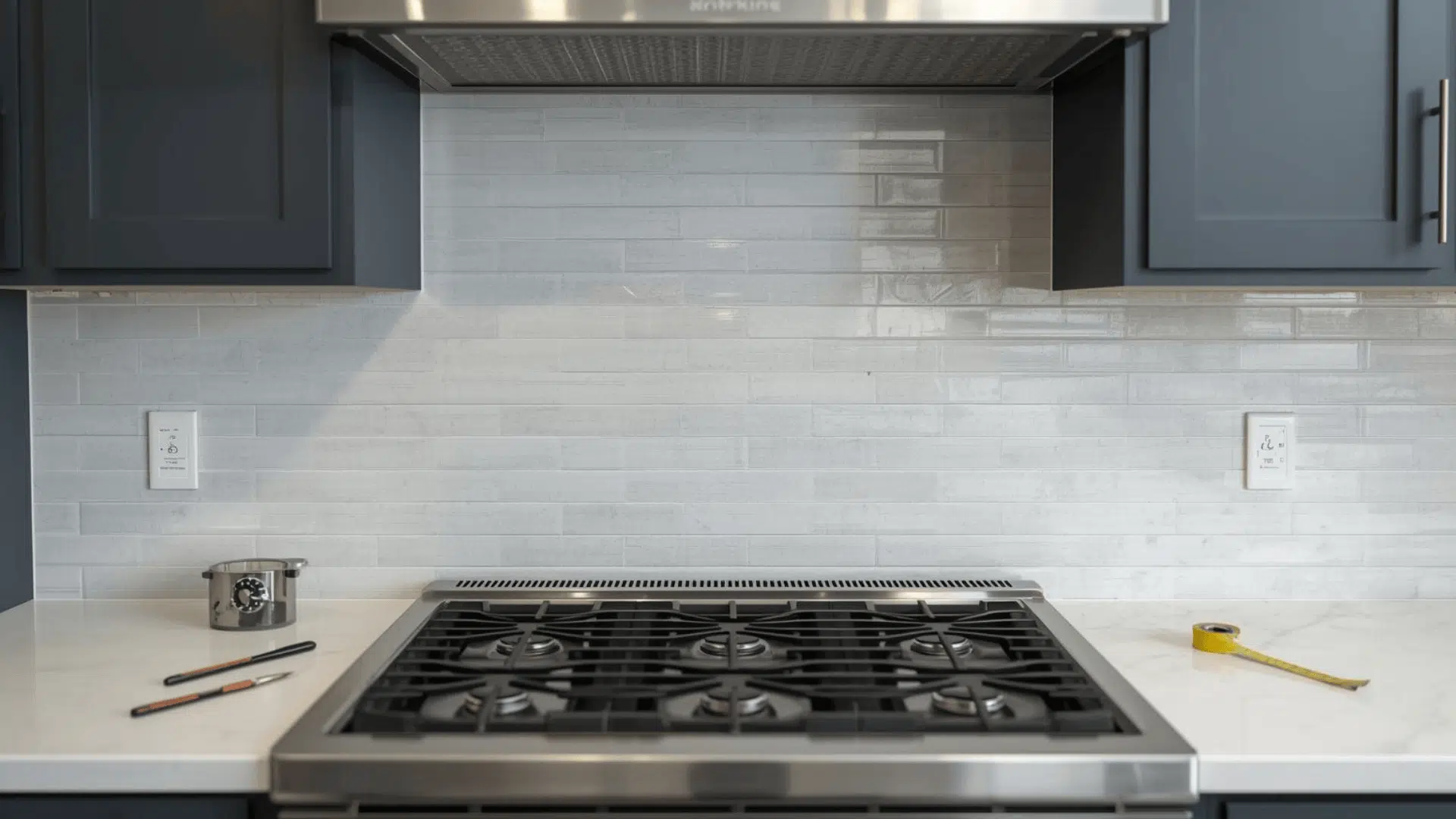
I like this one because it changes the whole kitchen vibe fast, without the mess of grout or the cost of a full remodel.
I clean the wall really well first (grease is the enemy), then measure and mark a straight level line so the first row goes on evenly.
I start behind the stove or in the most visible spot and work outward, trimming edges with a utility knife for clean corners.
If you want it to look more “real,” choose a matte finish and keep the pattern simple. The best part is it’s renter-friendly and easy to replace later if you get bored.
DIY Decor Ideas for Other Spaces
DIY decor for other spaces is projects for living rooms, entries, kitchens, and baths that improve function and style, such as adding shelves, upgrading lighting, framing mirrors, creating drop zones, or organizing small spaces.
15. Shoe Zone With A Simple Wood Platform
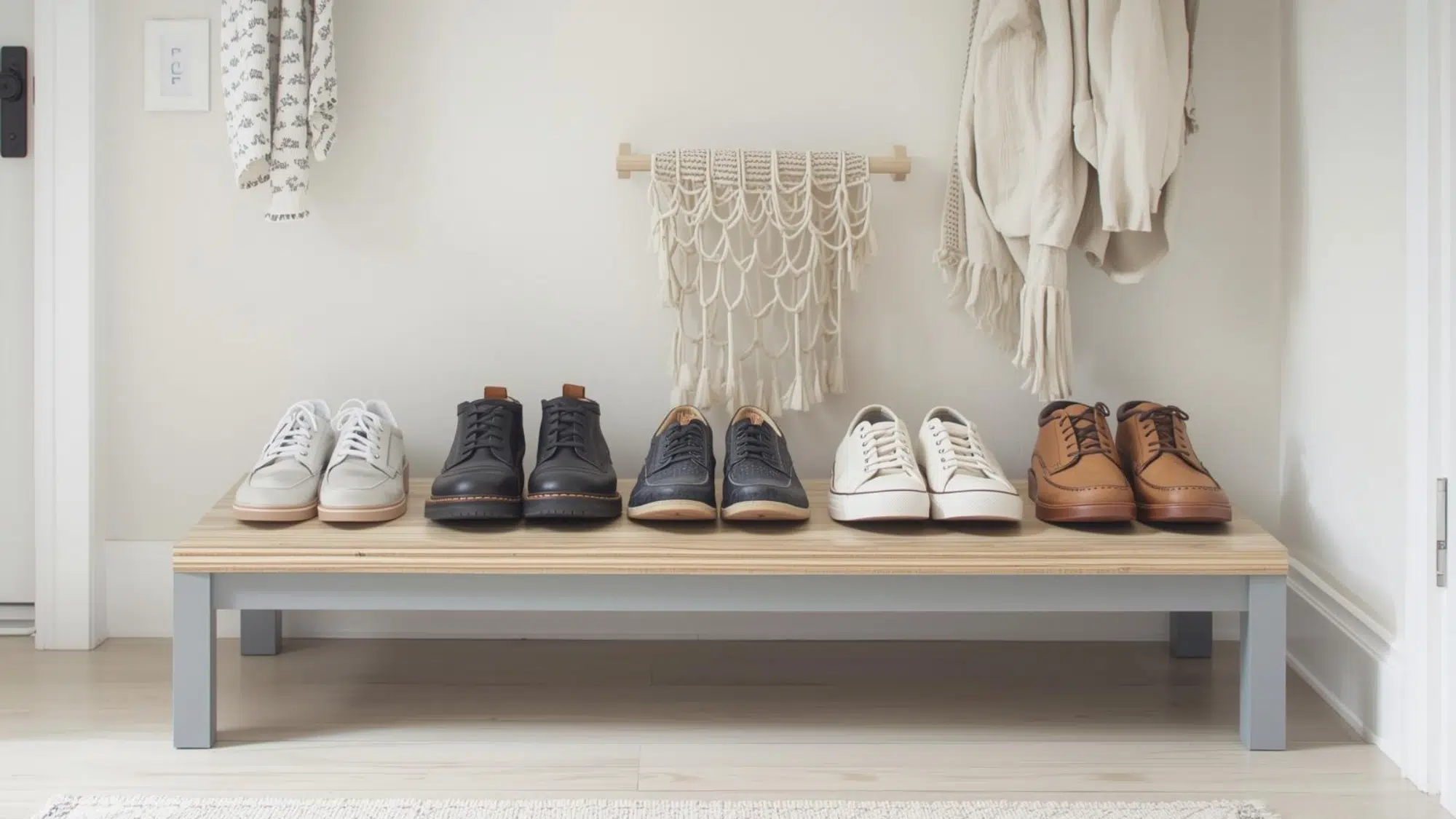
Shoes tend to scatter at the door because there is no clear place for them to land. A simple wood platform fixes that without adding bulky furniture. I built a low base from a flat board, then added thin trim around the edges to create a clean border that “contains” shoes.
It works like a tray for the floor, so the entry looks tidier even on busy days. Painted to match the wall or trim, it blends in. Add a small mat on top if needed.
16. Stair Wall Art Ledge
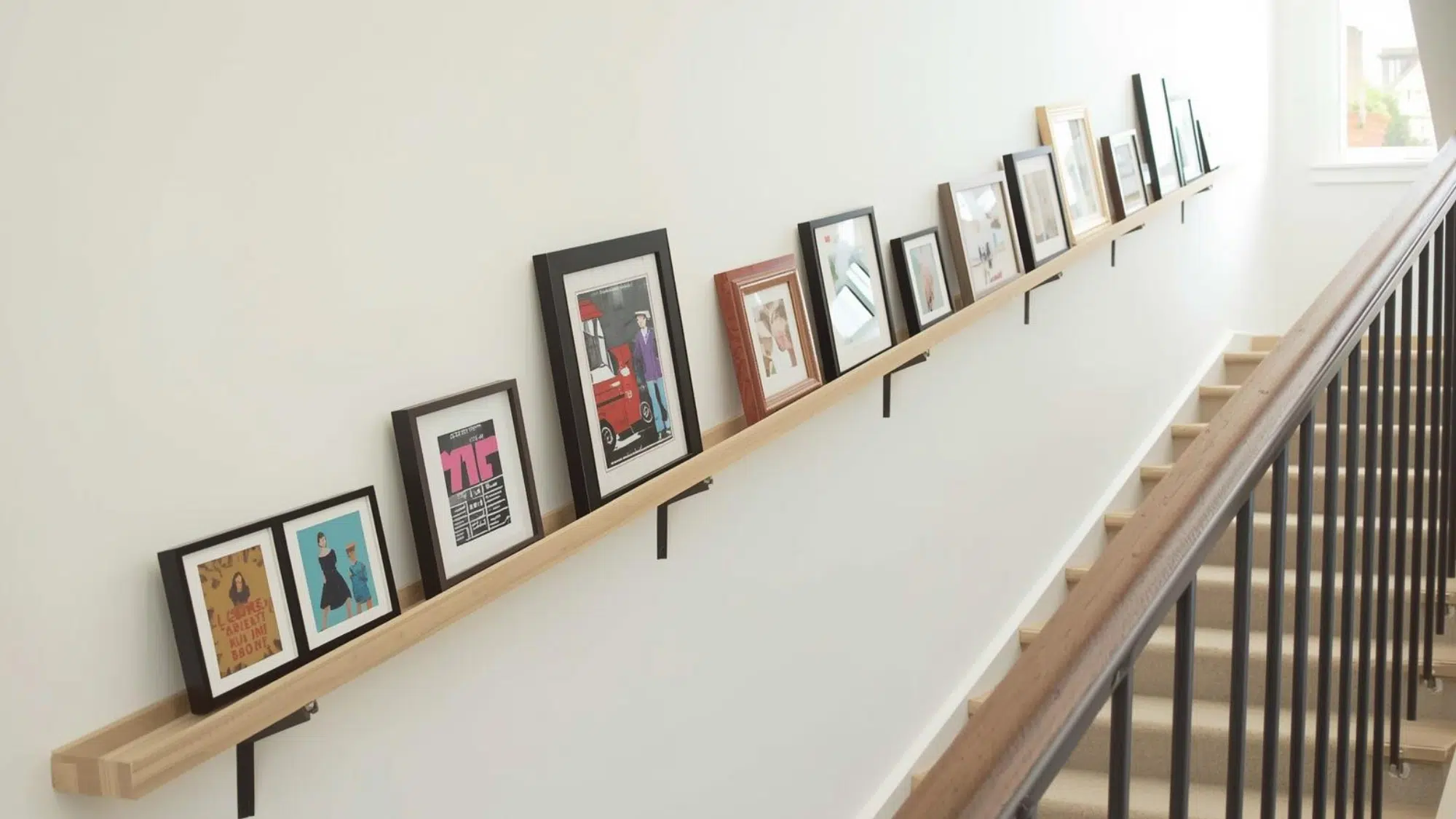
Stair walls are one of the hardest spots to decorate because the angle makes frame placement feel awkward. A long art ledge solves that.
I mount one sturdy picture ledge along the stair wall, then lean frames on it instead of hanging each one. It keeps the layout clean, and it is easy to change whenever you want without new holes.
The ledge also lets you mix sizes without stressing over perfect alignment. To make it look intentional, I keep frame finishes consistent and leave a little open space between groupings.
17. DIY Coffee Nook
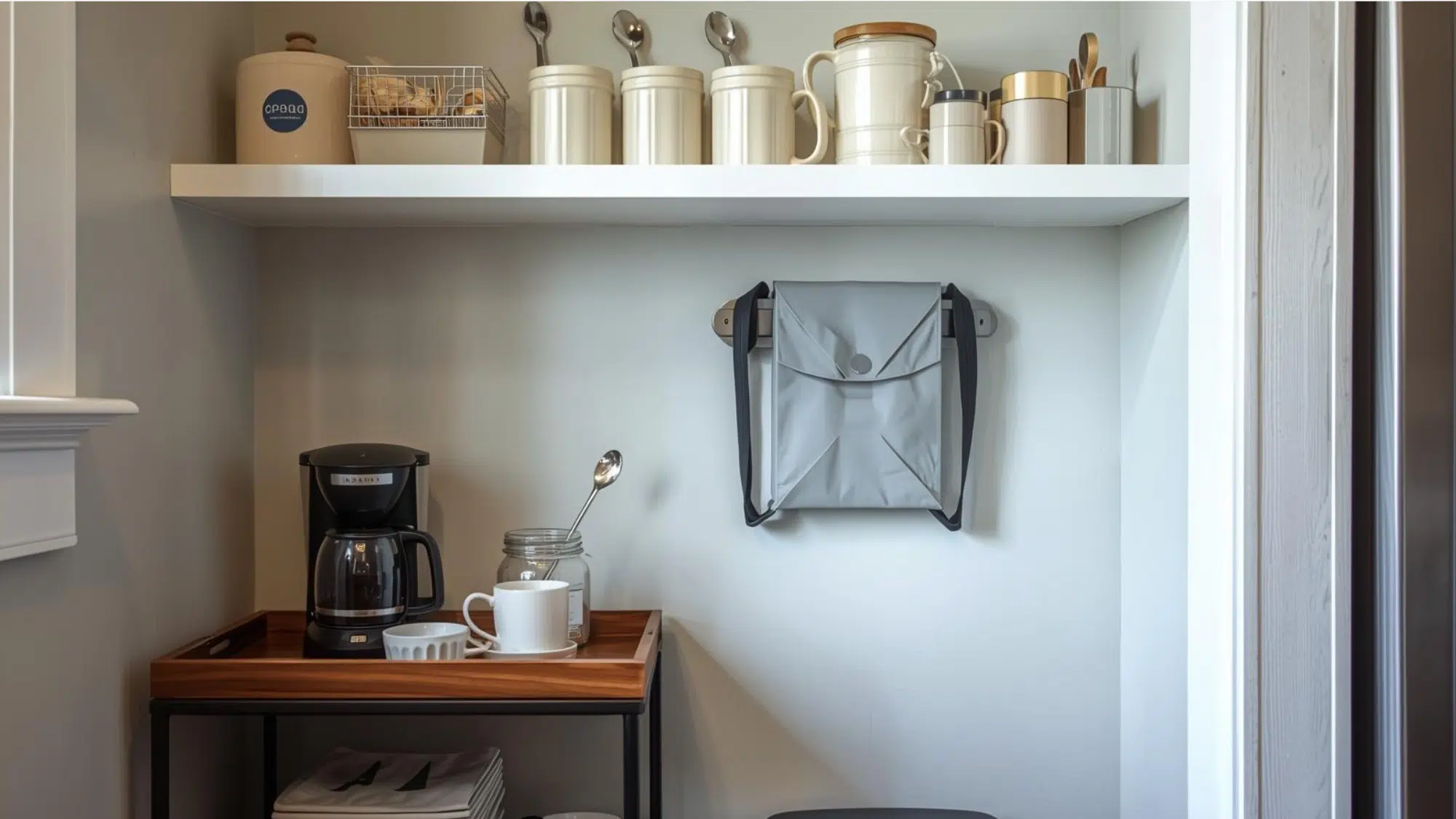
A DIY coffee nook is a simple way to turn one corner of the kitchen into a clear, organized zone for mornings.
I start by choosing one spot, usually a short stretch of counter or a small cart, then add one shelf or cabinet above to keep mugs and basics within reach.
On the counter, I use one tray to hold the daily items like coffee, sugar, and a spoon jar, so everything stays contained, and the rest of the counter looks clean. The detail that makes it feel intentional is consistency.
18. Entry Key Bowl Wall Mount
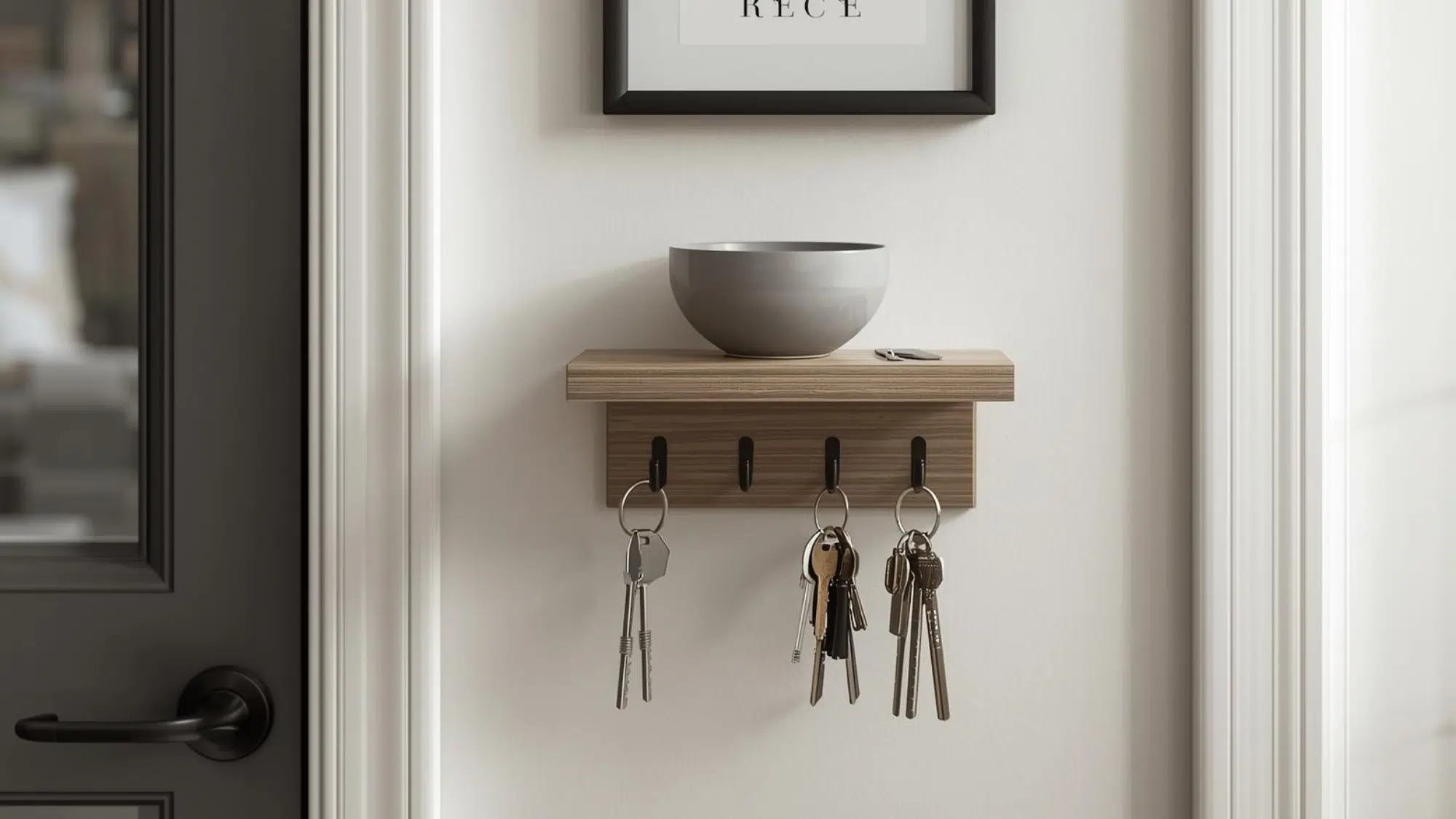
Keys make an entry look messy fast because they never have a real home. A wall-mounted key bowl fixes that with almost no space.
I mount a small dish or a tiny floating block shelf with hooks near the door and use it as the only drop spot for keys, earbuds, and loose change. It keeps counters clear and stops the daily “where are my keys” search.
The trick is placement. I install it where hands naturally reach when walking in, and I keep the bowl simple so it looks like decor rather than clutter.
19. Vertical Garden Wall
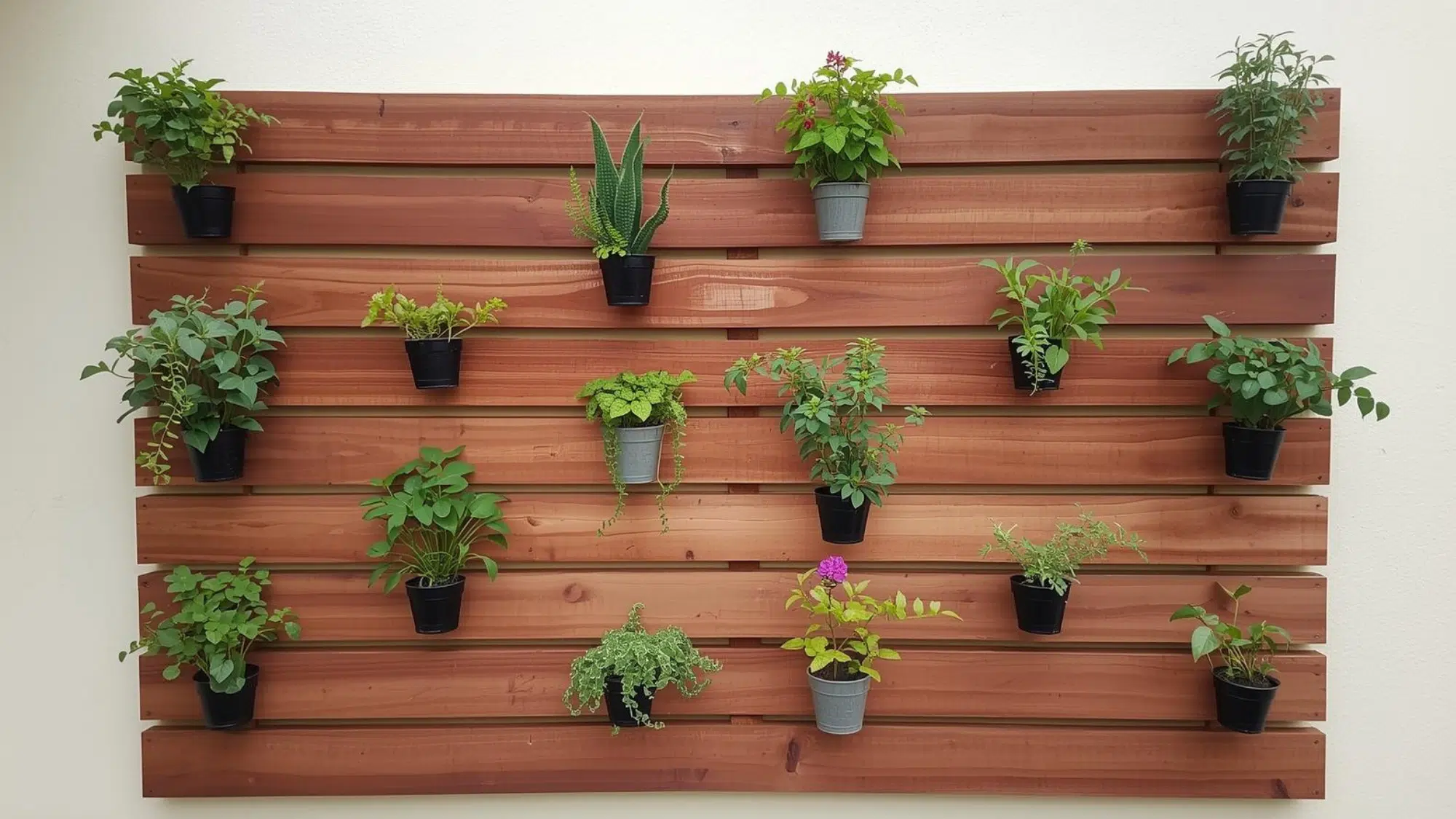
Potted plants look great on an outdoor table, but a vertical garden wall adds interest without taking up floor space.
I start with a simple wooden slat panel or a narrow pallet-style board, then attach small planters in a clean pattern so the arrangement feels intentional.
It works well on a deck, balcony, or patio wall where a plain surface needs life. The key is keeping the layout balanced and the pots consistent in size, so the wall looks neat even when the plants grow.
20. Baby Door
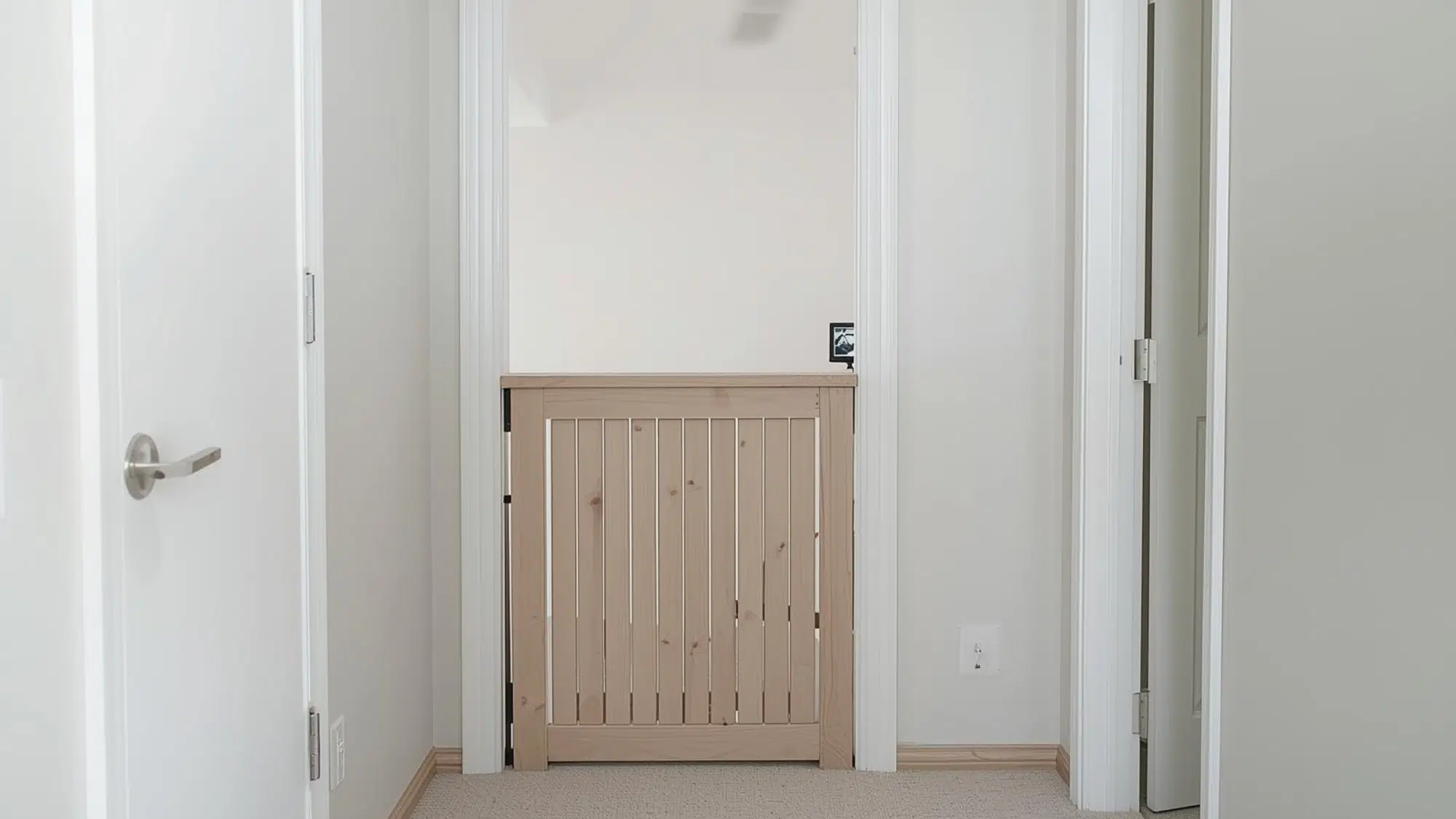
A DIY baby door is a simple project that adds a safe boundary without making the space feel closed off.
I usually build a lightweight, half-door-style barrier for a hallway or nursery doorway, using a clean frame and a simple latch so it opens easily for adults but blocks little ones.
It works well when a standard gate looks bulky or keeps slipping out of place. To make it feel intentional, I paint it to match the trim or wall color and keep the lines simple, so it blends into the room.
21. Reading Corner
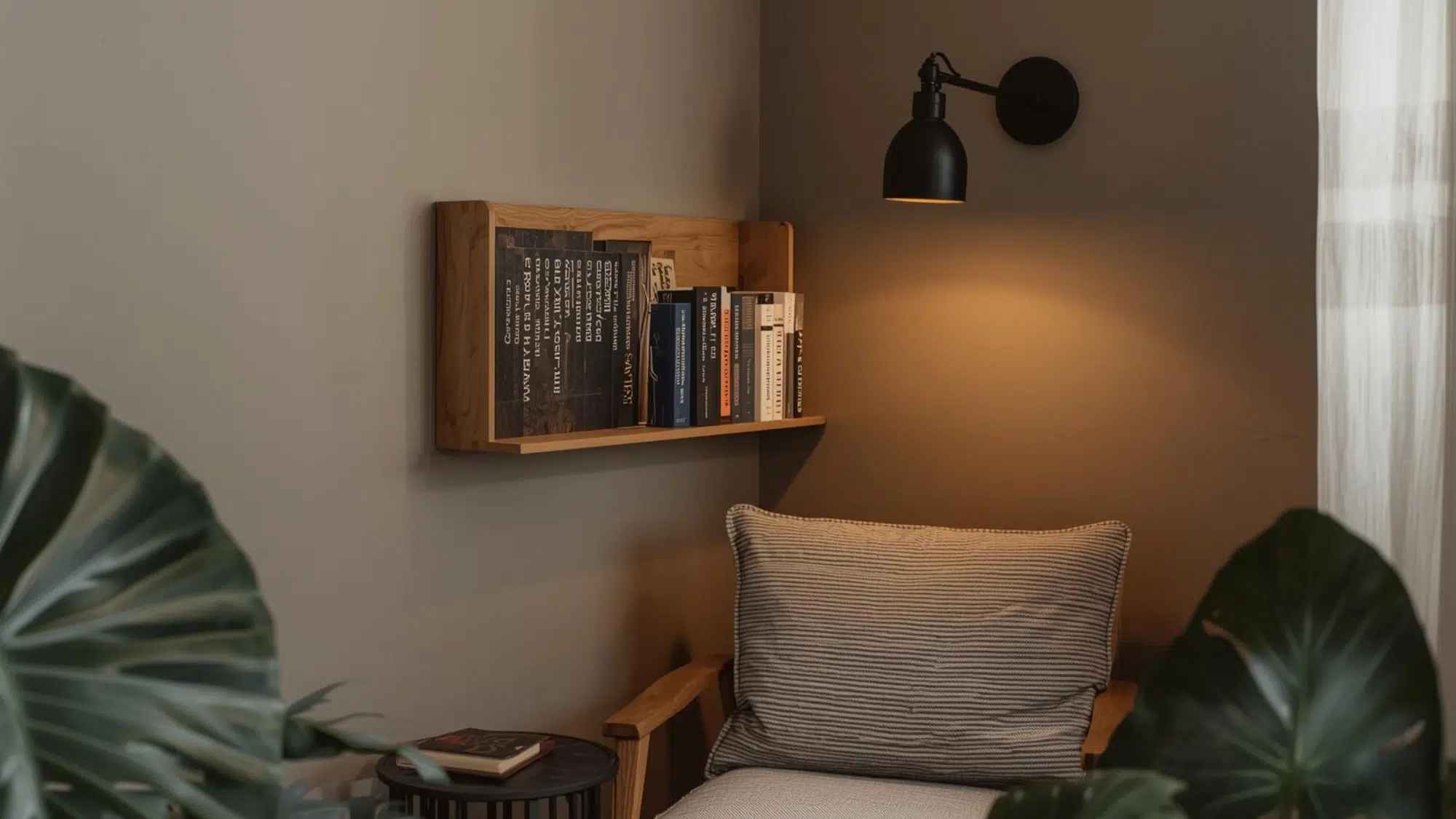
A reading spot feels more intentional when it has one clear “home” for books. I mount a slim book ledge on the wall next to a chair, then keep only a small stack of current reads on display.
It adds functionality without taking up floor space, making it perfect for small corners.
The detail that makes it work is placement: I hang the ledge within easy reach of the chair and pair it with a focused light so the corner is usable at night. Keeping the ledge lightly styled helps it feel calm rather than cluttered.
How To Make These Projects Feel Like One Cohesive Room
This is the part many DIY lists skip, and it is why rooms sometimes look “half done” after several projects.
First, pick one anchor per room. In a bedroom, it is usually the bed wall or lighting. In a living room, it is often one feature wall or a lighting layer.
Then repeat two or three elements across the room: one metal finish, one wood tone, and one shape. That repetition is what makes separate DIY projects look connected.
Finally, finish the unglamorous details: straight alignment, clean edges, hidden cords, and patched holes. Those details don’t get much attention, but they are what make a room feel finished.
Final Thoughts
DIY works because it helps a room reflect real life rather than a showroom template.
The best updates aren’t the biggest; they’re the ones you feel every day: a wall that finally has structure, lighting that softens the evening, and a simple spot where clutter has a home.
That’s why I stick to diy room decor ideas that are quick, practical, and easy to repeat across the space. Small projects add up when they’re done with intention and attention to detail, clean edges, hidden cords, and balanced scale.
If you’re not sure what to tackle next, ask one question: What would make this room easier to live in tonight? Start there, and the room will naturally come together.