That dark spot on your bathroom floor probably won’t go away on its own. You scrub it, it fades for a week, then it is back in the same spot.
Most bathroom spots come down to one of two things: mold or bathroom mildew. They can look almost identical, but they do not carry the same risk and do not clean up the same way.
After years of helping homeowners fix up bathrooms on real budgets, this is one of the questions I get asked most.
Below are the most common types of bathroom mold, how to tell mold from mildew, and when it is time to call a professional.
Why Your Bathroom Keeps Growing Mold
Bathrooms check every box that mold needs to grow: warmth, moisture, low airflow, and organic surfaces like grout, caulk, and drywall.
Every time you shower, you are essentially creating the ideal environment for growth. Steam settles on walls and ceilings. Water pools around the base of the toilet and along grout lines.
If a surface stays wet for 24 to 48 hours or longer, mold can take hold and even spread to nearby furniture. That is not a long window, and in a bathroom that does not dry out well between uses, mold barely needs to get started.
How Humidity and Poor Ventilation Feed the Problem
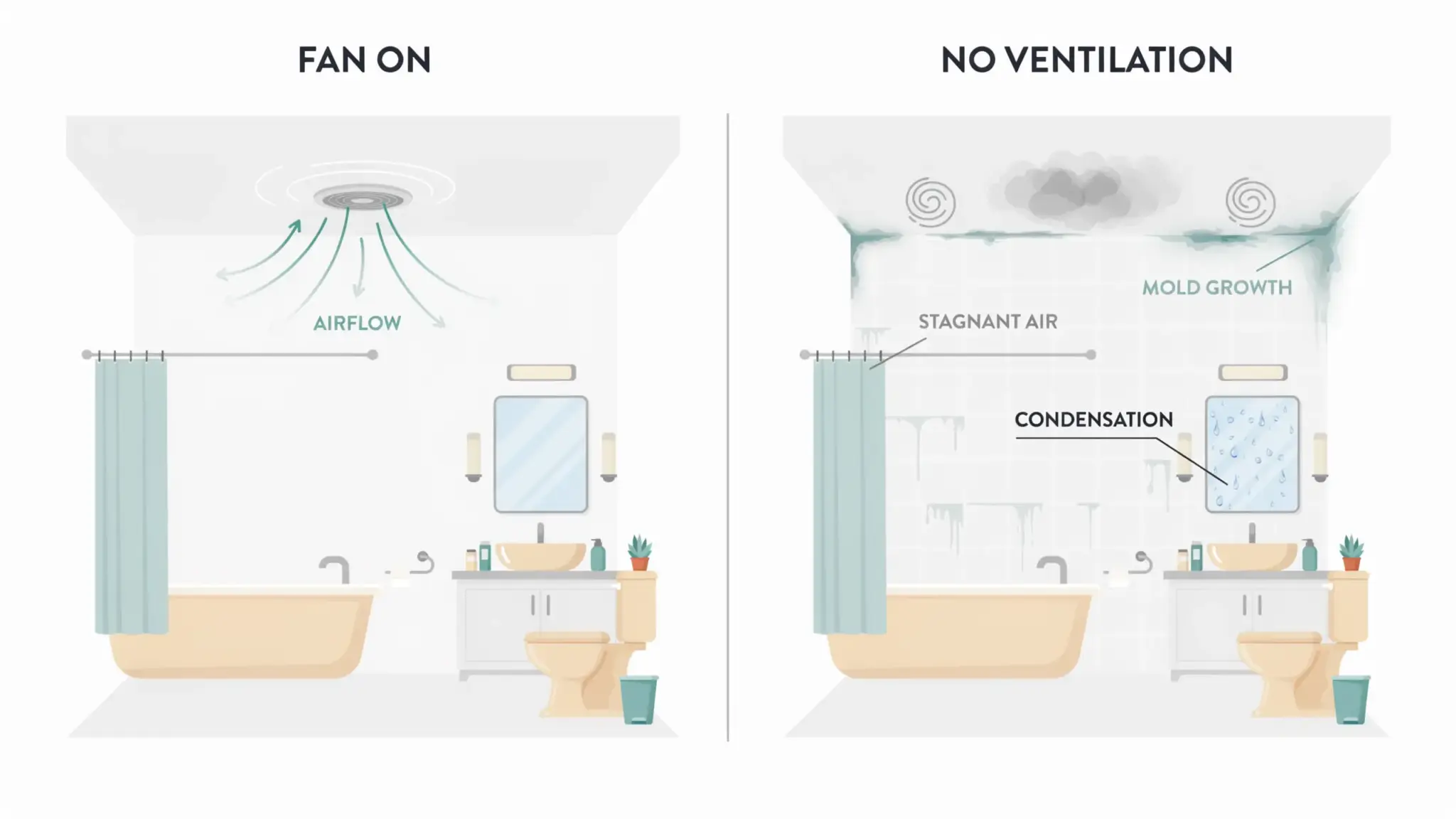
A weak, undersized, or rarely used exhaust fan is the most common reason bathroom mold keeps returning.
Steam from a hot shower has nowhere to go, so it condenses on walls, mirrors, and ceilings, especially in windowless bathrooms with no secondary escape route for humid air.
The fix: run the fan during your shower and for at least 20 minutes after.
The spots in your bathroom that dry out last are the spots most likely to grow mold first:
- Grout lines and caulk seams around the shower and tub
- Ceiling corners above the shower head
- Behind the toilet and underneath the bath mats
- Window sills with condensation buildup
- The underside of shampoo bottles and soap dishes
Understanding why your bathroom is prone to mold puts you ahead of the problem. The next question is whether the mold you are seeing is actually worth worrying about.
9 Bathroom Mold Types and How to Identify Each One
There are hundreds of mold species, but only a handful show up regularly in residential bathrooms. Knowing what each one looks like, where it tends to grow, and how much risk it carries helps you make a faster, smarter call on how to handle it.
1. Aspergillus
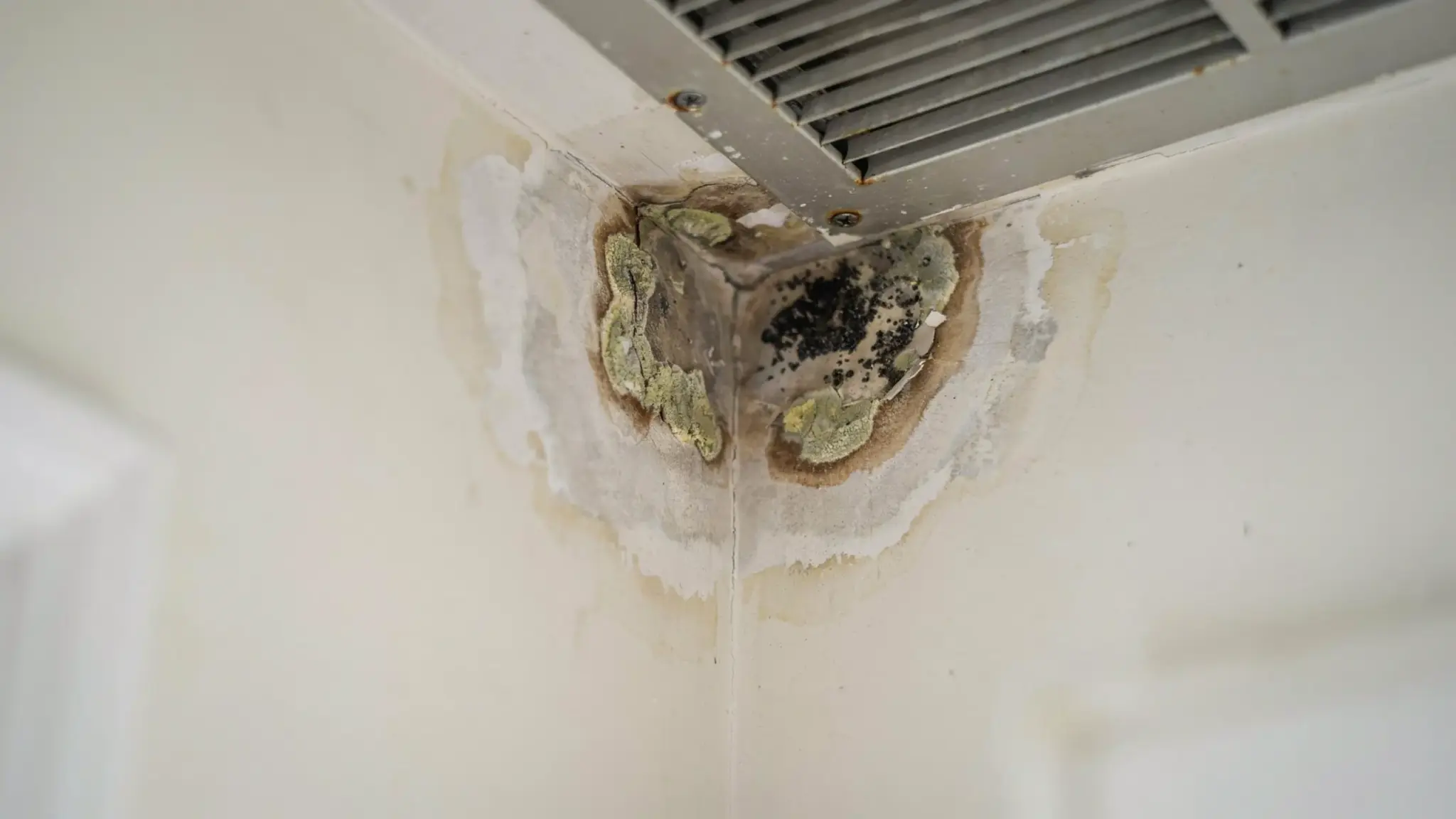
The key identifier is its powdery, surface-level look. It sits on top of a material rather than rooting into it, which makes it easier to spot early.
Poses a low-to-moderate risk for healthy adults; greater concern for those with weakened immune systems.
| Risk | Low to Moderate |
|---|---|
| Appearance | Powdery, chalky texture; colors range from white to yellow-green, brown, and black. |
| Where It Grows | Walls, ceilings, around ventilation openings where dust and moisture collect |
2. Cladosporium
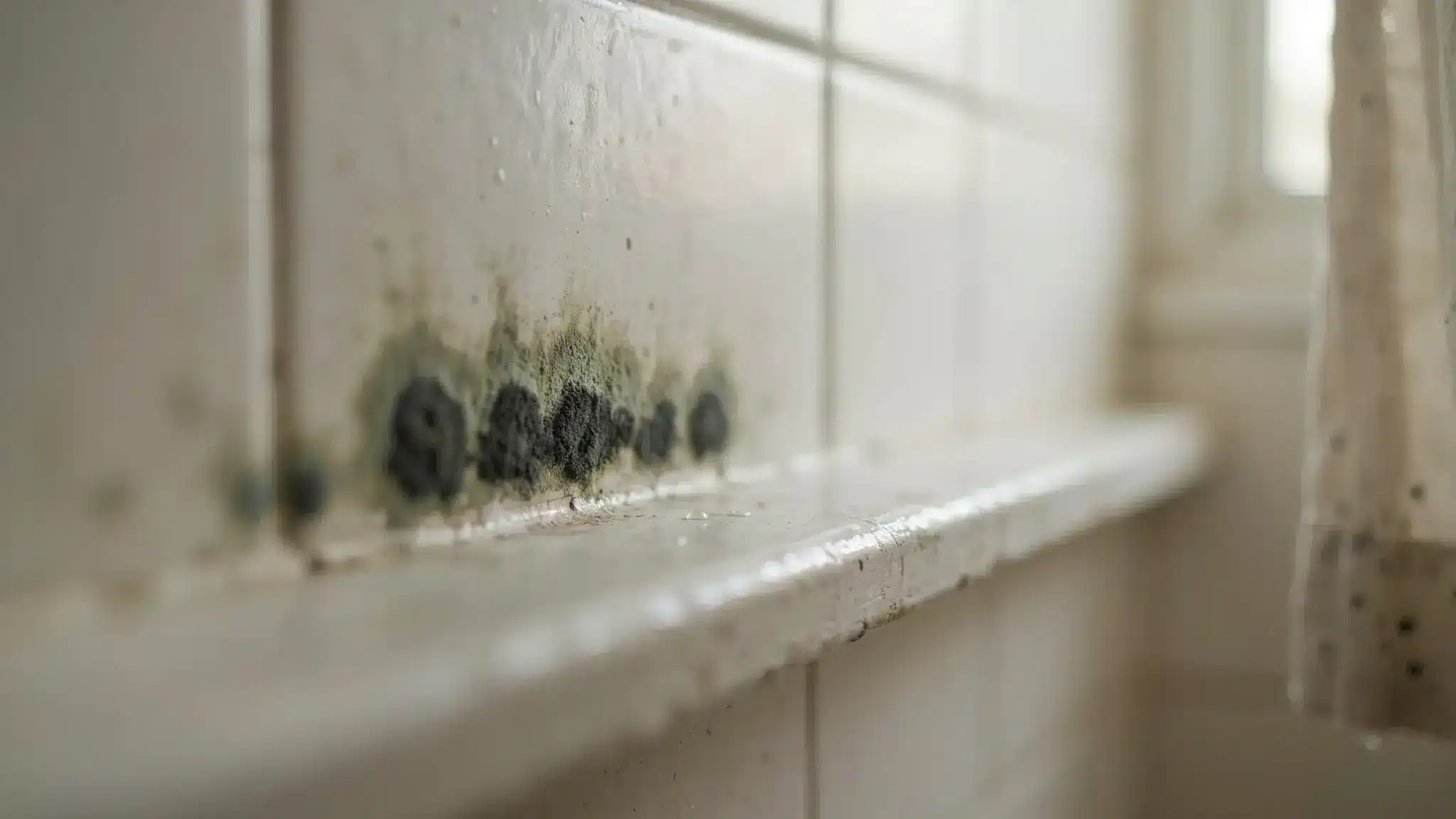
Unlike most bathroom molds, Cladosporium tolerates cooler temperatures, so it can appear in cooler areas of your bathroom.
It is a common allergen and can cause respiratory irritation and skin reactions, though it is not considered toxigenic.
| Risk | Low to Moderate |
|---|---|
| Appearance | Olive-green to black; texture resembles suede or dry velvet. |
| Where It Grows | Grout lines, painted walls, window sills, fabric shower curtains |
3. Penicillium (Blue Mold)
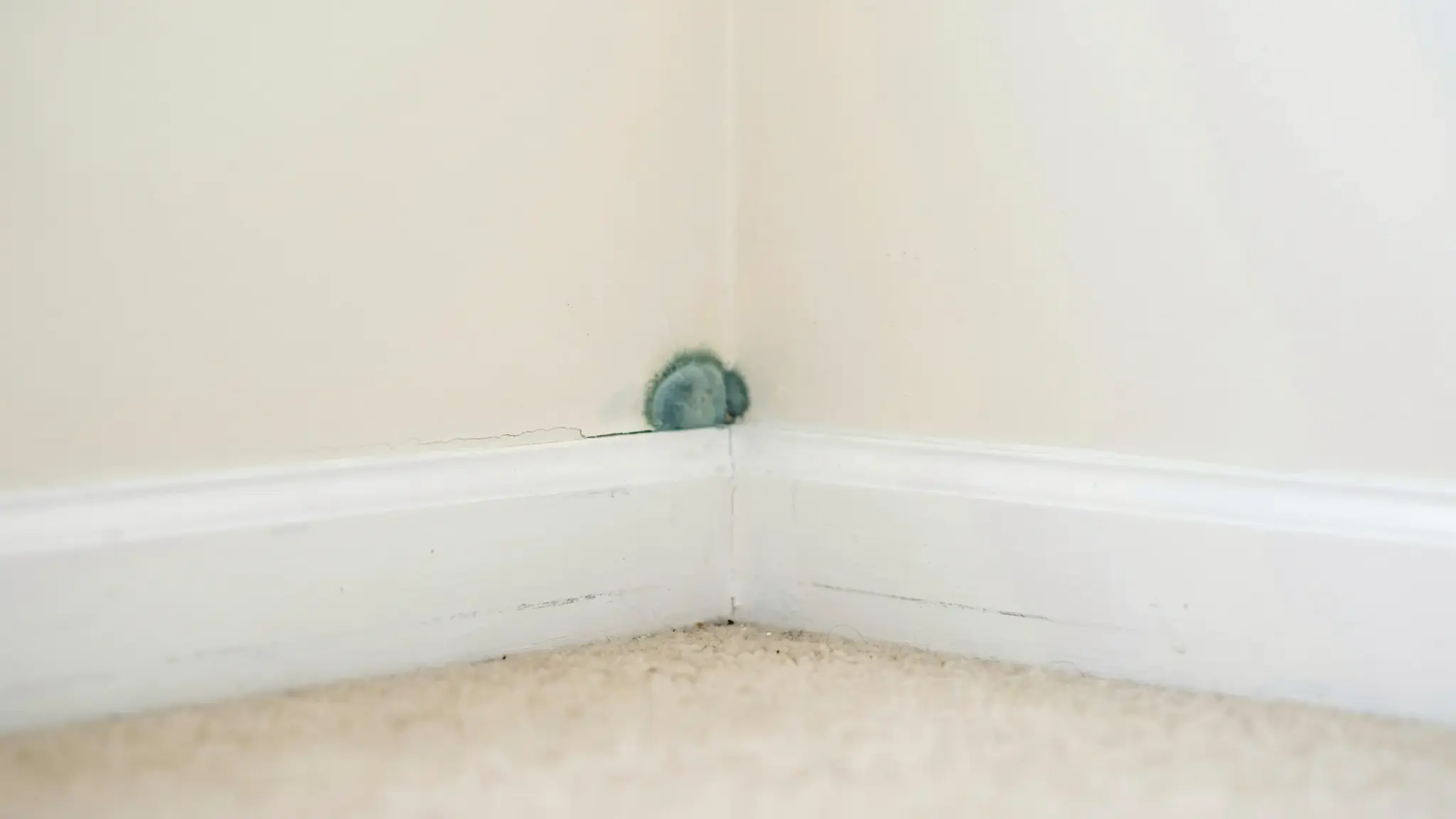
Penicillium appears blue-green with a velvety layer, and it spreads quickly once it gets going.
The tricky part is that it usually starts beneath the surface, behind wallboard or beneath flooring, so by the time you see a spot on the wall, it has often already spread farther than it looks.
If you scrub a spot and it returns within days rather than weeks, check for a nearby hidden leak before you assume the cleaner failed.
| Risk | Moderate |
|---|---|
| Appearance | Blue-green with a velvety surface; spreads quickly. |
| Where It Grows | Water-damaged wallboard beneath flooring and insulation. |
4. Stachybotrys (Black Mold)
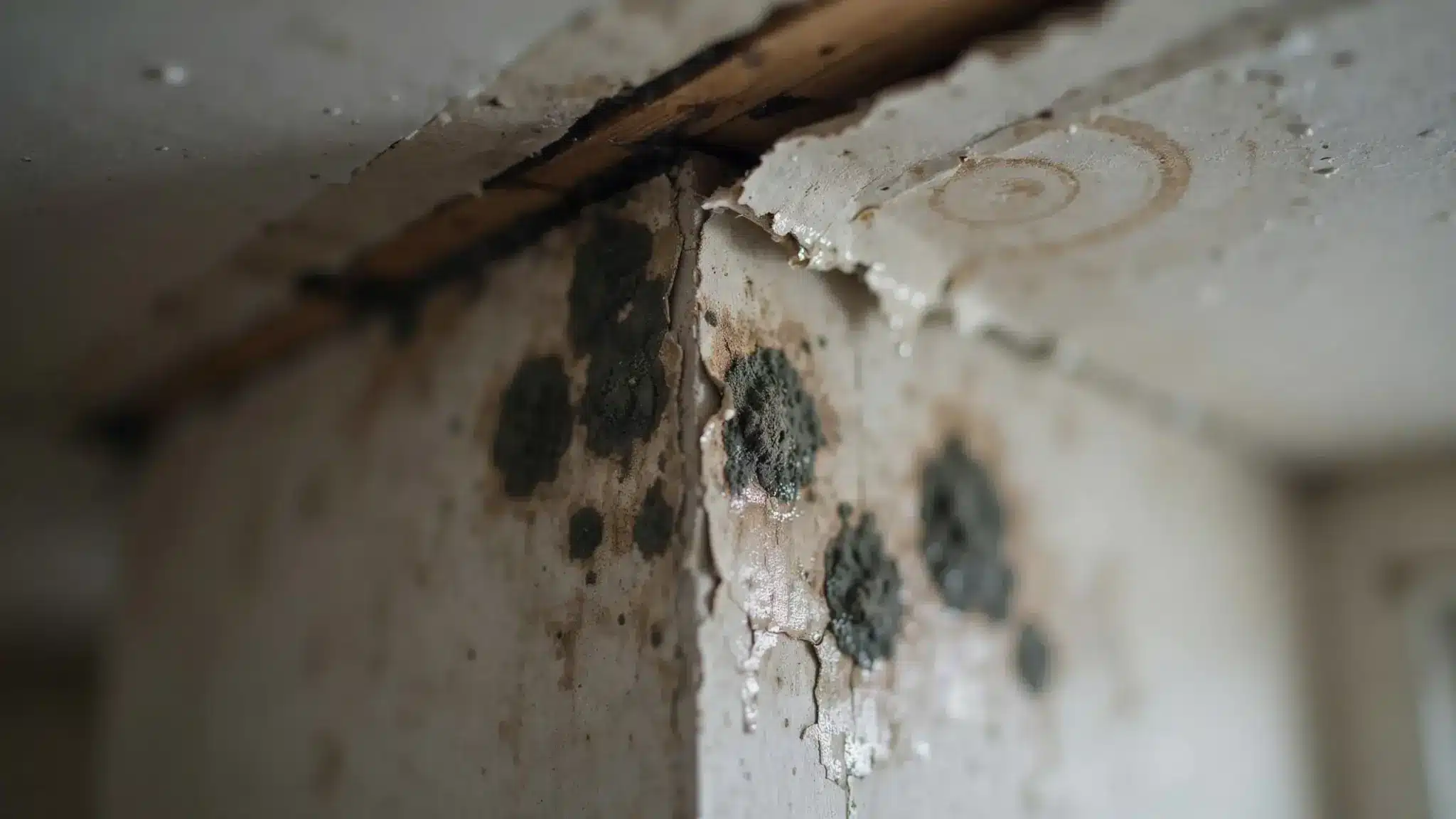
This is the highest-risk mold on this list. Important to note: not every black-colored mold is Stachybotrys.
Cladosporium and Aureobasidium also appear black. The only way to confirm it is through professional testing.
Do not disturb the area before calling someone in.
| Risk | High |
|---|---|
| Appearance | Slimy, dark greenish-black |
| Where It Grows | Drywall, ceiling tiles, and wood with prolonged moisture exposure; not on tile or grout |
5. Trichoderma
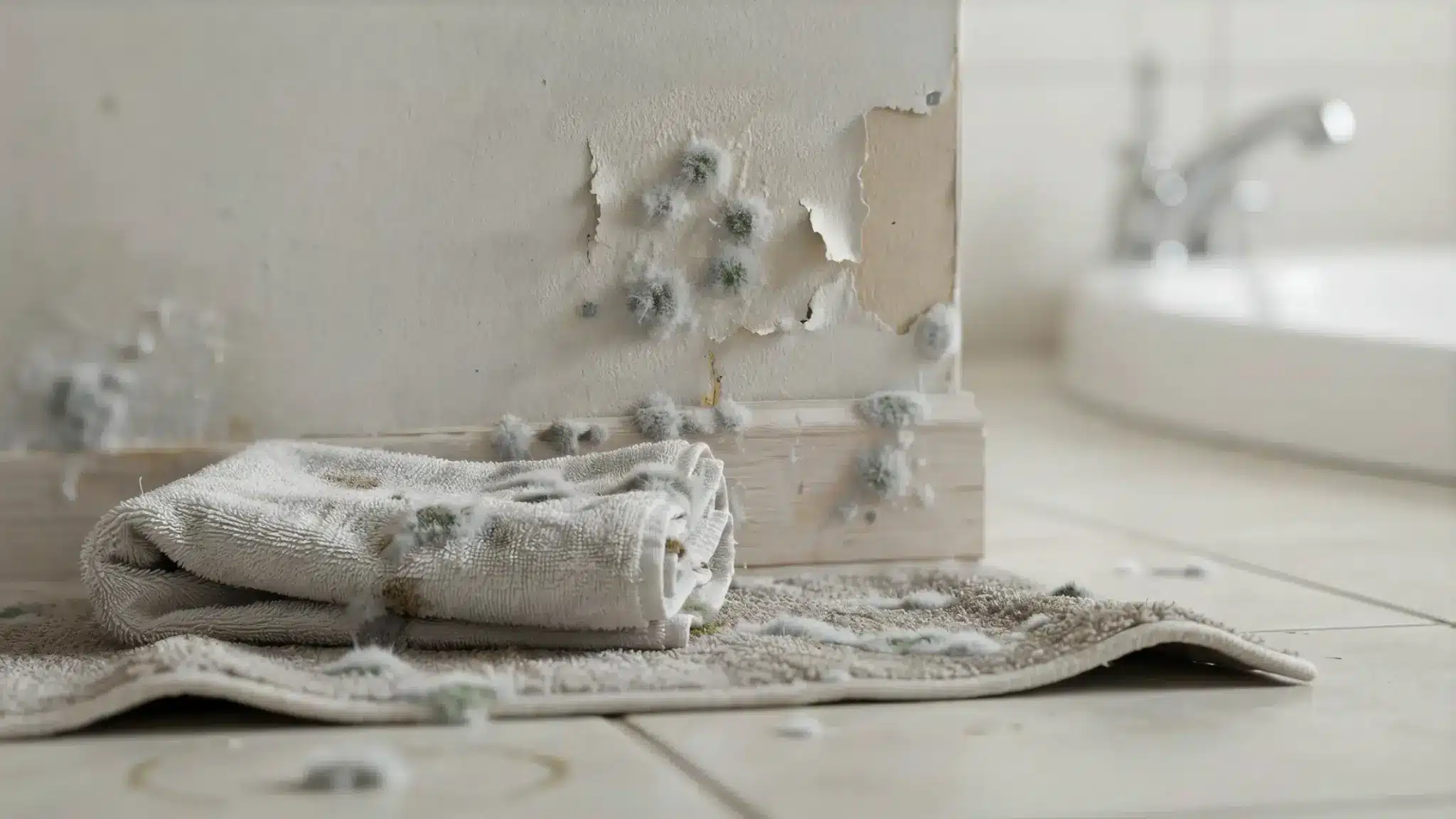
Often mistaken for Penicillium. The health risk for most people is relatively low, but Trichoderma produces enzymes that break down wood and building materials over time.
Finding it near wood trim or subflooring is worth acting on beyond a surface clean.
| Risk | Low |
|---|---|
| Appearance | White with green patches; woolly, almost fluffy texture. |
| Where It Grows | Wet bath mats and towels, paper-backed drywall, wood surfaces |
6. Aureobasidium
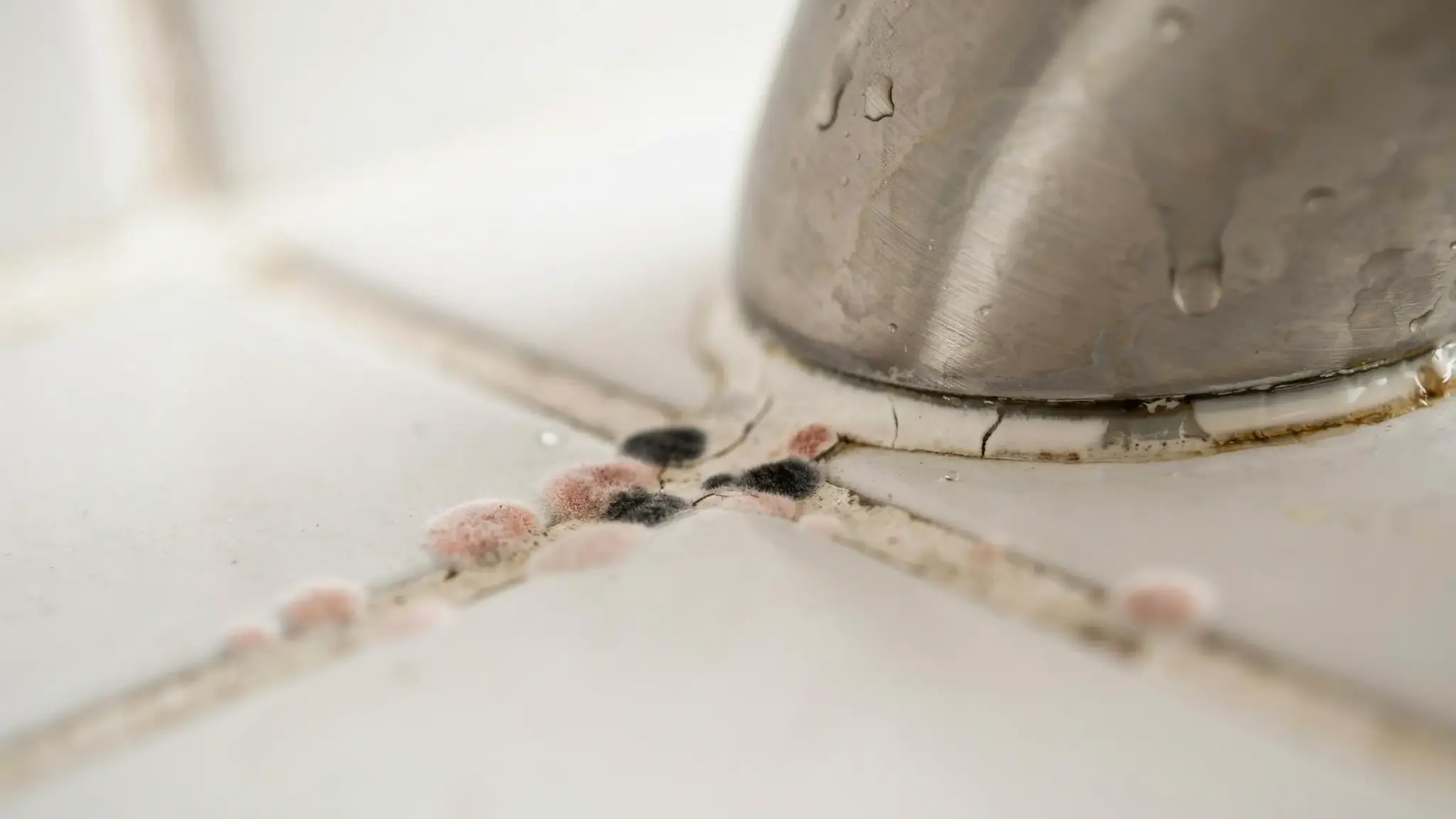
Unlike others on this list, Aureobasidium’s main risk comes from direct contact: skin irritation, nail infections, and eye infections.
Always wear gloves when cleaning discolored caulk or grout if you are not sure what you are dealing with.
| Risk | Moderate (contact-based) |
|---|---|
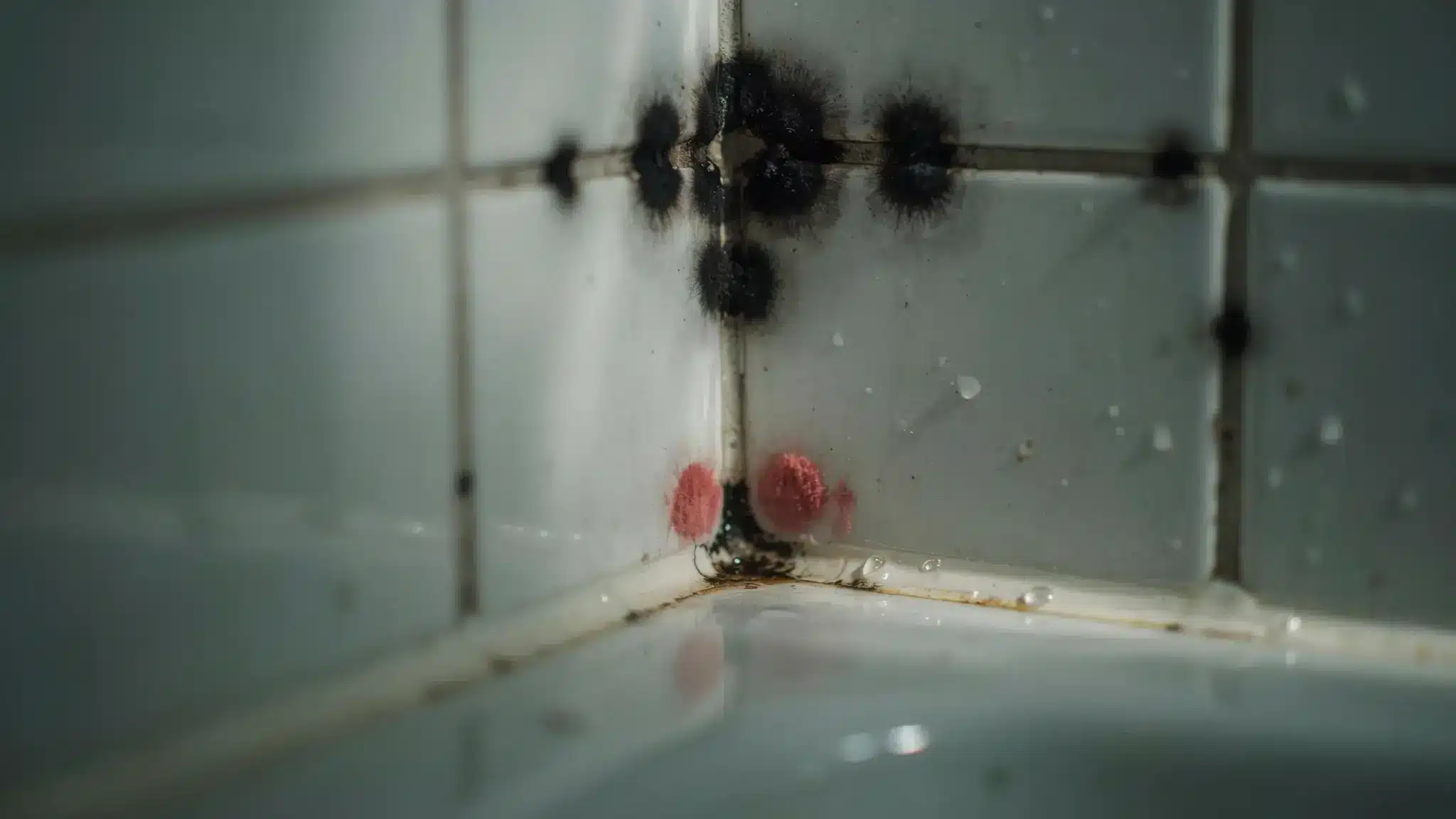
| Appearance | Pink or light brown when young; darkens to black over time. |
| Where It Grows | Caulk seams, grout lines, around faucets |
7. Alternaria
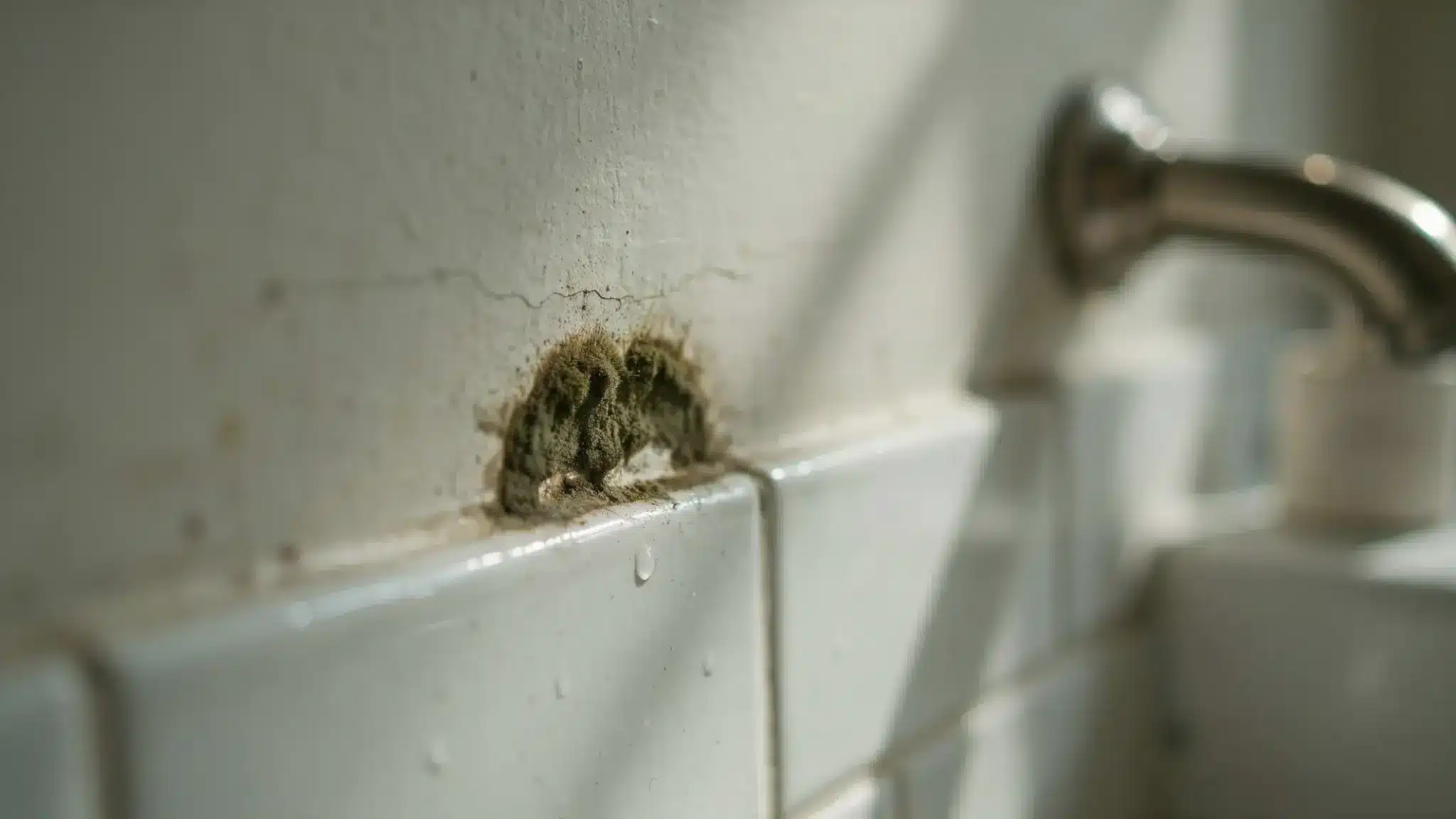
Alternaria is one of the most common molds found indoors, not just in bathrooms. It tends to settle wherever water sits the longest.
Healthy adults may notice only mild allergy-type symptoms, but it can trigger more serious reactions in people with compromised immune systems.
| Risk | Low to Moderate |
|---|---|
| Appearance | Dark green to brown, velvety texture |
| Where It Grows | Sinks, showers, water-damaged drywall, tile, and painted surfaces |
8. Ulocladium
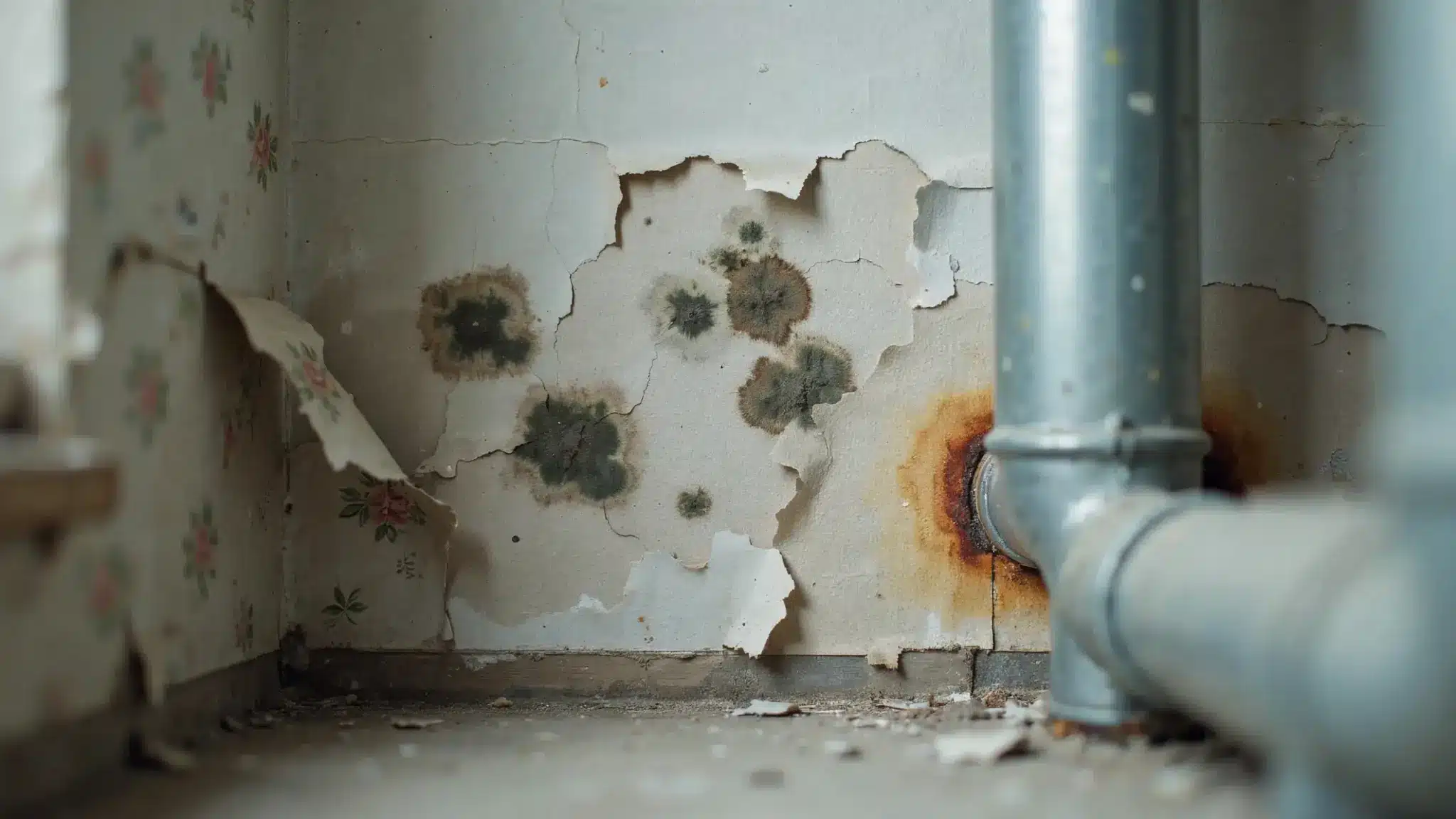
Ulocladium is often mistaken for Stachybotrys, so a positive ID usually requires testing rather than a visual check.
It shows up most often after a bathroom has had sustained water exposure, like a slow leak behind a wall, rather than from everyday shower steam.
| Risk | Low to Moderate |
|---|---|
| Appearance | Greenish-black, brown, or gray |
| Where It Grows | Wood, drywall, wallpaper, and fabric exposed to chronic condensation or a leaky pipe |
9. Chaetomium
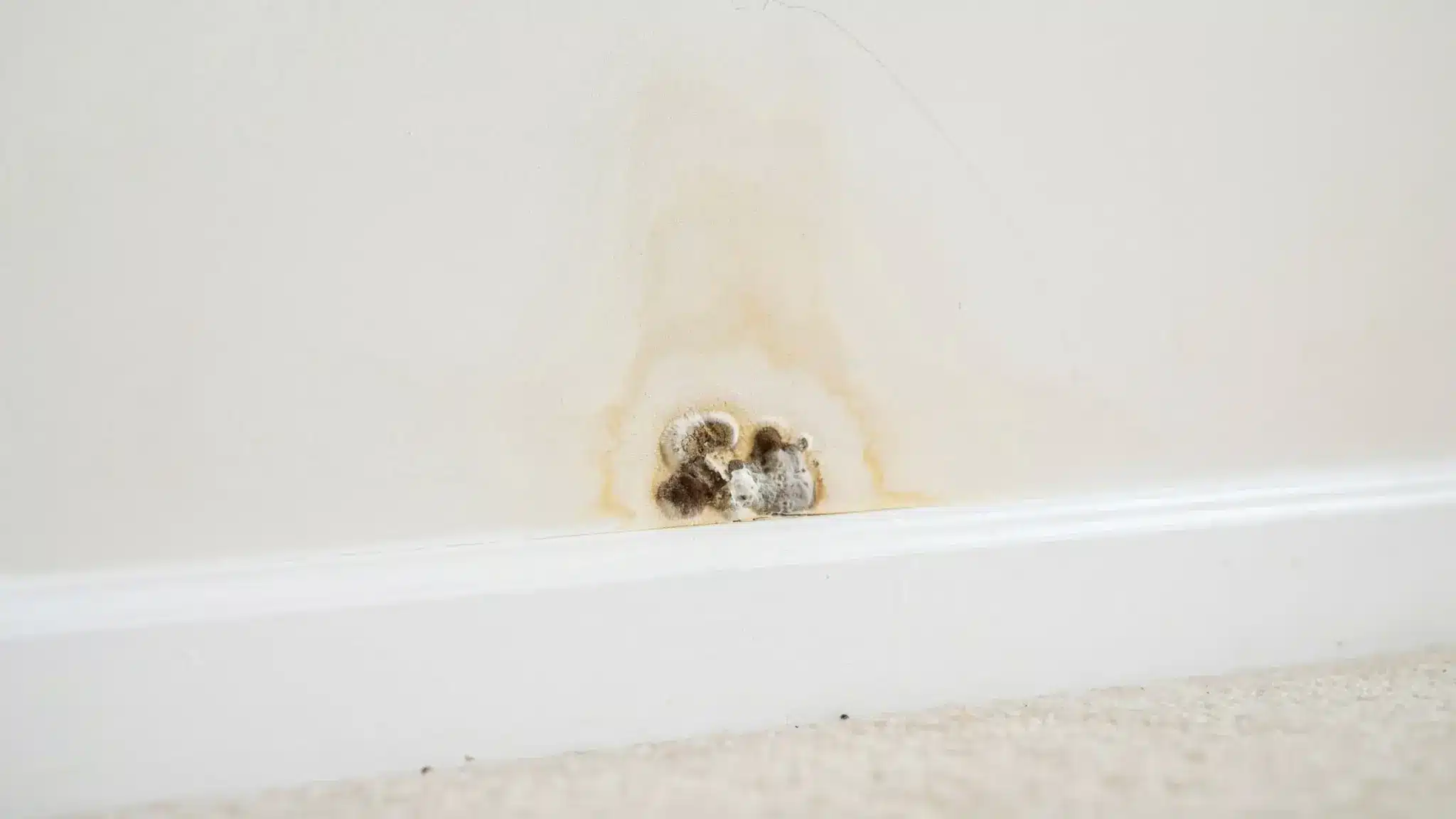
Chaetomium needs sustained moisture to establish itself, so finding it usually indicates a real water event, not just routine humidity.
At its more mature stage, it can be mistaken for black mold and poses similar risks.
Treat a suspected find the same way you would Stachybotrys: don’t disturb it, call a professional to confirm.
| Risk | High |
|---|---|
| Appearance | White when young, turning blue-green to dark brown or black with a musty, damp-earth smell |
| Where It Grows | Wood, drywall, and wallpaper after flooding or a plumbing leak |
Is Bathroom Mold Harmful to Your Health?

As per the Cleveland Clinic, not all bathroom mold is equally dangerous. Most of what you find on tile grout or caulk is surface-level mold that causes minimal health risk in healthy adults.
The real concern comes from toxigenic molds, which produce mycotoxins and can affect your respiratory system with prolonged exposure.
For most people, brief exposure to common bathroom mold causes only minor irritation.
But for children, elderly individuals, and anyone with asthma, allergies, or a weakened immune system, even low-level mold exposure can trigger real symptoms, including sneezing, itchy eyes, a runny nose, skin irritation, and worsened breathing.
| Who Is at Risk | Possible Symptoms |
|---|---|
| Healthy adults (low exposure) | Mild irritation, occasional sneezing |
| People with asthma or allergies | Flare-ups, nasal stuffiness, worsened breathing |
| Children and the elderly | Respiratory irritation, itchy eyes, skin reactions |
| Immunocompromised individuals | More serious respiratory and systemic reactions |
When Bathroom Mold Becomes a Health Risk
The EPA uses 10 square feet as a general threshold: patches smaller than that can typically be handled with a DIY cleaning approach.
Anything larger warrants a closer look, and possibly a professional. Beyond size, pay attention to where the mold is. Surface mold on tile is one thing.
Mold that keeps coming back in the same spot, discoloration bleeding through paint, or a musty smell that does not go away after cleaning are signs the problem may be behind the wall or under the floor, not just on the surface. At that point, cleaning the visible spot is not enough.
Knowing your risk level helps you decide how fast to act. Now let’s get into what you are actually looking at.
How to Identify Bathroom Mildew and Where It Hides
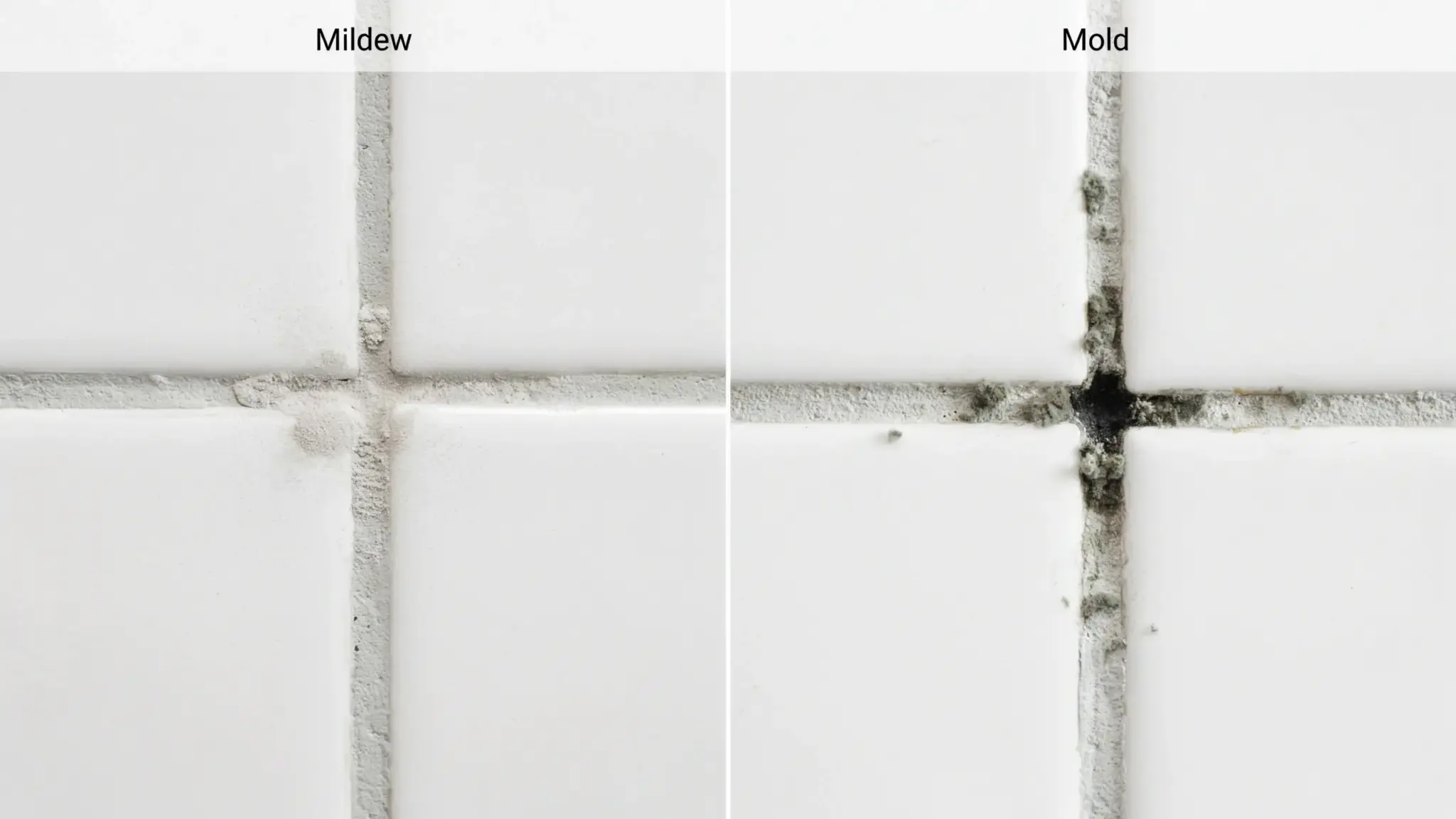
They grow in the same places and look similar at a glance, but how you handle each one is not the same.
Mildew is not a separate organism from mold. It is a specific type of mold, typically referring to early-stage fungal growth that stays flat and surface-level rather than penetrating a material.
The term is used loosely in everyday conversation, but in practice, when people say they have mildew in the bathroom, they usually mean powdery mildew: a light, flat growth sitting on top of grout or tile that has not yet dug in.
How to Spot Mildew by Color and Texture
Mildew tends to be white, gray, or pale yellow. Its most defining feature is that it stays flat. There is no fuzz, no depth, no raised texture.
It does not penetrate the surface it is growing on, which is why it is generally easier to clean than mold.
If you wipe it and the surface underneath looks normal, that is a good sign that you were dealing with mildew.
If the stain or discoloration remains after wiping, you are likely dealing with something that has gone deeper.
Health Risks of Mildew
Mildew is not harmless, but it is lower risk than most molds. Breathing it in over time can cause headaches, throat irritation, and mild respiratory discomfort.
People with asthma or seasonal allergies may notice flare-ups in a bathroom with persistent mildew buildup.
It does not produce the mycotoxins associated with toxic molds, so the risk profile is meaningfully different, but “lower risk” is not the same as “no risk.” Regular cleaning keeps it from becoming a recurring problem.
Where Mildew Grows in Bathrooms
- Tile grout along the shower floor and walls
- Ceiling corners directly above the shower head
- Around the sink edges where water splashes regularly
- Shower floors that stay damp between uses
Mildew is easier to manage than mold, but it helps to know exactly which one you are up against before you start cleaning.
Bathroom Mold vs. Mildew: Key Differences at a Glance
Mold and mildew share the same causes, but they don’t behave the same way once they take hold. Here is how to tell which one you are looking at.
Mold has more dimensions: it can be fuzzy, slimy, or raised, comes in darker colors, and often roots into the material it grows on.
Smell is another clue. Both have a musty odor, but mold tends to be stronger and more persistent, particularly if it has grown into drywall or grout.
| Feature | Mold | Mildew |
|---|---|---|
| Color | Black, green, blue, brown, or white | White, gray, or pale yellow |
| Texture | Fuzzy, slimy, or raised | Flat and powdery |
| Surface penetration | Grows into the material | Stays on the surface |
| Smell | Strong, persistent musty odor | Mild musty odor |
| Health risk | Low to high depending on species | Generally low |
| Ease of removal | Harder; may require repeat treatment | Usually cleans off in one pass |
The Bleach Drop Test: Put one drop of household bleach directly on the spot and wait 2 to 3 minutes. If it lightens, you are likely looking at mildew or surface mold. If it stays dark, the growth has probably penetrated the surface and will need more than a wipe-down.
Once you know what you are dealing with, the next step is handling it correctly without making the problem worse.
How to Clean Surface Mold and Mildew Yourself
Bathroom surface mold and mildew can often be cleared up with a few supplies you already have at home.
Cleaning Mildew and Surface Mold (DIY)
If the area is small and on a non-porous surface like tile or sealed grout, you can handle it yourself:
What you need:
- Rubber gloves
- A stiff-bristle scrub brush
- Undiluted white vinegar or hydrogen peroxide (both are more effective on porous surfaces than bleach)
- Clean cloths for drying
Work through these steps in order and make sure you do not skip the last one.
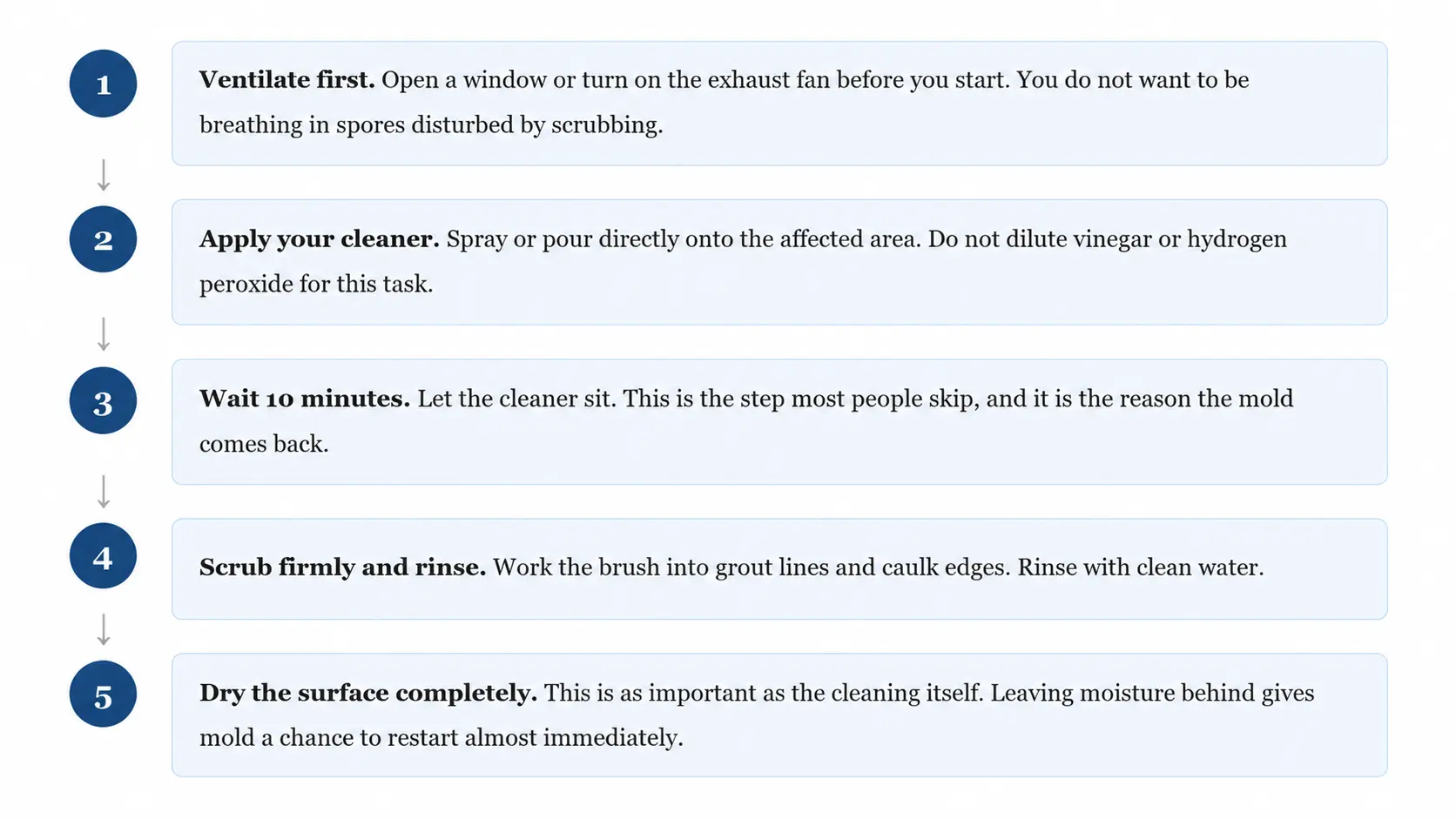
A Note on Bleach:Bleach kills surface mold on tile but does not penetrate porous materials such as grout or drywall well. It can make an area look clean while leaving mold roots behind, which is why the problem often seems to return quickly after a bleach clean.
Signs You Need a Professional Instead
Skip the DIY approach if any of these apply:
- The affected area is larger than 10 square feet.
- The mold is on drywall or wood rather than tile.
- It keeps coming back in the same spot within two to three weeks of cleaning.
- Discoloration is bleeding through paint or drywall.
- A musty smell persists even after cleaning.
- Soft or warped wall material near a consistently damp area.
- You suspect Stachybotrys based on a slimy, dark growth near consistently wet building materials.
In those cases, a professional mold remediation service can assess whether a moisture source is feeding the growth and remove it without spreading spores further throughout your home.
How to Prevent Bathroom Mold from Coming Back

The most effective prevention is keeping surfaces dry. Squeegee shower walls when you are done.
Hang towels and bath mats where they can fully dry between uses rather than bunching them up. Reseal your grout once a year to close off the porous surface that mold roots into.
If your caulk is cracked or discolored, replace it rather than cleaning over it. And if your exhaust fan is more than 10 years old or sounds like it is working harder than it should, it may not be moving enough air to actually help.
Good cleaning habits solve today’s spot, but only consistent ventilation keeps it from coming back next month.
Conclusion
That spot in your bathroom is not a mystery anymore. You now know the nine most common bathroom mold types, how to tell mold from mildew, and what each one means for your health and your walls.
Surface mold responds well to the right cleaner and a dry finish. Anything deeper or recurring needs a professional eye.
Get the identification right first, and everything else follows. A drier bathroom is a mold-free bathroom, and now you have the tools to get there.
Frequently Asked Questions
Can You Paint Over Bathroom Mold?
No. Painting over mold traps moisture underneath and lets it keep growing. Clean the area thoroughly, let it dry, then apply a mold-resistant primer before repainting for lasting results.
Is the Pink Residue in My Bathroom Actually Mold?
No. That pink film near drains and in tile grout is usually Serratia marcescens, a bacterium, not mold or mildew. It still needs regular cleaning, since it can irritate skin and eyes with contact.
Why Does Bathroom Mold Keep Coming Back After Cleaning?
Mold usually returns because moisture remains. Cleaning removes what you see, but if humidity or a leak stays unresolved, spores regrow quickly in the same damp spot.