Ever walk down a street and notice how some houses just feel “right”? They have a calm, balanced look that catches your eye without screaming for attention. That’s the magic of American colonial architecture.
These homes ruled neighborhoods for over 150 years, and they still show up in brand new construction today.
The fronts of these houses look the same on both sides, with the door in the middle and the windows lined up evenly.
Builders used whatever materials made sense for their area: wood in the forests, brick where clay was plentiful, and stucco in drier regions.
The shapes stay simple and practical, without extra decoration that doesn’t serve a purpose.
What Is American Colonial Architecture?
American colonial architecture refers to a collection of home styles built by European settlers across America from the early 1600s through the late 1700s.
Each group of settlers brought construction techniques from their homeland and then adapted them to local weather, available materials, and practical needs.
The British influenced Georgian and Cape Cod styles; the Dutch created gambrel-roofed designs; the Spanish added stucco and tile elements; and the French adapted buildings for hot, humid conditions.
Despite their differences, all colonial styles share common threads: symmetrical fronts, centered doorways, practical layouts, and construction methods suited to the resources at hand.
Historical Background Of American Colonial Architecture
Colonial building styles developed between 1600 and 1800 as European settlers established permanent communities across North America.
Each region developed distinct architectural features based on local climate needs and available materials. Northern colonies in New England built homes with steeply pitched roofs to shed heavy snow loads and central chimneys for efficient heating during harsh winters.
Southern colonies adapted their designs to hot, humid conditions by incorporating wide wraparound porches for shade and ventilation, as well as higher ceilings to improve air circulation.
Coastal areas used materials they could ship from Europe or harvest locally, resulting in practical designs made of wood, brick, and stone.
These regional adaptations created diverse colonial styles that reflected both European building traditions and American environmental challenges.
What Makes an American Colonial Style Home Unique?
American colonial-style homes earn their place in architectural history through a few defining characteristics. These features set them apart from other home styles and explain why they remain relevant today.
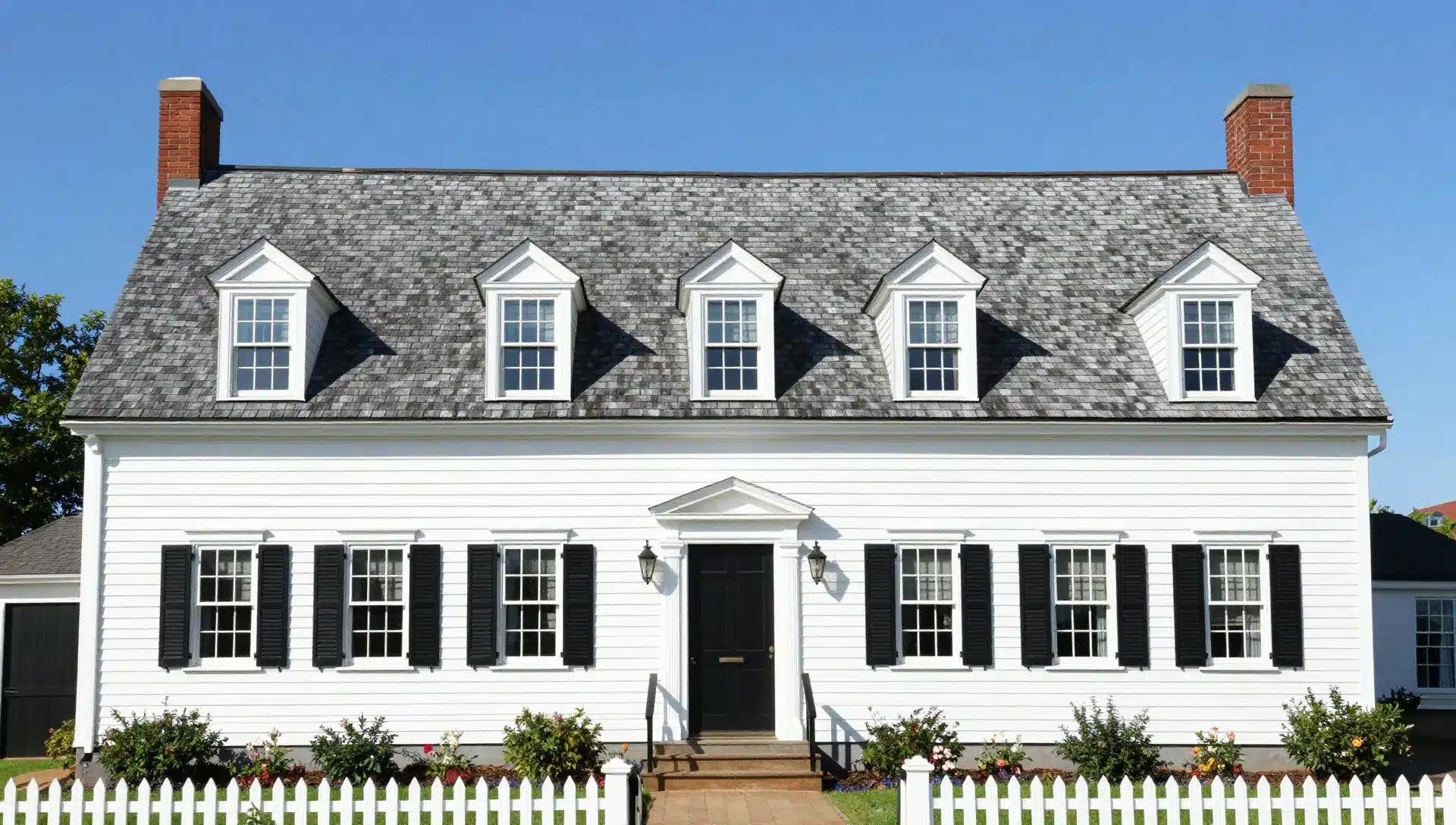
- Perfect Symmetry: The front facade mirrors itself exactly when divided down the centerand Windows, doors, and rooflines balance on both sides without exception
- Centered Front Door: The main entrance sits in the exact middle of the front wall; Acts as the primary focal point that organizes the entire design
- Regional Building Materials: Wood siding in forest areas, brick where clay was available, stucco in dry climates; Materials matched what builders could source locally and what worked for the weather
- Practical, Simple Shapes: Rectangular floor plans with straightforward pitched roofs: No complex angles or decorative elements that don’t serve a function
What Are The Key Features Of Colonial-Style Homes?
Colonial-style homes pack several recognizable features that work together to create their classic look. From the outside details to the roof structure, each element follows specific design principles that define the style.
1. Exterior Design
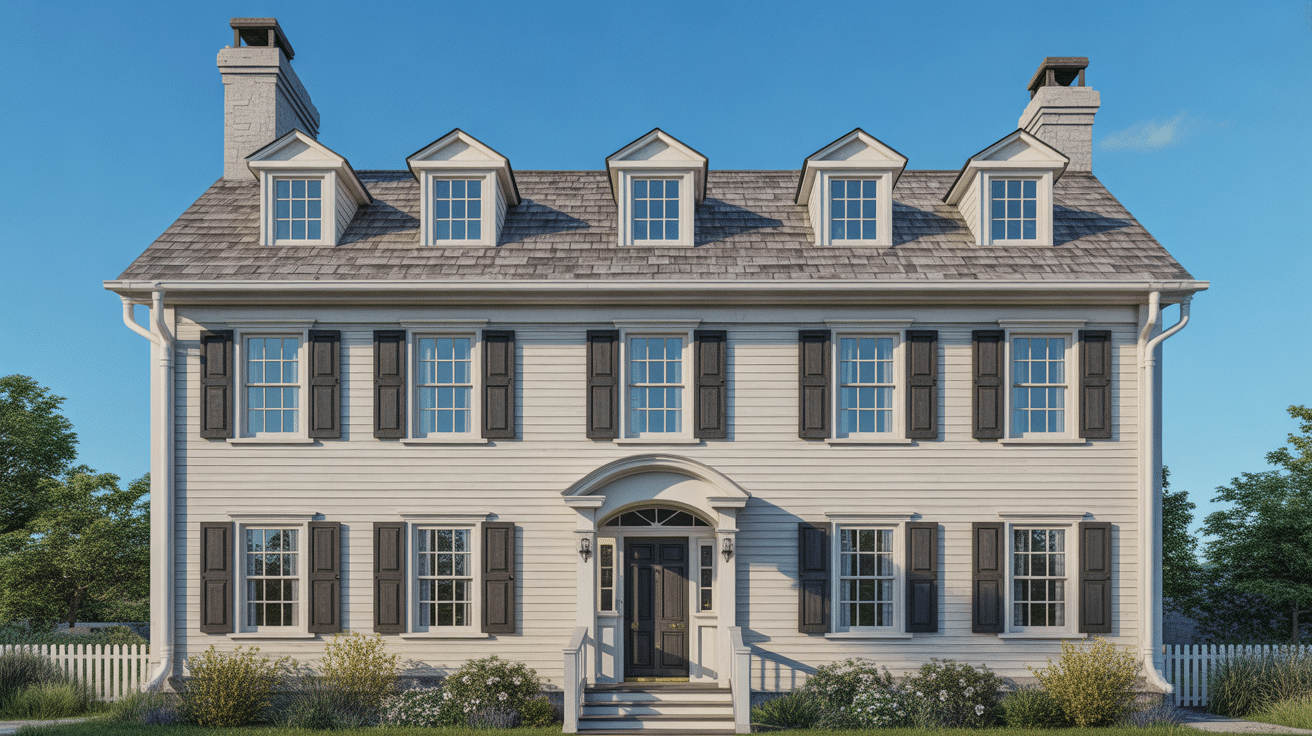
The front shows perfect symmetry with a centered door as the main focal point. Windows are spread evenly on both sides with matching numbers and multi-pane grid patterns.
Shutters are sized to actually cover windows if closed, not just decoration. Simple trim frames doors and windows without elaborate carved details or heavy molding.
2. Front Door And Entry Details
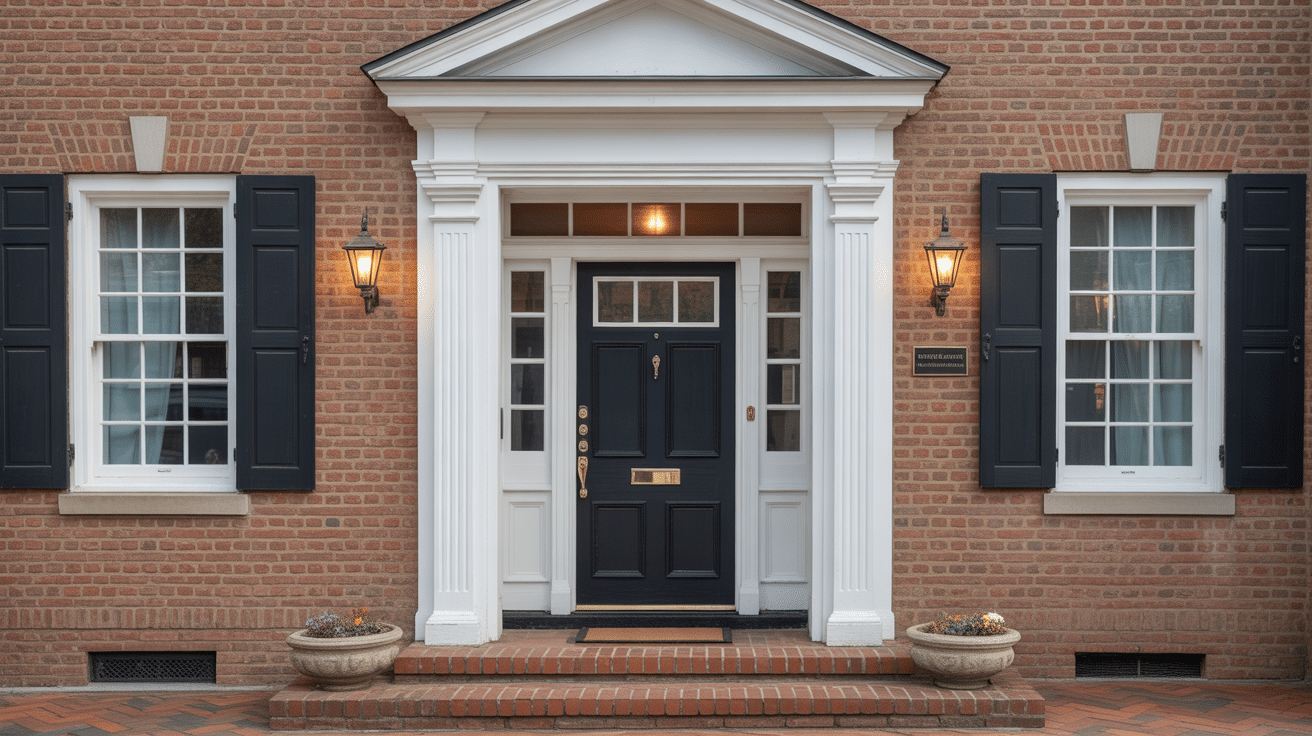
Colonial builders emphasized the entry with sidelights (narrow windows beside the door) and transom windows above for natural light. Simple columns or pilasters frame some entries, creating clean vertical lines.
The porch or entry cover stays modest in scale, providing necessary shelter without overwhelming the front facade or competing with the door as the focal point.
3. Rooflines And Chimneys
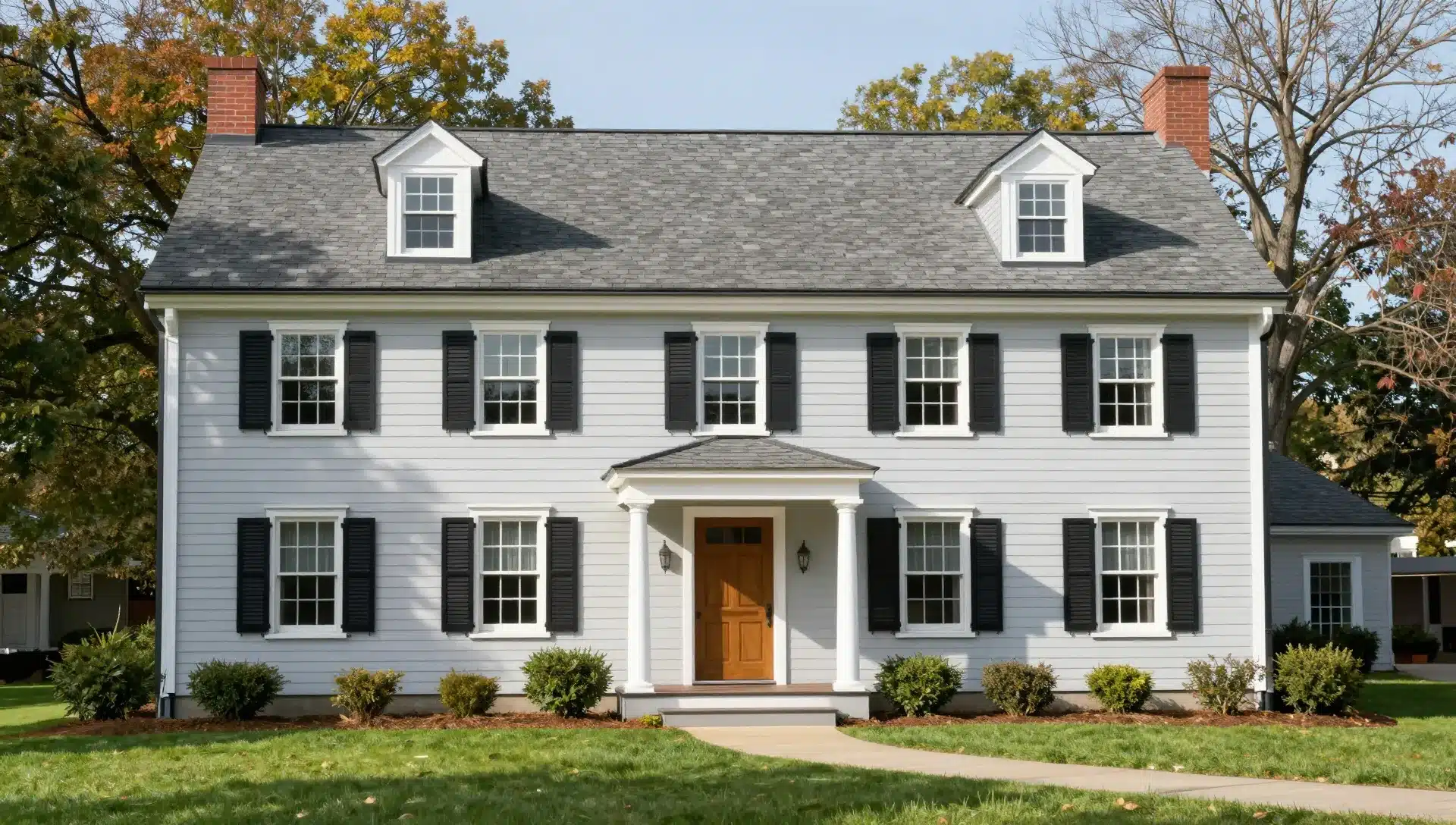
Most colonial homes feature pitched, side-gabled roofs with steep angles that shed rain and snow while creating usable attic space.
Chimneys appear at one or both ends, or sometimes in the center, and older homes often have large, prominent chimneys because fireplaces heated every room.
Regional climate influenced placement: in colder areas, chimneys were placed near the center to retain heat, while in warmer areas, they were placed on exterior walls to reduce indoor heat gain.
4. Common Building Materials
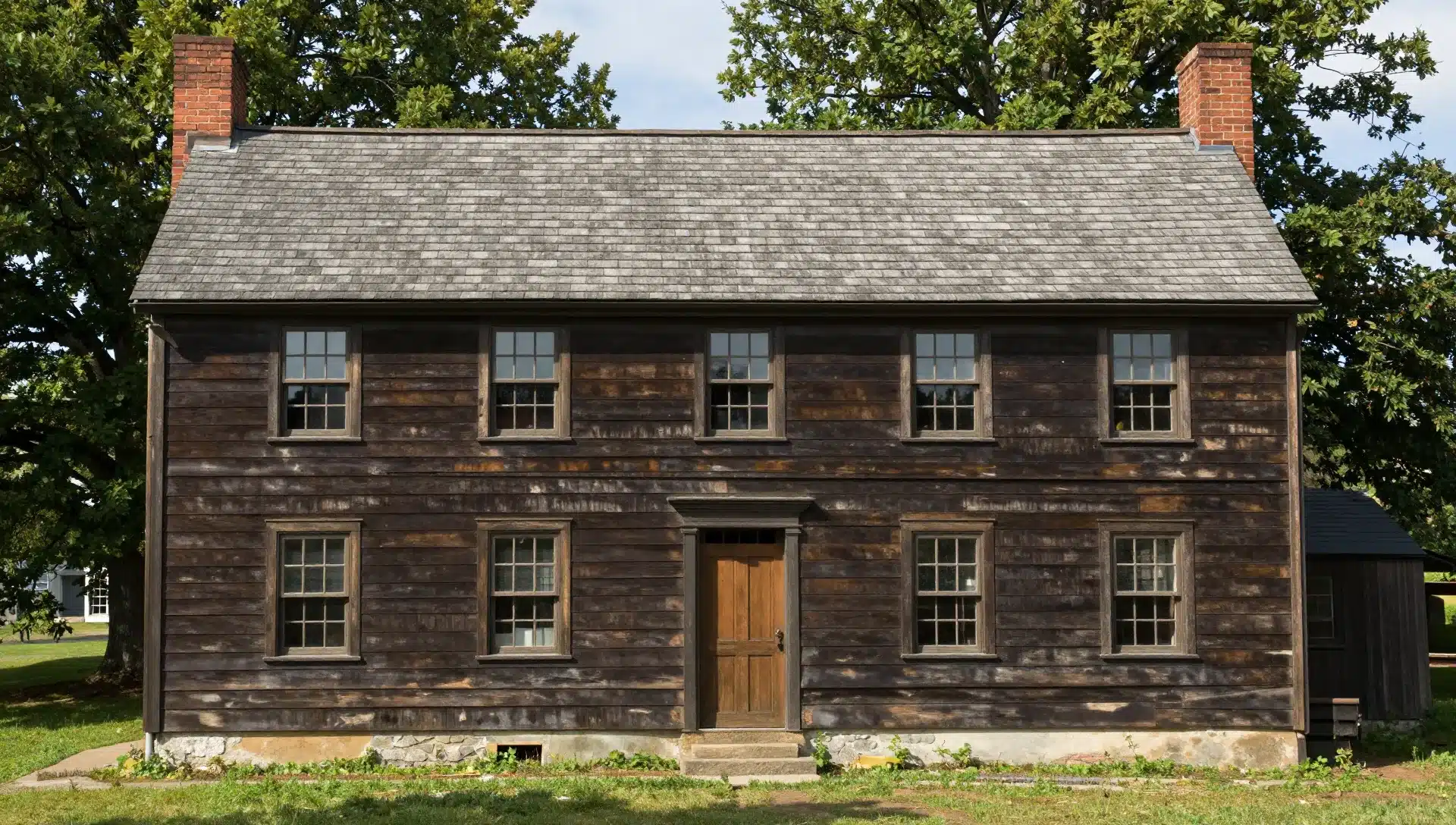
Wood siding became standard in forested areas, with overlapping clapboards that shed water and provide insulation.
Brick was used in the middle and southern colonies, where clay was plentiful, and it cost more upfront but lasted longer with less maintenance.
Spanish Colonial homes used thick stucco walls and clay tile roofs in hot, dry climates to keep interiors cool and withstand intense sun better than wood.
Colonial Home Interior Features
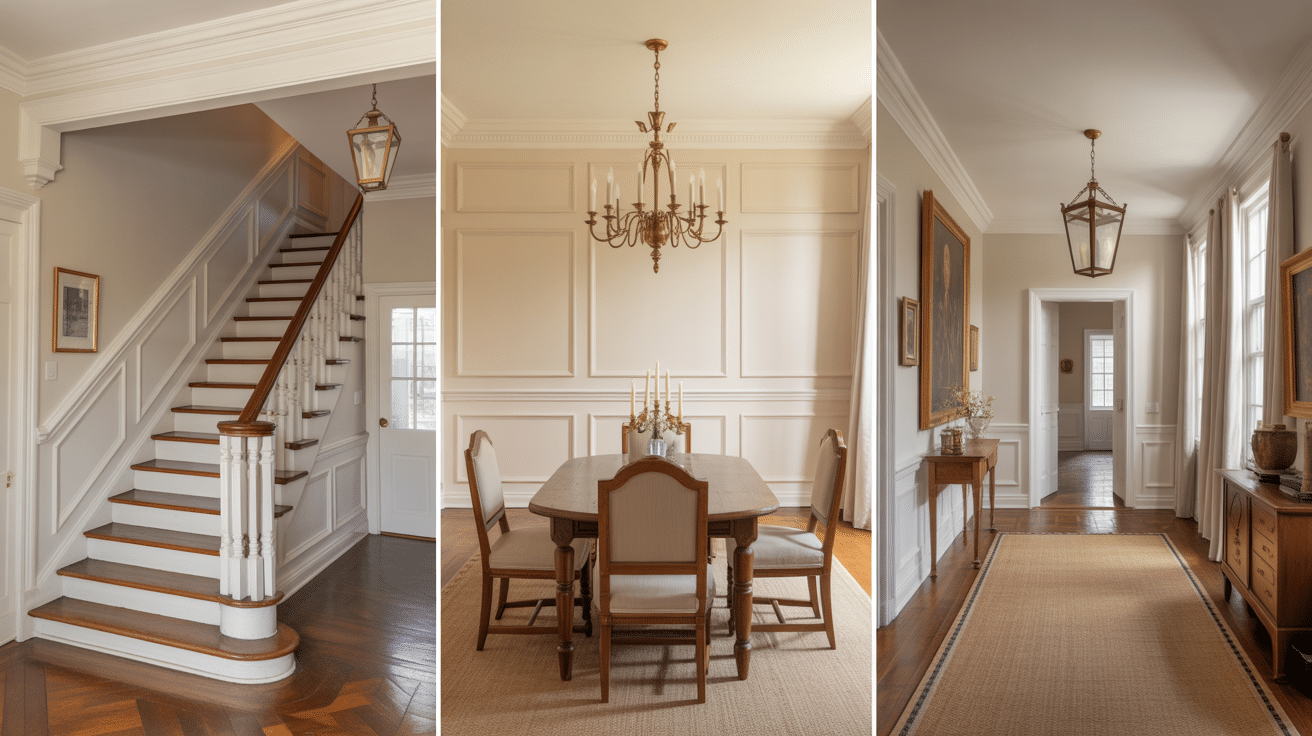
The inside of a colonial home follows the same logic as the outside: practical, balanced, and built to last. The room arrangements and interior details reflect careful planning that still makes sense today.
- Fireplaces: Most rooms had their own fireplace with simple wood mantels, some featuring brick or stone surrounds as both heat source and visual anchor
- Staircases: Rise from the entry hall as a visible feature with simple balusters and handrails made from local wood
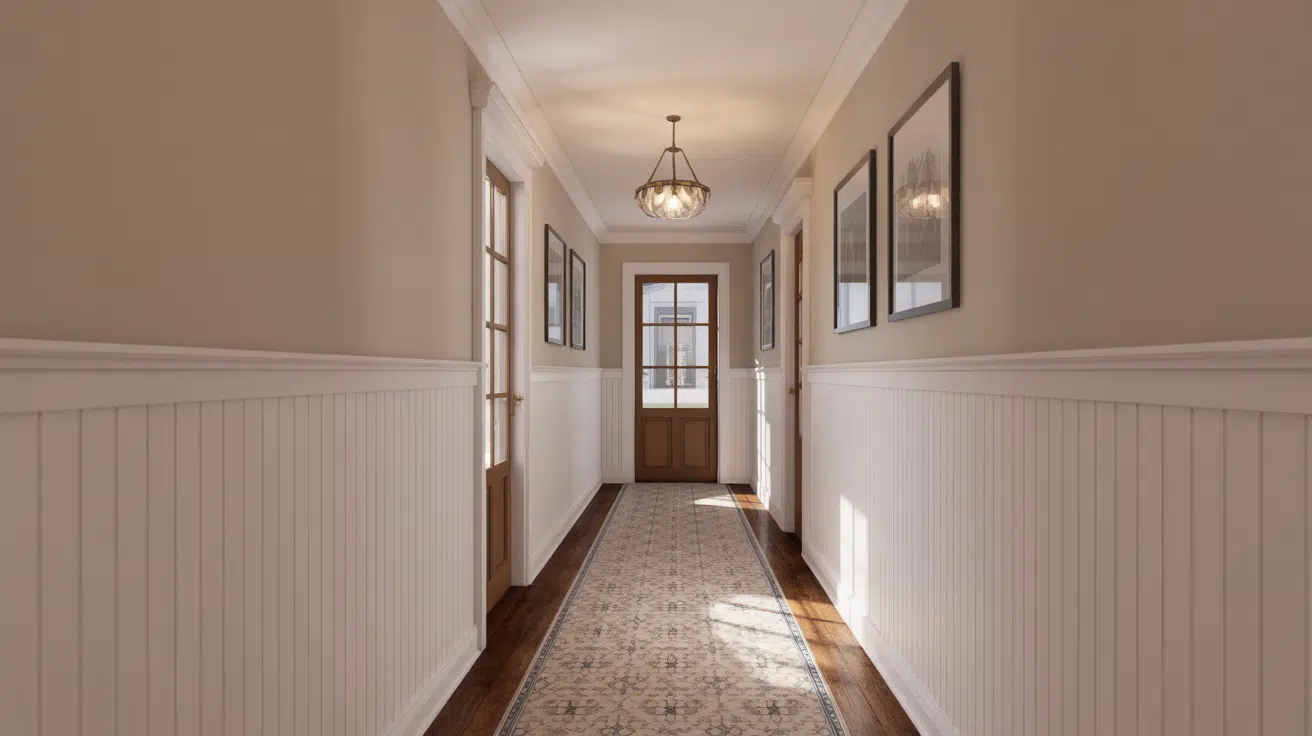
- Wall trim and paneling: Raised panel wainscoting on lower walls, simple crown molding at ceilings, chair rails, wide baseboards, and thick door and window casings frame rooms in a clean, classic style
- Interior millwork: Built-in shelves, cupboards, or bookcases in living rooms, studies, or libraries add storage while maintaining a traditional look
- Wood floors: Wide planks laid in straight lines throughout, with herringbone patterns appearing in higher-end homes
- Lighting fixtures: Chandeliers, simple pendant lights, and wall sconces in warm metal finishes like brass keep the traditional style
- Door styles: Six panels arranged in two columns of three remain the standard simple design
Types Of American Colonial Architecture
American colonial architecture can be divided into several distinct styles based on which European settlers built them and where they settled. Each type has unique features shaped by the builders’ home country traditions and local climate needs.
1. New England Colonial
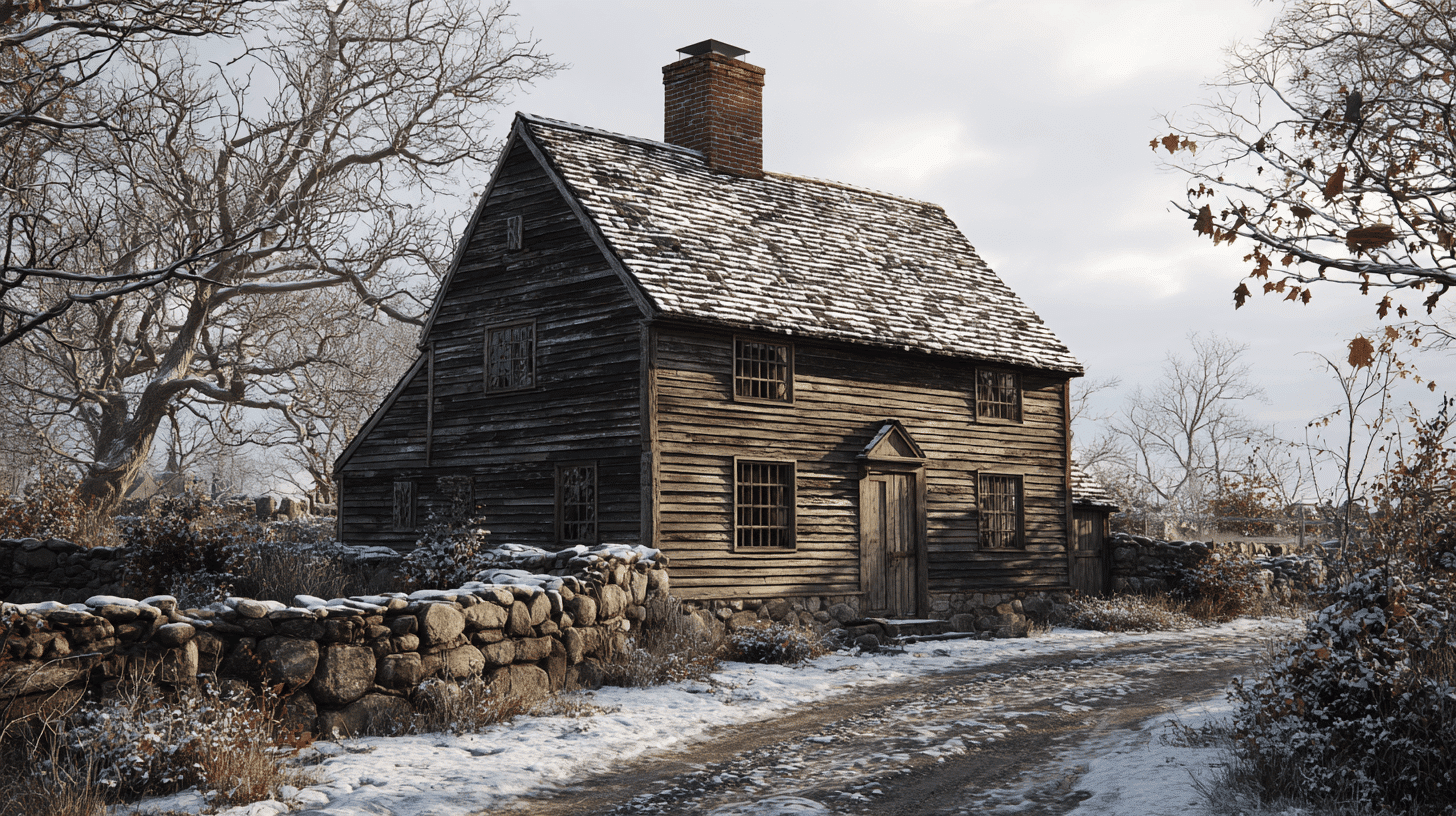
Built by early Puritan settlers, First Period homes featured steep roofs designed to shed heavy snow, massive central chimneys for efficient heating, and small casement windows due to glass scarcity.
These wood-frame structures used hand-hewn oak timbers with clapboard or shingle siding, reflecting medieval English building traditions adapted to harsh New England winters.
2. Early Classical Revival
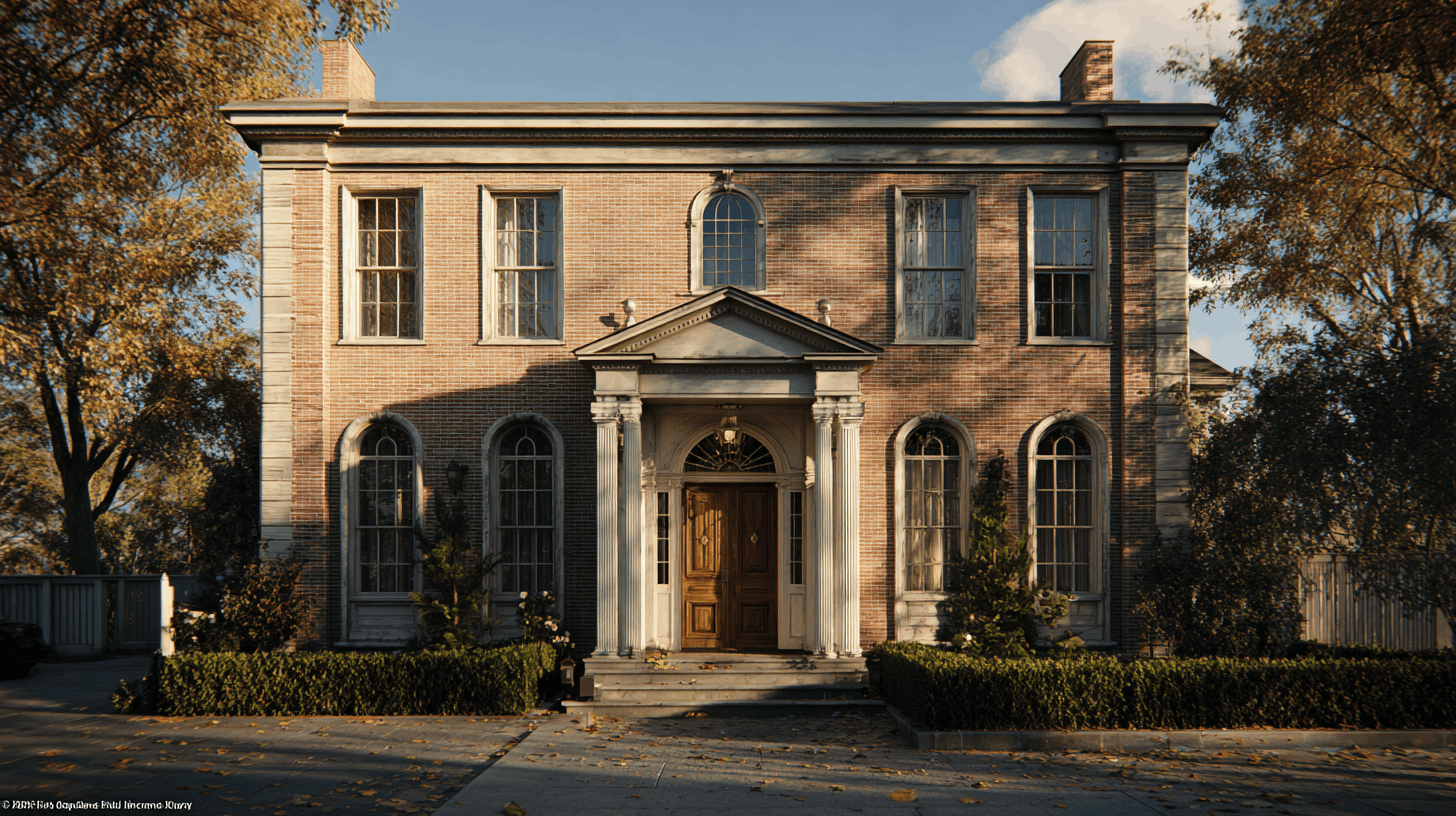
Emerging after the American Revolution, the Federal style refined Georgian Colonial elements with elegant classical details inspired by ancient Roman architecture.
Key features included decorative fanlights above entrance doors, delicate sidelights, refined moldings, and elliptical windows. Thomas Jefferson championed this style, earning it the nickname “Jeffersonian architecture” for its democratic, classical American identity.
3. Saltbox Colonial
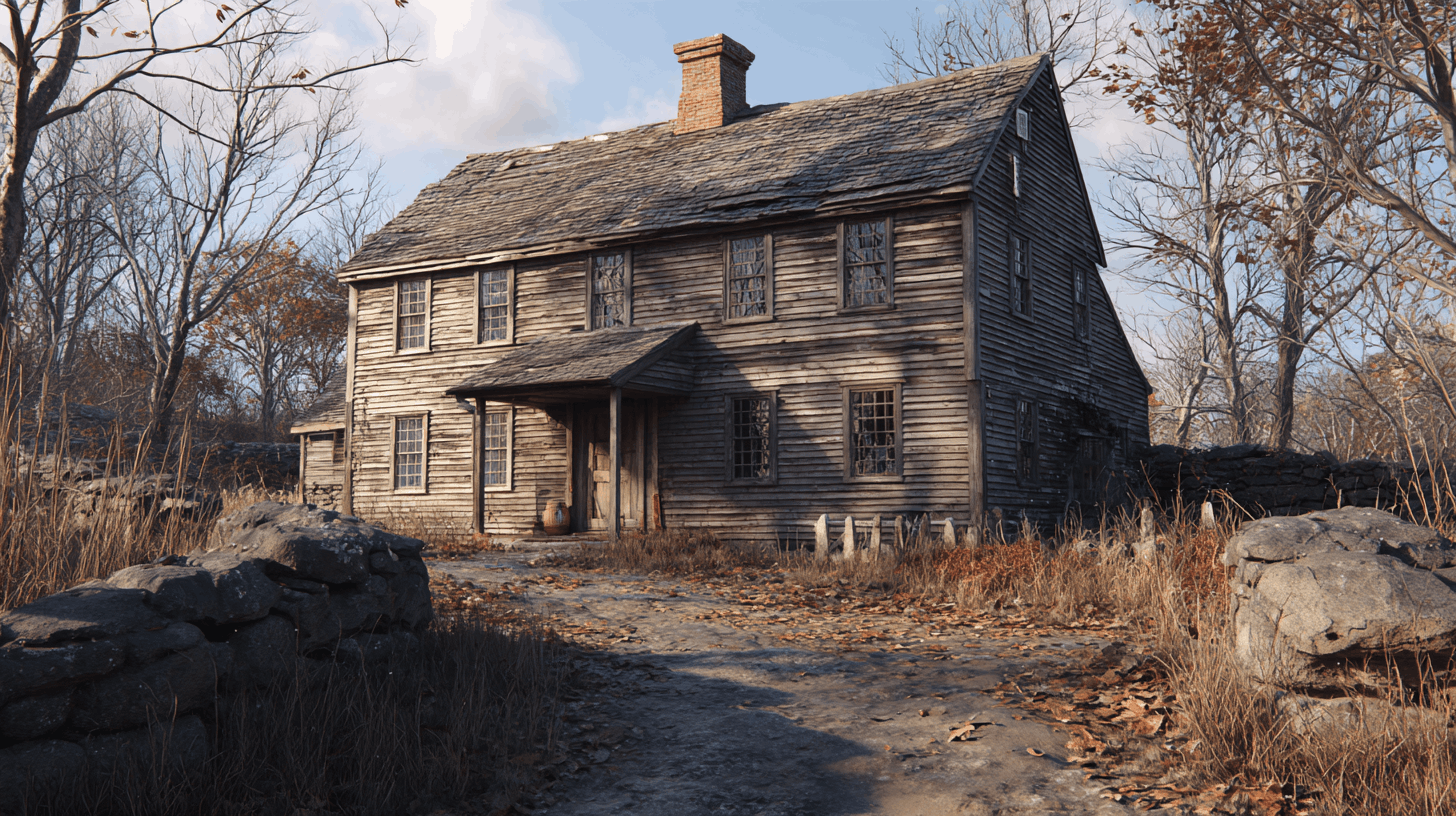
Named for its resemblance to wooden salt storage boxes, this New England style features a distinctive asymmetrical roofline with two stories in front and one story in back.
The long, sloping rear roof often covered lean-to additions. This practical design helped colonists avoid higher taxes on multi-story homes while maximizing interior space.
4. Georgian Colonial
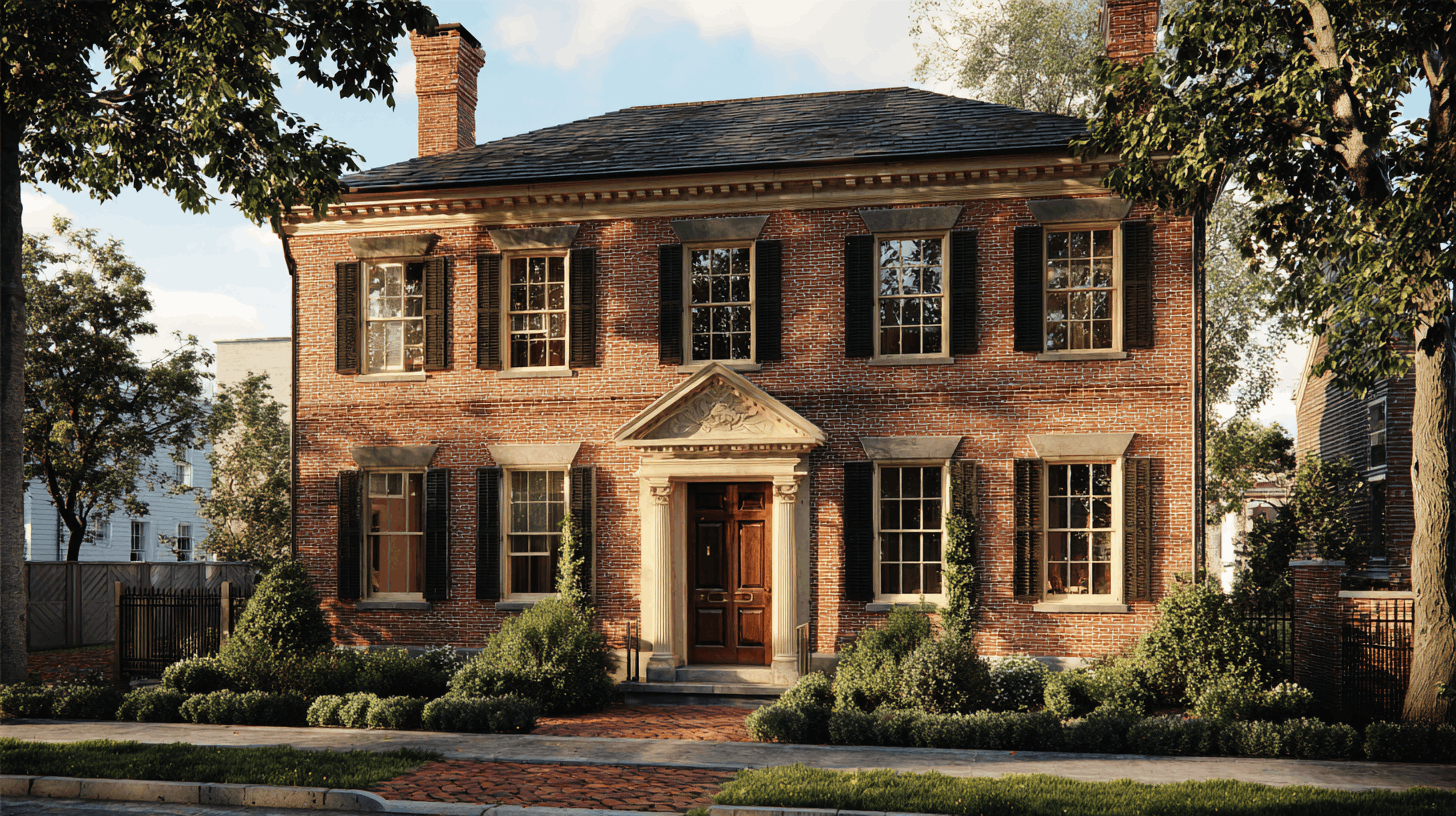
Georgian Colonial homes follow strict rules about proportion and balance. These homes often have two full stories with a symmetrical five-window front.
Details appear more formal than those of other colonial styles, with decorative crown moldings over windows and more elaborate entry surrounds. The style takes its name from British kings George I through George III.
5. Dutch Colonial
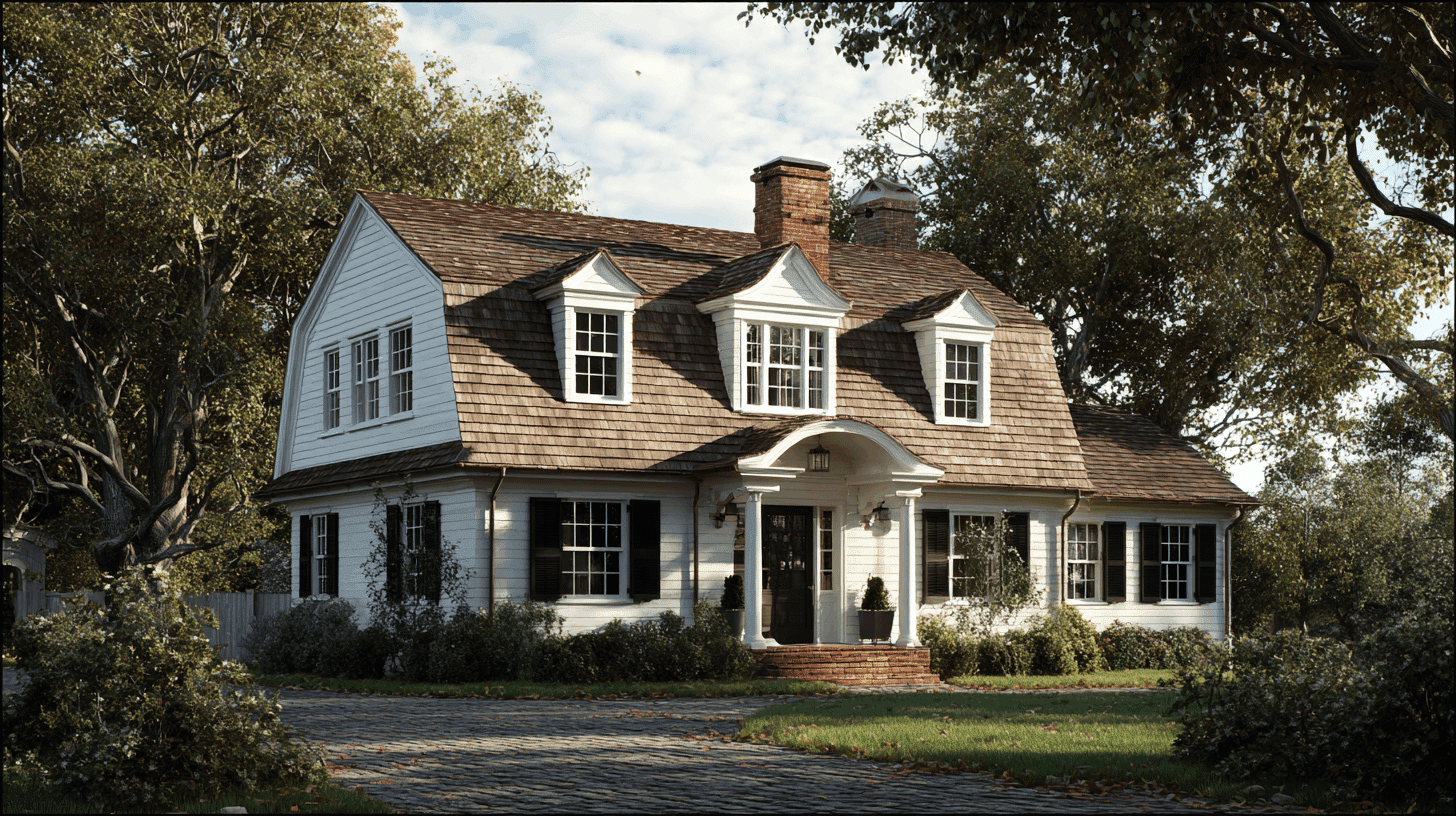
Dutch Colonial homes are recognizable by their gambrel roofs: roofs with two slopes on each side, with the lower slope steeper than the upper.
This roof shape creates more usable space on the upper floor. Many Dutch Colonial homes also have overhanging eaves that extend out to provide extra weather protection.
6. Spanish Colonial
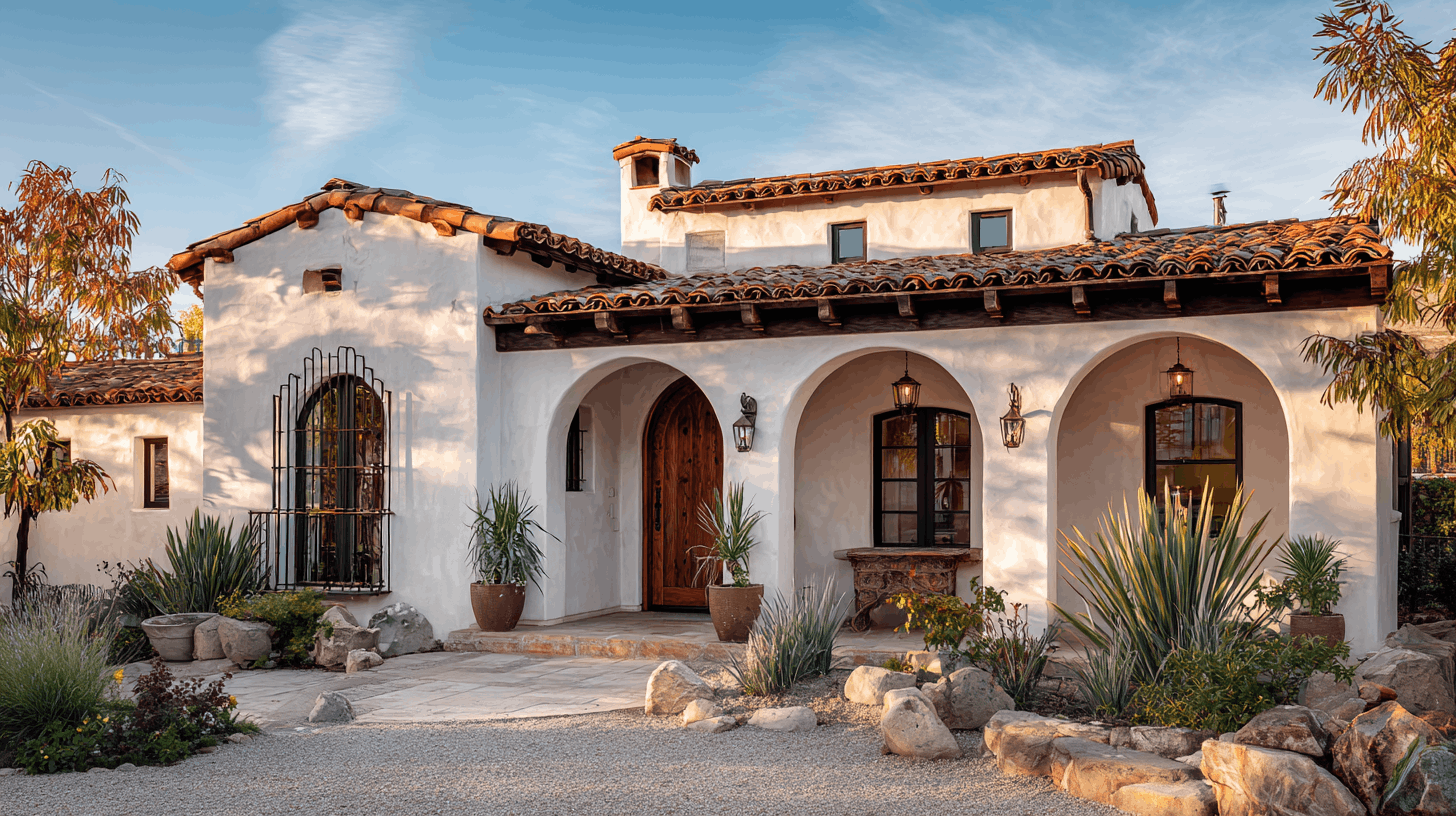
Spanish Colonial homes adapted Mediterranean building methods to American climates. Thick stucco walls keep interiors cool in hot weather. Clay tile roofs last for decades and don’t burn easily.
Many Spanish Colonial homes include arched doorways, windows, and covered porches. Some have interior courtyards that provide private outdoor space.
7. French Colonial
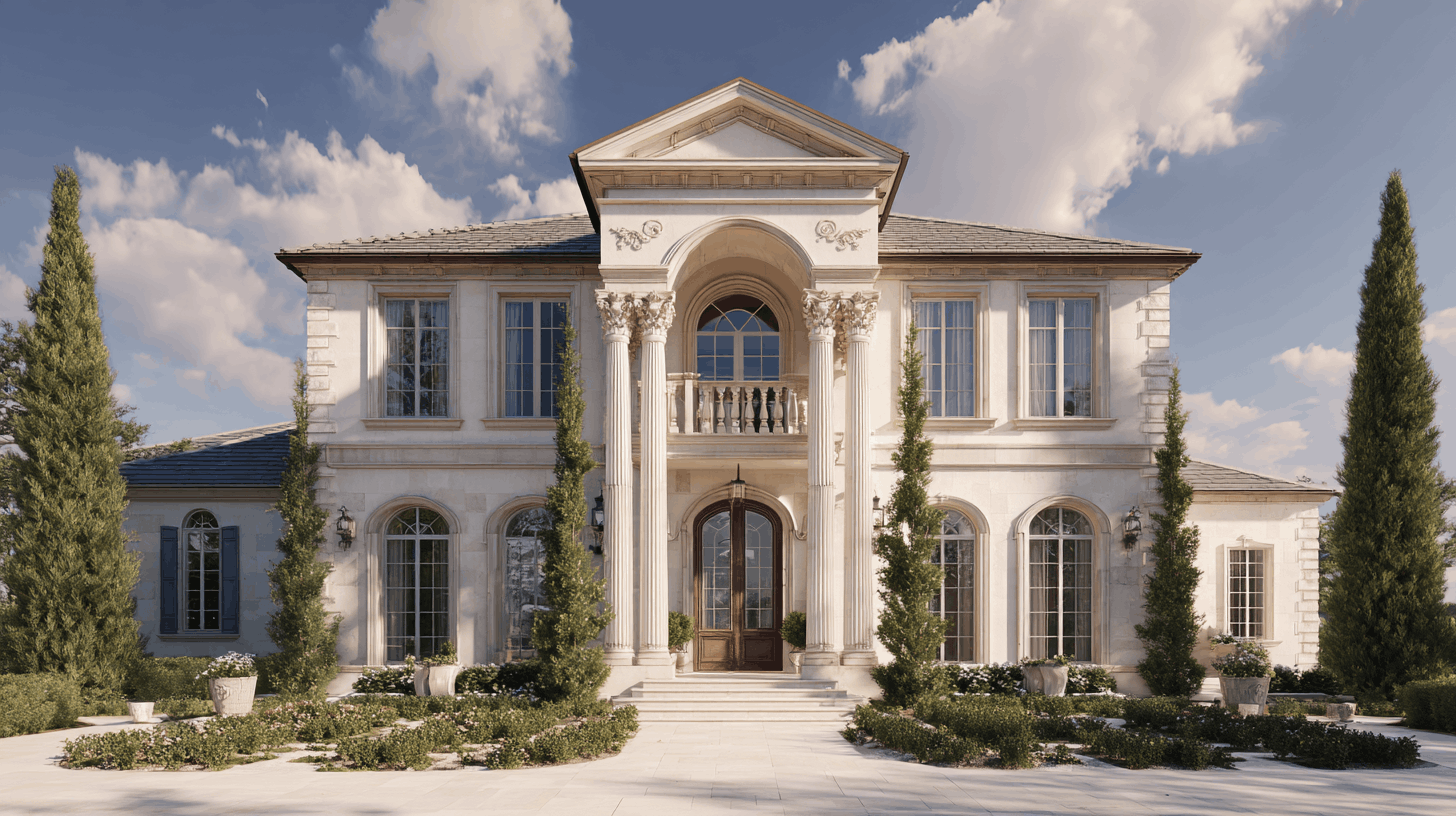
French Colonial homes often appear in areas that were once French territories, particularly along the Mississippi River and in Louisiana.
These homes typically have wide porches or galleries on one or more sides to handle hot, humid weather. The raised basement design elevates the main floor above flood-prone ground and creates airflow beneath it.
8. Cape Cod And Other Early Colonial Forms
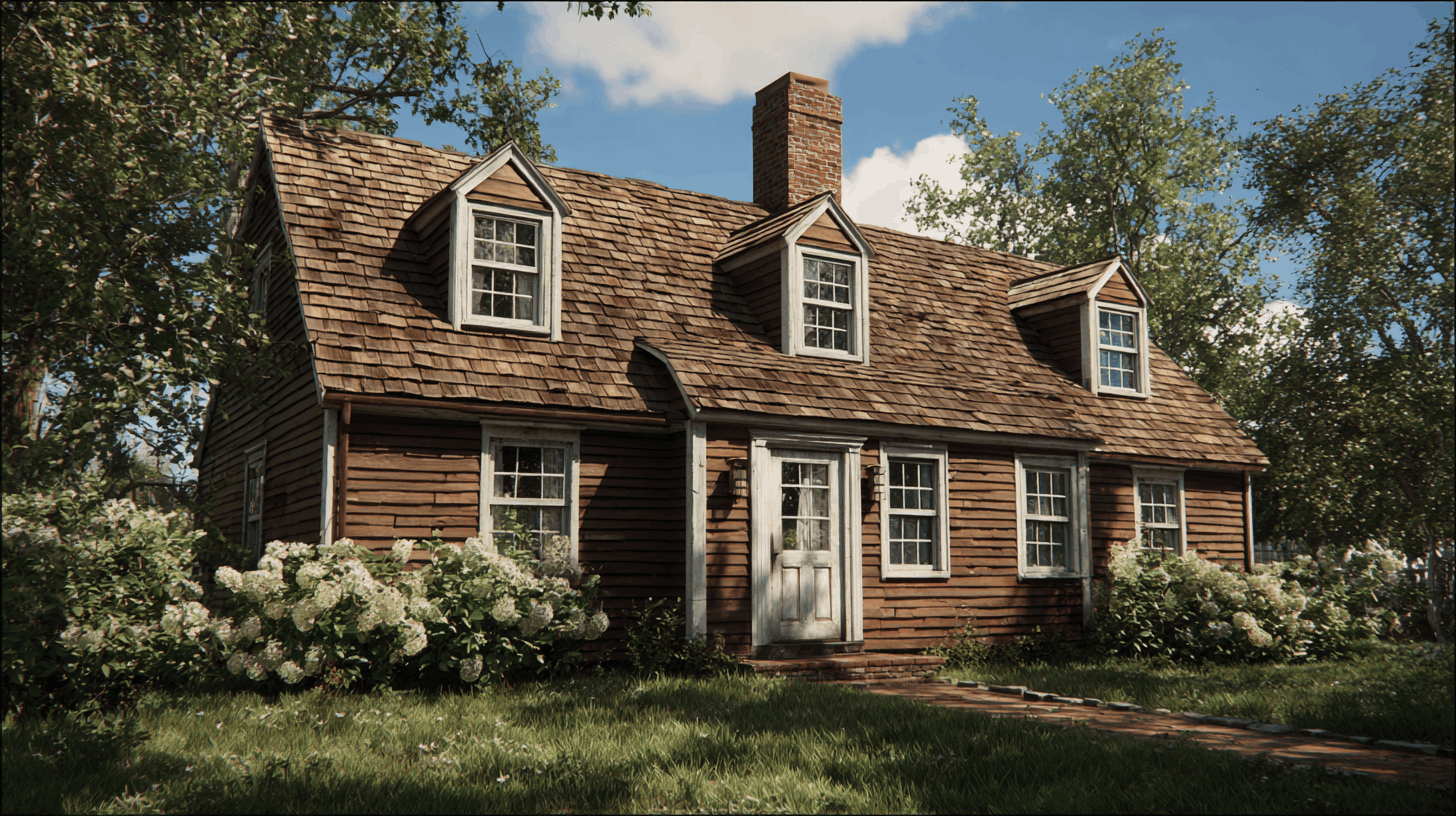
Cape Cod homes are among the earliest and simplest colonial forms. These one or one-and-a-half-story houses have steep roofs to shed snow, a central chimney for heat, and small windows to reduce heat loss.
The style started in New England and spread as settlers moved west. Other early forms include saltbox houses (with a long rear roof slope) and garrison colonials (with a second-story overhang).
From the symmetry of Georgian homes to the charm of Dutch and Spanish Colonial styles, these variations showcase how history and region shaped residential architecture.
Pros and Cons of Colonial Style Homes
Colonial-style homes remain popular for their timeless elegance and practical design, but they come with both advantages and limitations.
| Advantages | Disadvantages |
|---|---|
| Timeless design appeals with strong curb appeal and excellent resale value | Closed floor plans with separated rooms limit open-concept living |
| Spacious, functional layouts ideal for families and entertaining guests | Multiple stories with stairs create accessibility challenges |
| Symmetrical beauty and balanced proportions create elegant exteriors | Higher energy costs for heating and cooling large rooms |
| Versatile and adaptable to modern updates while preserving character | Regular maintenance is required for historical features and materials |
| Durable construction with quality materials ensures longevity | Costly renovations when maintaining historical integrity |
How To Identify A Colonial-Style HomeQuickly
Spotting a colonial home takes just a few seconds once you know what to look for. These quick checks work whether you’re driving through a neighborhood or shopping for houses.
- Balanced Chimneys: Many colonial homes feature a central chimney or two chimneys symmetrically placed at each end of the house, reinforcing the “even and orderly” look from the street.
- Classic Entry Details: Look for simple yet traditional doorway accents such as pilasters, a pediment (a small triangular roof over the door), and, sometimes, a transom window above the entry for that iconic Colonial curb appeal.
- Neat Window Rows: Windows line up in orderly, precise rows and columns with equal numbers positioned on each side of the central door for balanced visual appeal.
- Simple Pitched Roof: The roof features a straightforward peaked shape with clean, straight slopes and a clear ridgeline, avoiding complex angles, curves, or modern flat roof sections
- Multi-Pane Window Grids: Windows feature multiple small glass panes arranged in traditional grid patterns, with common historical arrangements such as six-over-six or nine-over-nine for authentic period styling.
Why Colonial-Style Homes Still Feel Popular Today
Many modern builders continue using colonial design ideas, especially the symmetrical front layout. New neighborhoods often include houses with centered doors, evenly spaced windows, and traditional roof shapes – all colonial concepts.
The style remains popular because it creates a sense of order and stability. People can quickly recognize a colonial-style home because the design follows predictable patterns.
This familiarity makes the style feel welcoming and trustworthy. Colonial proportions also work well with modern needs. The basic rectangular shape is efficient for building and heating.
The symmetrical layout makes furniture placement and room planning straightforward. Rooms connect logically without wasted hallway space.
Home buyers often choose colonial-style houses because they hold value well and appeal to many people. The classic look doesn’t go out of style the way trendier designs might.
Final Thoughts
Understanding features of American colonial architecture helps anyone identify these homes and appreciate what makes them work. The symmetrical front immediately signals a colonial design.
The window grid patterns, proper shutter sizing, and traditional proportions separate authentic colonial details from surface-level copies.
When considering colonial elements for a home, focus on the fundamentals: balance in the front view, appropriate proportions for all features, and materials that suit the climate. These principles work as well today as they did when colonists first built them into American architecture.
Use the checklists above to spot colonial homes in any neighborhood or to plan colonial-inspired design choices that will stand the test of time.