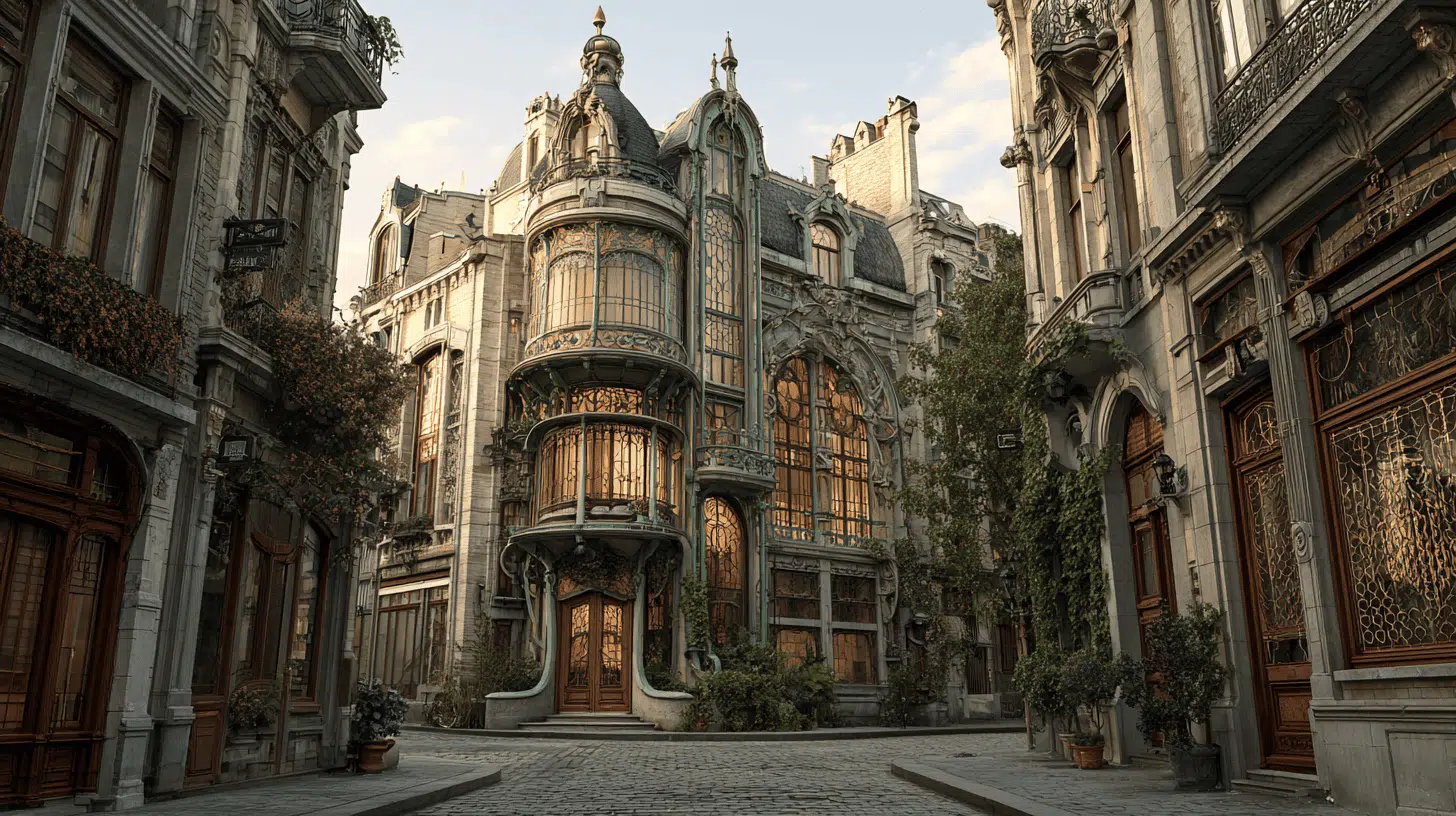
Buildings with curved railings, colorful stained glass, and decorative flowers carved into their walls aren’t just old structures – they’re Art Nouveau architecture, a design movement that changed how buildings looked forever.
Born in the late nineteenth century, this style rejected boring, box-shaped structures and brought nature’s beauty into city streets.
Art Nouveau architecture turned ordinary homes, train stations, and cafes into works of art with flowing lines and organic shapes.
From Brussels to Barcelona, architects designed buildings that looked alive, as if growing from the ground. Understanding this movement helps appreciate the historic buildings that grace cities worldwide.
The History of Art Nouveau Architecture
Art Nouveau architecture emerged in the late 1880s in Belgium and France as a bold response to the dull, mass-produced designs of the Industrial Revolution.
Architects wanted to bring art back into everyday buildings, drawing inspiration from nature’s curves, flowers, and flowing lines. The style quickly spread across Europe and reached as far as South America and Australia.
Each region gave it a unique name – Modernisme in Spain, Secession in Austria, and Jugendstil in Germany – but they all shared the same goal: creating buildings that felt alive and organic.
Art Nouveau rejected rigid shapes and straight lines, favoring decorative ironwork, stained glass, and whiplash curves that made structures look as if they were growing from the earth itself.
Key Characteristics of Art Nouveau Architecture
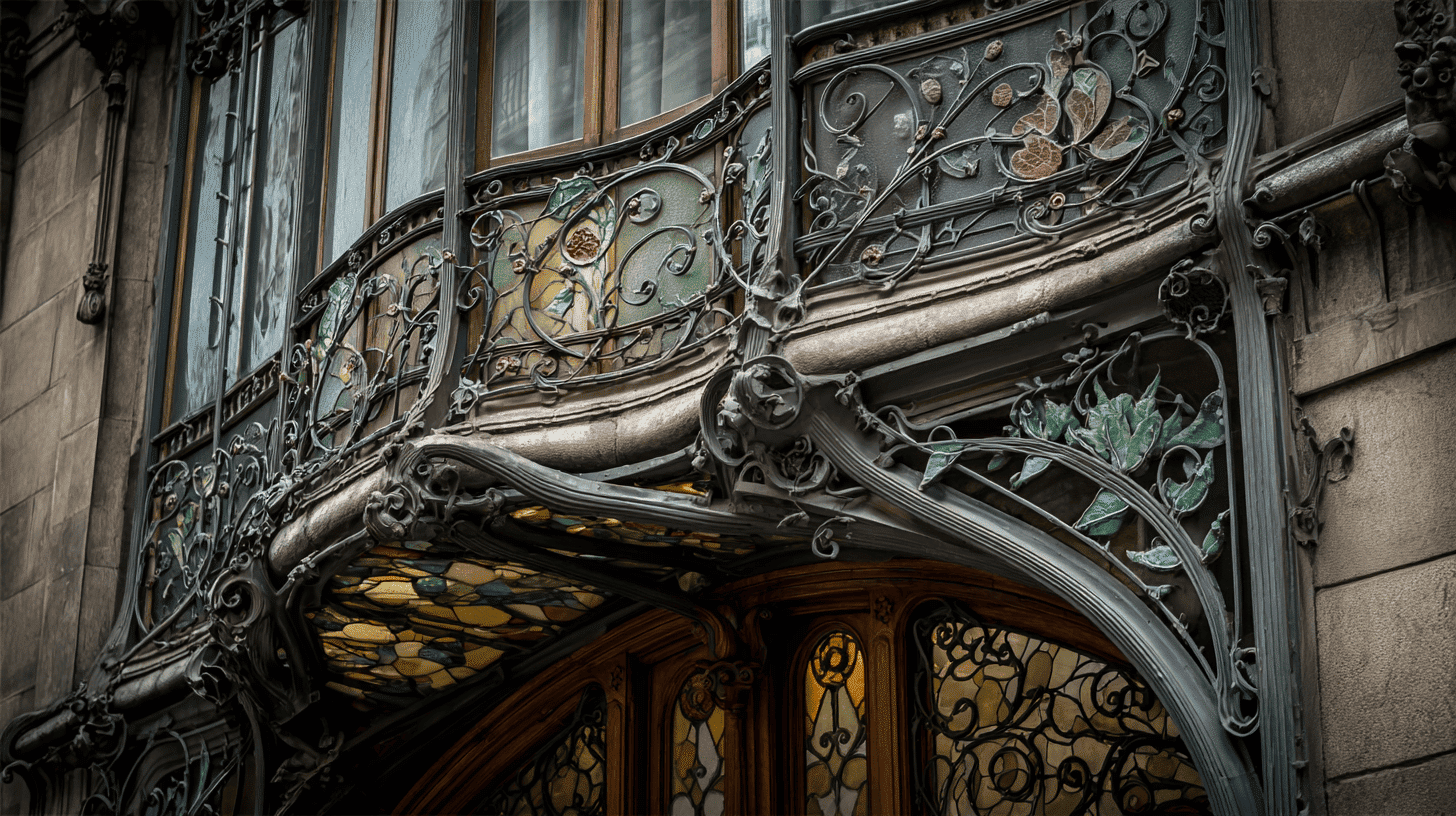
Art Nouveau buildings stand out from other architectural styles for their distinctive design elements. Once you know what to look for, you’ll start noticing these features everywhere, from old train stations to historic homes.
- Flowing Curves and Lines: Smooth, wave-like curves replace straight edges in railings, doorways, and windows.
- Nature-Inspired Details: Flowers, vines, leaves, and insects decorate walls and entrances.
- Ornate Ironwork and Glass: Intricate metalwork pairs with colorful stained glass.
- Asymmetrical Shapes: Uneven windows and curved walls create sculptural façades.
- Complete Design Vision: Every detail, from exterior to doorknobs, works as one artistic statement, often reflected in the home’s furniture style as well.
These characteristics make Art Nouveau architecture easy to identify and impossible to ignore. The style turns functional buildings into works of art that still capture attention more than a century later.
How Art Nouveau Shaped the Look and Feel of European Cities?
Art Nouveau reshaped European cities in ways that still define their character today. Brussels became the movement’s birthplace, where architect Victor Horta designed the first true Art Nouveau building in 1893.
Paris quickly embraced the style for public spaces, with Hector Guimard’s iconic Metro station entrances becoming symbols of the city itself.
Vienna’s Secession movement broke away from traditional academic art, led by architects like Otto Wagner, who redesigned everything from apartment buildings to subway stations.
Meanwhile, Barcelona experienced an artistic rebellion under Antoni Gaudí, whose wild, nature-inspired buildings, such as Casa Batlló and Sagrada Família, pushed Art Nouveau to its most experimental limits.
Each city added its own cultural flavor, creating distinctive urban landscapes that still draw tourists.
Early Art Nouveau Buildings That Started It All
Art Nouveau first appeared in Europe in the late 1800s as architects began moving away from strict classical rules. Instead of copying older styles, they looked to nature, new materials, and free-flowing forms.
1. Hôtel Tassel, Brussels
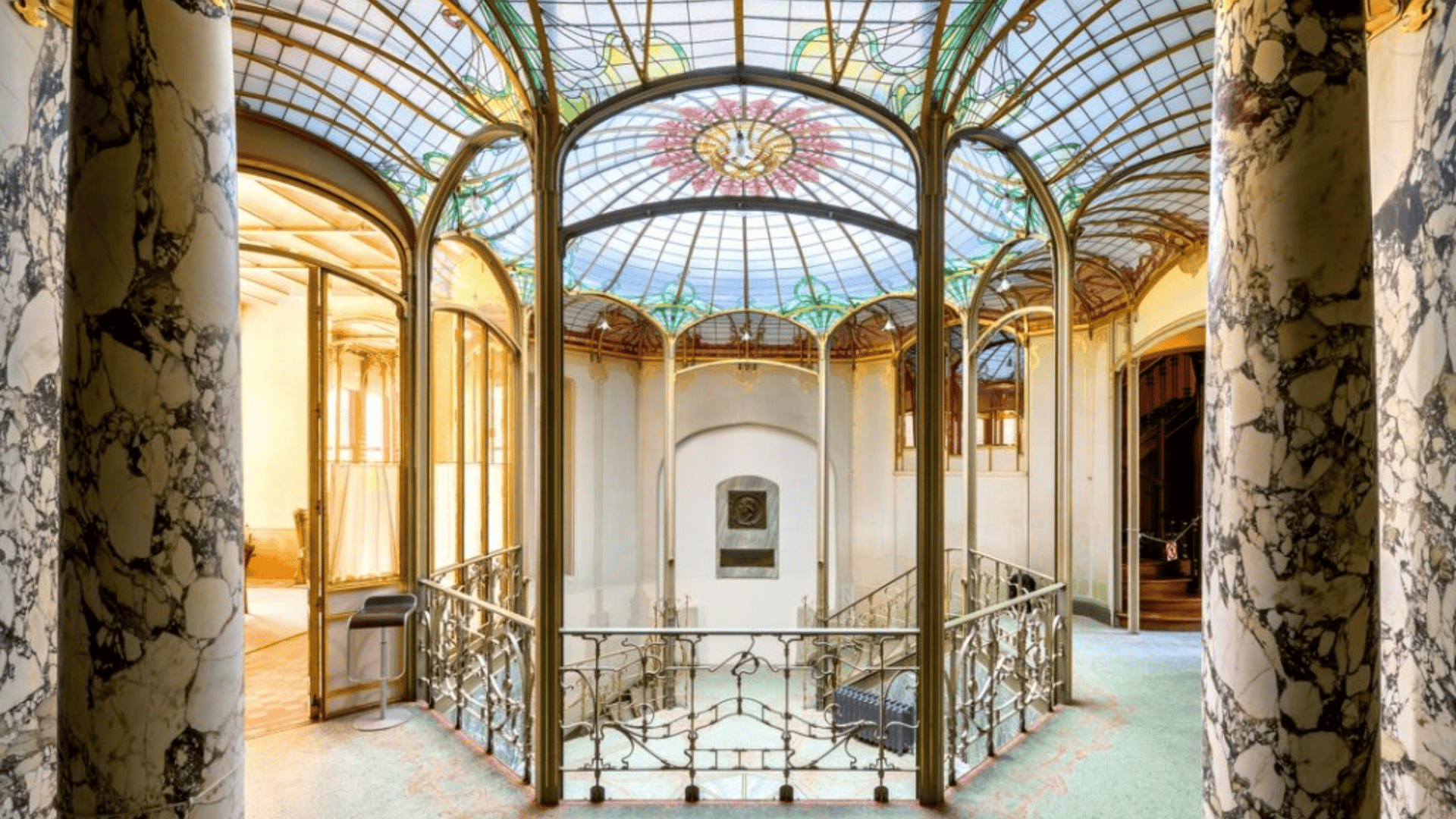
Designed by Victor Horta, Hôtel Tassel is often seen as one of the first true Art Nouveau buildings. Its design broke away from closed, box-like rooms by using an open floor plan filled with light.
Iron beams were left visible and shaped into decorative forms rather than hidden. Inside, the staircase flows naturally through the space, with patterns inspired by plants and vines.
2. Hankar House, Brussels
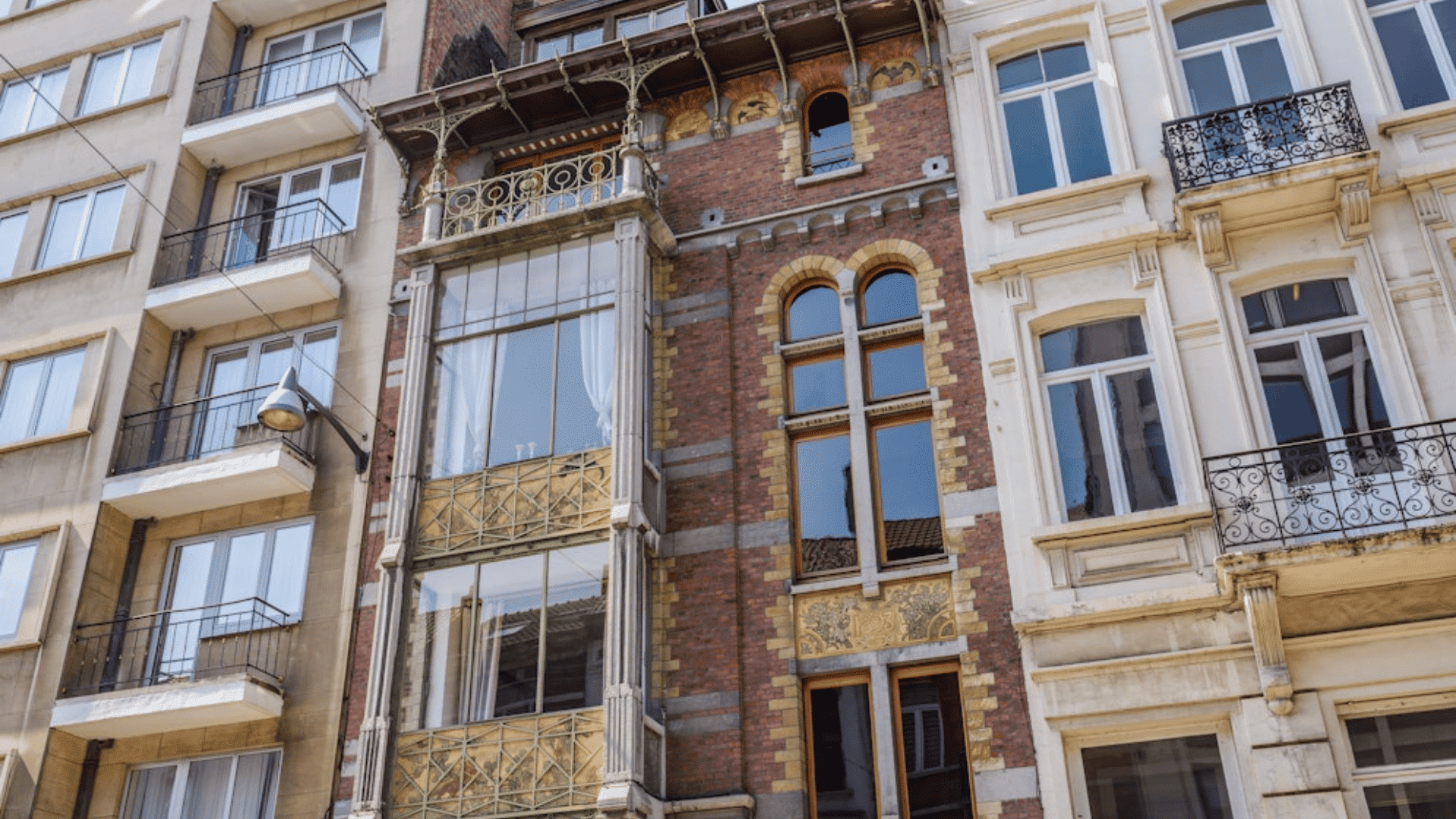
Paul Hankar designed the Hankar House as a bold statement against traditional architecture. The building uses asymmetry instead of balanced, classical forms, making the façade feel more artistic.
Hankar combined architecture with graphic art, adding murals and decorative panels to the exterior. This building helped make Brussels the birthplace of Art Nouveau by showcasing how art and structure can work together.
3. Majolikahaus, Vienna
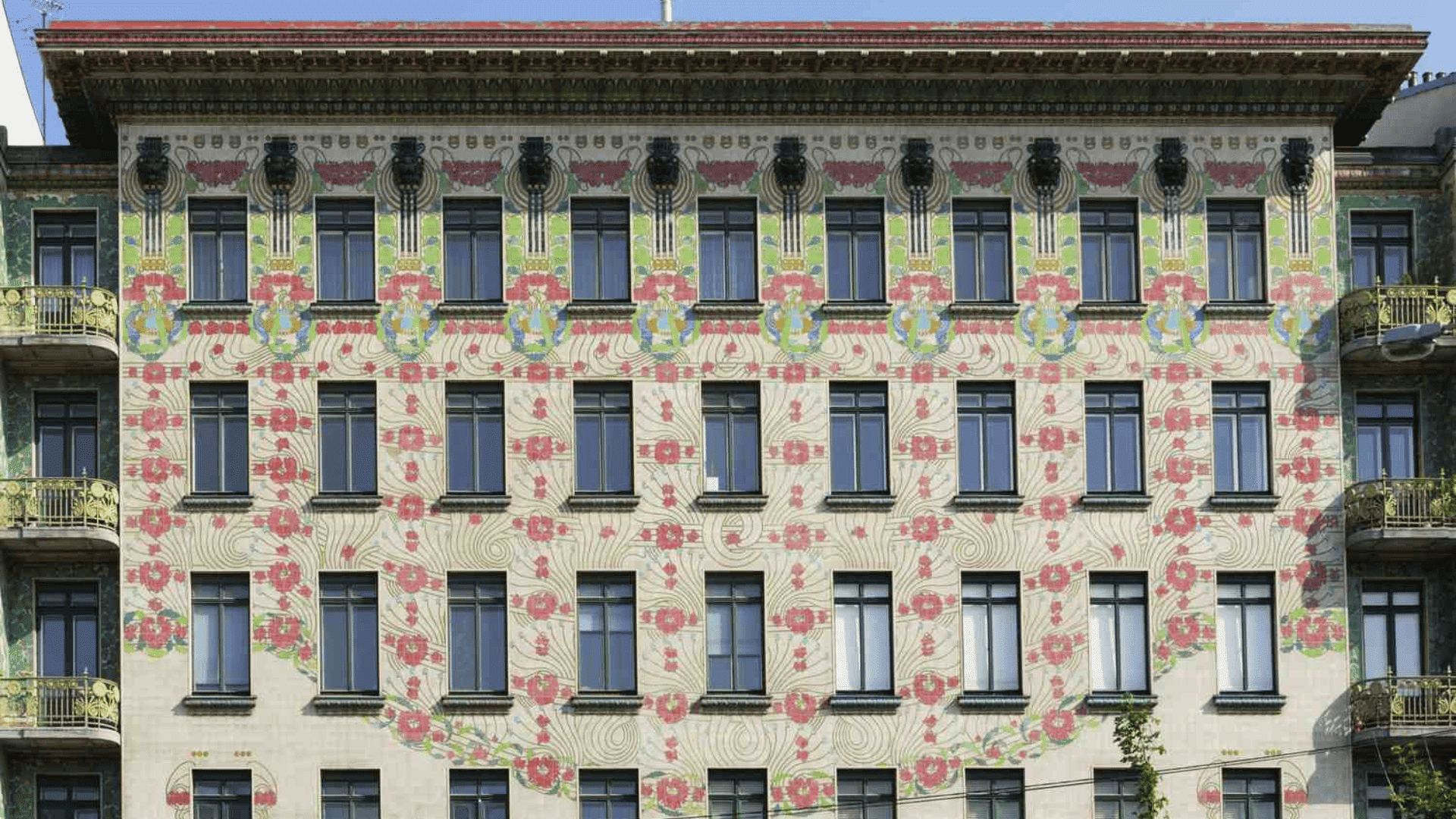
Majolikahaus, designed by Otto Wagner, brought Art Nouveau ideas into everyday city life. The apartment building is covered with colorful, floral ceramic tiles, giving it a decorative surface that also protects the structure.
Wagner believed buildings should be practical while still pleasing to the eye. This project reflected Vienna’s move toward modern urban living, where beauty and function were treated as equals.
4. Vienna Secession Building
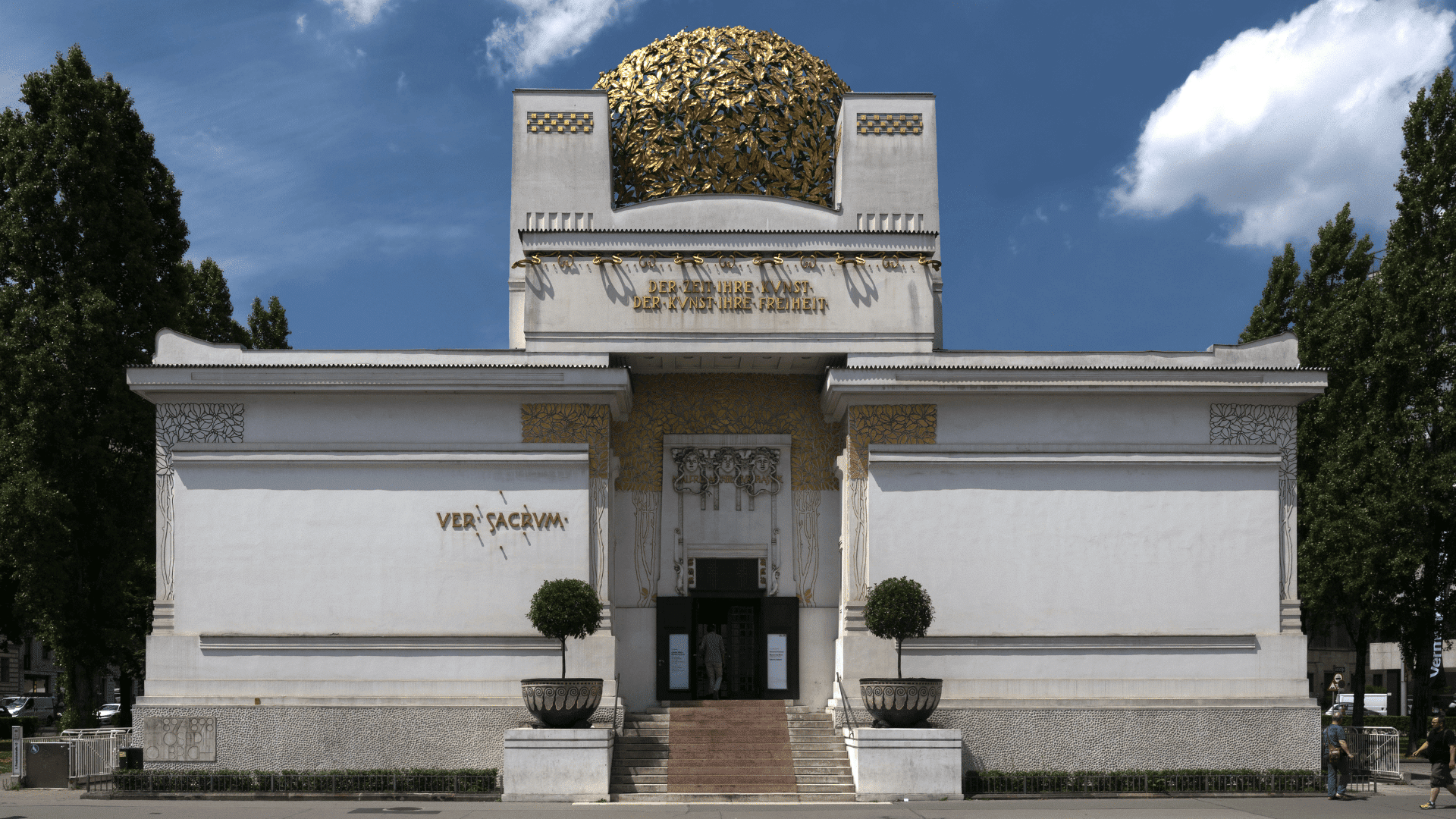
The Vienna Secession Building, designed by Joseph Maria Olbrich, became a powerful symbol of artistic independence. It was created by artists who wanted freedom from traditional art institutions.
The building is best known for its large golden laurel dome, which makes it stand out in the city. More than just a gallery, it became the visual identity of the Secession movement and its new ideas.
Barcelona’s Art Nouveau Revolution: The Rise of Modernisme
In Catalonia, Art Nouveau took a bold and highly expressive form known as Modernisme. Architects wanted buildings to reflect local culture, nature, and creativity rather than follow strict European traditions.
Barcelona became the center of this movement, where architecture felt more like sculpture.
1. Casa Batlló
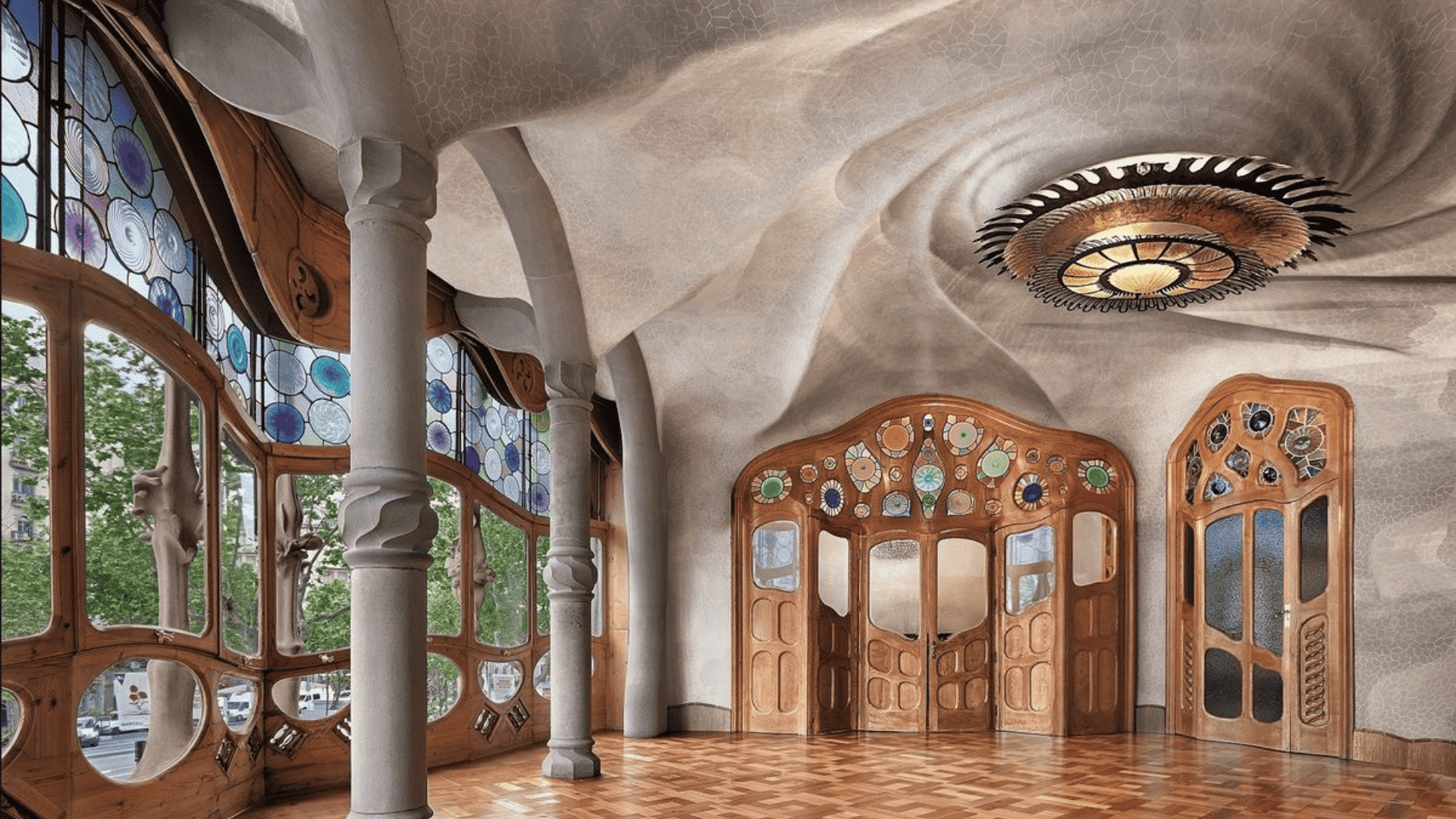
Casa Batlló is one of the most recognizable buildings by Antoni Gaudí in Barcelona. Its organic façade is covered in colorful mosaics, while the balconies resemble bones, giving the structure a living quality.
The roof curves like a dragon’s spine, inspired by local legends. Culturally, the building became a symbol of artistic freedom and imagination. Today, it is one of the most photographed Art Nouveau landmarks in the world.
2. Casa Milà (La Pedrera)
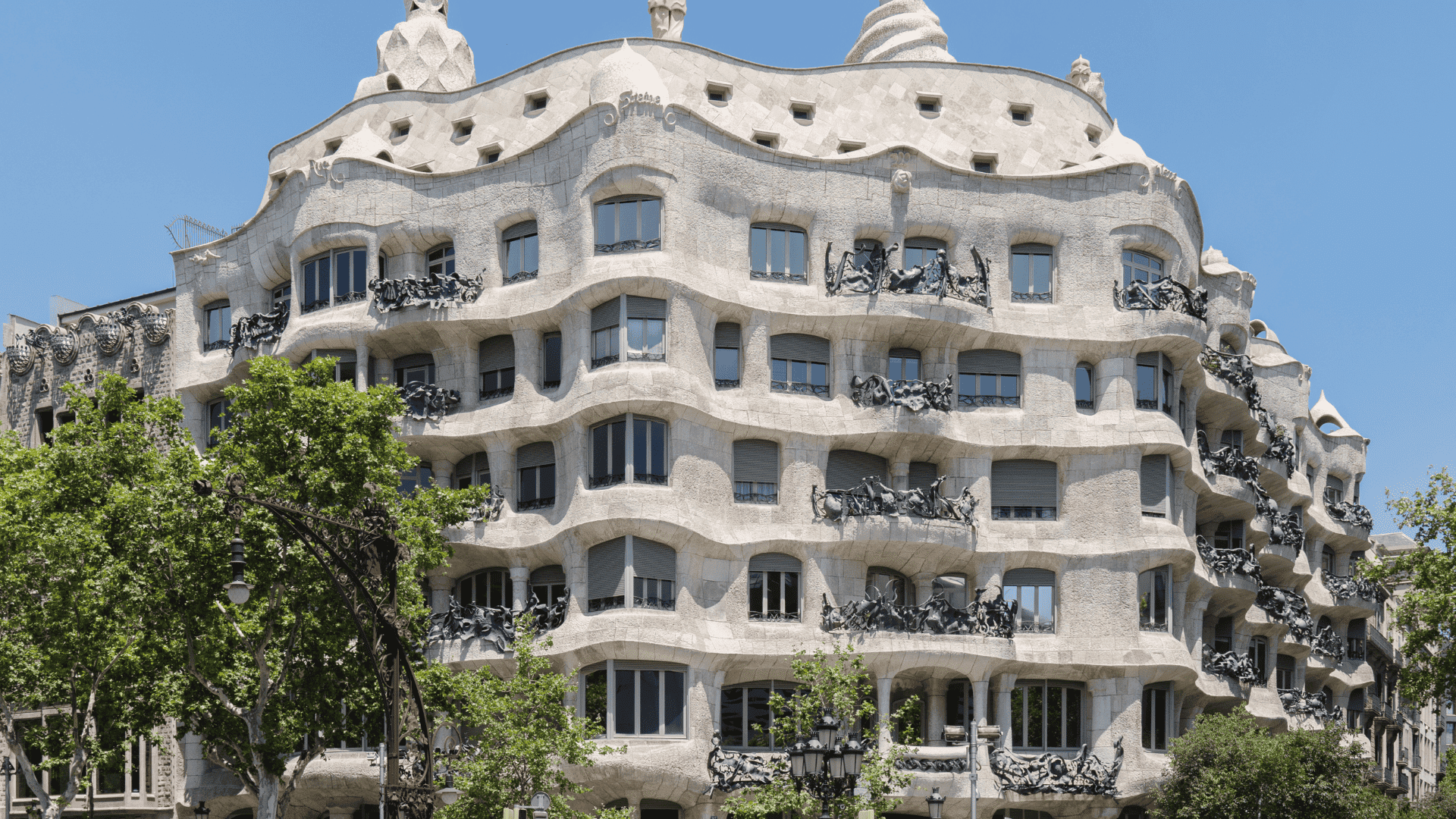
Casa Milà, also known as La Pedrera, pushed residential design in a new direction. The wave-like stone exterior has no straight lines, making the building feel in constant motion. On the roof, sculptural chimneys look like figures standing guard.
This Antoni Gaudí building changed how apartment living was designed and experienced. Its influence and originality earned it recognition as a UNESCO World Heritage Site.
3. Palau de la Música Catalana
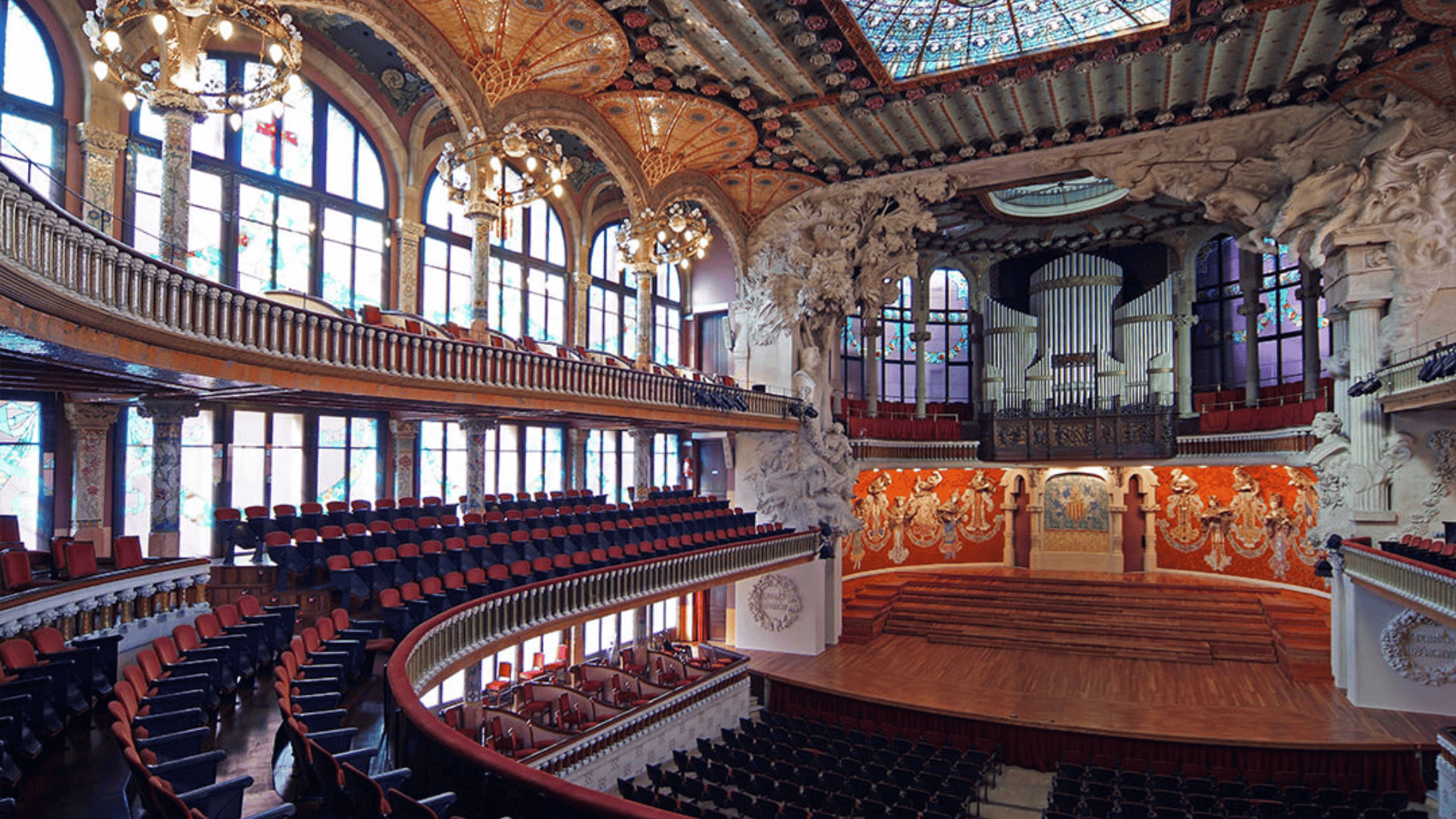
The Palau de la Música Catalana stands as a celebration of music, art, and local pride. Inside, a large stained glass skylight fills the concert hall with natural light. Floral columns and detailed ornamentation cover both the interior and exterior.
Culturally, the building reflects Catalan identity and creativity. It is widely regarded as one of the finest concert halls ever created during the Art Nouveau period.
Paris and France – Where Art Nouveau Met Everyday Urban Life
France played a major role in bringing Art Nouveau out of private homes and into shared city spaces. In Paris, the style appeared in streets, metro stations, shops, and apartment buildings.
1. Hector Guimard’s Paris Metro Entrances
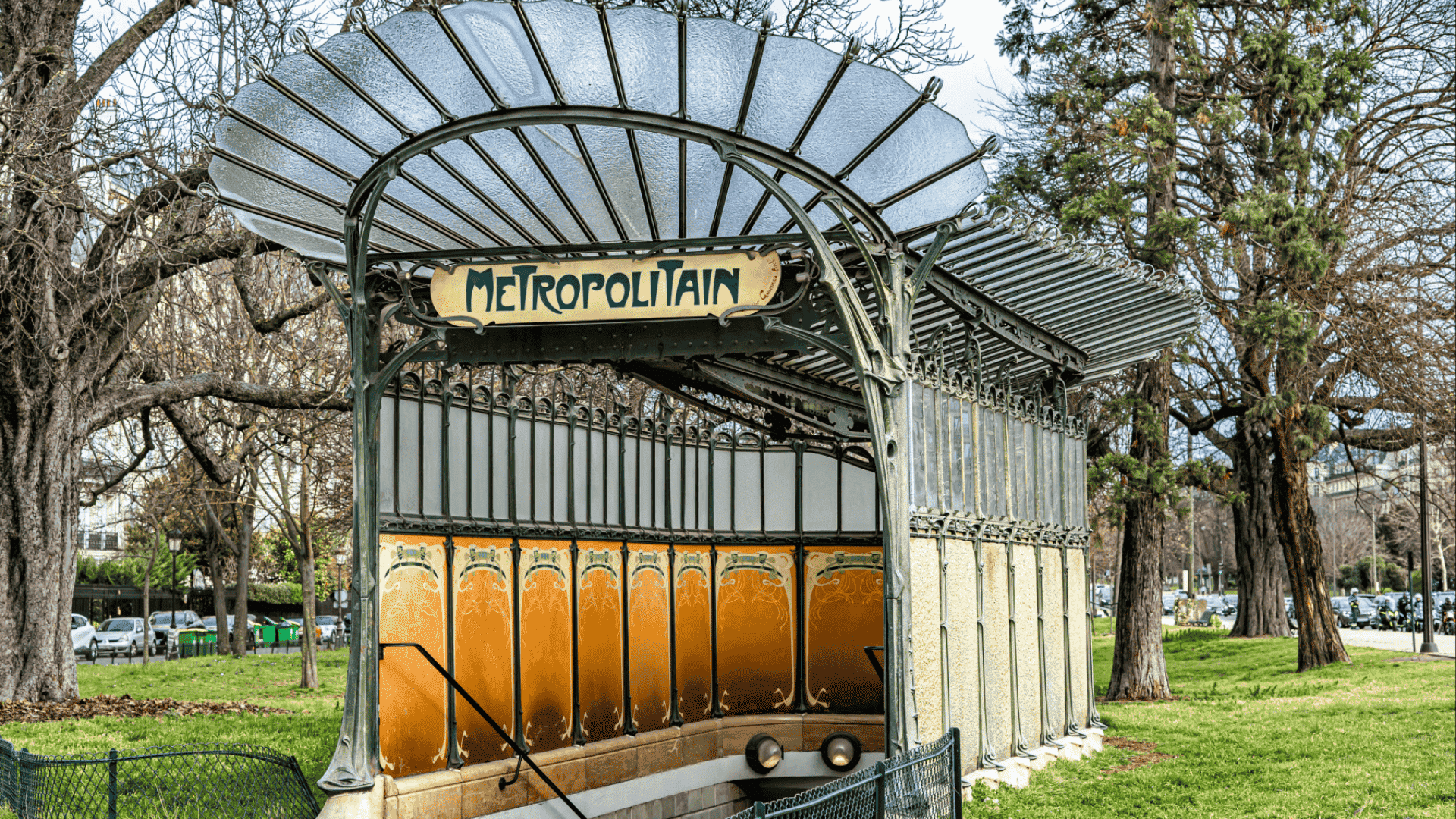
Hector Guimard designed the Paris Metro entrances to be both mass-produced and artistic. Made from cast iron, these entrances featured curved lines and plant-like shapes that stood out in busy streets.
They turned simple transit points into clear city landmarks. Most importantly, they made Art Nouveau accessible to everyday Parisians, proving that public infrastructure could include creativity and visual interest.
2. Lavirotte Building, Paris
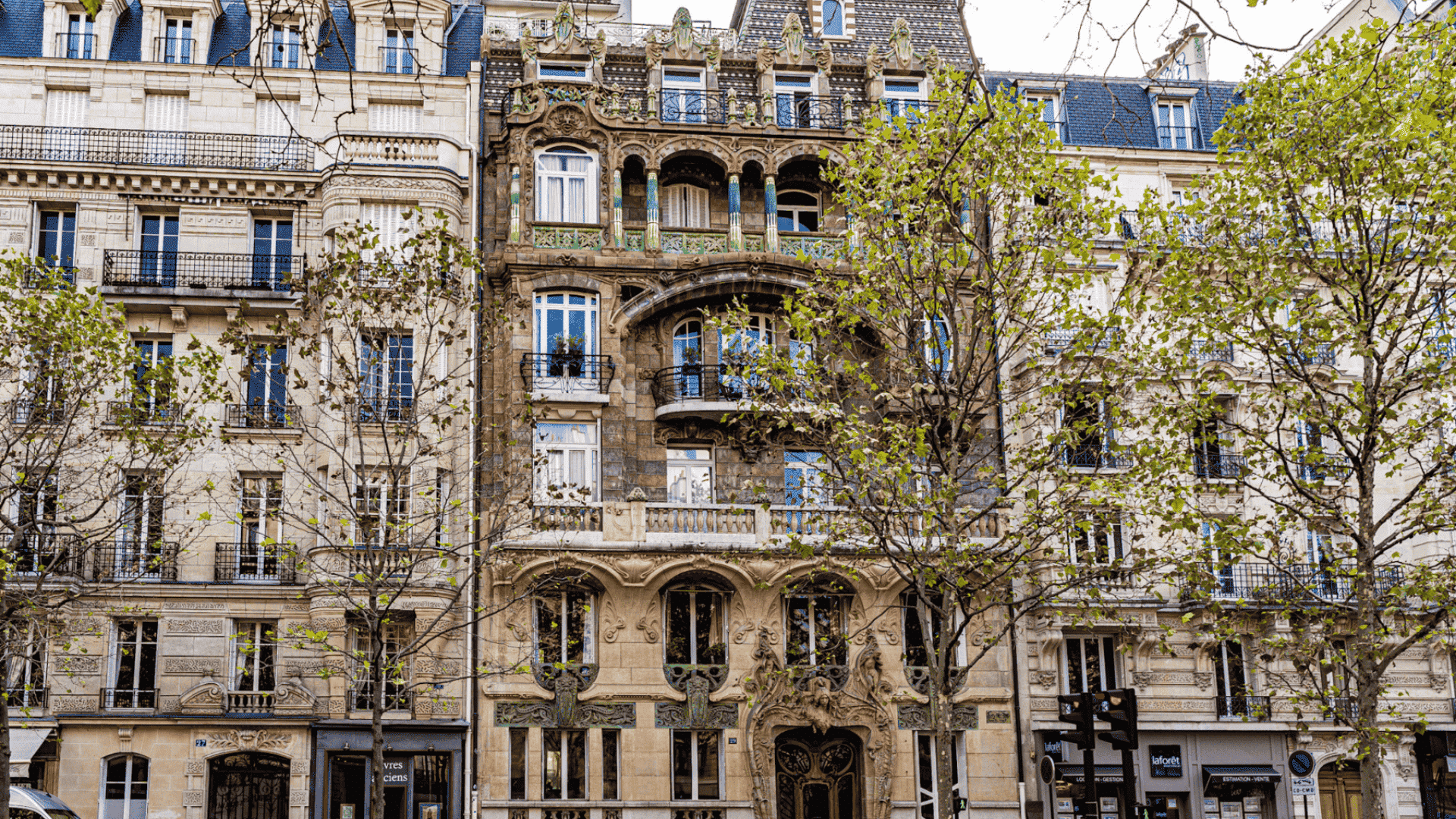
The Lavirotte Building is known for its highly decorative façade covered in ceramic tiles, sculpted figures, and detailed patterns. Designed to stand out on a crowded Paris street, it immediately draws attention among the surrounding buildings.
Every surface is filled with ornament, showing Art Nouveau’s focus on detail. The building reflects how personal expression and decoration became central ideas in urban residential design.
3. Hôtel Guimard
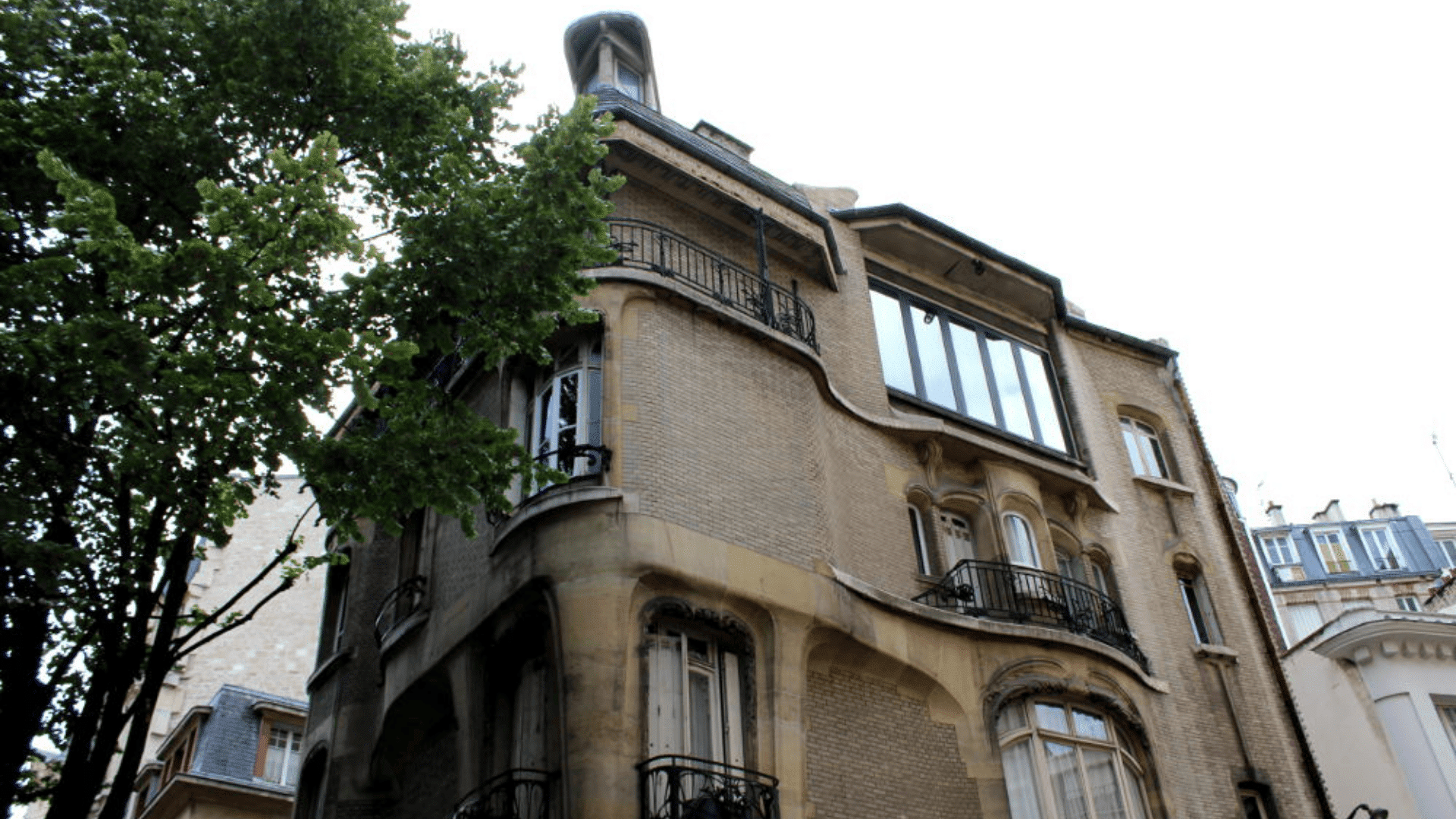
Hôtel Guimard was the personal residence of architect Hector Guimard and reflected his artistic vision in full. The building was designed as a complete work of art, with architecture, furniture, and interior details planned together.
Custom pieces filled the space, creating a unified look. This house showed that Art Nouveau ideas could shape everyday living spaces, not just grand public buildings or luxury projects.
Art Nouveau Beyond the Famous Capitals
As the style gained popularity, Art Nouveau quickly spread beyond Western Europe into many growing cities. Local architects adapted its ideas to fit regional culture, climate, and materials.
1. Riga, Latvia – Alberta Street
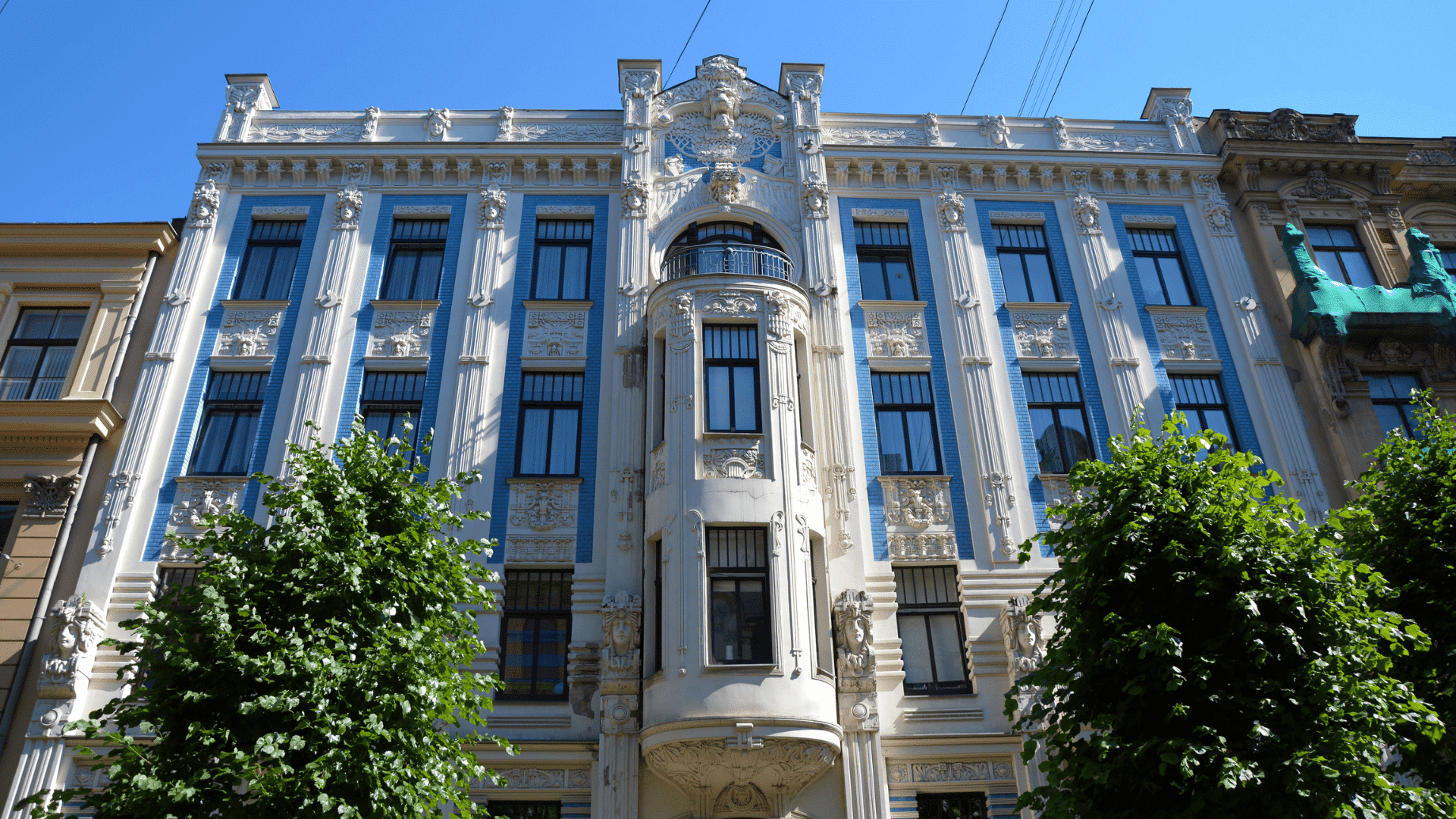
Alberta Street in Riga holds one of the richest collections of Art Nouveau buildings in the world. Many façades feature bold faces, flowing lines, and sculptural details that add visual variety to the street.
Because so many famous Art Nouveau buildings survive here, Riga is often called the Art Nouveau capital of Europe. Today, these Art Nouveau landmarks define the city’s identity and attract global attention.
2. Zagreb, Croatia – Kallina House
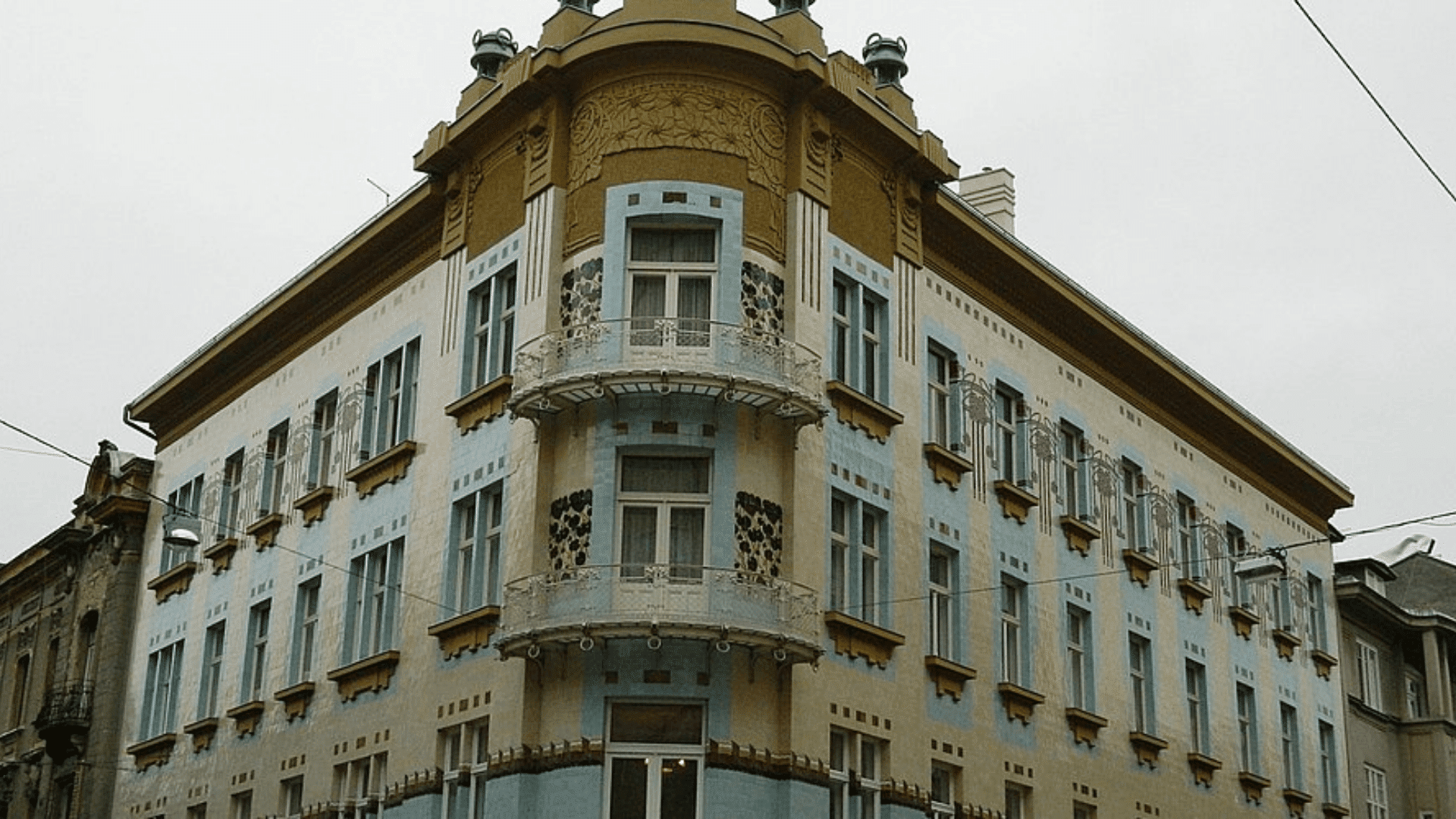
Kallina House in Zagreb is known for its colorful ceramic tile façade that brightens a busy city corner. The building shows strong Secessionist influence through geometric patterns and clear structure.
Built as a commercial property, Kallina House became an early example of decorative business architecture, showing that Art Nouveau landmarks shaped not just homes but also shops and everyday urban commerce.
3. St. Petersburg, Russia – Eliseyev Emporium
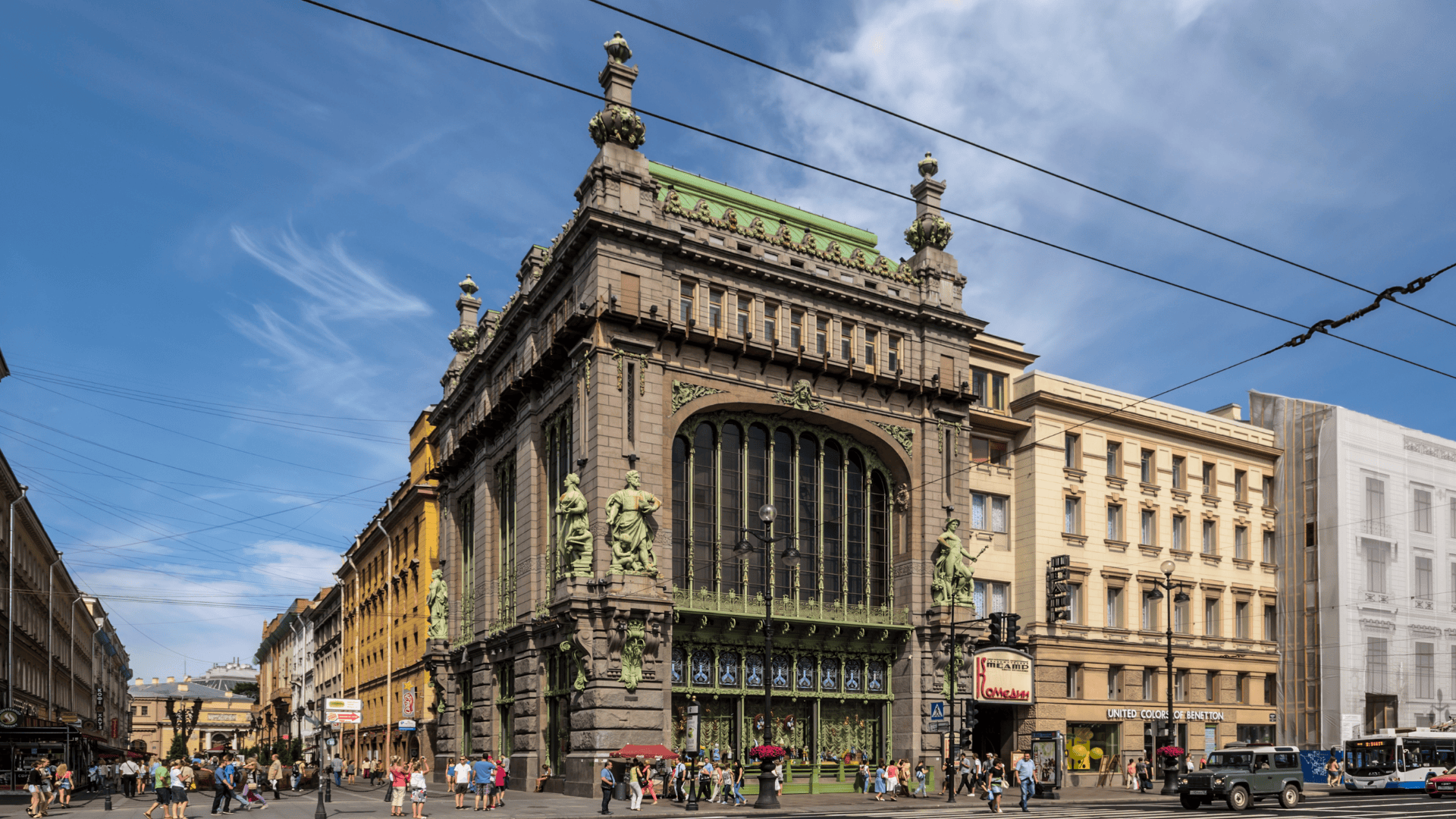
The Eliseyev Emporium in St. Petersburg shows how Art Nouveau adapted to different cultures. Designed as a luxury shop, it blends architecture with retail and public display. Large windows, rich materials, and detailed decoration turn shopping into a visual experience.
This famous Art Nouveau building reflects local taste while keeping the movement’s artistic spirit, proving the style worked beyond Western Europe and influenced later commercial design worldwide.
Why Art Nouveau Architecture Still Matters Today?
Art Nouveau architecture remains relevant because it proved buildings could be both functional and beautiful.
The movement’s focus on human experience – using natural light, organic shapes, and artistic details – influenced modern architects who design spaces for people, not just efficiency.
Art Nouveau showed that cities don’t have to be boring grids of identical structures. Today, preserving these historic buildings protects cultural heritage while attracting millions of visitors.
The style’s core message still resonates: our built environment should uplift the human spirit, deeply connect us to nature, and remind designers that architecture can be art, inspiring creativity worldwide.
That’s a Wrap
Art Nouveau architecture proves that buildings don’t have to be plain and practical – they can inspire us too.
This movement showed the world that design matters, that beauty belongs in everyday spaces, and that nature can guide how we build our cities. The curved lines, floral motifs, and handcrafted details still stand out more than a century later, reminding us to value creativity in our surroundings.
Next time you spot an old building with flowing ironwork or colorful glass, take a closer look. You might be standing in front of an Art Nouveau masterpiece.
What’s your favorite example of art nouveau architecture? Share your thoughts in the comments below!