You’ve found the perfect mirror, but now comes the question: where exactly should it go?
Many of us deal with awkwardly placed bathroom mirrors standing on our toes or bending down just to see ourselves without realizing there’s a better way.
Getting the mirror height right isn’t just about aesthetics; it impacts how you use your bathroom every morning and night. There are simple, practical guidelines for bathroom mirror height – no complicated math required.
Following these basic rules makes your daily routine easier, keeps the space looking balanced, and ensures the mirror works well for everyone who uses it.
Once you know the standard measurements, you can adjust them to fit your bathroom and personal needs.
What Is the Standard Height for a Bathroom Mirror?
Bathroom mirrors follow standard height guidelines that work for most spaces. These measurements help you place your mirror at a practical height.
The numbers might seem technical at first. But once you understand what each measurement means, the installation process becomes simple.
For comfortable viewing, aim to set the mirror’s center at 57 to 65 inches from the floor, with around 60 inches working well for most households.
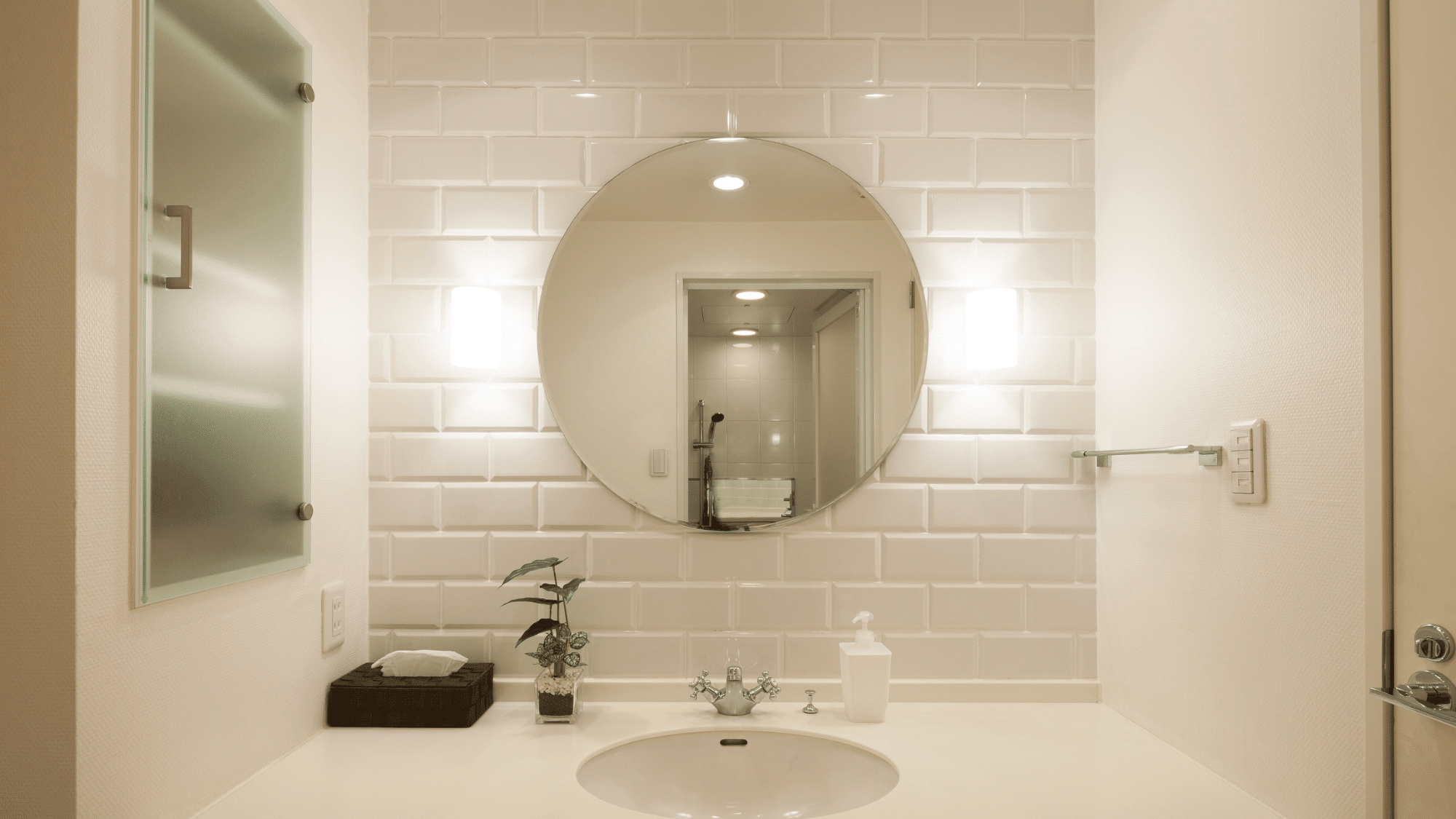
Keep the bottom of the mirror 5 to 10 inches above the countertop to reduce splashes and keep the look balanced (about 8 inches is a good start).
With a standard vanity, the bottom of the mirror is often about 40 inches from the floor.
Getting your bathroom mirror height right makes a real difference in how functional your space feels.
Factors That Influence Bathroom Mirror Height
Choosing the right mirror height isn’t just about standard measurements – your bathroom’s layout, lighting, and fixtures all play a role. Keep these key factors in mind when planning placement:
- Ceiling Height & Room Proportions: Leave 4-6 inches above the mirror with standard 8-foot ceilings; mirrors should fill about two-thirds of the wall space above the vanity.
- Available Wall Space: Measure usable wall area, accounting for tile, trim, cabinets, or shelves; tall backsplashes may push the mirror higher.
- Natural Light & Windows: Avoid glare from windows; fit mirrors between the countertop and windowsill if a window is above the vanity.
- Lighting Fixtures & Sconces: Leave at least 2″ of clearance above overhead lights; position sconces to illuminate your face evenly.
- Bathroom Size: In small bathrooms, taller mirrors reflect light and make the space feel larger; in larger bathrooms, adjust mirror height to balance proportions.
Considering these factors helps you choose the ideal bathroom mirror height, making it functional and balanced. Paying attention to ceiling height, lighting, and wall space ensures a mirror placement that works for everyone.
Bathroom Mirror Placement Guide by Vanity Type
Different vanity styles need different mirror approaches. Your vanity type affects both mirror size and placement height.
1. Single Sink Vanity Mirror Height
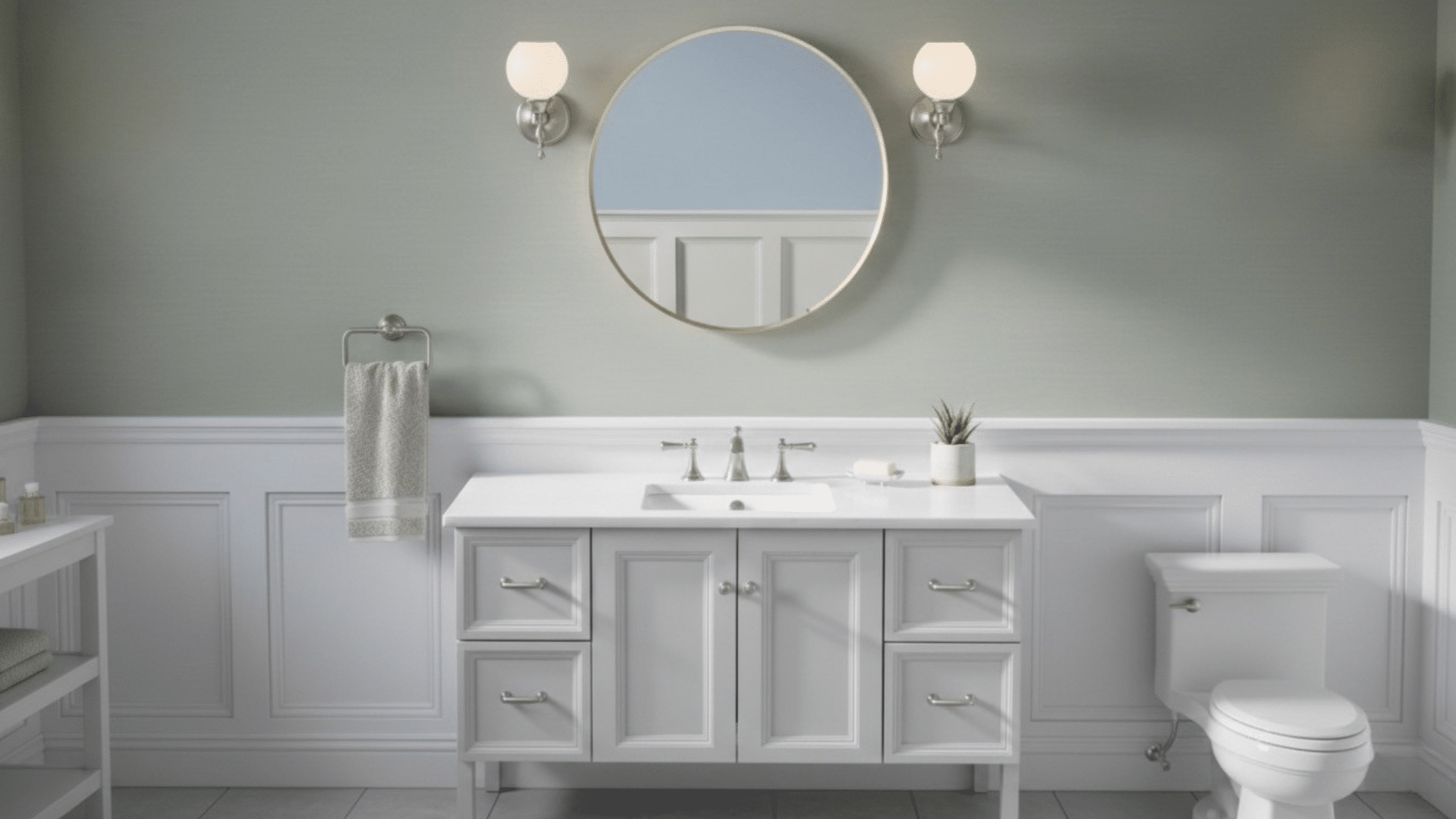
For a single-sink vanity, use the standard 5–10 inch clearance above the countertop, then center it over the basin.
For a 30-inch vanity, a mirror 20 to 26 inches wide works best, slightly narrower than the vanity. Keep the center within the standard range.
2. Double Vanity Mirror Options (One Large vs. Two Separate)
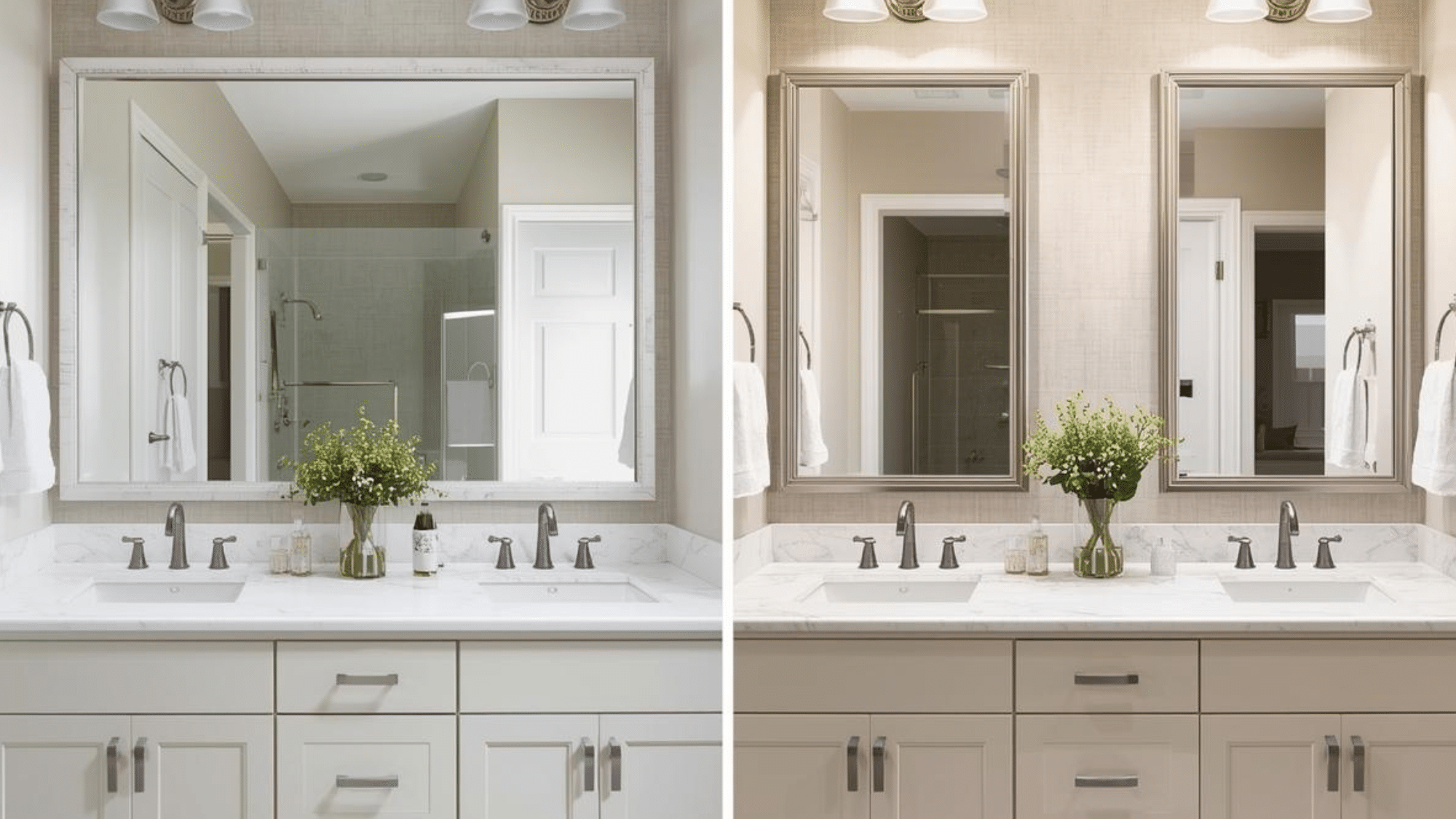
With double vanities, you can use one large mirror across both sinks or two separate mirrors centered over each sink, with 4 to 6 inches between them.
Size each mirror slightly narrower than the space above it, typically 2–4 inches narrower than the vanity section for that sink.
3. Floating Vanity Considerations
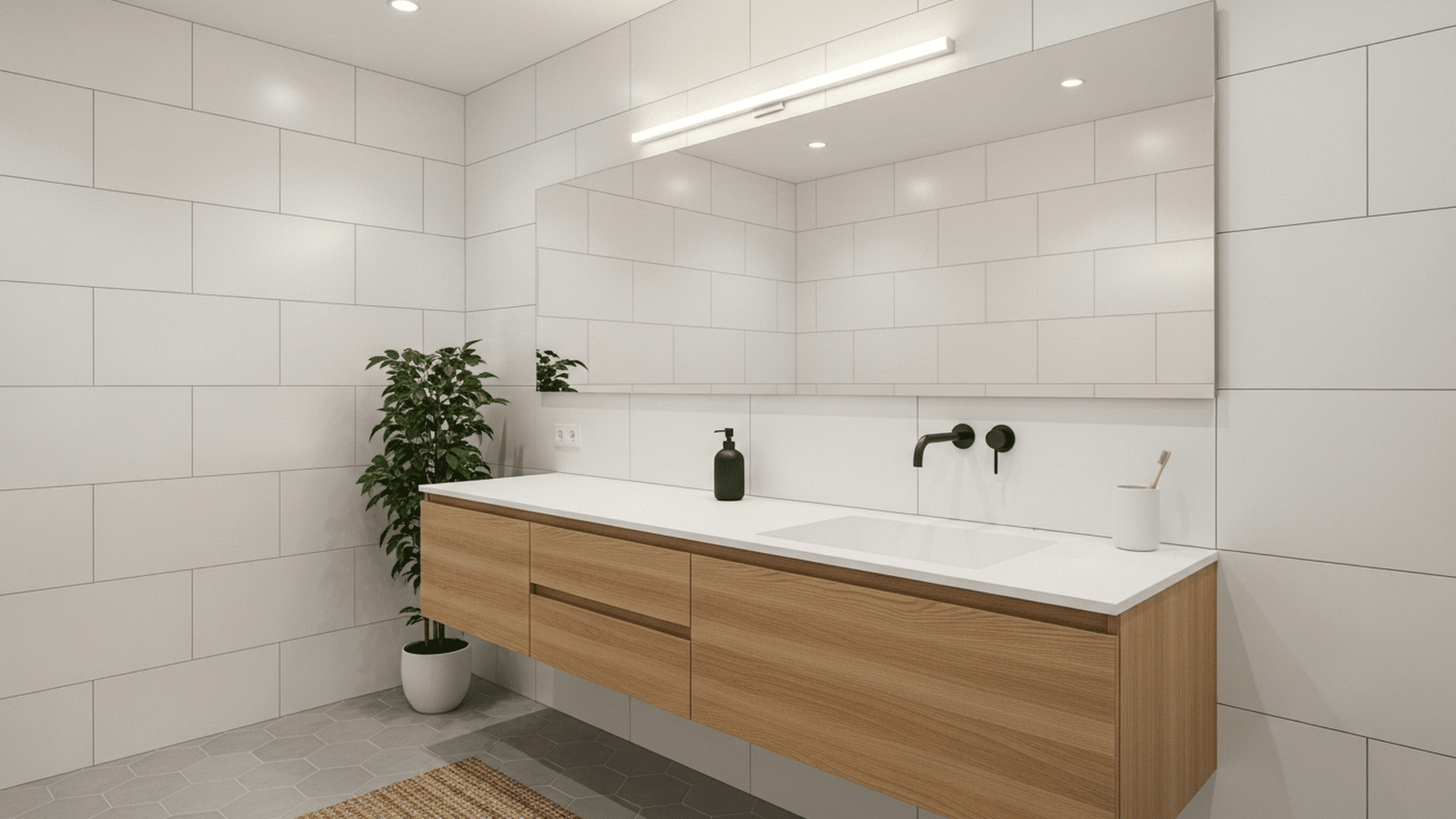
Floating vanities usually measure 30 to 36 inches high, but you should measure yours, as heights can vary.
Follow the same clearance rule as above. The open space makes the wall feel taller; a slightly larger mirror can help balance the look.
4. Pedestal Sink Mirror Placement
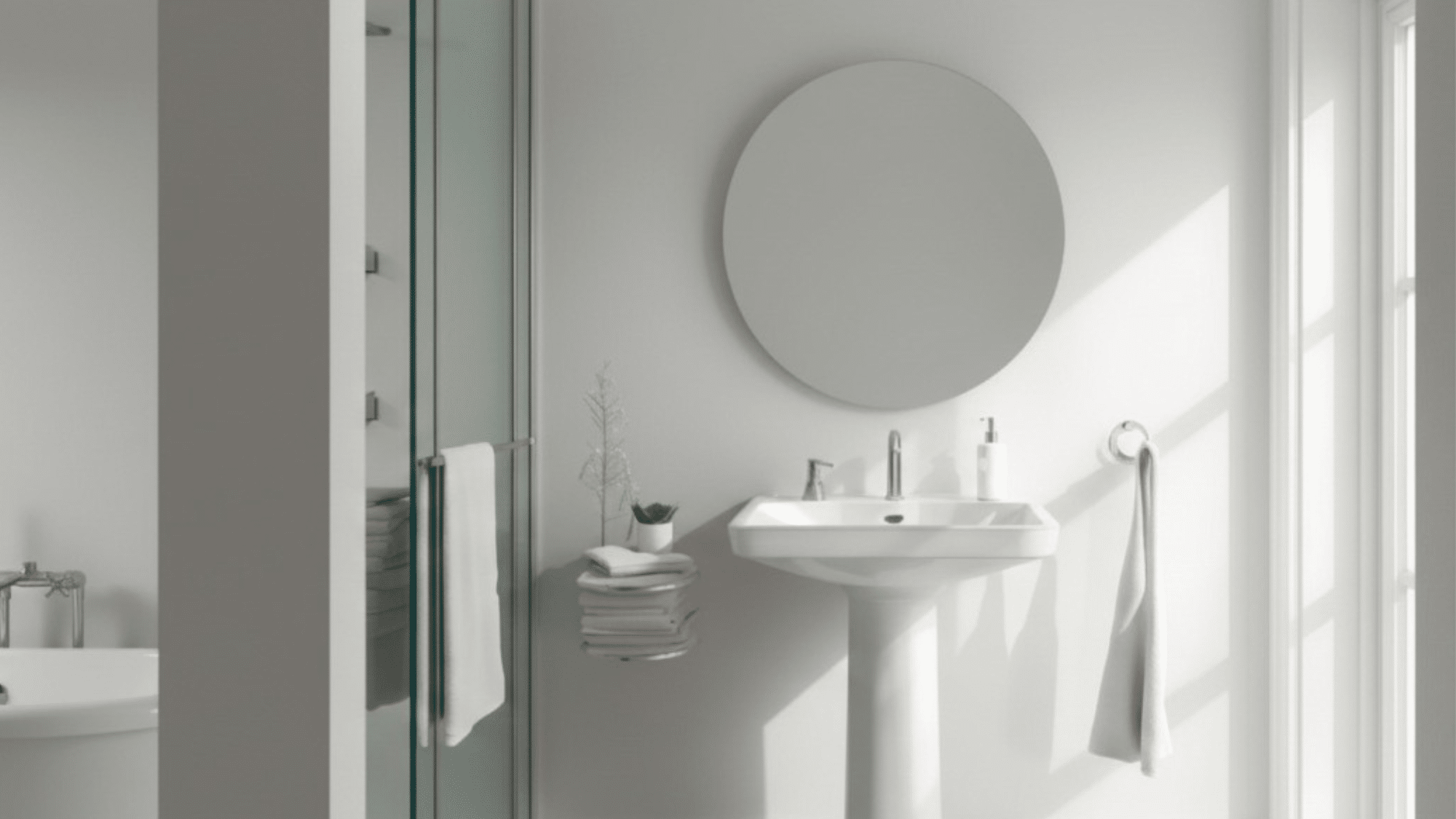
For pedestal sinks, measure from the basin rim (about 32 to 34 inches high) rather than from a countertop, then add 8 to 12 inches so the mirror bottom sits around 40 to 46 inches from the floor.
Center the mirror over the bowl and keep it proportional, usually 20 to 24 inches wide to match the sink.
5. Wall-Mounted Vanity Specifications
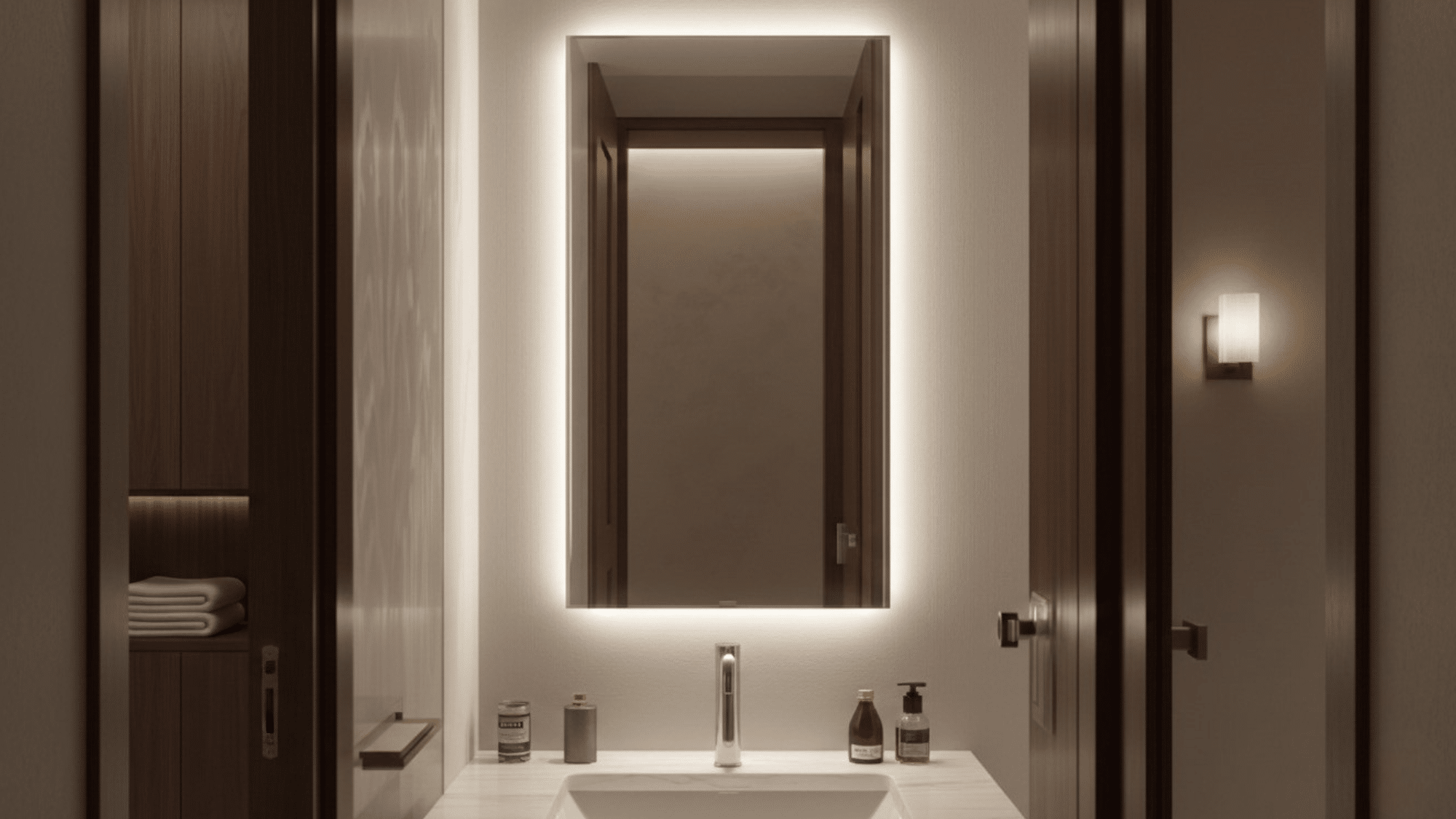
Wall-mounted vanities are usually 28 to 36 inches high, so mirror clearance changes with the vanity height: lower vanities need about 10 to 12 inches, while taller ones need 6 to 8 inches.
Still keep the mirror center in the standard range.
Rule of Thumb For Choosing Mirror Size
A bathroom mirror should be the same width as the vanity or slightly smaller, never wider. A good rule is to be 2 to 4 inches narrower than the vanity (for a 30-inch vanity, choose 26 to 28 inches).
A mirror often looks best when it fills about two-thirds of the space between the countertop and ceiling.
Leave some breathing room so it doesn’t look cramped against the ceiling or lights. Hang the mirror 5 to 10 inches above the sink or faucet, and keep it centered over the basin.
If you want a full-length mirror, choose one that’s at least half your height for a comfortable full-body view.
Bathroom Mirror Height Requirements for ADA Compliance
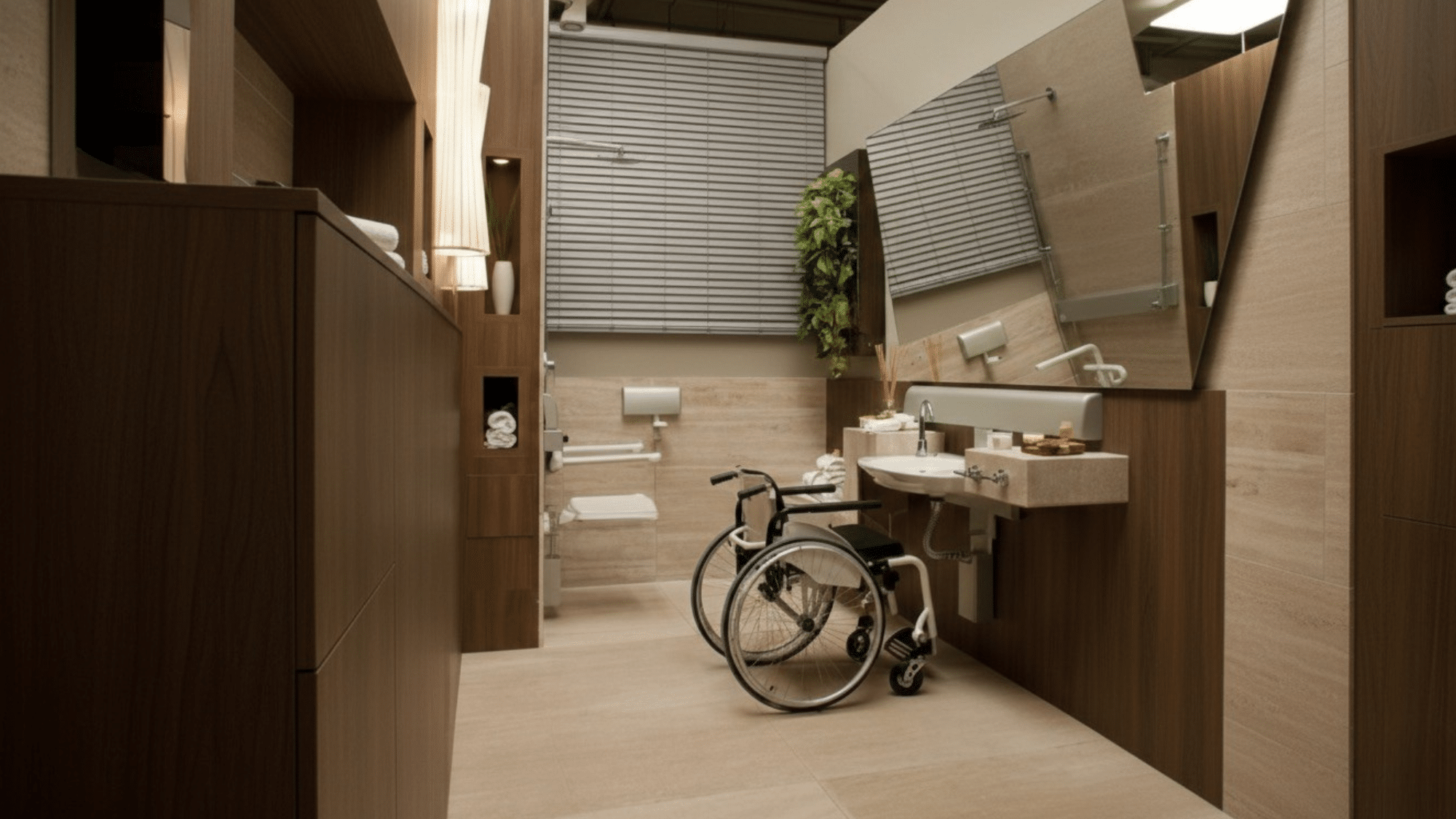
For bathrooms that need to be accessible, ADA rules ensure that mirrors can be used by people in wheelchairs or with limited mobility. If the mirror is mounted above a sink or countertop, the bottom of the reflective surface must be no higher than 40 inches from the floor.
For mirrors not above a countertop, such as standalone wall-mounted mirrors, the bottom should be no higher than 35 inches above the floor.
The top of the mirror should reach at least 74 inches above the floor so that standing users can see themselves.
For additional accessibility, tilting mirrors can be installed to make higher placements usable for seated users, in accordance with ADA tilt specifications.
Step-By-Step Measuring Guide To Get The Height Right
Taking accurate measurements prevents installation mistakes. Follow these steps to position your mirror correctly the first time.
- Measure And Pick Your Gap: Measure from the floor to the countertop, then from the countertop to the faucet top. Add them, then set a 5–10-inch gap to indicate where the mirror’s bottom should start.
- Mark The Center: Find the center of your vanity and draw a light vertical line. Find the center of your mirror and line it up with the wall centerline.
- Tape It First: Use painter’s tape to outline the mirror on the wall. Step back and stand at the sink to check centering, faucet clearance, and appearance, then adjust if needed.
- Hang It Securely: Use a stud finder and screw into studs when possible. If not, use the proper anchors for the mirror’s weight, level the mirror before tightening, and check that it feels solid with no wobble.
By following these steps, you can hang your bathroom mirror accurately and confidently the first time. Careful measuring and proper placement ensure it looks great, functions well, and avoids common installation headaches.
Common Bathroom Mirror Height Mistakes to Avoid
Even with clear guidelines, mirror installation can go wrong. These common mistakes lead to mirrors that don’t work well for daily use.
- Don’t Hang It Too High Or Too Low: Keep the mirror centered within the standard range, and test the height at the sink before drilling.
- Account for Different Heights: If multiple people use the bathroom, aim for the middle of the range so it works for both taller and shorter users.
- Leave Splash Clearance: Keep the bottom of the mirror at least 5 inches above the faucet, or 8 to 10 inches above for high-arc faucets, to reduce water spots.
- Measure The Glass, Not The Frame: Use the reflective surface for all measurements (including ADA checks), not the decorative frame edges.
- Match The Room Proportions: The mirror should fill about two-thirds of the space between the vanity and ceiling, with a little breathing room above and below.
Following these tips will help you avoid common mistakes and make your bathroom mirror both practical and visually balanced. Careful measuring and thoughtful placement can improve daily use and overall comfort.
Conclusion
A bathroom mirror that works well for everyone in your home doesn’t happen by accident. It takes planning and attention to detail during installation.
No more awkward bending or neck strain to see yourself clearly.
Small adjustments to mirror height can make a noticeable difference in both comfort and layout
If you’re renovating an entire bathroom or simply swapping out an old mirror, these principles apply. Start with accurate measurements and test your placement before committing to holes in the wall.
Your bathroom should work for you, not against you. Have you dealt with a mirror placement problem in your own home? Drop a comment and let me know how you solved it.