You stand in the flooring aisle, overwhelmed by choices. Tile, vinyl, hardwood, laminate. Every option claims to be perfect for kitchens.
Then you go online. One expert swears by luxury vinyl. Another says only tile works. Your neighbor loves their bamboo. Your sister regrets her hardwood.
Who do you trust?
Finding the best floor for kitchen spaces shouldn’t feel this confusing. You need more than marketing claims. You need honest comparisons that show real strengths and weaknesses.
You also need to hear from people who actually live with these floors. The ones who know what works after spills, dropped pots, and years of daily wear. Let’s find your answer.
Why Choosing the Best Floor for Kitchen Feels Tricky?
Kitchens are multi-stress rooms. The floor near your stove handles heat. The area by the sink sees water daily. Chairs scrape back and forth during meals.
Lighting changes everything. That tile in the showroom might show every crumb under your bright kitchen lights. Natural sunlight can make colors look completely different from what you expected.
Open layouts raise the stakes. When your kitchen flows into other rooms, transitions in thickness and color matching become critical decisions.
Sound matters more than people realize. Hard surfaces echo with every footstep and dropped utensil, especially with high ceilings.
Your cleaning style counts. Some floors handle quick mopping without complaint. Others streak easily or get damaged by certain cleaners. The best floor for kitchen use matches how you actually clean.
What Makes the Best Kitchen Floor? Key Factors to Consider
Not every kitchen needs the same flooring. The best floor for kitchen spaces depends on practical factors that match your lifestyle.
- Moisture Resistance: Kitchen floors face spills, splashes, and tracked-in rain, so choose materials that resist moisture, warping, stains, and mold.
- Durability and Foot Traffic: High foot traffic, sliding chairs, and dropped cookware can scratch or dent floors, so choose a durable option that matches your household habits.
- Maintenance Requirements: Some floors demand frequent sweeping and scrubbing, while others hide dirt. Pick what suits your routine, especially if grout bothers you.
- Budget Considerations: Total cost includes materials, installation, and lifespan. DIY floors save upfront, but durable options often beat cheap replacements over the long term.
- Comfort Underfoot: If you often stand while cooking, hard floors tire your feet and back. Softer surfaces feel better; use anti-fatigue mats where needed.
Weigh these factors based on your daily routine. The best kitchen floor balances multiple needs rather than maxing out on just one.
What Is The Best Floor For Your Home’s Kitchen?
Each flooring material handles kitchen challenges differently. Here’s how the most popular options compare when you’re looking for the best floor for your kitchen.
1. Luxury Vinyl Plank (LVP)
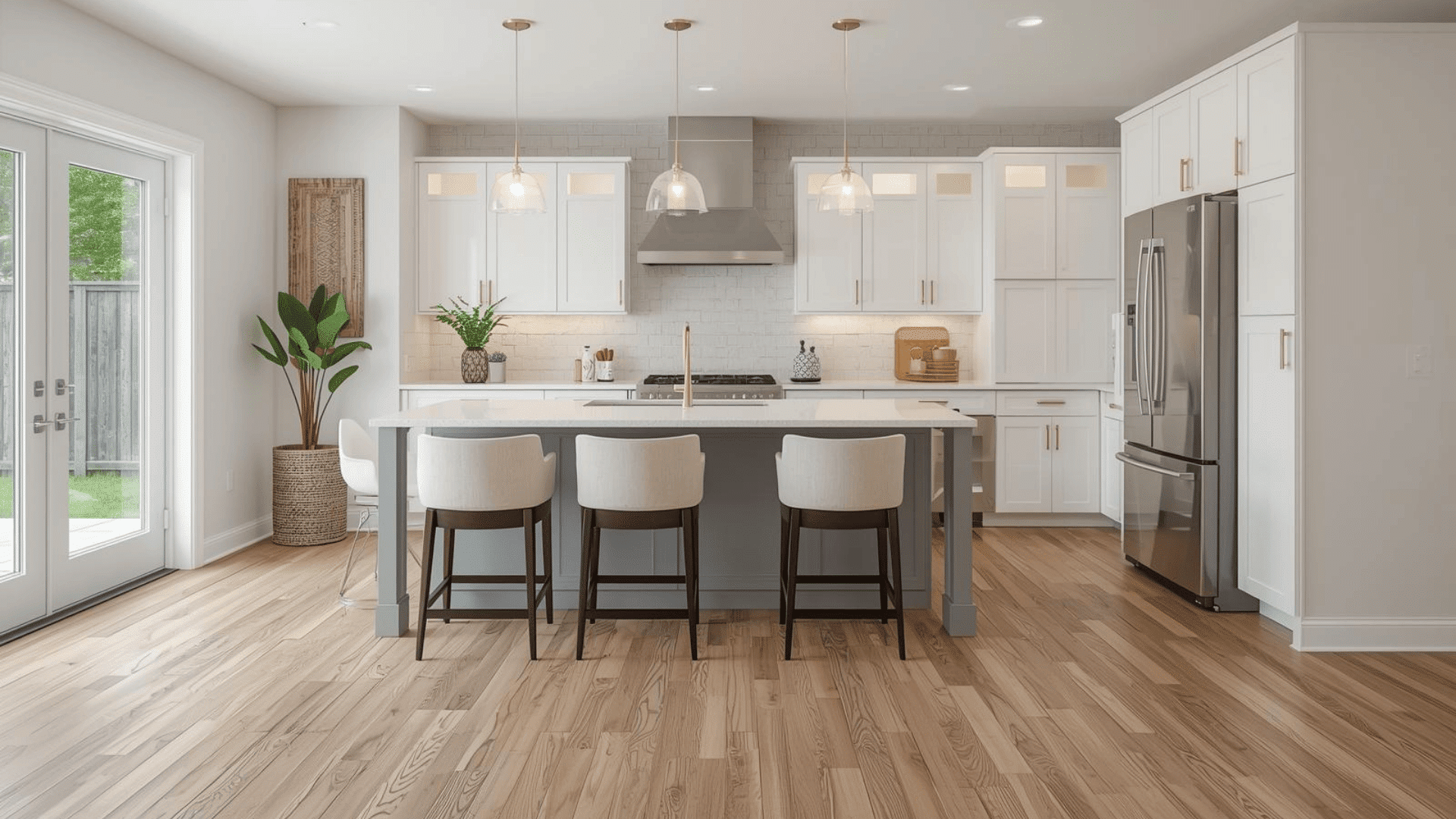
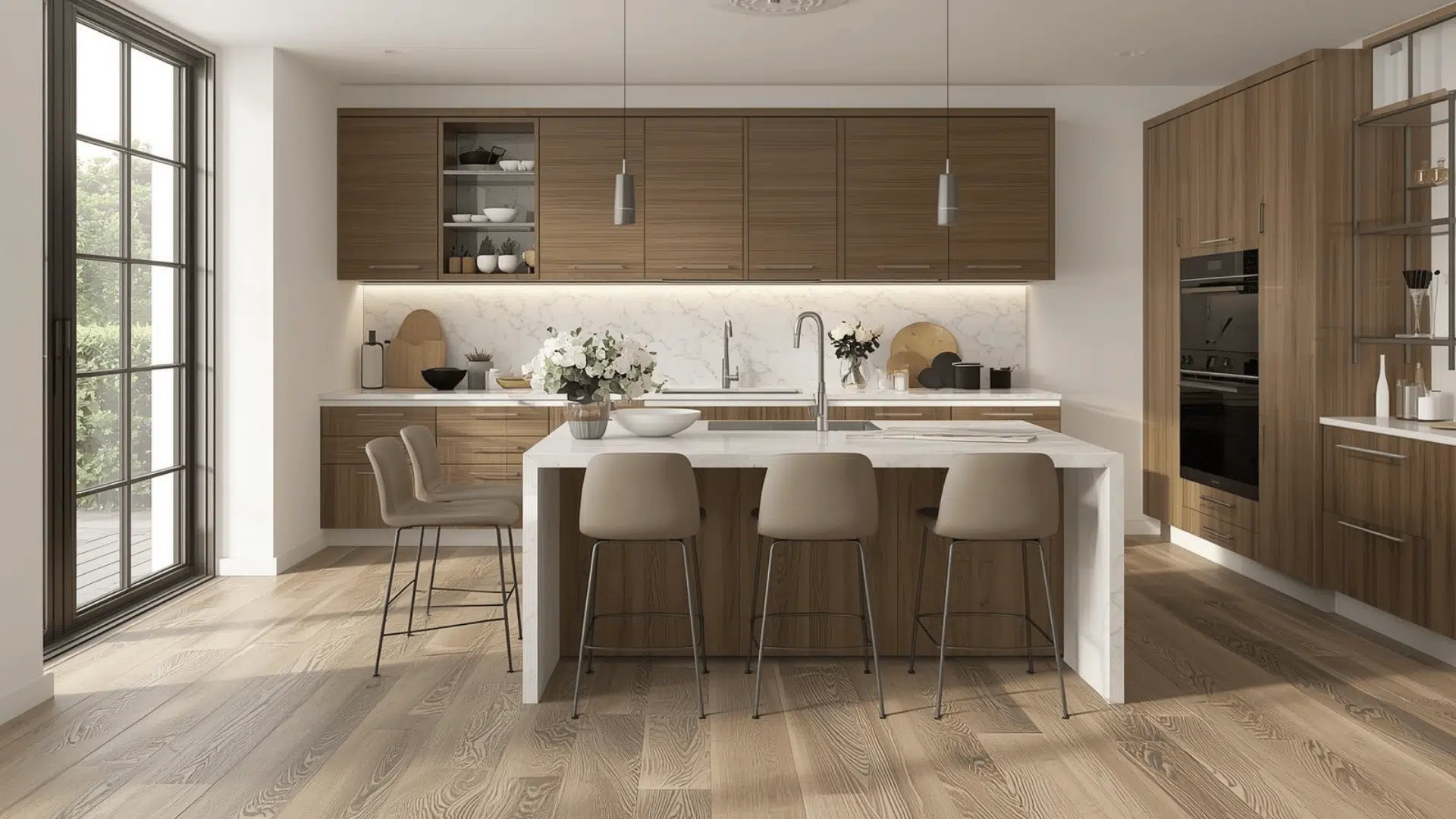
This bright, modern kitchen pairs waterproof LVP with a realistic wood-grain look, giving you the warmth of hardwood with easy wipe-clean durability.
Typical installed pricing ranges from about $2 to $8 per sq ft, making it a smart pick for pet owners, and households with heavy daily traffic.
Go for a 12–20 mil wear layer and a plank tone that complements your cabinets (lighter oak tones keep spaces airy, while medium tones hide crumbs and pet hair better).
- Pros: Luxury vinyl plank is waterproof, durable, easy to clean, and offers a realistic wood look for busy kitchens.
- Cons: It can dent under very heavy furniture and lacks the authenticity and resale appeal of real hardwood.
- Best For: Ideal for busy kitchens, pet-friendly homes, and low-maintenance flooring needs.
2. Porcelain and Ceramic Tile
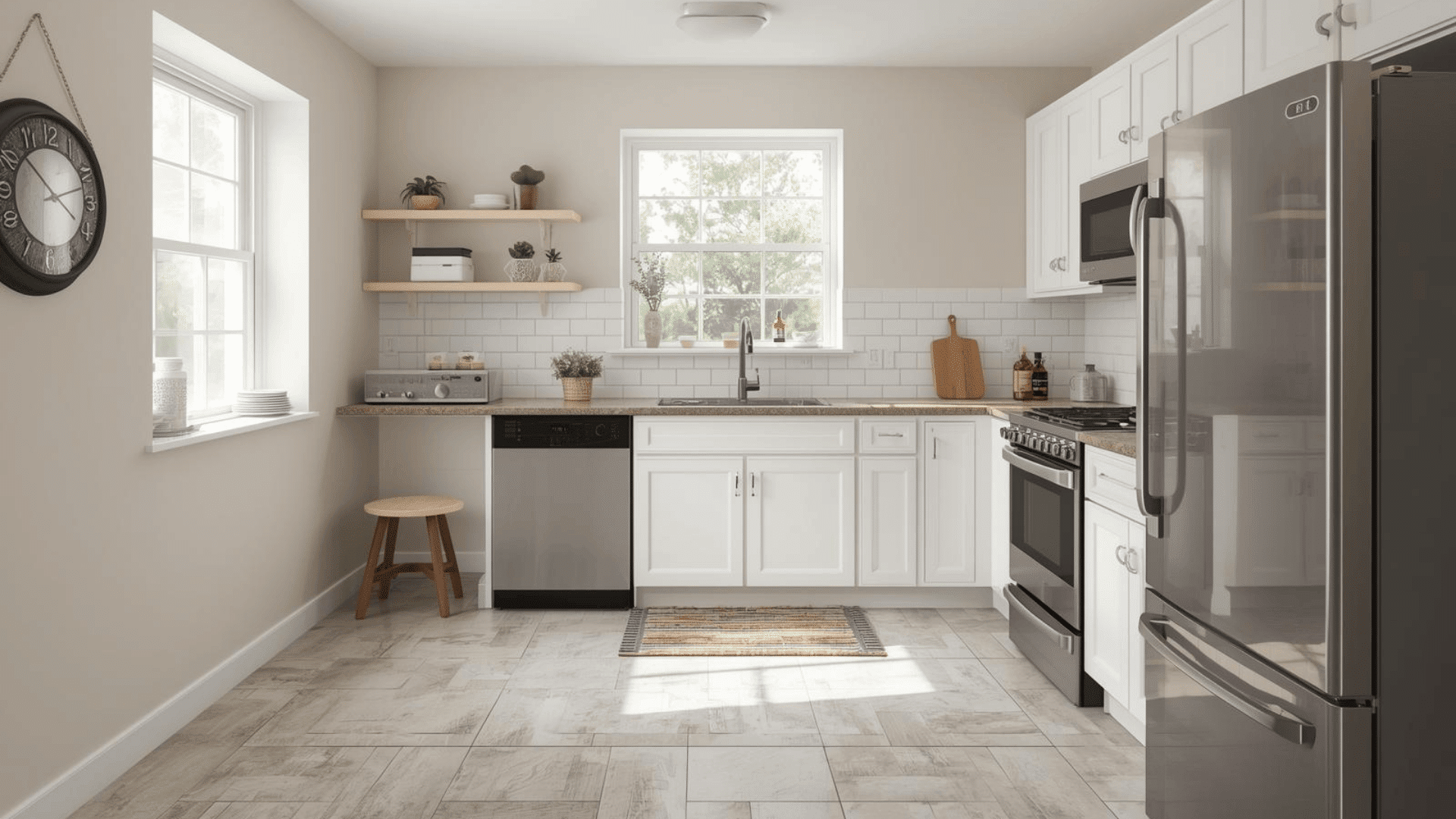
This bright kitchen features porcelain tile that suits both modern and classic styles and handles moisture and heat well.
Costs run $3–$15 per sq ft. Proper subfloor leveling prevents lippage and cracks. Ideal for humid kitchens and hot climates.
Choose a darker or color-matched grout (or epoxy grout) to keep the floor looking fresh with less visible staining.
- Pros: Highly water-resistant, heat-proof, long-lasting, and works with many kitchen styles.
- Cons: Hard and cold underfoot, grout needs upkeep, and uneven subfloors can cause lippage or cracks.
- Best For: Humid kitchens, hot climates, and homeowners who want a durable, low-worry surface.
3. Engineered Hardwood Flooring
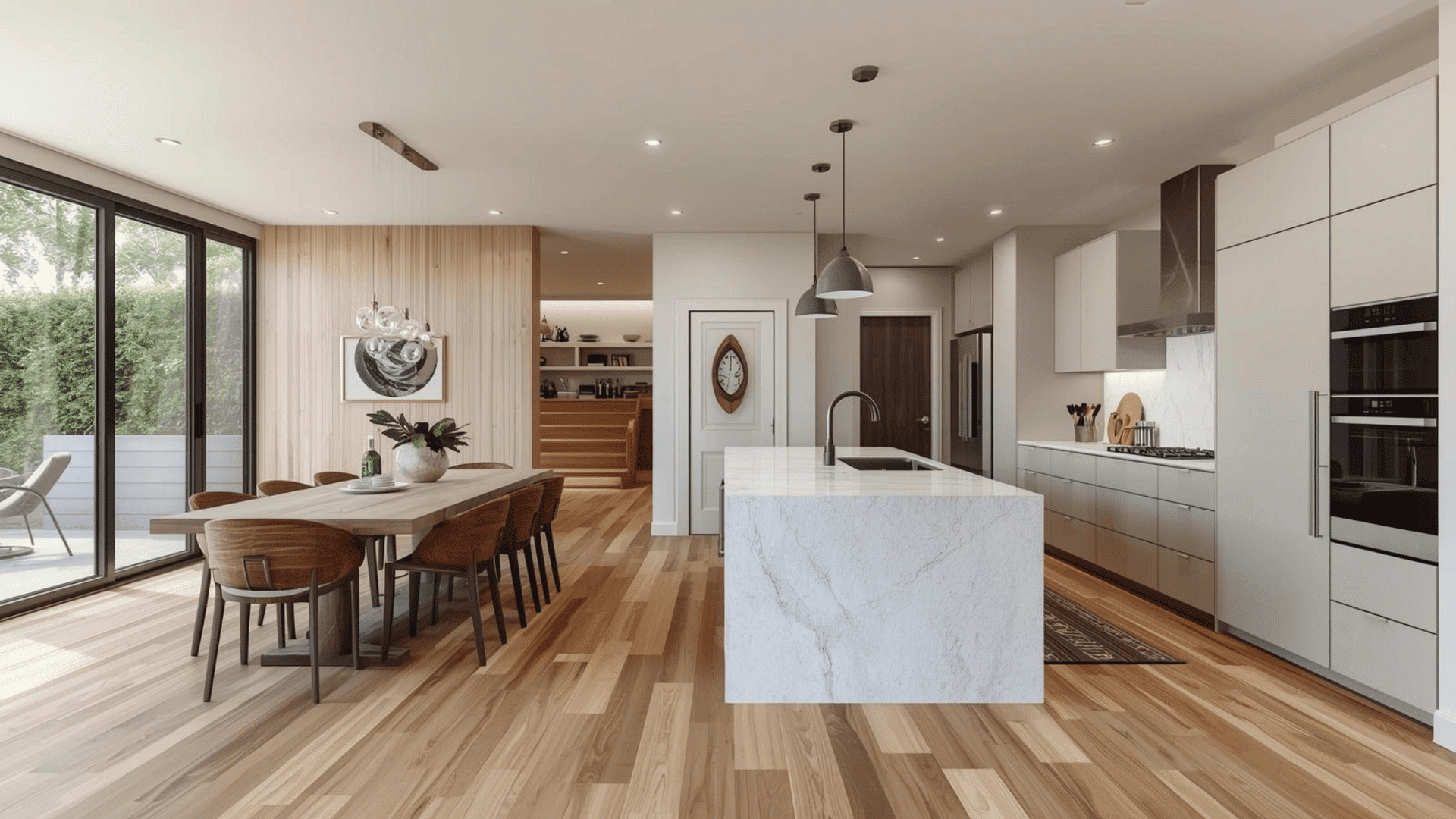
Engineered hardwood uses a real wood veneer over a layered core, improving stability and moisture resistance versus solid wood. Many can be refinished 1–3 times.
Costs average $4–$12 per sq ft, offering versatile styles and strong resale appeal for open layouts.
When choosing this type of flooring, pick a thicker wear layer (about 3 mm+) if you want the option to refinish it down the line.
- Pros: Real wood look, more stable than solid hardwood, better moisture resistance, and good resale appeal.
- Cons: Not waterproof, cheaper options cannot be refinished, and standing water can still damage seams.
- Best For: Open-concept homes and homeowners who want real-wood style with better stability than solid hardwood.
4. Natural Stone Flooring
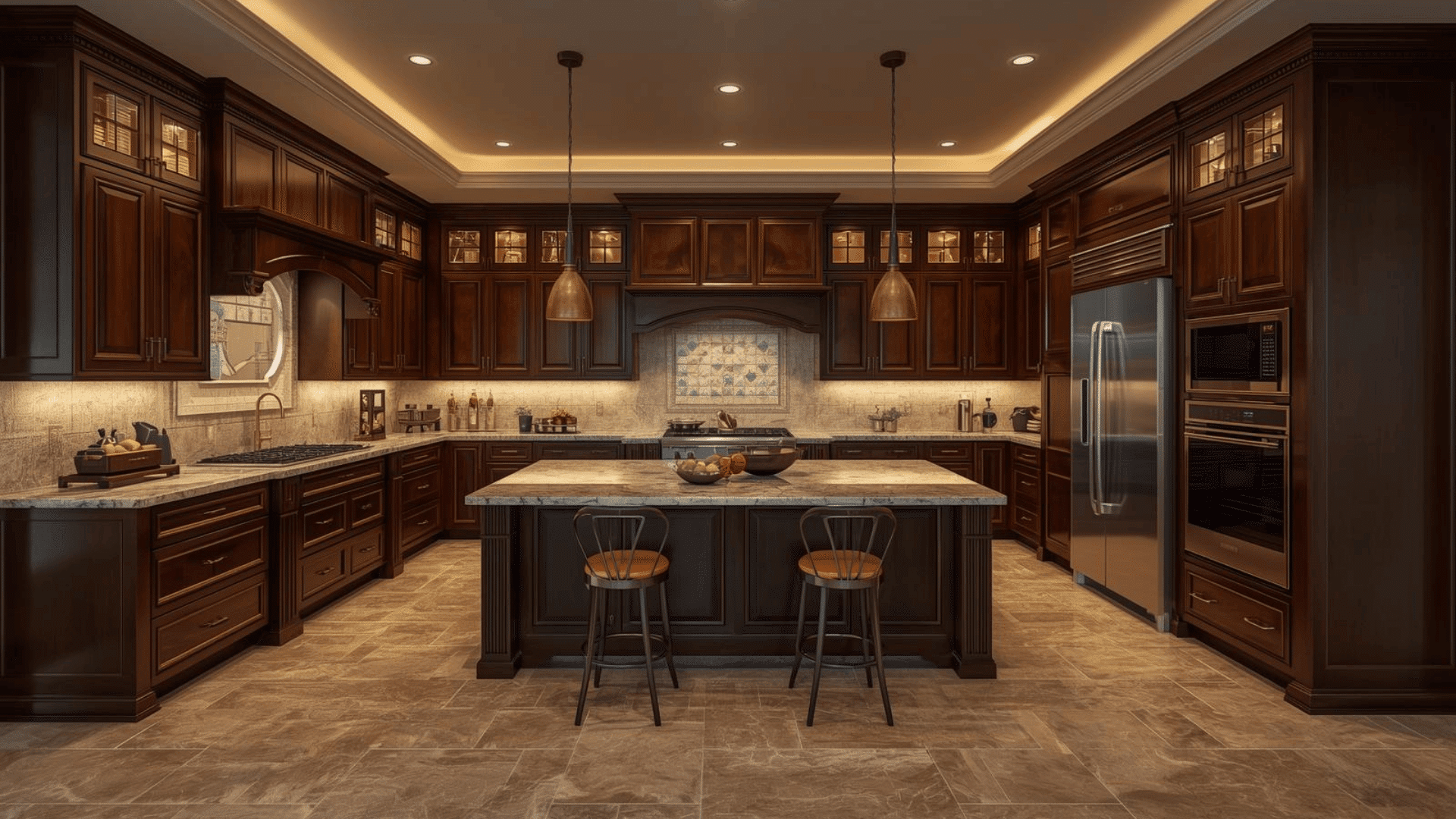
Natural stone flooring offers excellent durability and heat resistance for busy cooking areas. Most types need regular sealing to protect from stains and moisture.
Expect $8–$20 per sq ft installed. Best for high-end kitchens and homeowners wanting a lasting, custom look.
Choose a honed or textured finish for better slip resistance, especially near the sink and stove.
- Pros: Premium look, extremely durable, heat-resistant, and adds a custom, high-end feel.
- Cons: Expensive, needs sealing, can stain or etch, and may feel cold and hard underfoot.
- Best For: High-end kitchens and homeowners who want a long-term, luxury finish.
5. Laminate Flooring
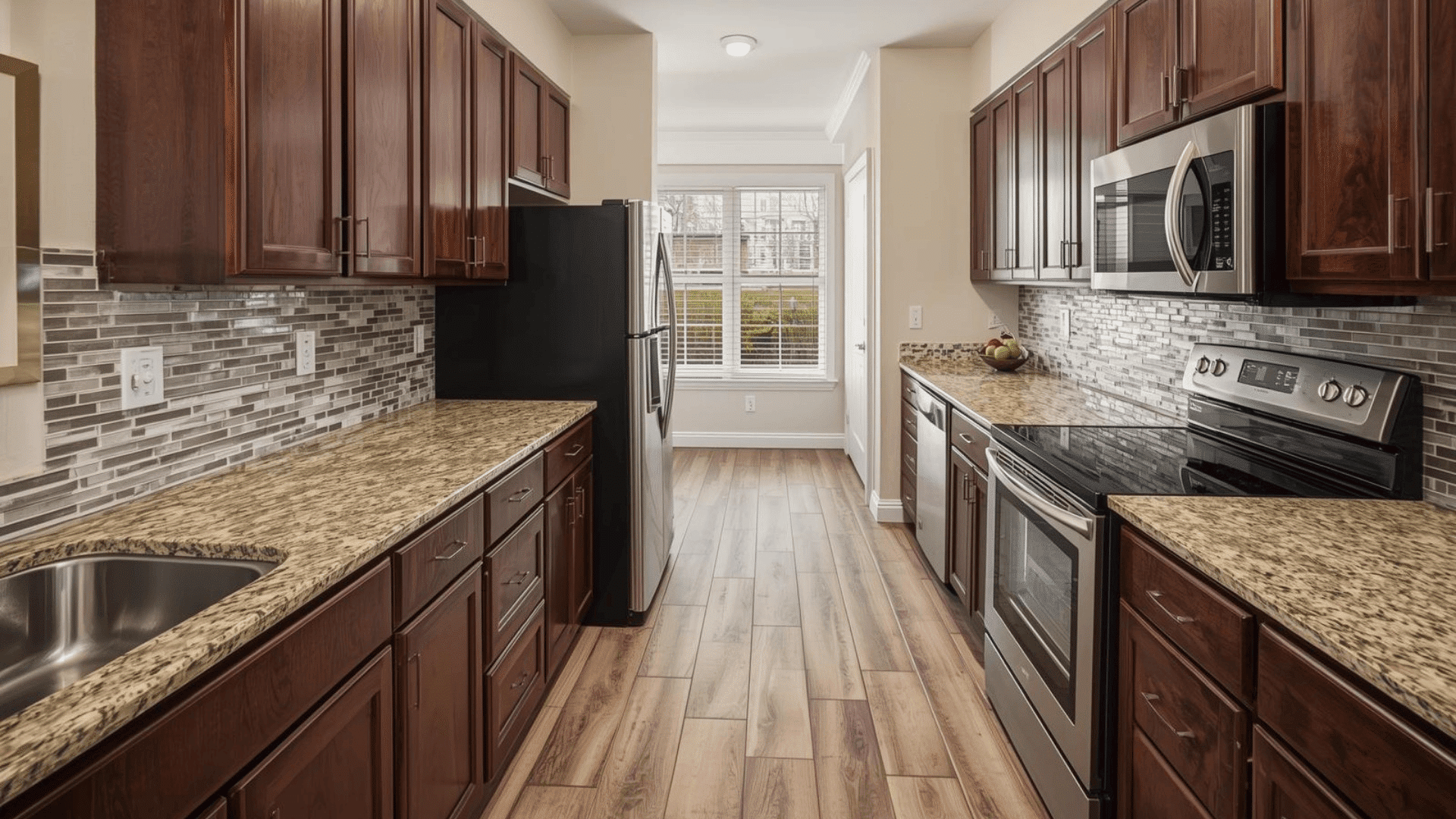
Laminate can mimic wood from a distance, but lacks the depth and variation of real hardwood. Its wear layer resists scratches, but moisture can still seep into the seams, causing swelling.
Costs about $1–$5 per sq ft, ideal for rentals and tight budgets.
Choose water-resistant laminate with tight-locking joints, and use a kitchen-safe underlayment to help reduce seam seepage.
- Pros: Budget-friendly, scratch-resistant, quick to install, and offers many wood-look options.
- Cons: Seam swelling risk with water, not refinishable, and looks less natural up close than real wood.
- Best For: Rentals, quick refresh projects, and kitchens where you want a low-cost wood-look floor.
6. Solid Hardwood Flooring
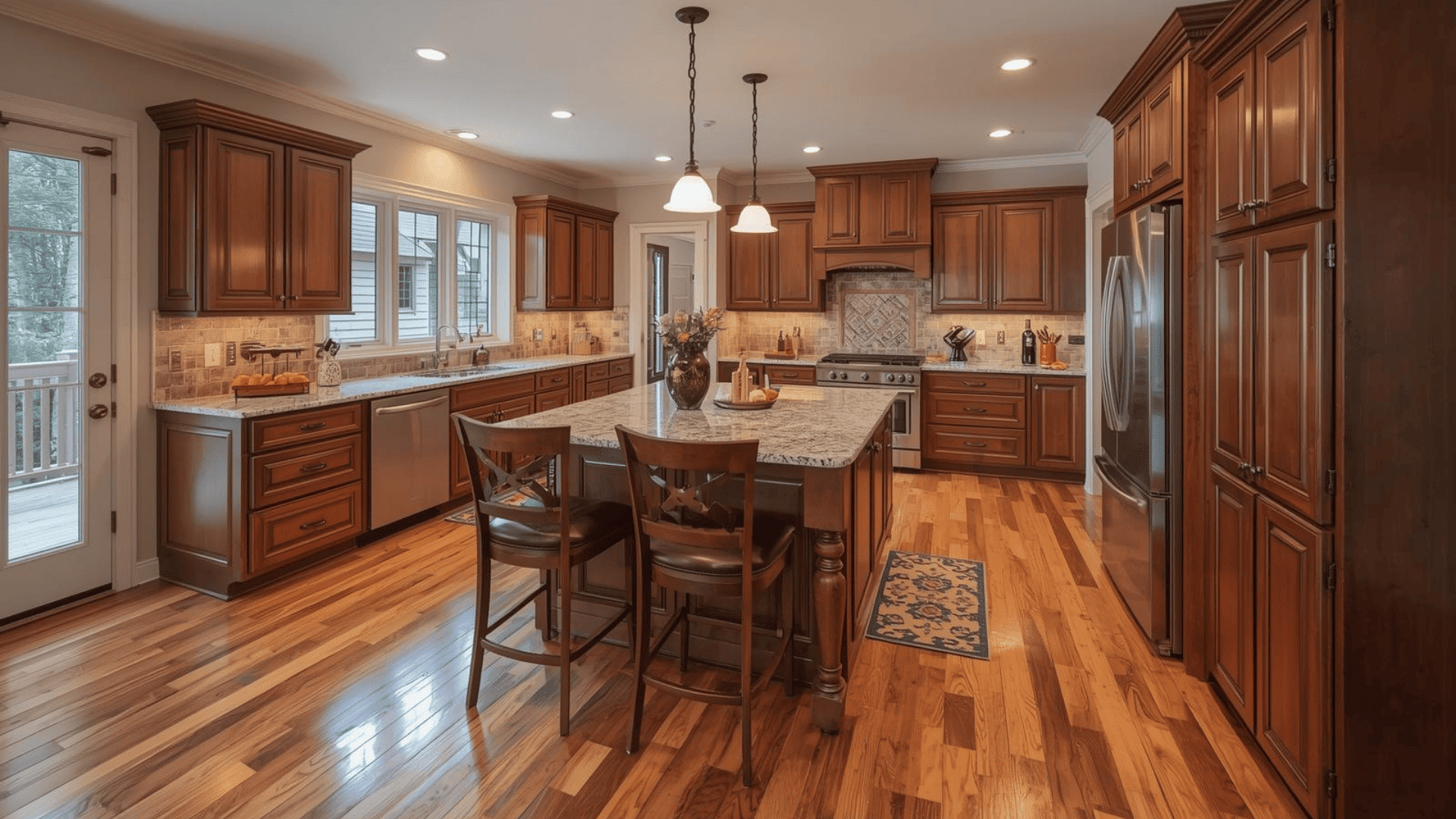
Solid hardwood gives a true wood look, and modern sealers help resist spills and scuffs, but it needs regular care. Standing water can cause cupping, swelling, or stains.
Costs $6–$20 per sq ft. Best for low-traffic, traditional kitchens.
Choose a matte or satin finish to hide scratches better than glossy floors.
- Pros: Authentic wood beauty, can be refinished many times, and has strong long-term value.
- Cons: Sensitive to water, needs ongoing maintenance, and can scratch or dent in busy kitchens.
- Best For: Low-traffic kitchens and homeowners who prioritize a classic, real-wood finish.
7. Hybrid Resilient Flooring
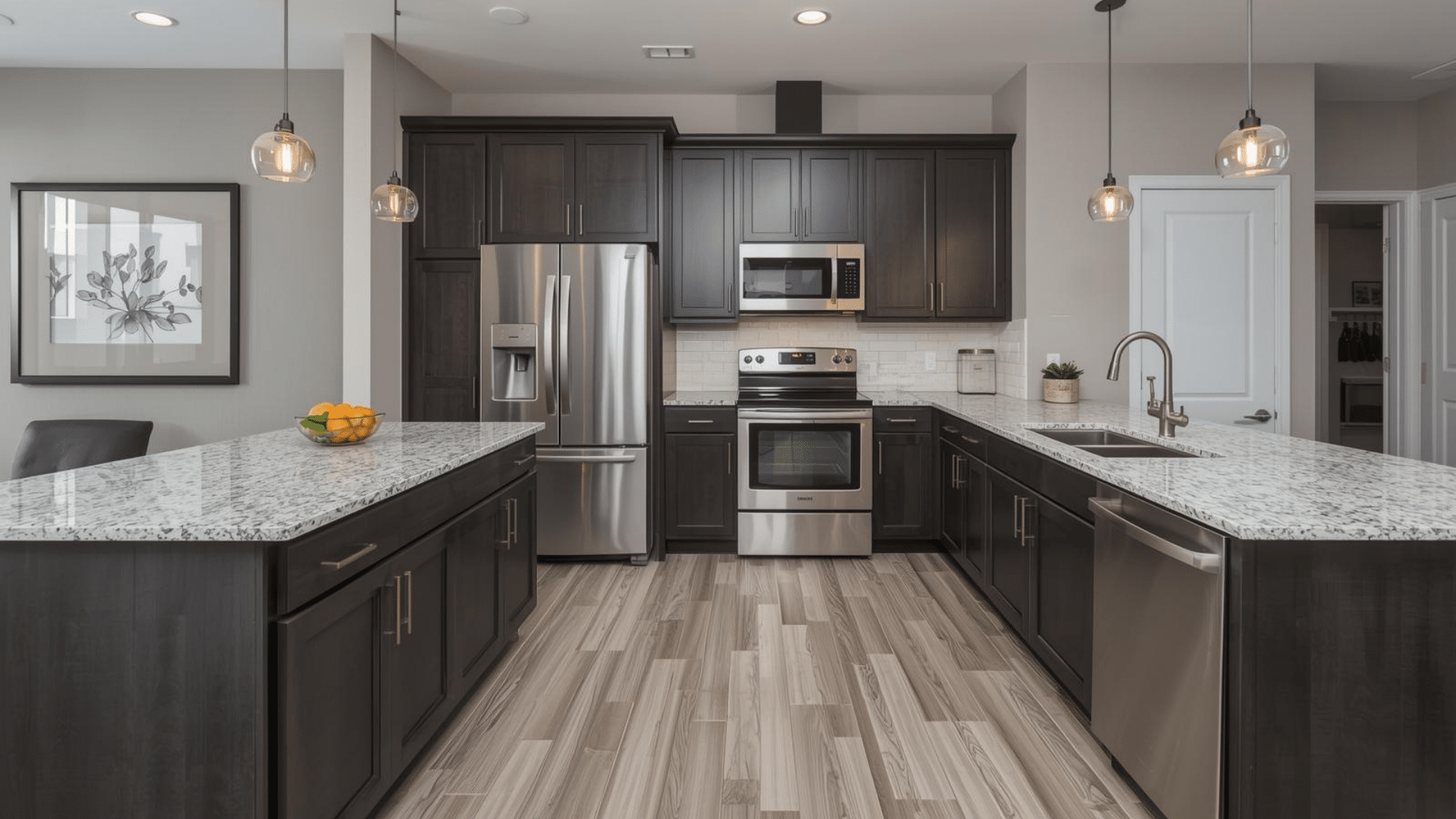
Hybrid rigid-plank flooring includes WPC for cushioned comfort and SPC for extra rigidity and dent resistance. Fully waterproof and durable against scuffs and temperature changes, with low-VOC or recycled options.
Costs $4–$10 per sq ft. Best for eco-minded, low-maintenance homes.
If you want the toughest option in busy kitchens, pick SPC with a 20 mil wear layer and tight click-lock joints.
- Pros: Waterproof, highly durable, stable through temperature swings, and often more comfortable than tile.
- Cons: Quality varies by brand, can sound hollow without proper underlayment, and very cheap styles look less realistic.
- Best For: Busy kitchens, families, and anyone who wants waterproof performance with minimal upkeep.
8. Bamboo Flooring
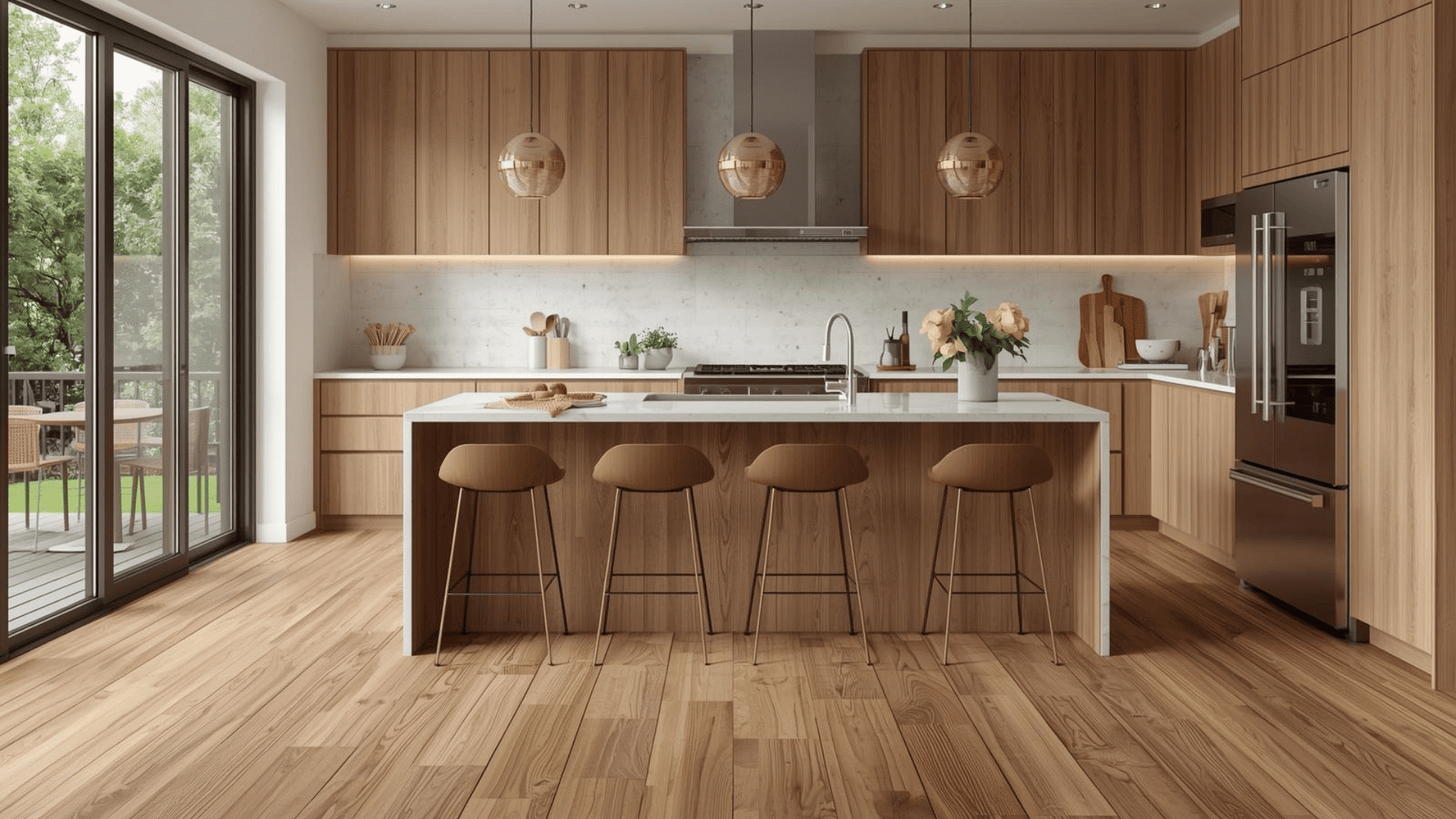
Bamboo flooring offers a clean wood look and good water resistance when factory-finished, but it is not waterproof, so wipe spills fast.
Costs about $2–$8 per sq ft. Great for families and budget-friendly upgrades.
Choose strand-woven, factory-finished bamboo with a durable topcoat for better scratch resistance and easier upkeep.
- Pros: Modern wood look, often affordable, generally more stable than some hardwoods, and can be a more renewable choice.
- Cons: Not waterproof, can scratch or dent depending on quality, and humidity changes can still affect it.
- Best For: Families who want a wood look on a budget and are okay with quick cleanup of spills.
9. Sheet Vinyl Flooring
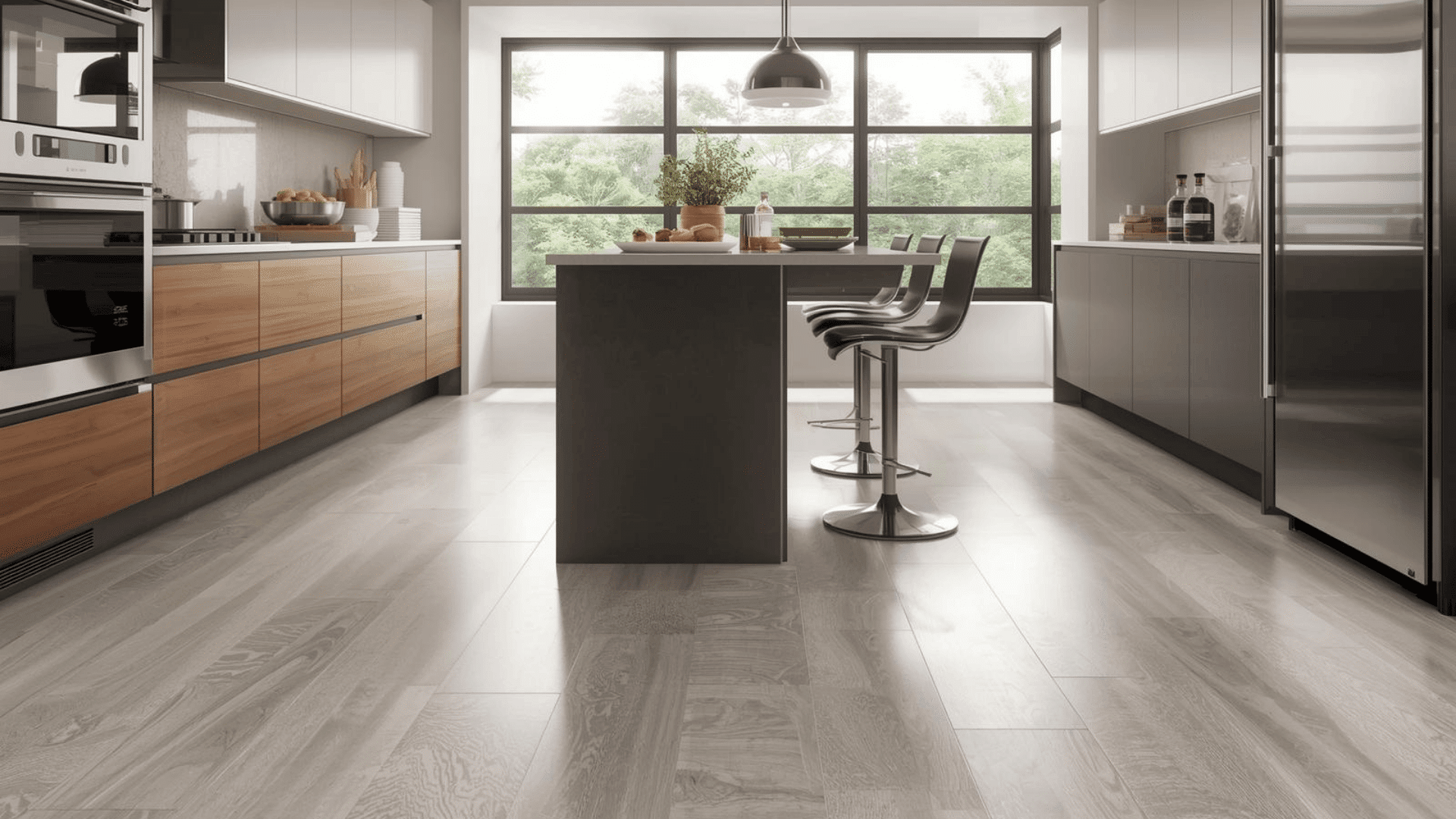
Sheet vinyl can mimic a wood-plank look like the one shown here, giving you the warm, modern style with a mostly continuous surface.
Installed costs are typically $1.50 to $6 per sq ft, making it one of the most budget-friendly, water-smart choices.
Pick a thicker wear layer and a lightly textured finish for safer footing near the sink.
- Pros: Water-resistant, easy to mop, softer underfoot than tile, and very budget-friendly.
- Cons: Can tear with sharp objects, may dent, and seams can lift if installed poorly.
- Best For: Busy kitchens on a budget, rentals, and homes that need fast cleanup.
10. Waterproof Laminate Flooring
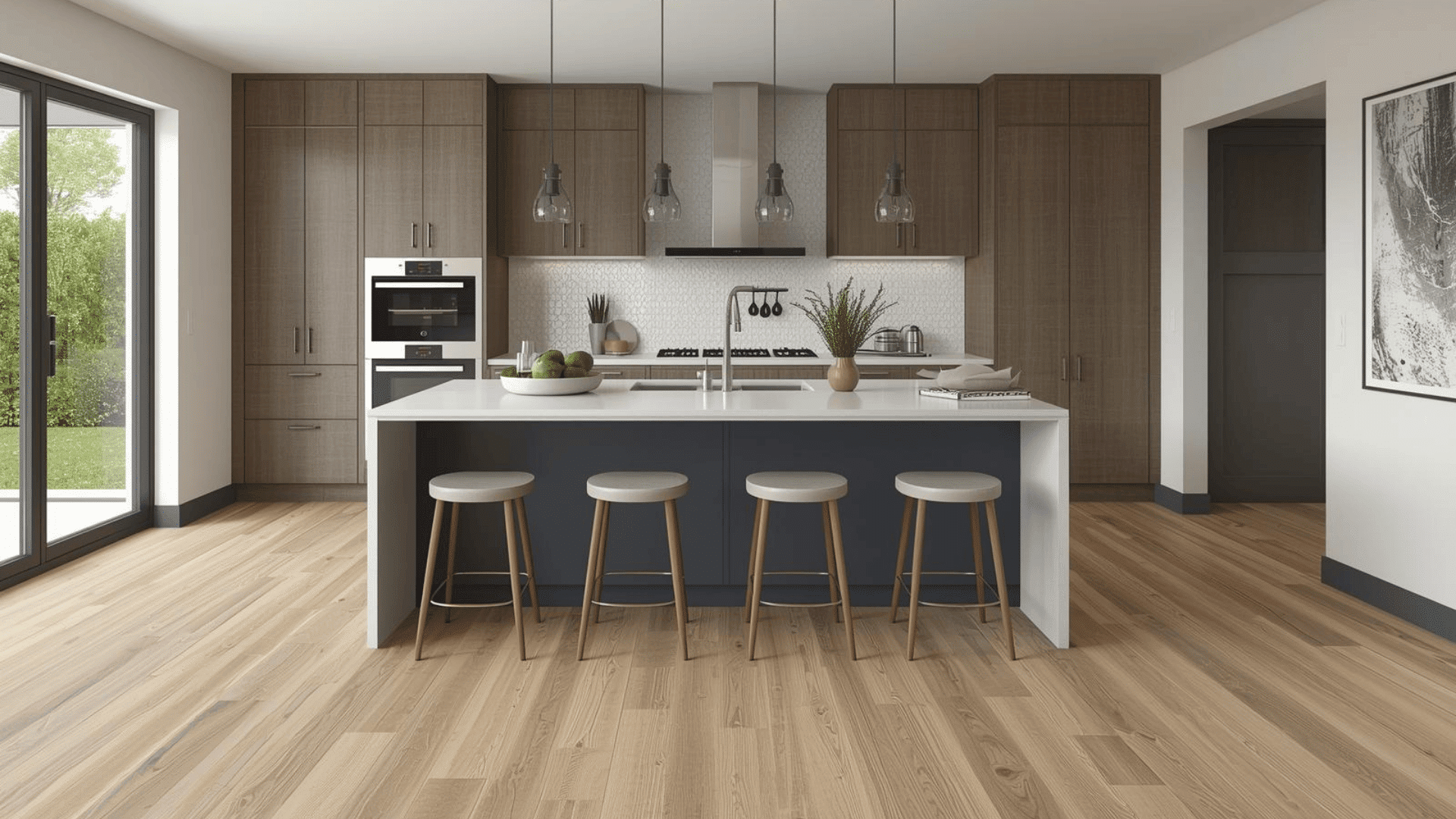
Newer waterproof laminate lines improve joint sealing and base materials, helping reduce swelling compared to standard laminate.
Costs usually range from $2 to $7 per sq ft installed, depending on the brand and thickness.
Look for tight locking systems, a sealed perimeter, and follow the manufacturer’s spill-time guidance.
- Pros: Better moisture performance than standard laminate, scratch-resistant, and a strong variety of styles.
- Cons: Not truly flood-proof, and it still cannot be refinished.
- Best For: Households that want a wood look with better spill tolerance than basic laminate.
11. Cork Flooring
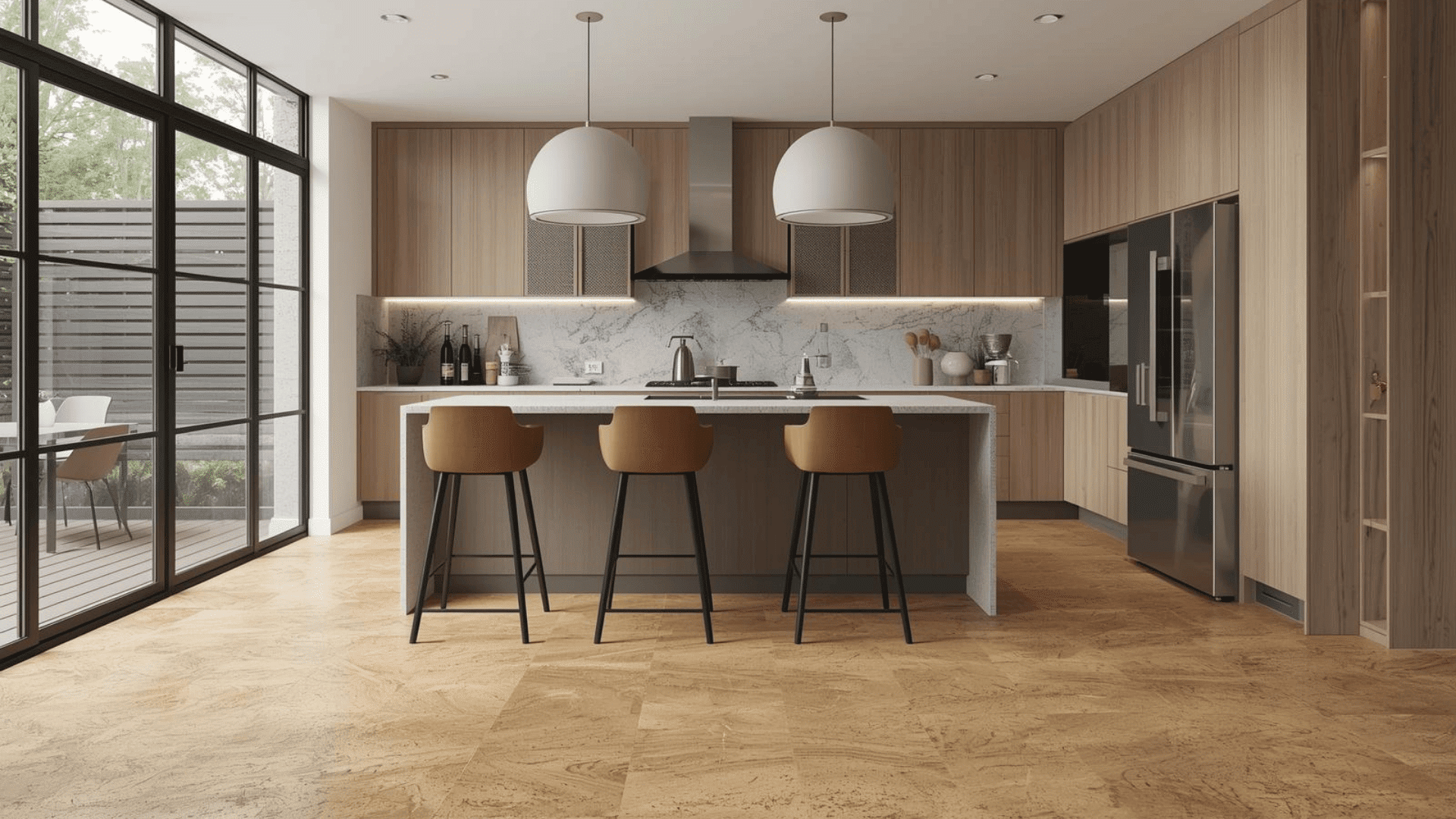
Cork feels warmer and quieter than tile, which can be a relief during long cooking sessions.
Installed costs often range from $4 to $10 per sq ft. It needs a strong finish and quick wipe-ups, but it can work well in kitchens when protected.
Choose a high-quality factory finish, and use felt pads under chairs to avoid dents.
- Pros: Softer underfoot, helps with sound, naturally warm feel, and comfortable for standing.
- Cons: Can dent or scratch, needs a protective finish, and standing water can damage seams.
- Best For: Home cooks who want comfort underfoot and a quieter kitchen.
12. Linoleum Flooring
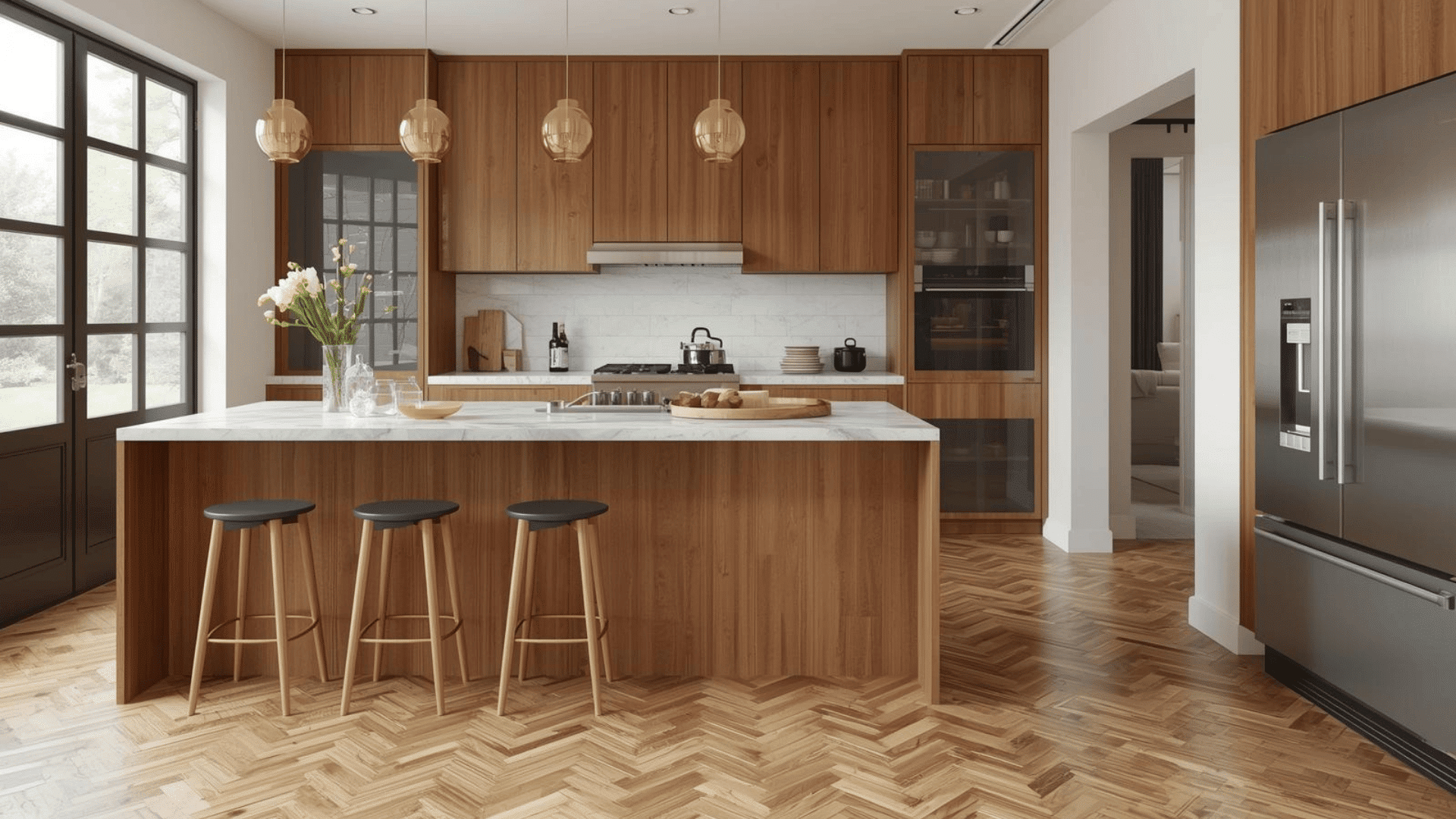
Real linoleum can be installed in patterns that mimic wood looks, including herringbone-style visuals like the one shown here.
Costs typically run $4 to $11 per sq ft installed, depending on whether you choose sheet or tile format.
Pick a heat-welded sheet install (when available) for fewer seams and easier cleaning.
- Pros: Durable, comfortable underfoot, naturally antimicrobial, and available in many colors.
- Cons: Needs sealing and care, can stain if neglected, and may yellow with prolonged sun exposure.
- Best For: Eco-minded homes that want a resilient floor with a softer feel than tile.
13. Concrete Flooring (Polished Or Sealed)
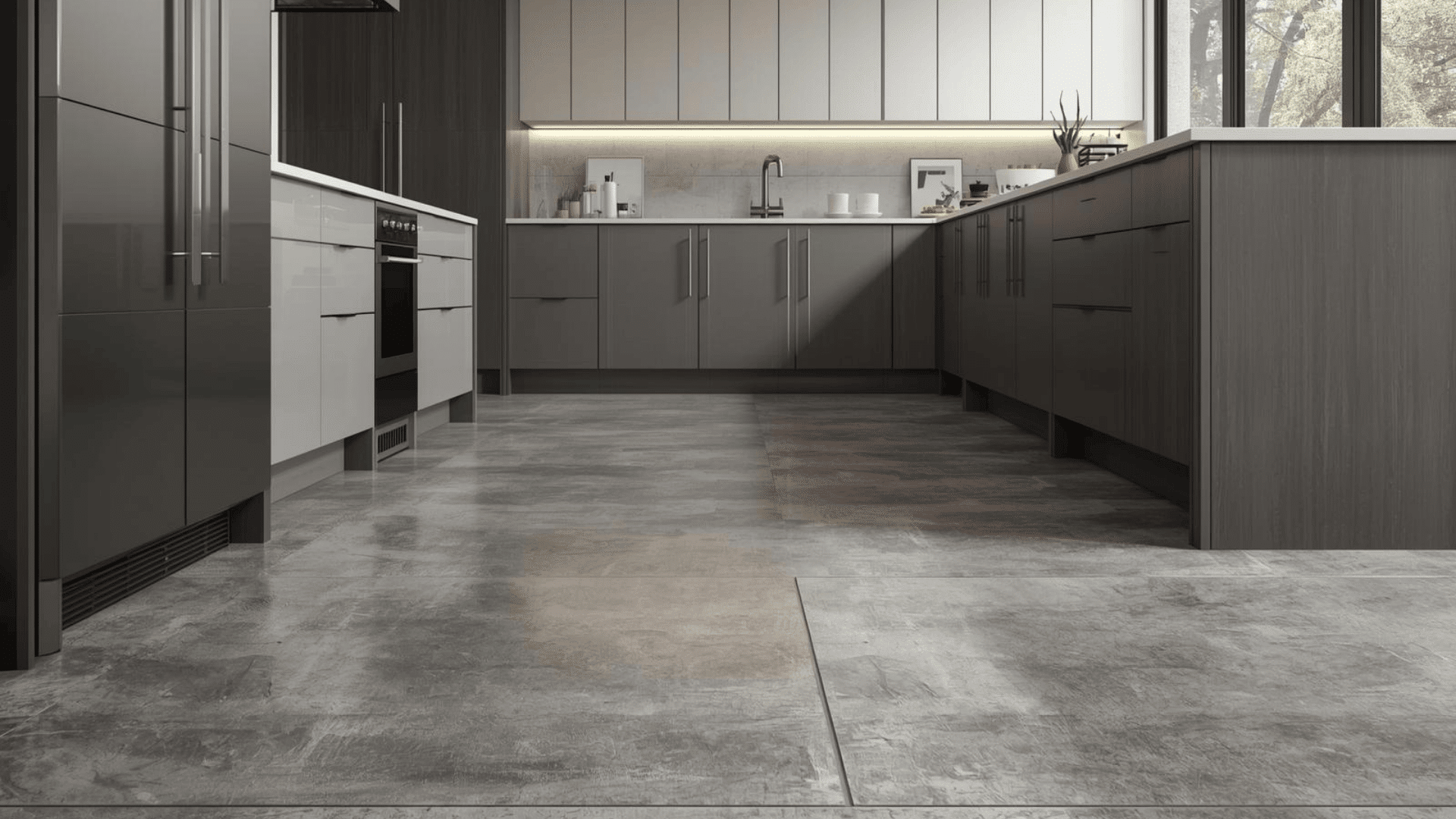
Concrete gives a clean, modern look and handles heat well, but comfort depends on rugs and footwear.
Pricing varies widely, often $3 to $15 per sq ft, based on prep, polishing level, stains, and sealers.
Use anti-fatigue mats at the sink and prep zone, and maintain the sealer to prevent staining.
- Pros: Tough, heat-friendly, modern look, and works well with radiant heat.
- Cons: Hard underfoot, can crack, and needs sealing to resist stains.
- Best For: Modern kitchens, slab homes, and homeowners who want a clean look.
14. Terrazzo Flooring
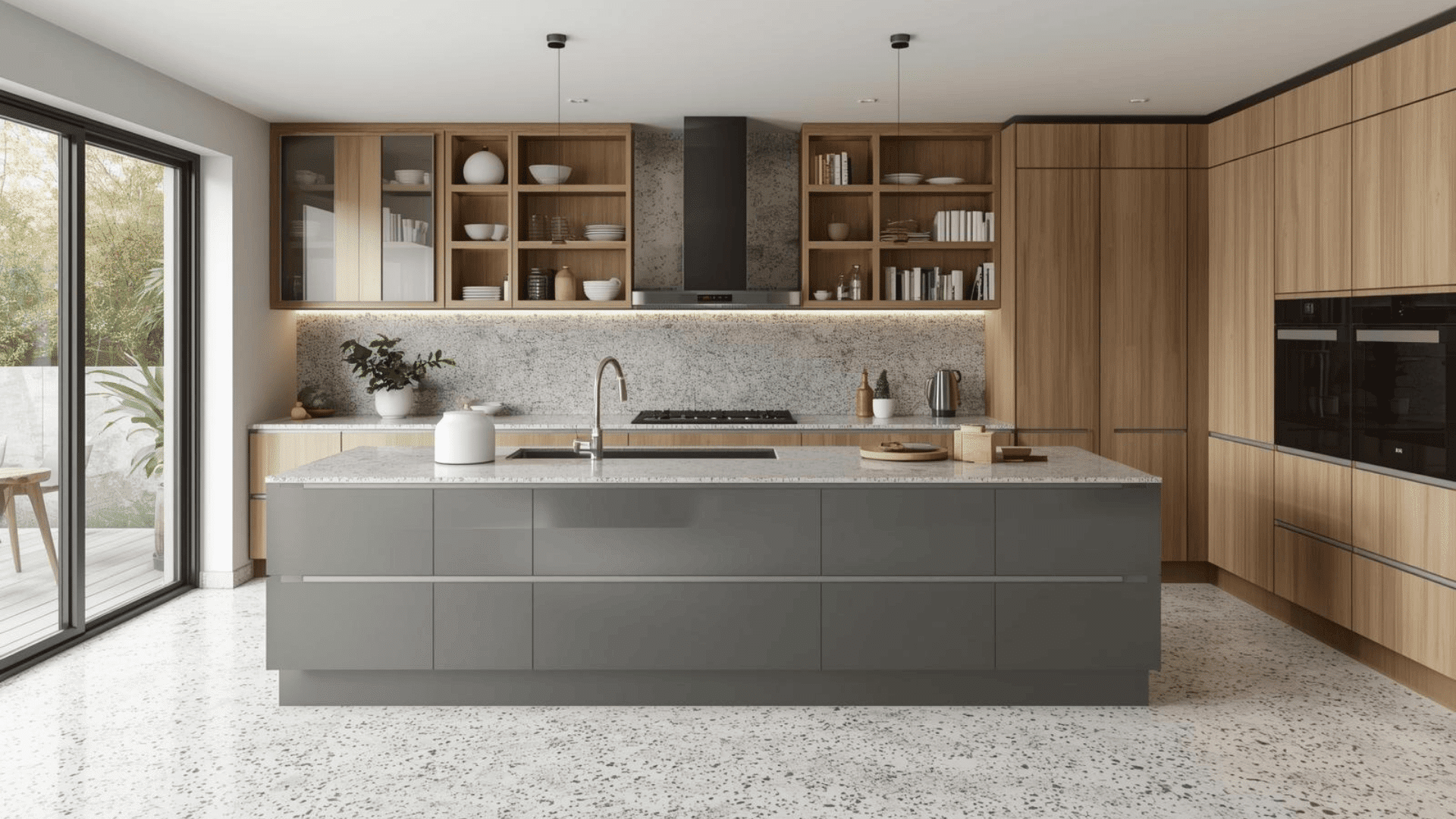
Terrazzo blends stone chips in cement or resin for a smooth, high-end surface that lasts for decades.
Installed costs commonly range from $15 to $40+ per sq ft, so it is a premium pick.
Choose a honed finish for slip resistance, and plan for professional installation.
- Pros: Extremely long-lasting, stain-resistant (when sealed), and visually striking.
- Cons: High cost, hard underfoot, and repairs require skilled pros to blend properly.
- Best For: High-end remodels and homeowners who want a long-term statement floor.
15. Epoxy Resin Flooring
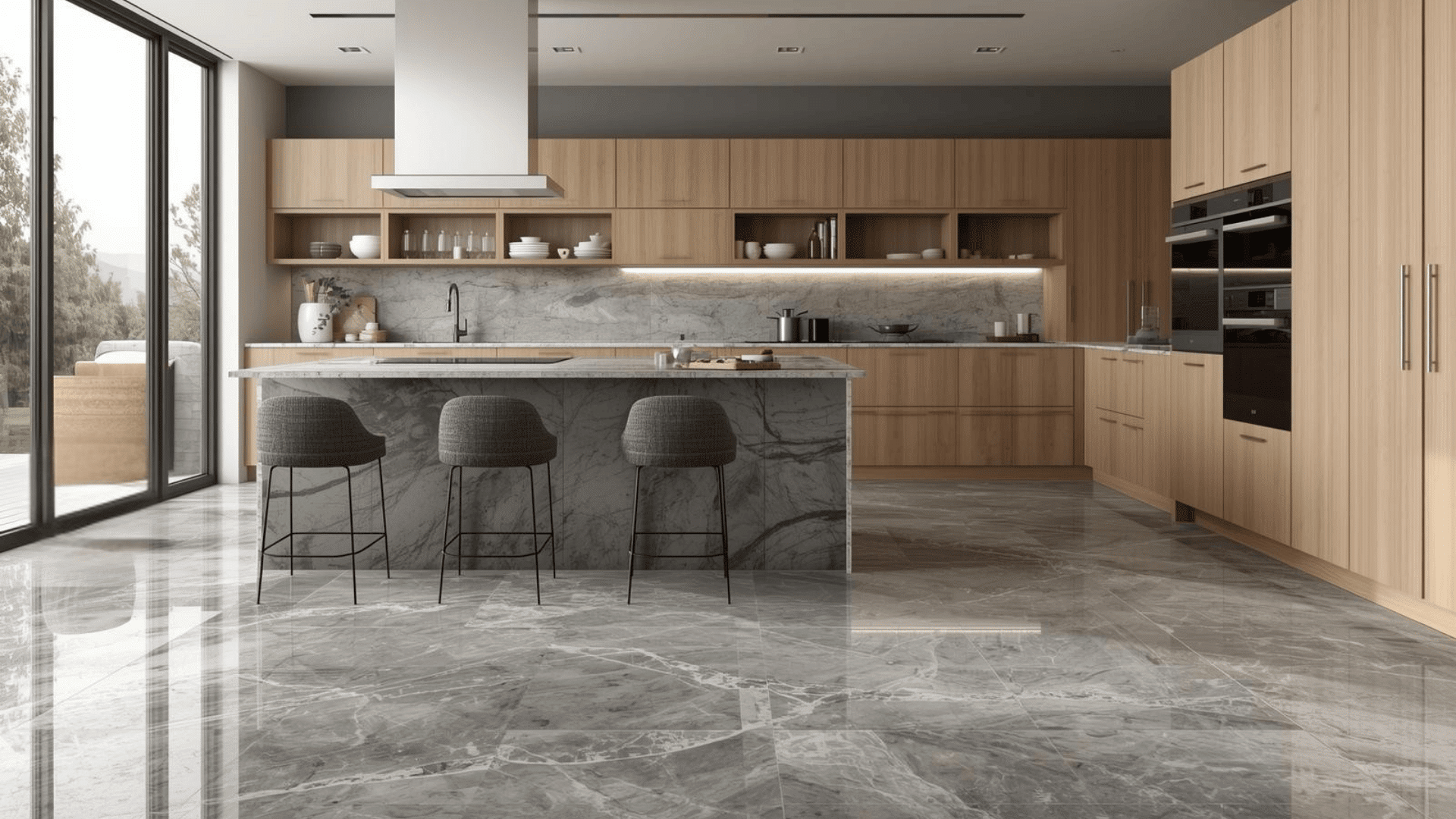
Epoxy can be finished with a high-gloss, stone-like look that gives kitchens a sleek, continuous feel and wipes clean fast.
Pricing is often $4 to $12 per sq ft, depending on prep and finish (solid, flake, metallic).
Choose a slip-resistant topcoat, especially if kids and pets run through the kitchen.
- Pros: Clear, water-resistant, easy to clean, and highly stain-resistant.
- Cons: Subfloor prep matters, can scratch without a strong topcoat, and DIY installs can fail.
- Best For: Low-maintenance kitchens, utility-forward spaces, and households that want easy cleaning.
16. Brick Or Clay Pavers
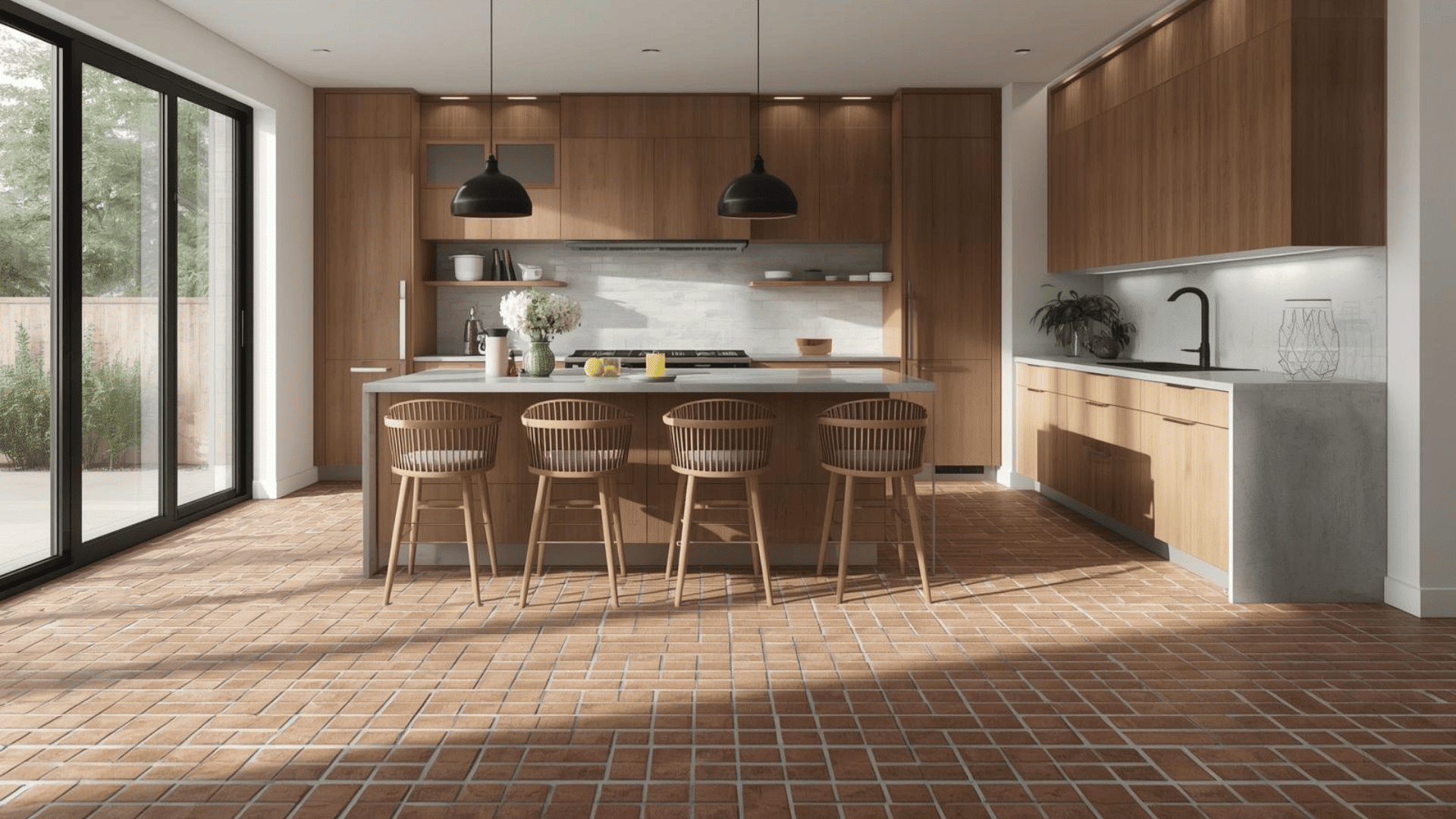
Brick brings warmth and texture, but it needs sealing and grout care. Installed costs are commonly $10 to $25 per sq ft, depending on materials and labor.
Use a sealed surface and a flatter brick profile to make sweeping and mopping easier.
- Pros: Cozy, classic character, durable, and good traction.
- Cons: Many grout lines, needs sealing, and can feel uneven and hard underfoot.
- Best For: Farmhouse and rustic kitchens where style matters as much as durability.
17. Rubber Flooring
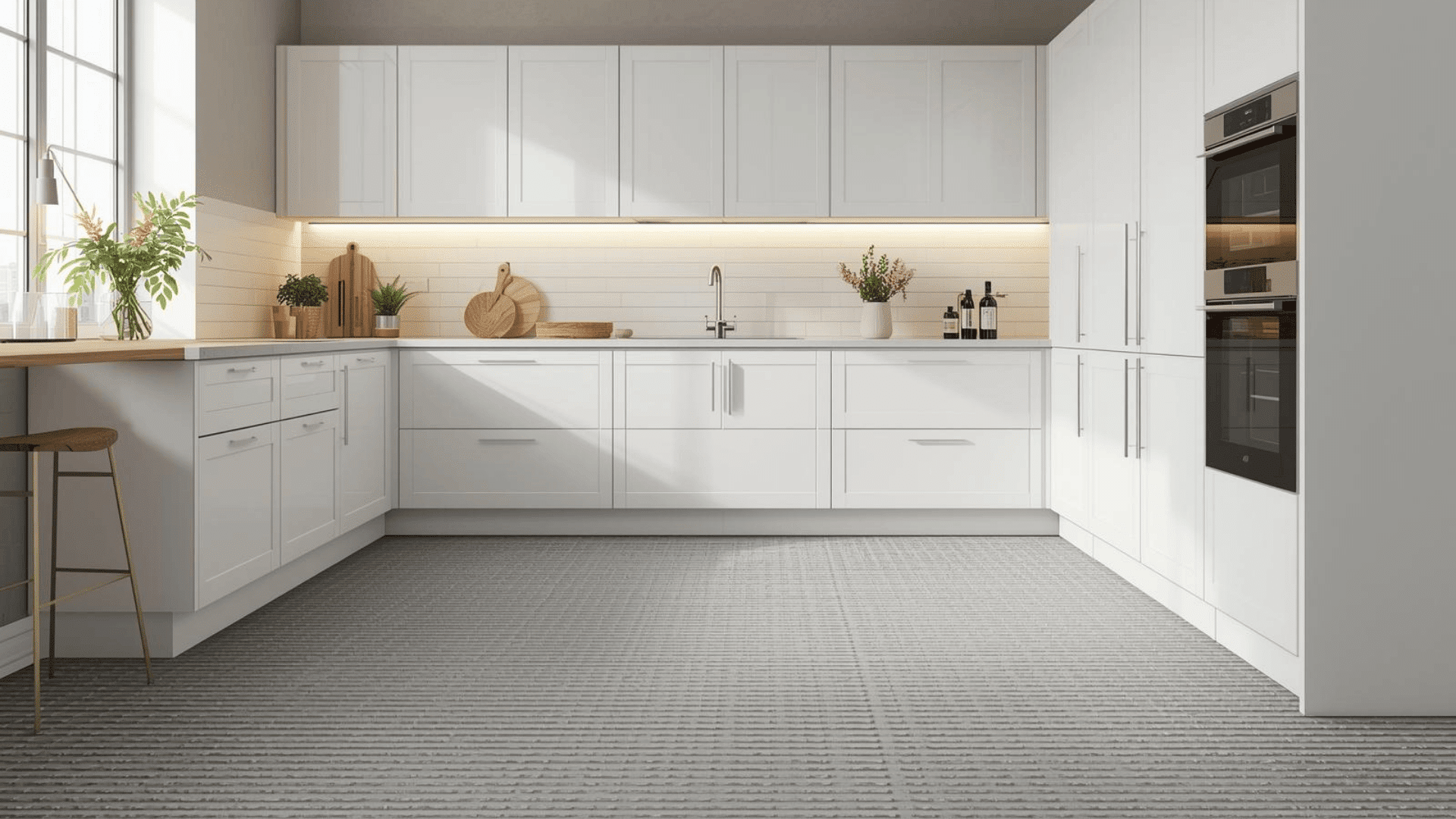
Rubber is not just for gyms. In kitchens, it offers grip, quiet, and comfort for standing.
Costs usually run $4 to $12 per sq ft installed, depending on thickness and format (tiles or rolls).
Pick a textured, commercial-grade surface and confirm it is rated for residential kitchens.
- Pros: Very slip-resistant, cushioned underfoot, quiet, and easy to clean.
- Cons: Limited home decor styles, can fade, and some products can mark under heavy appliances.
- Best For: Home cooks who stand a lot, families, and kitchens where comfort and safety come first.
Best Kitchen Flooring by Specific Needs
Your situation determines the best floor for kitchen use. This comparison shows which materials work best for common needs and constraints you might face.
| Need | Top Picks | Key Note |
|---|---|---|
| Waterproof | Sheet vinyl, Porcelain tile, Waterproof LVP | Waterproof surface; warranty often excludes floods and poor installation |
| Affordable | Sheet vinyl, Budget LVP, Water-resistant laminate | Save with click-lock and simple layout; don’t skimp on wear layer |
| Kids + Pets | LVP, Porcelain tile, Sheet vinyl | LVP balances scratch resistance and comfort; tile is the toughest, but hard |
| Small Kitchens | Light LVP, Large-format tile, Sheet vinyl | Light tones and fewer seams make spaces feel bigger |
| Resale Value | Engineered hardwood, Porcelain tile, Quality LVP | Neutral looks sell best; durability matters most |
Match your biggest priority to the right material. The best floor for kitchen spaces solves your specific challenges, not just general requirements.
Community Insights: What Homeowners Wish They Knew First
Real kitchens reveal stuff you cannot fully judge in a showroom. These homeowner stories highlight the small day-to-day annoyances (and wins) that often show up after install.
My Grout Got Dirty Fast
I thought I did everything right, because “The countertops are done in a simple 4×4 ceramic with a light beige grout and have been perfect. The grout is easy to clean and hasn’t cracked at all.” But the floor was the complete opposite: “Our floors though are a different story. They dirty REALLY easily and are virtually impossible to clean!” I even said, “I have to SCRUB with grout cleaners and it still doesn’t do a great job (and takes forever).” – DoItYourself.com
Sheet Vinyl Was The Easiest To Keep Clean
I went with sheet vinyl and honestly, “absolutely love it” because it’s “easy to clean and if we get sick of it, easy to replace.” I liked that it wasn’t a complicated future project either: “pull up the trim, lift it up, put new down, tape, and put new trim down. Simple.” – Houzz
Engineered Wood Looks Amazing, but Leaks Are Scary
I loved the look, but I hit my limit after water problems: “We are confronting the second of two very expensive repairs to our engineered hardwood floor in the kitchen, due to water damage.” The first was “a leak while we were on vacation.” The second was “a minor water spill” that still “resulted in warping and lifting of the floor.” And yeah, I said it: “I have HAD it with engineered hardwood.” – Houzz
Personal stories make the trade-offs clear. Pick the floor that matches your daily mess, comfort needs, and maintenance habits so it still feels right years later.
Maintenance and Care Guide for Kitchen Floors
Even the best kitchen floor needs regular care to stay in top shape. Kitchens see daily spills, foot traffic, and grime, but a few simple habits can prevent long-term damage and keep your floors looking their best.
- Remove Grit Daily: Sweep or vacuum to prevent dirt from scratching and wearing down the surface.
- Clean Spills Quickly: Wipe up water and grease right away to avoid stains and finish damage.
- Seal Grout Periodically: Reseal tile grout every 1–2 years to block moisture and reduce discoloration.
- Use Proper Cleaners: Stick to manufacturer-approved products for hardwood and LVP to protect finishes.
- Protect Furniture Legs: Use felt pads to prevent scratches from chairs and tables.
- Use Area Mats: Place mats near sinks and stoves to reduce wear in high-use zones.
Consistent maintenance makes a noticeable difference over time. With these small daily and seasonal care steps, your kitchen floor can stay durable, clean, and attractive for years of real-life use.
Final Thoughts: Your Kitchen, Your Choice
There’s no universal answer to what’s the best floor for kitchen spaces. What works perfectly in one home fails in another.
Your cooking habits matter. Your cleaning style matters. Your budget and timeline matter. Even your willingness to deal with maintenance makes a difference.
You now know exactly what questions to ask before buying. You understand the real trade-offs between materials. You’ve heard from people who lived through the decision.
Now it’s your turn to decide what matters most in your kitchen. Which factor matters the most for you: waterproofing, comfort, budget, or something else?
Drop a comment and share what’s driving your flooring decision.