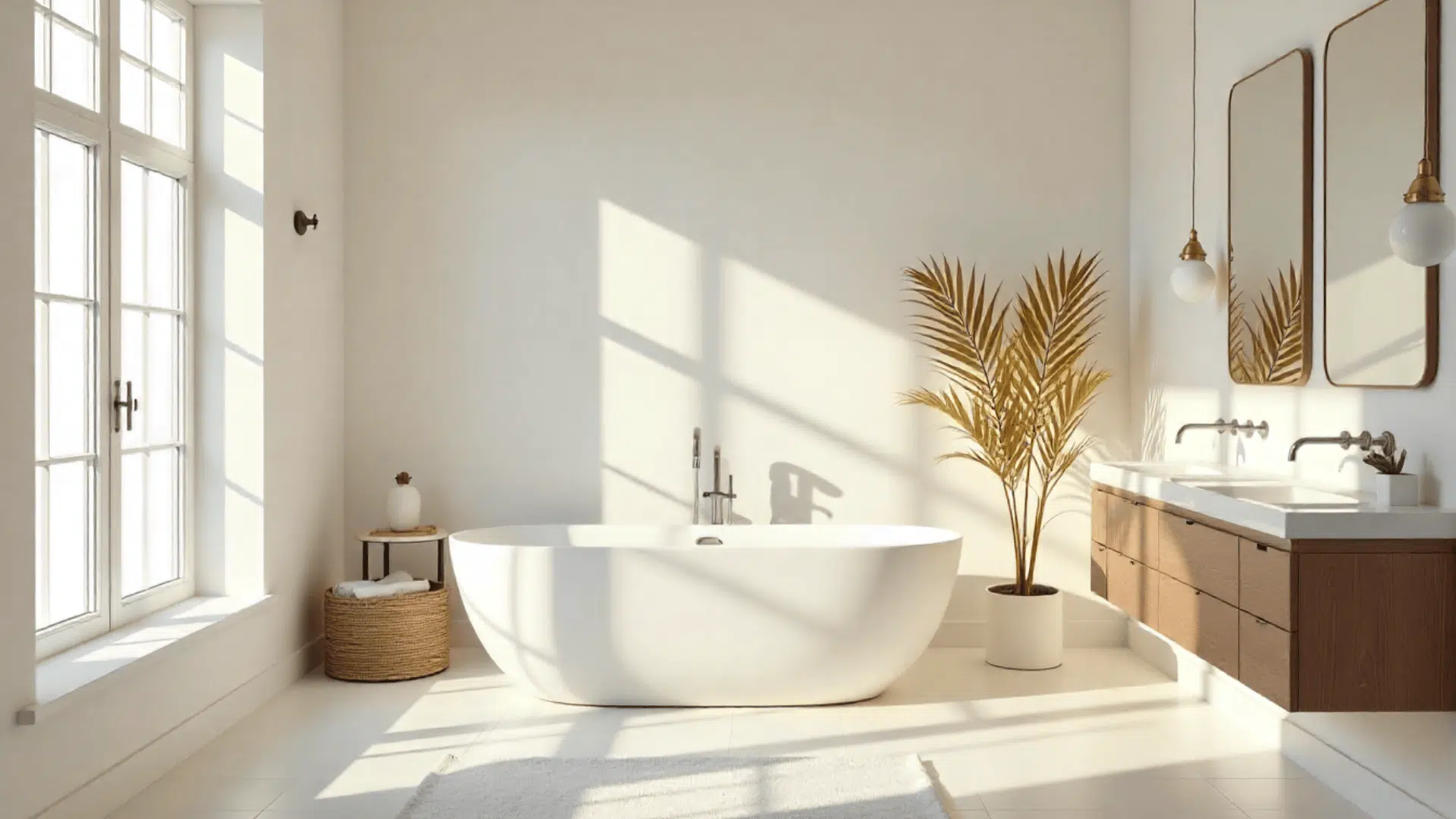
Choosing the best paint color for bathroom spaces can feel like walking into a paint store and getting hit with decision overload.
There are thousands of shades staring back, and somehow every single one looks “right” on a tiny swatch. I’ve seen people spend weeks taping samples to the wall, convinced the perfect color is out there, and honestly, it is.
Bathrooms are just tricky little rooms. Lighting changes everything. Moisture plays its own game. And what looks amazing in the can can turn into something totally different once it’s on four walls.
The best paint color for bathroom walls isn’t only about picking a pretty shade, but it’s about creating a space that actually works day to day.
So what makes a bathroom color truly shine? That’s where things get interesting.
How to Choose the Best Paint Color for Your Bathroom
Picking the right shade doesn’t have to feel like rocket science. After styling many bathrooms, it really comes down to a few key factors.
- Consider the bathroom’s natural light: North-facing bathrooms almost always feel cooler, even when they’re bright. South-facing bathrooms tend to glow warmer throughout the day. I’ve worked on spaces where a soft white looked crisp and clean in one bathroom, but turned icy and flat in another simply because of the direction of the light.
- Think about the size: Light colors are a classic go-to for small bathrooms because they reflect light and make the space feel more open. In larger spaces, deeper tones create drama and feel intentional, not heavy.
- Factor in existing fixtures: Toilets, tubs, tile, vanities, most of the time, those aren’t changing. That means the paint color has to play nicely with what’s already there.
- Match it to the mood: Some people want spa energy, soft greens, calming blues, soothing neutrals. Others want something bold and energizing.
- Test before committing: This one is non-negotiable. Paint samples on the wall and live with them for a few days. Bathroom lighting is weird, especially at night. What feels perfect at 11 AM can look totally wrong under vanity bulbs at 9 PM.
Best Paint Color for Bathrooms
Choosing the best paint color for bathroom spaces can feel tricky, but it really doesn’t have to be. The right shade sets the entire mood from calm and airy to bold and dramatic.
1. Soft Sage Green
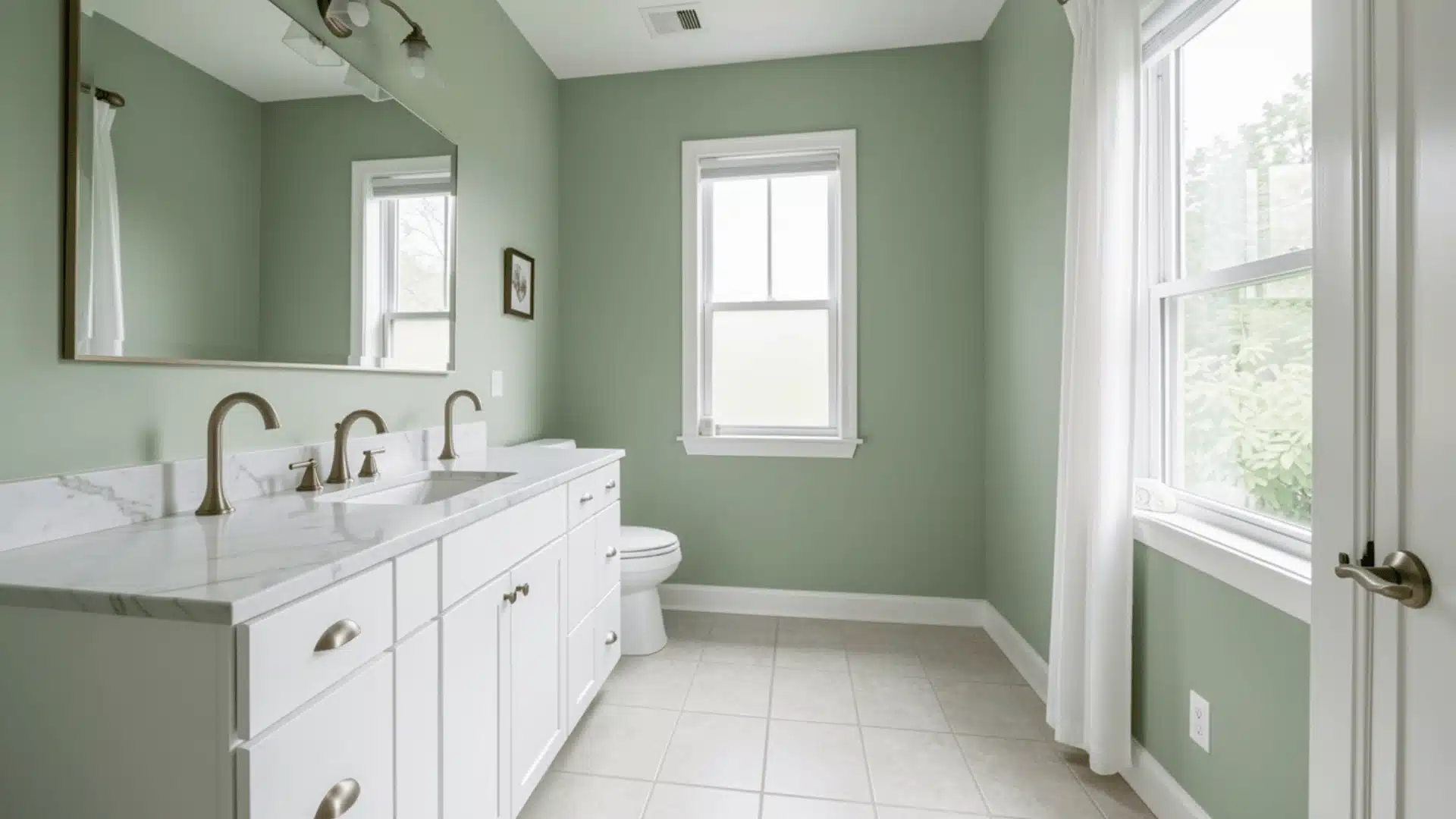
Soft sage green gives your bathroom a calm, earthy vibe. It pairs beautifully with white fixtures and wooden accents.
To get this look, go for muted, gray-toned greens like Benjamin Moore’s Salisbury Green. Keep your towels and accessories in warm neutrals or cream tones to let the walls breathe and stay visually balanced.
2. Muted Teal
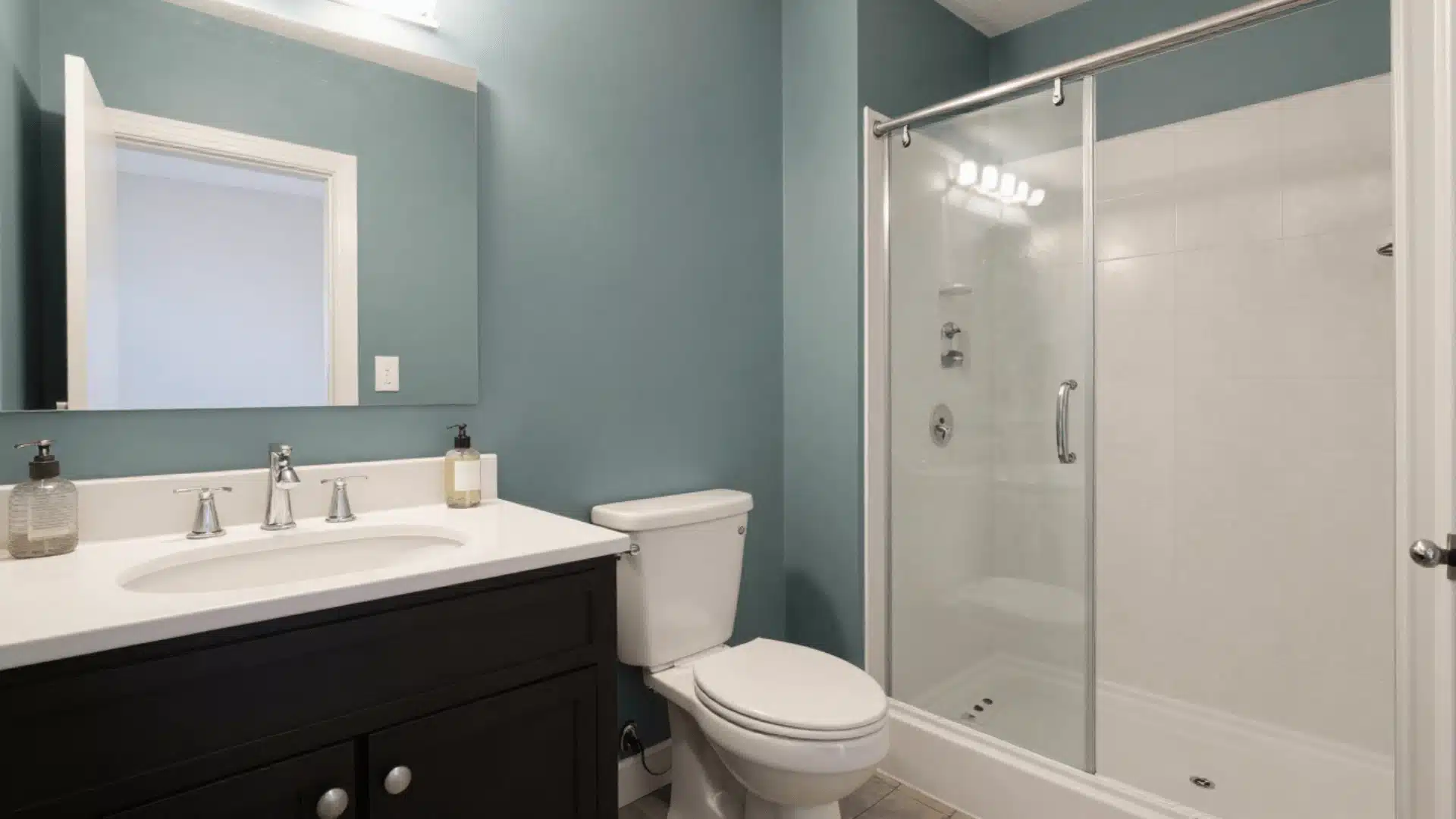
Muted teal sits right between blue and green, and it works surprisingly well in bathrooms. It adds depth without feeling too heavy.
Paint your walls in a soft, desaturated teal and pair it with brushed gold or brass fixtures. White subway tiles and light wood shelving will tie the whole look together effortlessly.
3. Eucalyptus Green
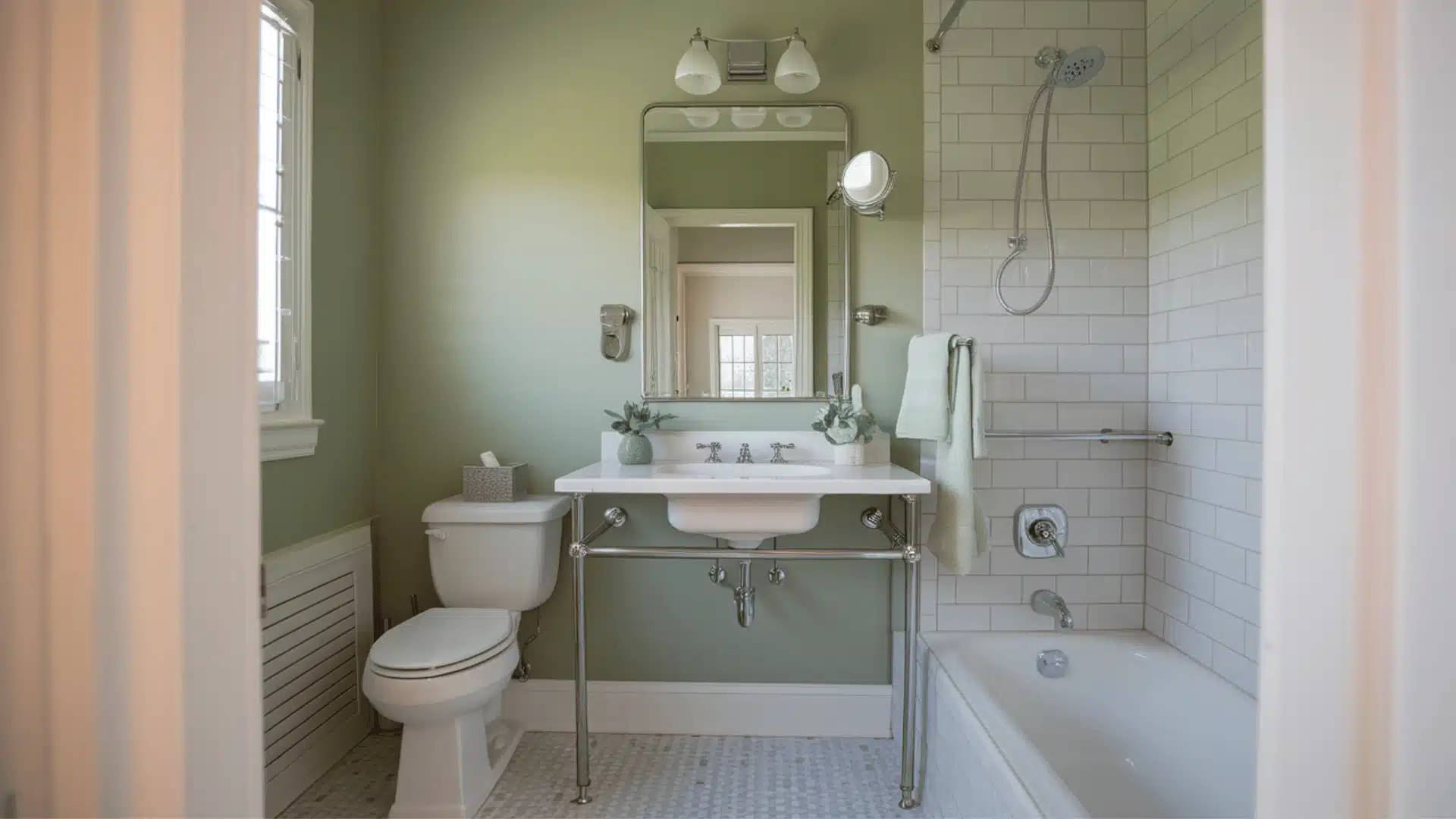
Eucalyptus green is soft, cool, and incredibly soothing. It brings a spa-like feel to your bathroom. Choose a light, gray-washed green with blue undertones for the best effect.
Pair it with matte black hardware, white trim, and a few potted plants. It’s a simple way to make your bathroom feel like a real retreat.
4. Soft Aqua
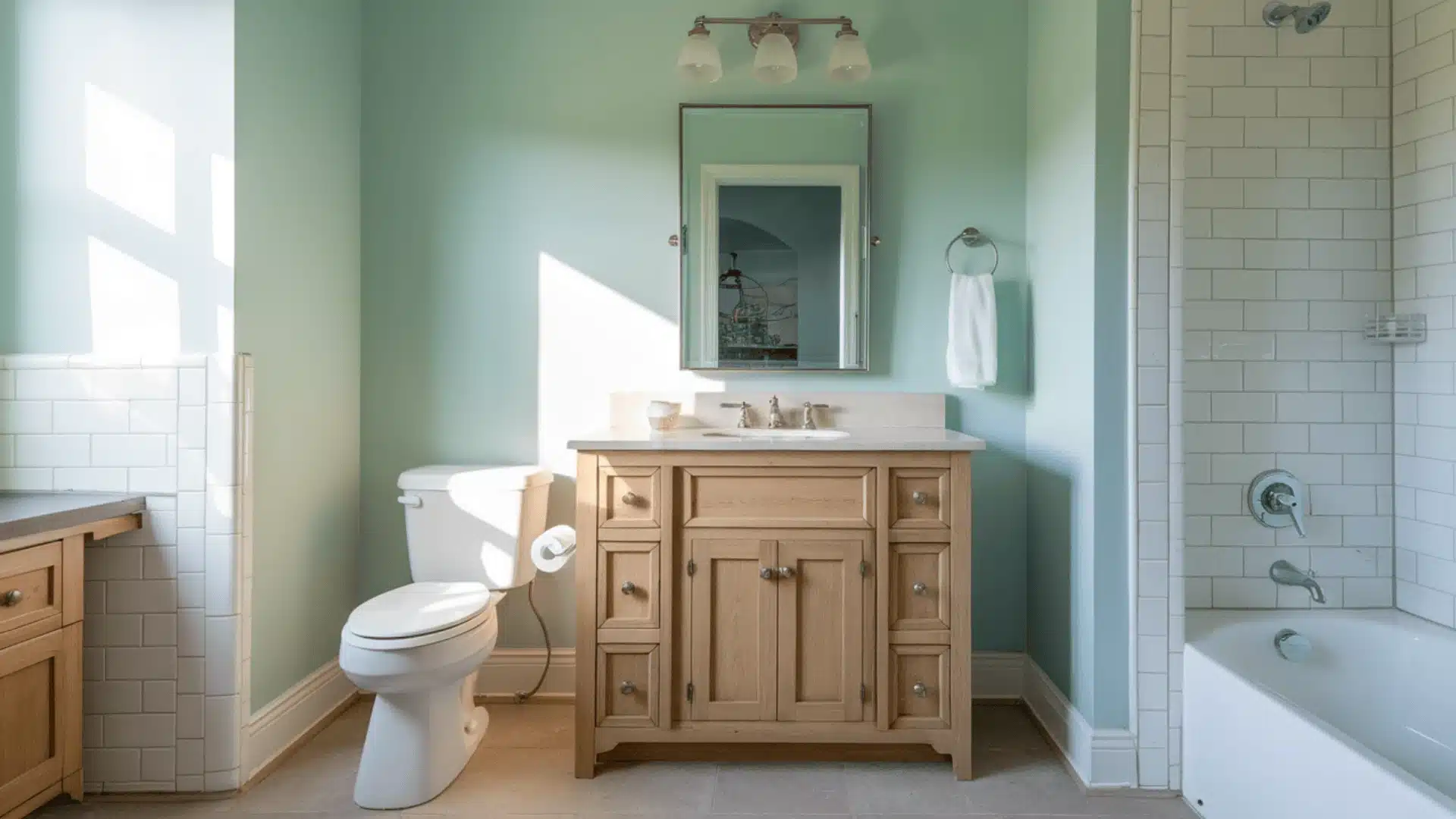
Soft aqua is fresh, airy, and easy to love. It works well in both small and large bathrooms. Go for a pale, watery aqua tone and keep the rest of the space light, think white tiles, chrome fixtures, and minimal decor. It instantly makes the room feel open, clean, and genuinely refreshing every single day.
5. Deep Forest Green
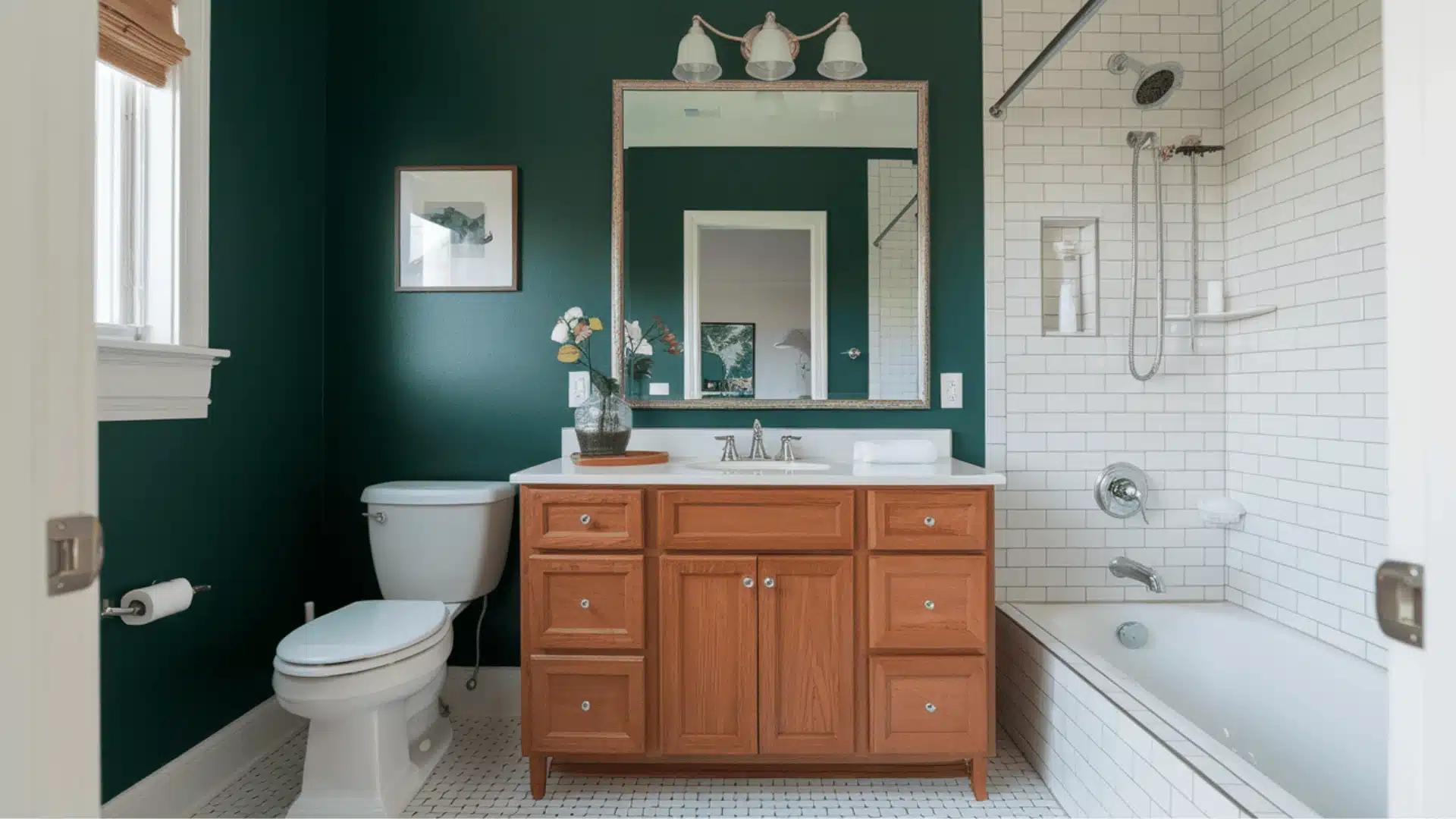
Deep forest green is bold but grounded. It brings richness and drama without goingded a overboard. Use it on all four walls for a moody, cocooning effect.
Pair it with warm brass fixtures, natural stone surfaces, and warm lighting. It’s a daring choice, but honestly, one you won’t regret making.
6. Warm White
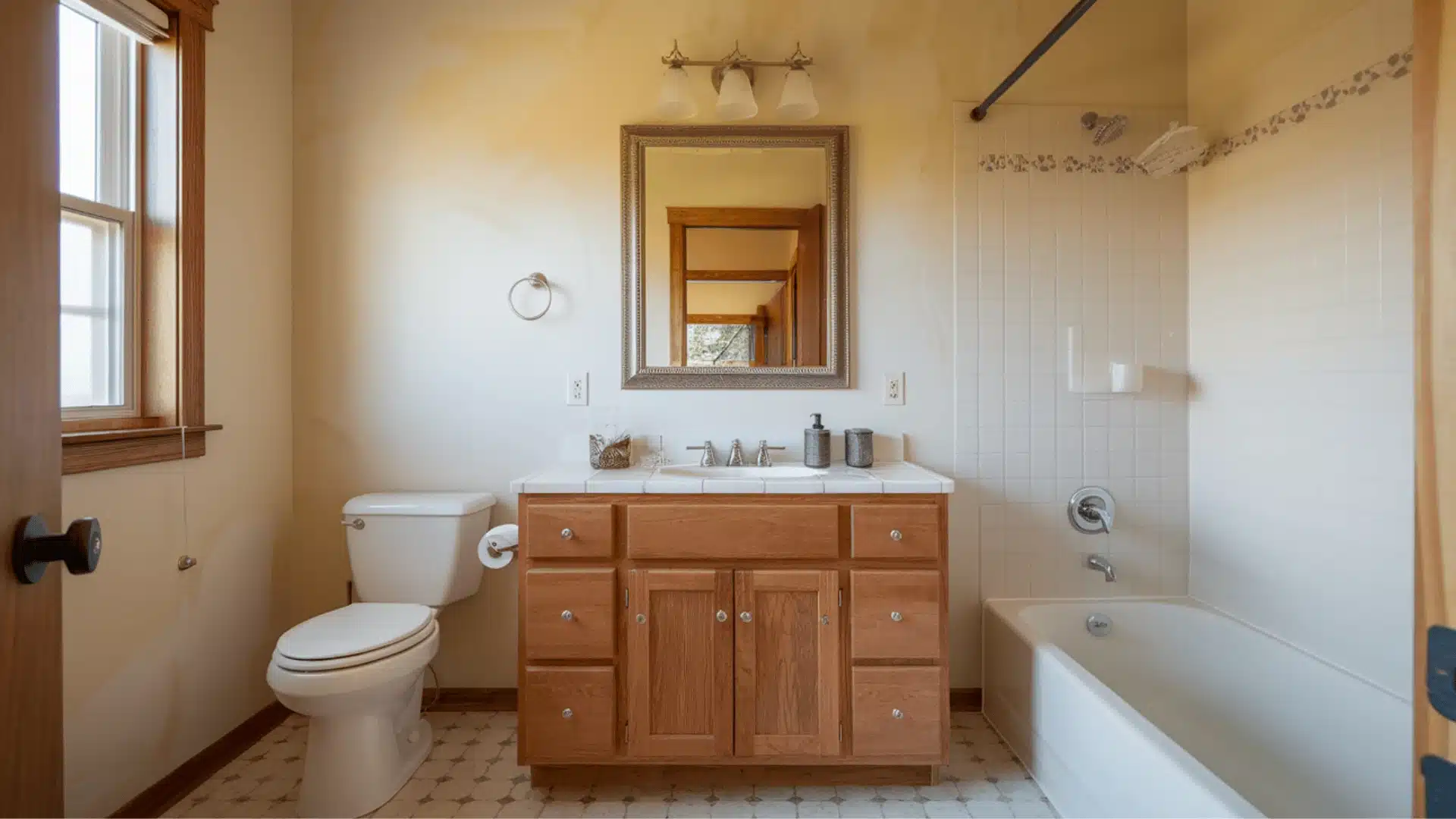
Warm white is evergreen. It makes any bathroom look clean, bright, and bigger than it actually is. Go for whites with soft yellow or pink undertones, like Sherwin-Williams Alabaster, instead of stark, cool whites. Pair it with natural wood tones and soft textiles to keep the space from feeling too clinical or cold.
7. Ivory
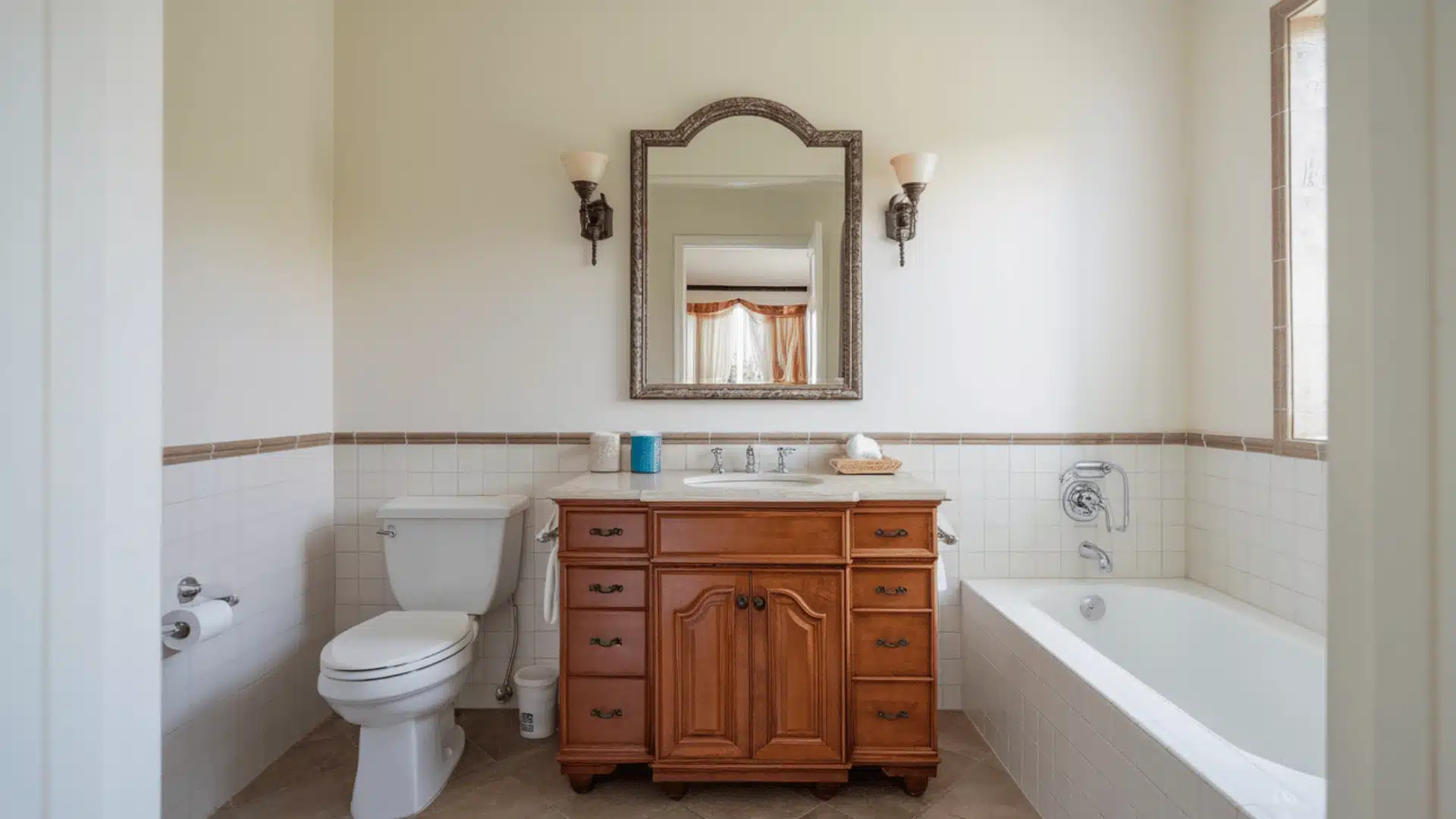
Ivory is warmer and cozier than plain white, and it adds a soft, vintage charm to your bathroom. It works especially well with antique brass or gold fixtures.
Paint your walls a creamy ivory and bring in linen towels and natural textures. The result feels elegant, warm, and effortlessly put together without much effort.
8. Light Greige
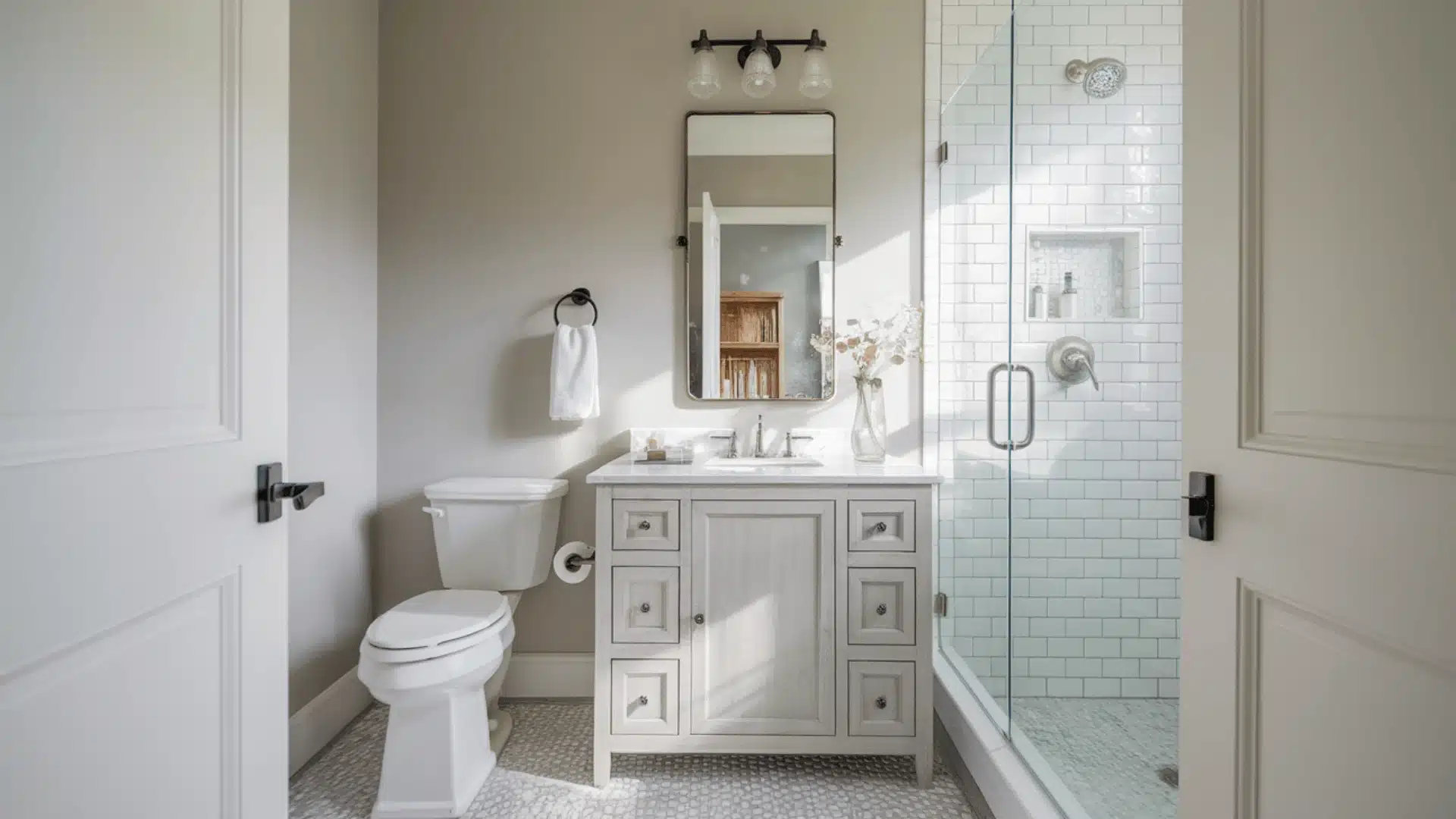
Light greige, that perfect blend of gray and beige, is one of the most adaptable shades out there. It goes with almost everything.
Choose a warm-leaning greige to avoid a cold, flat look and pair it with white trim and brushed nickel fixtures. It’s a safe choice that still looks polished and very intentional.
9. Warm Taupe
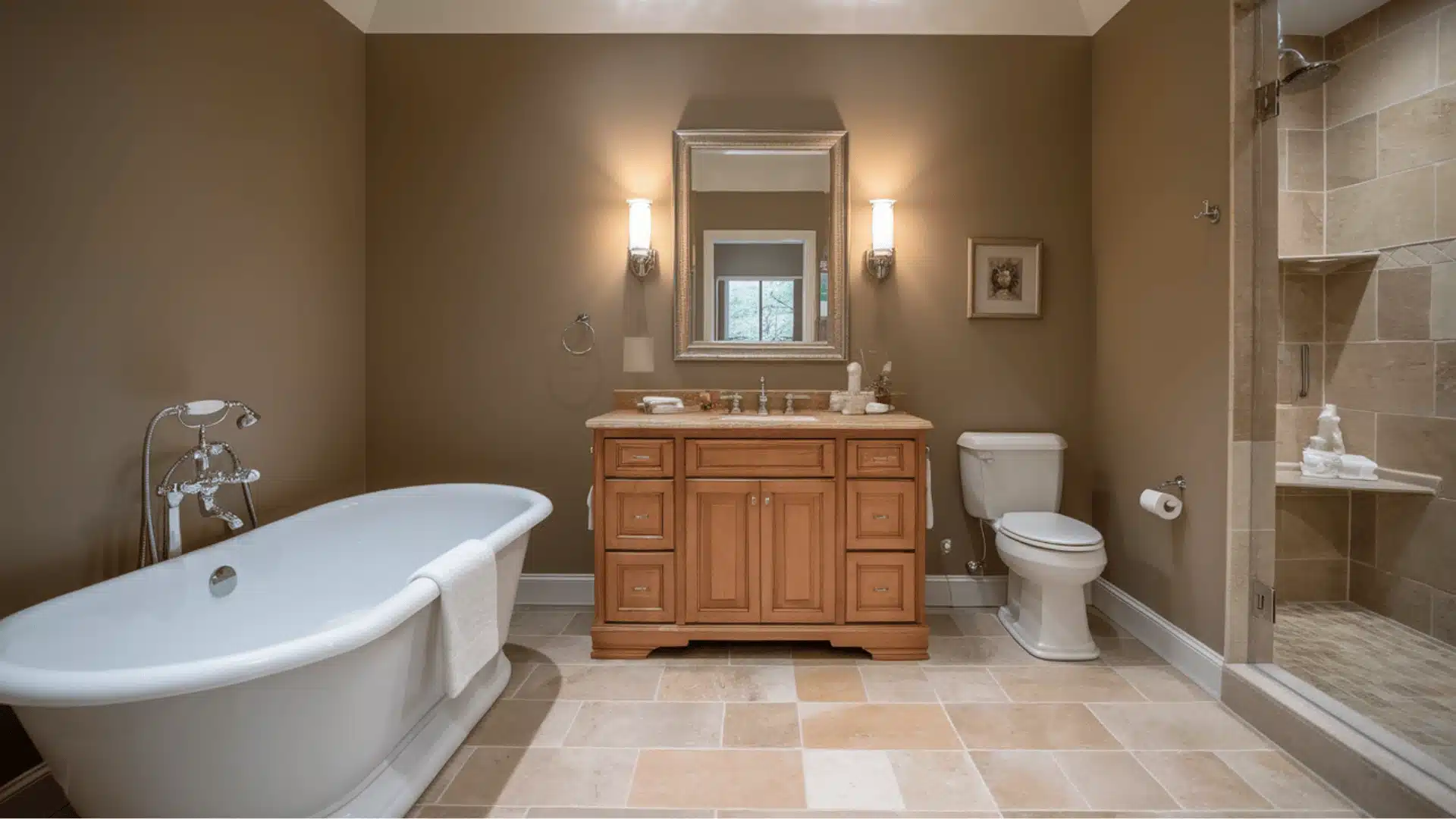
Warm taupe brings a quiet grace to your bathroom. It’s neutral but never boring. Use it on all the walls and layer in textures, think woven baskets, wooden accessories, and soft rugs. It pairs well with both cool and warm fixtures, giving you plenty of flexibility when styling the rest of your decor.
10. Sand Beige
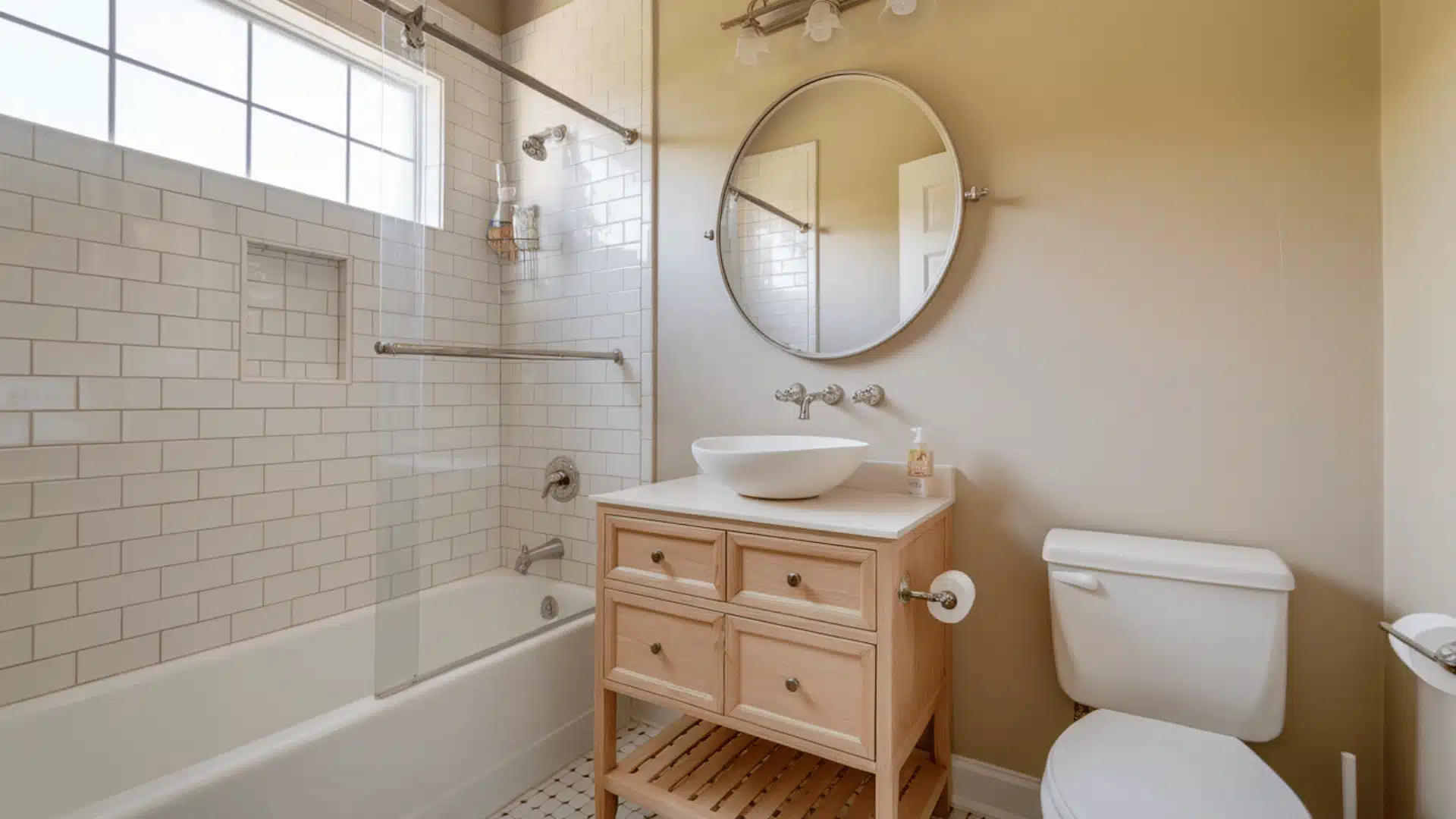
Sand beige feels grounded and natural. It’s the kind of color that makes your bathroom feel warm even on a cold morning.
Pair it with terracotta accents, rattan accessories, and earthy tones to lean into the natural feel. Use a matte finish for a softer, more organic look that ties the entire space together.
11. Mushroom
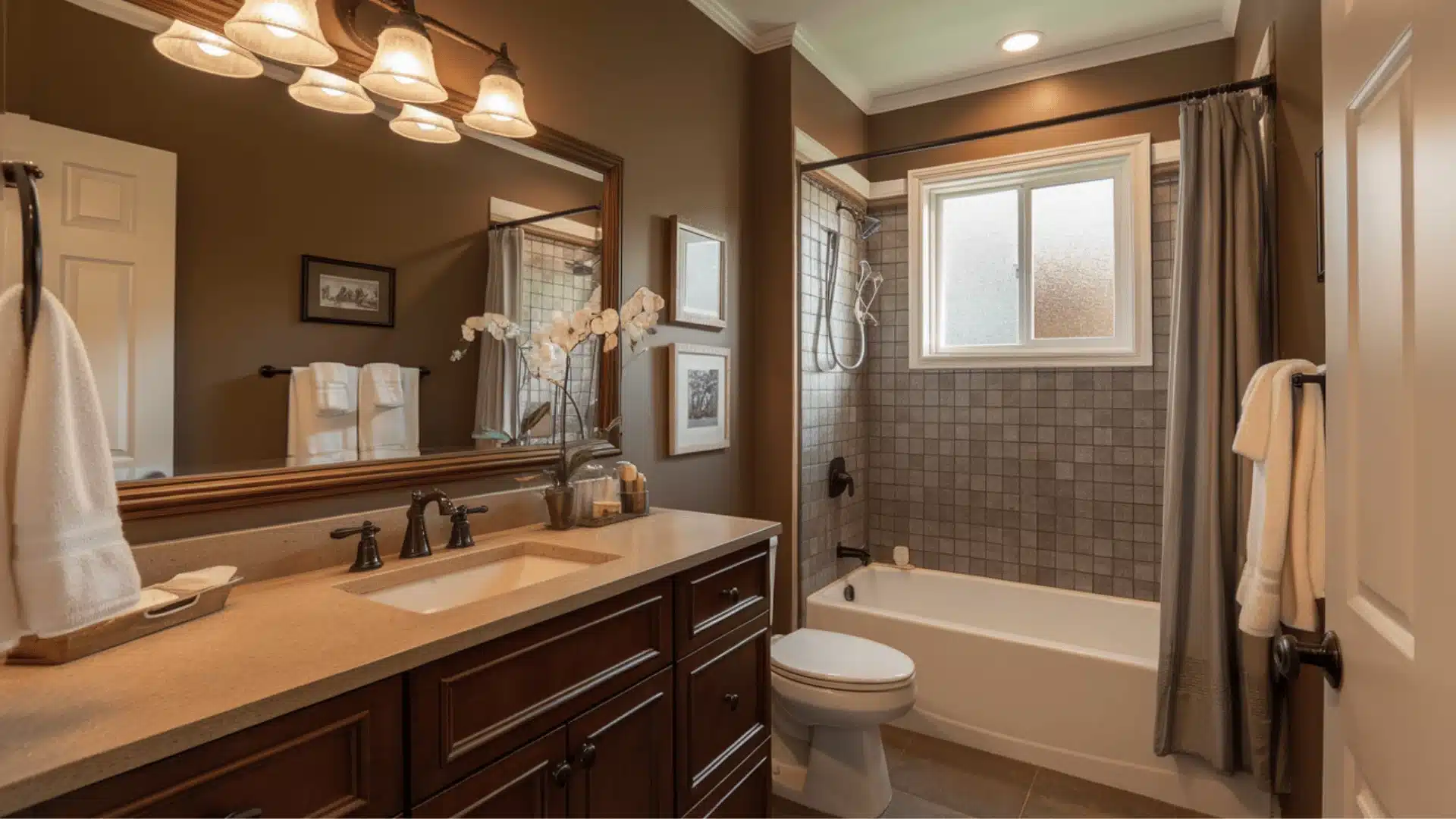
Mushroom is a rich, sophisticated neutral with brown and gray tones working in harmony. It adds warmth without feeling dark or heavy.
Paint your walls in a mid-tone mushroom shade and pair it with matte black fixtures, marble accents, and soft white towels. It’s understated, but it makes a quietly strong visual statement.
12. Stone Gray
Stone gray is cool, calm, and incredibly adaptable. It pairs well with chrome, silver, or white fixtures for a clean, modern look.
Go for a medium-toned stone gray alongside white trim and large-format tiles. Keep accessories minimal. This color really works best when the space stays simple and beautifully uncluttered.
13. Light Sandstone
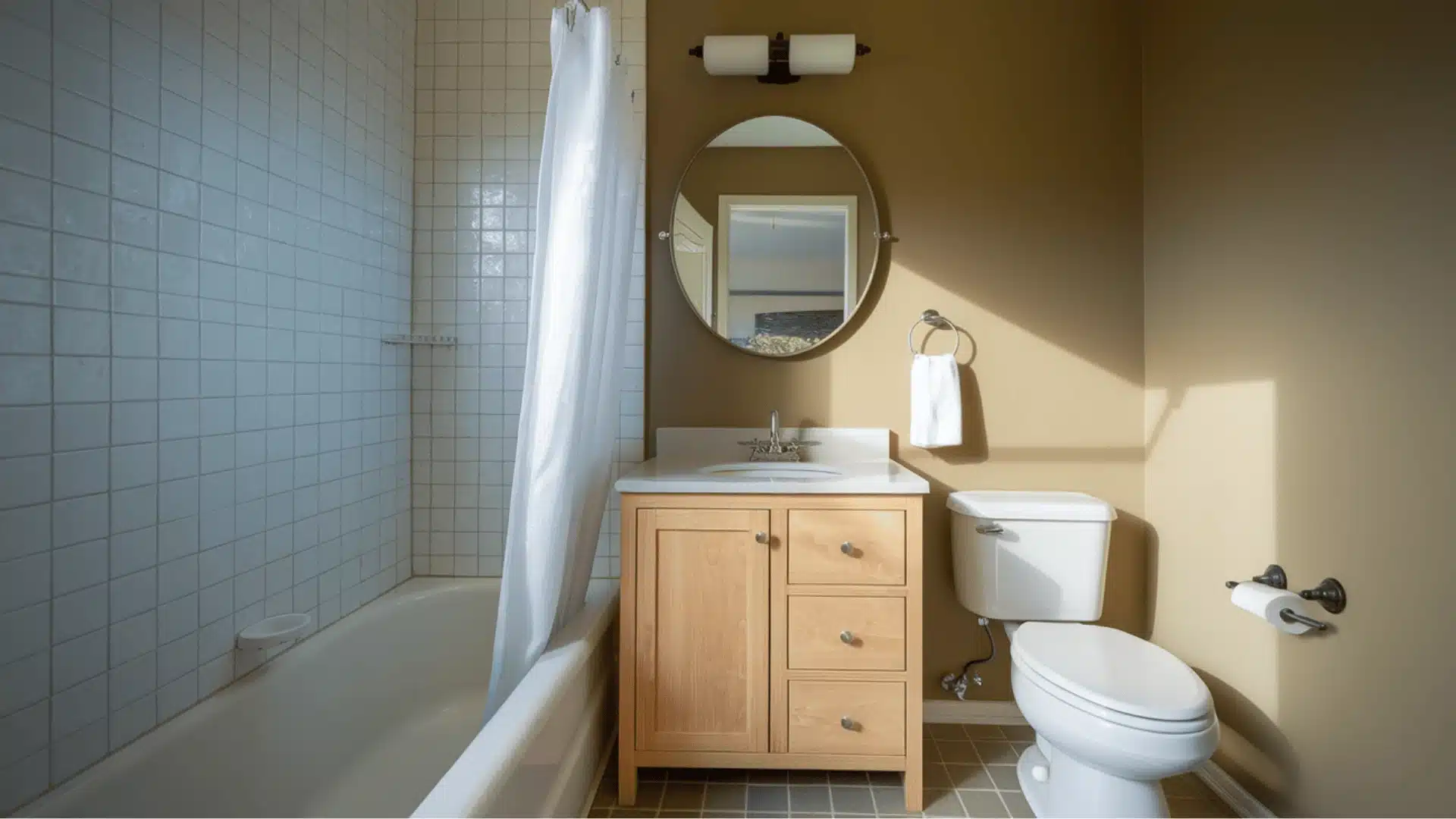
Light sandstone feels warm and inviting. It’s softer than beige and carries a gentle peachy undertone that adds life to your walls.
Pair it with warm white trim, terracotta tiles, and natural wood accents. It’s a great option if you want your bathroom to feel cozy and earthy without committing to anything too bold.
14. Powder Blue
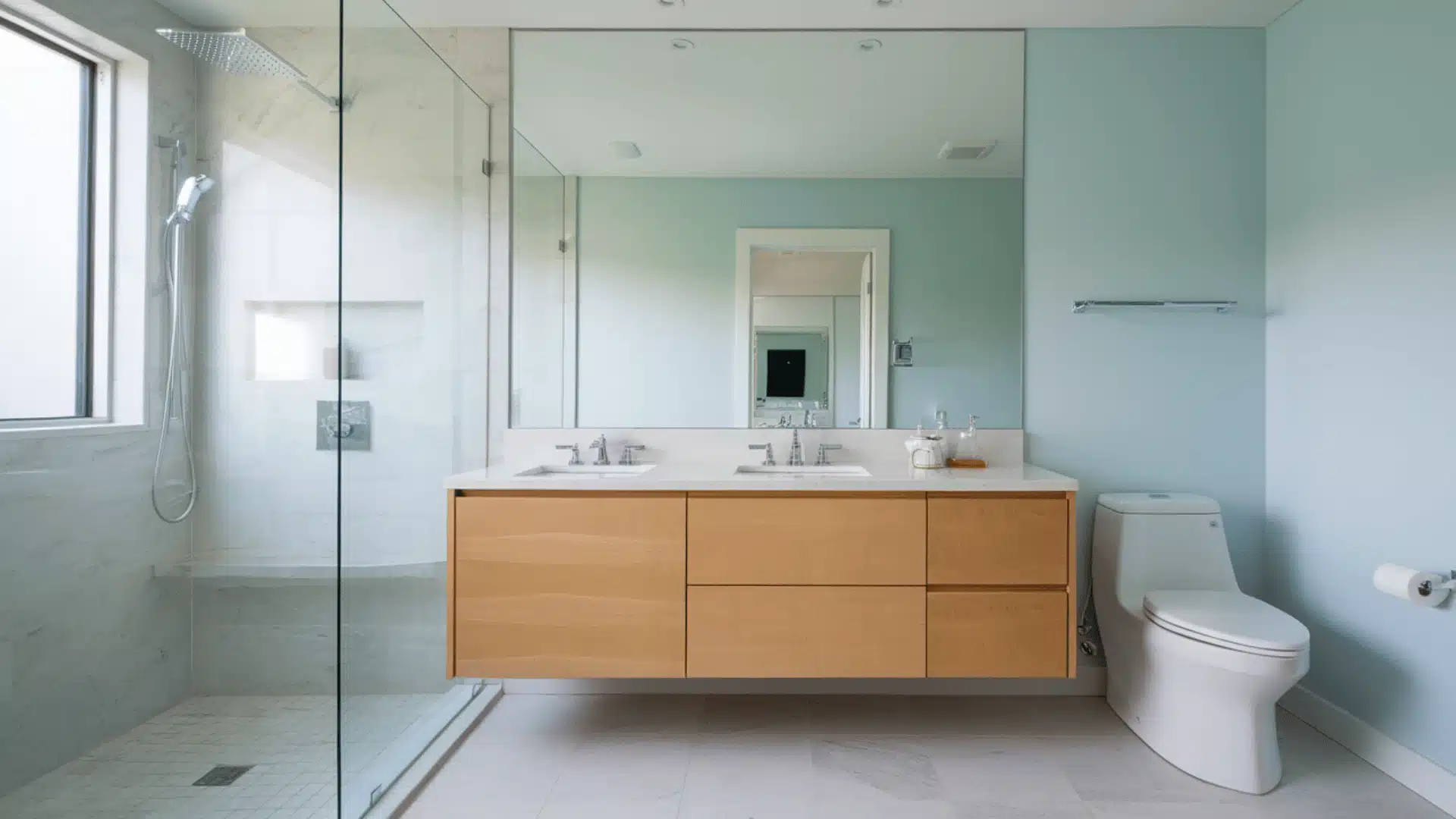
Powder blue is soft, dreamy, and completely stress-free. It’s one of those colors that just feels calming the moment you walk in.
Use a pale, cool blue and keep the space bright with white fixtures and plenty of light. Add soft gray towels or silver accents to keep everything balanced and cohesive throughout.
15. Slate Blue
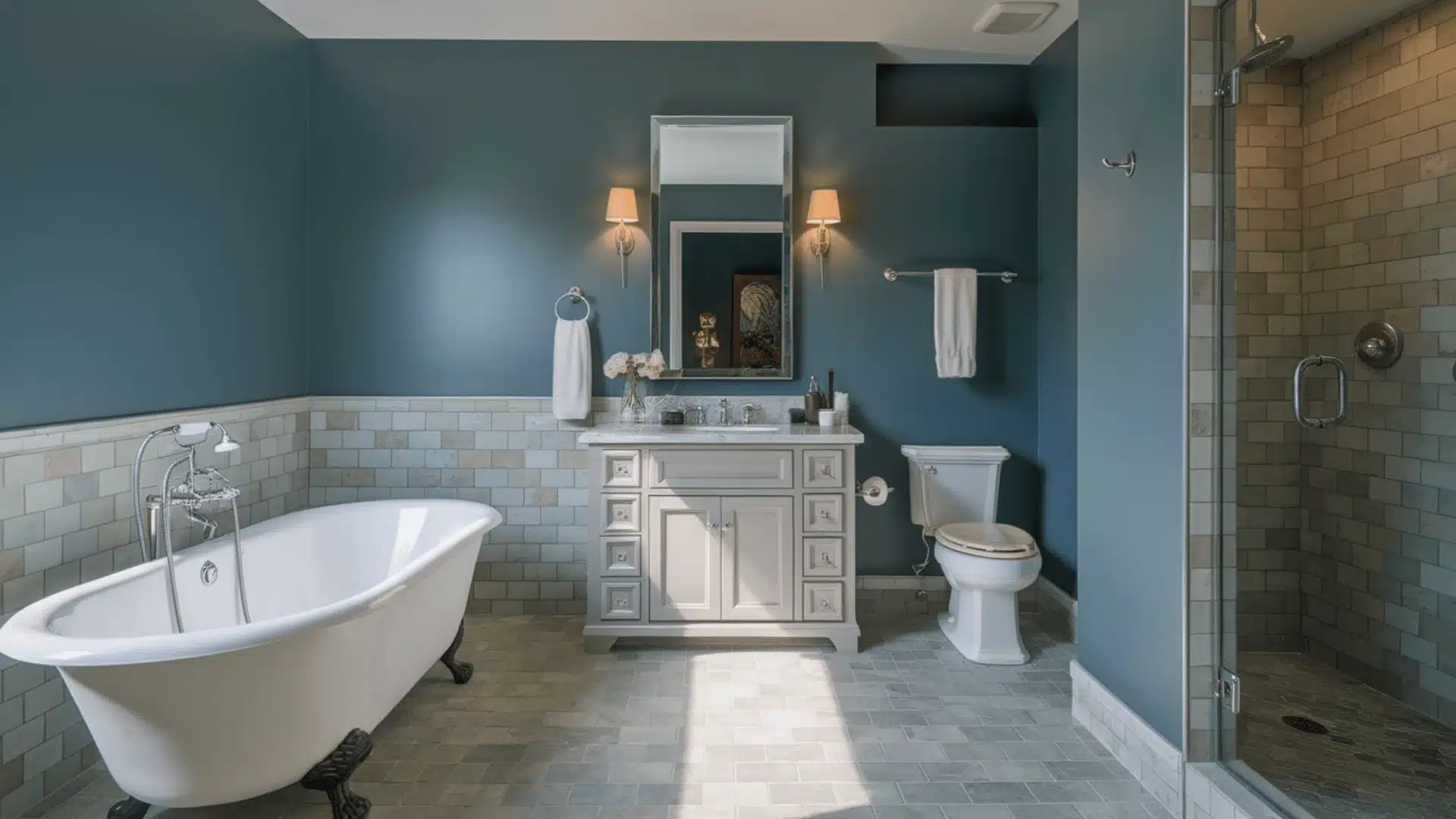
Slate blue has a moody, graceful edge. It’s deeper than powder blue but still relaxed and easy to live with. Paint your walls in a dusty, gray-toned blue and pair it with warm wood tones and brushed gold hardware. It creates a grounded, stylish bathroom that feels thoughtful and very well put together.
16. Navy Blue
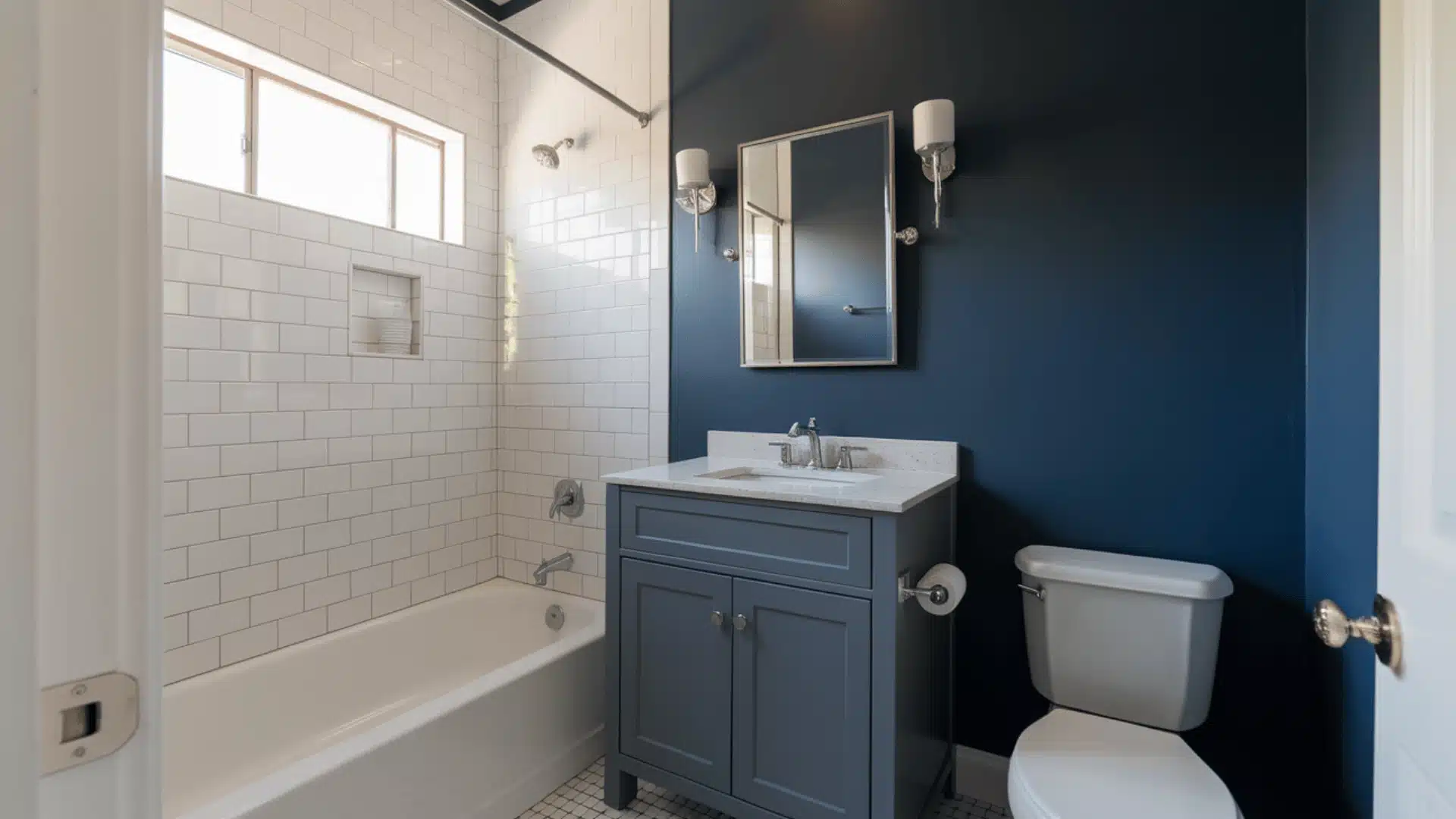
Navy blue makes a statement. It’s bold and dramatic, but it can also feel cozy and intimate in a bathroom. Use it on all walls, contrasting it with crisp white fixtures and polished chrome. Add warm lighting to soften the intensity. It’s a confident choice that brings serious style to your entire space.
17. Denim Blue
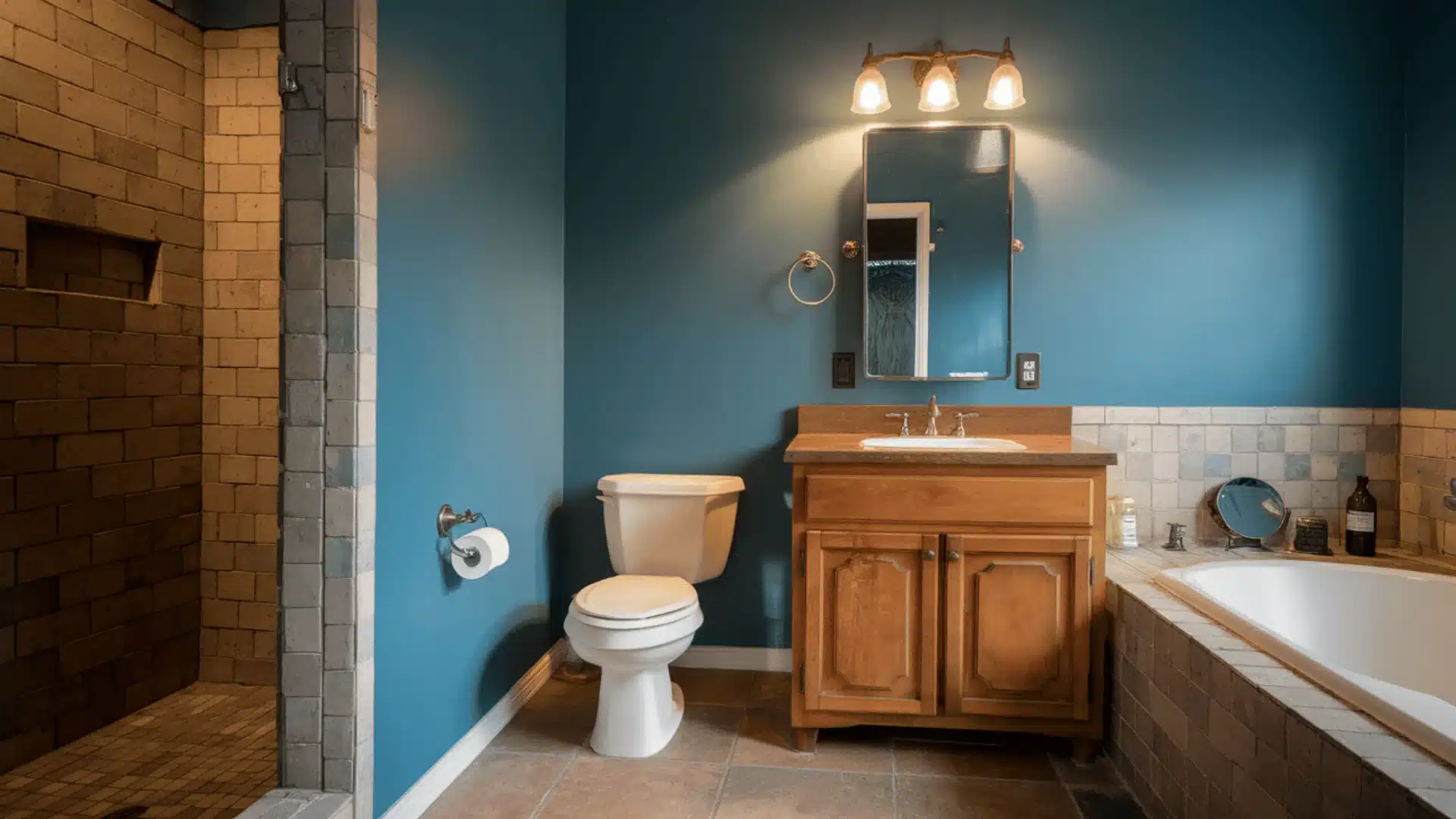
Denim blue is casual, warm, and full of character. It has a lived-in quality that makes your bathroom feel relaxed and approachable.
Go for a mid-tone, slightly faded blue and pair it with natural wood, white tiles, and simple cotton textiles. It’s easygoing but still looks intentional and genuinely well put together.
18. Dusty Blush
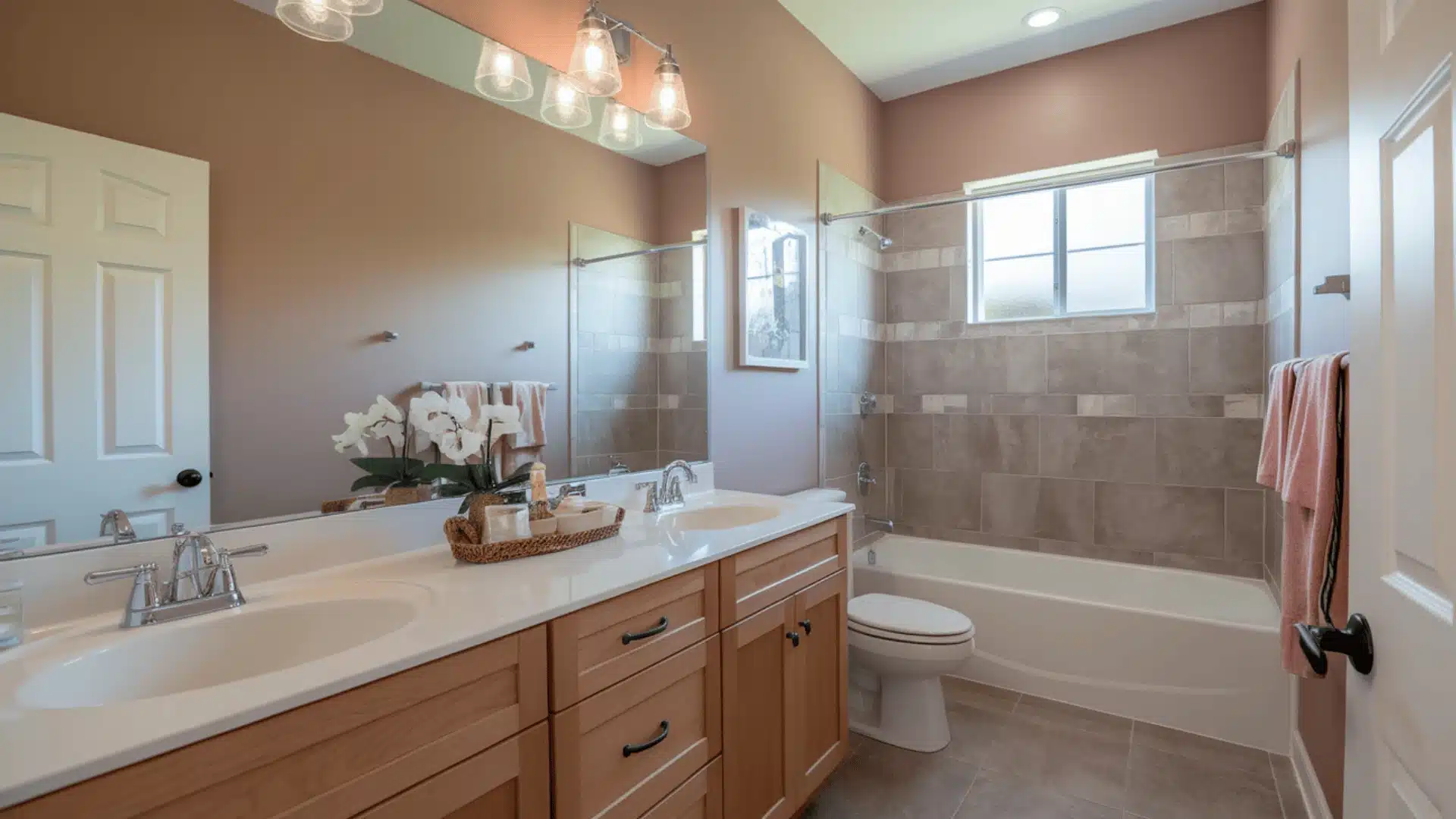
Dusty blush is soft and romantic without being too sweet. It adds a gentle warmth to your bathroom that feels modern yet feminine.
Choose a muted, gray-toned blush and pair it with matte black fixtures, white marble, and minimal accessories. Keep everything else neutral so the blush remains the quiet, beautiful focal point.
19. Terracotta Clay
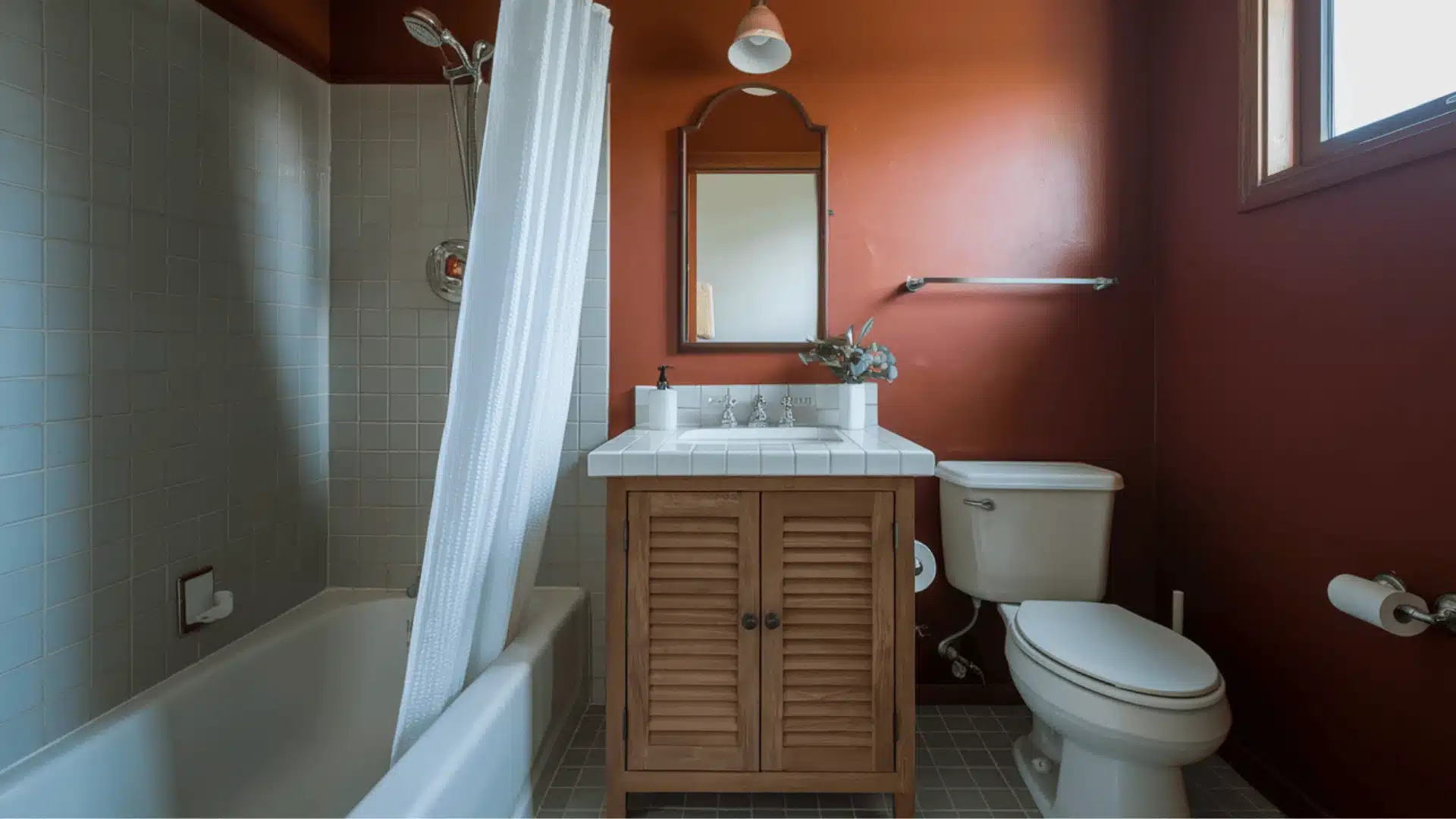
Terracotta clay is warm, earthy, and full of personality. It brings a boho-inspired richness that’s hard to replicate. Use it on an accent wall or go all-in with full coverage.
Pair it with rattan accessories, warm wood tones, and copper fixtures for a cohesive, sun-warmed aesthetic that feels both grounded and inviting.
20. Muted Coral
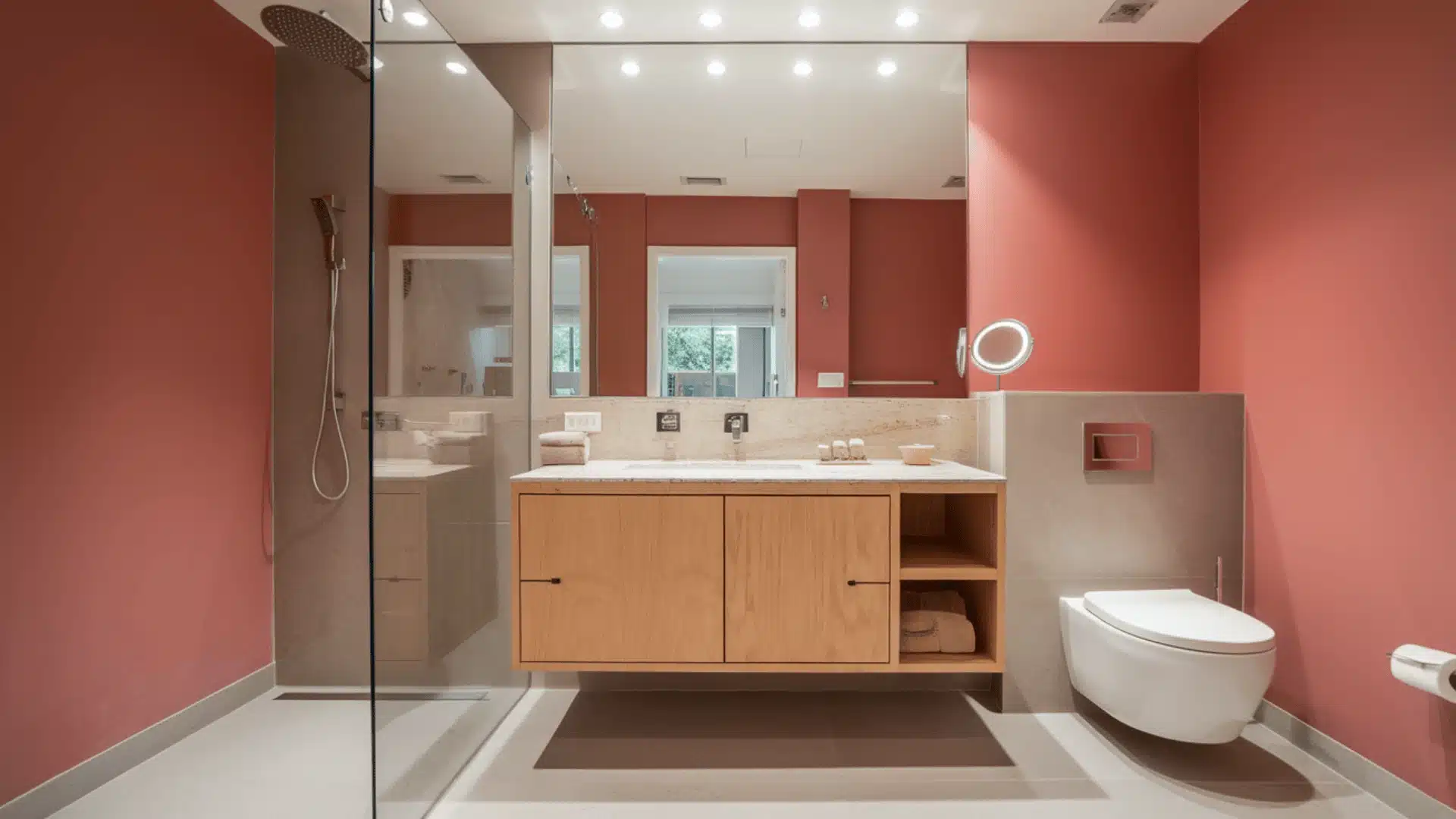
Muted coral is energetic but soft enough for a bathroom. It sits between pink and orange and adds a playful warmth to the space.
Go for a desaturated, peachy coral and pair it with white fixtures and natural stone tiles. Toss in a few green plants for contrast. It feels fresh, fun, and surprisingly easy to style.
21. Charcoal Gray
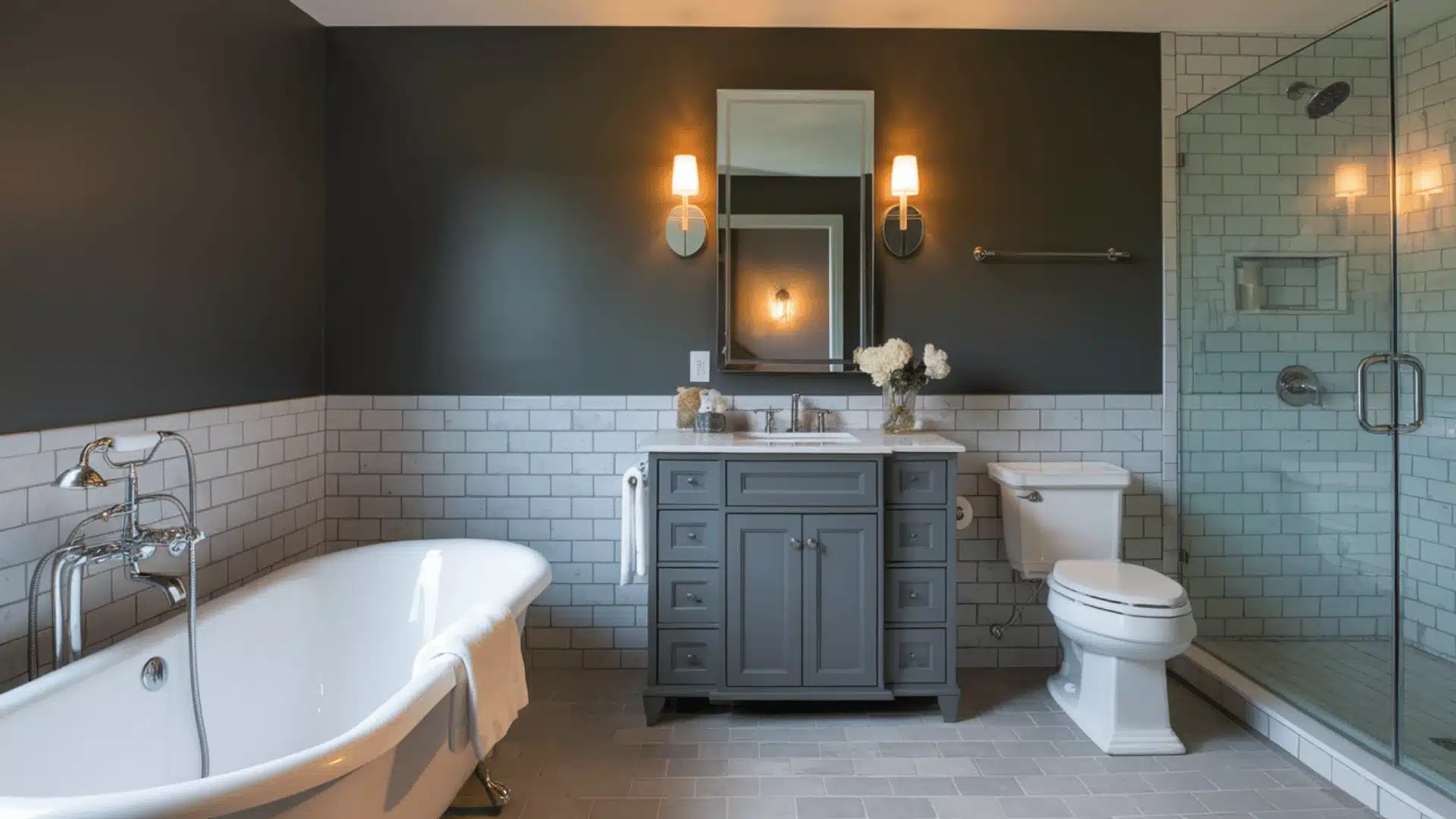
Charcoal gray is sleek, modern, and forever stylish. It works especially well in larger bathrooms with good lighting. Use it on all walls and pair it with white or chrome fixtures to keep things from feeling too heavy. Add a large mirror and warm lighting to open the space up and create a striking contrast.
22. Matte Black
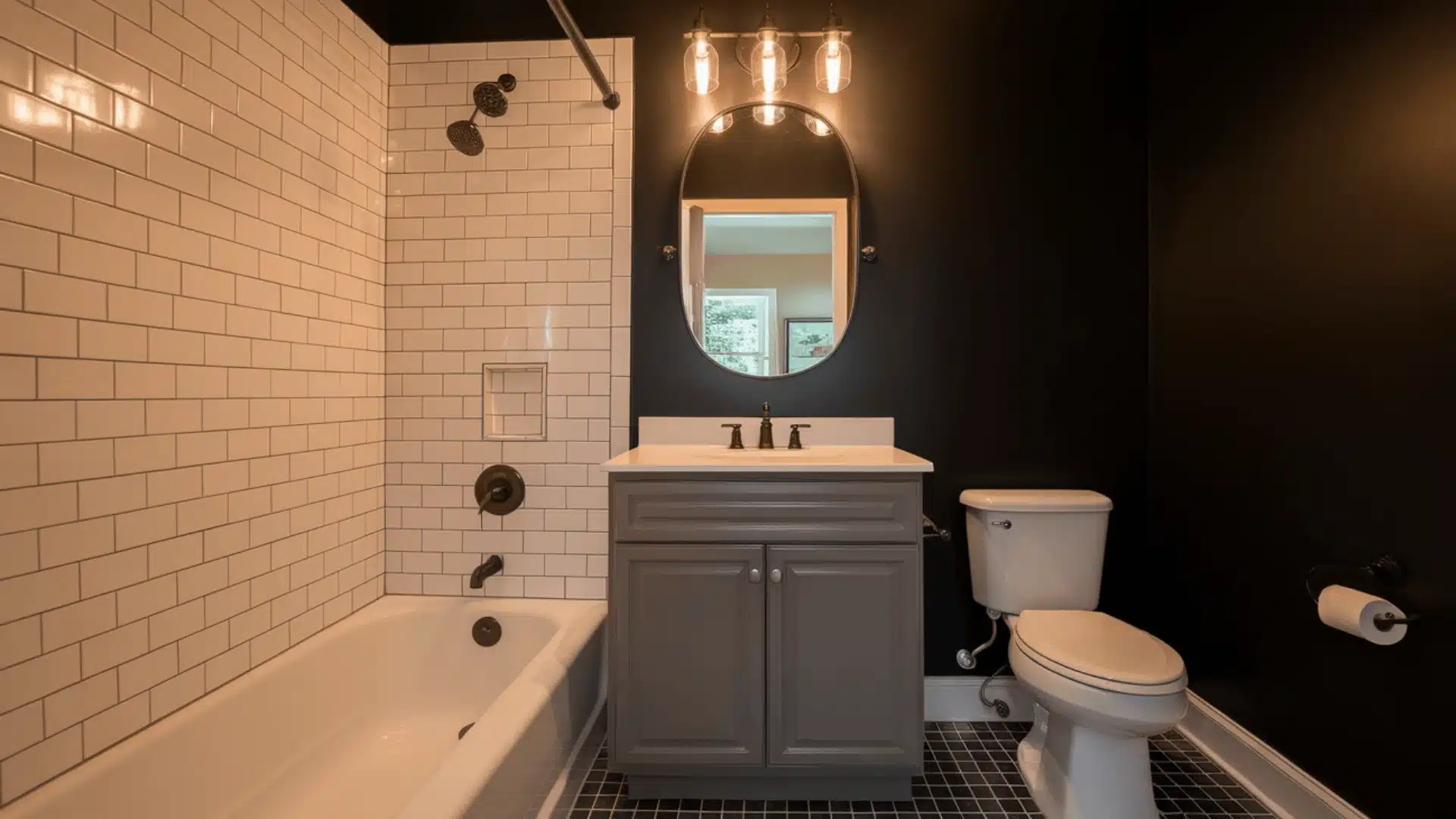
Matte black is dramatic and high-impact. It’s not for everyone, but in the right bathroom, it looks absolutely incredible.
Use it on the walls and pair it with brushed gold or warm brass fixtures for a luxurious feel. Keep the floor and ceiling lighter to balance the intensity. A few bold plants will soften the look.
23. Deep Plum
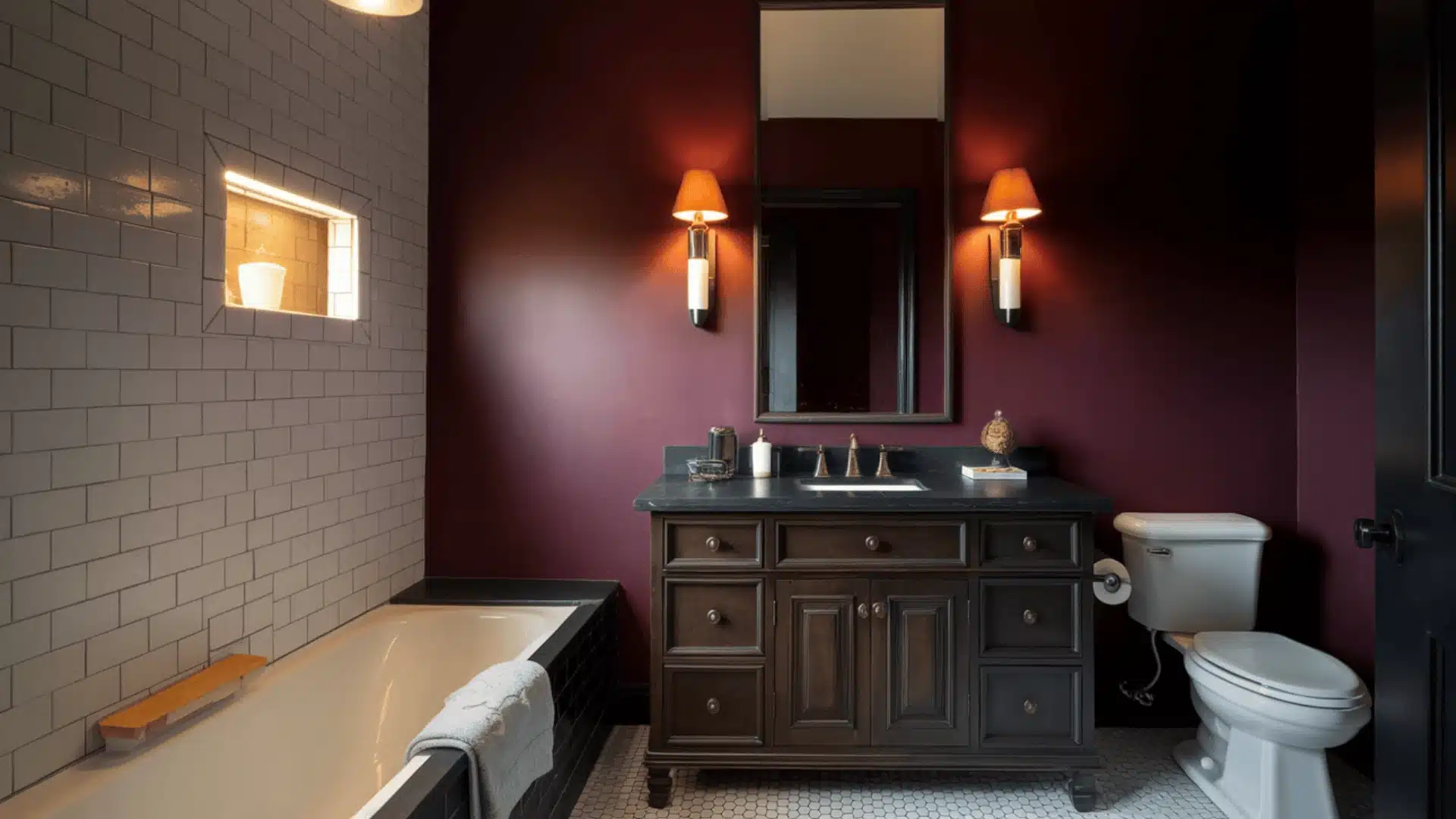
Deep plum is rich, moody, and unexpectedly beautiful in a bathroom setting. It works best with warm lighting and metallic accents.
Paint all four walls in a dark, red-toned plum and pair it with gold fixtures, dark wood, and soft textiles. It’s a bold move, but it creates a dramatic and genuinely luxurious atmosphere.
24. Rich Chocolate Brown
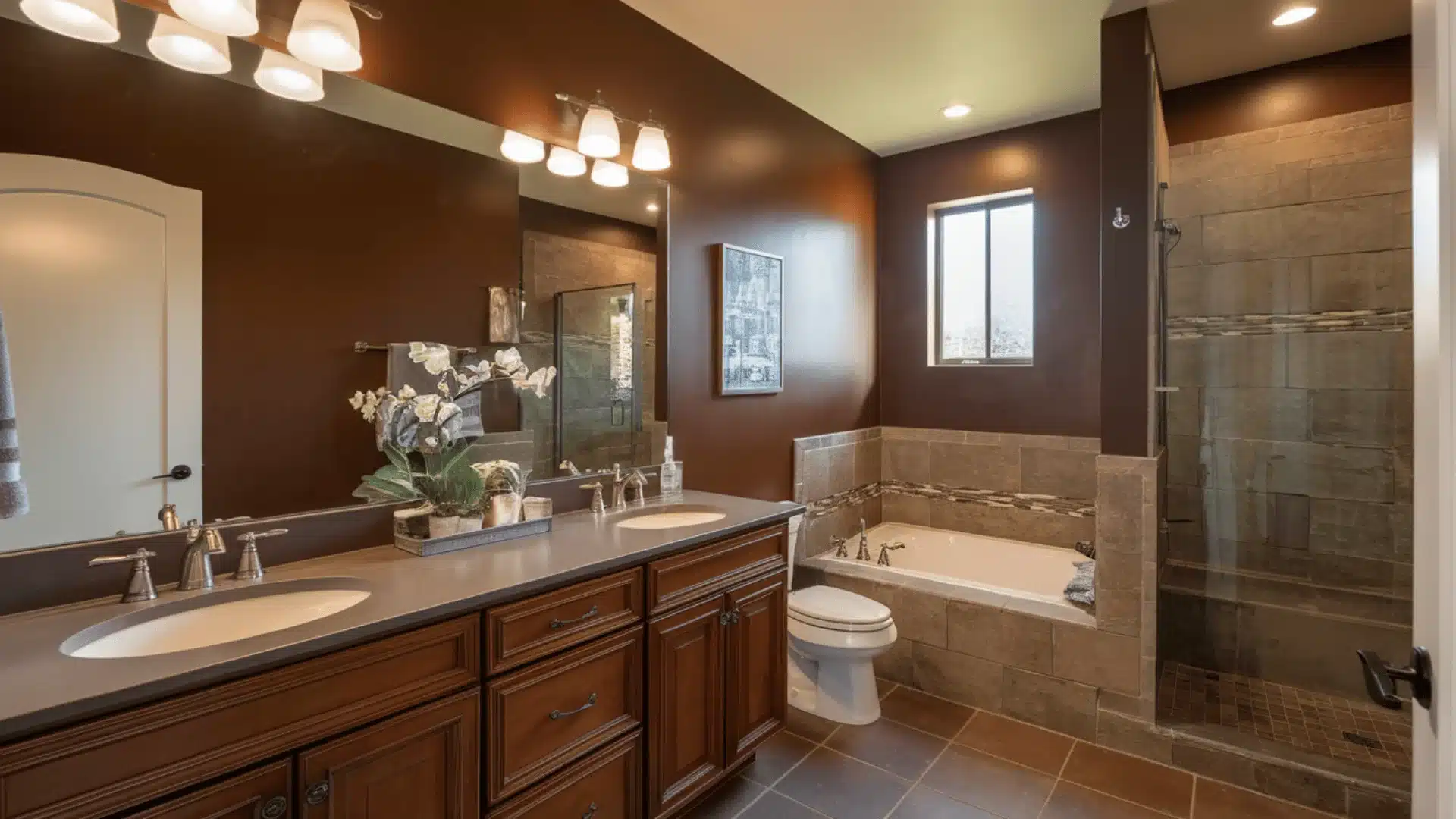
Rich chocolate brown feels warm, grounding, and deeply cozy. It’s the kind of color that makes your bathroom feel like a high-end spa.
Use it alongside warm cream tiles, brushed brass fixtures, and soft amber lighting. Add woven textures and natural materials to enhance the earthy, indulgent vibe of the whole space.
25. Buttercream Yellow
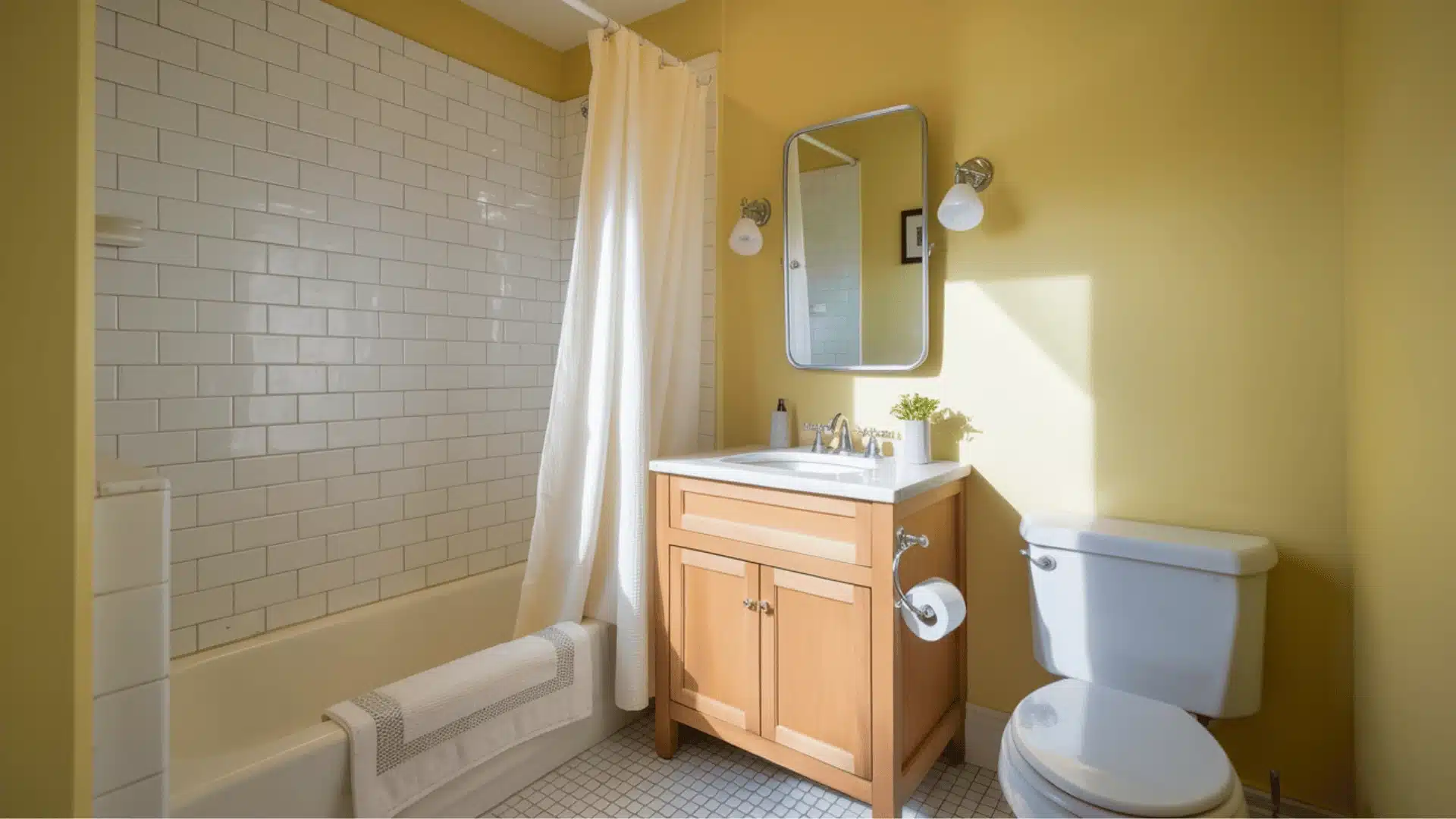
Buttercream yellow is cheerful without being loud. It adds warmth and a gentle glow, making your bathroom feel sunny even without much natural light.
Go for a soft, muted yellow with creamy undertones and pair it with white fixtures, natural wood, and simple greenery. It’s a sweet, feel-good color that genuinely brightens your morning.
26. Smoky Lavender
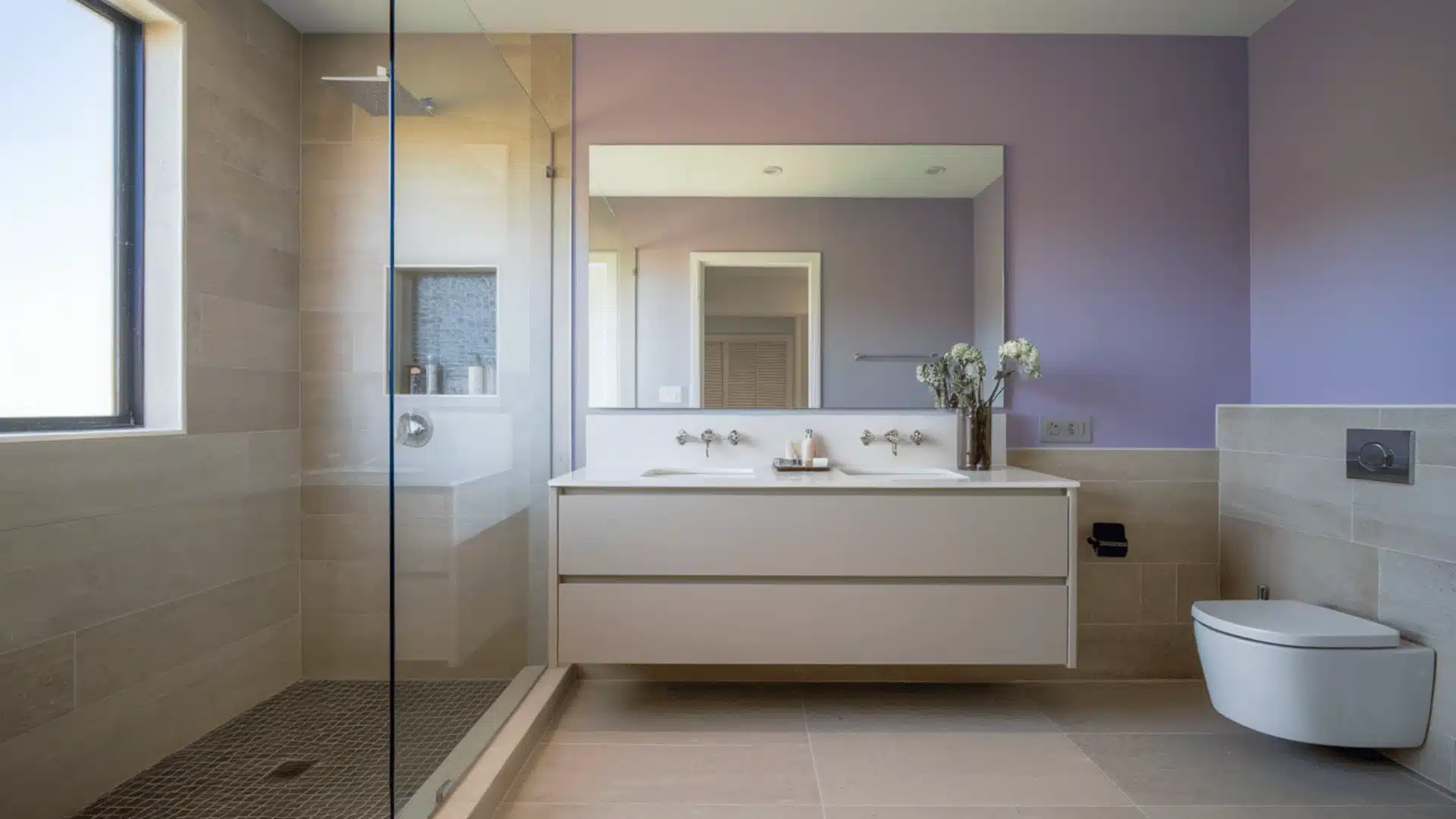
Smoky lavender is subtle, calming, and quietly beautiful. It has just enough color to be interesting while staying soft and easy to live with.
Choose a gray-toned lavender and pair it with white trim, silver fixtures, and soft linen textiles. It creates a serene, spa-like atmosphere, perfect if you want your bathroom to feel like a peaceful escape.
27. Pale Pistachio
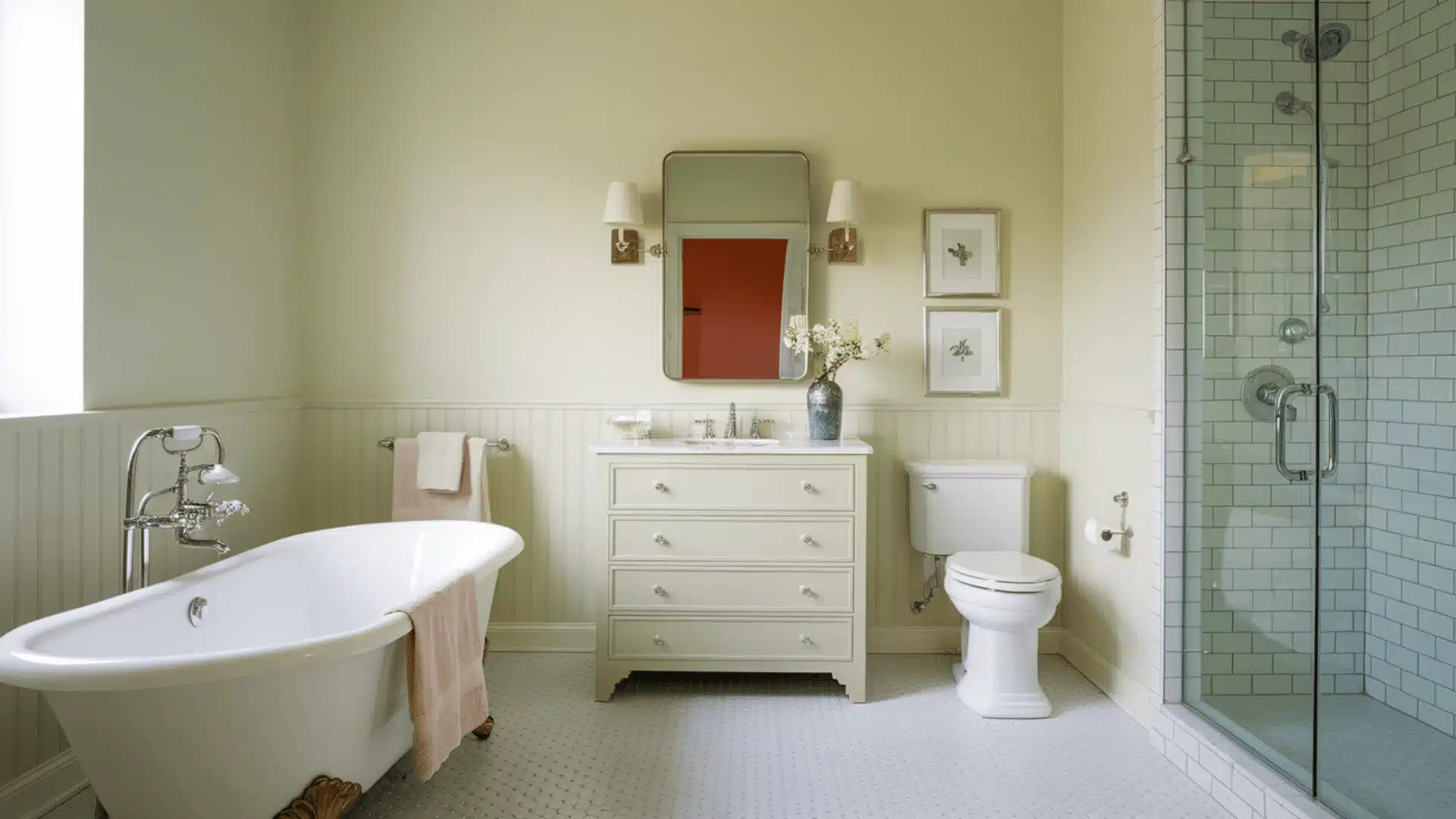
Pale pistachio is fresh, light, and a little unexpected. It brings a soft green-yellow tone that feels both modern and playful.
Use it on all walls and keep things simple: white towels, chrome fixtures, and clean lines work best. It’s one of those colors that makes people stop and say, “Oh, that’s really nice.” And honestly, it is.
Figuring out the best paint color for bathroom walls really comes down to the mood you want to wake up to every day. Test a few samples before committing to colors, as they always look different once they’re on your actual walls.
Best Paint Finishes for Bathrooms
Paint color gets all the attention, but finish matters just as much. The sheen affects durability, moisture resistance, cleanability, and even the color’s appearance once it dries.
| Finish Type | Best For | Why It Works |
|---|---|---|
| Satin | Most bathrooms | Slight sheen resists moisture and wipes clean easily without being too shiny |
| Semi-Gloss | High-moisture areas, kids’ baths | Super durable and scrubable, handles steam and splashes like a champ |
| Eggshell | Powder rooms, low-moisture spaces | Soft look with some durability, but not ideal for wet areas |
| Matte/Flat | Ceilings only | Hides imperfections but can’t handle moisture or cleaning on walls |
Common Bathroom Paint Mistakes to Avoid
Even experienced DIYers mess up bathroom paint jobs sometimes. A few common mistakes can turn a fresh update into peeling paint or mold problems later.
- Skipping the primer: Bathrooms need prep work. Primer helps paint stick better and blocks stains from old water damage or mildew. It’s especially important if the walls have been through years of steam.
- Using flat paint on walls: Matte finishes don’t hold up in bathrooms. They absorb moisture and show grime fast. They also don’t love scrubbing, which is pretty much unavoidable in a bathroom.
- Not testing colors first: Bathroom lighting has a mind of its own. A shade that looks perfect in the store might look completely wrong once it’s up. Testing first saves so much regret.
- Ignoring ventilation during painting: Poor airflow slows curing, and that can mess with durability and adhesion. I always recommend running the fan, cracking a door, and letting the space breathe while the paint sets properly.
- Painting over mold or moisture issues: Fresh paint won’t fix hidden problems. It just seals them in, and that always comes back to haunt the walls later. Moisture issues need to be solved before painting starts.
The Bottom Line
Finding the best paint color for bathroom spaces doesn’t have to be stressful anymore. Once lighting, size, fixtures, mood, and finish are considered, the right shade becomes much easier to spot.
This approach is exactly what helps clients go from “I have no idea what to choose” to “okay, this looks incredible.” Different bathroom types need different strategies, but the core rules stay the same.
Whether the project is a tiny powder room or a luxury master bath, the perfect color really is within reach.
So grab a few paint samples, live with them for a couple of days, and trust what the room tells you in real lighting. Ready to start that bathroom makeover? Pick a shade that fits the space and make it happen.