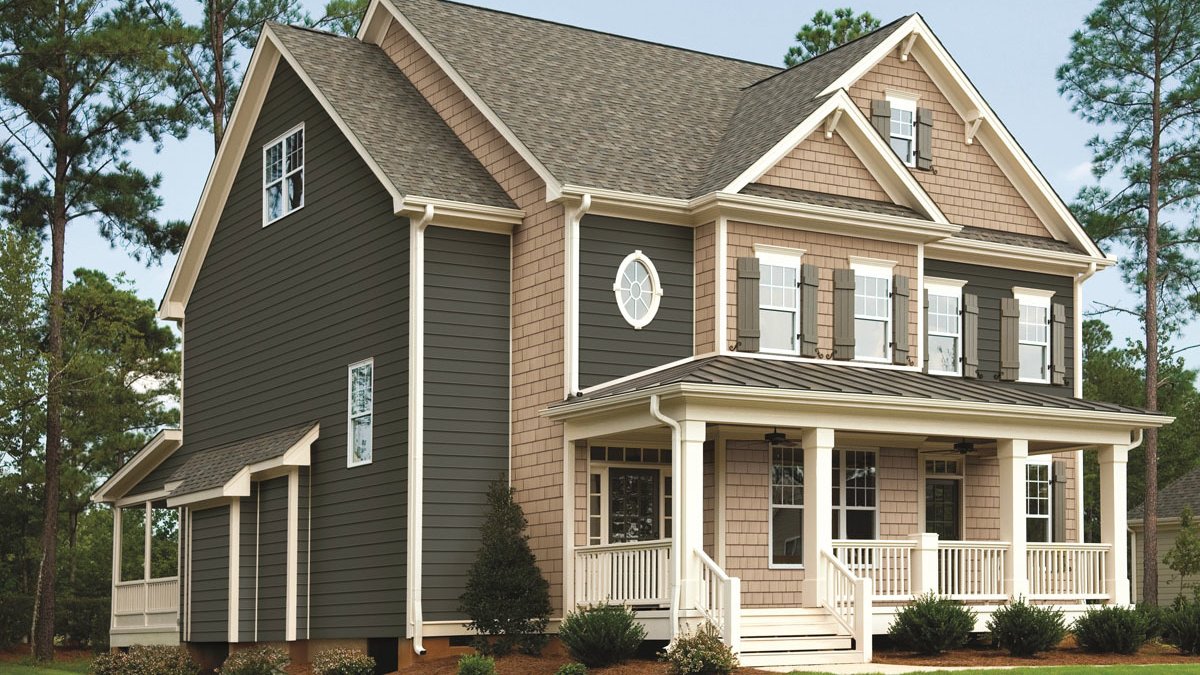
Your home’s siding is more than a protective shell; it’s the first thing neighbors see, the barrier against weather, and a decision you’ll live with for decades.
Choosing the best siding for a house is one of those decisions that feels simple until you start comparing options.
Everything looks good on a small sample, every brochure promises low maintenance, and then you realize you’re picking something that has to survive your exact weather, year after year.
What matters most is how the material behaves in real conditions. Will it hold up to harsh sun without fading? Can it handle wind-driven rain? Will it stay flat through cold snaps and heat waves? And how much work will it ask from you five or ten years from now?
In this, I’ll break down the most dependable siding choices, where each one shines, where it disappoints, and the costs that tend to show up after the install.
Why Your Siding Choice Matters
Exterior cladding does three key jobs: it blocks water, supports insulation, and shapes your home’s appearance. A poor choice can lead to repairs, higher energy bills, or an exterior that does not match the home’s style.
I have seen homeowners choose based solely on price, only to deal with rot, warping, or fading within five years. Siding takes the first hit from the sun, wind, rain, snow, and humidity.
Coastal salt air can corrode some materials. Southwest sun can fade color fast. Cold regions need siding that will not crack with big temperature swings.
It also affects heating and cooling through insulation and moisture control.
The Types of Siding Worth Considering
If you are choosing siding, focus on durability, weather resistance, upkeep, and cost.
The right pick depends on your climate, your home style, and how much maintenance you want to take on. Here are common siding types homeowners often consider.
1. Fiber Cement Siding
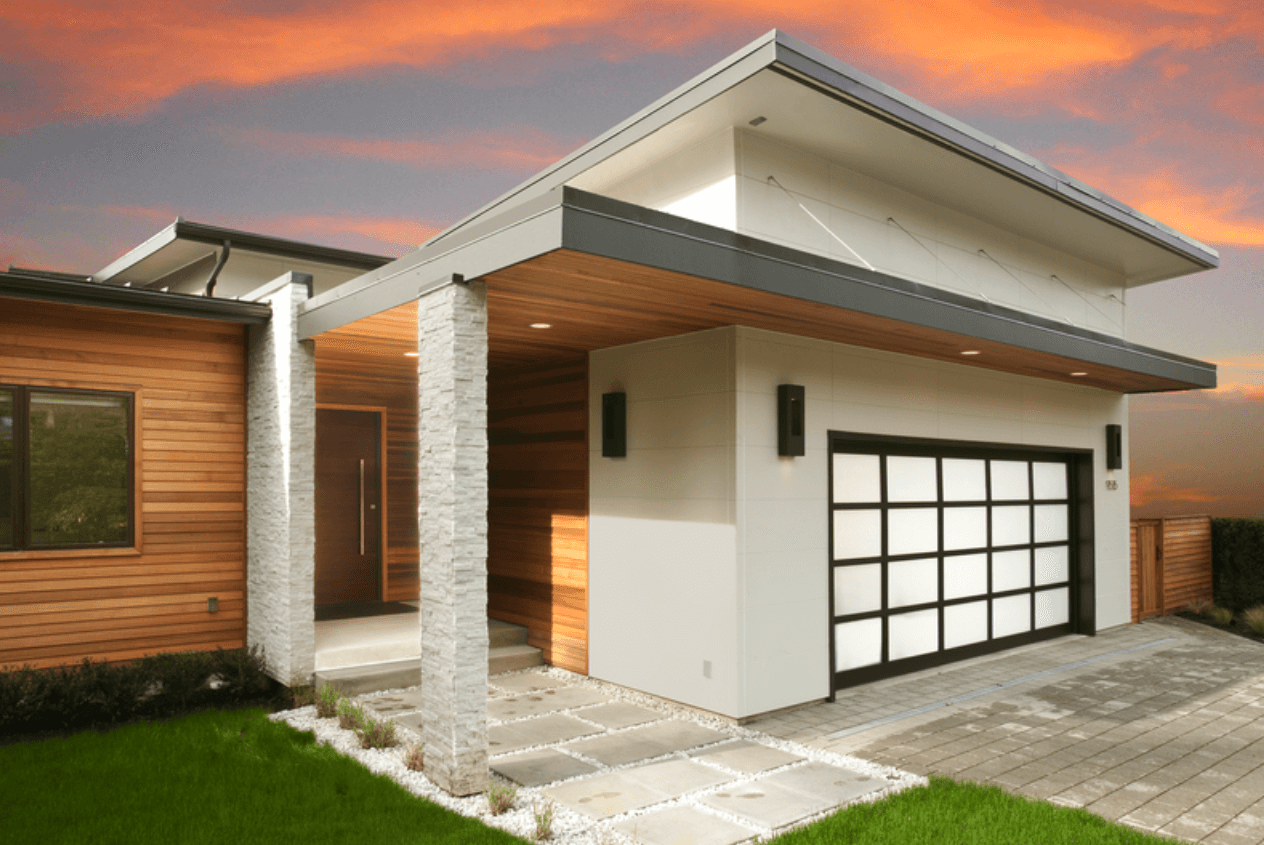
Fiber cement changed residential design when it arrived. It’s a composite of cement, sand, and cellulose fibers that mimics wood grain without the rot problems.
Brands you can check out in this category include James Hardie & Nichiha.
| Pros | Cons |
|---|---|
| Holds paint for years and needs repainting far less often than wood | Heavy panels make installation slower and more labor-intensive |
| Resists termites/pests and won’t rot like wood | Cutting creates silica dust, so proper PPE and dust control are a must |
| Fire-resistant and can look very close to real wood lap siding or shingles | Not a beginner DIY job without experience and the right tools |
Best for: Two-story homes in humid climates where wood is prone to deterioration. Modern farmhouses and craftsman styles where horizontal lines matter.
Cost: $6-12 per square foot installed.
2. Vinyl Siding
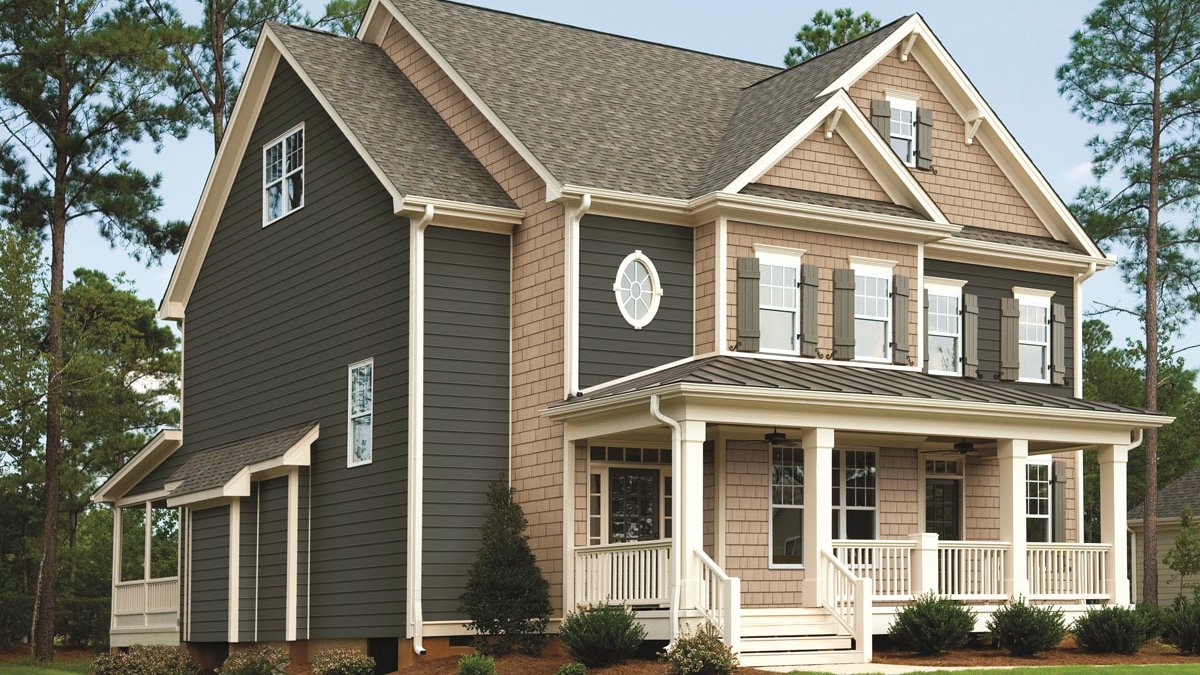
Vinyl gets dismissed by design snobs, but newer products have improved significantly. It’s PVC formed into planks that snap together over sheathing.
Brands you can check out in this category include CertainTeed & Royal.
| Pros | Cons |
|---|---|
| Budget-friendly and widely available | Can crack or get brittle in extreme cold (especially lower-quality panels) |
| No painting needed; lots of color options | Can fade in intense sun over time; cheap/thin vinyl can look “builder-grade.” |
| Straightforward install for capable DIYers; easy to replace a damaged piece | Poor installation can let wind get behind panels and rip sections off |
Best for: Ranch homes, budget-conscious renovations, rental properties where durability and low maintenance trump visual refinement.
Cost: $3-$8 per square foot installed.
3. Wood Siding (Cedar, Redwood, Pine)
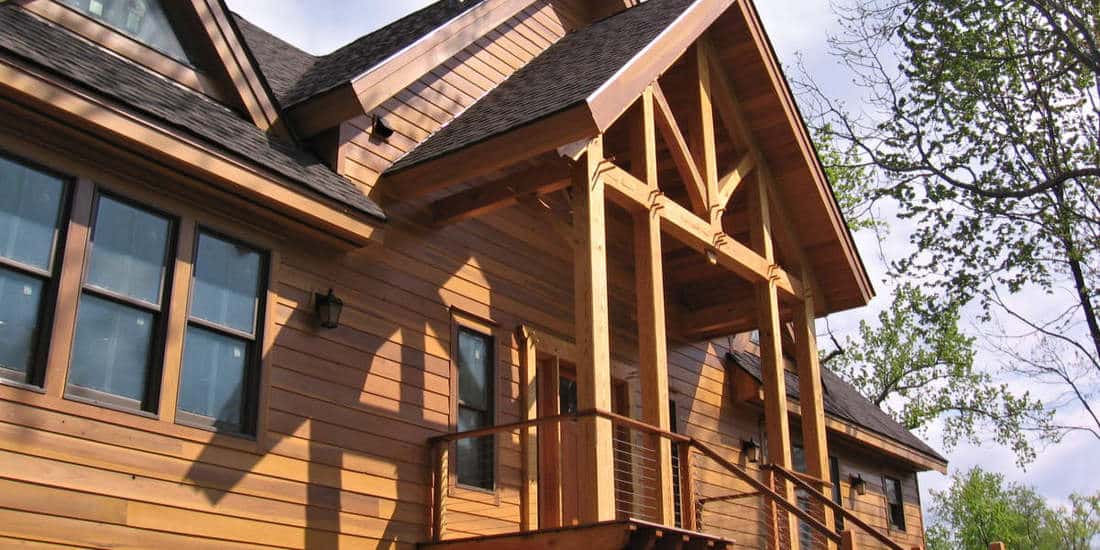
Real wood siding is what I specify when clients want authentic character. Cedar and redwood contain natural oils that resist decay better than pine.
Brands you can check out in this category include Buffalo Lumber & Redwood Lumber.
| Pros | Cons |
|---|---|
| Unmatched real-wood texture and grain; feels premium up close | Needs regular staining/painting every 3–7 years, depending on sun/rain exposure |
| Takes stain beautifully and can be milled into custom profiles | Moisture can cause rot/warping; insects (like termites) can be a problem. It can |
| n age into a natural silver-gray patina if left untreated | Higher fire risk than many alternatives, and ongoing maintenance costs add up |
Best for: Mountain cabins, historic renovations, architectural styles where authenticity matters, Cape Cods, Colonials, cottages, anything built before 1950.
Cost: $8-15 per square foot installed.
4. Engineered Wood Siding
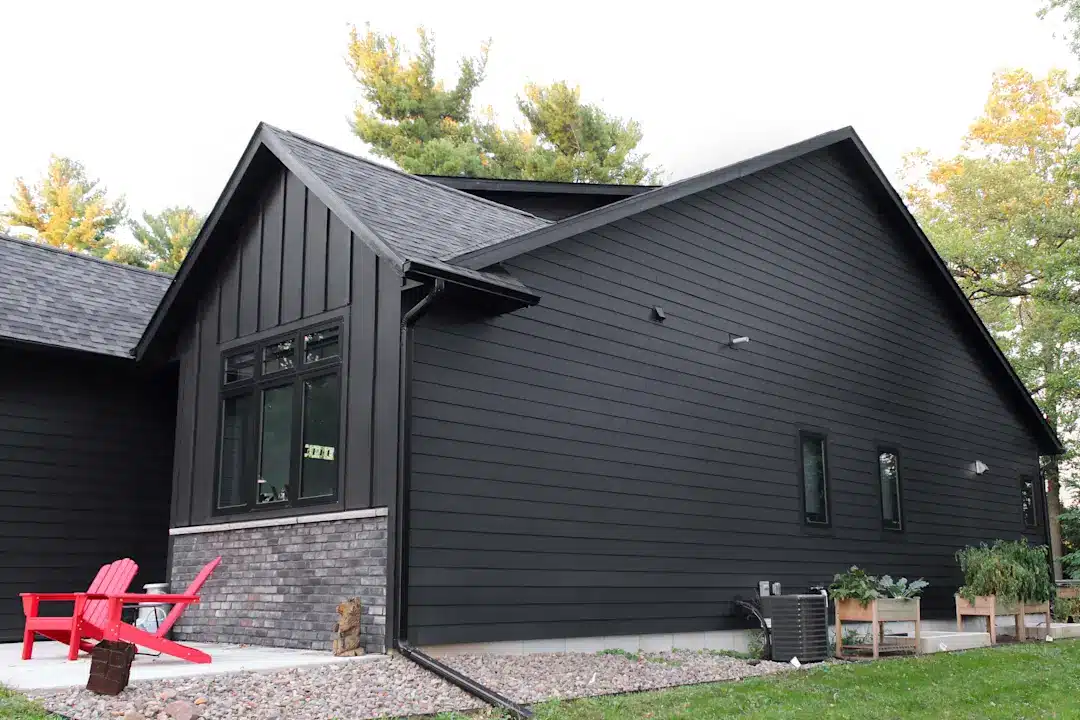
This category includes products like LP SmartSide wood strands bonded with resin and treated for moisture resistance.
Brands you can check out in this category include LP SmartSide.
| Pros | Cons |
|---|---|
| Lighter than fiber cement and more dimensionally stable than solid wood | Older products had moisture issues, so the category still carries that reputation |
| Real wood grain (it’s actual wood fibers, not a stamped pattern) | Performance depends heavily on correct flashing and installation details |
| Factory primed for better paint adhesion and typically fewer coats | Still needs repainting over time, and termites can be a concern in some areas |
Best for: Traditional home styles where you want a wood appearance with less maintenance than solid wood but more authenticity than vinyl.
Cost: $5-10 per square foot installed.
5. Metal Siding (Steel and Aluminum)
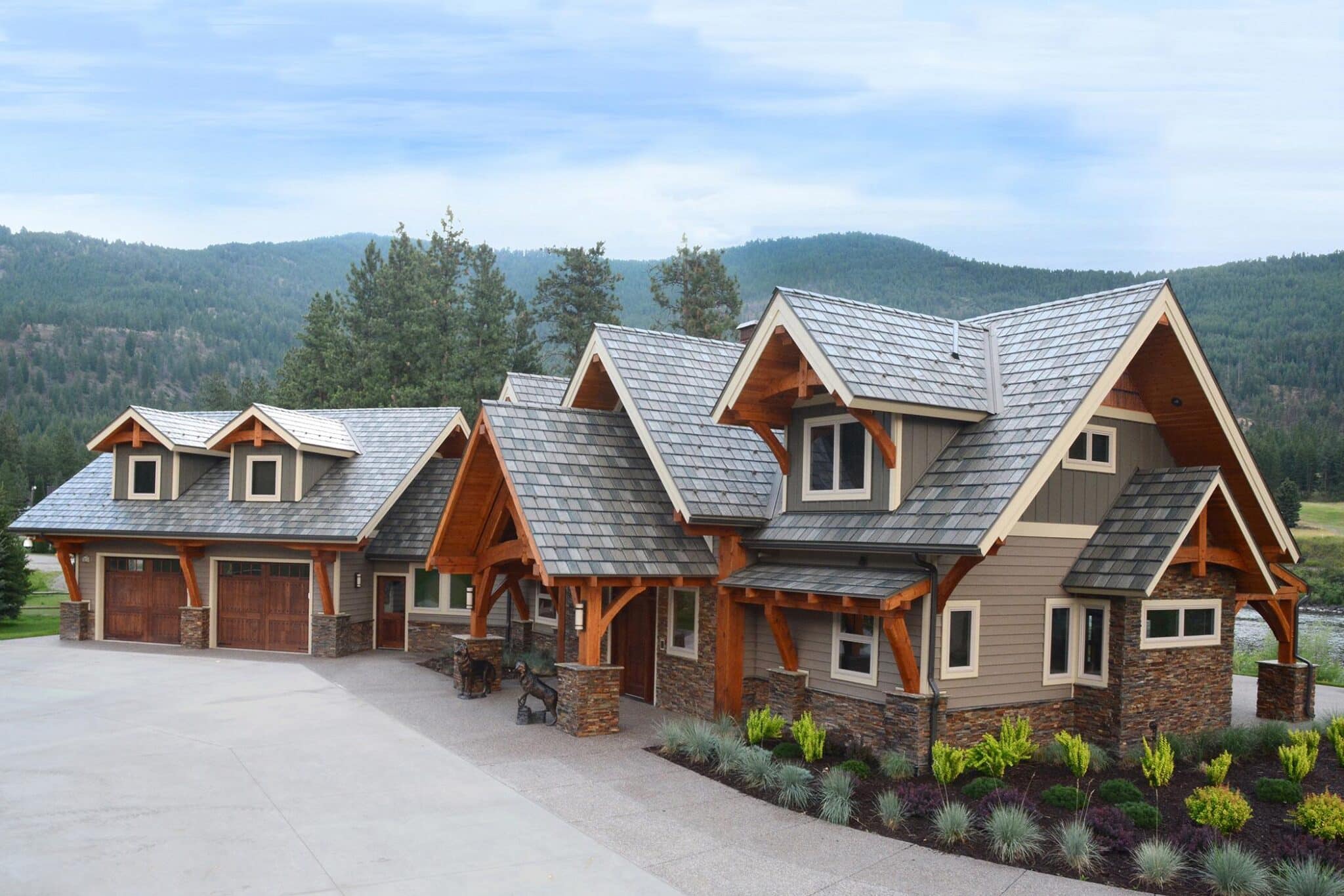
Metal cladding isn’t just for industrial buildings anymore. Standing seam panels and corrugated profiles work on contemporary designs.
Brands you can check out in this category include ASC Building Products & EDCO.
| Pros | Cons |
|---|---|
| Very long lifespan (often 40+ years) with low maintenance | Can dent from hail/impacts (steel resists better than aluminum) |
| Fire-resistant, recyclable, and suitable for fire-prone areas | Can be noisy in rain unless insulated or backed properly |
| Factory finishes can resist fading and hold up well outdoors | Scratches can expose metal (risk of rust on steel), and expansion/contraction needs proper detailing |
Best for: Modern and contemporary homes, coastal areas where aluminum resists salt corrosion, fire-prone regions, and barn-style buildings.
Cost: $7-14 per square foot installed.
6. Brick Veneer
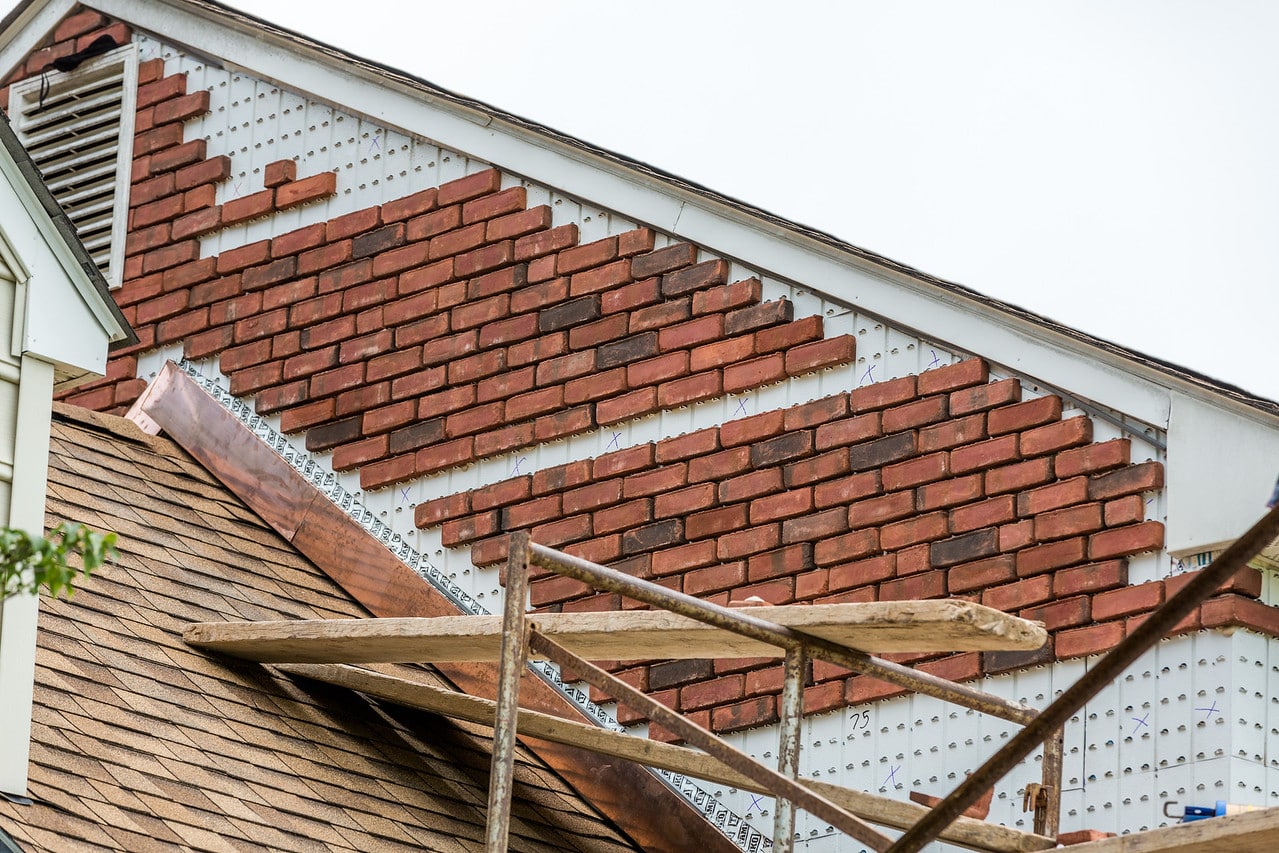
Thin brick attached to sheathing gives you the brick look without complete masonry construction and foundation requirements.
Brands you can check out in this category include Glen-Gery & General Shale.
| Pros | Cons |
|---|---|
| Thermal mass helps reduce temperature swings and can improve comfort. | Higher upfront cost and needs skilled masonry installation. |
| Very durable and low maintenance for decades; works in most climates | Limited color range (mostly natural clay/earth tones) |
| Fire-resistant, color doesn’t fade, and no repainting is needed. | Hard to change later; removal is expensive. Mortar joints may need occasional repointing. |
Best for: Traditional and transitional homes, areas with extreme weather, and historic districts with design guidelines.
Cost: $10-18 per square foot installed.
7. Stone Veneer
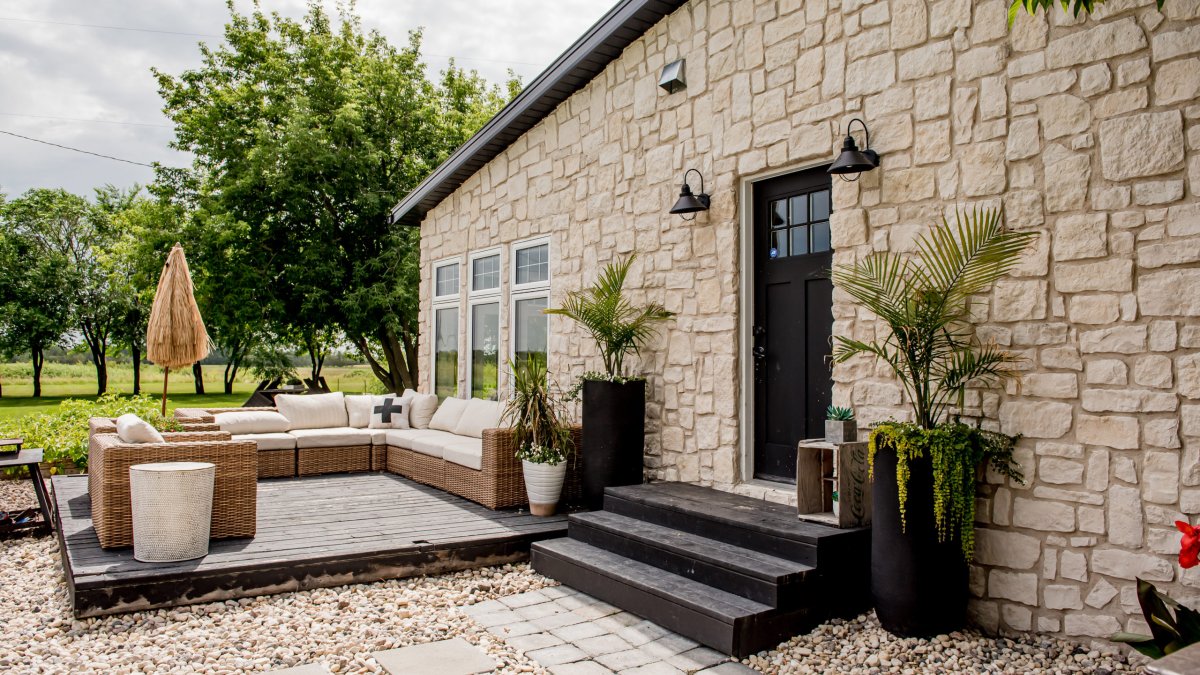
Natural or manufactured stone pieces are applied over a moisture barrier and metal lath. Manufactured versions are lighter and easier to install than quarried stone.
Brands you can check out in this category include Eldorado Stone.
| Pros | Cons |
|---|---|
| Adds substantial visual weight, great for foundations and accent walls | Heavy and expensive compared with most siding options |
| Natural stone is highly durable and can outlast the structure | Needs skilled masons and proper structural support/details |
| Can boost perceived value and curb appeal | Manufactured stone quality varies; some can look fake, so samples matter; best used selectively. |
Best for: Accent walls, foundations, chimneys, mountain or rustic designs where stone makes contextual sense.
Cost:$12-25 per square foot installed for natural stone; $8-15 per square foot installed for manufactured stone.
8. Stucco
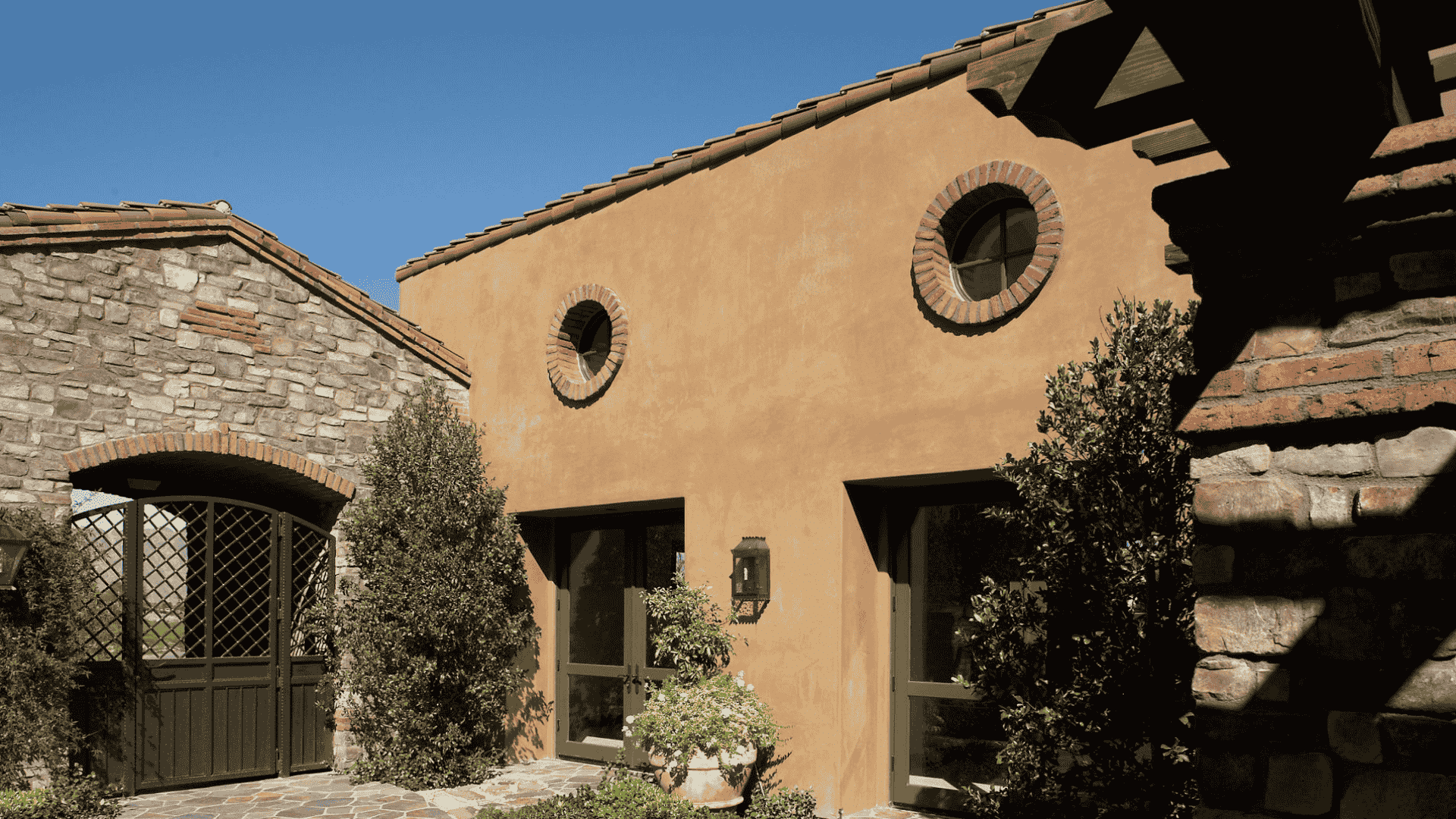
Traditional stucco is cement plaster applied in multiple layers over lath. Synthetic stucco (EIFS) is a foam-insulated system with an acrylic finish coat.
Brands you can check out in this category include LaHabra & Parex.
| Pros | Cons |
|---|---|
| Works in most climates when installed correctly; offers smooth or textured finishes. | Installation quality is critical, as inadequate waterproofing can trap water and cause significant hidden damage. |
| Traditional stucco is fire-resistant and generally low-maintenance | Cracks must be repaired quickly, or water can get behind the surface |
| Can be tinted in many colors (no repainting required if integrally colored) | EIFS can be more impact-prone and more vulnerable to moisture intrusion if detailed poorly |
Best for: Mediterranean, Spanish, and southwestern designs. Modern homes with simple forms and minimal trim details.
Cost: $6-12 per square foot installed.
9. Composite Siding
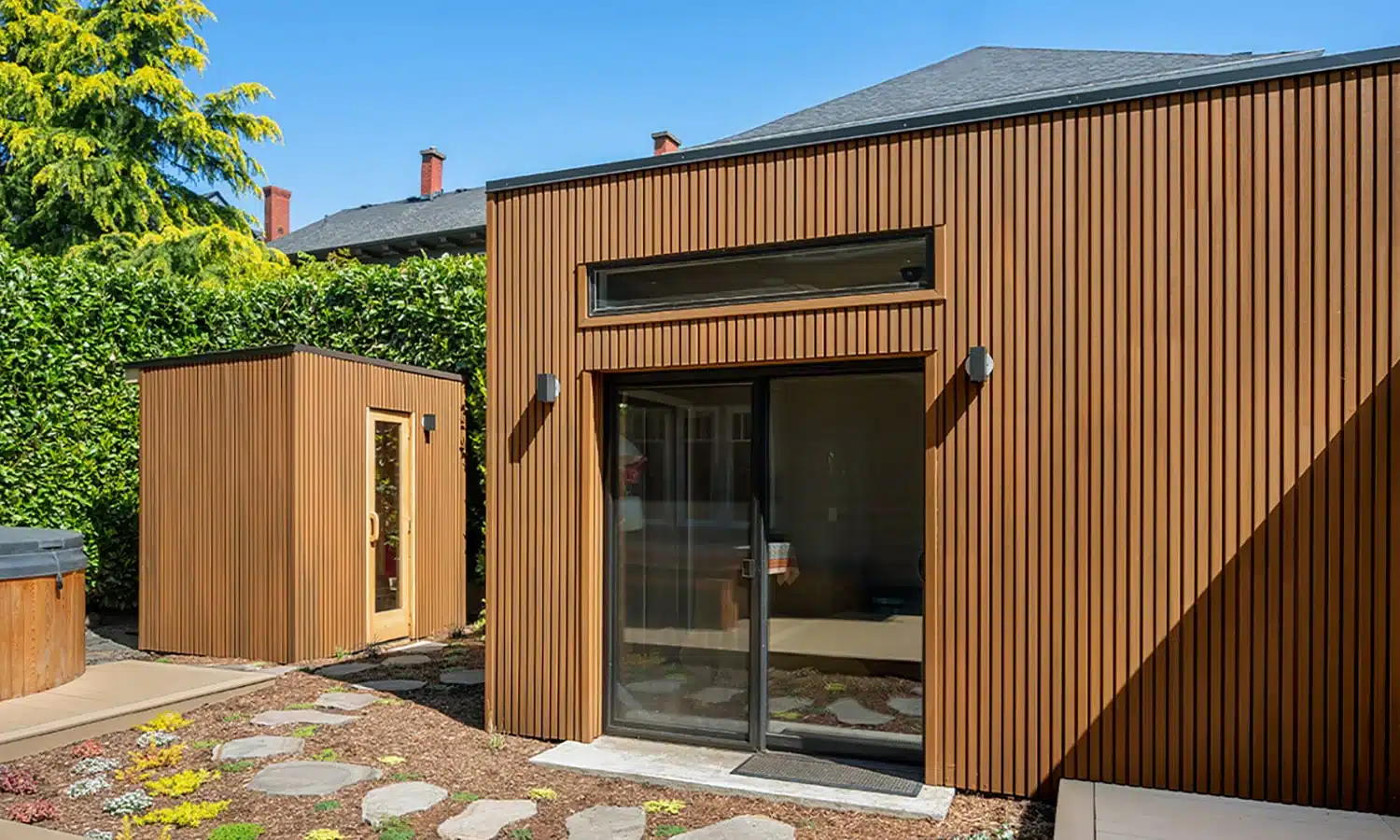
Various manufacturers blend wood fibers, plastics, and resins into products that mimic wood without the maintenance required by real wood.
Brands you can check out in this category include Woodplank.
| Pros | Cons |
|---|---|
| Resists rot, insects, and moisture when the formulation is good | Quality varies a lot by manufacturer, and performance isn’t consistent across brands |
| Some options use recycled content | Some products can fade, chalk, or turn brittle after ~10 years |
| Warranties often run 25–30 years against defects | You must research the specific brand and line; general “composite siding” claims can mislead |
Best for: Homeowners who want a wood appearance with minimal maintenance and don’t mind the slight artificiality.
Cost: $7-13 per square foot installed.
How to Choose: The Framework
Use this quick framework to narrow options fast. It helps you pick a material that fits your climate, your schedule, and how you want the home to look over the long term.
-
Pick for climate (coastal = corrosion-resistant; cold = avoid thin vinyl; hot/dry = stucco; humid = avoid wood unless you’ll maintain it).
-
Be real about maintenance (hate repainting? Skip wood/engineered wood).
-
Match your home style (don’t fight the architecture).
-
Compare lifetime cost (cost per year, not just upfront price).
Installation Determines Everything
Proper installation matters more than material selection. Water must be directed away from walls through correct flashing, drainage planes, and ventilation.
Most types of siding fail when these basics are ignored. Hire contractors who specialize in your chosen material for the best house siding.
The cheapest bid often means corners cut on waterproofing details you won’t see until damage appears years later.
Final Thoughts
Choosing the best siding for a house is easier when you focus on what lasts rather than what looks good for one season.
Pay attention to how materials hold up in your climate, how much care they require, and how well they match the fixed parts of your home, such as the roof and windows.
Real-life results matter more than a sales pitch, so use what you see around you as a guide. When you test full-size samples, you get a clear view of color shifts, texture, and how the finish looks after rain or strong sun.
The right choice should feel consistent from every angle, in every light. When it fits your budget and your routine, you will feel good about it for years.
Pick three samples, test them outside for two days, then choose the one you still like most.