Steam cleaning feels like the perfect solution – quick, easy, and it gets floors sparkling clean. But can you steam clean hardwood floors without causing damage? That’s the big question. Many people worry about warping, finish damage, or voiding their warranty.
What you should know: Using a steam mop on hardwood floors can be risky. It depends on your floor’s finish, the amount of moisture you use, and what your warranty allows. Some floors handle it fine. Others don’t.
You’ll know exactly if steam cleaning makes sense for your hardwood. Get step-by-step instructions for using steam, plus better alternatives that eliminate the risk. Clear steps, zero damage – clean floors that stay healthy.
What Is Steam Cleaning and How Does It Work?
Steam cleaning sounds simple, but hardwood floors need special care. Here’s what you need to know before trying it.
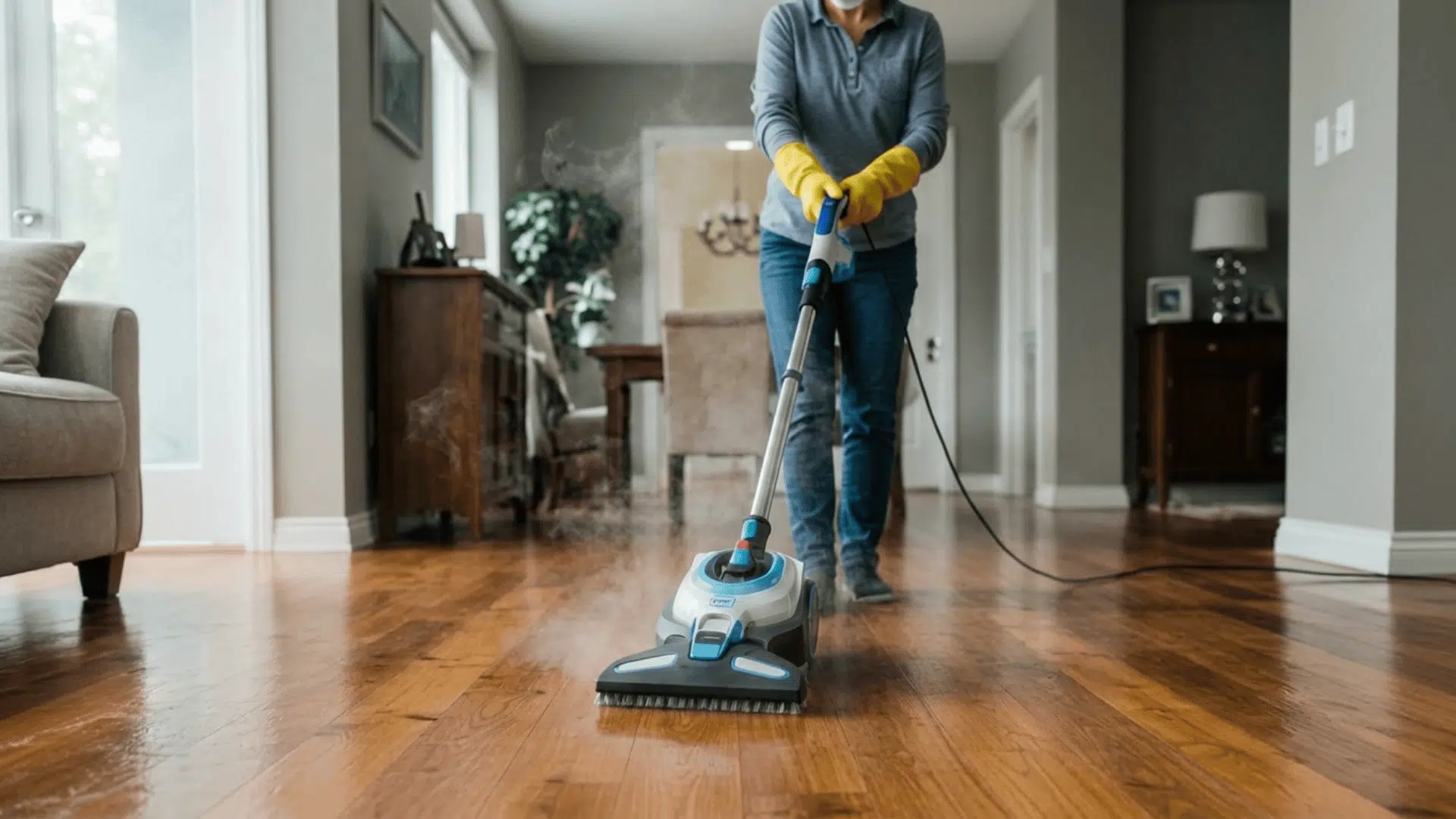
A steam mop heats water until it turns into vapor. The hot steam comes out through a cleaning pad that touches your floor.
The heat is supposed to kill germs and loosen dirt without chemicals. Sounds great, right? But here’s the problem: wood absorbs moisture naturally.
Even vapor can seep into small cracks, scratches, or worn spots in the finish. Once moisture gets under the protective coating, it can cause the wood to swell, warp, or develop dark stains. The damage might not show up right away, but it builds up over time.
Types of Hardwood Floors
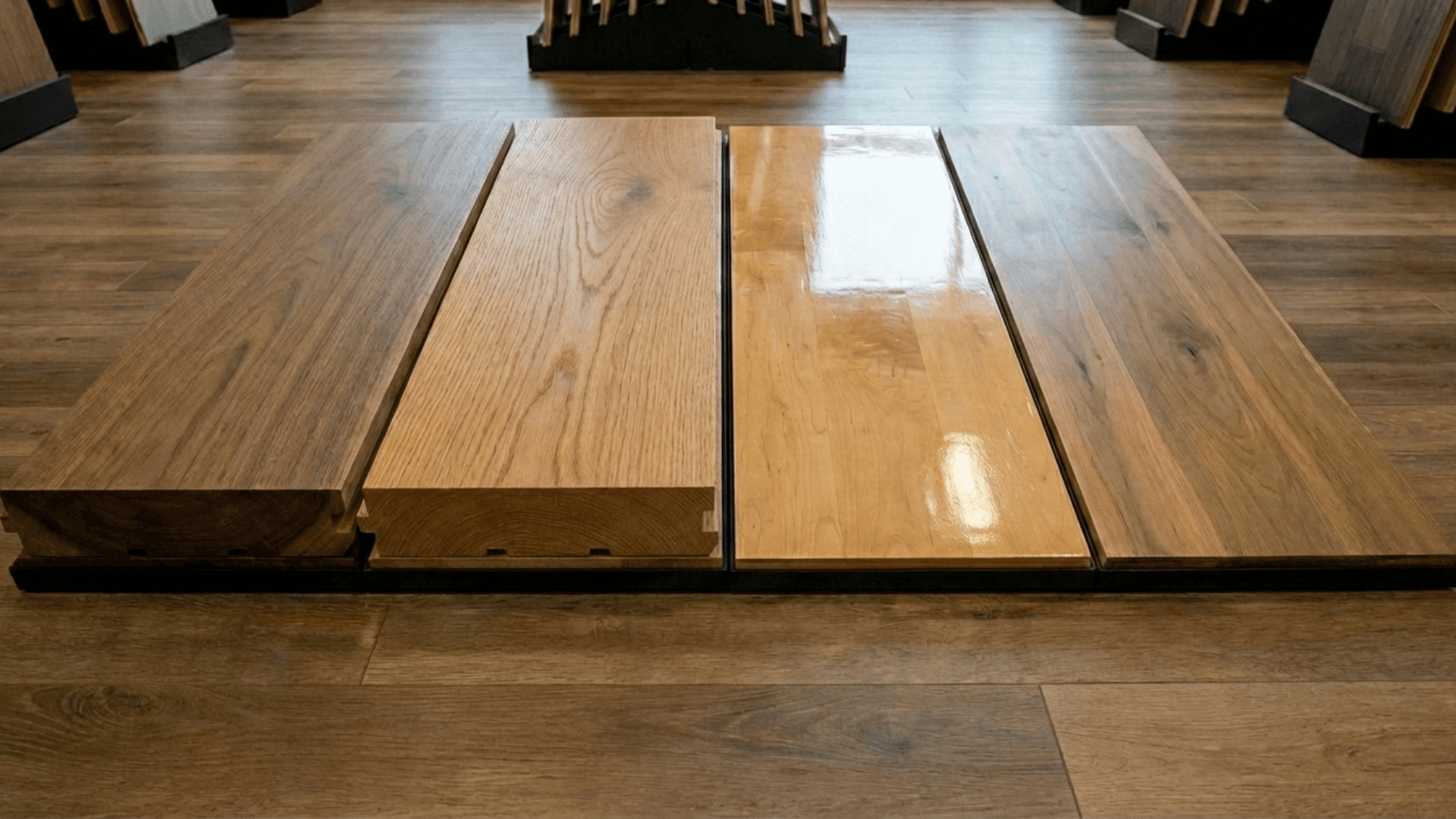
Not all hardwood floors are the same. Understanding your floor type helps you decide if steam cleaning is safe or too risky.
- Solid hardwood: It is made from one thick piece of real wood all the way through. It’s more sensitive to moisture and absorbs water faster than other types.
- Engineered hardwood: This has a thin layer of real wood on top with plywood layers underneath. It handles moisture slightly better than solid wood but still needs careful cleaning.
- Sealed floors: They have a protective coating (usually polyurethane) that acts like a waterproof barrier. Unsealed floors have bare wood exposed with no protective layer at all.
- Waxed and oil-finished floors: It uses different protective treatments instead of polyurethane. Wax sits on top and melts with heat. Oil soaks into the wood and doesn’t create a waterproof seal.
Knowing your floor type is the first step in protecting it. Steam affects each type differently, so always check before cleaning.
Steam Mop on Hardwood Floors: How to Test If It’s Safe
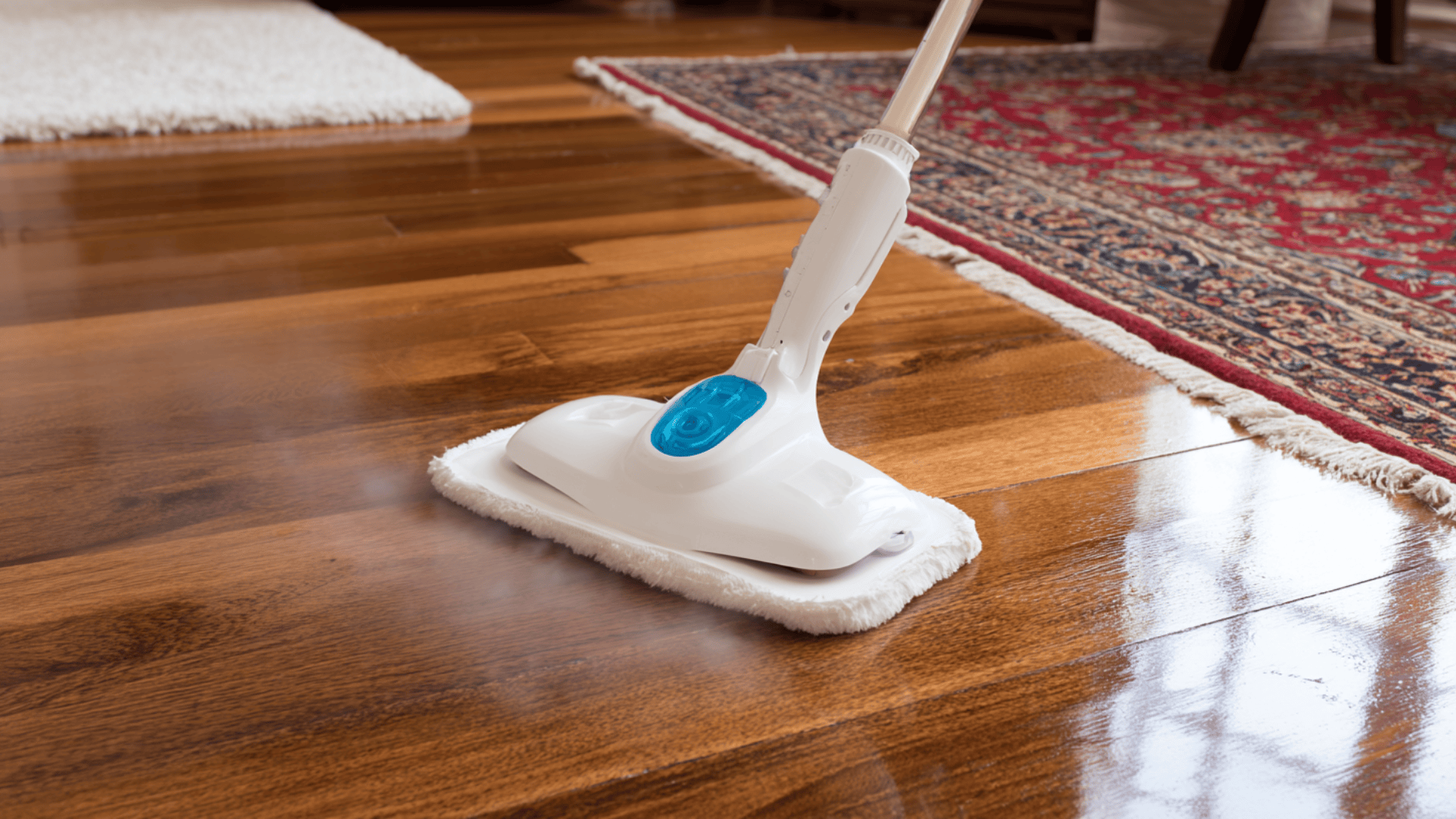
Before using steam, check your warranty or call the manufacturer. Many warranties don’t allow steam, and using it could void your coverage.
Next, do a visual check. Look closely for worn spots where the finish looks dull or scratched. Run your hand along the seams to feel for gaps or rough edges.
Check for exposed wood where the finish has rubbed off. Red flags include loose boards, swelling, cupping (boards curved up at the edges), peeling finish, squeaky areas, or visible cracks. If you spot any of these issues, skip the steam completely.
How to Use a Steam Mop on Hardwood Floors Safely
If you decide to use steam on your hardwood floors, following the right steps matters. These dos and don’ts help prevent damage and keep your floors safe.
| DO’s | DON’Ts |
|---|---|
| Use the lowest steam setting and keep the mop moving constantly. | Don’t pause in one spot. This lets moisture soak in and causes warping. |
| Work in small sections with a clean microfiber pad each time. | Don’t use high steam or oversaturate the cleaning pad. |
| Dry buff immediately after each section with a clean, dry cloth. | Don’t focus steam on seams, edges, or gaps between boards. |
| Test in a hidden area first, like inside a closet or under furniture. | Don’t add cleaning solutions or chemicals to the water. Use plain water only. |
| Check your floor for damage, wear, or gaps before starting. | Don’t steam more than once a month. Too much moisture damages floors over time. |
Even when you follow these rules perfectly, steam cleaning still carries risk. If you’re not 100% confident about your floor’s condition or feel nervous about using steam, trust that feeling and choose a gentler option instead.
Steps to Steam Clean Your Hardwood Floors
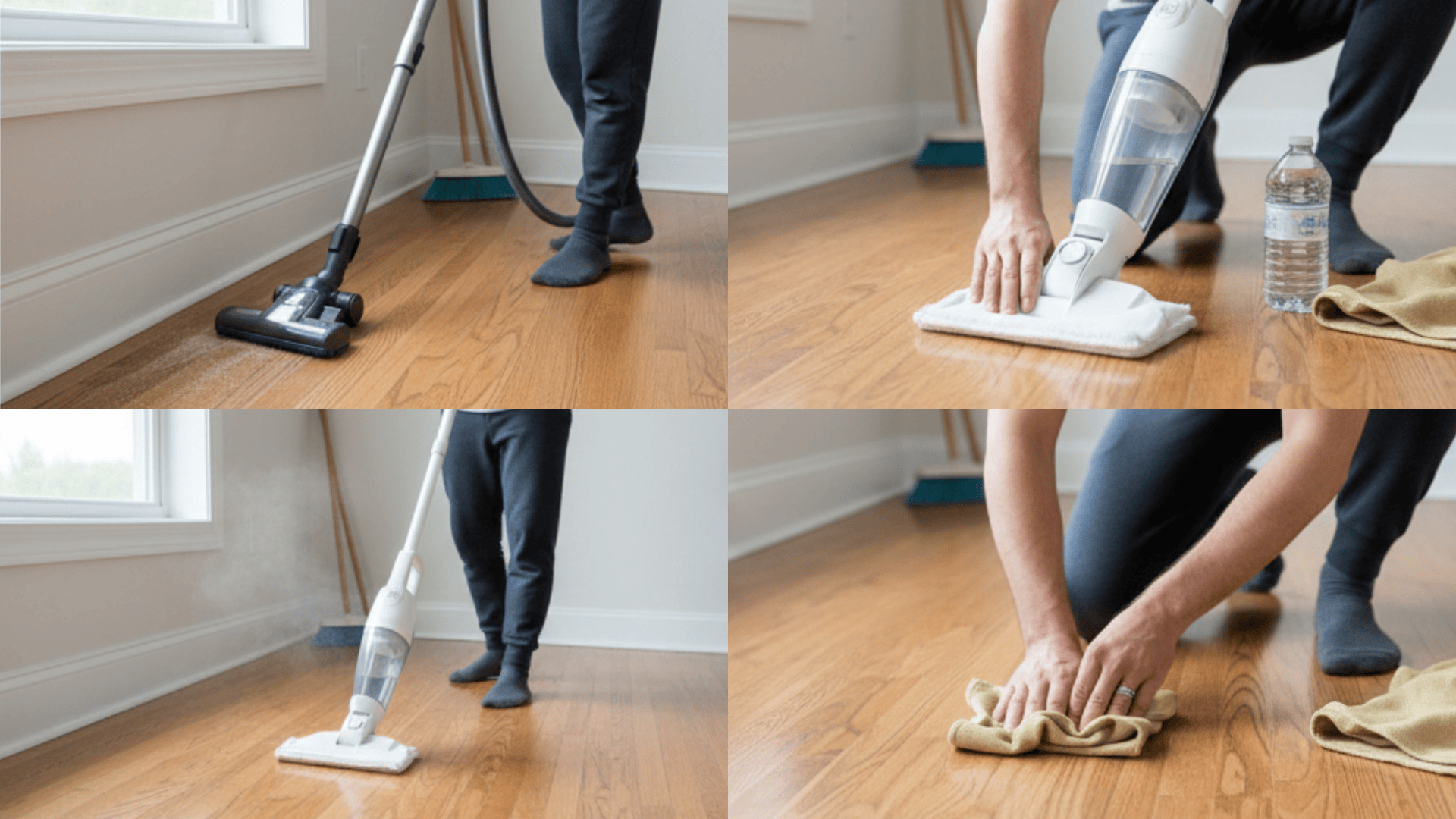
If you’ve decided your floors can handle steam, follow these steps carefully. This method reduces risk and protects your hardwood as much as possible.
Step 1: Prep the Floor
Sweep or vacuum the entire floor first to remove all loose dirt and debris. Even small particles can scratch your floor when the steam mop pushes them around. Use a soft-bristle broom or a vacuum with a hardwood floor attachment.
Make sure you get all the dust and grit, especially along baseboards, in corners, and under furniture edges. Check for sticky spots or spills and clean them with a damp cloth before steaming. A clean surface helps the steam mop glide smoothly and reduces the risk of scratching.
Step 2: Set Up the Steam Mop
Put a fresh, clean microfiber pad on the mop. Dirty pads won’t absorb moisture properly and can spread grime around. Fill the water tank with distilled water to prevent mineral buildup. Set it to the lowest steam setting available; high heat creates more moisture and increases the risk of damage.
Before you start the whole floor, test it in a hidden corner, like inside a closet or under a piece of furniture. Steam a small area and wait 5-10 minutes to see if any damage, discoloration, or dulling appears.
Step 3: Steam Clean Using the “Light and Fast” Method
Move the mop in straight passes following the direction of the wood grain. Use quick, smooth strokes and keep moving constantly. Don’t let the mop sit in one spot even for a second – this allows too much moisture to penetrate the finish.
Work in small sections that you can finish in 2-3 minutes, about 4×4 feet at a time. Avoid going over the same area repeatedly. One or two passes are enough. Keep the mop at a steady pace and maintain light pressure.
Step 4: Dry and Inspect
Immediately after steaming each section, use a clean, dry microfiber cloth to buff the floor thoroughly. This removes any leftover moisture before it can soak in or leave streaks. Check the seams and edges carefully for any water sitting in gaps between boards.
If you see moisture pooling anywhere, wipe it up right away. Run your hand along the floor – it should feel dry to the touch, not damp or sticky. Replace your drying cloth when it gets wet.
Step 5: Aftercare
Open windows or turn on fans to help the floor dry completely and improve air circulation. Don’t put area rugs back down or walk on the floor with socks until it’s totally dry, which can take 30-60 minutes depending on humidity.
Avoid placing furniture back immediately. Watch for white haze, dullness, cloudy spots, or swelling in the next 24 hours. If you see any of these warning signs, stop using steam immediately and switch to safer cleaning methods.
Even with these precautions, steam can still damage hardwood floors over time. If you notice dulling, white spots, warping, or separation after steam cleaning, stop immediately and switch to safer cleaning methods.
Other Safe Options to Clean Hardwood Floors
You don’t need steam to get hardwood floors clean. These safer methods protect your floors and work just as well.
| Cleaning Type | What to Do |
|---|---|
| Daily Clean | Use a microfiber dust mop or vacuum with a soft brush attachment. Focus on high-traffic areas like entryways and hallways. Prevents scratches and keeps floors fresh. |
| Weekly Clean | Dampen a microfiber mop with hardwood cleaner and wring out completely. Mop with the wood grain using smooth strokes. Let air-dry for 10-15 minutes. |
| Deep Clean Without Steam | Spray sticky spots with hardwood cleaner and wipe immediately. Dry each section right away with a clean cloth. Work in small sections and never let the cleaner puddle. |
These steam-free methods get your floors just as clean without the risk of damage. They’re gentler on your finish and won’t void your warranty. Stick with these proven techniques and your hardwood floors will stay beautiful for years.
Simple Hardwood Floor Care Routine to Prevent Future Damage
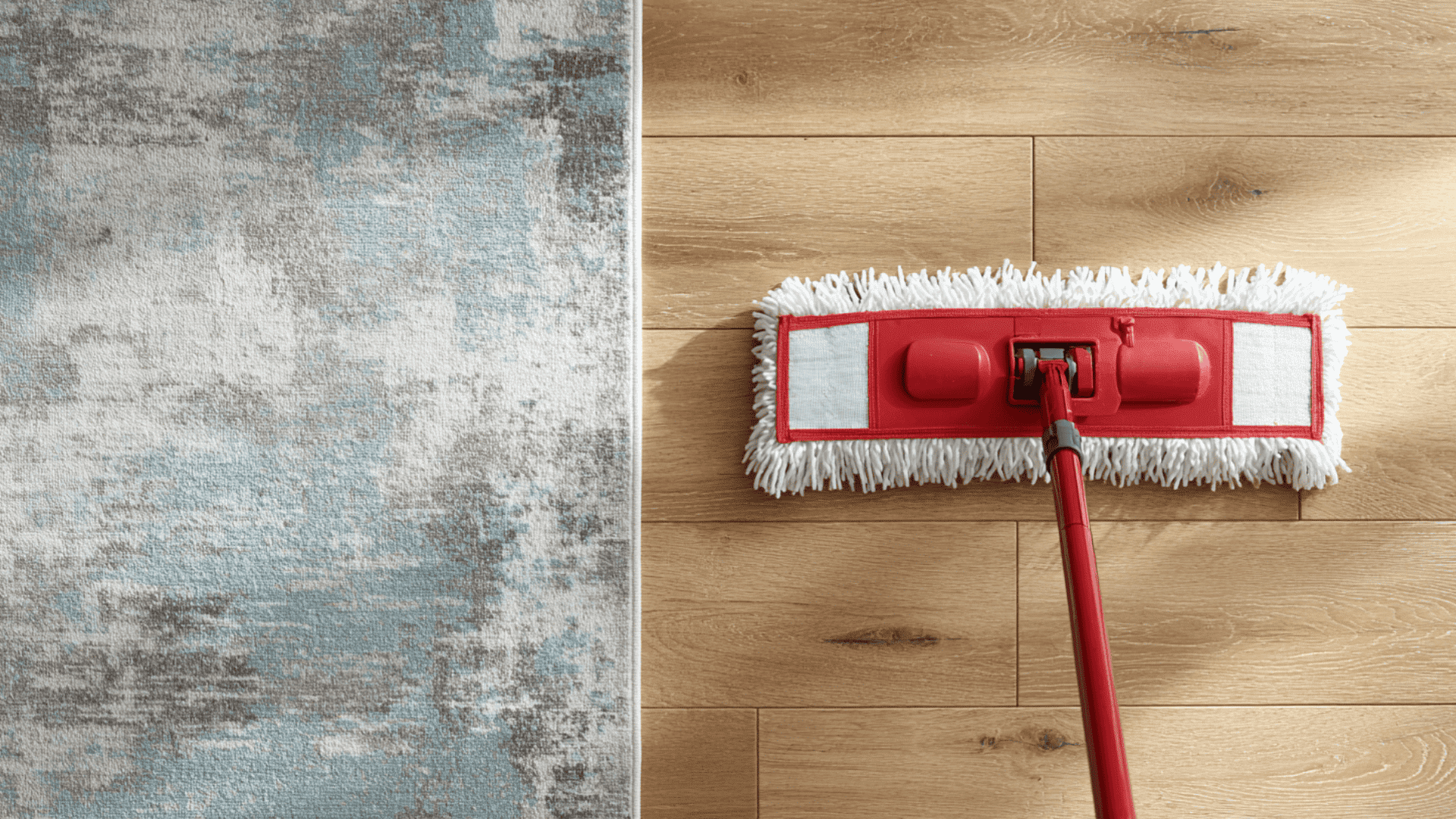
Taking care of hardwood floors doesn’t have to be complicated. A regular routine keeps them looking good and prevents expensive repairs.
- Sweep or vacuum daily: Use a soft brush attachment to remove dirt and dust that scratches the floor. Focus on high-traffic areas where debris builds up fastest.
- Wipe spills immediately: Use a dry or slightly damp cloth right away. Even water damages hardwood if left sitting, causing stains, warping, or dullness in the finish.
- Damp mop weekly: Use hardwood floor cleaner and wring the mop out completely. Never use too much water – excess moisture soaks into seams and damages the wood underneath.
- Use entry mats: Place mats at every door to catch dirt, moisture, and grit before it reaches your floors. This prevents most scratches and protects the finish.
- Add felt pads to furniture: Put pads under all furniture legs to prevent scratches when moving chairs or tables. Replace them regularly as they wear down or fall off.
- Avoid harsh cleaners: Skip vinegar, ammonia, or all-purpose sprays that strip the protective finish. These products cause long-term damage that’s expensive to repair later.
Consistent care is easier and cheaper than fixing damage later. A few simple habits protect your floors for years.
Conclusion
So, can you steam clean hardwood floors? Yes, but only if your floors are fully sealed, undamaged, and approved by the manufacturer. Using a steam mop on hardwood floors requires careful technique, the lowest setting, and constant movement to avoid damage.
Even then, the risk remains. For most homes, a dry microfiber mop plus weekly damp cleaning is the safer long-term choice. You’ll get clean floors without worrying about hidden moisture damage. These gentler methods work just as well and protect your investment.
The decision comes down to risk versus reward. Steam might save a few minutes, but is it worth potentially replacing your entire floor? Choose the method that gives you peace of mind and keeps your floors looking great for years.
What cleaning method works best for your hardwood floors? Share your experience in the comments below!