Every homeowner faces the flat vs matte paint decision eventually, and most learn what it really means the hard way. Maybe you wipe down a smudge, only to create a shiny spot that’s worse than the original mark.
Or you realize your high-traffic hallway can’t handle the beautiful flat finish you loved in the store.
These lessons come after you’ve already bought the paint and done the work. You wish someone had told you what actually happens when you live with these finishes.
I’m going to share what I tell most people when they’re stuck between these two finishes.
Real stories from real homes, the good choices and the regrettable ones, and how to figure out which paint will make your life easier instead of harder.
Understanding Flat vs Matte Paint?
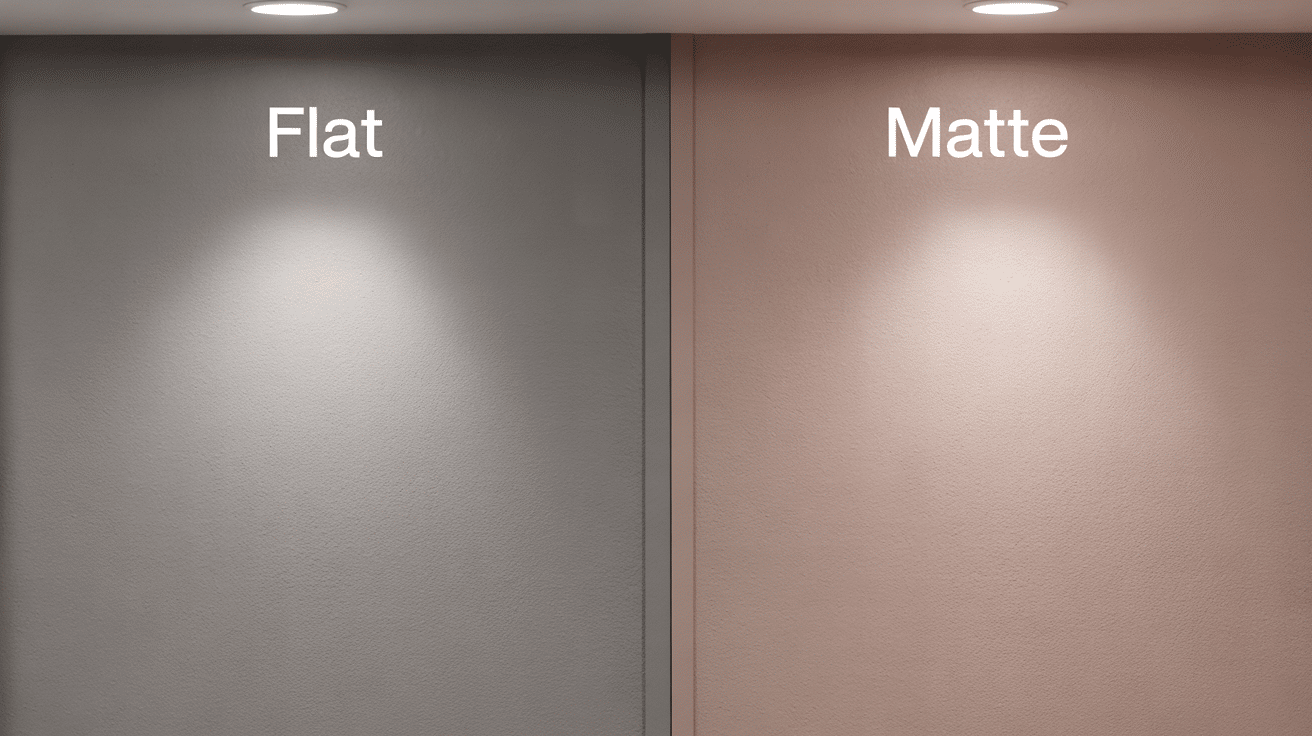
Flat and matte are both low-shine finishes, but they behave differently once people start living in the room. Flat paint has no sheen. When you run your hand along the wall, it feels smooth.
It absorbs light, so walls look soft, even, and consistent, which helps hide patching, nail holes, and uneven texture. The finish can feel slightly chalky, and it tends to show marks faster in busy areas.
Matte paint sits one step above flat on the sheen scale. It still looks very low-shine, but it usually has better durability than flat.
The surface looks almost flat to your eye. You won’t see any obvious shine or gloss on your walls. That means it handles light cleaning and everyday contact more easily, making it a safer choice for most lived-in rooms.
What Is Paint Sheen and Why Does It Matter for Real Homes
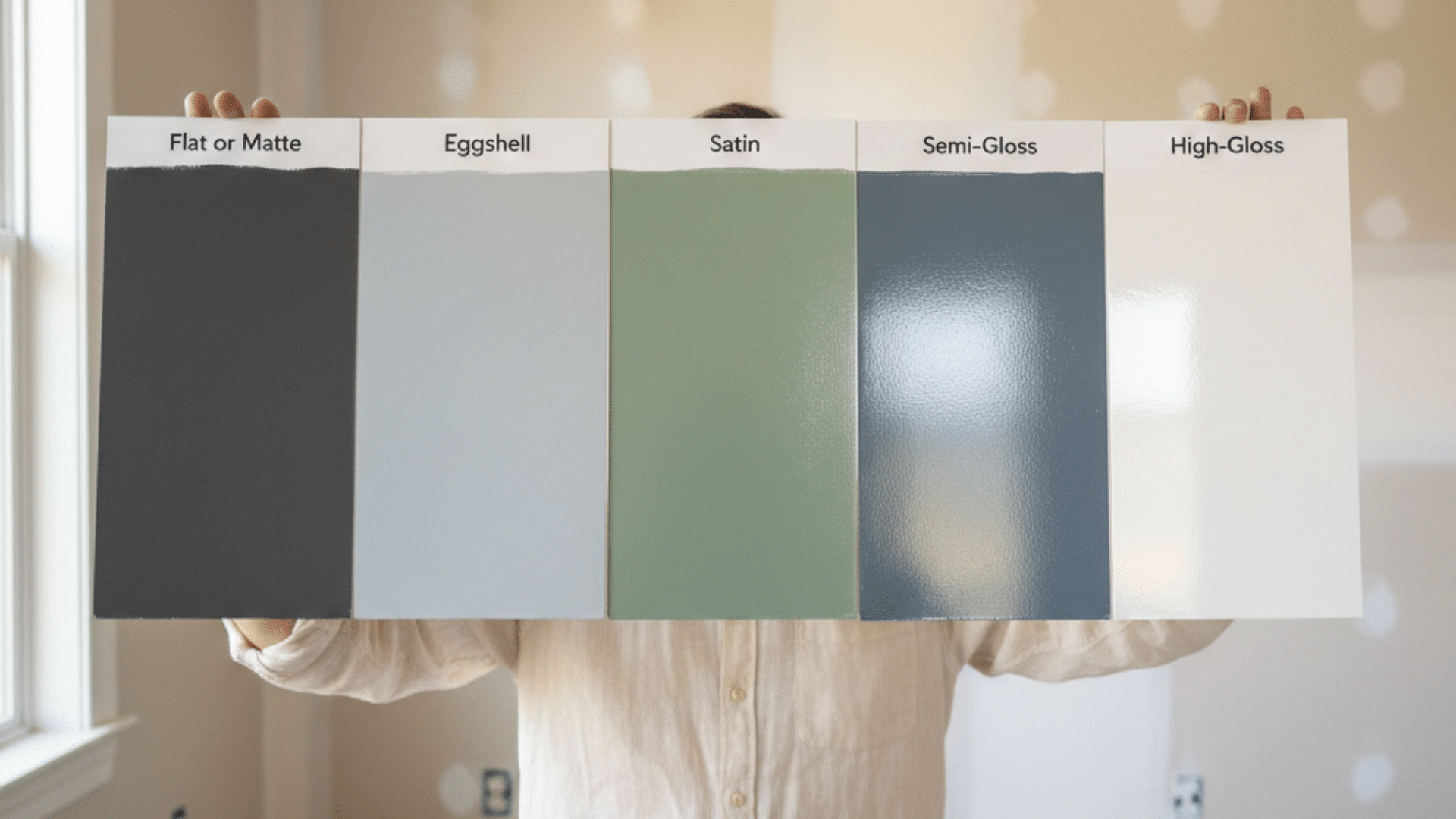
Paint sheen is simply how much light reflects off the surface. The more sheen a paint has, the more it reflects light and the more it resists scuffs and cleaning.
Sheen affects two things homeowners notice right away:
- How the Wall Looks: A higher sheen reflects more light and can make texture, roller marks, and repairs stand out. Lower sheen looks calmer and hides flaws better.
- How the Wall Holds Up: A higher sheen usually dries harder and wipes clean more easily. Lower sheen can mark faster and may show shiny rub spots if scrubbed too hard.
Most people use lower sheens for walls and save higher sheens for trim, doors, cabinets, and areas that need frequent wiping.
Different sheens handle cleaning differently. They also show varying degrees of wall imperfections.
On a Typical Sheen Chart, Finishes Move Like This:
flat → matte → eggshell → satin → semi-gloss → high-gloss
Matte vs Flat Paints: Real-Life Differences
A practical breakdown of flat vs matte paint, so that you can pick the right finish, keeping in mind the key differences.
| Factor | Flat | Matte | Quick Pick |
|---|---|---|---|
| Lighting | Lowest reflection, looks even | Soft glow, can catch light | Glare/strong daylight: Flat |
| Hiding Flaws | Best at hiding repairs and texture | Hides minor flaws; sheen can highlight | Old/rough/repaired walls: Flat |
| Durability | Marks and scuffs faster | Tougher for daily wear | High-traffic/kids/pets: Matte |
| Washability | Can burnish (shiny wipe marks) | Handles light cleaning better | Regular wipe-downs: Matte |
| Touch-Ups | Blends easiest | Can flash after touch-ups | Frequent touch-ups: Flat |
| Cost | Often cheaper upfront, may cover in fewer coats | Often slightly pricier, can save over time | Value = room use: Matte for busy rooms |
The right pick depends on how the room is used, how often the walls get touched, and how much cleaning you expect to do. Keeping these factors in mind helps you avoid surprises after the paint is on the wall.
Best Rooms for Flat vs Matte Paints
Choosing between flat and matte paint depends on how each room is actually used. I always tell homeowners to think about traffic, cleaning, and daily habits first – not just how the paint looks on a sample card.
- Living Rooms & Bedrooms: I use flat in low-use or formal rooms. For family spaces, matte holds up better to light cleaning.
- Hallways, Stairs & Entries: High-traffic areas need matte since it resists scuffs and cleans more evenly than flat.
- Kids’ Rooms & Playrooms: I avoid flat. Matte is the minimum; many parents prefer eggshell for easier cleanup.
- Ceilings: Flat hides texture and glare best. In steamy baths, I use a moisture-resistant matte or eggshell finish.
- Kitchens & Bathrooms: I skip flat and matte. Eggshell or satin works best, with semi-gloss or high-gloss on trim.
There’s no single best finish for every room. Most homes use a mix of sheens based on traffic and moisture. When in doubt, think about how often walls get touched – your walls should work with your lifestyle, not against it.
What People Say After They Live with It: Personal Experiences
Real homeowners have strong opinions about flat and matte paint. These aren’t just technical differences on paper.
Flat Looked Great… Until The Light Hit It
I switched to flat because satin made every dent show, but then daylight exposed something new: “you can see glossy or shiny spots on the wall when there’s light shining through the front door.” It “almost looks like roller marks.” – DoItYourself.com
Matte Held Up Better With Kids And Pets
When I picture kids and pets in the house, this comment sums it up: “I would definitely recommend matte if you have children and pets.” It “seems to hold up better to repeated wiping.” – Houzz
As you can see, personal preferences vary widely. What feels perfect to one person might be uncomfortable for another. The choice you make shows up in your daily life.
Sample First: The Easiest Way to Avoid Regret
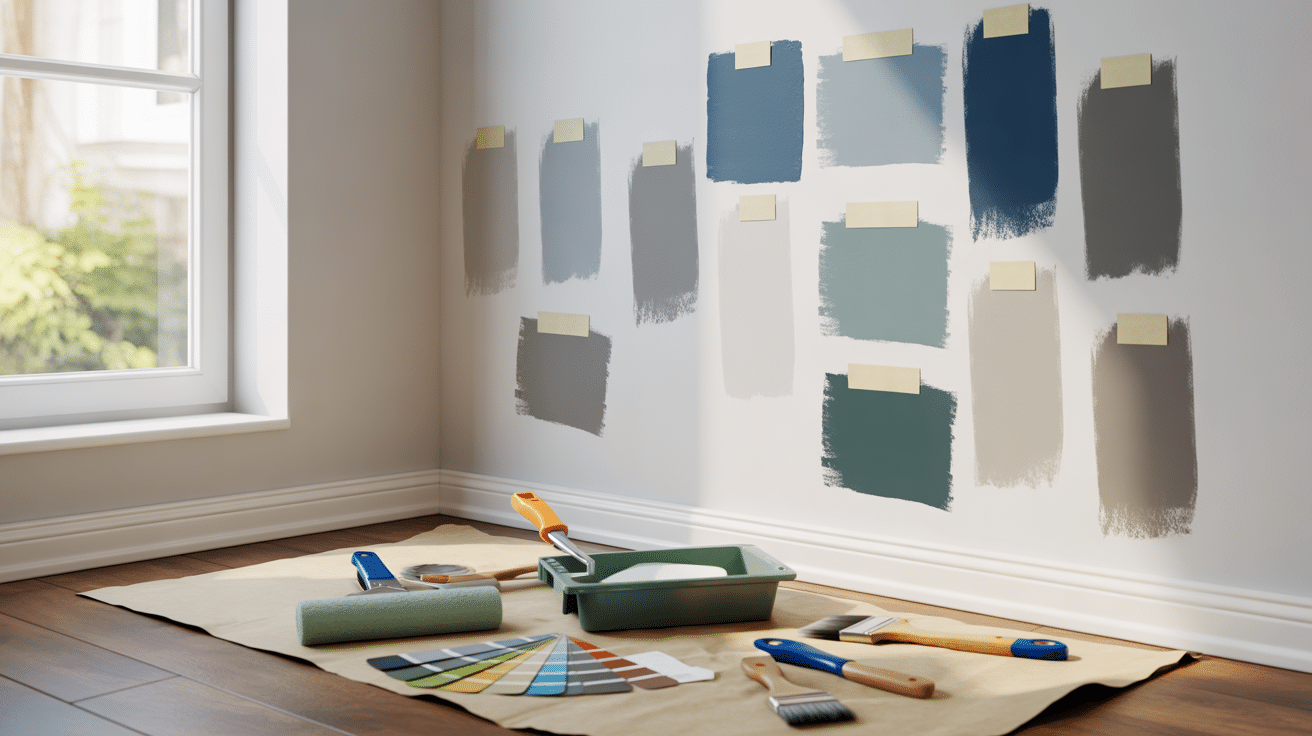
I’ve seen too many homeowners skip the sampling step and regret it within weeks. They trust the paint chip under store lighting and hope for the best.
Don’t be that person. Sampling takes one afternoon and saves you from repainting entire rooms.
The samples you test at home tell you everything the paint store can’t. You’ll see how the finish looks in your actual lighting, on your actual walls, with your actual mess.
How to Test Flat vs Matte Paints the Smart Way
Testing samples at home is the easiest way to avoid regret. Store lighting and paint chips can’t show how a finish will behave on your actual walls. A short test now can save you from repainting later.
- Buy Both Finishes: Get sample sizes of your chosen color in both flat and matte finishes.
- Paint Large Test Squares: Using the same roller you’ll use for the room, paint two 12 in x 12 in squares (one flat, one matte).
- Place Them In Different Spots: If possible, paint them on two different walls to compare how each finish looks in different light and at different angles.
- Check In Multiple Lighting: Look at both samples over a few days in the morning, afternoon, and night (lamps on).
- Test Cleanability After Curing: After 3–5 days (or per the label), gently wipe with a damp cloth and compare the results.
This small extra step shows you how each finish looks, feels, and cleans in real life. Once you see the difference in your own space, the right choice becomes much easier.
What to Look for During the Test?
Start by checking patch visibility. Do repairs blend in or stand out? Flat usually hides old nail holes, and texture fixes better. Next, look for roller marks and lap lines, since some finishes show every stroke.
Pay attention to glare near windows and under lamps. Matte can give a soft glow that flat won’t.
After your wipe test, inspect the surface closely. Did rubbing leave shiny spots, dull patches, or areas that look uneven compared to the rest? Also, compare color depth. Flat can make a shade look softer, while matte can make it look slightly richer.
Take photos to help you spot differences from a distance. Most importantly, trust what you see in your own home, since your lighting, wall condition, and daily use matter most.
Conclusion
After walking hundreds of people through the flat vs matte paint decision, I’m sure there’s no universal correct answer.
Your home is unique. The way your family lives in each room matters more than what’s trending or what worked perfectly in someone else’s house.
Flat gives you that gorgeous, soft look but demands careful maintenance. Matte offers durability without much shine. Sometimes you’ll use both finishes in different rooms, and that’s completely normal.
The homeowners who feel happiest with their choice are the ones who tested samples first and thought honestly about their lifestyle. They didn’t just pick what looked pretty in the store.
Take your time with this decision. Your walls need to work with your real life, not against it.
Frequently Asked Questions
Flat vs Matte Paint: Which Finish Hides Wall Imperfections Better?
Flat paint wins here. It absorbs light completely, so bumps, patches, and texture disappear. Matte has a slight sheen that can highlight flaws, though it still hides them better than eggshell or satin.
Can You Paint Matte Over Flat Paint (or Flat Over Matte)?
Yes, you can switch between them without primer if the existing paint is clean and in good condition. Lightly sand glossy spots first for better adhesion.
How Do You Clean Flat Paint without Damaging It?
Use a barely damp microfiber cloth with gentle pressure. Never scrub. Expect some marks to stay permanent. Keep leftover paint for touch-ups rather than aggressive cleaning.