Ever stare at your tiny bathroom and wonder how to fit a decent shower in there? You’re not alone. Many people face the same challenge when dealing with limited space, especially in small bathroom designs with shower setups.
Here you get the practical ways to make the most of every inch. We’ll look at clever layouts that work, simple visual tricks to open up the space, and intelligent design choices that real people use in their homes and apartments.
From corner showers to glass doors that create breathing room, these ideas actually work in the real world. You’ll see how the right choices can turn a cramped bathroom into a space that feels bigger and works better.
Why Design Matters in Small Bathrooms
When your bathroom is short on space, design isn’t just about looks. It decides how easily you move, where your stuff goes, and whether the room feels calm or cramped.
- Uses space more efficiently: You get better placement for the shower, sink, and toilet, so you’re not wasting precious floor area.
- Improves daily flow: You can step in, dry off, and get ready without bumping elbows, and the room feels easier to use.
- Makes the room feel larger: Open sightlines, the right lighting, and simple finishes help the space breathe even if it’s tiny.
- Keeps clutter in check: Built-in niches, shelves, and smarter storage spots keep counters clear, so it looks cleaner too.
- Improves comfort and value: A well-planned layout lasts longer, feels more “you,” and can help when it’s time to sell.
Shower Design For Limited Space Small Bathrooms
When space is limited, the shower often sets the tone for the entire bathroom. The right design can open up the room, improve movement, and make daily routines feel less rushed.
1. Corner Shower That Saves Floor Space
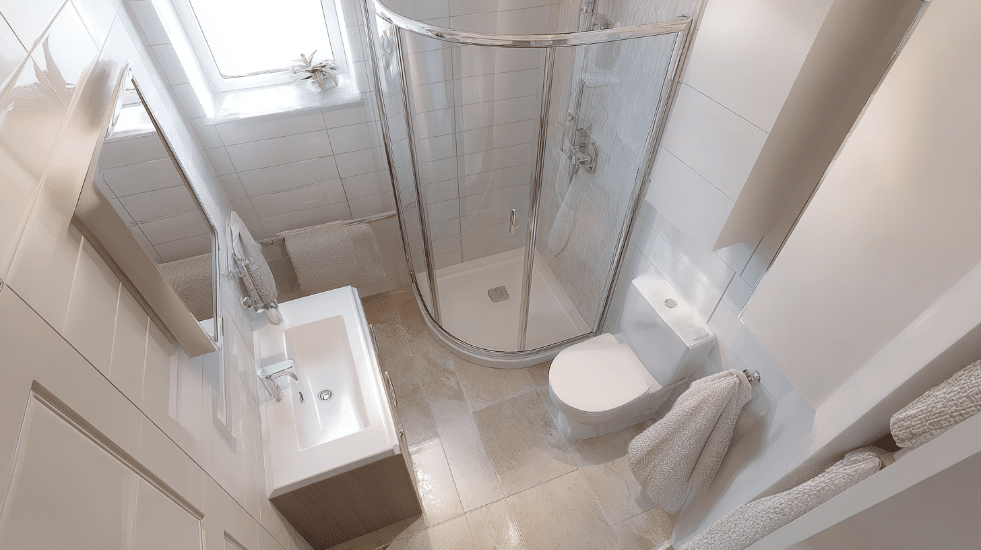
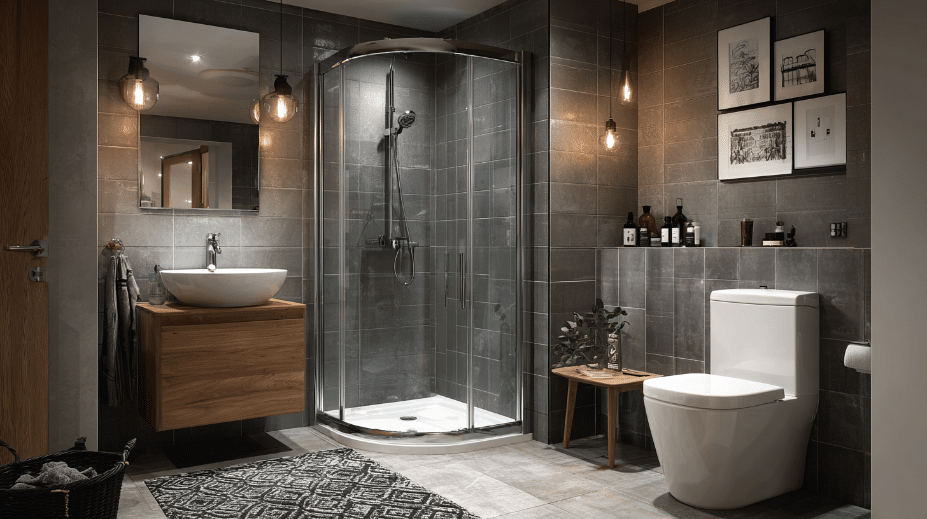
Corner showers free up the center of your bathroom for walking and movement. A quadrant shower fits snugly into the corner with a curved door that swings outward. Neo-angle showers use five panels to create a diamond shape that feels roomier inside.
Curved designs soften the look while taking up minimal square footage. These trim bathroom shower layout options work exceptionally well in square or L-shaped rooms.
2. Walk-In Showers For Narrow Bathrooms
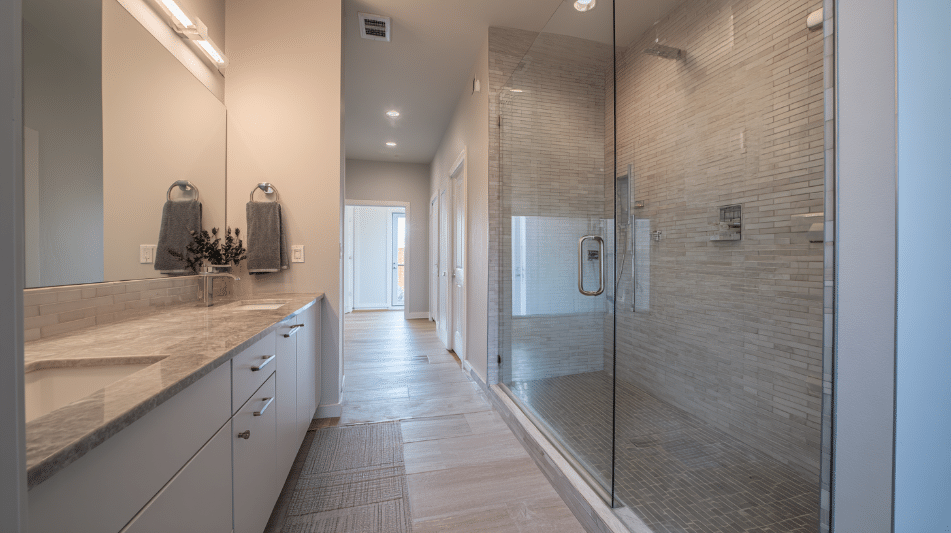
Linear walk-in showers fit perfectly along one wall in long, narrow bathrooms. These layouts run straight, with no curves or angles, making them ideal for tight widths.
Barrier-free entry means there are no door thresholds to navigate, saving space and making cleaning easier. The open design also tricks your eye into seeing more room than actually exists.
3. Shower And Toilet Combo
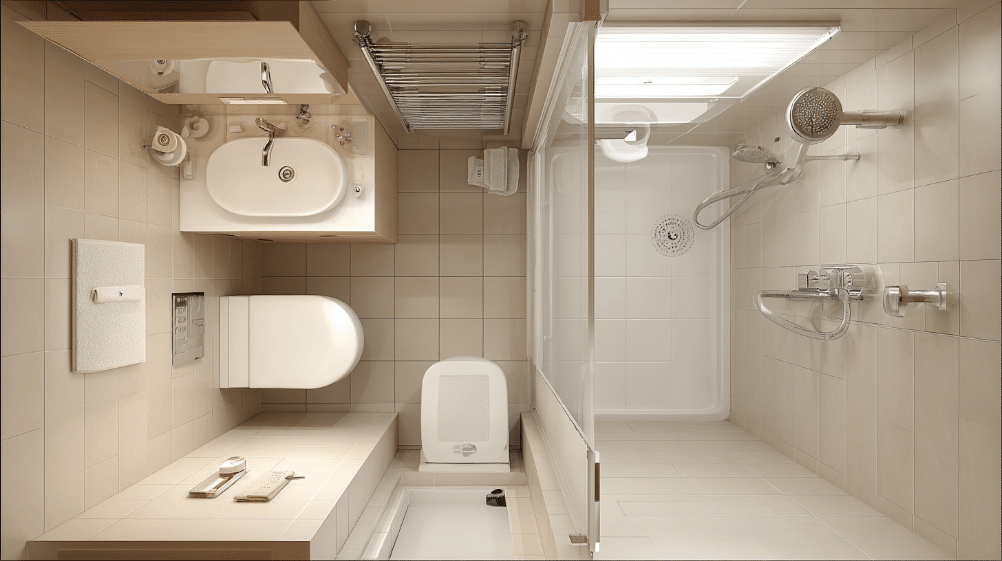
When space is exceptionally tight, place your toilet next to the shower rather than across from it. Keep at least 15 inches of clearance from the toilet centerline to any side wall or fixture, and 21 inches in front of any wall, fixture, or door.
Position the showerhead away from the toilet to avoid spray issues. This compact bathroom ideas approach meets building codes while fitting both fixtures into minimal square footage.
Pair that layout with the right bathroom vanity depth so your walkway stays clear instead of cramped.
4. Doorless Walk-In Shower Design
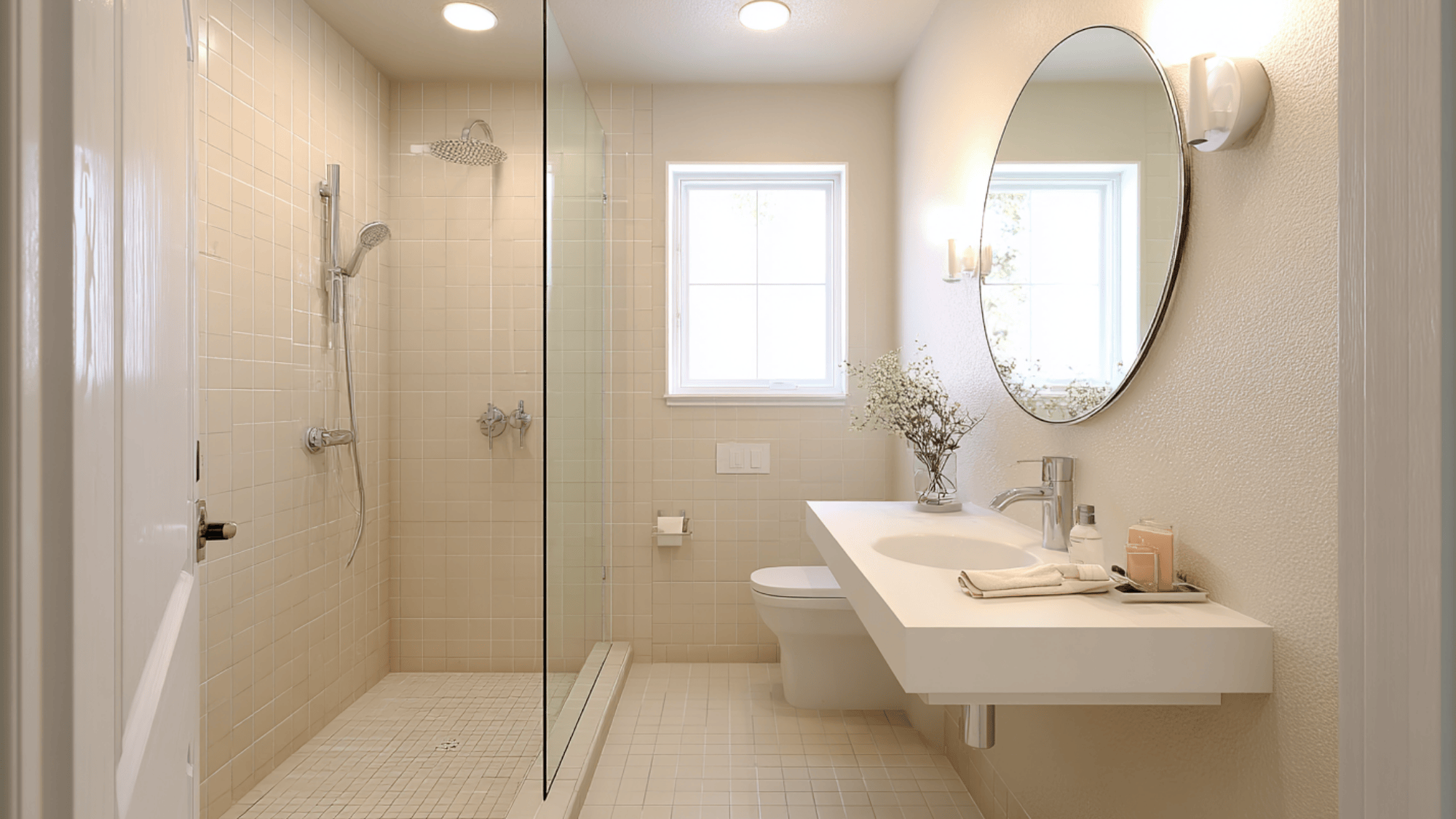
A doorless walk-in shower removes the swing space a regular door needs, which helps in tight bathrooms. It usually uses a fixed glass panel or a short half-wall to block splashes while keeping the entry open.
With fewer parts, it is easier to clean and feels less crowded. Good lighting and a clear glass panel can make the whole room look bigger.
5. Walk-In Shower With Built-In Bench
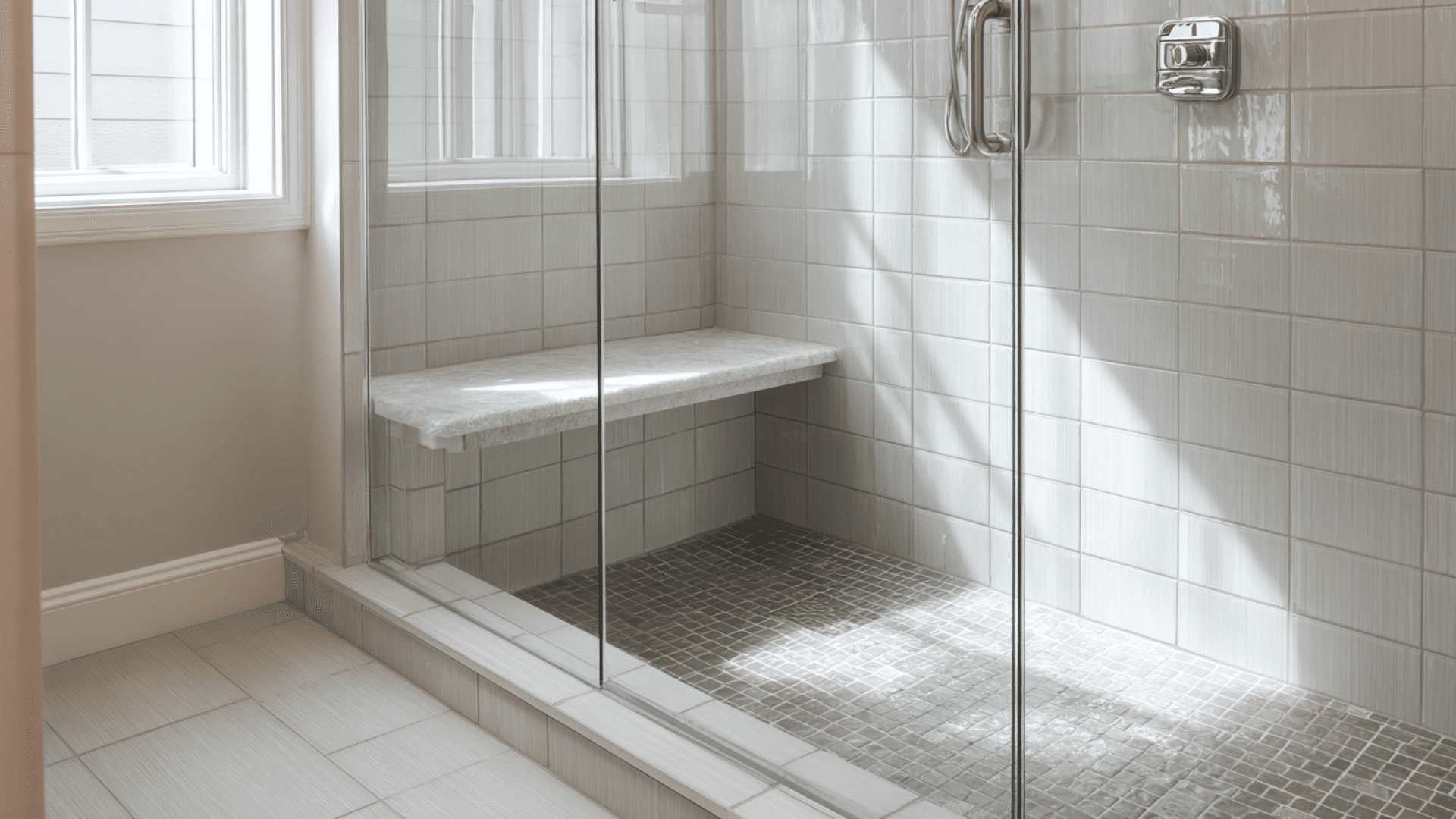
A built-in bench gives you a place to sit, shave, or set shower items without adding a bulky stool. It is fixed to the wall, so the floor stays clearer and the shower feels more open.
In small bathrooms, a corner bench works best because it uses space that often goes unused. Tile it to match the shower walls for a clean, smooth look that is easy to wipe down.
6. Wall-Mounted Shower Controls To Clear Floor Space
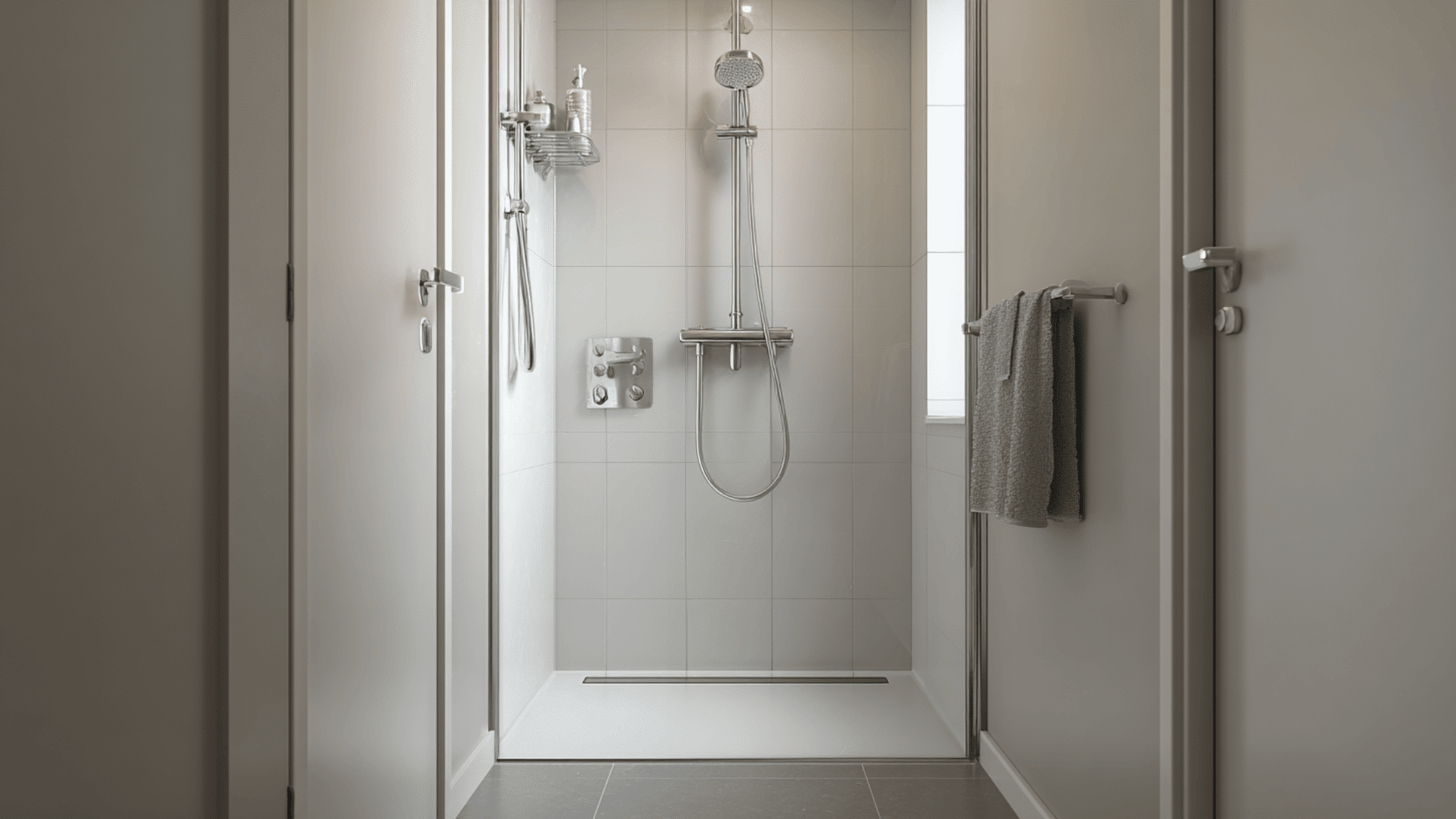
Wall-mounted shower controls keep knobs, valves, and shelves off the floor, so the shower feels less crowded. When everything is placed on the wall, you have more room to move your feet and clean the area easily.
This is helpful in small bathrooms where every inch matters. Put the controls at a comfortable height and keep them near the showerhead. Choose simple handles that are easy to grip with wet hands.
7. Shared Shower Wall
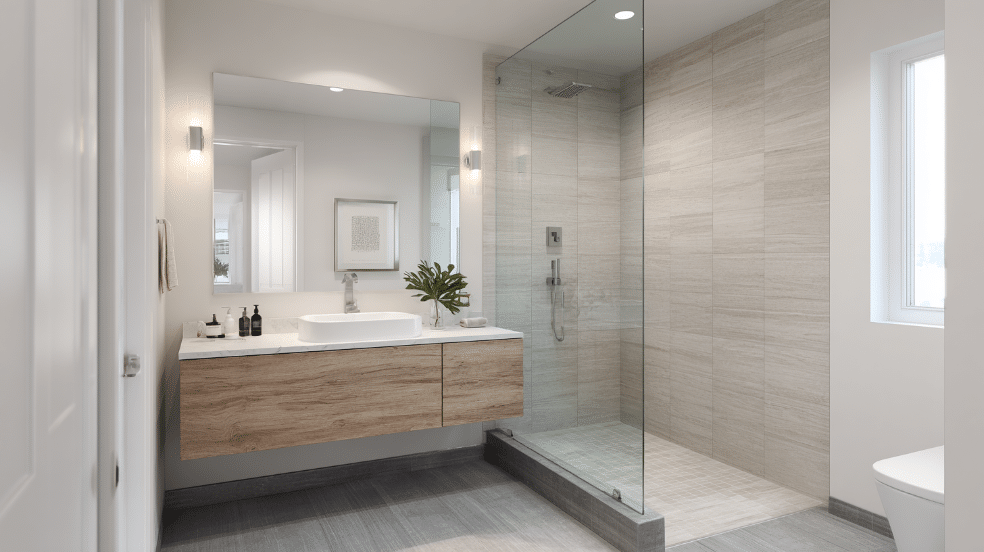
A shared shower wall means the shower uses the same wall as the toilet vanity or tub plumbing. It keeps all the pipes in one area, which can save space and lower renovation costs.
In a small bathroom, it also helps you plan a cleaner layout because fewer walls need extra plumbing. Add a glass panel or a half-wall to keep water in the shower zone without making the room feel closed in.
8. Small Bathroom With Tub And Shower Combined
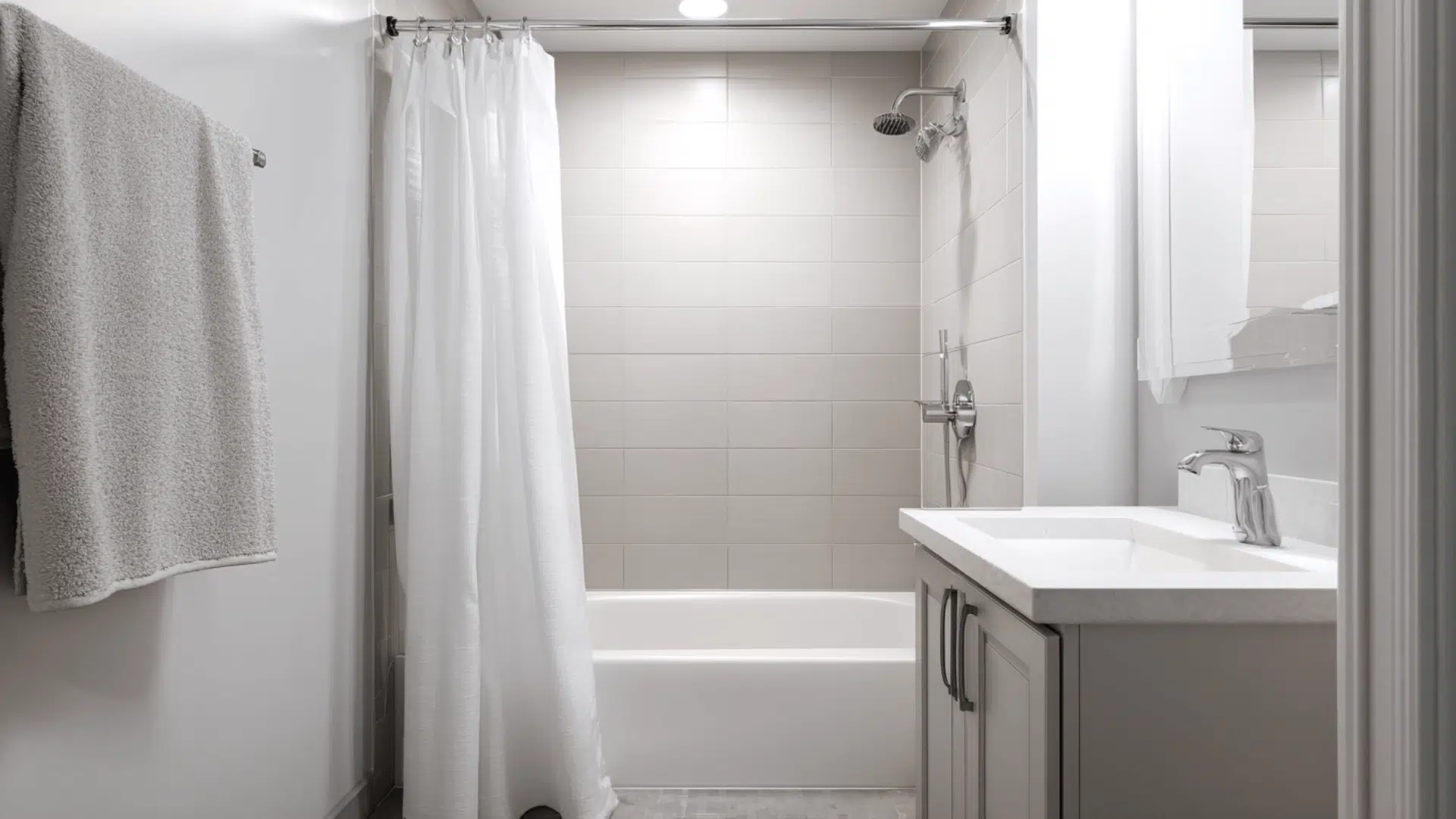
A tub-and-shower combo is a wise choice when you need both options but do not have room for a separate shower. The shower goes right over the tub, so you use one footprint instead of two.
This setup works well for families because it is easier to bathe kids and rinse off quickly. Use a clear glass panel or a simple curtain to keep the space feeling open and bright.
9. Compact Shower Over Bathtub With Glass Screen
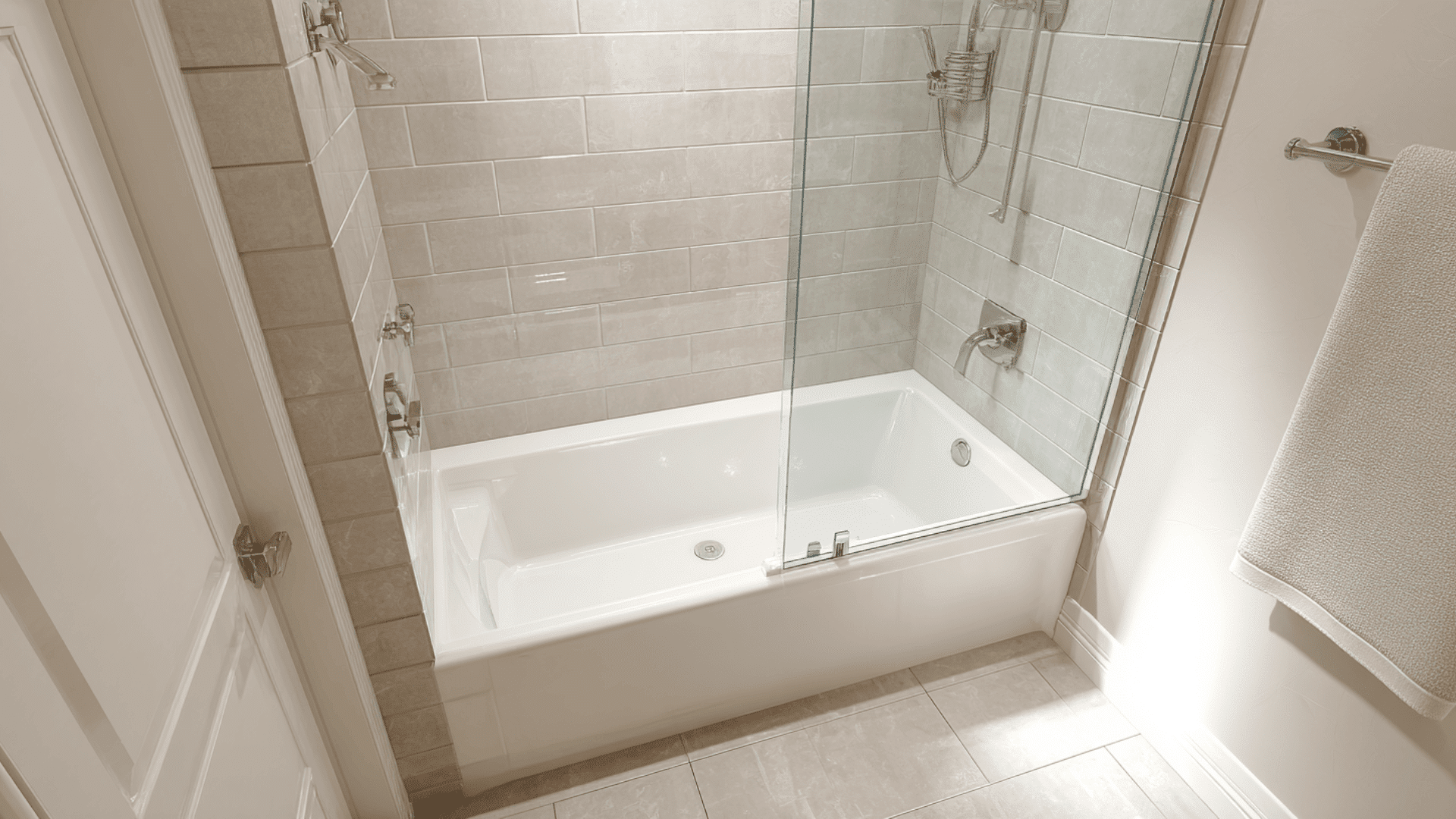
A compact shower-over-bathtub setup gives you both bathing options without using extra floor space. The shower sits right above the tub, so everything stays in one footprint, which is perfect for small bathrooms.
A clear glass screen blocks splashes better than a curtain and keeps the room looking open. Choose a slim screen that swings in or folds to make getting in and cleaning easier.
10. Make Space For A Walk-In Shower And Tub
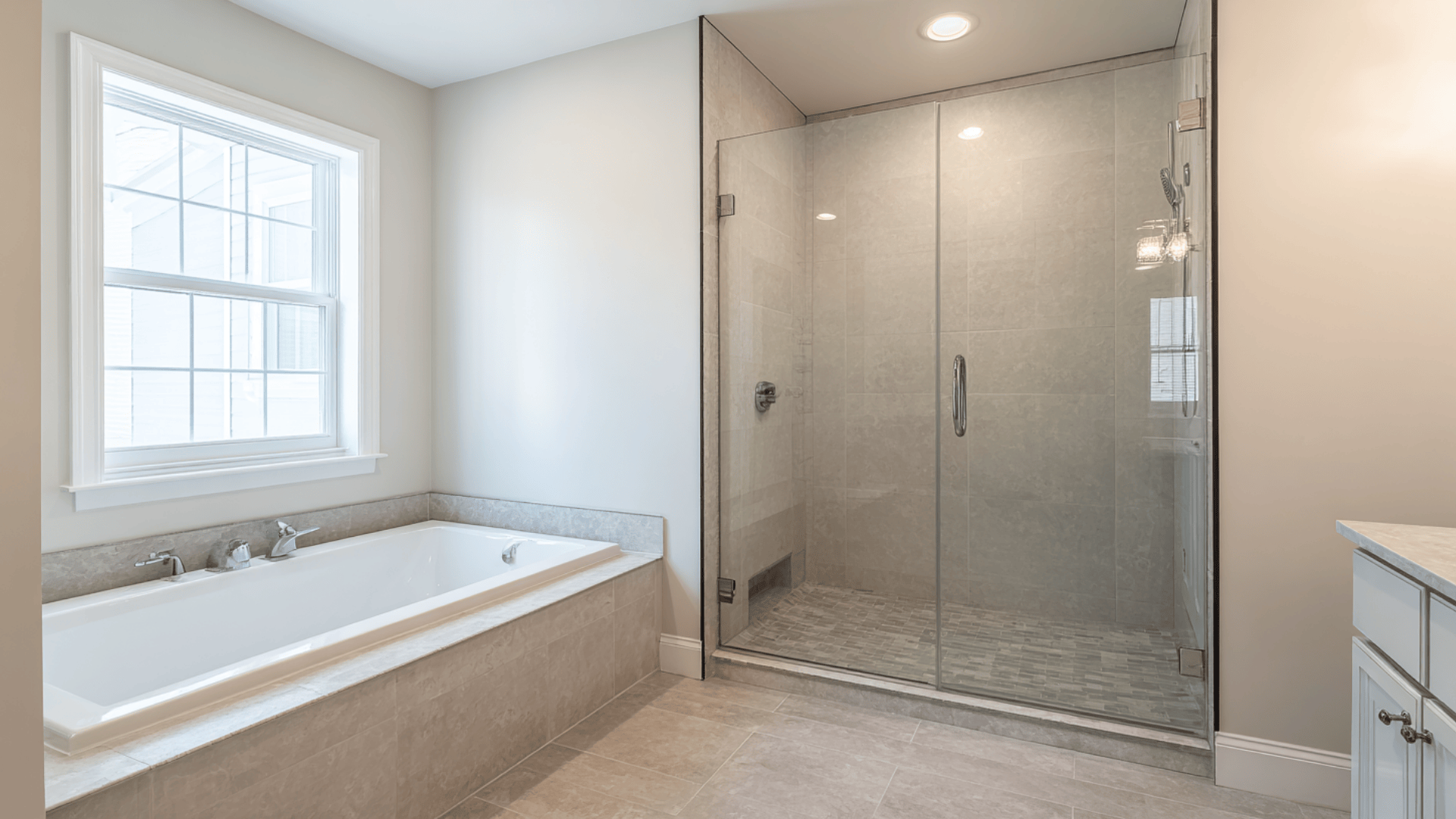
You can fit a walk-in shower and a tub in a small bathroom by choosing compact sizes and planning the layout well. Place them along the same wall or in a straight line to avoid wasted corners.
A fixed glass panel can separate the shower without making the room feel closed in. Use wall-mounted fixtures and built-in storage to keep the floor clear, so the bathroom feels bigger and easier to move around in.
11. Install A Pocket Door To Free Up Bathroom Floor Space
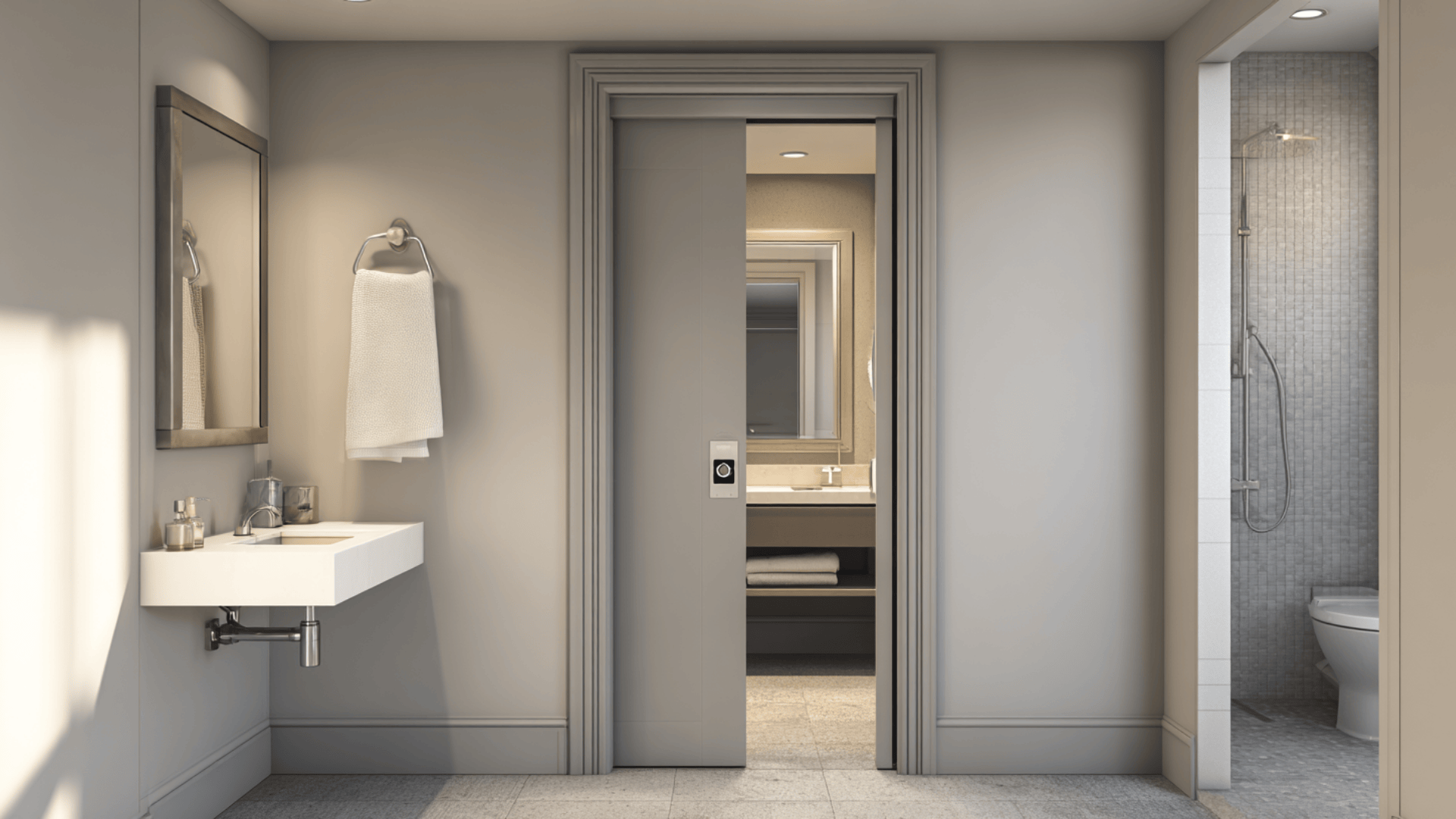
A pocket door slides into the wall instead of swinging open, which saves space in a small bathroom. This gives you more room near the shower, vanity, or toilet and makes the walkway feel less crowded.
Pocket doors work well in narrow layouts because they do not take up floor space. Choose a strong track so it slides smoothly. Add a simple lock for privacy and comfort.
12. Use A Curved Shower Rod To Gain Elbow Room
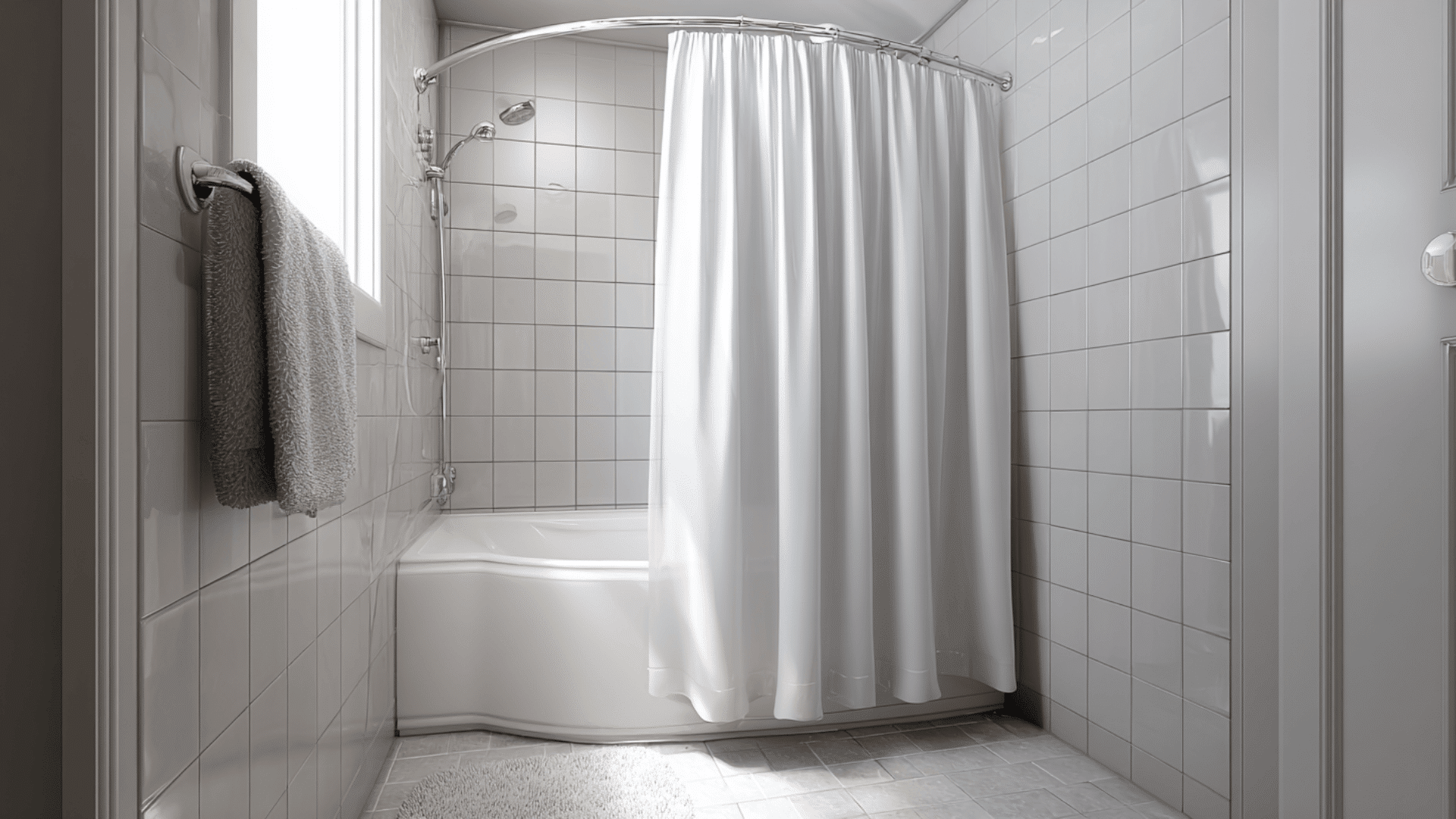
A curved shower rod bows outward, giving you more space inside the tub or shower without changing the layout. It makes the area feel less tight and keeps the curtain from sticking to you.
It is a simple upgrade for small bathrooms because it uses the same wall space as a straight rod. Choose a sturdy rod and a weighted liner to help keep water inside.
13. Frameless Glass Showers For Visual Openness
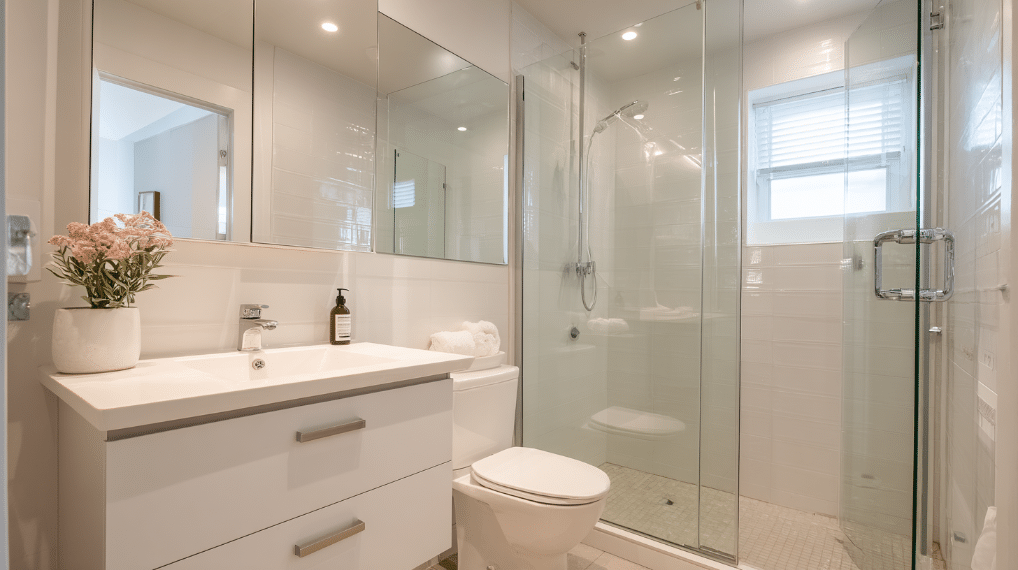
Frameless glass showers use clear panels without metal frames around the edges. It eliminates visual breaks that chop up your bathroom. Your eye travels across the glass and sees the whole space at once.
The room feels open and larger. Use tempered safety glass for strength. Clean the glass weekly to prevent water spots and soap buildup.
14. Sliding And Bi-Fold Shower Doors
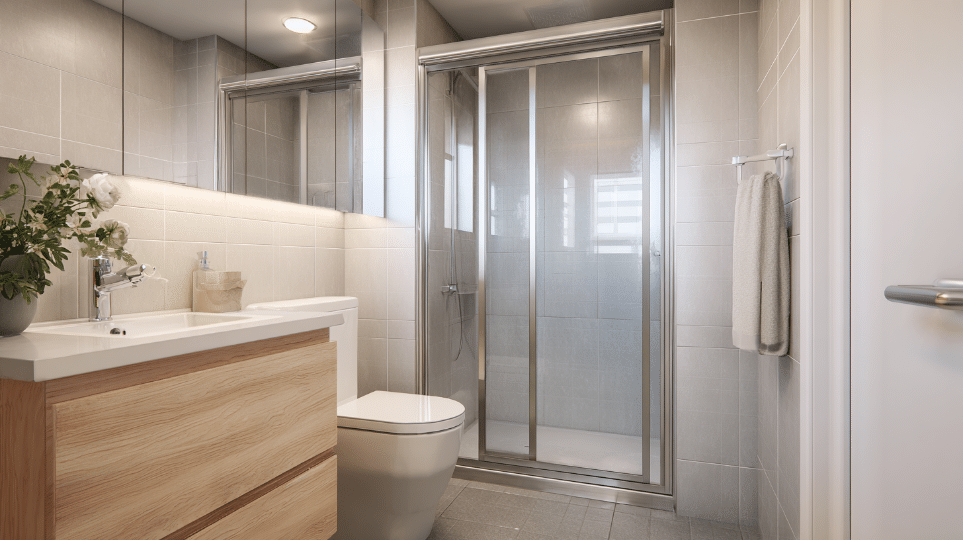
Sliding doors move along a track instead of swinging out into your bathroom. Bi-fold doors fold inward to save even more space. Both compact shower designs beat swing doors in tight bathrooms because they need zero clearance outside the shower.
You can place your vanity or toilet closer to the shower. Daily use becomes easier when you don’t dodge a swinging door. These options work great in bathrooms where every inch of floor space matters.
15. Curbless Shower Entry
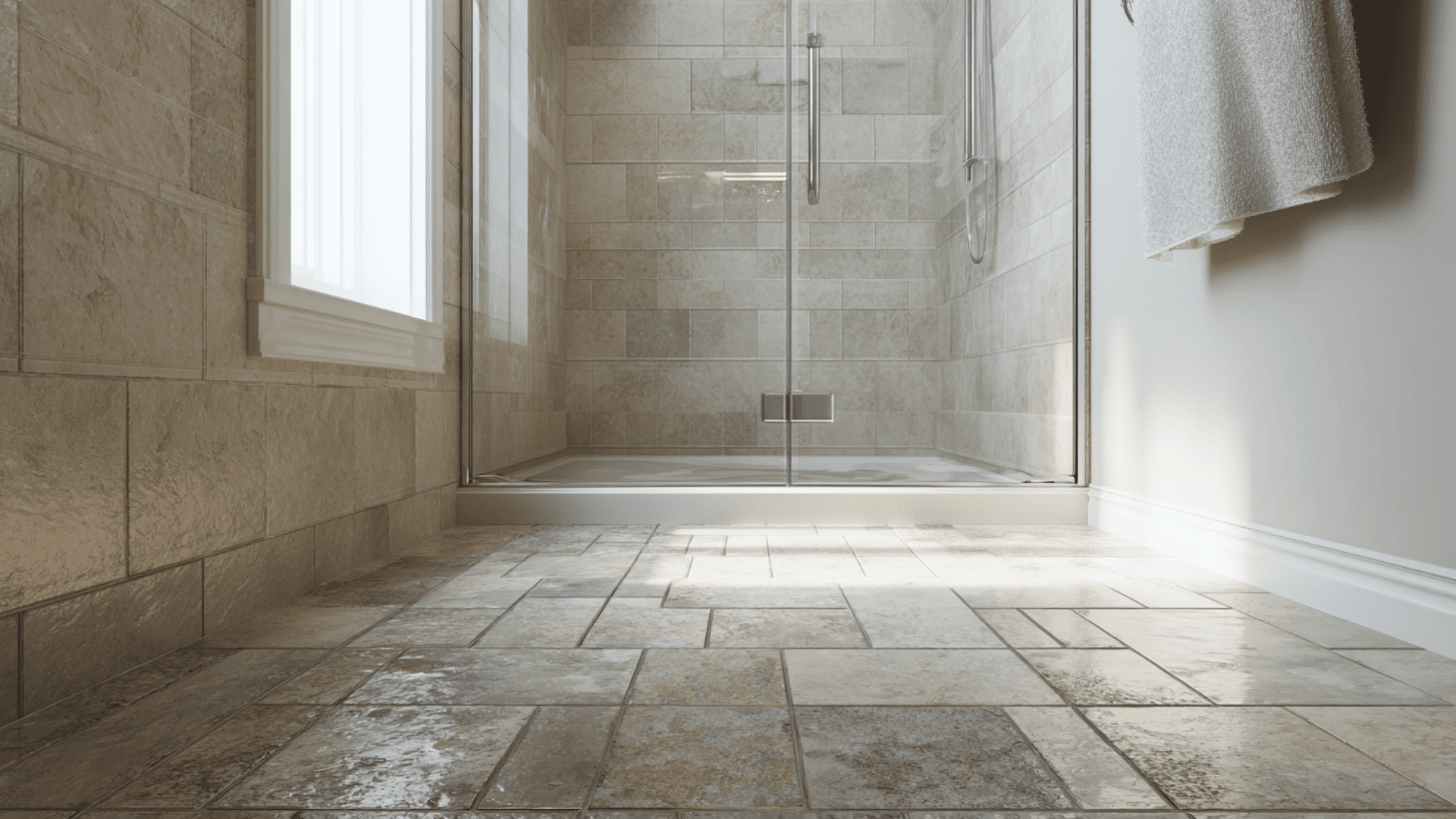
A curbless shower has no raised step at the entrance, so the floor appears to be one smooth surface. It makes a small bathroom feel larger and easier to walk through. It can also be safer for kids and older adults.
The shower floor slopes gently toward the drain to guide water away. Strong waterproofing and a good fan help prevent leaks and moisture problems.
16. Half-Wall Shower Divider With Glass On Top
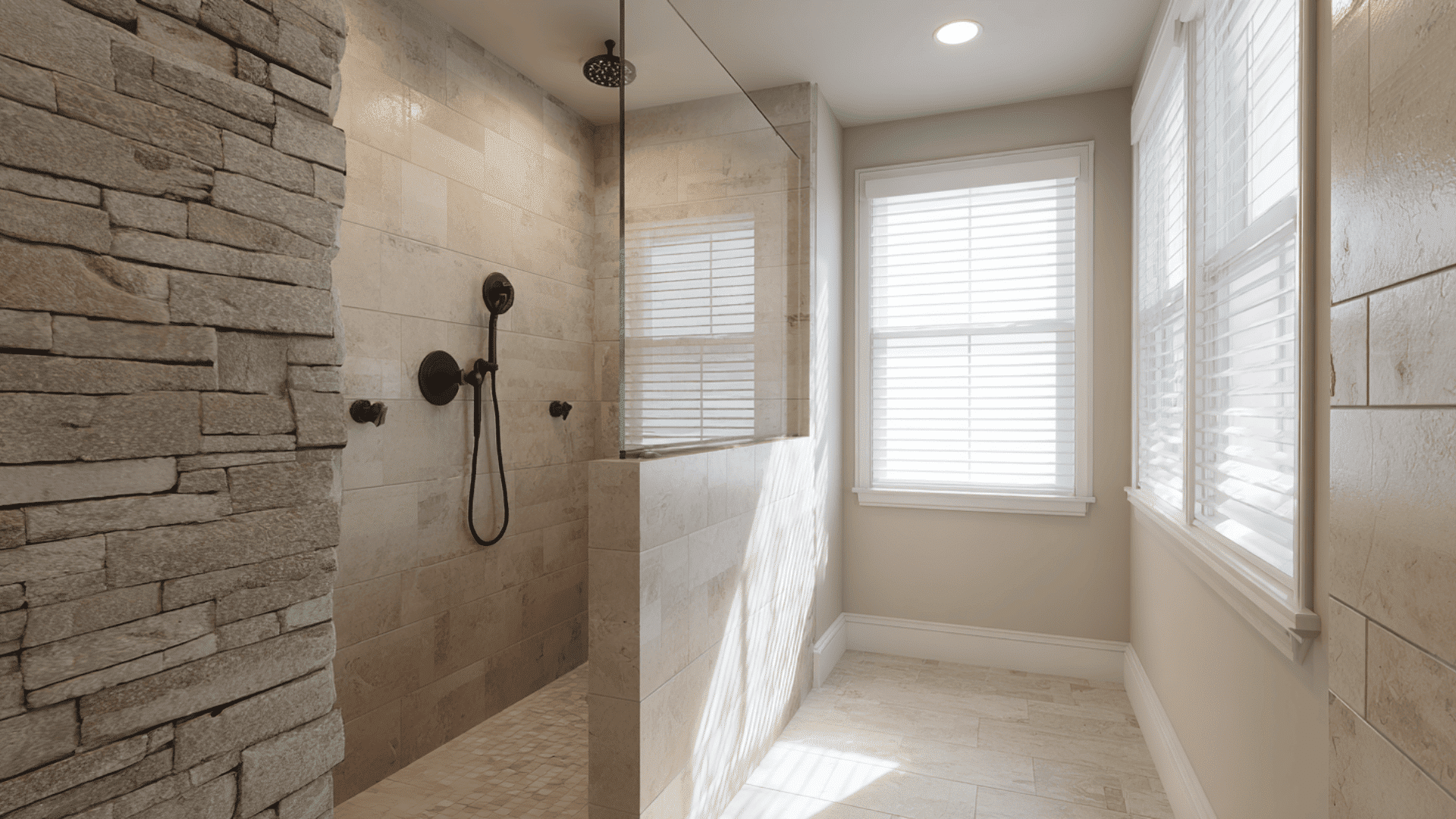
A half-wall shower divider blocks splashes while keeping the bathroom feeling open. The solid lower wall stops water near the floor, and the glass on top lets light pass through. It is helpful in small bathrooms where full walls can feel heavy.
The half-wall also gives support for plumbing or a small ledge for soap. Use simple tile and clear glass to keep the look clean.
17. Frosted Glass Panel For Privacy Without Blocking Light
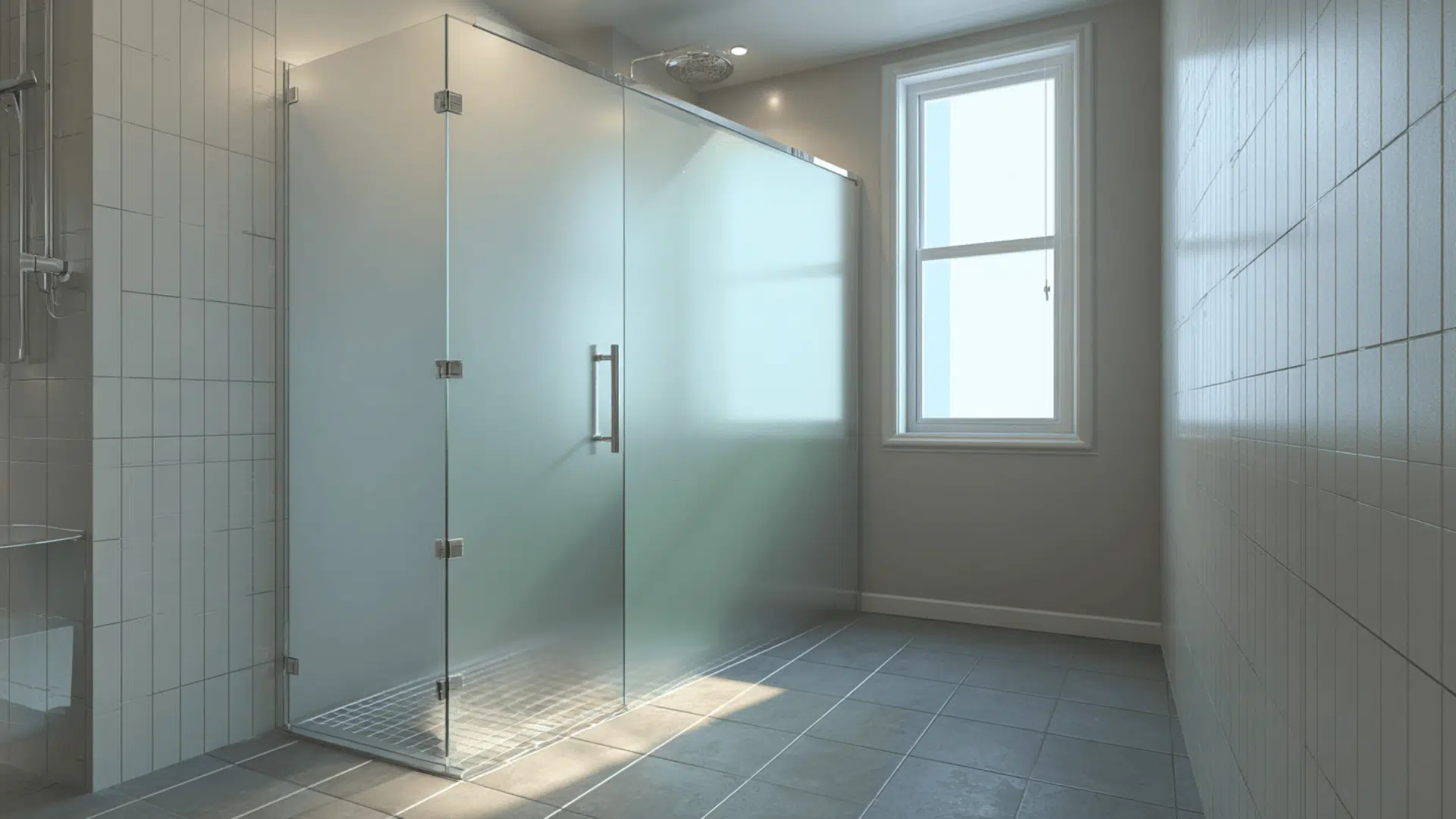
A frosted glass panel provides privacy while still allowing light to pass through the bathroom. It helps a small shower feel bright without showing everything clearly. It works well if your shower is near a window or faces the door.
Choose a simple panel with minimal hardware to keep the look clean. Frosted glass also hides water spots better than clear glass, so that it can look neater between cleanings.
18. Use A Single Walk-In Panel With A Return Splash Guard
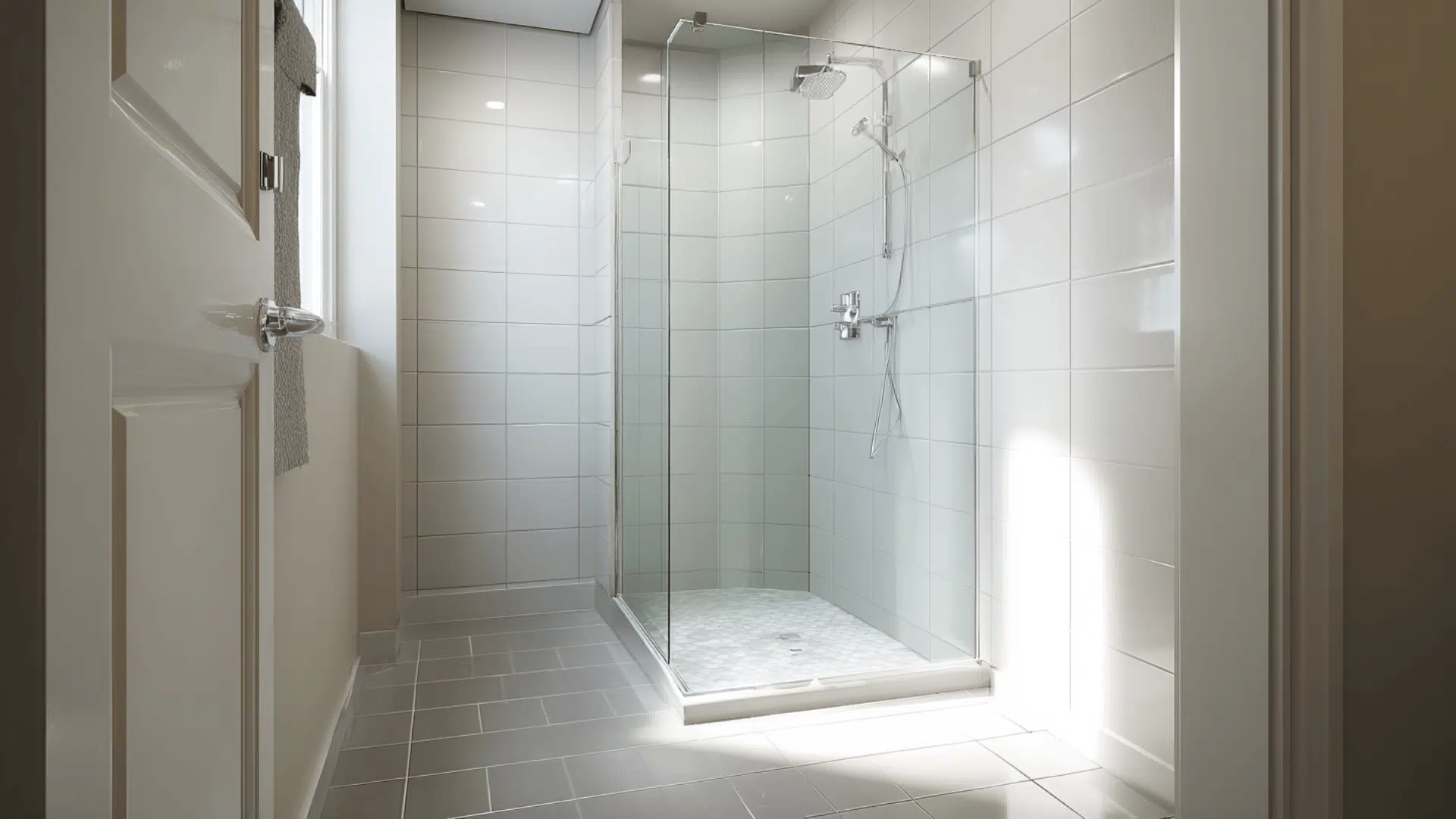
A single walk-in glass panel keeps the shower open, while a short return splash guard helps block water from spraying out. This design saves space because there is no door to swing or slide. It also makes the bathroom look larger since light can pass through.
Place the splash guard on the side where water hits the most. Pair it with a floor slope toward the drain to keep water in the shower zone.
19. Built-In Shower Niches Instead Of Shelves
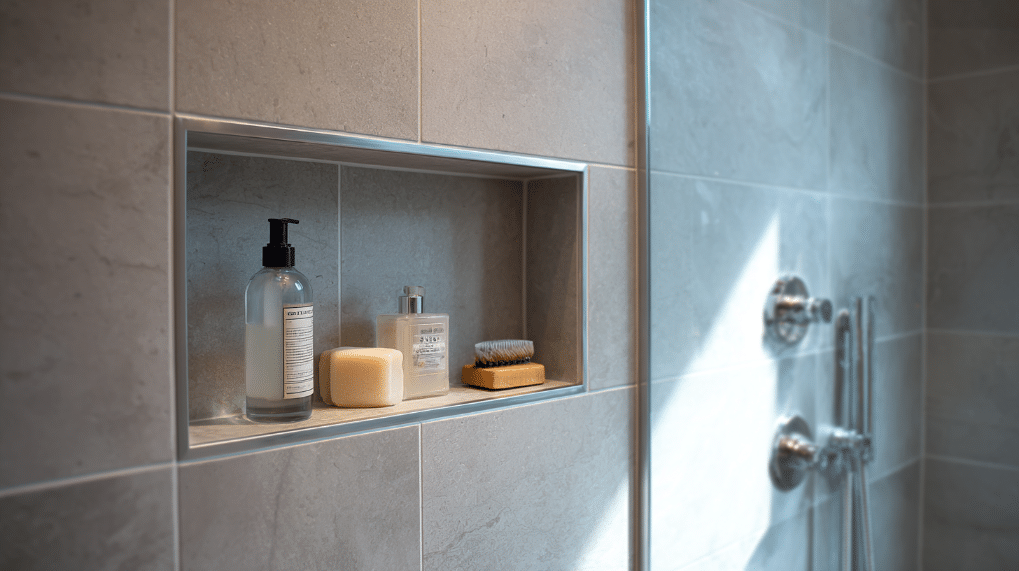
A recessed shower niche is built into the wall, so it does not stick out. It holds shampoo, soap, and razors without stealing shower space. It also replaces hanging caddies that clutter corners or cause slips and falls.
Niches keep everything organized and within reach. They also look cleaner than shelves because products sit flush with the wall. Plan niches during renovation to fit between wall studs.
20. Multi-Use Fixtures That Reduce Clutter
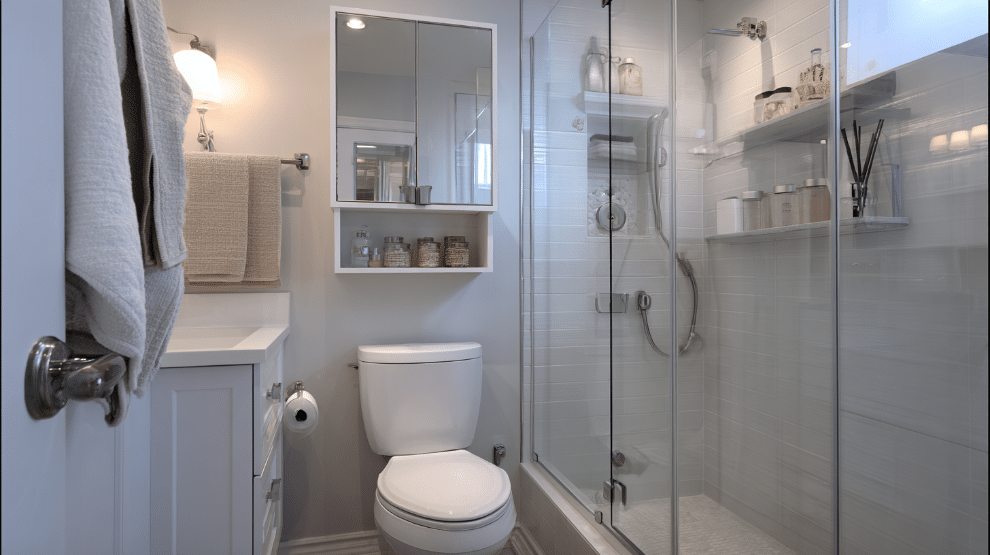
Combo towel bars include hooks and shelves in one fixture. Mirror cabinets provide storage behind the glass, so you don’t need separate medicine cabinets. Shower ledges built into the wall hold products and double as footrests.
Each fixture serves two or three purposes instead of one. You buy fewer items and use less wall space. This compact bathroom ideas approach keeps your small bathroom functional without feeling crowded.
21. Vertical Storage Walls Near Showers
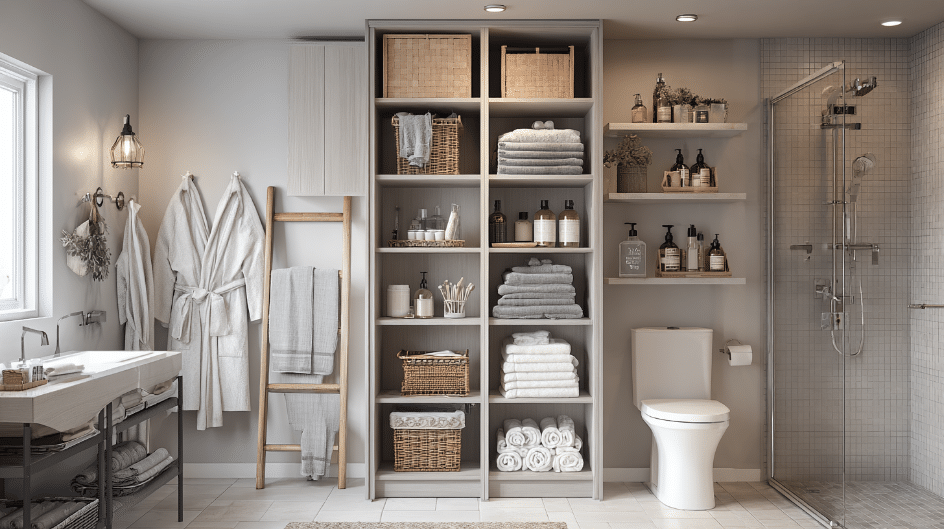
Tall cabinets stretch from floor to ceiling and hold towels, toiletries, and cleaning supplies. Ladder shelves lean against the wall and provide open storage without requiring holes to be drilled. Wall hooks hold robes and towels at different heights.
These vertical options use wall space instead of floor space. You keep the floor clear for movement. Mount storage on the wall opposite or next to your shower for easy access.
22. Use Shower Curtains
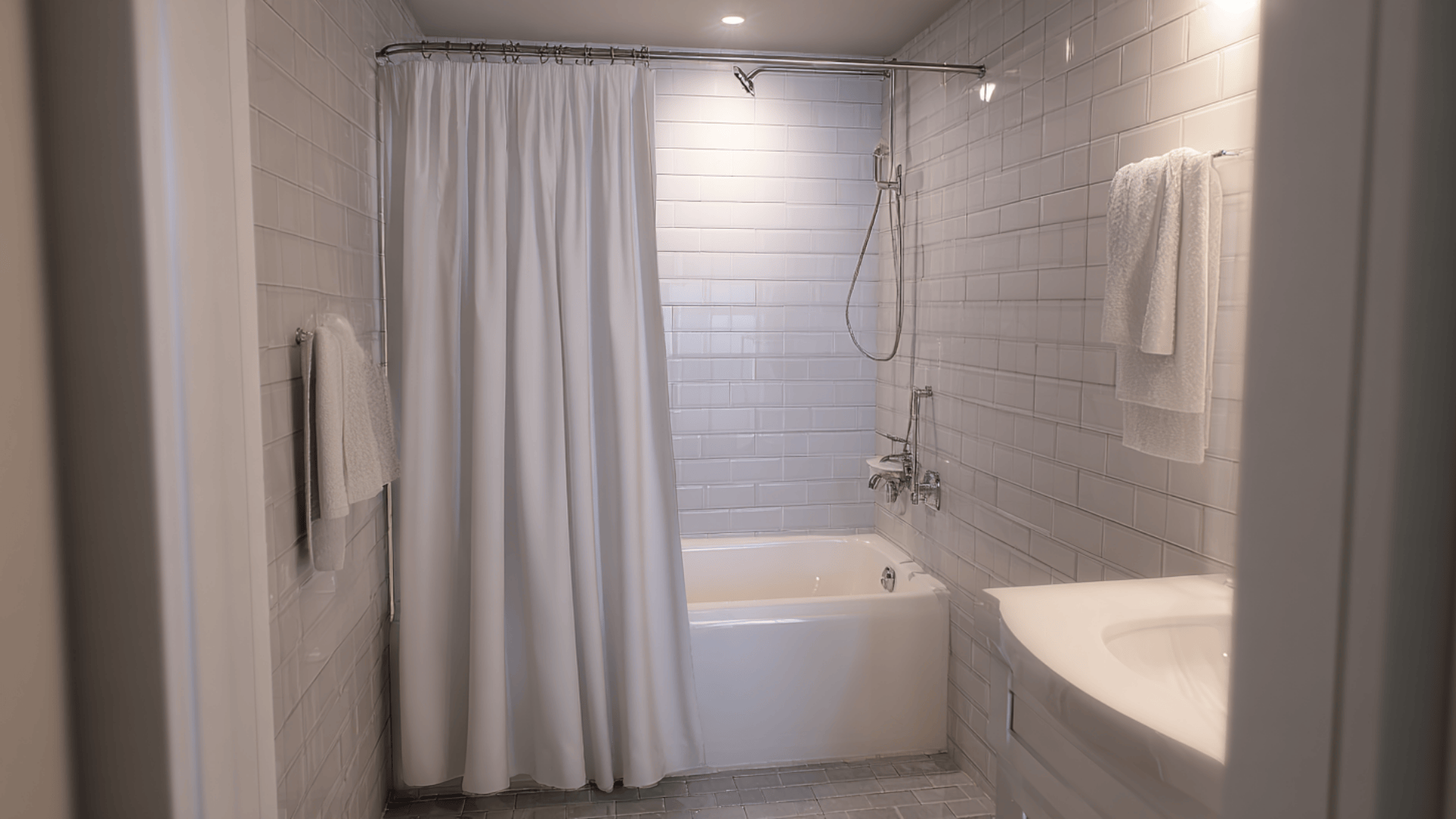
Shower curtains are a simple way to save space in a small bathroom. They do not need room to swing like a shower door, so the area feels easier to move in.
A curtain also costs less and is easy to change when you want a new look. Use a curved rod to create a little more elbow room. Choose a weighted liner to help keep water inside.
23. Walk-In Shower Design With Skylight
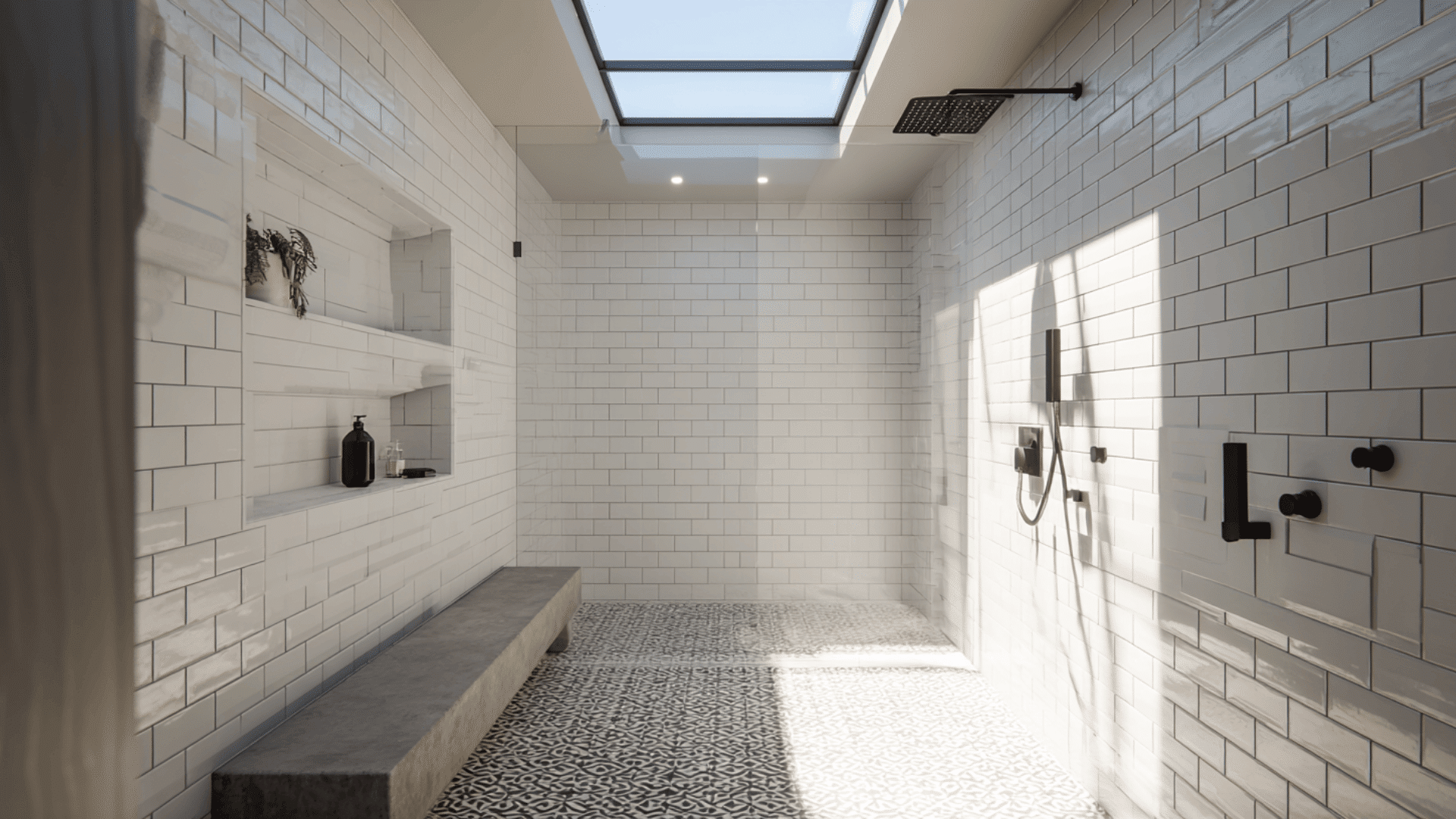
A skylight above a walk-in shower brings in natural light from the ceiling, making a small bathroom feel brighter and more open. It also reduces the need for lights during the day.
Use frosted or textured glass for privacy. Pick moisture-safe materials around the opening to prevent damage. Good ventilation helps control steam and keeps the skylight area clean.
24. Bright Walk-In Shower With Window
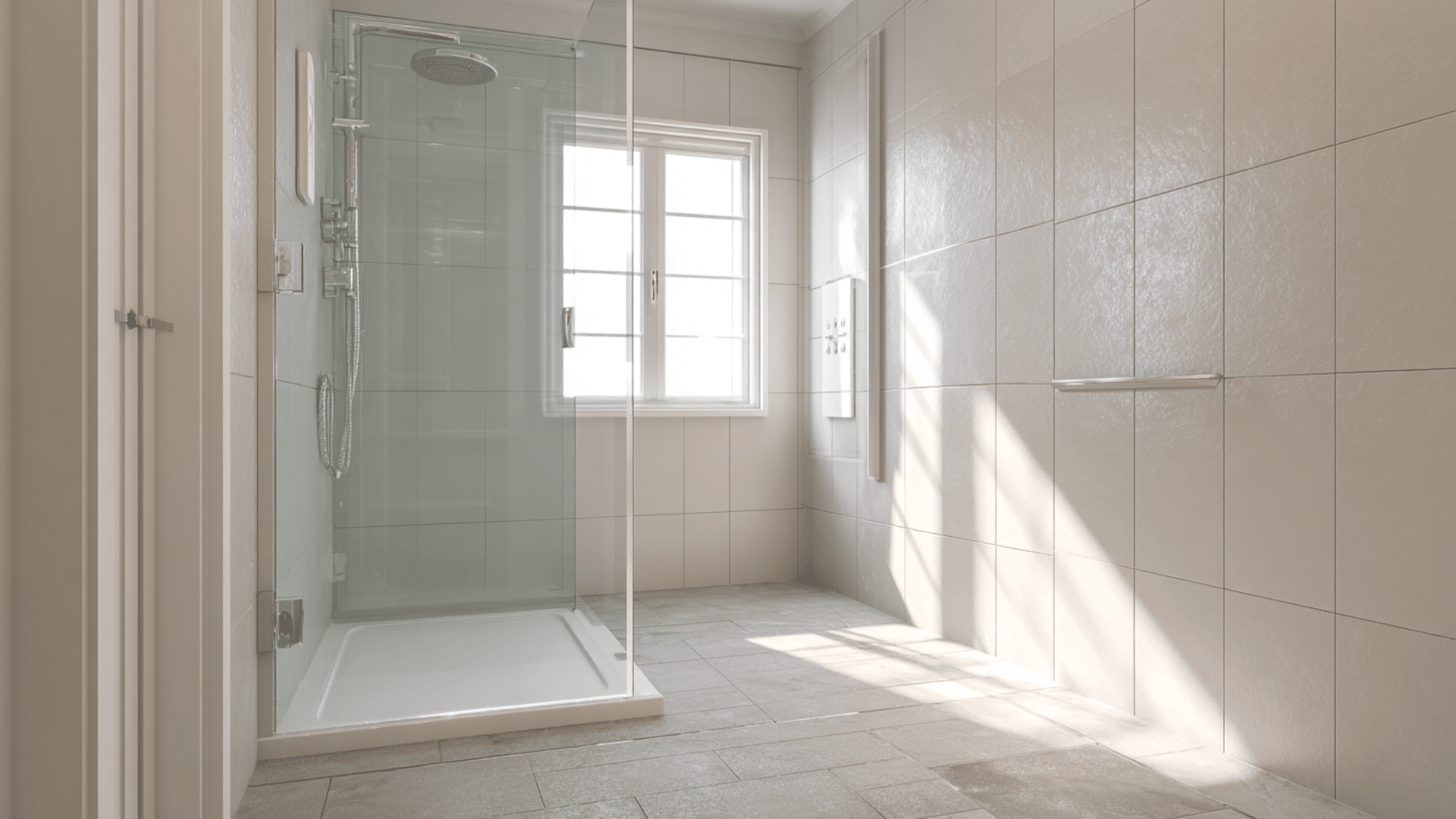
A window in the shower area brings in daylight, which can make a small bathroom feel bigger and less closed in. Natural light also helps the space look cleaner and more inviting.
Use frosted glass or a high window for privacy. Choose a window frame made for wet areas, and seal it well to prevent leaks. Keep the window easy to wipe so it stays clear and bright.
25. Add Backlit Mirror Lighting To Brighten The Shower Side
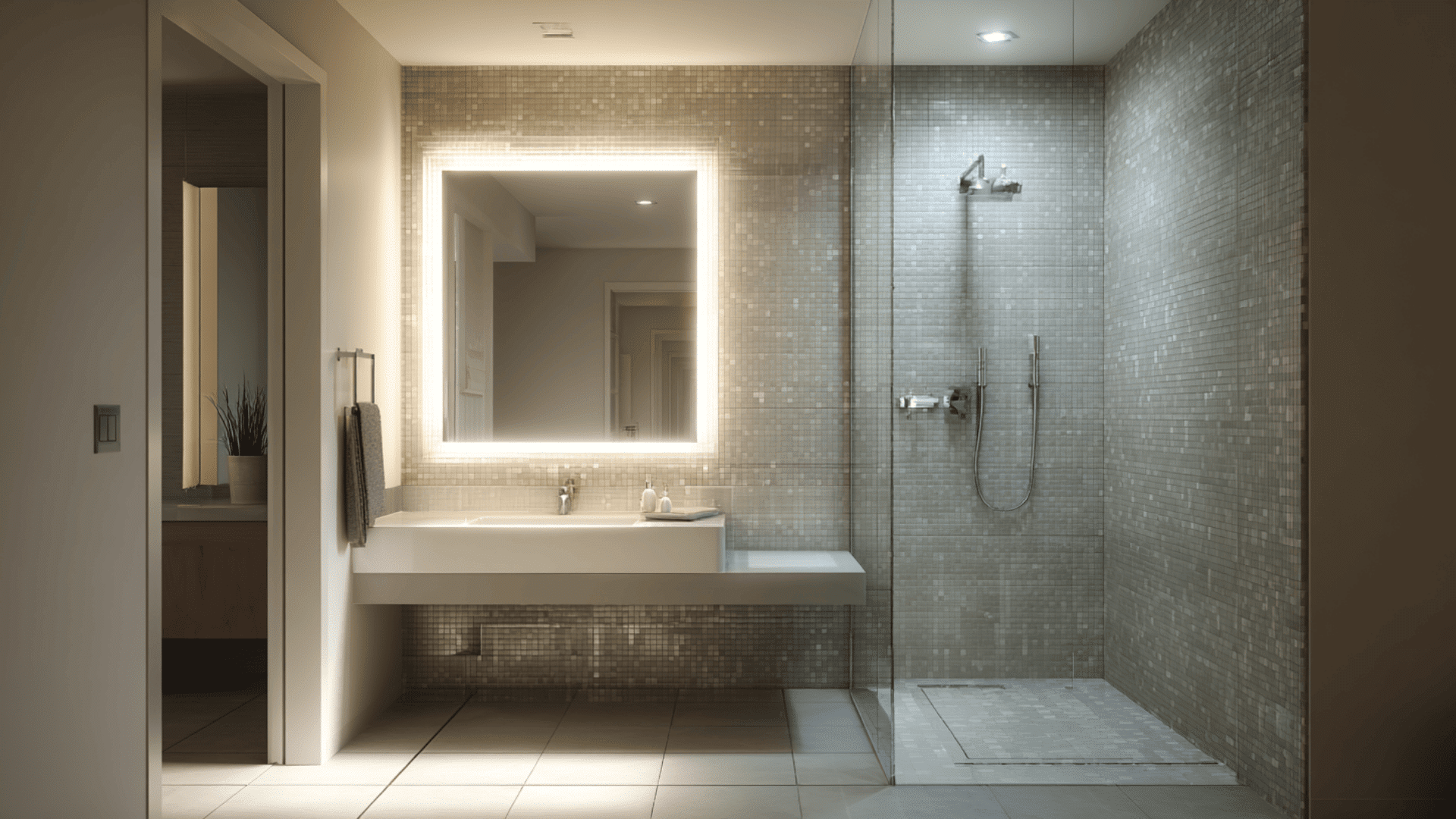
A backlit mirror adds soft light along the edges, helping brighten a small bathroom without taking up extra space. It can reduce dark shadows near the shower and make the room feel cleaner and more open.
This lighting is proper when there is little natural light. Choose an LED mirror with a moisture-safe rating for bathrooms. A warm or neutral tone looks natural and is easier on the eyes.
26. Walk-In Shower With An Eave
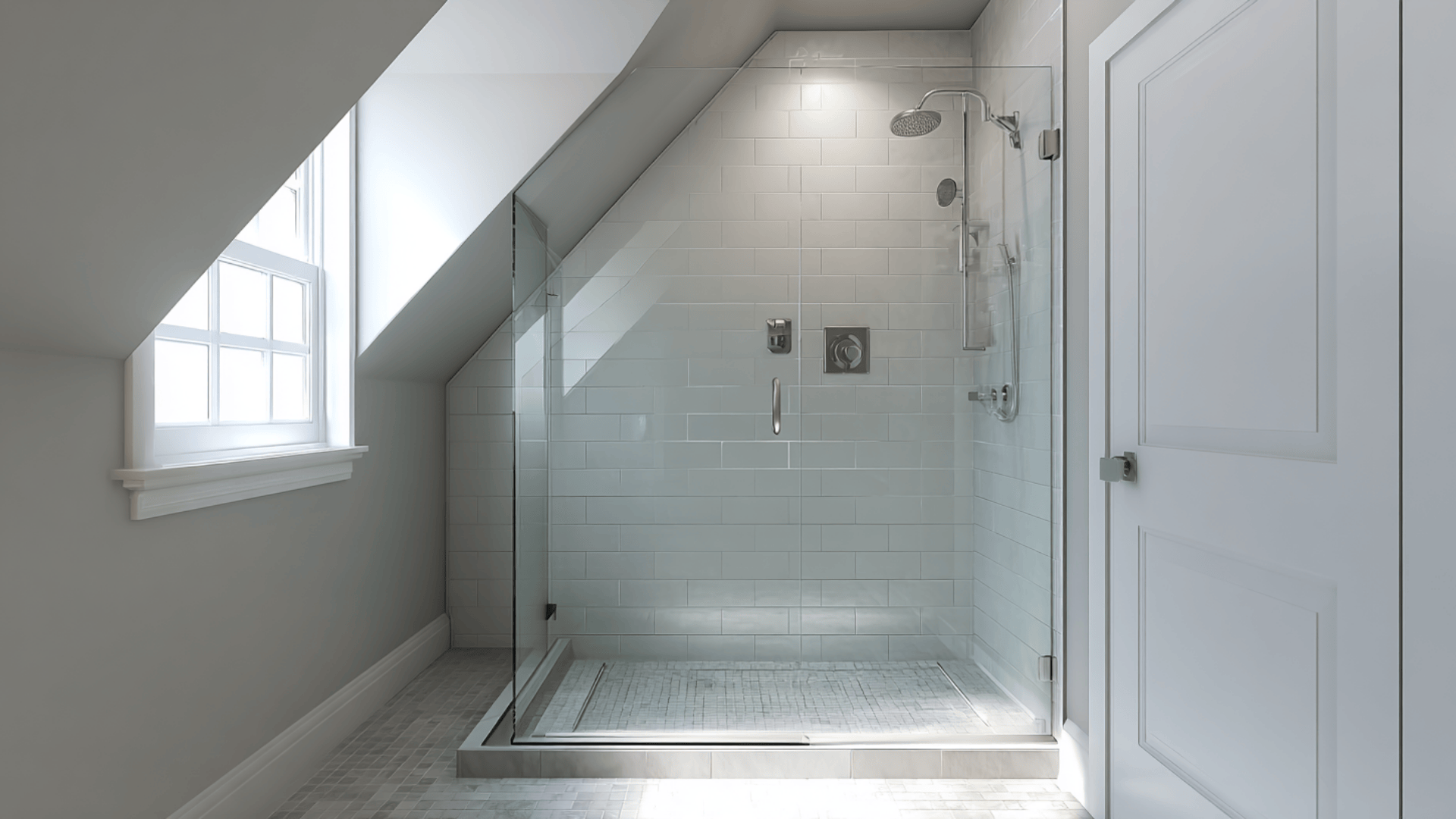
A walk-in shower under an eave uses the sloped ceiling space that is often wasted in small bathrooms. It can turn an awkward corner into a functional shower area without taking up extra room.
Place the showerhead on the taller side, so you have enough standing height. Use waterproof panels and good ventilation to protect the ceiling from steam. Add a glass panel to keep it feeling open.
27. Simplify Bathroom Tile Choices
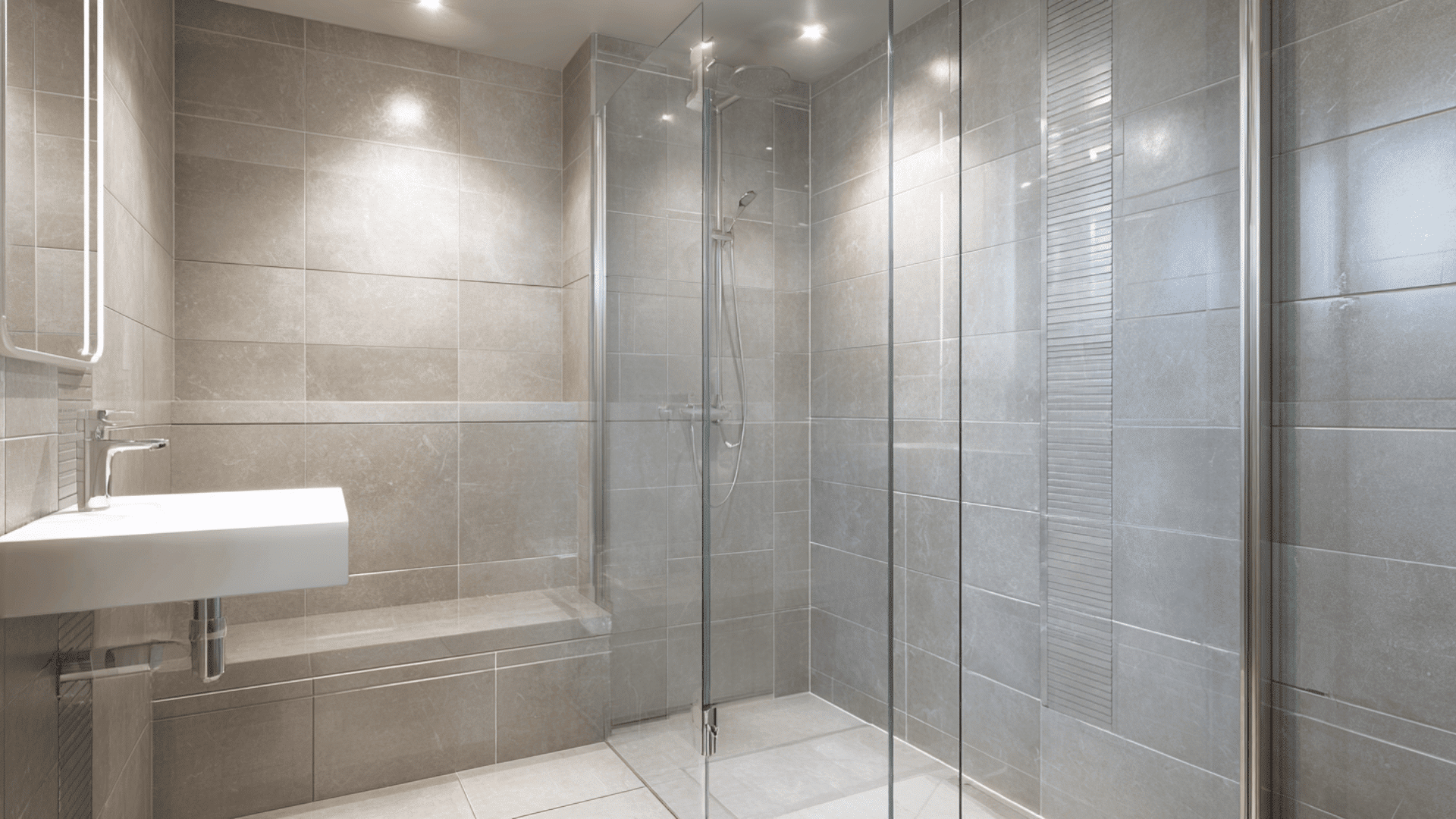
Too many tile colors and patterns can make a small shower feel busy and cramped. Using a single main tile style helps the space look cleaner and larger. It also makes the room easier to match with towels and fixtures.
Pick a light- or medium-tone tile for a brighter look. If you want contrast, use it in a single small area, such as a niche or a strip. Fewer grout lines also make cleaning simpler.
28. Patterned Tile Floor
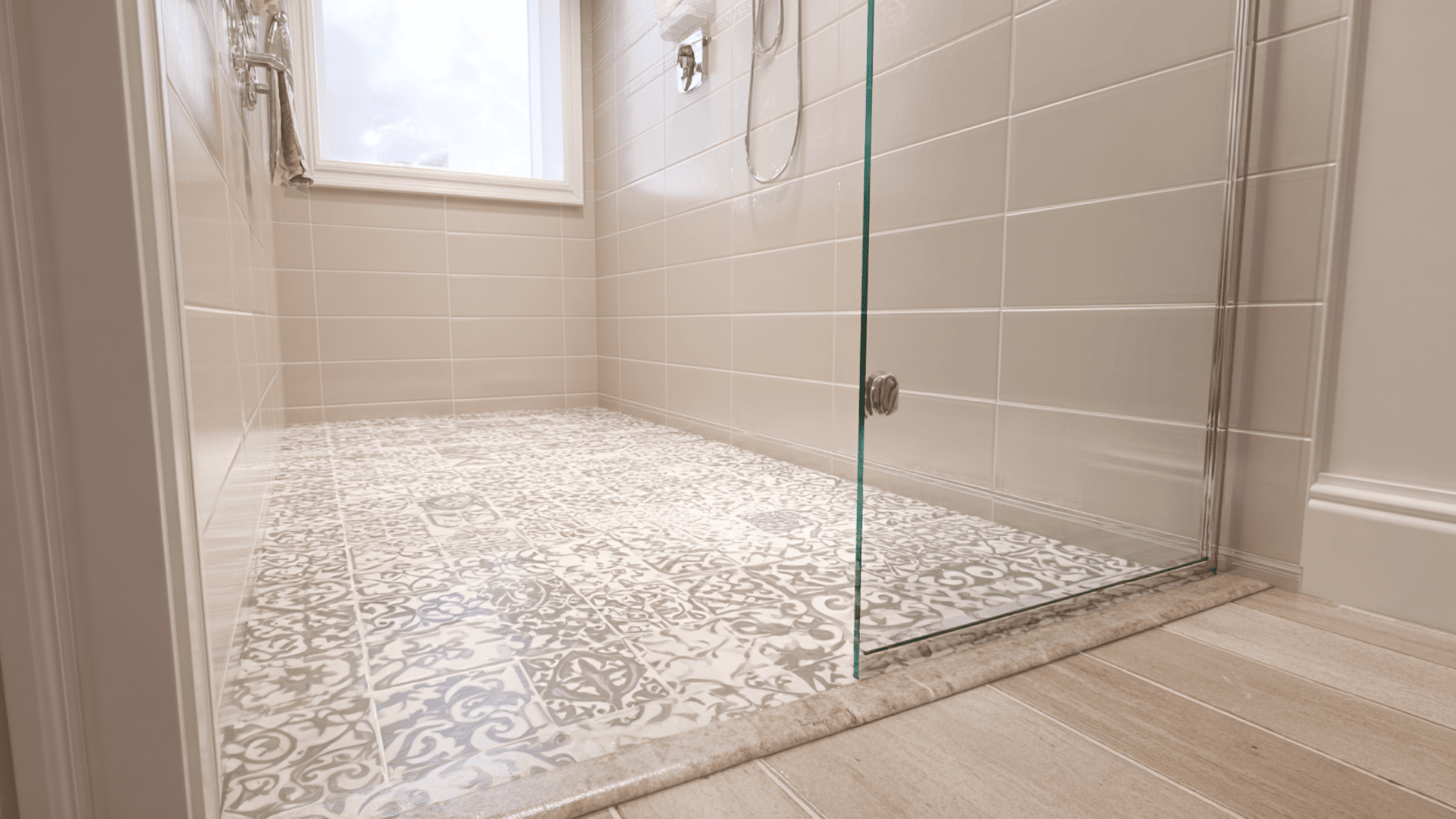
A patterned tile floor adds style to a small shower without needing extra decor. It draws your eye down and can make the space feel more interesting, even if the walls stay simple.
Use small, non-slip tiles to make the floor safer when wet. Keep the wall tile plain to avoid a busy look. Choose a pattern with two or three colors for an easy, clean feel. Seal grout to help prevent stains.
29. Patterned Accent Tile For Small Bathrooms
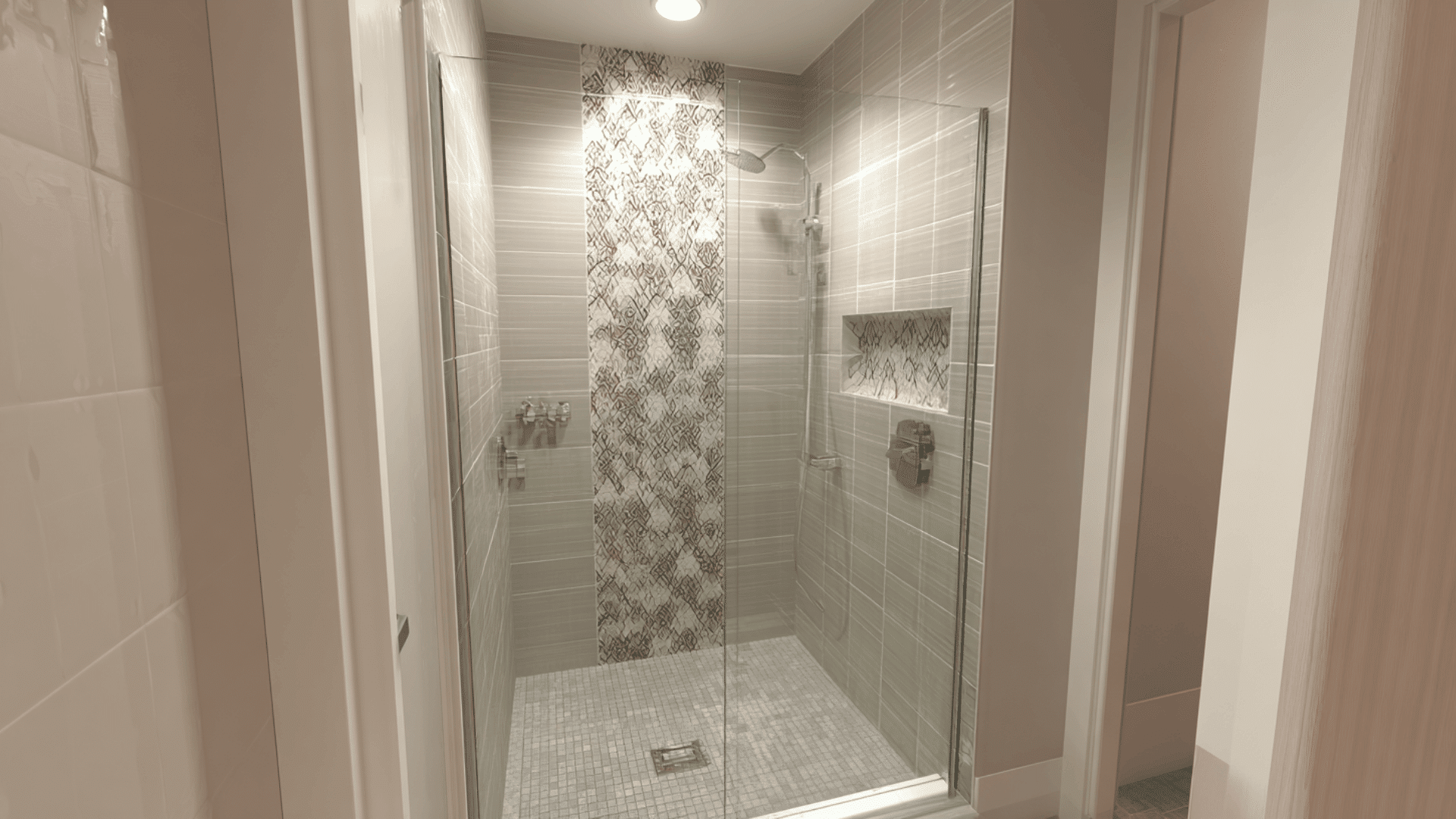
Patterned accent tile adds personality to a small shower without covering every wall. A single strip, a niche backing, or a feature wall can make the space look special while still feeling calm.
Keep the rest of the tiles simple so the room does not feel crowded. Choose one pattern and repeat its colors in towels or a bath mat for a pulled-together look. Use the accent tile where water hits less to keep it cleaner.
30. Walk-In Shower Design With Penny Tile
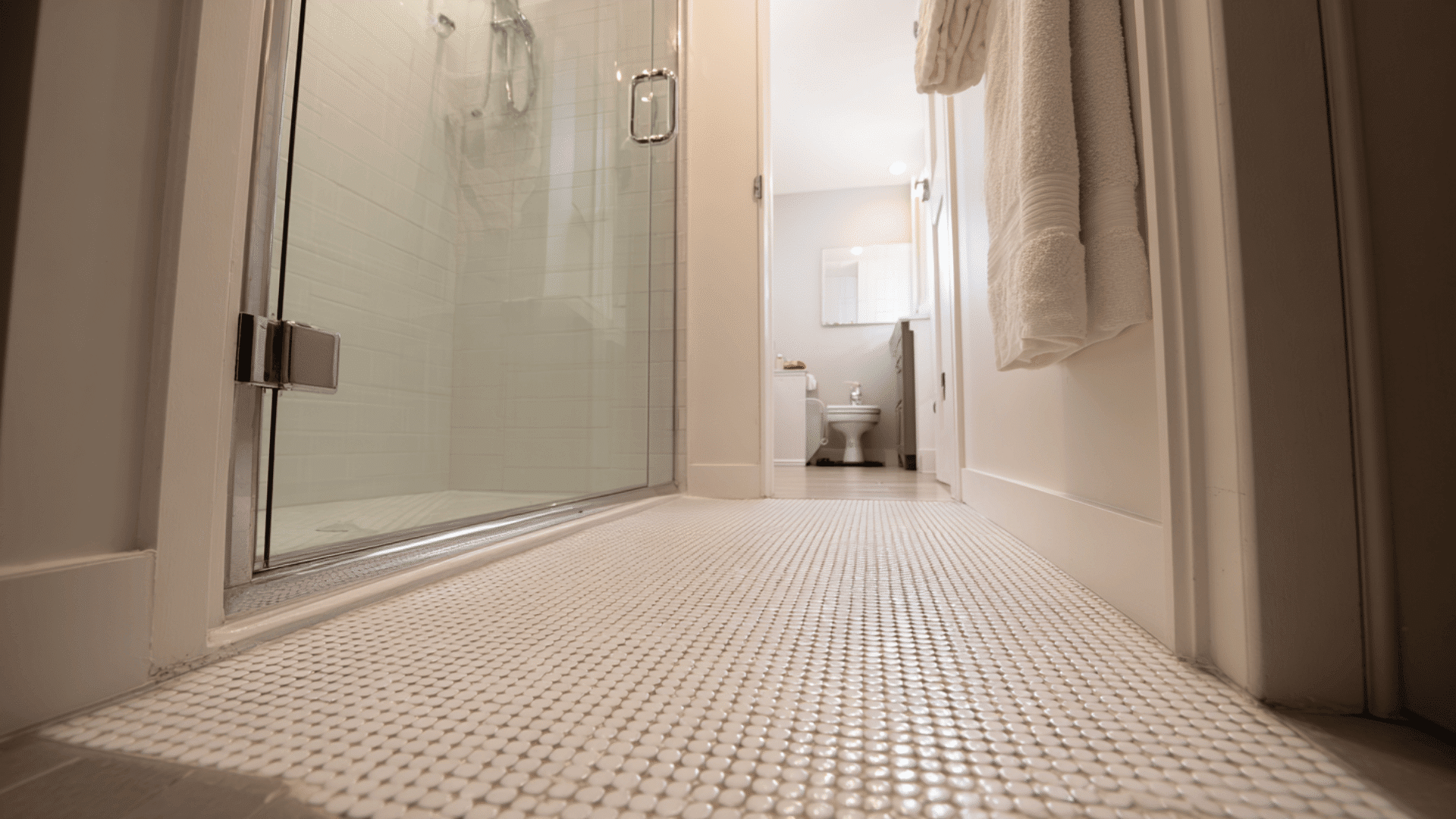
Penny tile uses small round tiles that add texture and grip, which can be helpful on a wet shower floor. It also gives a classic look that works in modern and vintage bathrooms.
Because the tiles are small, they follow the floor slope easily and help water drain well. Keep the wall tiles simple so the space does not feel too busy. Choose a light color to keep the shower looking bright. Seal the grout to reduce stains.
31. River Rock Shower Design
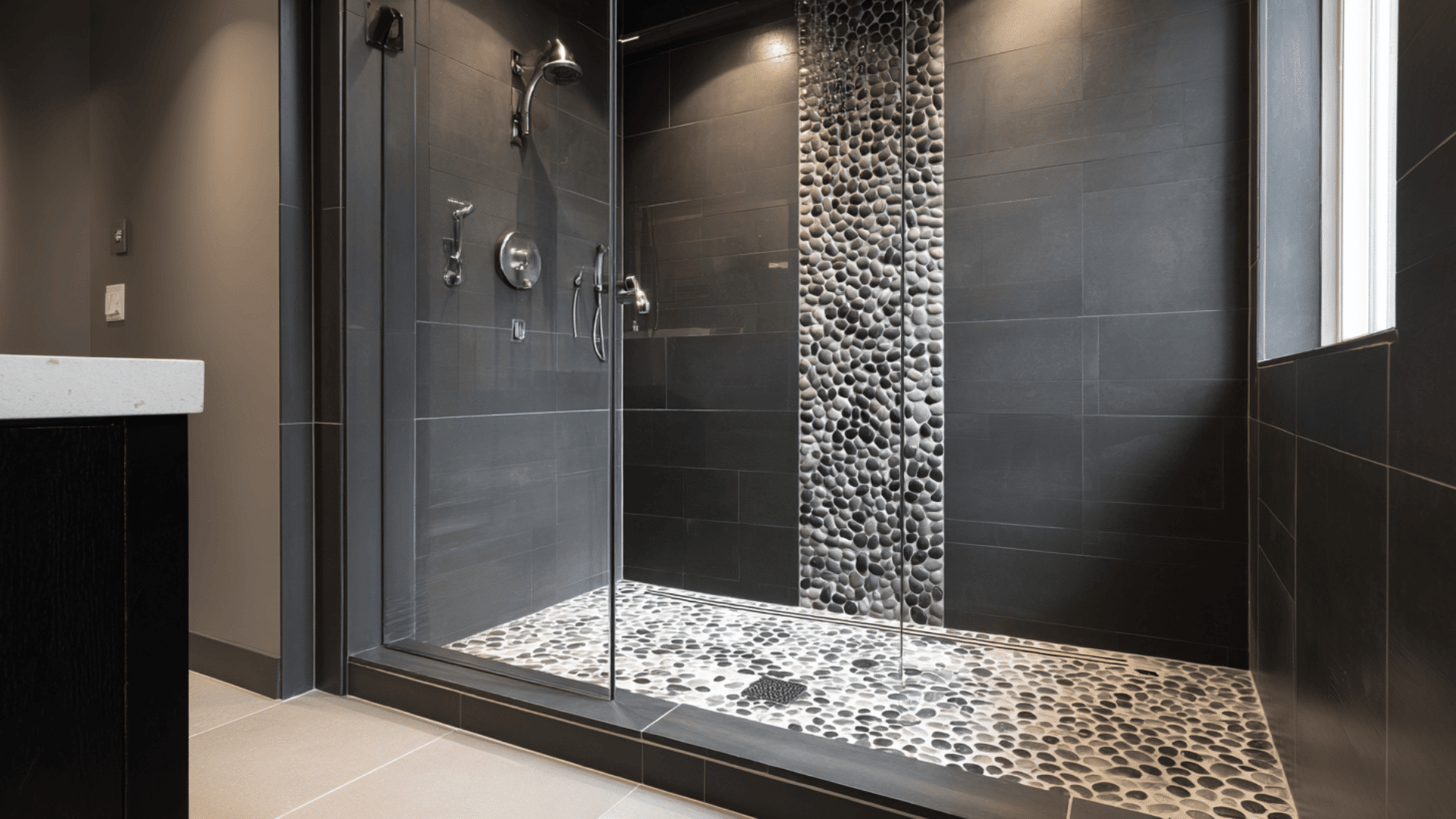
A river rock shower floor adds natural texture and can feel like a spa, even in a small bathroom. The uneven surface also gives extra grip, which may help reduce slipping.
Use smooth, sealed stones to make them easier on your feet. Install them with a proper slope so water drains well. River rock has more grout lines, so regular cleaning is essential. Pair it with simple wall tile to keep the look balanced.
A well-designed shower isn’t about squeezing things in; it’s about making them work together. When design, materials, and placement align, your small bathroom feels more open, functional, and easy to enjoy every day.
Common Mistakes To Avoid
In a small bathroom, tiny shower mistakes can feel huge. The good news is you can avoid most problems with a little planning and a few smart choices. Catch these early, and your bathroom will feel smoother to use every day.
- Choosing a bulky enclosure: Thick frames and hinged doors take up valuable inches, and they can make the whole room feel boxed in.
- Skipping proper ventilation: Without a good exhaust fan or airflow, steam lingers, paint peels, and mildew shows up faster than you’d expect.
- Forgetting to store items in the shower: If you don’t plan for niches, corner shelves, or a caddy, bottles pile up, and the shower feels messy.
- Using slippery flooring: Glossy tile may look clean, but it’s risky when wet, so go for textured options or smaller tiles with more grout grip.
- Poor layout and door swing: A shower door that hits the toilet or blocks the vanity makes simple routines a daily source of frustration.
Final Thoughts
Creating limited space, small bathroom designs with shower setups come down to thoughtful planning and space-smart choices. Corner and walk-in showers help you reclaim floor space without sacrificing comfort.
Frameless glass and sliding doors keep the room looking open and less cluttered. Built-in niches and vertical storage keep daily essentials within reach, without adding bulky cabinets.
Avoid common mistakes like oversized fixtures, poor drainage, and awkward layouts so your bathroom stays functional for years. Small bathrooms do not reduce your design options; they need more intention.
When every fixture, color, and layout choice works together, the space feels calmer, brighter, and easier to use.
Ready to update your bathroom? Pick one idea from this guide and try it this week, then share your favorite small-space shower trick in the comments.