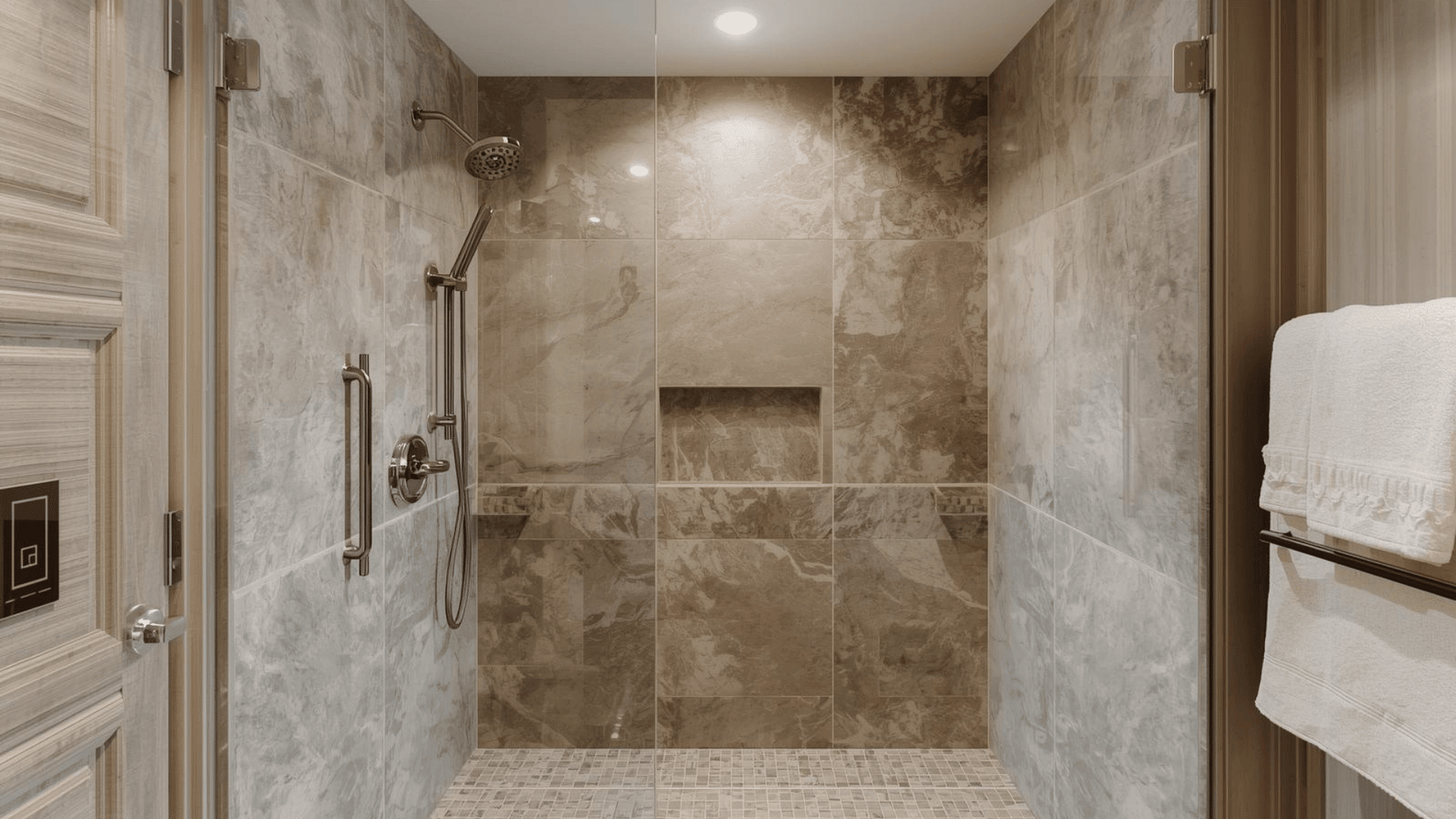
Your bathroom deserves better than builder-grade tile. Maybe you’ve scrolled through design photos and stopped at those eye-catching showers with real stone walls. They look long-lasting. They feel special.
A natural stone shower can change your daily routine into something you actually look forward to. But where do you start? The choices feel endless when you’re standing in the tile showroom. You want something beautiful but also practical.
You’ll see what each stone type offers for your shower. From bright marble to textured slate, each one creates a different feel. Real bathroom examples show how these materials work in everyday spaces.
Ready to find your perfect stone shower design? Let’s get into it.
What is a Natural Stone Shower
A natural stone shower uses real stone materials like marble, granite, slate, or travertine for the walls, floor, and features. These stones come in tile or large slab form and cover your shower surfaces.
You can add natural stone to different parts of your shower. This includes the main walls, the floor you stand on, built-in shampoo niches, and shower benches.
Natural stone works with any shower style. You might have a walk-in shower, a tub-shower combo, a curbless entry, or a full wet room. The stone adapts to any layout you choose for your bathroom.
Each type of stone brings its own look. Some have veining patterns while others show texture and color variations.
This gives your shower a unique appearance that synthetic materials can’t match.
Natural Stone Shower Types To Consider
Different stones create different looks in your shower. From bright marble to dark slate, each type has its own character and best uses.
1. Marble Shower Tile
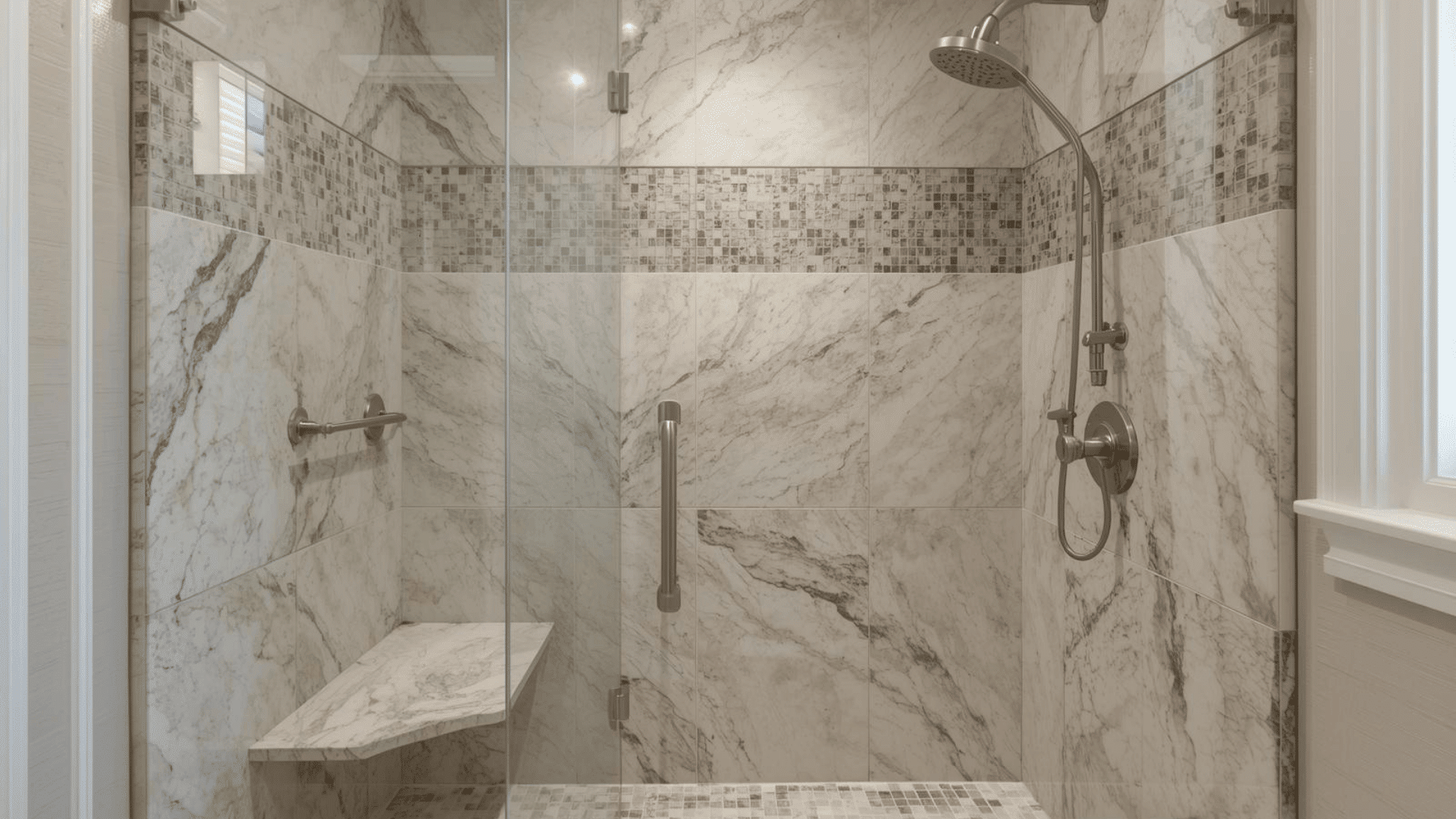
Ideal for bright, luxurious bathrooms with a spa vibe. Light marble reflects light, while bold gray veining creates a dramatic focal point. Use on full-wall features, niche back panels, or bench tops.
Keep grout light and consistent so the tile reads clean, and let the veining do the visual work. If using real stone, seal it and plan maintenance; for floors, pair it with a slip-resistant mosaic, as shown.
2. Travertine Shower Tile
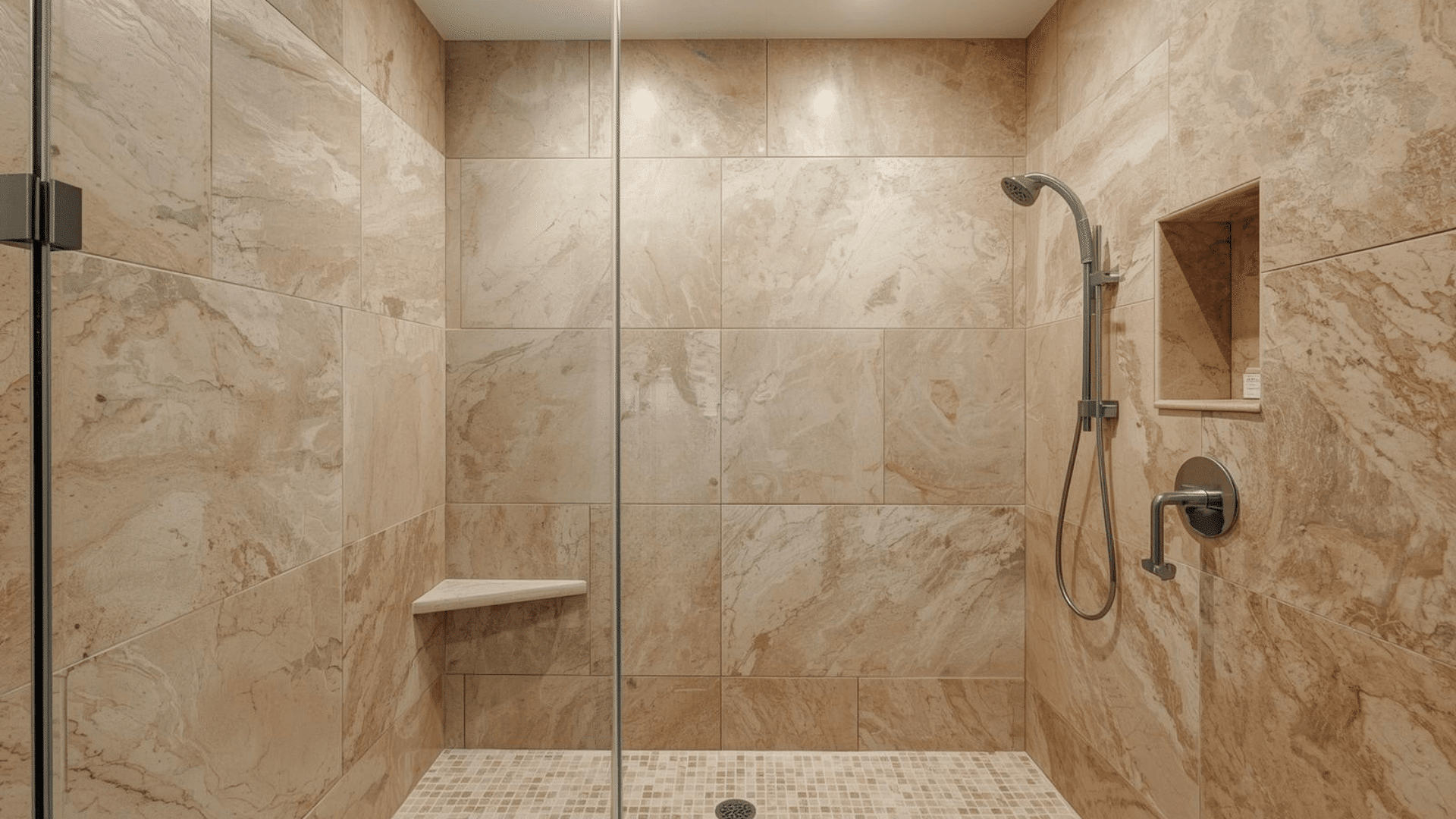
This look suits warm, earthy, Mediterranean-inspired bathrooms. The stone’s sandy tones pair well with soft neutral floors, creating a calm, sunlit shower.
Pair it with warm metals (brass or bronze) or keep chrome for a clean, modern finish. Use creamy, tone-on-tone grout to keep the look cohesive. Choose a matte, slip-resistant floor finish, and if it’s natural stone, seal it.
3. Slate Shower Tile
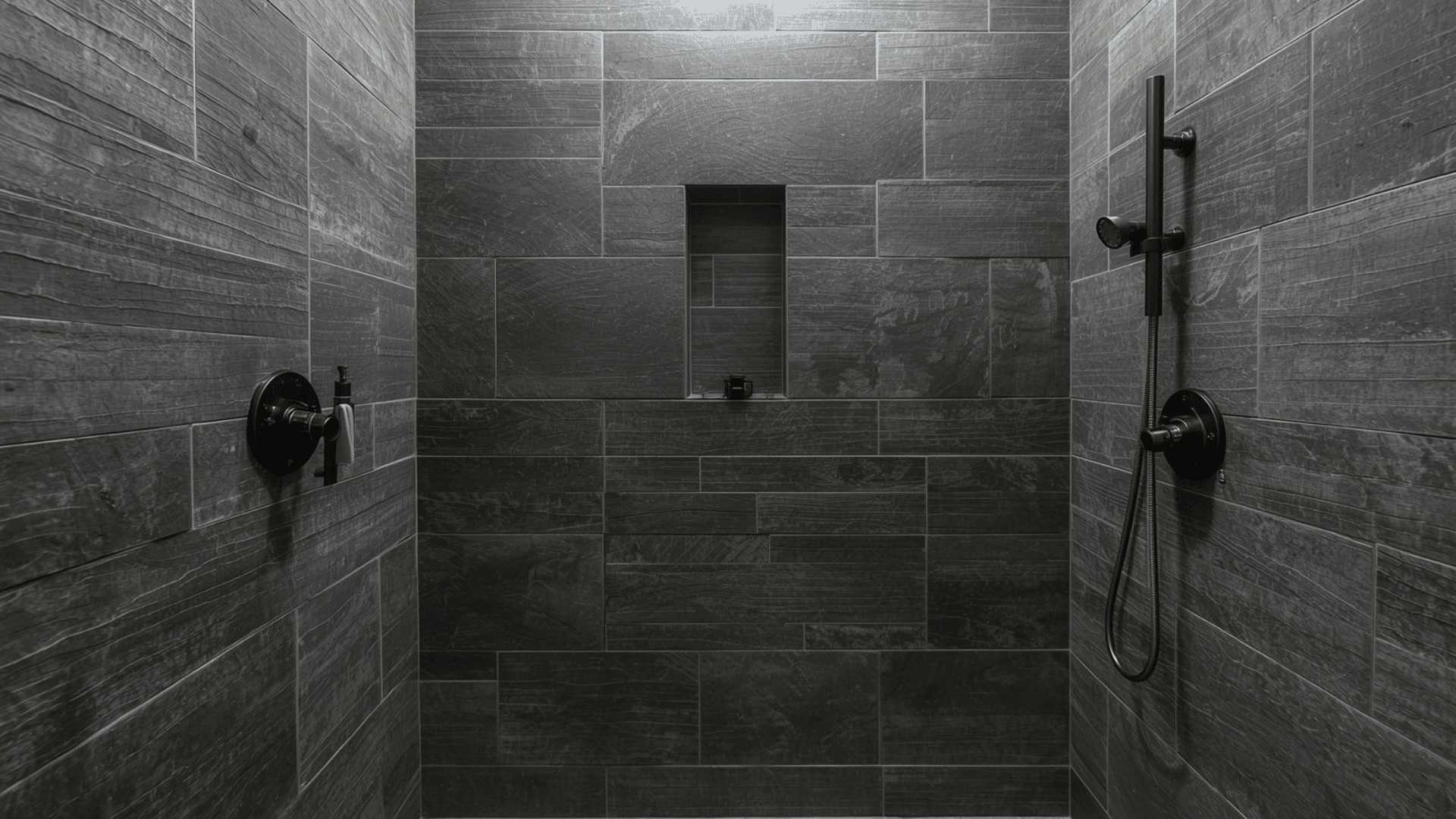
This dark slate tile suits rustic, organic bathrooms with subtle texture. It shines on shower floors and accent bands, adding grip-friendly traction and depth.
Use intense lighting and a slightly lighter grout if you want the pattern and joints to read clearly. Seal natural stone and choose smaller floor pieces to improve slip resistance and drainage.
4. Granite Shower Tile
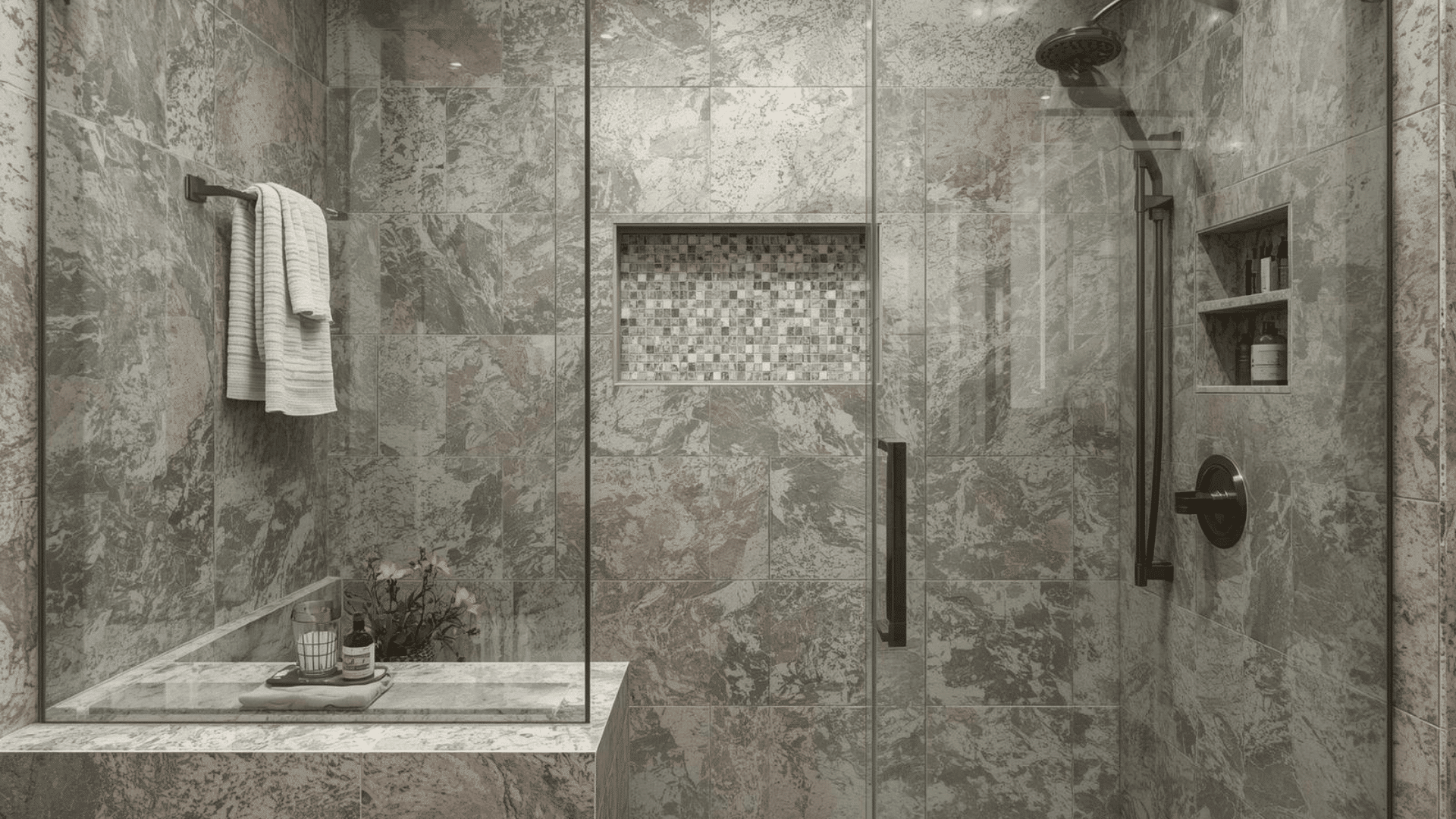
These shower tiles are durable, hard-wearing, and feature a speckled, natural pattern. It works on shower floors, bench tops, and heavy-use surrounds without looking busy.
If it’s natural stone, seal it well and use pH-neutral cleaners to avoid dull spots. Use a grout color close to the stone, and add good lighting so the pattern feels clean rather than dark.
5. Quartzite Shower Tile
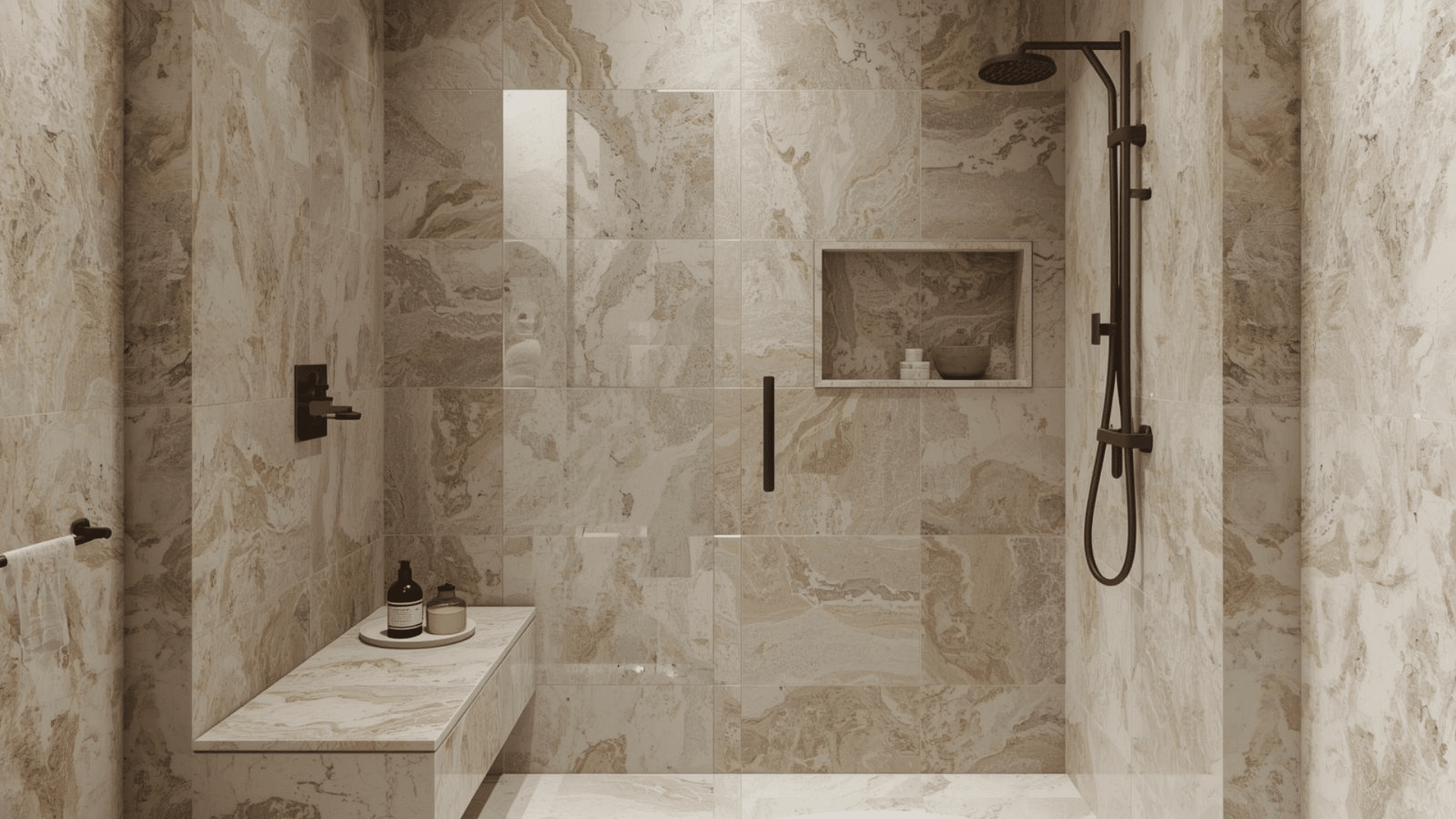
Marble-like beauty with firm performance. Quartzite shower tile makes a dramatic feature wall when used with large-format tiles or slab-style panels, creating a seamless, upscale look.
Bookmatch veining or keep direction consistent so the pattern feels intentional across the wall. Pair with simple fixtures and minimal grout lines so the stone stays the primary focus.
6. Limestone Shower Tile
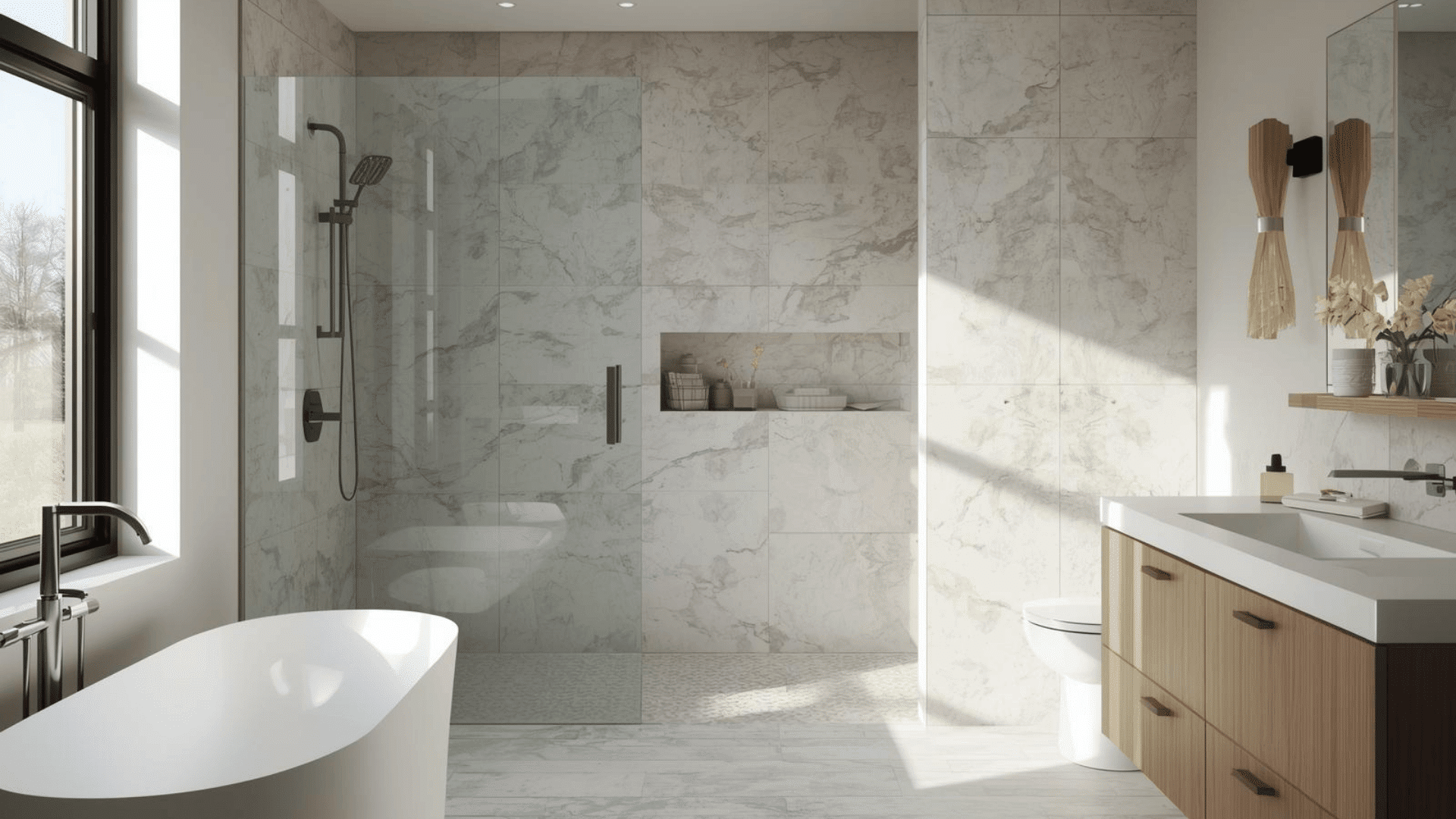
Soft, calm, spa-like neutral looks. Limestone-style tile creates low-contrast walls that feel serene, with a niche accent adding subtle interest.
Plan sealing and gentle, pH-neutral cleaning to prevent etching or dull spots. Use a grout shade close to the tile and add warm lighting so the beige tones stay cozy, not flat.
7. Soapstone Shower Tile
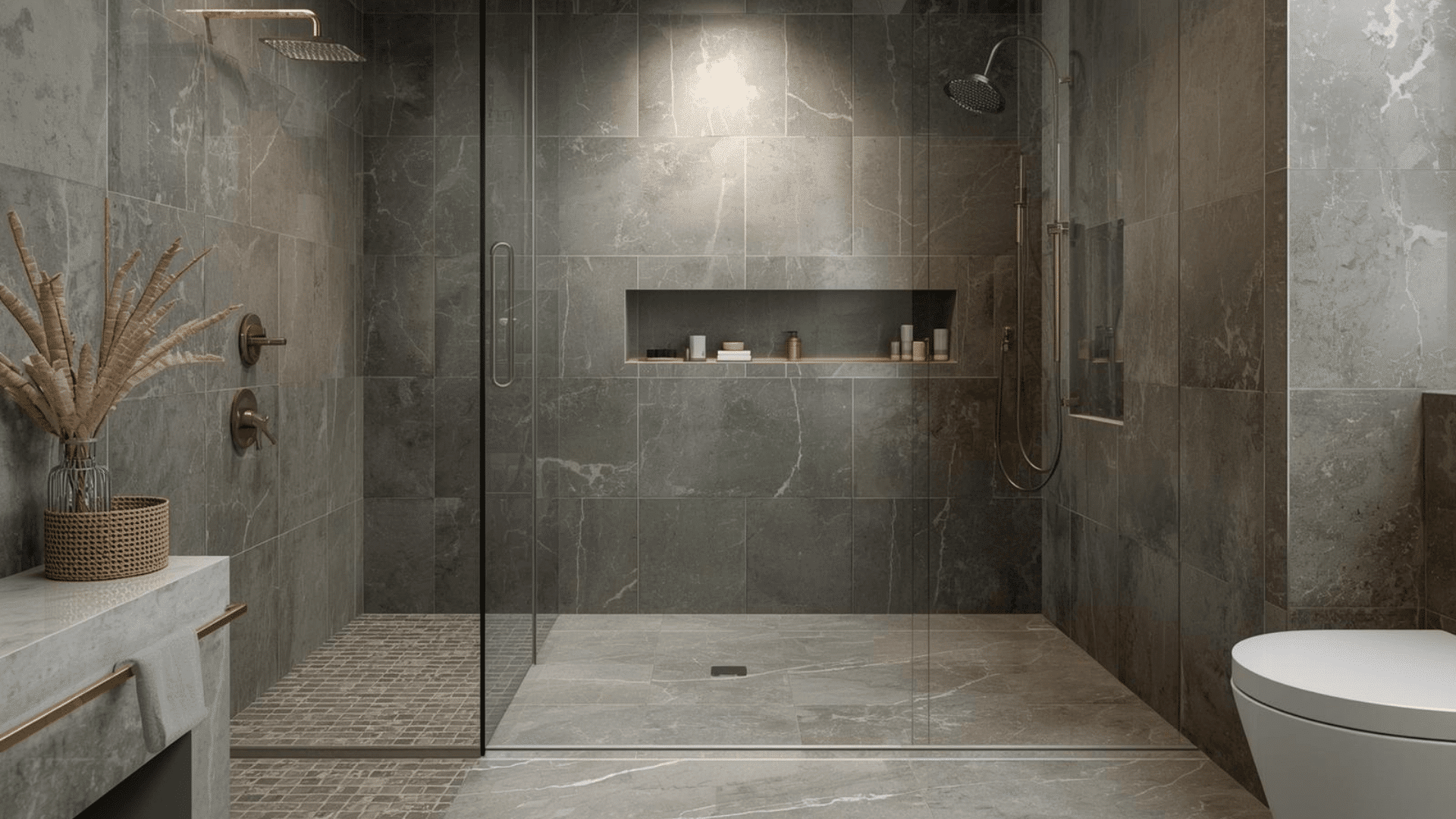
Best for deep, moody color with a smooth, modern look. Soapstone shower tile suits a darker shower vibe and works beautifully as an accent, on niche shelves, and on statement walls.
Balance the dark tone with warm lighting and lighter floors so the space doesn’t feel heavy. Match hardware finishes (brass or matte black) and keep grout tight for a sleek, seamless feel.
8. Pebble Stone Shower Floor
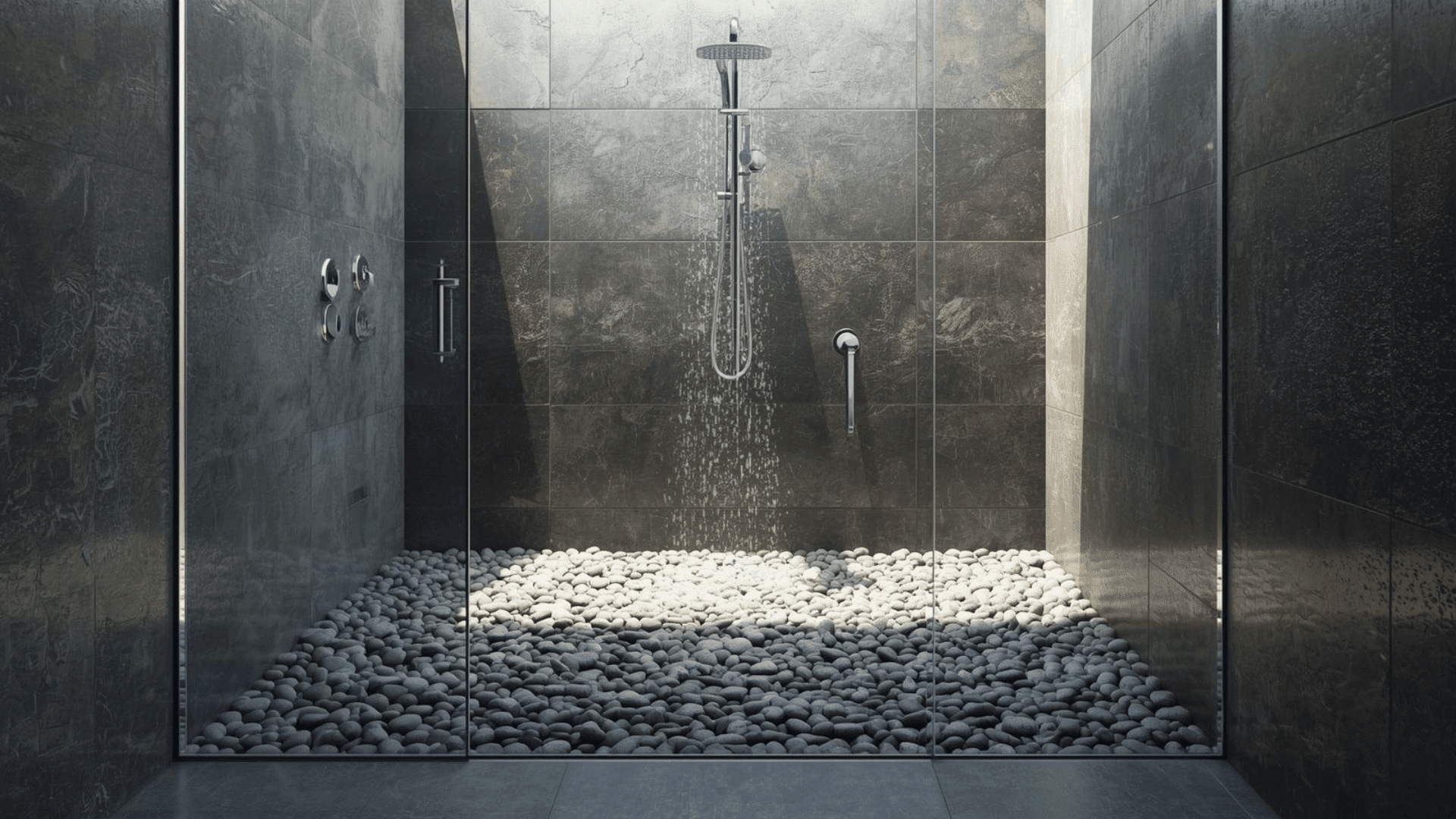
Pebble stone showers are best for a spa feel and added traction underfoot. Pebble stone is ideal for shower floors only, grounding the space, while textured walls add natural warmth.
Use pebbles as the main slip-resistant surface, then keep the wall tile simpler for balance and easier cleaning. Grout thoroughly and seal well, since all those joints can collect soap residue over time.
9. Stacked Stone Shower Accent
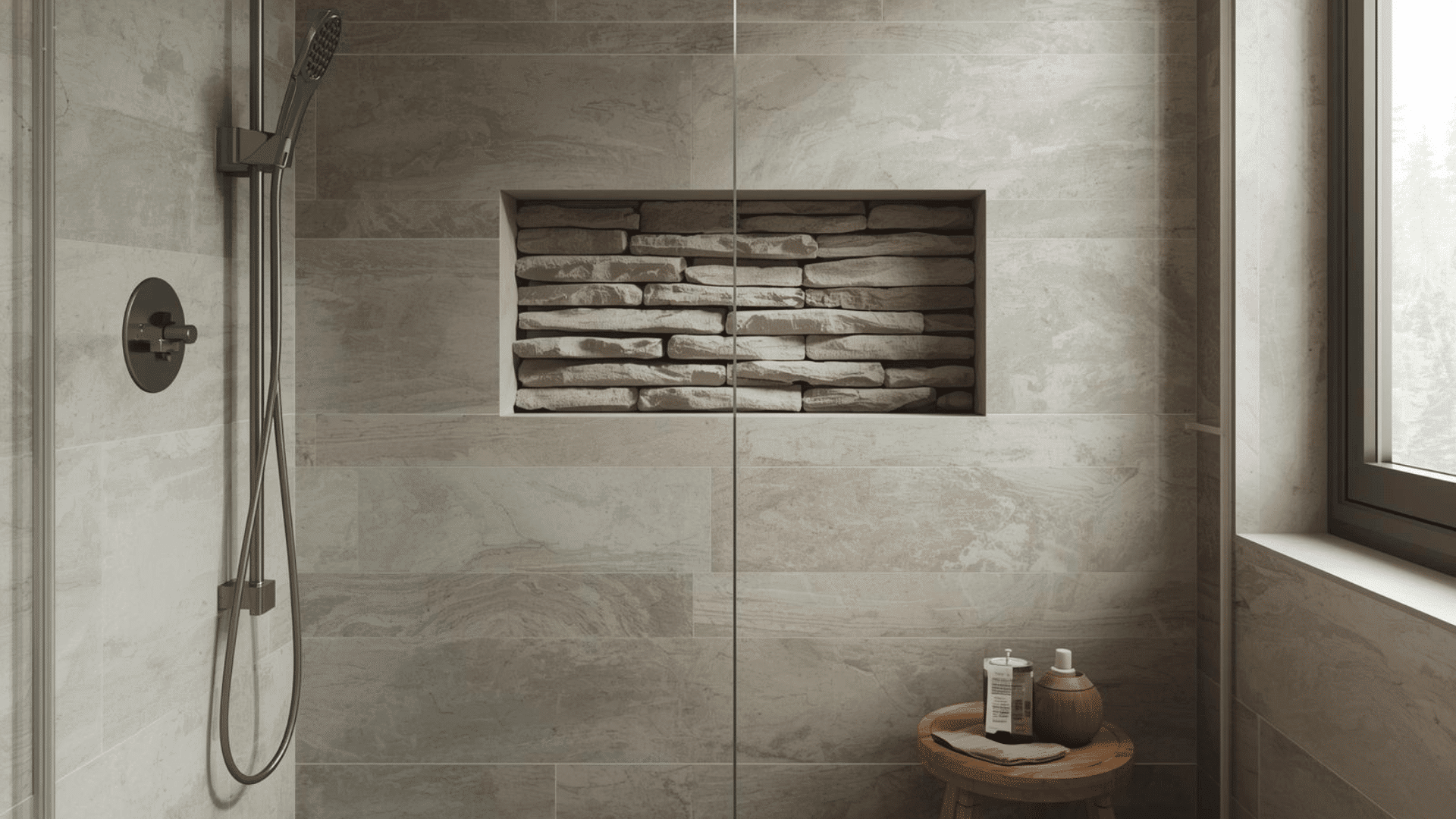
Stacked stone offers a bold texture and an actual statement wall. Stacked stone shines as a single protected focal panel within the niche, adding depth without overwhelming the calm tile.
Keep it on a low-splash wall or inside a recessed niche, not directly under the showerhead. Seal it well and plan for more detailed cleaning, since the texture can trap soap and minerals.
10. Onyx Shower Feature Wall
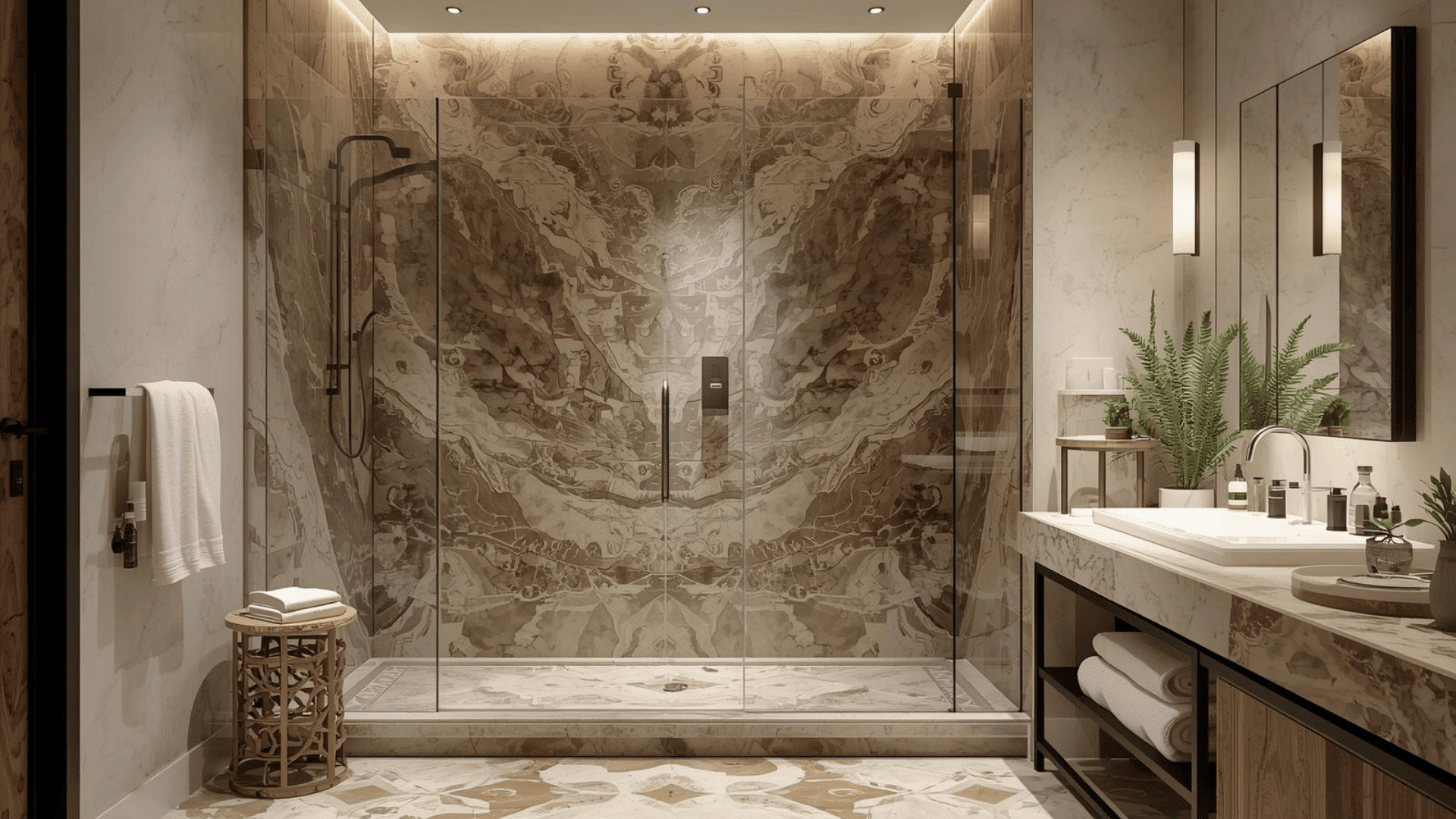
This feature wall adds a dramatic sense of glowing luxury, especially when backlit. Onyx works as a feature panel that turns the shower into art, at a higher cost.
Use it as a single-statement wall or as inset panels, then keep the surrounding finishes quiet. Plan lighting, slab layout, and sealing early since onyx can be delicate and needs careful handling.
Natural Stone Shower Style Ideas
Natural stone showers work with many design styles, from modern and minimal to warm and rustic. The ideas below show how different stones, layouts, and finishes can shape the look and feel of your shower.
1. Minimal Modern Stone Shower
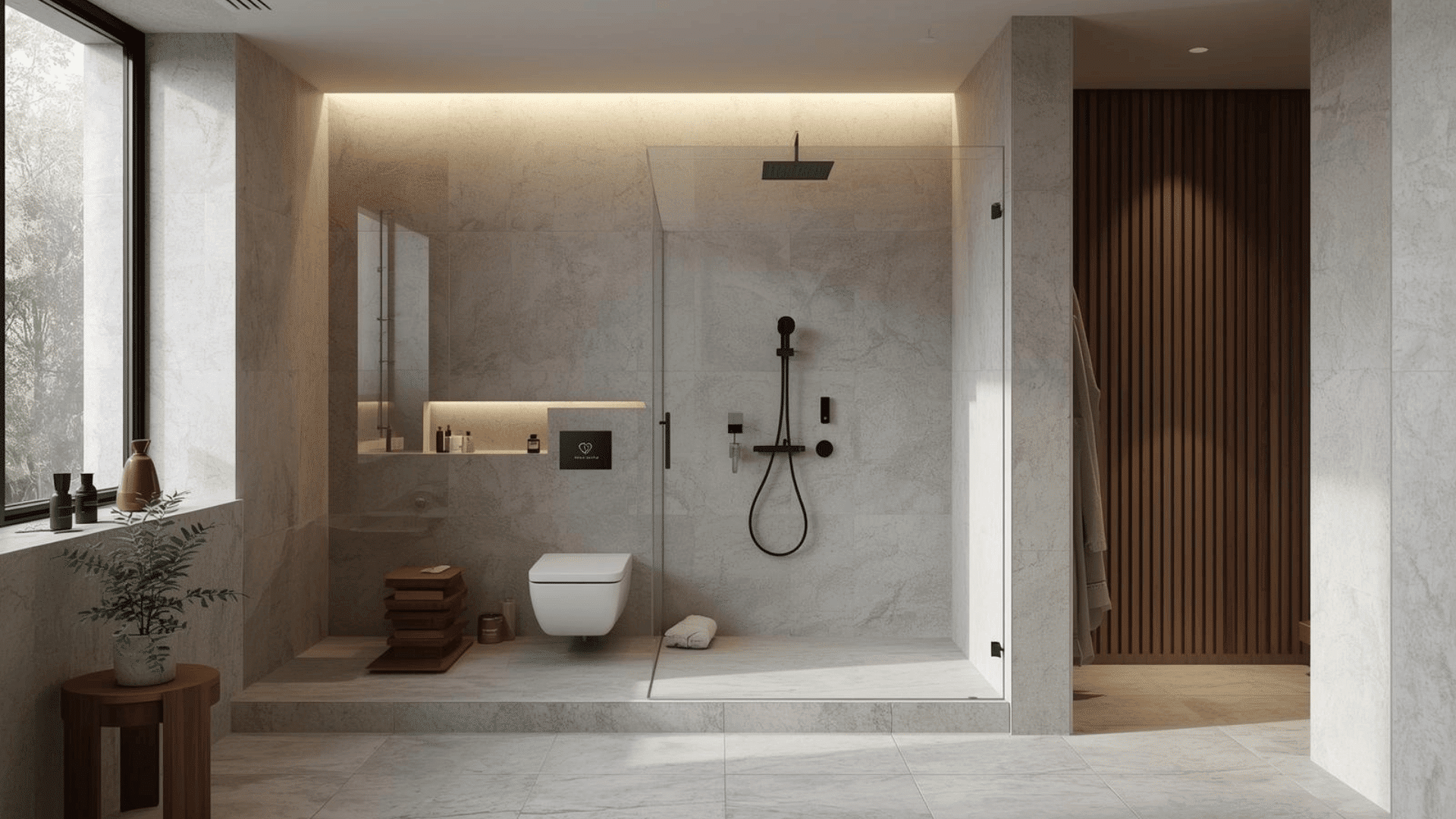
Large-format stone tiles with thin grout lines keep shower walls calm, while glass panels add contrast. Continuous pale stone from floor to walls creates a clean backdrop, highlighting niches and lighting.
Choose a honed or textured finish for slip resistance and seal it well. Align veining at corners and keep cove lighting warm so the stone feels inviting.
2. Spa-Inspired Natural Stone Shower
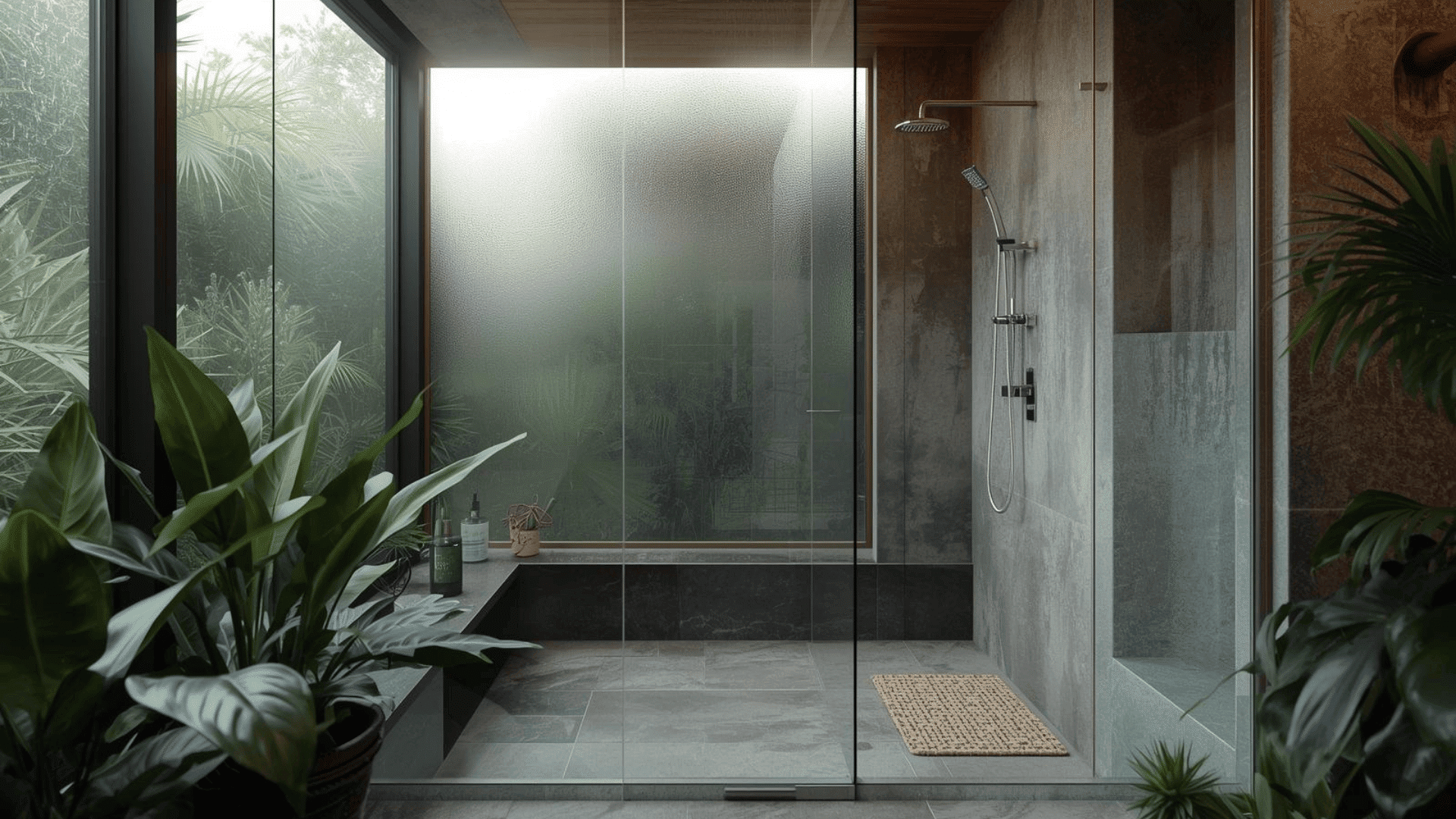
Warm gray matte stone, soft daylight, and subtle ambient lighting create a calm, cozy, low-glare shower. A built-in bench along the window adds a spa feel and keeps everyday items within easy reach.
Slope the bench slightly toward the drain so water does not pool. Use a matte, slip-resistant floor tile and match the grout closely for a smooth, clear look.
3. Rustic Stone Shower With Texture
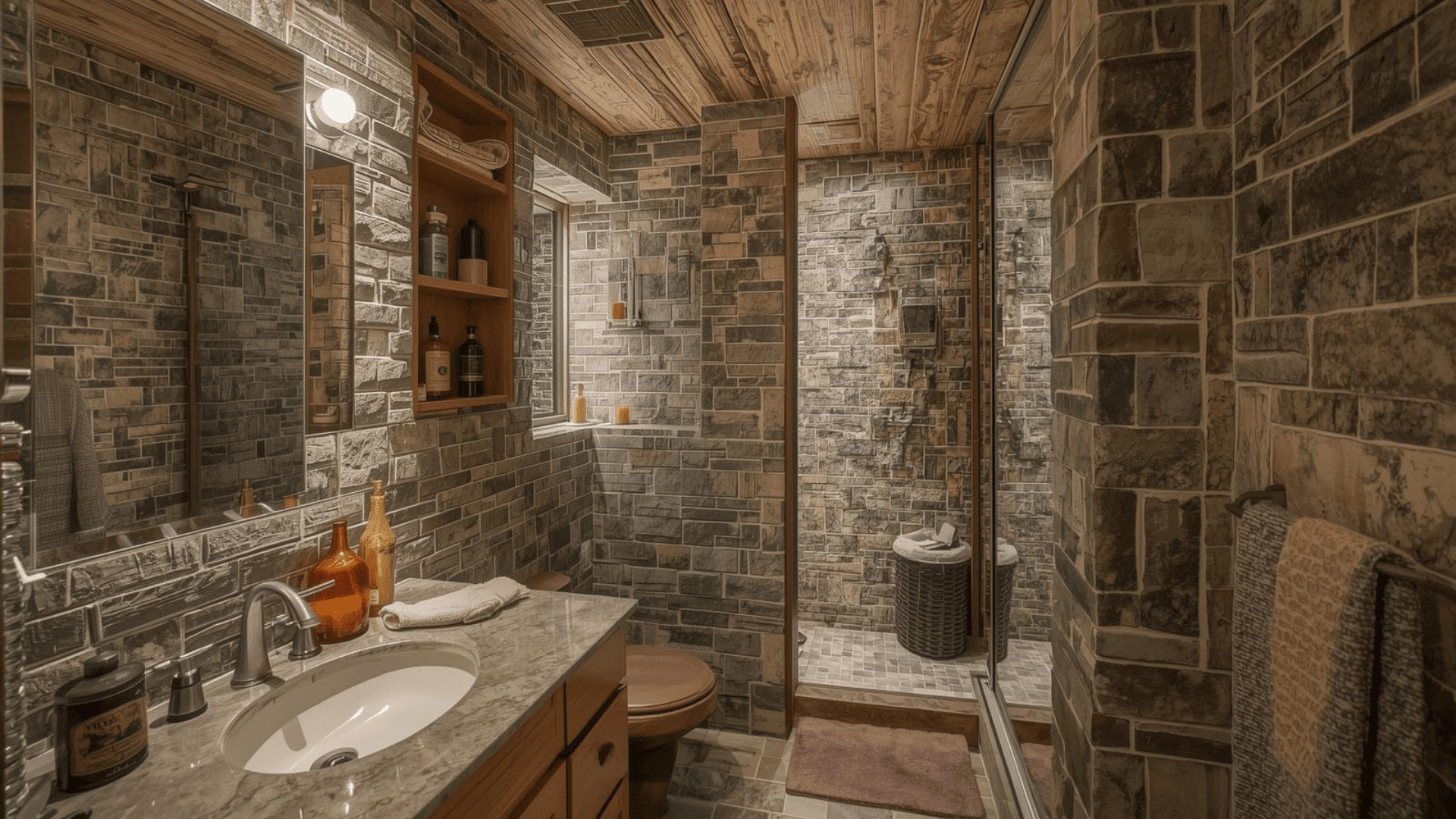
Textured, tumbled stone tiles, such as travertine or slate, create a rustic envelope here, while warm wood cabinetry and ceiling balance the matte-black shower fixtures.
Use a penetrating sealer, choose matching grout to soften joints, and add layered warm lighting to avoid a cave feel.
4. Marble Feature Wall Shower
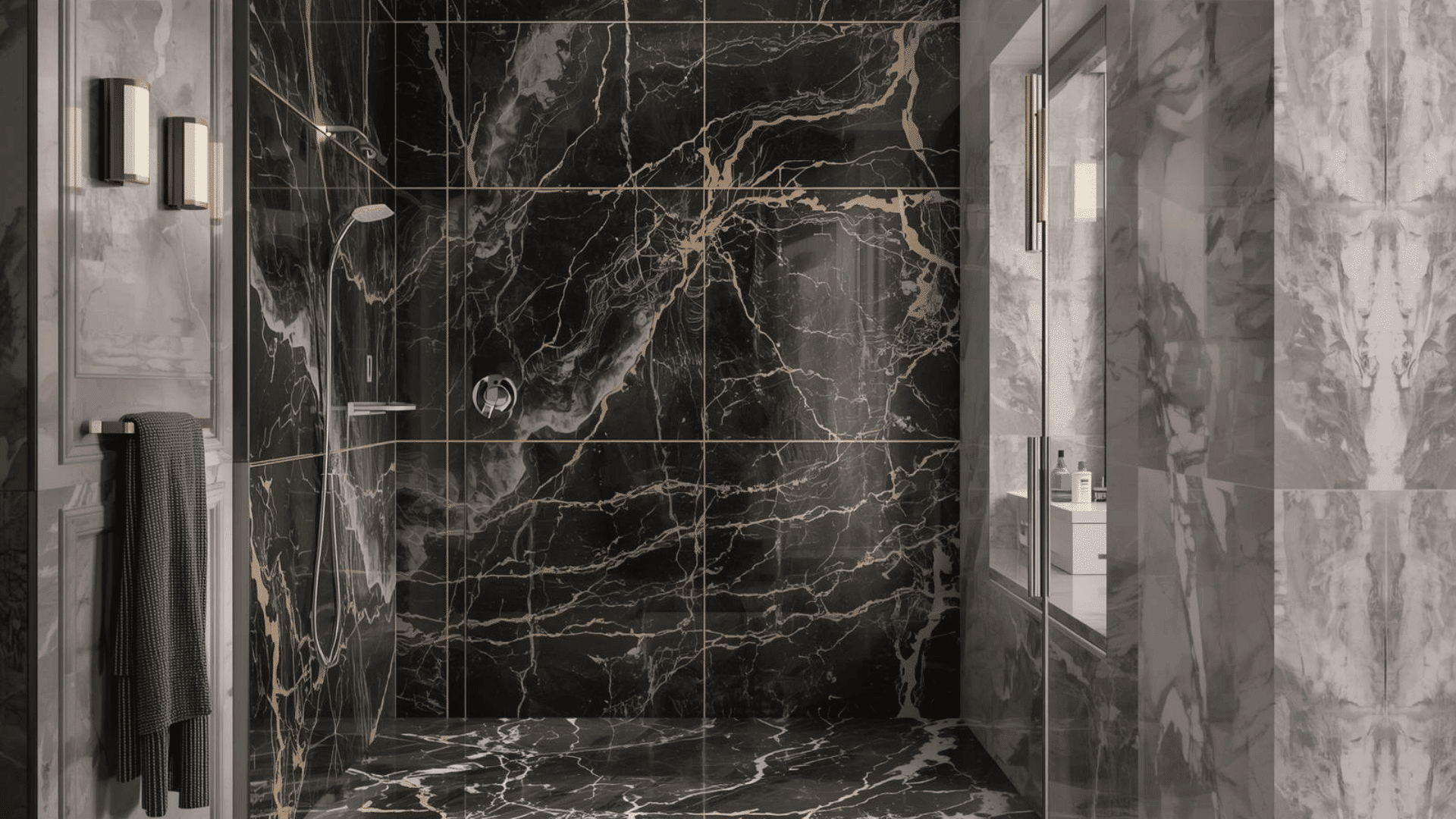
Use a bold, dark marble-look feature wall in the shower to create a dramatic focal point, and keep the surrounding surfaces lighter and simpler, so the veining stands out.
If you want less glare, choose a honed or satin finish instead of high polish. Keep grout subtle and color-matched, and if you’re using real marble, seal it to help prevent staining and water marks.
5. All-White Stone Shower
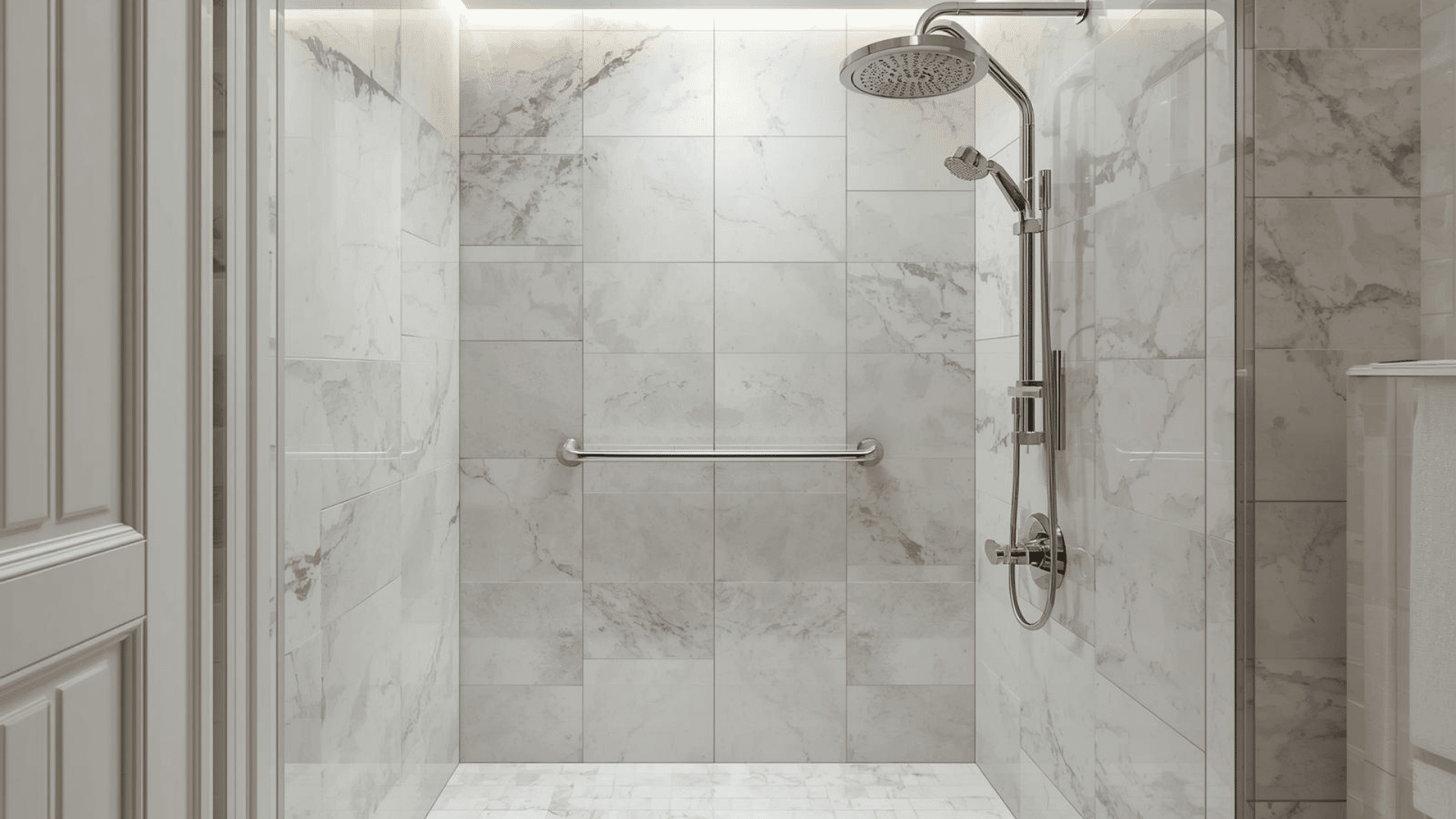
Light marble-look tile with subtle, matching grout keeps the shower bright and clean, letting the veining read softly across the walls. Chrome fixtures and a clear glass enclosure maintain an airy, seamless look.
Choose a honed or matte finish to reduce glare. If the material is natural stone, seal it regularly, and ensure strong ventilation to help prevent moisture marks.
6. Dark And Moody Stone Shower
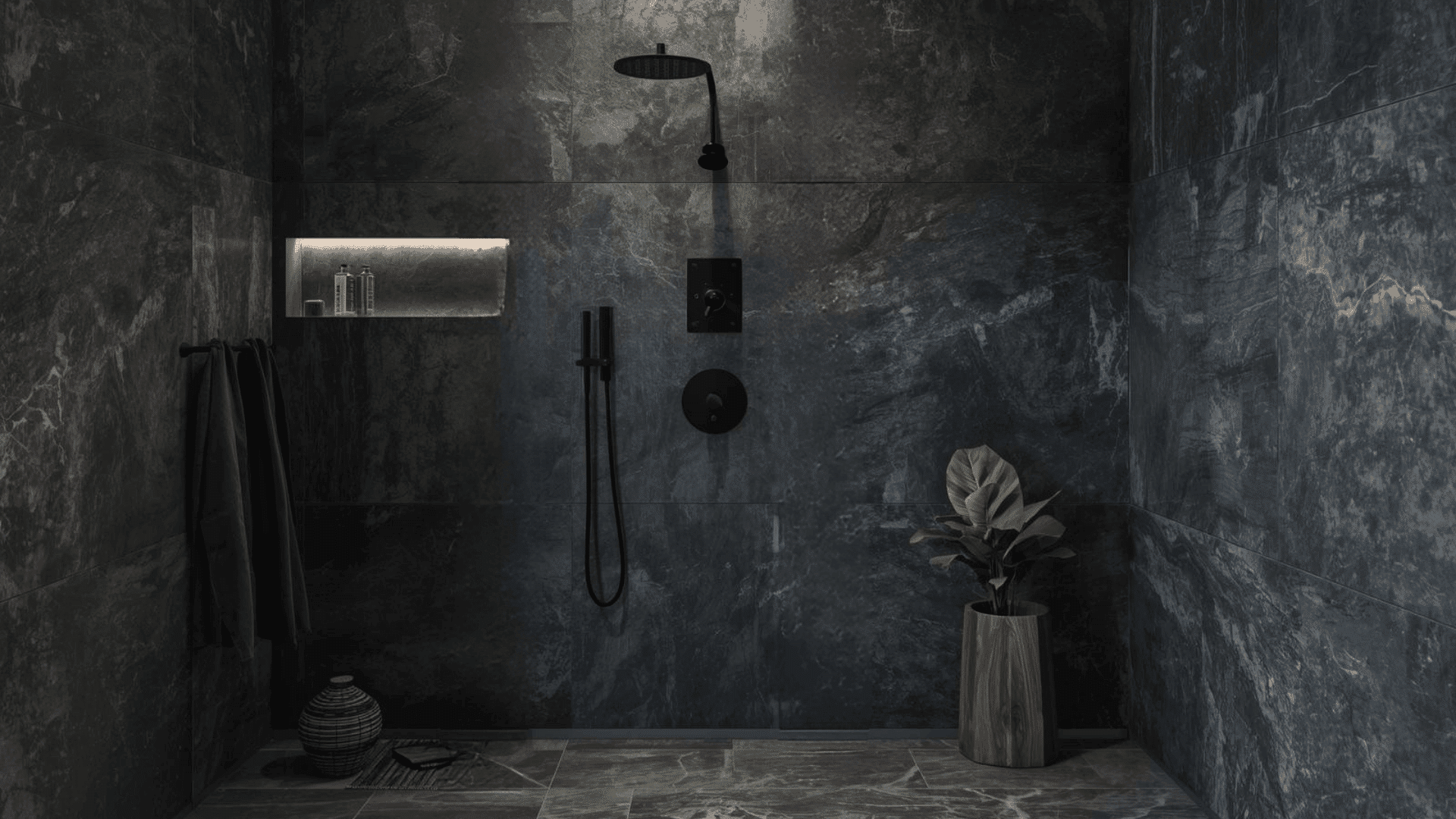
Deep charcoal stone or a soapstone-look tile creates a moody, cocoon-like shower, softened by warm accent lighting and matte-black fixtures. A lit recessed niche adds function while keeping the walls clean.
To balance the dark tile, bring in lighter pieces elsewhere in the bathroom and use layered lighting. Choose low-sheen finishes.
7. Two-Tone Stone Shower
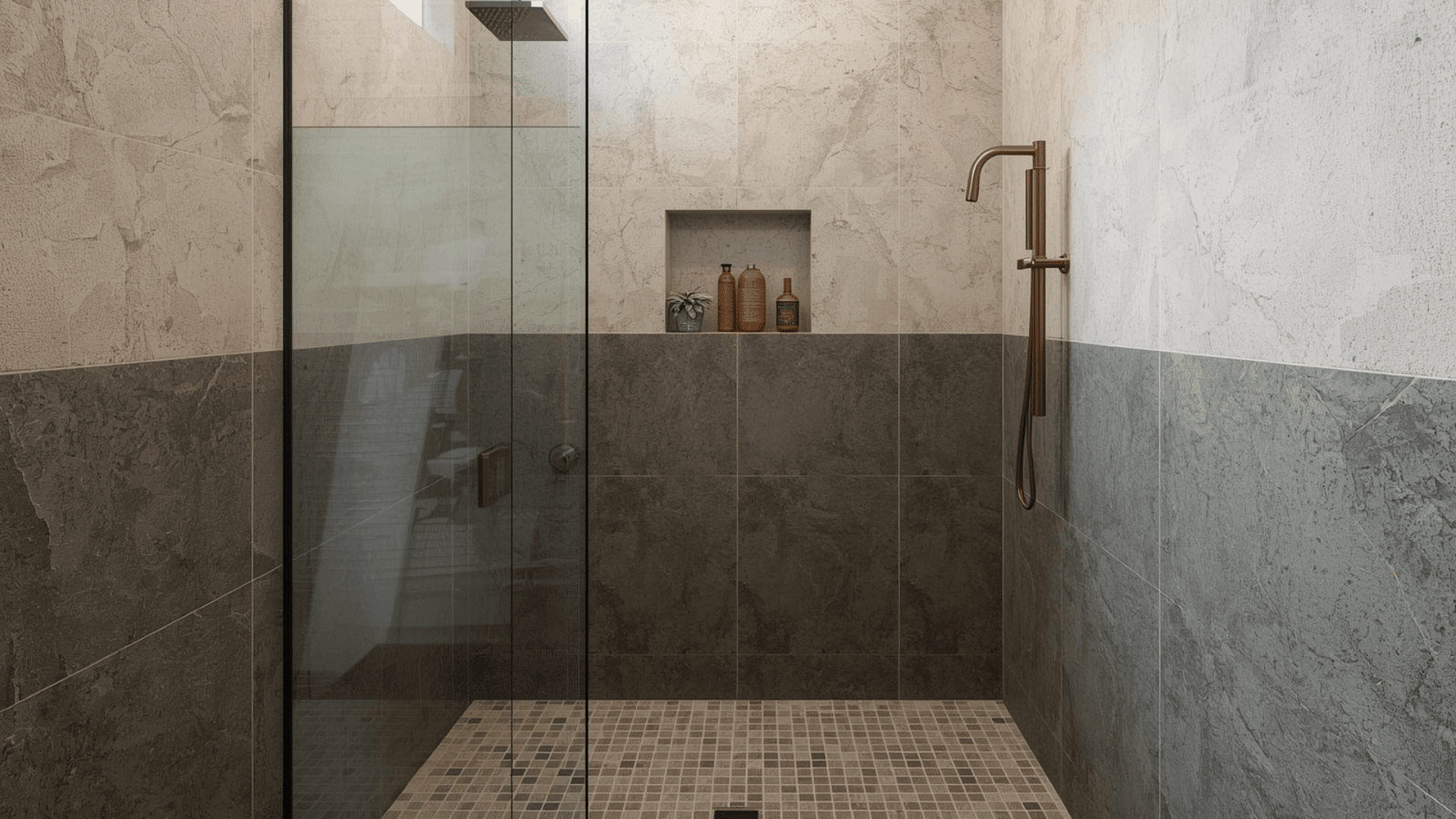
Light stone walls paired with a darker lower band and floor, like in this shower, visually anchor the space and help disguise everyday splashes and scuffs.
Keep the transition line level and consistent, choose a slightly darker grout on the floor, and use slip-resistant mosaics.
8. Natural Stone And Mosaic Mix
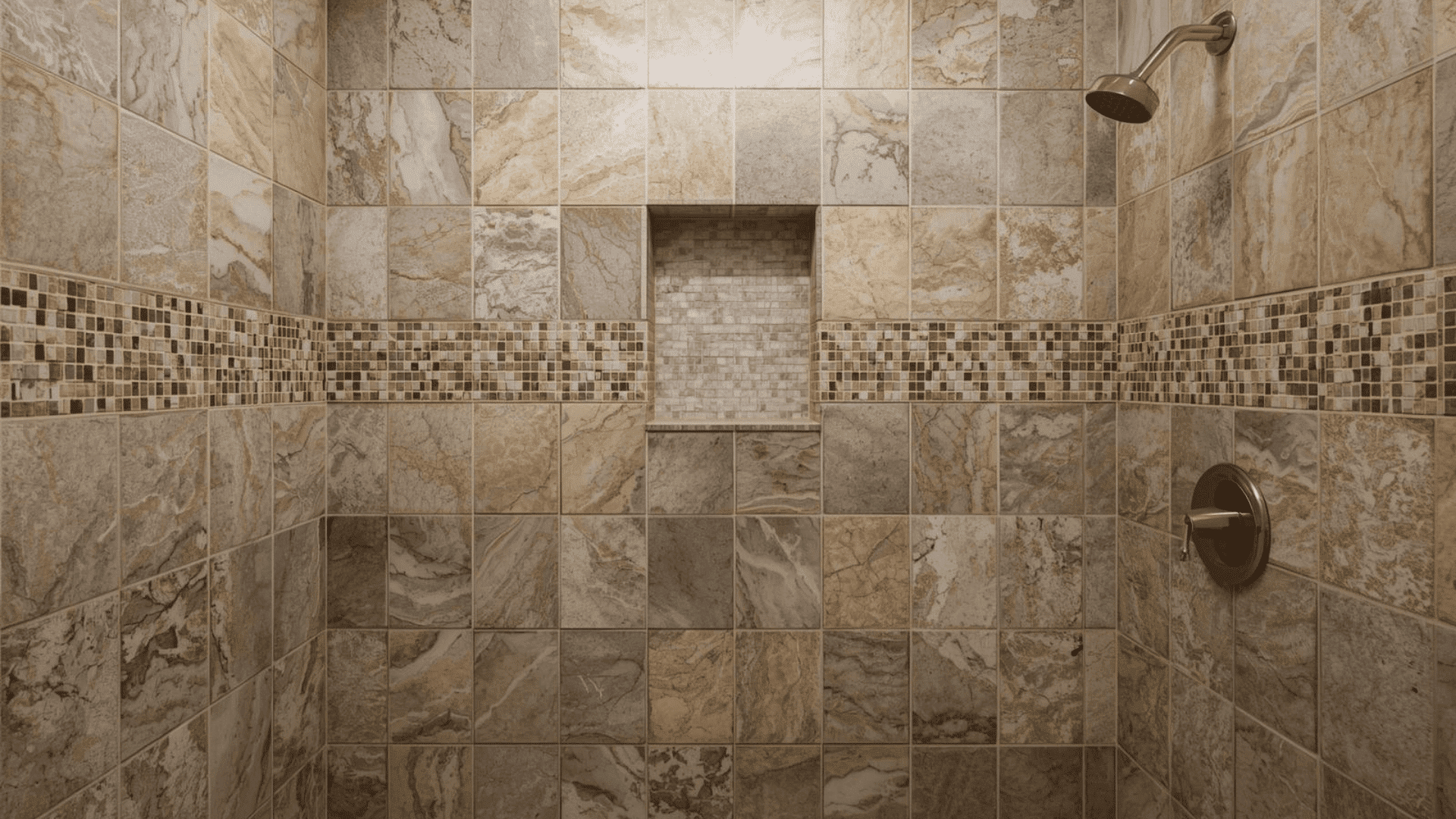
Simple stone walls keep this shower calm, while the mosaic accent band adds texture and breaks up the larger tiles without feeling busy.
Use epoxy or stain-resistant grout for mosaics, keep the band level and the grout lines aligned, and consider a slightly darker grout to make upkeep easier.
9. Curbless Natural Stone Shower
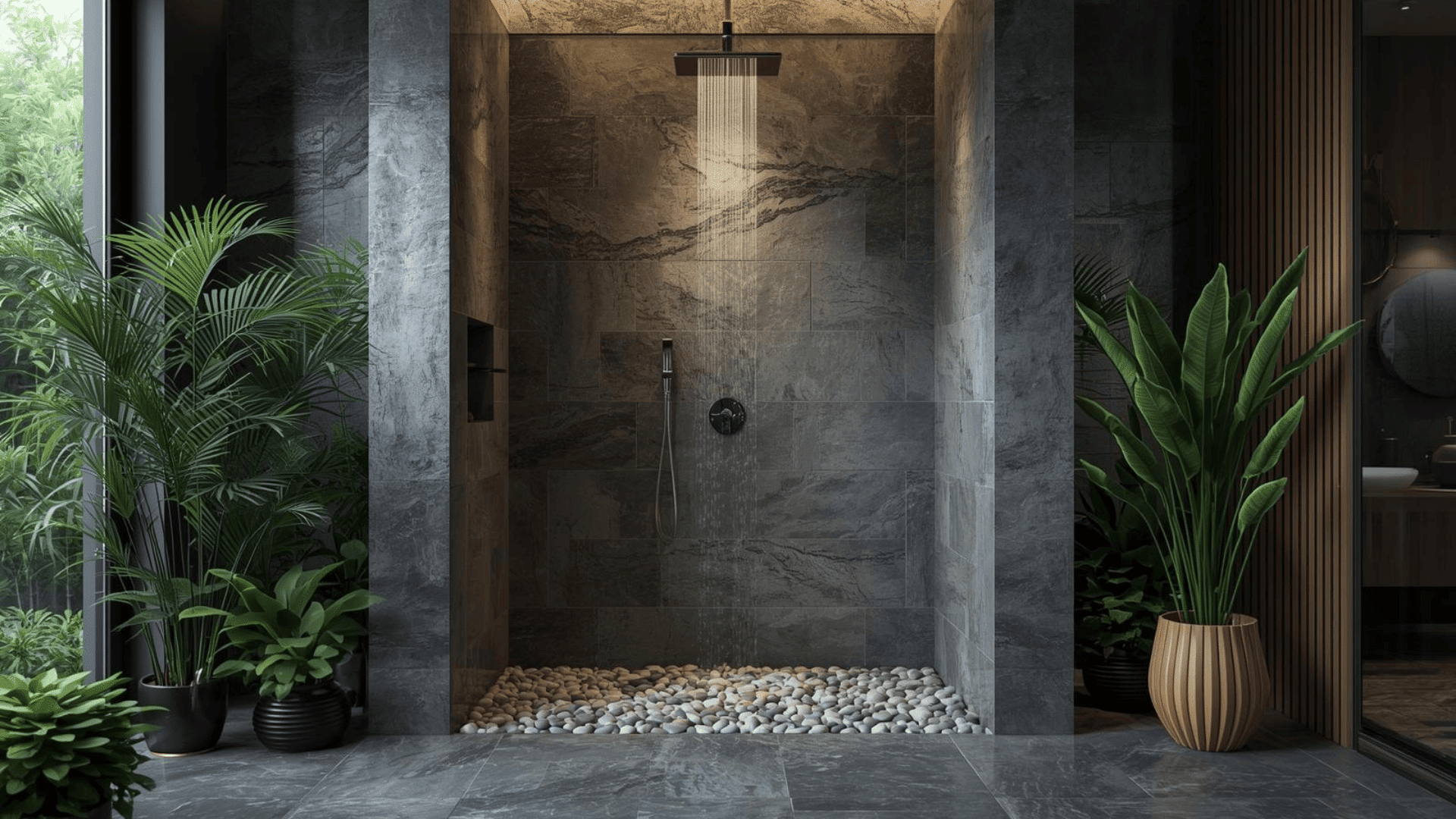
A curbless natural-stone shower like this creates an easy, spa-like flow from the bathroom into the wet zone. Large-format stone-look walls keep the space sleek, while the river-rock shower floor adds organic texture.
Make sure the shower base is properly sloped to the drain, and extend waterproofing beyond the open entry. Use slip-resistant surfaces.
10. Coastal Stone Shower Look
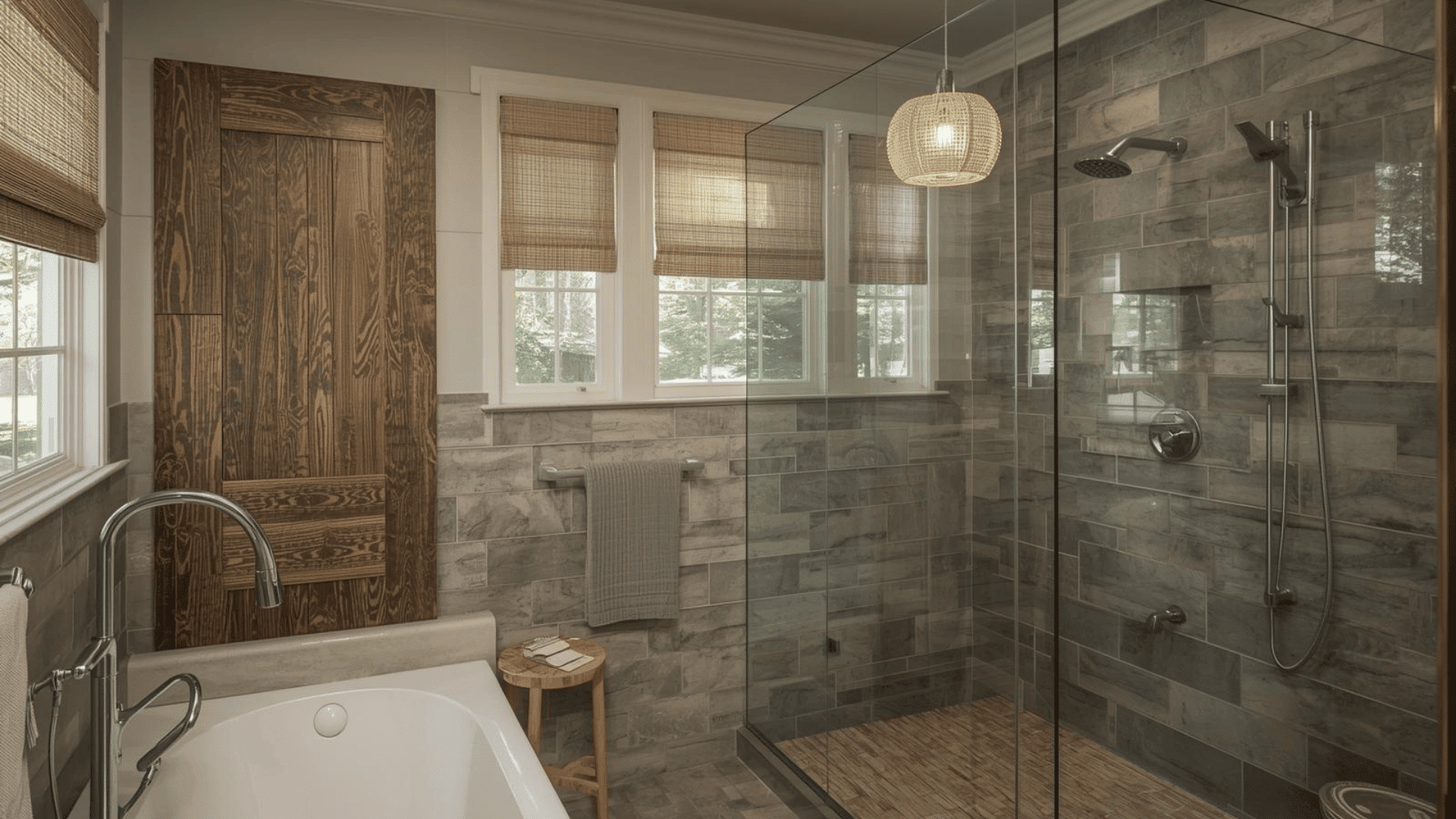
Cool gray stone with soft, layered movement creates a relaxed feel in this shower. The clear glass enclosure keeps the space open, while warm wood accents and woven textures add balance and depth.
Keep grout light and consistent to avoid visual breaks, use warm-white lighting to soften the cooler tile tones, and repeat one accent finish.
Care And Maintenance Basics
Natural stone showers need regular care to stay looking good. A simple weekly routine prevents buildup and keeps the stone in good shape.
- Daily Wipe-Down: Wipe down your shower walls after each use to remove soap residue and water spots before they settle in.
- Weekly Cleaning: Clean your shower once a week with a pH-neutral stone cleaner. Spray, wipe, and rinse thoroughly to avoid surface damage.
- Regular Sealing: Seal your stone every one to two years to create a protective barrier against water and stains.
- Avoid Harsh Cleaners: Avoid acidic products such as vinegar, lemon juice, or bleach-based bathroom cleaners, which can etch and damage stone.
- Use Stone-Safe Products: Only use cleaners labeled safe for natural stone, and always read the product instructions before applying.
Taking care of your natural stone shower protects your investment. Regular attention prevents bigger problems and keeps your bathroom looking the way you want.
Conclusion
A natural stone shower gives your bathroom a look that lasts. You now know the difference between marble’s classiness and slate’s rustic charm.
You’ve seen how light stone opens up a space while dark stone creates drama.
Pick the material that matches how you live. Consider your budget, your cleaning habits, and the mood you want each morning. Some stones need more upkeep. Others handle daily use with minimal fuss.
The style choices are yours to make. Your shower gets used every single day. Make it something you enjoy stepping into. Which natural stone shower style caught your eye?
Bookmark this page and come back when you’re ready to start shopping for tile.