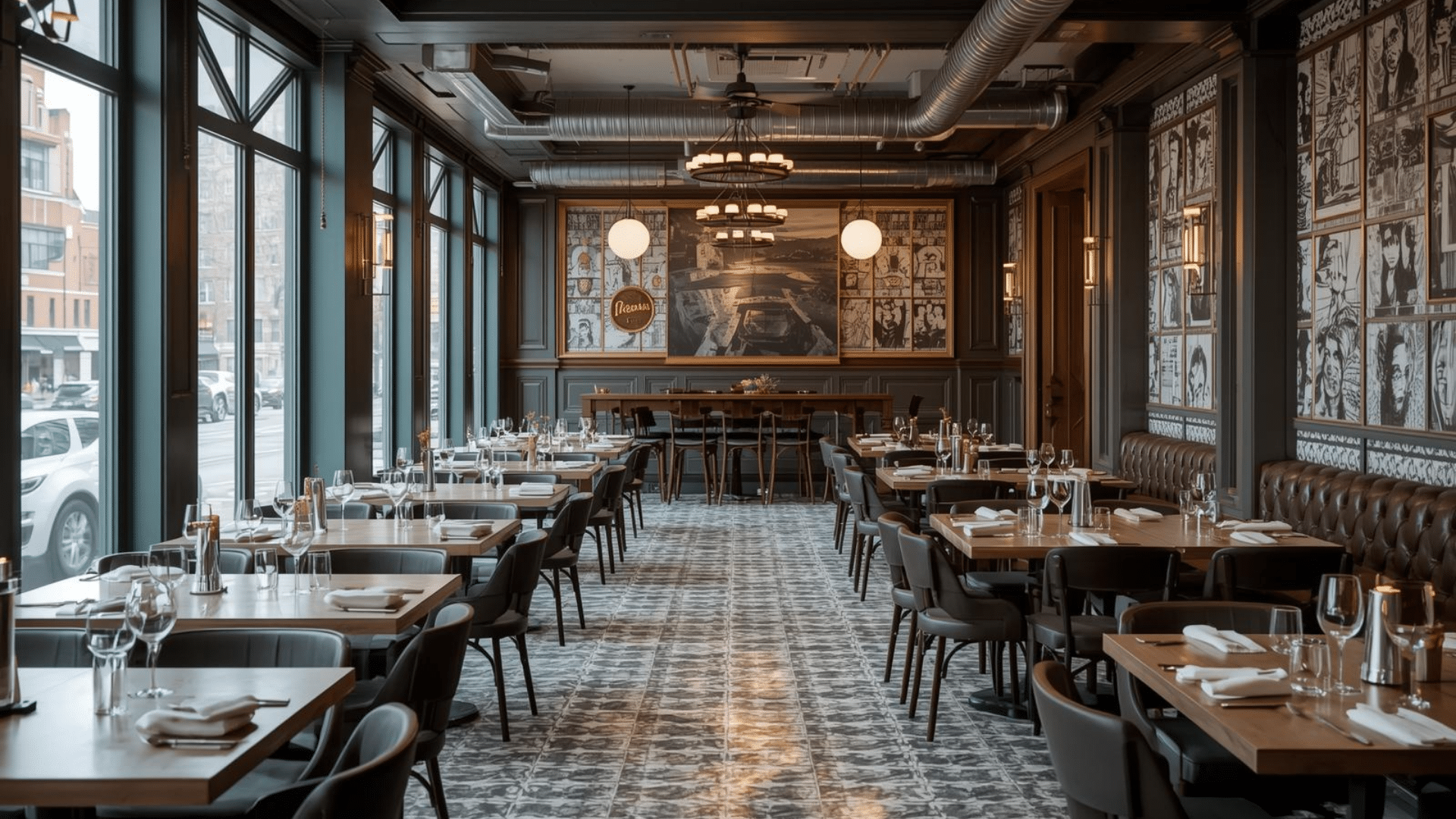
Walk into any successful restaurant and look down. That floor isn’t just there by accident.
Choosing restaurant flooring means solving a puzzle. You need something tough enough to handle years of heavy traffic. Pretty sufficient to match your vision.
Affordable enough to fit your budget. Safe enough to protect everyone who walks on it.
Get it wrong, and you face constant repairs, safety issues, and wasted money. You have plenty of solid options once you know what to look for.
Everything you need is right here, from top flooring options to costs and real-world performance. You’ll see what each material costs, where it works best, and how long it lasts.
By the end, you’ll know exactly which restaurant flooring fits your needs and your wallet.
Why Choosing the Right Restaurant Flooring Matters
Your restaurant floor does more than look nice. It affects your safety, your budget, and how customers feel when they walk through your door.
The wrong restaurant flooring can lead to accidents, failed health inspections, and expensive replacements. The right choice protects your staff, impresses your customers, and saves you money over time.
Slip-resistant flooring prevents injuries to staff and customers. It reduces liability risks and supports compliance with OSHA’s general duty clause and local health department and building code requirements.
Your floor creates first impressions and sets the mood in your restaurant. It also affects noise levels and staff comfort during long shifts.
Cheap flooring might save money now, but quality materials last longer and need less maintenance – factor in total costs over time, not just upfront prices. Health codes require smooth, easy-to-clean surfaces in kitchens.
Fire safety and accessibility rules apply throughout your restaurant.
Key Factors to Consider When Selecting Restaurant Flooring
Picking the right restaurant flooring requires more than just choosing something that looks good. You need to consider how your floor will perform in real restaurant conditions.
Each factor affects how well your floor holds up and how much it costs you over time.
- Durability and Foot-Traffic Resistance: Commercial-grade floors handle heavy foot traffic and frequent cleaning. Use the toughest materials at entrances and main walkways.
- Water and Moisture Resistance: Kitchens, bathrooms, and basements need waterproof flooring. Luxury vinyl, epoxy, and sealed concrete resist spills and humidity.
- Ease of Cleaning and Maintenance: Health codes require surfaces that are easy to clean and maintain. Joint-free or sealed floors need less upkeep than grout, porous tile, or wood.
- Slip Resistance and Safety Features: Spills increase slip risks. Choose textured or slip-resistant finishes and enforce fast cleanup protocols.
- Noise Reduction and Acoustic Control: Hard floors reflect sound. Carpet, cork, rubber, or acoustic treatments help reduce noise.
Choose flooring that can handle traffic, moisture, cleaning, and noise without blowing your budget. The right pick keeps guests safe, staff efficient, and daily operations running smoothly.
Best Restaurant Flooring Options
Here are some popular restaurant flooring options with details on where they work best, what they cost, key benefits, potential drawbacks, and maintenance needs.
1. Epoxy And Resin Flooring
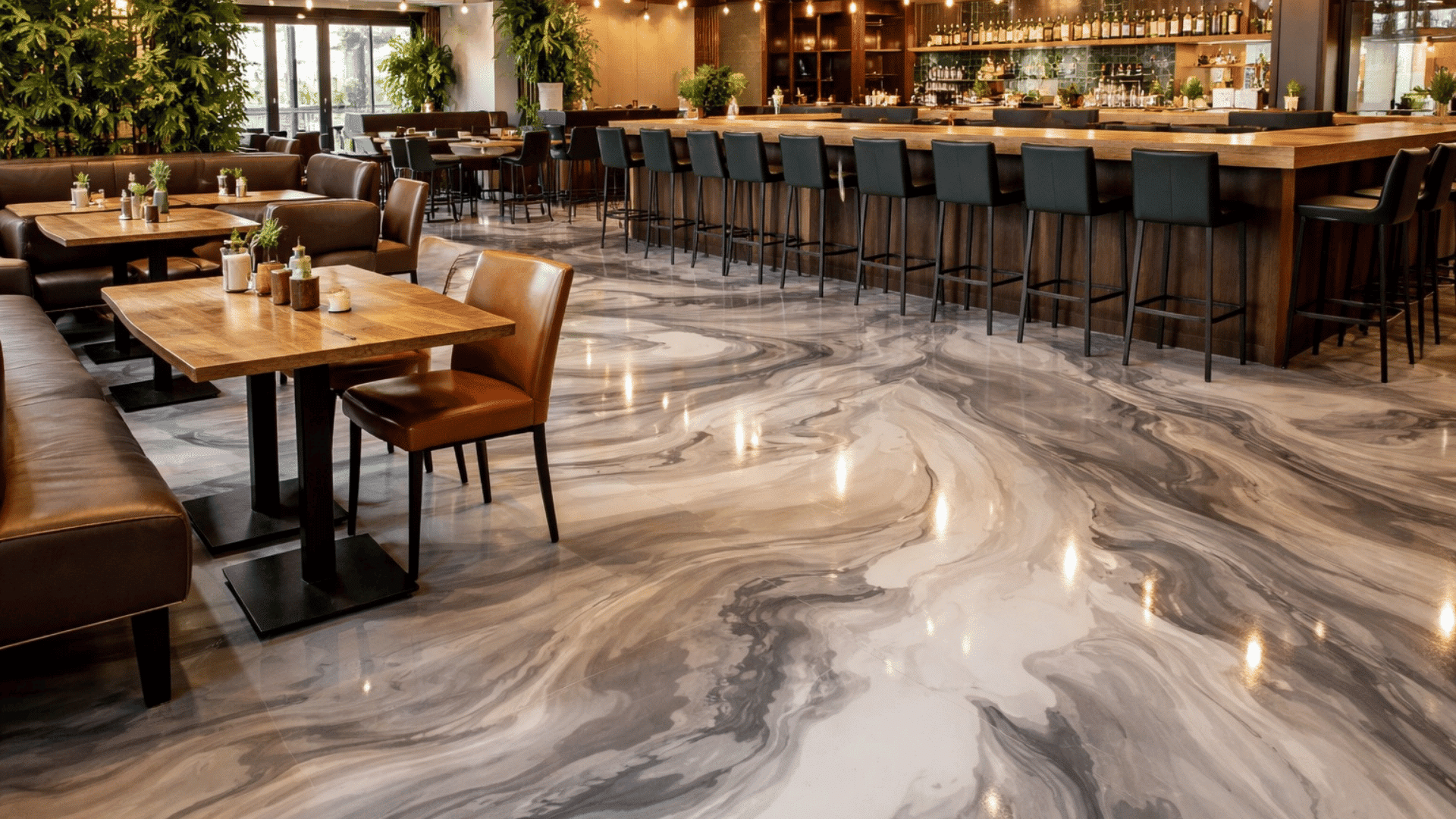
This marble-look epoxy flooring gives the space a premium, glossy finish while staying tough enough for daily restaurant traffic. It is stain-resistant and easy to clean, making it a practical choice for busy areas.
While the upfront price can be higher than some options, the long lifespan and low maintenance often make it cost-effective over time.
- Estimated Lifespan: 10–20 years (with proper prep and maintenance)
- Ideal For: Restaurants, bars, cafes, kitchens, high-traffic commercial spaces
- Cost Range: $3–$12 per sq ft (basic to custom metallic/marble effects)
2. Luxury Vinyl Tile (LVT) And Luxury Vinyl Plank (LVP)
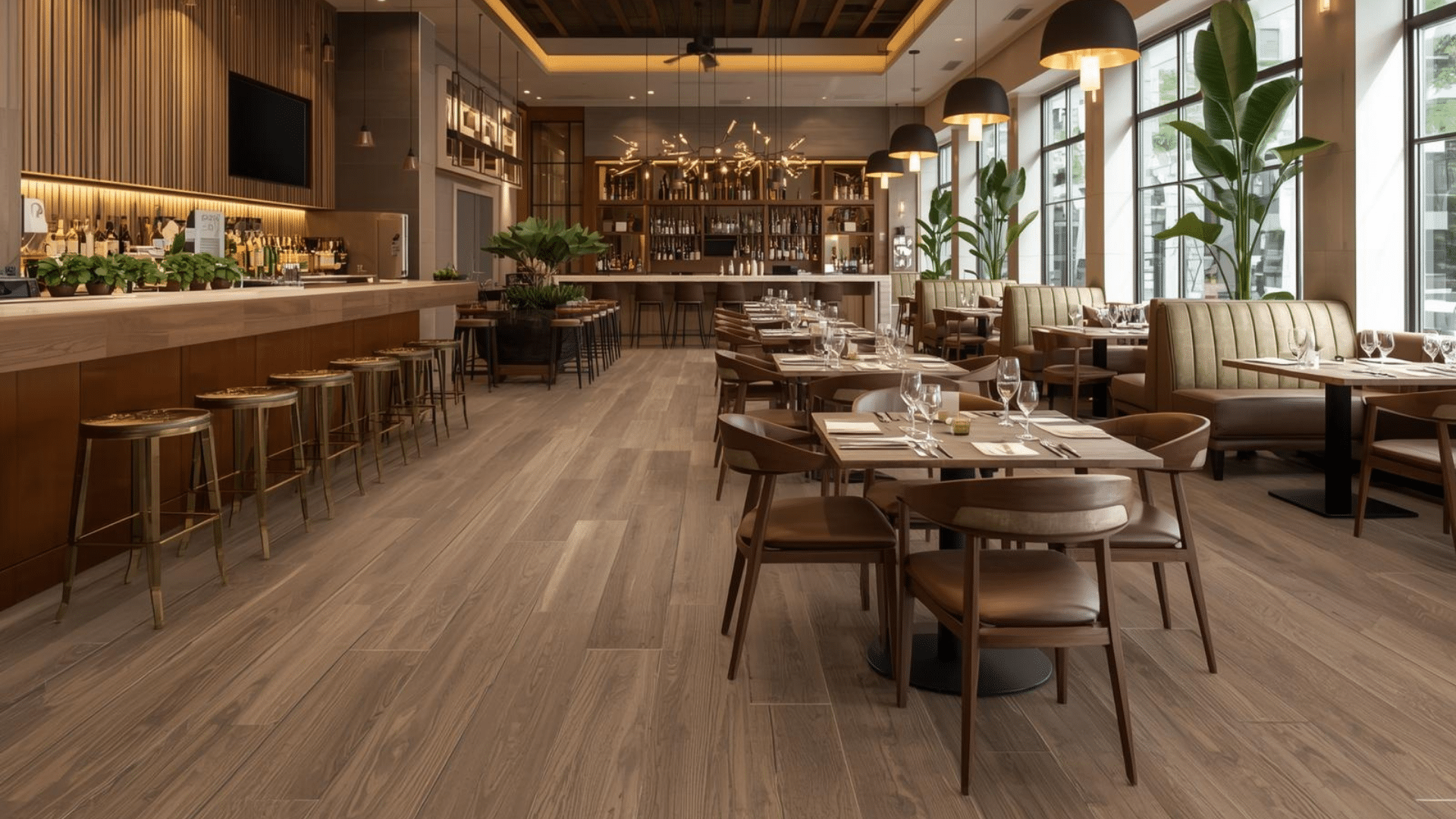
Wood-look LVT brings warm, natural grain to a dining area without the fuss of real timber. The tough wear layer handles chair movement, foot traffic, and occasional spills, and it is simple to clean between services.
It is also quieter and softer underfoot than tile. Budget-wise, it usually falls mid-range, with lower installation and maintenance costs than hardwood for most commercial interiors.
- Estimated Lifespan: 10–20 years (depending on wear layer and traffic)
- Ideal For: Restaurants, cafes, retail floors, offices, basements, spill-prone areas
- Cost Range: $4–$16 per sq ft installed (premium looks cost more)
3. Commercial Sheet Vinyl
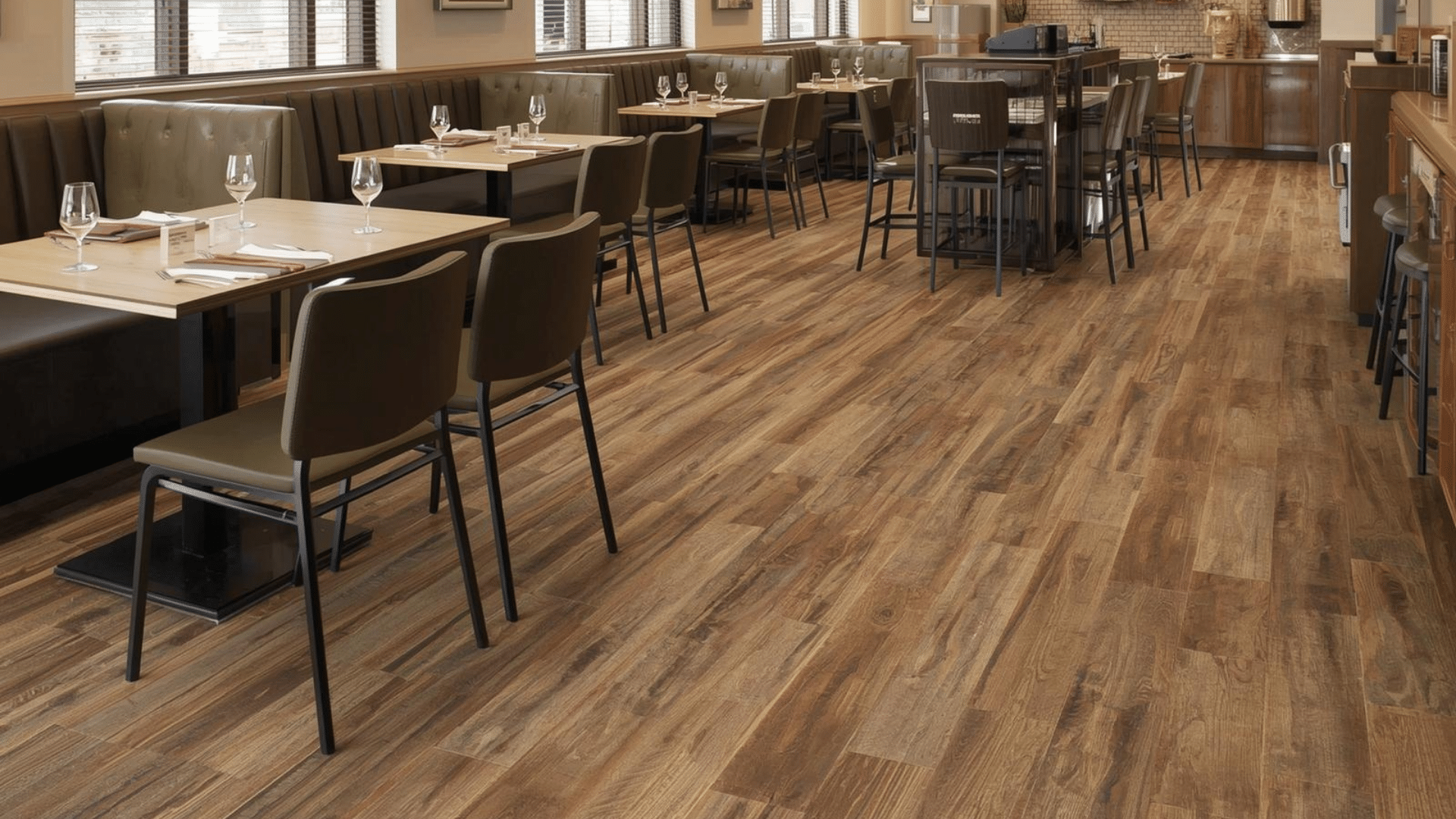
This commercial sheet vinyl gives a clean, consistent wood-look finish that works well in busy dining spaces. Because it comes in large rolls, there are fewer seams, which helps block moisture and makes wipe-ups fast.
It handles everyday foot traffic, chair movement, and spills, and it is easy to maintain with basic cleaning. It is also one of the more budget-friendly commercial flooring picks.
- Estimated Lifespan: 8–15 years
- Ideal For: Restaurants, cafeterias, clinics, breakrooms, kitchens, high-spill zones
- Cost Range: $2–$6 per sq ft installed
4. Quarry Tile
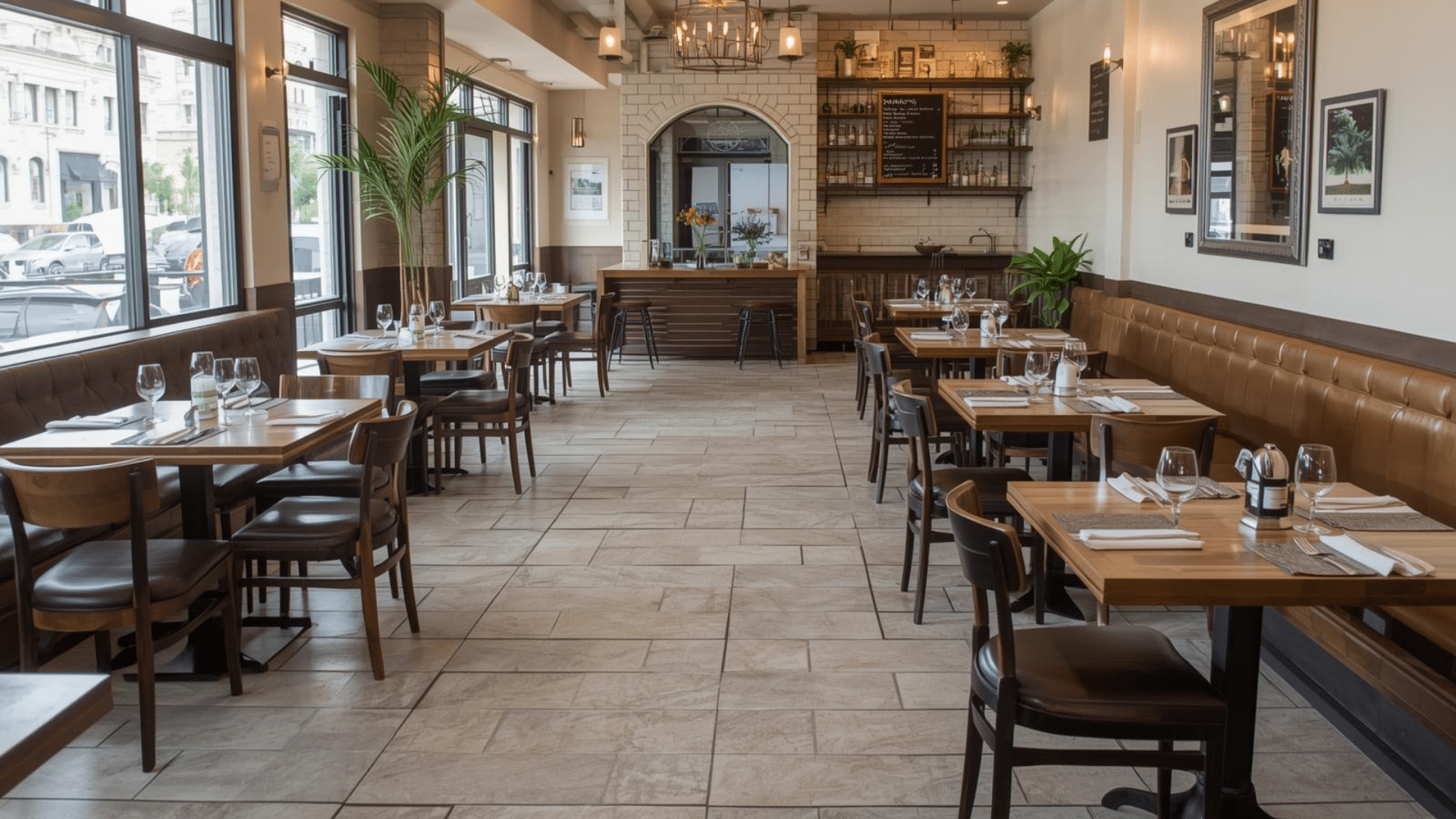
Stone-look commercial tile gives a clean, classic base that suits casual to upscale dining rooms. It stands up well to heavy chair movement, heat, and daily wear, and the surface does not dent like softer floors.
The main upkeep is grout care, since grout can darken if not sealed and cleaned. Installation costs are usually higher, but the long service life can balance it out.
- Estimated Lifespan: 20–50+ years
- Ideal For: Dining areas, entries, restrooms, server paths, open kitchens
- Cost Range: $6–$17 per sq ft installed
5. Porcelain Or Ceramic Tile
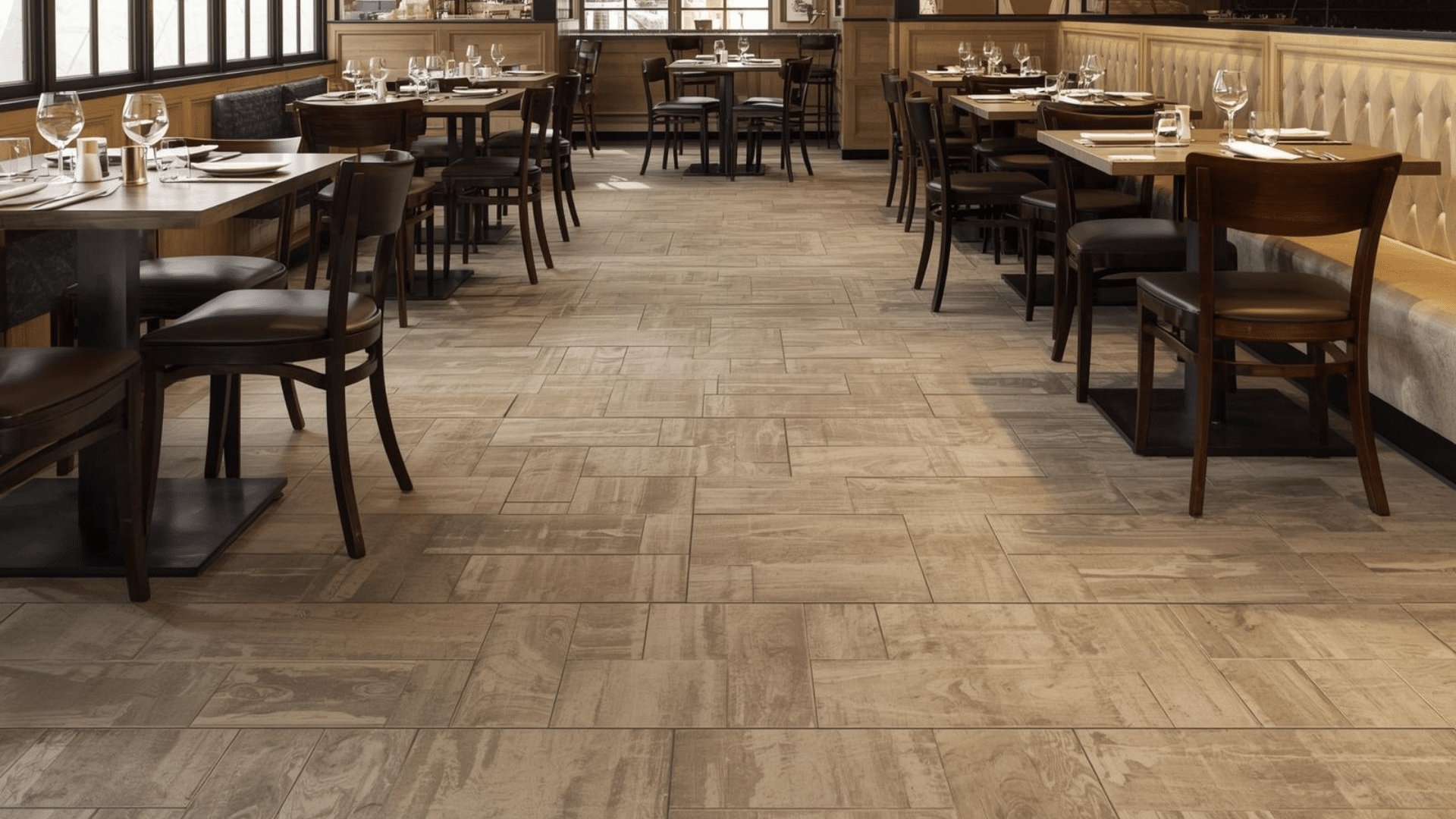
This wood-look ceramic tile creates a warm, layered pattern while offering a hard, moisture-tolerant surface for commercial dining spaces.
The glazed finish helps resist spills and everyday scuffs, and damaged pieces can be replaced one tile at a time. Pricing is often reasonable for the material, but installation and grout sealing add to the total budget.
- Estimated Lifespan: 15–30+ years
- Ideal For: Restaurants, cafes, hallways, restrooms, light-to-medium kitchen zones
- Cost Range: $12–$50 per sq ft installed
6. Polished Or Sealed Concrete
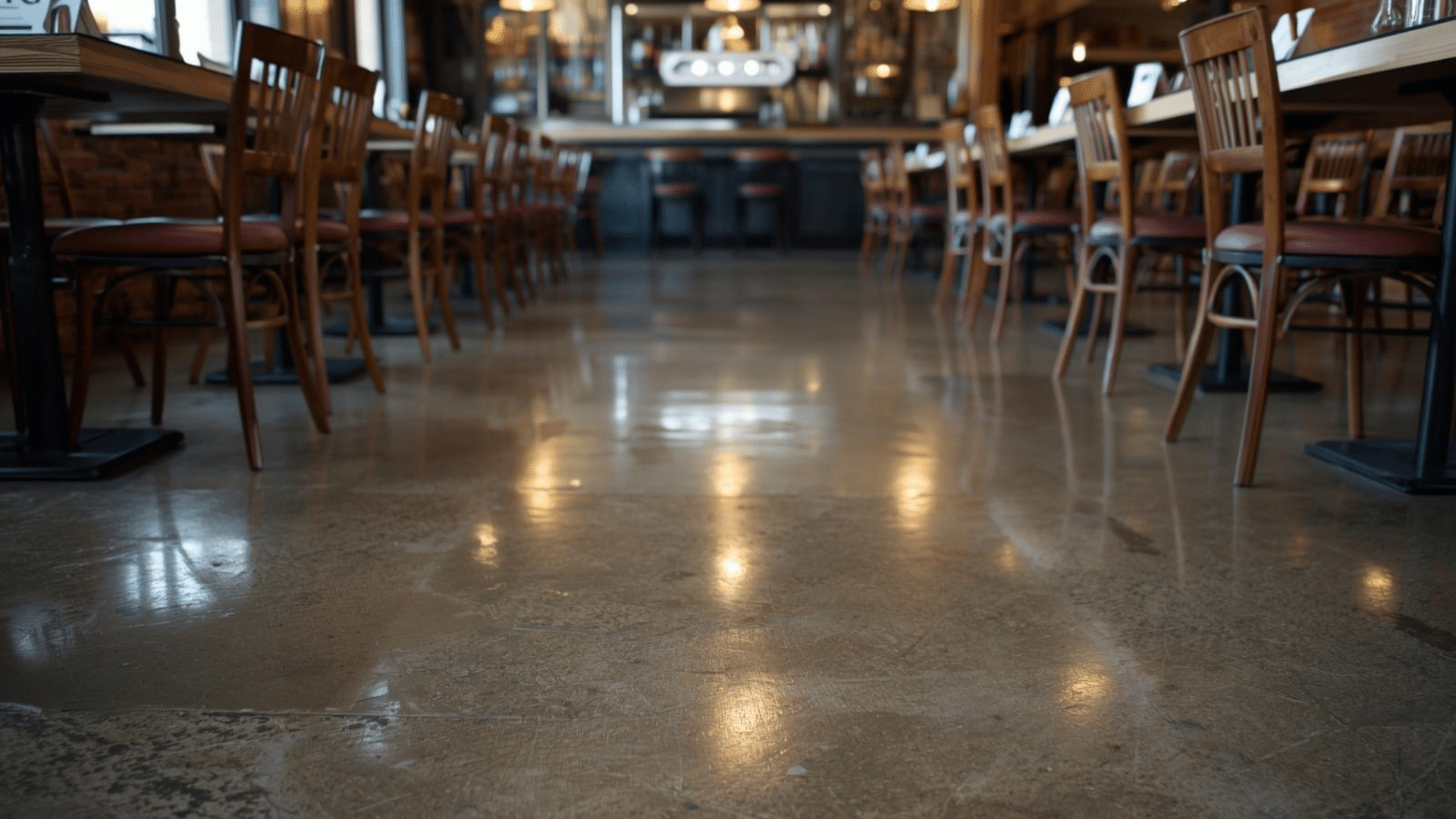
This sealed concrete floor offers a clean, modern look with a smooth sheen that complements cafes and dining spaces. It handles constant chair drag and heavy footfall without warping, and it won’t suffer water damage like wood-based options.
The price depends on the level of refinement, from a simple seal to a high-gloss polish.
- Estimated Lifespan: 20–30+ years
- Ideal For: Restaurants, coffee shops, breweries, retail, corridors, high-traffic interiors
- Cost Range: $3–$12 per sq ft installed (basic seal to polished finish)
7. Rubber Flooring
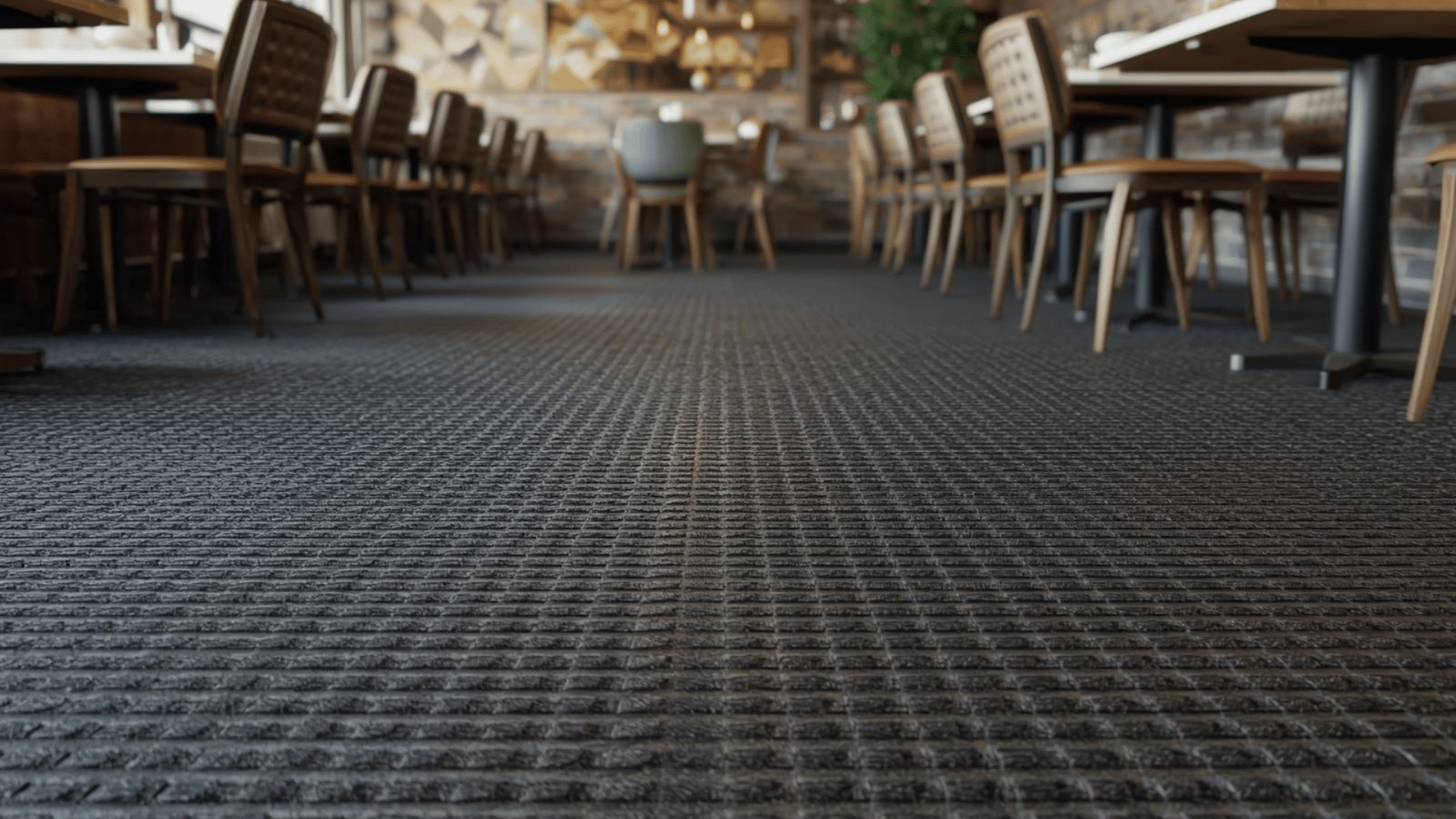
Commercial rubber flooring offers a grippy, cushioned surface that reduces noise and feels easier on staff’s legs during long shifts. The textured finish helps hide dirt and improve slip resistance, making it a smart pick for busy dining areas and service routes.
It holds up well to frequent traffic, though sharp chair legs may need glides. Costs range from mid the high, depending on thickness and style.
- Estimated Lifespan: 15–25 years
- Ideal For: Restaurants, walkways, service areas, staff zones, bars, entry paths
- Cost Range: $2.5–$8.5 per sq ft installed
8. Natural Stone (Marble, Granite, Slate, Travertine)
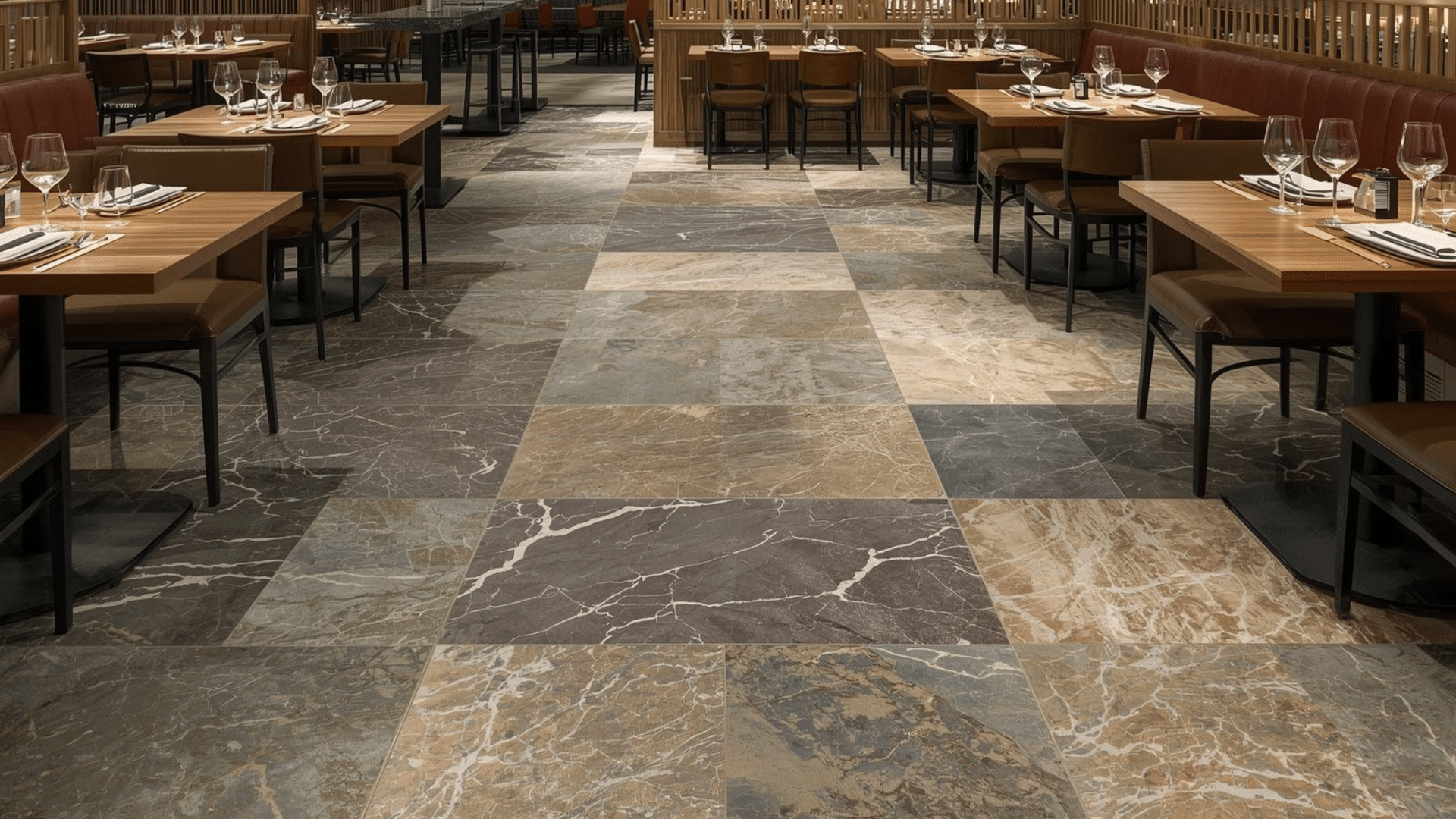
Natural stone tile creates a rich, high-end look with real variation in color and veining, so every floor feels one-of-a-kind.
It is built for heavy daily use, but it needs sealing and the right cleaners to help prevent staining and etching. The material and labor costs are on the higher side, yet many owners choose it for its long-term value and lasting style.
- Estimated Lifespan: 30–75+ years
- Ideal For: Upscale dining rooms, lobbies, feature areas, wide aisles, high-visibility spaces
- Cost Range: $12–$35+ per sq ft installed
9. Commercial Carpet Tiles
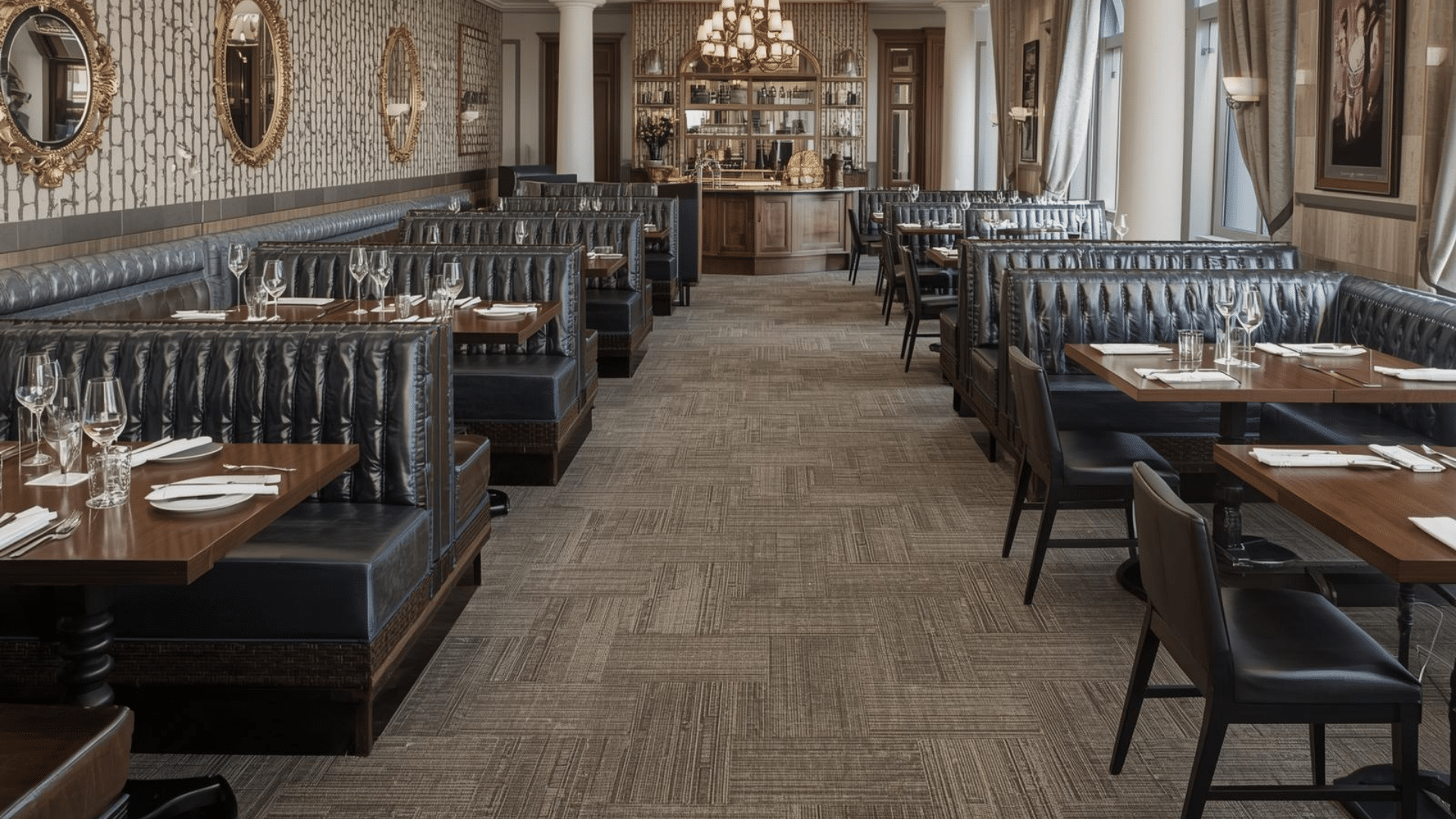
Carpet tiles add a soft, quiet feel that helps a dining room sound calmer, even when it is busy. The modular squares handle daily traffic well, and if one area gets stained, you can swap just those tiles instead of redoing the whole floor.
They cost more than basic vinyl, but comfort and easy spot-replacement can pay off in guest areas.
- Estimated Lifespan: 5–10 years (busy dining spaces)
- Ideal For: Dining rooms, lounges, private rooms, hotels, noise-sensitive seating zones
- Cost Range: $4–$12 per sq ft installed
10. Laminate Flooring
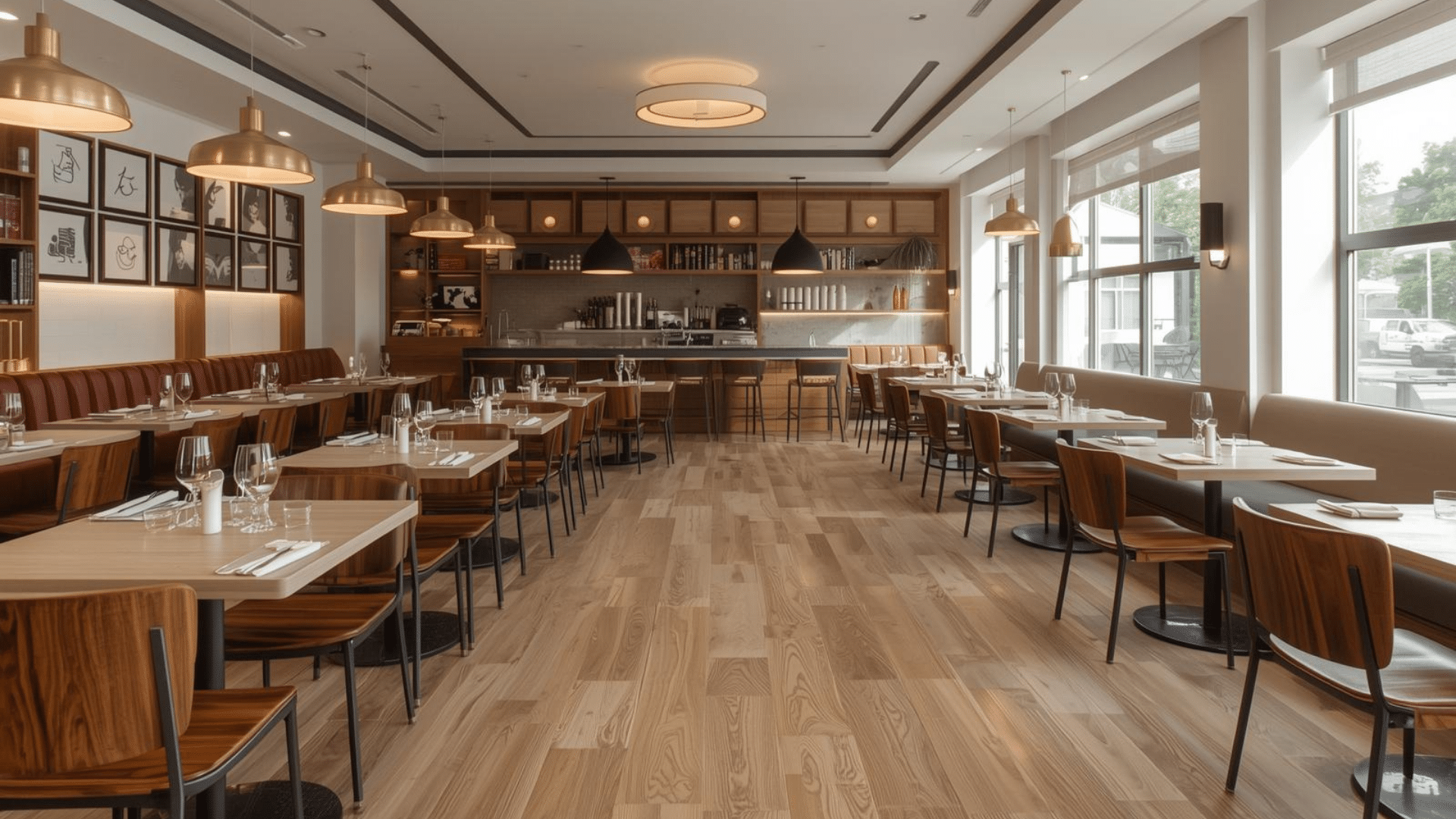
Laminate flooring gives you a bright, wood-style look at a wallet-friendly price, making a dining area feel warm and clean. It handles regular foot traffic and light scuffs well, but it needs quick cleanup of spills because standing moisture can cause swelling at the seams.
For restaurants, it works best in dry seating zones rather than wet service areas.
- Estimated Lifespan: 7–15 years
- Ideal For: Dining areas, cafes, waiting zones, low-spill seating spaces
- Cost Range: $4–$14 per sq ft installed
11. Hardwood and Engineered Wood Flooring
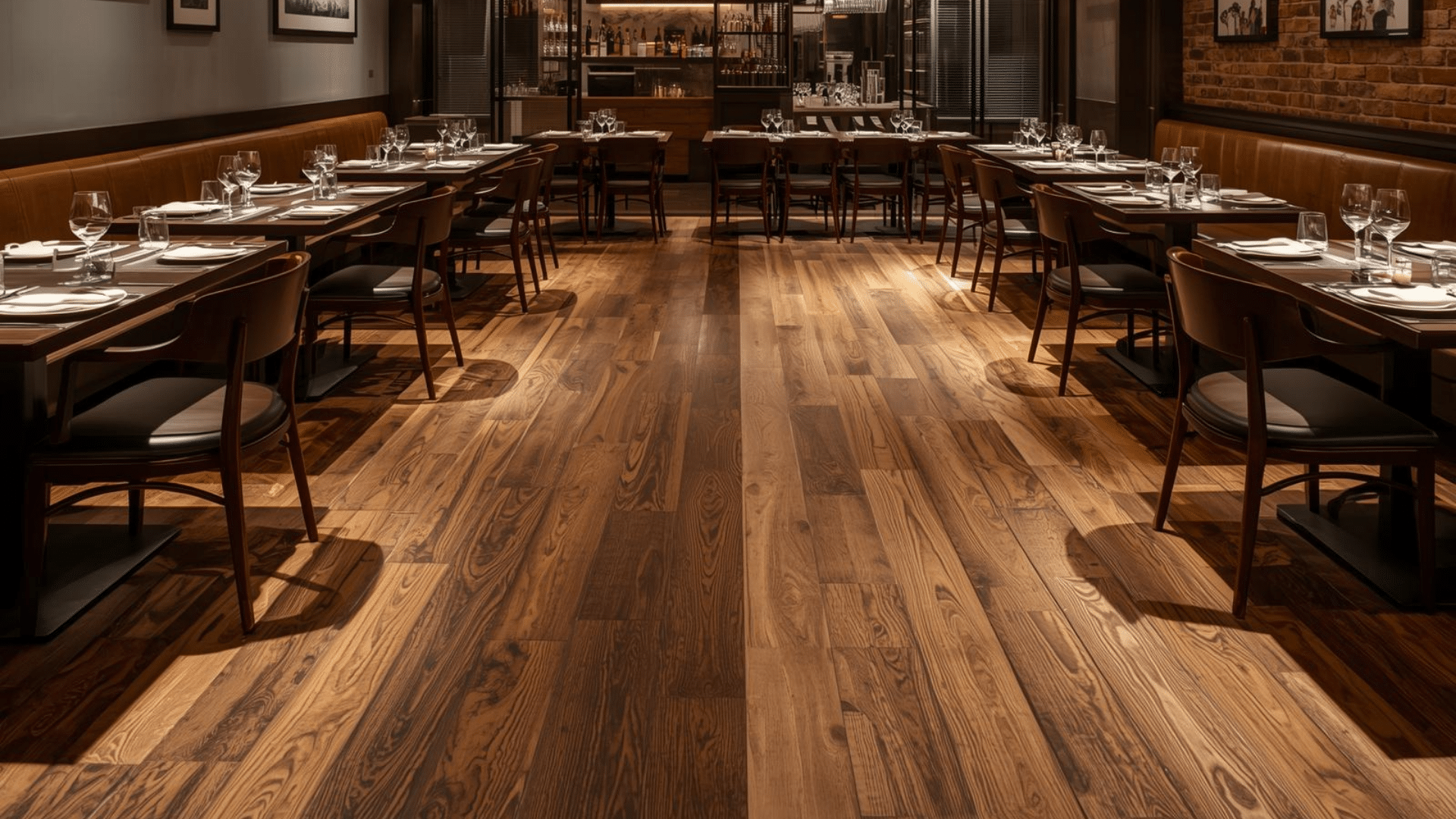
Hardwood or engineered wood flooring adds real warmth and depth, instantly upgrading a dining space. It can last for decades, and many options can be refinished or re-coated when wear shows up.
The trade-off is moisture sensitivity, so it works best where spills are managed fast, and mats are used near entries. It is a higher upfront investment, but the look and longevity are hard to beat.
- Estimated Lifespan: 20–60+ years (engineered varies by wear layer)
- Ideal For: Dining rooms, upscale restaurants, private seating areas, dry commercial zones
- Cost Range: $8–$25+ per sq ft installed
12. Urethane Cement
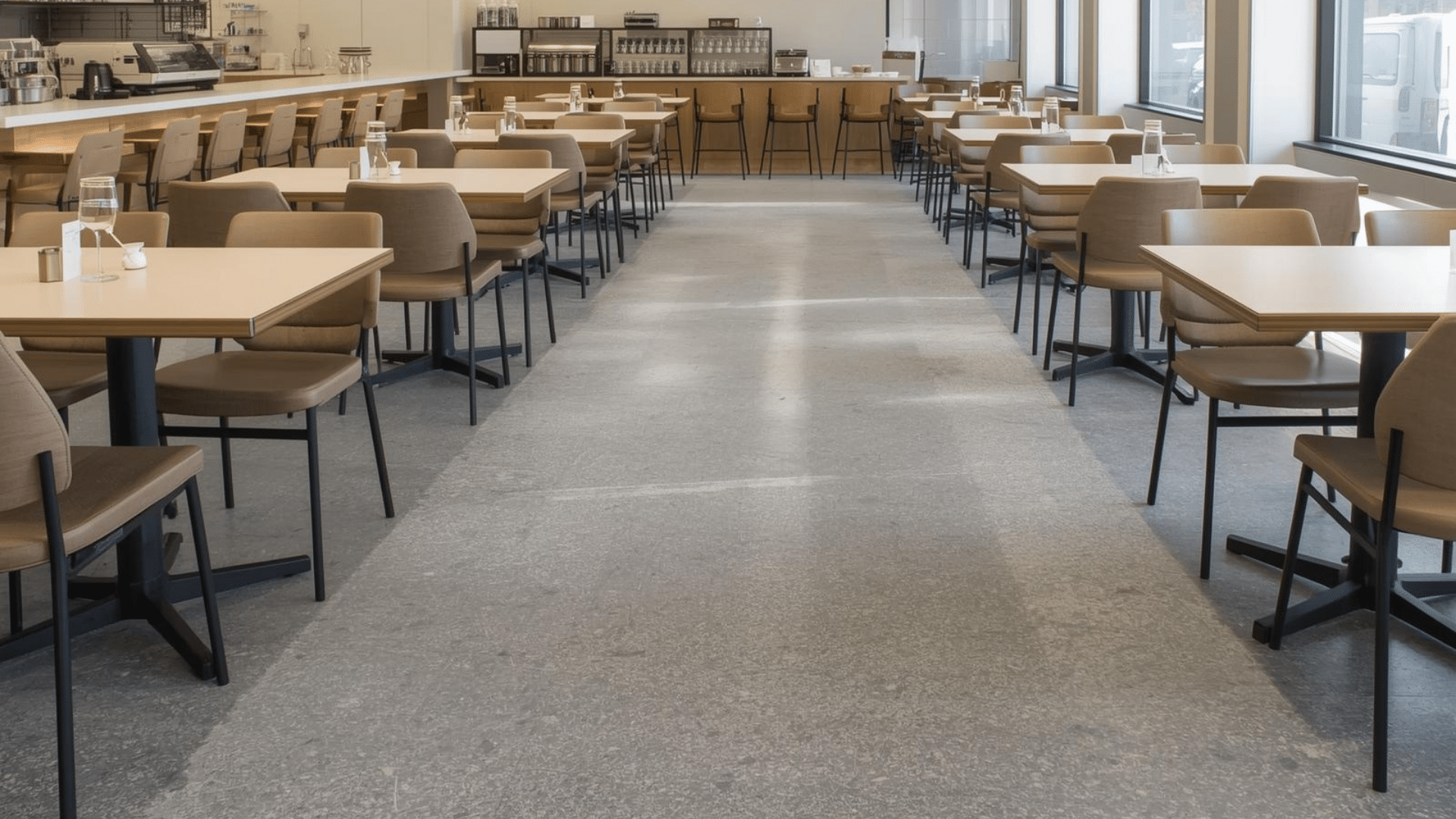
Urethane cement flooring is a heavy-duty option for spaces that require high performance. It handles constant traffic, hot water, grease, and harsh cleaning without breaking down, and the matte finish keeps it looking neat even after long shifts.
It is not the cheapest to install, but it is one of the most reliable choices for commercial food environments where downtime is costly.
- Estimated Lifespan: 15–25+ years
- Ideal For: Commercial kitchens, prep areas, dish rooms, cafeterias, back-of-house zones
- Cost Range: $8–$18 per sq ft installed
13. Bamboo and Cork
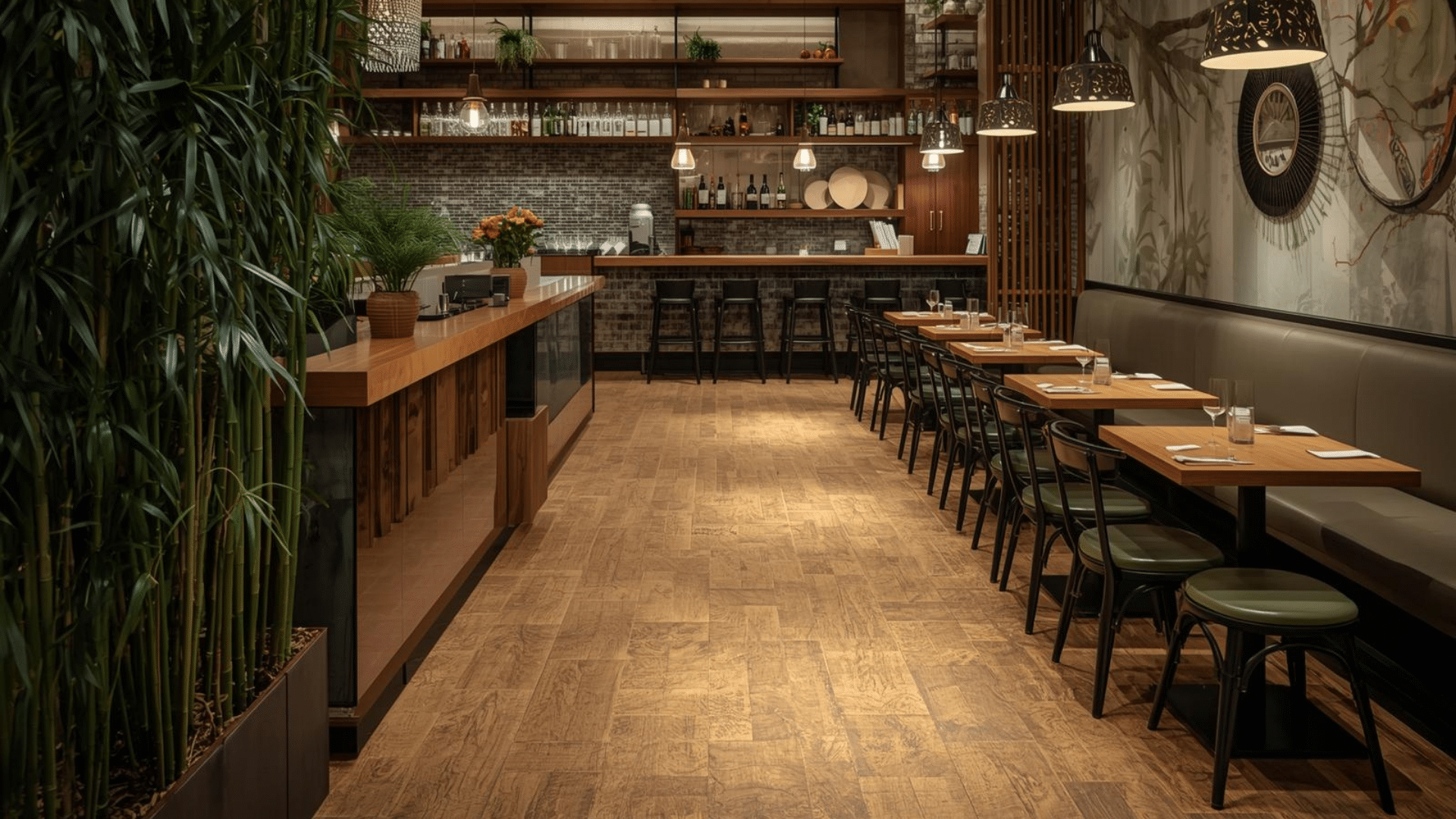
Bamboo flooring gives a fresh, natural look that suits modern dining spaces and pairs well with warm lighting. When you choose strand-woven bamboo, it offers strong scratch resistance for everyday seating areas, though it still needs protection from standing water and high-humidity zones.
Pricing is often comparable to mid-range wood, making it a solid option when you want a real-material feel without the top-tier hardwood cost.
- Estimated Lifespan: 15–25 years (strand-woven can last longer)
- Ideal For: Dining rooms, cafes, lounges, dry commercial interiors, boutique restaurants
- Cost Range: $6–$15 per sq ft installed
Restaurant Flooring by Area: Zone-Specific Recommendations
Different restaurant zones face unique challenges. Match your flooring choice to each area’s specific demands for safety, durability, and performance.
| Restaurant Area | Priority Focus | Top Flooring Options |
|---|---|---|
| Kitchens | Slip resistance, sanitation, heat, and chemical cleaning | Epoxy, Urethane Cement, Quarry Tile, Commercial Sheet Vinyl |
| Dining Rooms | Looks + wear, comfort, noise control | LVT/LVP, Hardwood/Engineered Wood, Porcelain Tile, Sealed/Polished Concrete |
| Entryways And Lobbies | Heavy traffic, outdoor moisture, easy cleanup | Natural Stone, Ceramic/Porcelain Tile, Commercial Carpet Tiles, LVT/LVP |
| Restrooms | Water resistance, sanitation, wet slip safety | Porcelain Tile, Sealed Concrete, Vinyl |
| Bar Areas | Spill resistance, scuffs, fast cleanup | Epoxy, Sealed Concrete, LVT/LVP, Porcelain Tile |
| Outdoor Dining | Weather, drainage, UV, and slip safety |
Concrete, Stone, Outdoor-Rated Tile |
Use this zone guide to select appropriate flooring for each space. Matching materials to specific demands helps prevent failures and extend your floor’s lifespan.
Maintenance And Lifespan Basics
Proper care extends your restaurant’s flooring lifespan and keeps it looking professional. Sweep or vacuum daily to remove dirt and debris. Mop with pH-neutral cleaners for most surfaces.
Vinyl handles damp mopping well. Avoid excess water on tile grout lines. Never use harsh abrasives on epoxy or polished concrete. Seal tile grout every one to two years to prevent staining.
Concrete needs resealing annually to maintain protection.
Place walk-off mats at entrances to trap 80 percent of tracked-in dirt. Add felt pads under chair legs to prevent scratches. Focus extra cleaning on high-traffic zones and spill-prone areas near service stations.
Common Restaurant Flooring Mistakes to Avoid
Even experienced restaurant owners make flooring mistakes that cost them money and headaches. Learning from these common errors saves you time, stress, and the cost of expensive repairs down the road.
- Choosing Style Over Function: Looks alone don’t last. Heat, spills, and heavy traffic wear down trend-focused flooring.
- Ignoring Health and Safety Codes: Local flooring rules vary. Overlooking health, fire, ADA, or slip-and-fall standards can lead to inspection failures.
- Underestimating Maintenance Needs: Maintenance can cost more than installation. Wood refinishing and grout sealing add time and expense.
- Poor Subfloor Preparation: Skipping moisture tests or leveling work can lead to cracks, bubbling, and trip hazards.
- Selecting Residential-Grade Materials: Residential flooring can’t withstand commercial traffic or strong cleaning agents. Use commercial-rated products.
Avoiding these mistakes protects your investment and prevents costly fixes later. Take time to plan carefully and choose the right materials for each part of your restaurant.
Final Thoughts
Restaurant flooring shapes everything from daily operations to customer satisfaction. The floors beneath your feet carry more weight than most people realize.
You now have the knowledge to make wise decisions. You understand which materials handle kitchen heat and which ones create welcoming dining spaces. You know the real costs beyond sticker prices.
Your next step depends on your specific situation. This choice affects your business for the next decade or longer.
Take your time comparing options. Talk to contractors who understand commercial spaces. Visit restaurants with flooring you’re considering and ask owners about their experience.
Ready to start your project? Share your questions in the comments, and let’s talk through your options.