I used to think a beautiful home meant everything had to look brand new, perfectly matched, and photo-ready all the time. But that kind of perfection feels exhausting.
It turns your space into something you maintain instead of something you actually live in. Wabi-Sabi style is the opposite. It’s calm, lived-in, and grounded.
It uses natural materials, softer finishes, and fewer truly important items. When I think about Wabi-Sabi, I think about relief. It’s one of the few home styles that doesn’t demand perfection.
For years, I felt pressured by trends that required everything to match and stay spotless. Wabi-Sabi taught me that a worn wooden table or a chipped ceramic bowl could add character rather than be something to hide.
I’ll tell you what Wabi-Sabi really means and easy ways to bring that calm into your own space without overthinking it.
What Is Wabi-Sabi?
Wabi-Sabi is a Japanese way of seeing beauty in simple, imperfect, and real things. It values natural aging and quiet details that feel human. Think soft wrinkles in linen, a handmade bowl with tiny bumps, or wood that looks better after years of use.
Rooted in Zen Buddhism, it encourages us to appreciate the imperfect, the fleeting, and the incomplete in objects, landscapes, and life itself.
The best part? You don’t have to hide the marks of living. Small chips, worn spots, and wrinkles can feel warm and honest when the rest of the room stays calm.
What Is This Style In Home Design?
In Wabi-Sabi interiors, the space feels calm and unforced. You’ll notice earthy tones, natural textures, handmade pieces, and room to breathe. Nothing screams for attention, but everything feels thoughtful.
This style uses natural materials, organic shapes, and fewer items overall. Instead of aiming for a perfect room, the goal is a space that feels honest and cozy.
It looks lived-in but still cared for, not cluttered or messy. Wabi-Sabi is not about trendy clutter, perfectly matched symmetry, shiny surfaces, or rooms that look untouched.
Core Principles Of Wabi-Sabi Design
Wabi-Sabi design follows a few simple ideas that all point in the same direction. Here’s what makes this style feel different from other home trends.
- Imperfection Feels Human: Welcomes small irregularities like uneven pottery edges, natural wood knots, and subtle cracks that make a room feel warm instead of sterile.
- Natural Materials Over Synthetic Shine: Uses raw wood, stone, clay, linen, cotton, wool, limewash textures, and matte metals instead of polished or synthetic finishes.
- Less Stuff, More Breathing Space: Keeps spaces edited with intentional empty areas where a few meaningful objects look stronger than lots of random decor.
- Soft Color, Soft Contrast: Sticks to warm neutrals and muted earth tones like sand, clay, mushroom, warm gray, soft brown, and faded greens instead of bright whites and sharp blacks.
- Time Adds Character: Treat patina, wear marks, and aging as signs of authenticity, not damage, so a used table or an uneven ceramic glaze adds warmth to the space.
Wabi-Sabi Living Room Decor Ideas
Your living room should feel like a place you actually want to hang out in, not a showroom nobody touches. Keep things simple, natural, and a little imperfect.
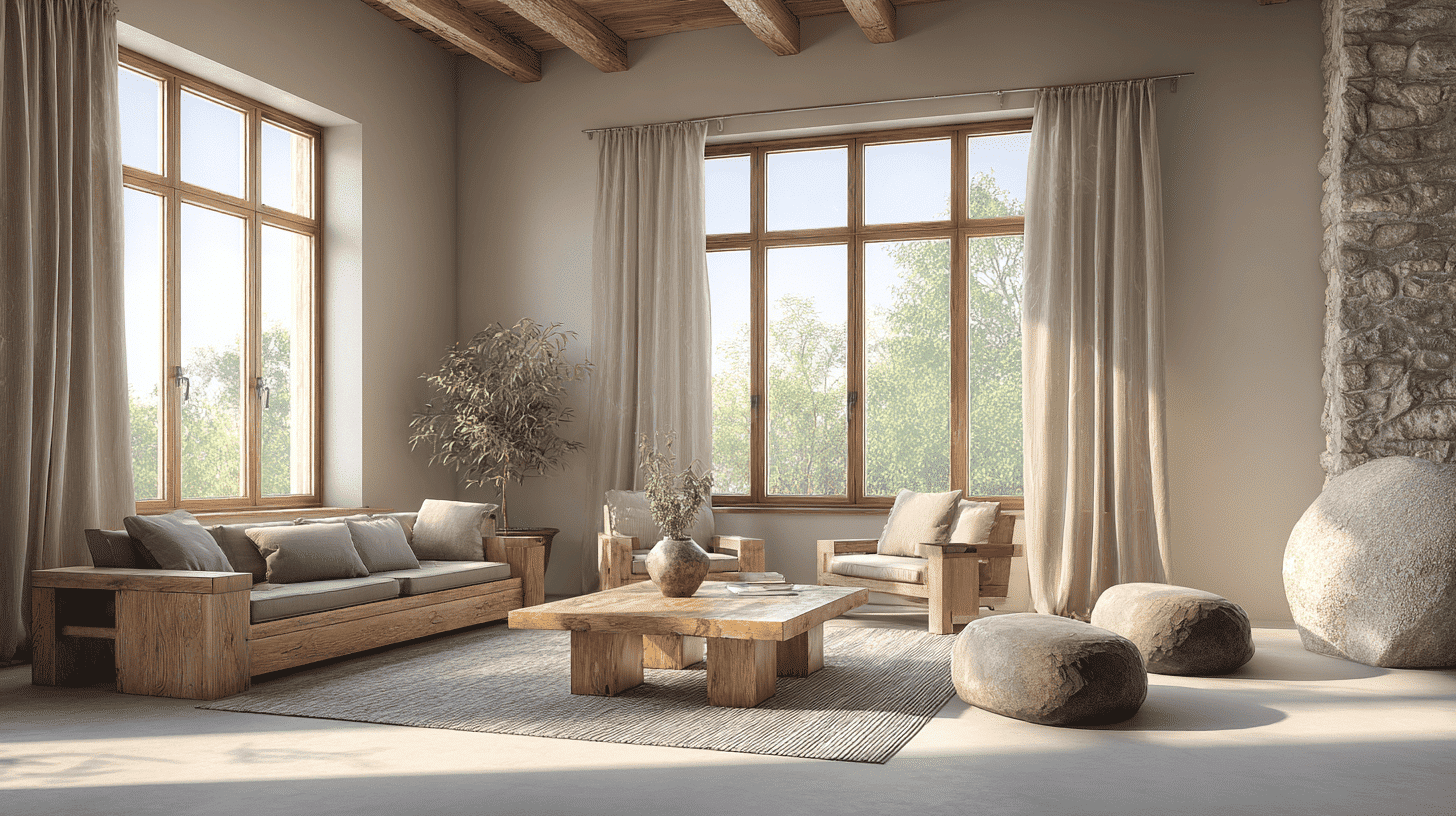
1. Low Wooden Sofa Or Coffee Table
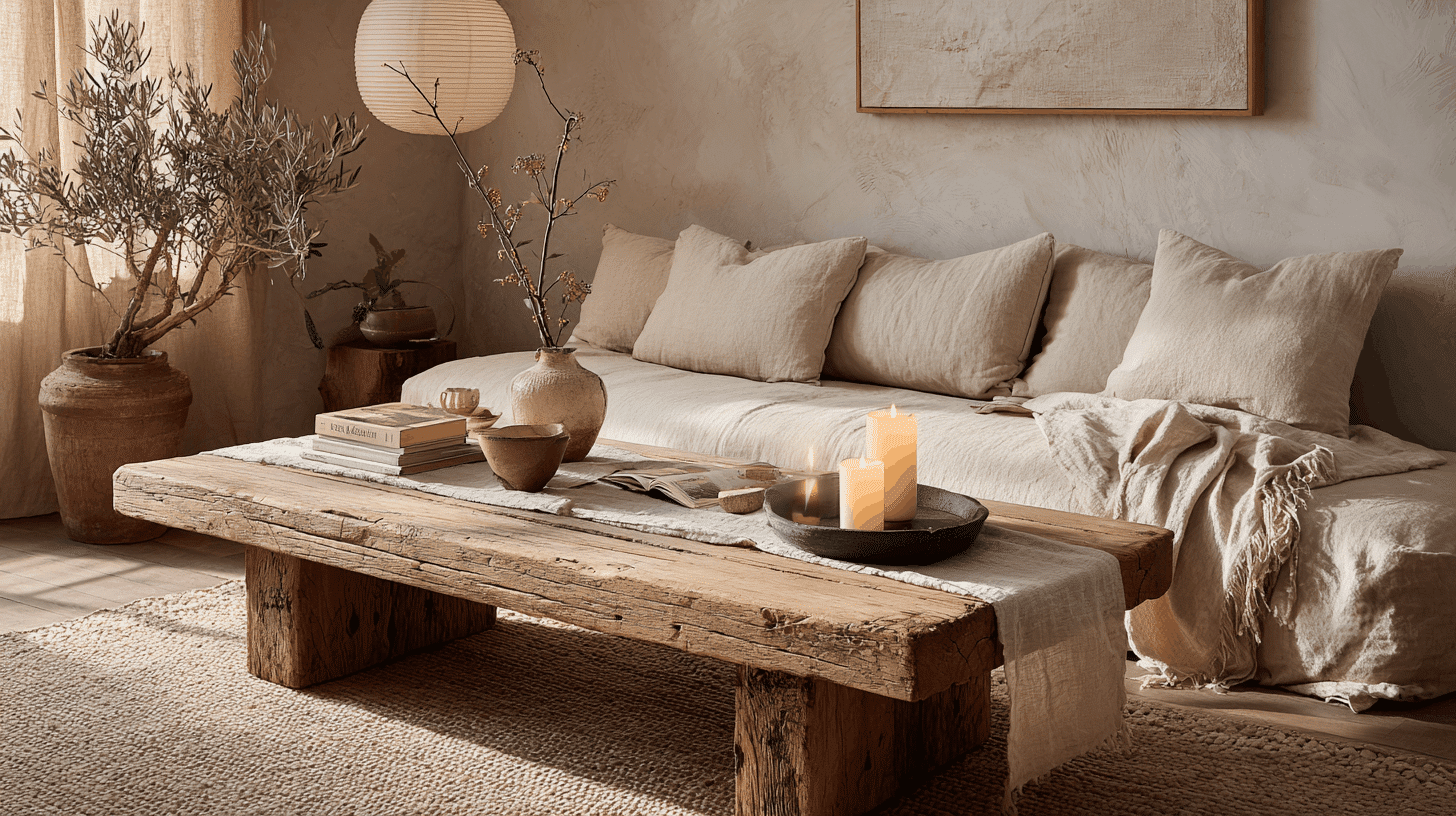
A low wooden coffee table or sofa creates a grounded, relaxed feel. Look for simple shapes with visible grain that feel solid and natural, not overly polished.
If your current table is too shiny, add a matte wax finish or place a natural runner on top to soften it and make it feel warmer.
2. Handmade Ceramic Vase Styling
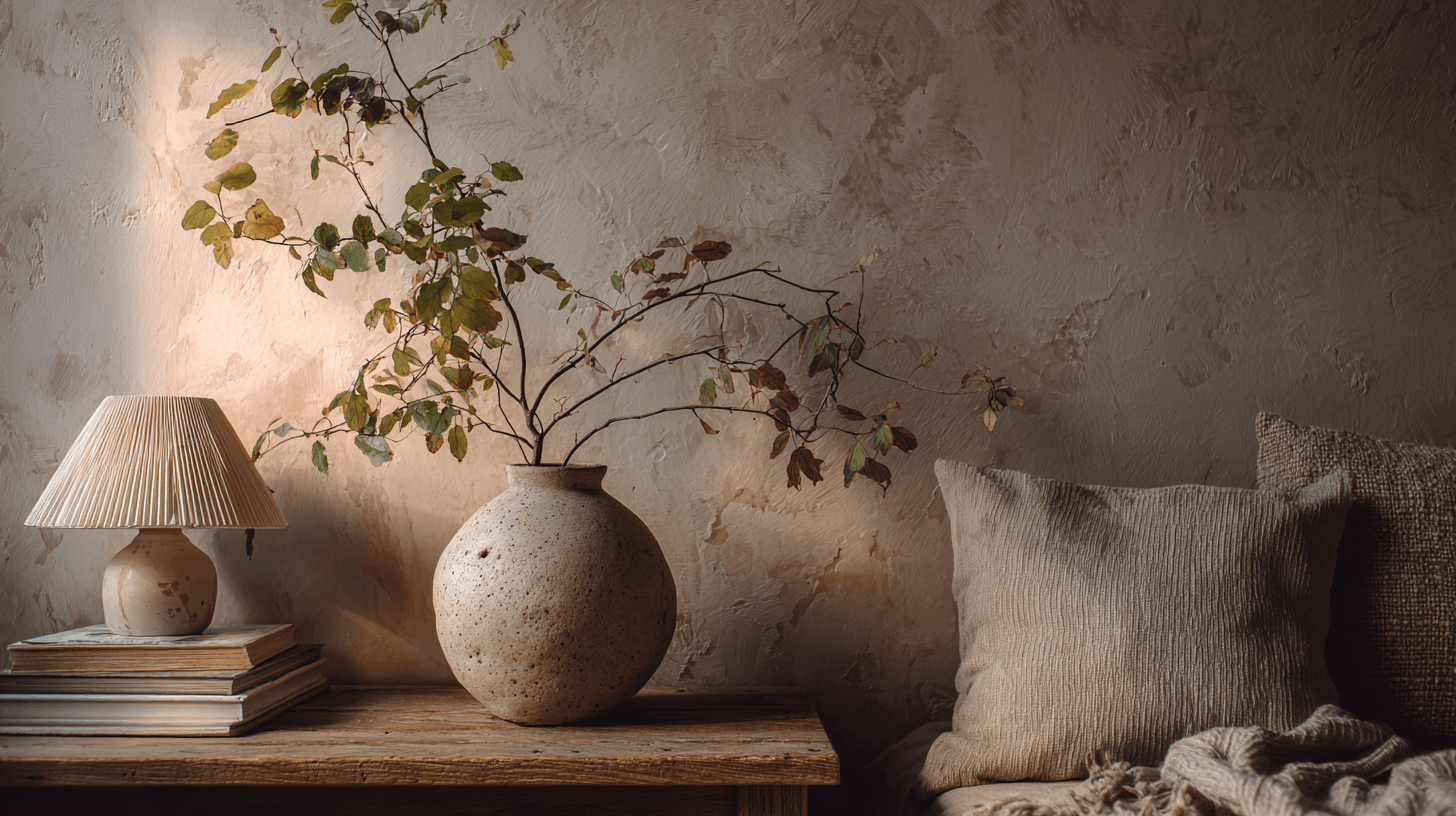
Keep it simple with one handmade ceramic vase filled with a single branch, dried stems, or one leafy cutting. Skip big, perfect bouquets that look too arranged.
Wabi-Sabi styling should look effortless, like you picked something up on a walk and casually placed it in your favorite vase without overthinking it.
3. Warm Neutral Color Palette
Build a soft palette using beige, sand, clay, warm gray, soft brown, and muted olive. Use variation rather than exact matching, since the goal is harmony, not a perfectly coordinated set.
These colors work together naturally, so you don’t have to worry about everything looking identical or following strict design rules.
4. Linen Cushions And Cotton Throws
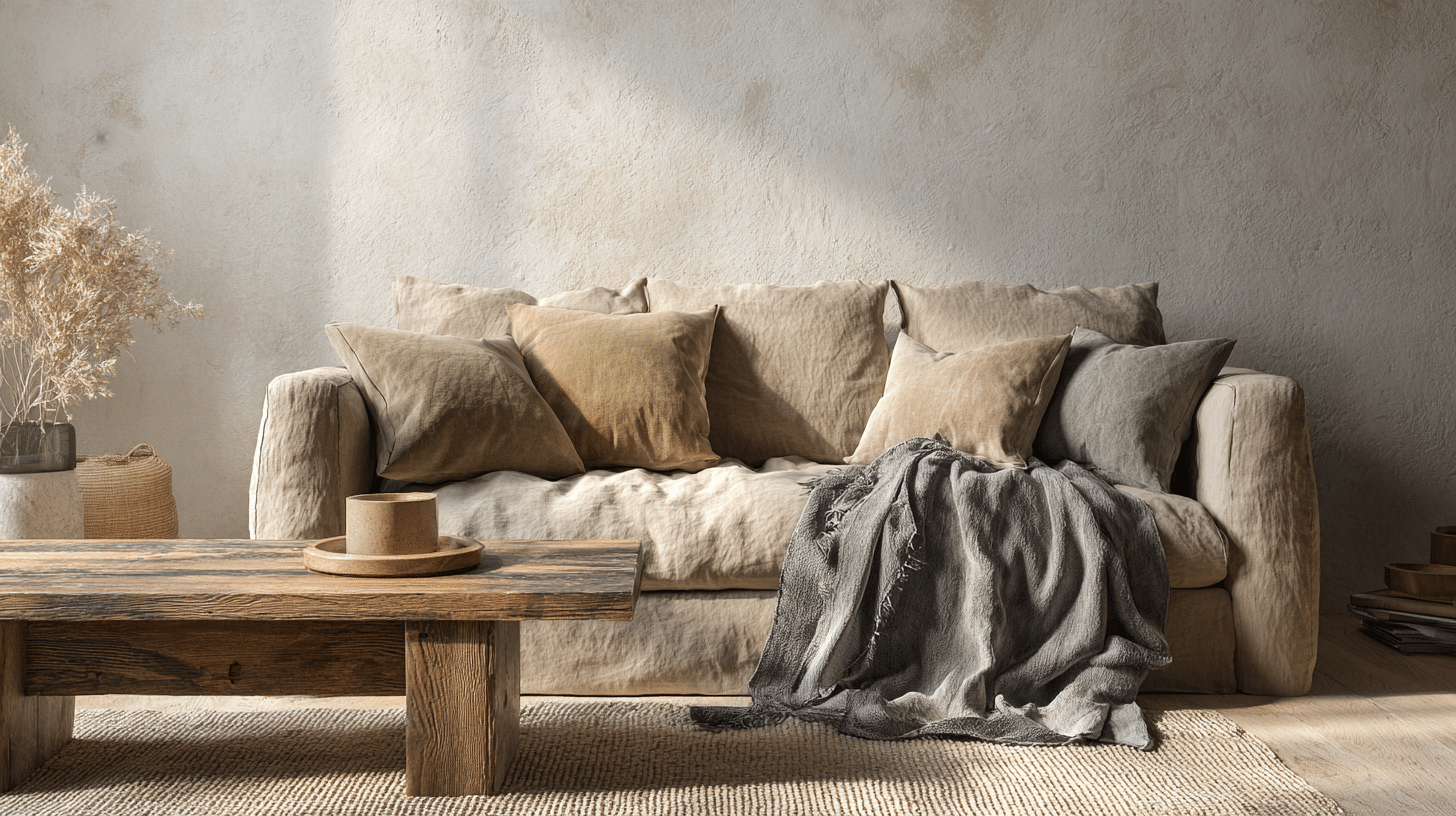
Choose natural fabrics like linen cushion covers, cotton throws, and wool or chunky knit layers that look good even when they crease. Mix two to three textures together for visual interest.
Wrinkles are part of the vibe here, not a flaw you need to fix. Let them fall naturally and stop worrying about keeping everything perfectly smooth.
5. Soft Lamp And Candle Lighting
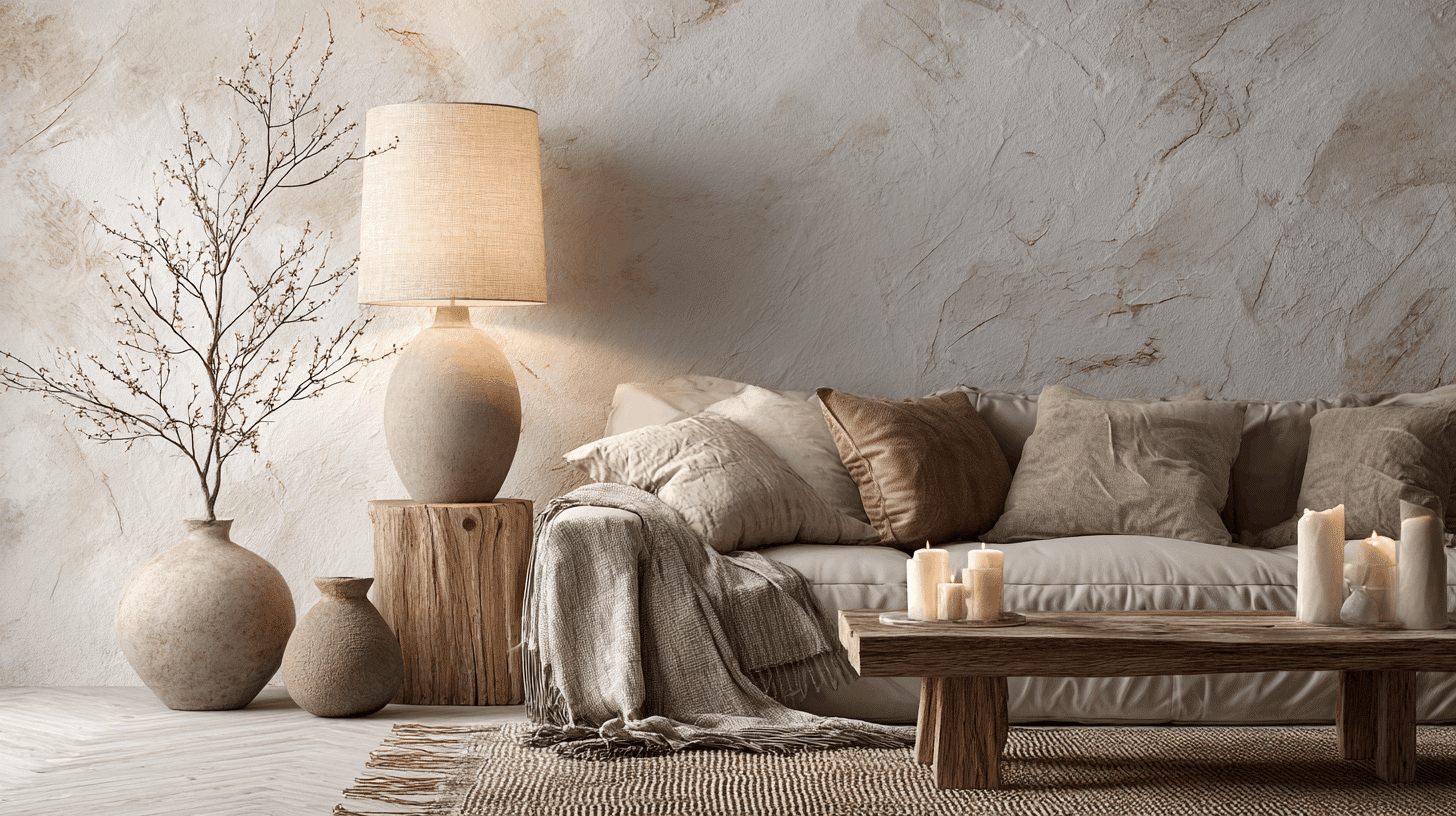
Swap bright overhead lighting for warm, layered lighting with one floor lamp near the seating, one small table lamp in a corner, and candles on a tray or stone coaster.
This creates a calm mood without doing any renovation or spending a lot of money. The softer lighting instantly makes your living room feel cozier.
A Wabi-Sabi living room is all about creating a calm, welcoming space that feels natural and lived-in rather than perfect. By choosing simple materials, soft colors, and meaningful pieces, you can design a room that feels peaceful, warm, and effortlessly beautiful.
Wabi-Sabi Bedroom Ideas
Your bedroom should be a place where you can truly relax, not a magazine spread you’re afraid to mess up. Let it feel lived in and real.
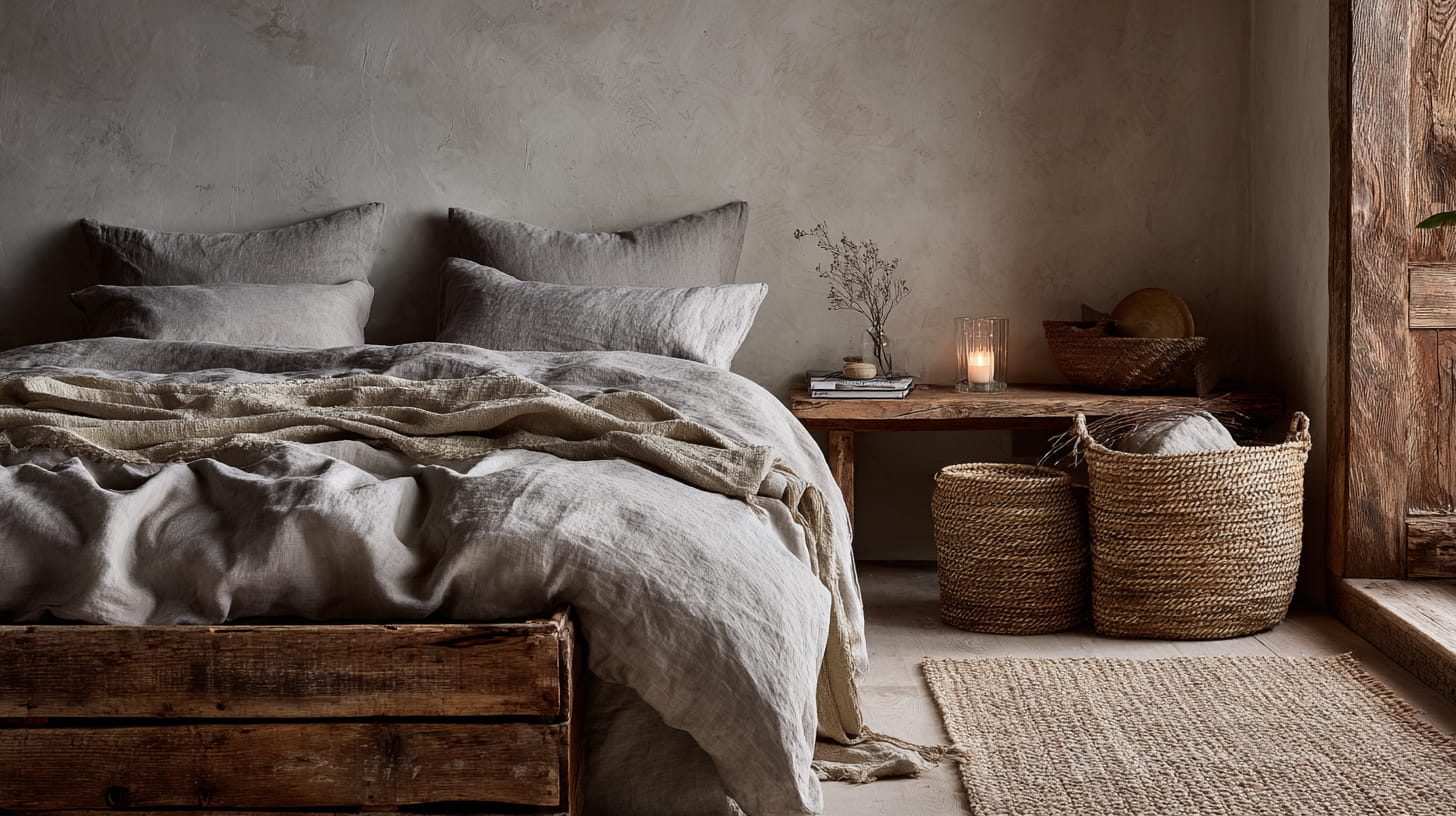
6. Unmade-Look Linen Bedding
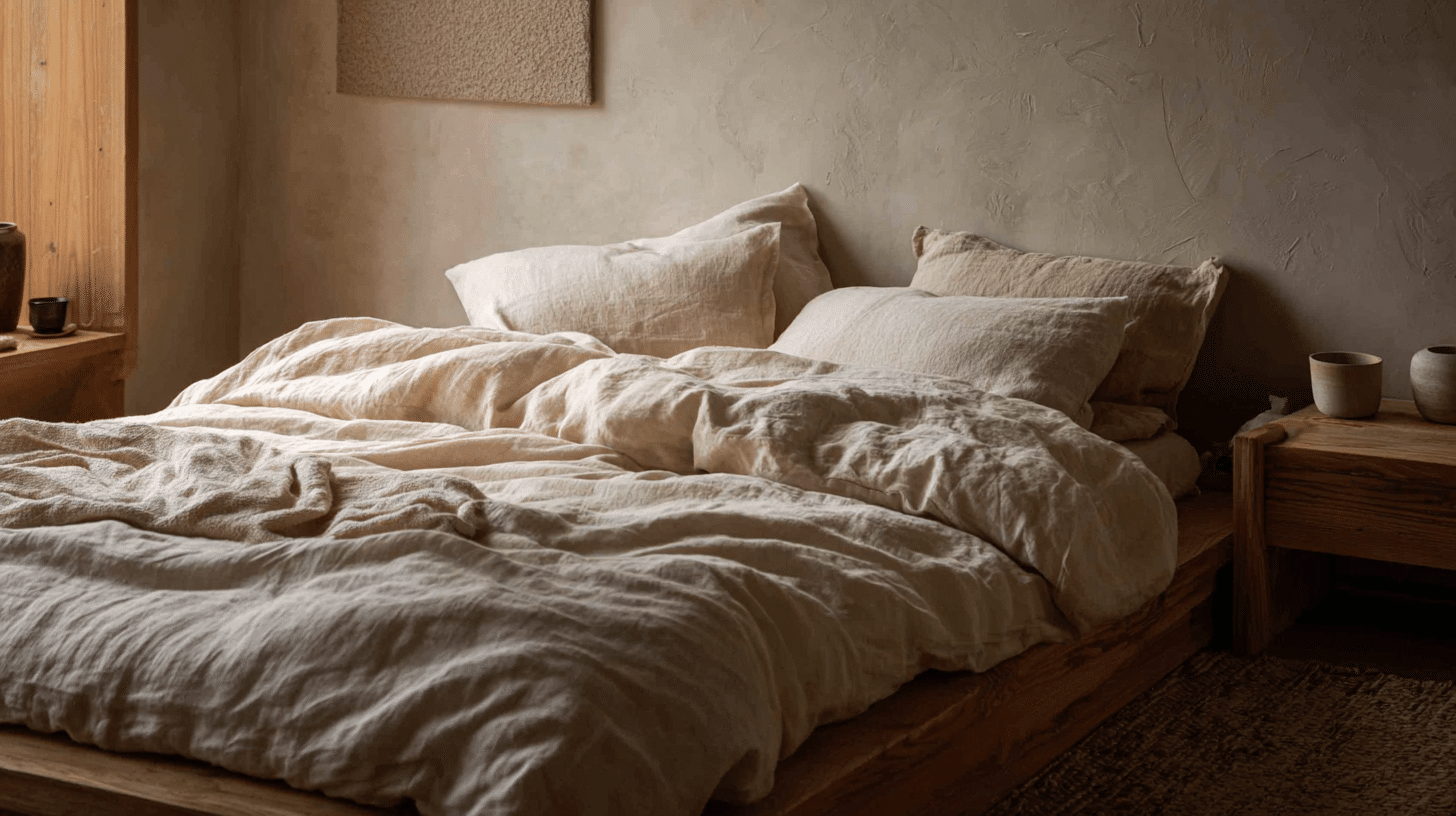
Skip crisp hotel-style sheets and let linen sheets fall naturally, with soft folds and wrinkles. Choose a calm shade like oat, warm white, or light clay.
The slightly undone look makes the room feel restful and real instead of stiff and uncomfortable. Natural linen gets softer with each wash anyway.
7. Single Statement Bedside Piece
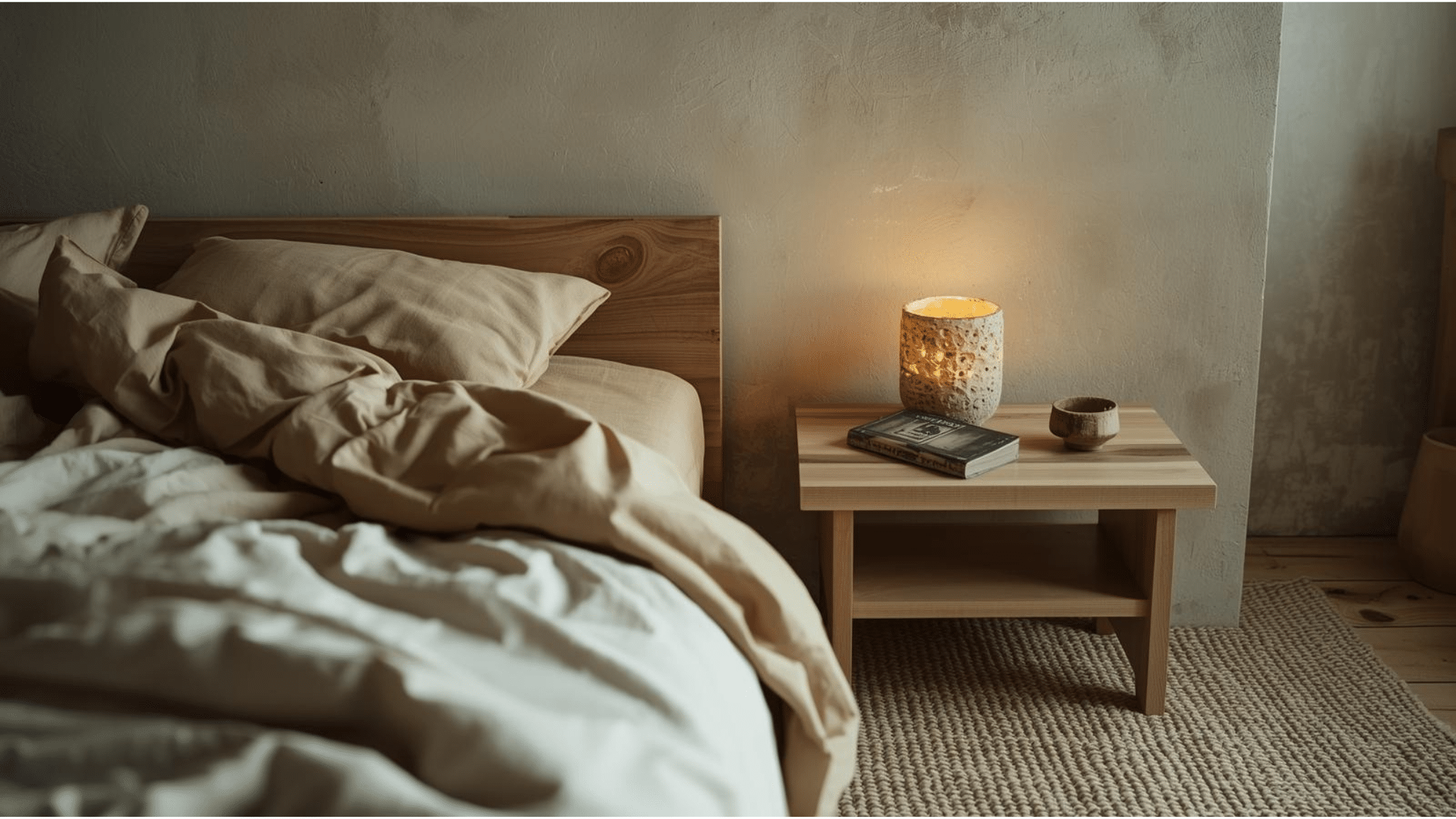
Use a single object to avoid visual noise, such as a stone-textured lamp, an old book, a ceramic cup for rings, or a small wooden bowl.
Keep the rest of the surface clear so your mind relaxes the moment you enter. When you only have one item there, your eyes can rest.
8. Soft Plaster-Finish Walls
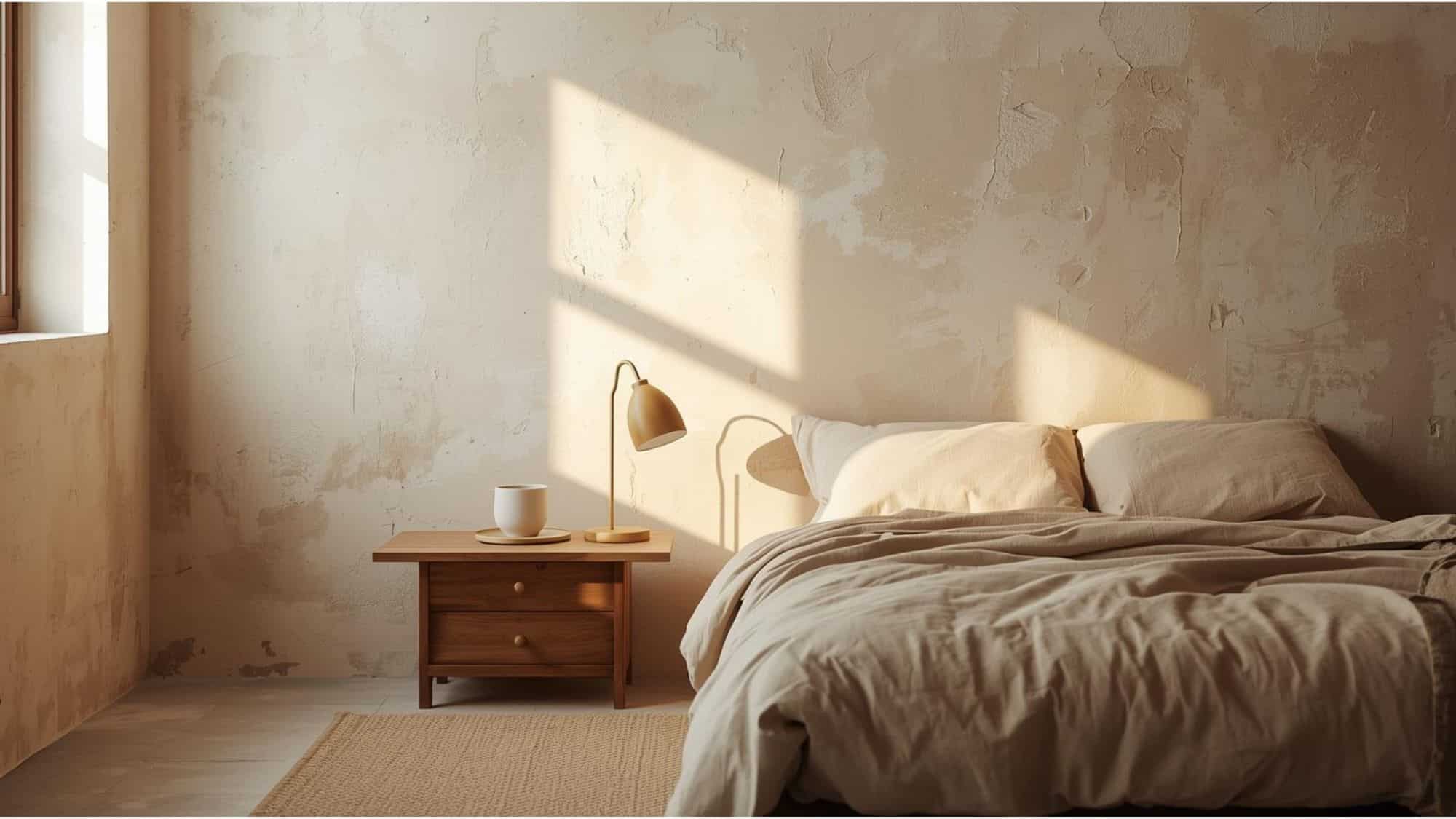
Textured paint or limewash-style finishes add depth without being loud or overwhelming. Even one accent wall behind the bed can change the whole feel of the room.
The goal is gentle variation that catches light differently throughout the day, not a bold statement that demands attention from anyone who walks in.
9. Grounded Floor Presence
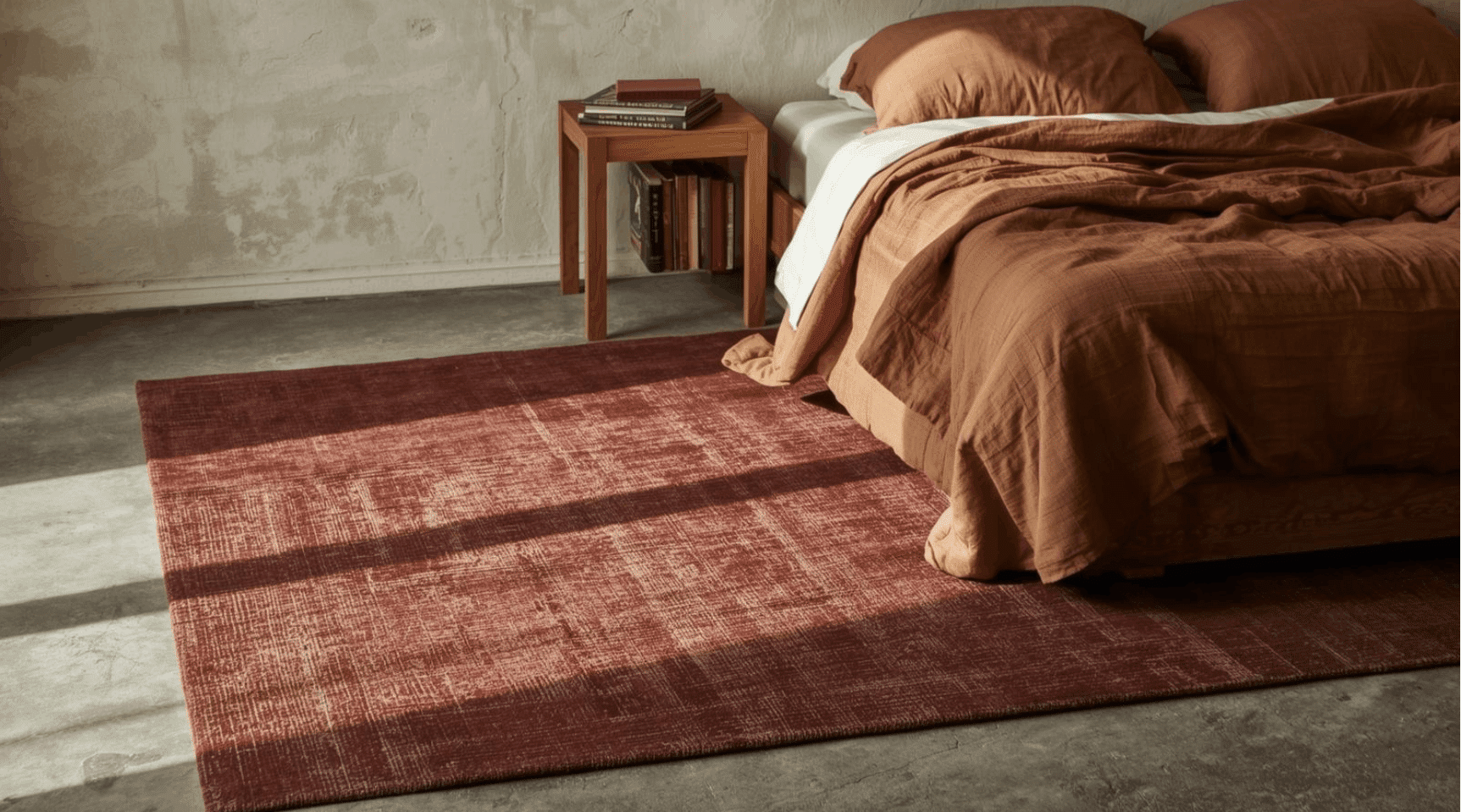
Add something low and natural underfoot, like a flat wool rug, a woven mat, or a tatami-style rug. This visually anchors the room, making it feel calmer and more settled.
It also feels really nice underfoot when you wake up in the morning or walk around barefoot at night.
10. Hidden Storage, Open Calm
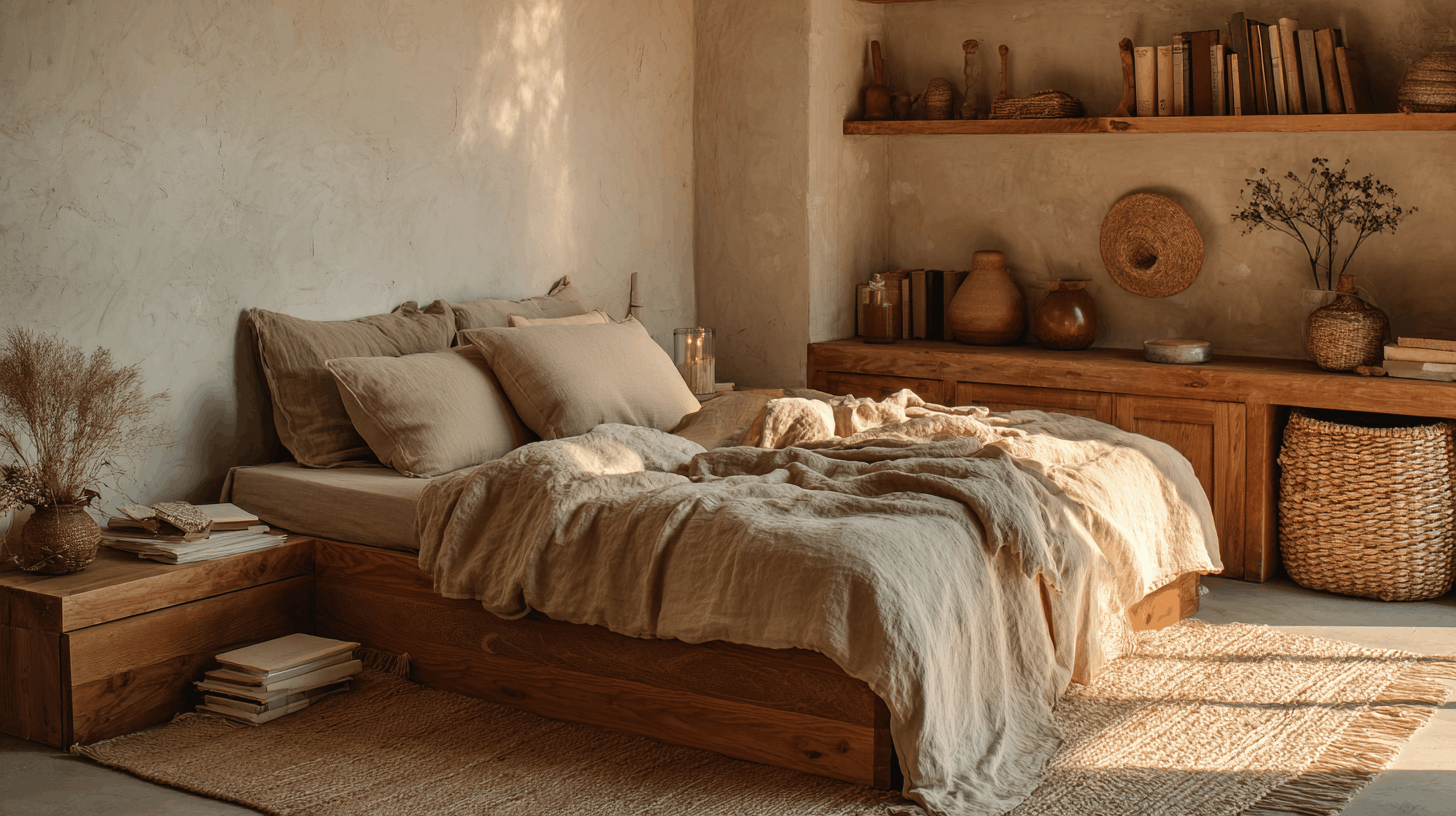
Wabi-Sabi bedrooms feel peaceful because surfaces stay mostly empty and uncluttered. Use baskets, under-bed storage, or simple drawers to hide daily clutter out of sight.
Keep only what supports sleep on display, like soft lighting, one book you’re reading, or one glass of water for the night.
Wabi-Sabi bedroom ideas focus on creating a restful space that feels soft, simple, and deeply personal. By allowing natural textures, muted colors, and an unpolished look, the bedroom becomes a calming retreat that encourages slow living and relaxation.
Wabi-Sabi Kitchen Design Tips
Your kitchen should look like you actually cook in it, not like it’s waiting for a photo shoot. Let it show signs of real life and real meals.
11. Open Shelf With Daily-Use Items
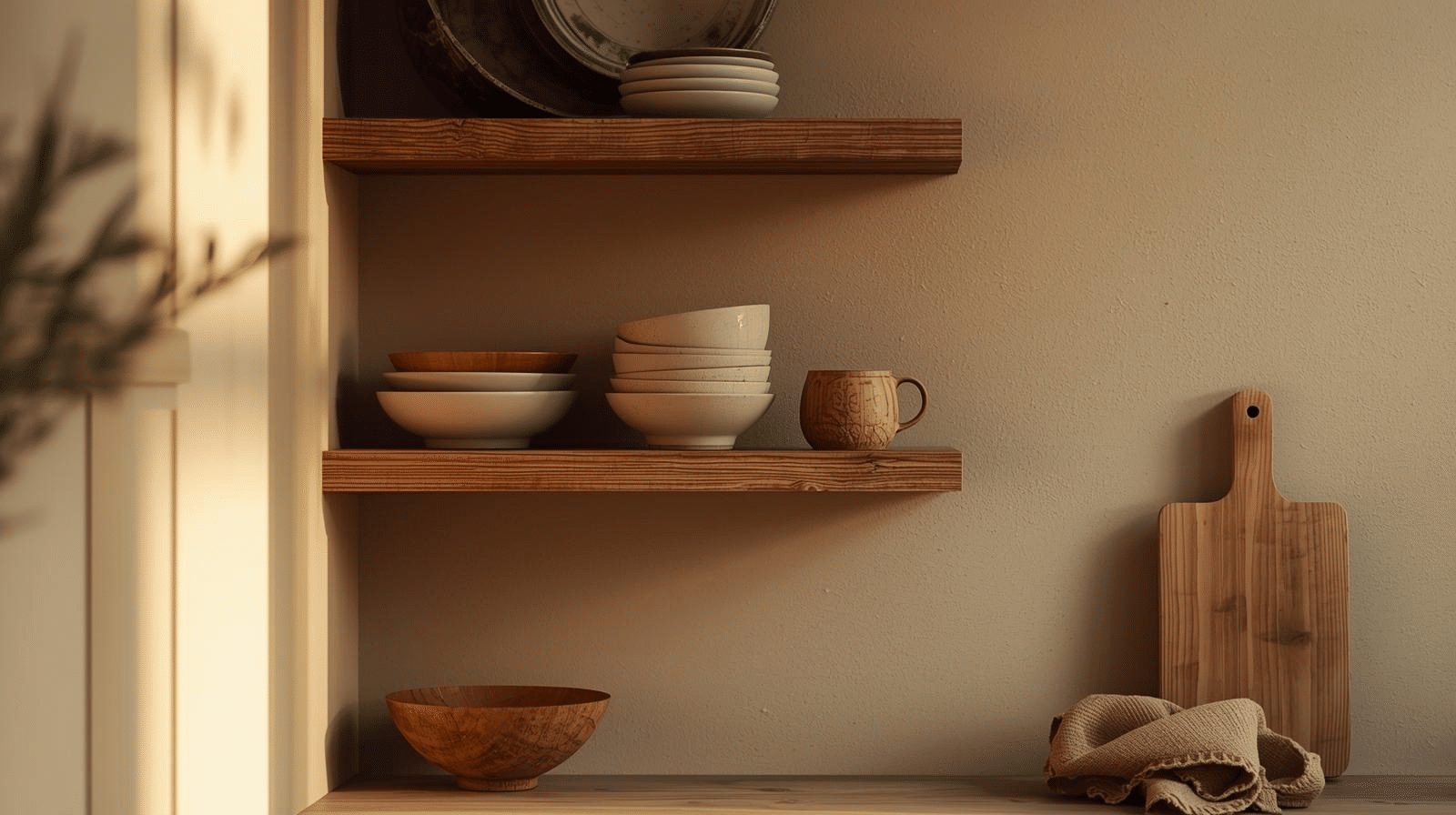
Open shelving works best when it’s practical and shows plates and bowls you actually use every day. Keep the shelf edited, not overloaded with random items.
A small stack of ceramics and a wooden bowl looks better than a shelf packed full of decorative pieces that serve no real purpose.
12. Mixed Material Surfaces
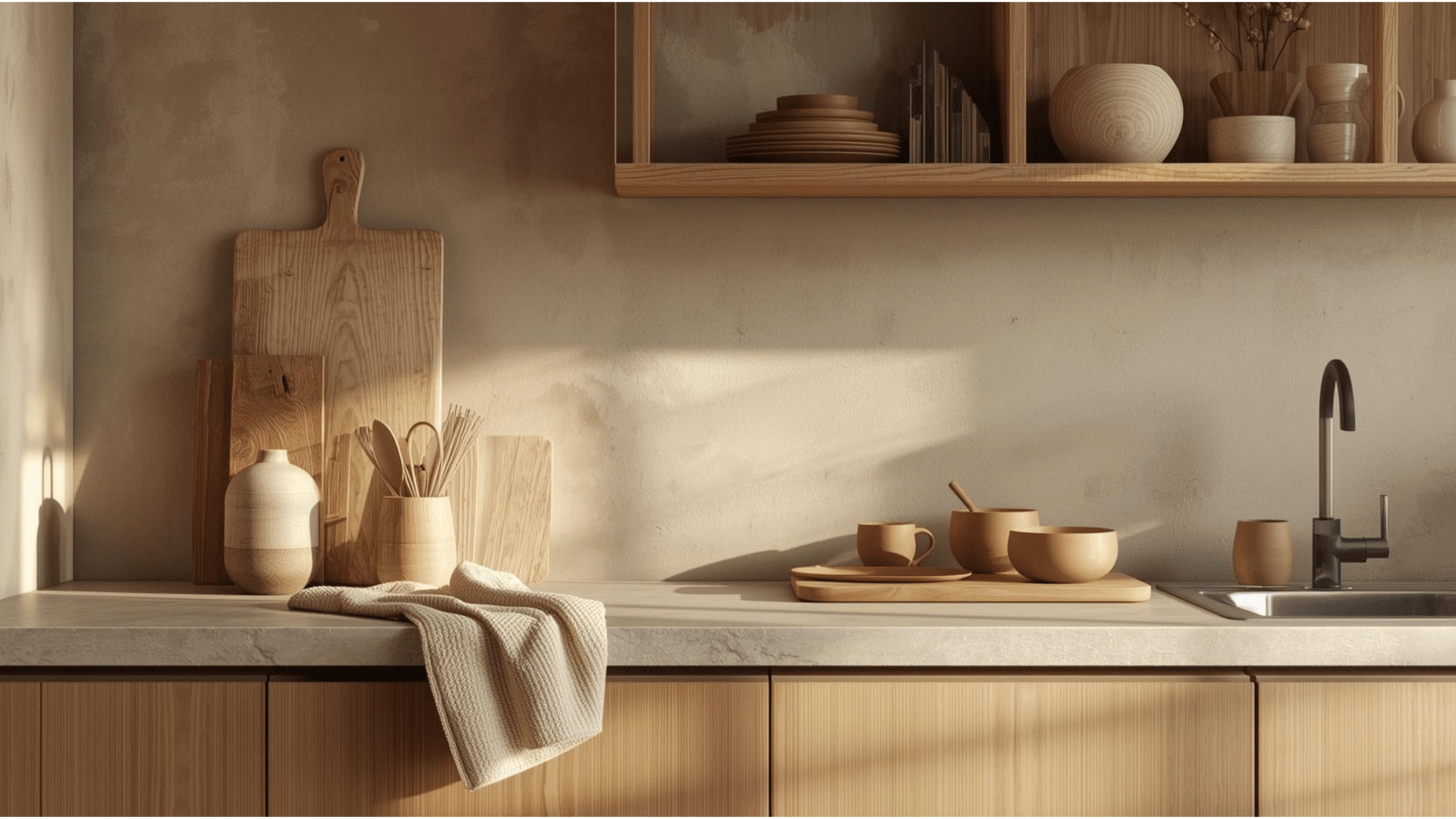
Wabi-Sabi kitchens feel warm because materials don’t match perfectly. Mix wood cutting boards with stone countertops or stone accessories and matte ceramics throughout the space.
Even small touches, like adding a wooden tray and a clay utensil pot, help create a layered, natural look without everything coming from the same set.
13. Visible Signs Of Use
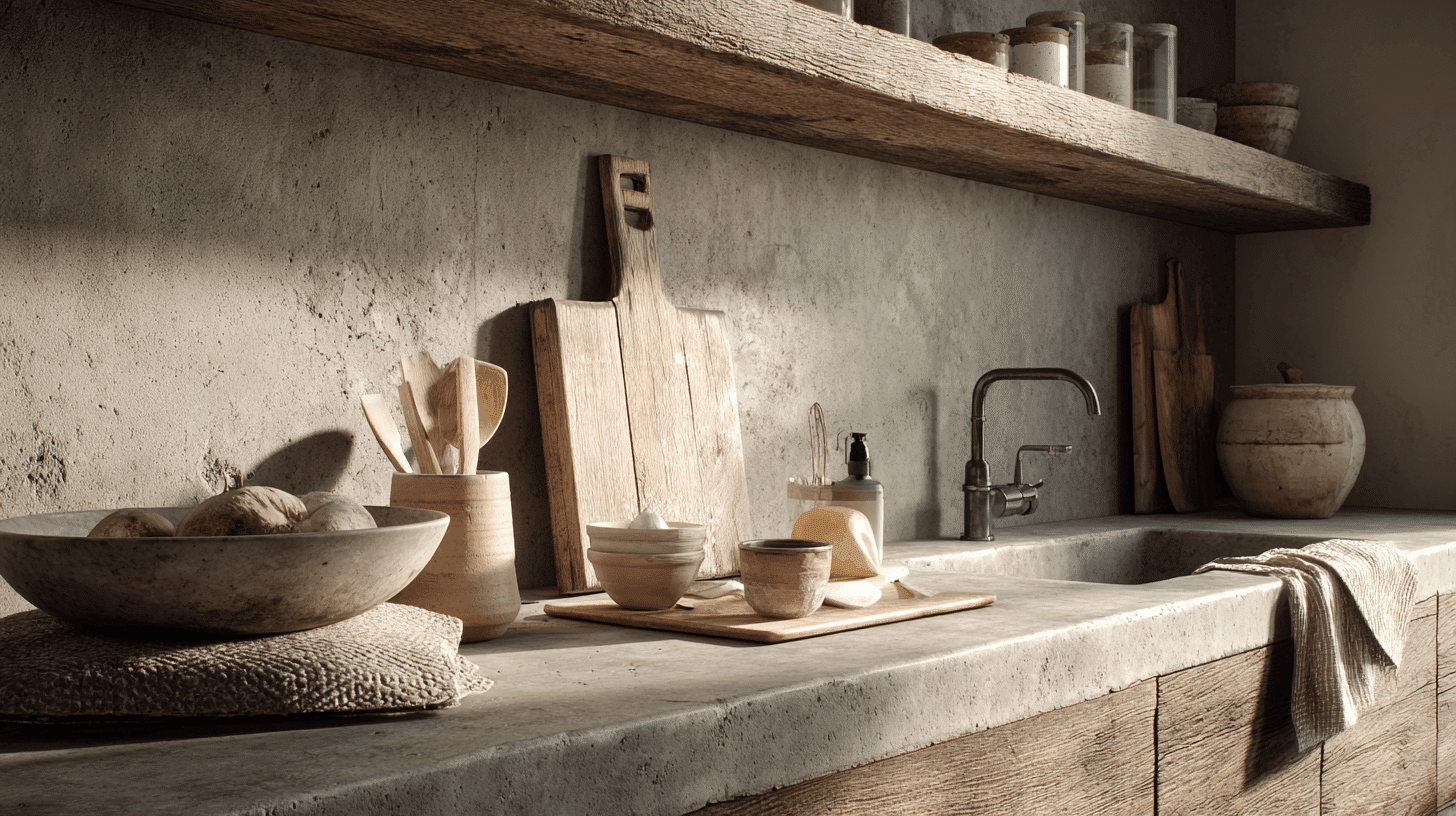
Don’t hide wear and tear in your kitchen. Knife marks on a cutting board, patina on a pan, or a worn wooden spoon add authenticity and tell the story of meals you’ve made.
The kitchen should feel like it’s actively used for real cooking, not staged for a magazine shoot that nobody actually lives in.
14. Hand-Touched Storage
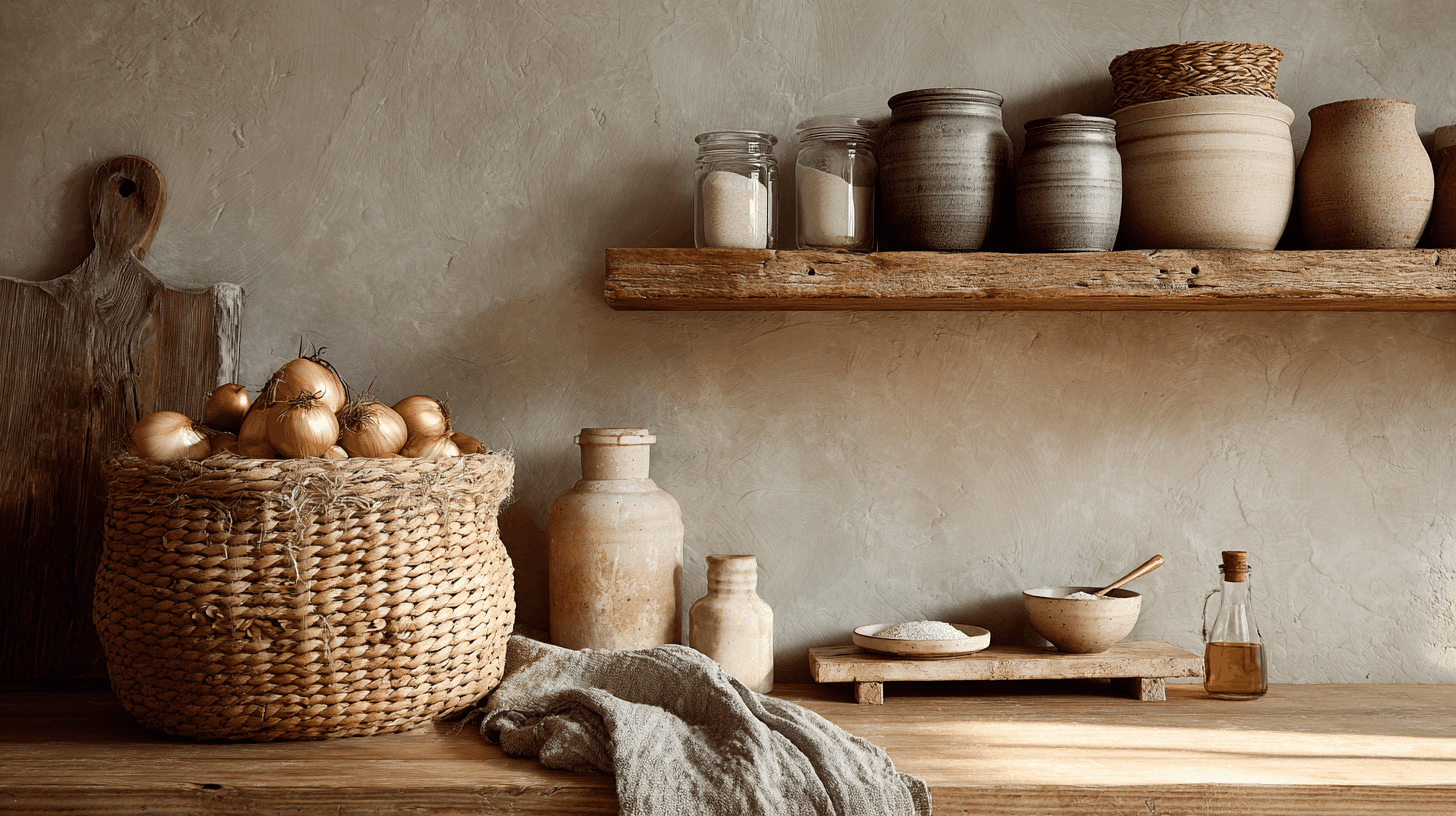
Add storage that looks natural and handmade, like woven baskets for produce, ceramic jars for staples, and wooden trays for oils and salt. This keeps everyday items organized and within reach while still maintaining a calm look.
Natural storage pieces feel warmer and more personal than plastic containers hidden behind cabinet doors all the time.
15. Soft Shadow Lighting
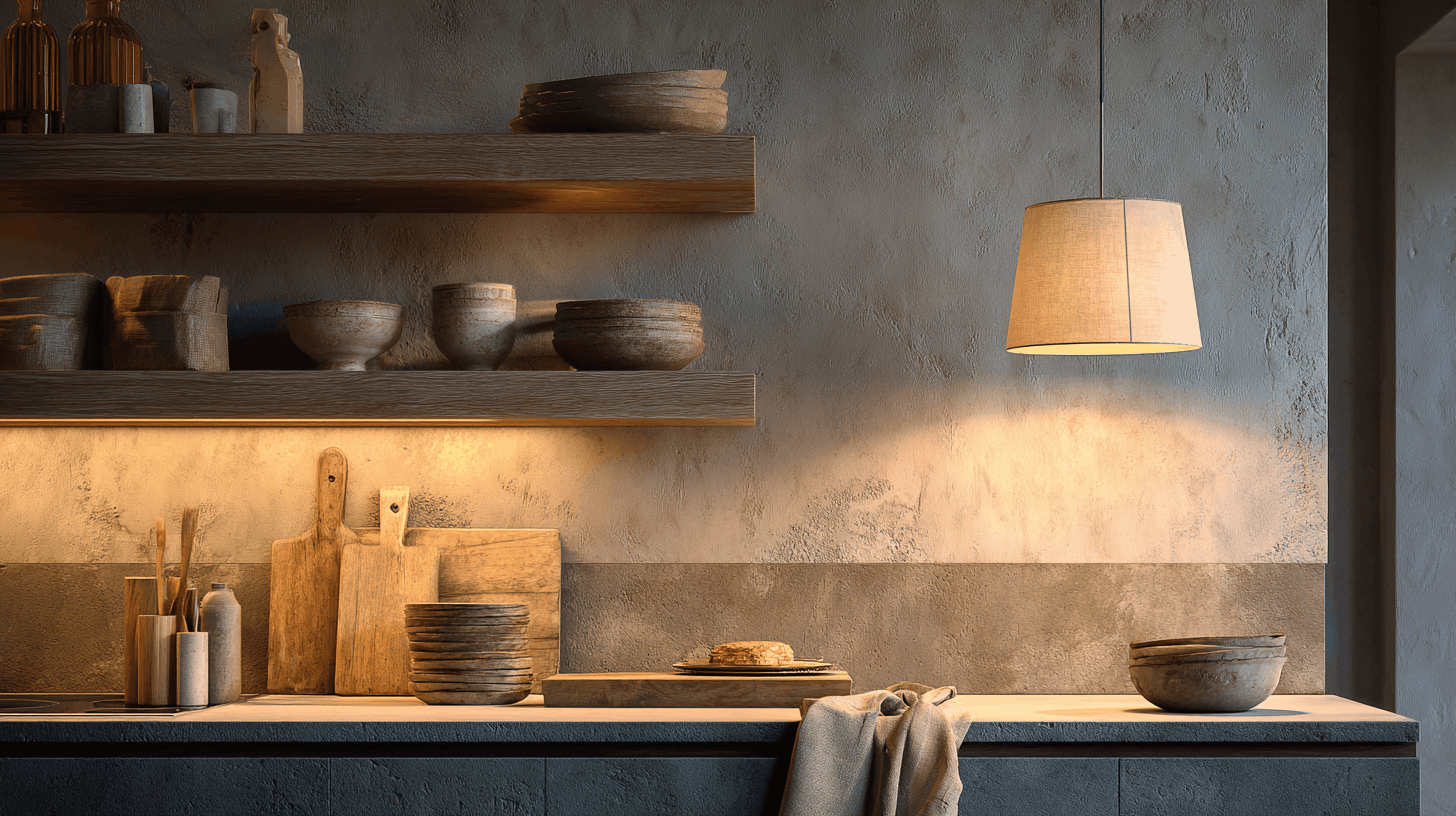
Harsh lighting makes kitchens feel sharp and uncomfortable. Use warm under-shelf lights, small lamps on the counter, or warm pendants that create gentle shadows instead of bright overhead lights.
Shadows add depth and mood to the space, making it feel cozier and more inviting when you’re cooking or gathering together.
Wabi-Sabi kitchens feel collected over time, not “designed” overnight. Focus on a few honest materials, keep only what you use, and let everyday wear add charm instead of trying to hide it.
Wabi-Sabi Dining Room: Slow, Intentional Gatherings
Your dining room should be a place where people want to linger over meals, not rush through them. Make it feel warm and welcoming instead of formal and fancy.
16. Table With Irregular Edges
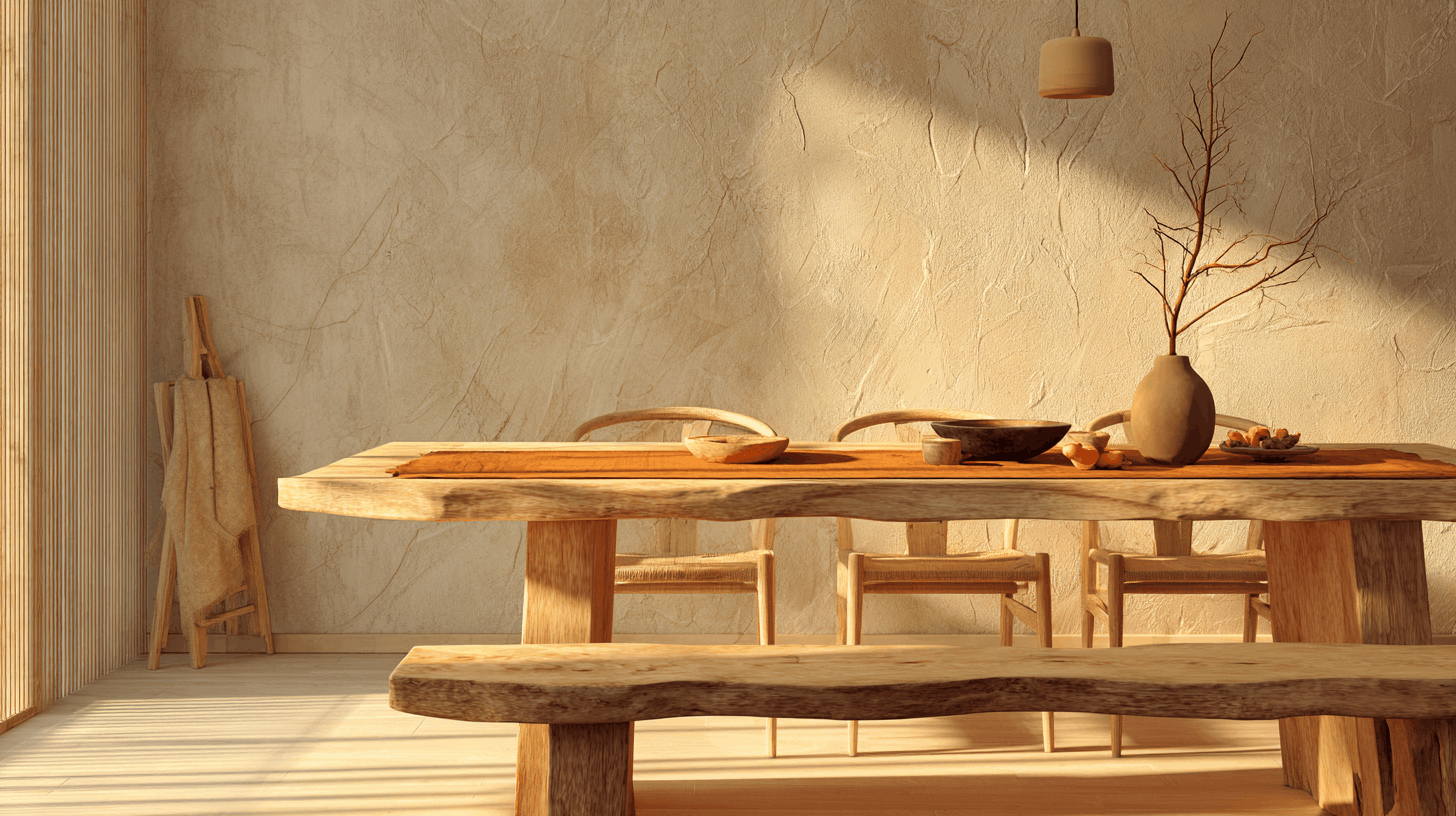
A dining table that isn’t perfectly symmetrical feels more natural and relaxed than a standard rectangular one.
If you already have a regular table, add an organic element, such as a raw-wood runner or a handmade bowl, to soften the structure. Tables with character invite people to sit longer and actually enjoy their meals.
17. Mismatched Chairs With One Material Link
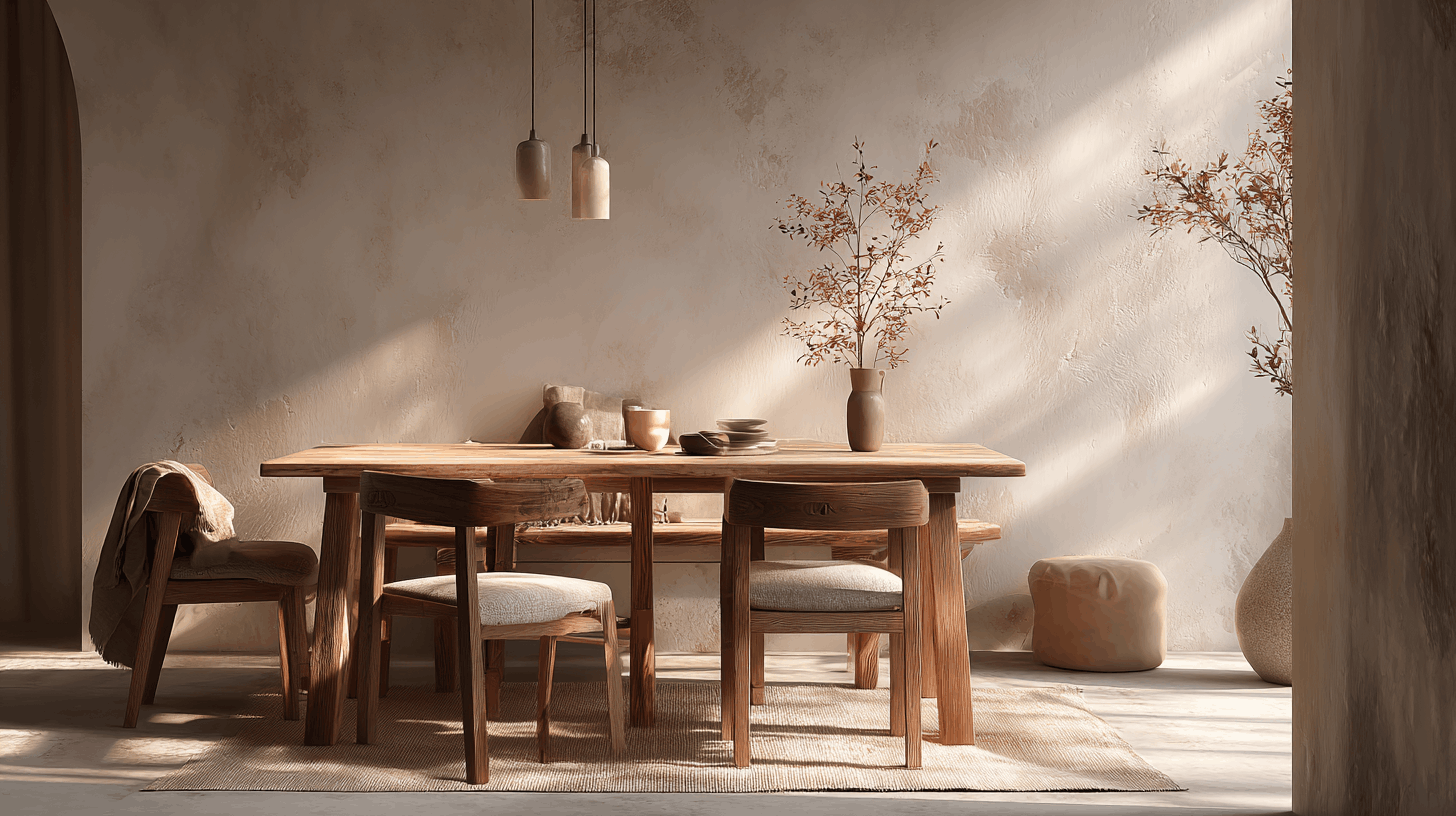
Mixing chairs can look very Wabi-Sabi if one thing ties them together, like the same wood tone, similar fabric color, or the same general shape and height. Keep the mix subtle so it feels calm instead of chaotic.
This gives your dining room personality without looking random or like you just grabbed whatever chairs you could find.
18. Centerpiece That Changes Naturally
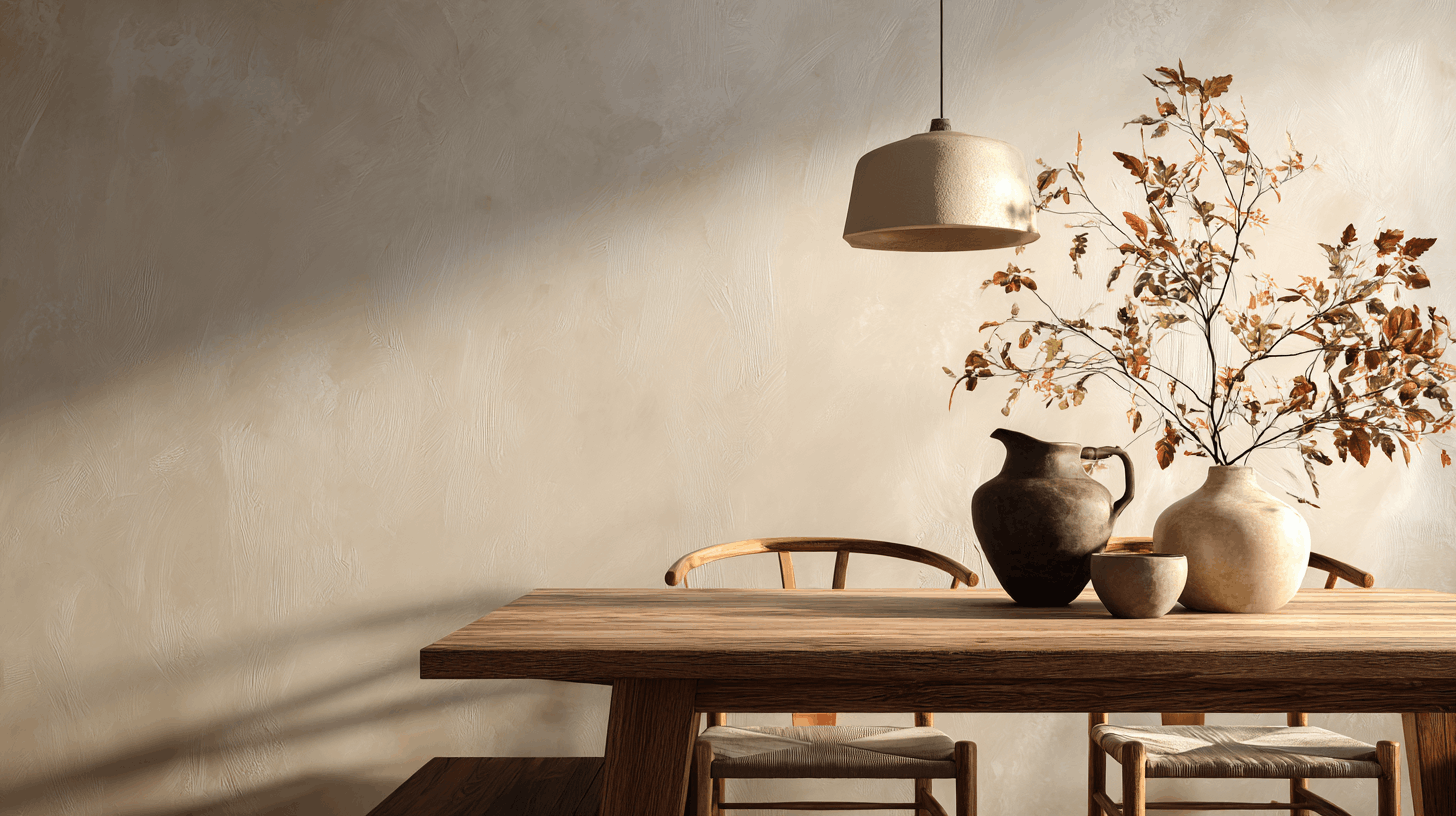
Choose something that shifts with the seasons, such as dried branches, seasonal leaves, or a single stem in a simple vase. Skip permanent fake florals that never change.
Change is part of the Wabi-Sabi feel, and switching out natural elements keeps your table interesting. It also reminds you to notice what’s happening outside throughout the year.
19. Textured Table Surface Left Bare
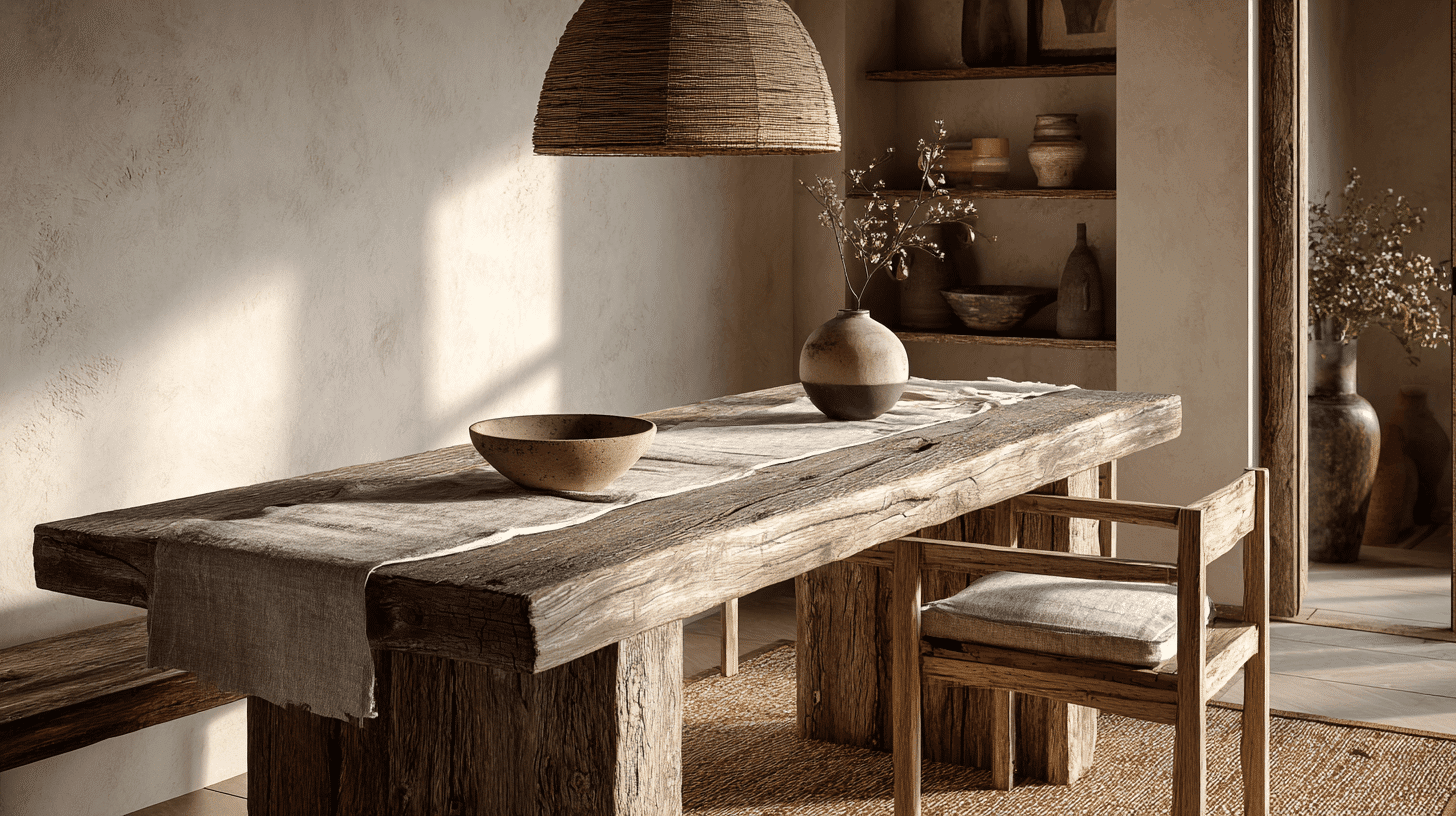
Instead of always using a tablecloth, let the wood surface show its natural grain and marks. Wood texture adds warmth on its own.
If you want some protection during meals, use a simple linen or cotton runner that still lets most of the table show through, rather than covering everything completely.
20. Low-Hanging Warm Light
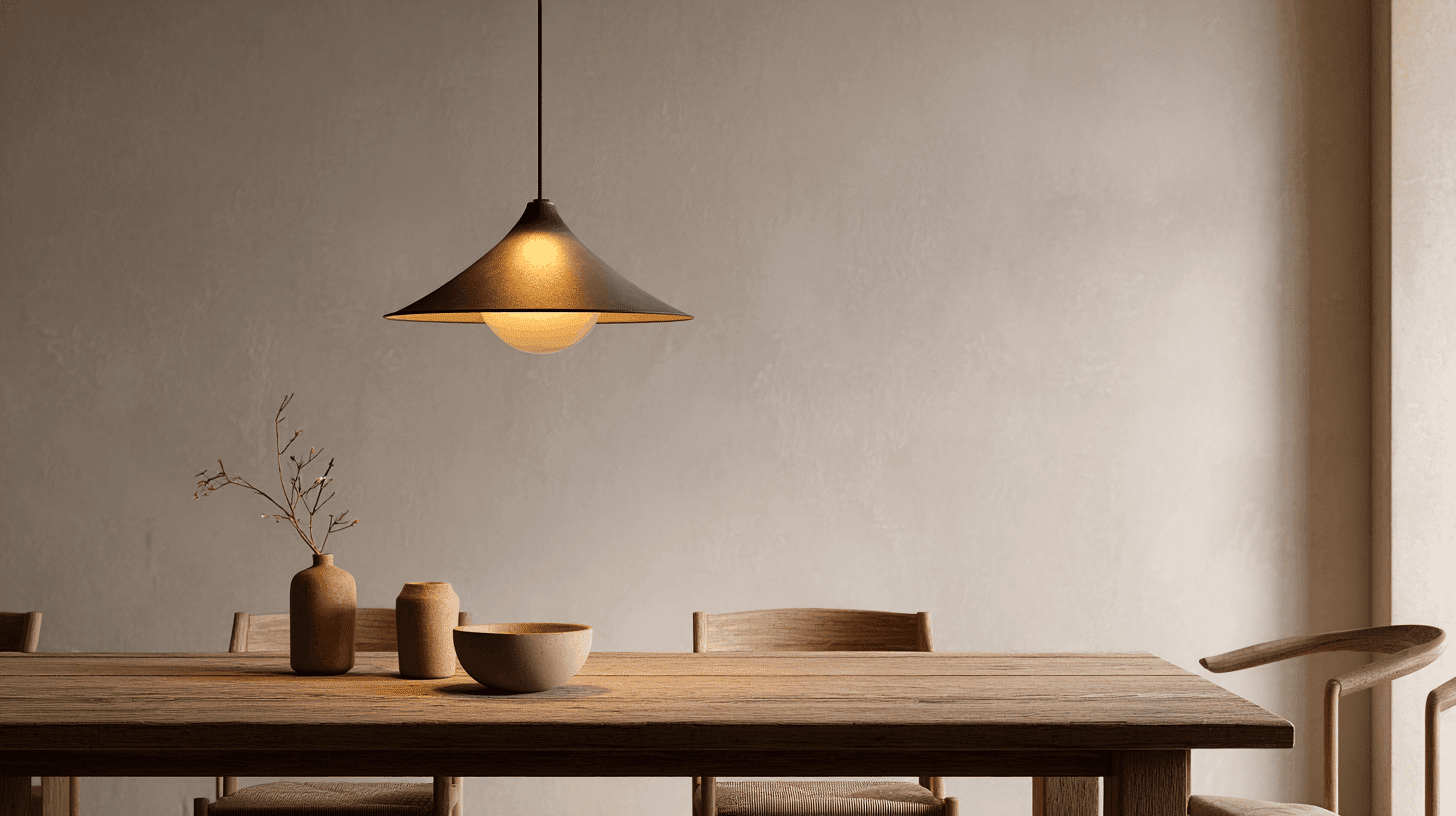
Keep lighting closer to the table to create a sense of intimacy, rather than using high-ceiling lights. Use a warm bulb and a shade that diffuses light softly.
This makes meals feel slow and grounded, even on regular weekdays when you’re just having dinner. The right lighting turns ordinary dinners into special moments without any extra effort.
A Wabi-Sabi dining room is designed for presence, not performance. With fewer distractions and honest materials, the space naturally encourages longer meals and meaningful conversations.
Wabi-Sabi Style Vs Japandi Style
Wabi-sabi and japandi can look similar at first glance because both love calm spaces and natural materials.
Japandi style blends Japanese calm with Scandinavian function. It’s minimal, practical, and tidy, with simple lines and a clean look.
| Point | Wabi-Sabi Style | Japandi Style |
|---|---|---|
| Overall Feel | Warm, lived-in, relaxed | Clean, tidy, structured |
| Finish + Texture | Raw, textured, imperfect | Smoother, more uniform |
| Furniture Look | Organic, simple, not perfectly matched | Sleek, simple, more matched |
| Decor Approach | Few meaningful pieces, handmade focus | Minimal, functional, carefully styled |
| Best For | If you like calm with character | If you like calm with order |
Common Mistakes To Avoid
Wabi-Sabi style can go wrong if you take it too far in the wrong direction. Here are the most common mistakes people make when trying this style.
- Turning It Into “Empty And Cold”: Wabi-Sabi is calm, not bare or uncomfortable. If your room feels cold, add warmth through linen, wool, cotton, warm lighting, wood tones, and one meaningful handmade object that brings life to the space.
- Buying Fake “Aged” Items In Bulk: A few vintage or handmade pieces add real character to your home. Too many mass-produced “distressed” items from stores can feel staged and fake, so let your home gain character slowly and naturally over time instead.
- Mixing Too Many Textures At Once: Texture matters, but don’t overload one room with everything at once. Stick to two to three main textures like linen, wood, and ceramic or wool, stone, and cotton, then repeat them throughout the space for consistency.
- Using Harsh White Lighting: Bright white lighting can instantly destroy the calm mood you’re trying to create. Choose warm bulbs and layer your lighting with table and floor lamps instead of relying on overhead lighting, which flattens everything out.
- Confusing Mess With Relaxed: Wabi-Sabi is not clutter or chaos disguised as a design style. It’s edited and intentional with clear surfaces, hidden storage for extra items, and only keeping what actually supports calm in your daily life.
Final Thoughts
Wabi-Sabi style is not about buying a bunch of new things or following strict rules. It’s about creating a home that feels honest, calm, and actually livable. You don’t need to redo everything at once.
Start with one corner, swap a few materials, add warmer lighting, and remove what doesn’t serve you. Let your space show signs of real life instead of hiding them. Choose natural materials that age well.
Keep surfaces clear and intentional. The best part? This style gets better over time as your home naturally gains character through daily use.
Your home should support how you live, not stress you out. It should feel like relief when you walk in, not pressure to keep everything perfect.
What’s one small change you could make this week to bring more calm into your space? Drop a comment below or bookmark this page to revisit when you’re ready to start.