I’ve learned the hard way that spray paint’s dry time can fool you. I used to finish a project, see that “dry” look on the surface, and assume I was in the clear.
Then I’d pick it up too soon and leave fingerprints, smudges, or dull patches that ruined the finish. Even worse, I’d try to add a second coat before the first was dry and end up with tacky spots that stayed tacky for hours.
Now I treat dry time like a real step in the project, not an afterthought. Most spray paint dries quickly, but that doesn’t mean it can withstand touch, movement, or daily use.
The frustrating part? That timeline changes every single time based on what paint I’m using, the weather that day, and what I’m painting. Some projects are ready in an hour, others need two days.
In this, I’m sharing everything I’ve learned about spray paint dry time so you don’t have to make the same mistakes I did.
Understanding the Difference Between Dry, Recoat, and Cure Times
Before getting into the exact spray paint timing, it helps to separate the three stages that often get mixed up.
Dry to the touch means the surface feels dry, but the paint underneath is still soft, so handling can leave fingerprints or marks.
Recoat time is when you can safely apply another layer without wrinkling, dragging, or trapping solvents, which is why it usually takes longer than touch dry.
Cure time is the final stage, when the paint fully hardens and becomes durable enough for regular use, cleaning, or light bumps.
In most cases, spray paint feels dry in 10 to 30 minutes, can be recoated in 1 to 2 hours, and reaches full cure in 24 hours to 7 days, depending on the paint, surface, and conditions.
How Long Different Types of Spray Paint Take to Dry
1. Acrylic Spray Paint
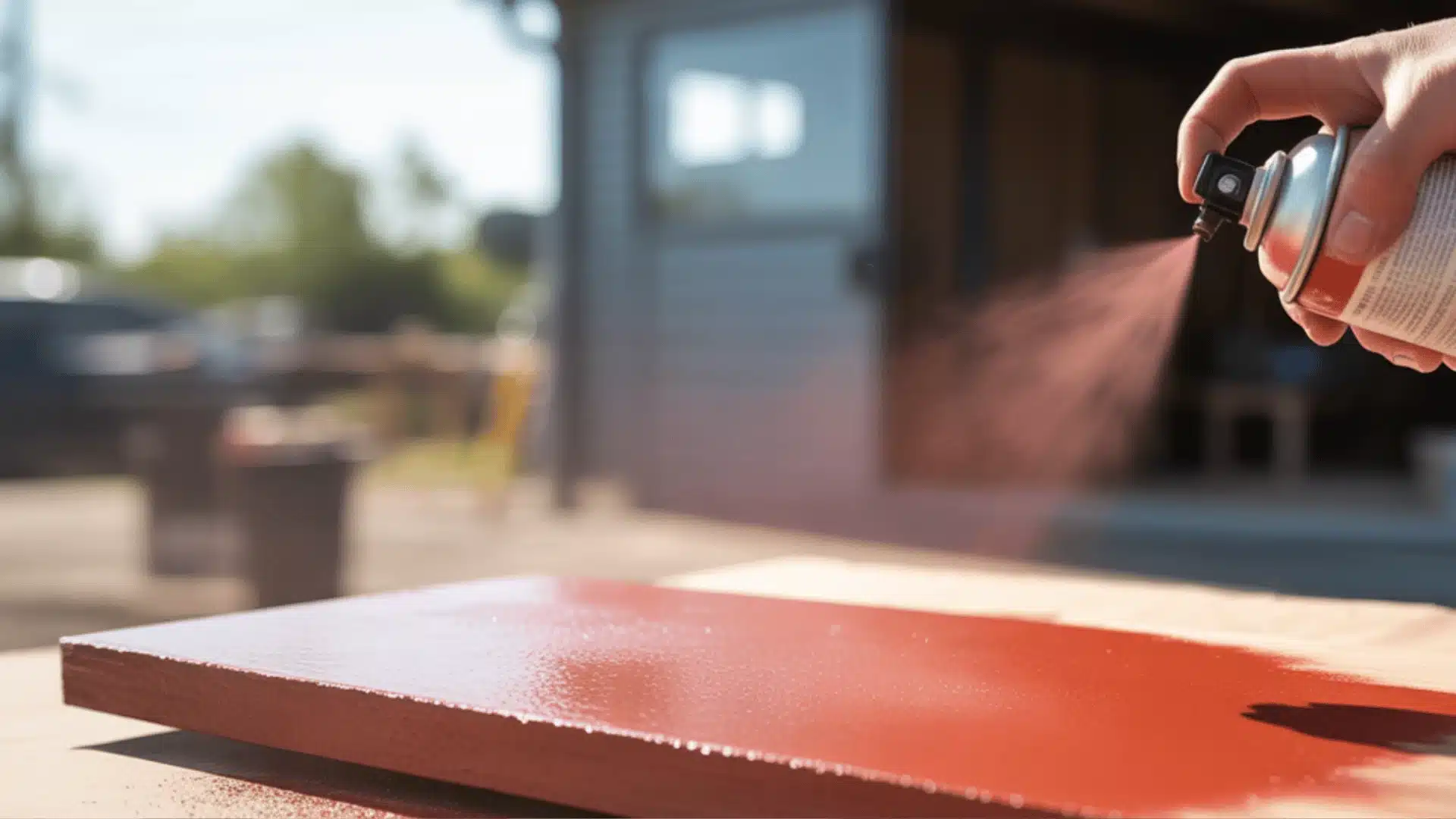
Acrylic spray paint is my go-to for fast results with less odor, especially for indoor projects. It flashes off quickly, so light coats build up smoothly without staying tacky for long.
I still avoid handling it too soon because the surface can feel dry while the layer underneath is soft. It works best on decor, wood, and crafts with primer.
Dry to touch: 10–15 min | Recoat: 30–60 min | Handle: ~1 hr | Full cure: ~24 hrs
2. Enamel Spray Paint
Enamel spray paint takes longer to dry, but I like it when I need a tougher finish that holds up to cleaning and daily wear.
It levels nicely when applied in thin coats, but rushing recoats can cause wrinkles or stickiness. I use it for metal, outdoor pieces, and anything that gets touched often. Always check the label, because enamel timing varies.
Dry to touch: 20–30 min | Recoat: 4–6 hrs (check label) | Handle: 2+ hrs | Full cure: 2–3 days
3. Lacquer Spray Paint
Lacquer spray paint is the fastest option I use when I want multiple coats in one session. It dries quickly and can look very smooth, especially on furniture or trim-style projects.
The key is to keep coats light, because heavy coats can trap solvents and cause hazing or texture problems. Even if it feels ready fast, I still give it time before hard use.
Dry to touch: 5–10 min | Recoat: 15–30 min | Full cure: ~24 hrs (often usable sooner)
4. Rust-Preventive And Specialty Spray Paint
Rust-preventive and specialty spray paints usually dry more slowly because they contain additional bonding and protective additives. I reach for them when the goal is protection first, like outdoor metal, railings, or garage items.
They often feel tacky longer, so patience matters between coats. If I rush handling, the finish can dent easily near the edges. These paints reward thin coats and longer cure time.
Dry to touch: 30–60 min | Handle: 4–6 hrs | Full cure: 24–48 hrs
What Affects Spray Paint Dry Time
Several factors speed up or slow down the drying time of spray paint. Here’s what matters most in my experience:
- Temperature: Spray paint dries best between 50°F and 85°F. Below 50°F, curing can take about twice as long, and in freezing weather, it may not cure properly. Above 90°F, it can dry too fast, which may cause cracking or an uneven finish.
- Humidity: High humidity slows drying because moisture in the air reduces evaporation. At humidity above 80%, drying can take 30–50% longer than normal. I get the most consistent results when humidity stays around 40% to 50%.
- Thickness of Application: Thin, even coats dry faster and cure more reliably. Heavy coats can feel dry on top while staying wet underneath for hours, leading to sagging, wrinkles, or tackiness. I stick to 2 to 3 light coats instead of one thick coat.
- Surface Material: Paint dries faster on smooth, non-porous surfaces like metal, plastic, glass, and ceramic. Wood absorbs paint, so it dries more slowly. On bare wood, the first coat can take about 30% longer than later coats.
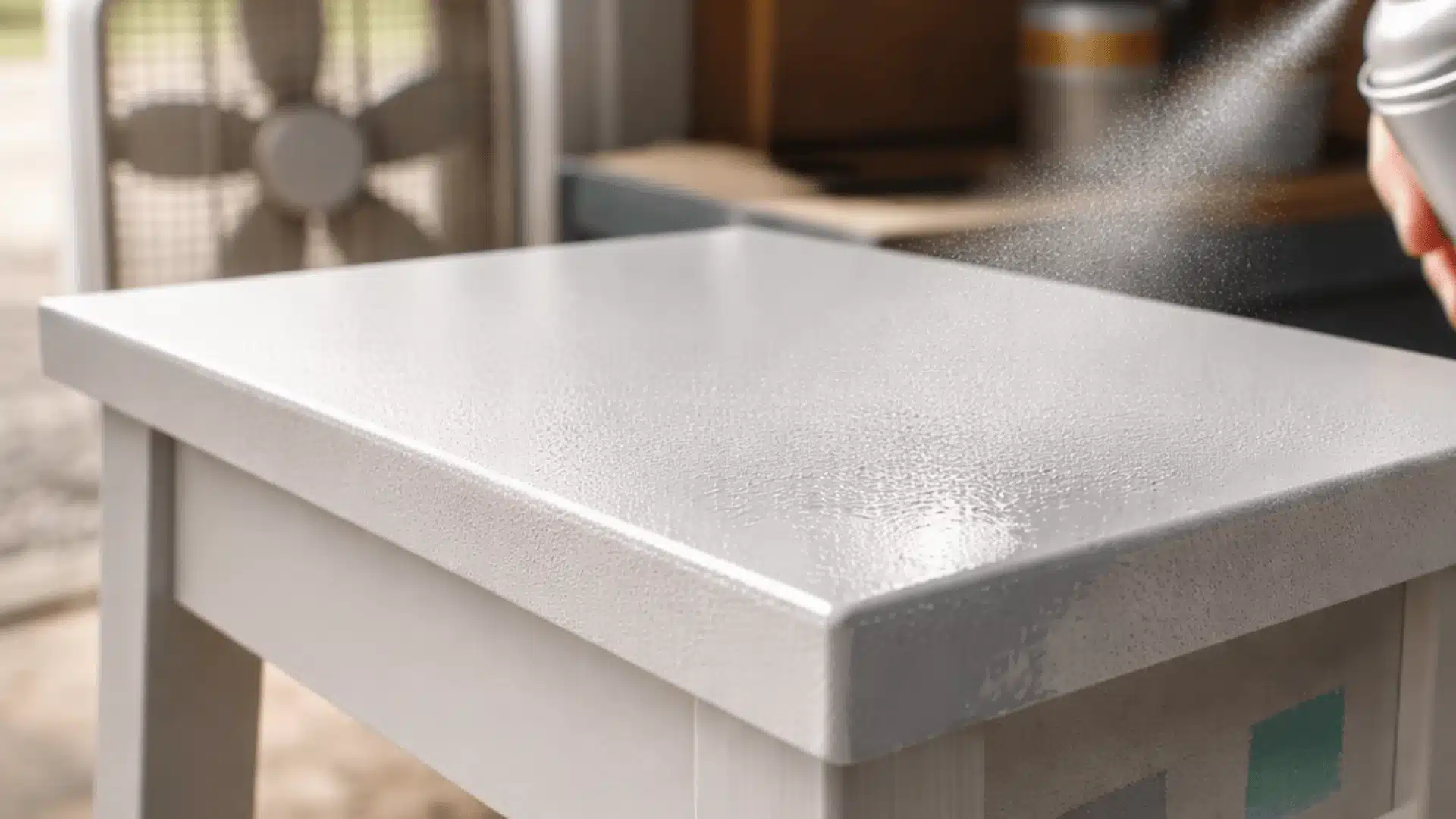
- Ventilation: Airflow speeds up drying by helping solvents evaporate. Indoors with little air movement, drying can take twice as long as it does outside with a light breeze.
I avoid strong winds, though, because they can blow dust into the finish or dry the paint so quickly that it struggles to bond.
Spray Paint Dry Time By Surface Type
Quick note: dry times vary by brand, humidity, and coat thickness, but these are solid averages to plan around.
| Surface | Dry To Touch | Handle Time | Recoat Window | Full Cure |
|---|---|---|---|---|
| Wood | ~30 min | ~2 hrs | 2–3 hrs | 24–48 hrs |
| Metal | 15–20 min | ~1 hr | 1–2 hrs | ~24 hrs |
| Plastic | 20–30 min | 1–2 hrs | 2–4 hrs | ~24 hrs |
| Glass/Ceramic | 10–15 min | 30–60 min | 1–2 hrs | ~24 hrs |
Sometimes I need my project done faster. Here are practical ways I’ve found to reduce spray paint dry time:
Use thin coats: This is the single most effective method. Multiple light layers dry exponentially faster than one thick coat.
Increase temperature: If I’m painting indoors, I raise the room temperature to 70°F-75°F. I don’t go above 85°F, or I risk cracking.
Improve airflow: I turn on fans or open windows to create cross-ventilation. I just make sure the airflow isn’t strong enough to blow dust onto wet paint.
Use a dehumidifier: In humid conditions, it can significantly reduce drying time by removing moisture from the air.
Choose fast-drying formulas: I look for spray paints labeled “quick-dry” or “fast-dry.” These contain solvents that evaporate faster.
Apply a heat source carefully: a heat gun or hair dryer on a low setting, held 12 inches away, can speed drying. I move it constantly to avoid overheating one spot. This works best for small projects.
Common Mistakes That Extend Drying Time
I’ve made these errors that make spray paint take longer to dry:
| Common Mistake | What Happens | What I Do Instead |
|---|---|---|
| Painting In Poor Conditions | Cold, heat, or high humidity can slow drying and cause finish issues. | I check the weather and spray within the label’s temp and humidity range. |
| Applying Thick Coats | The top feels dry, but the paint stays wet underneath for much longer. | I use multiple thin coats with light passes. |
| Skipping Surface Prep | Dirt, grease, or dust prevents proper adhesion and slows curing. | I clean first, then sand and prime when needed. |
| Painting Too Close | Too much paint hits at once, leading to runs and longer dry time. | I keep the can about 8–12 inches from the surface. |
| Not Waiting Between Coats | Solvents get trapped, causing tackiness and extended drying time. | I follow the recoat window on the can and wait it out. |
Final Thoughts
Understanding spray paint dry time has helped me plan projects better and avoid frustration. Most spray paints dry to the touch in 10 to 30 minutes, can be handled after 1 to 2 hours, and fully cure in 24 hours.
However, these times vary based on paint type, temperature, humidity, and application technique.
The key to success is applying thin coats, painting in good conditions (50°F to 85°F, low humidity), and allowing each coat to dry before adding the next.
When I respect the drying process, I get a finish that looks professional and lasts for years.
I’ve learned that rushing the process usually means redoing the work later. I plan ahead, check the weather, and give my paint the time it needs to dry properly.
Frequently Asked Questions
Can I Speed up Drying with a Heat Gun?
Yes, but use caution. I keep the heat gun on low, hold it at least 12 inches away, and keep it moving. Too much direct heat causes bubbling, cracking, or yellowing.
Why is My Spray Paint Still Tacky After 24 Hours?
This usually happens because I applied coats too thick, painted in high humidity, or the temperature was too cold. The paint needs more time. If it’s still tacky after 48 hours, I might need to remove it and start over.
Can I Spray Paint in Direct Sunlight?
I don’t recommend it. Direct sunlight heats the surface too much, causing the paint to dry too fast. This leads to poor adhesion and cracking. I paint in the shade or during cooler parts of the day.
Does Spray Paint Dry Faster in Cold or Hot Weather?
Warm weather (60°F to 80°F) provides the best spray paint dry time. Cold slows drying significantly, while excessive heat can compromise finish quality.