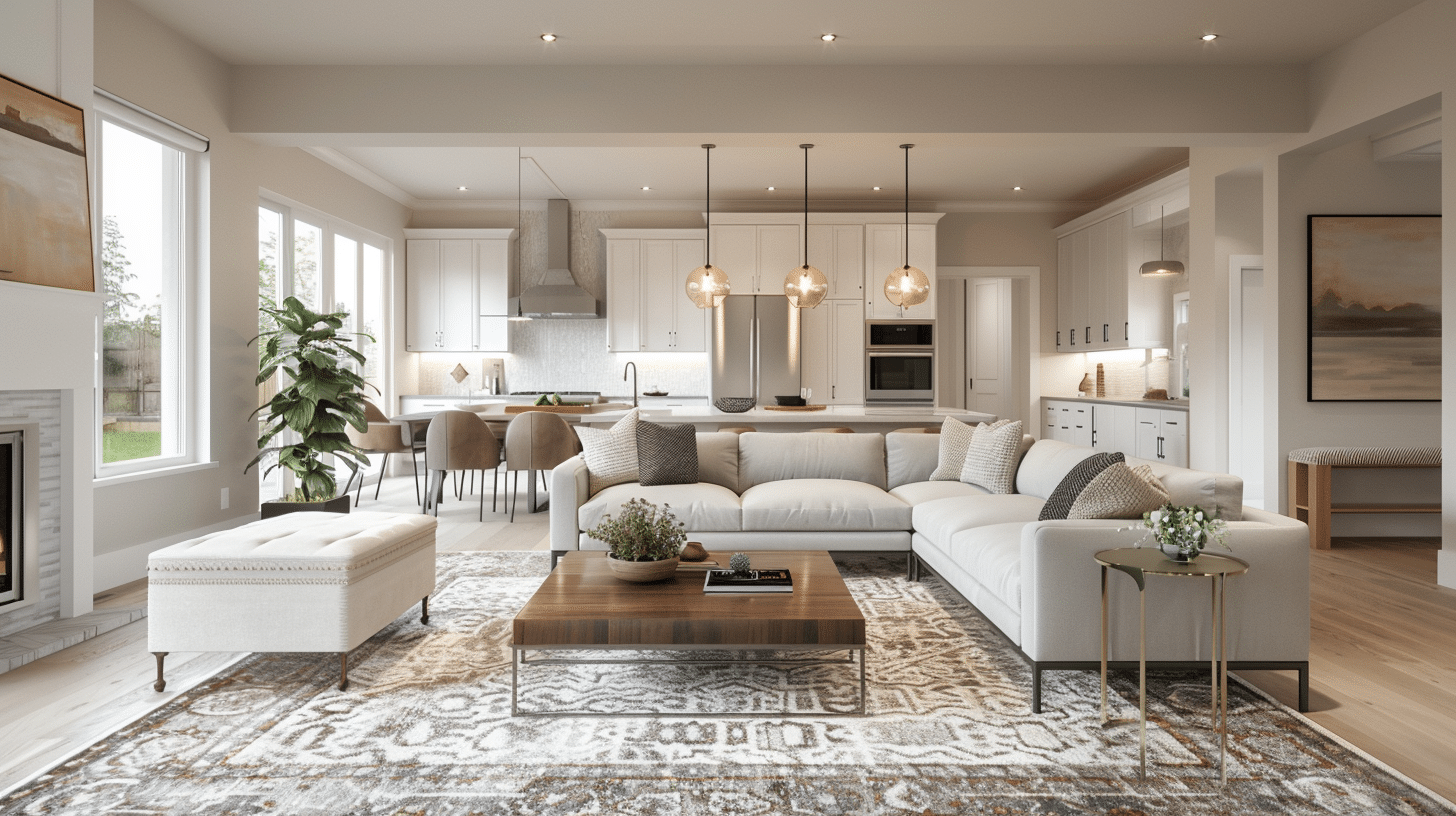
Walking into an open concept living room feels like a breath of fresh air. The space is bright, social, and perfect for bringing people together.
But here’s the catch: all that openness can make decorating feel a little confusing. Where does the living room end and the dining area begin?
How do you make it cozy without blocking the flow? You’re in the right place. This collection of open concept living room ideas will give you visual inspiration and simple layout tips you can actually use.
You’ll see how to create zones that make sense, arrange furniture to make the room feel inviting, and add design details that tie everything together.
In case you’re starting fresh or rethinking what you already have, these ideas will help you make the most of your open space.
What are Open Concept Living Rooms
You’ve probably seen them everywhere lately. Open concept living rooms knock down walls between your kitchen, dining area, and living space to create one big, flowing room.
No more barriers separating you from family while you’re cooking dinner. The space feels bigger and brighter because natural light fills it.
You can watch TV, chat with guests, and prep meals all at once. It’s perfect for entertaining because everyone stays connected.
Plus, you get flexible furniture arrangements and a modern vibe that makes your home feel spacious, even if it’s actually pretty small.
Open Concept Living Room Ideas
You don’t need a designer’s budget to create something special. These ideas will help you define zones, add personality, and make your flowing layout feel intentional instead of empty.
1. Large Area Rug
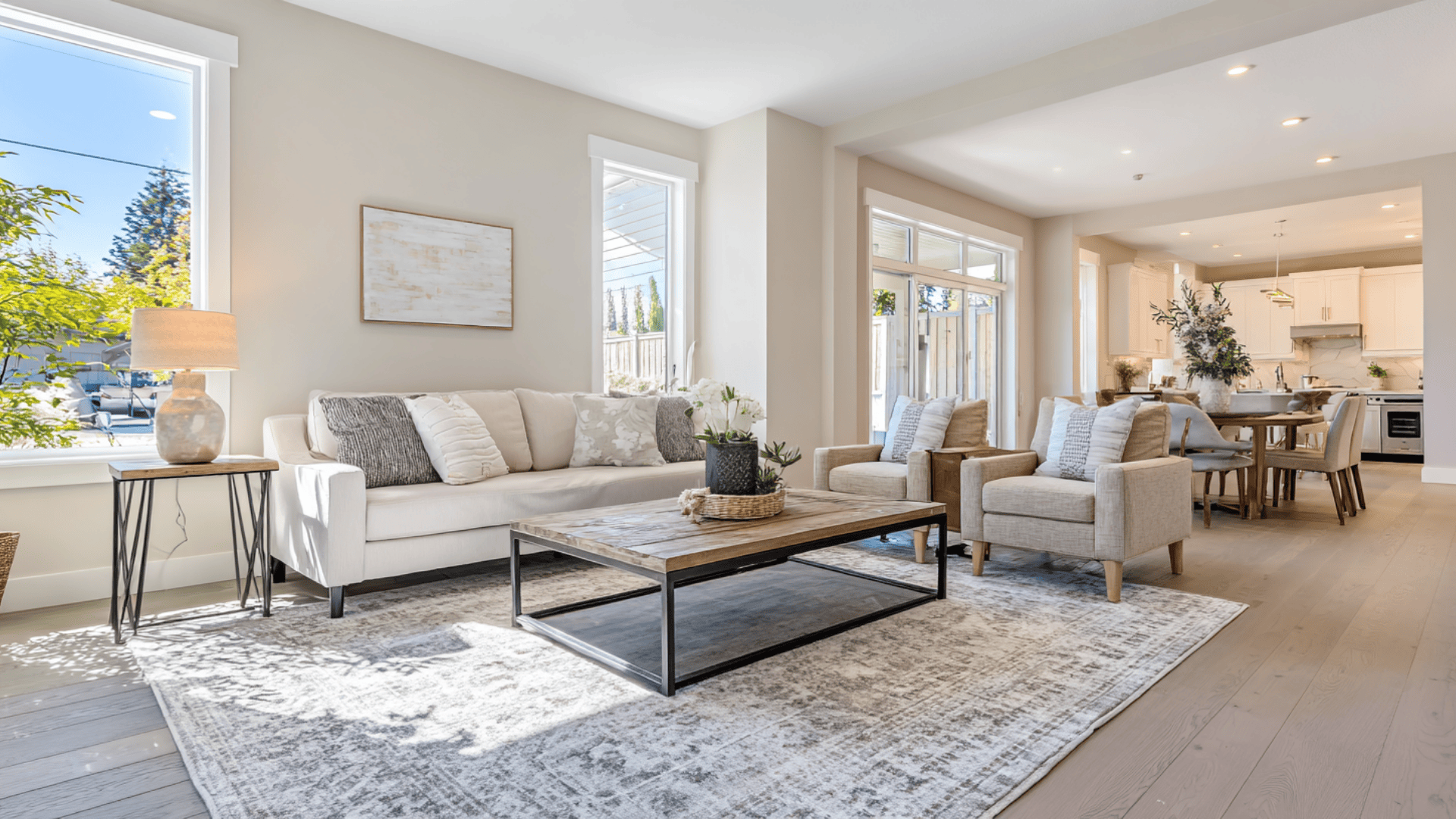
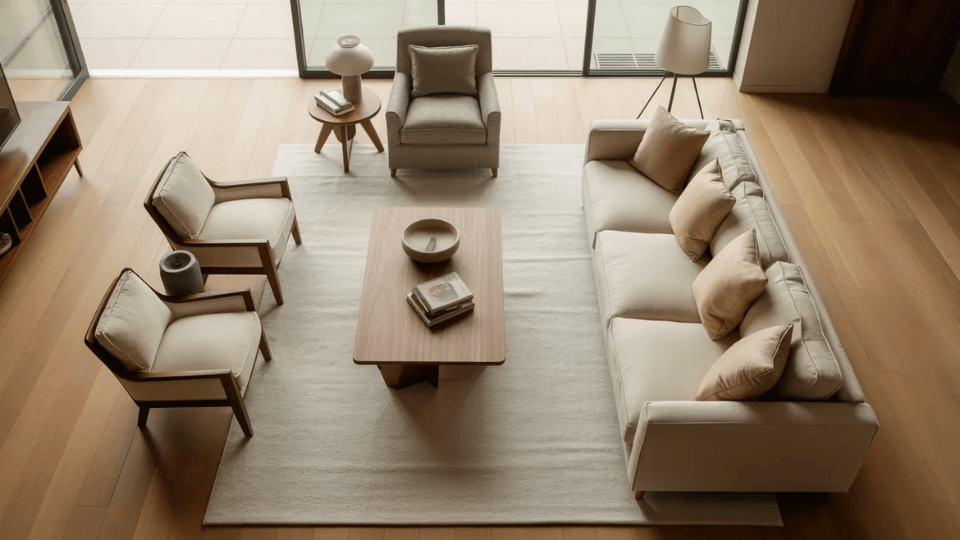
A large area rug can help define your living room in an open layout. Pick a rug big enough to fit under the front legs of your sofa and chairs, so everything feels connected.
It makes the seating area look like its own space, even without walls. A rug also adds softness underfoot, reduces noise, and adds color or pattern to make the room feel warm and welcoming.
2. Floating Sofa To Define The Space
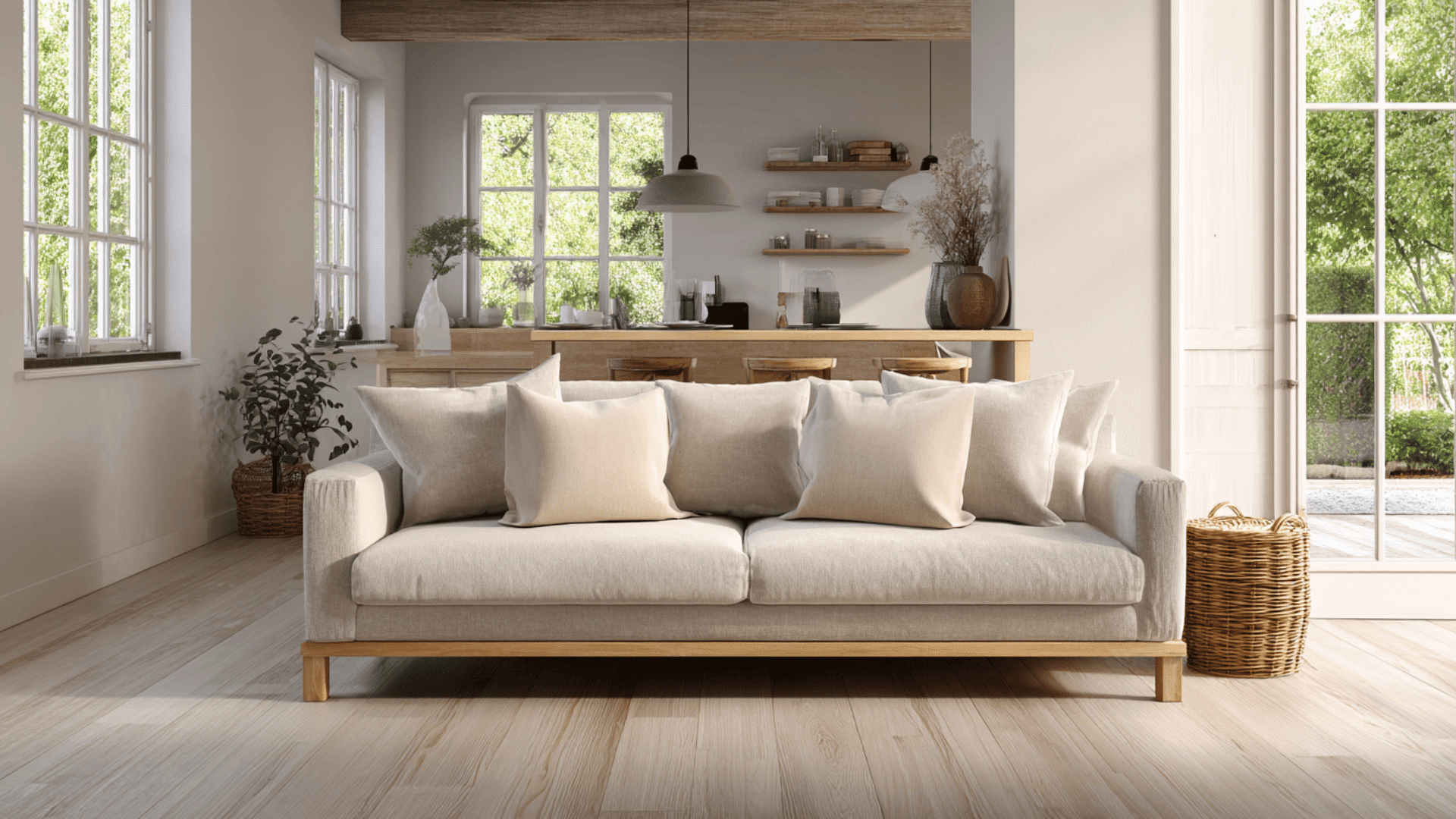
A floating sofa can help you shape an open living room layout without building walls. Instead of pushing the couch against a wall, place it in the middle of the room with its back facing the dining area or kitchen.
It creates a clear line between spaces while still keeping the view open. Add a console table behind it for lamps, baskets, or extra storage.
3. L-Shaped Sectional For A Natural Border
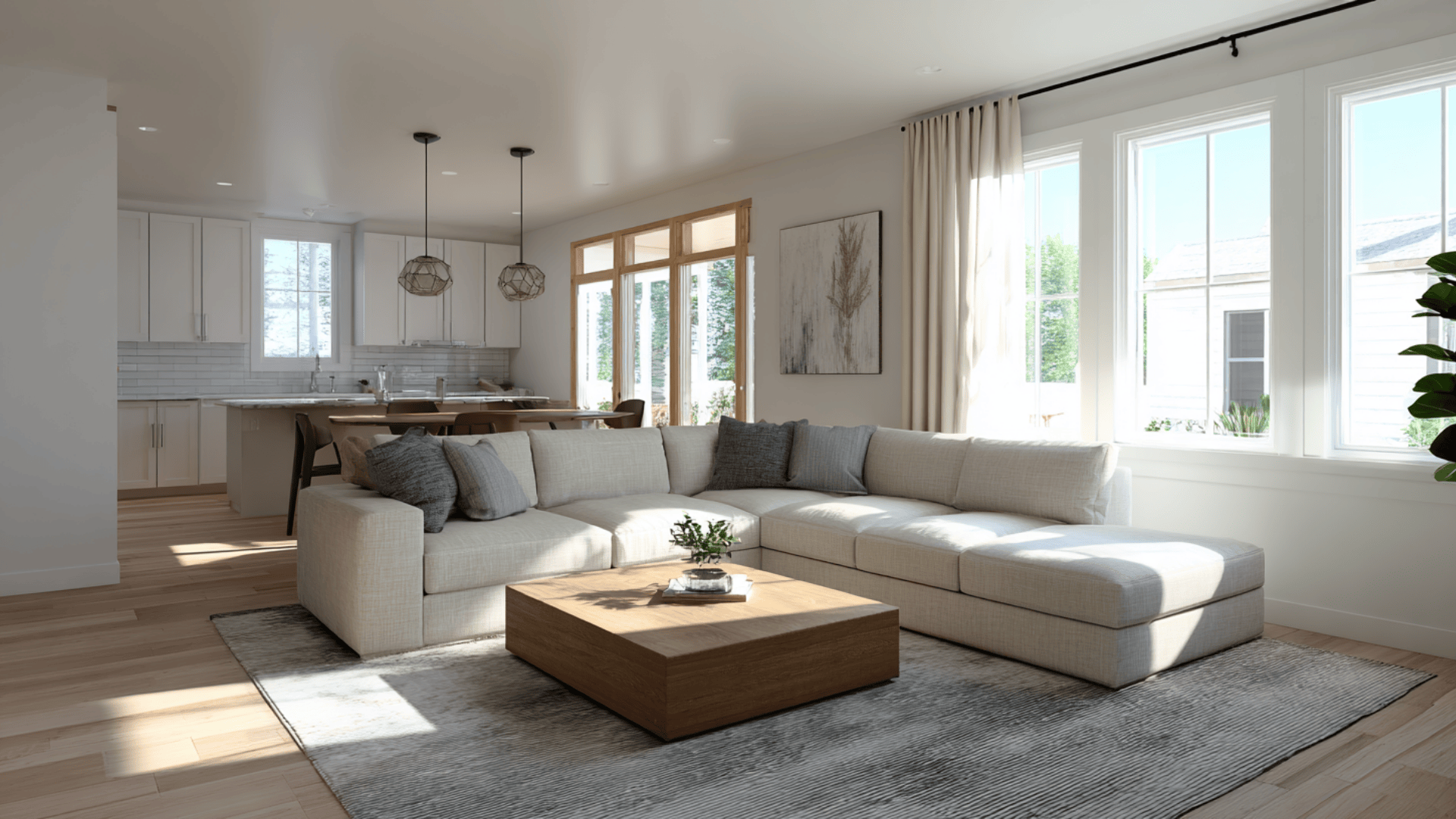
An L-shaped sectional is a smart way to outline your living room in an open space. The shape naturally creates a “border” for the seating area, so it feels separate without using walls.
Place the longer side facing the TV or main focal point. Keep the open side facing the main walkway so people can move through easily. Add a rug and coffee table to finish the zone.
4. Two Sofas Facing Each Other
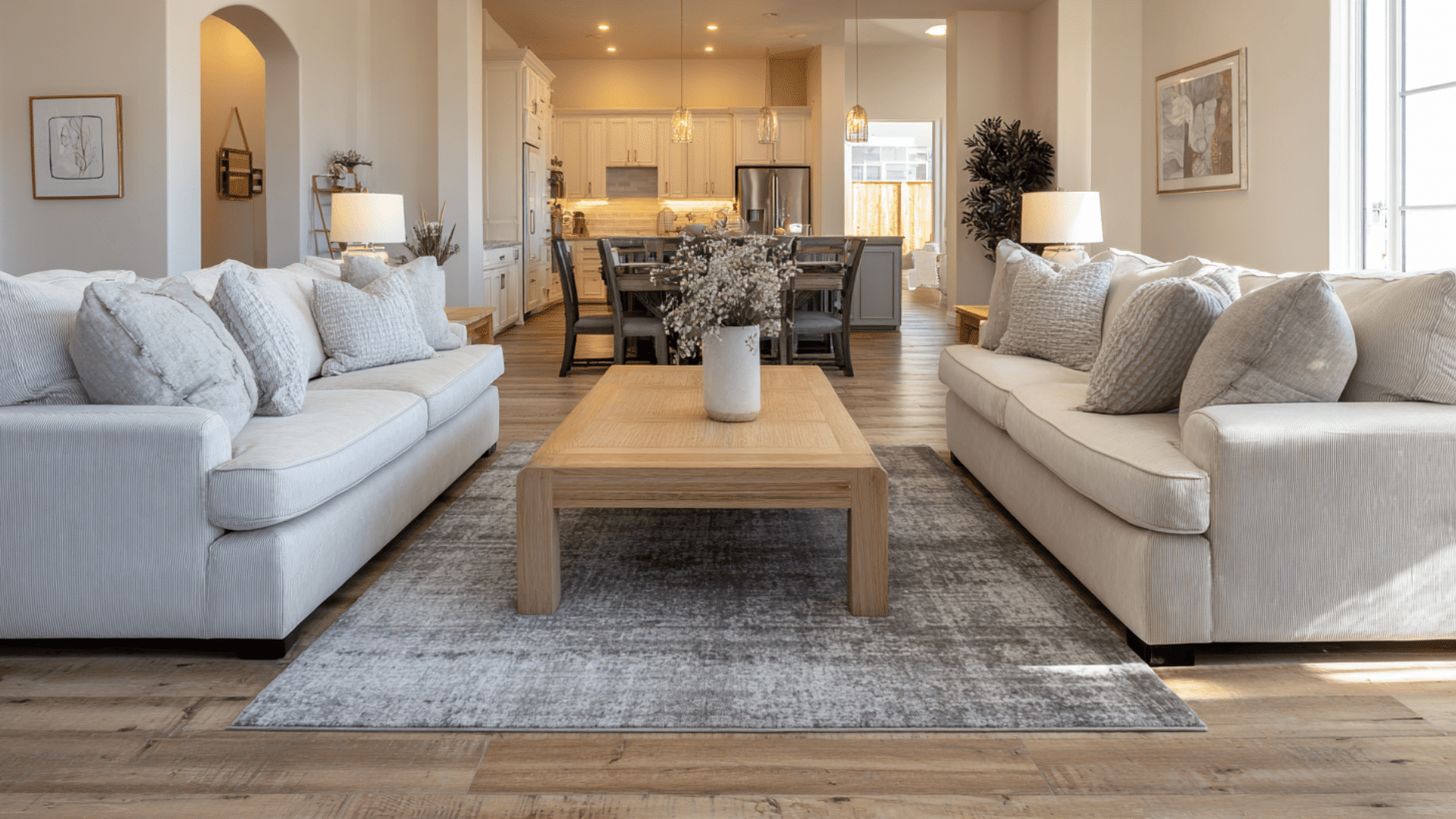
Two sofas facing each other can make an open living room feel friendly and well-balanced. This setup is great for talking, playing games, or hosting guests because everyone can see each other.
Place a long coffee table in the center so drinks and snacks are easy to reach. Add matching side tables and lamps for extra light. A large rug under the seating area can help tie the whole seating area together.
5. Backless Console Table Behind The Sofa
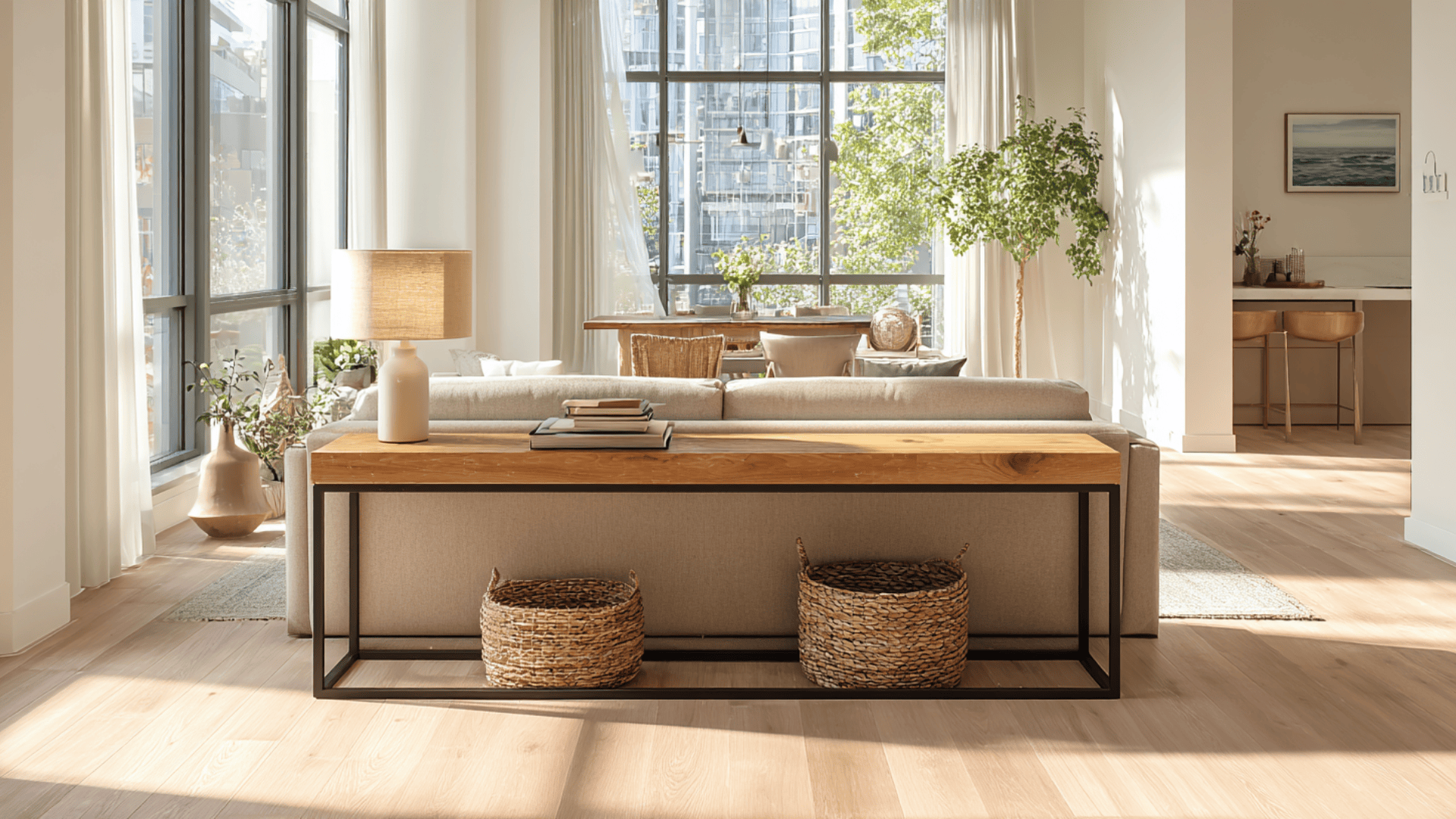
A backless console table behind the sofa is a simple way to add functionality to an open-concept living room. Choose a slim table that fits the length of your sofa without blocking the walking space.
You can place a lamp for soft lighting, add baskets for quick storage, and style it with a few books or small decor. It also helps separate the living area from the dining or kitchen zone without closing it off.
6. Low Media Unit As A Soft Divider
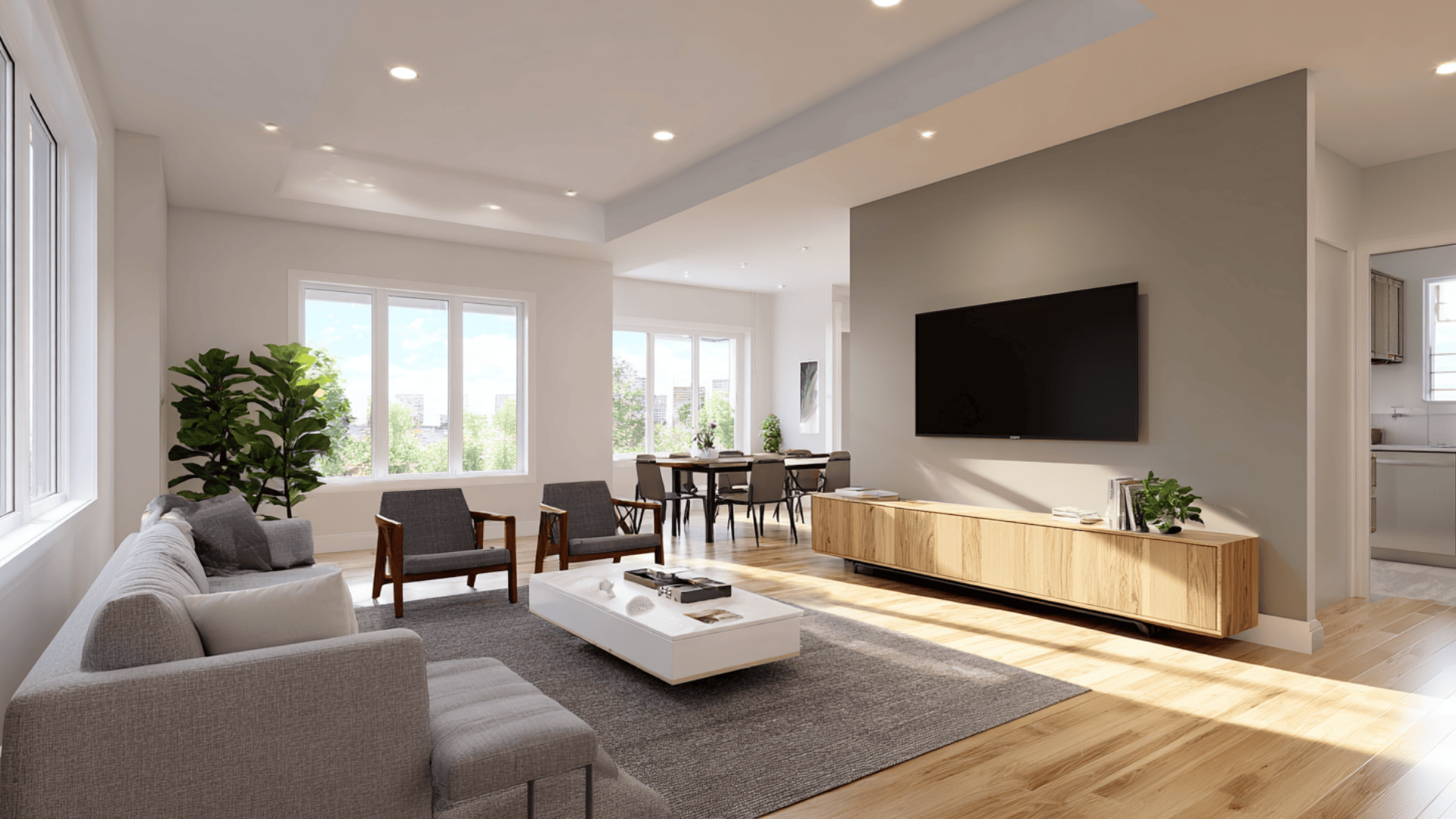
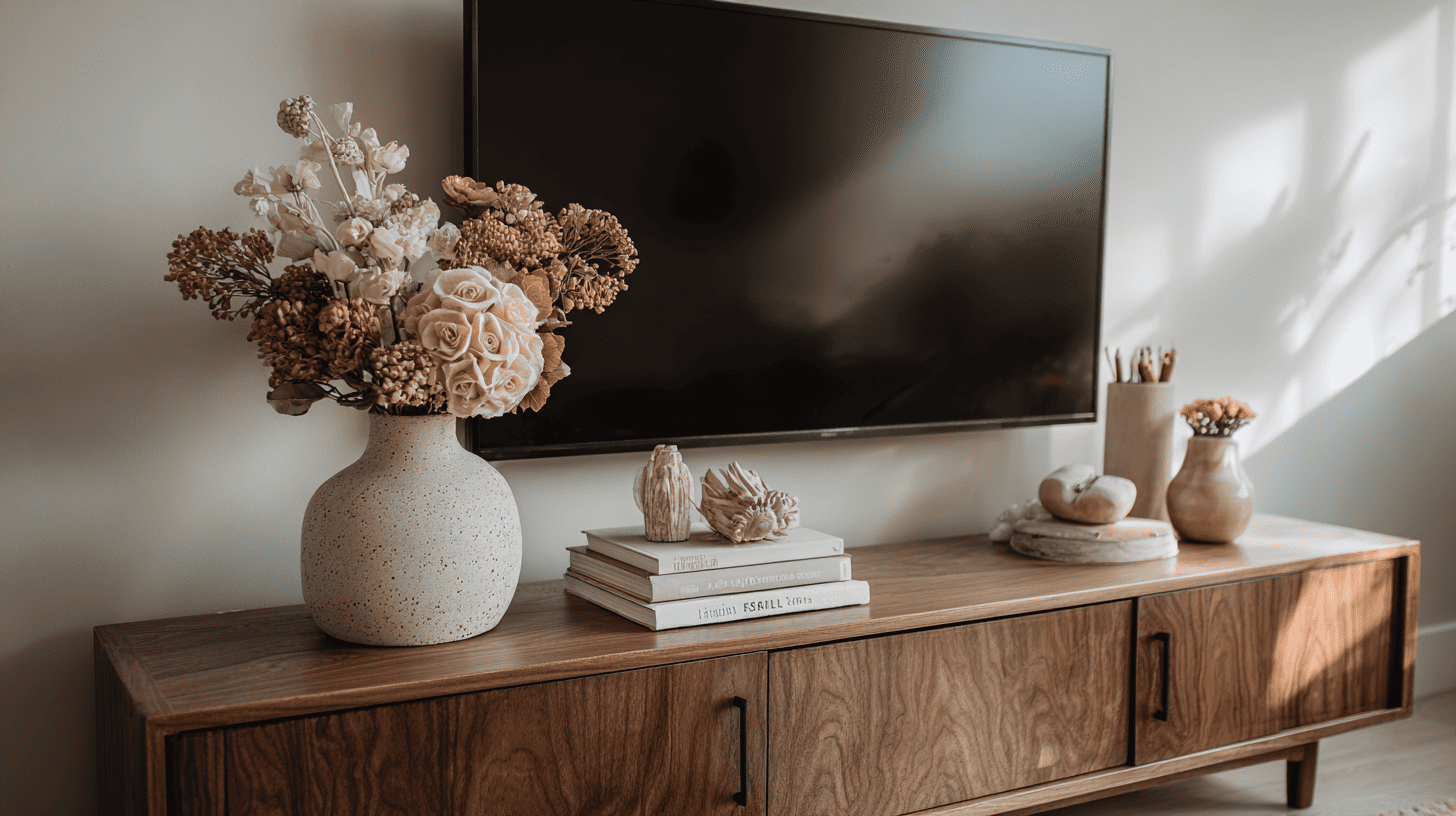
A low media unit can serve as a soft divider in an open-concept living room. Pick a long, low TV console and place it so it runs parallel to the dining area. It helps mark where the living zone starts and ends without adding a wall.
Because it sits low, the room still feels open and bright. You also get extra storage for games, remotes, and blankets to keep clutter away.
7. Open Shelving Divider With Styling Moments
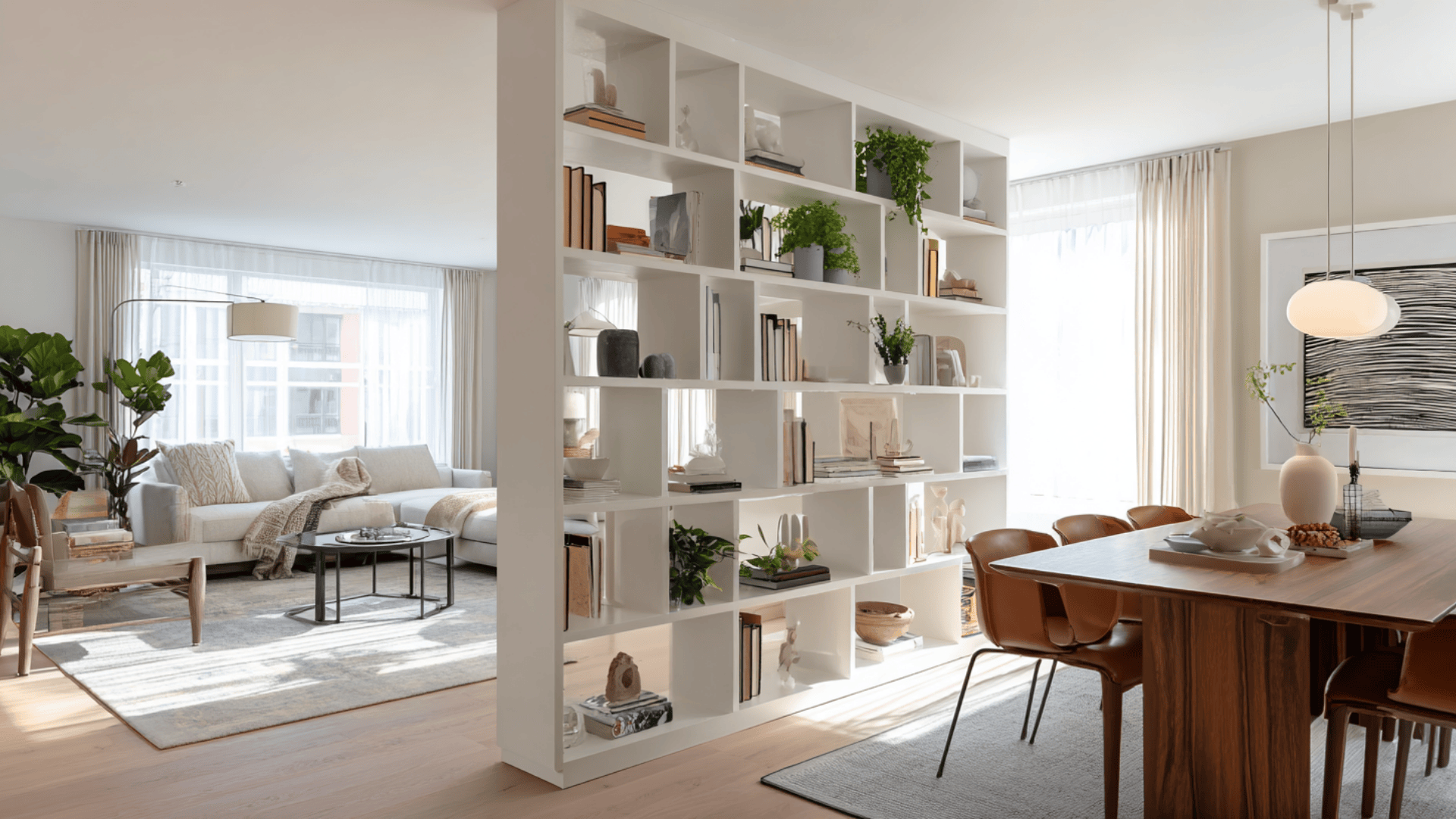
Open shelving is a great divider for an open living room layout because it separates spaces without blocking light. Place a see-through bookcase between the living and dining areas to create a clear boundary.
Keep it looking light by mixing books, small plants, and a few simple decor pieces. Leave some shelves empty so they don’t feel crowded. This setup adds storage and style while still keeping the room open and connected.
8. Statement Lighting To Mark Each Zone
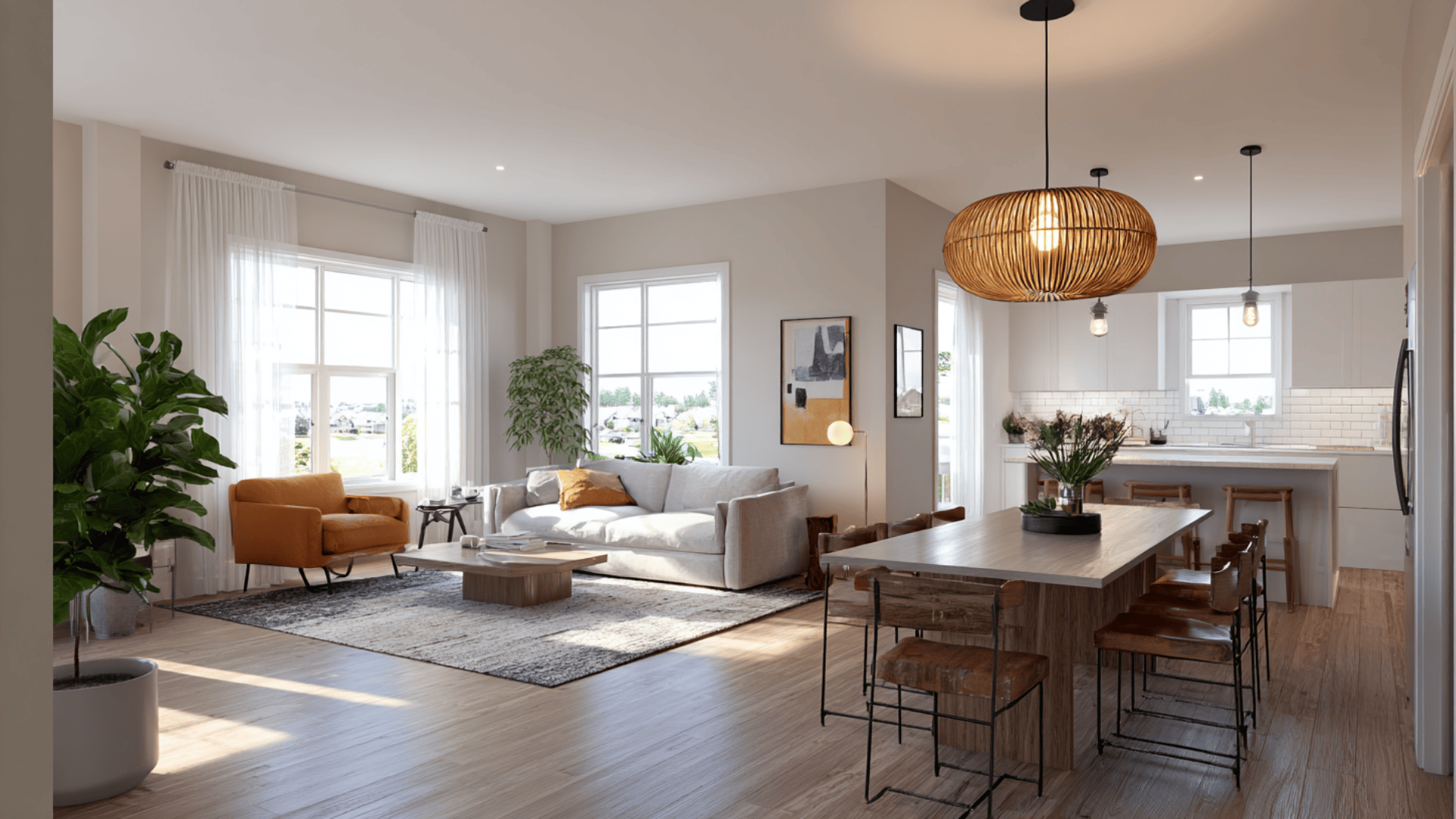
Statement lighting can help define zones in an open concept living room. Hang a bold chandelier or pendant light over the dining table to clearly mark the area. Then use a different fixture in the living space, such as a ceiling light, a floor lamp, or a set of recessed lights.
When each zone has its own lighting style, the room feels organized and planned. You get better light for each activity while keeping the space open and connected.
9. Two-Tone Wall Paint To Create A Living Block
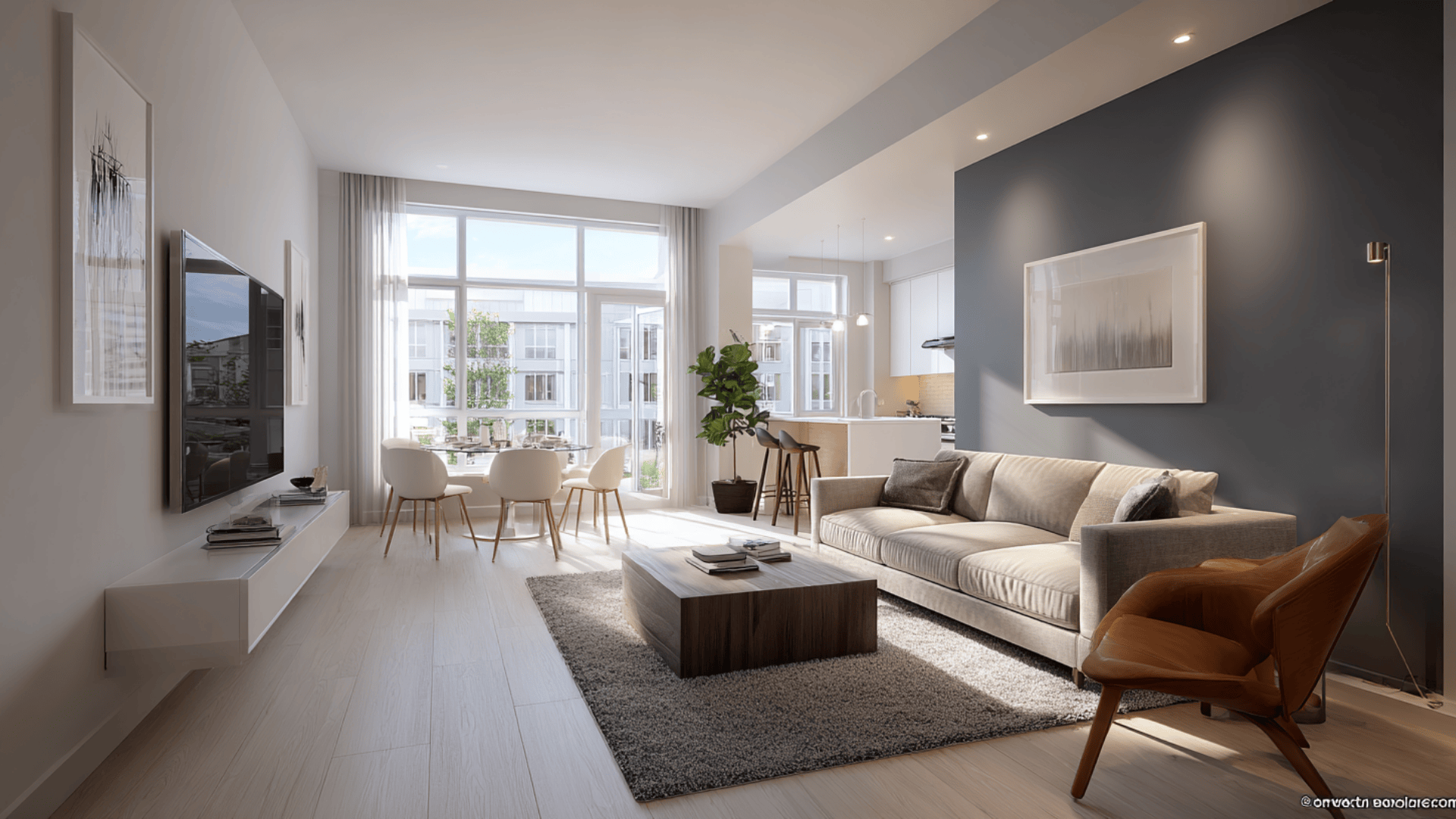
Two-tone wall paint is an easy way to define the living area in an open layout. Choose a long wall that runs through the space and paint only the part behind the sofa or TV in a different shade.
Keep the other section a lighter color so the room still feels open. It creates a clear “block” for the living zone without adding furniture or walls. It also adds style and helps the room look more finished.
10. Wood Slat Feature Wall For Warmth And Depth
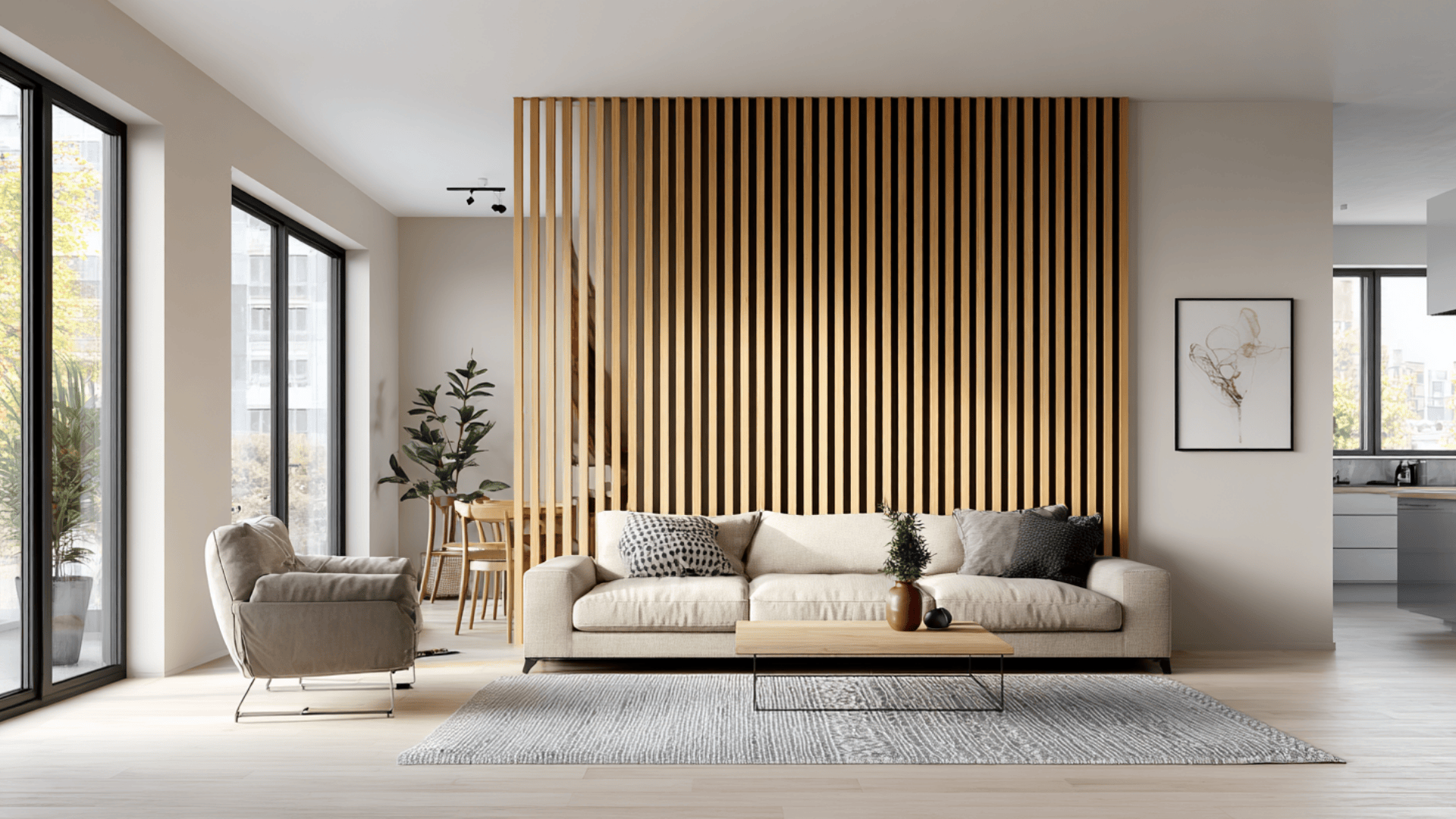
A wood-slat feature wall can make an open-concept living room feel warmer and more cohesive. Add vertical wood slats behind the TV or behind the sofa to create a strong focal point.
The natural texture adds depth, so the living area does not feel plain or empty. Wood also brings a cozy feel, especially in large spaces with high ceilings. Keep the rest of the decor simpl,e so the wall stands out cleanly.
11. Fireplace As The Center Anchor
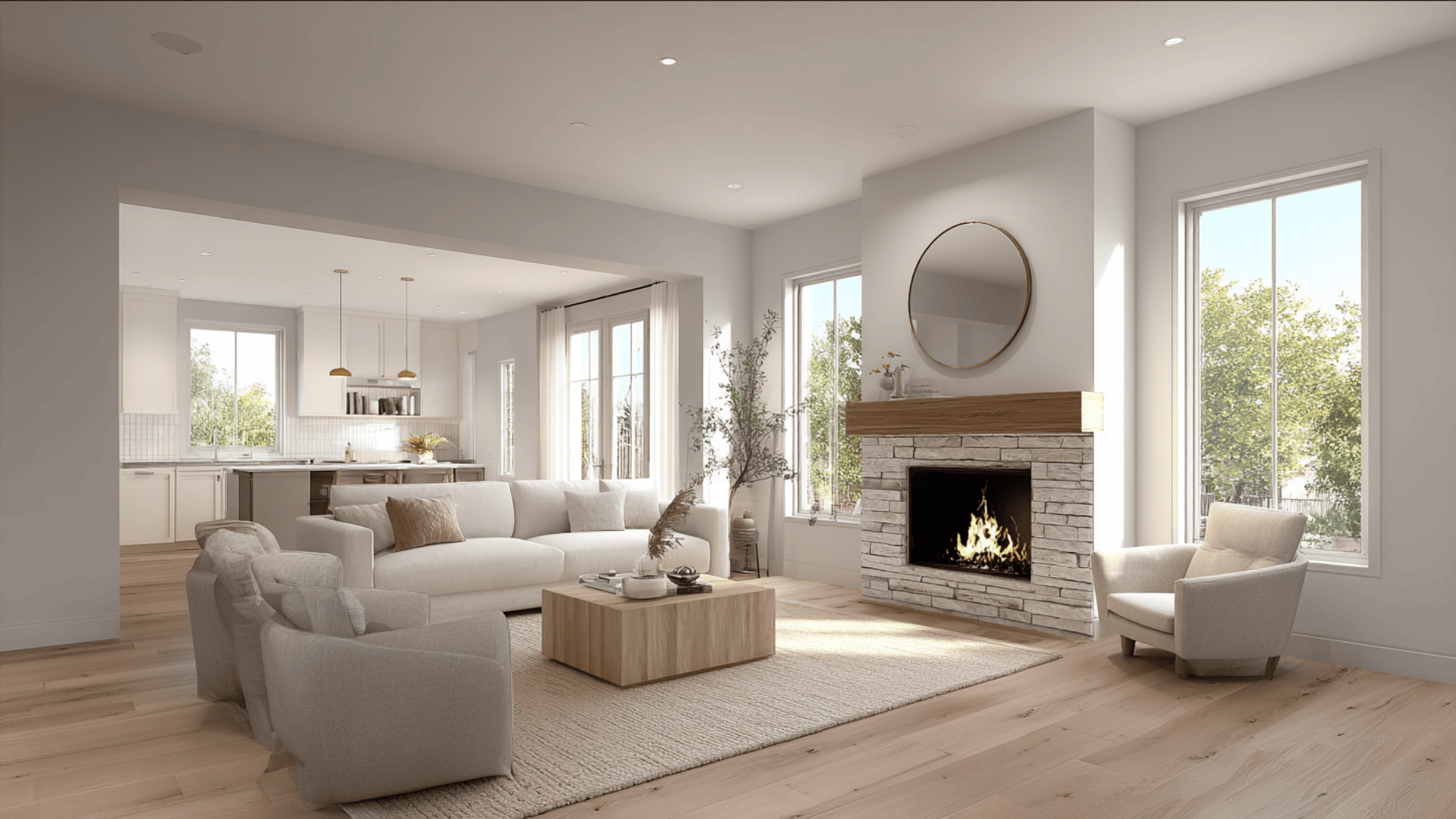
A fireplace can serve as the main anchor in an open-concept living room. Instead of aiming your seating toward the kitchen, place the sofa and chairs so they face the fireplace. It makes the living area feel centered and purposeful.
It also helps guests know where to sit and relax. Add a rug and coffee table to complete the zone. Simple mantel decor can finish the look without making it feel busy.
12. Double-Sided Fireplace Between Living And Dining
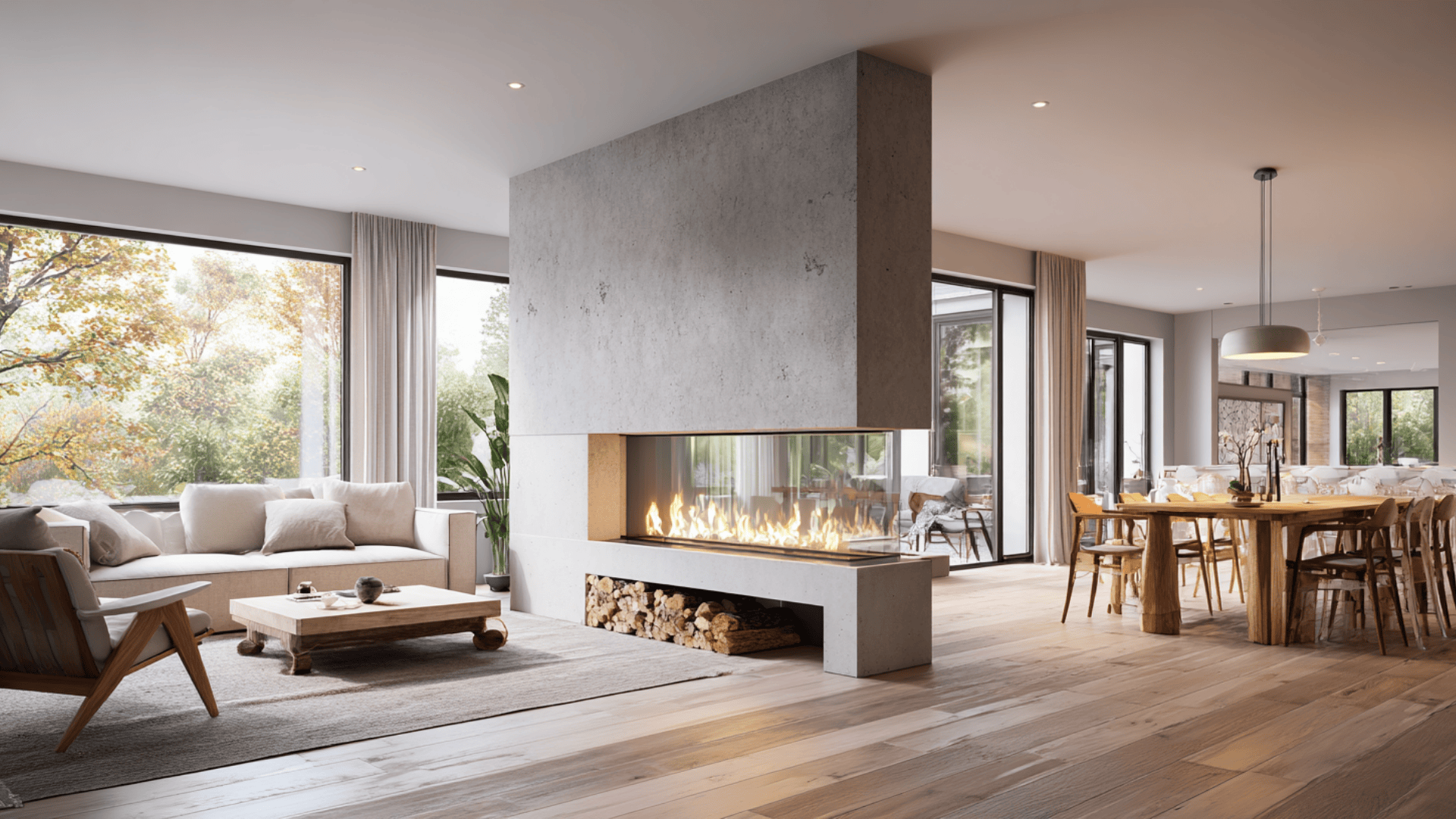
A double-sided fireplace is a stylish way to separate an open living room and dining area. Because it is see-through, you still get light and a connected feel, but each space feels more defined.
You can place the sofa on one side and the dining table on the other. It creates a warm, cozy center that both areas can enjoy. It also provides a strong focal point, making the layout look planned and balanced.
13. Built-In Bench Seating Along One Side
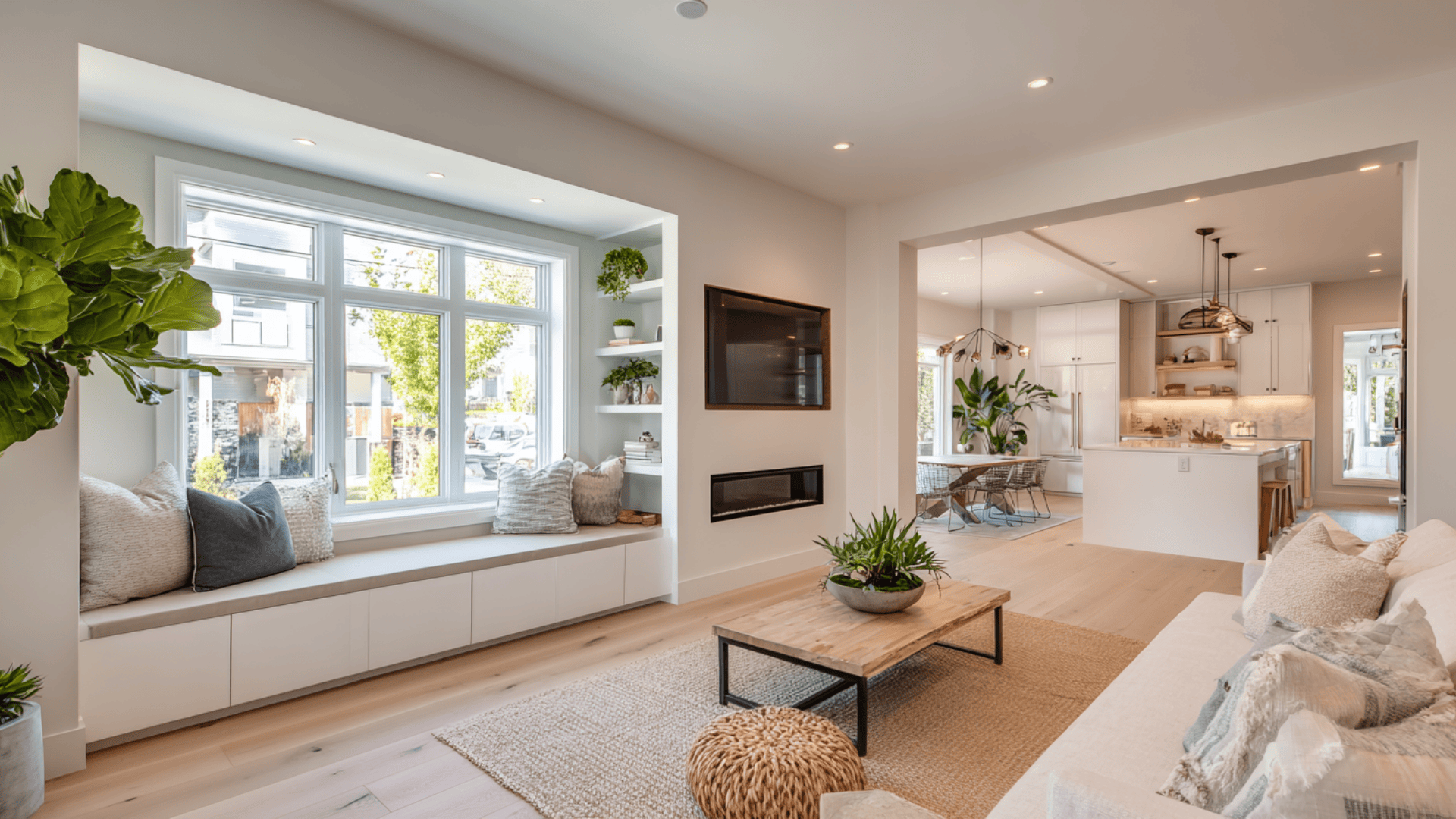
Built-in bench seating is an excellent choice for an open-concept living room because it saves space while still adding seats. You can place a bench under a window or along a long wall where bulky chairs might feel crowded.
Since it stays close to the wall, it keeps the walkway open and the room looking clean. Add cushions and a few pillows for comfort. You can also include storage under the bench for blankets, toys, or games.
14. Conversation Circle With Four Accent Chairs
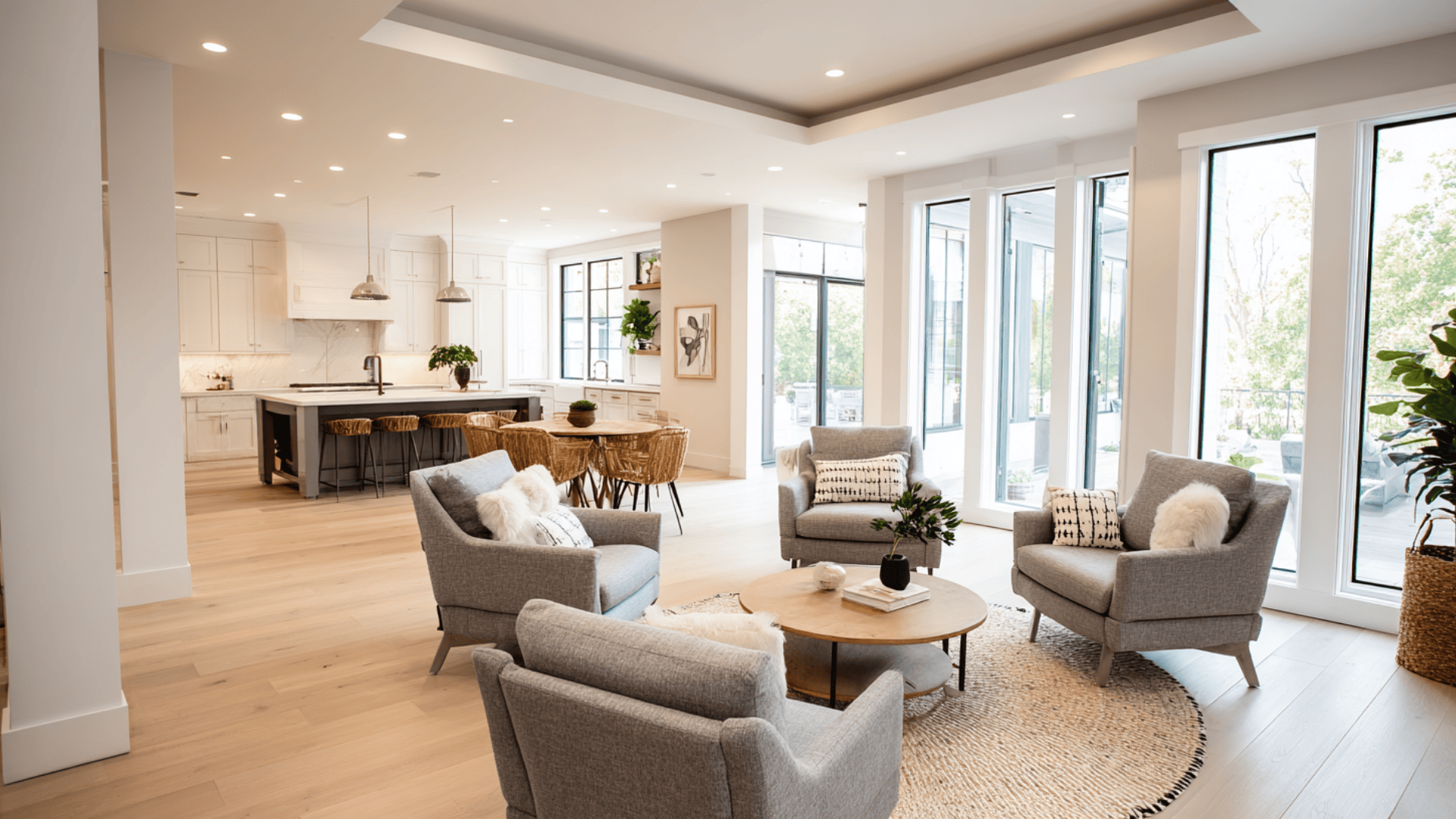
A conversation circle with four accent chairs can make an open space feel welcoming and easy to use. Instead of a big sofa, place four chairs in a circle around a small round table.
The layout is excellent for talking, reading, or having coffee with friends. It also keeps the room feeling light, which helps in an open concept living room. Add a rug under the chairs to define the zone and make it feel cozy and complete.
15. Curved Furniture For Softer Flow

Curved furniture can make an open concept living room feel softer and easier to move through. A curved sofa or rounded chairs take away harsh corners and help the space look more relaxed.
Curves also guide people around the seating area, so walking paths feel smooth and natural. It is helpful when the living room opens into the kitchen or dining area. Pair curved pieces with a round coffee table or rug to keep the look balanced and calm.
16. Symmetrical Layout With Matching Chairs
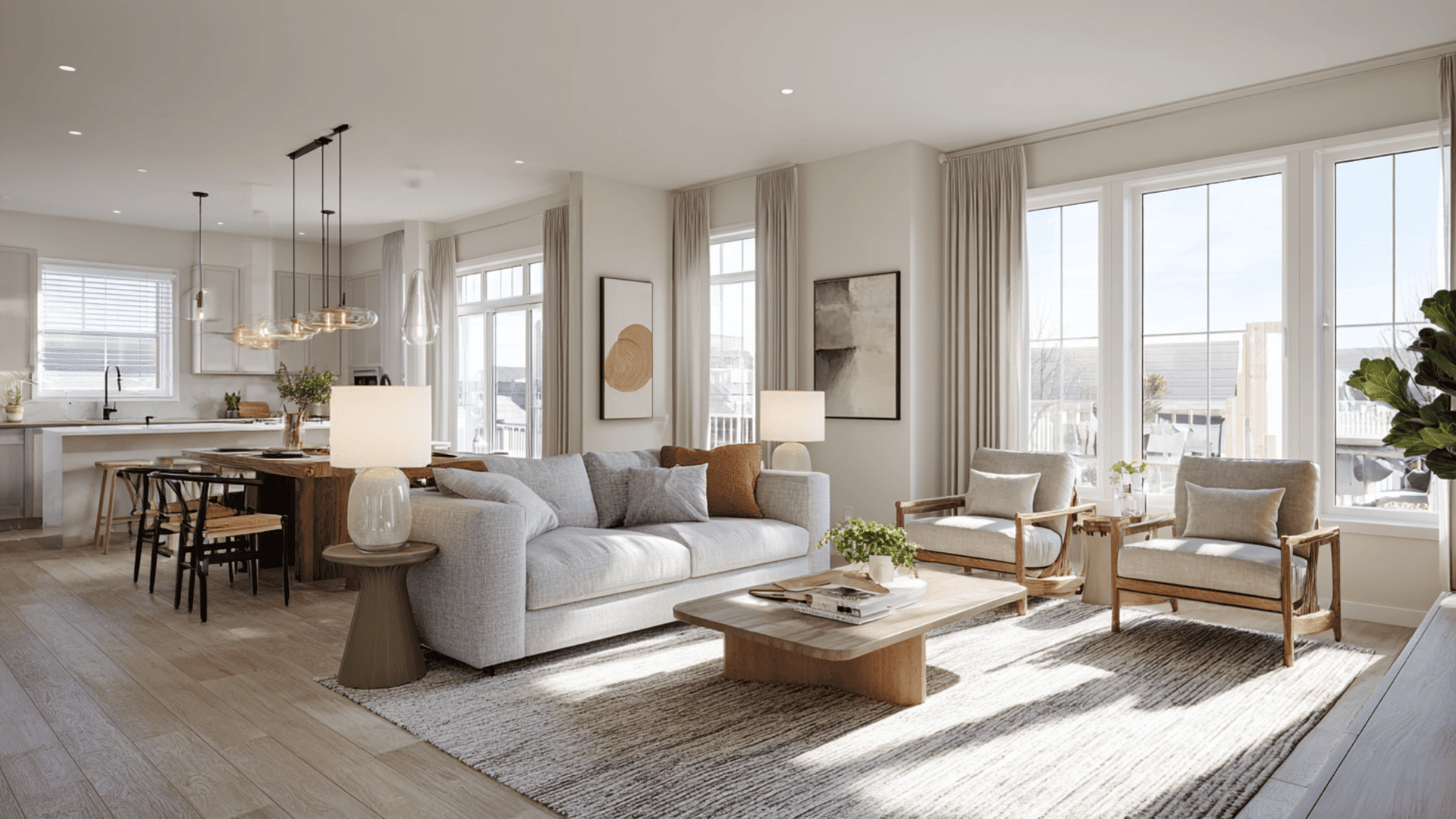
A symmetrical layout can make an open-concept living room feel calm and well-planned. Start with your sofa as the main piece, then place two matching chairs across from it. It creates balance and makes the seating area look neat from every angle.
Add a coffee table in the center and place side tables or lamps on both ends to keep the look even. Symmetry also helps the room feel organized, especially when the space is open to the kitchen or dining area.
17. Layered Textures In A Neutral Palette
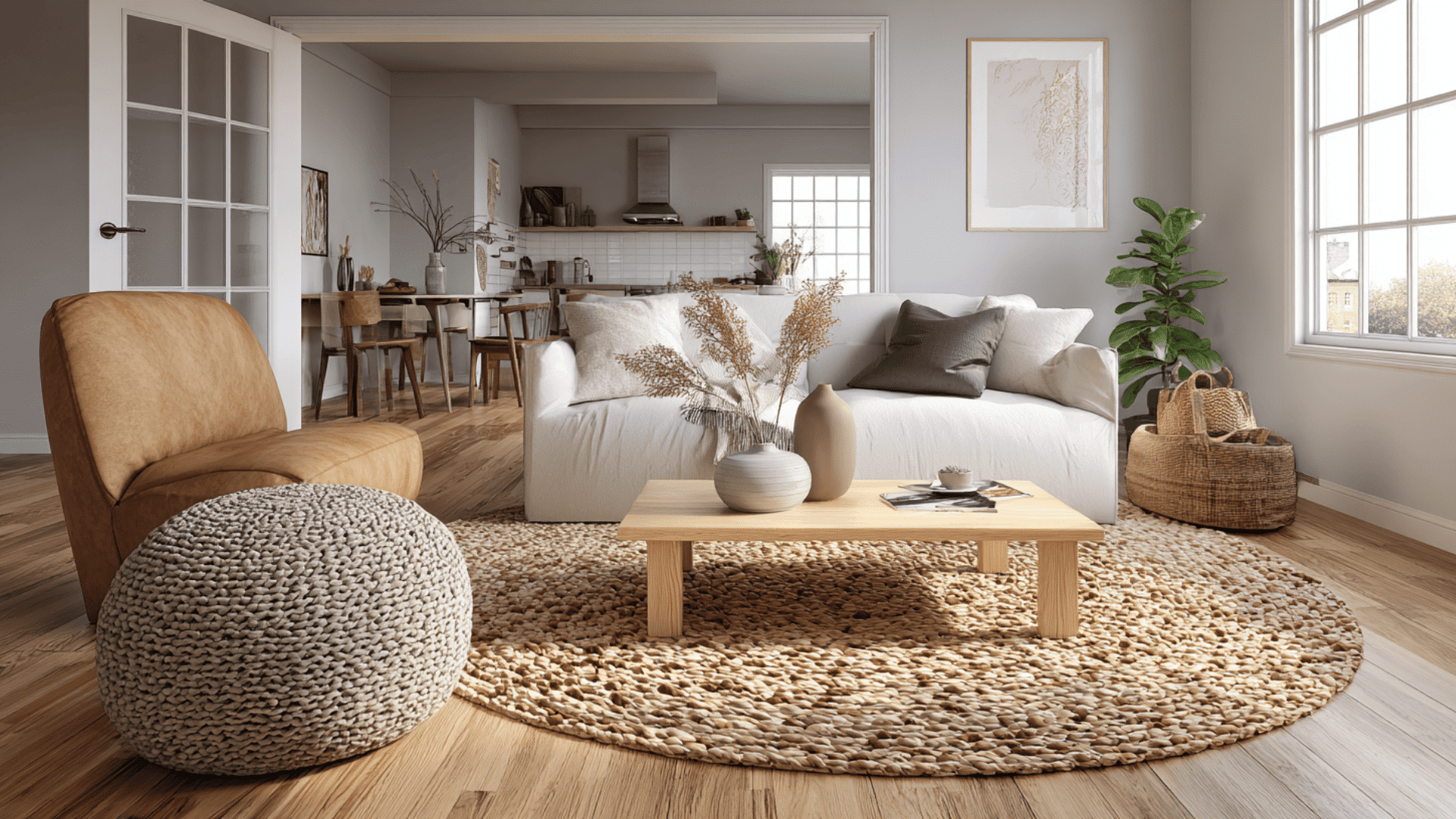
Layered textures can make an open-concept living room feel warm, even when you use simple colors. Start with a neutral palette, such as white, beige, gray, or soft tan.
Then add texture with different materials, such as a linen sofa, a woven rug, wooden tables, and a leather or bouclé chair. Mix smooth and cozy items so the space feels balanced. It keeps the room from looking flat and helps it feel more inviting without needing bright colors.
18. Bold Accent Wall With Art-Ledge Styling
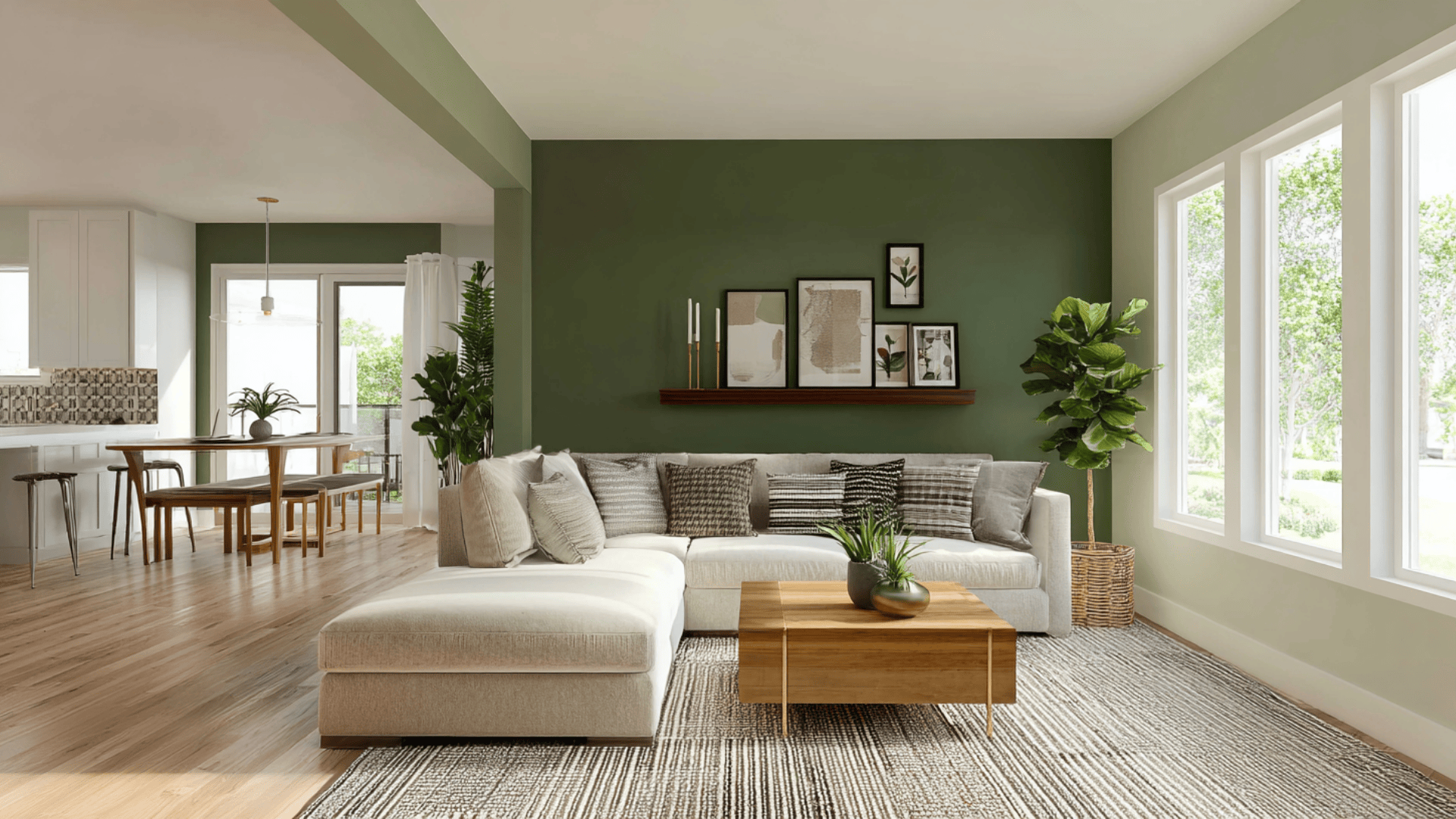
A bold accent wall can give your open concept living room a clear focal point. Choose one wall, like the one behind the sofa or TV, and use a deeper paint color or a simple wallpaper pattern.
Then add an art ledge so you can display frames, small plants, or candles without using extra floor space. You can switch the items seasonally for a fresh look. This idea adds personality while keeping the room clean and open.
19. Indoor Plants As A Soft Boundary Line
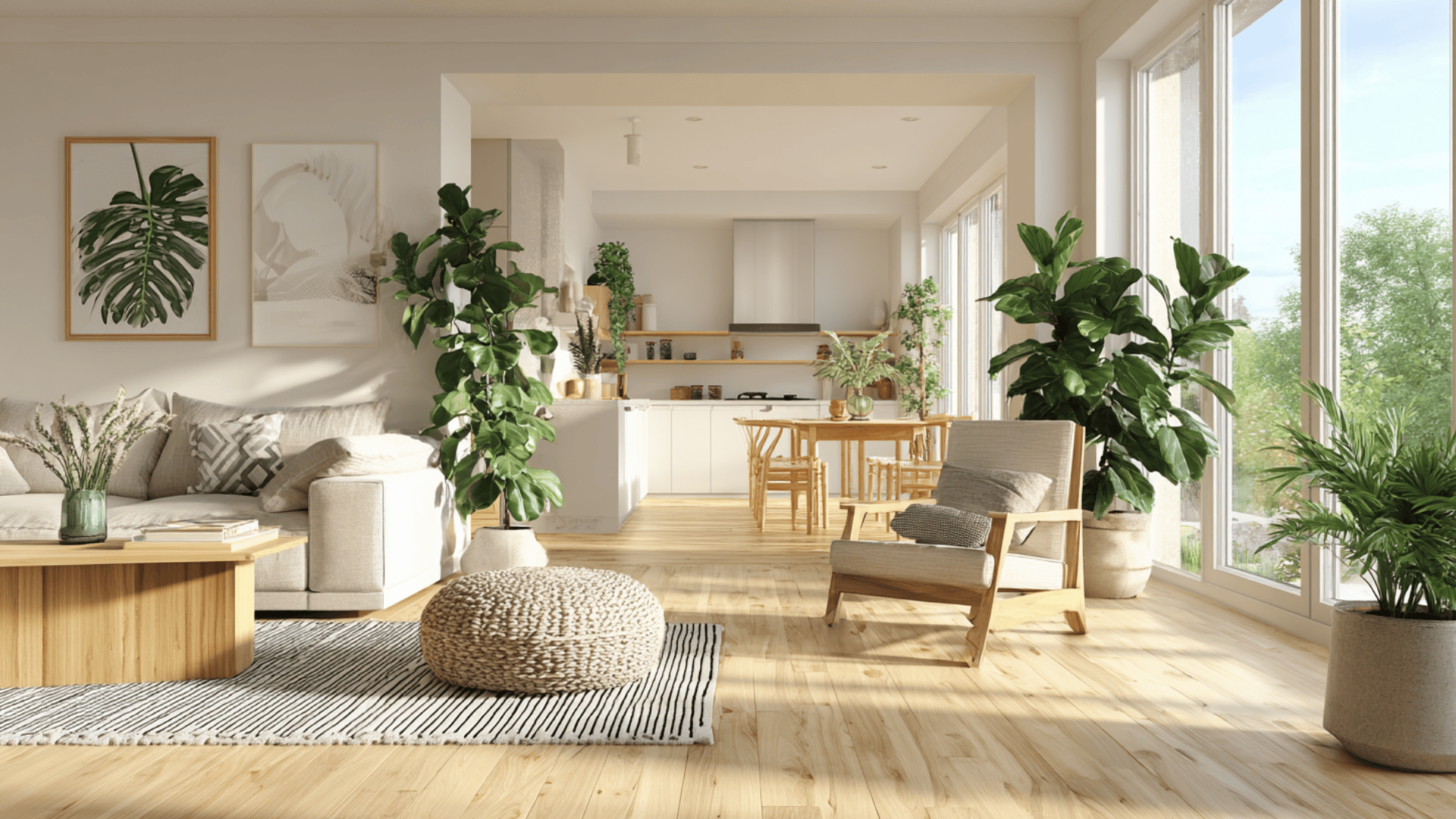
Indoor plants can create a soft boundary in an open living room layout without blocking the view. Use tall plants, such as a fiddle-leaf fig or a palm, and place them in small clusters near the edge of the living area.
It helps shape the space and makes it feel more defined. Plants also add color and life, which can warm up a large room. If you choose faux plants, pick high-quality ones, so they look real.
20. Minimalist Layout With Hidden Storage
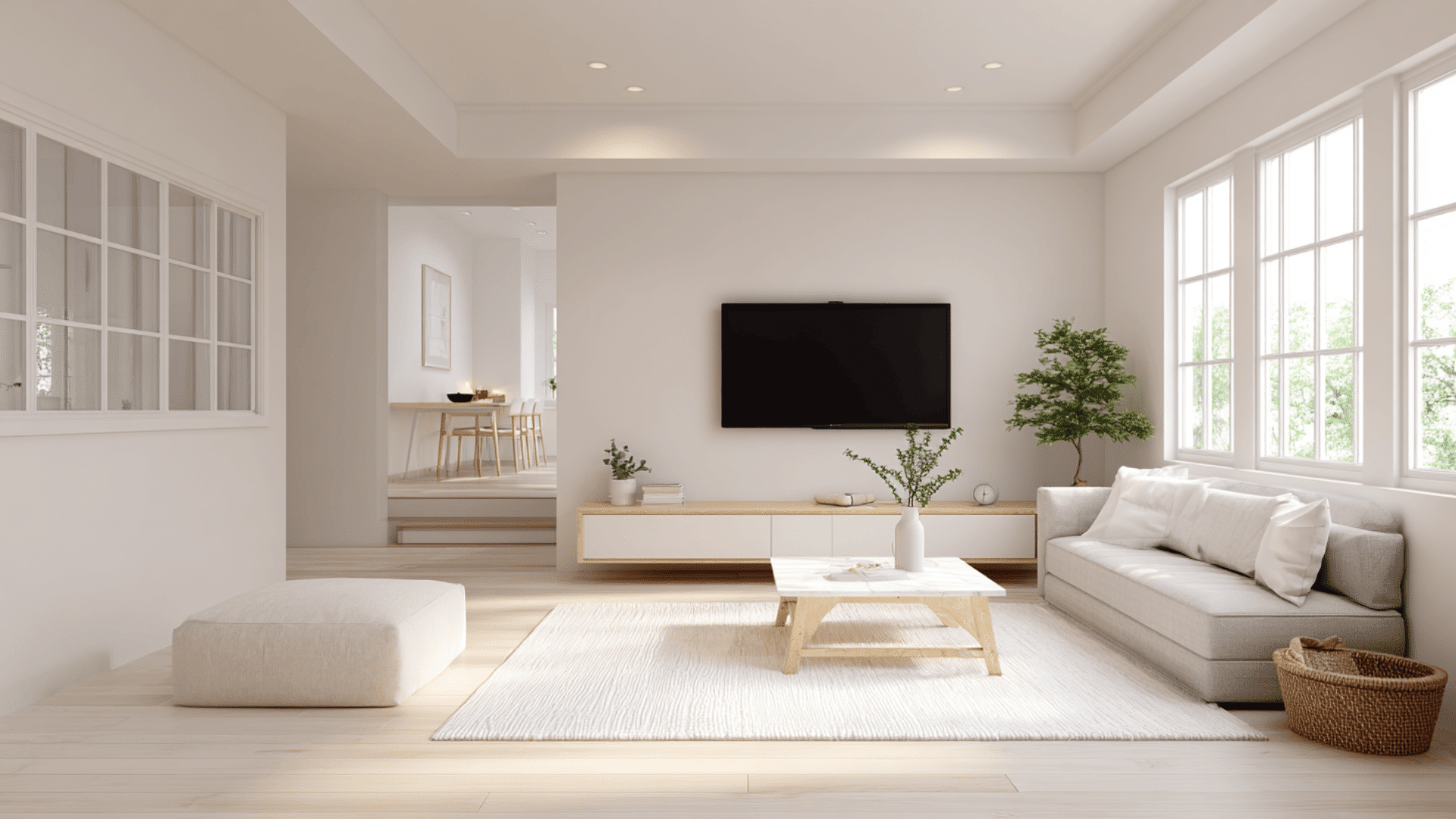
A minimalist layout works well in an open-concept living room because it keeps the entire space looking calm. Since everything is visible, clutter can stand out fast. Choose furniture with hidden storage, like a storage ottoman, a coffee table with drawers, or a closed TV console.
Use baskets to hide small items like toys, chargers, and remotes. Keep surfaces mostly clear and decorate with just a few pieces. It helps your living area feel open, tidy, and easy to enjoy every day.
21. Kitchen-To-Living Color Story For A Cohesive Look
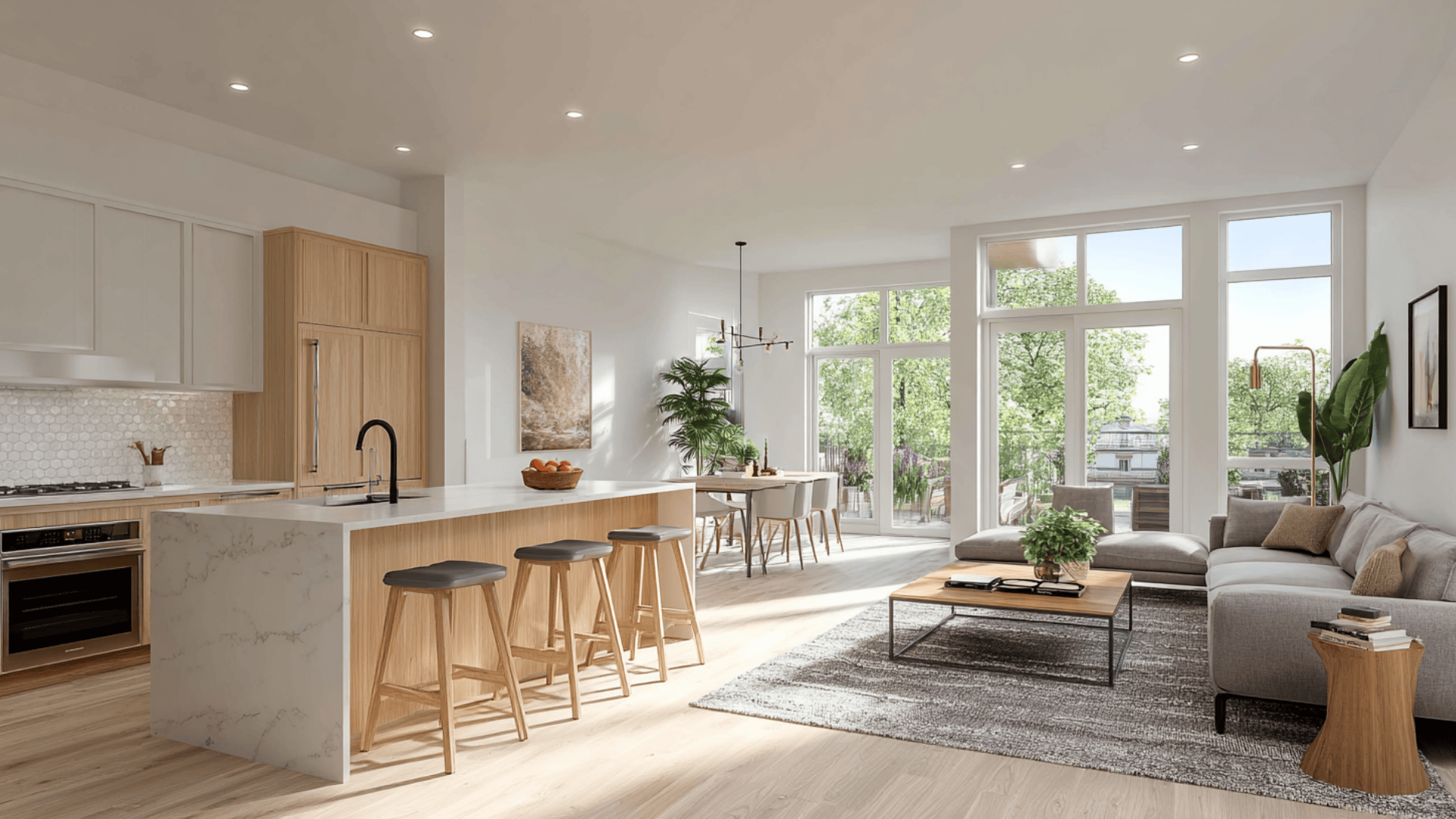
A kitchen-to-living color story helps your open-concept living room feel connected and cohesive. Pick two or three finishes to repeat in each zone, like the same wood tone, the same metal finish, and one primary fabric color.
For example, match the kitchen hardware to a floor lamp base, or repeat the same wood tone on bar stools and a coffee table. Small repeats like this make the whole space feel like a single, well-designed room rather than a collection of separate parts.
Start with one or two ideas that speak to you. You can always add more later as your space evolves. The beauty of an open concept is that you’ve got room to experiment and make it truly yours.
Common Mistakes to Avoid in an Open Concept Living Room
Open-concept spaces look amazing, but they can feel messy fast if the layout isn’t planned. These common mistakes are easy to fix and make the room feel calm.
- No Clear Zones: Without zones, the living area blends into the kitchen and dining space. Use a rug, lighting, and furniture placement to show what each location is for.
- Rug Too Small: A small rug makes furniture look scattered. Choose a rug that fits under the front legs of the sofa and chairs, so the seating area feels connected.
- Blocking Walkways: Tight walkways make the room feel cramped. Leave clear paths between the sofa, dining table, and kitchen. Aim for easy movement without having to squeeze past furniture.
- Too Much Clutter: Open plans show everything, so clutter stands out. Use closed storage, baskets, and trays to hide daily items. Keep surfaces simple with only a few decor pieces.
- No Cohesive Color Story: If colors and finishes do not match, the room feels random. Repeat two or three main finishes across zones, like wood tone, metal color, and fabric shade.
Conclusion
Open concept living room ideas work best when you start with the basics. Map your flow first so people move through the space easily.
Define zones with rugs, lighting, and furniture edges. Pull everything together by repeating finishes and layering different light sources.
You don’t need to change everything at once. Pick one upgrade that solves your biggest frustration. Maybe that’s sizing up your rug so the seating area feels grounded. Or floating your sofa to create a clear boundary.
Small shifts can make a significant difference in how the room functions and feels. Your open space has potential. It just needs a structure that works with your daily life instead of against it.
Bookmark this page so you can come back when you’re ready for the next step. Which idea are you going to try first? Drop a comment below and let us know.