Knowing how to arrange living room furniture can feel like a puzzle with no clear answer. You shift the sofa, move the rug, and it still feels wrong.
Maybe the room feels too tight. Or just off. And if you’re working with an awkward living room layout, the frustration only doubles.
But the truth is, most rooms are just one good decision away from looking really great. The right furniture arrangement does not have to cost a thing. It just takes a fresh set of eyes and a few simple rules.
And once you learn those rules, you will never look at your living room quite the same way again.
Plan Your Living Room Layout Before Moving Furniture
Before you drag a single chair across the floor, take a breath. A little planning up front saves you a lot of back pain later.
- Measure your room first: Know the exact length and width of your space. Do not guess. Even being off by a few inches can throw off your whole layout.
- Note your focal point: Every room has one. It could be a fireplace, a large window, or your TV. Your furniture arrangement should naturally lead the eye toward it.
- Mark doors and windows: You never want to block a doorway or cut off natural light. Keep those pathways clear and let the light breathe.
- Think about how you use the space: Is it mostly for movie nights, or do you host a lot of conversations? Your answer shapes everything about your layout.
- Sketch a rough layout: Grab a pen and paper and draw it out. Even a basic sketch helps you spot problems before you move a single piece of furniture.
Once you have a plan on paper, moving furniture becomes much easier. And trust the process, because a clear starting point always leads to a better result. Many furniture arrangement decisions are based on broader home design standards that focus on comfort, spacing, and how people move through a room.
Golden Rules of Living Room Furniture Arrangement1. Start with a Clear Focal Point 2. Prioritize Traffic Flow 3. Don’t Push All Furniture Against the Walls 4. Create Conversation Areas 5. Choose the Right Rug Size 6. Balance the Room Visually 7. Layer Lighting for Function and Mood |
Most Popular Living Room Furniture Layouts
Not every living room is built the same, and that is a good thing. Knowing your layout options makes it much easier to figure out how to arrange living room furniture in a way that actually works for your space.
1. Symmetrical Layout
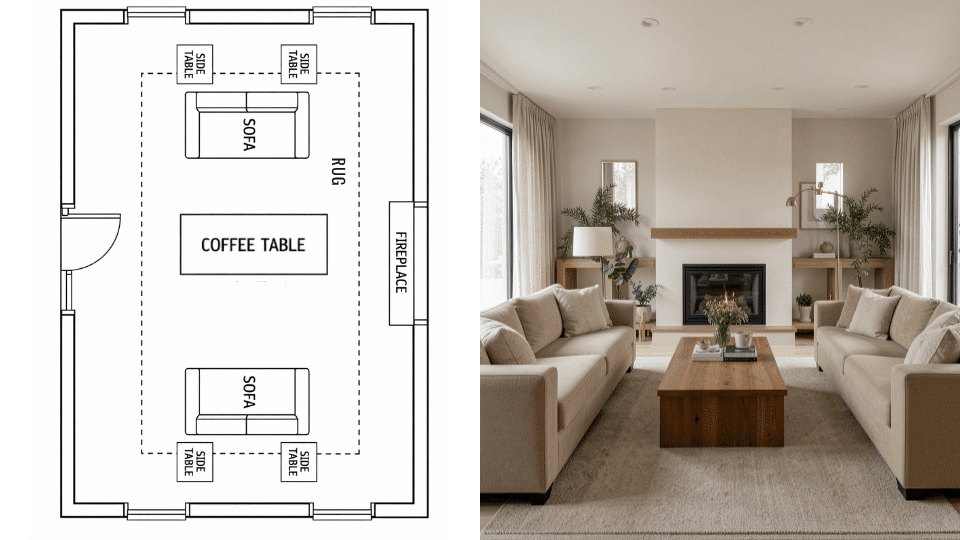
This layout is all about balance and order. Both sides of the room mirror each other, giving the space a clean, put-together look. It is one of the easiest ways to make a room feel intentional without overthinking it.
- Best for: Formal living rooms and spaces with a strong focal point
- How to: Place matching sofas or chairs on either side of a central piece like a fireplace or coffee table
- Design tip: Use identical decor on both sides to keep the balance feeling intentional, not accidental
2. Asymmetrical Layout
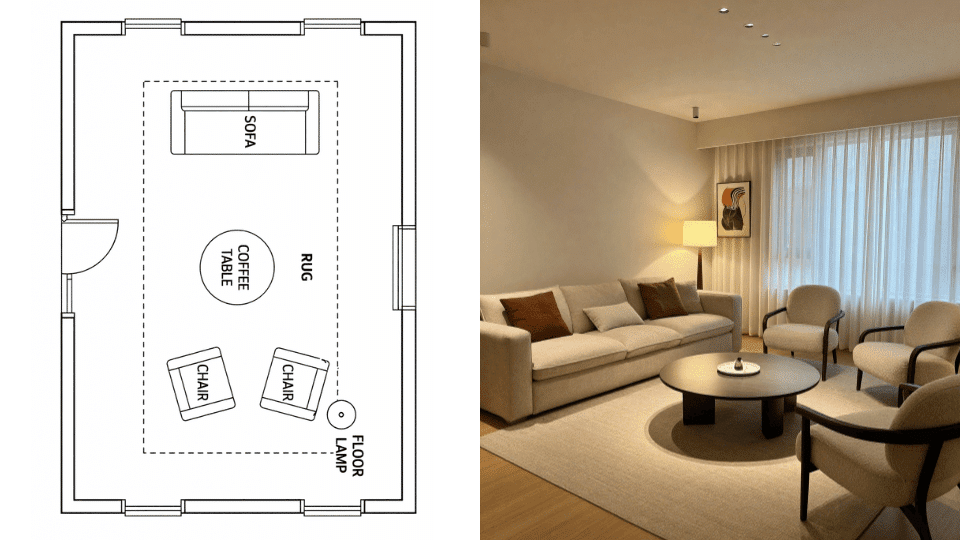
Asymmetry feels relaxed and lived-in. It gives you more creative freedom and works really well for casual, everyday spaces. Unlike symmetrical layouts, it does not require matching furniture to look good.
- Best for: Informal living rooms and creative personalities
- How to: Mix different furniture pieces of similar visual weight on each side of the room
- Design tip: Balance a large sofa with two smaller chairs on the opposite side to keep things visually even
3. L-Shaped Layout
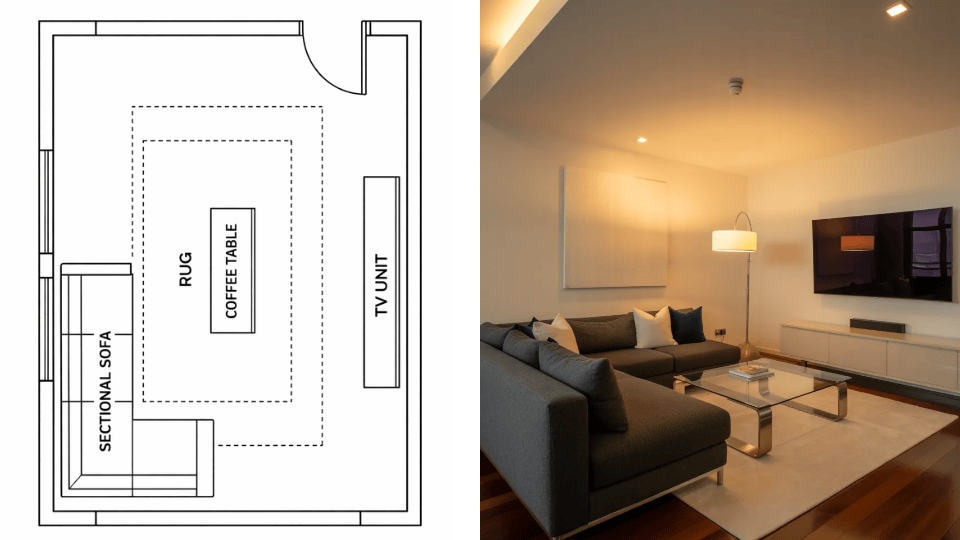
This layout uses an L-shaped sofa or two pieces arranged in an L. It is practical, comfortable, and one of the most popular awkward living room layout ideas for tricky corners and open-plan spaces. It naturally defines a seating area without needing any walls to do the work.
- Best for: Corner spaces, long and narrow living rooms, and open-plan rooms
- How to: Tuck the L-shape into a corner and anchor it with a rug and coffee table
- Design tip: Face the open end of the L toward your focal point for a natural flow
4. U-Shaped Layout
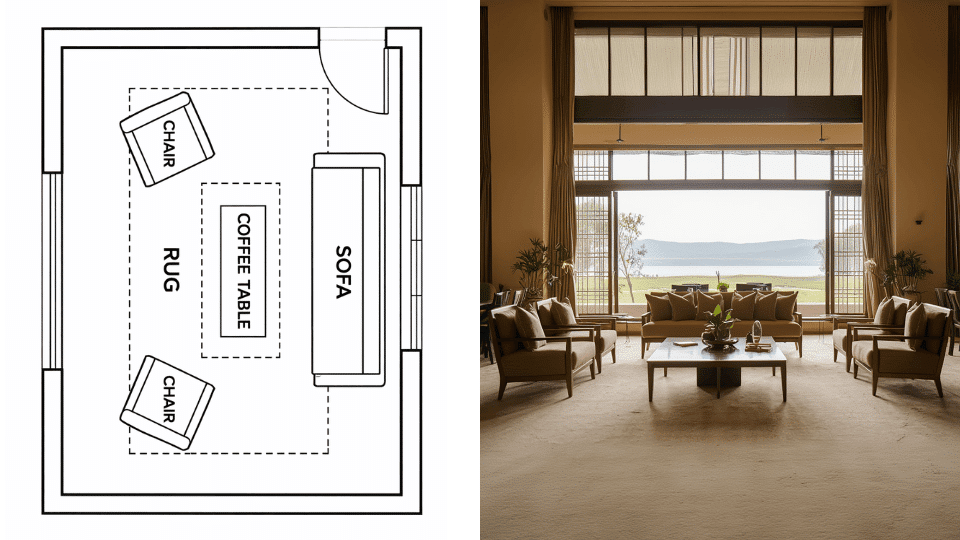
The U-shape wraps seating around a central point and is great for hosting. It feels cozy and inviting, but still leaves enough breathing room so the space does not feel cramped. If your living room sees a lot of gatherings, this one is worth trying.
- Best for: Large living rooms and families who entertain often
- How to: Use a sofa and two chairs or loveseats to form the three sides of the U
- Design tip: Place a sturdy coffee table in the center to tie all three sides together
5. Open Concept Layout
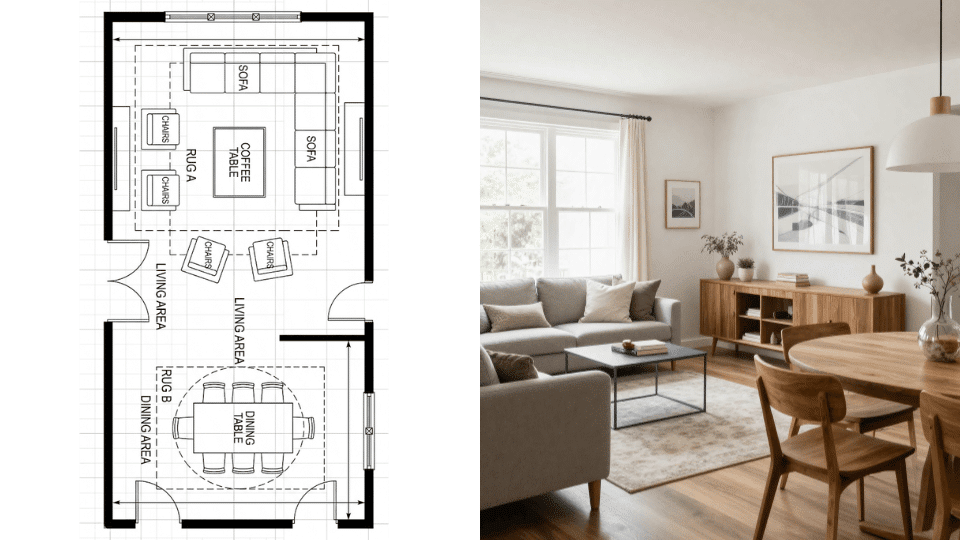
Open-concept spaces can feel tricky to pull off, but they are also really freeing once you get the hang of them. The key is to define separate zones without using walls. With the right approach, an open layout can feel both spacious and intentional at the same time.
- Best for: Combined living and dining spaces
- How to: Use rugs, lighting, and furniture placement to separate each area naturally
- Design tip: Keep a consistent color palette across zones so the space feels connected and not cluttered
6. Floating Furniture Layout
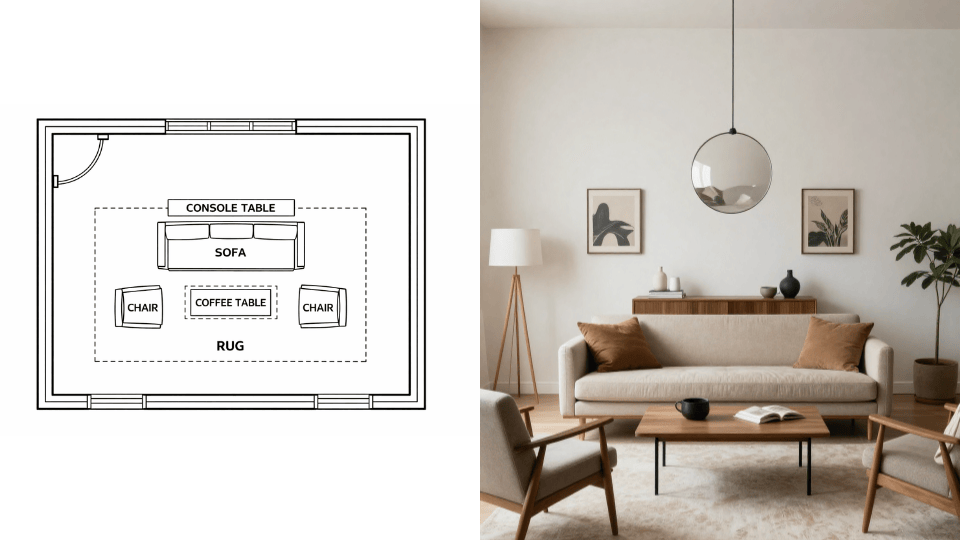
Floating means pulling your furniture away from the walls rather than lining everything up along the edges. It sounds like a small change, but it completely transforms the feel of a room. Most people are surprised by how much warmer and more put-together the space looks once they try it.
- Best for: Long, narrow living room, medium to large rooms that feel cold or too spread out
- How to: Pull seating at least 12 to 18 inches from the walls and group pieces closer together
- Design tip: Use a large area rug to ground the floating furniture and make the grouping feel intentional
7. TV-Centered Layout
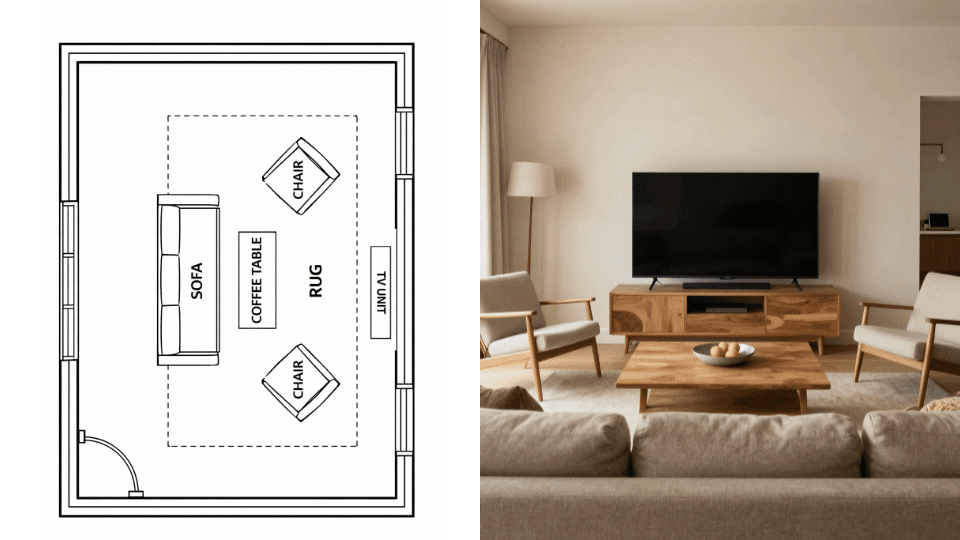
If your TV is the heart of your living room, it makes sense to build the whole layout around it. This is one of the most common and practical approaches to arranging living room furniture for everyday use. It keeps things simple, functional, and easy to settle into after a long day.
- Best for: Everyday living rooms and media-focused spaces
- How to: Position your main seating directly facing the TV at a comfortable viewing distance
- Design tip: Mount the TV at eye level when seated to avoid neck strain over time
8. Dual Focal Point Layout
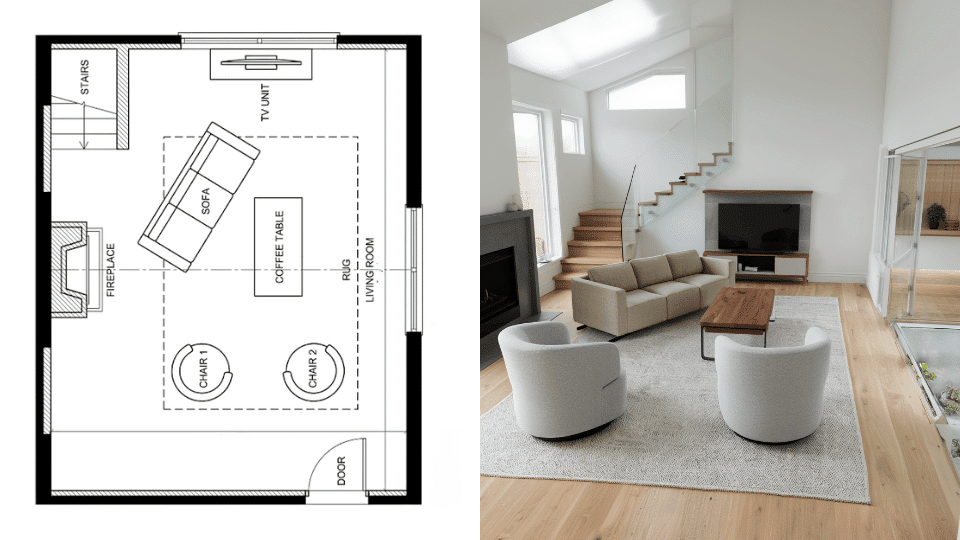
Some rooms feature two strong focal points, such as a fireplace on one wall and a TV on another. Choosing between them can feel frustrating, but this layout lets you work with both. With the right furniture placement, you do not have to sacrifice one for the other.
- Best for: Rooms with multiple architectural features
- How to: Angle seating slightly so it faces both focal points without fully committing to either
- Design tip: Use a swivel chair or two to give flexible viewing options across both focal points
9. Zoning Layout
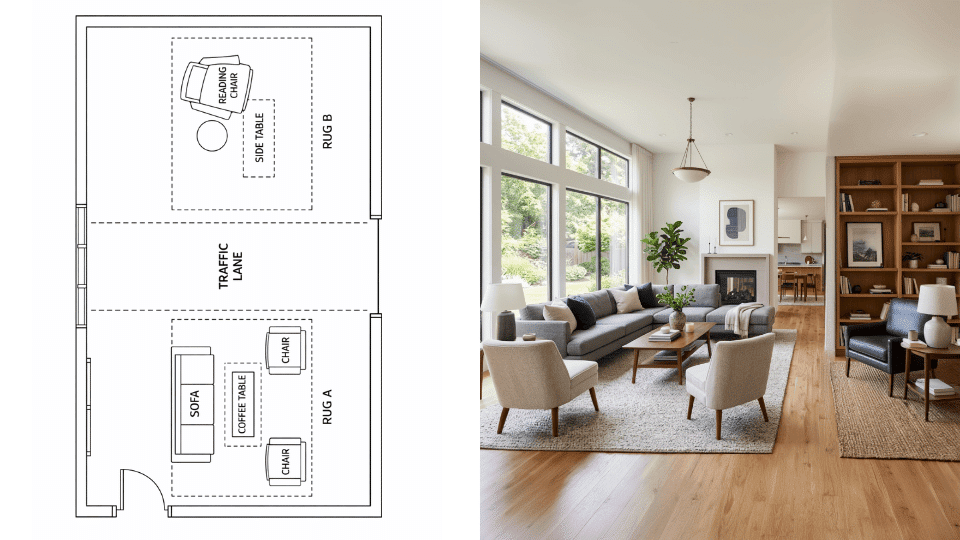
Zoning breaks one large room into smaller, purposeful areas. It is one of the smartest awkward living room layout ideas for spaces that feel too big, too open, or just oddly shaped. Done right, each zone feels like its own little space while still being part of the bigger room.
- Best for: Awkward living room, large rooms, and open-plan living areas
- How to: Use rugs, furniture groupings, and lighting to carve out distinct zones within the same room
- Design tip: Keep each zone with a clear purpose, like one for reading and one for watching TV
10. Minimalist Layout
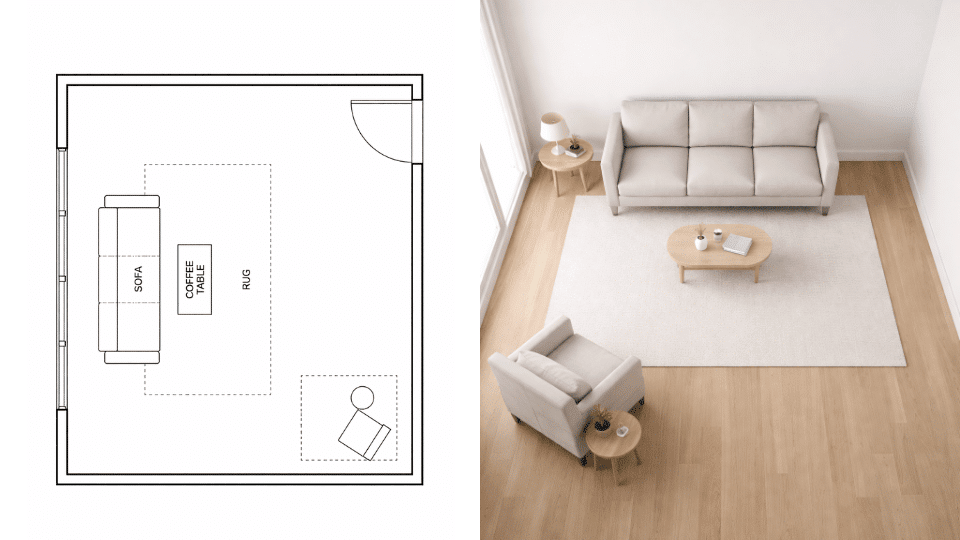
A minimalist layout is built on the idea that a room does not need to be full to feel complete. You keep only what you need and let the space breathe on its own terms. It is a great option for a small living room layout, but honestly, it works just as well in any space you want to create a calm, uncluttered feel.
- Best for: Small spaces and anyone who loves a clean, simple aesthetic
- How to: Choose a few key furniture pieces and resist the urge to fill every corner
- Design tip: Stick to a neutral color palette and let negative space do the decorating for you
With so many layout options, there is no reason to settle for a setup that does not work. Try one, and if it does not feel right, simply try another. Your perfect layout is closer than you think.
Pro Tips to Make any Arrangement Look Bigger and Better
A good layout is just the starting point. A few smart finishing touches are what take a room from decent to really impressive. And the best part is, none of these tips require a big budget.
- Use mirrors to open up the space: A well-placed mirror reflects light, making any room feel larger than it actually is.
- Choose furniture with legs: Pieces that sit off the floor create a sense of airiness and visual breathing room.
- Layer your lighting: Do not rely on just one overhead light. Add floor lamps or table lamps to create warmth and depth.
- Stick to a consistent color palette: Too many competing colors make a room feel busier and smaller than it is.
- Use vertical space: Tall bookshelves or high-hung curtains draw the eye upward, making ceilings feel higher.
These tips work alongside any layout you choose. Apply even two or three of them, and you will notice a real difference in how your room looks and feels.
Final Thoughts
Arranging a living room is not always straightforward, and that is completely okay. Every room has its quirks, and every person has a different idea of what feels comfortable.
But here is what stays true across every space: the right approach to how to arrange living room furniture does not need to be complicated. You do not need to buy new furniture or hire anyone. You just need a clear plan, a few solid rules, and the confidence to try something different.
Start with one change. Move the sofa, pull furniture off the walls, or try a layout you have never considered before. Small shifts often make the biggest difference. And if a layout does not feel right, just try the next one.
Ready to change your space? Start today and see the difference for yourself.
Frequently Asked Questions
What Is the Biggest Mistake in Placement of Furniture?
The biggest mistake in furniture placement is pushing all the furniture against the walls, which makes the room feel empty and disconnected rather than cozy and functional.
What are Common Living Room Layout Mistakes?
Common living room layout mistakes include blocking walkways, using a rug that is too small, ignoring the main focal point, placing furniture too far apart, and overcrowding the space with too many pieces.
What is the Best Color for a Living Room?
The best color for a living room is usually a neutral shade like white, beige, gray, or soft earth tones, as these colors make the space feel open and calm while allowing you to add personality through decor and accents.