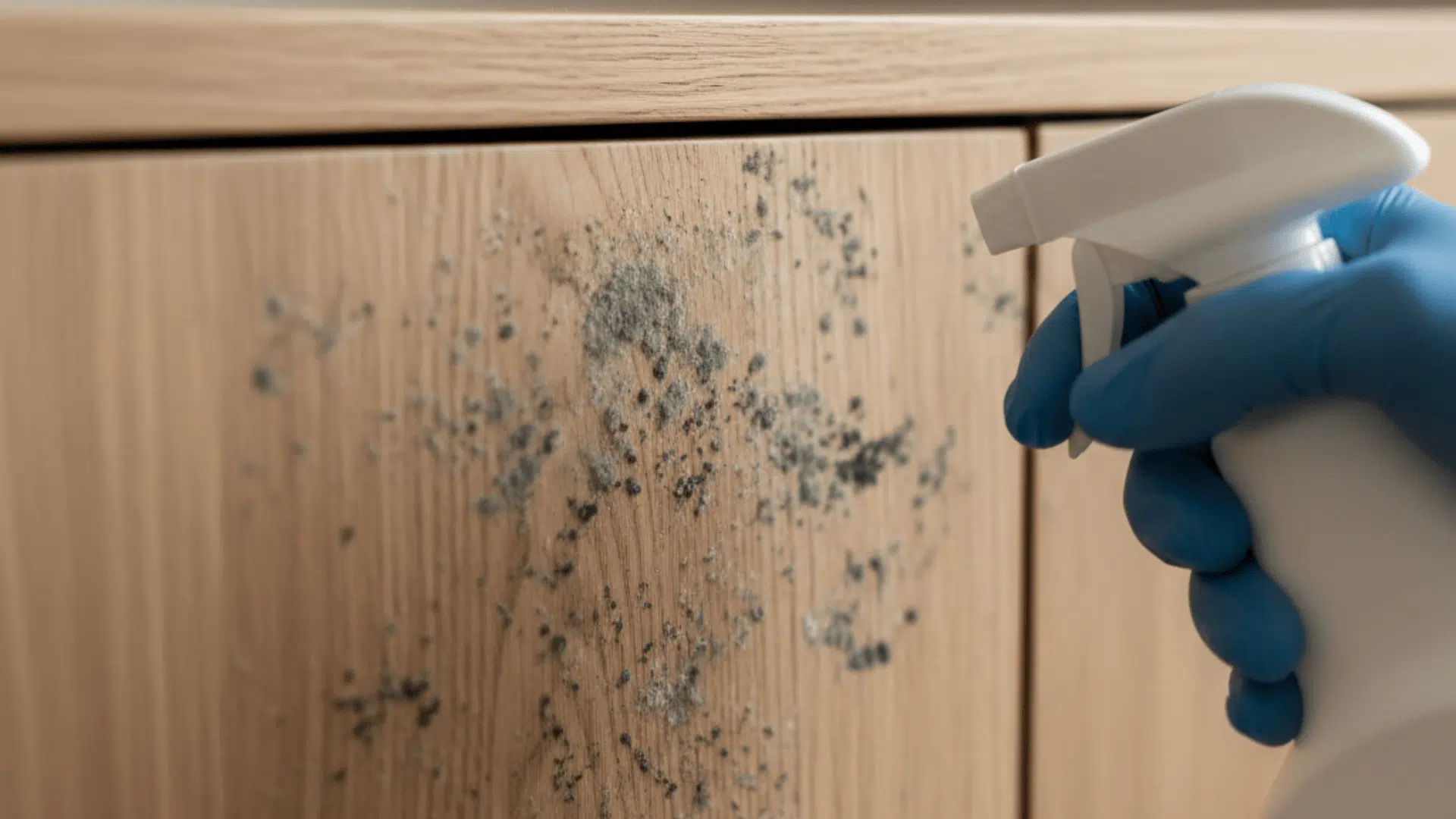
Ever walked into your basement and spotted fuzzy green patches on your favorite wooden dresser? That’s mold on wood furniture, and it’s more common than you think.
Some cases involve mild surface mold, while others involve black mold on wood, which can pose serious health risks if left untreated. Maybe it’s the chair your grandmother passed down, or the table you picked up at a yard sale. Whatever the piece, finding mold can feel overwhelming.
The good news? You’re not alone, and most mold problems are fixable. Mold on wood furniture happens when moisture meets wood in the wrong conditions.
It’s not just about looks; mold can harm your health and damage your furniture if left unaddressed. But here’s the thing: catching it early and knowing what to do makes all the difference.
Below are clear steps to remove mold safely and reduce the risk of it returning.
What Is Mold On Wood?
Mold on wood furniture is a living organism that feeds on organic materials and releases microscopic spores into the air. You’ll recognize it by fuzzy patches, discoloration, or a musty smell.
For most people, small amounts aren’t immediately dangerous, but prolonged exposure can cause allergic reactions, respiratory issues, headaches, and skin irritation. Those with asthma, allergies, or weakened immune systems face higher risks.
Some molds can produce mycotoxins. Color alone can’t confirm the type. If you have heavy growth, recurring mold, or symptoms, consider professional help.
Surface mold is usually manageable with proper cleaning, but deep penetration or large areas may require professional remediation or disposal.
Different Types of Mold on Wood
Here are some types of mold on wood, often seen as colored spots or fuzzy patches in damp areas such as basements, trim, and stored furniture.
| Mold Type | Common Look at Wood | Where It Shows Up |
|---|---|---|
| Cladosporium | Olive-green, brown, or black spotting | Basements, window trim, damp rooms, wood near condensation |
| Penicillium | Blue-green or green fuzzy patches | Water-damaged wood, stored furniture, and damp indoor areas |
| Aspergillus | White, yellow-green, or dark powdery growth | Humid spaces, dusty or damp wood surfaces |
| Alternaria | Dark brown to black spots, sometimes velvety | Areas with leaks, damp basements, and low-airflow rooms |
| Stachybotrys (Black Mold) | Greenish-black patches on very wet materials | Chronically wet, water-damaged areas; wood that stays damp |
| Chaetomium | Dark growth, sometimes cottony at first | Long-term water damage, damp wood, and building materials |
| Aureobasidium | Pink, brown, or black smudges or streaks | Wood near windows, damp trim, and condensation-prone areas |
What Causes Mold On Wood Furniture?
Mold needs three things to grow: moisture, warmth, and organic material, which wood naturally provides.
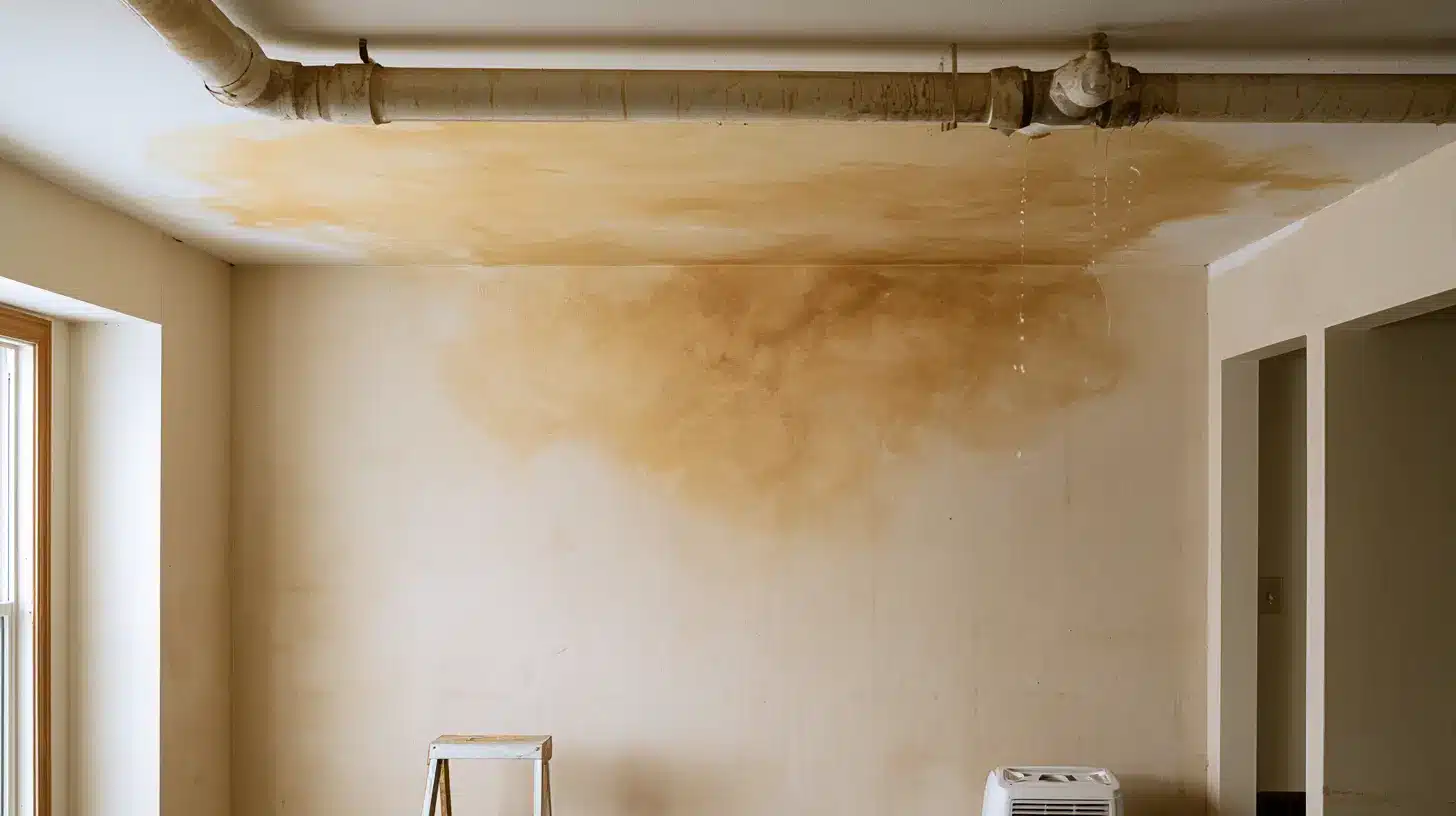
- Moisture: Water damage from leaks, floods, or spills that aren’t dried quickly creates the damp environment that mold loves. High humidity levels above 60% in your home can also cause condensation on wood surfaces, especially in basements, attics, or poorly ventilated rooms.
- Poor air circulation: It traps moisture around furniture. Pieces pushed flush against exterior walls, stored in closed rooms, or packed tightly in storage units can’t breathe, allowing humidity to linger on surfaces.
- Temperature: It plays a supporting role; mold grows faster in warm, damp conditions, but it can also grow in cooler areas.
- Lack of Sunlight: Dark rooms allow moisture to stay on wood much longer. Sunlight naturally dries surfaces and has mild antimicrobial properties, making shaded furniture an easy target for mold.
- Dust and Dirt Buildup: Dust and grime act as extra food for mold. Furniture that isn’t cleaned regularly, especially in hidden spots, builds up layers of dirt that speed up mold growth.
DIY Methods to Remove Mold from Wood Furniture
Different mold situations need different solutions. Some methods work better for light surface mold, while others tackle stubborn or deep growth. Choose the approach that matches your furniture’s condition and the severity of the mold.
1. White Vinegar Solution
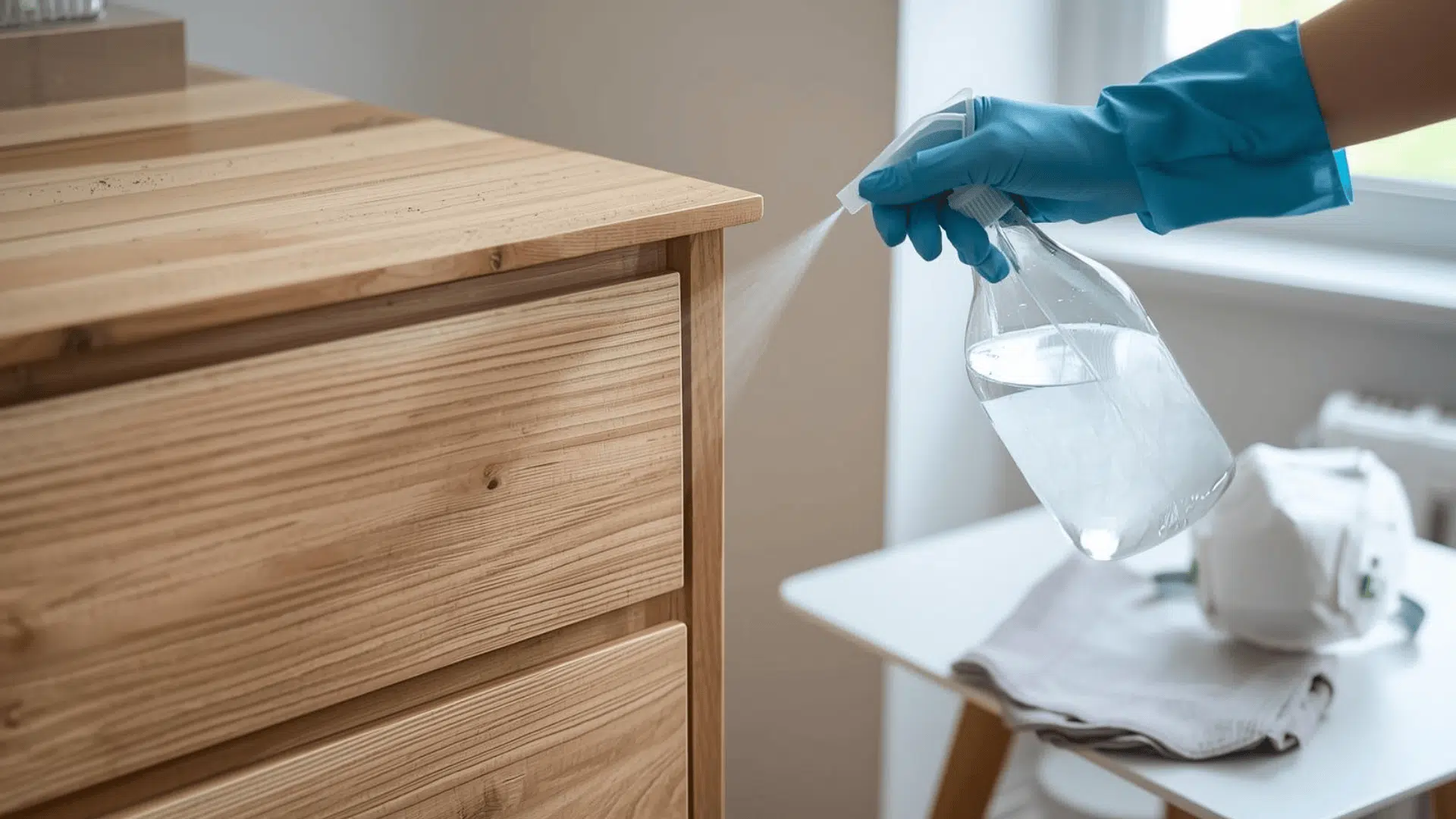
White vinegar kills about 82% of mold species naturally. It’s safe for most wood finishes and doesn’t leave harmful residues. This method works well for light to moderate mold on wood furniture.
- Best For: Light to moderate surface mold, preventive treatment, eco-friendly cleaning
- Tools and Materials: White distilled vinegar (undiluted), spray bottle, soft cloth or microfiber towel, protective gloves, and mask
- Steps to Follow: Wear protective gear, spray undiluted vinegar on the moldy area, let sit for one hour, wipe with a damp cloth, dry immediately, repeat if needed
2. Dish Soap & Warm Water
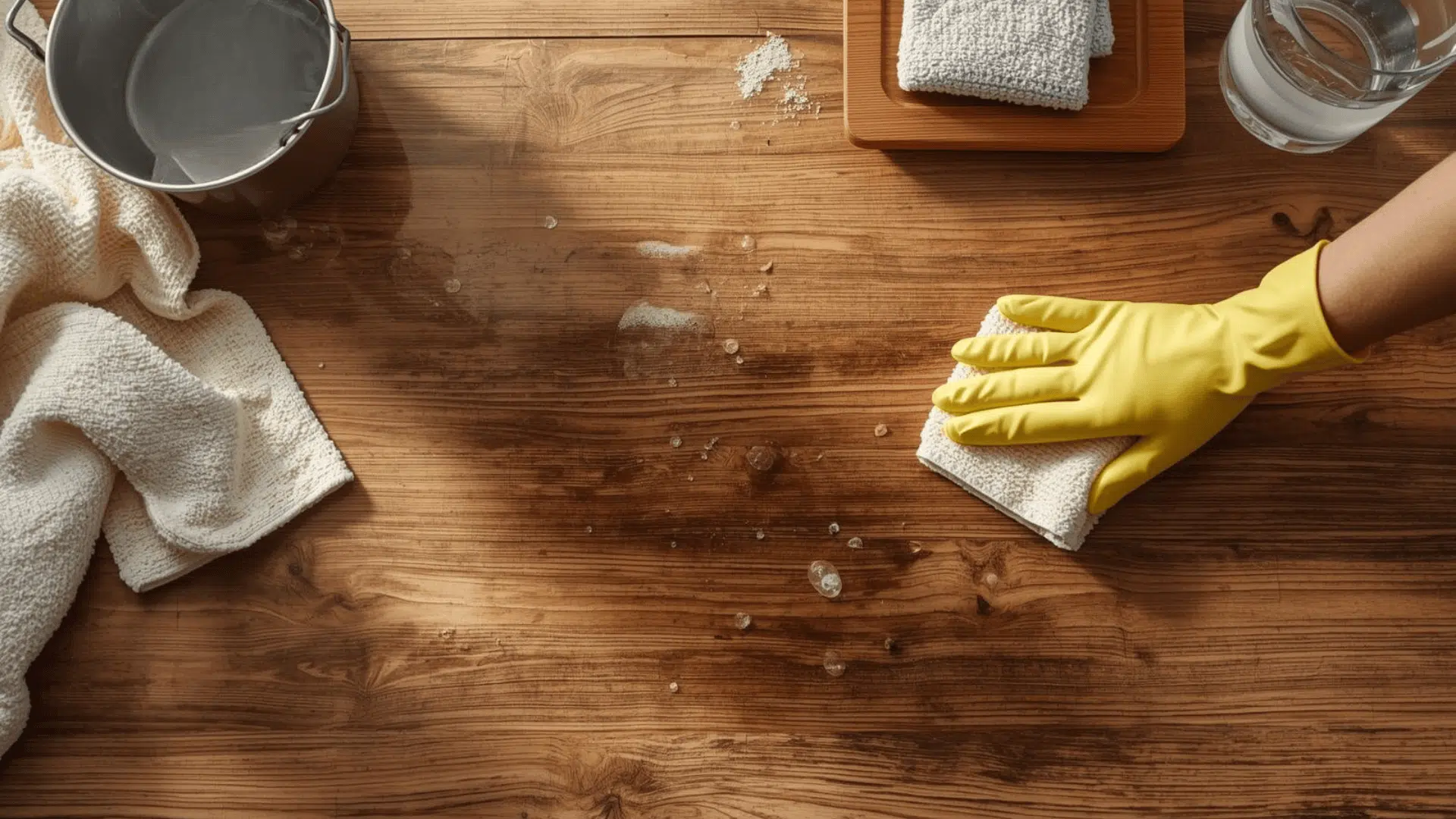
This is the EPA’s recommended first step for removing mold from wood. Mild detergent and water remove surface mold safely without harsh chemicals. It’s gentle enough for all wood types and finishes.
- Best For: First cleaning attempt, light surface mold, finished wood furniture
- Tools and Materials: Mild dish soap, warm water, bucket, soft cloth or sponge, dry towels
- Steps to Follow: Mix soap with warm water, dampen a cloth, and wipe moldy areas. Rinse the cloth frequently, dry the surface immediately, and check after 24 hours
3. Hydrogen Peroxide (3%)
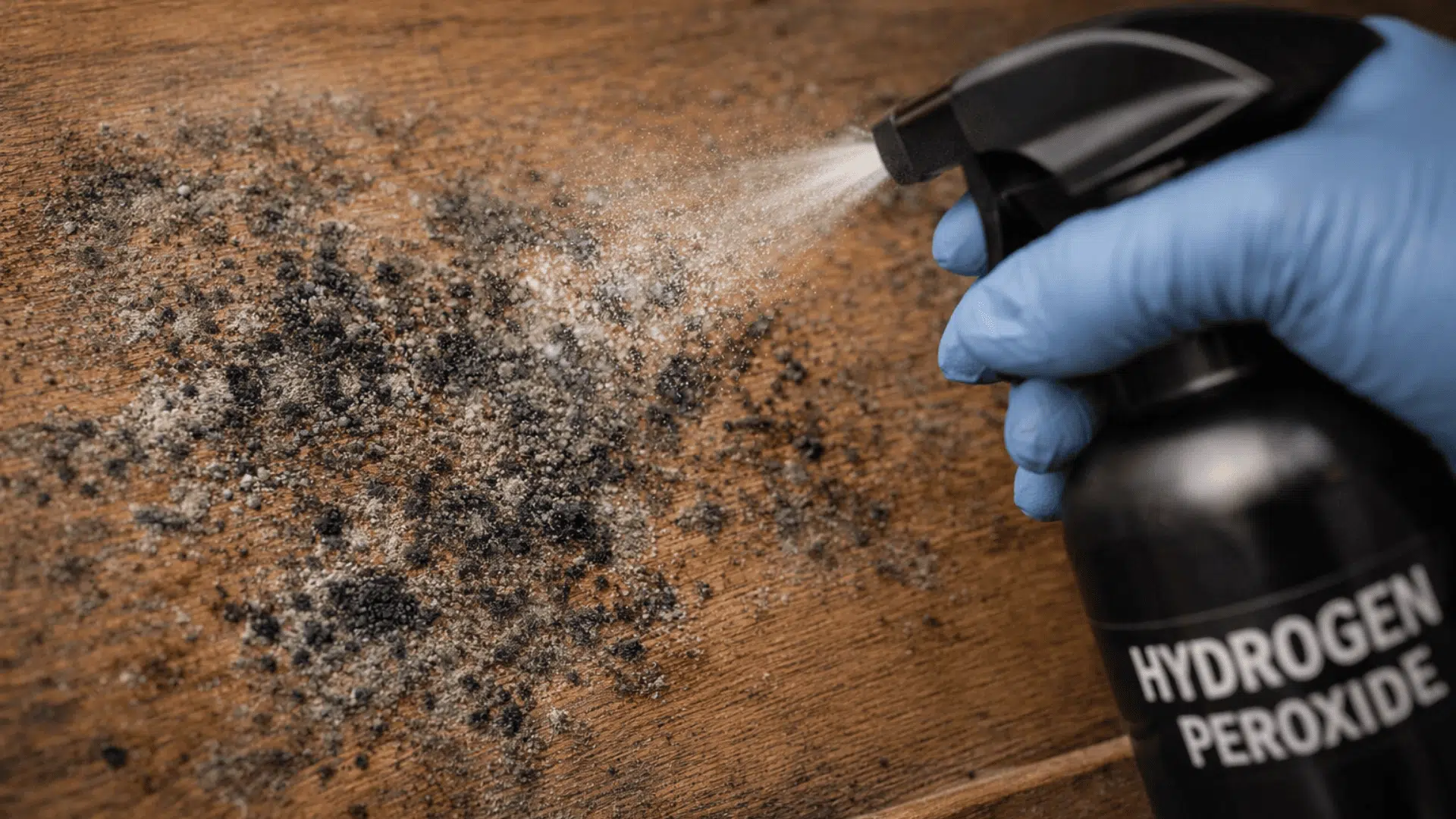
Hydrogen peroxide penetrates better than vinegar and kills mold effectively. It’s stronger than soap but gentler than bleach. This method targets stubborn mold on wood that didn’t respond to milder treatments.
- Best For: Stubborn mold spots, moderate to heavy surface mold, porous wood surfaces
- Tools and Materials: 3% hydrogen peroxide solution, opaque spray bottle, soft-bristle brush, protective gear, clean cloths
- Steps to Follow: Test on hidden area first, spray peroxide on mold, let sit 10-15 minutes, scrub gently, wipe clean, dry thoroughly
4. Bleach Solution
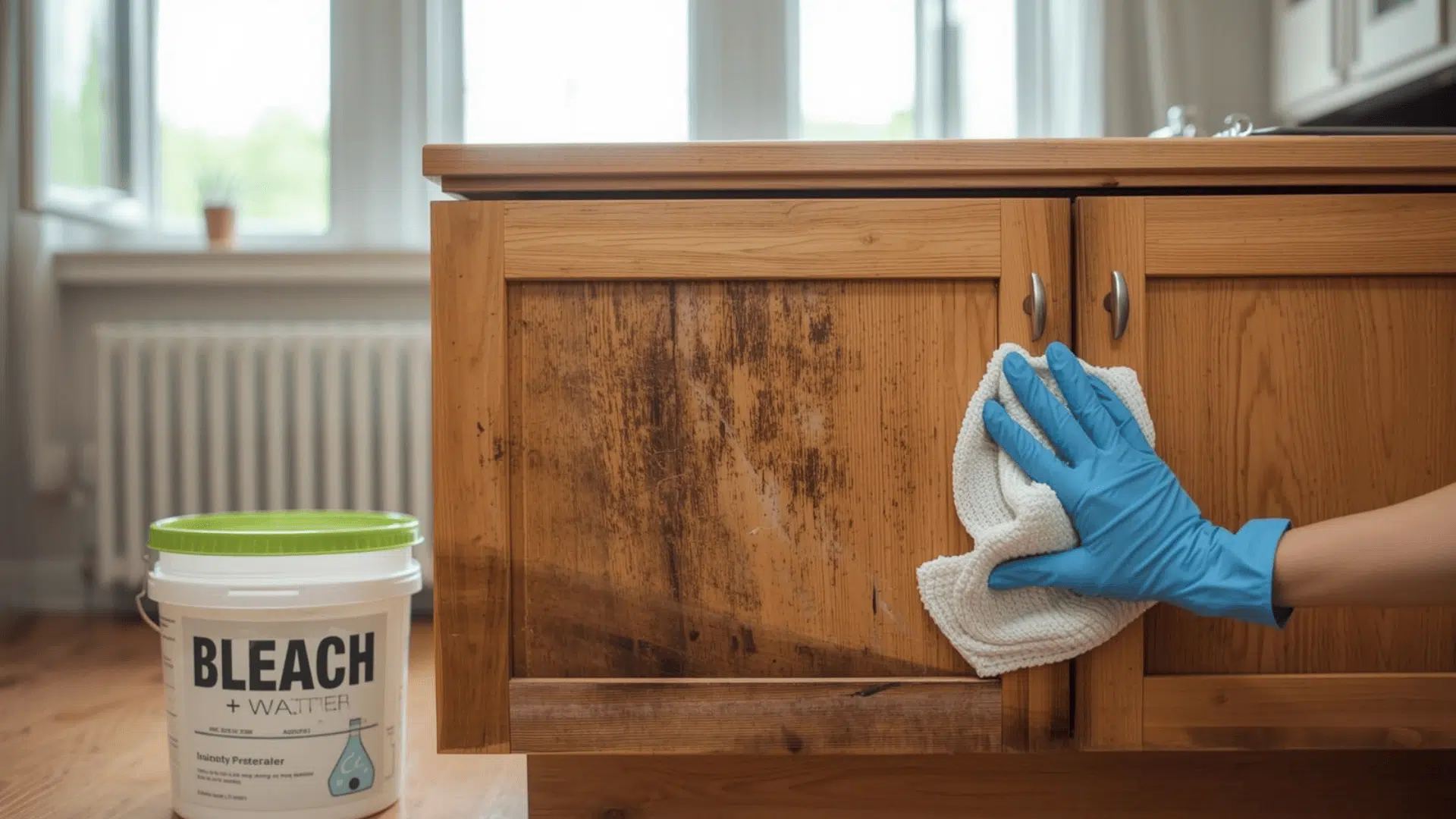
Bleach kills surface mold quickly but doesn’t penetrate porous wood well. It can damage finishes and create toxic fumes. Use this method only on non-porous, sealed wood as a last resort for black mold on wood.
- Best For: Sealed wood surfaces only, severe surface mold, when other methods failed
- Tools and Materials: Household bleach, water, bucket for mixing, rubber gloves, N95 mask, eye protection, soft cloth
- Steps to Follow: Mix 1 cup of bleach with 1 gallon of water in a ventilated area, wear protective gear, apply with a cloth, let sit 10 minutes, wipe clean, dry completely
5. Sanding
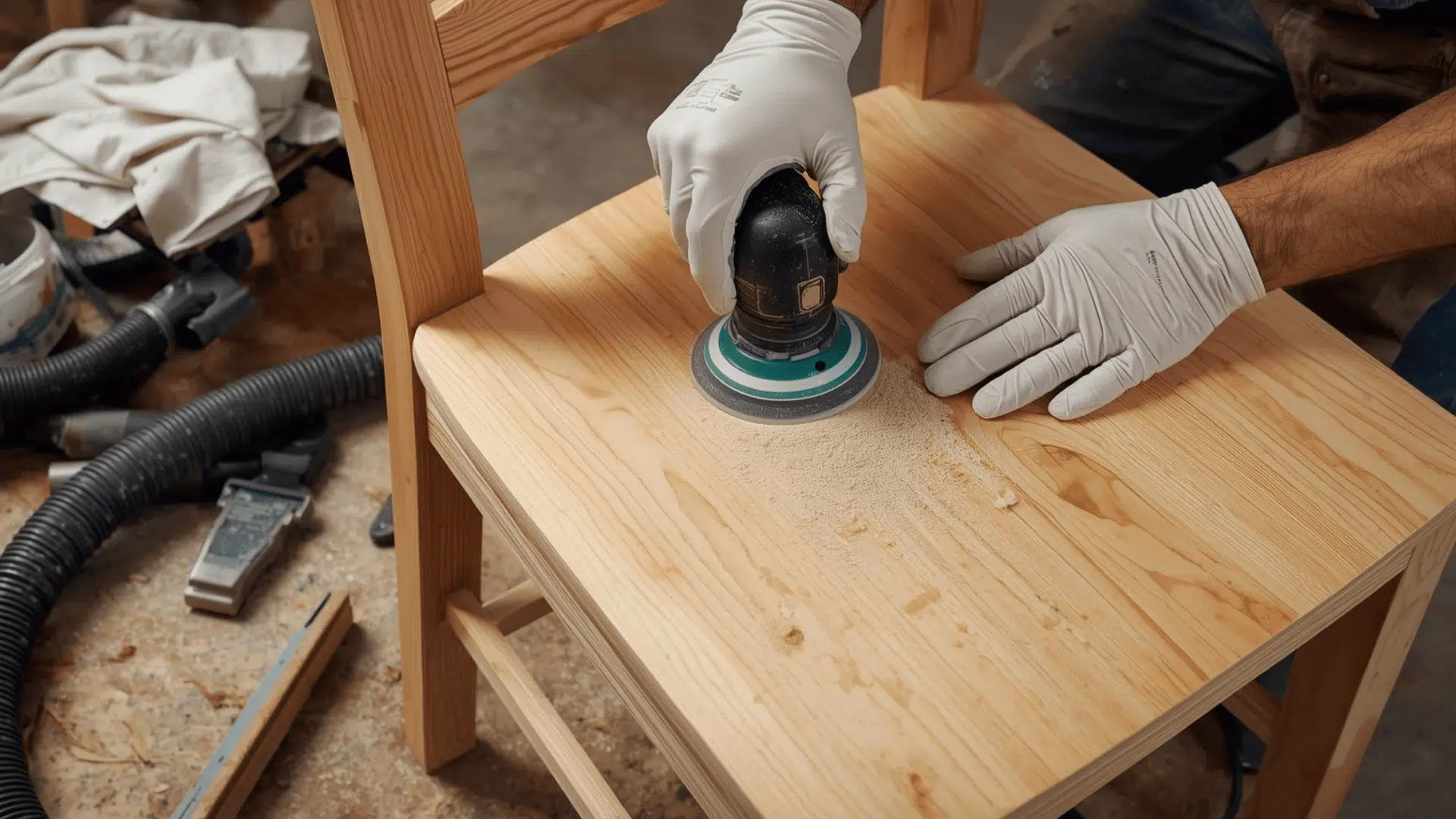
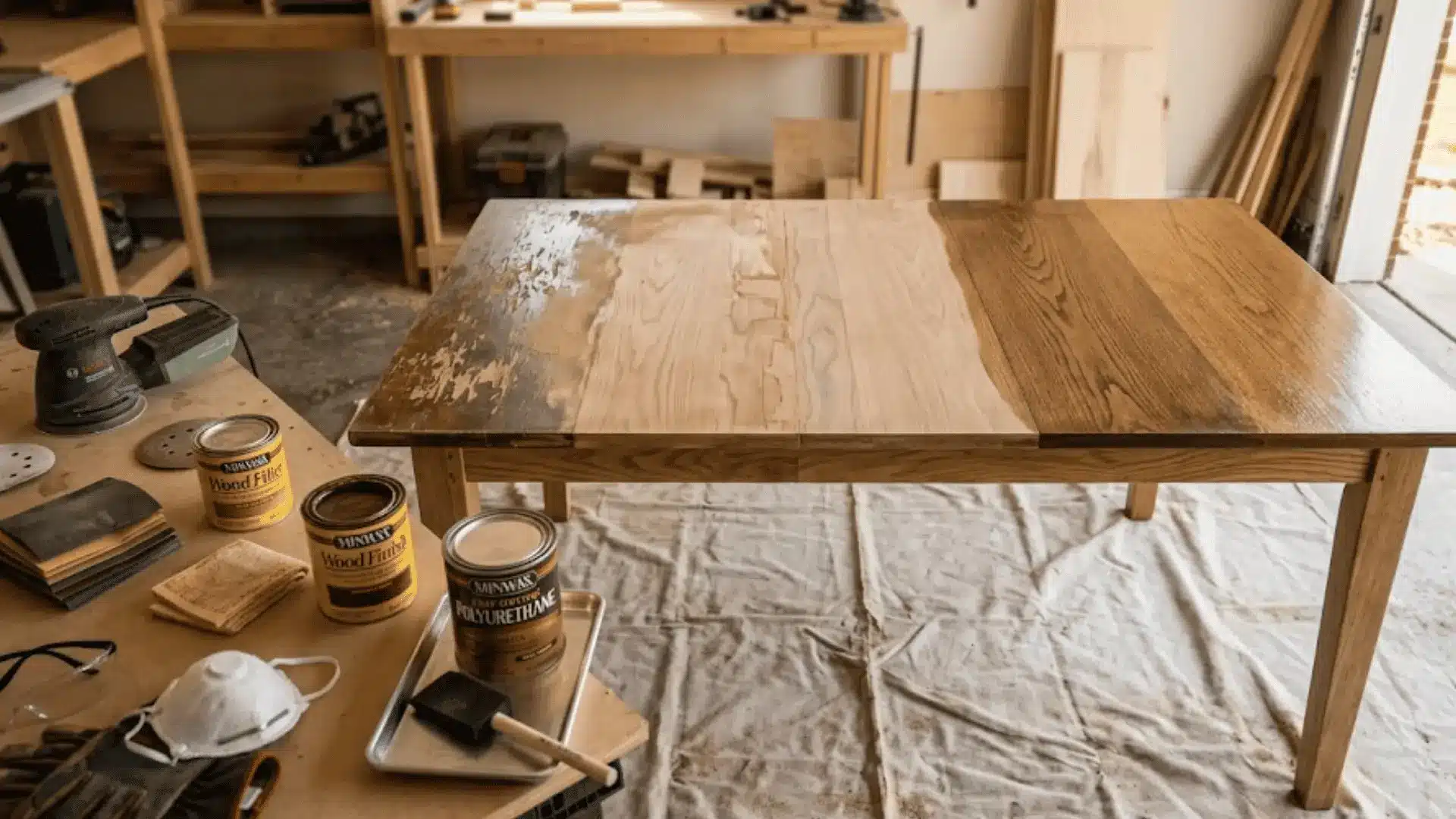
Sanding physically removes mold that has stained or penetrated the wood surface. This method works after killing the mold when discoloration remains. It’s best for unfinished wood or pieces you plan to refinish completely.
- Best For: Mold staining after cleaning, unfinished wood, furniture being refinished
- Tools and Materials: Fine-grit sandpaper (220-grit), sanding block or electric sander, tack cloth, HEPA vacuum, protective mask, and goggles
- Steps to Follow: Confirm mold is dead, wear a protective mask, sand lightly with wood grain, vacuum with a HEPA filter, wipe with a tack cloth, and apply sealant if needed
6. Baking Soda Application
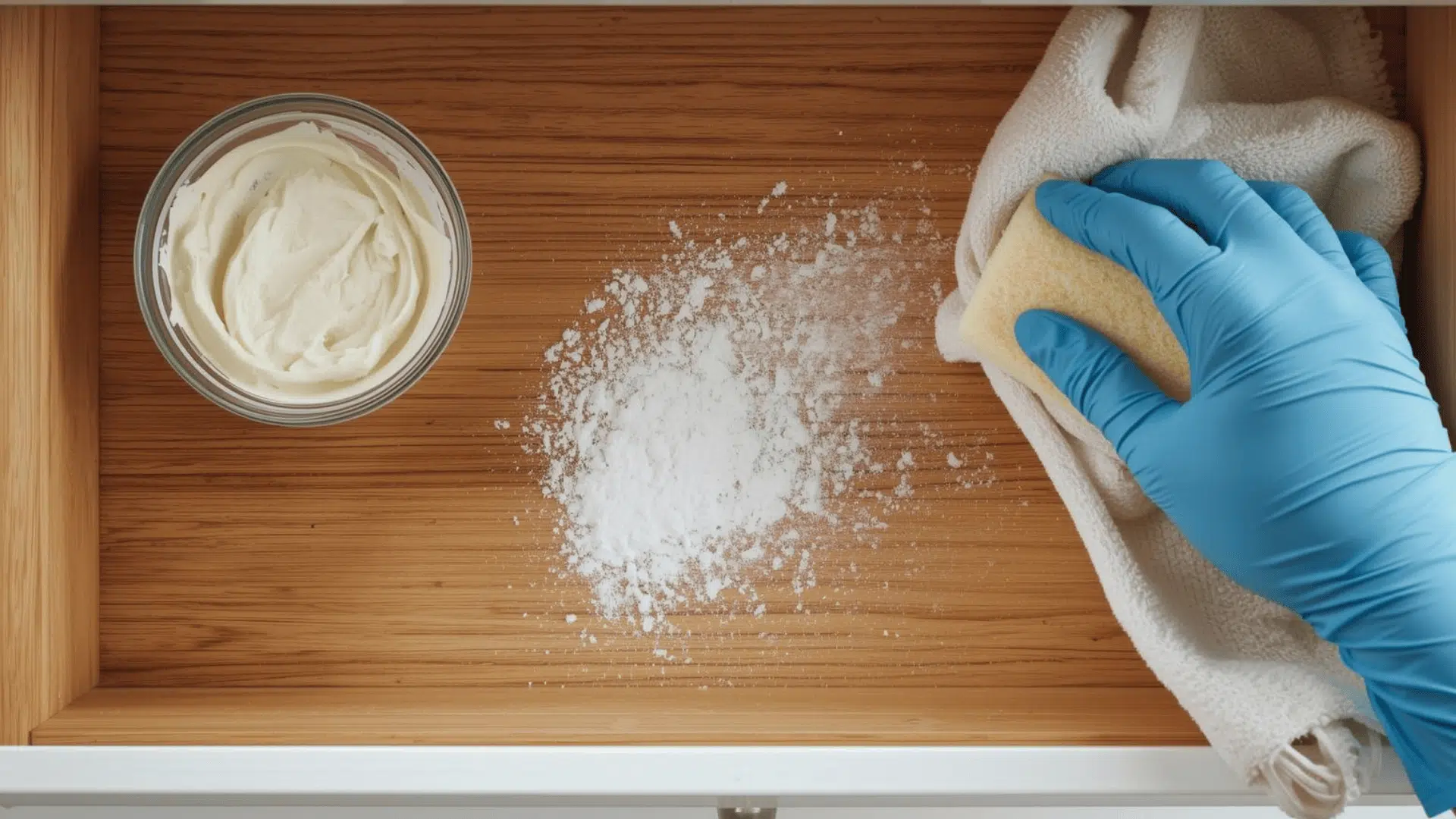
Baking soda is a natural, gentle option that absorbs moisture and cleans mold from wood. It’s safe for all wood types and won’t damage finishes. This method works for removing light mold and odor.
- Best For: Light mold, odor removal, safe cleaning around children and pets
- Tools and Materials: Baking soda, water, small bowl for mixing, soft cloth or sponge, spray bottle (optional), dry towels
- Steps to Follow: Mix baking soda with water to form a paste, apply to moldy areas, let sit 10-15 minutes, scrub gently, wipe clean, dry completely
7: Tea Tree Oil Solution
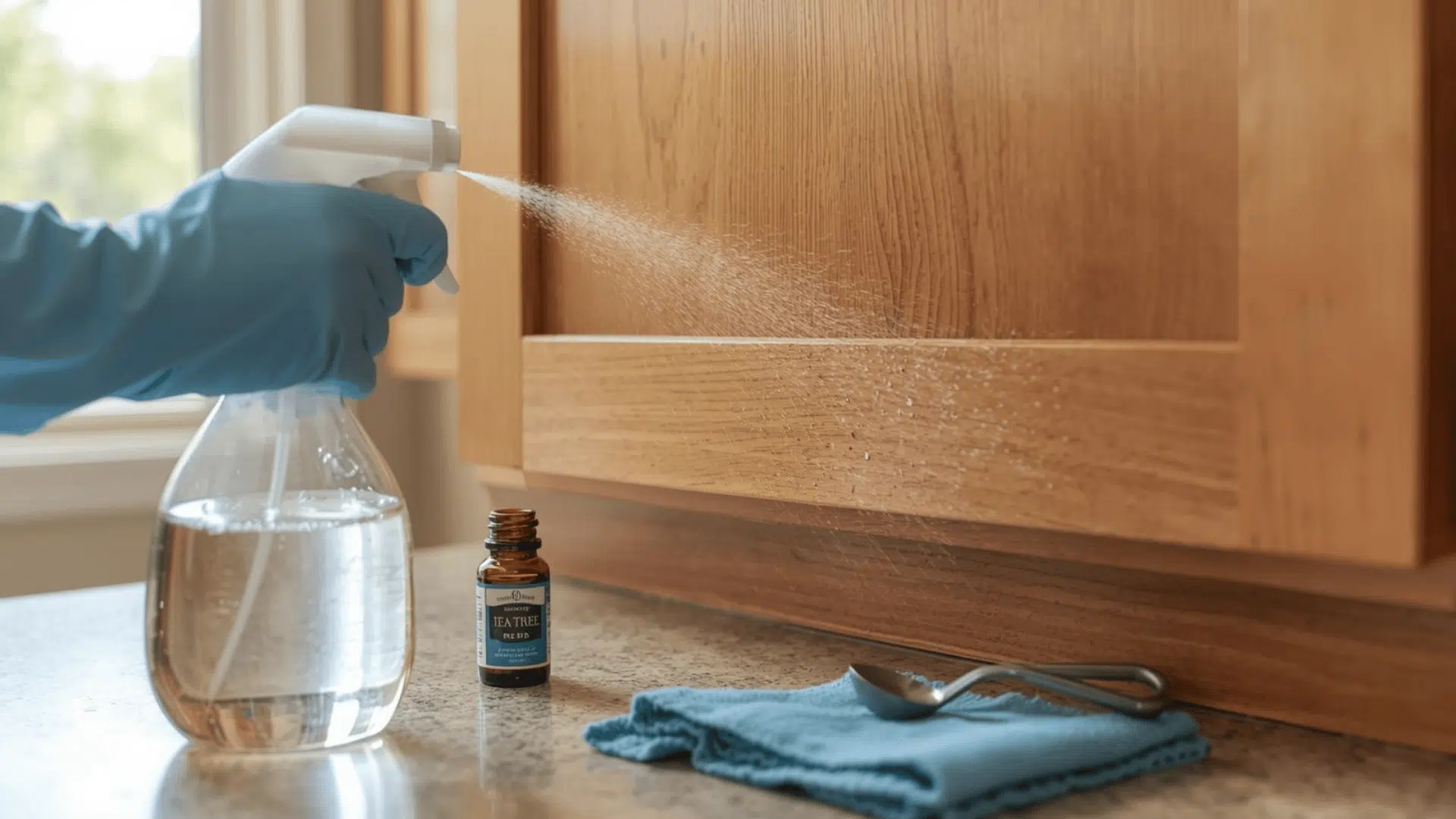
Tea tree oil is a natural antifungal that kills mold and prevents regrowth. A little goes a long way, making it cost-effective despite a higher upfront price. The scent fades as it dries but lingers briefly.
- Best For: Natural mold prevention, treating and preventing regrowth, antifungal protection
- Tools and Materials: Pure tea tree essential oil, water, spray bottle, measuring spoon, soft cloth, protective gloves
- Steps to Follow: Mix 1 teaspoon tea tree oil per cup of water, spray on affected areas, do not rinse, wipe excess moisture, air dry completely, reapply weekly
How To Prevent Mold On Wood Furniture
Here’s how to prevent mold from growing on your wooden furniture: keep it dry, stay alert, and protect your pieces before mold sets in.
- Control indoor humidity: Keep humidity levels between 30-50%. Mold thrives above 60% humidity. Use a dehumidifier in damp areas like basements, and consider getting a hygrometer to monitor levels.
- Use protective finishes: Seal wood with appropriate finishes like polyurethane, varnish, or wax. This creates a barrier that makes it harder for moisture to penetrate the wood. Reapply finishes periodically as they wear down.
- Clean and dust regularly: Dust and dirt can trap moisture and provide nutrients for mold growth. Wipe furniture regularly with a dry or slightly damp cloth. Use wood-safe cleaners occasionally.
- Address leaks and water damage immediately: Fix any roof leaks, plumbing issues, or window condensation problems right away. Water damage is the primary cause of mold growth.
- Use moisture absorbers: In particularly damp spaces, such as closets or storage areas, place silica gel packets, calcium chloride containers, or moisture-absorbing products near wooden furniture.
Real-Life Tips People Share In Communities
Online forums and community discussions reveal practical wisdom from people who’ve tackled moldy furniture. Many people share that inadequate isolation was their biggest regret.
Mold spreads quickly to nearby items, so using plastic sheeting consistently makes a huge difference. The hassle of containment is far less than dealing with mold in multiple locations.
Natural sunlight and fresh air play a big role in recovery. The combination of UV exposure, warmth, and moving air dries furniture faster and more effectively than any single method alone.
Even a few hours of sunlight after cleaning makes a noticeable difference. Experienced cleaners also warn about hidden spots.
Mold thrives on drawer bottoms, back panels, and inside decorative legs. Always remove drawers completely and flip furniture to check every surface.
Common Mistakes While Removing Mold from Furniture
Here are some common mistakes to avoid when removing mold from furniture so you can clean safely and get the best results.
- Using bleach on porous materials: Bleach only kills surface mold on non-porous materials like glass or tile. On wood, upholstery, or other porous furniture, it doesn’t penetrate deeply enough to kill the roots, and the water content can actually make the problem worse by adding moisture.
- Not addressing the moisture source: Removing visible mold without fixing the underlying dampness issue (such as a leak, poor ventilation, or high humidity) means the mold will just come back. You need to identify and eliminate the source of the moisture.
- Scrubbing aggressively without containment: Vigorous scrubbing releases mold spores into the air, spreading them to other areas of your home. You should work gently and ideally seal off the area or work outdoors when possible.
- Skipping protective equipment: Working without a mask (N95 or better), gloves, and eye protection exposes you to mold spores and cleaning chemicals. Some molds can cause respiratory issues and allergic reactions.
- Over-wetting the furniture: Using too much liquid on wood or upholstery can cause warping, staining, or create new moisture problems. Use minimal liquid and dry thoroughly afterward.
The Bottom Line
Dealing with mold on wood furniture doesn’t have to be scary. The key is to act fast, stay safe, and fix the moisture problem that caused it in the first place.
Remember: surface mold is usually removable, but deep mold may require professional help or removal. Always wear protective gear, work in a well-ventilated space, and never skip the drying step.
Most importantly, keep humidity below 60%, ideally 30–50%. and ensure good airflow around your furniture to prevent mold from returning.
Your health matters more than any piece of furniture, so know when to call a professional or dispose of the item.
Have you checked the hidden spots on your wooden furniture lately? Take a few minutes today to inspect pieces in damp areas of your home; early detection can save furniture and protect your family’s health.
Frequently Asked Questions
Can Furniture with Mold Be Saved?
Yes, if caught early. Surface mold on wood is usually cleanable with vinegar or hydrogen peroxide. Deep mold in upholstery or heavily damaged wood often requires disposal.
Will Mold Go Away if It Dries Out?
No. Drying stops mold growth, but dead mold remains on surfaces and can still cause health issues. You must physically remove it through cleaning or vacuuming.
How Quickly Does Mold Spread?
Mold can start growing within 24-48 hours in damp conditions. Visible colonies form in 3-12 days. Spores spread instantly when disturbed, contaminating nearby surfaces quickly.