A Craftsman-style kitchen has a way of making people exhale.
I’ve seen it happen again and again when I’m helping homeowners plan a remodel. We step into a kitchen with warm wood, simple lines, and sturdy details, and suddenly the room feels steady. Not fussy. Not cold. Just right.
Most folks tell me they want “heritage-inspired.” What they really want is a space that feels as if it were made with care. Cabinets that look solid. Tile that has a little life. Lights that glow, not glare.
If you’re dreaming about a kitchen that feels welcoming from morning coffee to weeknight dinners, Craftsman style is a beautiful direction. Even small updates can quickly shift the whole mood.
With a few smart choices, you can bring that honest, homey character into almost any layout.
What Is a Craftsman Style Kitchen?
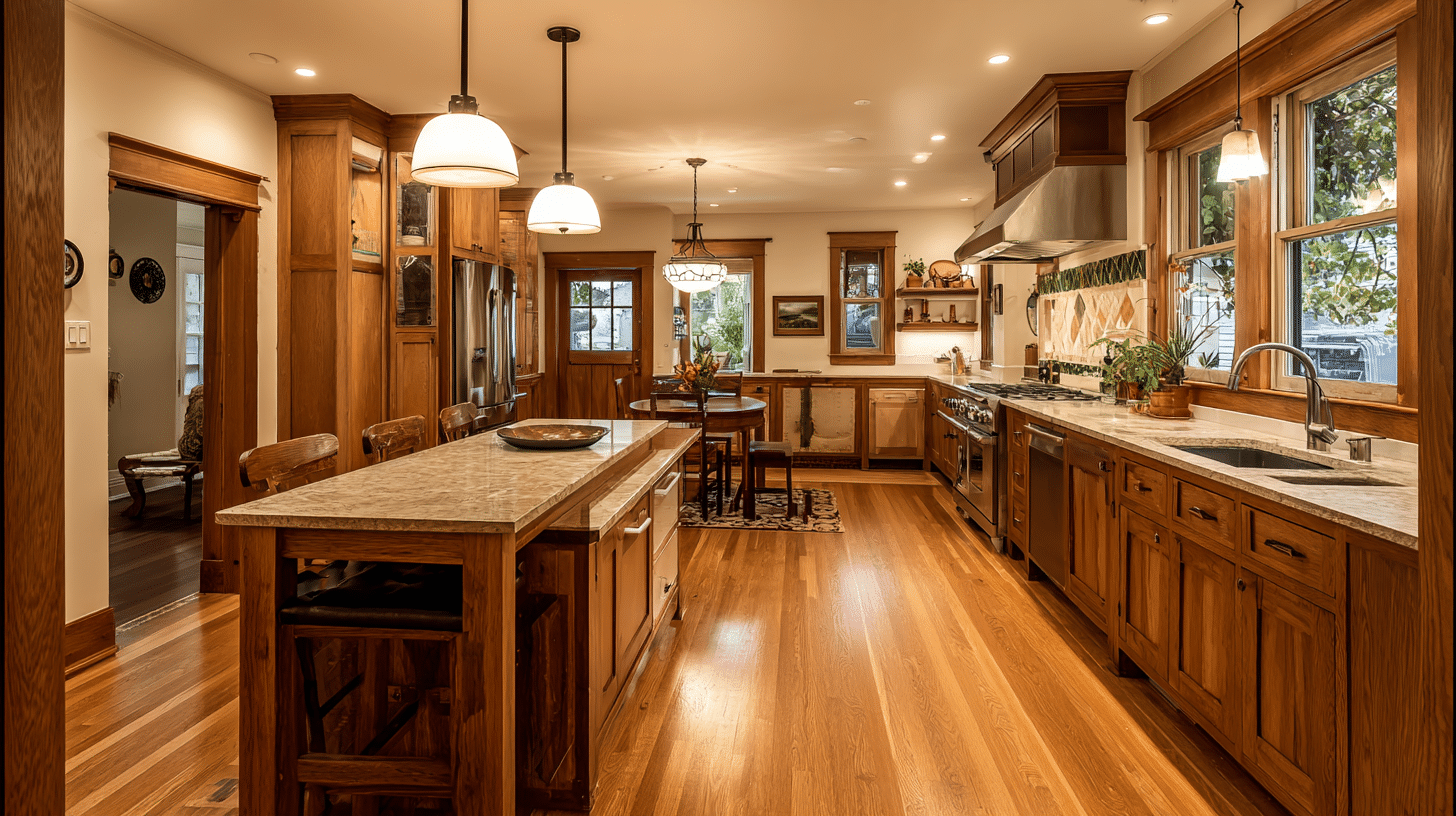
A Craftsman Style Kitchen is defined by a focus on craftsmanship, natural materials, and practical design. Instead of flashy finishes or ornate decoration, Craftsman kitchens lean on solid woodwork, simple lines, and details that feel thoughtfully made.
You’ll often see warm-toned cabinetry, classic tile choices, and sturdy fixtures that look right at home in an older house, but the style can work beautifully in a newer home, too, as long as the materials and proportions feel grounded.
At its best, a Craftsman kitchen feels calm and welcoming: built to last, easy to use, and full of subtle character rather than constant “look-at-me” moments.
Core Craftsman Kitchen Design Principles
When I’m helping someone shape a Craftsman kitchen, I start with a simple question: Do you want it to feel warm and lasting the moment you walk in?
If the answer is yes, these principles keep every decision on track, from materials and colors to layout and all the little details that make the space feel “right.”
- Natural Materials First: Craftsman style loves materials that look real because they are real: wood, stone, handmade-look tile, and metals with a softly aged finish. If you’re choosing between “perfectly uniform” and “has a little texture,” Craftsman usually prefers the texture.
- Simple Lines + Functional Layout: This style is more about good bones than extra decoration. Think clean cabinet faces, practical work zones, and a layout that supports daily cooking. When in doubt, choose function, and let the materials provide the beauty.
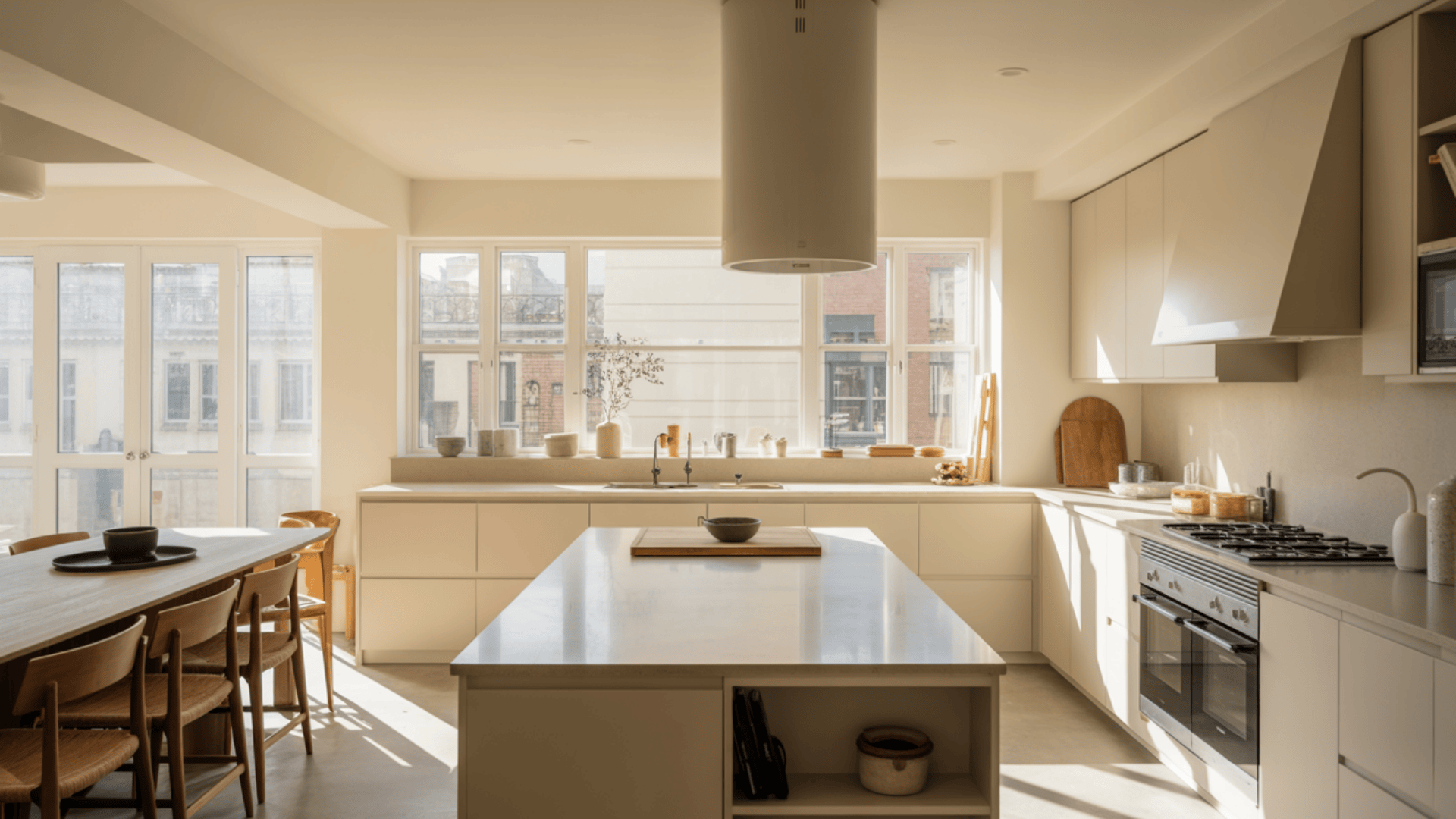
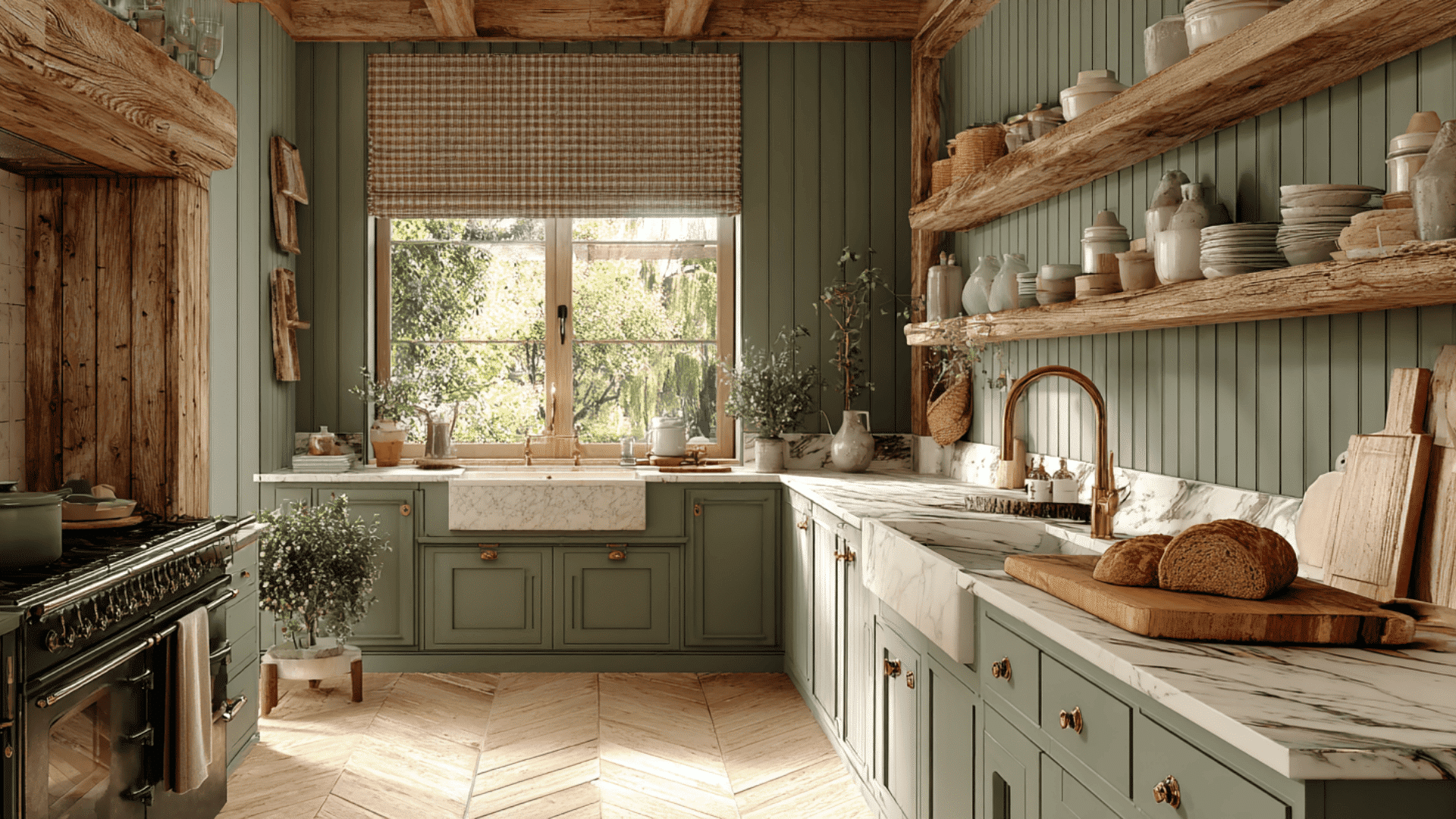
- Warm, Earthy Color Palette: Craftsman kitchens feel cozy, not cold. Warm whites, creamy neutrals, soft greens, muted blues, and wood tones do the heavy lifting. You can add contrast, but it usually looks best when it’s gentle rather than harsh.
- Built-In Character: Trim, rail details, small built-ins, and thoughtful millworkmake a kitchen feel authentically Craftsman, especially when they echo the rest of the home.
These four ideas act like a filter. If a choice supports them, it usually belongs. If it fights them, it tends to look trendy fast.
Craftsman Style Kitchen Cabinets & Woodwork
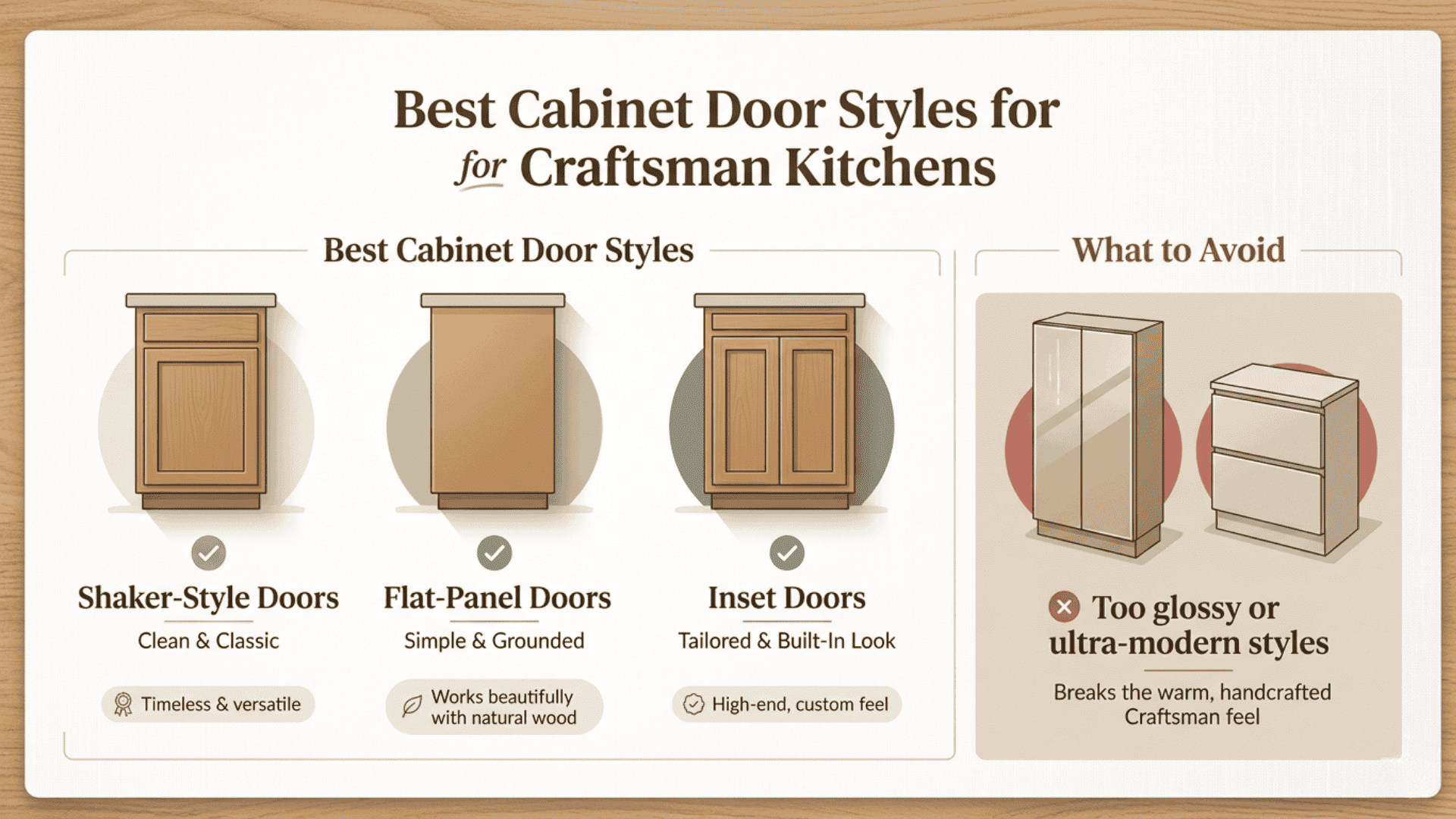
If a Craftsman kitchen has a “main character,” it’s the cabinetry. When I’m helping someone choose finishes, I usually remind them that their cabinets set the mood more than almost anything else.
Get these right, and the rest of the room gets easier.
Wood Species and Finishes
Oak is a classic Craftsman favorite for a reason: it has a warm, grounded grain that reads instantly as “heritage.” Maple and cherry can also look beautiful.
| Wood/Finish Choice | Why It Works in Craftsman Kitchens | Best Look For |
|---|---|---|
| Oak | Strong grain, traditional Craftsman vibe | Medium to warm stains |
| Maple | Smooth, versatile, clean | Warm stains or muted paint |
| Cherry | Rich and classic | Deep warm tones over time |
| Painted cabinets | Can work when done right | Muted colors + classic hardware |
Pro Tip: If the finish looks warm and natural, you’re usually safe.
Hardware that Matches the Style
In a Craftsman kitchen, hardware should feel simple, sturdy, and heritage-inspired. It acts like the finishing touch on the cabinetry, adding character without overpowering the overall design.
The right finish helps reinforce the warm, grounded look that defines this style.
Best hardware finishes include:
- Oil-rubbed bronze
- Antique brass tones
- Matte black
- Brushed nickel (keep it soft, not shiny)
When chosen well, hardware ties the whole kitchen together. It should feel classic rather than trendy, supporting the cabinetry and making the space look more cohesive, balanced, and true to Craftsman design.
Craftsman Kitchen Surfaces
This is where many kitchens drift away from the Craftsman look, not because the materials are “wrong,” but because they don’t match the warmth and texture of the cabinets. If surfaces feel too glossy or too cool-toned, the space can start reading modern without you even realizing it.
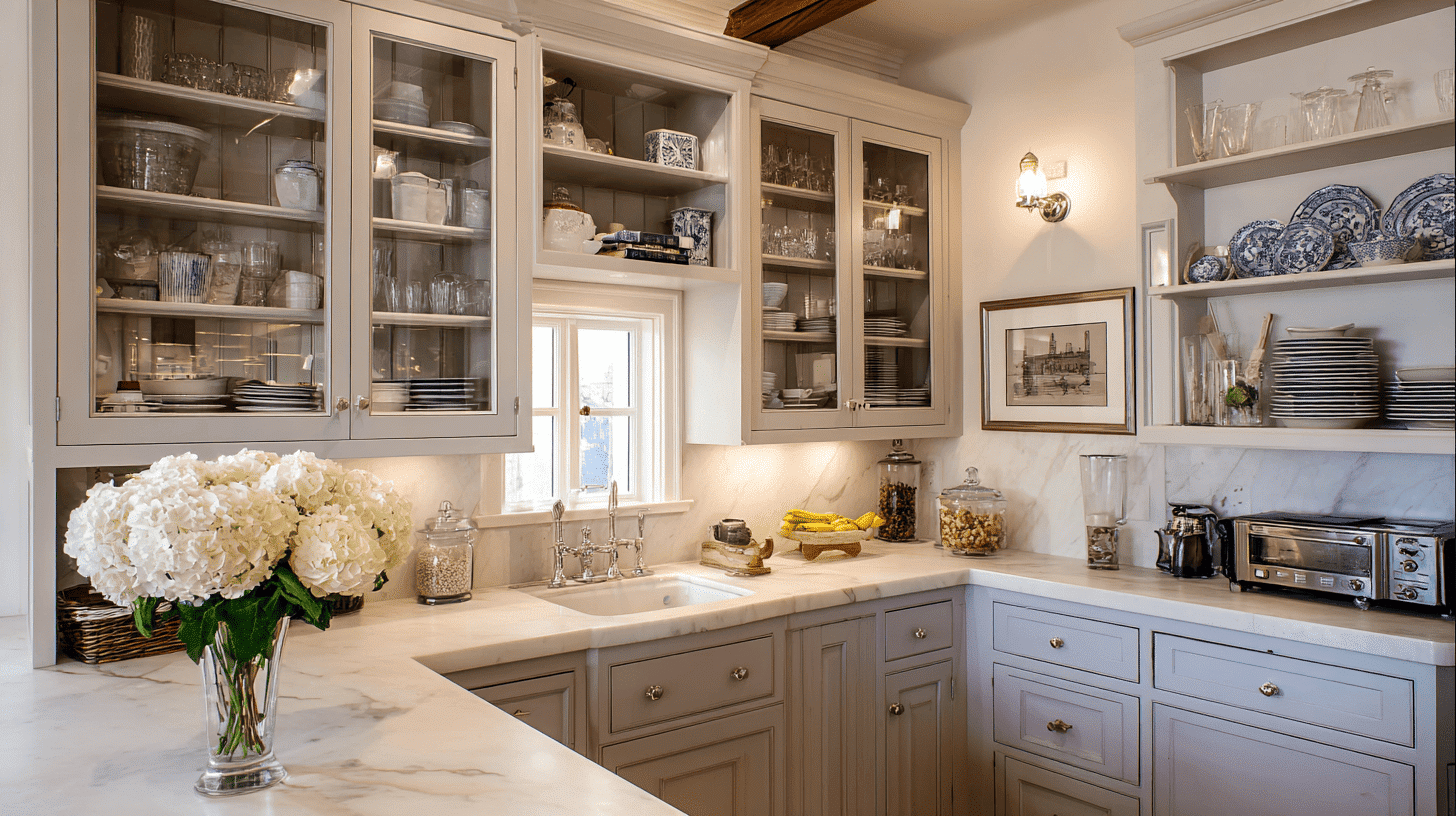
For countertops, choose finishes that feel natural and durable. Stone-look surfaces can work well when they’re not overly shiny. Warm-toned granite is a classic fit, and soapstone-style counters add a calm, grounded mood. What usually fights the style is anything mirror-glossy or stark white with cool gray veining.
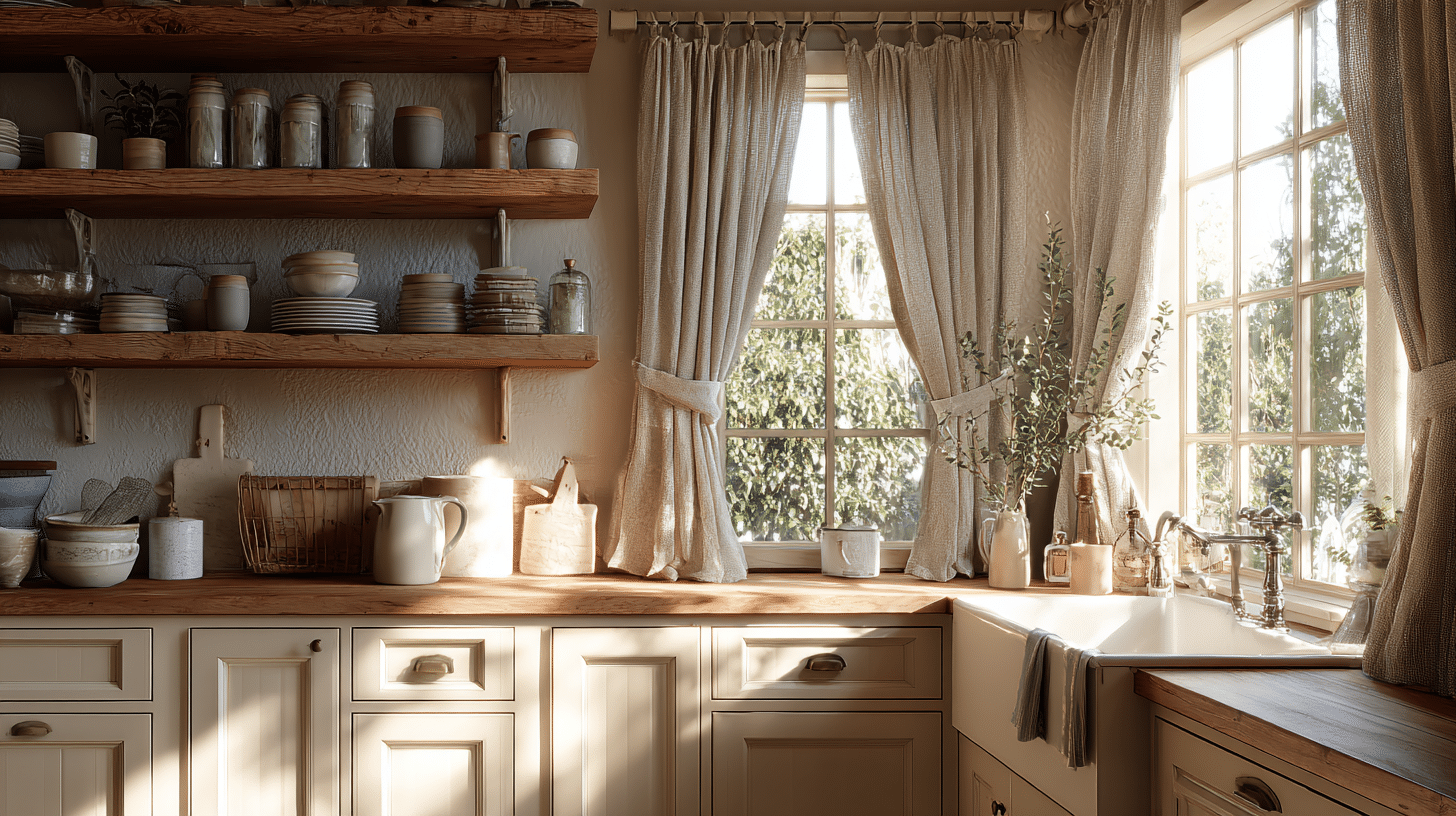
Backsplashes are a great place for gentle character. Handmade-look ceramic tile adds soft texture, warm stone feels earthy, and small, simple patterns can work when they stay subtle. If you want a bit more personality, a quiet border detail or a small accent area is often enough.
For flooring, hardwood is the most Craftsman-friendly choice. If tile fits your lifestyle better, keep it warm and matte. Warm wood with warm tile feels cohesive; icy gray tile often feels “off” fast.
Craftsman Style Kitchen Layout Ideas
The layout is where the kitchen truly becomes easy to live in. Craftsman style isn’t about showing off; it’s about a space that works smoothly every day, feels balanced, and supports real cooking and gathering.
L-Shaped Kitchen Layout
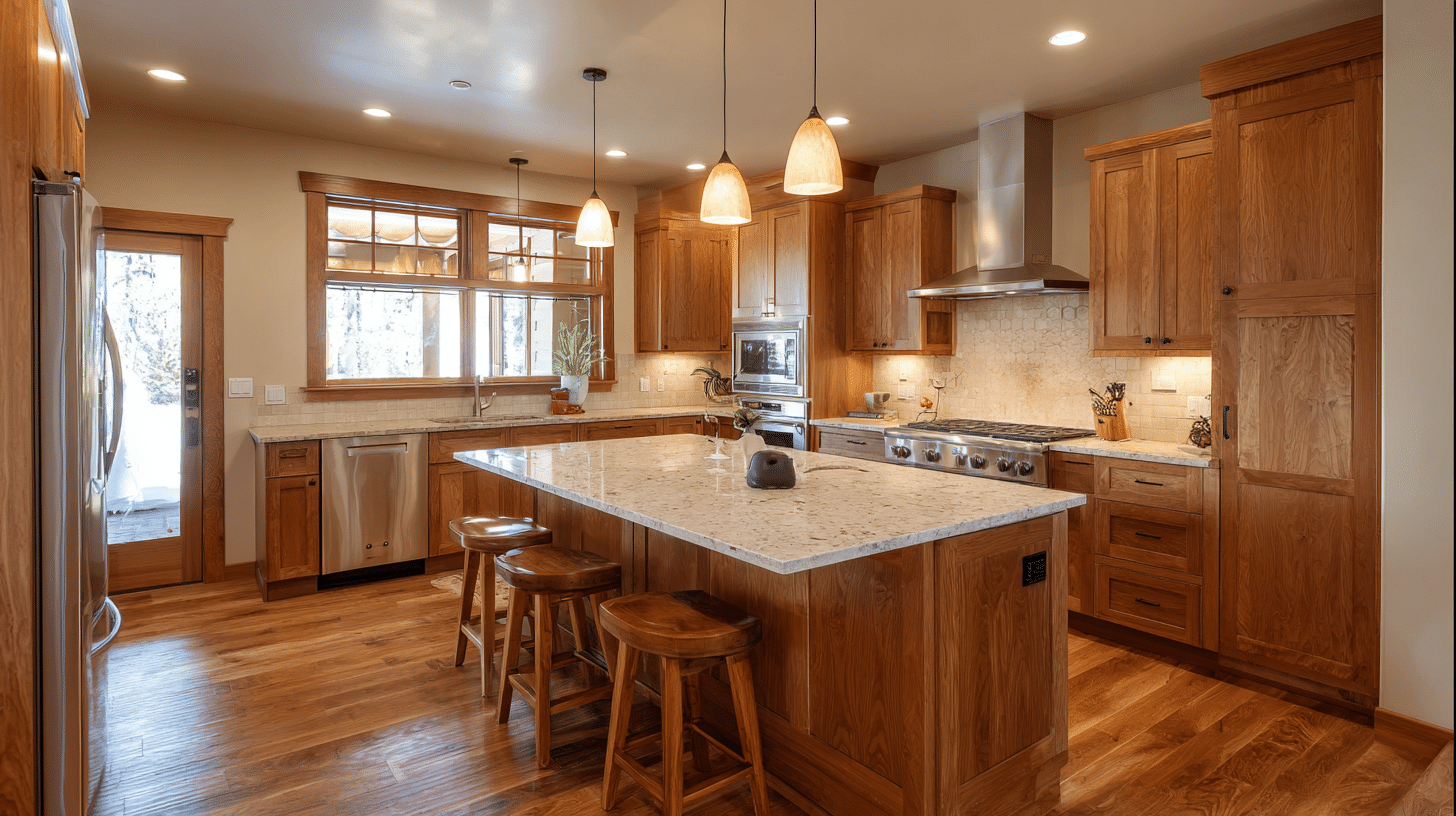
This layout feels open and flexible, which is why it works so well in Craftsman homes. It gives you enough counter space to cook comfortably while keeping the room from feeling boxed in.
It’s also easy to decorate without cluttering the flow.
Key features:
- Creates an open, comfortable flow that works well for both small and medium kitchens
- Leaves room for a small dining nook or island without feeling crowded
- Keeps work zones close while still feeling relaxed and welcoming.
U-Shaped Kitchen Layout
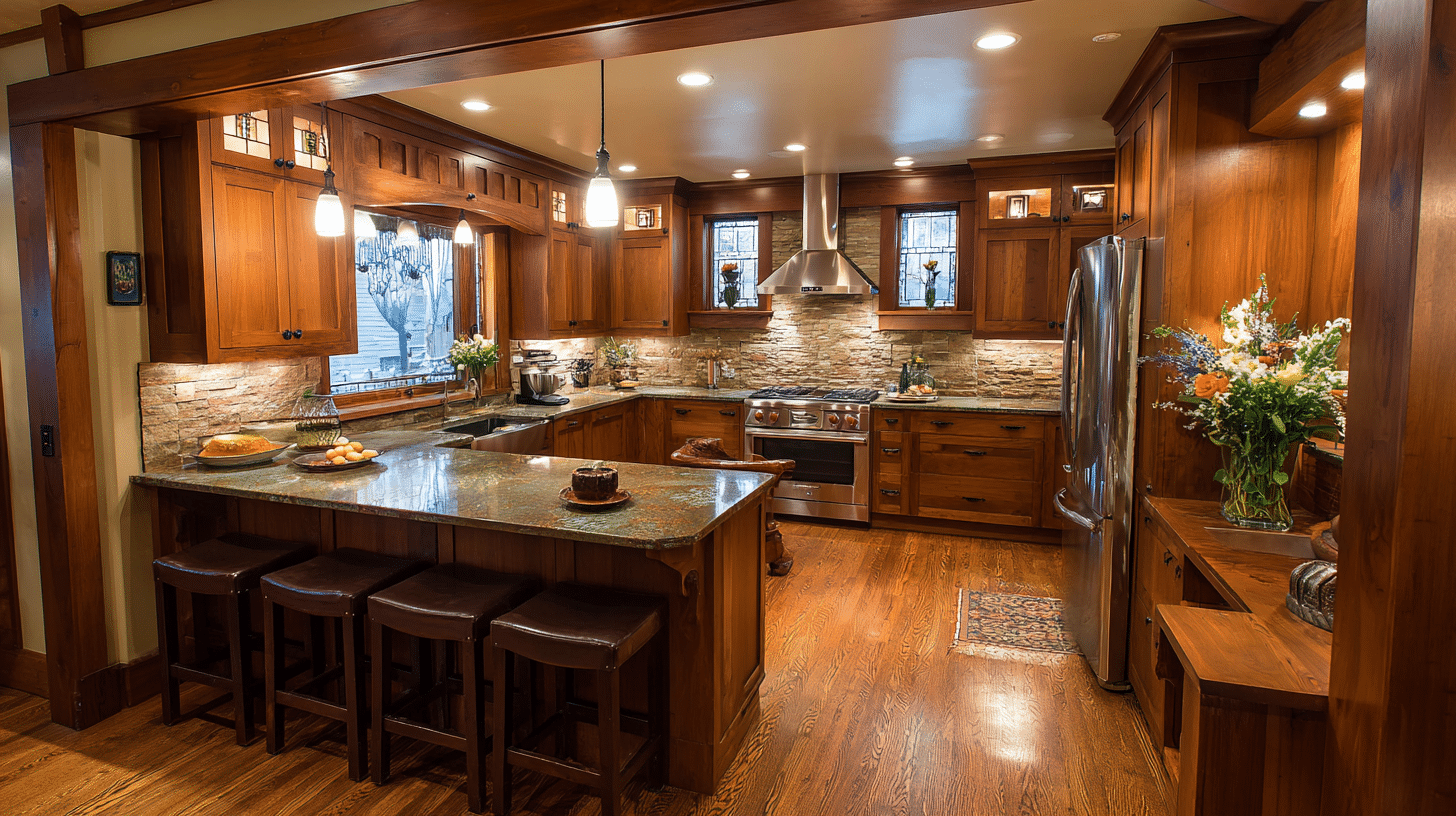
A U-shaped kitchen is a favorite when you want maximum workspace and storage. It wraps the cook in a practical work zone, making everyday tasks feel more efficient.
In Craftsman style, it also creates a cozy, grounded feel that suits the home’s character.
Key features:
- Offers excellent counter and storage space, perfect for serious home cooks
- Clearly defined prep, cook, and clean zones improve everyday efficiency
- Feels grounded and traditional, especially in Craftsman or bungalow homes
Galley Kitchen Layout
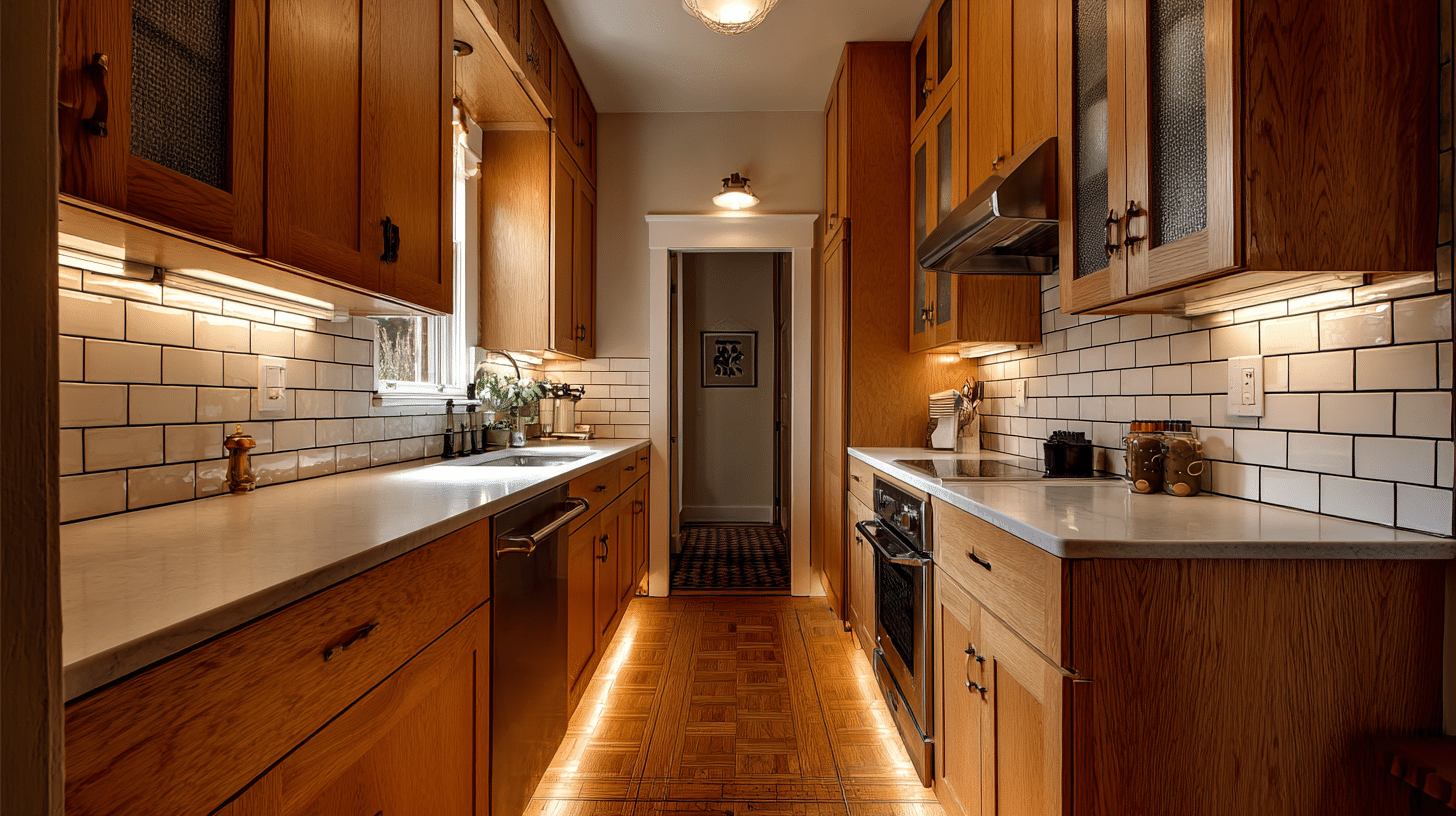
Galley kitchens are simple, efficient, and surprisingly Craftsman-friendly. With two parallel runs, everything stays within easy reach, which makes cooking feel smooth and focused.
With the right materials and lighting, a galley can feel warm and intentional, not tight.
Key features:
- Highly efficient layout that minimizes wasted steps
- Works beautifully in smaller homes while still feeling intentional
- Emphasizes function and craftsmanship without needing extra space
A Craftsman kitchen layout should feel steady and easy to use every day. Pick the one that fits your routines, and the warmth, function, and character will fall into place.
Step-By-Step Remodelling Plan
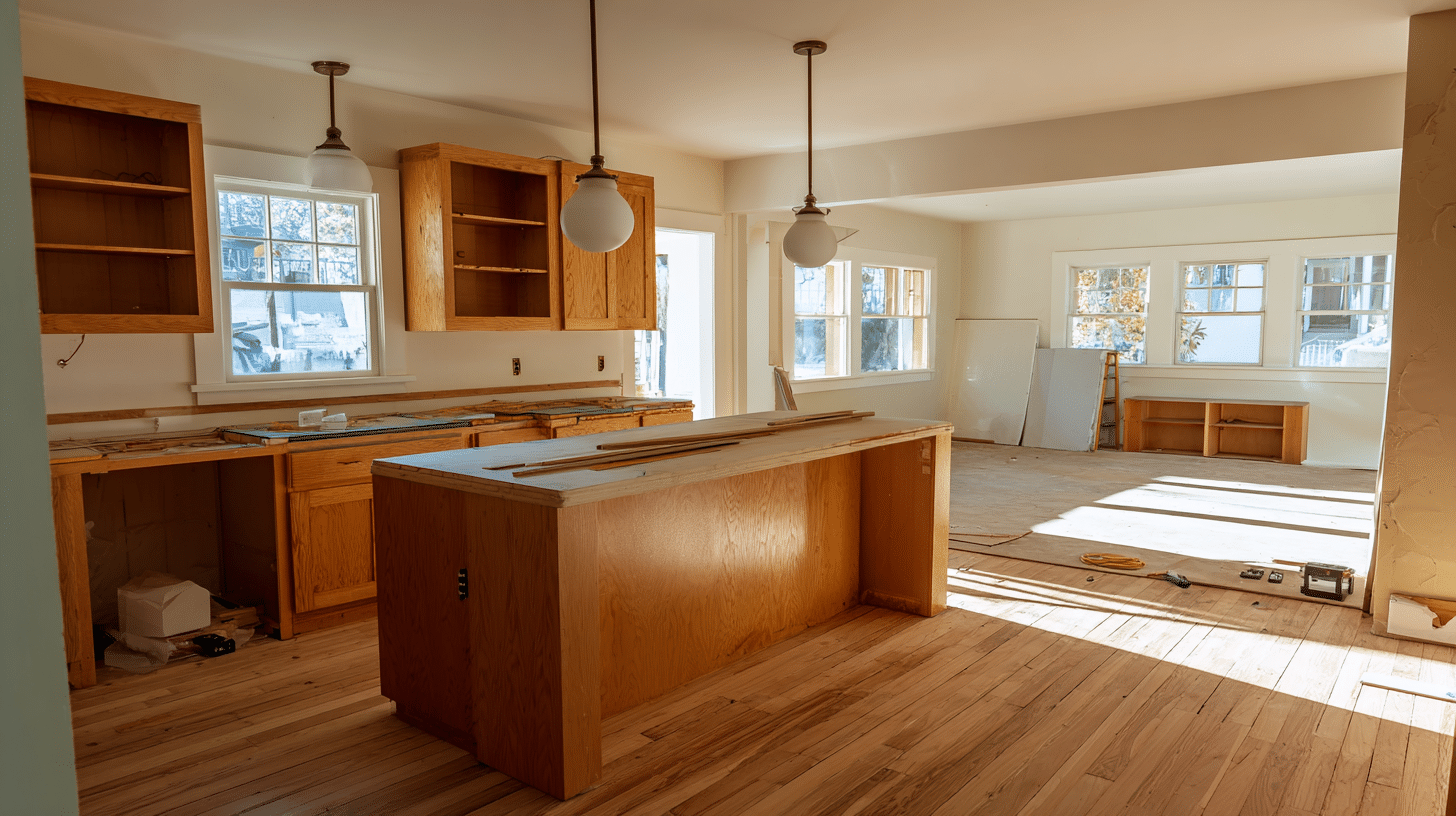
You don’t need to decide everything at once. Remodeling can feel overwhelming, and honestly, most of the stress comes from making choices in the wrong order.
I’ve seen perfectly good plans get messy just because one finish was picked too early, or lighting was treated like an afterthought.
1. Start with Your Non-Negotiables
Before you get pulled into tile samples and countertop options, pause and decide what truly has to stay consistent. Pick the cabinet door style you want, choose the wood tone, and get clear on how you need the kitchen to function day to day.
This is where you decide if you need an island, a pantry, more prep space, or simply better flow.
2. Build a Materials Palette
This is the moment when the design starts to feel real. Pull your countertop, backsplash tile, flooring, and hardware finish together so they read as one story.
A simple approach that works well is choosing one hero element, usually the cabinets, and letting the other finishes support it instead of competing for attention.
3. Confirm Lighting Early
Lighting is one of those things that can quietly make or break the final look. It changes how wood tones read, how paint looks, and how warm the space feels at night.
Plan your main ceiling lighting first, then add under-cabinet lighting for everyday tasks. If you want extra softness, accent lighting can add a cozy glow without feeling overdone.
4. Finalize Cabinet Design and Storage Before Ordering Finishes
Cabinet decisions affect more than people expect. They impact backsplash height, outlet placement, and where lighting needs to go.
This is a good time to lock in drawer and door placement, pantry layout, pull-outs and organizers, and any appliance panels if you want a more built-in look.
5. Install in The Right Sequence
A clean installation order keeps the process smoother and helps avoid expensive do-overs. In most remodels, it flows best when flooring comes first, followed by cabinets, then countertops and surfaces, then tile, and finally fixtures.
A Craftsman kitchen remodel doesn’t have to feel chaotic. When you slow down and follow a clear order, decisions feel lighter, and the end result feels intentional.
How to Keep A Craftsman Kitchen Feeling Heritage-Inspired
A Craftsman kitchen stays heritage-inspired when every choice feels intentional rather than trendy.
Materials play a big role here. Natural wood, stone, and tile with subtle texture tend to age far better than finishes chosen just because they’re popular in the moment.
Proportion matters too. When cabinets, lighting, and trim feel balanced with the size of the room, the space holds its character over time. Another helpful habit is to repeat key elements rather than constantly introduce new ones.
Using the same wood tone in a few places or sticking to one metal finish helps the kitchen feel calm and cohesive. I often remind homeowners to step back and look at the room as a whole before making final decisions.
If something feels too bold or attention-grabbing right now, it may not age gracefully. heritage-inspired Craftsman kitchens feel steady, warm, and quietly confident.
Wrap Up
A Craftsman-style kitchen is less about following rules and more about creating a space that feels grounded, comfortable, and easy to live in.
When the materials feel honest, and the layout supports everyday routines, the kitchen naturally becomes a place people want to spend time in. It’s the kind of space that works quietly in the background while life happens around it.
If you’re planning updates, big or small, focus on choices that add warmth, function, and lasting character rather than quick trends. Even thoughtful changes can make a meaningful difference.
Ready to learn ideas, compare materials, or need help pulling everything together? Working with a designer can simplify the process and prevent costly missteps.
Reach out to start shaping a kitchen that feels welcoming now and stays right for years to come.
Frequently Asked Questions
Can a Craftsman-Style Kitchen Work in A Modern Home?
Yes. As long as you focus on warm materials, simple cabinet styles, and balanced proportions, Craftsman elements can blend beautifully into newer homes without feeling out of place.
What Colors Work Best in A Craftsman-Style Kitchen?
Warm whites, soft greens, muted blues, and natural wood tones work best. These colors keep the space feeling cozy and heritage-inspired rather than cold or trendy.
Do Craftsman Kitchens Have to Use Dark Wood?
Not at all. While darker woods are traditional, lighter stains or muted painted cabinets can still feel Craftsman when paired with classic details and warm finishes.