Ceiling beams do more than hold up your roof. They add character, warmth, and visual interest to any room. From rustic farmhouse vibes to modern industrial looks, the right ceiling beam ideas can completely change how a space feels.
Real wood beams bring natural texture, while faux options offer budget-friendly alternatives that still look great. You can paint them, stain them, or leave them natural.
Some homeowners add beams to flat ceilings for depth, while others highlight existing architectural features. The options are truly endless when it comes to incorporating beams into your design.
These decorative ceiling beam ideas below will help you find the perfect style for your home, whether you’re renovating or building from scratch.
Classic Wooden Beam Styles
Classic wooden beam styles add warmth and structure to contemporary homes without making the space feel heavy.
They work well in living rooms, kitchens, and covered patios, especially when paired with clean ceilings and simple lighting.
1. Exposed Natural Oak Beams
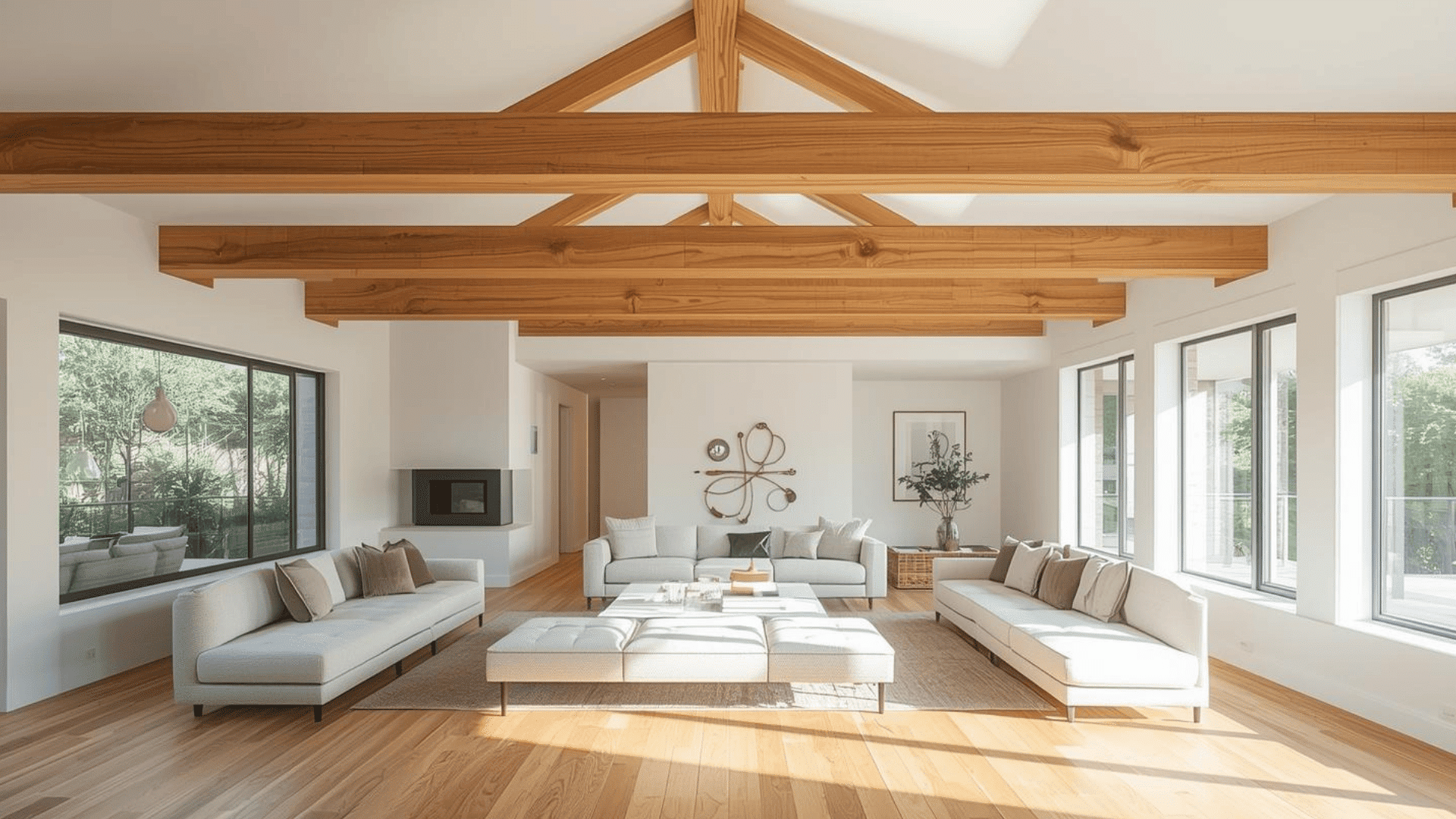
Oak beams showcase beautiful grain patterns and natural color variations. The wood’s durability makes it perfect for high-traffic areas.
Leave them unsealed for a raw look or apply a clear finish to protect the surface. Oak darkens slightly over time, developing a rich patina that adds character to your ceiling.
2. Reclaimed Barn Wood Beams
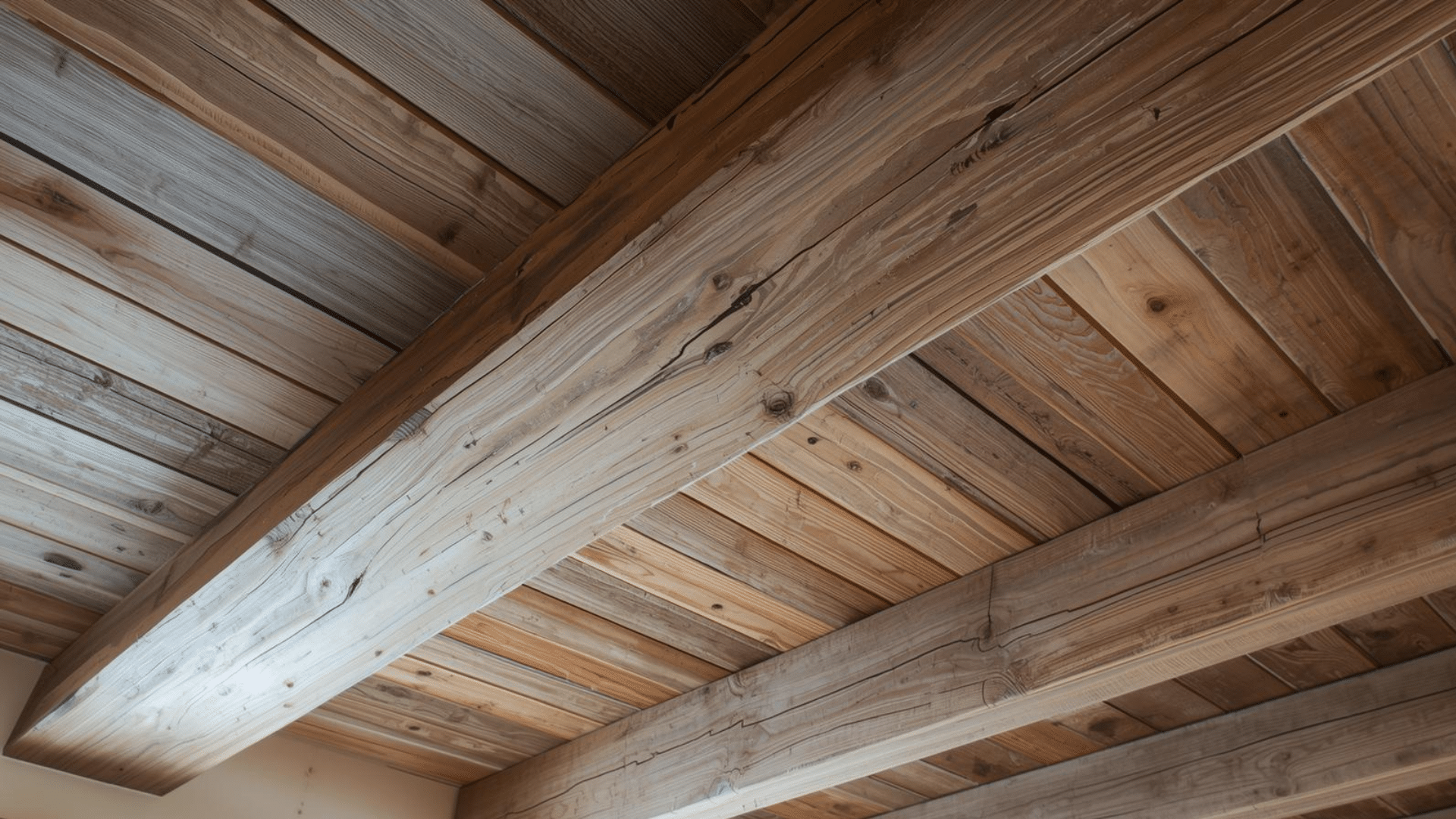
Old barn wood brings instant history into your home. Each beam tells a story through nail holes, weathering marks, and unique textures.
The aged appearance works well in country-style homes or adds contrast in modern spaces. These beams often feature a mix of gray tones and original wood colors underneath.
3. White-Washed Beam Treatment
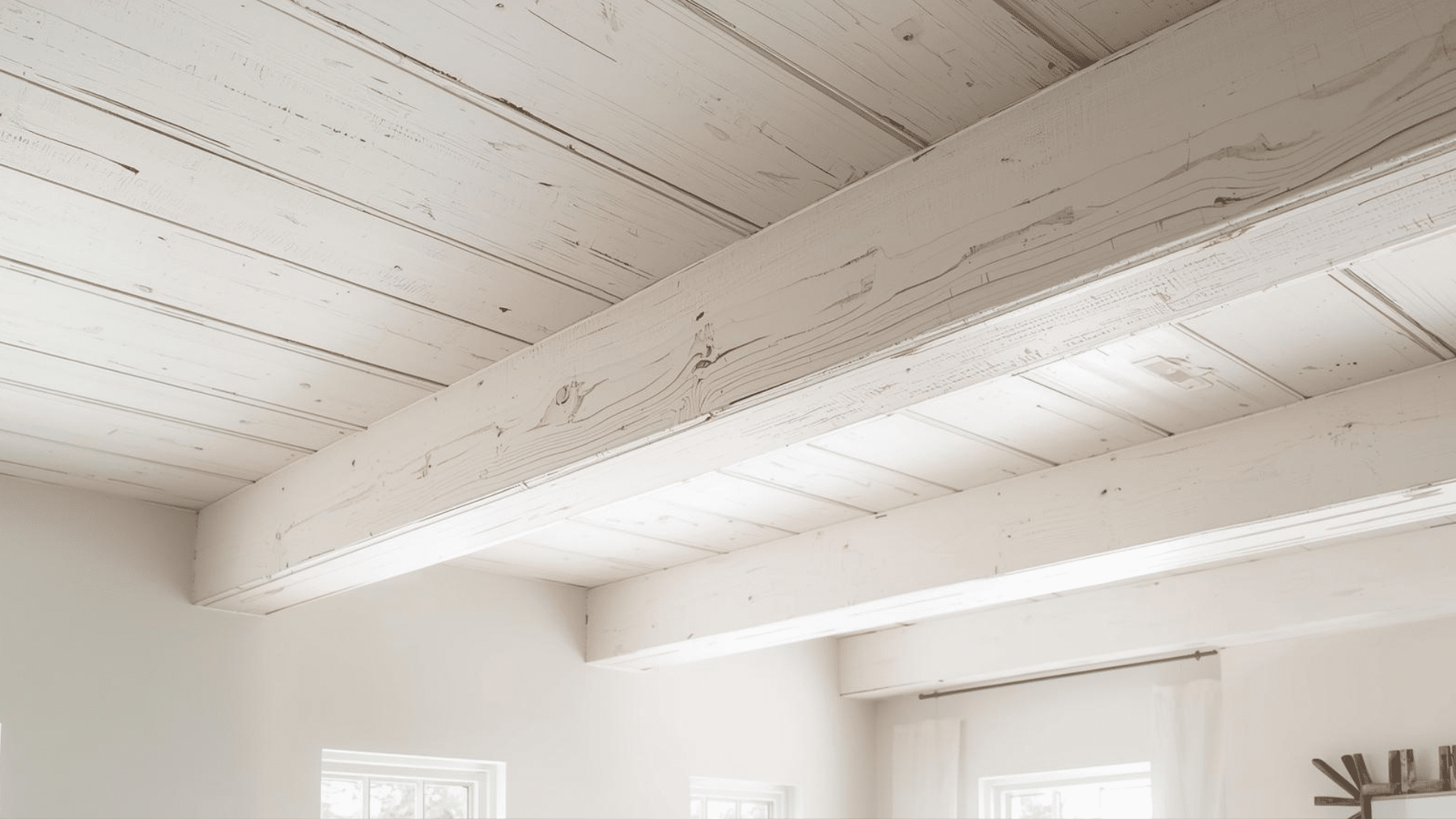
Paint beams with a diluted white paint to soften their appearance while preserving the wood’s texture. This technique brightens dark rooms without losing the architectural interest that beams provide.
The method works particularly well in coastal or Scandinavian-inspired spaces. You can adjust the opacity to control how much wood grain you want visible.
4. Dark Stained Beams on White Ceilings
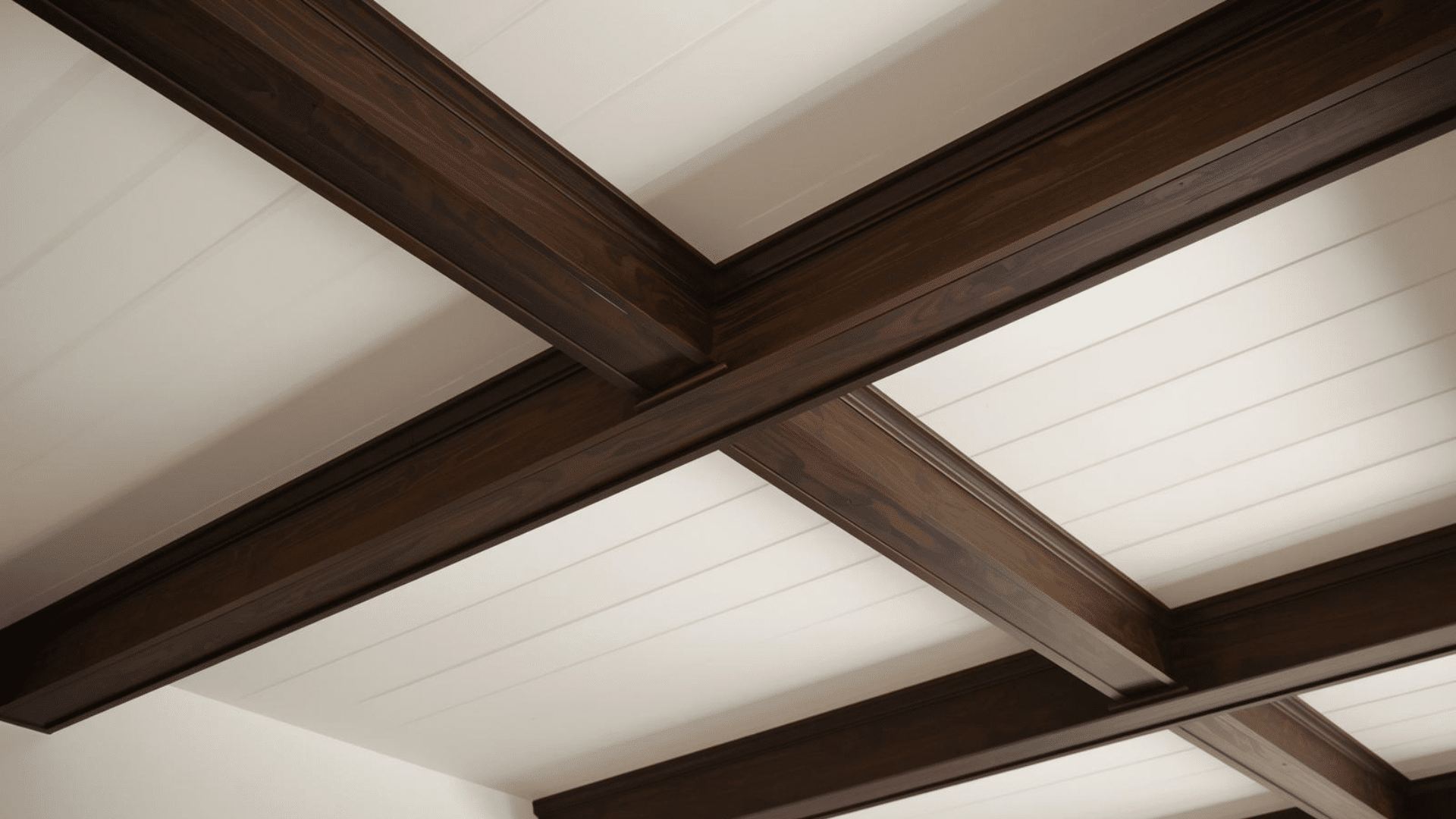
Create a strong visual contrast by staining beams deep brown or black against crisp white ceilings. This classic combination draws the eye upward, making ceilings appear higher.
The dark beams frame the ceiling and define the space. This approach suits both traditional and contemporary homes, depending on beam placement and style.
5. Cedar Beam Installation
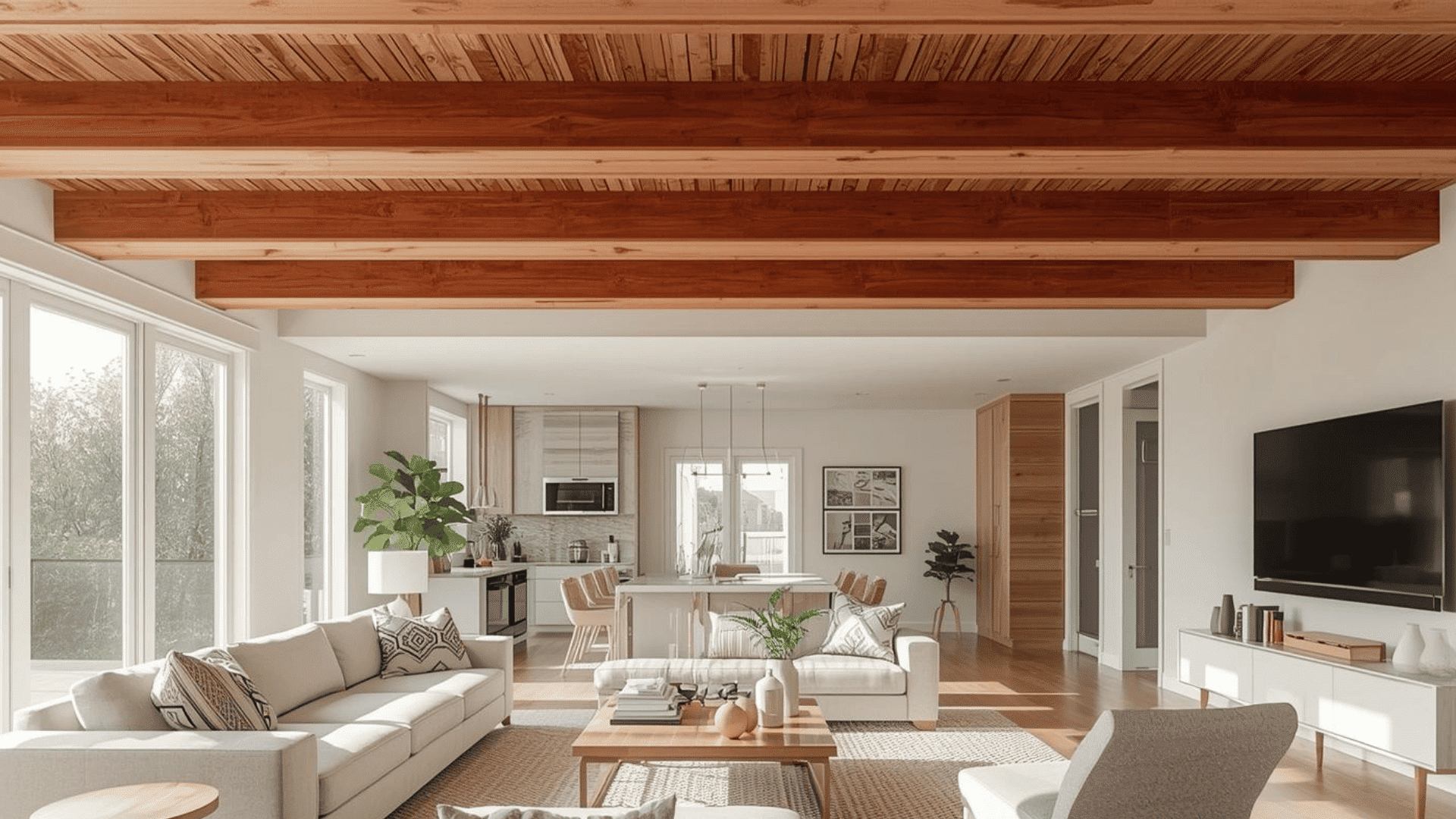
Cedar naturally resists moisture and insects while offering a pleasant aroma. The reddish tones add warmth to living spaces and bedrooms.
Cedar’s lighter weight makes installation easier than denser hardwoods. Over time, it develops a silvery-gray patina if left untreated, creating a weathered outdoor look indoors.
Modern and Contemporary Beam Designs
Modern and contemporary beam designs keep lines clean and simple, often using smooth wood, box beams, or mixed materials like wood and metal. They add depth to ceilings without feeling busy.
6. Painted Black Beams
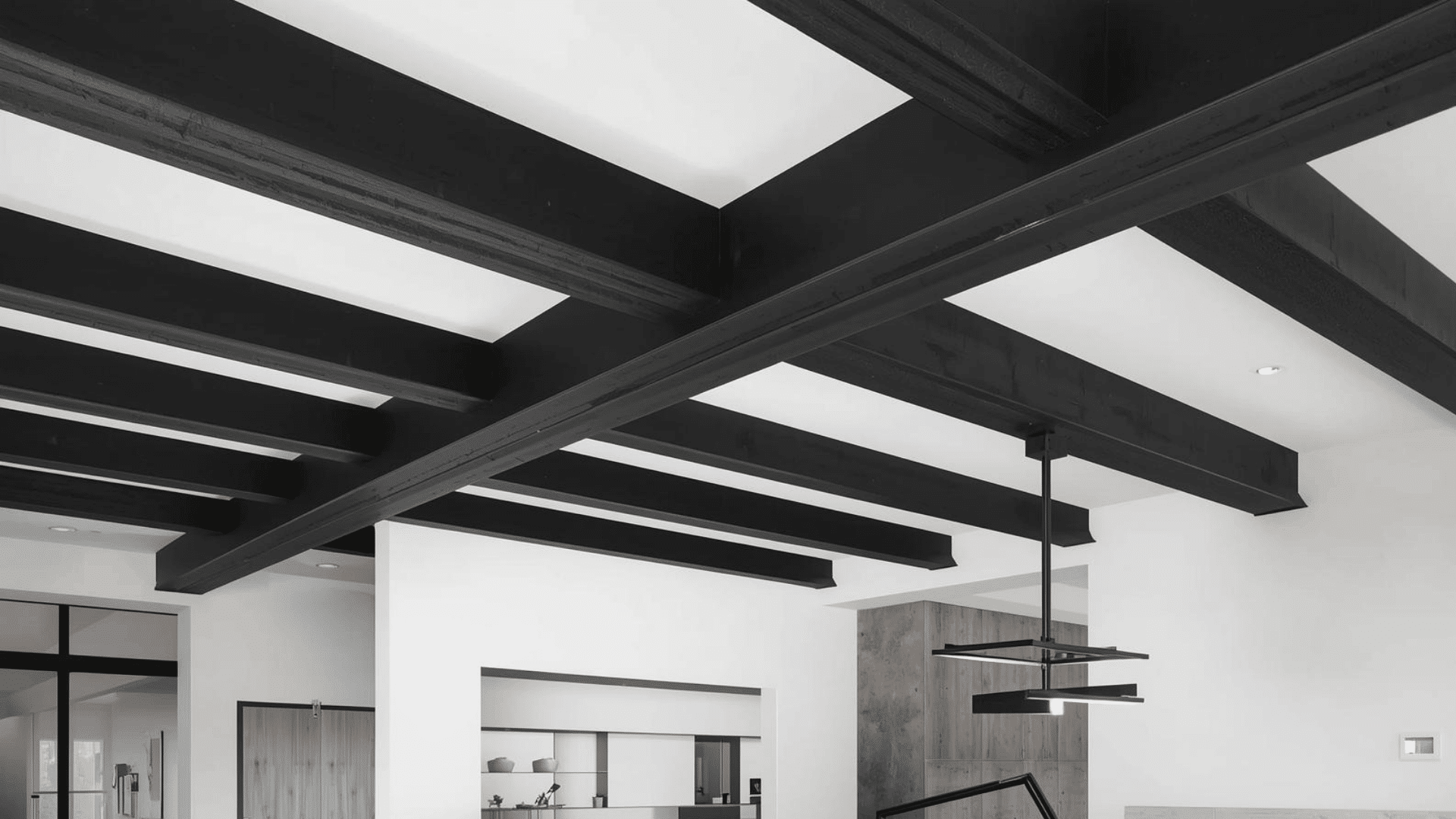
Solid black beams create a bold architectural statement in modern homes. They provide structure and definition without traditional wood grain distractions.
Black beams pair well with white walls, concrete surfaces, and metal fixtures. This treatment works especially well in minimalist or industrial-style spaces where clean lines matter most.
7. Metal I-Beams as Design Features
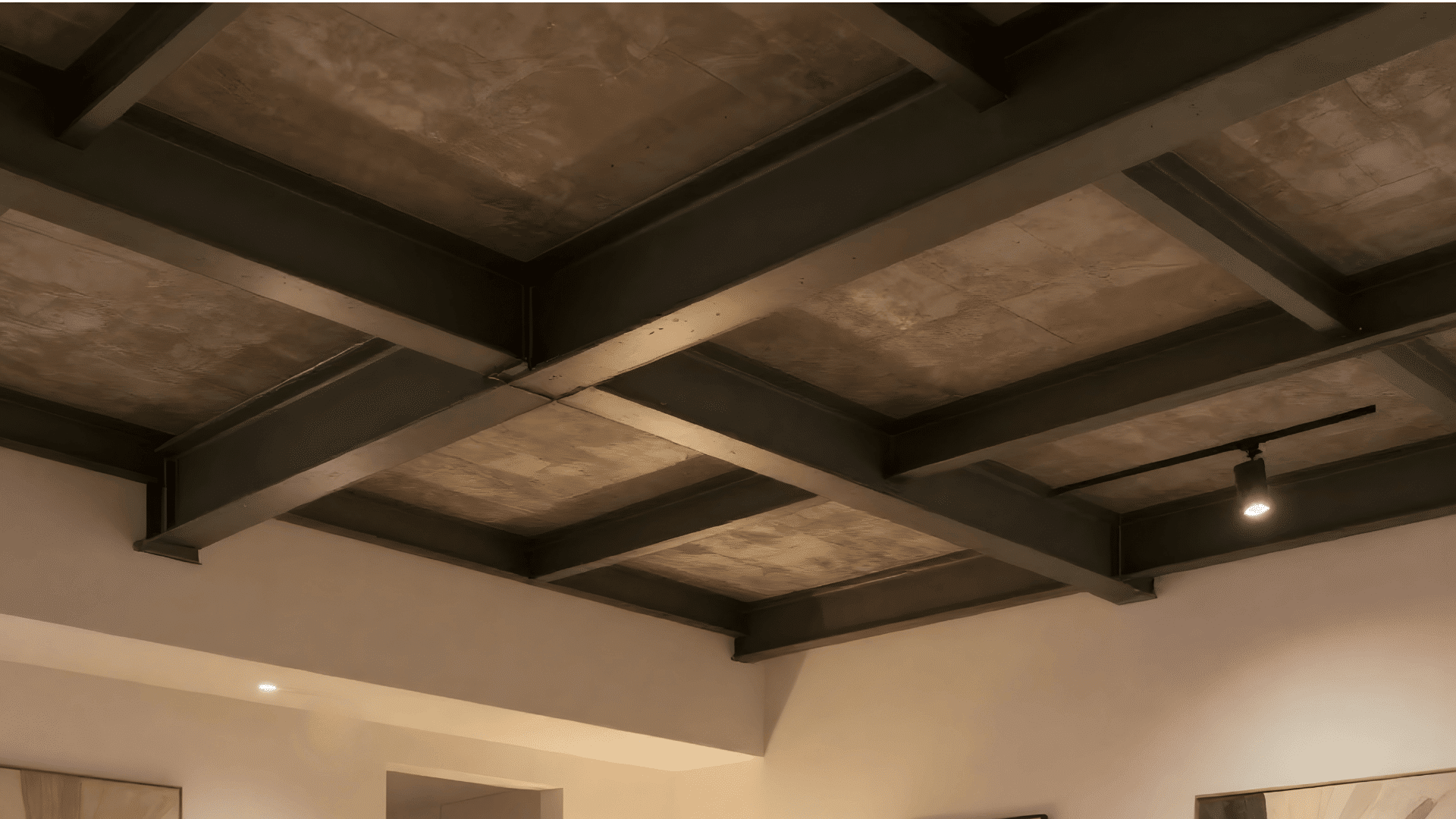
Steel I-beams bring industrial character and authentic structural elements into living spaces. Their metallic finish reflects light differently from wood throughout the day.
These beams work well in lofts, converted warehouses, or homes with industrial design themes. Paint them or leave them in a raw steel finish, depending on the desired look.
8. Box Beam Construction
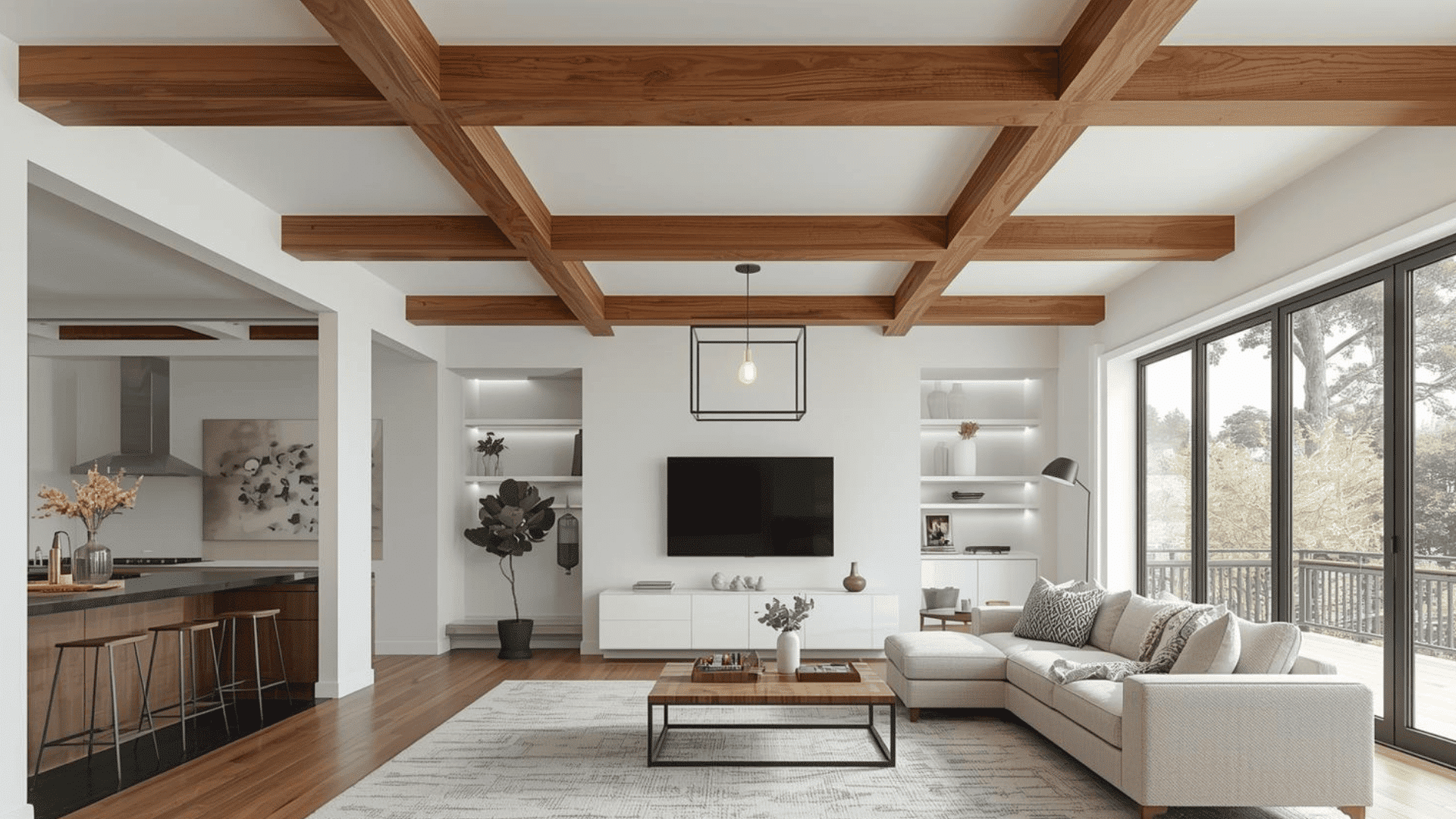
Hollow box beams offer the look of solid wood at a fraction of the weight and cost. Build them from dimensional lumber or plywood finished to match your style.
Box beams are perfect for covering wiring or adding visual interest to flat ceilings. They install more easily than solid beams and can be customized to any size needed.
9. Floating Beam Effect
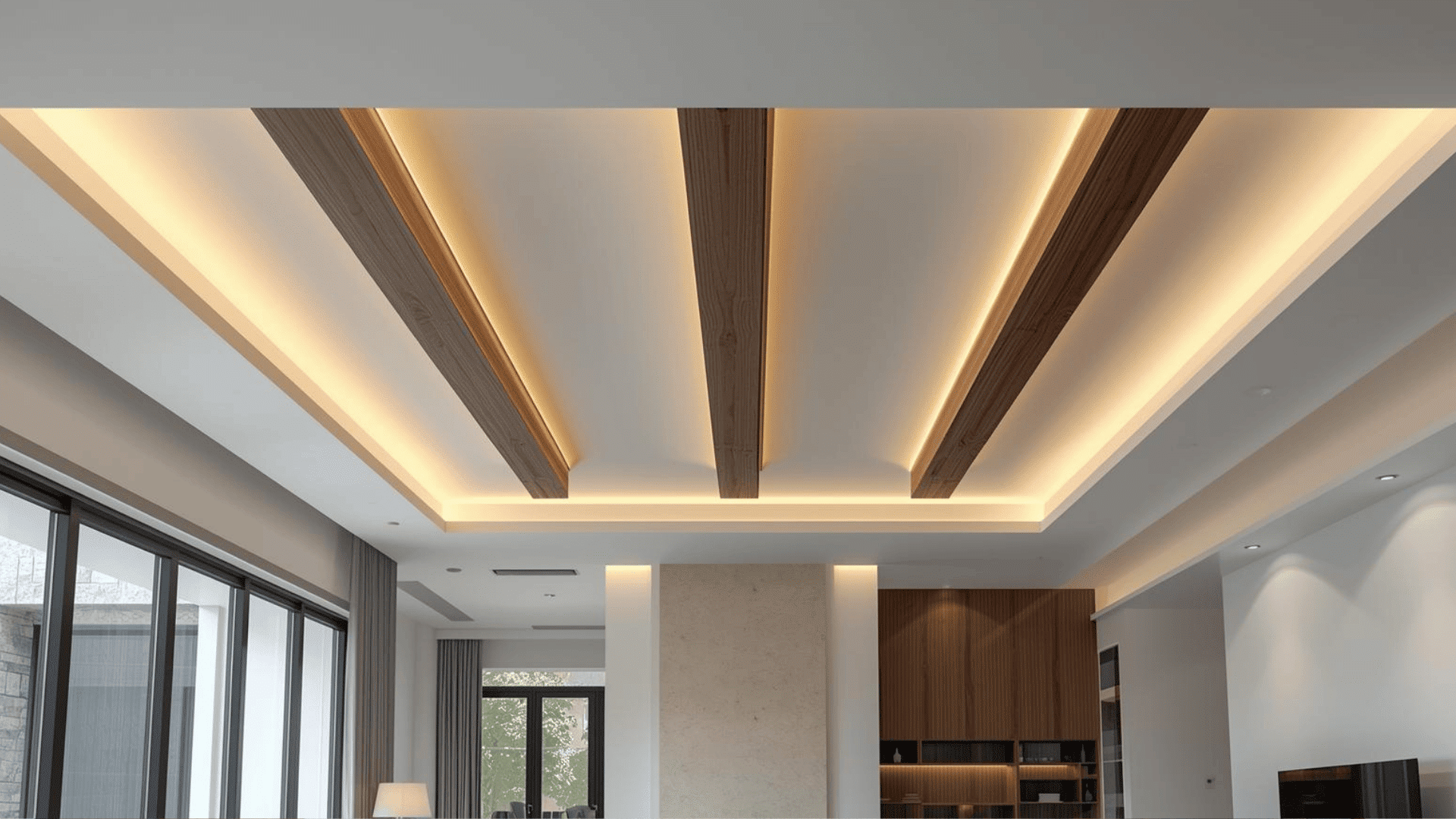
Install beams with hidden brackets to create a floating appearance against the ceiling. This modern technique emphasizes clean lines and minimalist design.
The shadow gap between the beam and the ceiling adds depth and visual interest. LED strip lighting fits perfectly in the gap for indirect illumination and added drama.
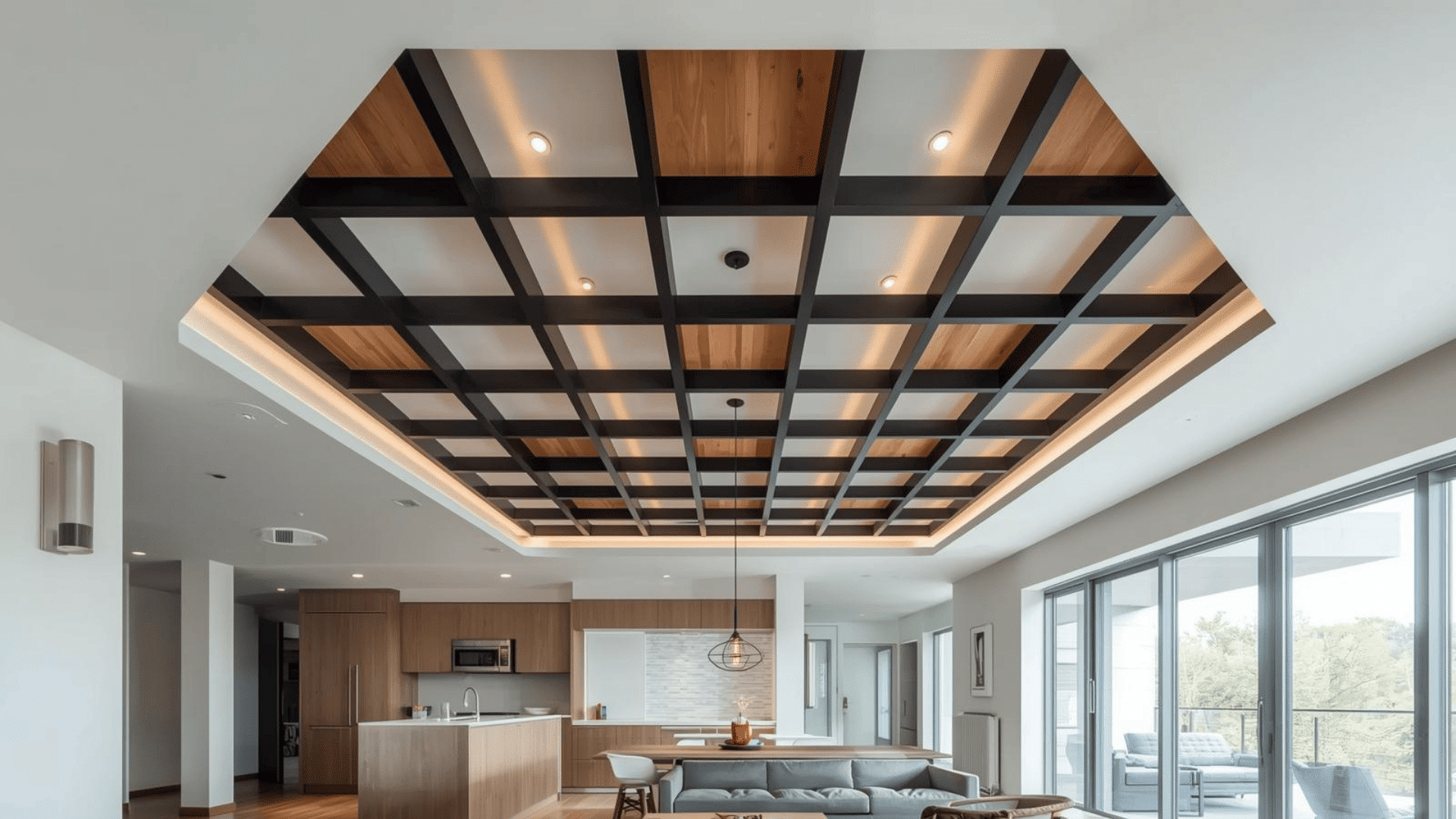
10. Geometric Beam Patterns
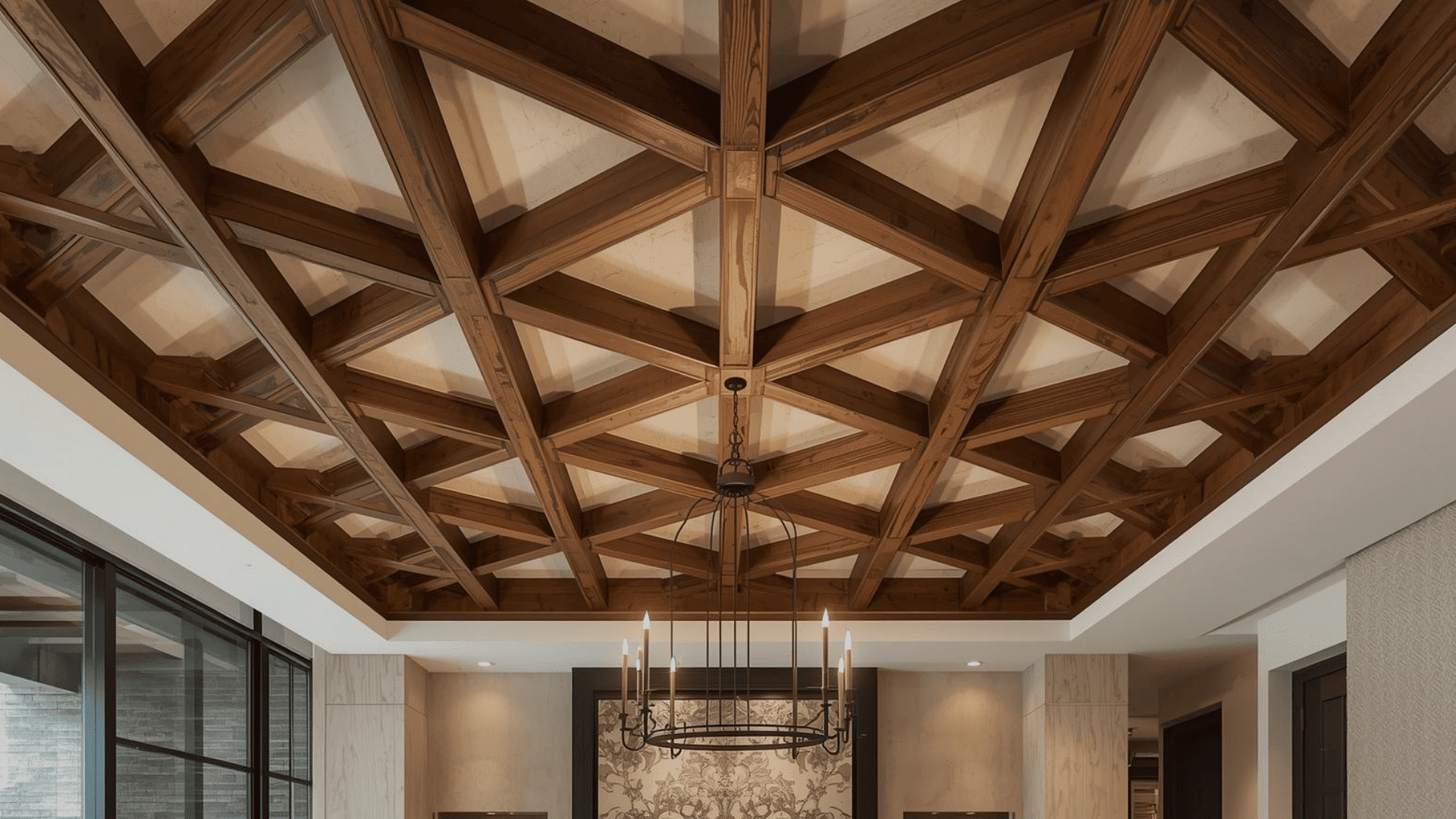
Arrange beams in modern geometric configurations rather than traditional parallel lines. Create grids, diamonds, or asymmetric patterns that serve as ceiling art.
This approach works well in dining rooms or great rooms where the ceiling becomes a focal point. Plan carefully to maintain structural integrity while achieving the desired visual effect.
Rustic and Farmhouse Beam Applications
Rustic and farmhouse beam applications add texture and a lived-in feel, even in a more contemporary home. They work well in great rooms, dining areas, and porches, especially with neutral walls.
11. Hand-Hewn Beam Texture
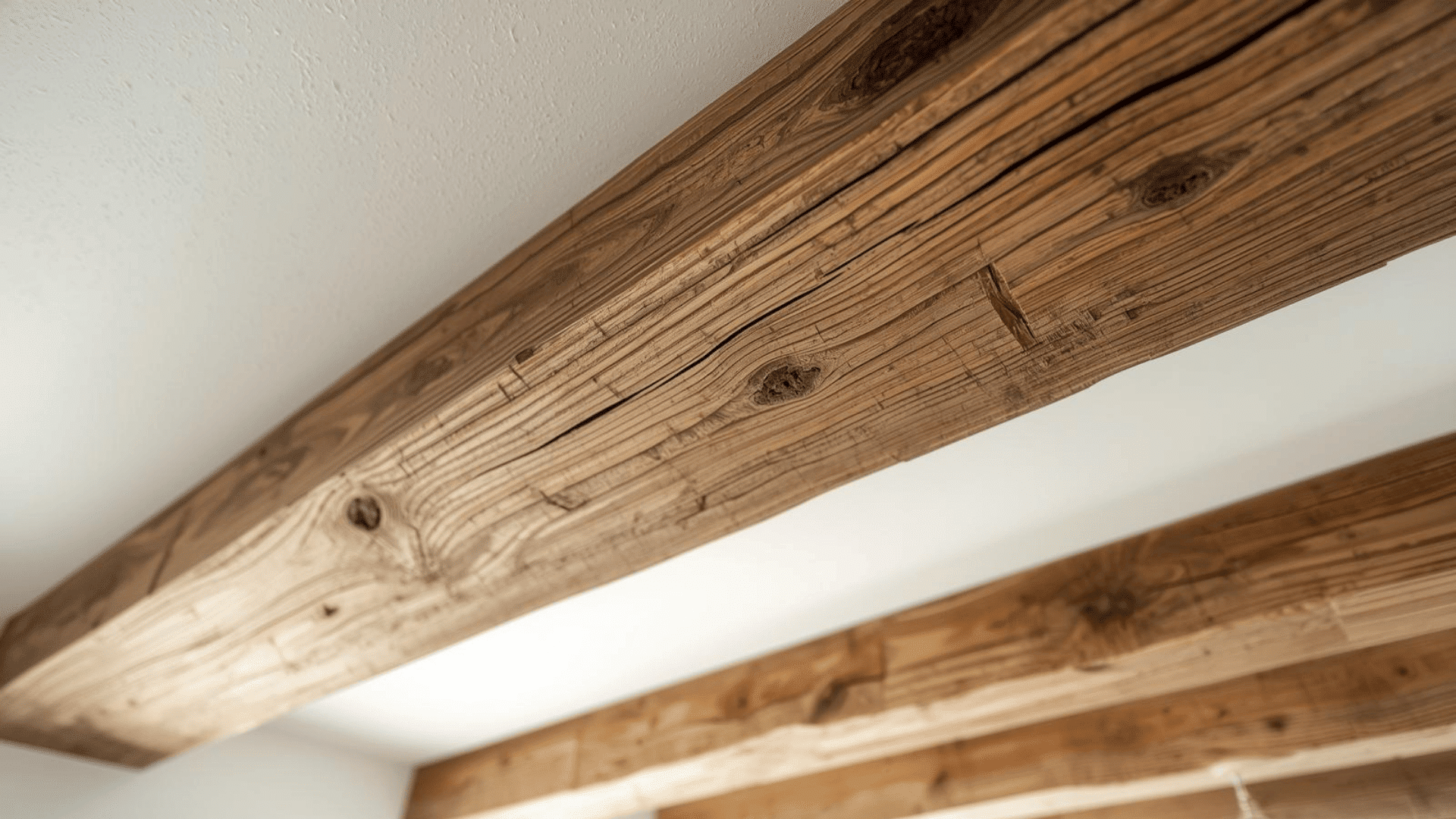
Hand-hewn beams show chisel marks and irregular surfaces that machine-cut lumber lacks. These beams bring authentic old-world craftsmanship into your home.
The rough texture catches light differently, creating depth and shadow play. New beams can be hand-hewn, or you can find antique versions with centuries of character already built in.
12. Arched Ceiling with Curved Beams
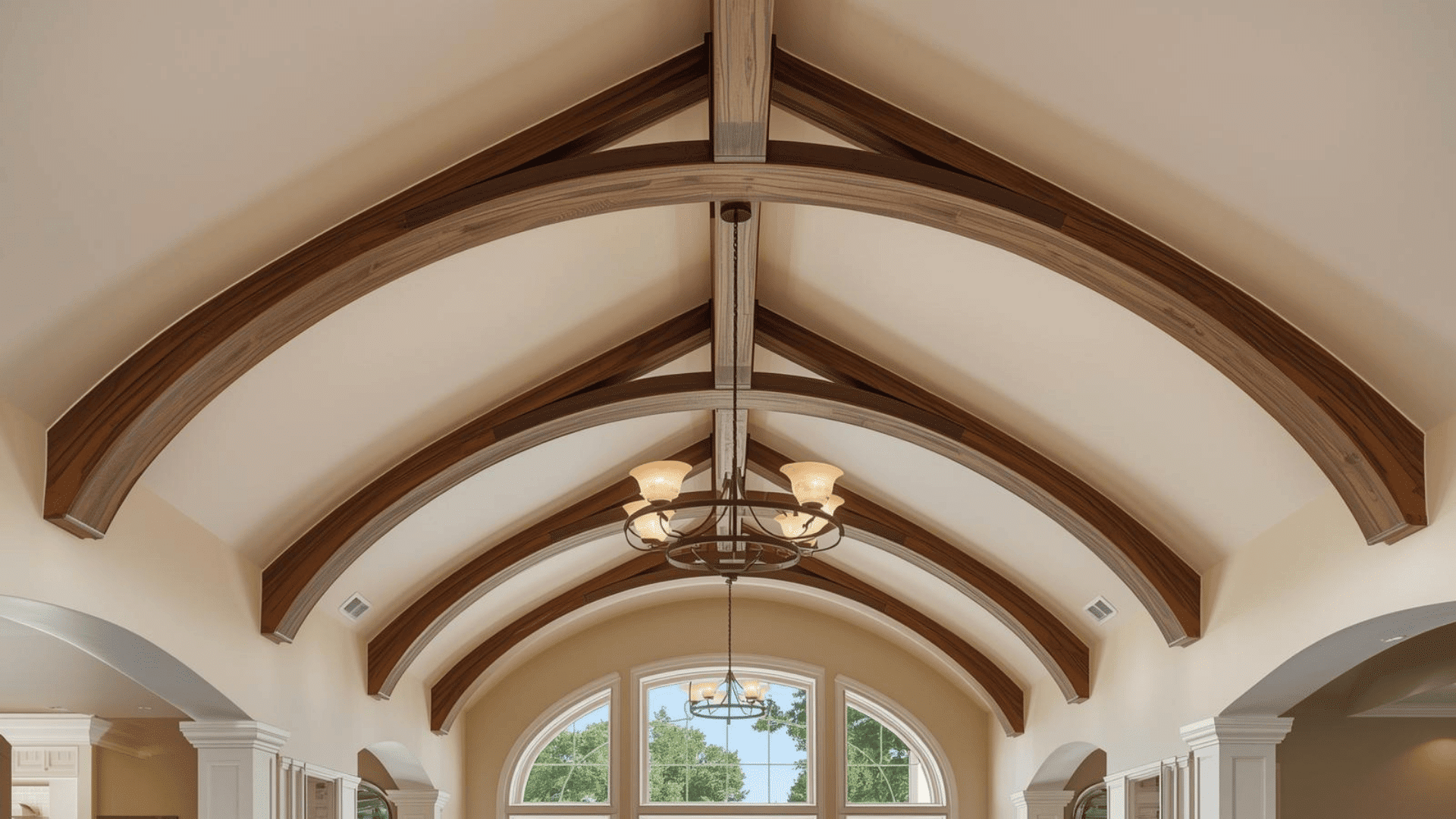
Follow the curve of vaulted or barrel ceilings with beams that emphasize the architectural shape. Curved beams require special fabrication but create stunning visual flow.
This treatment works beautifully in entryways, great rooms, or anywhere you want to highlight ceiling architecture. The curves soften the space while adding structural visual interest.
13. Crossed Beam Configuration
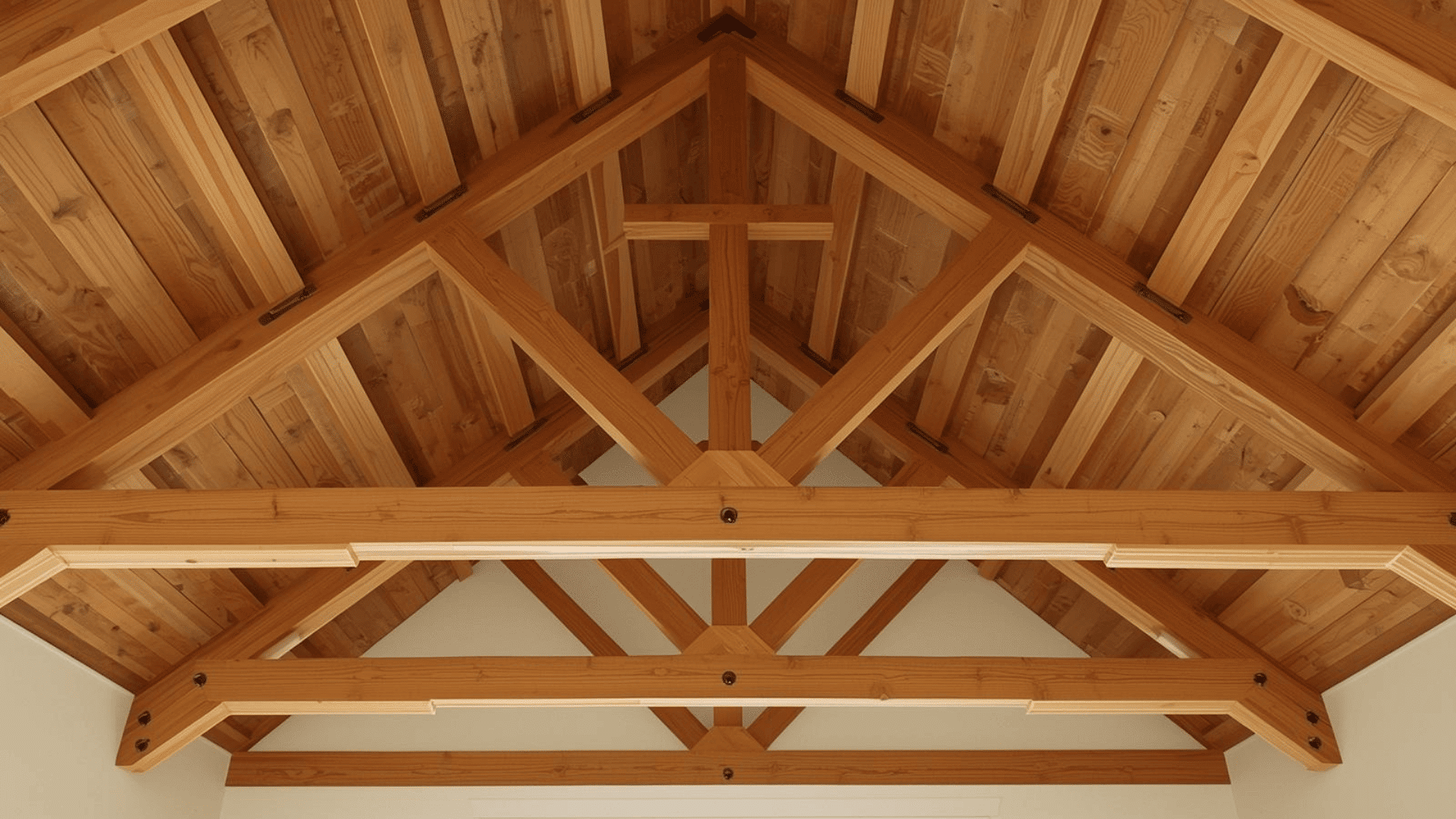
Place beams in a crisscross pattern that mimics traditional timber framing. The X-pattern adds structural character even when beams are purely decorative.
This configuration works well in spaces with high ceilings where visual weight helps ground the room. Paint or stain all beams the same color for a cohesive look.
14. Rough-Sawn Pine Beams
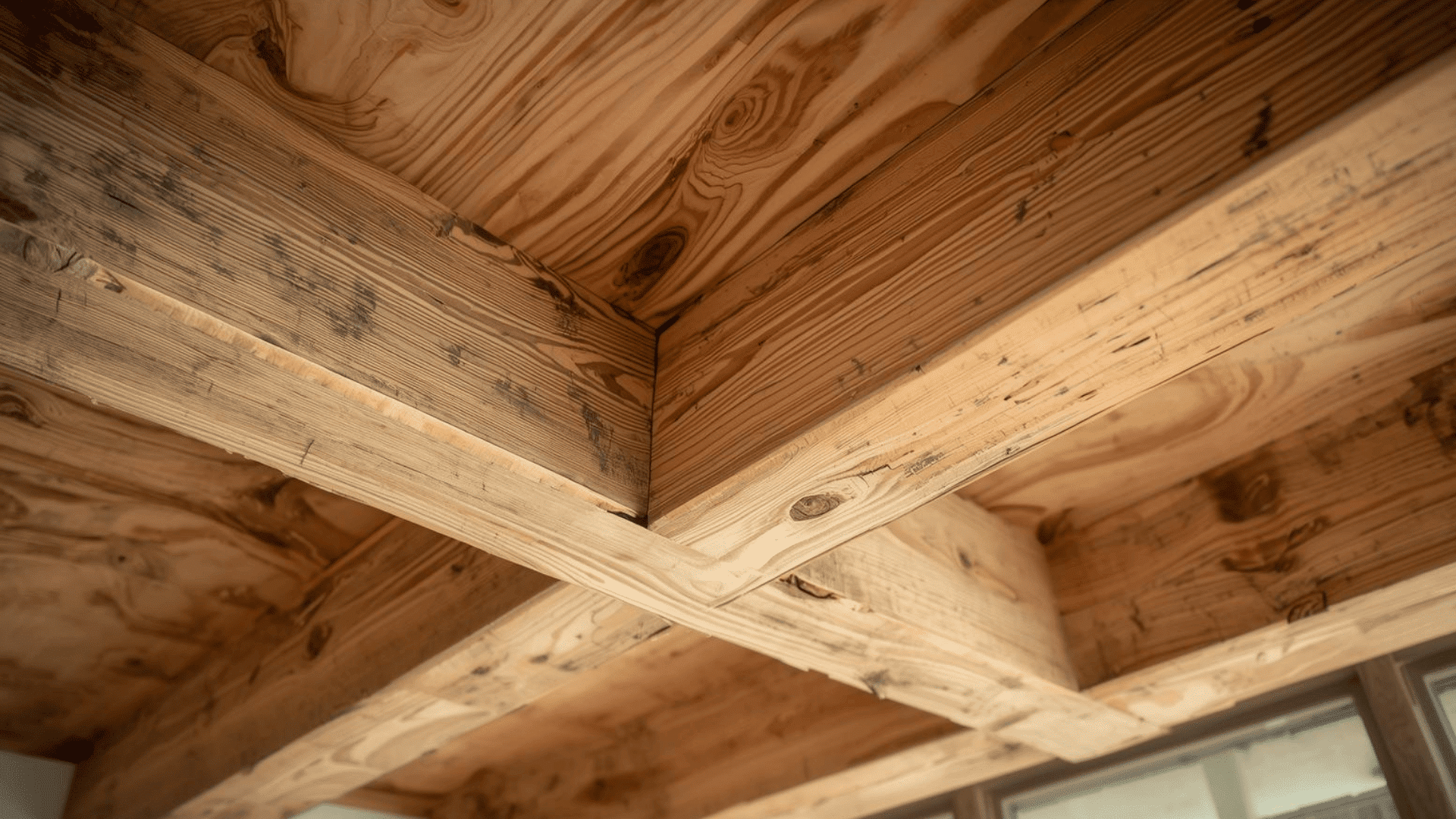
Pine beams offer affordability without sacrificing character. Rough-sawn surfaces provide texture and visual interest at a lower cost than hardwoods.
Pine accepts stain well, allowing you to match any color scheme. The softer wood shows age and wear more readily, adding to its rustic charm over time.
15. Exposed Truss Design
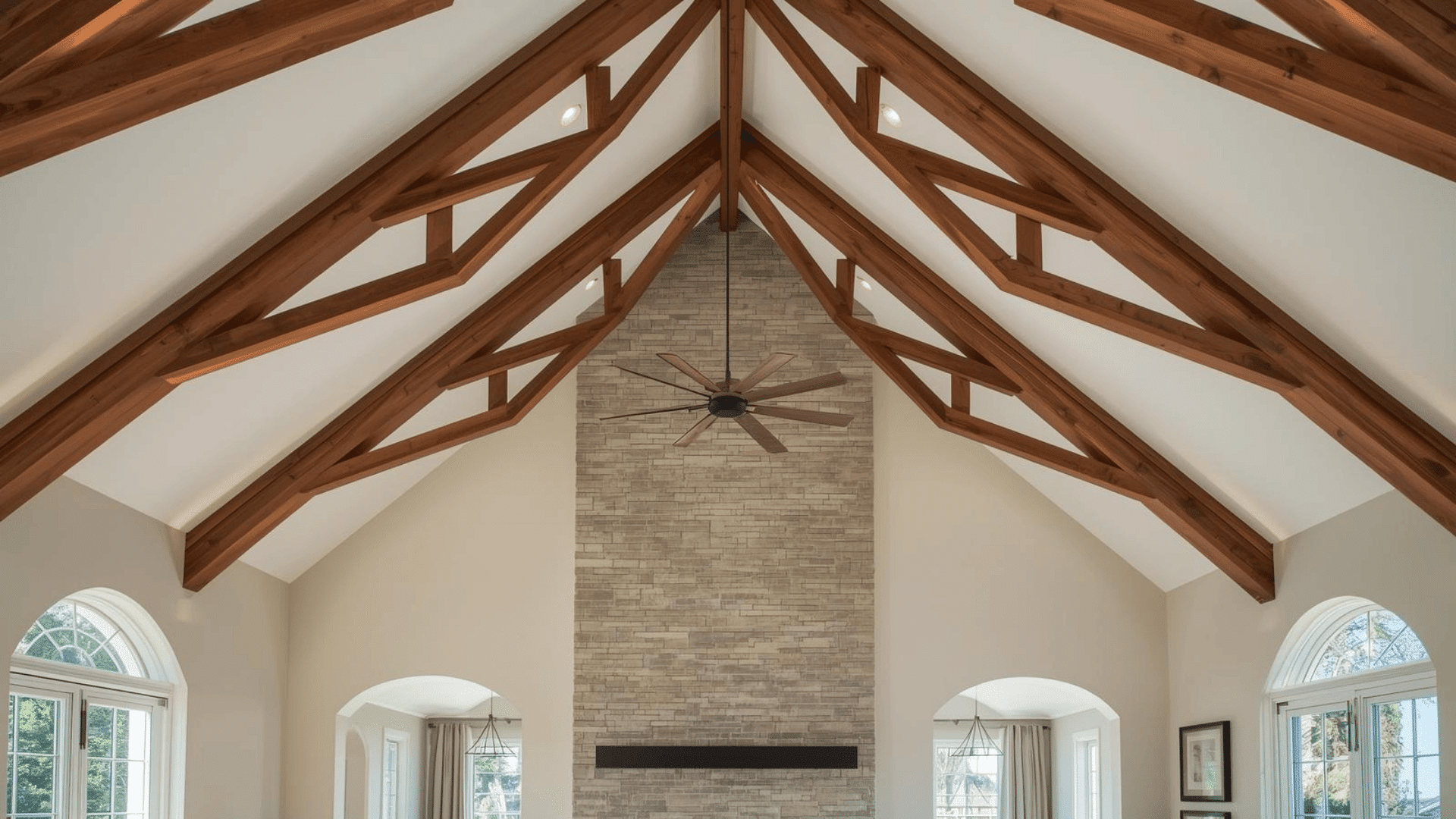
Highlight the structural triangular trusses that support your roof instead of hiding them. Exposed trusses create architectural drama in great rooms and living spaces.
Stain or paint them to complement your decor while showing off the engineering. This works particularly well in homes with vaulted ceilings or cathedral-style roofs.
Kitchen-Specific Beam Ideas
Kitchen-specific beam ideas help define the cooking zone in an open layout. Beams can frame an island, highlight a ceiling change, or guide the eye toward a range wall or dining area
16. Beams Running Over Kitchen Island
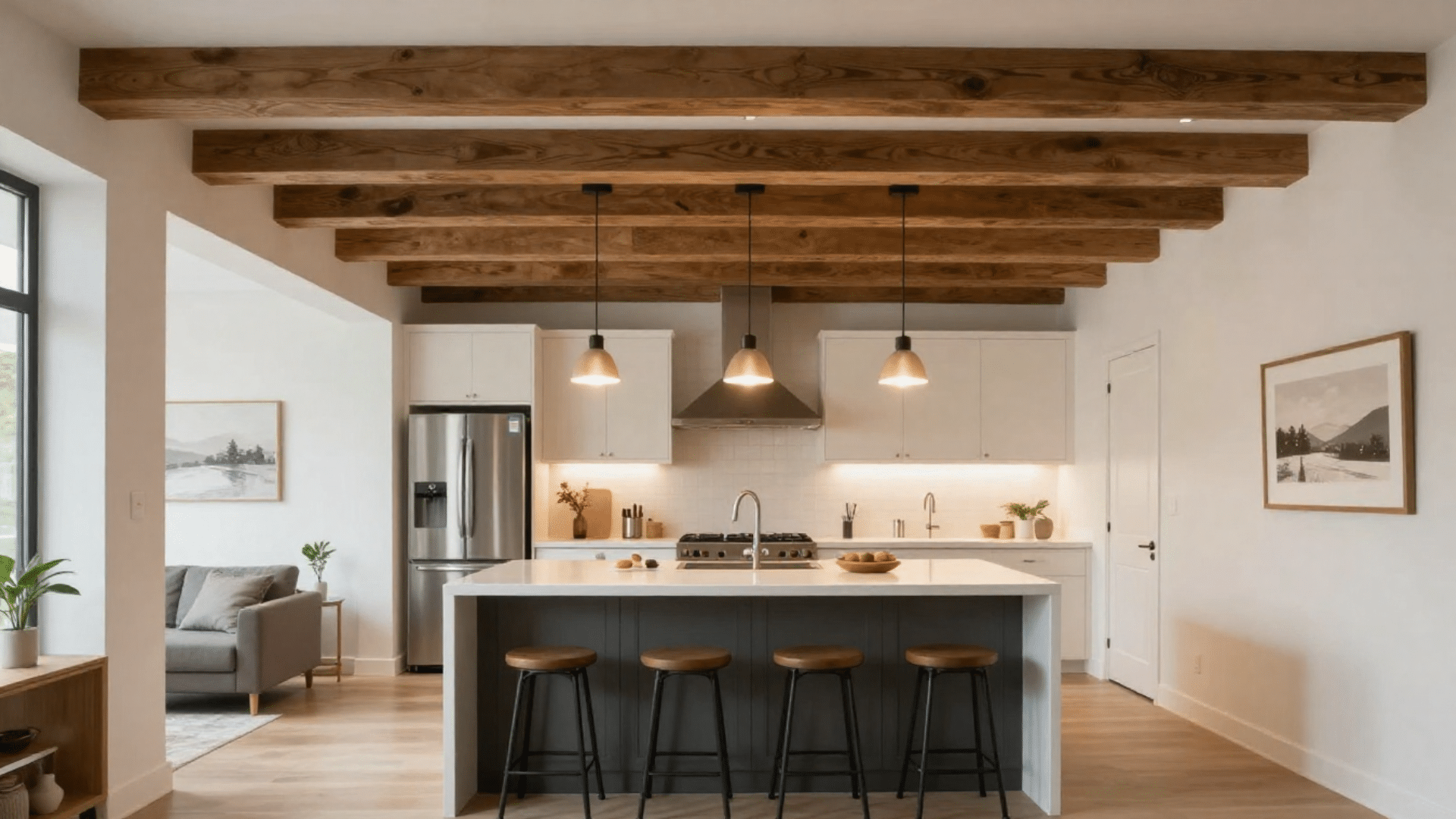
Position beams directly above your kitchen island to define the cooking and gathering area. This creates a visual anchor point in open-concept spaces.
Hang pendant lights from the beams for functional task lighting. The beams help separate the kitchen from the adjacent living areas without building walls.
17. Painted Beams Matching Cabinets
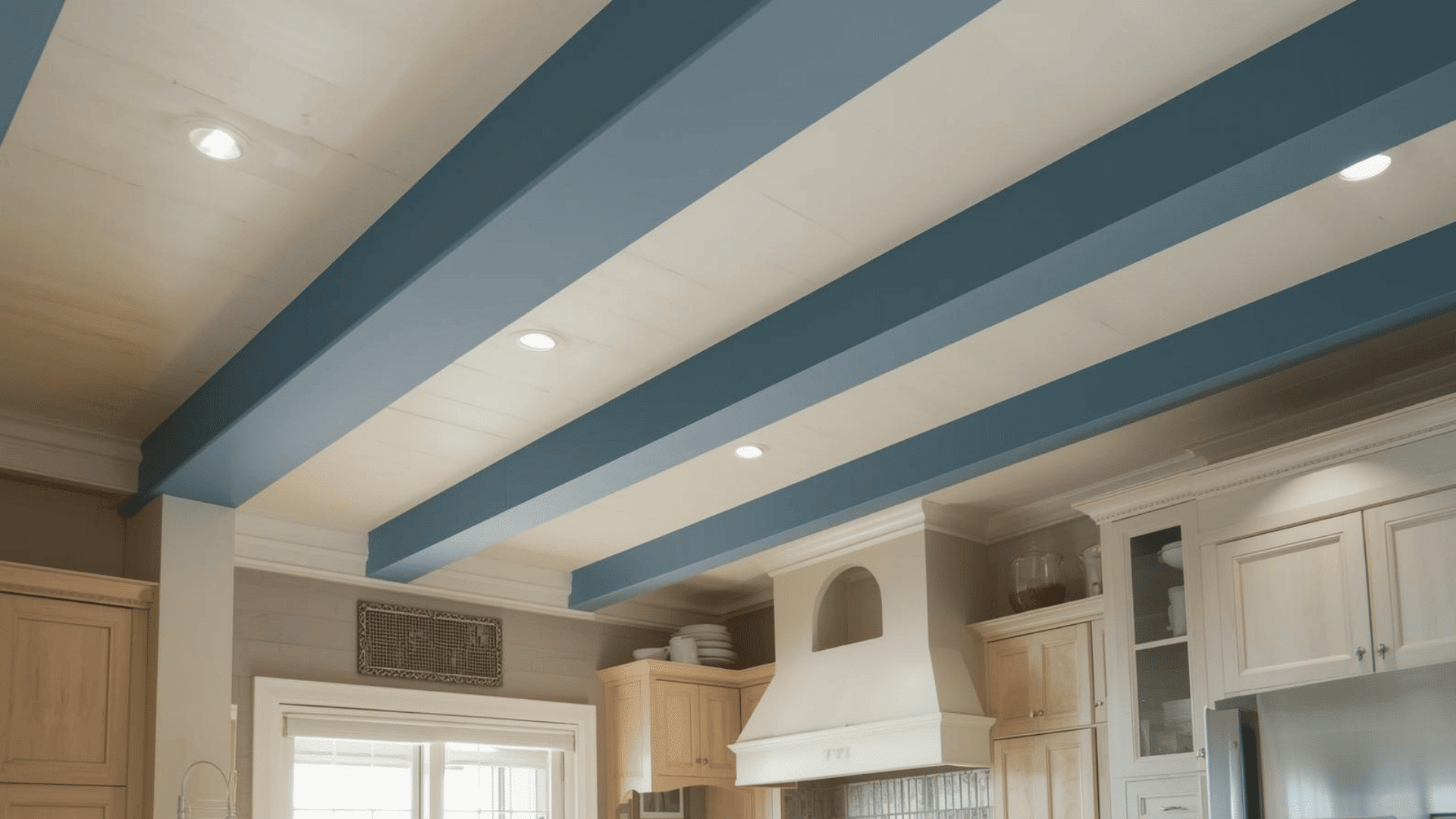
Coordinate beam color with your kitchen cabinetry for a cohesive look. Match them exactly or choose a complementary shade from the same color family.
This approach ties the ceiling into the overall kitchen design. Change the beam color when you update cabinets to keep the space feeling fresh.
18. Light Wood Beams in White Kitchens
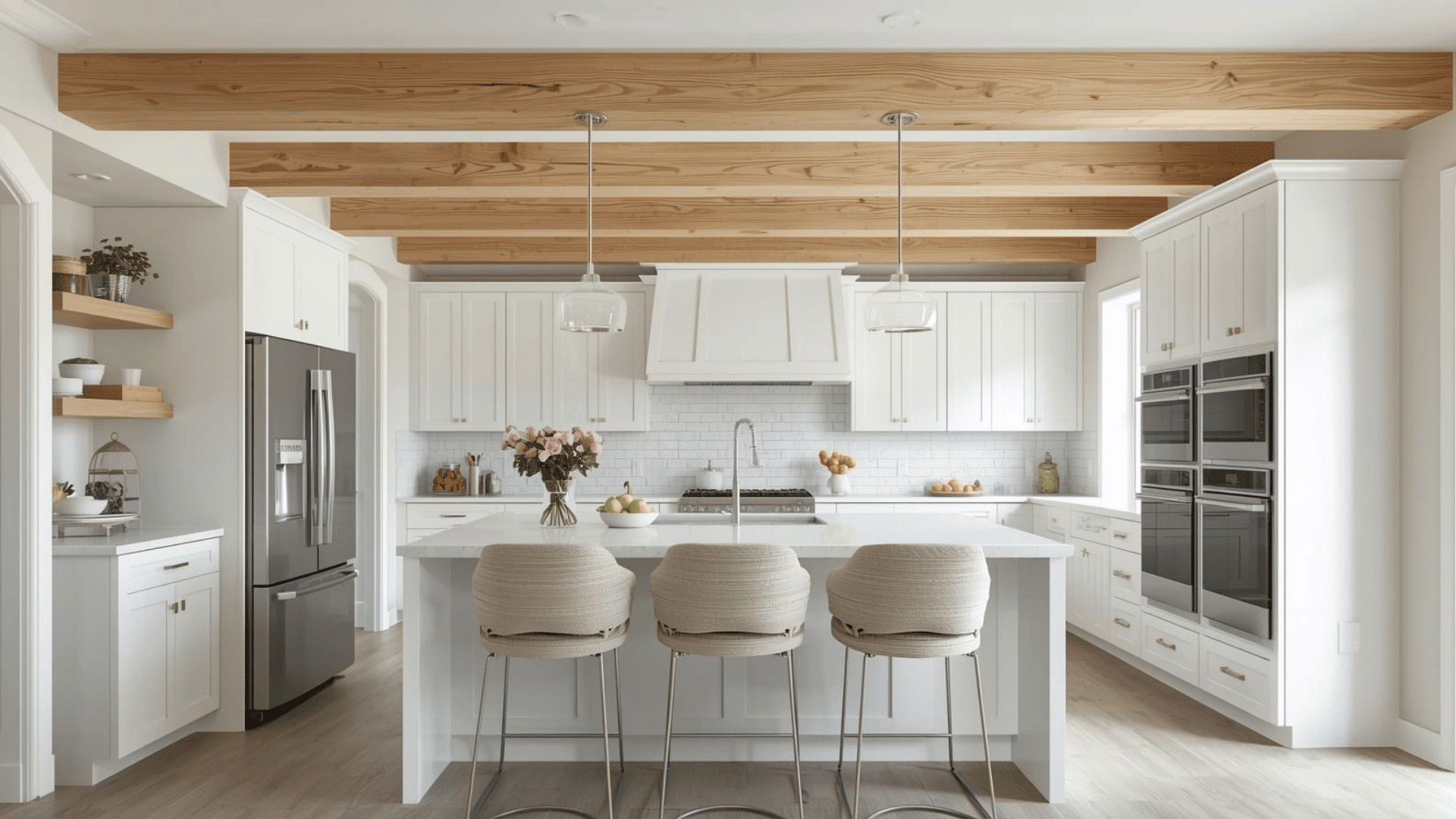
Install light-colored wood beams in all-white kitchens to add warmth without heaviness. Maple, birch, or light oak provides subtle texture and natural beauty.
The lighter tones keep the space feeling open and airy. This combination works well in smaller kitchens where dark beams might feel overwhelming.
19. Beams with Integrated Pot Racks
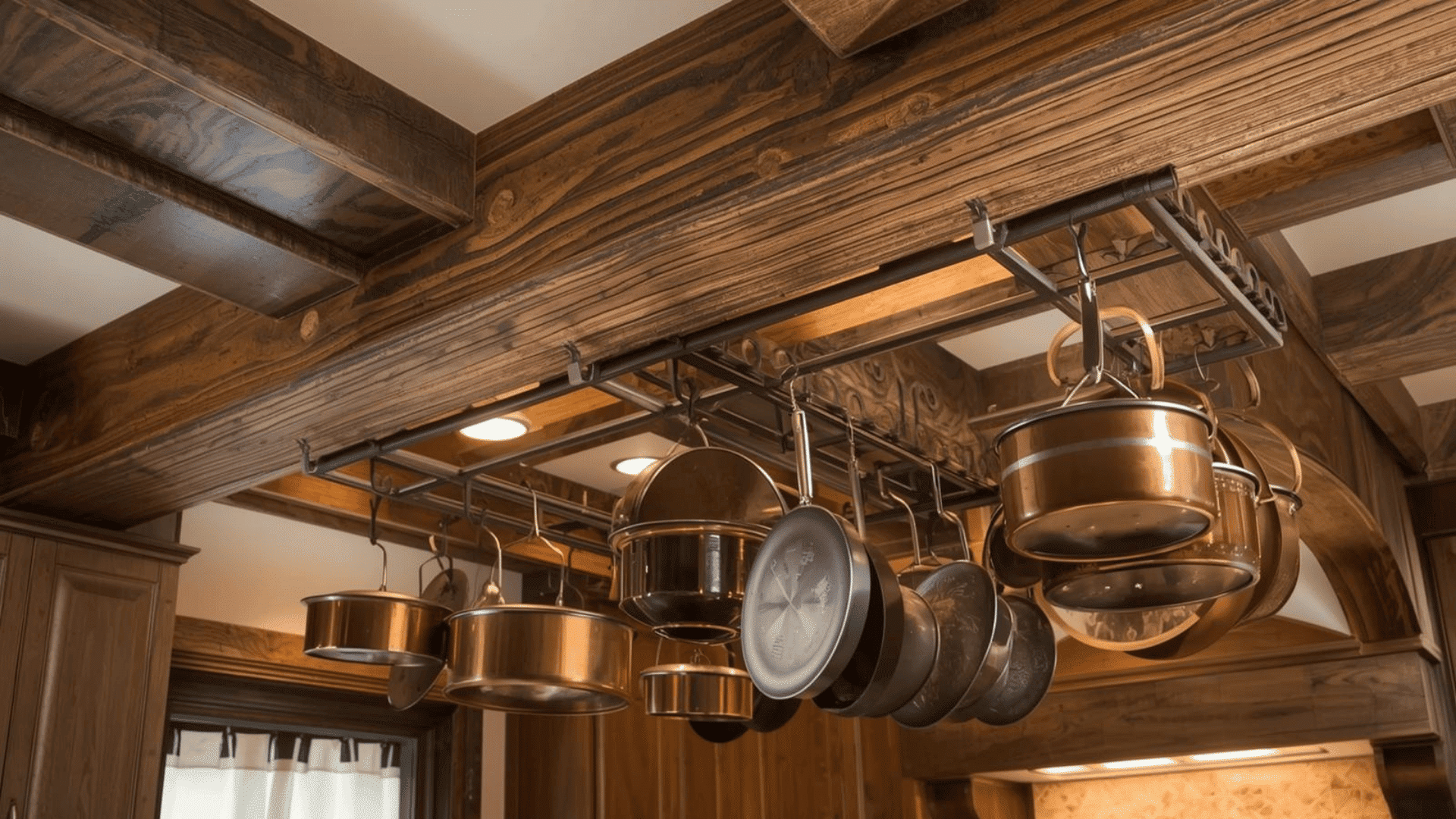
Combine function and style by mounting pot racks to decorative ceiling beams. This saves cabinet space while displaying your cookware.
Install beams strong enough to safely support the hanging weight. The combination of wood beams and copper or iron pots creates appealing visual texture in traditional or country kitchens.
20. Coffered Ceiling with Beam Framework
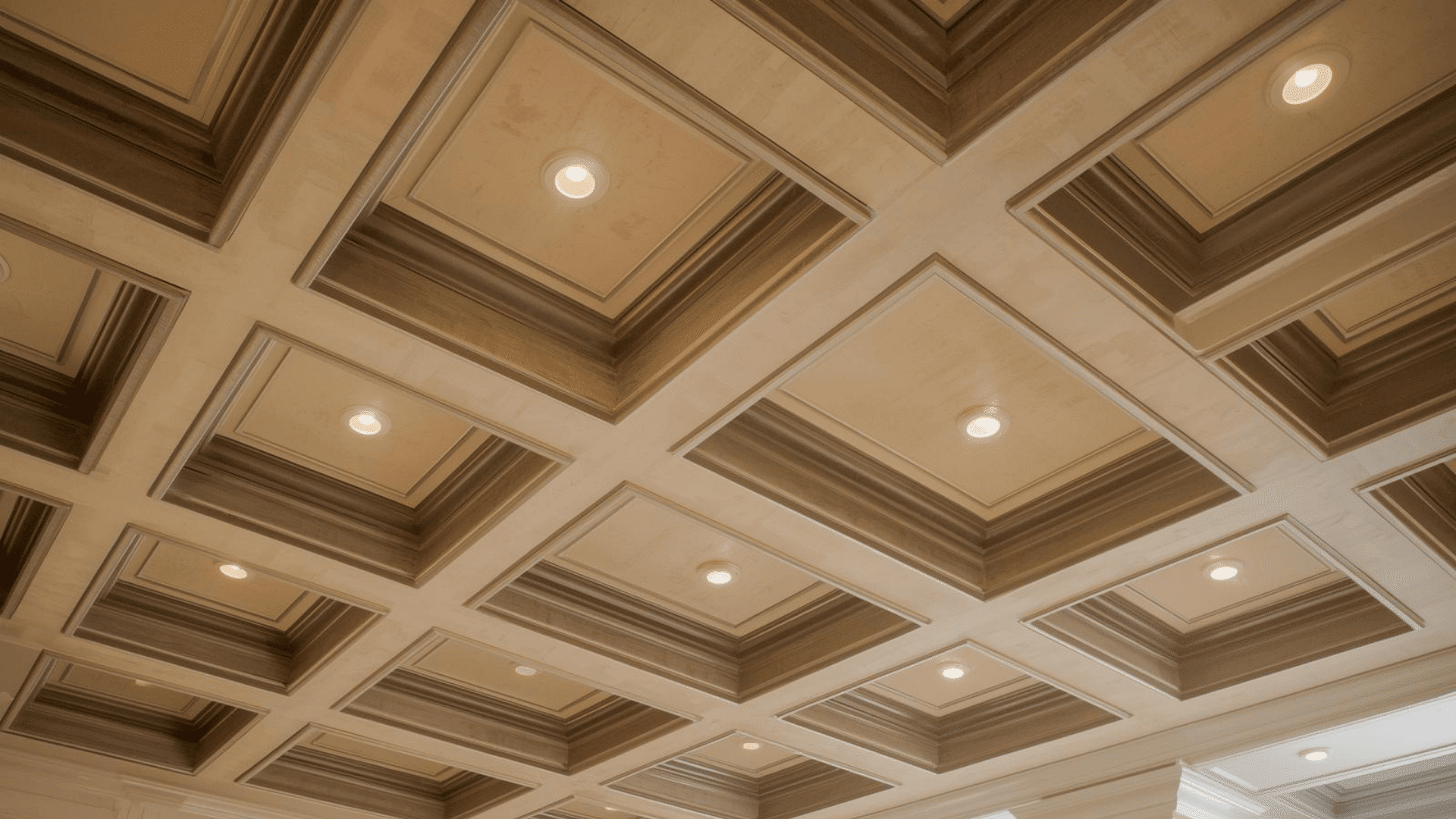
Create a coffered look using beams to form grid patterns with recessed ceiling panels. This formal treatment adds luxury and architectural interest to dining areas or formal kitchens.
Paint the recessed areas and the light beams in a contrasting color to create depth. The three-dimensional effect makes ceilings appear higher and more substantial.
Bedroom Beam Treatments
Bedroom beam treatments add depth without making the space feel busy. A single beam, a pair, or a simple grid can give a plain ceiling a more finished look. Lighter-stained or painted beams keep the room calm and bright, while darker beams add contrast and structure.
Keep spacing even and lines straight. Pair beams with simple lighting to make the ceiling feel intentional and balanced.
21. Beams in Master Bedroom Tray Ceilings
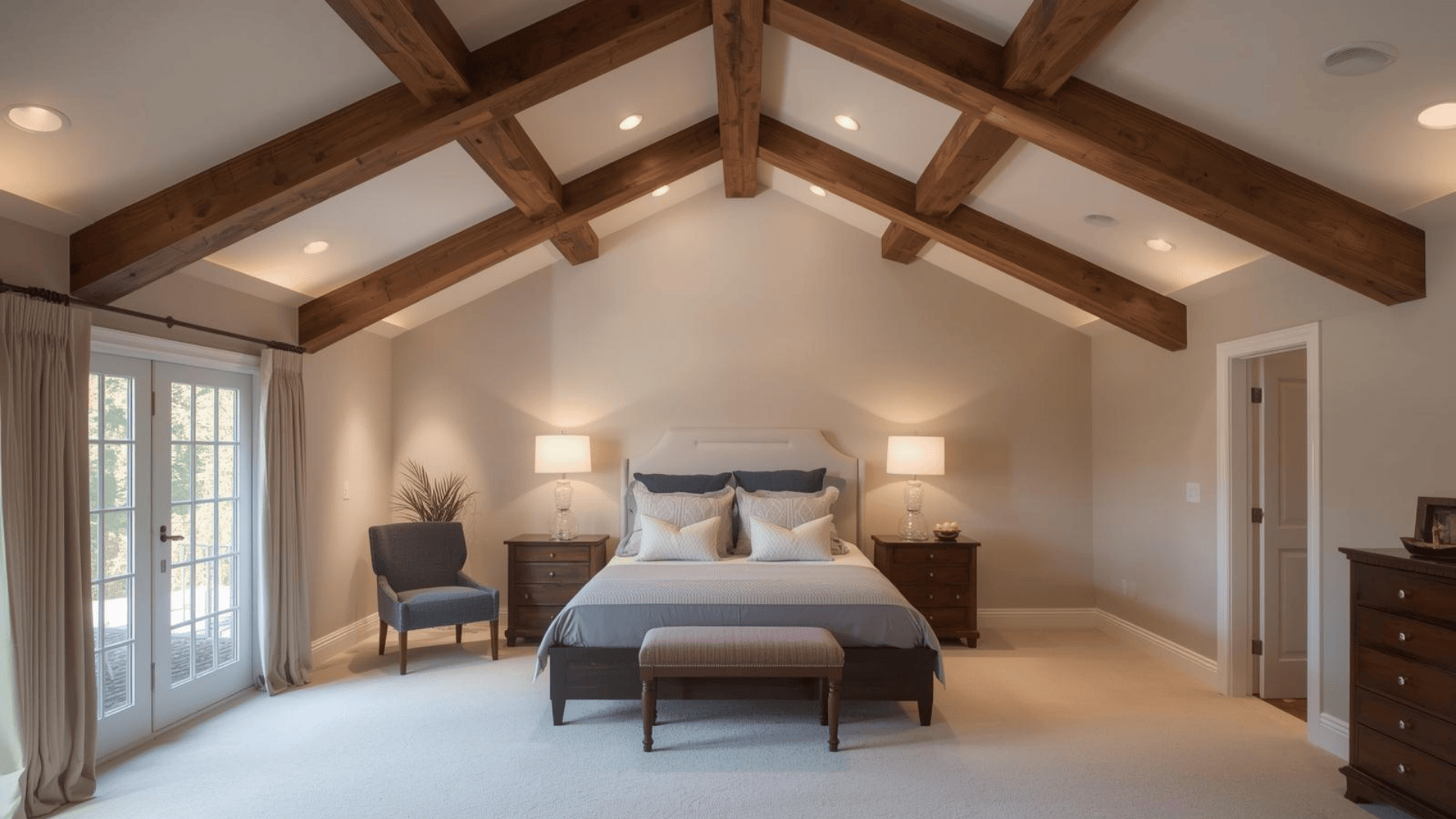
Add beams to the outer edges of tray ceilings to emphasize the architectural feature. This draws attention to the bedroom’s height and dimensions.
Install beams where the ceiling steps up to create a natural separation. The treatment adds luxury without overwhelming the restful bedroom atmosphere.
22. Single Statement Beam Over Bed
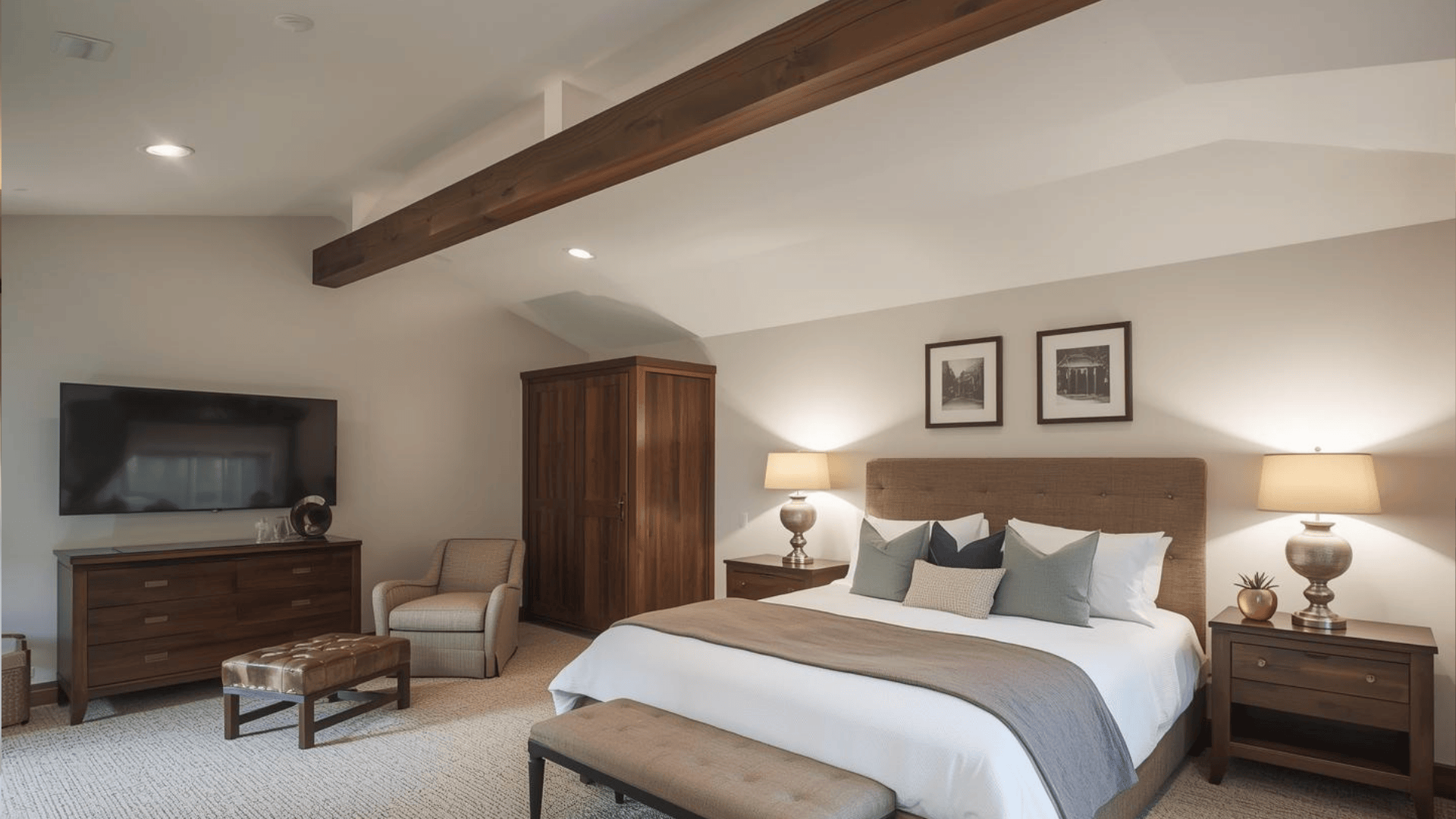
Install one substantial beam centered above the bed as a focal point. This works especially well with king-sized beds in large bedrooms.
The single beam provides visual weight without cluttering the ceiling. Paint or stain it to coordinate with bedroom furniture and overall color scheme.
23. Parallel Beams in Narrow Bedrooms
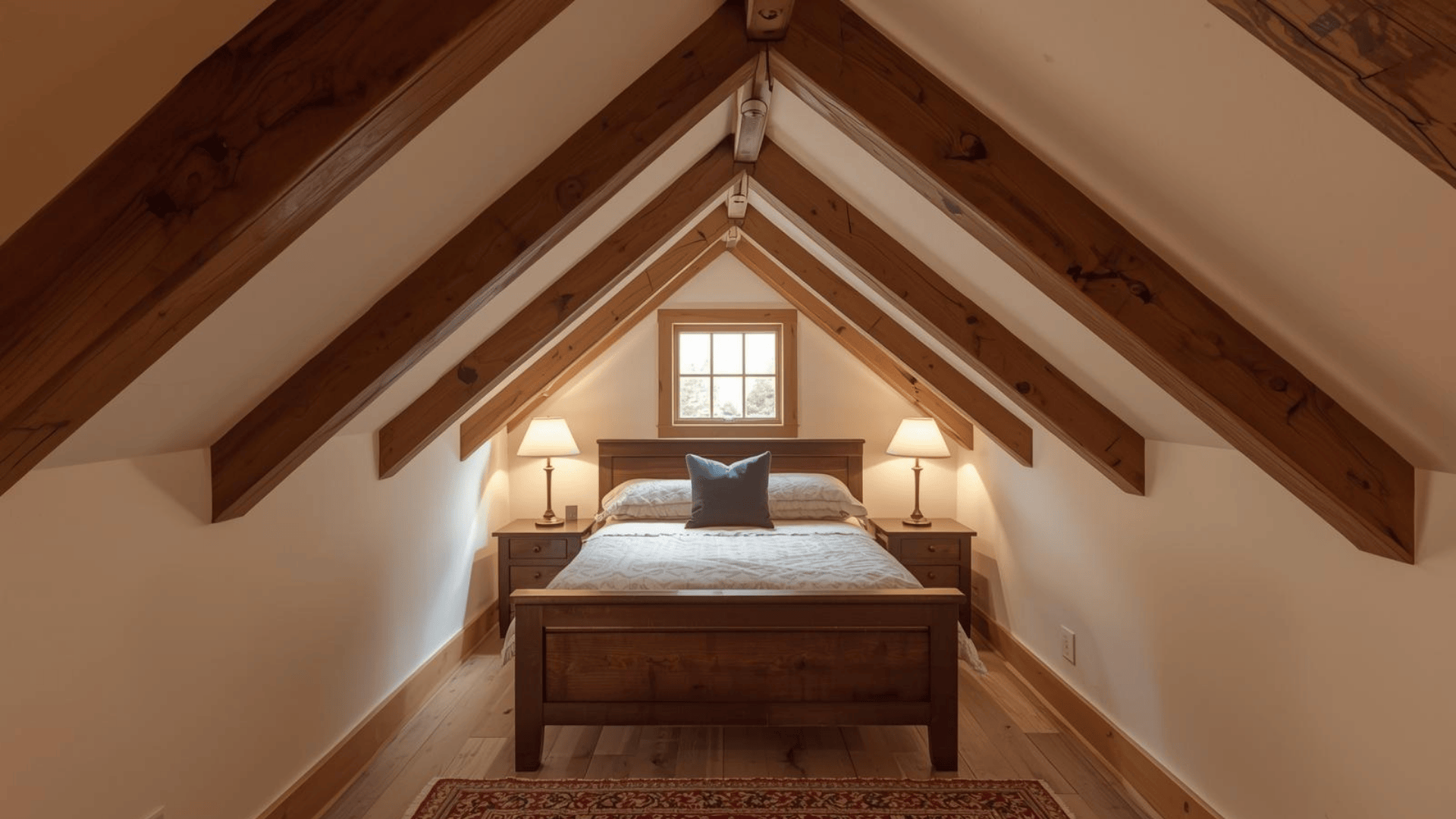
Run beams parallel to the longest wall in narrow bedrooms to make the space feel wider. The lines create visual movement that opens up tight spaces.
Space beams evenly for a balanced appearance. This technique works well in older homes with small bedroom footprints.
24. Natural Wood Beams in Cabin-Style Bedrooms
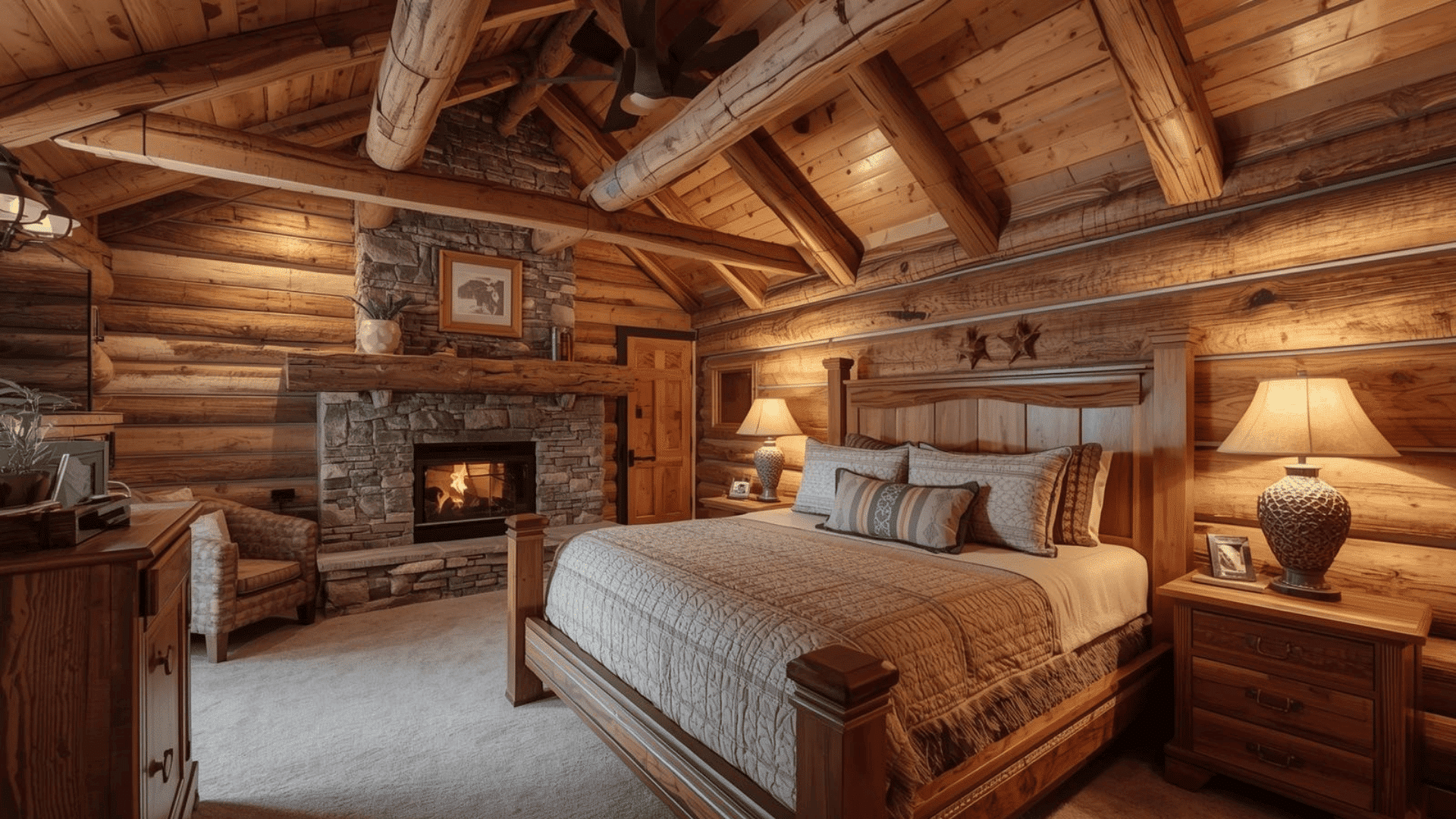
Embrace full rustic charm with natural wood beams in cabin or lodge-style bedrooms. Use larger, more substantial beams to create a cozy, protected feeling.
Pair with wood paneling or stone accents for an authentic mountain retreat atmosphere. The natural materials help create a restful environment that connects with nature.
25. Dark Stained Beams For A Moody Boutique Feel
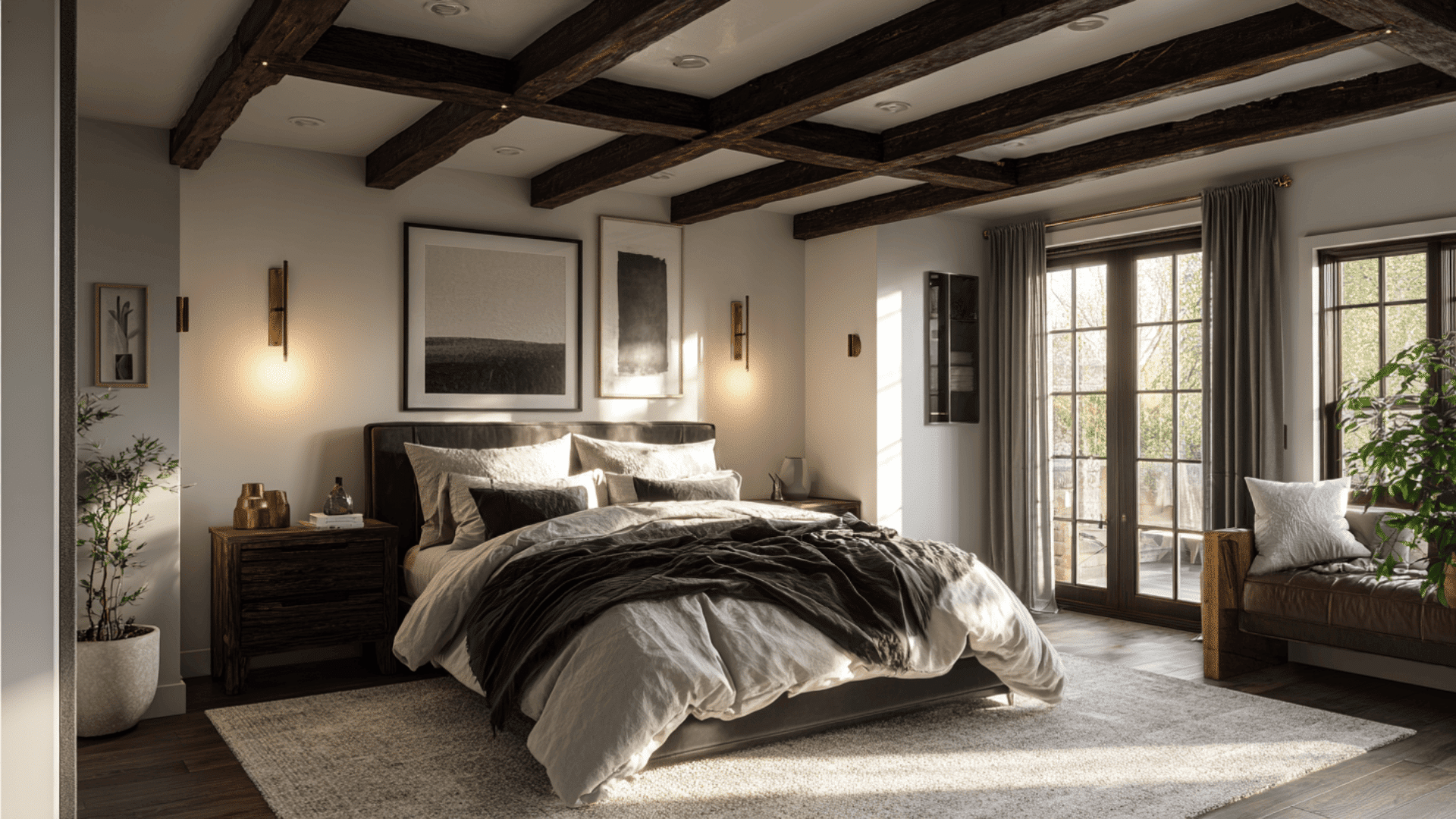
Dark-stained walnut or espresso beams instantly add depth and a boutique-hotel mood to a bedroom. They look best against a light ceiling, so the contrast feels intentional.
Layer warm lighting with bedside sconces, soft lamps, and dimmers. Finish the space with rich textiles, like velvet pillows, linen sheets, and a plush rug, plus a few brass or black accents too.
Living Room Beam Configurations
Living room beam configurations can help shape a large space and make ceilings feel more intentional. A simple pair of beams can frame the seating area, while a boxed beam can highlight a fireplace wall or a ceiling step-up.
26. Cathedral Ceiling with Center Beam
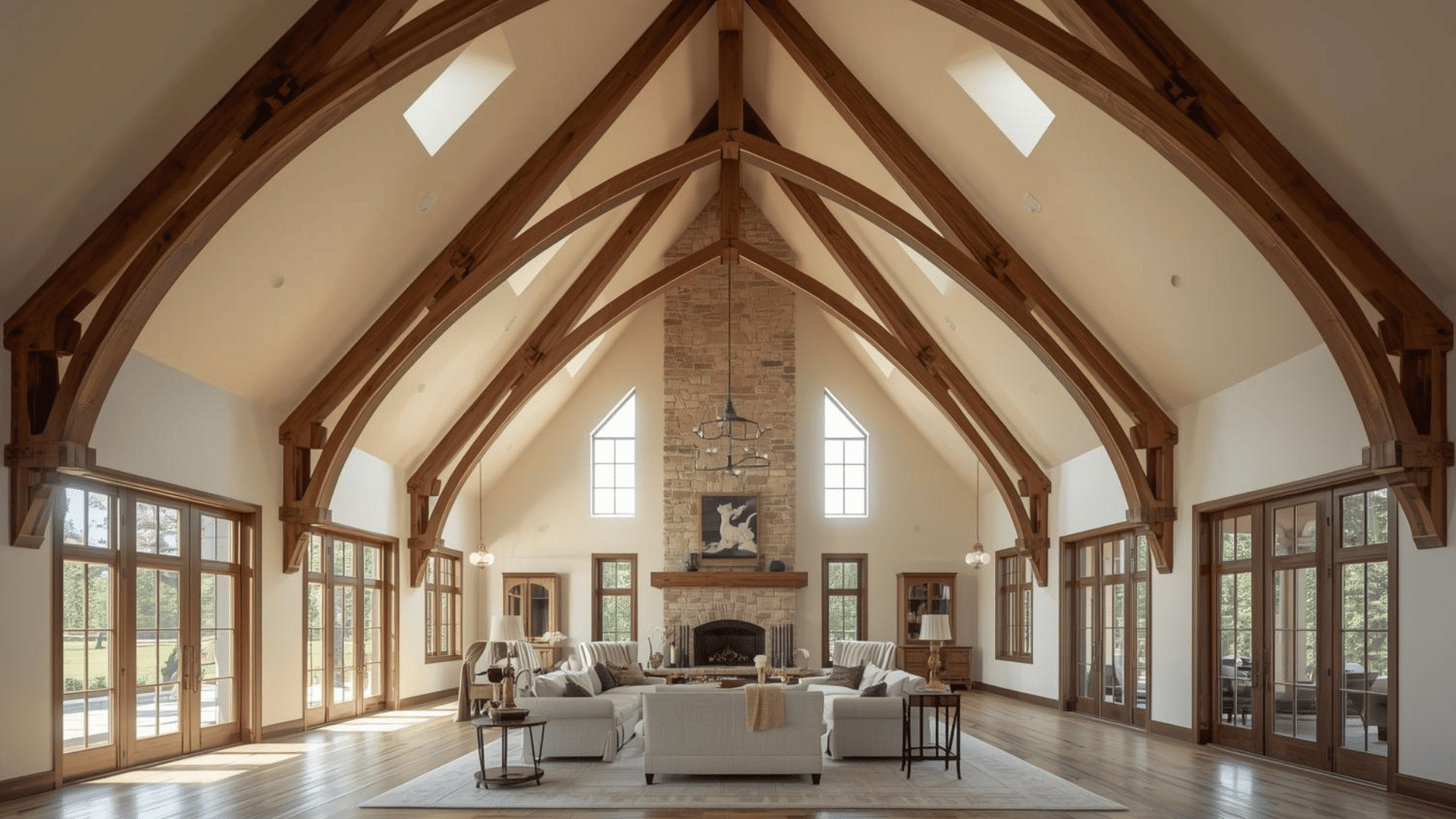
Emphasize soaring cathedral ceilings with a substantial center ridge beam. This highlights the room’s height while providing a visual anchor.
Add supporting beams that follow the roof pitch for full effect. The structure creates a chapel-like atmosphere, making living rooms feel grand and open.
27. Beams Framing Fireplace Area
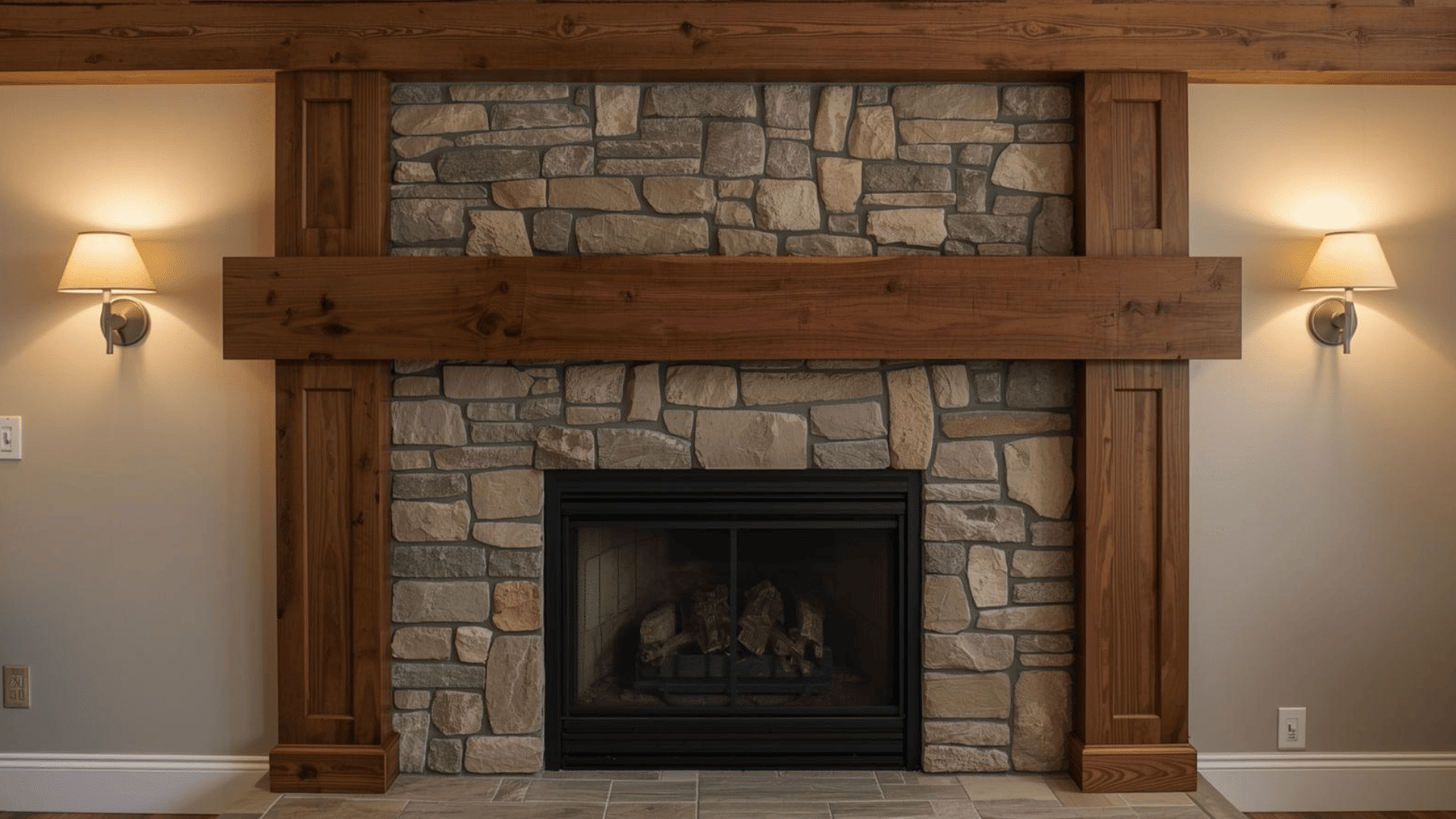
Install beams that frame your fireplace to create a defined focal point. Run one horizontal beam above the mantel, and vertical beams on each side.
This treatment makes the fireplace feel like an intentional architectural feature. The beams can match the fireplace materials or provide a pleasing contrast.
28. Grid Pattern for Formal Living Rooms
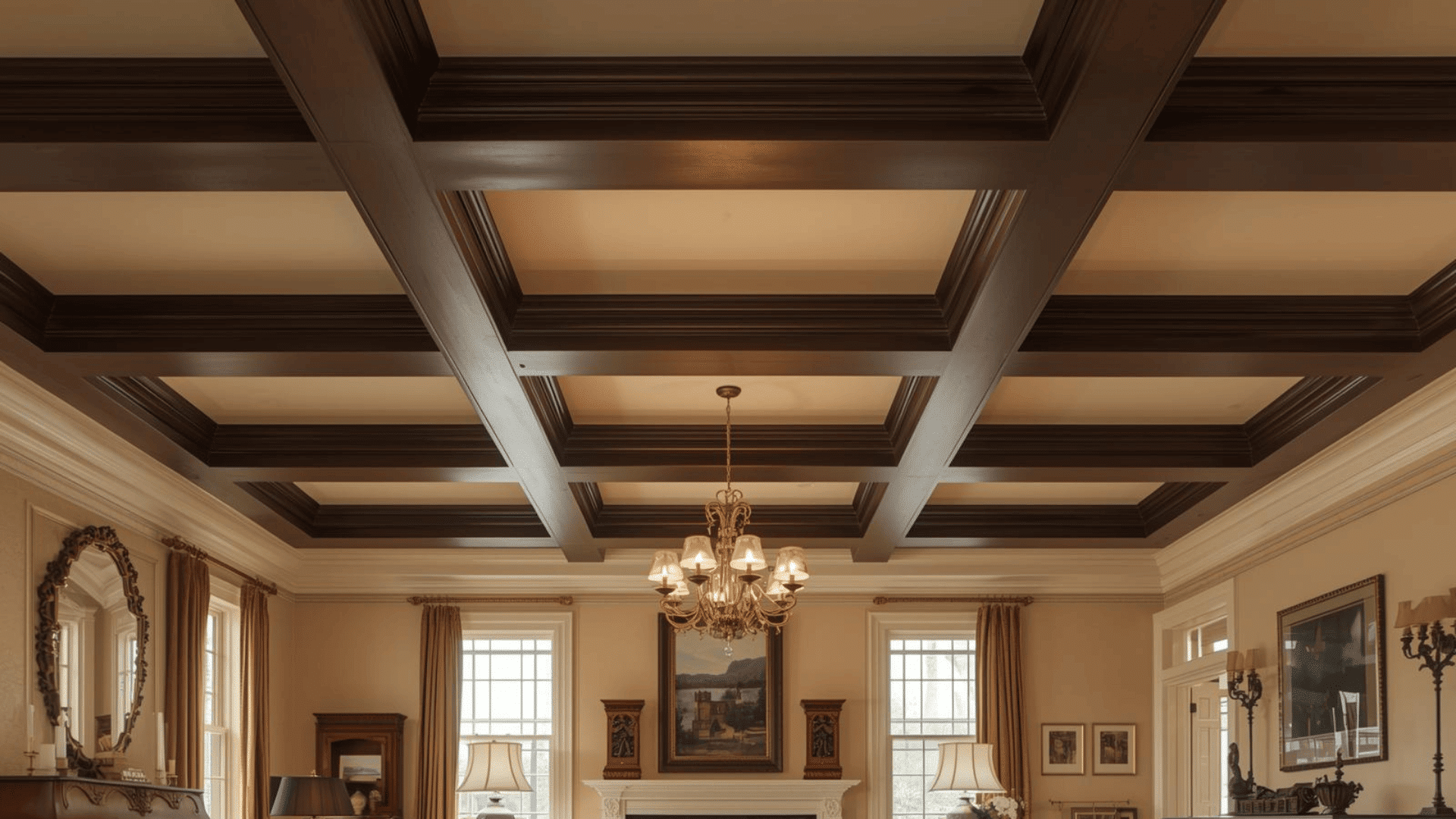
Create sophisticated grid patterns with intersecting beams in formal living spaces. Space them evenly for symmetry and balance.
This treatment works well with traditional furniture and formal design schemes. Paint beams in the ceiling color for subtle texture, or in a contrasting color for more definition.
29. Asymmetric Beam Placement
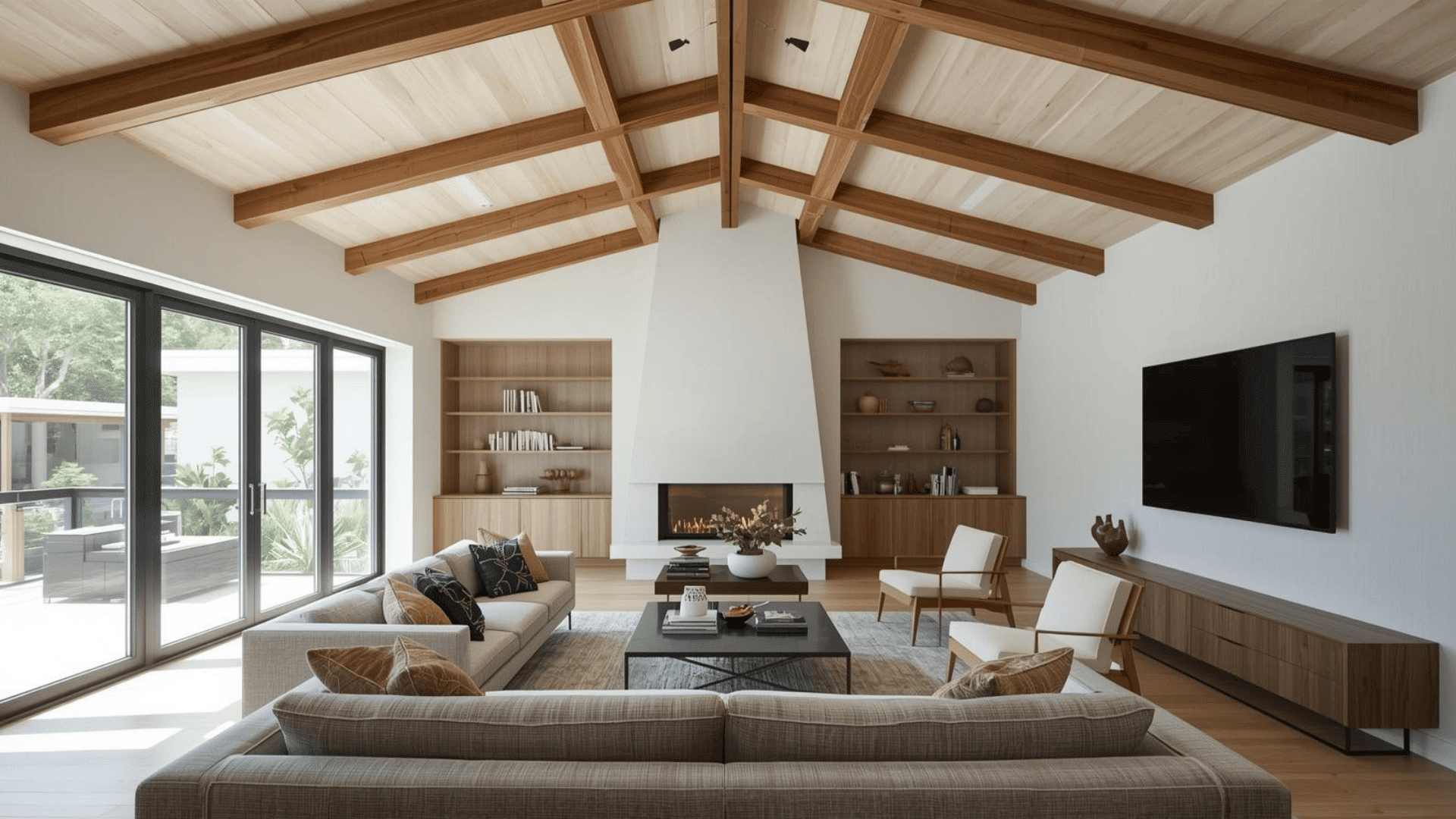
Break design rules with asymmetric beam arrangements in contemporary living rooms. Place beams at varying intervals or in different directions for artistic effect.
This modern approach turns the ceiling into a sculptural element. Ensure the asymmetry feels intentional rather than random by following a clear design concept.
30. Thick Timber Beams for Great Rooms
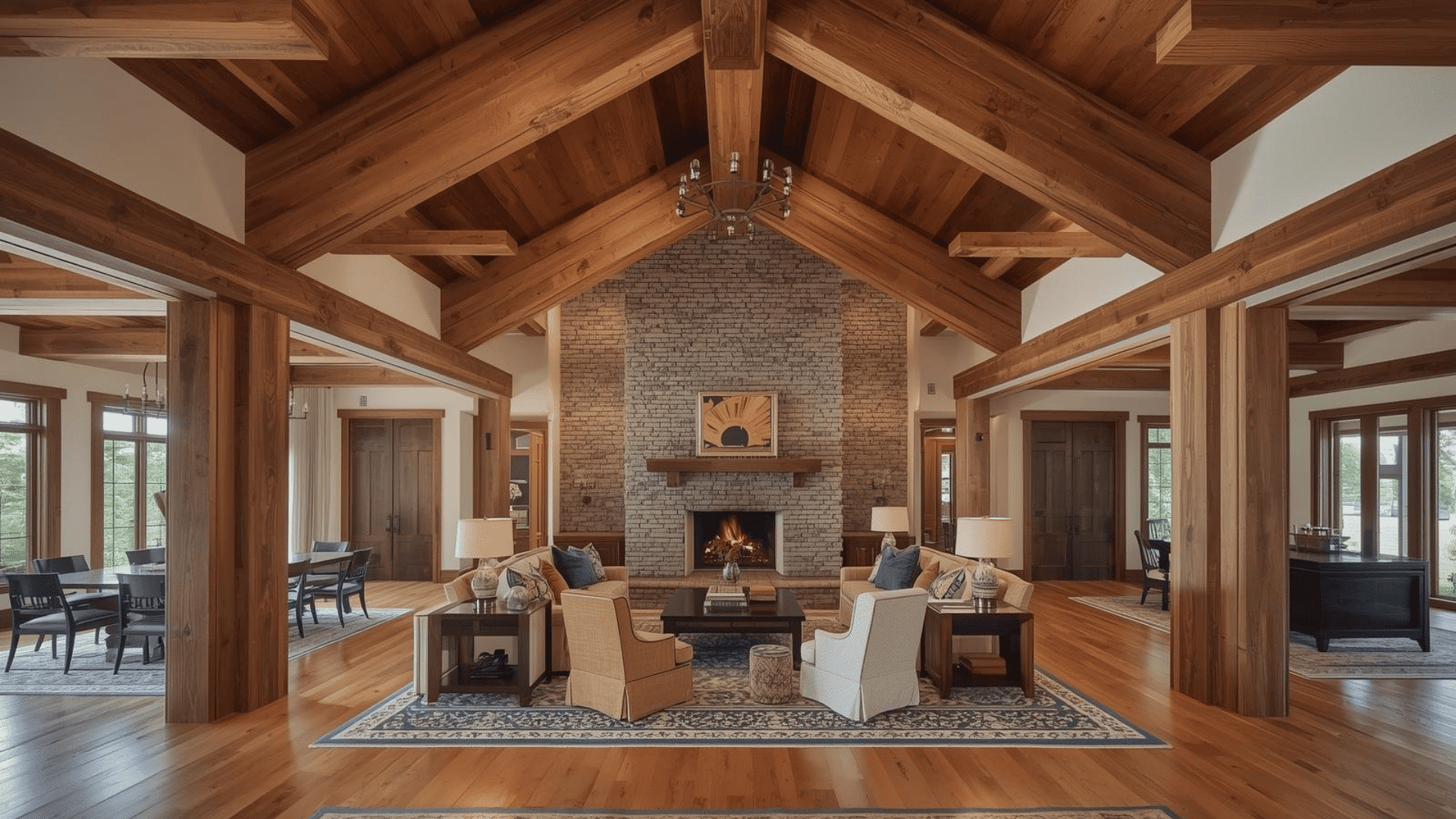
Large great rooms need substantial beams to maintain proper scale. Choose thick timbers that match the room’s volume and visual weight.
Space them far enough apart to avoid cluttering the ceiling. The hefty beams help define different zones within large open spaces without physical walls.
Faux Beam Options
Faux beam options give the look of real beams with less weight, cost, and installation work. They are usually made from lightweight wood veneers, polyurethane, or MDF and can be installed on flat ceilings or over existing wiring.
31. Polyurethane Faux Beams
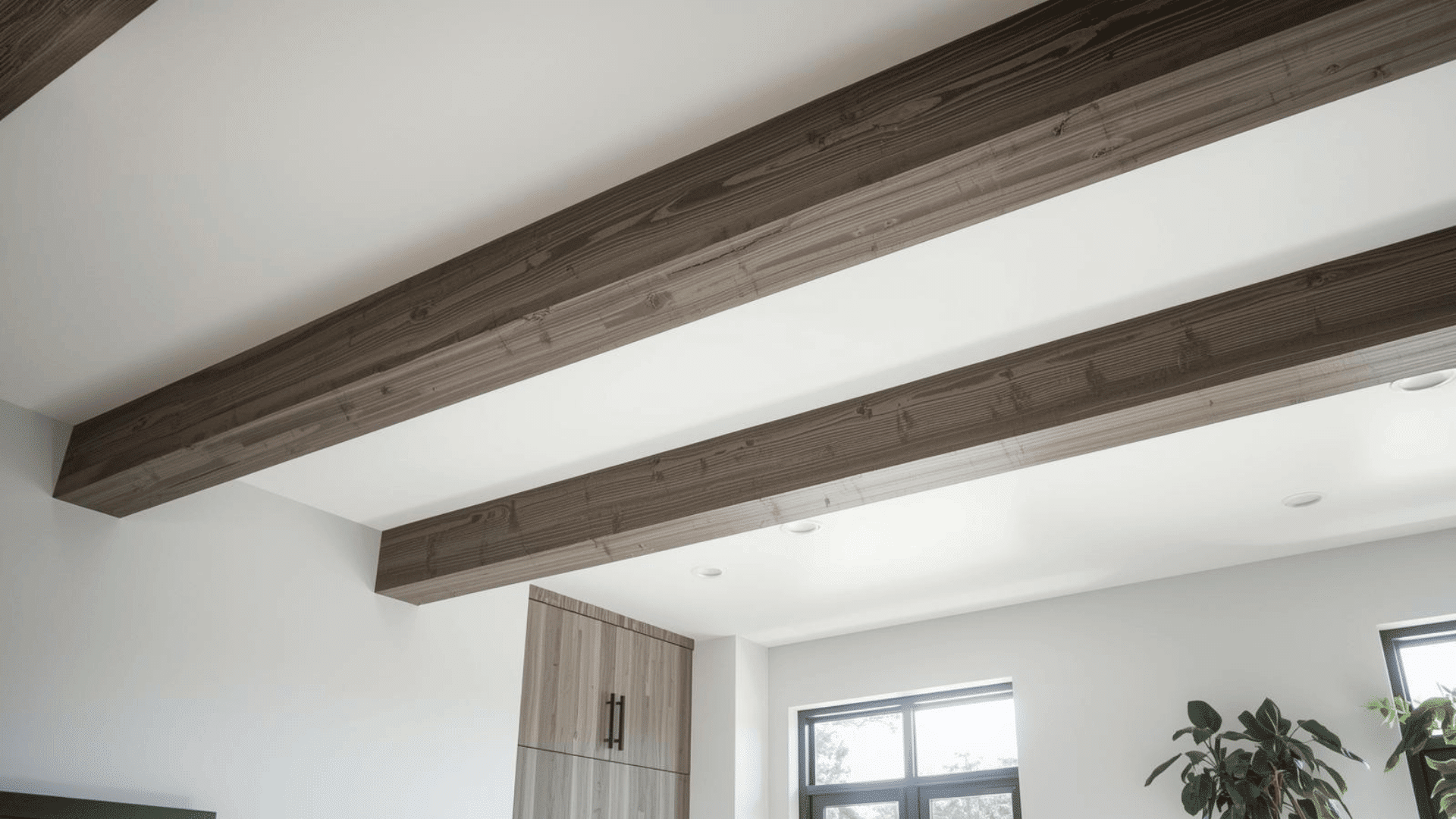
Modern polyurethane beams replicate the appearance of wood at a fraction of the weight. They install easily over existing ceilings using simple mounting systems.
These beams resist moisture, making them perfect for bathrooms or basements. Choose from numerous wood species and finish options without the maintenance real wood requires.
32. Lightweight Foam Beams
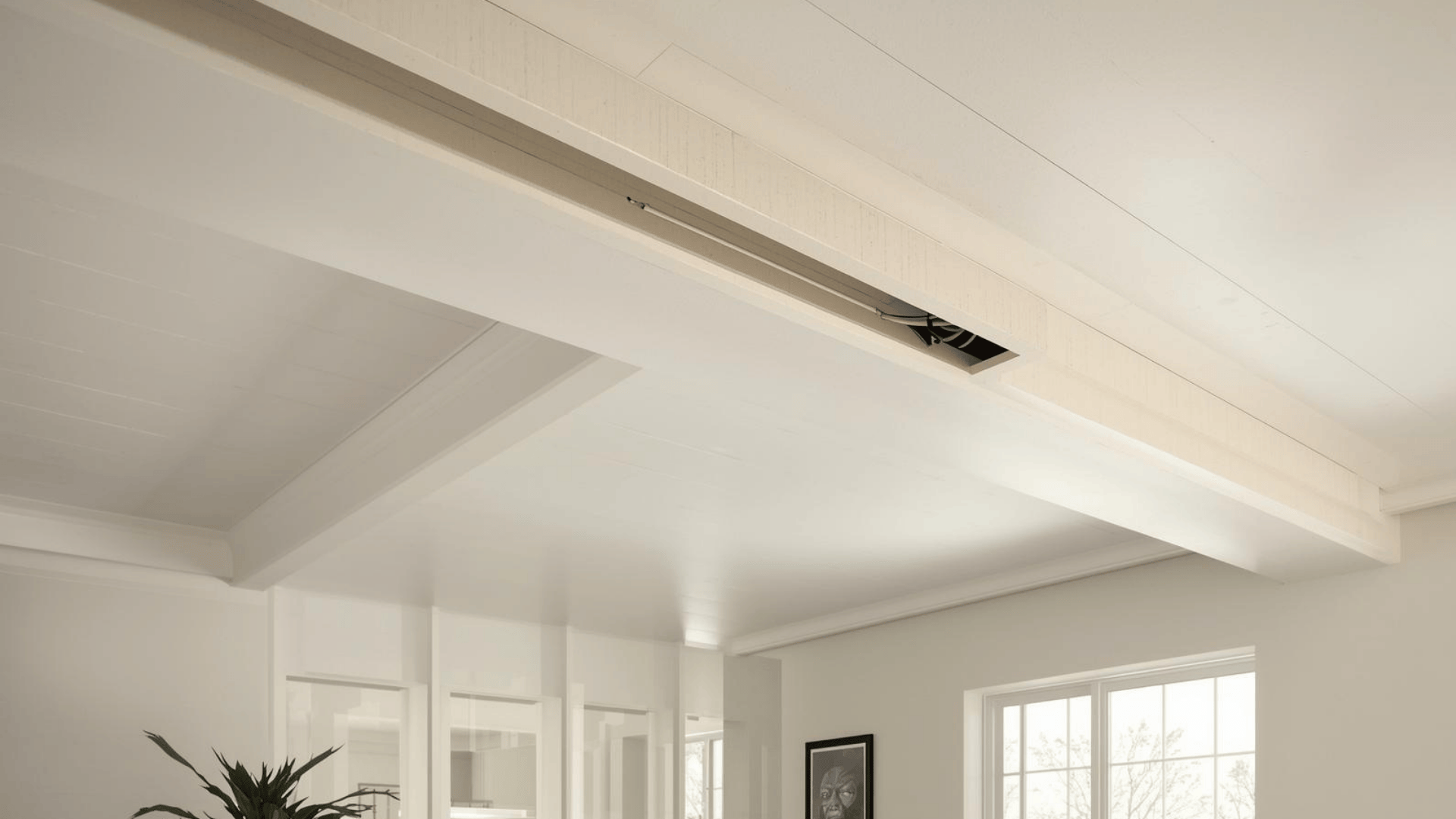
Ultra-lightweight foam beams cost less than polyurethane while still providing visual impact. Cut them easily with standard saws and attach them with construction adhesive.
The hollow interior allows running wiring or small pipes. Paint or finish them to match any decor style without worrying about weight limits.
33. DIY Box Beams from Pine Boards
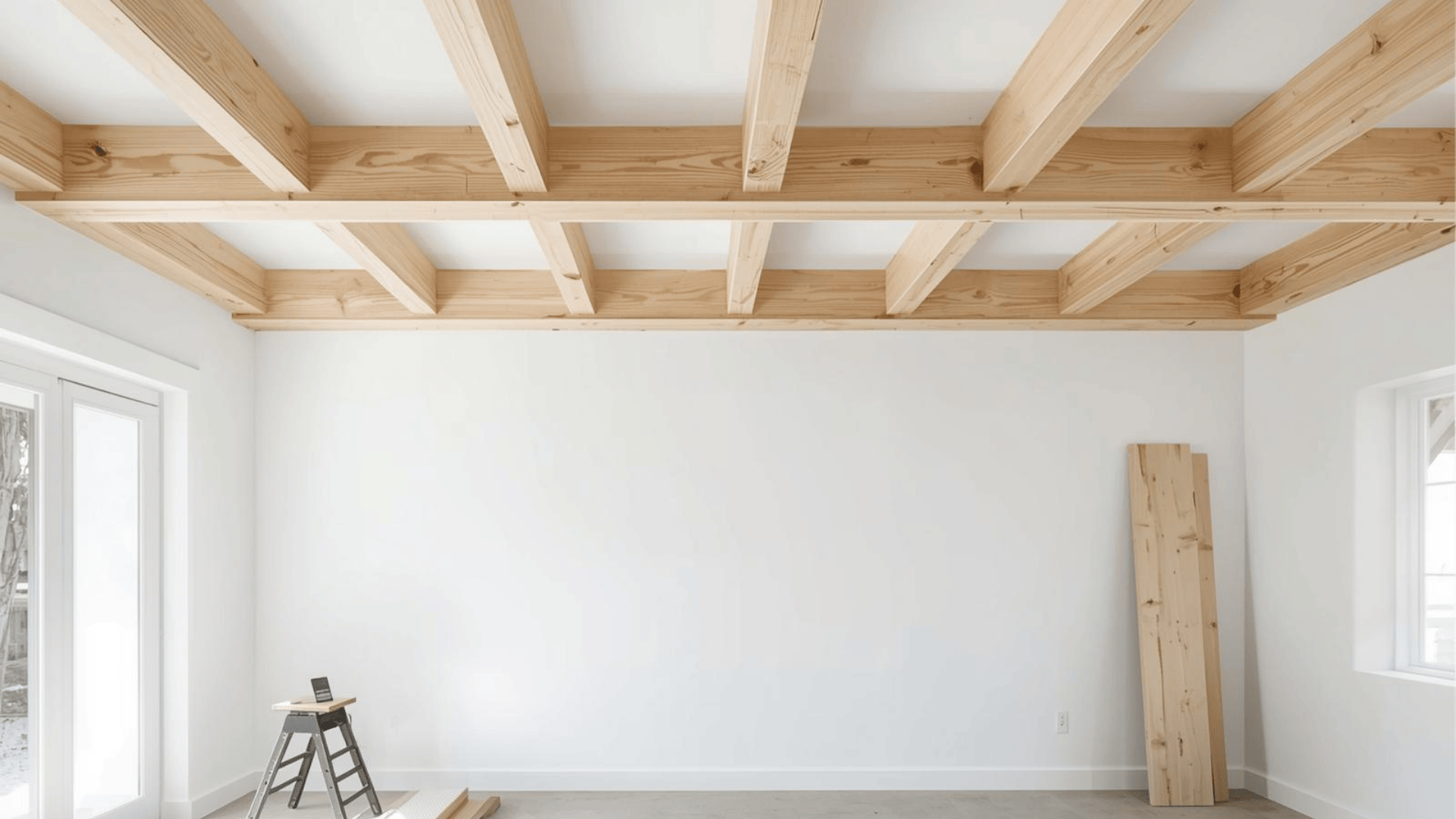
Build your own hollow beams using 1×4 or 1×6 pine boards assembled into U-shapes. This budget-friendly option lets you customize the size and finish exactly as desired.
Sand and stain the wood before installation for professional results. The lightweight construction can be installed with basic tools and minimal ceiling support.
34. Vinyl-Wrapped Beam Products
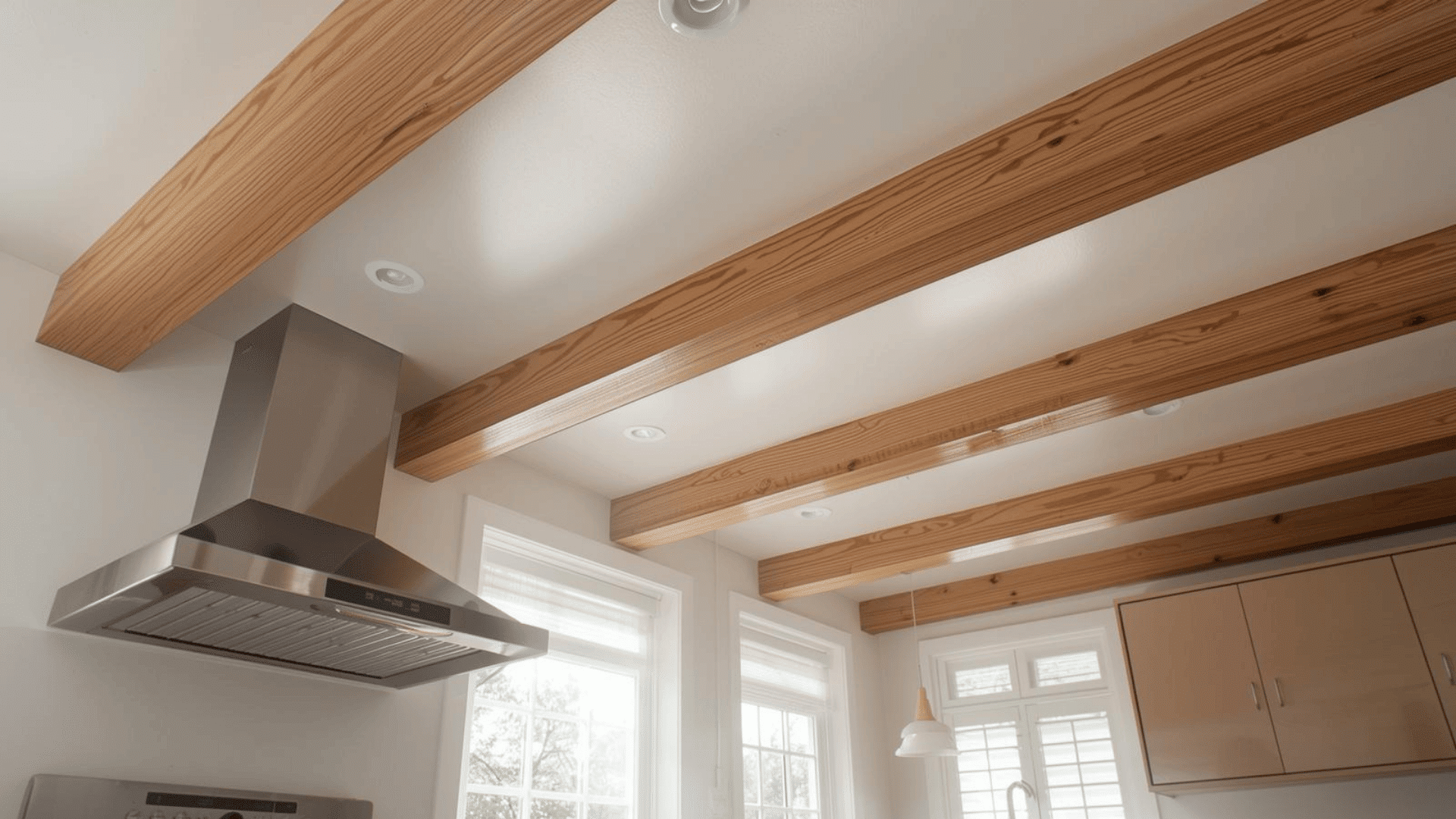
Vinyl-wrapped beams offer a realistic wood appearance with incredibly easy maintenance. Wipe them clean with a damp cloth without worrying about refinishing or sealing.
The vinyl protects against moisture, making these perfect for humid environments. Choose from convincing wood-grain patterns that look authentic at typical viewing distances.
35. Reclaimed Wood Veneer on Hollow Beams
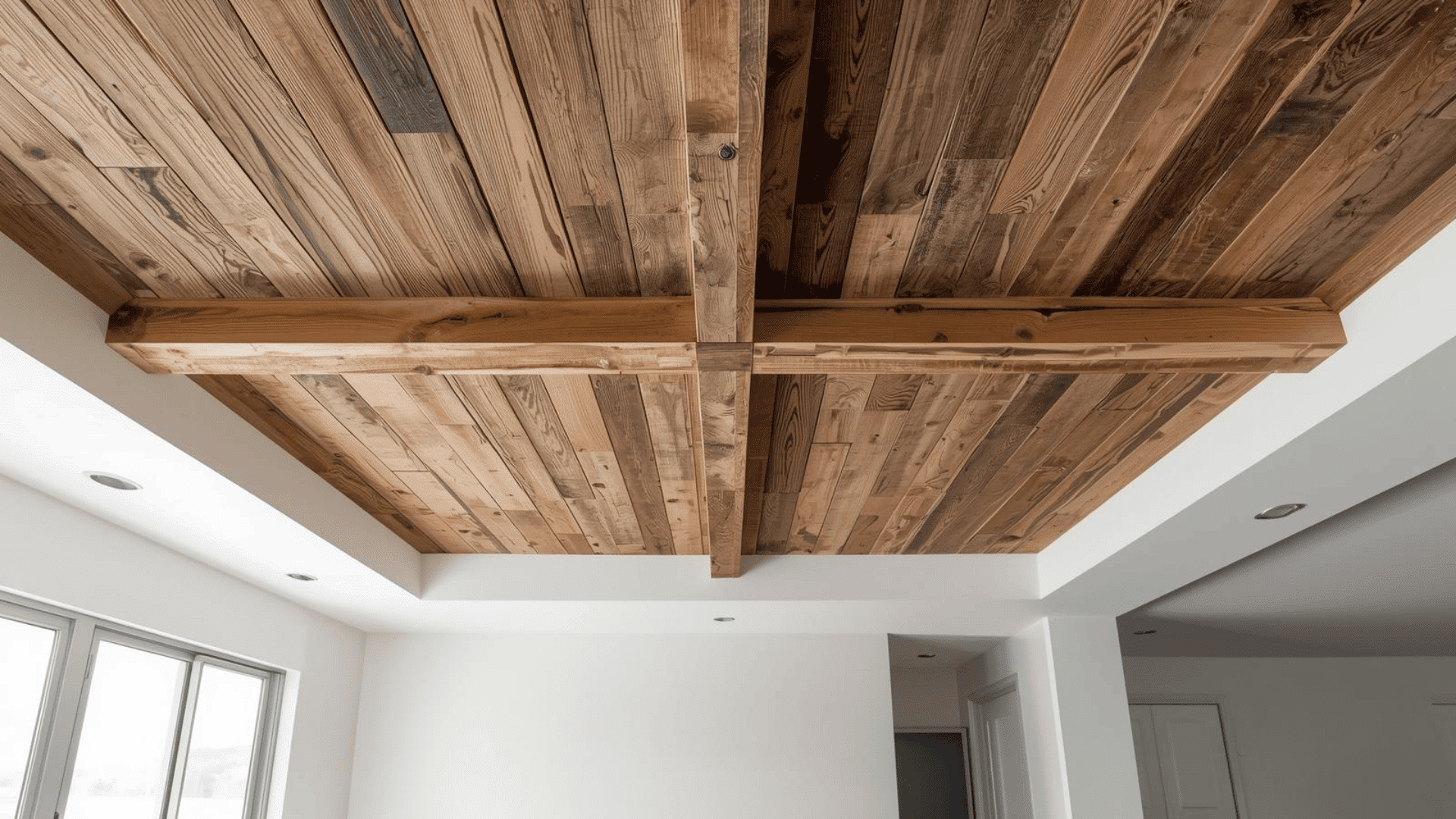
Combine the authentic character of reclaimed wood with lightweight construction by wrapping hollow beams in salvaged-wood veneer. This gives you the real wood texture and history without the solid beam’s weight.
The application of veneer requires more skill but produces truly unique results. Each beam becomes one-of-a-kind with authentic aged character.
Tips for Installing and Styling Ceiling Beams
Adding ceiling beams works best when you plan carefully. The right prep helps you avoid uneven spacing, sizing problems, and costly fixes later.
- Check the structure and size carefully: Locate the ceiling joists first, and choose beam sizes that match the room’s scale without making low ceilings feel cramped.
- Keep spacing balanced: Use a consistent layout across the ceiling so the beams look intentional, symmetrical, and visually pleasing from every angle.
- Plan lighting before installation: Run wiring early and position recessed lights, pendants, or fixtures around beams to avoid awkward placement later.
- Prepare the ceiling surface well: Clean, patch, and smooth the ceiling so beams fit securely, sit flat, and create a polished finished look.
- Use proper materials and fasteners: Solid wood beams should anchor into joists, while faux beams often need adhesive plus screws for stability.
- Think about style and maintenance: Match beams to room finishes, test placement first, budget for extras, and check for gaps yearly.
With careful planning, your ceiling beams will look polished, feel intentional, and stay secure while adding lasting style and dimension.
Final Thoughts
Ceiling beams change how rooms look and feel, adding depth and personality that flat ceilings simply can’t match. The right beam style depends on your home’s architecture, your personal taste, and your budget.
Real wood beams bring authentic character but require more investment and installation effort. Faux options offer a similar visual impact while being lighter on your ceiling and your wallet.
Start by identifying which rooms would benefit most from beams, then choose a style that complements your existing decor.
Measure your ceilings, pick your favorite decorative ceiling beam ideas from this list, and start planning your beam installation project today.