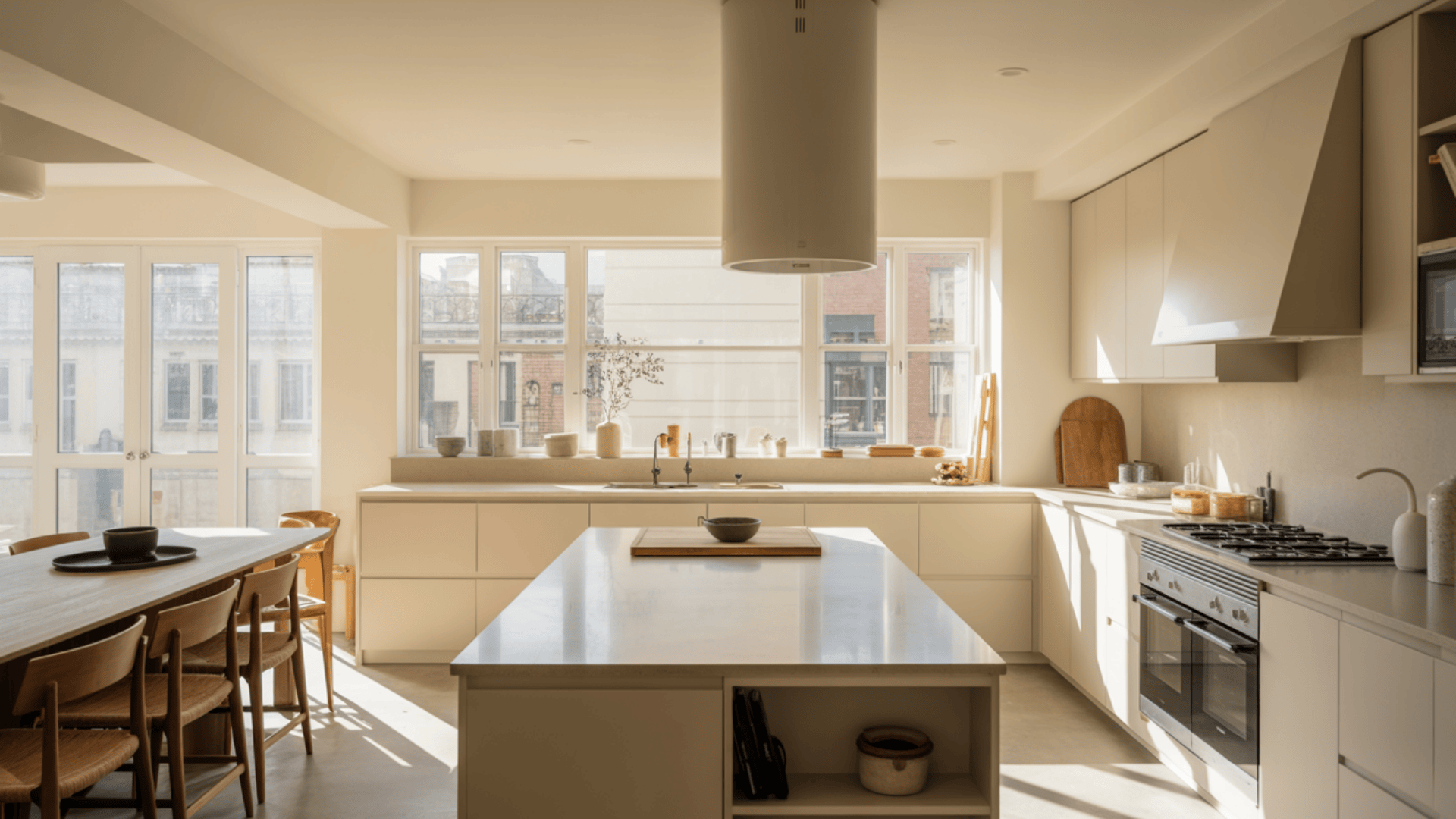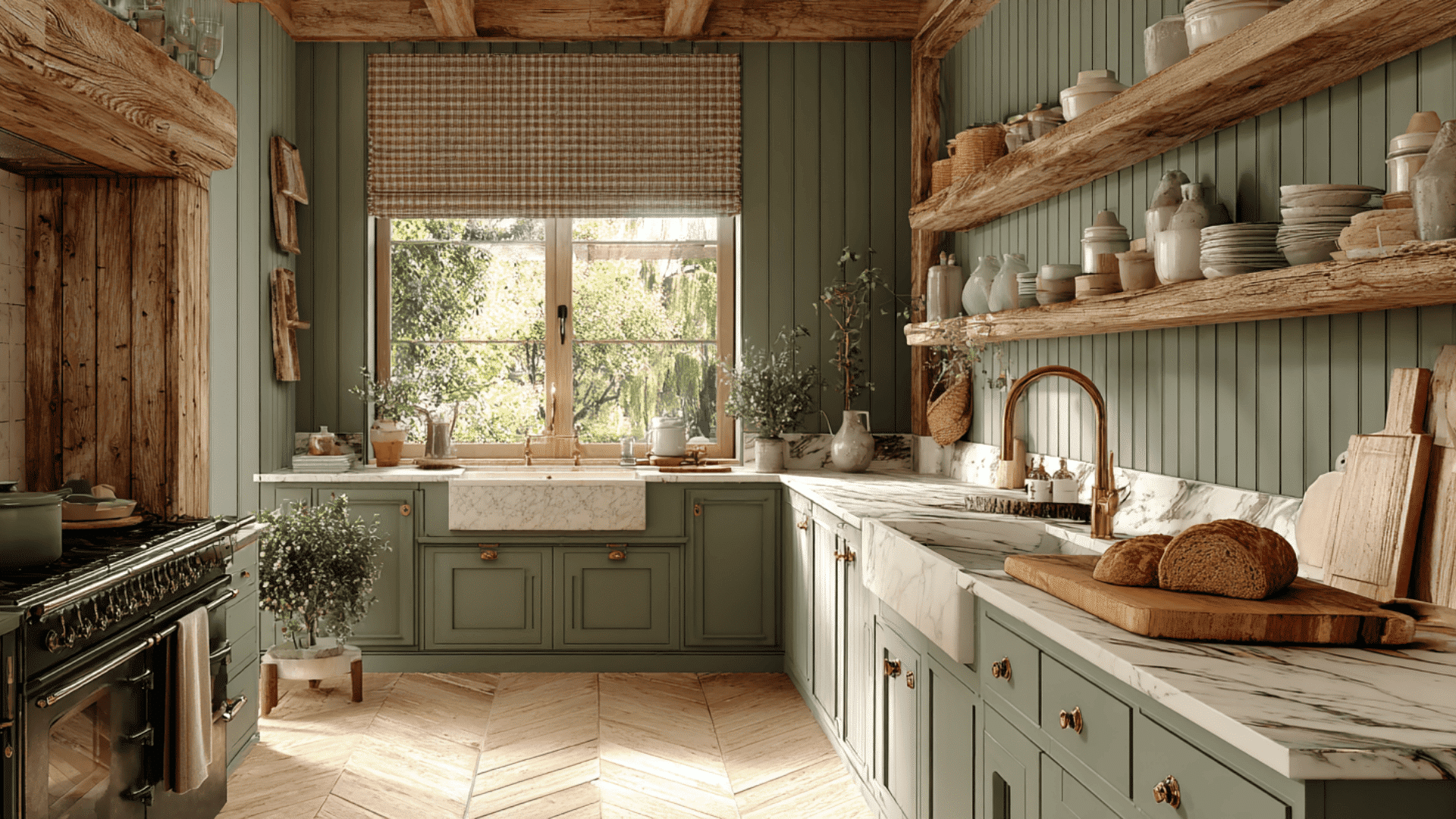
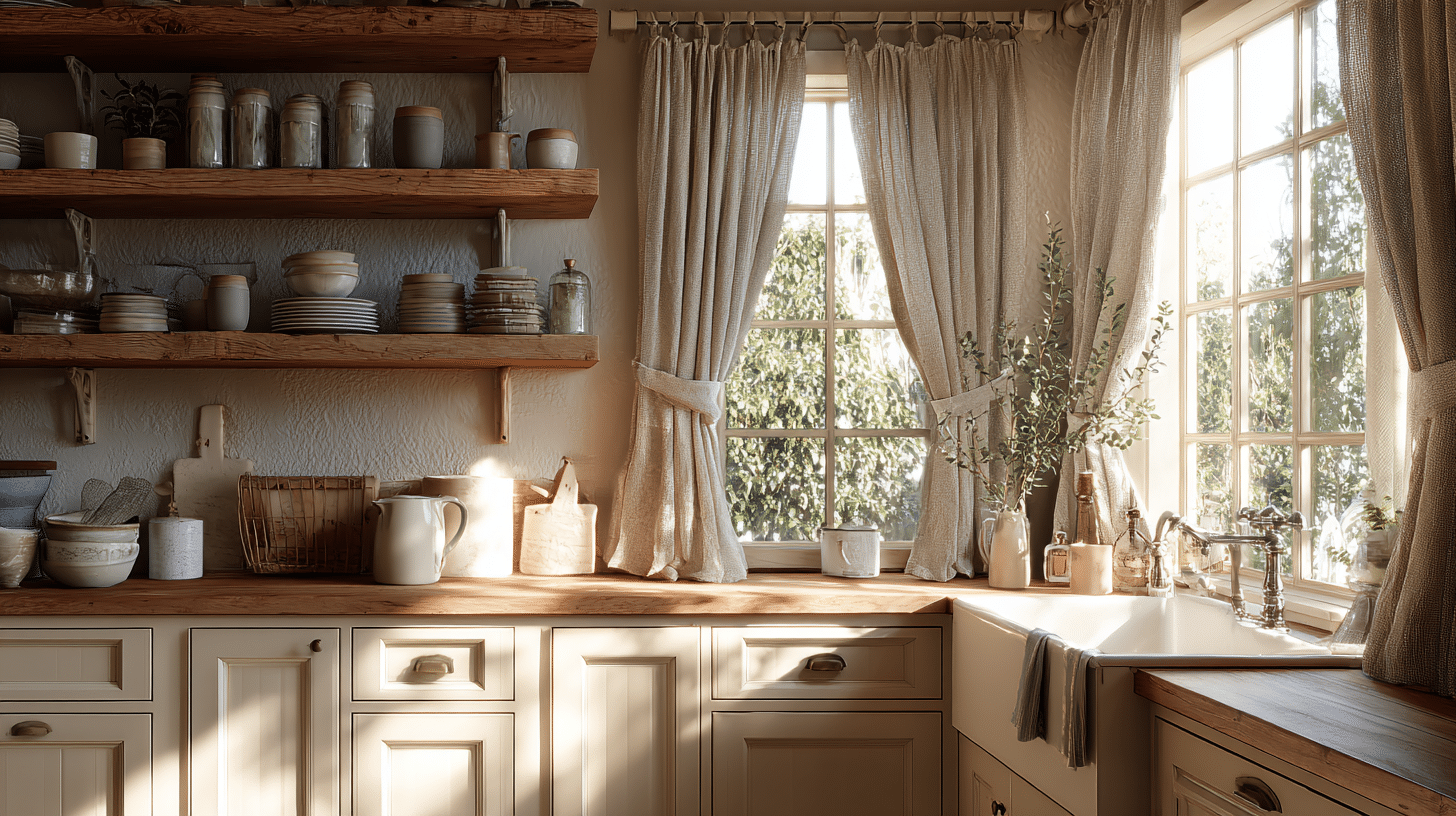
A Cottagecore kitchen looks beautiful in photos, but some people wonder if it works in real life. I’ve noticed that this is only partly true.
When done well, these spaces blend vintage charm with natural materials and soft, muted colors, creating a warm, welcoming feel.
This style can work in both small apartments and bigger homes if you pick features that hold up day to day.
I’ve also learned that many people jump into cute decor first and forget about function. That’s when issues show up, like cluttered counters or awkward storage.
The key is choosing cottagecore details that add both beauty and usefulness, and skipping the ones that just collect dust. Before the ideas, let’s define what cottagecore really means.
What Makes a Kitchen Truly Cottagecore?
I’ve noticed that a true cottage core kitchen shares a few common threads. They lean toward natural wood, warm metals like brass or copper, and gentle colors that feel calming rather than bold.
The look is collected over time, not brand new and shiny. Things can be a little worn or mismatched, which actually adds to the charm.
What matters most is that the space feels lived-in and welcoming, not staged. With that foundation in mind, here are easy ideas you can actually use.
Cozy Cottagecore Kitchen Design Ideas
Warm, cozy, and practical can go together. I’ve noticed cottagecore kitchens work best when each detail earns its place. Here are simple design ideas that feel charming and easy to live with.
1. Soft Neutral Color Palettes for a Cottagecore Kitchen
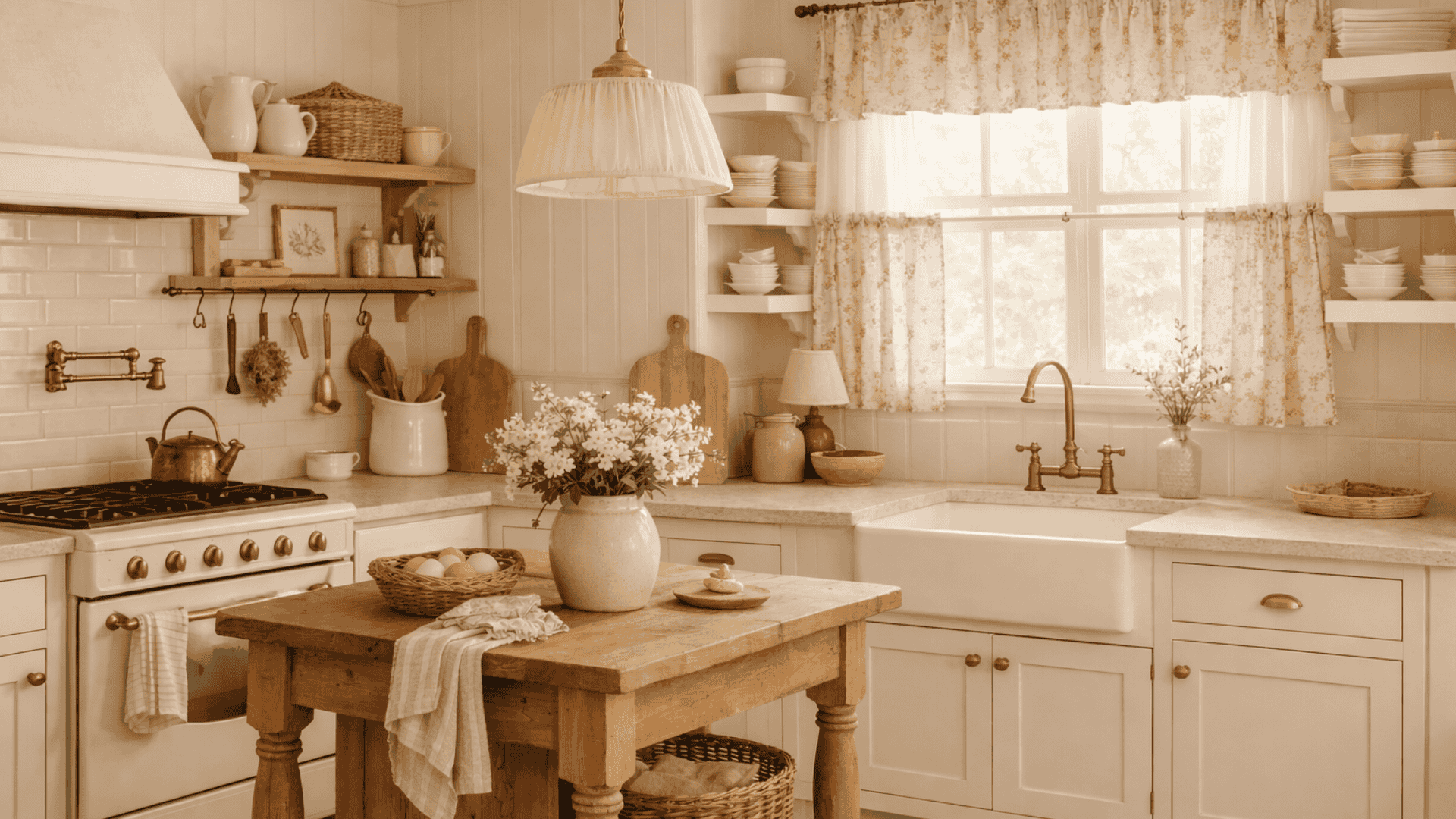
Soft whites, creams, and warm beige tones create a calm backdrop that lets everything else shine. I’ve found that neutrals work especially well because they highlight the wood, brass, and patterned fabrics without competing for attention.
The trick is choosing warm neutrals like cream instead of bright white, which can feel cold and sharp. That small shift makes the whole space feel more inviting.
Pro Tip: Use one consistent warm neutral throughout rather than mixing cool, which can look unintentional.
2. Open Wooden Shelving with Vintage Charm
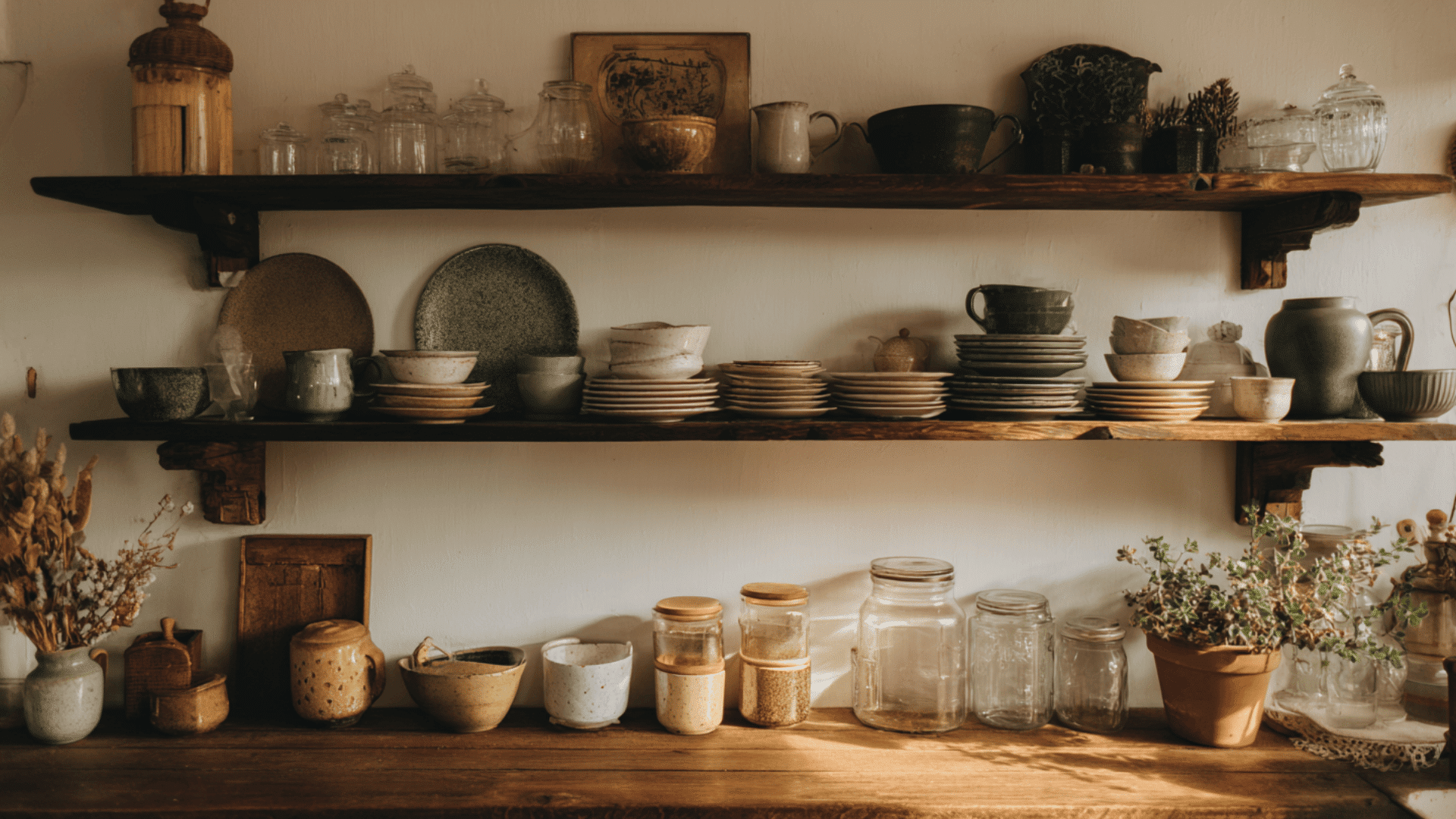
Open shelves make a kitchen feel less boxed-in and more relaxed. They give you a place to show off pretty everyday items like pottery, glass jars, and cookbooks that would otherwise hide behind doors.
The downside is that they can look messy when everything clashes, so keeping a simple color theme helps the display feel styled rather than chaotic.
Pro Tip: Stick to two or three main colors on your shelves so the eye can rest.
3. Add a Vintage Hutch or Freestanding Cabinet
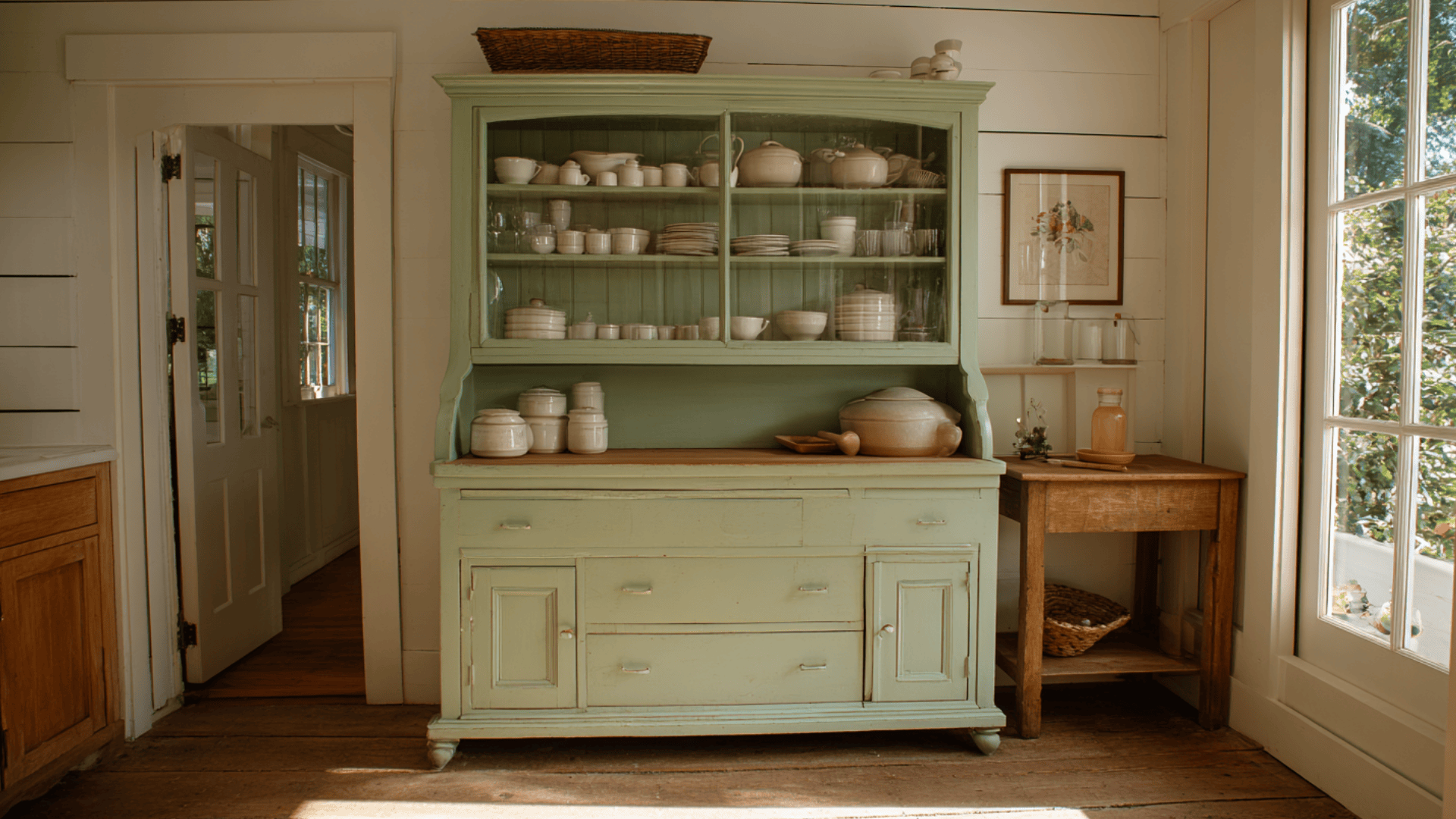
Cottagecore kitchens look best when they feel collected over time rather than installed all at once. A freestanding hutch or cabinet adds a sense of history while providing extra storage for dishes, pantry items, or linens.
These pieces work especially well in kitchens that lack built-in storage or feel too modern and uniform.
Pro Tip: Paint the piece a soft color, such as sage, cream, or dusty blue, to instantly make it feel more cottage-like.
4. Floral or Gingham Textiles for a Cozy Touch
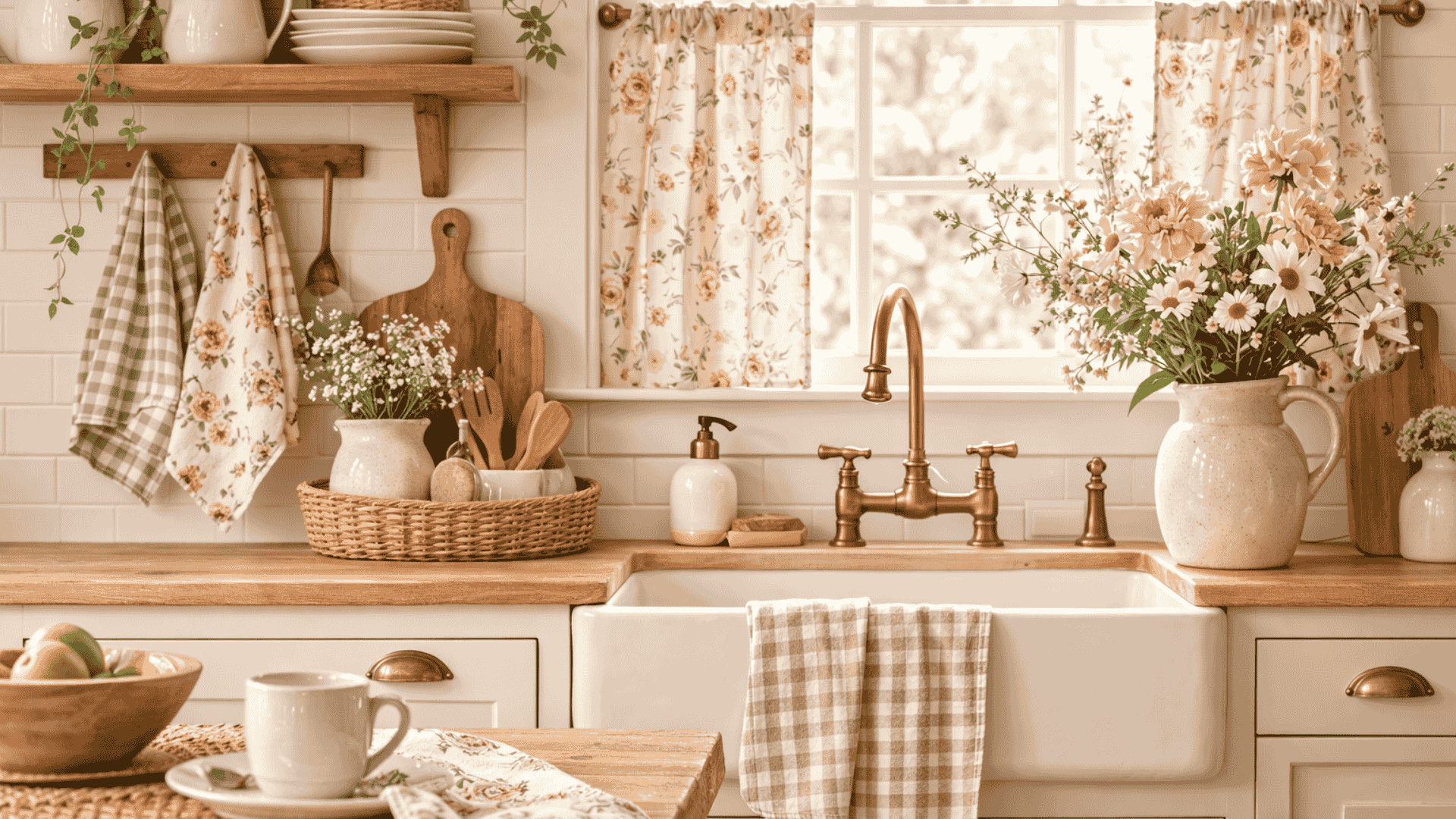
Fabric is one of the fastest ways to soften a kitchen without construction or paint. Florals and gingham both feel classic and cozy, bringing pattern without overwhelming the space.
Small prints work better if you already have busy counters or patterned tile, while larger prints can stand alone in simpler kitchens.
Pro Tip: Choose washable fabrics for anything near the sink or stove so they stay practical.
5. Wood Countertops or Butcher-Block Accents
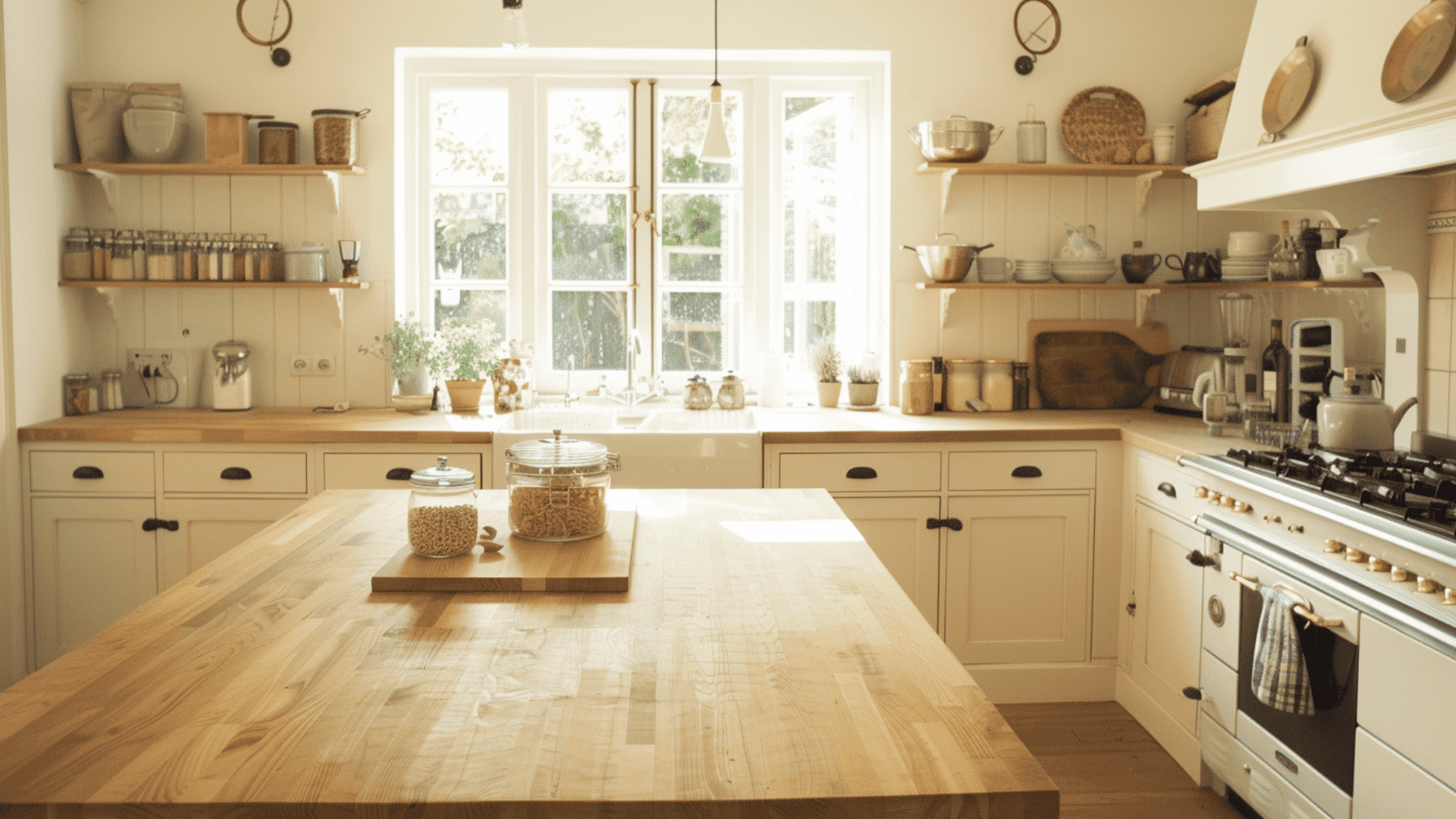
Wood countertops add instant warmth and make the kitchen feel more natural and less industrial. Even one wooden surface, like an island top or a small section near the sink, can shift the whole mood.
The main concern is maintenance, but a good food-safe sealant keeps the wood protected and easy to wipe down without much fuss.
Pro Tip: Reseal wood surfaces every year or so to prevent water damage and staining.
6. Vintage-Inspired Hardware (Brass, Bronze, or Ceramic Knobs)
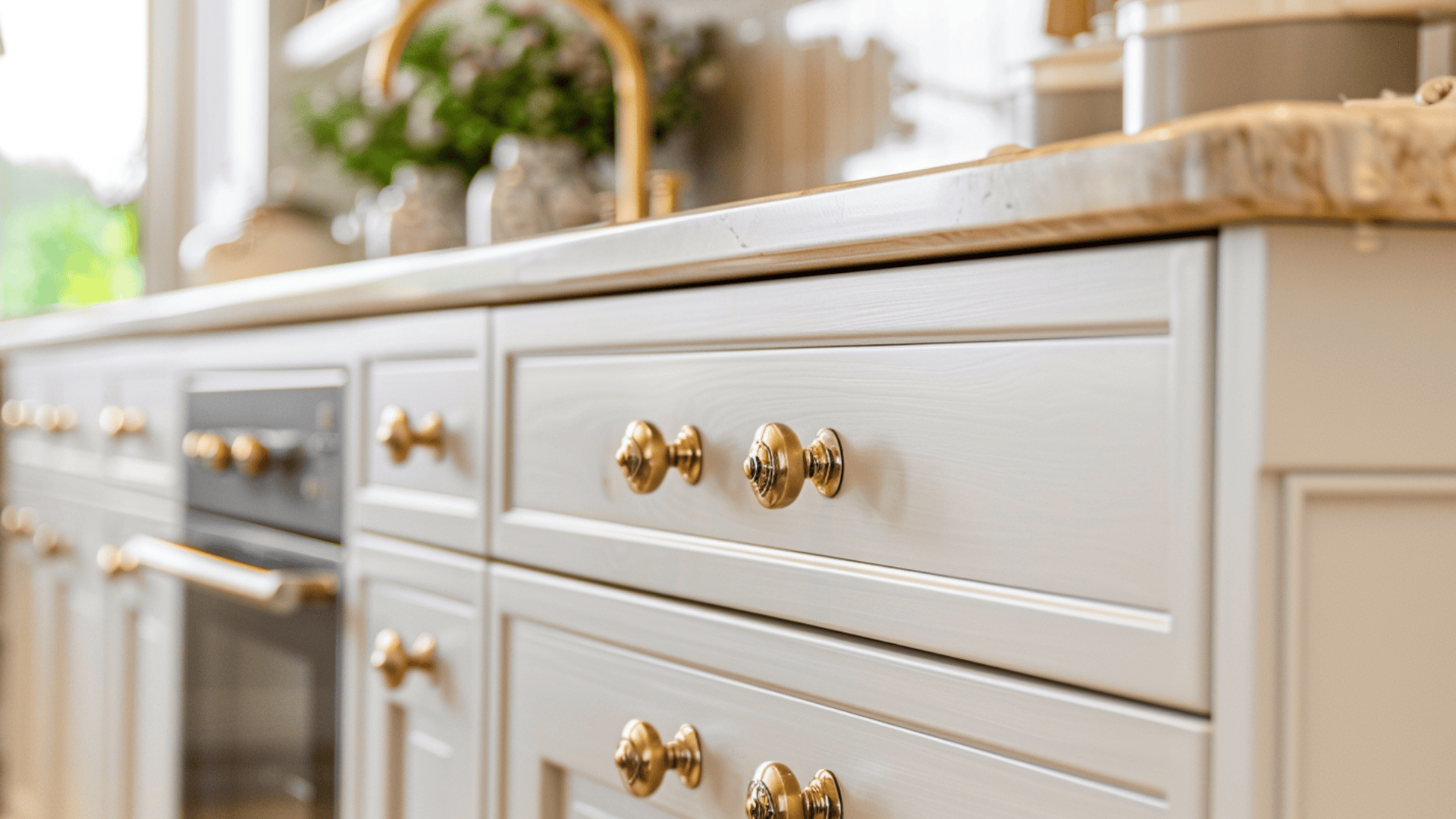
Swapping out cabinet knobs and pulls is a small change that makes a surprisingly big difference. Warm metals like brass and bronze feel old-world and cozy compared to modern chrome or stainless steel.
Mixing finishes can work when the tones are similar, like pairing brass hardware with a warm-undertone matte-black faucet.
Pro Tip: Buy a single knob first to test the finish in your lighting before ordering a full set.
7. Farmhouse Sink for Cottagecore Appeal
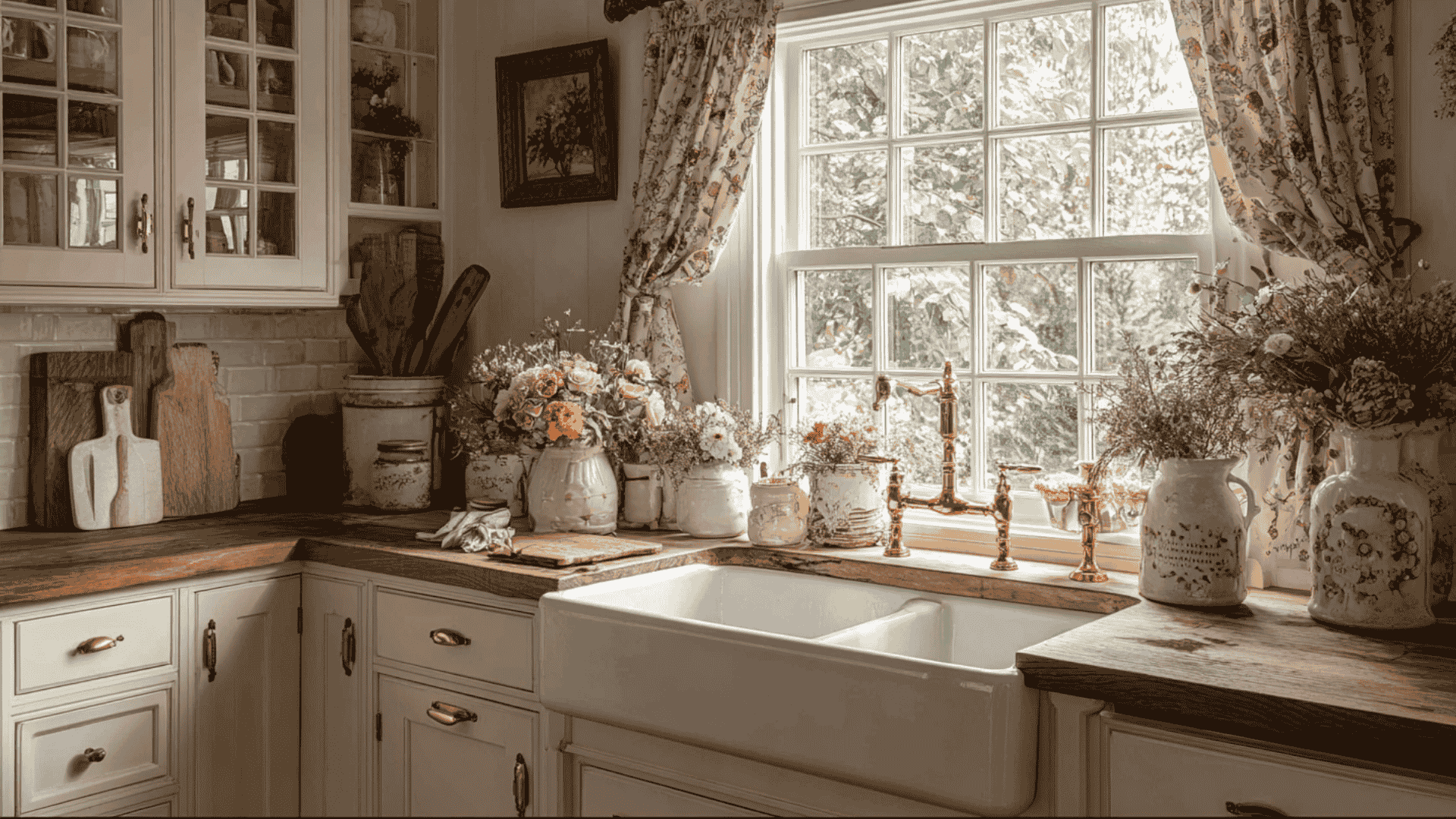
A farmhouse sink has that classic, nostalgic look that fits perfectly in a cottagecore kitchen. The deep basin is also helpful for washing large pots and pans, making it practical beyond its aesthetic appeal.
If replacing your sink feels like too much work or expense, you can still get a similar vibe with a vintage-style faucet.
Pro Tip: Look for a sink with a sloped bottom so water drains easily and doesn’t pool.
8. Pastel Cabinets for a Soft Cottage Look
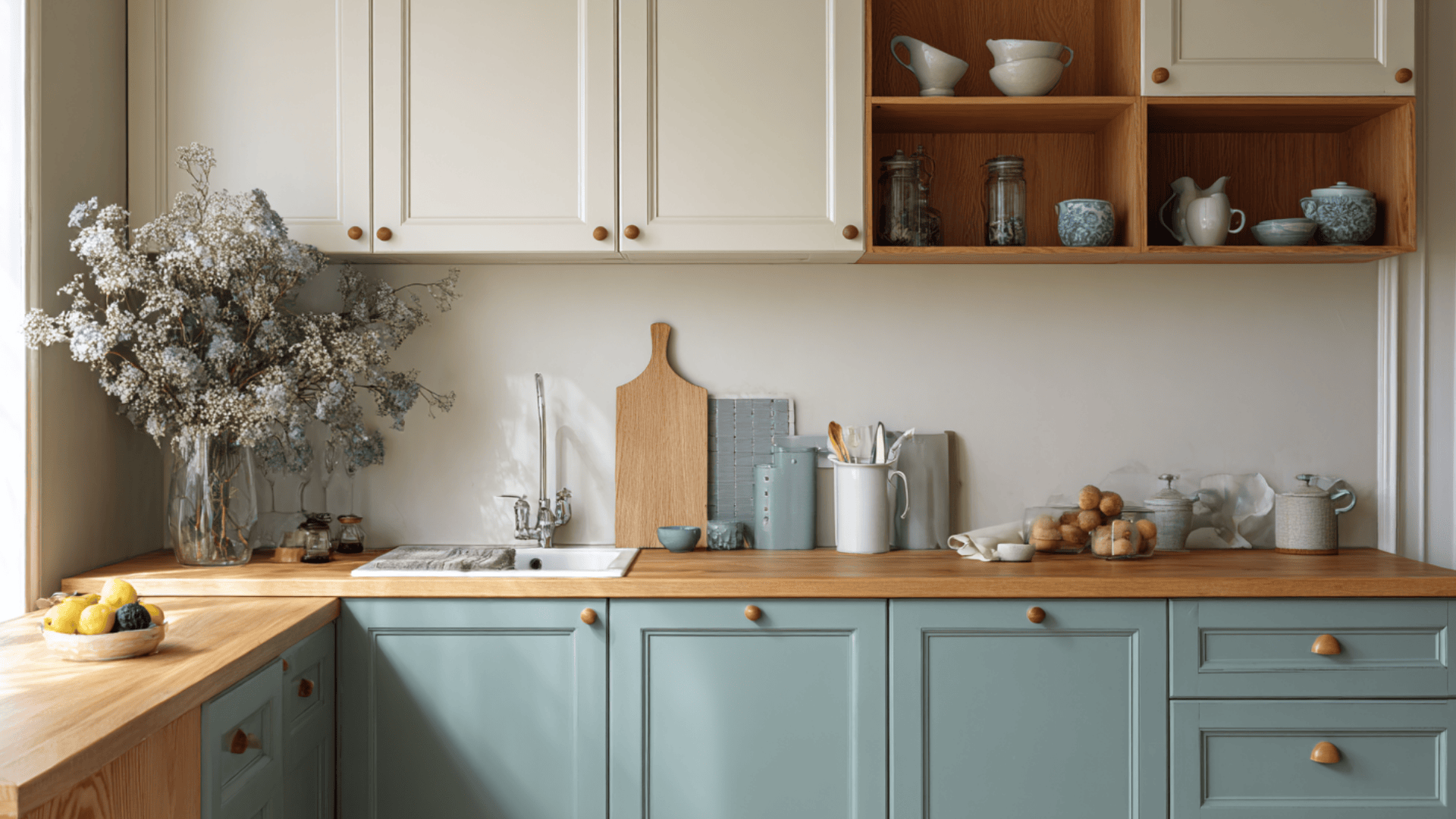
Pastels bring a gentle, storybook quality to the kitchen without feeling too bold or modern. They work especially well with natural wood, cream walls, and warm metals.
Using pastel on just the lower cabinets, with neutral uppers, keeps the look balanced and prevents the space from feeling too heavy or enclosed.
Pro Tip: Test paint samples in different light throughout the day since pastels can shift with sunlight and shadow.
9. Glass-Front Cabinets to Show Pretty Dishware
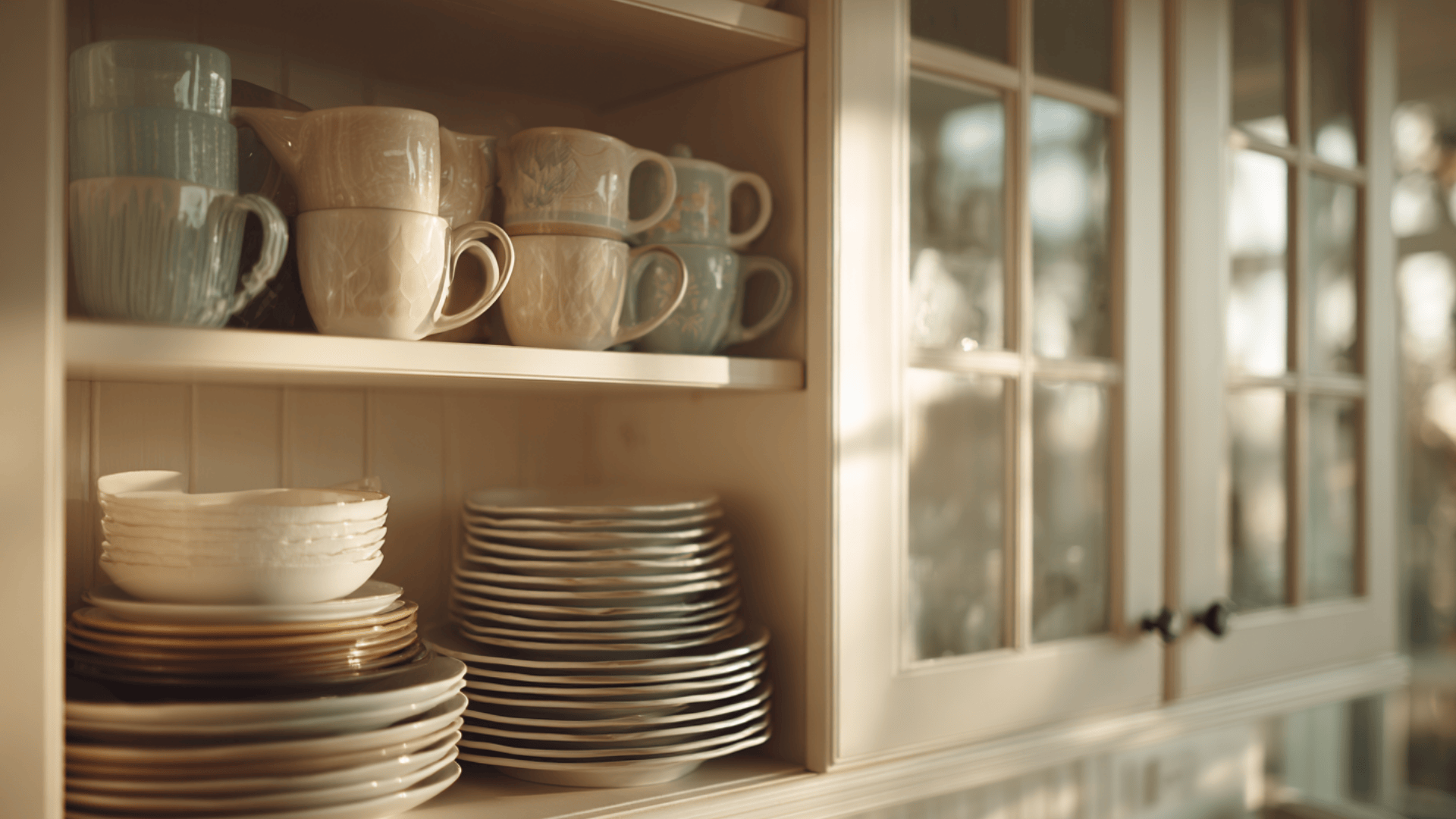
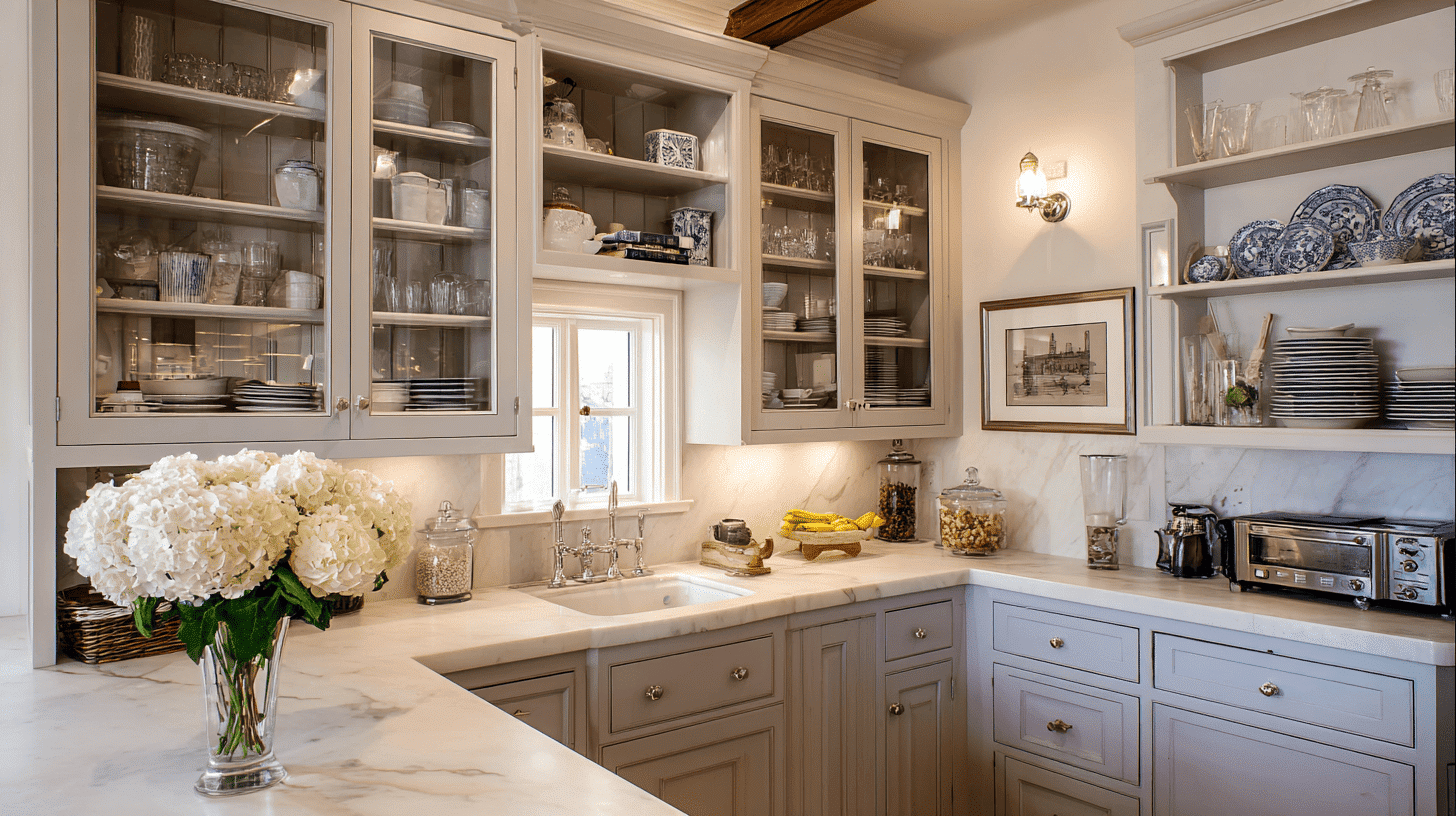
Glass-front doors give you the charm of open shelves without the fully exposed feeling. They let you display cottage-style dishes while keeping dust and cooking grease out.
The trick is organizing what’s inside so it looks intentional, not like you just shoved things in randomly.
Pro Tip: Use matching baskets or bins inside to hide less-attractive items while keeping the display cohesive.
10. Warm, Vintage-Style Lighting
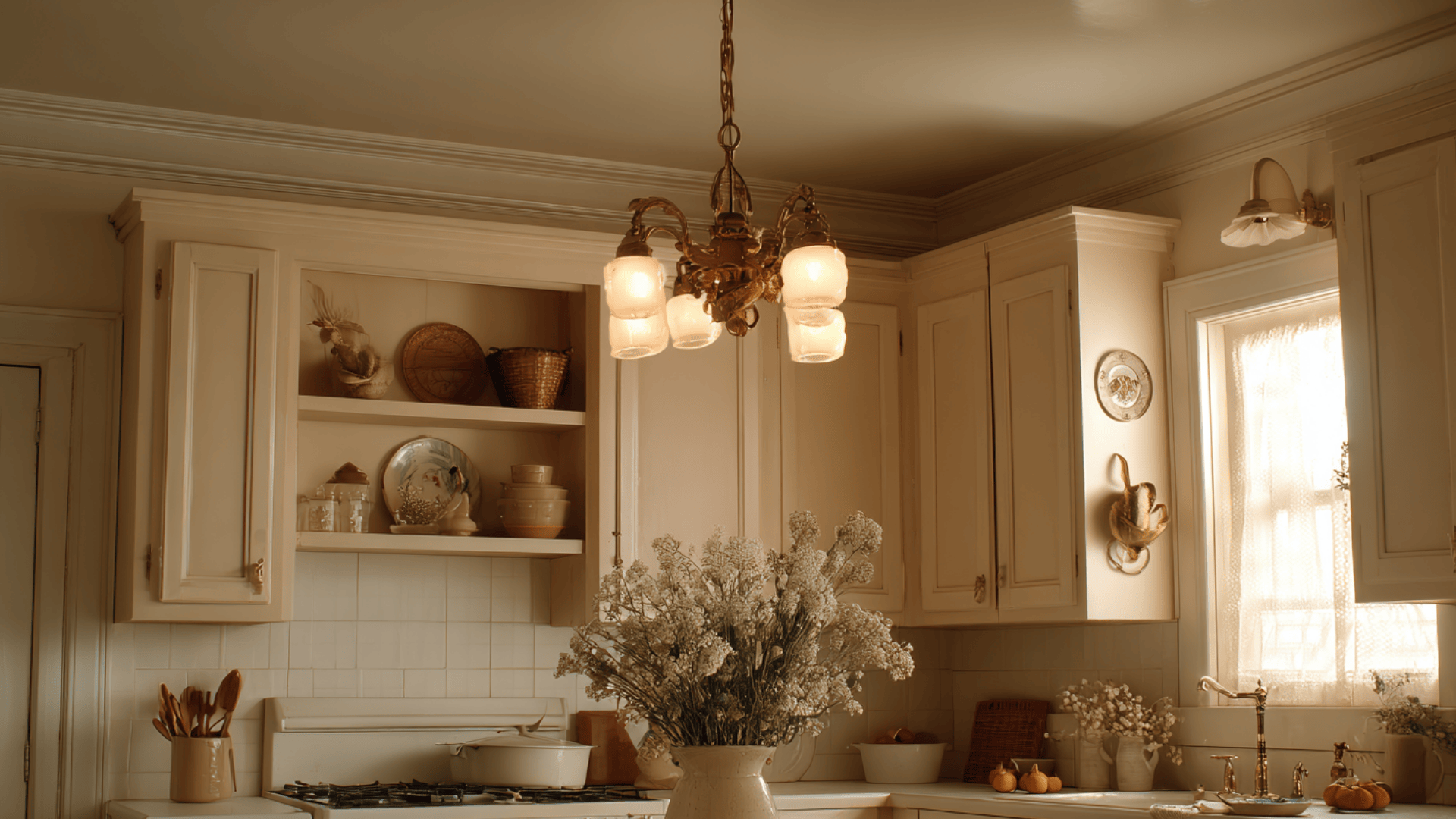
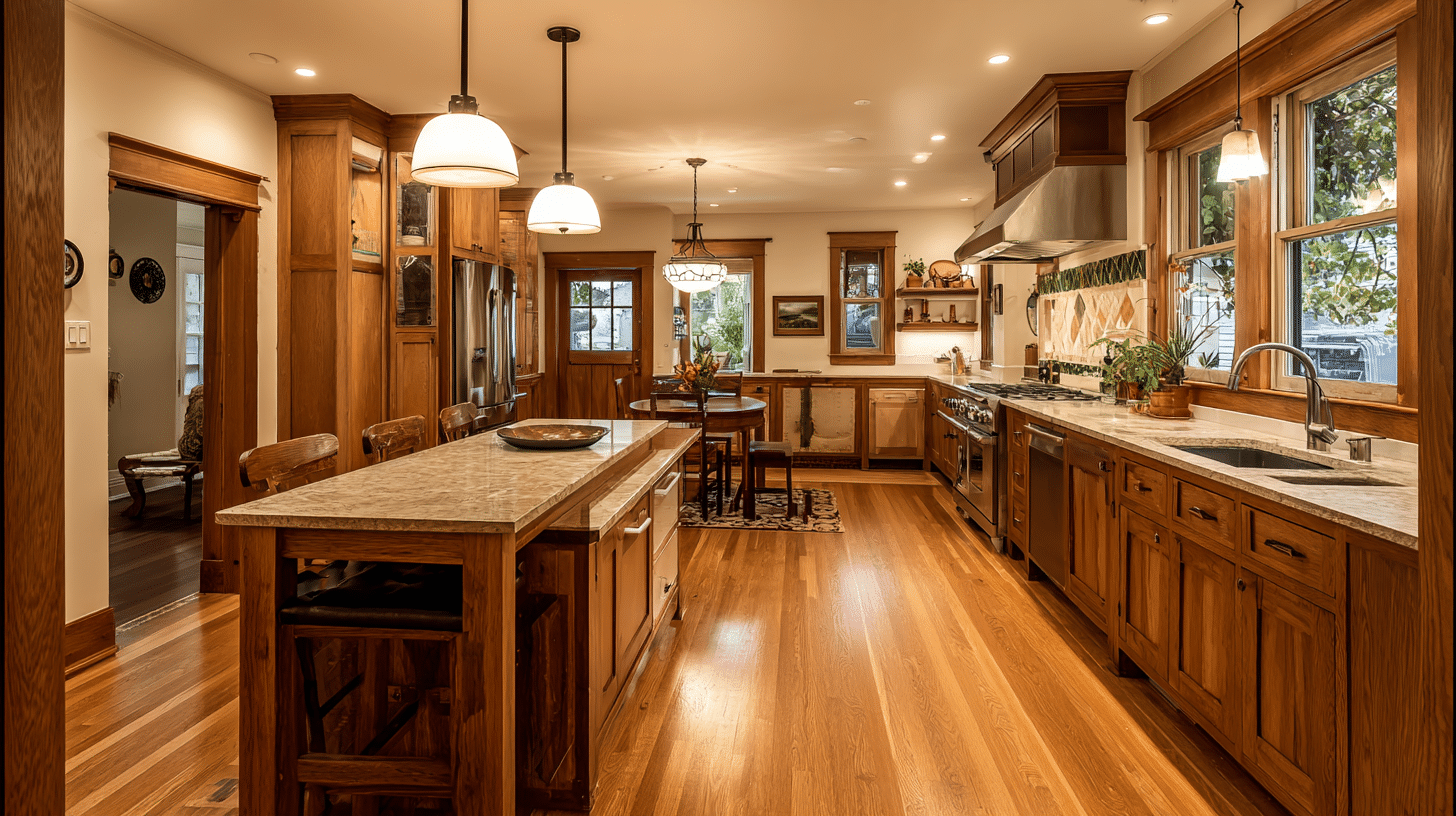
Cottagecore lighting feels soft and welcoming, not bright and clinical. Vintage shapes like milk glass pendants, brass fixtures, or scalloped shades add instant character without any other changes.
The bulbs matter too; warm-toned bulbs make the space feel cozy at night, while cool white bulbs can feel harsh and uninviting.
Pro Tip: Use dimmers if possible so you can adjust the mood for cooking versus relaxing.
11. Exposed Beams or Faux Beams for Rustic Character
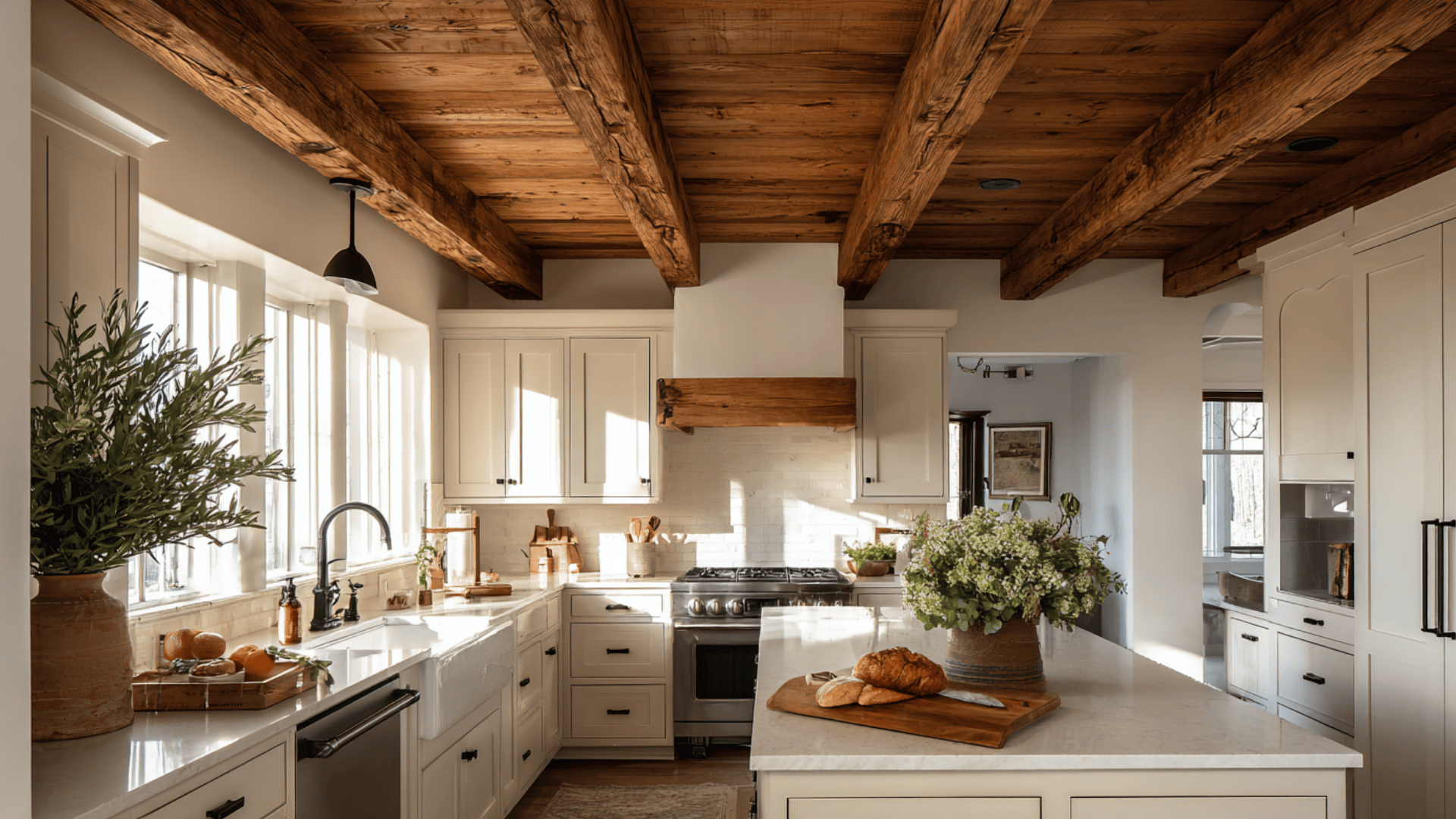
Exposed beams add a country feel and make the kitchen look more timeless and substantial. Even faux beams create the same cozy mood without major construction.
Keeping the wood tone warm and natural works better than anything too orange or overly stained, which can feel dated rather than classic.
Pro Tip: Paint beams to match your trim if the wood tone clashes with your cabinets or floors.
12. Handmade Pottery and Ceramic Decor
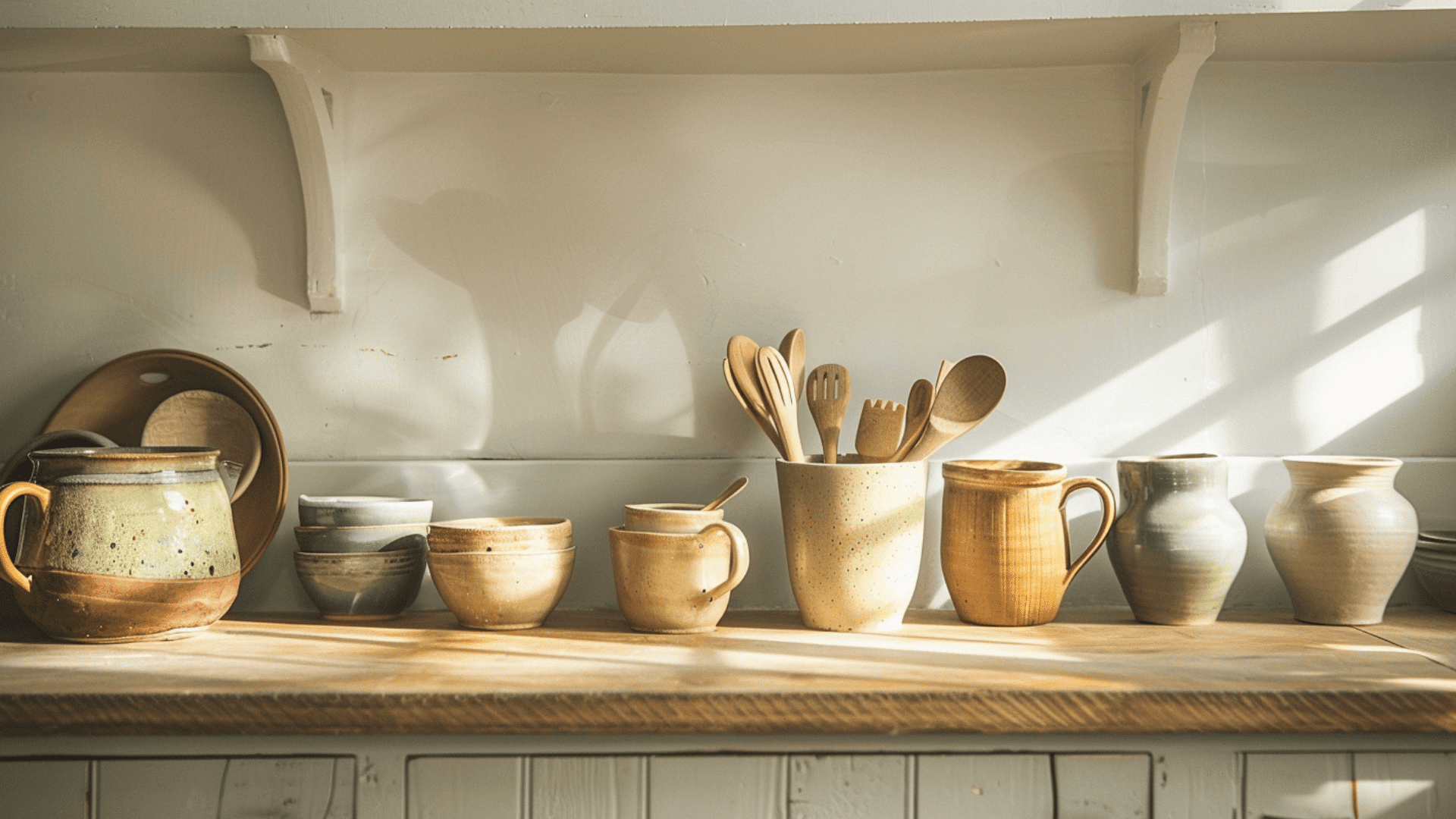
Cottagecore style loves items that feel handmade and personal rather than mass-produced. Pottery adds texture, soft shapes, and a gentle imperfection, making the space feel more human.
A few standout pieces work better than filling every surface; otherwise, it can start to look cluttered rather than curated.
Pro Tip: Look for local pottery or small makers to find pieces that feel unique and support artisans.
13. Display Fresh Flowers or Dried Herbs
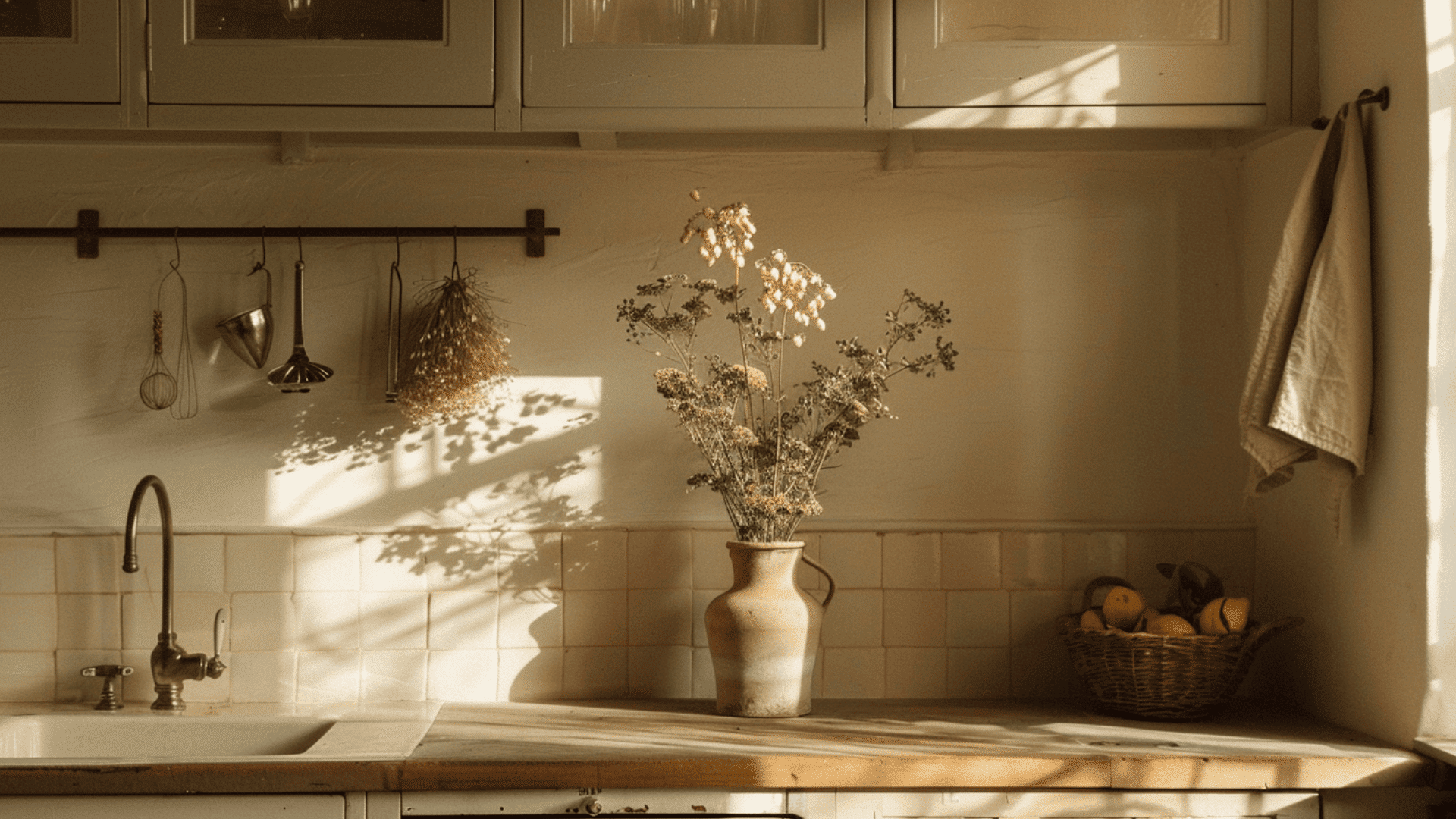
Flowers and herbs bring nature indoors, which is a big part of the cottagecore overall look. They also make the kitchen feel cared for and alive, not just functional.
Fresh flowers need to be replaced regularly, but dried lavender, eucalyptus, or wheat bundles last for months and still add a natural touch.
Pro Tip: Hang herbs near a window or stove where you’ll actually use them so they feel practical, not just decorative.
14. Cottagecore Tile Backsplash (Patterned or Soft Classic Styles)
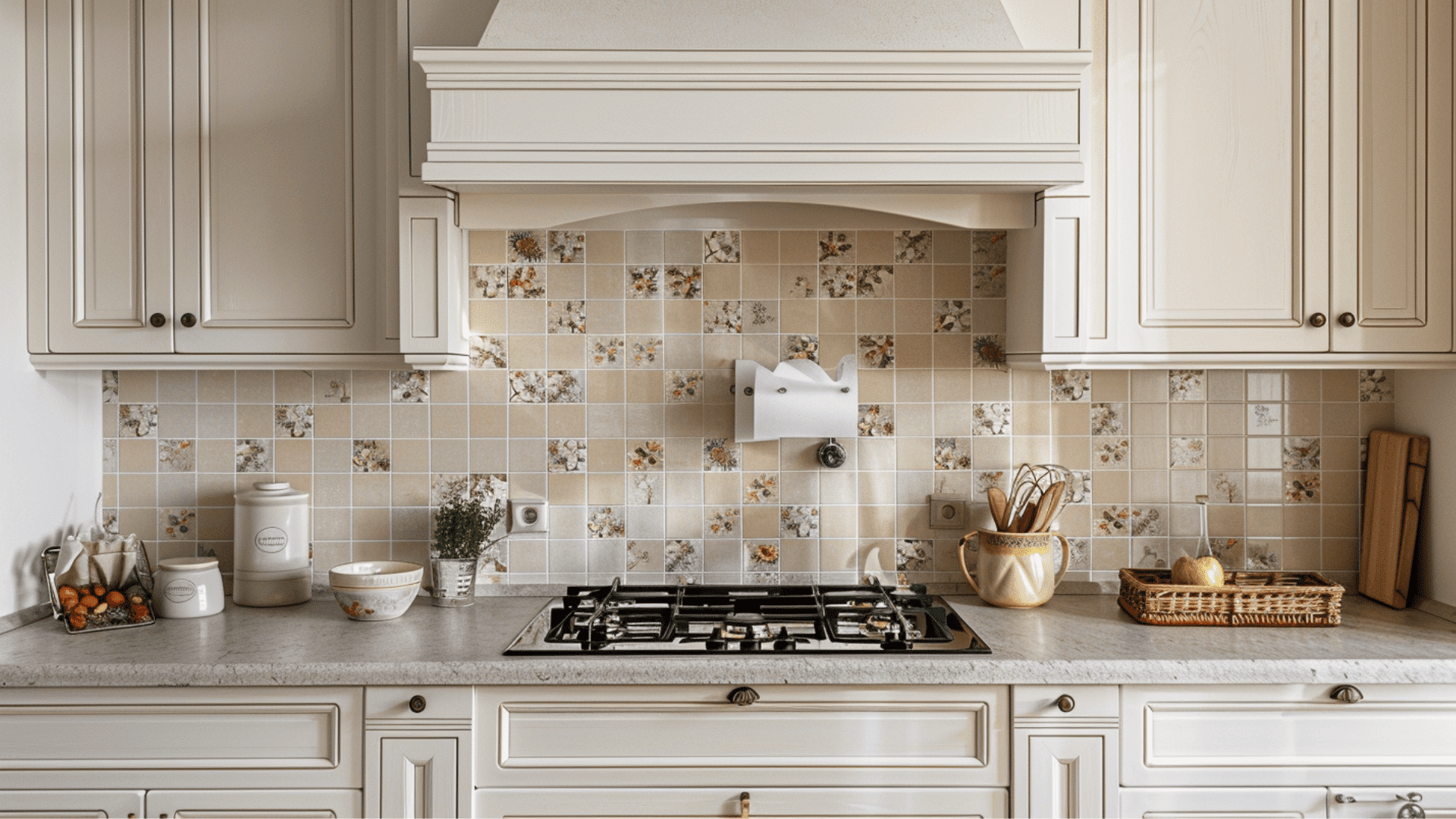
A backsplash can add color and charm without overhauling the entire kitchen. Cottagecore tile tends to look soft, slightly vintage, and not too glossy or modern.
Patterns like small florals, checkers, or handmade-looking tiles work especially well. If you rent or don’t want to commit, peel-and-stick tile with a classic pattern can give you a similar effect.
Pro Tip: Keep grout lines light or neutral so the pattern doesn’t feel too busy.
15. Create a Cozy Breakfast Nook
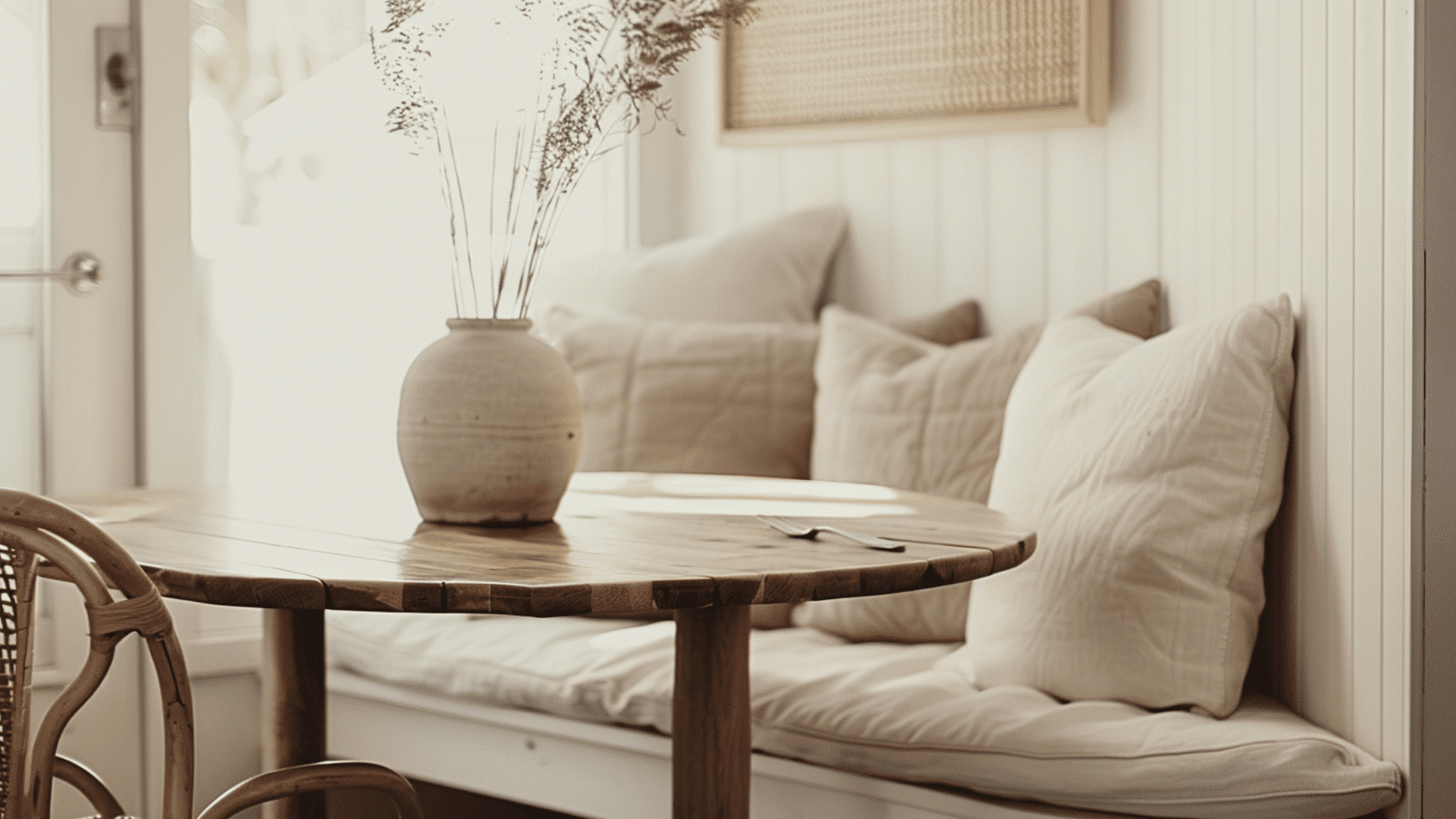
A breakfast nook turns the kitchen into a gathering place, not just a workspace. Soft seating, pillows, and a small table fit the cottagecore mood perfectly, making the space feel more like a home.
The key is making it comfortable enough that people actually want to sit there, which means good cushions and enough space to move.
Pro Tip: Use washable cushion covers so the nook stays practical for daily meals and spills.
16. Vintage-Style Runner Rug for Warmth
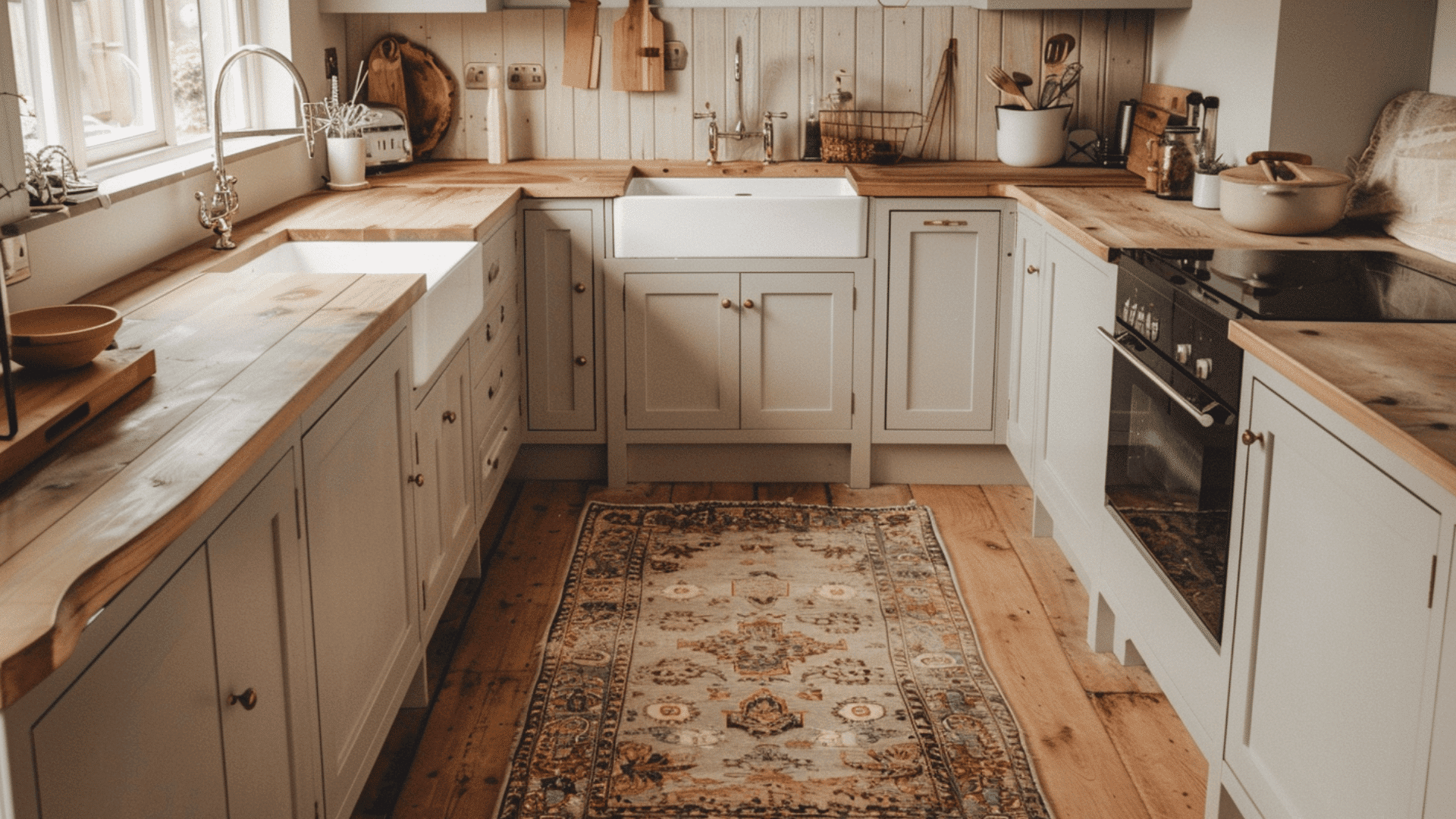
Rugs add softness, color, and comfort underfoot as you cook. Slightly worn or faded patterns look more cottagecore than bold, brand-new prints.
Washable rugs or ones that hide crumbs well save a lot of frustration, especially in high-traffic spots like in front of the sink or stove.
Pro Tip: Use a rug pad under the rug to prevent slipping and extend its life.
17. Wicker and Woven Storage
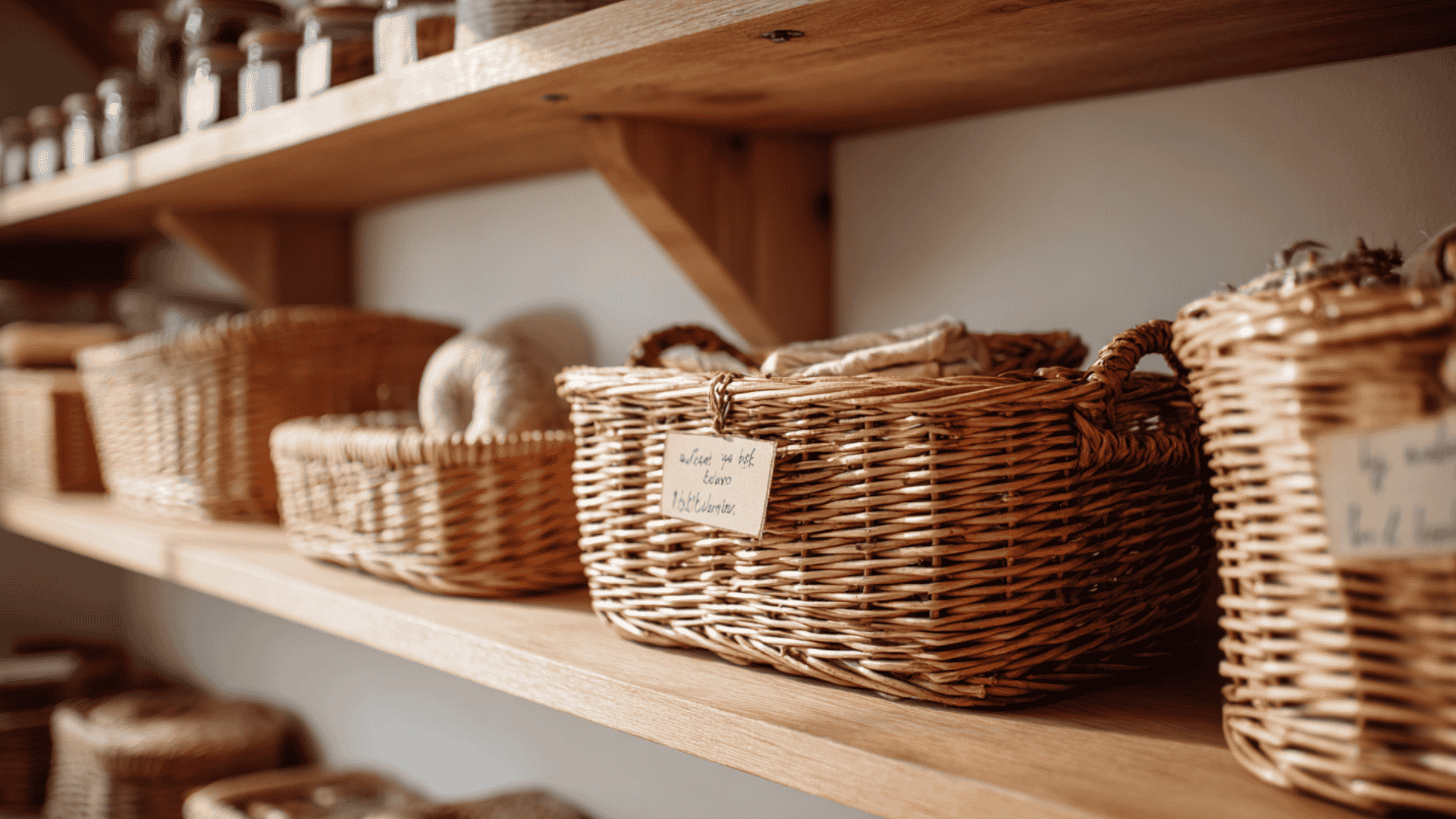
 Wicker and woven storage adds a natural, cottage feel while keeping the pantry organized. Baskets let you group items by category: snacks, baking supplies, and tea, so everything stays tidy and easy to find.
The look works best when the baskets are similar in style and color, which keeps the shelves from looking too random.
Pro Tip: Label baskets with small tags or chalkboard labels so everyone in the house knows where things go.
18. Layered Lighting for a Soft Glow
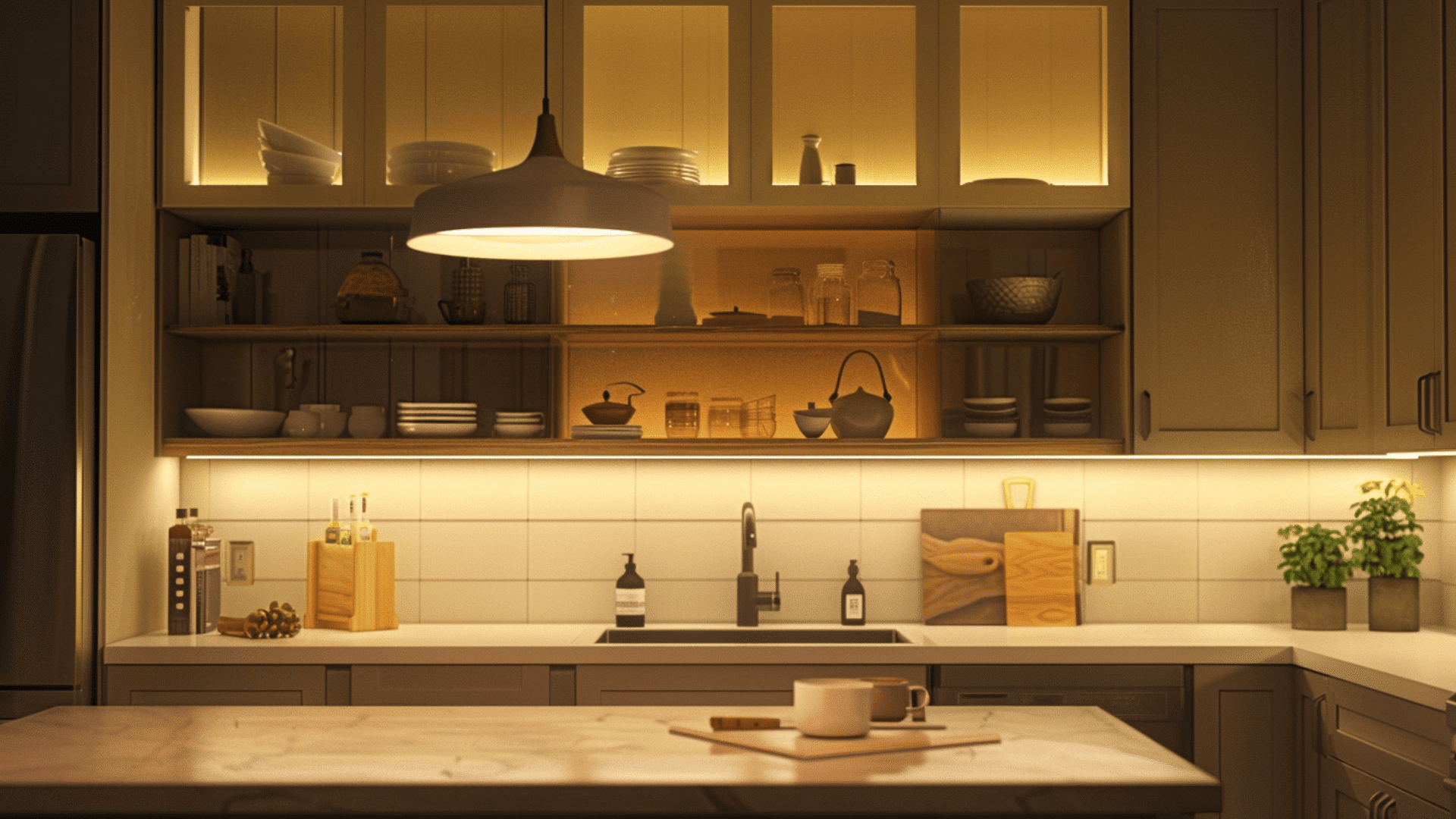
Cottagecore kitchens feel cozy because the lighting is gentle and layered, rather than a single harsh overhead fixture. Mixing pendant lights with under-cabinet strips and even a small counter lamp creates pockets of warmth throughout the space.
I’ve learned that adding a lamp to the kitchen (yes, it works) makes the room feel more like a living space and less like a work zone.
Pro Tip: Use warm bulbs in all your light sources so the tones match and the space feels cohesive.
19. Add a Chalkboard or Recipe Board
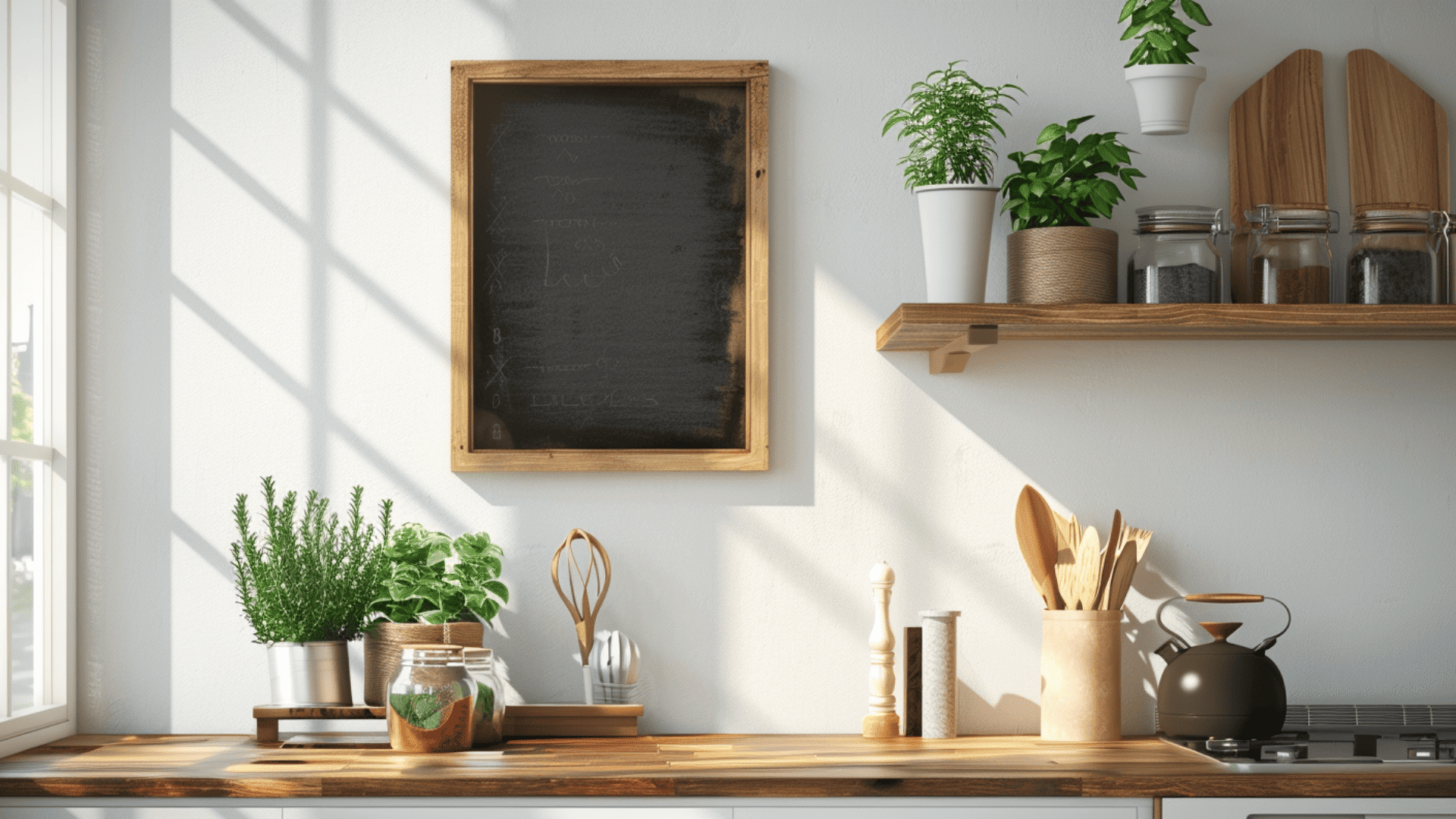
Handwritten signs and boards feel homey and nostalgic in a kitchen. A chalkboard gives you useful space for grocery lists, weekly menus, or recipe notes while adding a personal touch.
The key is framing it nicely so it looks intentional and vintage, not like a leftover classroom piece.
Pro Tip: Use chalk pens instead of regular chalk for cleaner lines that smudge less.
20. Cottage-Style Range Hood
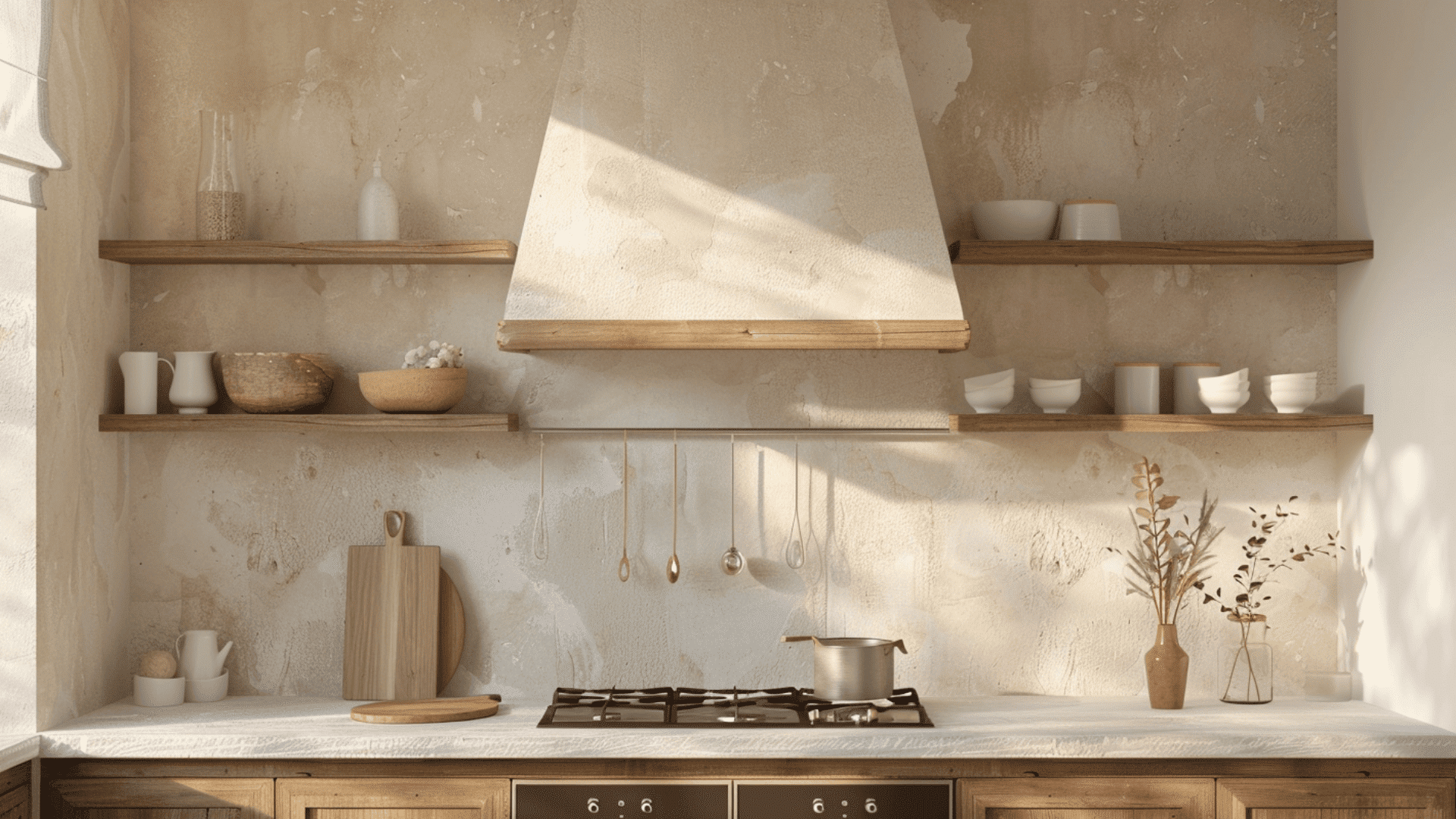
A statement hood can make the kitchen feel more custom and charming, especially if the rest of the space is fairly simple. Cottagecore hoods often have soft edges, plaster finishes, or wood trim rather than sleek metal.
Painting the hood the same color as the wall creates a calm, blended look that doesn’t compete with other focal points.
Pro Tip: Add a small shelf above the stove for oils, spices, or a plant to make the hood feel more integrated.
21. Add Sage Green or Muted Green Accents
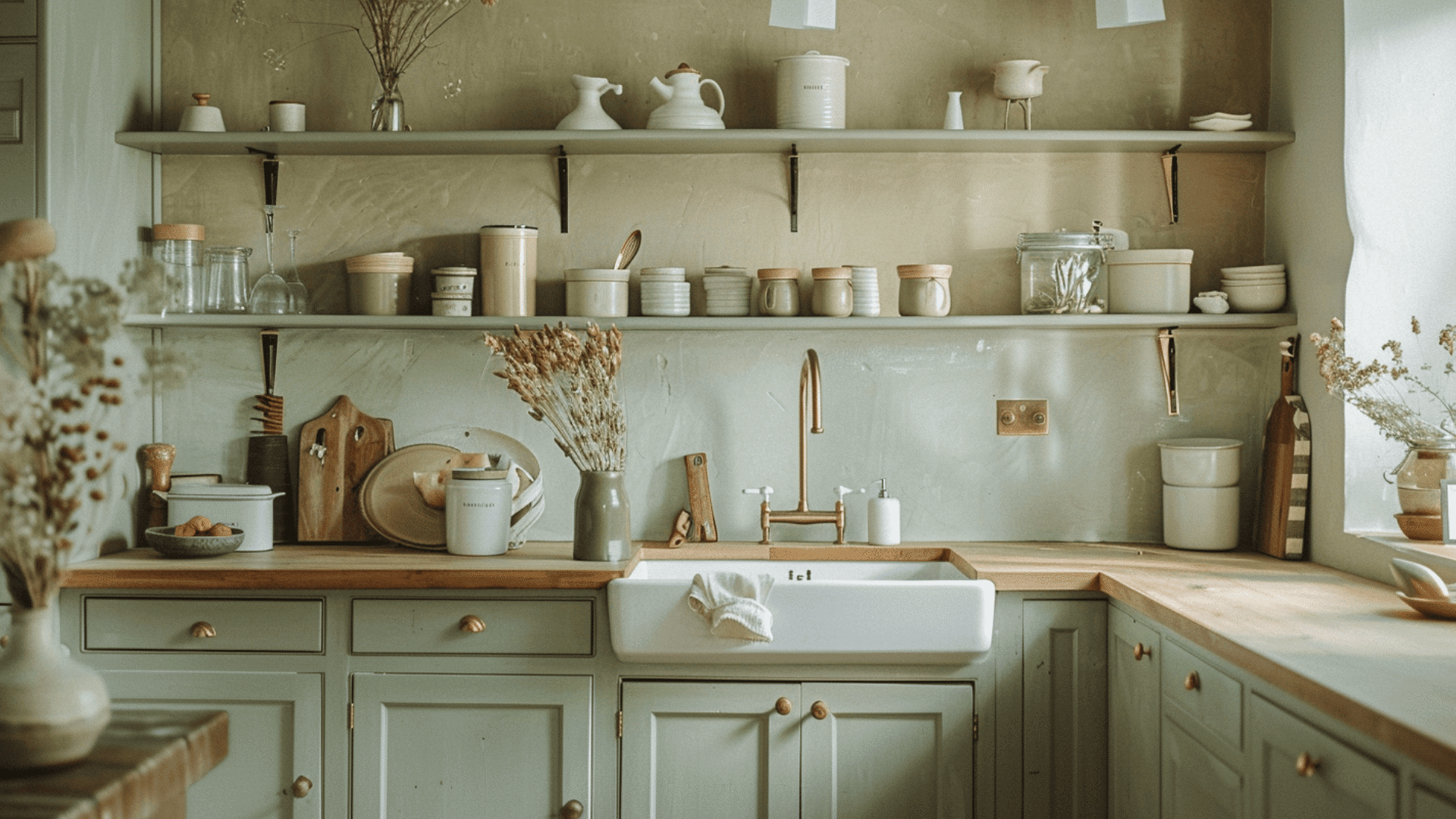
Muted greens feel natural and calm, like bringing a garden indoors. They pair beautifully with cream, wood, and brass without clashing or overpowering the space.
It’s easier to start small with green items like canisters, towels, or a rug before committing to painting cabinets or walls.
Pro Tip: Choose greens with gray or beige undertones so they feel soft and earthy, not bright or neon.
22. Weathered or Distressed Finishes
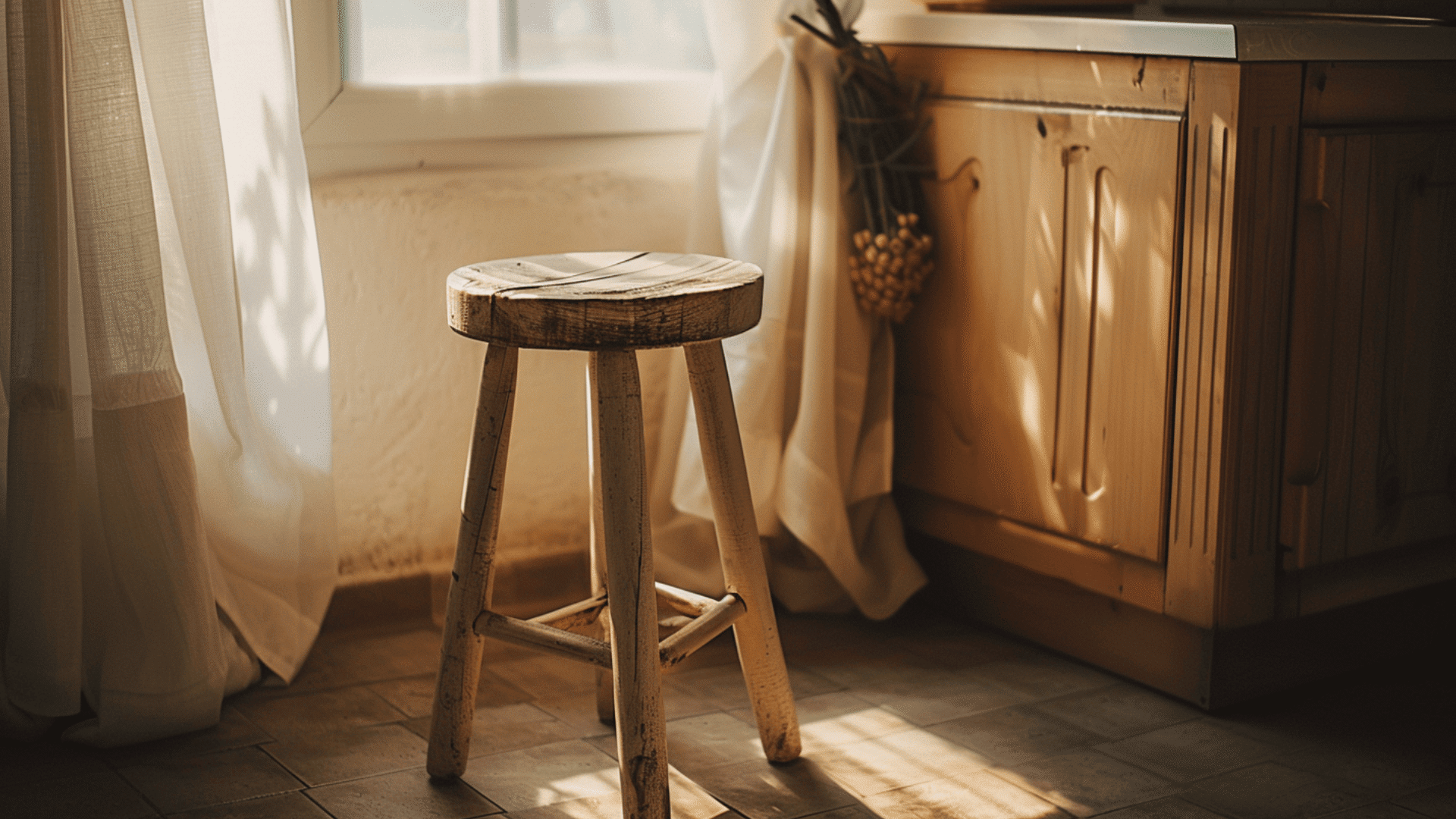
Cottagecore style embraces gentle wear and aged finishes rather than everything looking brand-new. Soft distressing adds story and character to furniture and decor.
The goal is “gently worn,” not “falling apart,” so things should still be clean, safe, and functional, with a bit of history.
Pro Tip: Lightly sand painted furniture edges for a natural, worn look, then seal it to prevent further chipping.
23. Display Cookbooks Like Decor
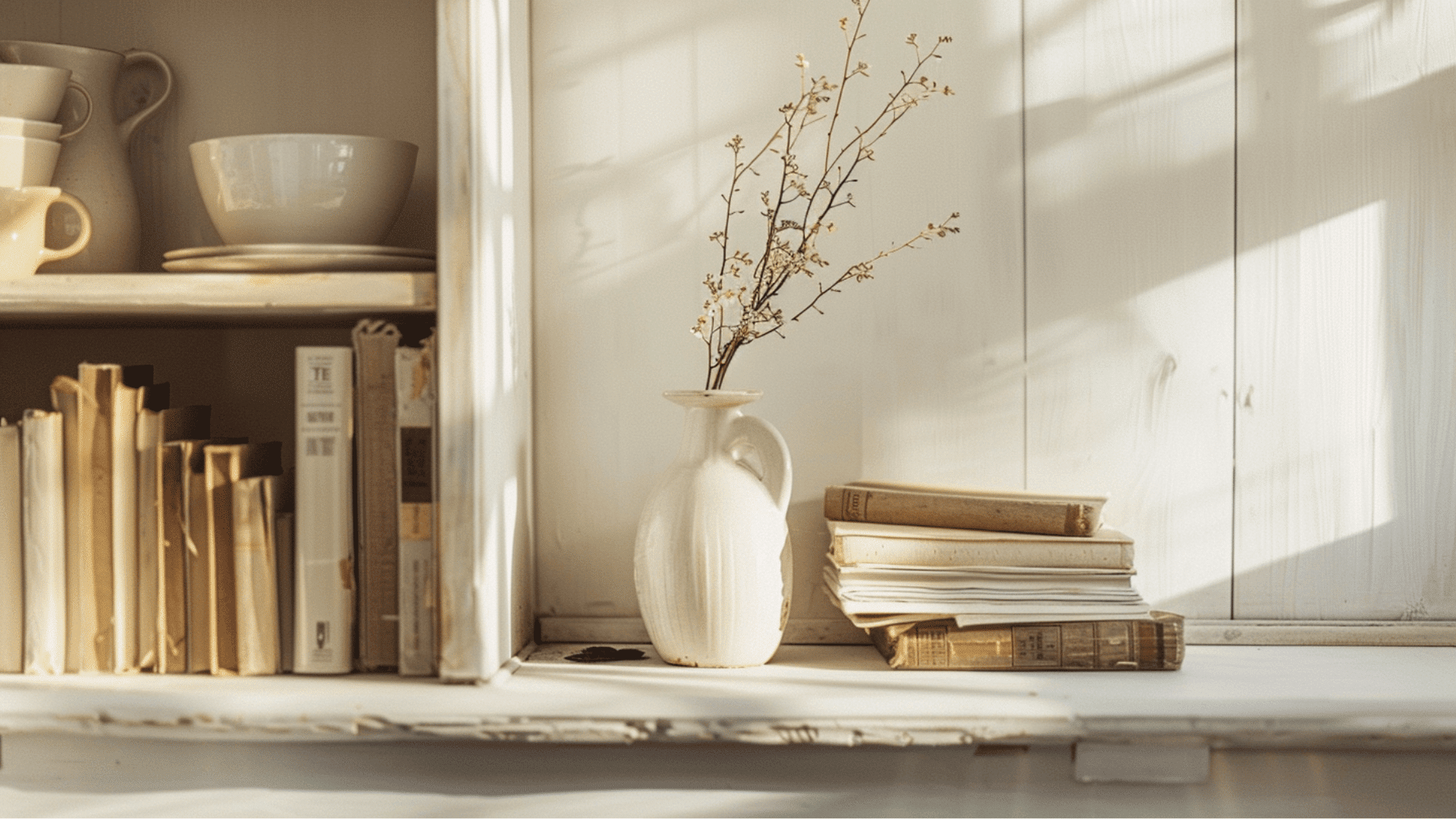
Cookbooks make a kitchen feel lived-in and loved, and they add personality in an easy way. Stacking them on open shelves or counters adds color and texture with minimal effort.
Using bookends or a small tray keeps stacks looking neat rather than as if they’re about to topple over.
Pro Tip: Mix horizontal and vertical stacks for a more collected, less rigid look.
24. Linen or Lace Window Treatments
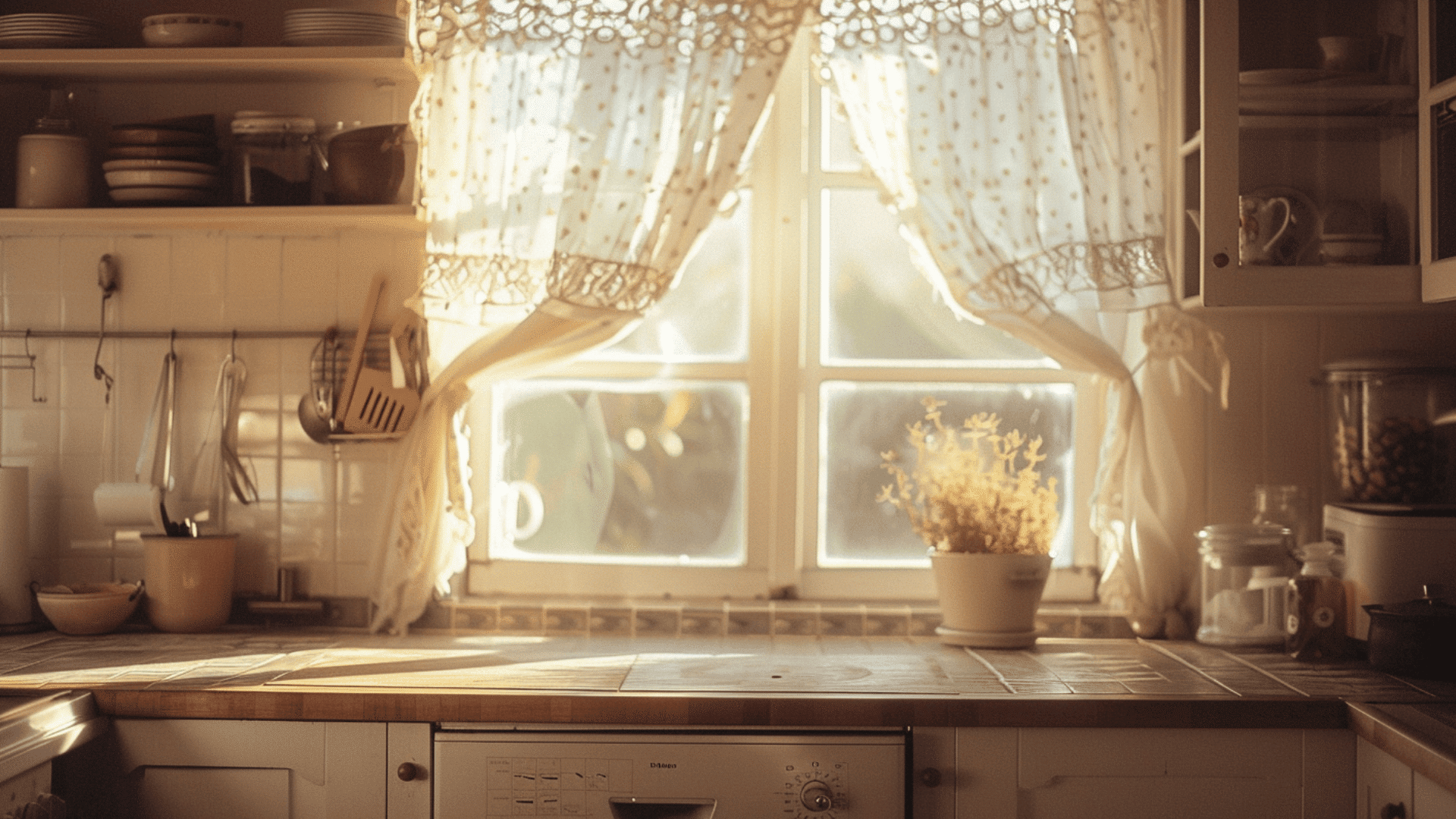
Soft curtains instantly warm up a kitchen and make it feel more cottage-like. Linen and lace both filter light gently, making the space prettier than blinds or bare windows.
Café curtains work especially well because they add charm while still letting in plenty of natural light from the top half of the window.
Pro Tip: Hang curtains slightly above the window frame to make the window look taller and the ceiling higher.
25. Vintage Wall Art or Decorative Plates
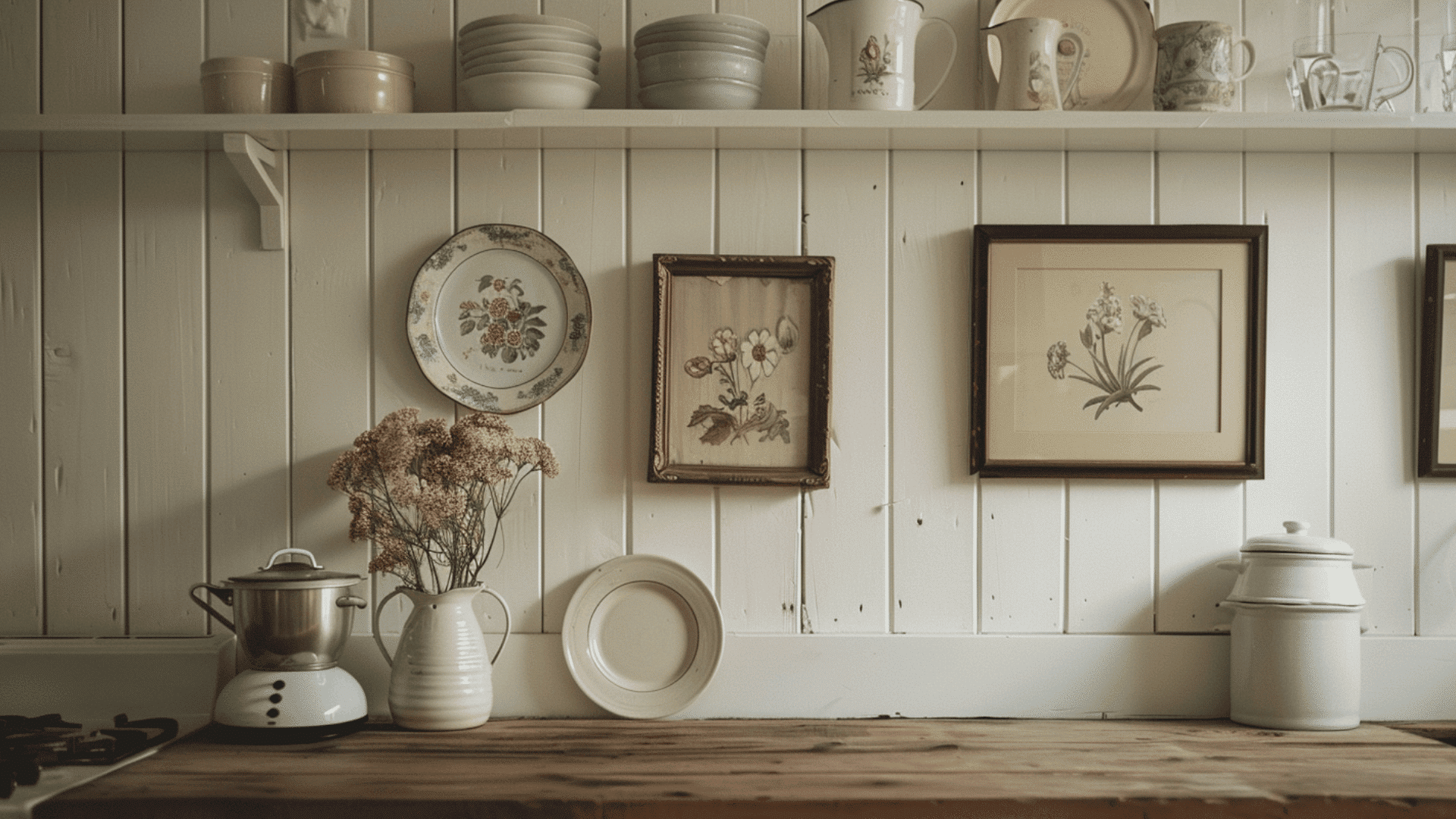
Wall decor helps the space feel personal and collected over time. Plates and framed prints are classic cottage choices that add interest without taking up counter space.
Keeping colors soft and repeating one or two tones makes the display feel calm and intentional rather than cluttered.
Pro Tip: Use plate hangers that are easy to adjust so you can rearrange the display without making new holes.
26. Add a Wooden Peg Rail for Storage
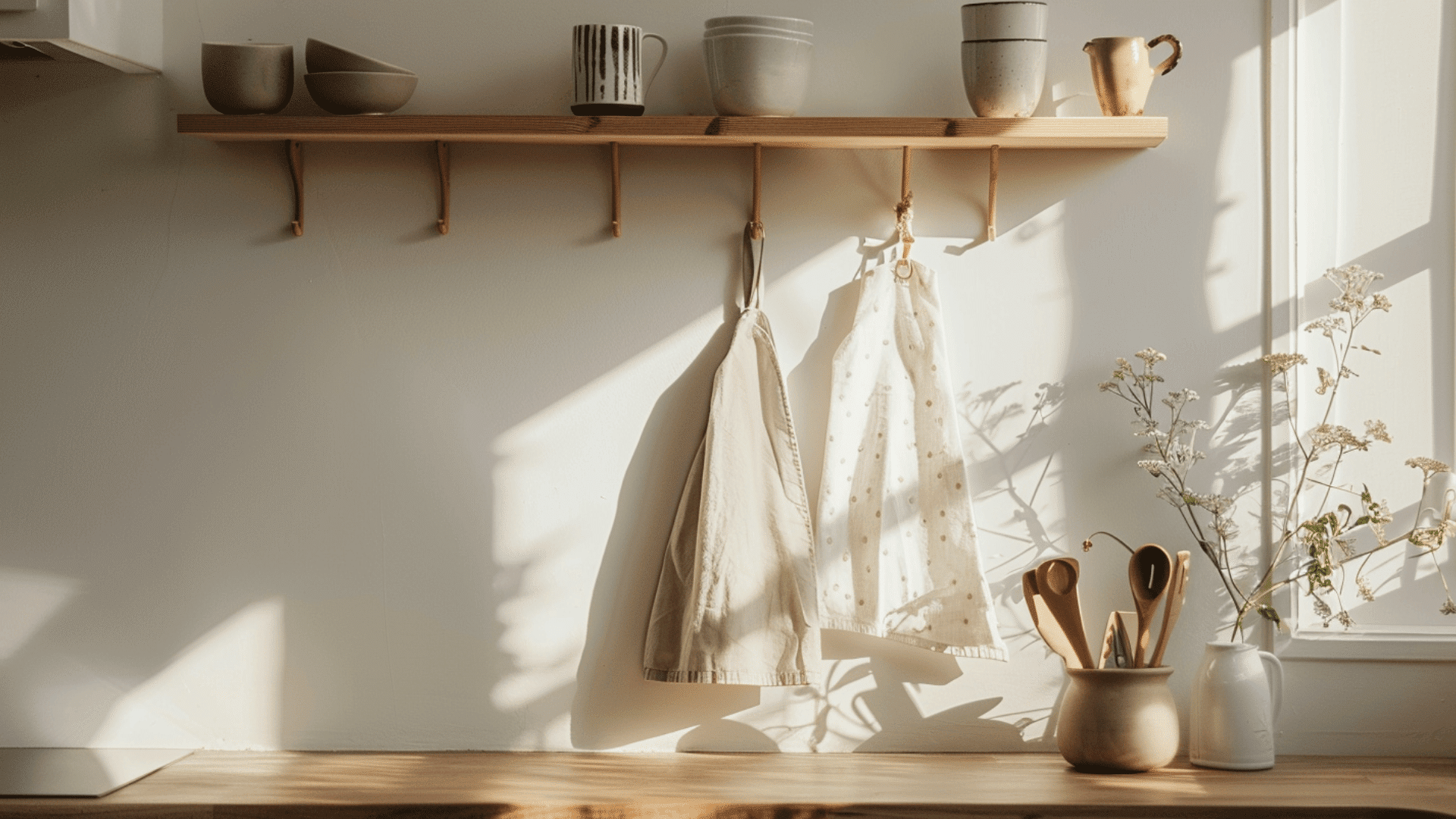
Peg rails are both practical and very cottage-style. They add vertical storage for items like aprons, dish towels, or mugs while making the kitchen look charmingly old-fashioned.
The trick is hanging only a few items so it looks curated and charming, not crowded or messy.
Pro Tip: Paint the peg rail to match your trim or cabinets so it feels built-in rather than tacked on.
27. Choose Soft, Curved Furniture Shapes
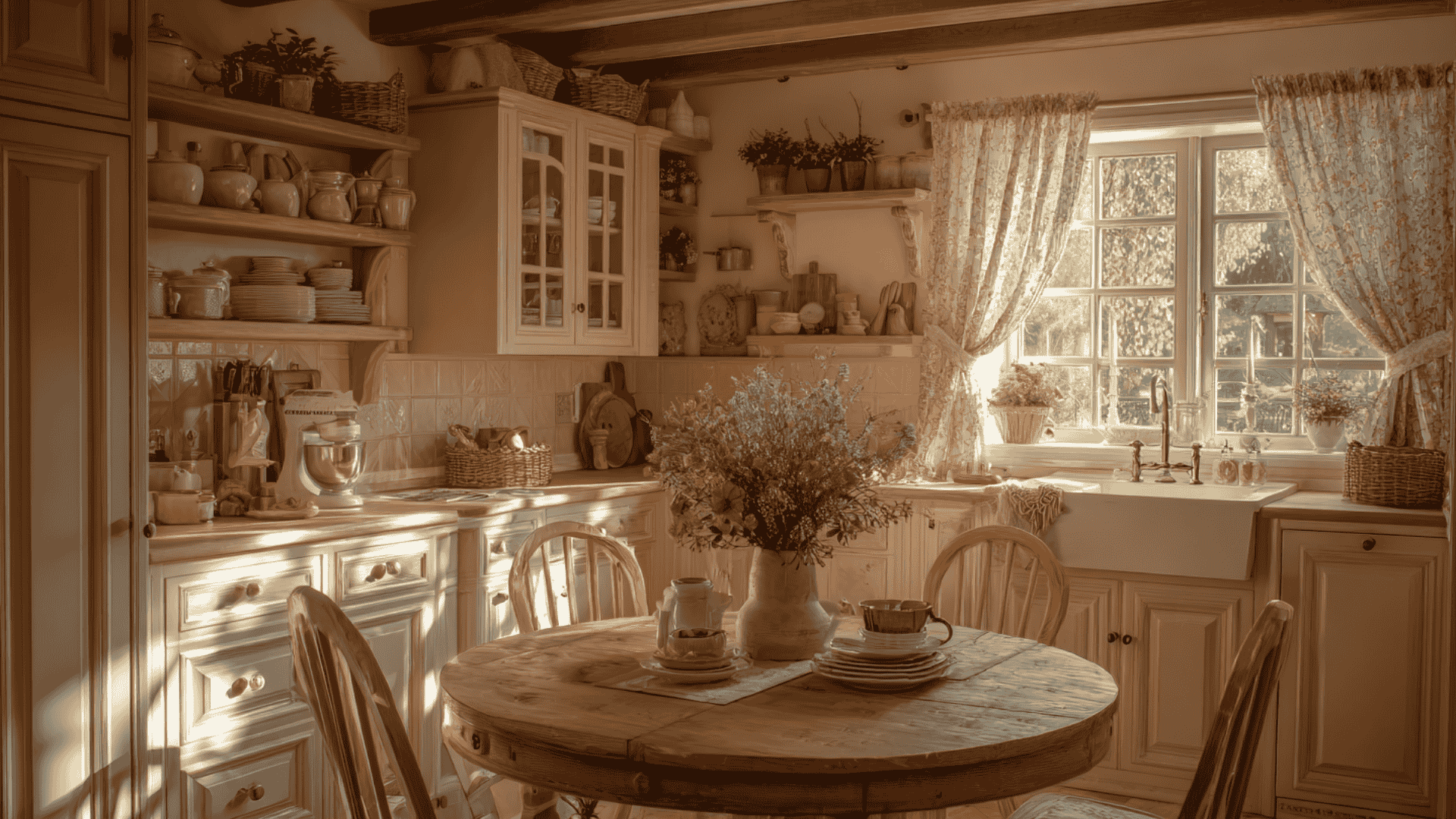
Cottagecore spaces feel gentle and welcoming, not sharp and boxy. Curved furniture, such as round tables or chairs with soft edges, makes the kitchen feel friendlier and more relaxed.
This is especially helpful in small kitchens where sharp corners can feel cramped or harsh.
Pro Tip: A round table comfortably seats more people in a small space than a square one of the same size.
28. Cottagecore-Inspired Appliances (Retro or Classic-Look)
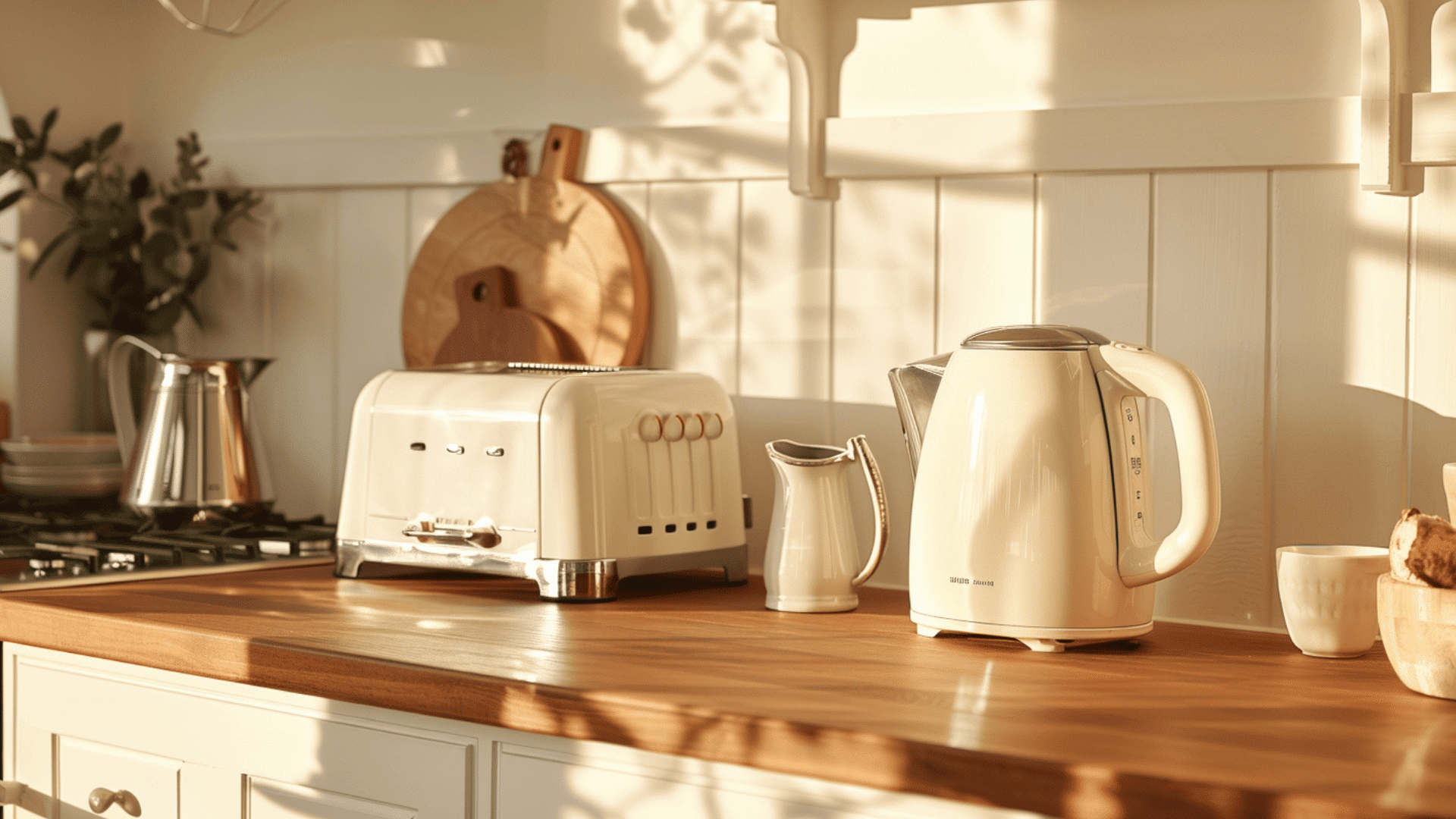
Appliances can match the cottage vibe when they look simple and classic instead of sleek and modern. You don’t need to replace your full-size appliances; small countertop items like a cream toaster, kettle, or mixer can shift the whole feel.
Picking one consistent finish makes it look intentional rather than random.
Pro Tip: Stick to cream, matte white, or soft pastels so the appliances blend with the rest of the palette.
29. Mix Old and New for a Collected Look
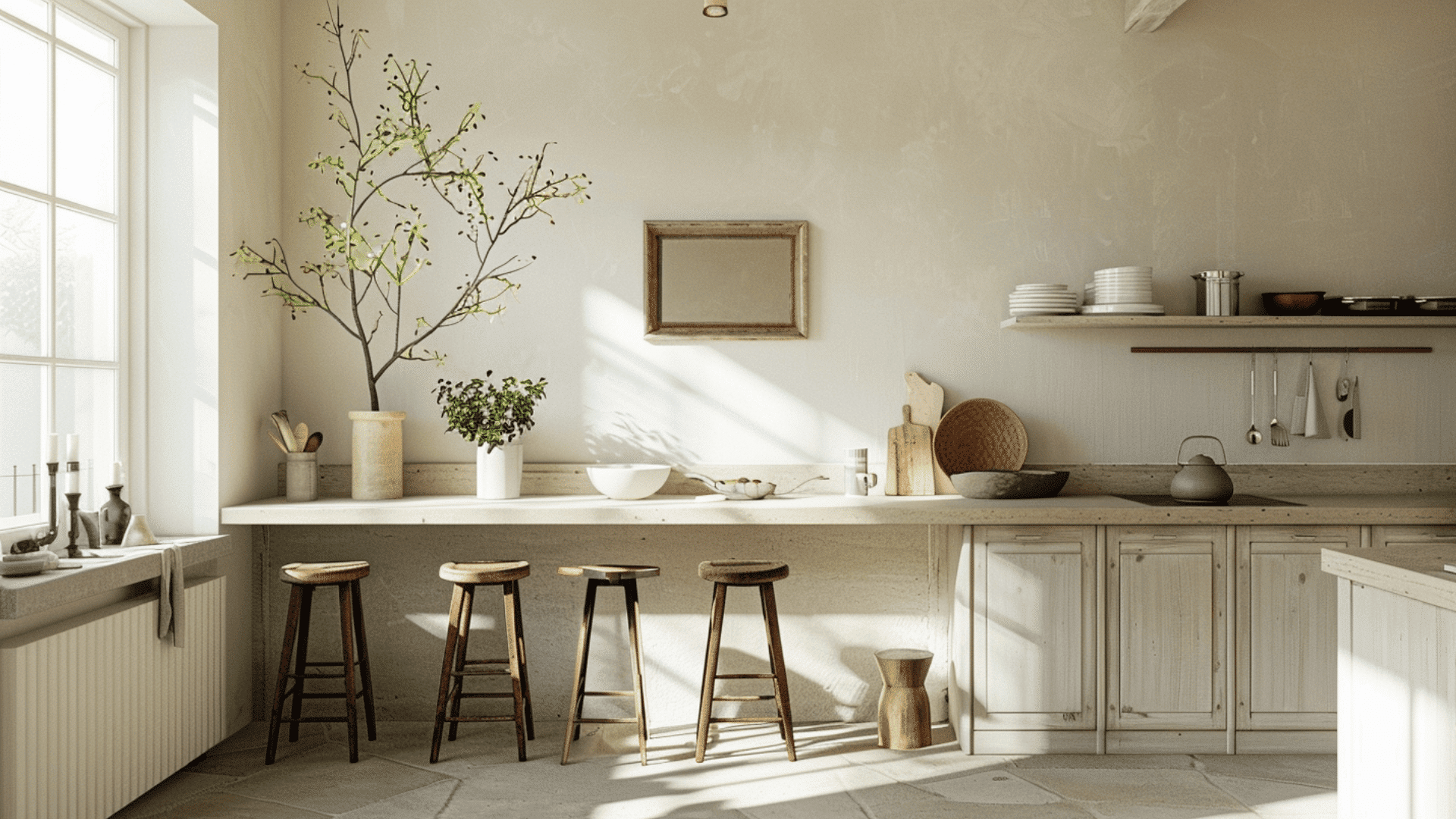
Cottagecore doesn’t mean everything has to be antique or old. The best look often comes from mixing modern basics with a few vintage touches that add warmth and character.
Using modern pieces for functionality, like cabinets and appliances, and vintage pieces for personality, like stools or decor, keeps the space practical while still feeling cozy.
Pro Tip: Choose vintage pieces that are sturdy and useful, not just decorative, so they earn their place in the kitchen.
30. Use Warm Earth-Tone Accessories
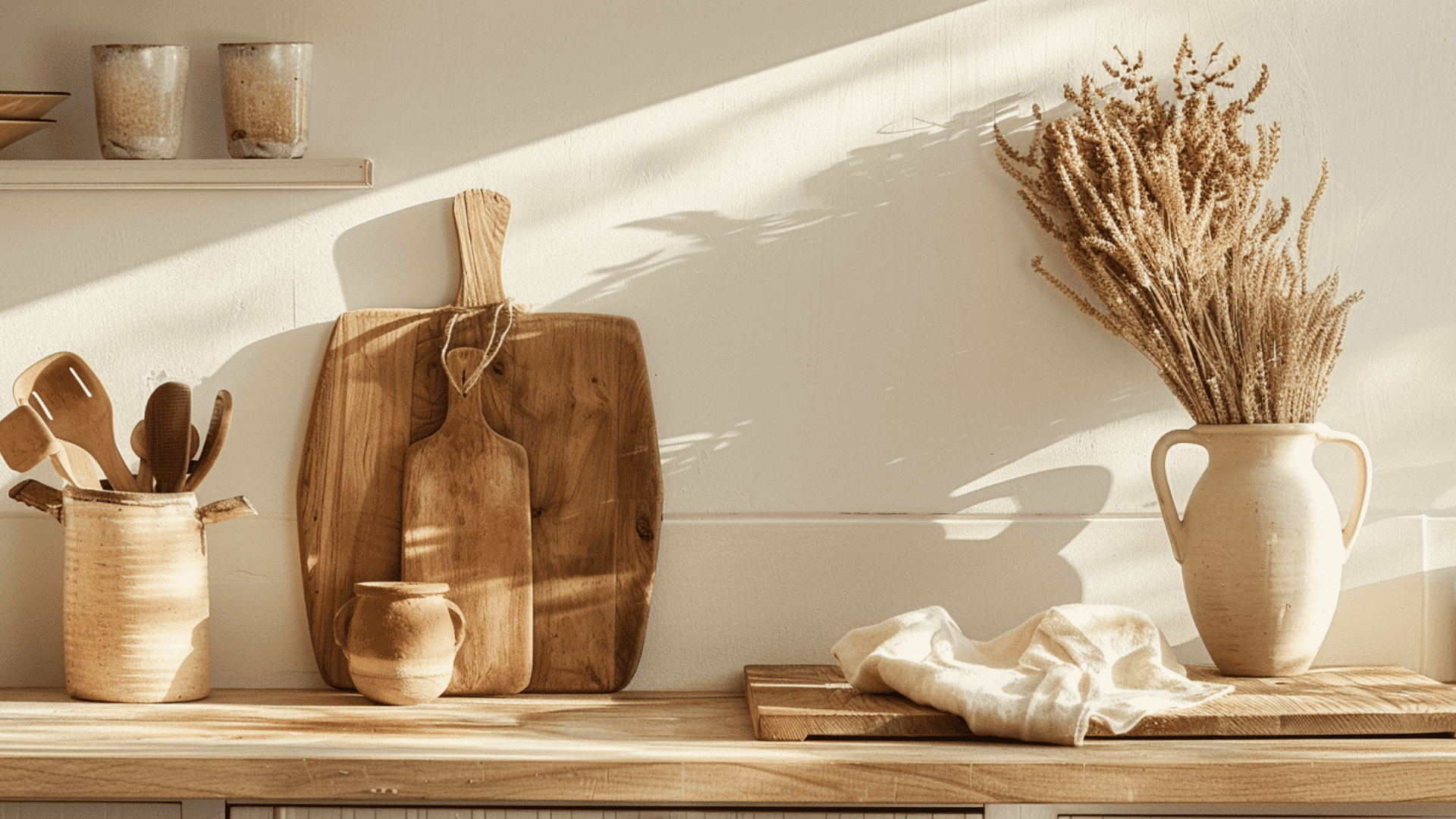
Earth tones feel grounded and cozy, like a countryside palette. Think terracotta, warm brown, tan, muted mustard, and soft rust.
These colors work beautifully with the creams, greens, and wood tones already common in cottagecore kitchens. Adding earth tones through easy swaps like towels, bowls, and planters is a low-commitment way to shift the mood.
Pro Tip: Layer different earth tones together rather than using just one, so the palette feels rich and interesting.
31. Create a “Lived-In but Lovely” Counter Styling
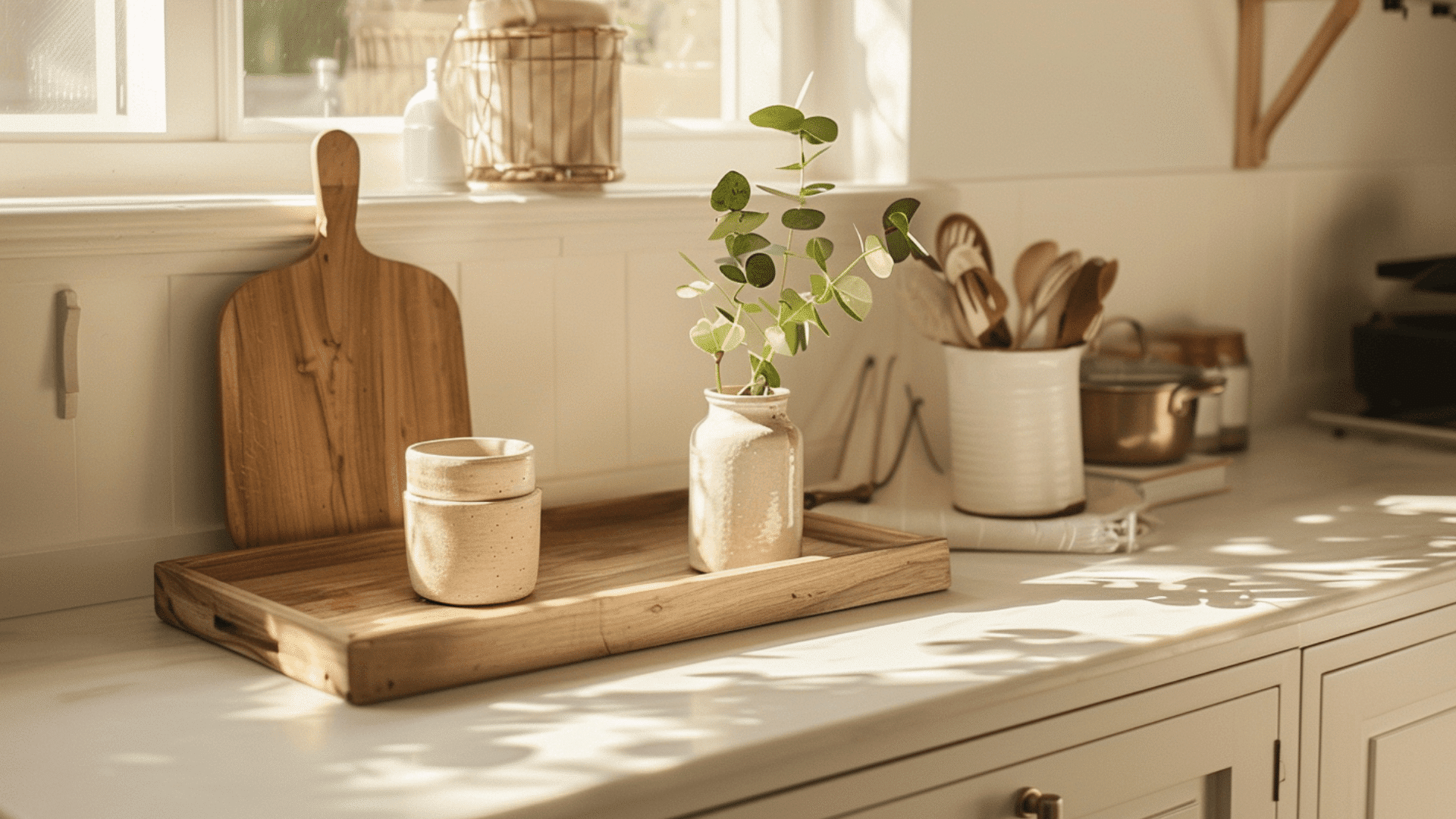
Cottagecore kitchens look real and usable, not staged like a showroom. A few neatly displayed everyday items can feel cozy and charming without adding clutter.
The trick is to group items on a tray or cutting board so the counter still feels clean and organized, not like you just left things out randomly.
Pro Tip: Rotate what you display seasonally so the counter stays fresh and doesn’t feel stale or permanent.
32. Add a Plate Rack for Everyday Display
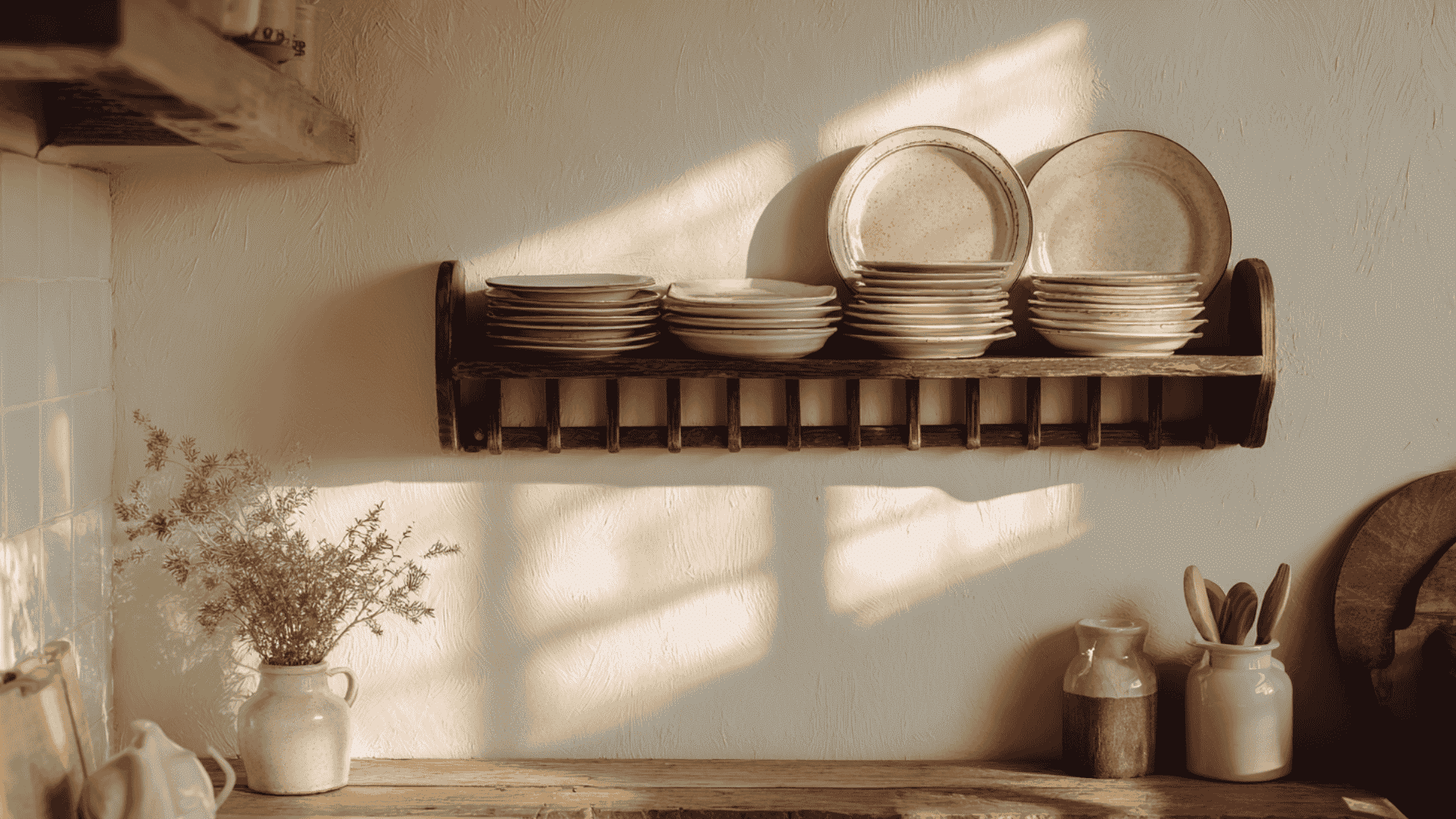
A wall-mounted plate rack adds charm without taking up counter space. It feels old-fashioned in a good way and keeps your most-used dishes within easy reach.
Plate racks work best when the dishes share a similar tone, such as all-white or soft neutrals, so the display feels calm rather than busy.
Pro Tip: Install the rack near the sink or dishwasher so putting dishes away feels natural and convenient.
33. Install a Bridge Faucet for Subtle Vintage Style
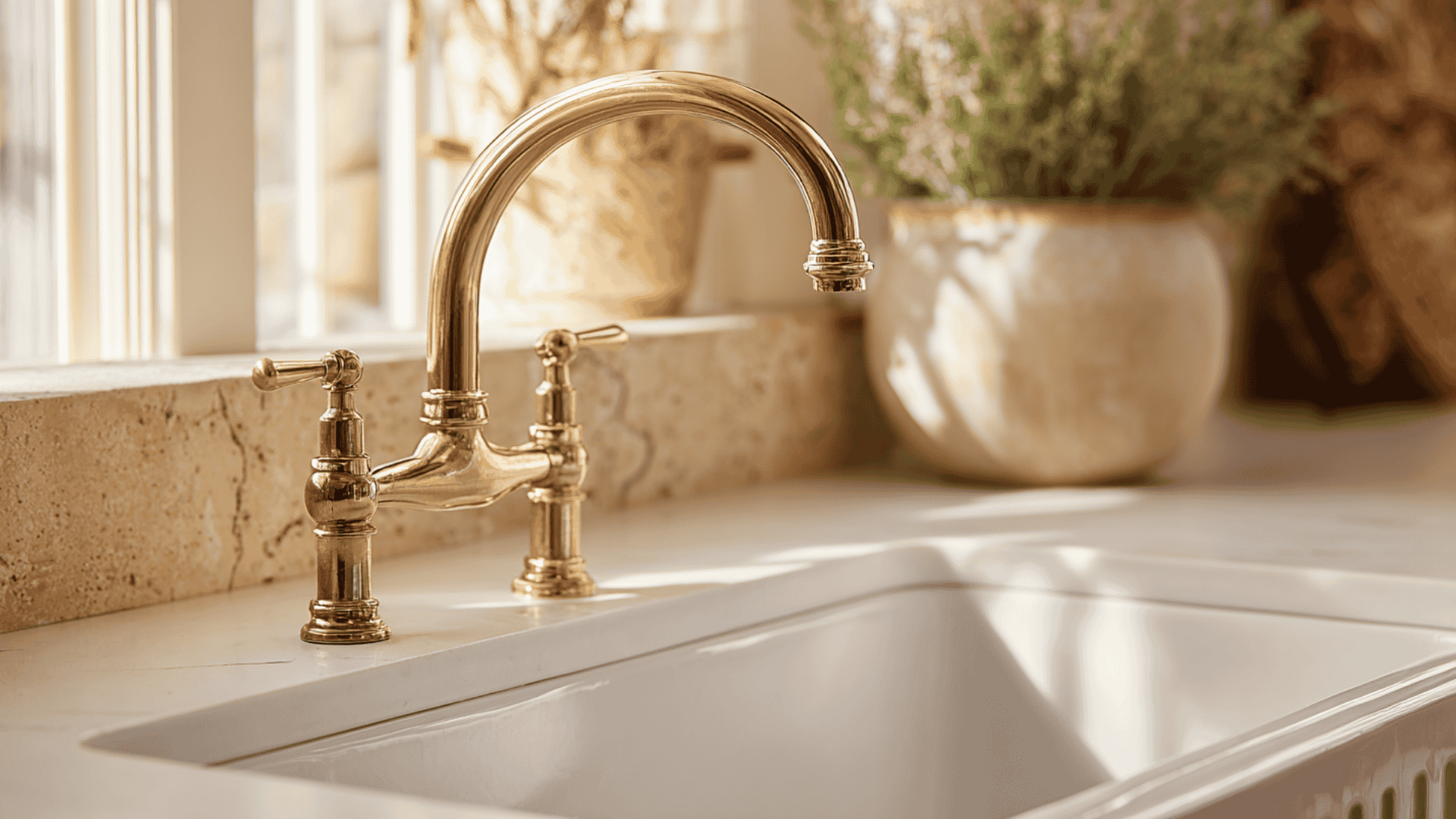
A bridge faucet has two handles connected by a visible bar, giving it a classic, slightly old-world feel. It instantly adds character without changing the whole sink area.
What I like about this detail is that it feels decorative but still fully practical. It works especially well in kitchens with warm metals like brass or bronze.
Pro Tip: Choose a finish that matches your cabinet hardware so everything feels cohesive rather than mismatched
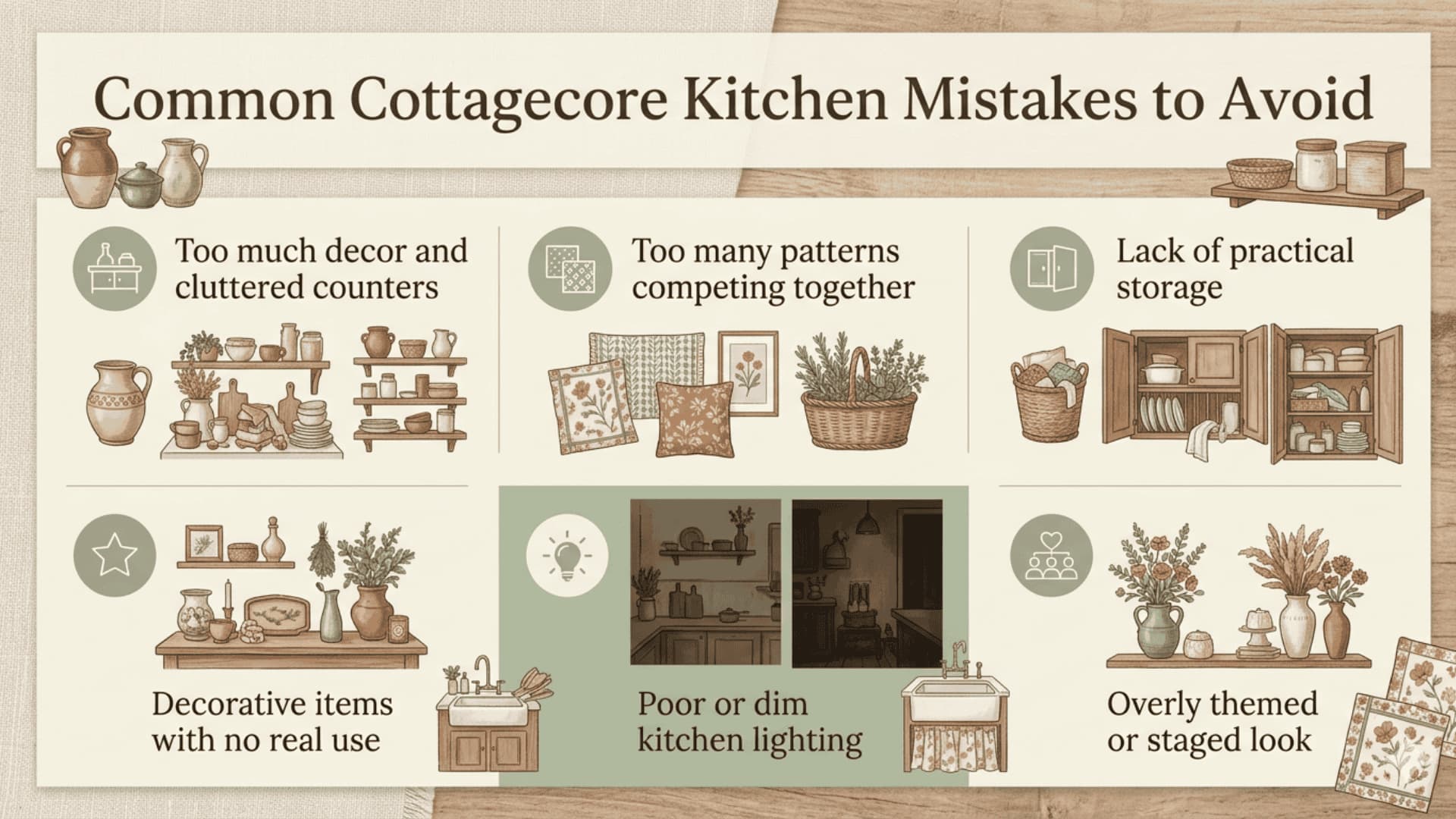
Alt Text: Infographic of common cottagecore kitchen mistakes: cluttered decor, too many patterns, dim lighting.
Cottagecore Kitchen Decoration Tips
Decorating a cottagecore kitchen works best when the space feels natural, relaxed, and slightly collected over time. Small styling choices can make the room feel cozy without adding clutter or losing functionality.
- Keep counters simple and intentional: Group everyday items on a tray or board to create a cozy look while keeping counters neat and practical.
- Repeat a few key materials: Use wood, brass, and linen throughout the kitchen to make the space feel warm, cohesive, and thoughtfully styled.
- Layer natural textures: Mix wicker, linen, ceramics, and wood to add warmth and depth without relying on bold colors or excessive decor.
- Balance open display with hidden storage: Show off pretty dishes and pottery, but store clutter in cabinets or baskets to keep the kitchen charming.
- Use soft lighting to create warmth: Choose warm bulbs, lamps, or soft pendants to make the kitchen feel inviting instead of harsh or clinical.
- Rotate decor seasonally: Swap out flowers, linens, or small accents to keep the kitchen feeling fresh, cozy, and visually interesting.
With a few thoughtful decoration choices, a cottagecore kitchen can stay both beautiful and practical. The goal is to create a space that feels welcoming every day, not just in photos.
Wrap Up
A cottagecore kitchen is more than just a pretty photo. When it blends comfort with function, it becomes a space you actually enjoy using every day.
Soft neutrals, warm wood, gentle patterns, and vintage-inspired details can make a kitchen feel calm, welcoming, and lived-in.
The biggest takeaway is to choose a few strong elements that add comfort and storage, then layer in decor that you’ll actually use.
Small swaps, like hardware, lighting, textiles, or open shelving, can change the mood without a full remodel.
When the basics feel right, the space stays timeless instead of trendy.
If you try even one idea from this list, your kitchen can feel more like home. Which cottagecore detail would you add first: color, texture, or a vintage element?