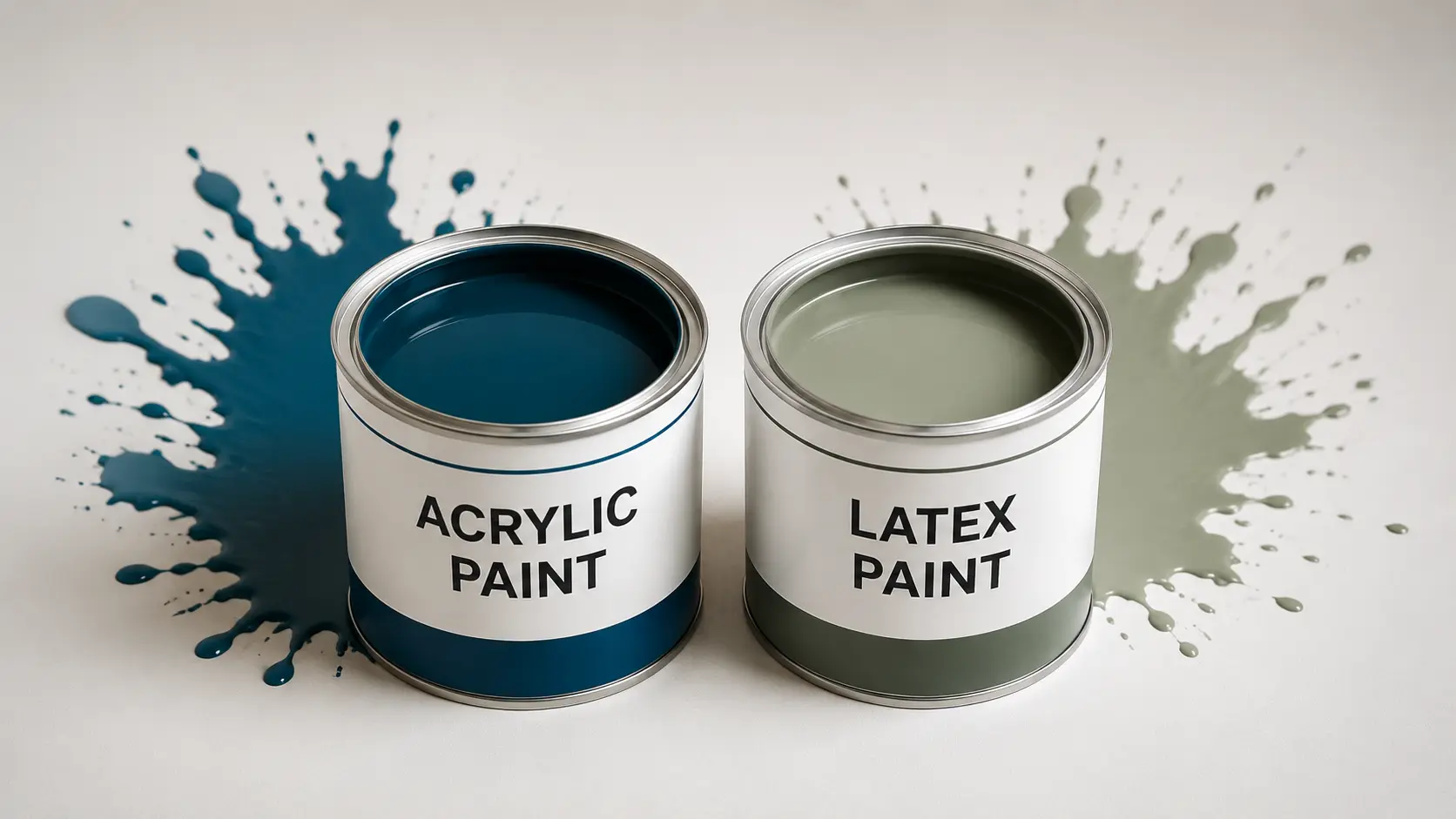
Walk into any paint store, and you will find two labels that look almost identical: acrylic paint and latex paint.
Both are water-based. Both clean up with soap and water. So why do they have different names, and does it even matter which one you pick? It actually does.
The type of paint you choose affects how long it lasts, how well it sticks, and how much you spend over time. Here is a clear, simple breakdown of what each paint is and which one works best for your project.
Quick Answer: Acrylic vs Latex Paint
Before getting into details, here’s a straight comparison so you can see how these two actually differ in real use. This helps cut through the naming confusion and focuses on performance instead of labels.
| Feature | Acrylic Paint | Latex Paint |
|---|---|---|
| Water-based | Yes | Yes |
| Binder | Acrylic resin | Vinyl, acrylic blend, or 100% acrylic |
| Durability | High | Moderate |
| Flexibility | Very flexible | Less flexible |
| Moisture resistance | Strong | Fair |
| UV resistance | Strong | Weak to moderate |
| Interior use | Good | Great |
| Exterior use | Great | Limited |
| Cost | Higher | Lower |
| Best for | Siding, trim, bathrooms, high-traffic areas | Bedrooms, ceilings, low-traffic walls |
Most of the confusion comes from the fact that “latex paint” isn’t a single formula; it’s a broad category that can include acrylic-based versions. Once you understand that, the comparison becomes much less misleading.
Why Acrylic vs Latex Paint is So Confusing
The biggest reason people get confused is that “latex paint” is just a general industry term for water-based paint.
It does not mean the paint literally contains latex rubber. Most modern latex paints already use acrylic or vinyl-based synthetic resins as their binder. So when you see “latex paint” on a can, it could technically contain acrylic ingredients.
On top of that, the store labels are inconsistent. One brand may call its product “acrylic latex”; another may say “latex interior”; and both could have very similar formulas.
The key thing to understand is that acrylic and latex paints are in the same category. Acrylic is simply the higher-performing version of that category.
What is Latex Paint?

Latex paint is a water-based paint made from water, pigment, and synthetic resins. Despite the name, it contains no natural latex. It is designed to be easy to apply, fast-drying, and simple to clean up with soap and water.
It is widely used for interior walls and ceilings because it performs well in typical indoor conditions.
It also tends to be more budget-friendly, making it a common choice for large painting projects where cost and coverage matter more than maximum durability.
Benefits of Latex Paint
Before looking at the advantages, it helps to understand why latex paint is so widely used in residential projects. Most of its value comes from convenience and affordability rather than heavy-duty performance.
- Fast drying time, allowing quicker project completion
- Easy cleanup with soap and water (no solvents required)
- Low-odor and low-VOC options are available
- Cost-effective for large interior areas
- Smooth application on drywall and plaster surfaces
- Good coverage for standard interior walls
- Widely available in multiple finishes (matte, eggshell, satin, etc.)
What is Acrylic Paint?
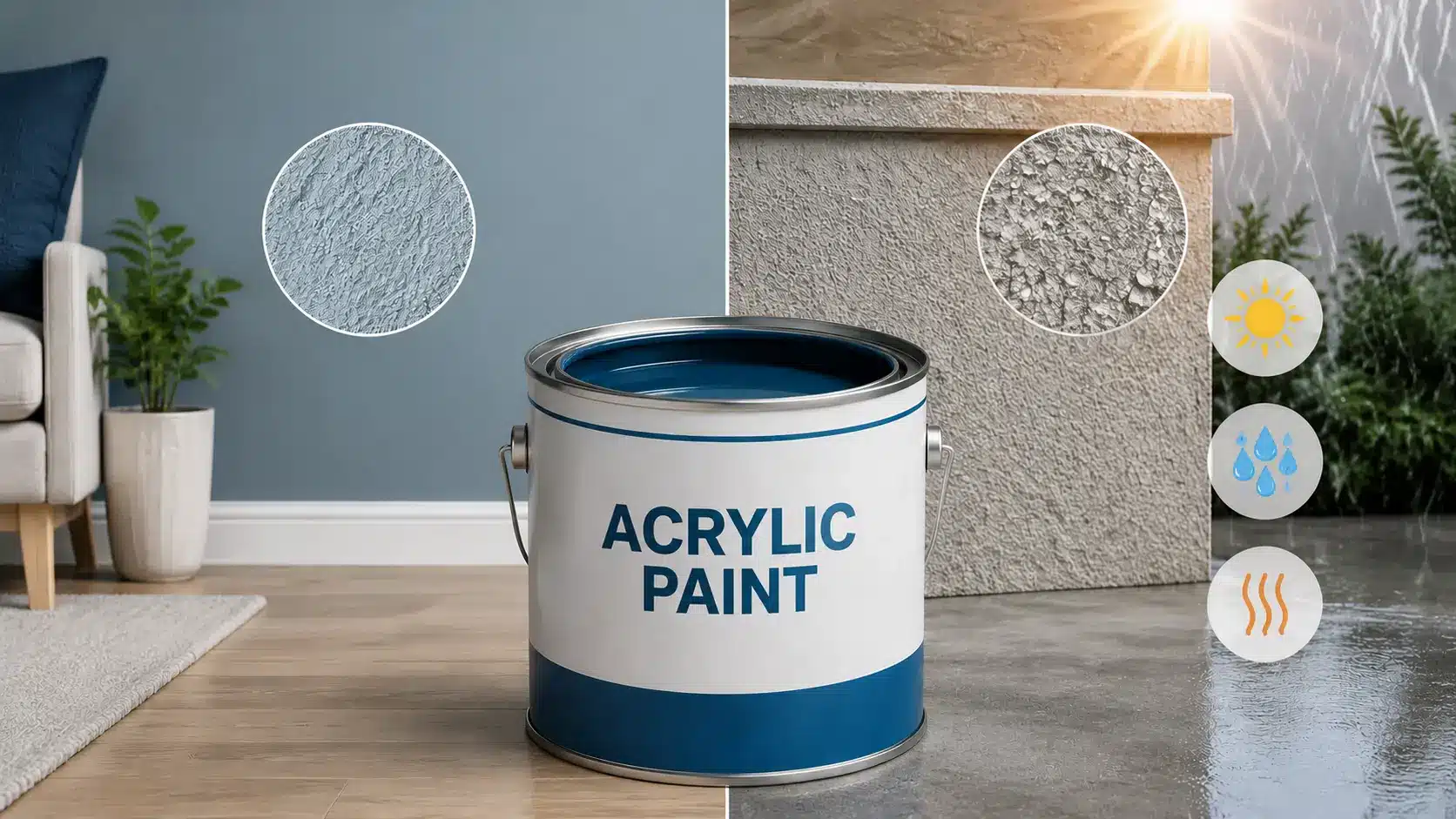
Acrylic paint is also water-based, but it uses acrylic resin as its main binder instead of vinyl or blended resins. This change in binder is what gives it higher durability, stronger adhesion, and better resistance to environmental stress.
Because of this formulation, acrylic paint performs better in demanding conditions. It can handle temperature changes, moisture, and direct sunlight without breaking down as quickly as standard latex-based paints.
It is commonly used in both interior and exterior applications where long-term performance matters more than cost or convenience.
Benefits of Acrylic Paint
Before looking at the advantages, it’s important to understand that acrylic paint is designed for durability rather than just easy application. Its strength comes from how well it bonds and resists environmental damage.
- Strong adhesion to a wide range of surfaces (wood, metal, masonry, drywall)
- High resistance to cracking, peeling, and blistering
- Performs well in extreme weather conditions (heat, cold, humidity)
- Excellent UV resistance for exterior use
- Moisture-resistant, suitable for bathrooms and outdoor areas
- Flexible film that expands and contracts with surfaces
- Longer-lasting finish compared to standard latex paints
- Suitable for both interior and exterior applications
Is Acrylic Latex Paint Water-Based?
Yes, acrylic latex paint is completely water-based. It is simply a modern, upgraded version of latex paint that uses a higher concentration of acrylic polymers in the formula.
When people ask, “Is acrylic latex paint water-based?” the short answer is yes. It cleans up with water, dries relatively fast, and does not require solvents or paint thinner. The acrylic content makes it more durable and better at sticking to surfaces than a basic latex formula.
Most wall paints sold today are actually acrylic latex. It is now the standard for both interior and exterior use because it gives you the easy application of latex with the durability of acrylic.
Acrylic vs Latex Paint: Key Differences
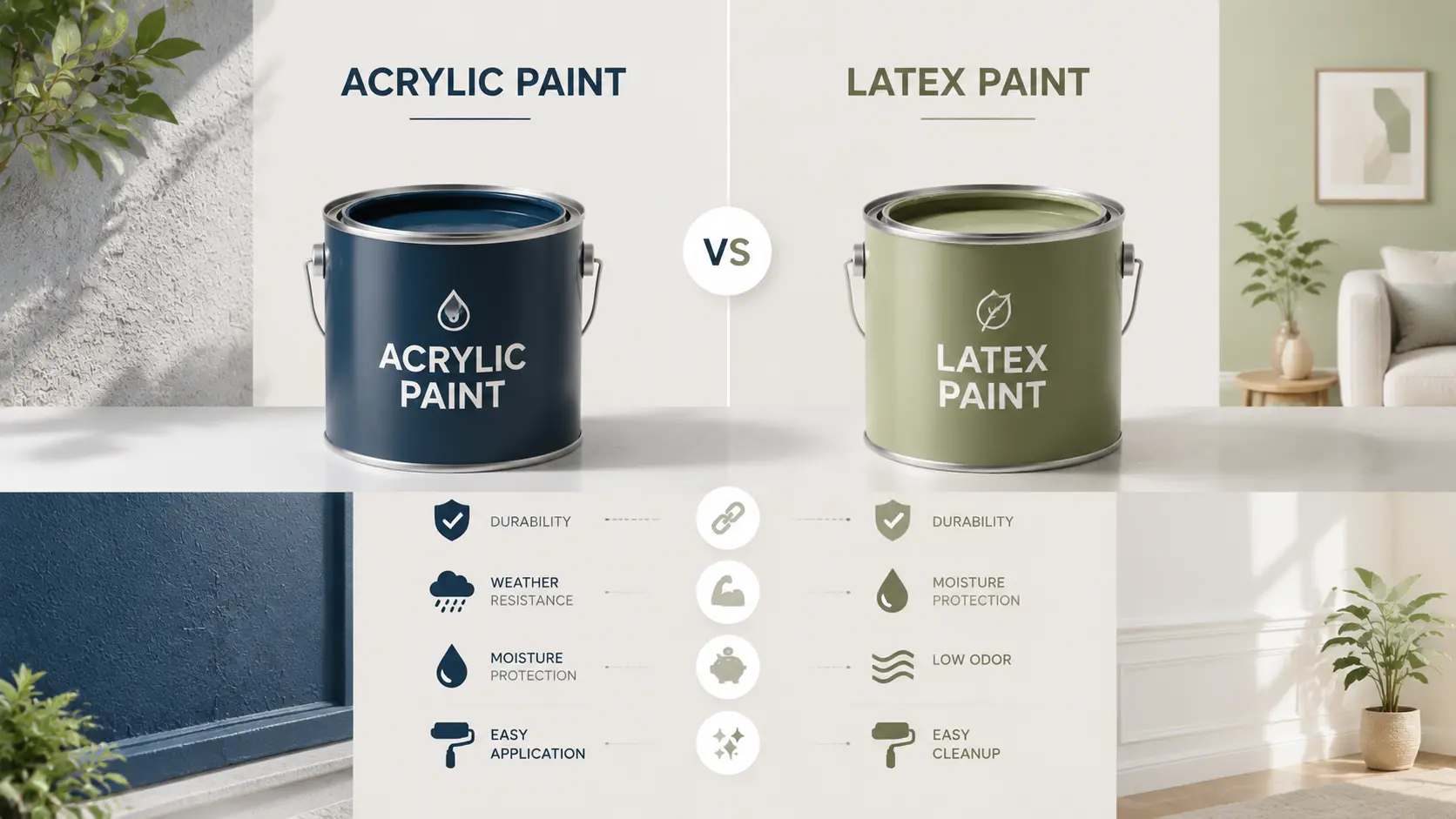
Before comparing them point by point, it’s important to understand how these two paintings differ structurally. Most performance differences come directly from their binder type and formulation strength.
Composition Difference
Acrylic paint uses pure or high-concentration acrylic resin as the binder. Latex paint uses vinyl or a blend of resins, which are more dilute than 100% acrylic formulas. This difference in binder quality directly affects durability, adhesion, and long-term performance.
Durability and Strength
Acrylic paint lasts longer, especially in harsh or high-traffic conditions. Latex paint holds up well for standard indoor use, but it will show wear faster if it is regularly exposed to moisture, scrubbing, or direct sunlight.
Flexibility and Cracking Resistance
Acrylic paint can expand and contract as temperatures change. This is a big advantage for exterior surfaces that heat up in summer and cool down in winter.
Latex paint is less flexible and can crack or peel over time when exposed to those kinds of temperature swings.
Weather Resistance
Acrylic paint handles rain, UV rays, snow, and humidity noticeably better than basic latex paint. This is why most exterior house paints rely on acrylic resin, even if the can still says “latex” somewhere on the label.
Moisture Resistance
If you are painting a bathroom, kitchen, or laundry room, acrylic paint is usually the safer pick. It resists moisture and mildew better once it fully dries, which helps in rooms that regularly deal with steam and humidity.
Application and Finish
Latex paint goes on smoothly and is easy to spread across large walls with a roller. Acrylic paint adheres more firmly to difficult surfaces such as metal, wood, and previously painted exterior walls.
Both can be brushed or rolled, but acrylic gives stronger long-term results on surfaces that need more grip.
Paint performance also depends on sheen, so understanding sheen options matters before selecting a paint.
Cost Difference
Cost is where most people initially lean toward latex, but price alone doesn’t tell the full story.
| Type of Paint | Price Range (per gallon) | Notes |
|---|---|---|
| Latex Paint | $15 – $60 | More affordable, ideal for large interior areas |
| Acrylic Paint | $20 – $80 | Higher cost, but longer-lasting performance |
Latex is cheaper upfront, while acrylic often balances out the cost through longer repaint cycles.
Both paints serve different priorities, and choosing the wrong one usually leads to faster wear or unnecessary cost. The right choice depends on whether you value upfront savings or long-term durability.
Acrylic Paint vs. Latex Paint: Performance Differences That Matter on the Job
Choosing between acrylic and latex paint isn’t about price alone. The real decision depends on how tough the surface conditions are and what kind of finish life expectancy you need.
Acrylic paint forms a stronger, more flexible film because of its higher resin content, making it better for exterior use, moisture exposure, and temperature changes. Latex paint prioritizes ease of use; it spreads easily, dries quickly, and works well on standard interior walls and ceilings.
Bottom line: acrylic is built for durability, while latex is built for speed and convenience.
Dry Time, VOCs, and Practical Use
Latex paint typically dries within 1–2 hours, which allows faster recoating. Acrylic usually needs around 4–6 hours between coats due to its thicker formulation.
Latex also tends to have lower VOC levels, making it more suitable for enclosed indoor spaces. Acrylic can vary more, so ventilation is especially important during application.
Acrylic vs Latex Paint: Where to Use

Before picking a paint type, it helps to match it with the environment it will actually face. The right choice depends on moisture levels, surface wear, and exposure to weather.
- Interior walls and ceilings: standard latex paint works well here. It is affordable, easy to apply, and holds up fine in rooms that are not exposed to high moisture or heavy wear.
- Bedrooms and living rooms: latex or acrylic latex both work. If you want something more washable and long-lasting, go with acrylic latex.
- Kitchens and bathrooms: acrylic latex is the better choice. These rooms deal with steam, water splashes, and frequent cleaning, and acrylic latex handles that much better than basic latex.
- Exterior walls and siding: use acrylic paint. It handles sun, rain, and temperature changes without breaking down. Many homeowners compare it with top-performing exterior coating choices when planning full exterior projects.
- Trim, doors, and high-touch areas: acrylic paint holds up better here because these surfaces get bumped, scraped, and cleaned more often.
The key is matching durability to exposure, not just picking the cheapest or easiest option. Once you align the paint with the surface conditions, failures like peeling and early wear drop significantly.
Acrylic Latex Paint vs Regular Latex PaintAcrylic latex paint is simply a better version of regular latex paint. It has a higher concentration of acrylic resin in the formula, which improves how well it sticks to surfaces, how long it lasts, and how well it resists moisture and cracking. Regular latex paint uses more diluted or blended resins. It works fine for basic interior walls, but it does not perform as well in demanding conditions. Most paints you see on store shelves today are already acrylic latex. The industry moved in this direction because acrylic latex is more versatile and holds up better, yet is less expensive than 100% pure acrylic formulas. |
Which Paint Should You Choose

Choosing the right paint comes down to balancing cost, durability, and the surface’s location. Each type has a clear role depending on the job.
- Budget interior projects: go with latex paint. It is cost-effective and performs well for standard walls that don’t face heavy wear.
- For exterior surfaces that need long-term protection: Go with acrylic paint. It handles sunlight, moisture, and temperature changes much better than basic latex. This is also where people start questioning the use of outdoor paint indoors for added durability.
- For general interior use where durability matters: choose acrylic latex. It offers a stronger, more washable finish while still being suitable for most indoor spaces.
- Kitchens, bathrooms, and moisture-prone areas: acrylic latex is the safer option. It resists humidity better and can handle frequent cleaning without breaking down.
Common Myths About Acrylic and Latex Paint
Latex paint does not contain natural rubber latex. The name is leftover from older formulas and stuck around even after the industry switched to synthetic resins.
Acrylic and latex are not two completely different systems. They are both water-based paints in the same category. The difference is in the type and concentration of resin used.
Most wall paints sold today are acrylic latex. If your can says “latex paint” at the hardware store, it very likely already contains acrylic.
Acrylic paint is not oil-based. It is water-based and cleans up with soap and water just like standard latex.
Conclusion
Acrylic and latex paint are more similar than most people think, but the differences matter when you are picking paint for a specific job.
Latex works great for affordable interior walls. Acrylic handles tough outdoor conditions and moisture-heavy rooms.
Acrylic latex gives you a solid middle ground for everyday use. Once you know what each one does, choosing the right paint becomes simple.
Stick to the surface, the conditions, and your budget, and you will get a finish that looks good and holds up well for years.
Frequently Asked Questions
Is Acrylic Paint Better than Latex Paint?
Acrylic paint is more durable and holds up better in tough conditions. Latex paint is cheaper and easier to use for basic interior walls. For most outdoor or high-moisture projects, acrylic is the stronger choice.
Can You Mix Acrylic and Latex Paint?
Yes, they can usually be mixed because both are water-based. However, the final performance will be limited by the lower-quality paint in the mix.
Do You Need Primer Before Using Acrylic or Latex Paint?
Not always, but primer is recommended on bare, stained, or glossy surfaces. It helps improve adhesion and ensures a more even finish for both paint types.