The wrong paint sprayer can ruin a perfectly good weekend project.
I’ve seen it happen too often: a sprayer that looked promising ends up leaving uneven coats, clogs, or overspray everywhere but where it belongs.
Add in the cleanup time and the wasted paint, and that “quick refresh” turns into a full-day headache.
After years of working with color across homes and commercial spaces, I know the difference the right tool makes.
So here are some of the best paint sprayers, rounded up, from the best airless paint sprayer for large walls to the best HVLP paint sprayer for furniture and cabinets.
Types of Paint Sprayers
Paint sprayers are not one-size-fits-all. Some are made for detail work, while others cover large surfaces fast.
I have outlined the key differences between HVLP, LVLP, airless, pneumatic, and electrostatic sprayers to help you select the option best suited to your project.
| Paint Sprayer Type | What It Means | Pros | Cons |
|---|---|---|---|
| HVLP (High Volume, Low Pressure) | Delivers paint as a soft mist using high air volume at low pressure | Smooth finish; less overspray; great for detail work; beginner-friendly | Slow on large surfaces; may need paint thinned; not ideal for full rooms |
| LVLP (Low Volume, Low Pressure) | Works like HVLP but uses less air and lower pressure | Least overspray of any sprayer type; works with a small compressor; good paint efficiency | Steep learning curve; small fan pattern; not suited for latex or thick paints |
| Airless | Forces paint through a tiny tip at very high pressure, no air involved | Covers large areas fast; handles thick paint; no thinning needed | More overspray; uses up to 33% more paint; higher starting cost |
| Pneumatic | Mixes paint with compressed air from a separate compressor | Easy to pick up; consistent spray pattern; precise finish | Requires a separate compressor; less portable; higher overall setup cost |
| Electrostatic | Charges paint electrically, so it is pulled directly onto the surface | Wraps around edges and corners; very little waste; durable finish | High setup cost; surface must be conductive; not practical for home DIY |
The right sprayer depends on your project size, paint type, and skill level, so weigh the pros and cons before you buy. Once you know what each type offers, you can choose with confidence instead of guessing.
How We Selected the Best Paint Sprayers
- Where it is used: Tested on common tasks like fences, cabinets, walls, and furniture, including rough surfaces that reveal true performance.
- Spray finish quality: Checked for even coverage, free of streaks, drips, or texture issues.
- Ease of cleaning: Judged by how fast each sprayer could be rinsed and reassembled.
- Power: Assessed handling of thick, unthinned paint versus needing dilution.
- Durability: Evaluated build quality under repeated use.
- Price range: Weighed cost against actual performance.
- Sprayer type match: Considered how HVLP suits detail work while airless handles large surfaces faster.
Different Job, Different Sprayer
The best paint sprayer depends entirely on who is using it and what they are painting. Here is a breakdown by user type.
1. Graco Magnum X5 Electric TrueAirless Paint Sprayer
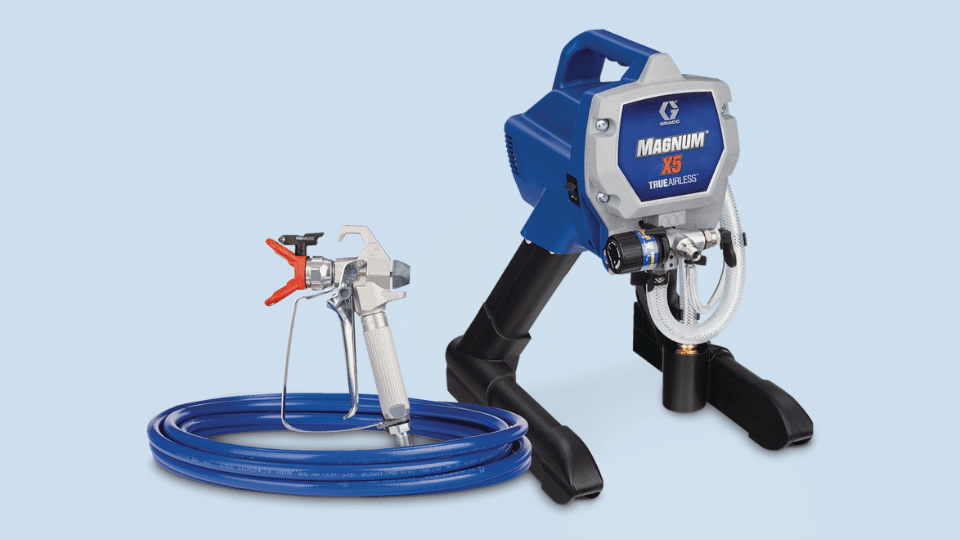
It is an industry-standard airless paint sprayer that pumps paint directly from a 1-gallon or 5-gallon bucket and can easily handle unthinned latex paint thanks to its hardened stainless-steel piston pump.
Pros:
- No paint thinning required for standard latex paints.
- Fully adjustable pressure control to match your project.
- PowerFlush adapter connects to a garden hose for fast, seamless cleanup.
Cons:
- Produces a notable amount of overspray, requiring thorough masking.
- Sits on a stationary stand rather than a wheeled cart, making it heavier to transport manually.
Best for:Homeowners and DIYers
Why Do I Recommend This? It’s a reliable, no-fuss pick for large projects where you don’t want to bother with Thinning Paint.
Price Range: $369 – $399
Where to Buy: Available at The Home Depot.
2. Wagner Control Spray Max HVLP Sprayer
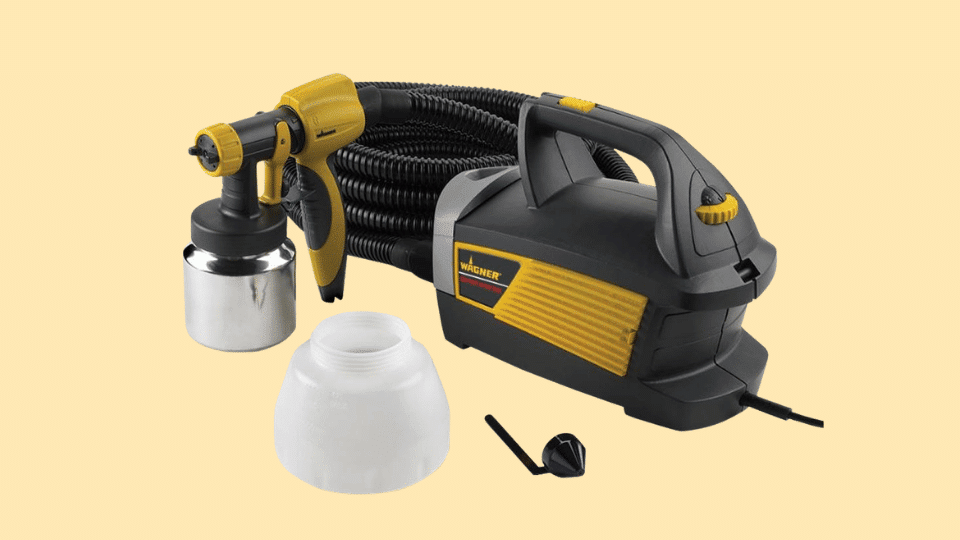
A High-Volume Low-Pressure (HVLP) system featuring a stationary two-stage turbine that rests on the ground. Keeping the turbine separate from the gun minimizes hand fatigue while offering exceptional precision and adjustability for a smooth, fine finish.
Pros:
- Extremely minimal overspray compared to traditional airless sprayers.
- Variable air pressure control reduces runs when working with thin stains or urethanes.
- Comes with multiple cup options (metal and plastic) for project flexibility.
Cons:
- Thicker coatings, such as heavy latex paints, must be thinned before use.
- Slower application speed makes it impractical for large exterior house walls.
Best For: DIY enthusiasts looking for a flawless, detailed finish on woodwork, trim, cabinets, and furniture.
Why Do I Recommend This? Ideal when finish quality matters more than speed, especially for detailed work on trim, cabinets, or furniture.
Price Range: $100 – $130
Where to Buy: Available at The Home Depot.
3. Fuji Semi-Pro 2 HVLP Spray System
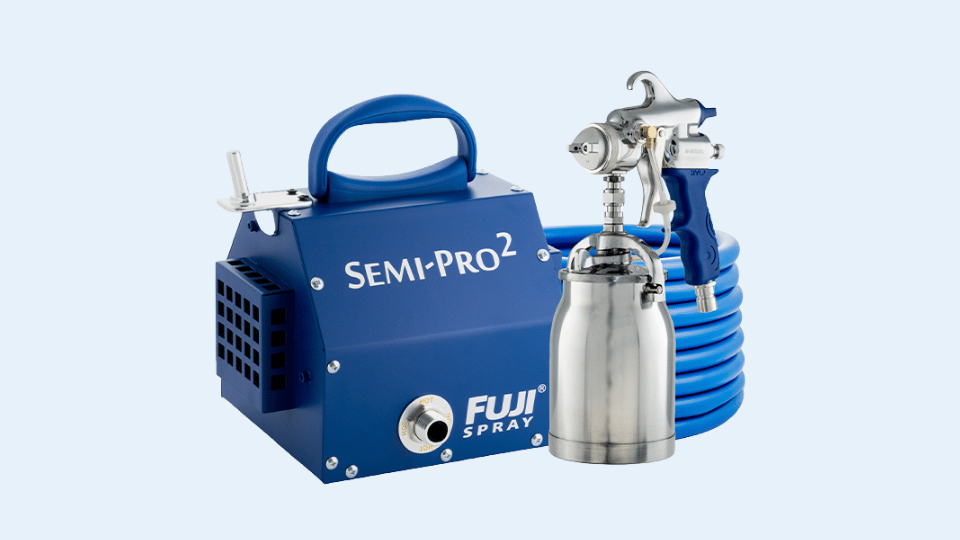
A premium, professional-grade HVLP system built for serious woodworkers and contractors. It features a powerful 2-stage motor housed in a heavy-duty metal case and pairs with a non-bleed professional spray gun for factory-like atomization.
Pros:
- Industrial durability with a professional, all-metal spray gun.
- Adjustable pattern fan control allows you to shift from small, detailed circular patterns to wide fans.
- Provides an incredibly fine, mirror-smooth finish.
Cons:
- Significantly higher upfront investment compared to entry-level DIY models.
- Requires a slight learning curve to perfectly dial in fluid-to-air ratios.
Best For: Serious woodworkers, automotive hobbyists, and professional cabinet refinishers demanding a workshop-quality finish.
Why Do I Recommend This? Best for achieving a flawless, professional finish, the higher cost is worth it for serious woodworkers and contractors.
Price Range: $430 – $632
Where to Buy: available on Best Buy or Via Acme Tools.
4. Home Right Super Finish Max HVLP Paint Sprayer
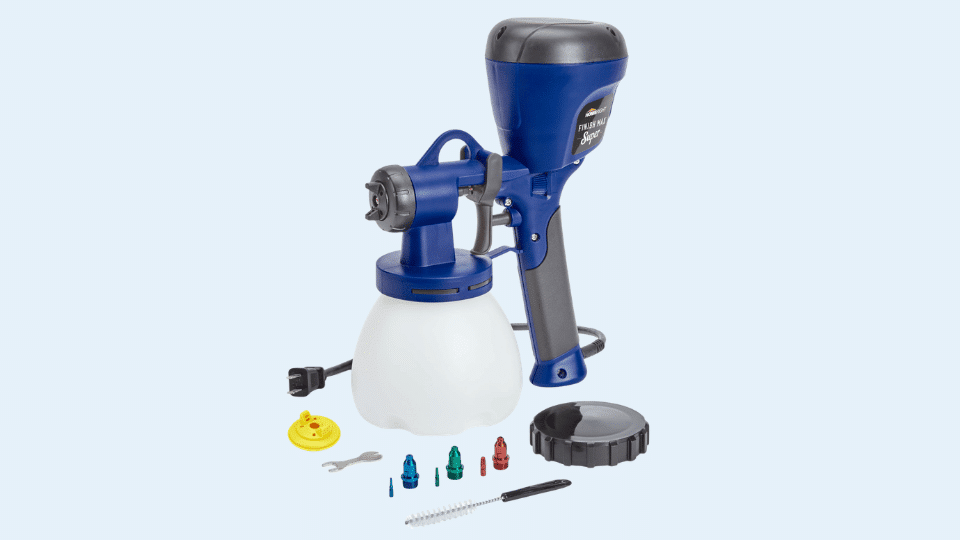
An incredibly popular, self-contained handheld electric HVLP sprayer. It features a built-in 450-watt turbine, eliminating the need for bulky external air hoses or base stations, making it highly portable and straightforward to operate.
Pros:
- Highly budget-friendly and accessible for beginners.
- Includes multiple precision brass spray tips for handling materials of varying thicknesses.
- Simple assembly and direct, hassle-free cleanup.
Cons:
- The attached paint cup holds less than a quart, which means frequent refills for larger jobs.
- Can cause hand fatigue during extended periods because you are holding the weight of the motor and the paint.
Best For: Casual crafters and budget-conscious weekend warriors tackling small furniture flips or craft projects.
Why Do I Recommend This? An affordable, beginner-friendly option for small furniture flips or occasional craft projects.
Price Range: $57 – $80
Where to Buy: Available on Home Right Official Website.
5. Graco Magnum X7 Cart Airless Paint Sprayer
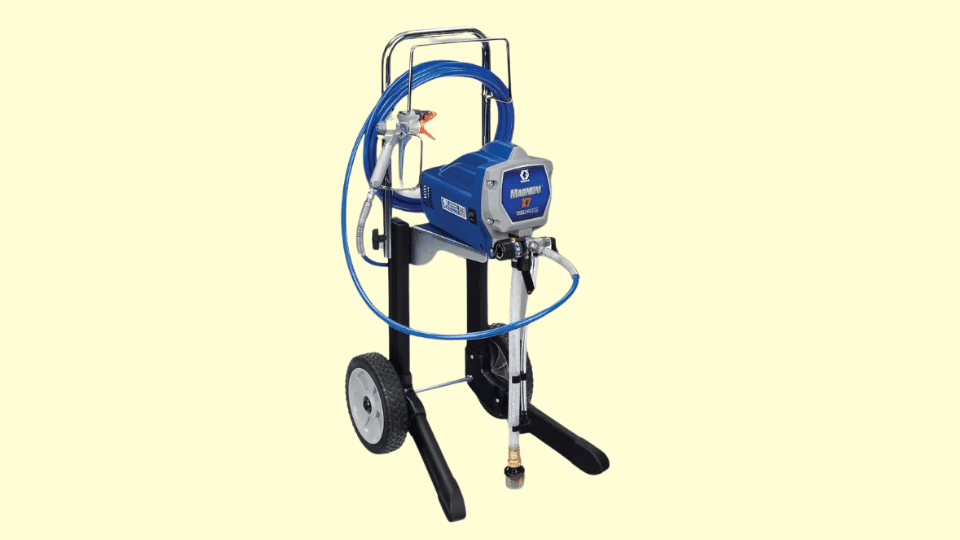
The upgraded sibling to the X5, the Magnum X7 is built on a rugged wheeled cart. It sports a more powerful motor that supports longer hoses and sprays heavier materials faster, making it a favorite for large-scale property upkeep.
Pros:
- Wheeled cart design makes moving across lawns and rough job sites effortless.
- Can support up to 100 feet of hose, allowing you to paint multi-story houses without moving the unit.
- Draws unthinned paint smoothly straight from 1- or 5-gallon pails.
Cons:
- Bulky footprint that requires more storage space in your garage or vehicle.
- High pressure translates to high overspray, necessitating extensive surface masking.
Best For: Prosumers, property managers, handymen, and frequent DIYers who routinely paint entire houses or large exterior structures.
Why Do I Recommend This? Built for frequent, large-scale painting jobs, the wheeled cart and long-hose reach make repeated use effortless.
Price Range: $479 – $529
Where to Buy: Available on Amazon.
6. Wagner FLEXiO 5000 Stationary Paint Sprayer
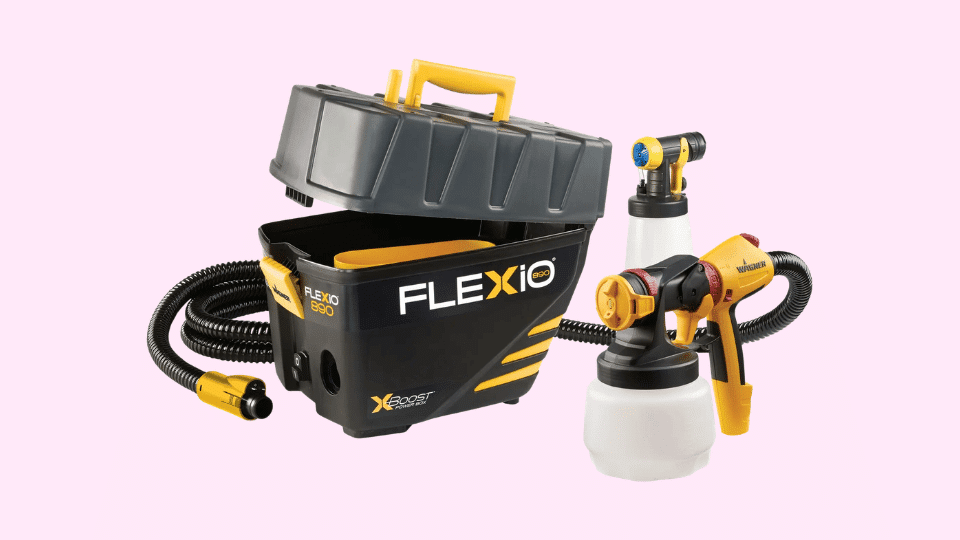
A versatile multi-project system that sprays most unthinned latex paints under proper conditions.
It is packaged with two specialized nozzles: the I spray for broad coverage and the detail finish nozzle for delicate tasks.
Pros:
- The base unit neatly houses all hoses and nozzles when your project is finished.
- The innovative I Spray Nozzle can efficiently spray unthinned interior latex walls.
- Lightweight handle design dramatically reduces wrist strain.
Cons:
- The hire Hose can feel stiff and slightly cumbersome when navigating tight corners.
- Requires meticulous cleaning of the internal nozzle components to maintain optimal airflow.
Best For: Homeowners seeking a Versatile “do-It-All” Machine that Handles Both Interior Walls and Fine Cabinet or Trim Refinishing.
Why Do I Recommend This? A Versatile “do-it-all” Sprayer that Handles Both Walls and Detail Work without Needing Two Separate Tools.
Price Range: $479 – $529
Where to Buy: available on the Wagner Spray Tech Official Website.
7. Titan Tool Control Max 1700 Pro Paint Sprayer
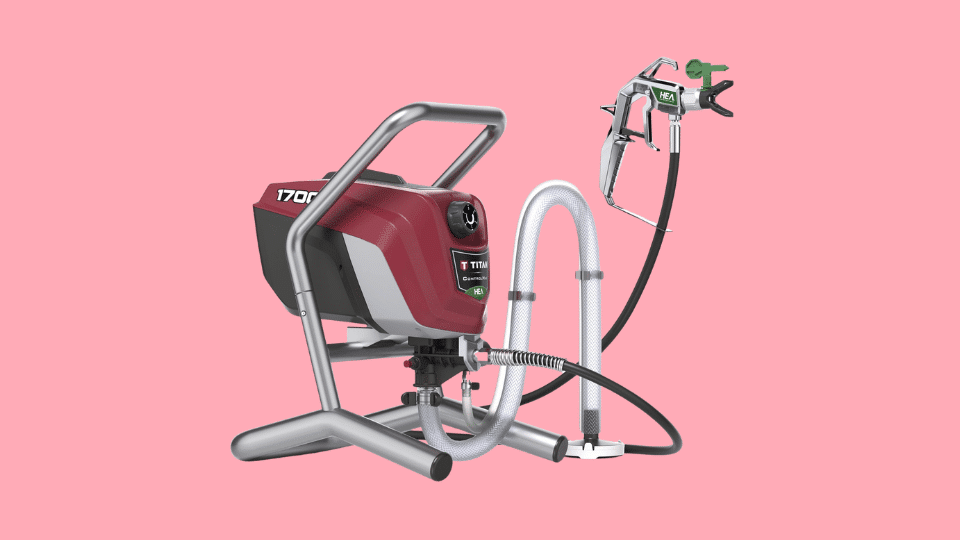
This unit utilizes High Efficiency Airless (HEA) technology. It operates at a lower pressure than standard airless rigs while maintaining high-speed output, resulting in softer edges, maximum control, and a dramatic reduction in paint waste.
Pros:
- Reduces messy overspray by up to 55% compared to conventional airless units.
- The softer spray pattern makes it incredibly forgiving for beginners looking to avoid lap marks.
- Features a highly durable fluid section with an easy-to-replace pump cartridge to maximize tool life.
Cons:
- Slightly slower application speed compared to full-pressure commercial airless setups.
Sits at a higher price tier than typical entry-level residential models.
Best For: Dedicated DIYers, handymen, and light contractors who want the speed of an airless sprayer while minimizing overspray mess and paint waste.
Why Do I Recommend This? A great upgrade for anyone wanting less overspray and a more forgiving pattern than a standard airless sprayer.
Price Range: $489 – $529
Where to Buy: available at The Home Depot.
Quick Note: Prices are Subject to Change. Users are Advised to Check the Official Website for the Most Up-to-Date Information.
The best paint sprayer depends on project size, skill level, and how often it will be used. The right choice comes down to balancing speed, finish quality, and ease of use for consistent, professional results.
Price Disclaimer: Prices listed in this guide were accurate at the time of writing but are subject to change due to retailer sales, seasonal promotions, or manufacturer updates. Please check the official retailer or brand website linked with each sprayer for current pricing before making a purchase. |
Paint Sprayer vs. Roller vs. Brush: What’s Better?
There is no single winner here. Each tool works best in a specific situation, and picking the wrong one costs you time, paint, or both.
| Base | Sprayer | Roller | Brush |
|---|---|---|---|
| Speed | Fastest | Medium | Slowest |
| Finish Quality | Smoothest, No Marks | Light Texture Possible | Visible Strokes if Untidy |
| Best for | Exteriors, Cabinets, Fences | Walls, Ceilings | Trim, Edges, Detail Work |
| Prep Time | High: Masking Required | Low | Very Low |
| Cleanup Time | 20 – 30 Minutes | A Few Minutes | Base |
Most painting jobs are faster when you match the tool to the surface instead of picking just one. A sprayer quickly and evenly covers large, open areas like fences or ceilings.
Rollers handle flat walls well, while brushes let you get clean, controlled lines around corners, trim, and edges.
And ultimately, I always emphasize that using the highest-quality paint is just as essential to achieving a flawless, lasting finish.
Key Features to Compare Before Buying a Paint Sprayer
Not all sprayers perform the same. These key features help you choose the right one for your project.
PSI and Power: PSI measures how forcefully paint is sprayed. Airless models typically range from 2,000–3,000+ PSI for thicker paints, while HVLP systems use lower wattage (200–700 W) for finer control. For most home projects, 1,500–2,000 PSI is sufficient.
Spray Tip Size: The tip controls spray width and paint flow. Small tips suit stains and fine finishes, while larger tips handle thicker paints. For cabinets or detailed work, narrower tips offer better control and cleaner edges.
Paint Thinning Needs: Some sprayers require thinning, especially HVLP and handheld units. Airless sprayers usually handle unthinned paint directly from the can, saving time and setup effort.
Cleaning and Maintenance: Cleanup can be time-consuming. Look for quick-flush systems, easy-disassemble parts, or liner-based designs to reduce maintenance time.
Corded vs. Cordless: Corded sprayers deliver steady power for large jobs, while cordless models offer greater mobility for fences, furniture, and outdoor use. For extended projects, corded options are generally more efficient.
Which paint works with your sprayer?
Not every paint works well with every sprayer. Choosing the right combination helps prevent clogging, improves coverage, and delivers a smoother finish.
- Latex Paint: Best for interior walls and ceilings. Since latex is a water based paint, it thins and cleans up easily, which is why airless sprayers handle it well with no thinning needed, ideal for fast, large area coverage.
- Oil-Based Paint: Works with HVLP or airless sprayers. Thicker consistency means more thorough cleanup afterward.
- Stains and Sealers: HVLP sprayers offer the precise, light application these finishes need.
- Lacquer and Specialty Finishes: HVLP or LVLP sprayers give the fine control needed for a smooth, professional finish.
- Chalk Paint: Pairs well with HVLP sprayers, though it may need slight thinning for the right consistency and even spray.
Maintaining Your Spray Paints
Good maintenance doesn’t have to be complicated. A few simple habits after each use keep your sprayer working like new for years to come.
- Cleaning After Every Use: Flush the sprayer with water or thinner right after use until it runs clear, then disassemble and wipe down every part, including the nozzle, filter, and hopper.
- Storing Nozzles and Filters Properly: Dry all parts fully before storing them in a clean, labeled container, and replace nozzles and filters once they show signs of wear.
- Preventing Clogging: Strain your paint and match the nozzle size to the paint’s thickness before spraying; then run solvent through the system between colors and clean the filters regularly.
A little routine care after each project keeps your paint sprayer running smoothly for years. Clean it, store it right, and watch for early signs of buildup, and it’ll pay you back with consistent, even coats every time.
Conclusion
After years of working with color and finish, I’ve learned the sprayer matters almost as much as the paint. The wrong pairing can turn a smooth cabinet refinish into a splotchy mess.
Whether you are refinishing cabinets, painting a fence, or tackling an exterior wall, matching the sprayer to the paint saves time, reduces waste, and improves results.
Start small if you are new. Test your setup on a scrap surface, such as a board or an old stool, before moving on to your main project.
The right paint sprayer can turn a difficult project into a smooth, satisfying experience.
Frequently Asked Questions
How Many Coats of Paint Does a Sprayer Need for Full Coverage?
One coat is usually enough on a well-primed surface with quality paint. Bare or porous surfaces typically need two coats for even coverage.
Do You Need to Thin Paint Before Using a Paint Sprayer, and By How Much?
It depends on the type. Airless sprayers usually handle unthinned latex paint, while HVLP and handheld models typically require adding 10-20% water.
Can a Paint Sprayer Cause Serious Injury? What are the Real Safety Risks?
Yes, the top risk is high-pressure injection, which can pierce skin and cause serious injury.
What Temperature and Humidity Conditions are Safe for Using a Paint Sprayer?
Spray between 55 and 75 degrees Fahrenheit with humidity below 60% to avoid bubbles, peeling, or poor adhesion.
Can You Use a Paint Sprayer Outdoors in Windy Conditions?
Avoid spraying when wind exceeds 10 mph, as it scatters overspray and ruins even coverage.
Do You Need to Prime Before Using a Paint Sprayer, or Can You Skip It?
Priming is essential on bare, porous, or glossy surfaces, as skipping it can lead to poor adhesion and early peeling. For the best paint sprayer results, even previously painted surfaces benefit from a primer coat.