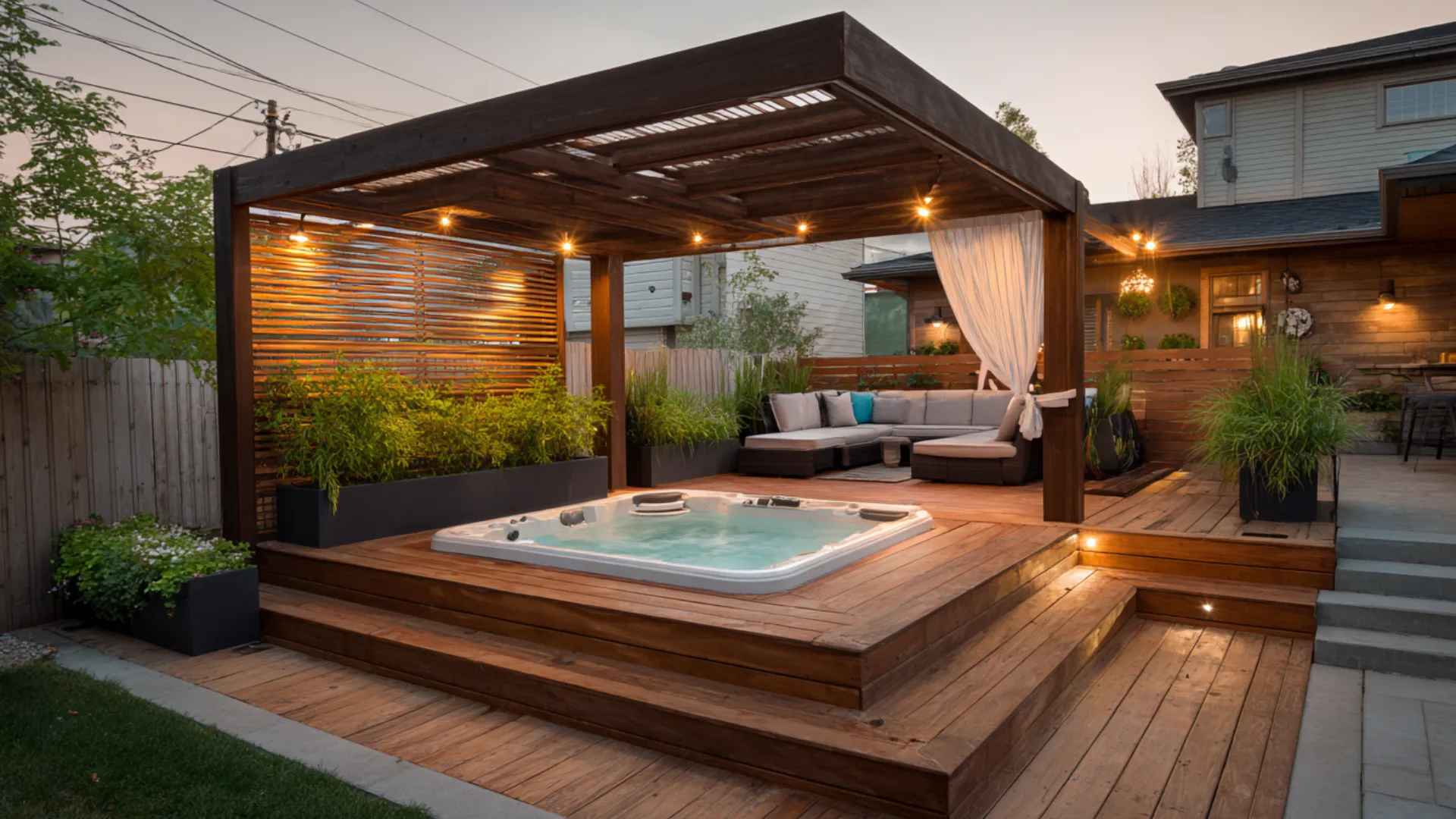
Well-designed hot tub decks can turn an ordinary backyard into a calm, spa-like escape.
The right layout makes getting in and out effortless, creates space for towels and seating, and adds privacy so you can truly unwind.
These hot tub deck ideas focus on comfort, style, and smart details that hold up in wet, sun-filled conditions.
You’ll also learn what to consider before building, how lighting and shade can change the mood, and which decking materials best handle moisture, so the finished space looks beautiful, stays safe, and feels built for everyday relaxation.
With a few thoughtful upgrades, your deck can feel more like a private retreat than just another outdoor area.
Before You Build a Hot Tub Deck
Planning ahead helps your hot tub deck stay safe, comfortable, and long-lasting. Start with placement and flow by choosing a spot close to the house with clear, slip-safe paths for getting in and out.
Leave room nearby for towels, robes, and storage, and think about sight lines from windows and seating areas.
Next, plan privacy using screens, lattice, fencing, or landscaping like tall grasses, bamboo, or evergreen shrubs.
Add cover and shade with a pergola, gazebo, pavilion, or retractable awning to improve comfort in various weather conditions. If you’re using an existing deck, confirm it can handle the weight and reinforce it if needed.
Layout and Placement Options
These hot tub deck ideas show different ways to fit a hot tub into your outdoor space. Each layout has a different look, cost range, and level of privacy.
1. Sunken/Recessed Deck
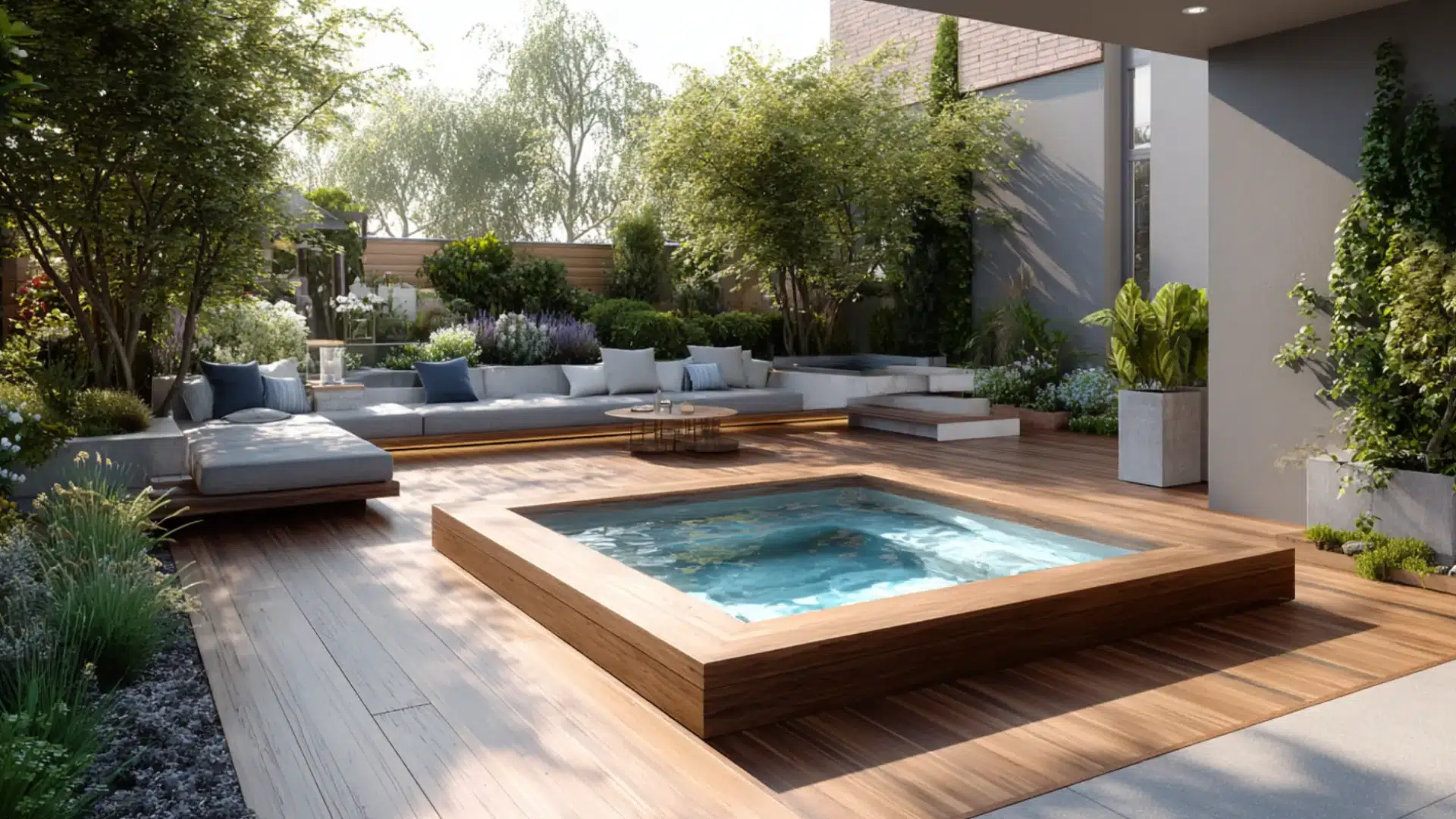
With a sunken hot tub deck, the tub sits level with the deck floor. You step right in without climbing over the side. It looks clean and built-in.
This works well for decks that are already elevated. The space around the tub stays open and easy to walk through. No extra steps or ledges to deal with.
2. Multi-Level Deck
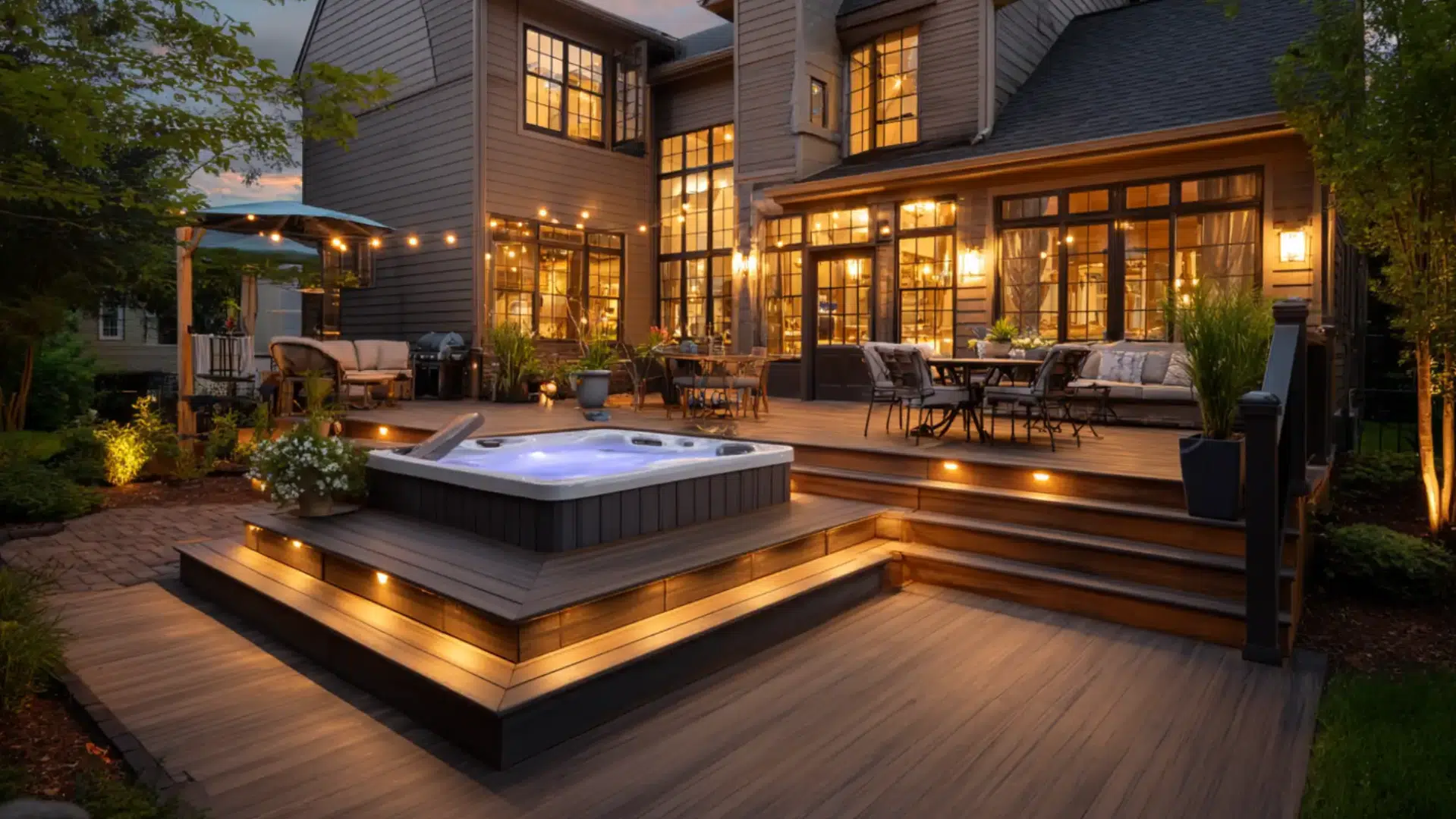
A multi-level deck gives each area its own space. The hot tub usually goes on the upper or lower tier, away from the dining table or grill.
This keeps things organized. Each level can have its own railing, lighting, and seating to make the setup feel complete and intentional.
3. Ground-Level Wraparound Deck
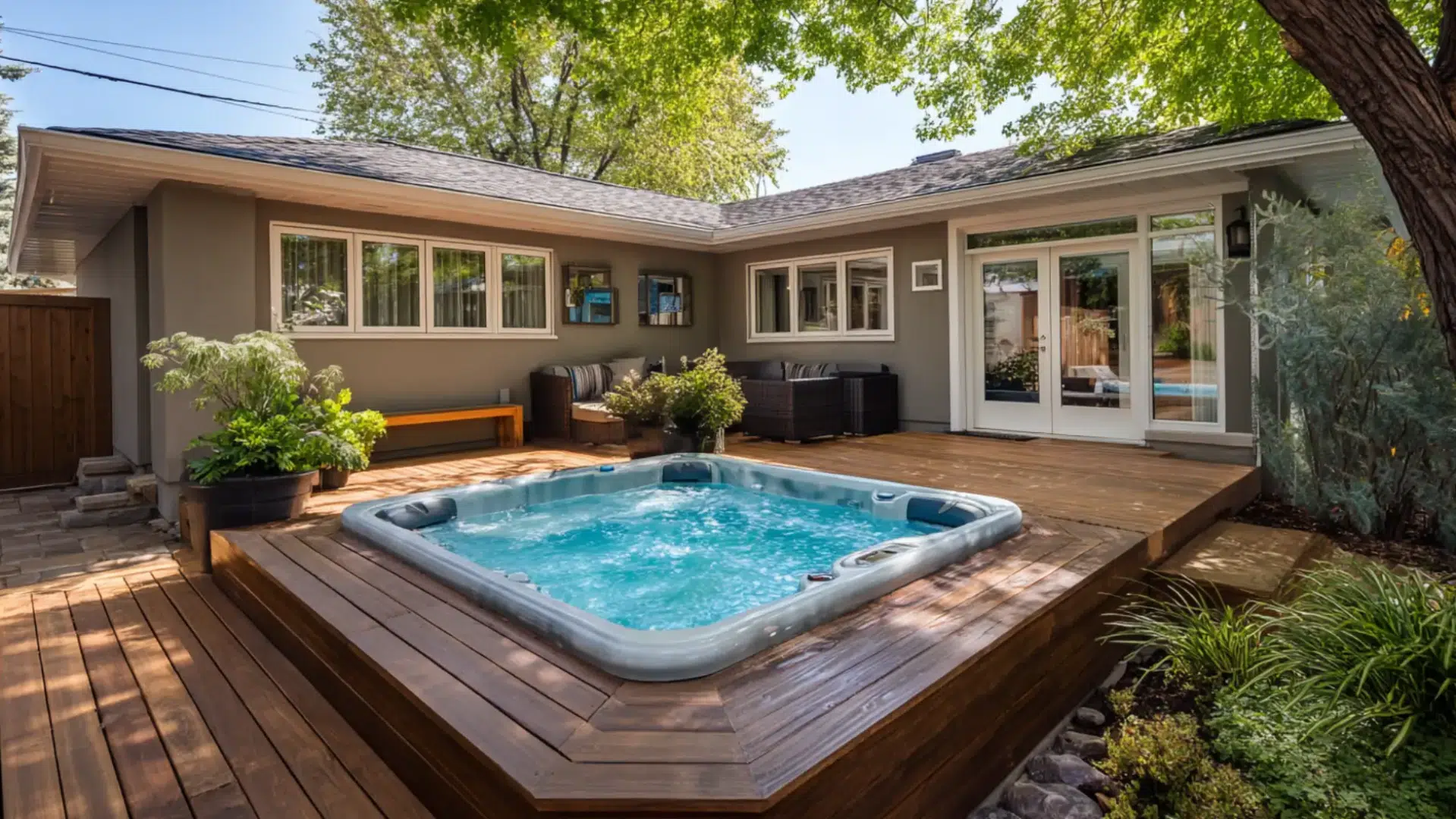
A ground-level wraparound deck is one of the most practical hot tub deck ideas. The deck circles the tub on all sides, making it easy to get in and out from any angle.
It sits low to the ground, so the build cost is usually lower. It also works well for families with kids or older adults.
4. Elevated/Raised Deck
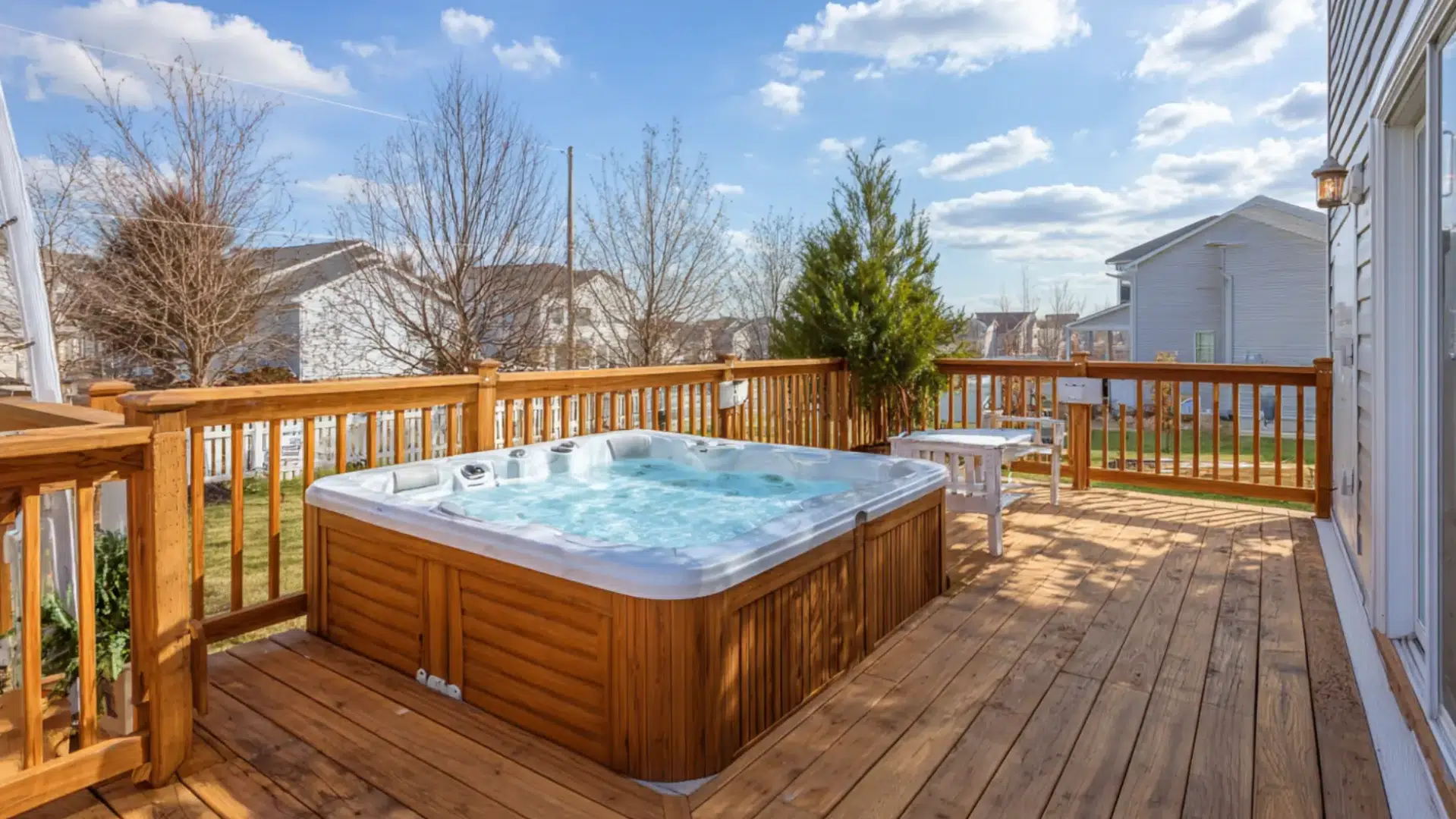
Raising your hot tub deck gives you a better view of the yard or open sky. The height also adds natural privacy from neighbors at ground level.
You will need strong structural support underneath. The result is a setup that feels distinctly set apart from the rest of the yard.
5. Corner Deck
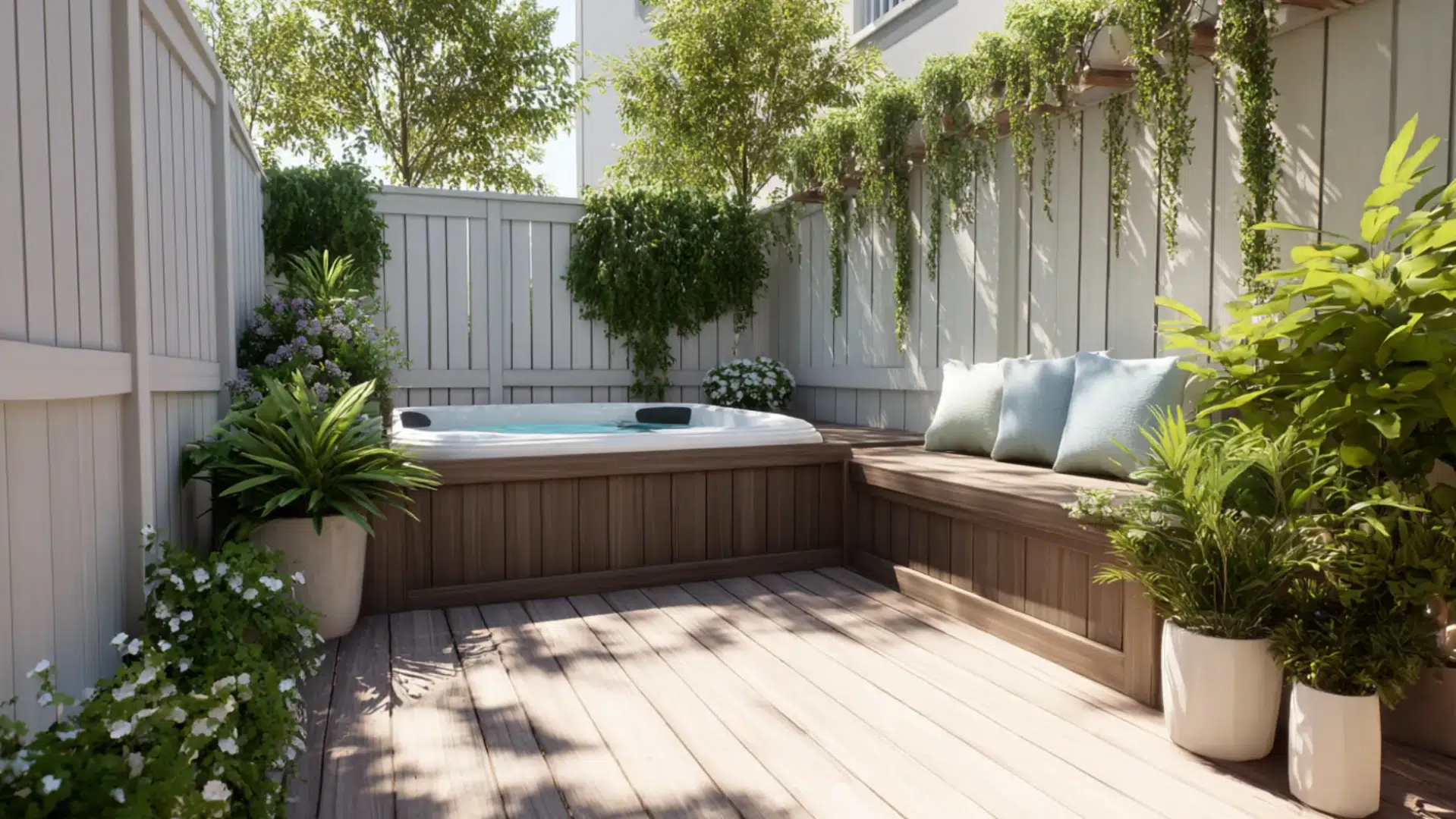
Tucking the hot tub into a yard corner is a smart use of space. Two existing fences or walls act as built-in privacy screens. A small L-shaped deck fills the corner nicely.
You can add a bench along one side for extra seating. This layout works well in smaller backyards where space is limited.
6. Below-Deck Hot Tub Placement
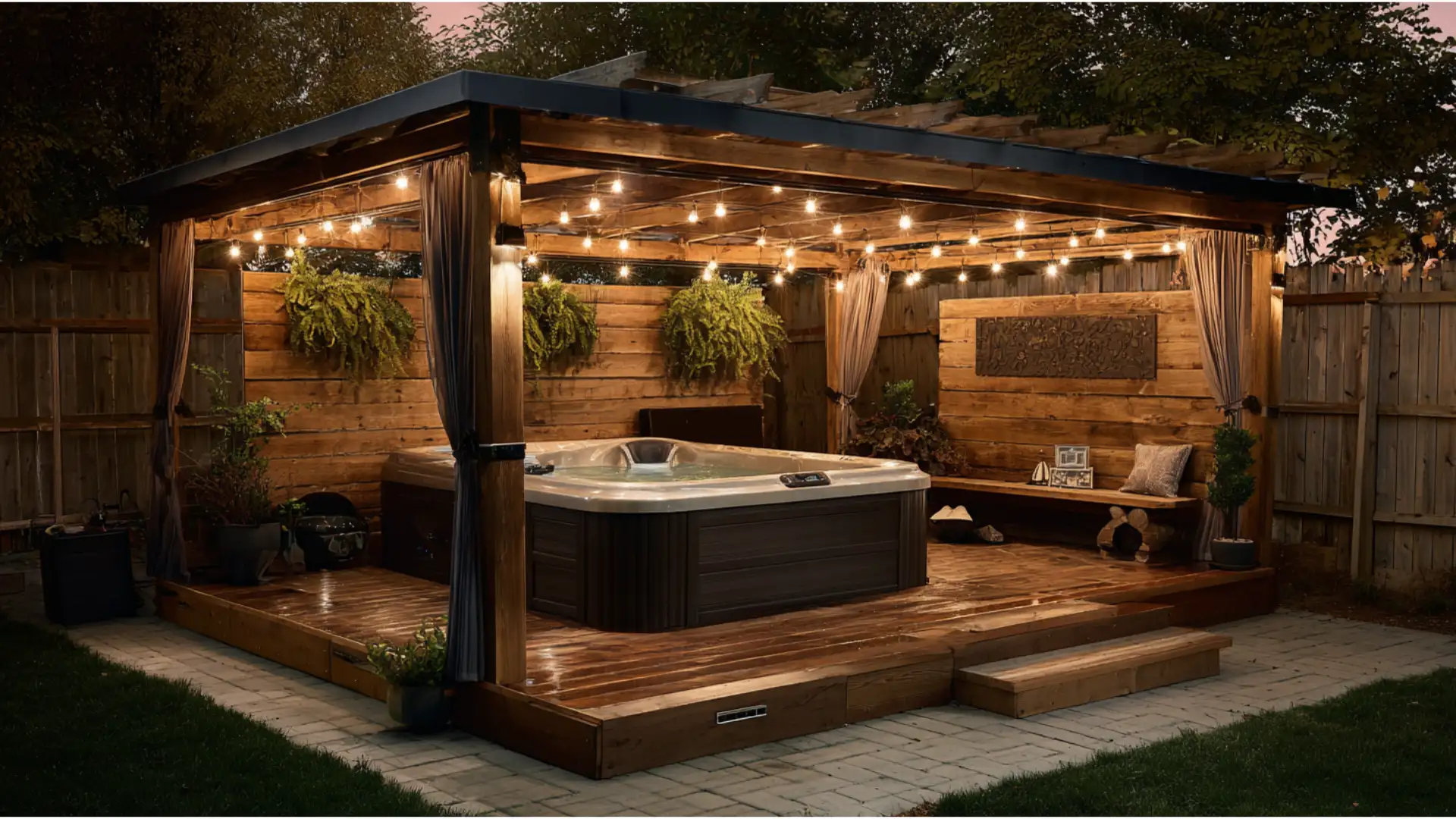
If you already have a raised deck, the space underneath can hold a hot tub. The upper deck acts as a roof, keeping rain and direct sun off while you soak.
You get a tucked-in, sheltered feel without building a separate structure. Add string lights or wall panels to make the area feel more finished.
7. Wraparound Deck on a Sloped Lot
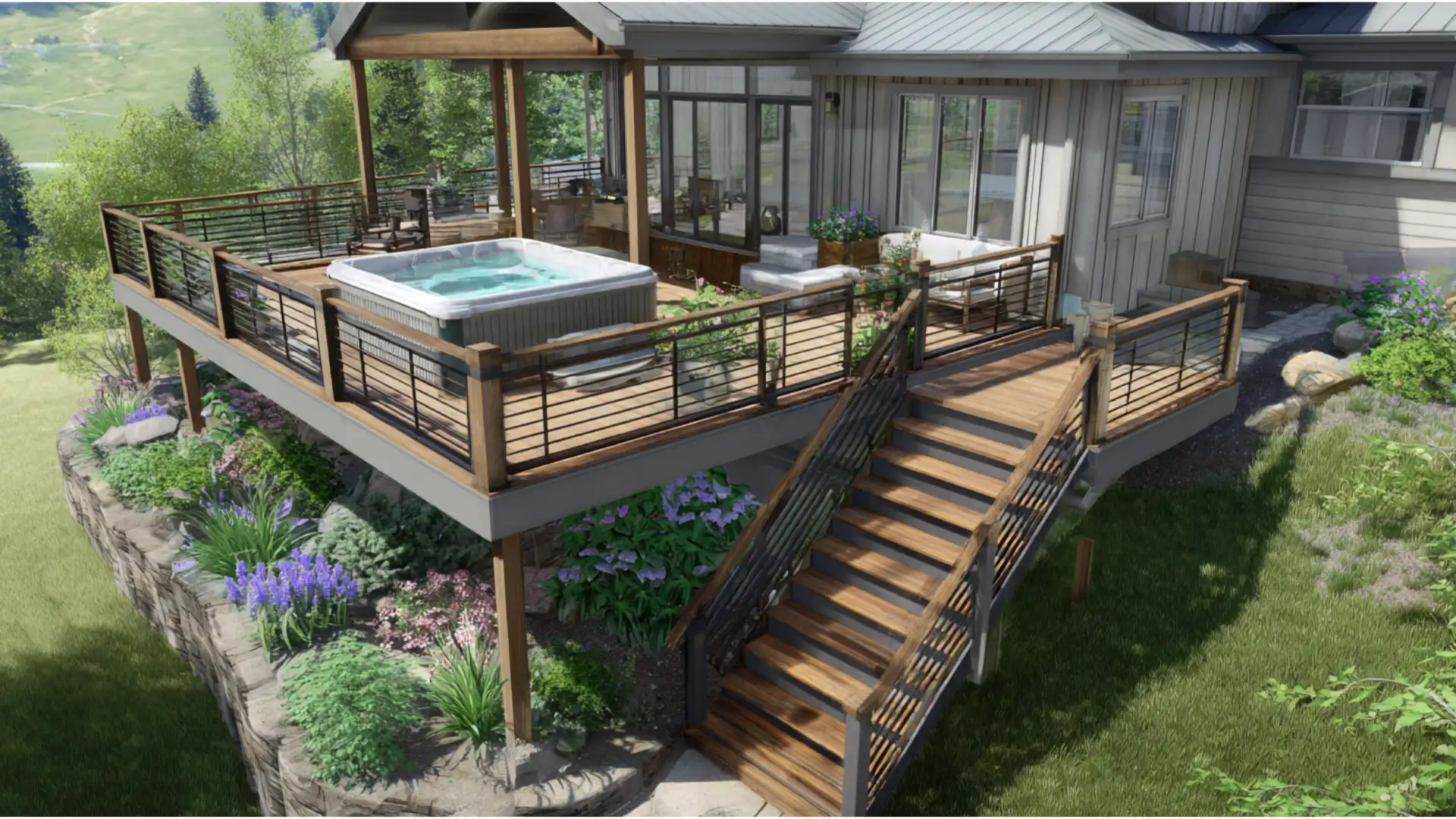
A sloped backyard does not have to limit your plans. Build a wraparound deck that follows the grade of the land. The natural drop creates a tiered look without extra digging.
Place the hot tub on the side that faces the best view. The slope naturally does most of the design work for you.
8. Freestanding Platform Deck
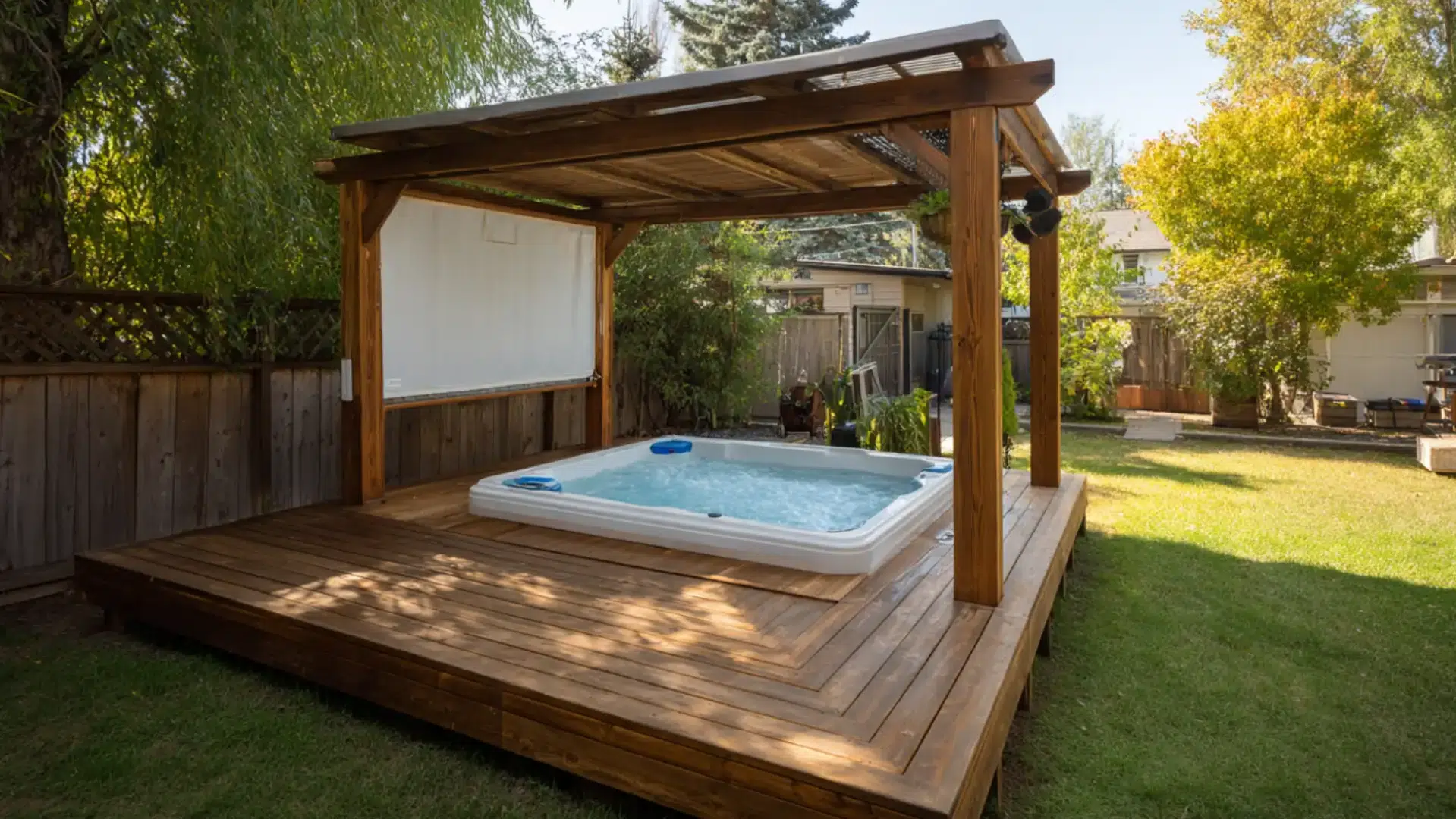
A freestanding platform is a small, standalone deck built just for the hot tub. It is a good starting point if you are not ready for a full deck project.
The platform raises the tub to a comfortable height and keeps it off the ground. You can always expand it later into a larger connected deck.
9. Carved-Out/Cut-In Deck Design
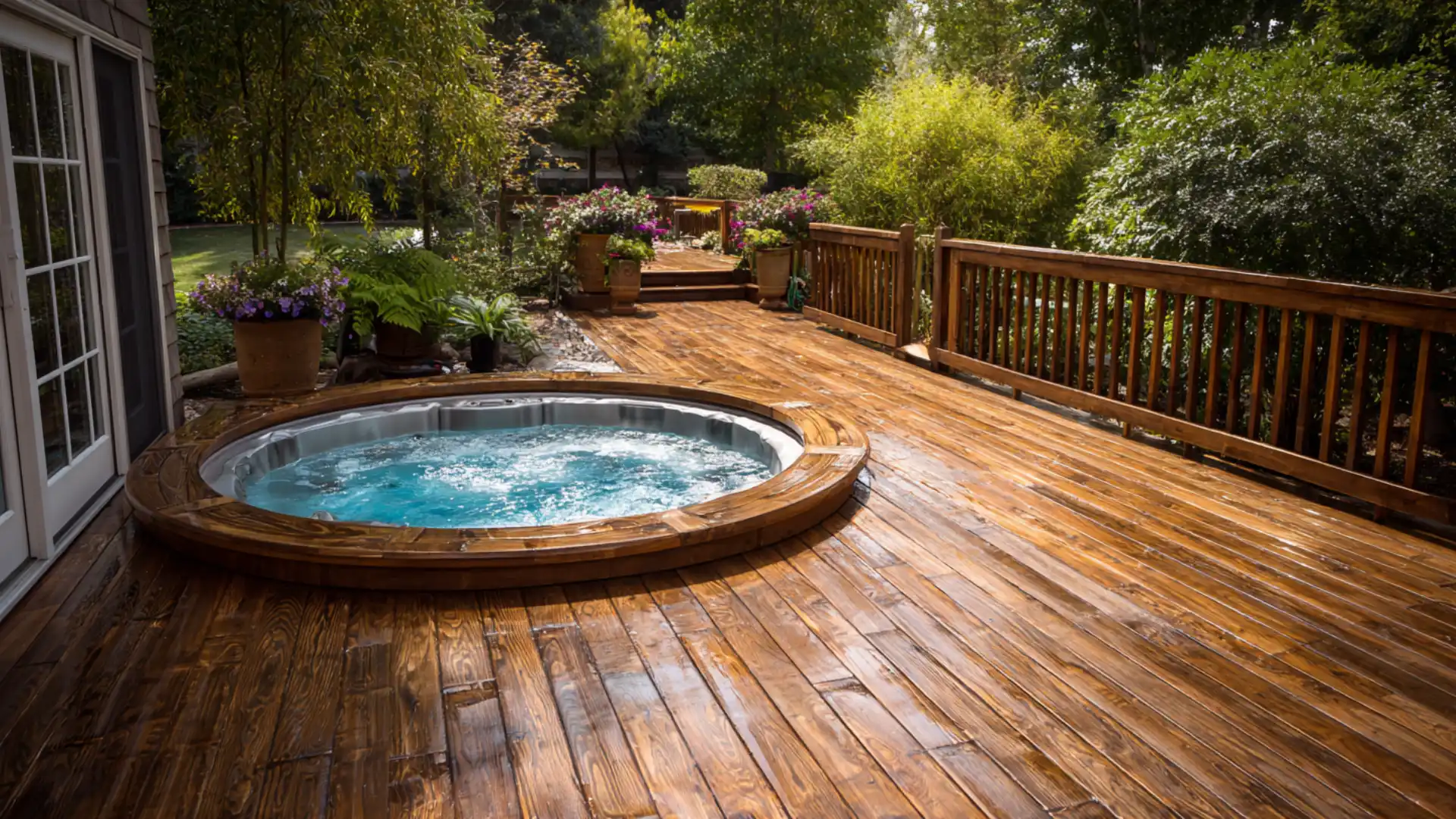
This design cuts a corner or curved section out of an existing deck so the hot tub fits right in.
The tub becomes part of the deck rather than sitting on top of it.
This is a good option if you already have a deck and want to add a hot tub without tearing everything down and starting over.
10. Deck with Hot Tub at the Edge
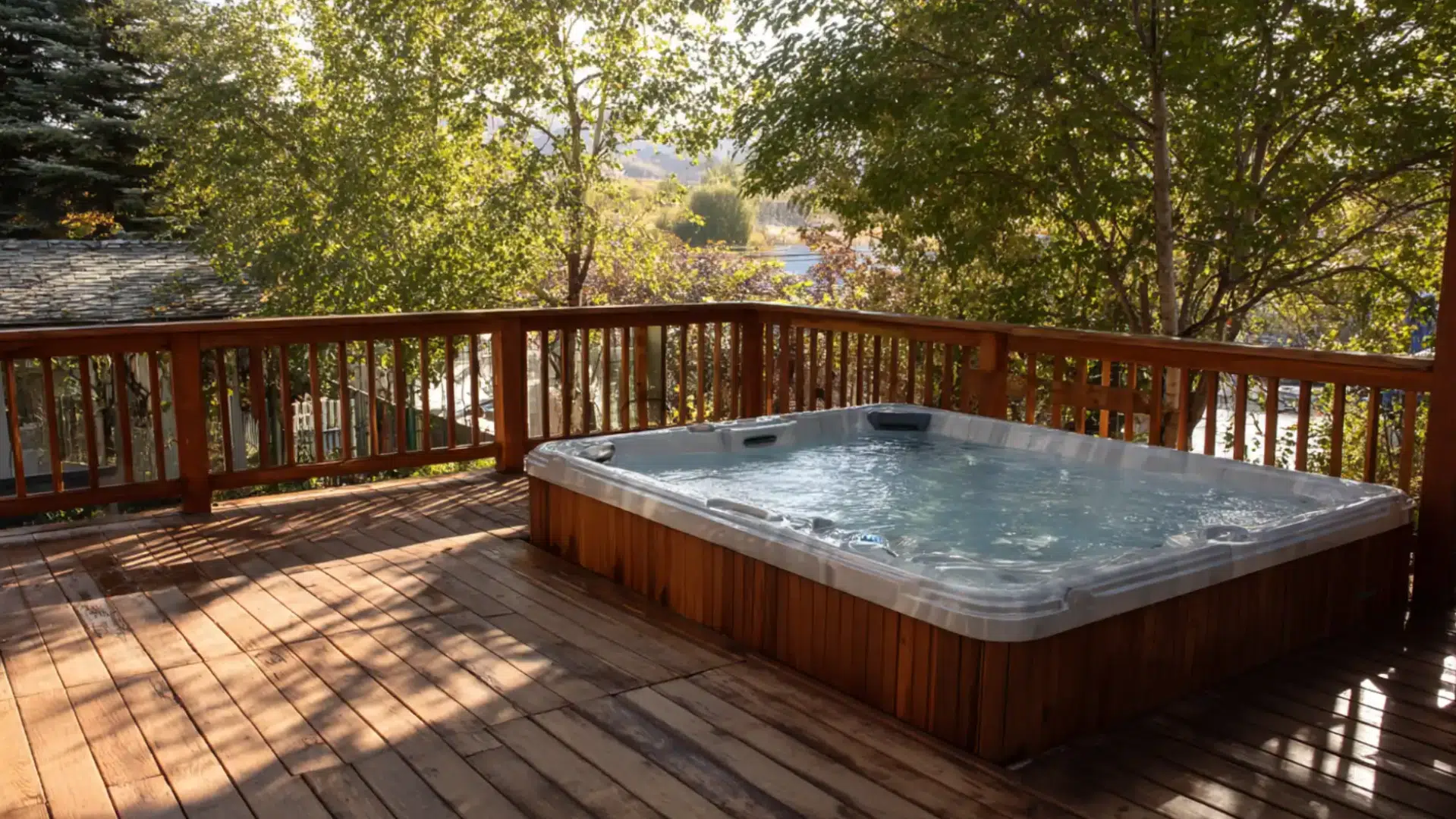
Placing the hot tub at the far edge of the deck puts it front and center. If your yard backs up to open land, woods, or water, this layout takes full advantage of the view.
You can add a low railing that does not block sightlines while still keeping the space safe for everyone.
11. Hot Tub on a Rooftop Deck
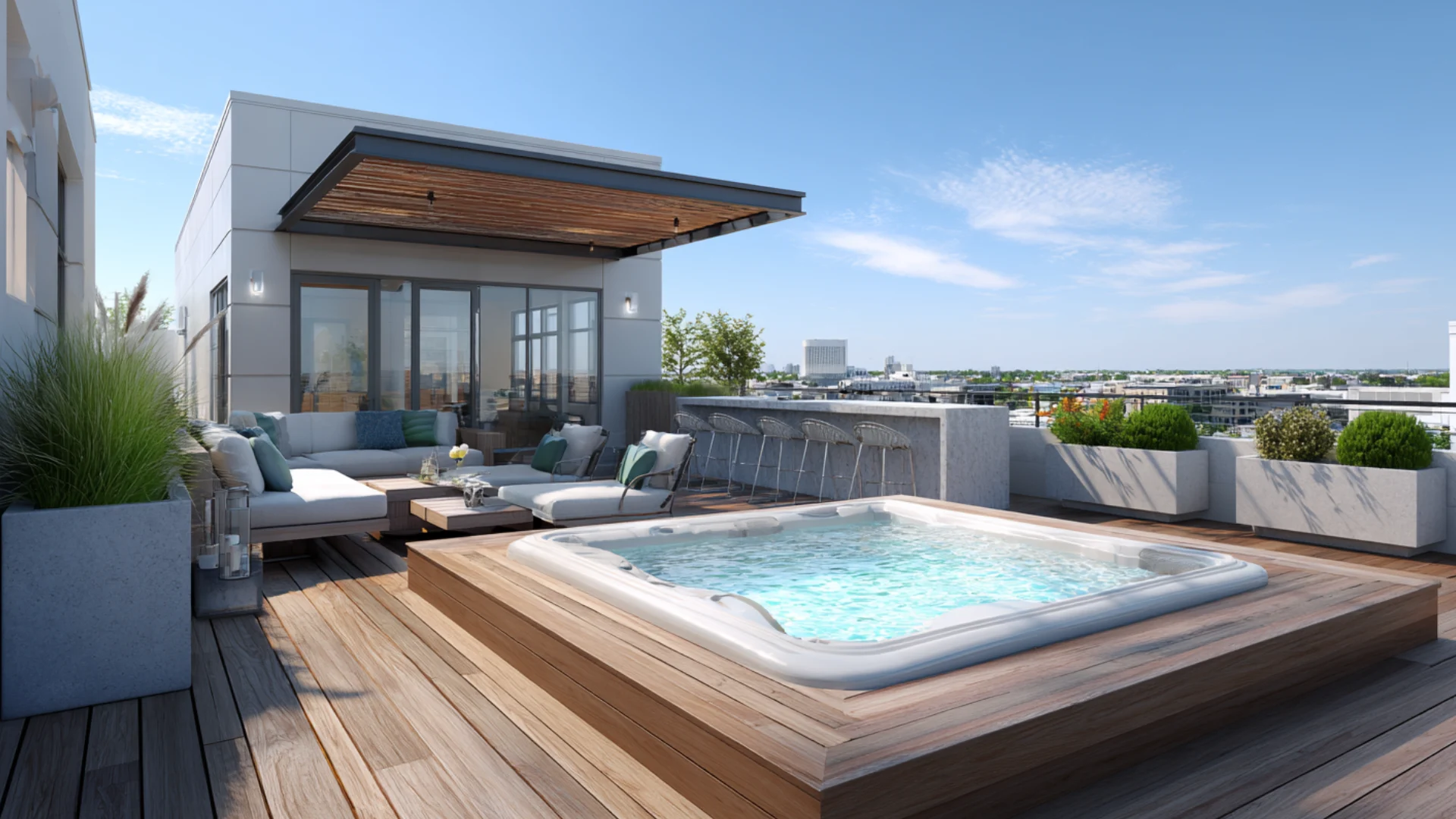
For homes in the city or with limited yard space, a rooftop deck is worth considering. A hot tub up top gives you privacy and open sky with no neighbors looking in.
Make sure your roof structure can handle the weight before you plan anything. A contractor can check load capacity early in the process.
12. Pool and Hot Tub Combination Deck
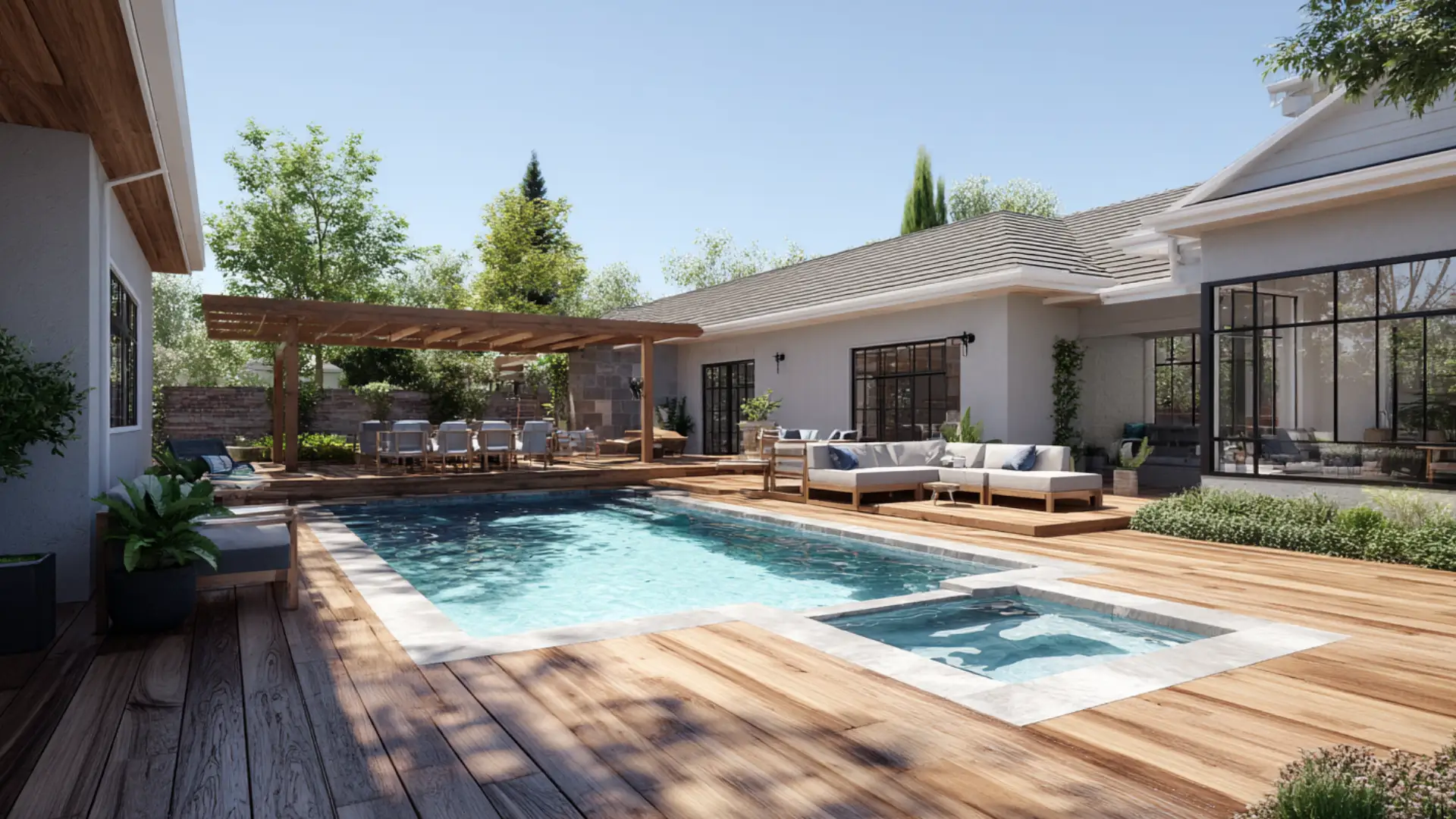
Pairing a hot tub with a pool on one shared deck makes both features feel like part of one space.
The hot tub usually sits at one end or in a raised section beside the pool.
This layout is popular for larger backyards. A single-deck material ties the entire area together for a clean, finished look.
Once your layout is set, making the space feel private becomes the next priority, and the ideas coming up cover every screening option worth considering.
Privacy and Screening Ideas
Good privacy screening turns a basic hot tub deck into a space you actually want to use. These ideas cover a range of budgets, styles, and yard sizes.
13. Slatted Wood Privacy Screen
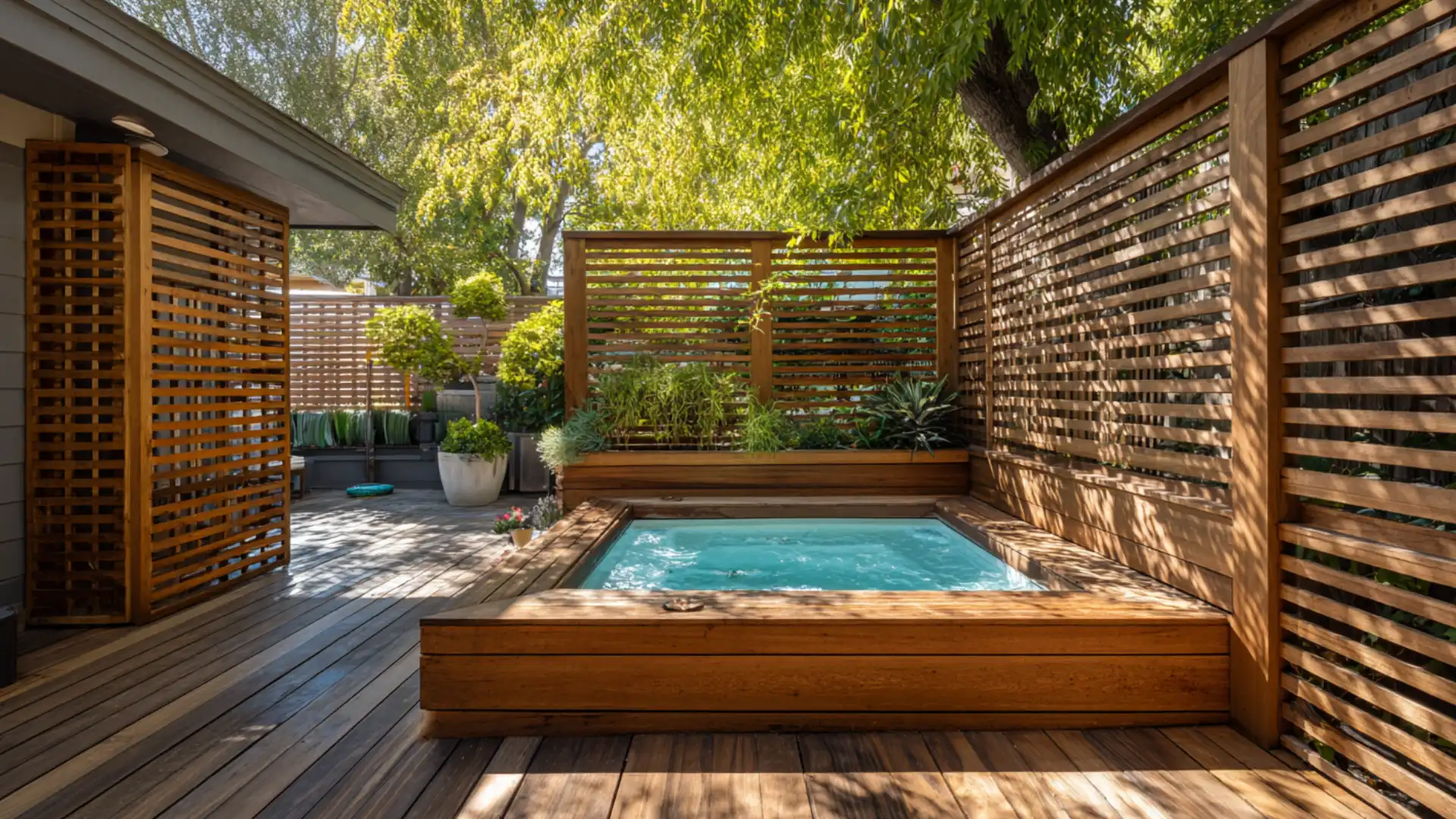
Cedar or composite slats are a popular choice for hot tub decks. Vertical slats placed around two or three sides block direct sightlines without trapping heat or cutting off airflow.
Cedar holds up well outdoors and has a warm, natural look. Composite slats last longer and need less upkeep over time.
14. Lattice Panel Privacy Wall
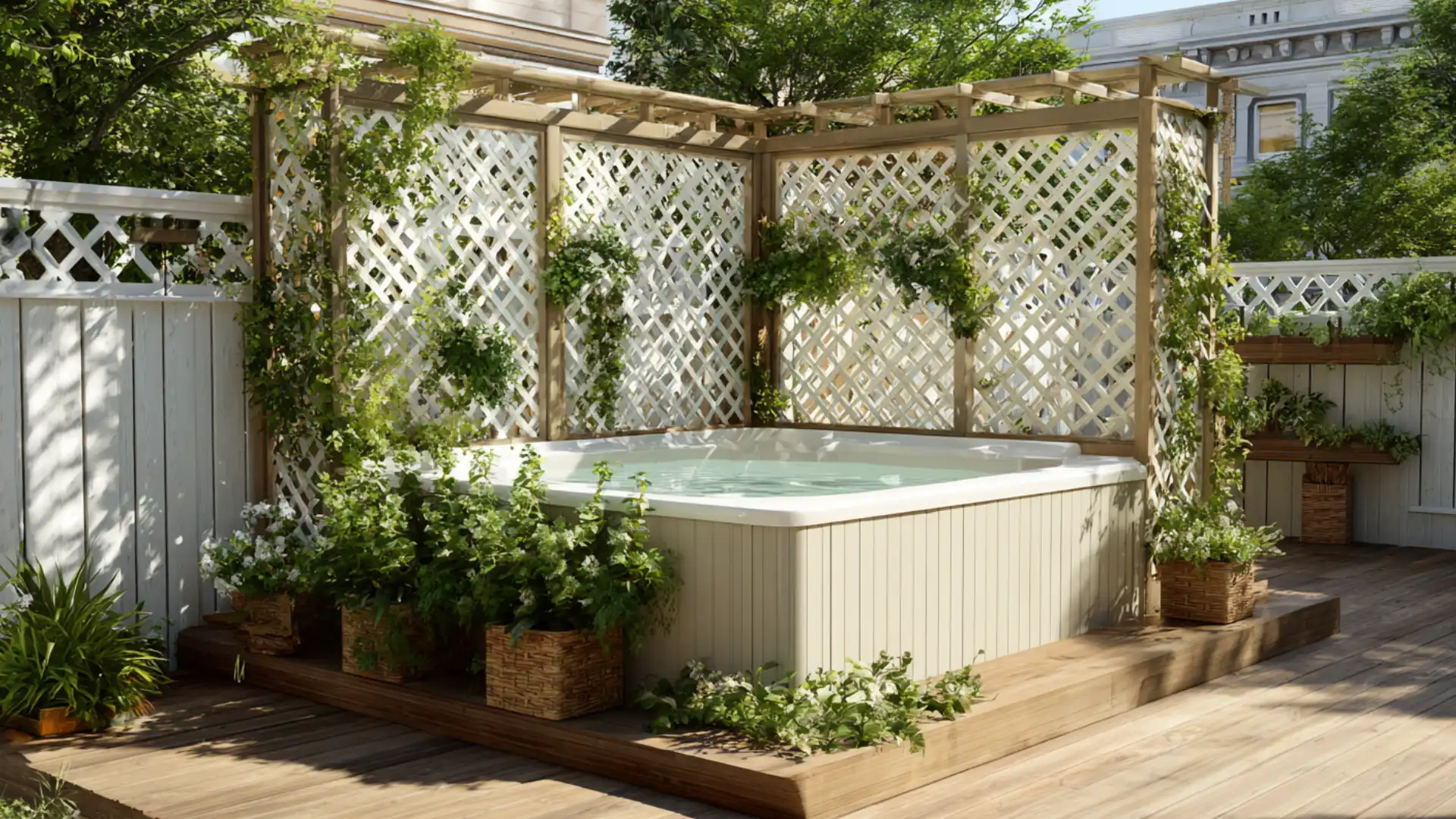
Lattice panels are one of the more affordable screening options. They come in wood or vinyl and are easy to attach to an existing deck frame. The open grid blocks views while still letting air pass through.
For a softer look, let climbing plants grow through the panels over time. Maintenance stays low with vinyl versions.
15. Bamboo Privacy Screen
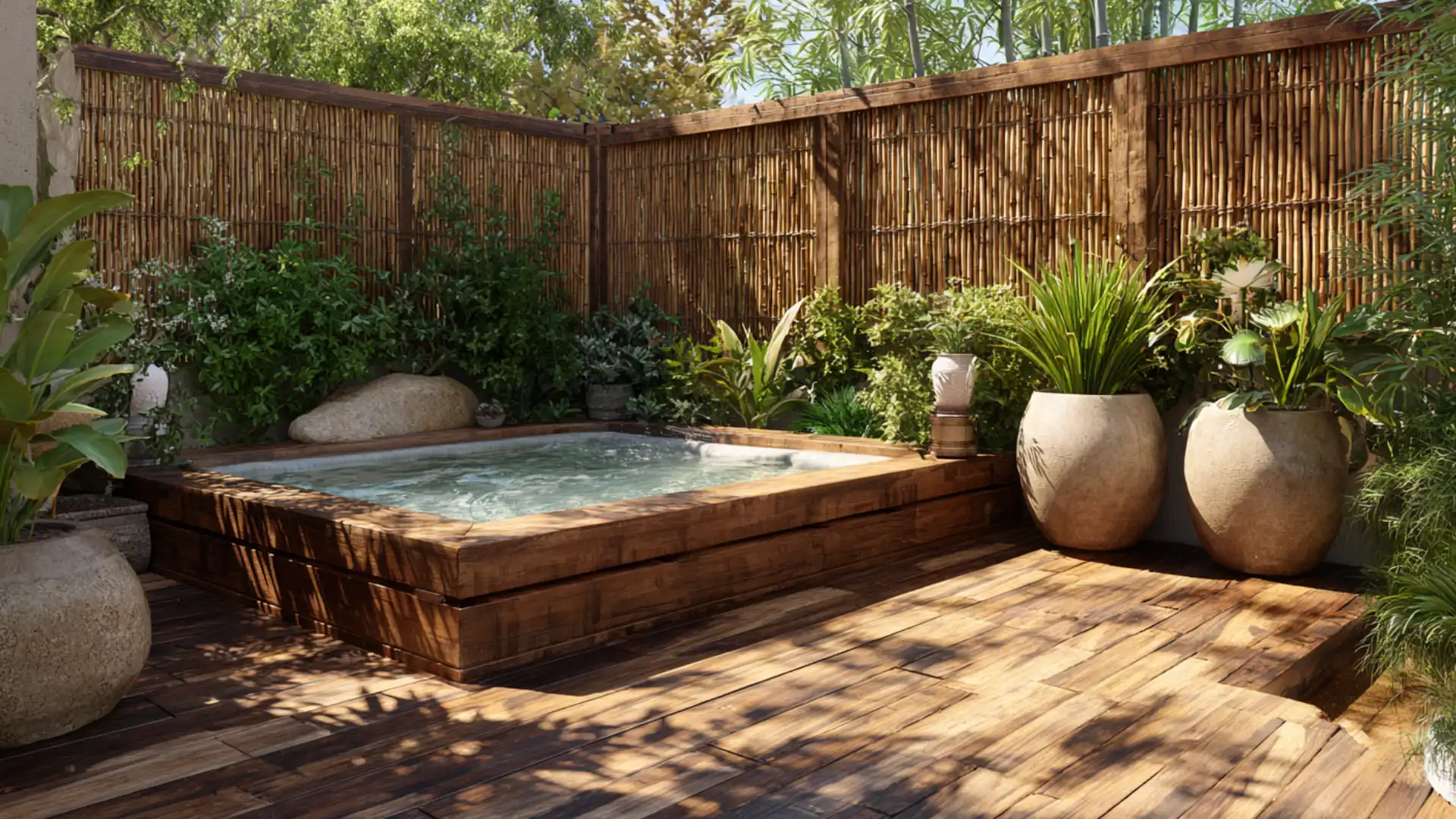
Bamboo fencing works well if you want a relaxed, outdoor feel around your hot tub. It installs quickly and comes in rolls that cut to any height.
Bamboo softens the look of a plain deck and adds some texture. Use treated or sealed bamboo for longer life. It pairs well with stone, wood, and simple plant pots.
16. Pergola with Privacy Curtains
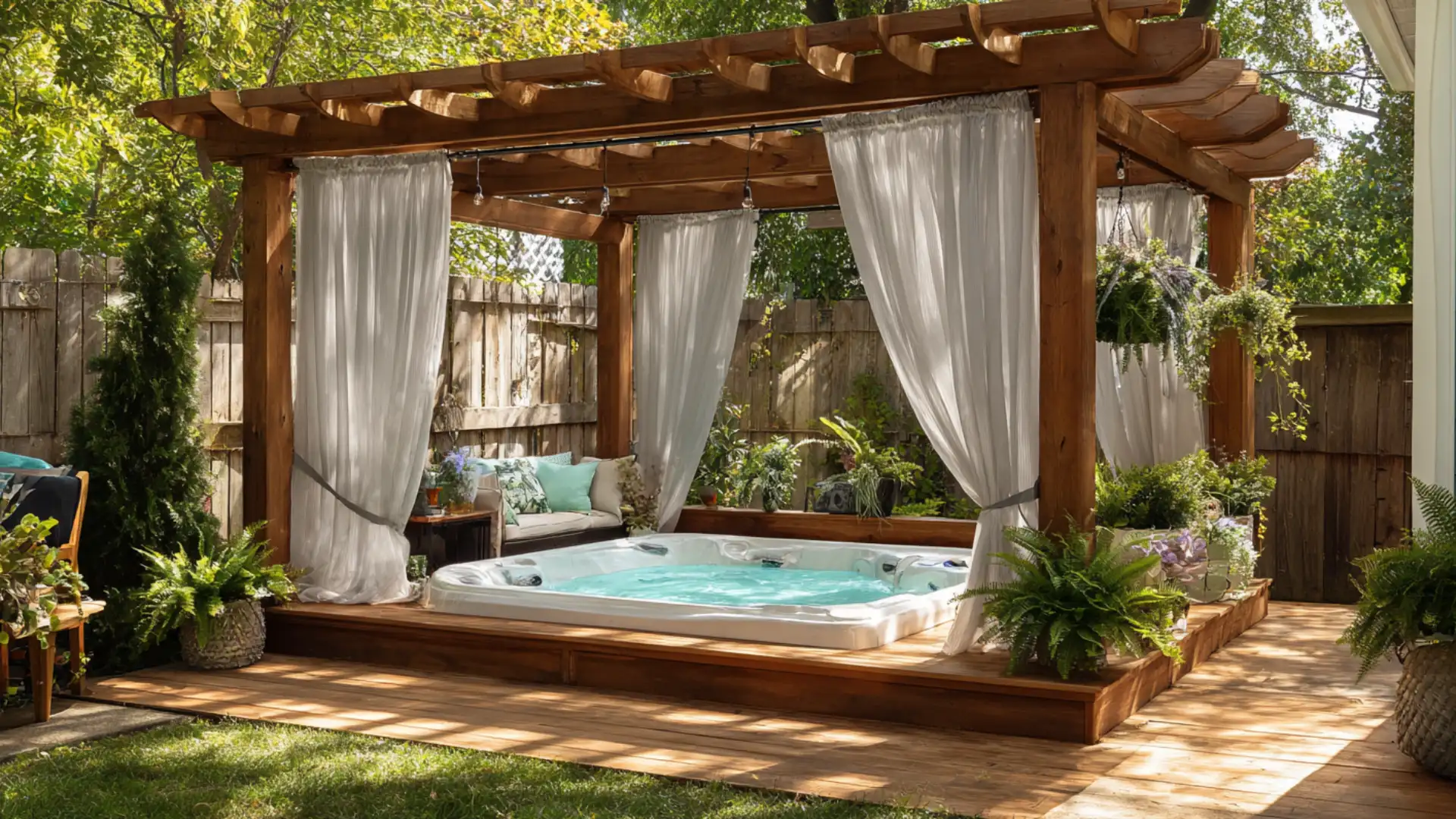
A pergola gives your hot tub deck some structure overhead and on the sides. Hang weatherproof curtain panels from the beams to close off the space when you want more privacy.
Pull them back when you do not need them. This setup gives you a lot of control over how open or enclosed the area feels.
17. Living Wall / Vertical Garden Screen
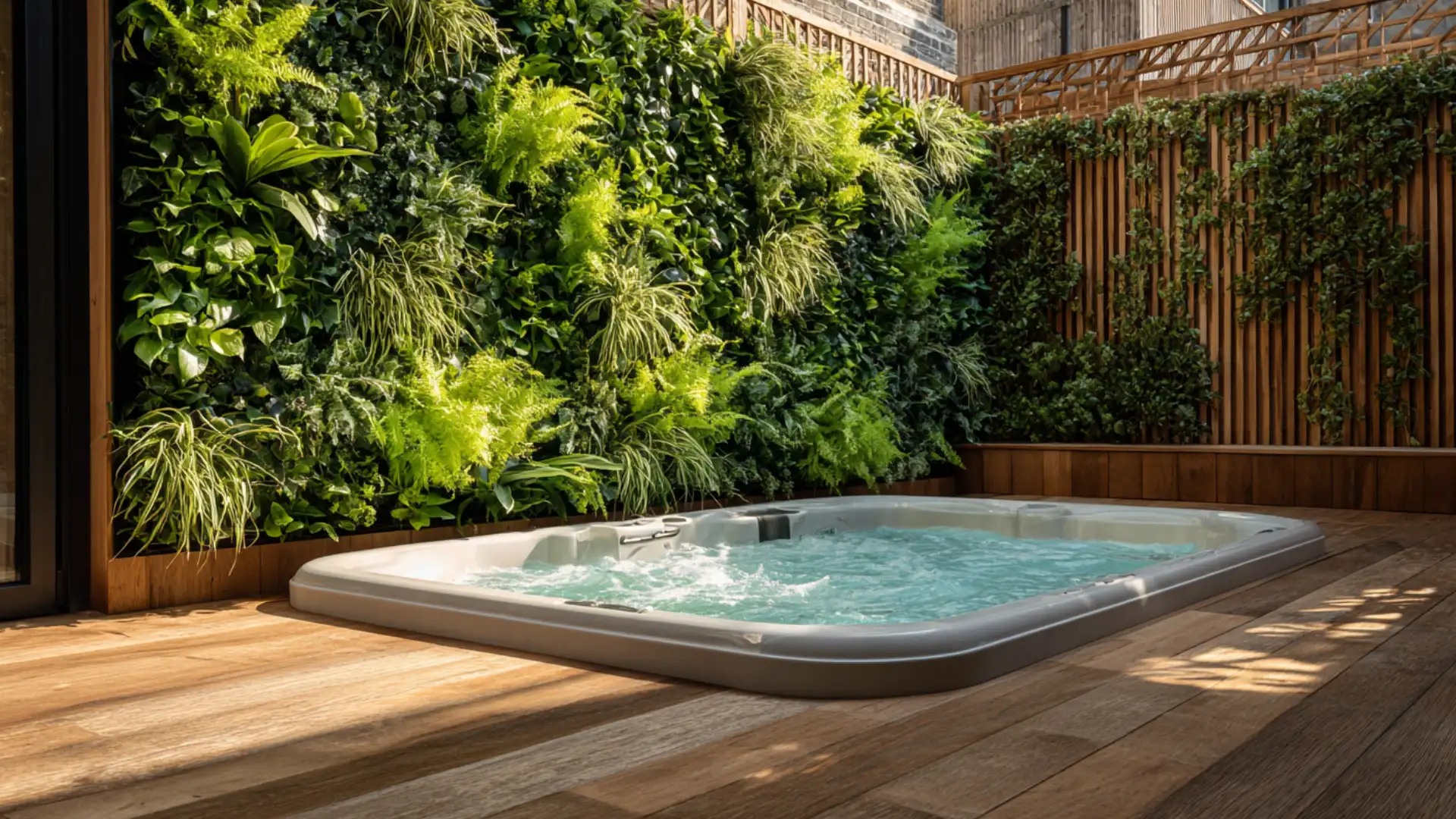
A vertical garden panel works as both a privacy screen and a backdrop. Mount it on one side of the deck near the tub. Fill it with low-maintenance plants like ferns, succulents, or herbs.
The greenery breaks up hard surfaces and adds color to the space. It works well on smaller decks where a full fence would feel too heavy.
18. Stacked Stone Privacy Wall
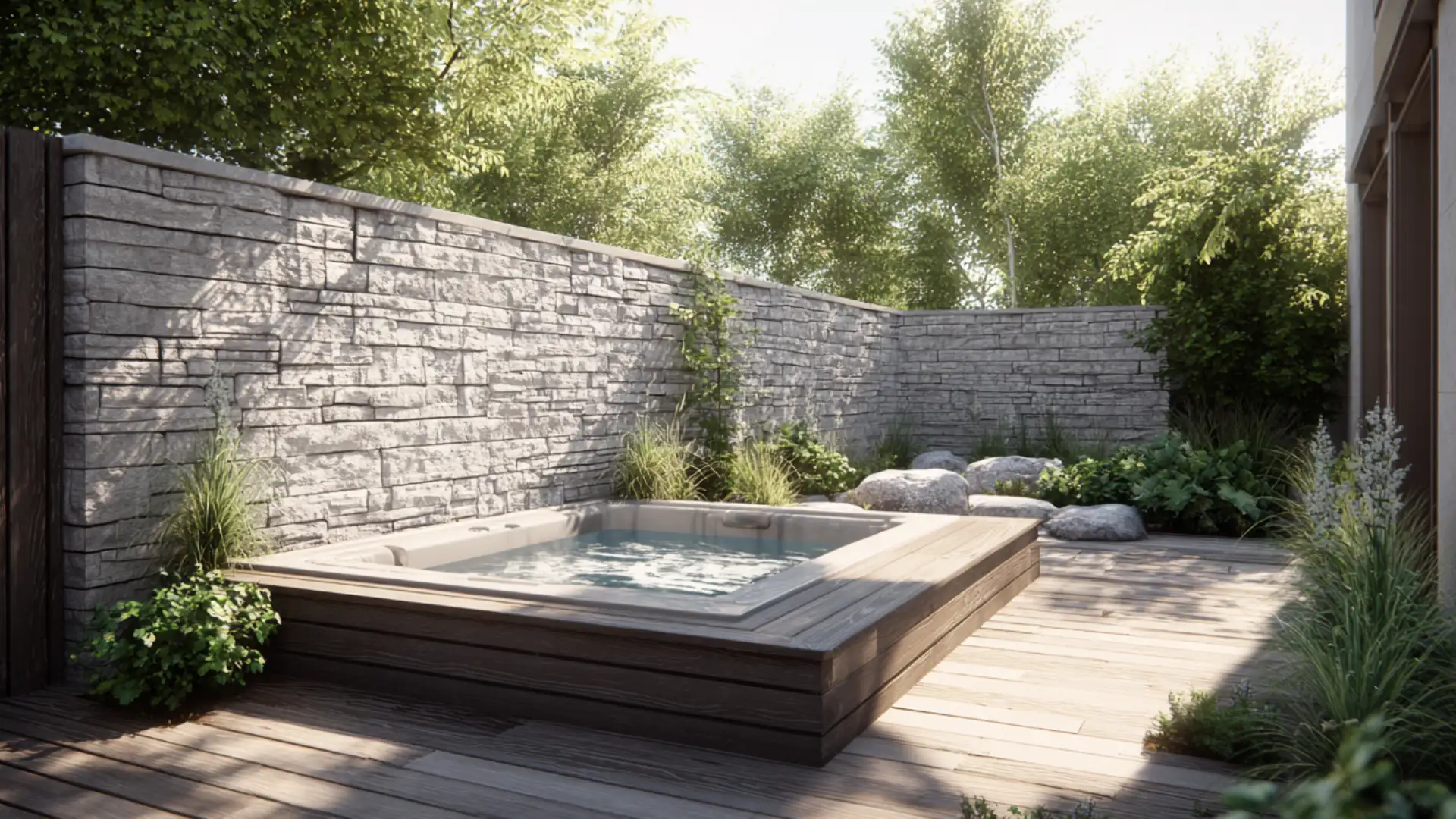
A low stacked-stone wall adds a solid, permanent feel to a hot tub deck. You do not need to go very tall for it to work. Even a three-foot wall blocks most ground-level views and clearly defines the space.
Stone also holds up through all seasons without needing paint or sealing. It pairs well with wood decking and simple landscaping.
19. Board-on-Board Fence Surround
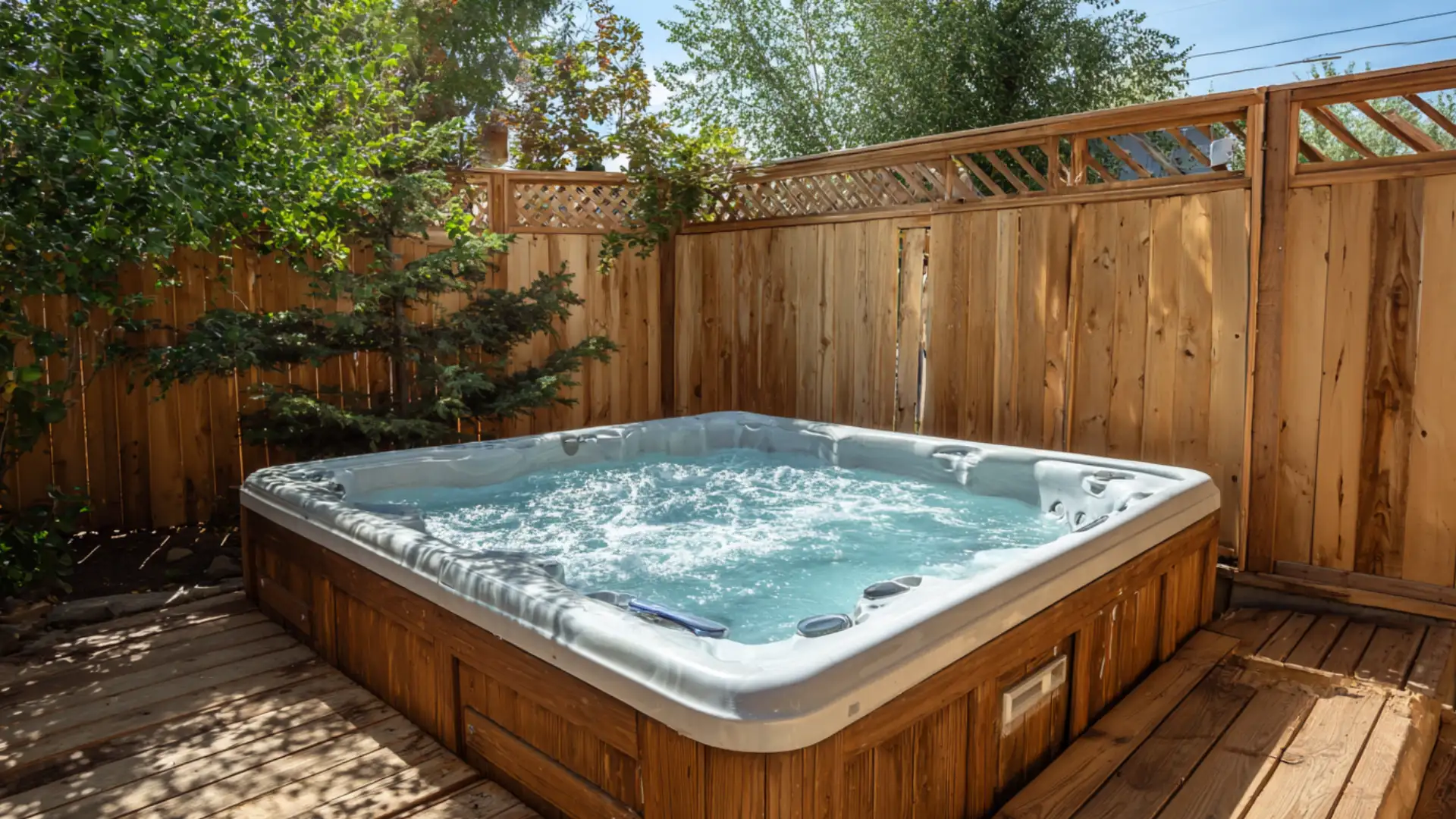
Board-on-board fencing is one of the most complete privacy options for a hot tub deck. Overlapping fence boards leave no gaps, so there are no sightlines from the street or neighboring yards.
Build it on two or three sides, leaving one side open. Use cedar, pine, or composite boards based on your budget and the level of maintenance you want.
20. Trellis with Climbing Vines
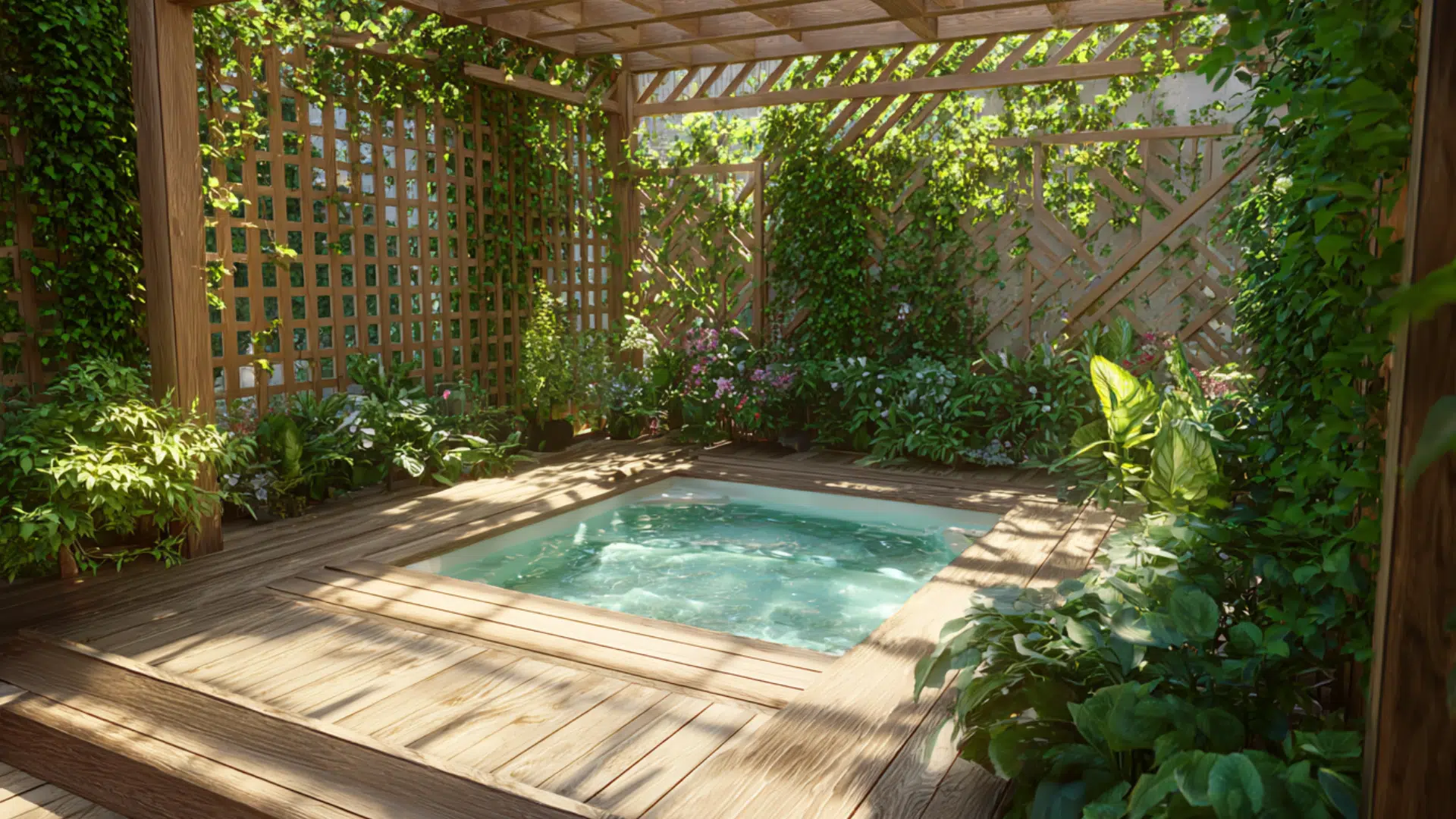
A wood trellis covered in climbing plants creates a soft, natural screen around the hot tub. Ivy, wisteria, and jasmine all grow well on a trellis. The coverage builds over one or two seasons.
Once the plants fill in, you get a full green wall that changes slightly with each season. It is a lower-cost option that improves in appearance over time.
With privacy sorted, it’s time to think about what goes overhead. The right roof or shade structure changes how, and how often you use the space.
Shade and Overhead Structure Ideas
Adding an overhead structure to your hot tub deck gives you more comfort, more privacy, and more ways to use the space through different seasons and weather.
21. Pergola Over Hot Tub
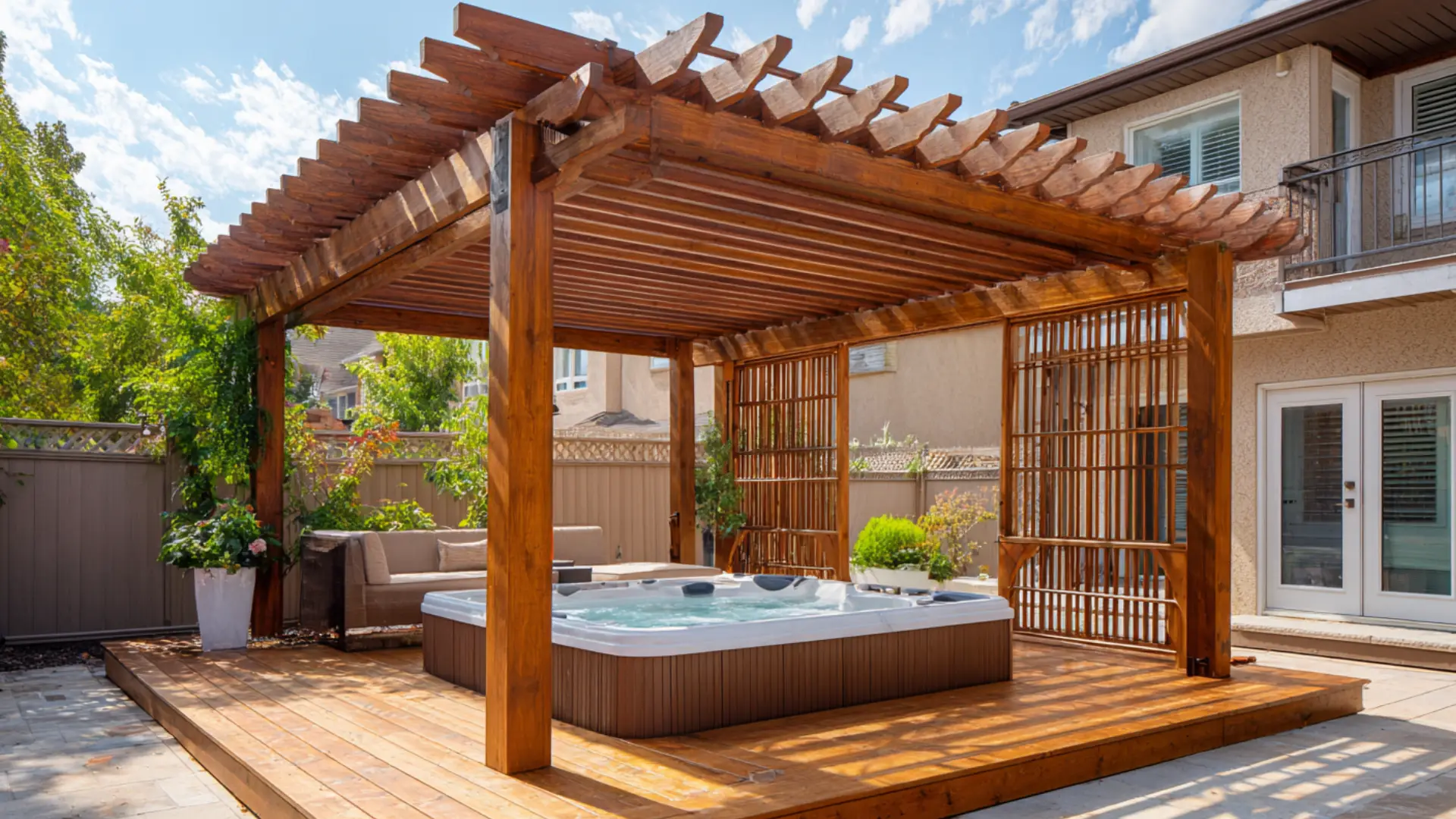
A pergola is one of the most common overhead additions to a hot tub deck. The open beam structure gives you partial shade without fully closing off the sky.
It also works well as a frame for string lights, outdoor curtains, or climbing plants. Build it from cedar, redwood, or aluminum, depending on your budget and the level of upkeep you want.
22. Gazebo-Enclosed Hot Tub
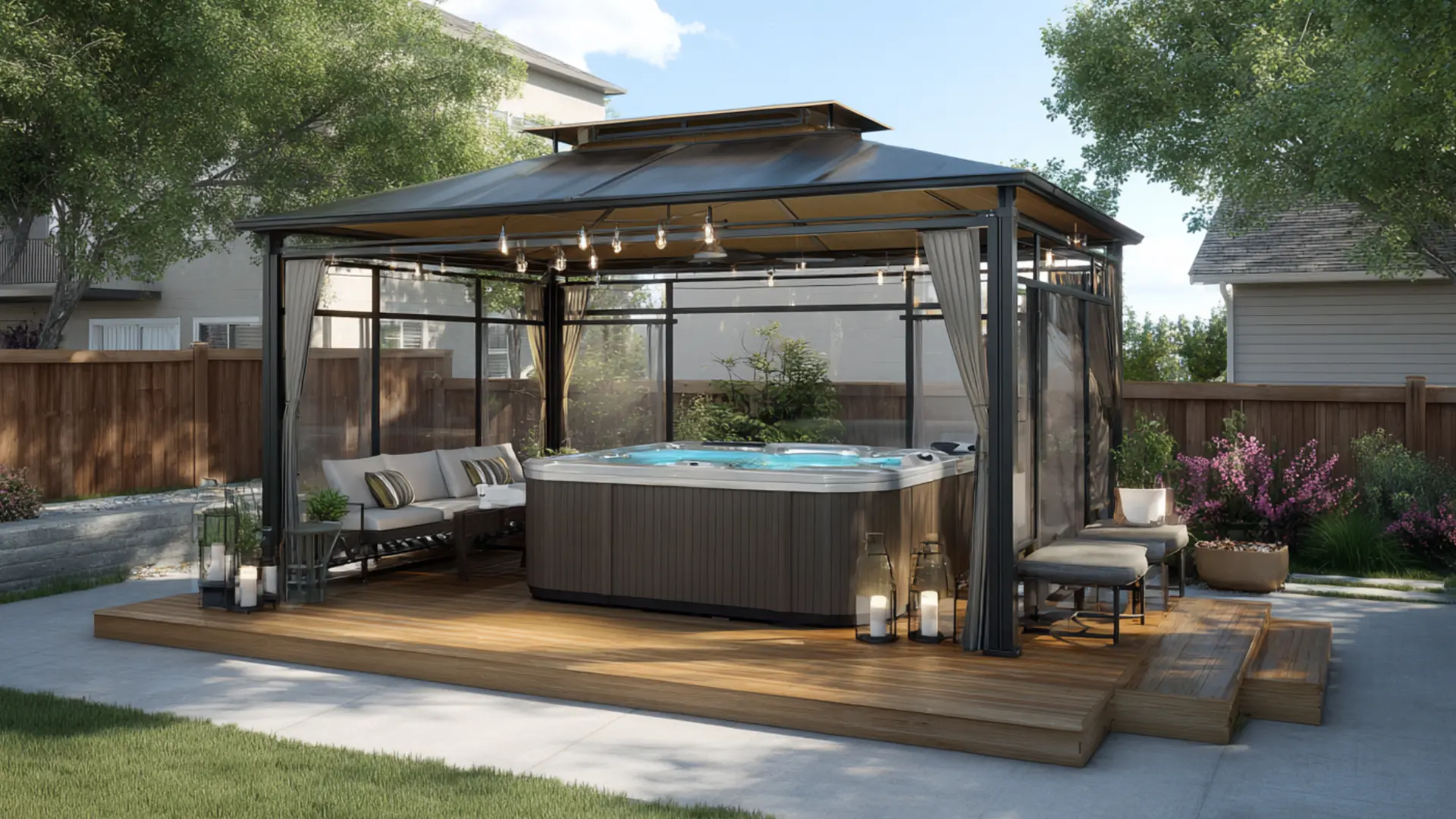
A gazebo gives your hot tub full overhead coverage on all sides. It keeps out rain, wind, and direct sun. Some gazebos come with screen panels for bug protection.
This setup works well in areas with unpredictable weather. It also adds a clear boundary around the hot tub space, making it feel like its own separate area on the deck.
23. Sail Shade Canopy
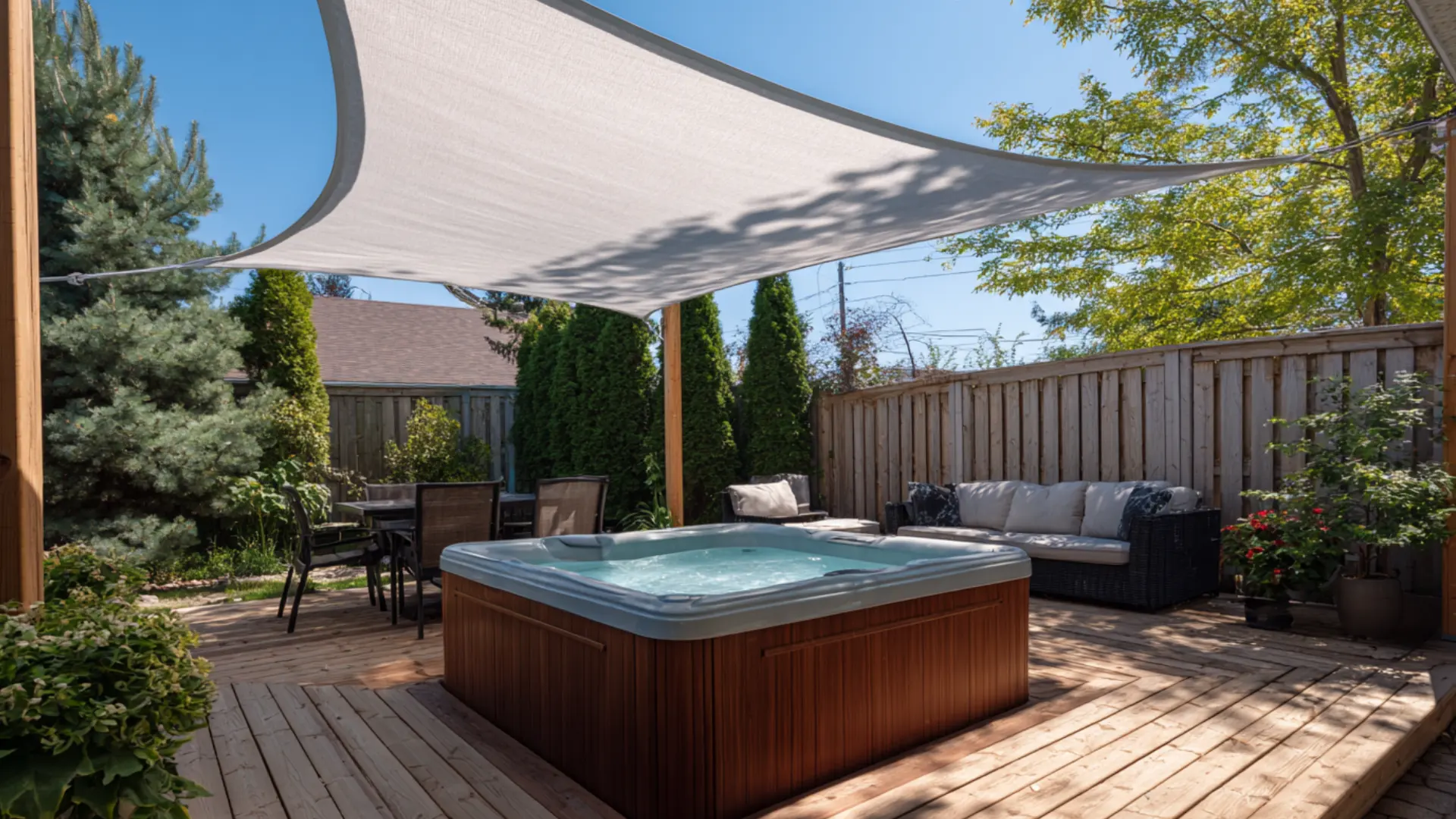
A sail shade is a stretched fabric panel anchored between two or more posts. It comes in triangle or rectangular shapes and blocks a solid amount of sun. The look is clean and modern.
You can adjust the angle or remove it completely when not needed. It is one of the more affordable overhead options for a hot tub deck and installs without a full build.
24. Retractable Awning
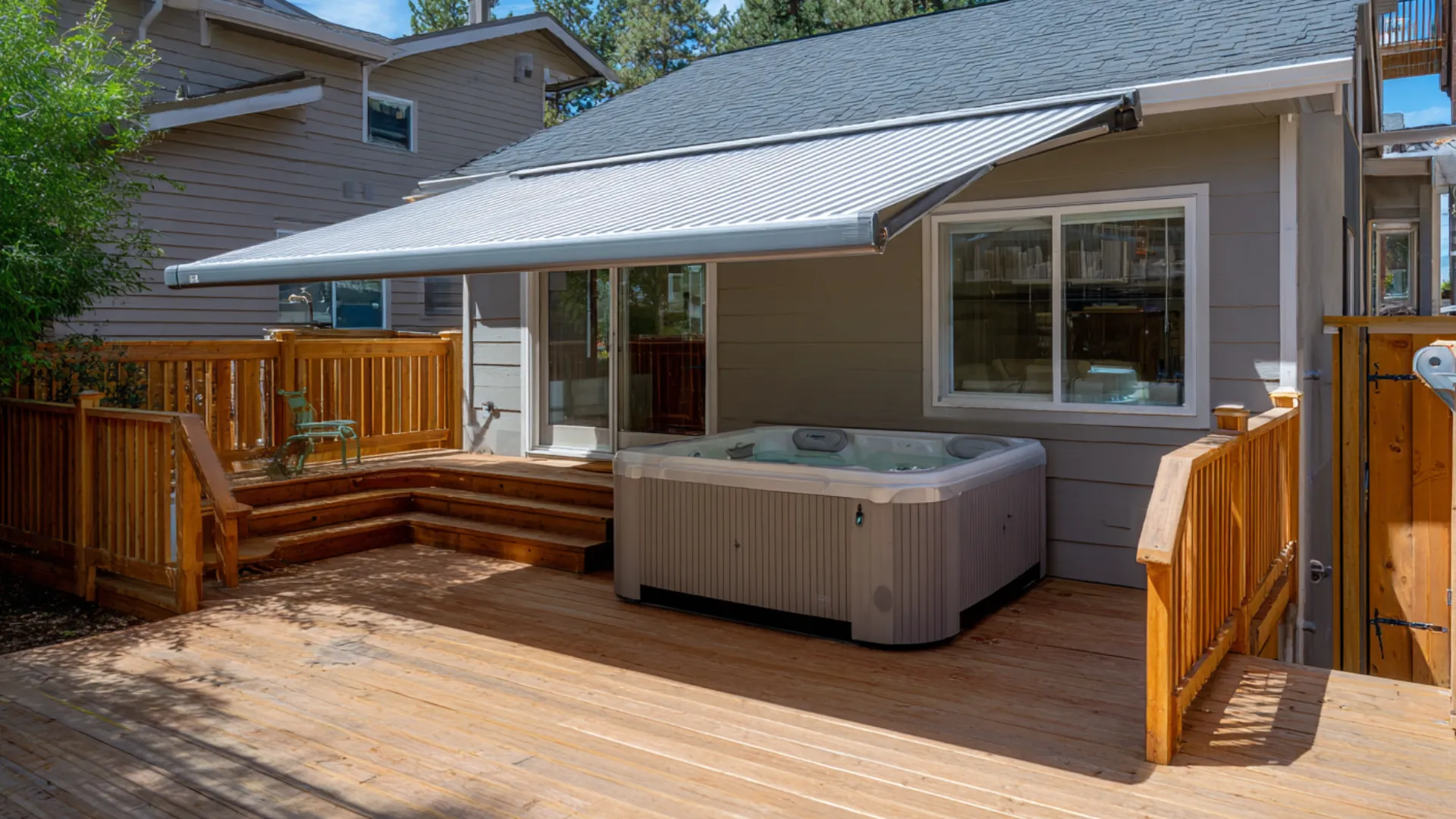
A retractable awning lets you control how much shade you get on any given day. Pull it out on sunny afternoons and roll it back when you want an open sky. Motorized versions make this even easier.
It attaches to the house or a freestanding frame. This works well when the hot tub sits close to the back of the house on an attached deck.
25. Timber Frame Shelter
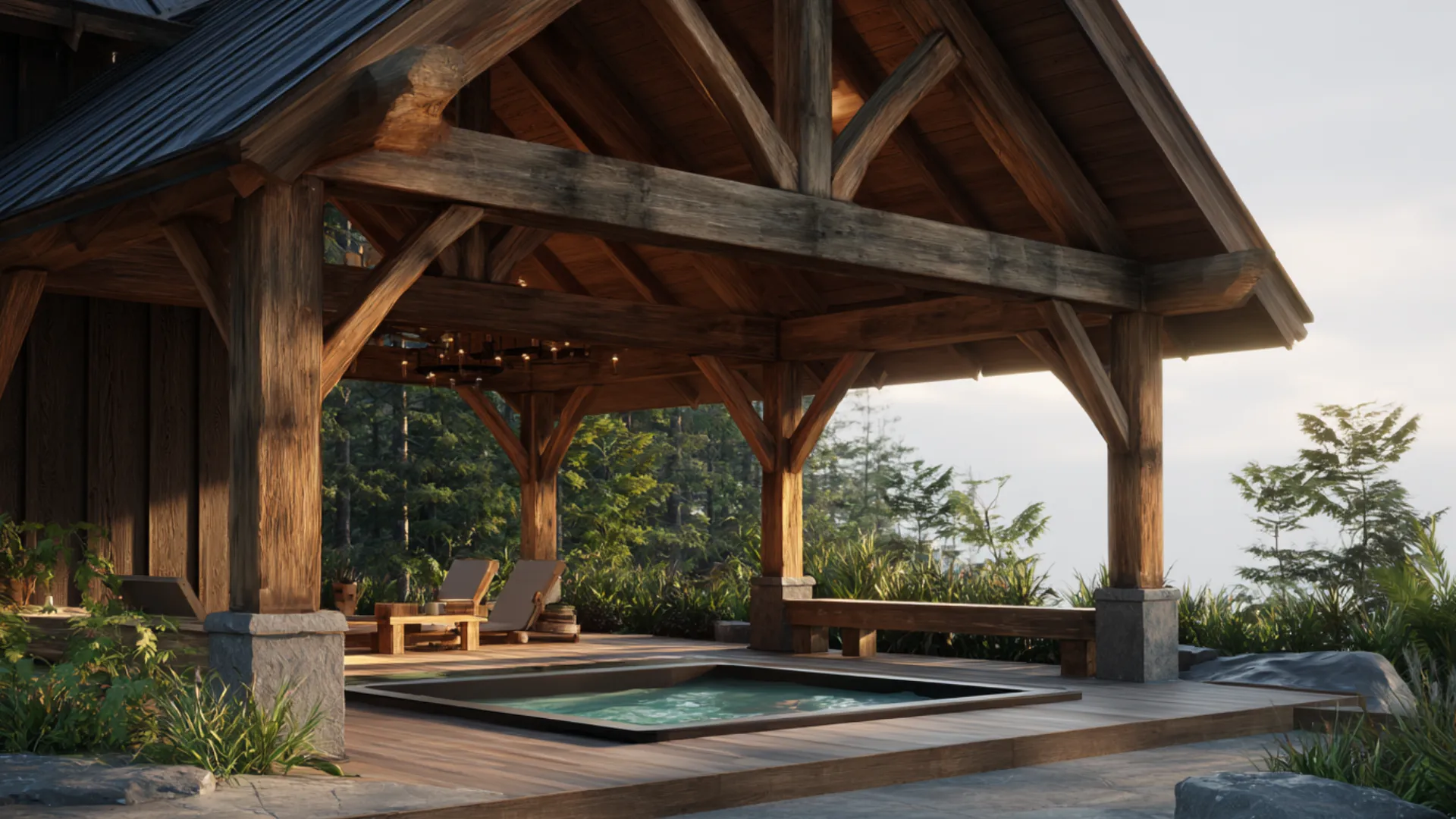
A heavy timber shelter over a hot tub deck makes a strong visual statement. A-frame and barn-style rooflines are popular choices. The thick beams give the structure a solid, permanent feel.
You can leave the roof open with purlins for partial shade or close it in with metal or shingles for full cover. This type of build usually requires a professional.
26. Covered Porch Integration
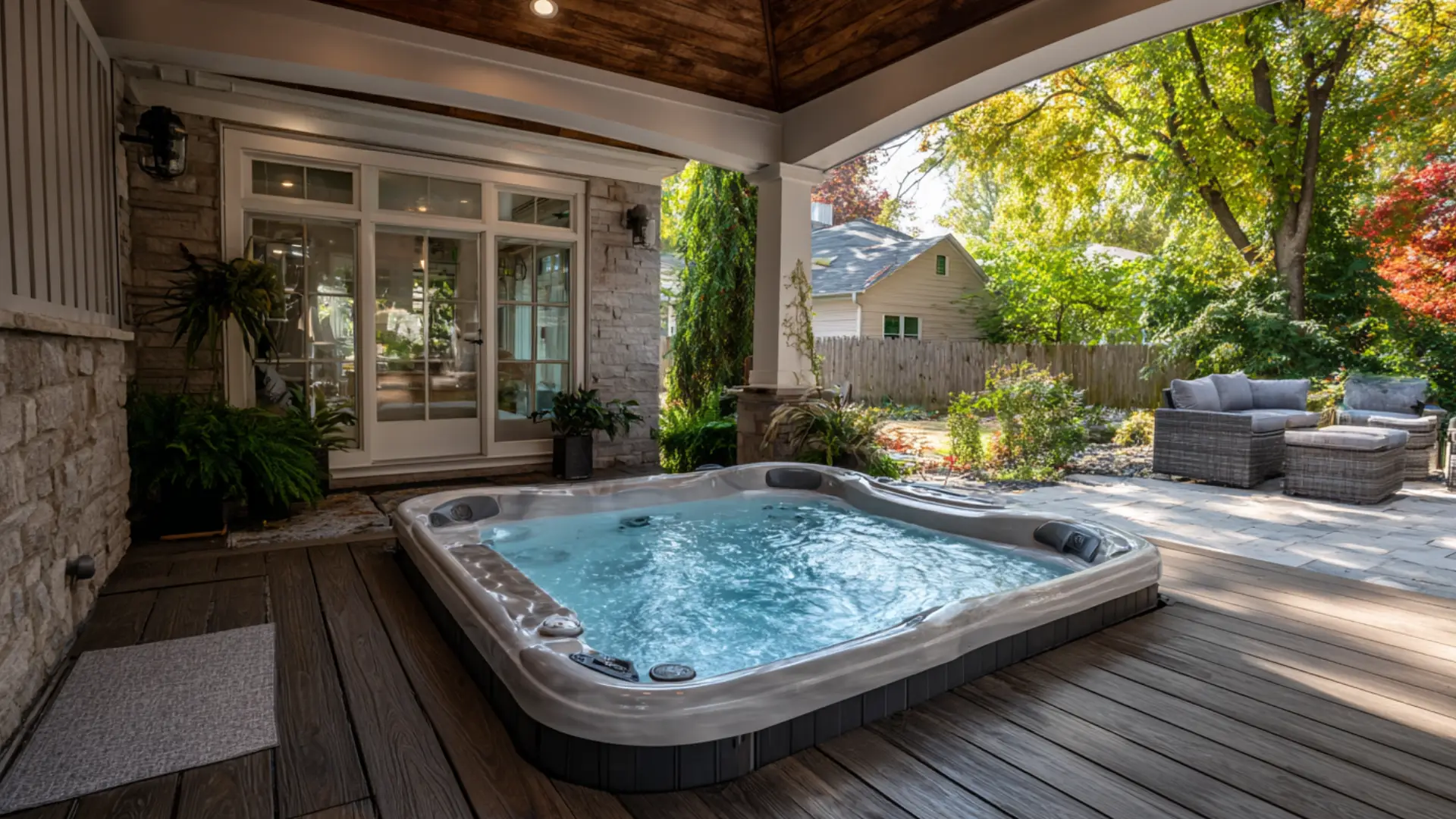
If your home already has a covered porch, extending it over the hot tub is a natural option. This keeps the look consistent with the rest of the house.
The roof line already exists, so the extension is often more straightforward than a separate build. It also connects the hot tub area to the main living space in a way that feels planned rather than added on.
27. Shade Sail and Pergola Combo
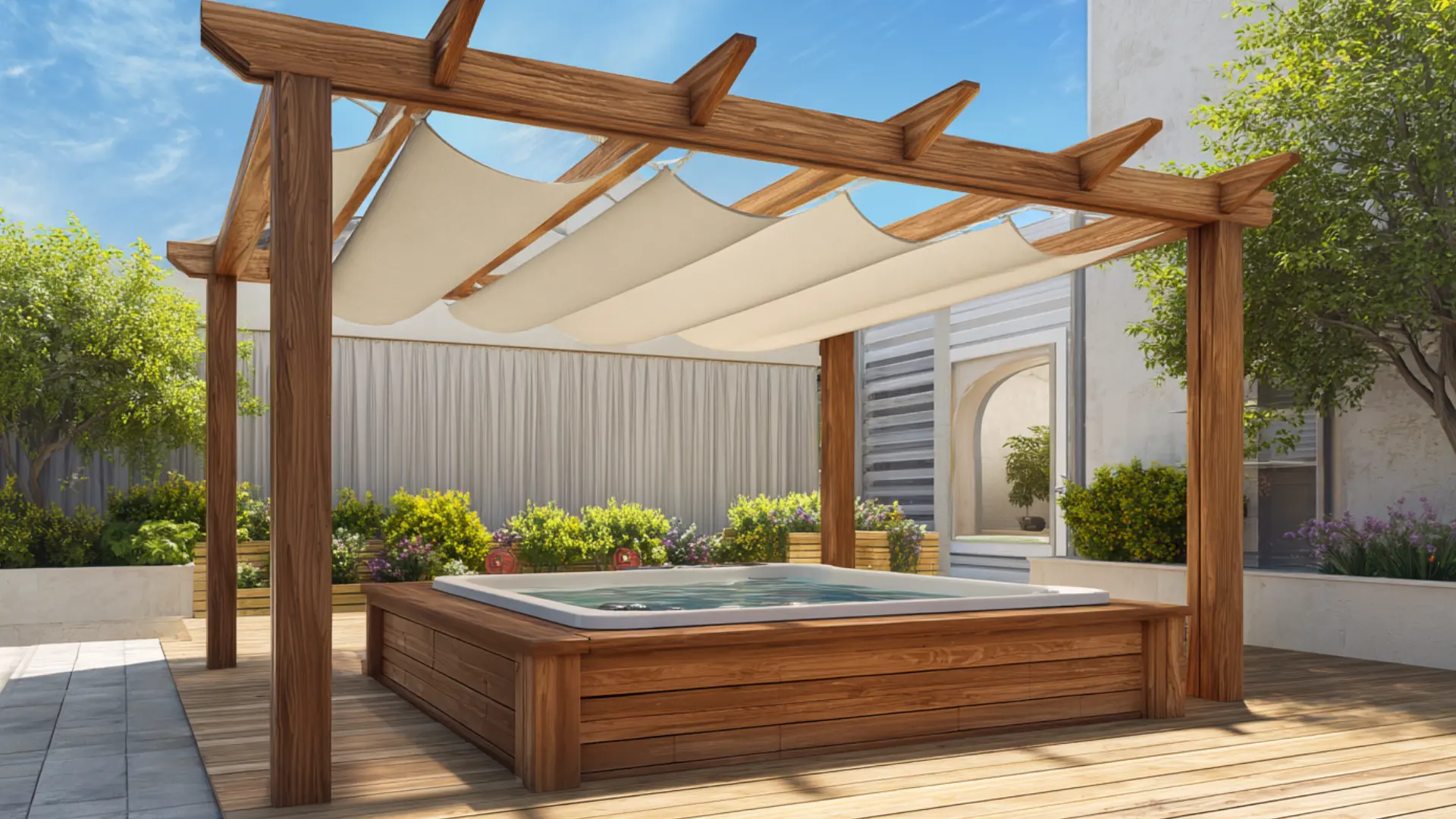
Combining a pergola frame with a shade sail gives you the best of both structures. The pergola provides the posts and a defined overhead frame. The sail fills in the center for better sun coverage.
This layered approach adds depth to the hot tub deck without making it feel too enclosed. It also gives you the option to remove the sail in cooler months when shade is less needed.
A solid overhead structure sets the stage, but the right lighting defines how the space feels after dark. Next up, the best ways to light your hot tub deck.
Lighting Ideas
The right lighting turns a hot tub deck into a comfortable evening space. These ideas cover safety, atmosphere, and style at different price points and effort levels.
28. String Lights Draped from Pergola
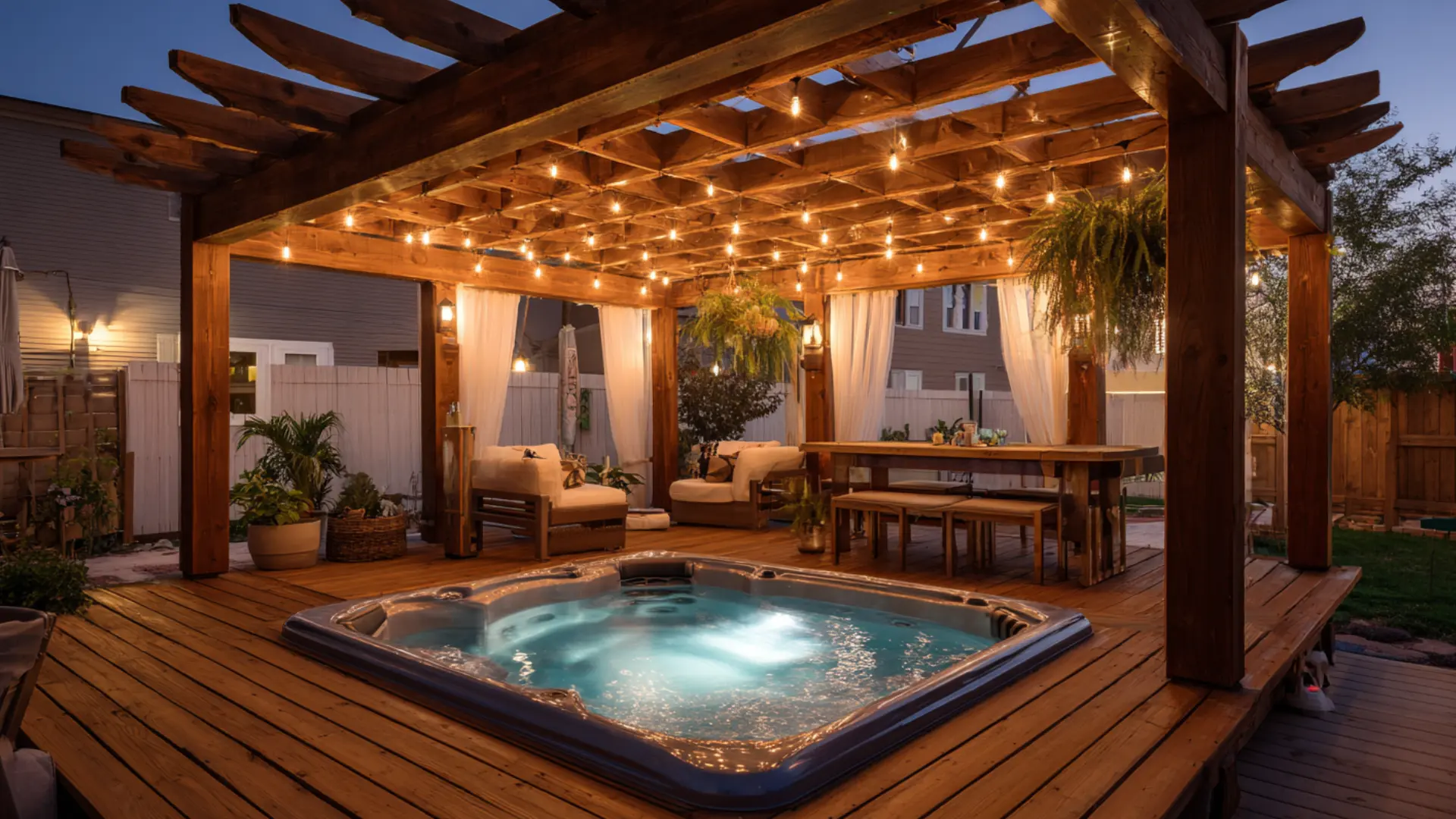
String lights are one of the easiest ways to add warmth to a hot tub deck at night. Drape them across pergola beams in a grid or along the outer edges. Edison bulbs give off a soft, amber glow.
Fairy lights work well for a lighter, more delicate look. Both options are simple to hang and easy to replace when bulbs burn out.
29. LED Step Riser Lighting
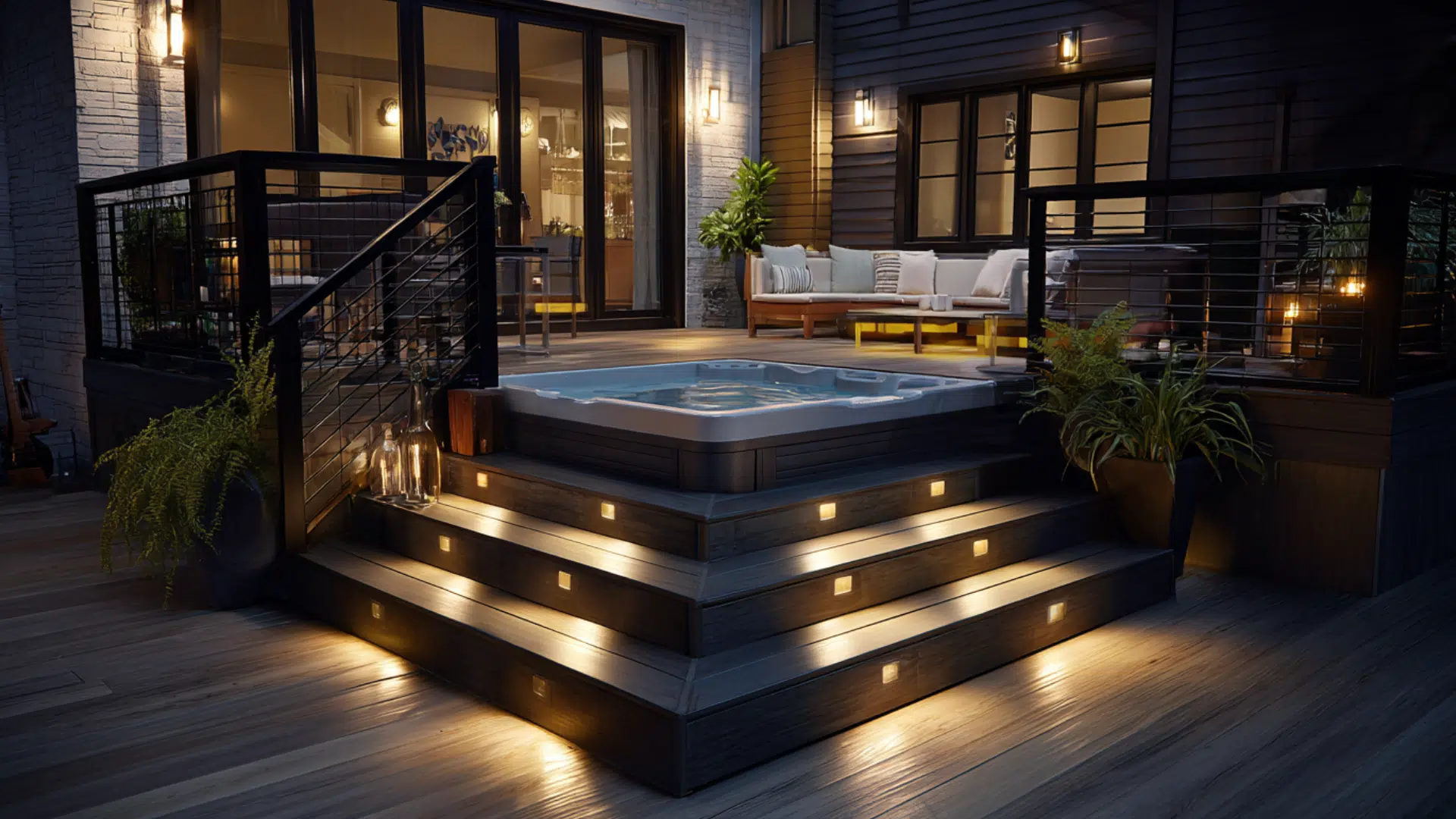
Step riser lights are a practical addition to any multi-level hot tub deck. Small LED strips mount under each step edge and shine light downward onto the surface below.
This makes it much easier to see where you are stepping in low light. The lights stay low-profile during the day and do their job quietly at night without drawing too much attention.
30. Recessed Deck Spotlights
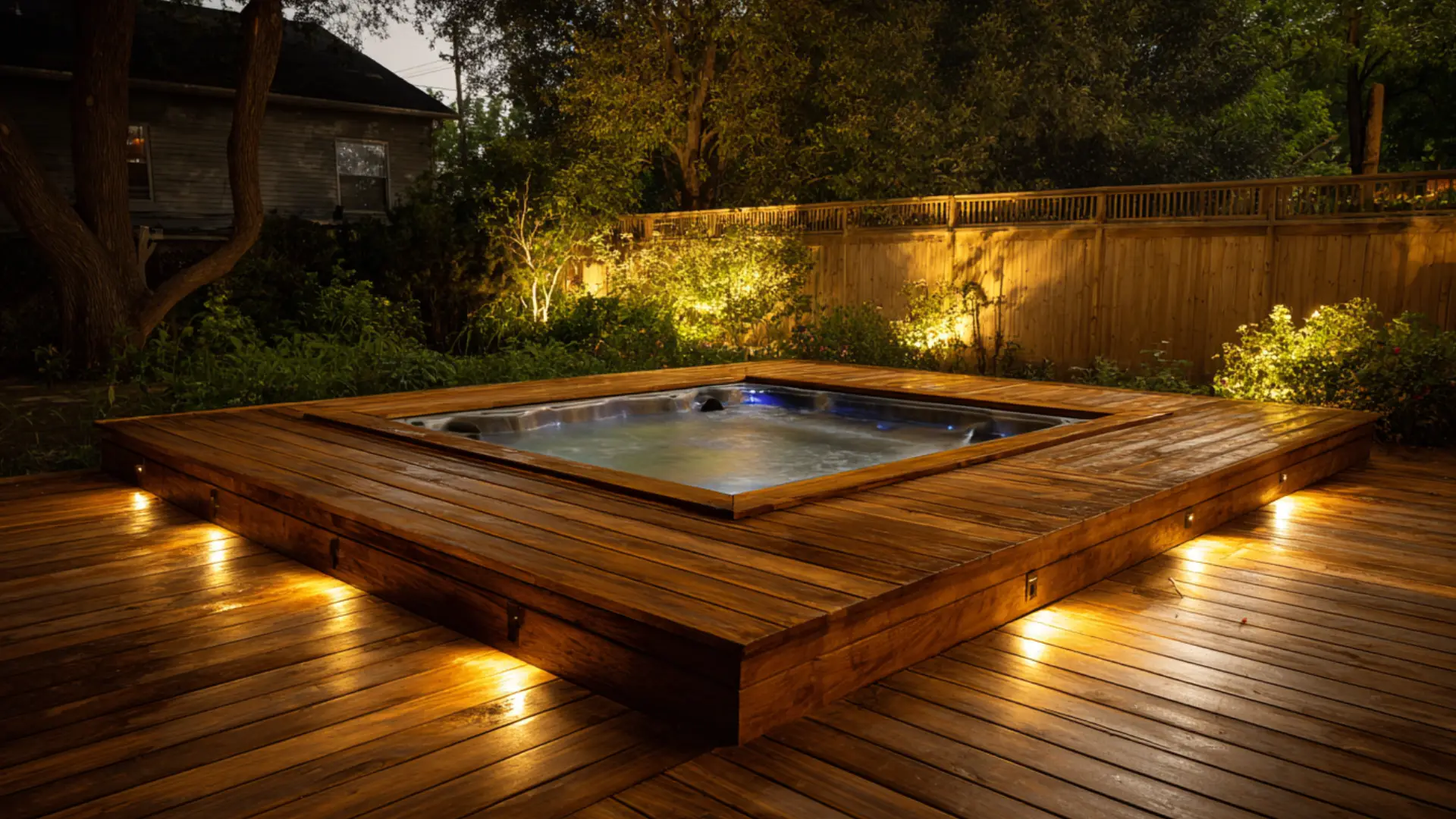
Recessed spotlights sit flush with the deck boards and cast a low, even light across the surface.
They do not stick up or get in the way of foot traffic. The glow spreads across the deck without harsh shadows.
These lights work well around the edges of the hot tub or along the perimeter of the deck. Most versions are waterproof and built for outdoor use.
31. In-Tub LED Lighting
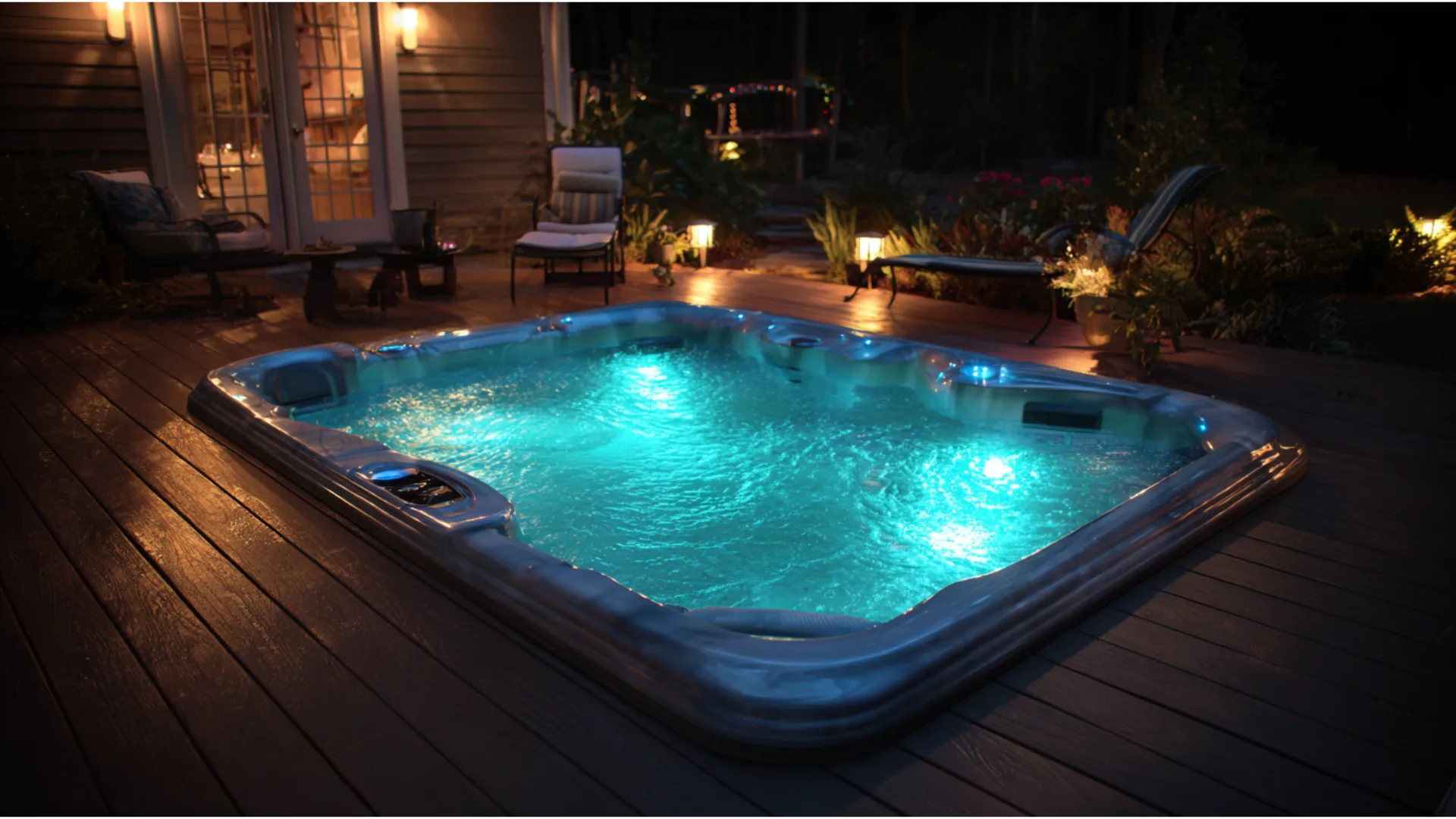
Many hot tubs come with built-in LED lights that sit below the waterline. When turned on after dark, the water picks up the color and glows from within. Most systems let you choose from several colors or cycle through them slowly.
This is one of the simpler lighting features to use since it is already part of the tub and requires no extra wiring or installation.
32. Uplighting Around Planters and Pergola Posts
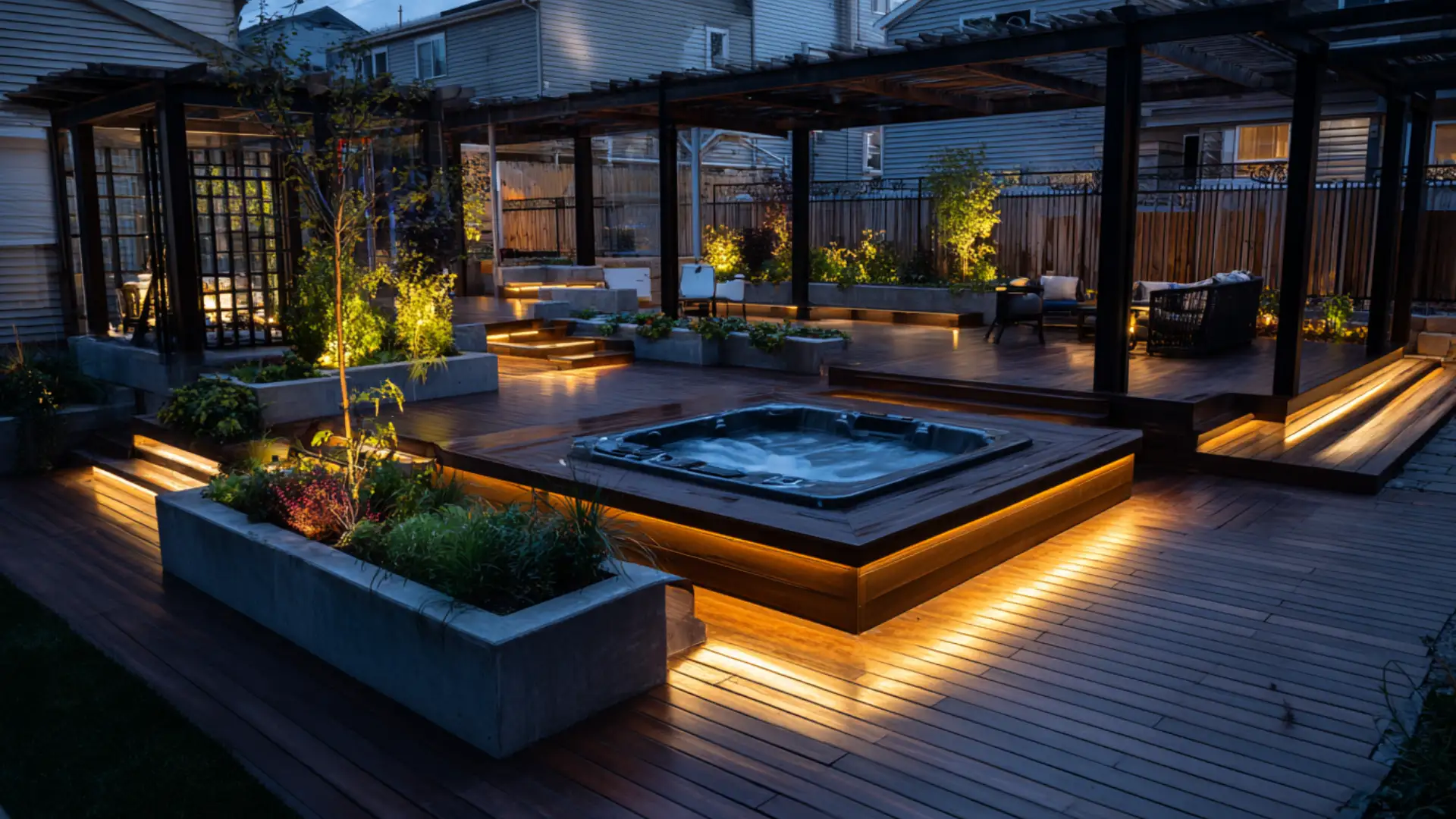
Ground-level spotlights aimed upward create a layered look on a hot tub deck at night. Place them at the base of pergola posts or beside planters to cast light upward along the surface.
This highlights the structure of the deck without flooding the whole area with bright light. It works well alongside other softer light sources rather than as a standalone option.
33. Solar-Powered Path Lights
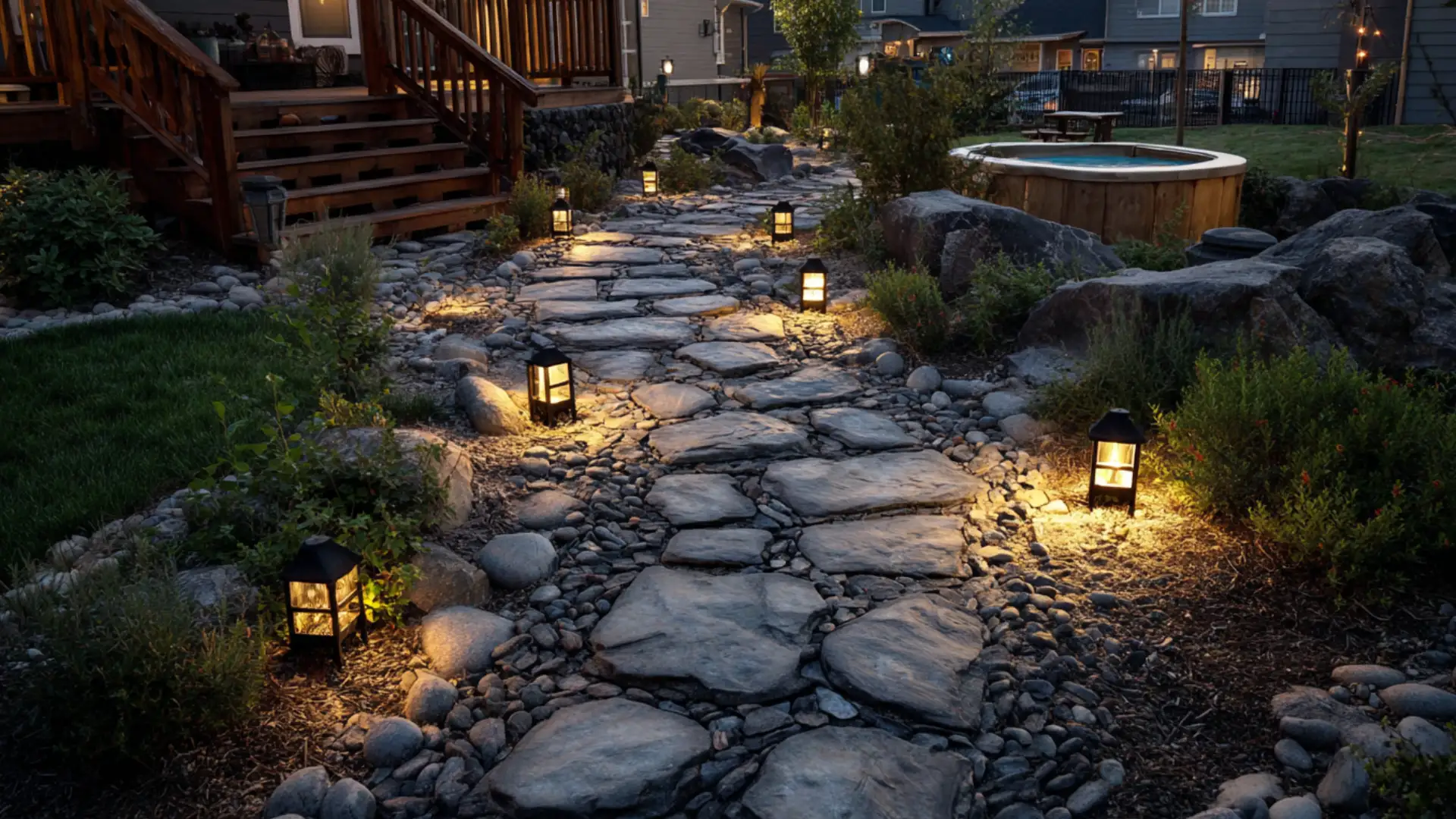
Solar stake lights along the path to the hot tub are a low-effort lighting option. They charge during the day and turn on automatically at dusk. No wiring is required, making them easy to move or reposition.
They are not the brightest option, but they work well for marking a path and adding a bit of ambient light around the edges of the deck.
Good lighting sets the nighttime tone. But what grows around your deck shapes the space just as much – next, we look at planting and landscaping options.
Landscaping and Nature Ideas
Plants and natural materials can make a hot tub deck feel more settled into the yard. These five ideas range from simple planter boxes to full garden surrounds.
34. Planter Boxes Built into the Deck
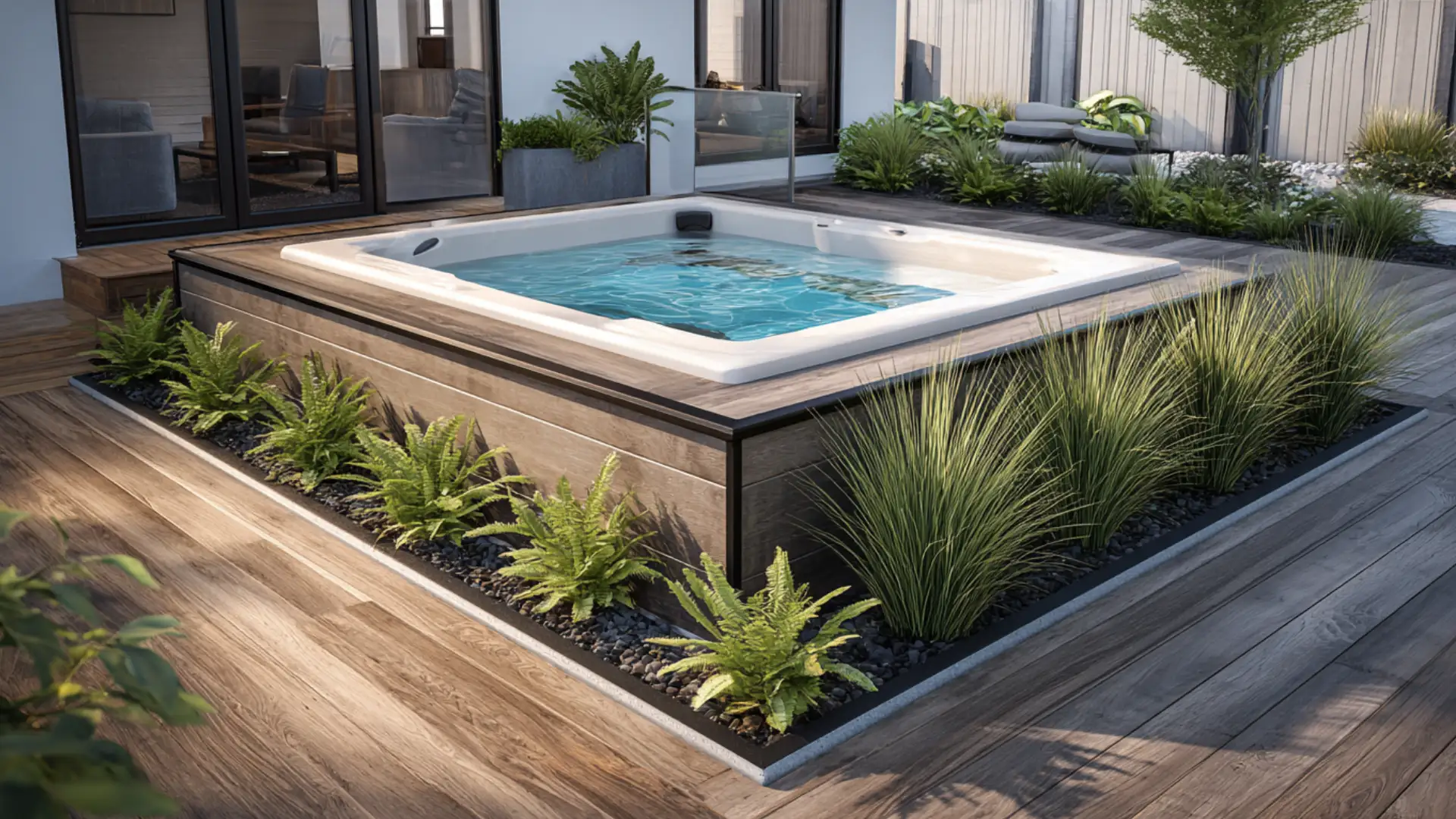
Built-in planter boxes sit right along the edge of the deck frame. Fill them with ferns, lavender, or ornamental grasses for a soft border around the hot tub.
The plants grow over time, making the deck feel less like a separate structure. Cedar planter boxes are a common choice because the wood holds up well and matches most deck materials.
35. Stepping Stone Path to the Hot Tub
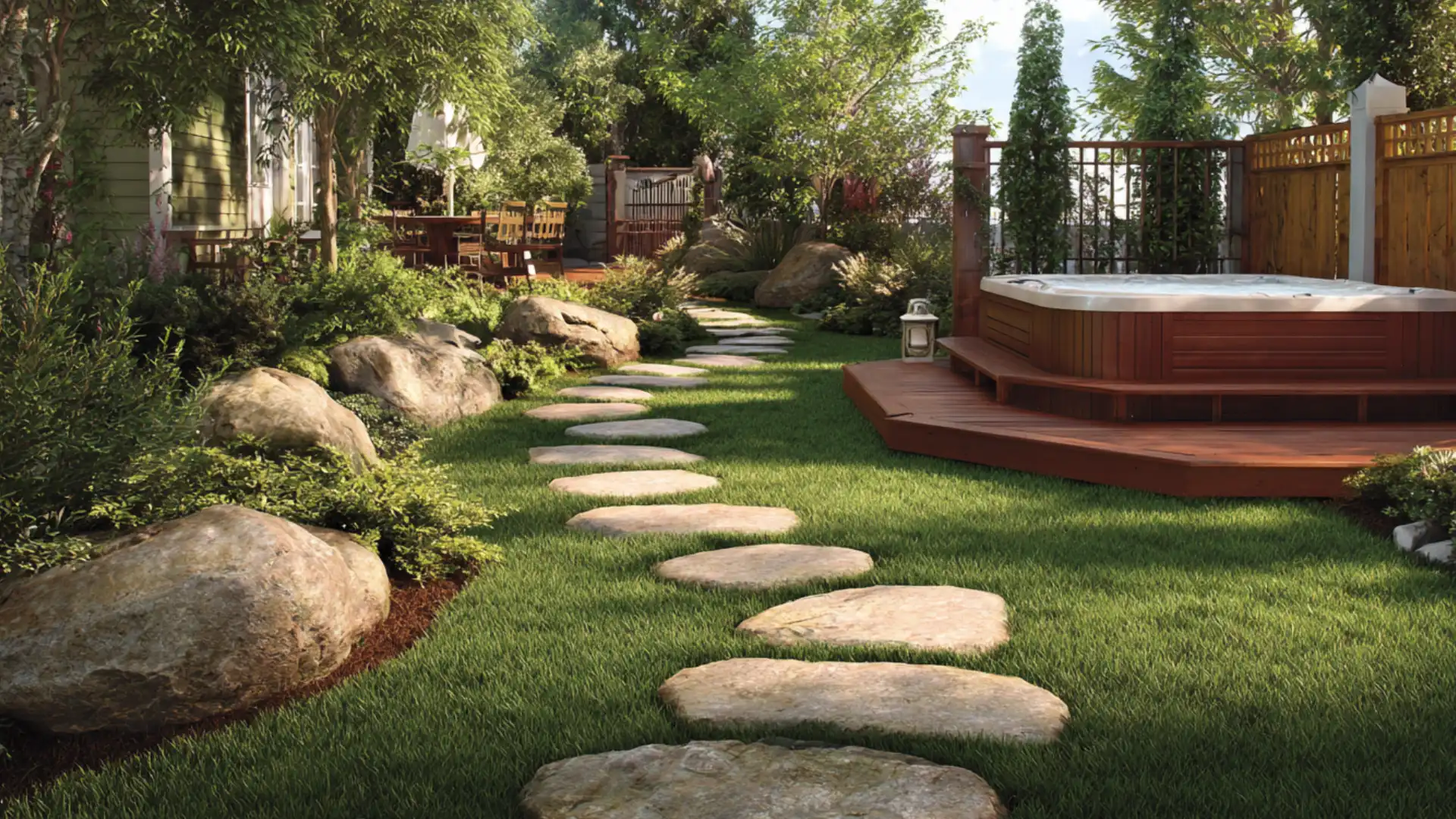
A stone path through the yard gives you a clear, dry route to the hot tub. Flat flagstone, concrete pavers, or natural river stones all work well. Set them into the ground so they sit level with the grass or gravel around them.
The path does not need to be straight. A gentle curve through the yard can make the whole space feel more thought-out.
36. Japanese Zen Garden Surround
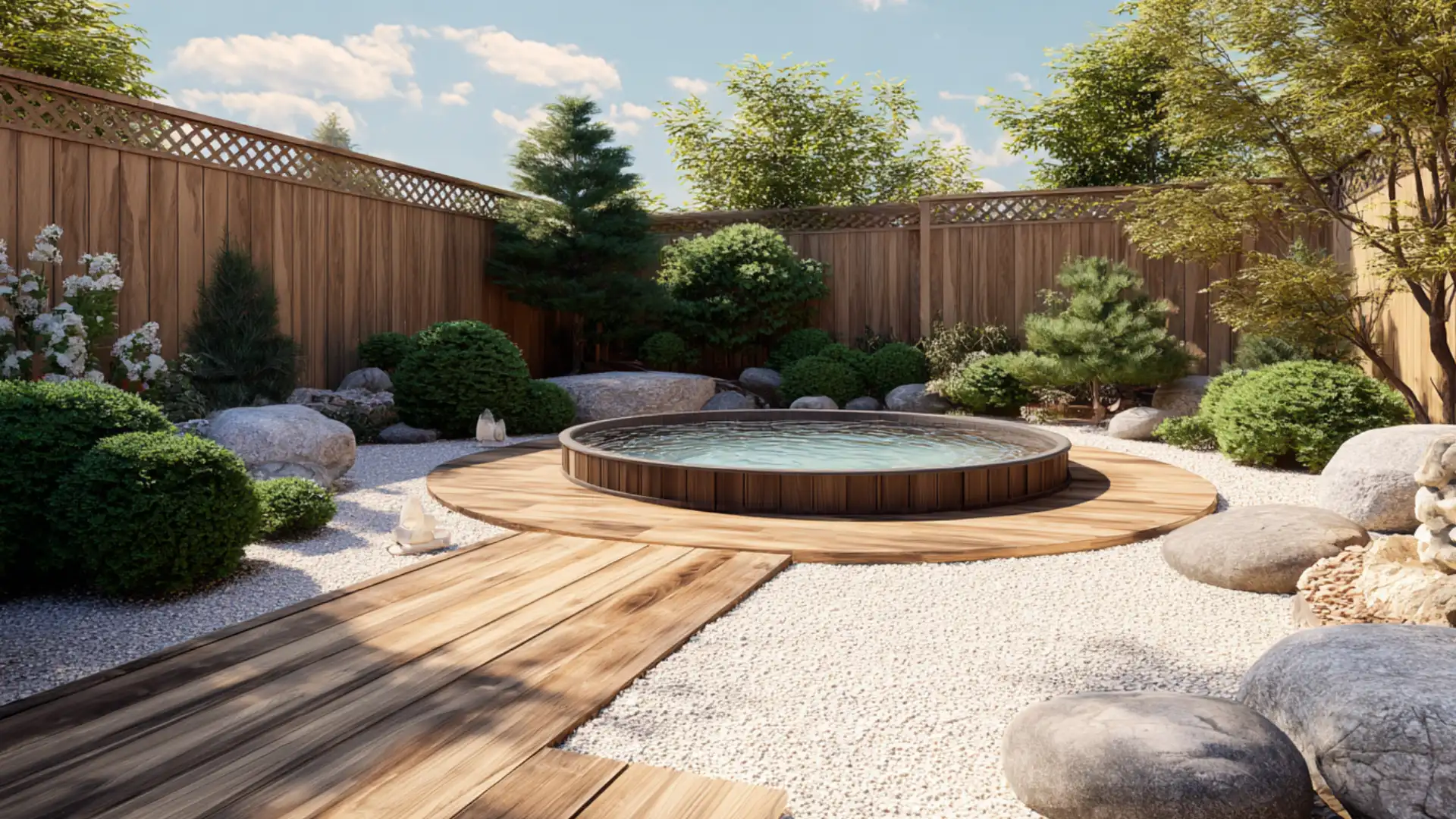
A zen-style surround keeps things calm and simple around the hot tub deck. Use raked gravel or decomposed granite as the base. Add a few larger boulders for structure.
Low, manicured shrubs, such as boxwood or Japanese holly, work well along the edges. A small bamboo water feature adds soft sound without taking up much space. The overall look stays clean and low-maintenance.
37. Tropical Planting Scheme
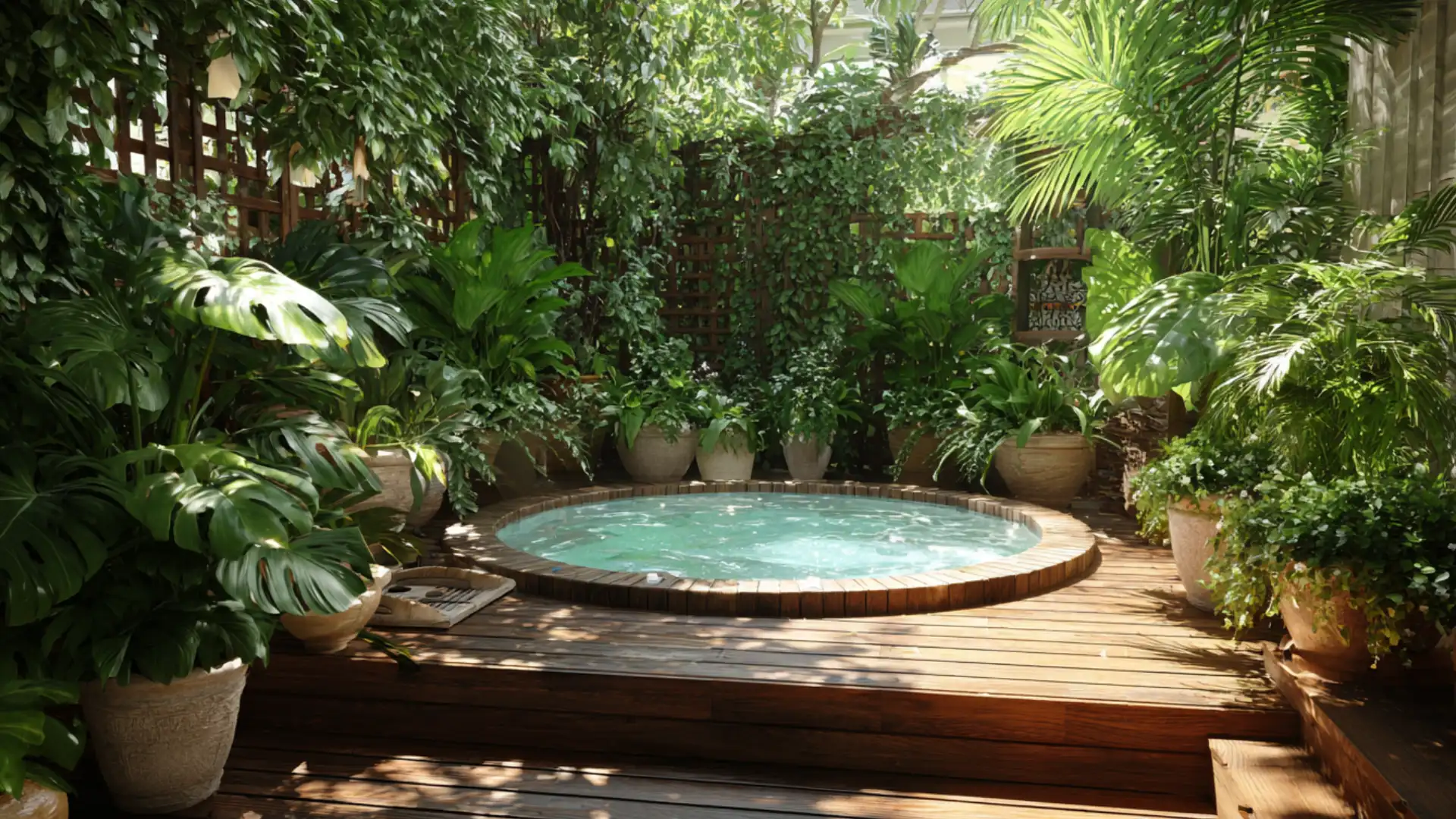
Large-leafed plants give a hot tub deck a lush, full look. Elephant ears, bird-of-paradise, and dwarf palms all grow well in warm climates. In cooler areas, many of these can be potted and brought inside during winter.
Group taller plants toward the back and shorter ones along the deck edge. The layered height makes the space feel more complete.
38. Wildflower and Native Plant Border
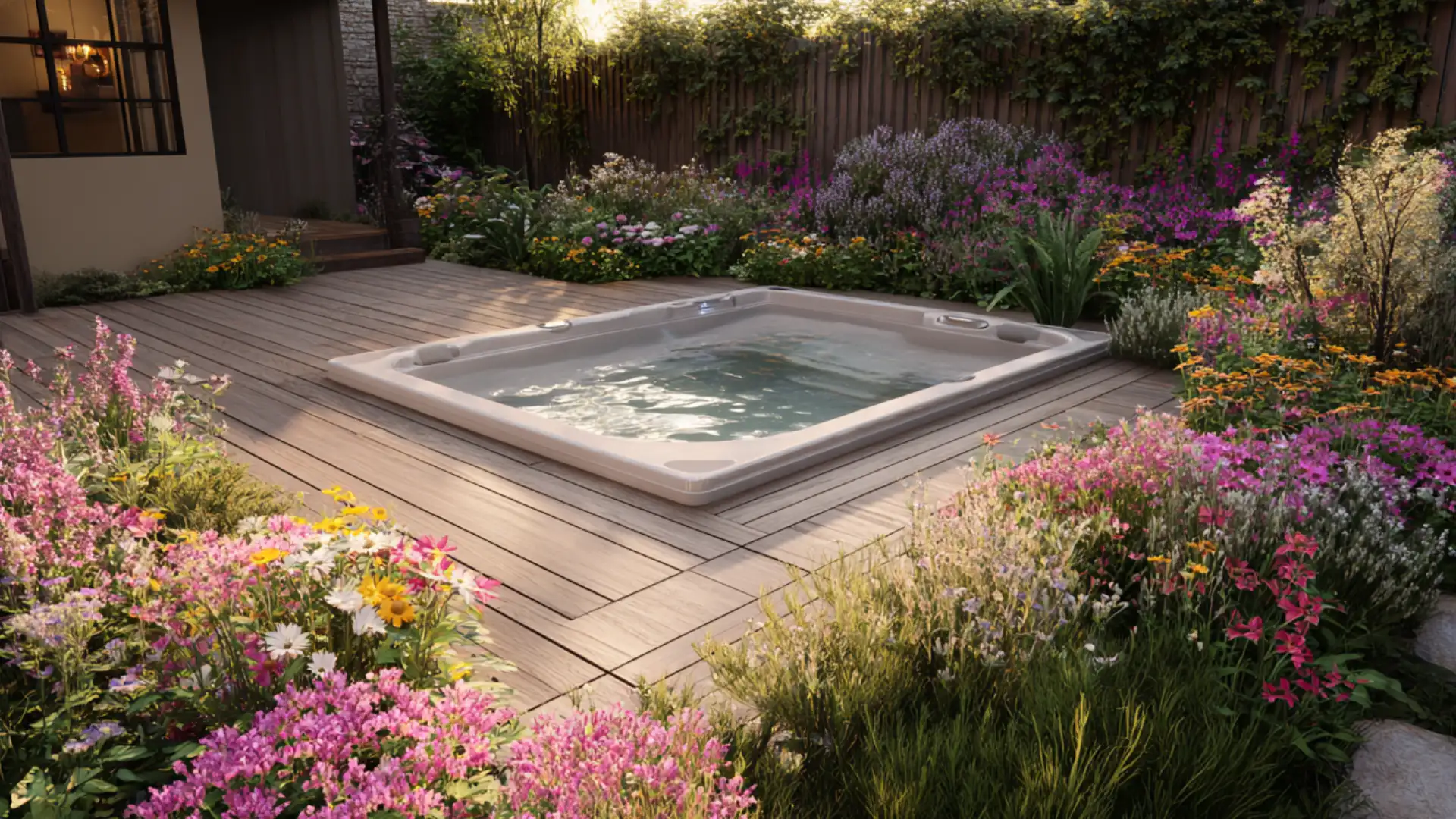
A border of native wildflowers along the deck perimeter adds color without much upkeep. Native plants are already suited to your local climate, so they need less watering and care once established.
Coneflowers, black-eyed Susans, and lavender are popular choices. They also attract bees and butterflies, which adds some life to the space during warmer months.
Greenery gives your deck a calm, natural quality. Now that the setting is sorted, it’s time to focus on how the space is actually used and by whom.
Entertainment and Lifestyle Ideas
A hot tub deck can do more than hold a tub. These ideas show how to build a space that works for entertaining, relaxing, and spending real time outdoors.
39. Hot Tub and Fire Pit Combo Deck
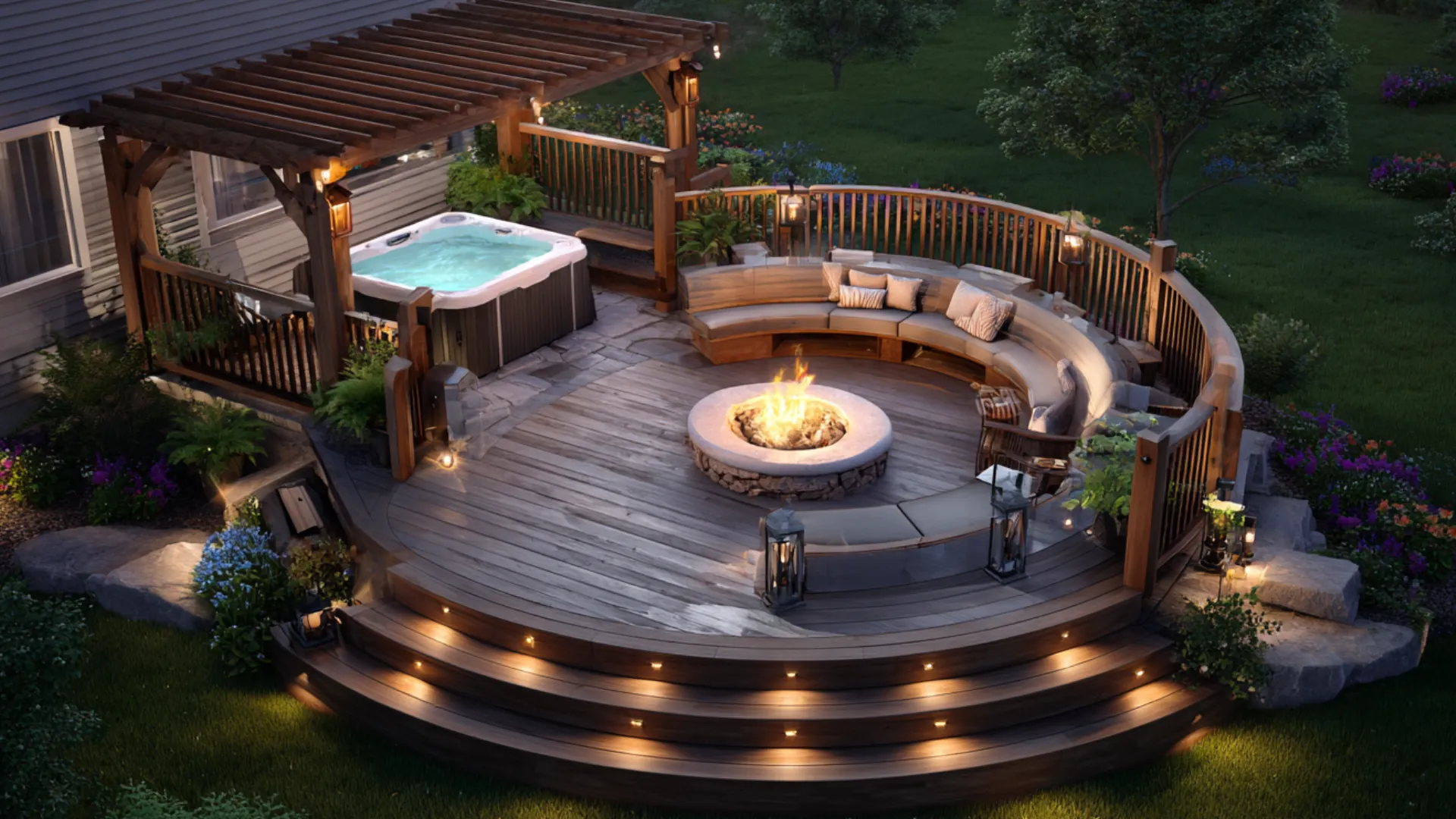
Pairing a fire pit with a hot tub gives the deck two focal points. On cooler nights, the fire adds warmth while you dry off or wait for others to take a turn in the tub.
Keep a few feet of space between the two for comfort and safety. A circular seating arrangement around the fire pit works well alongside a square or rectangular deck layout.
40. Outdoor Kitchen Nearby
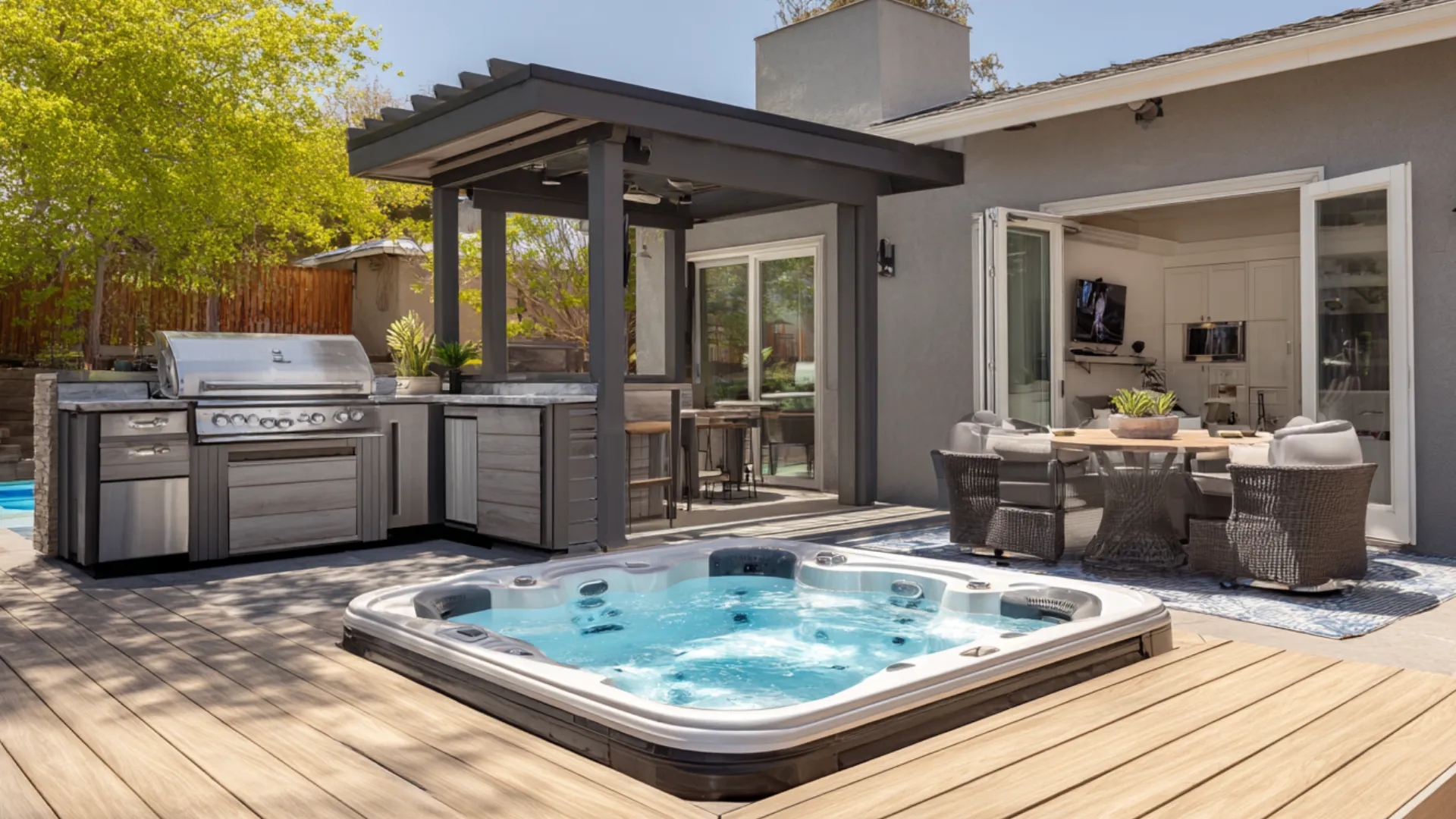
An outdoor kitchen next to the hot tub keeps everything in one place when you have guests over.
A built-in grill, a prep counter, and a small fridge cover most of what you need.
Position it close enough to the tub to be convenient but far enough to keep the cooking area dry. This setup makes the deck usable for both meals and soaking on the same evening.
41. Weatherproof TV or Projector Screen
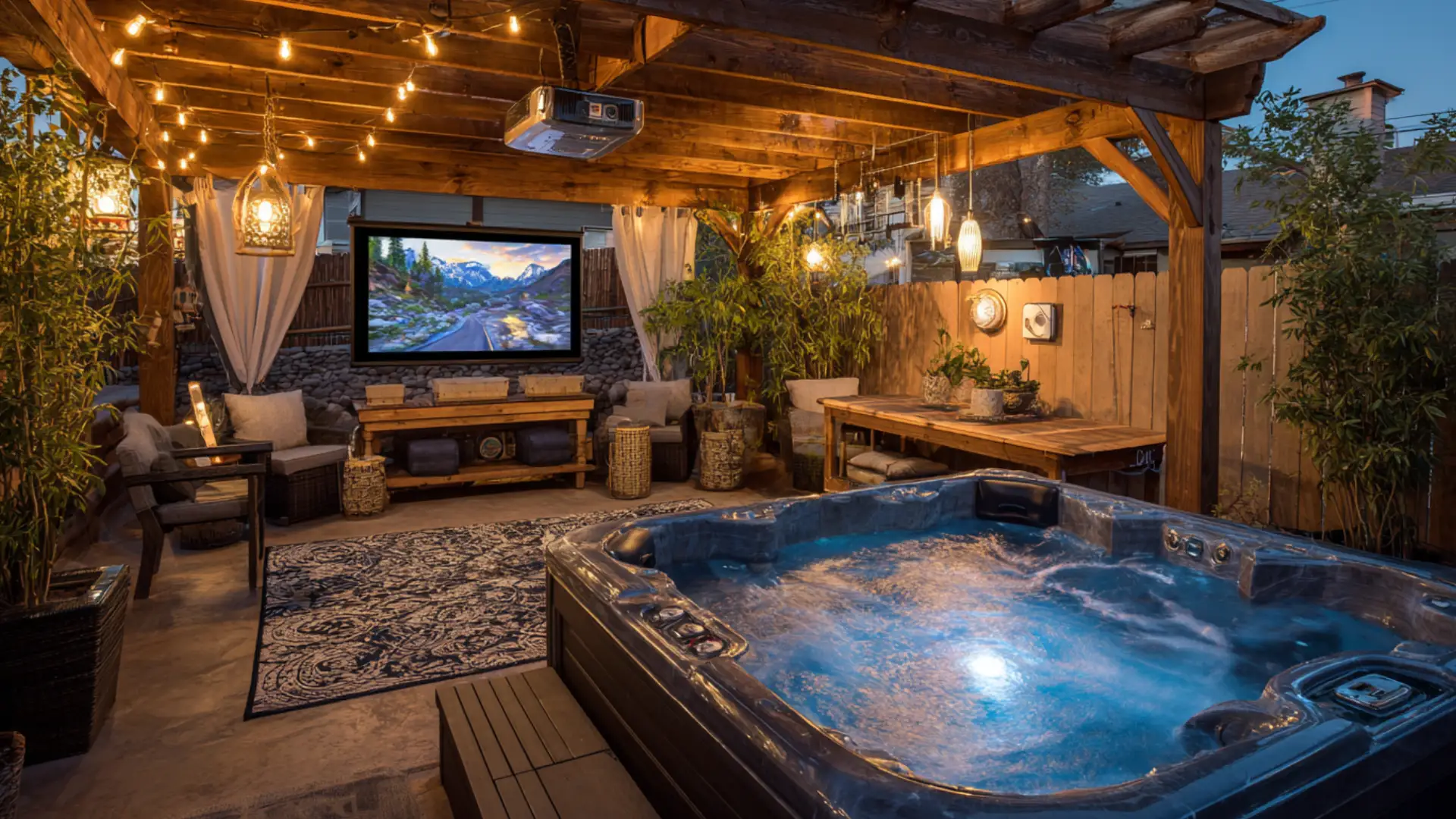
A weatherproof TV or drop-down projector screen turns the hot tub deck into an outdoor viewing area. Mount the screen where it is visible from inside the tub without straining your neck.
Projector screens work well under a pergola or gazebo roof. Make sure any electronics are rated for outdoor use and protected from direct rain and moisture at all times.
42. Outdoor Speaker System
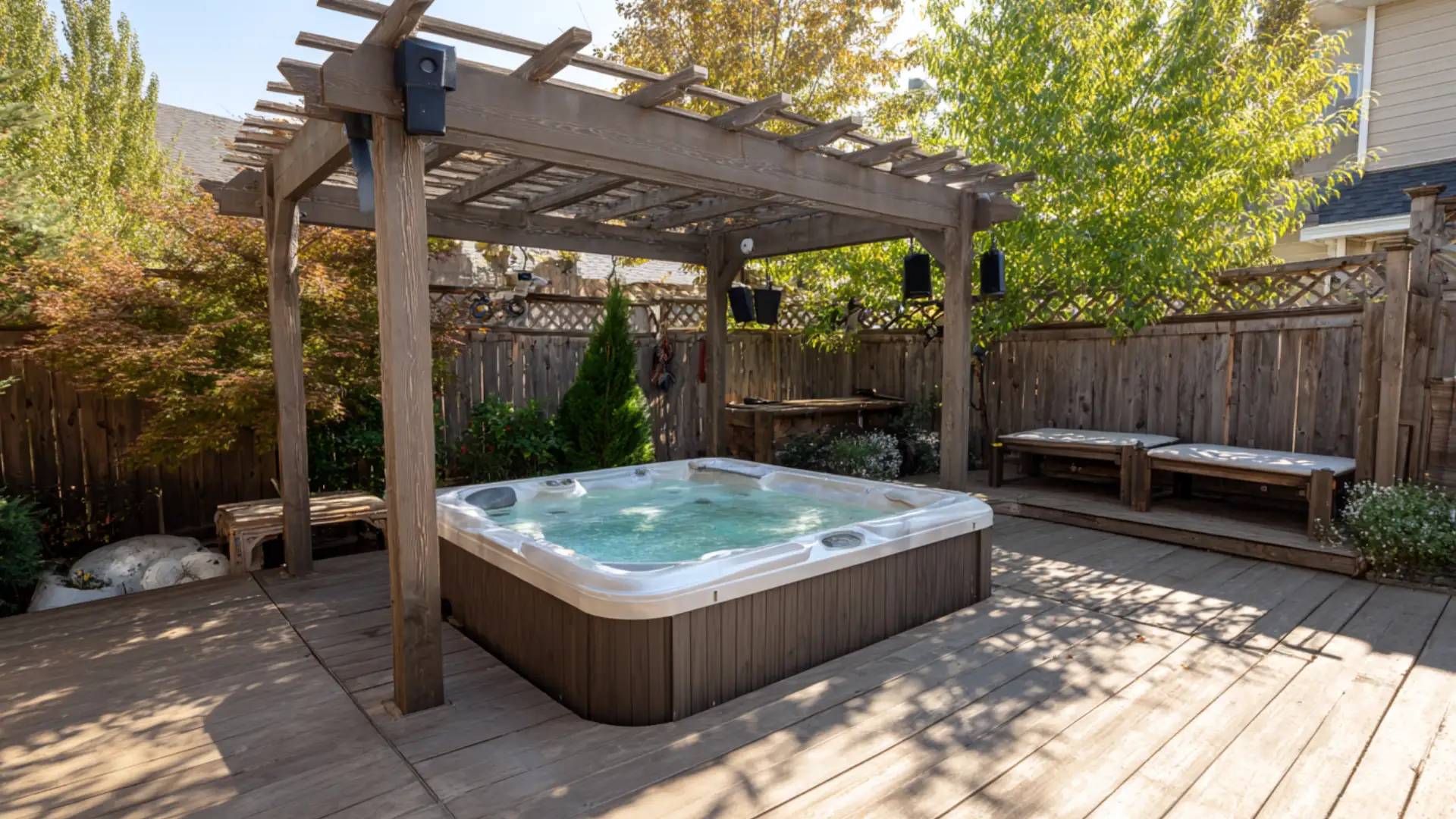
Built-in outdoor speakers let you play music without carrying a portable speaker outside each time. Mount them on the pergola posts or into the deck structure.
Hardwired systems tend to have better sound quality, but Bluetooth options are easier to install. Position the speakers so the sound spreads evenly across the deck rather than pointing directly at the tub from one side.
43. Swim Spa and Deck Combo
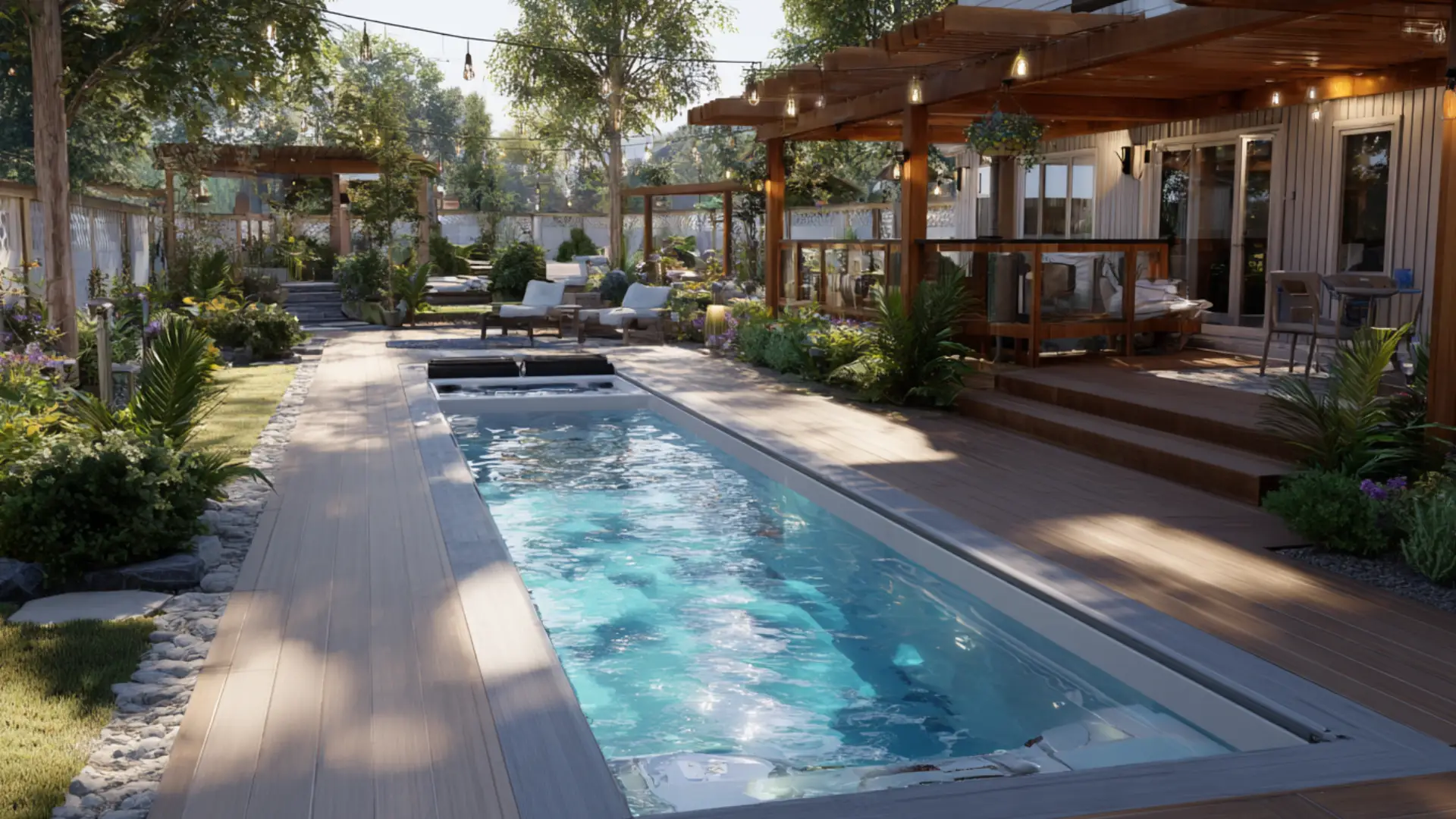
A swim spa is a longer, deeper unit that works for both exercise and soaking. It fits into a deck the same way a hot tub does, but gives you more room to move.
One end stays cooler for swimming, and the other stays warmer for relaxing. This is a good option if you want a single structure that works year-round for multiple purposes.
44. Hot Tub and Outdoor Bar or Beverage Station
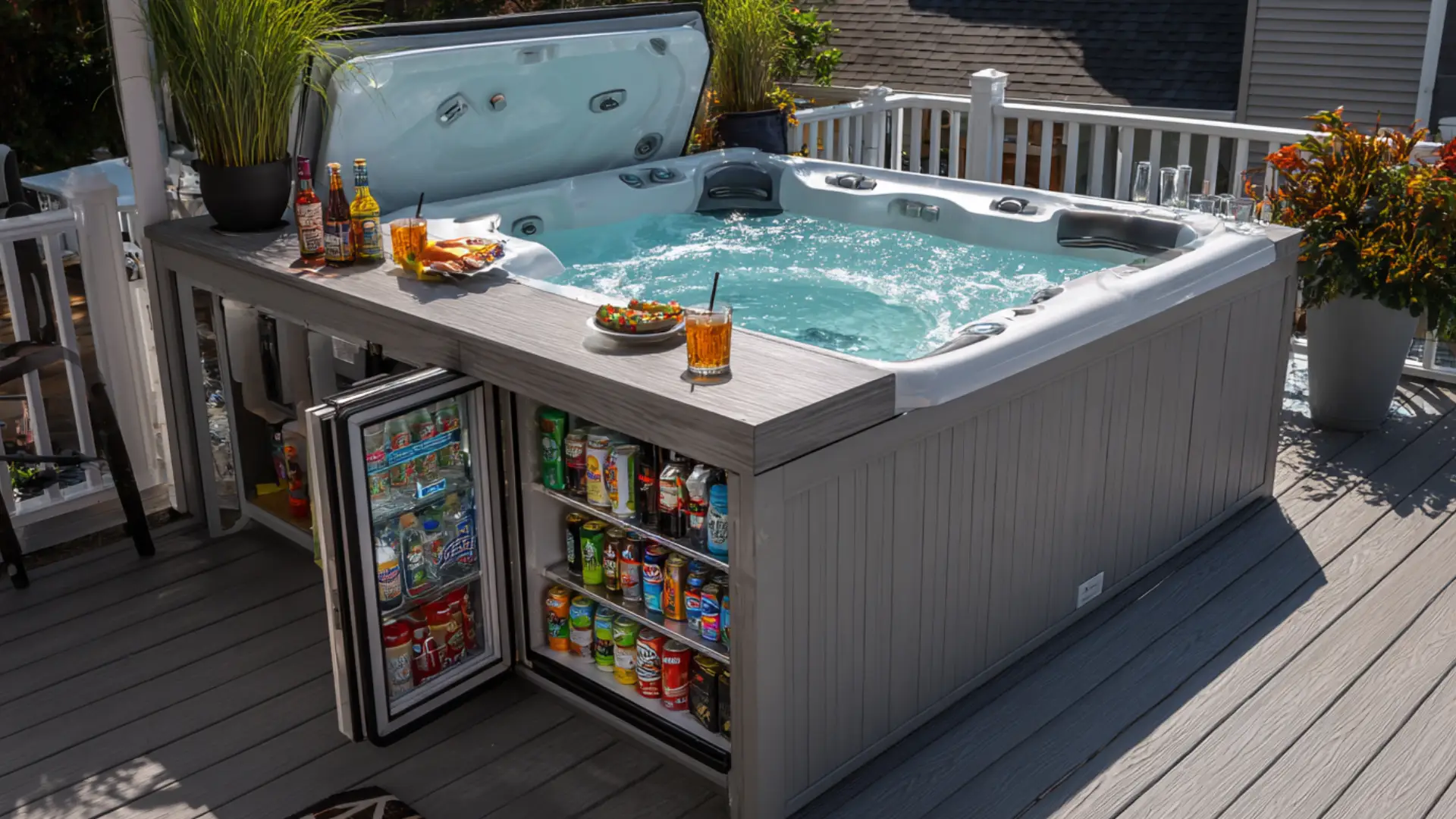
A built-in bar counter or drink rail within arm’s reach of the hot tub is a practical addition. It gives you a place to set drinks, snacks, or towels without leaving the tub.
A small wine fridge or cooler built into the deck cabinet keeps things cold nearby. Even a simple countertop ledge at tub height makes a noticeable difference in how usable the space feels.
45. Lounge Zone with Daybed and Hot Tub
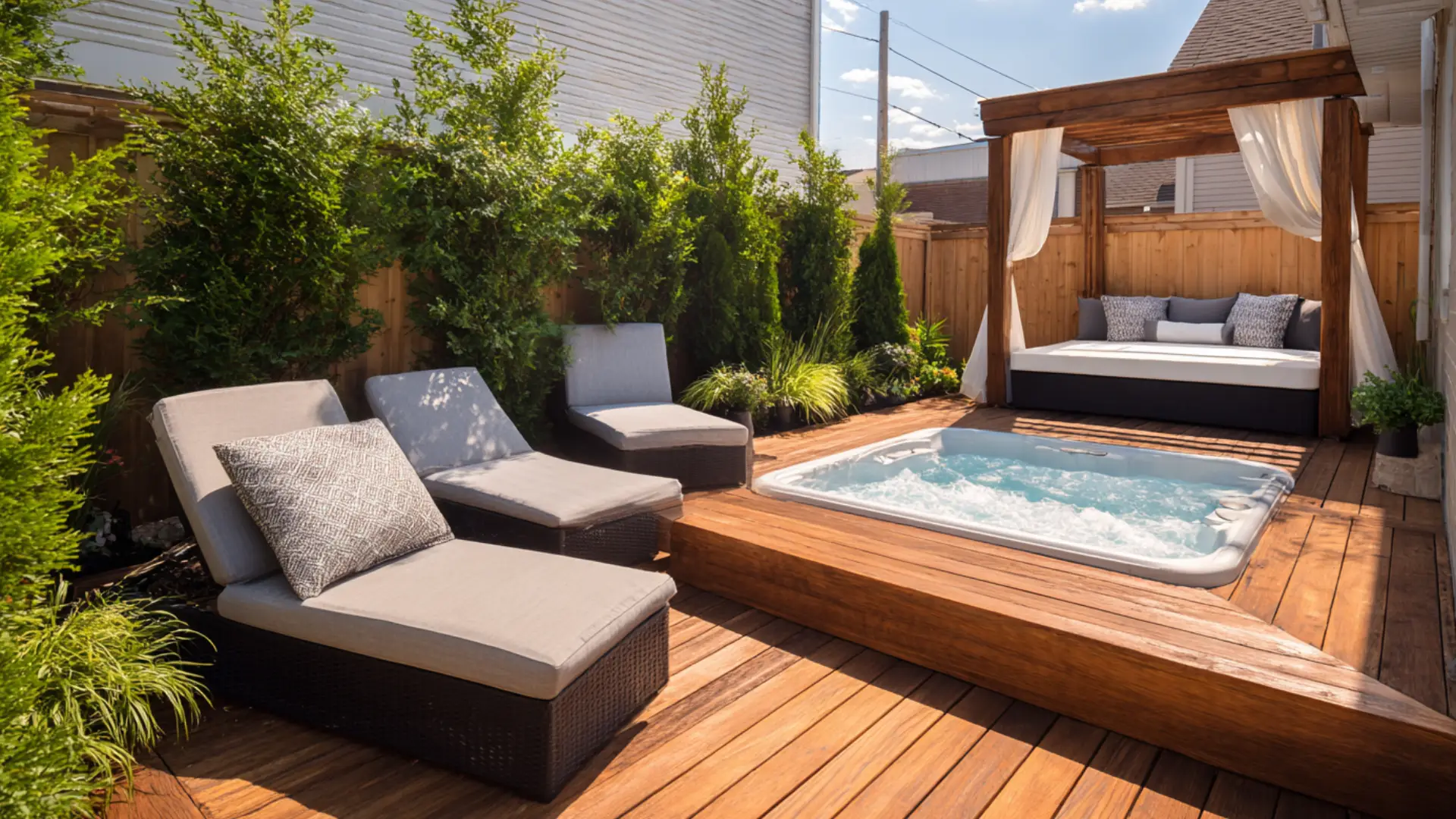
Adding an outdoor daybed or a set of chaise lounges near the hot tub rounds out the deck space.
It gives people a place to sit, dry off, or relax before getting in.
Position the lounge area close enough to feel connected to the tub but with enough separation to work as its own spot.
A side table and outdoor rug help tie the two areas together. Adding a lounge area or even a cozy sunroom next to your deck creates a complete relaxation zone you can use in any season.
Material and Style Ideas
The material you choose shapes how the whole deck looks and how much work it takes to keep up. These ideas cover a range of styles, budgets, and maintenance levels.
46. Natural Wood Deck (Cedar/Redwood)
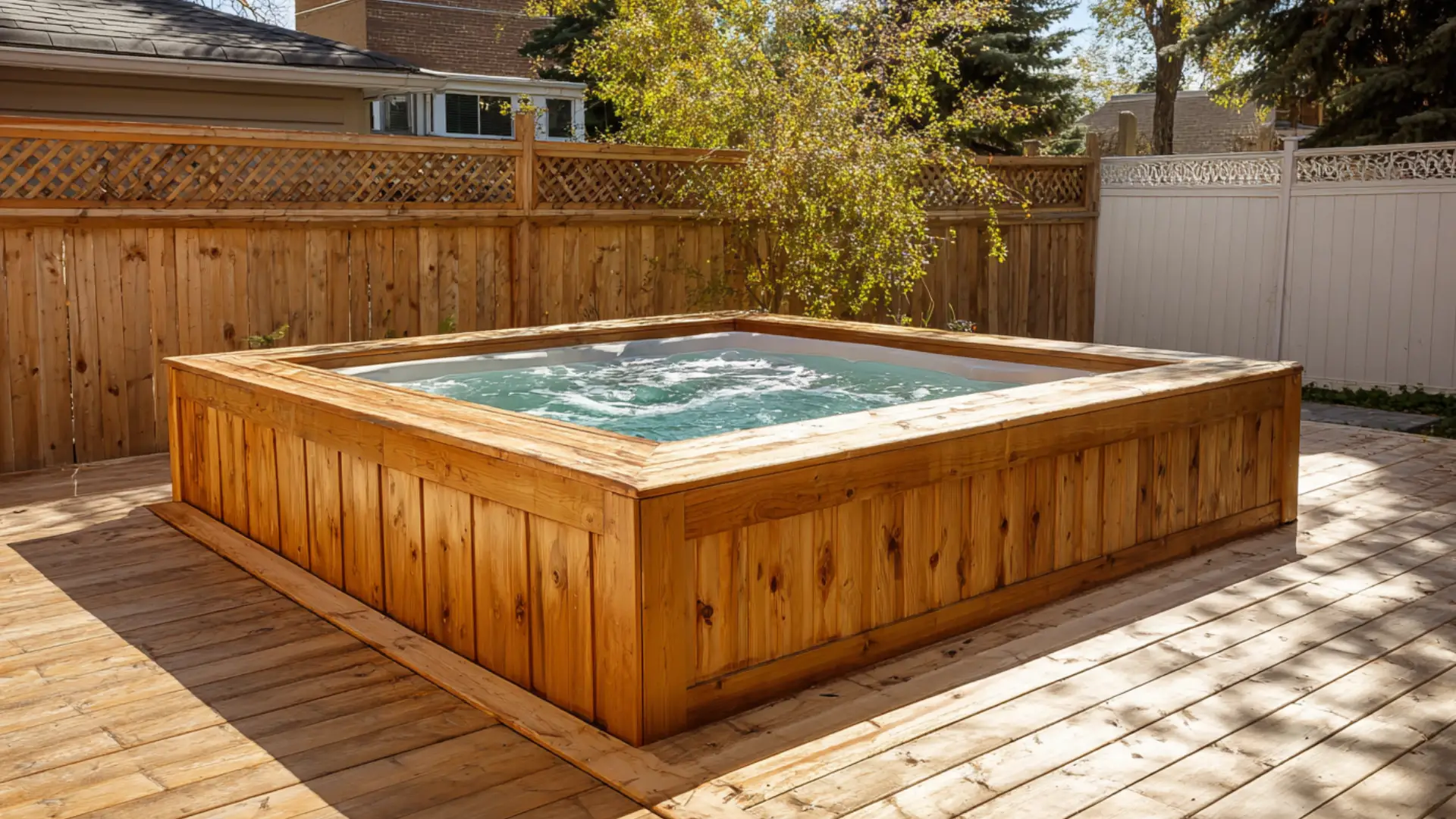
Cedar and redwood are two of the most common choices for a hot tub deck. Both are naturally resistant to moisture and insects, which makes them a solid fit for a wet environment.
The warm tones of the wood look good alongside most hot tub cabinet finishes. Cedar is slightly more affordable, while redwood tends to have a richer color straight out of the gate.
47. Composite Decking in Dark Tones
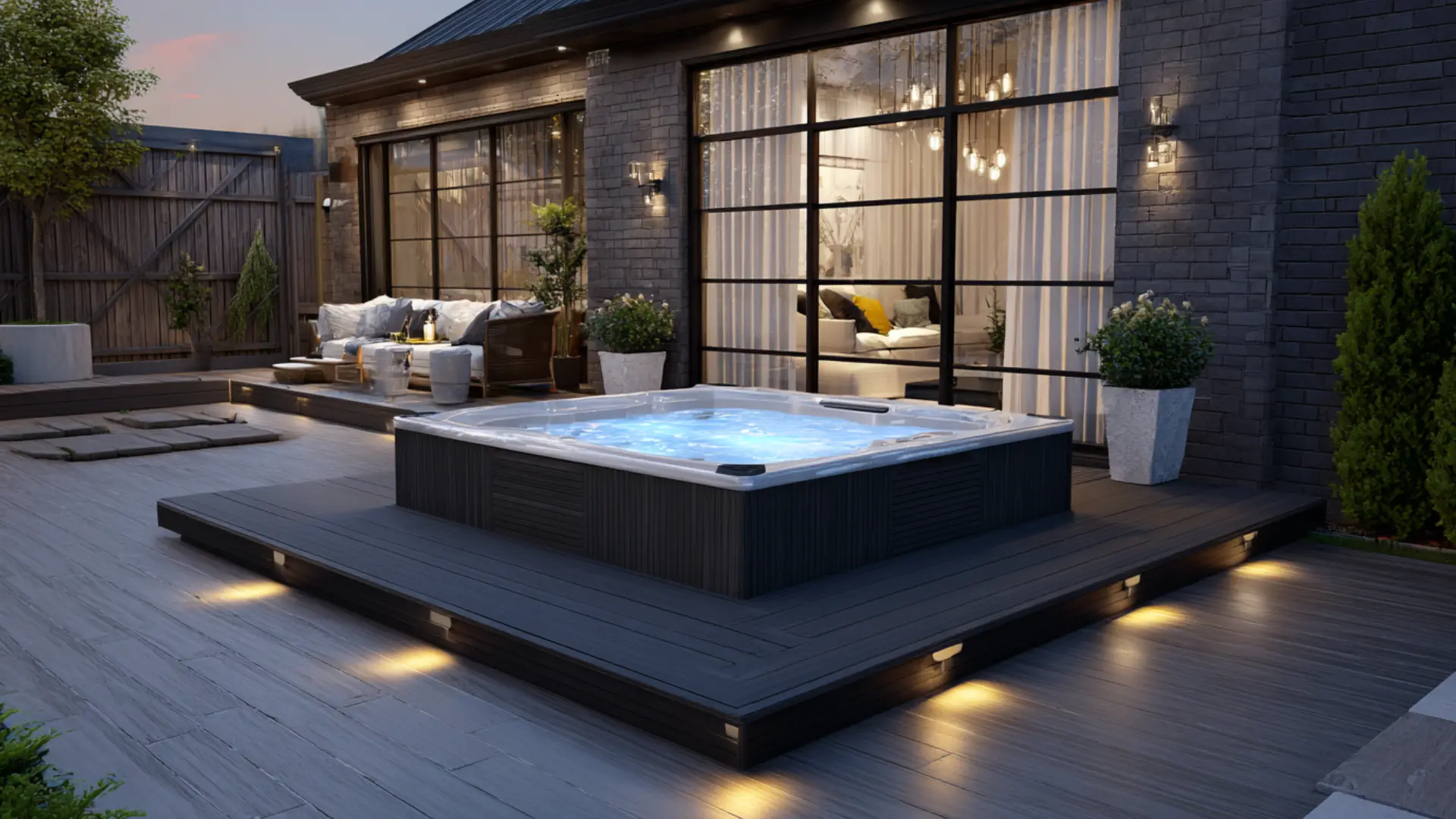
Dark charcoal or grey composite boards give a hot tub deck a clean, modern look. Composite holds up well against moisture, UV exposure, and heavy foot traffic. It does not need staining or sealing the way wood does.
The dark color works well with stainless steel hardware and simple black or grey hot tub cabinets. It stays looking consistent year after year with very little effort.
48. Porcelain Tile Surround Deck
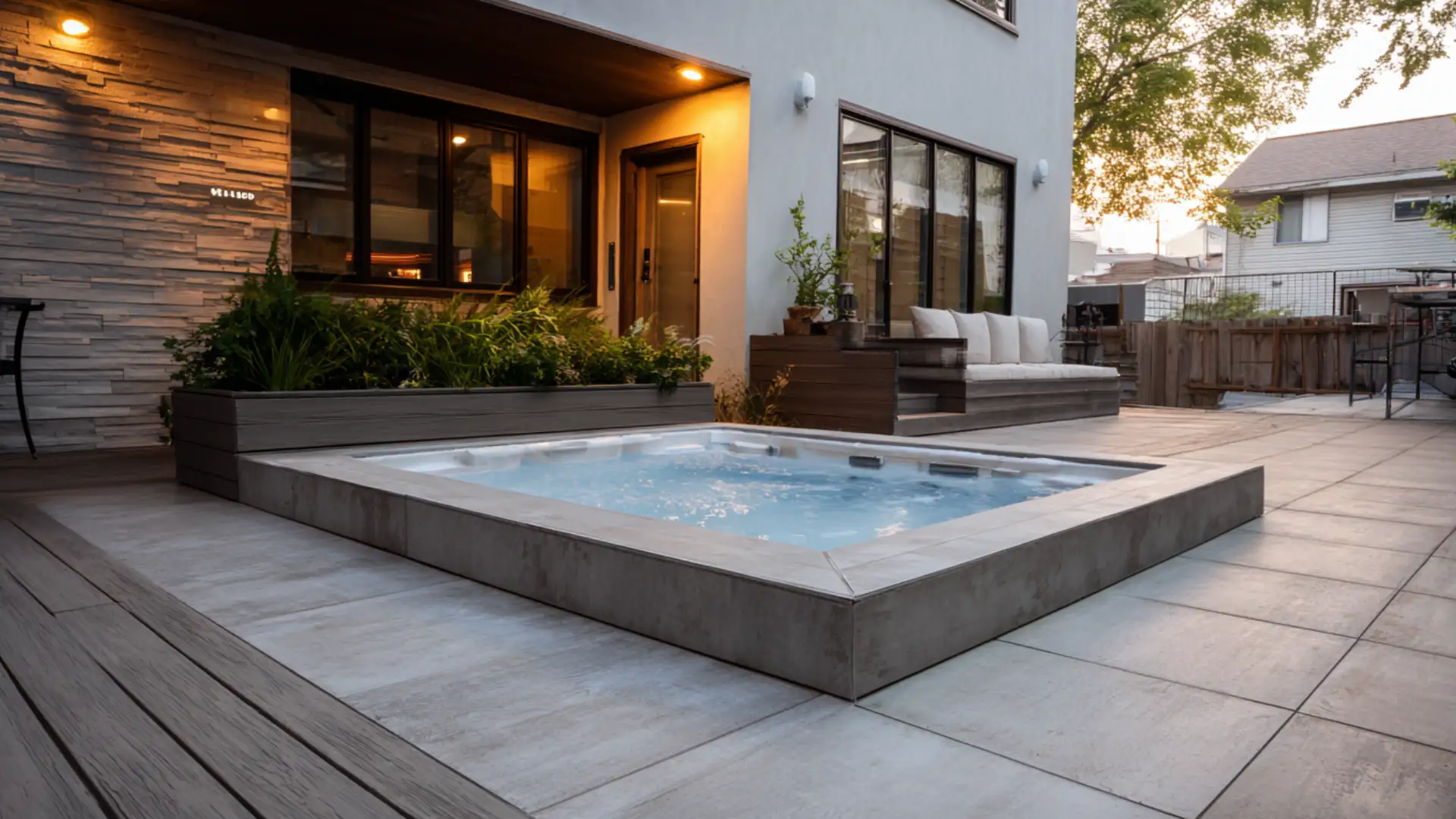
Large-format porcelain tiles create a smooth, finished surface around a hot tub. They are easy to wipe down and do not absorb water. Choose a tile with a textured or matte finish to keep the surface safe underfoot when wet.
Porcelain works well in warmer climates. In areas with freezing winters, make sure the tile is rated for outdoor and frost-resistant use before installing.
49. Mixed Material Deck (Wood and Stone)
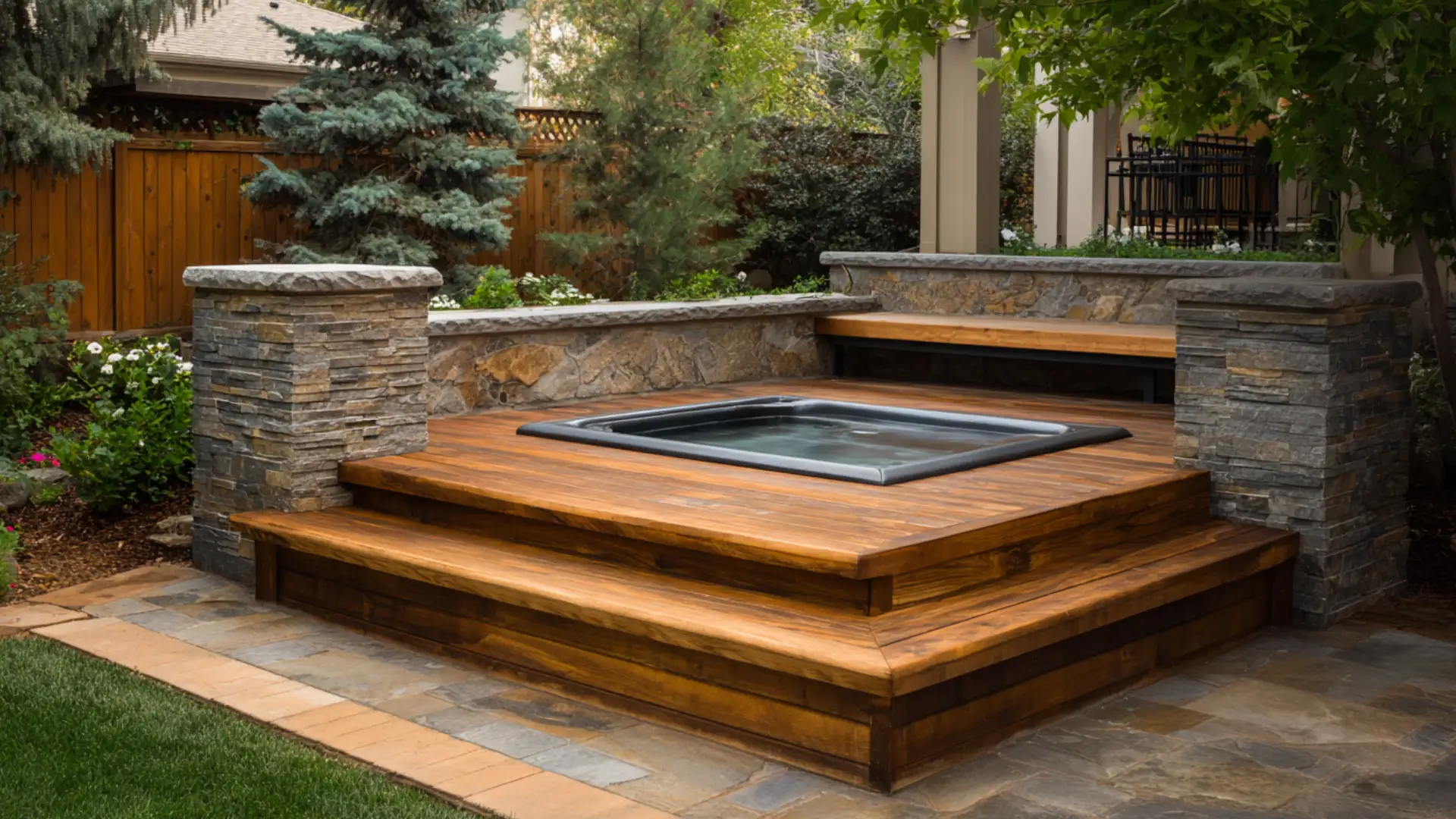
Combining wood decking with stone or slate accents adds visual interest to a hot tub deck.
Use wood as the main surface and bring in stone around the tub edge, on a step, or along a low wall.
The two materials balance each other out. Wood brings warmth, and stone brings a grounded, natural feel. This combination works across many different yard styles and house exteriors.
50. Rustic Log-Style Deck
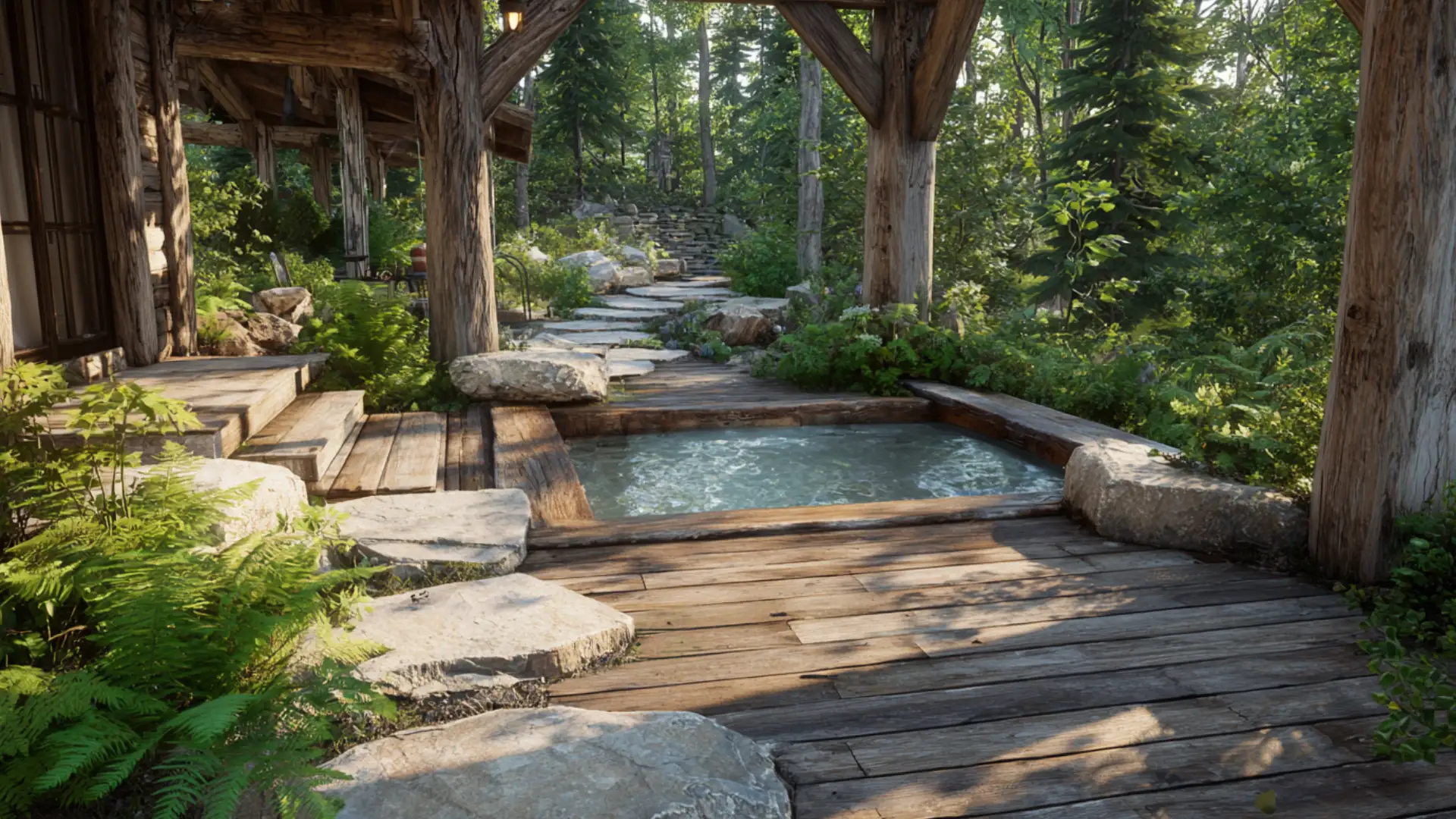
A rustic deck uses rough-hewn wood, reclaimed beams, and natural stone to create a cabin-style look. This works well in wooded or rural settings where the surroundings already have a natural feel.
Thick wood posts, uneven stone paths, and simple plank decking all fit this style. The materials do not need to look perfect. Some wear and variation in the wood actually adds to the overall character.
51. Scandinavian Minimalist Deck
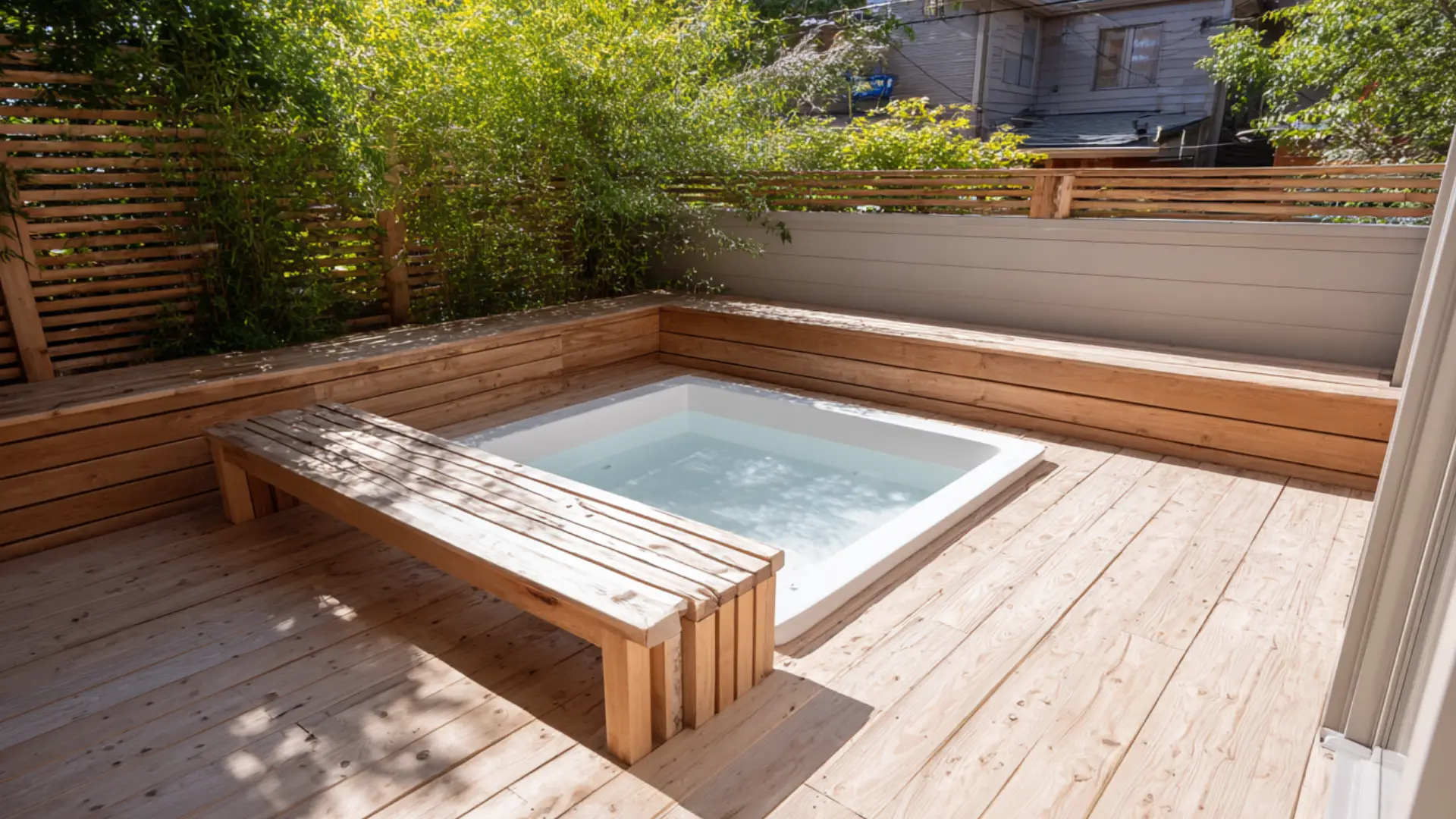
A minimalist hot tub deck keeps everything clean and simple. Use pale blonde wood or a light-toned composite for the decking surface. Keep the layout open with no extra furniture or decoration.
A single bench, a towel hook, and the tub itself are all this style needs. The focus stays on clean lines and open space rather than layers of added detail.
Each style calls for a specific material to hold up long-term. Next, we break down which decking options work best around a hot tub and why the choice matters.
Choosing the Right Decking for Hot Tub Decks
Choosing decking for a hot tub deck should feel simple. Focus on safety, comfort, and materials that stay strong in outdoor conditions.
- Moisture and slip resistance: Hot tub areas stay damp from splashes and wet feet, so choose decking with a textured surface that won’t get slick.
- Heat and sun exposure: In direct sun, some materials can feel hot underfoot and may fade faster, so consider comfort during peak summer hours.
- Maintenance expectations: Warm, wet conditions can lead to mold and mildew, so look for materials that are easy to clean and don’t require constant upkeep.
- Barefoot comfort: Prioritize a surface that feels good on bare feet and doesn’t splinter or snag.
- Durability: Pick decking that withstands heavy foot traffic, water exposure, and temperature changes without warping.
The right choice makes your deck safer, easier to maintain, and more enjoyable every time you step outside to relax.
Hardwood vs Thermally Modified WoodThere are two popular options for hot tub decks: hardwood decking and thermally modified wood. Choosing between them depends on the look you want, your budget, and how much maintenance you’re comfortable with. Hardwood offers a rich, premium feel and strong durability, but it usually needs regular cleaning and oiling to keep its color. Thermally modified wood is heat-treated to improve stability and moisture resistance, often requiring less upkeep, though it can still gray without a finish. Pick what fits your climate and routine. |
Pros and Cons of Having a Hot Tub Under Your Deck
Installing a hot tub under an elevated deck can save space and add privacy, but it also brings a few important challenges to plan for.
| Pros | Cons |
|---|---|
| Space-efficient layout | Moisture and ventilation challenges |
| Extra privacy and weather protection | Harder maintenance and service access |
| Cozy outdoor-room atmosphere | Lighting and slip-safety concerns |
Important note: Plan for airflow, drainage, waterproofing, and clear access to service panels, and consult a qualified pro before building.
Making Your Decision
Creating a hot tub deck is all about making the space feel intentional, comfortable to use, easy to move around, and relaxing in every season.
The best hot tub deck ideas combine smart layout choices with privacy features and weather protection, so the area feels calm instead of exposed.
Focus on slip-resistant surfaces, moisture-resistant materials, and lighting that keeps the space safe while setting the mood at night.
If you’re building on an existing structure, make sure support and access are planned from the start so maintenance never becomes a headache.
Want results that look custom and last for years? Save this post and start planning your deck today.