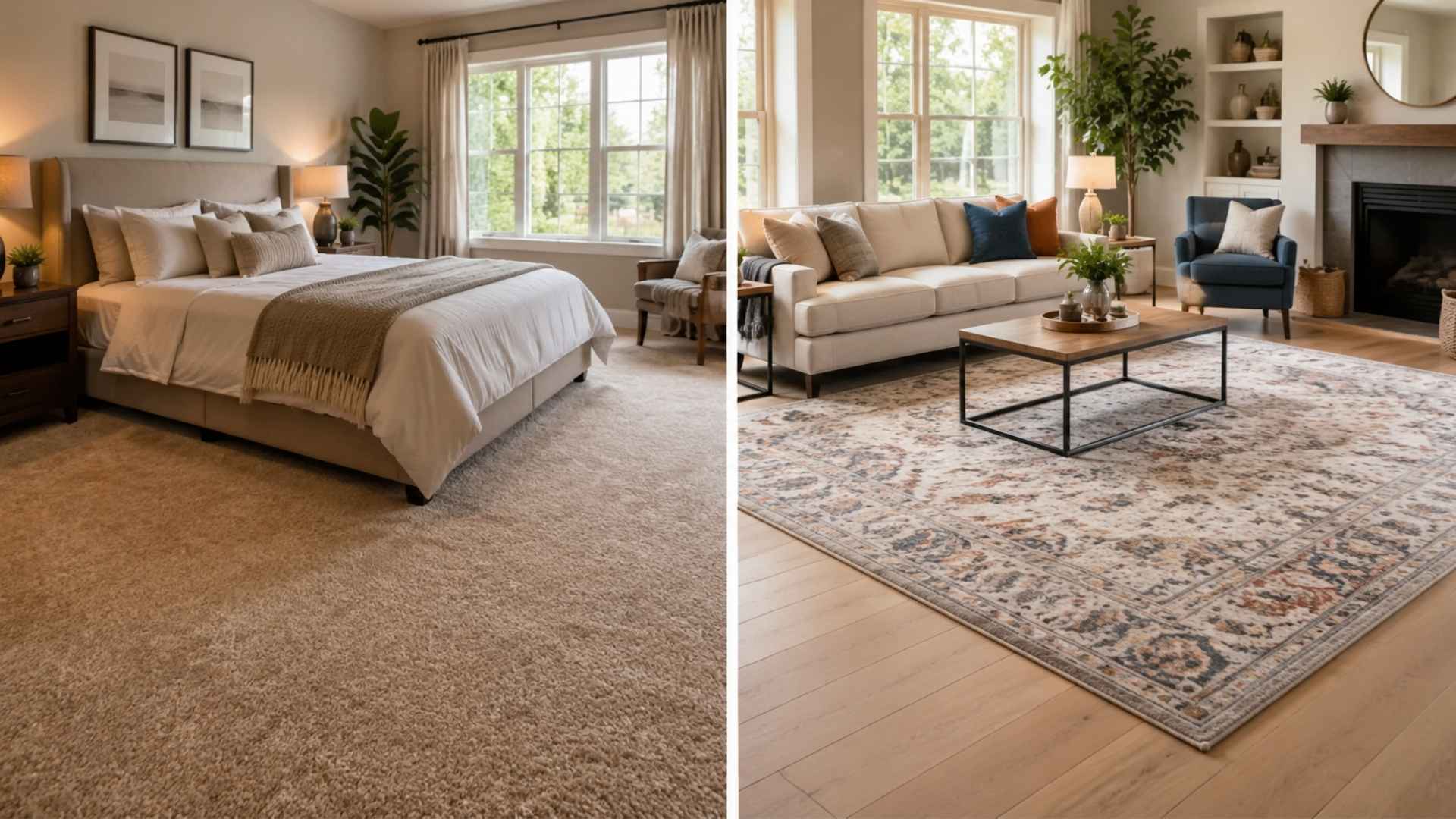
Walk into any home store, and the confusion starts almost immediately. Carpets on one side, rugs on the other, and most people are not sure which is which.
Both cover your floor. Both feel soft underfoot. But they are not the same thing.
A carpet and a rug differ in size, cost, installation, and longevity. Mixing them up can lead to the wrong purchase for the wrong room.
What each word means, how they compare, and which one actually makes sense for a space. Simple words, clear explanations, and practical answers.
Picking the right floor covering for any room will feel much easier than it does now.
What is a Carpet?
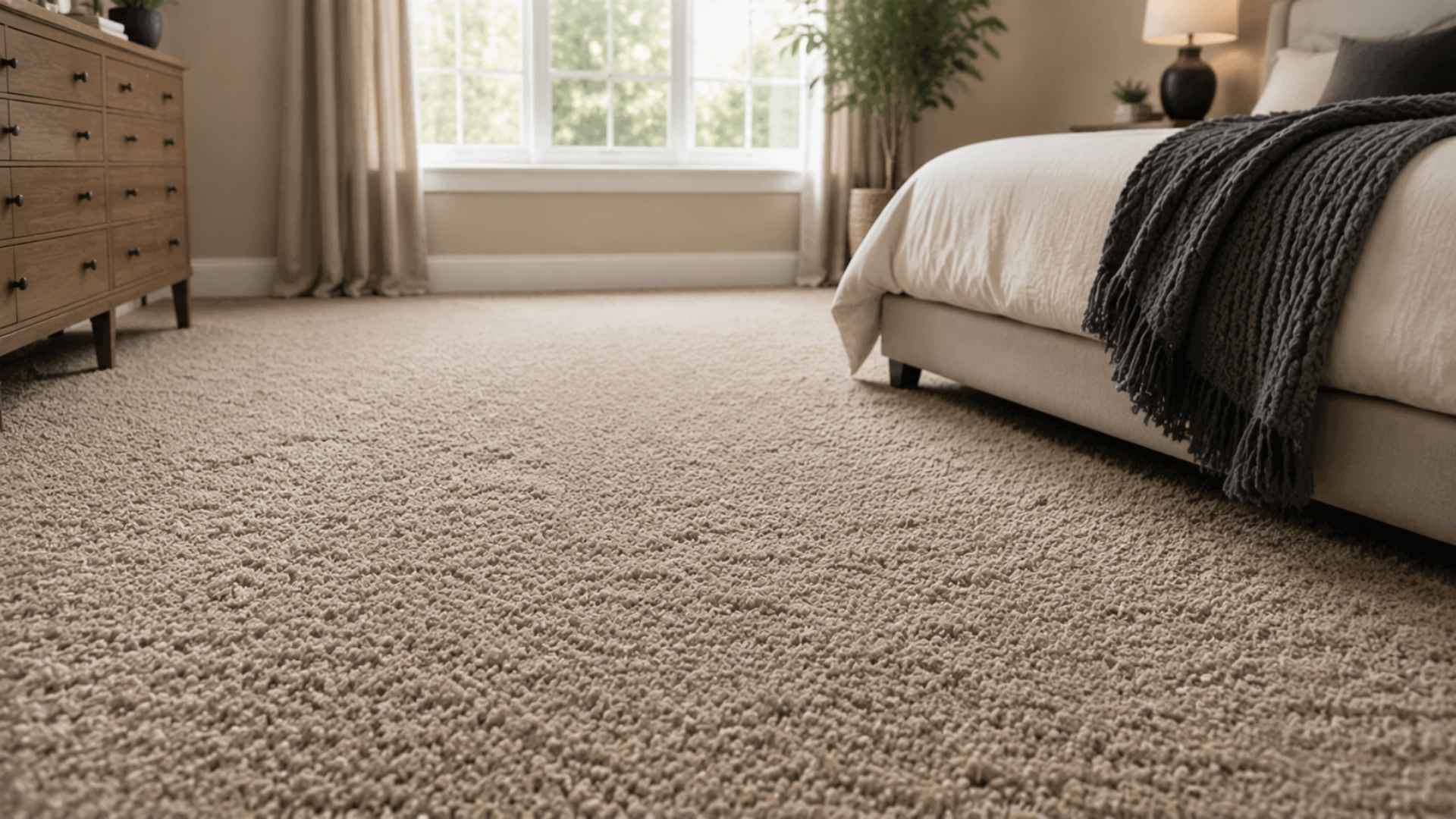
A carpet is a thick floor covering that runs from wall to wall. It covers the entire floor of a room and is fixed in place, usually with adhesives or tack strips. Once installed, it stays put. You do not move it around like a rug.
The word “carpet” comes from the Old French carpite and the Latin carpere, meaning “to pluck” or “to pull.” That is a nod to how the fibers were originally made.
Today, carpets are common in bedrooms, living rooms, and offices. They add warmth, muffle sound, and make floors softer underfoot. Think of a bedroom where the entire floor is covered in soft beige fabric. That is a carpet.
Pros and Cons of Carpet:
| Pros | Cons |
|---|---|
| Covers the entire floor for full warmth | Needs professional installation |
| Reduces noise and improves insulation | Harder to clean and maintain |
| Safe and soft surface for kids and the elderly | Traps allergens and dust over time |
Most carpets need professional installation and periodic deep cleaning to stay in good shape.
What is a Rug?
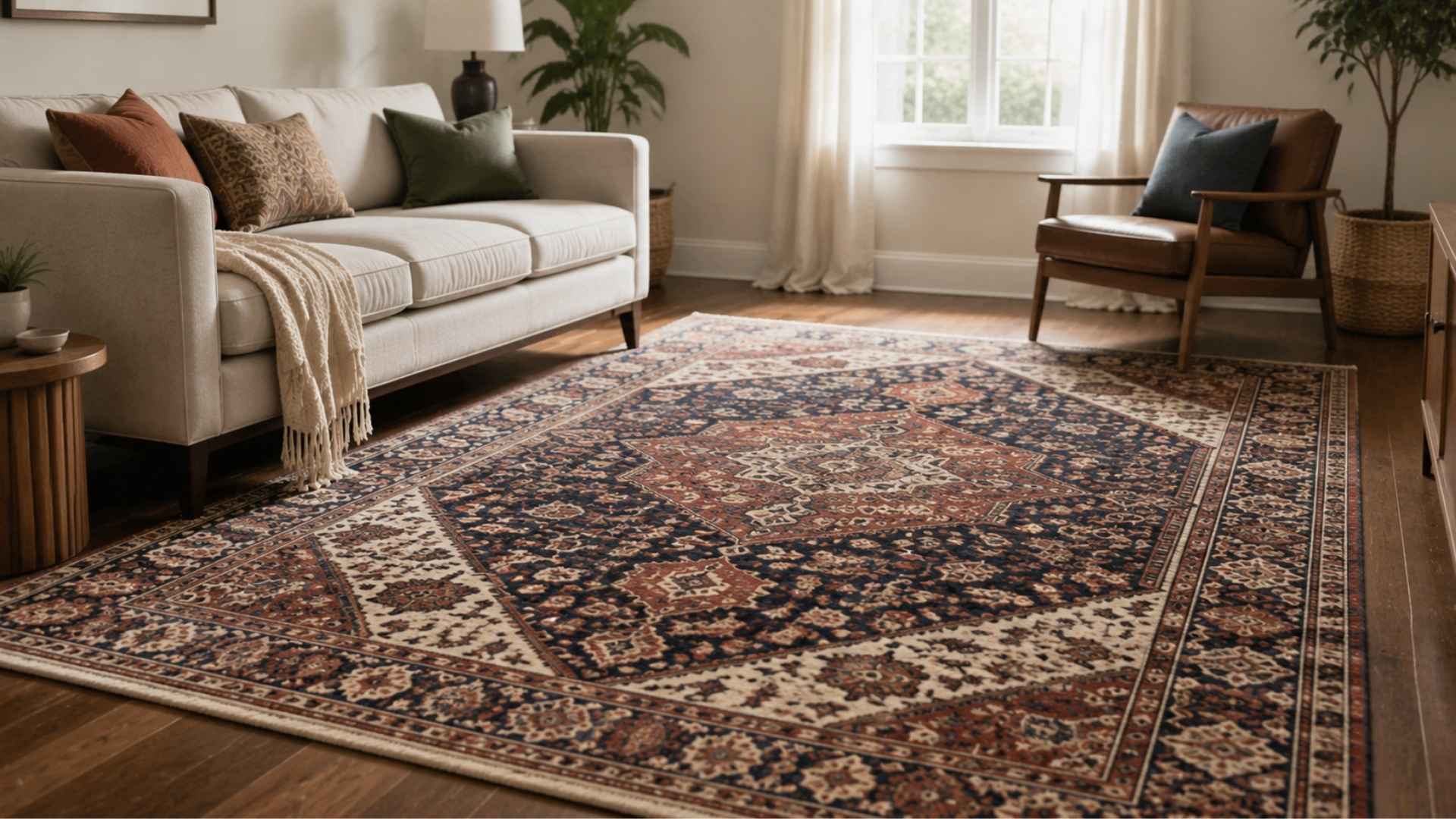
A rug is a small floor covering that sits on the floor. It covers only part of a room, not the entire floor. Unlike a carpet, a rug is not fixed in place. You can move it, reposition it, or replace it whenever you want.
The word “rug” traces back to the Old Norse word rogg, meaning coarse or shaggy fabric. Over time, it came to be used to describe the loose floor coverings we know today.
Rugs are used for both style and function. They add color, texture, and warmth to a space without any permanent commitment. A rug placed under a coffee table or beside your bed is the most common example.
Pros and Cons of Rug:
| Pros | Cons |
|---|---|
| Easy to move, replace, or reposition | Does not cover the full floor |
| Low maintenance and easy to clean | Can slip without a rug pad underneath |
| Affordable and great for renters | May wear out faster in high-traffic areas |
Rugs come in many sizes, patterns, and materials. They work well on hardwood floors, tiles, or even over existing carpet.
Do Americans Use “Carpet” and “Rug” the Same Way?
In everyday American speech, most people use carpet and rug as if they mean the same thing. You will often hear someone say “I need a new carpet” when they actually mean a small area rug for their living room.
But technically, the two words are not the same. In American English, “carpet” almost always refers to wall-to-wall floor covering that is fixed in place. “Rug” refers to a loose, movable piece that covers only part of the floor.
The most common term you will hear in the US is “area rug.” That is the go-to phrase for any movable rug placed over a specific section of the floor.
In everyday use, size, installation, and room coverage are what set the two apart.
Carpet vs Rug: The Main Differences at a Glance
Carpets and rugs are both floor coverings, but they are not the same thing. Here is a quick side-by-side breakdown of how they differ.
| Feature | Carpet | Rug |
|---|---|---|
| Size | Covers the whole room | Covers part of the room |
| Fixed to the floor? | Yes (installed) | No (movable) |
| Installation | Professional needed | Just lay it down |
| Cost | Higher | Lower |
| Cleaning | Deep clean/professional | Easier, often DIY |
| Best for | Long-term comfort | Flexibility, style |
These differences may seem small, but they matter when you are spending money on your floor. Knowing them helps you make the right call.
Differences Between Carpet vs Rug
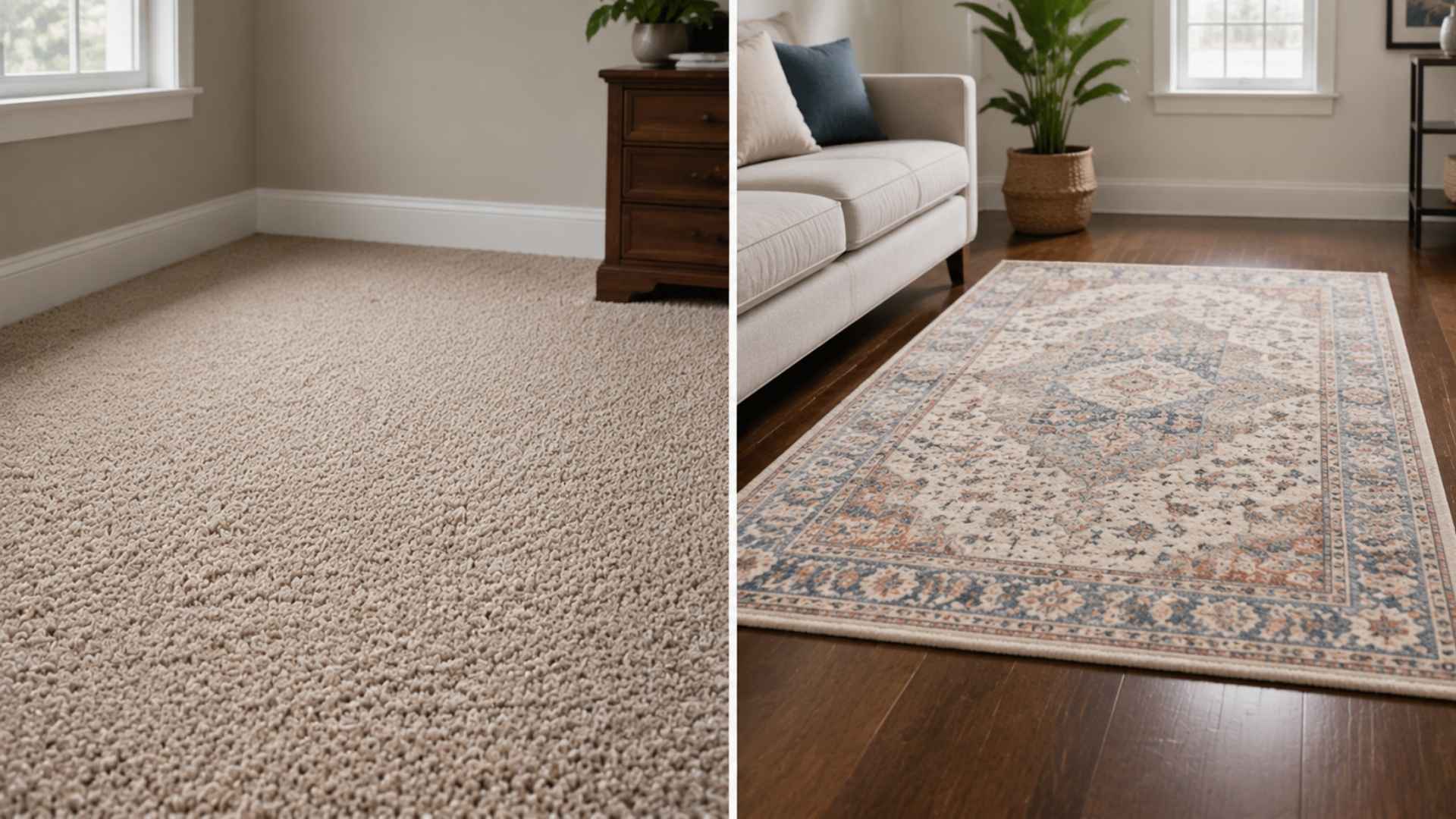
Both cover your floor, but that is where the similarity ends. Here is a closer look at how carpets and rugs differ across size, installation, materials, cleaning, and cost.
1. Size
Carpet covers the entire floor of a room and extends wall to wall. It is meant to fill the whole space. Most carpets go well beyond 4×6 feet in coverage.
A rug sits in one specific spot, leaving floor space around it. A standard rug is around 4×6 feet or smaller. It does not cover the full room.
2. Installation
Carpet is attached to the floor using adhesives or tack strips. It needs to be measured, cut, and fitted to the room. Most homeowners require a professional to install or remove it.
A rug needs no installation at all. You simply unroll it and place it wherever you want. No tools, no professional, no extra cost involved.
3. Materials
Carpets are made from wool, nylon, polyester, or synthetic blends. They tend to be thicker and more durable to handle heavy daily foot traffic across large areas.
Rugs use similar materials but also include cotton, silk, jute, and sisal. They offer more variety in texture, construction, and handcrafted styles.
4. Cleaning
Carpets need professional deep cleaning every 12 to 18 months, according to the Carpet and Rug Institute. Homes with kids or pets may need cleaning every 6 to 12 months. Since they are fixed to the floor, professional steam cleaning or hot water extraction is often required.
Rugs are much easier to maintain. You can vacuum, shake, or spot-clean most rugs at home. Smaller rugs can even be hand-washed or machine-washed.
5. Cost
Carpets cost more upfront due to material, padding, and professional installation fees. Long-term maintenance and cleaning add to the overall expense over time.
Rugs have a lower upfront cost and are easy to swap out when worn or outdated. They are a budget-friendly option, especially for renters.
Which One Is Right for Your Home?
Choosing between a carpet and a rug comes down to your lifestyle, budget, and how permanent you want your flooring to be.
Choose a Carpet If…
- You want full-room coverage with a clean, uniform look
- You have young kids or elderly family members at home
- You are setting up a bedroom, living room, or office for the long term
- You want better sound insulation and warmth across the whole floor
- You prefer a low-profile, wall-to-wall flooring solution
Carpet is the right choice when you want lasting comfort, full coverage, and a permanent flooring solution for your space.
Choose a Rug If…
- You rent your home and cannot make permanent floor changes
- You want to refresh your decor without spending a lot
- You have hardwood or tile and want warmth in specific spots
- You want to define zones in an open floor plan
- You like switching up your style every few years
A rug gives you flexibility, style, and practicality without any long-term commitment to your floor.
Common Materials Used in Carpets and Rugs
Carpets and rugs are made from a range of natural and synthetic materials. Each one feels different, lasts differently, and works better in certain spaces.
| Material | Key Traits | Best For |
|---|---|---|
| Wool | Soft, durable, natural | Bedrooms, living rooms |
| Nylon | Stain-resistant, long-lasting | High-traffic areas |
| Polyester | Affordable, vibrant colors | Low-traffic rooms |
| Jute / Sisal | Natural, eco-friendly, textured | Dry, casual spaces |
| Silk | Luxurious, soft, delicate | Low-traffic, formal spaces |
Your choice of material affects how long your carpet or rug lasts. Always match the material to the room’s foot traffic and moisture level.
Popular Carpet and Rug Styles You Should Know
Carpets and rugs come in many styles, textures, and patterns. Take a look at the most common ones you will find.
Carpet Styles
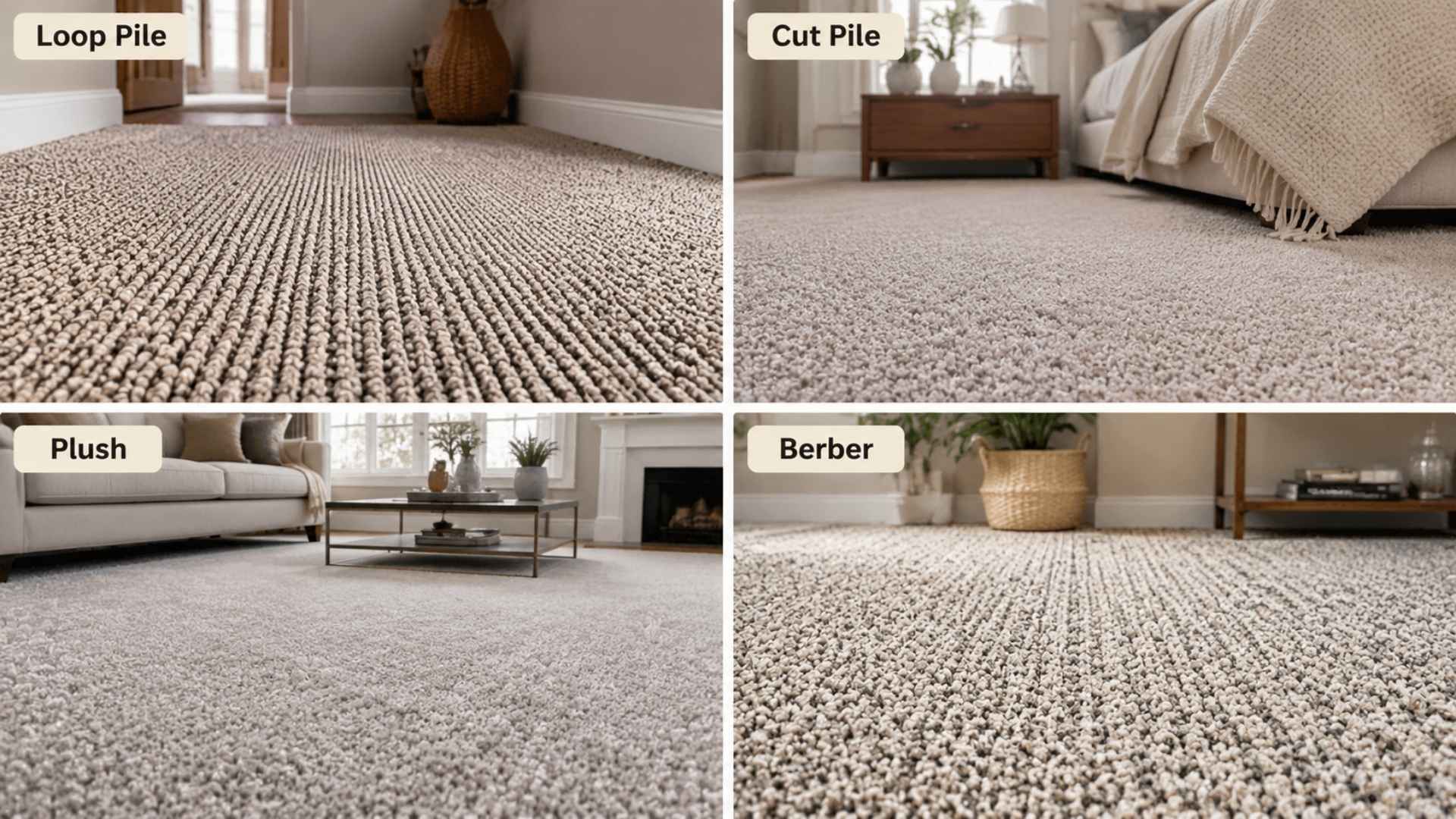
Carpets are mainly defined by their pile type. The pile refers to the fiber loops or cuts that make up the surface texture.
- Loop Pile: Fibers are looped and uncut. Durable and great for high-traffic areas like hallways and offices.
- Cut Pile: Loops are cut for a softer, fluffier surface. Common in bedrooms and living rooms.
- Plush: Very soft and smooth with a velvety finish. Best for low-traffic, formal spaces.
- Berber: Thick, looped fibers in neutral tones. Known for being tough and long-lasting.
Each carpet style suits a different space. Match the pile type to your room’s traffic level and comfort needs.
Rug Styles
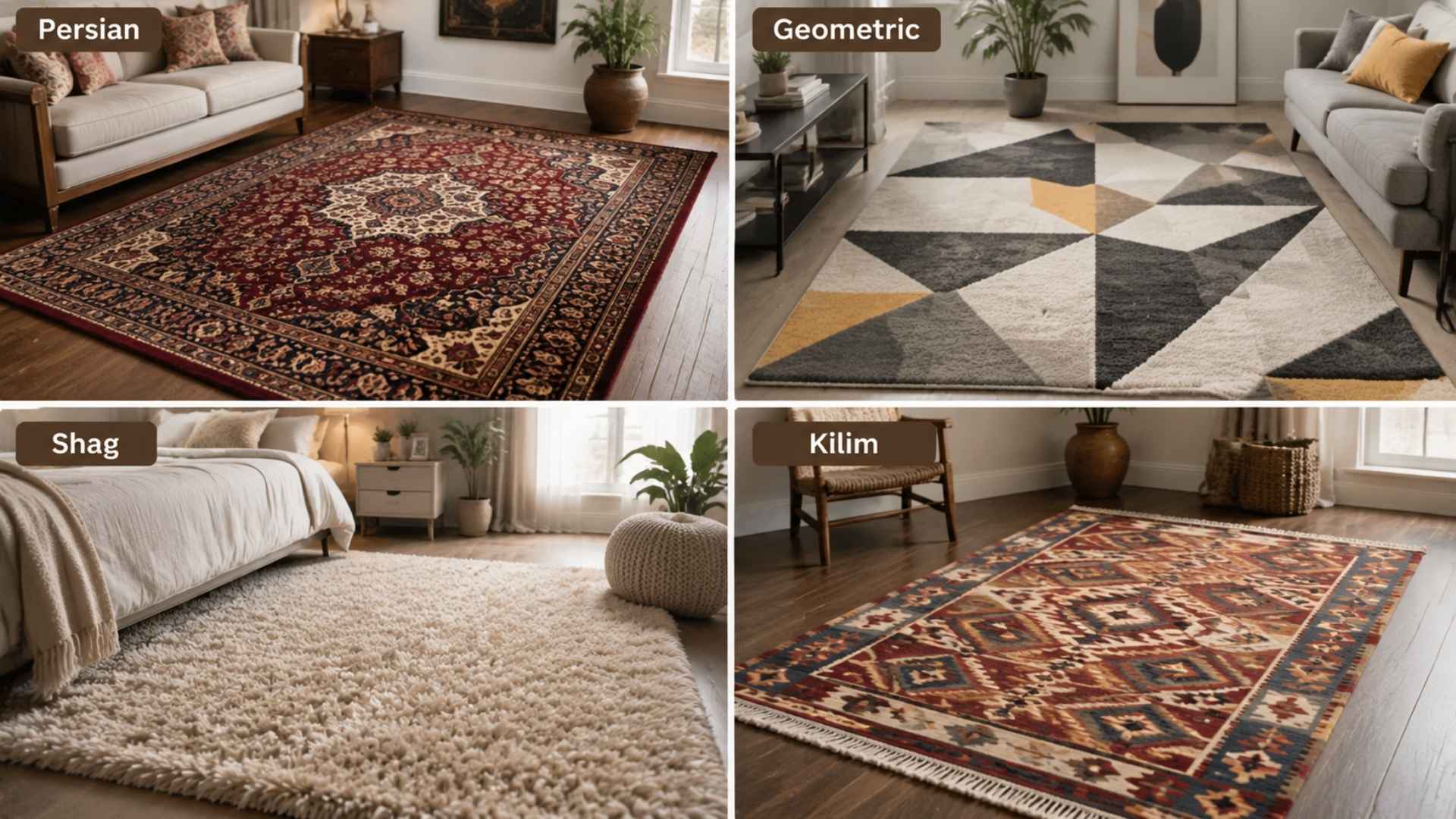
Rugs offer far more variety in design and pattern. The style often reflects the origin, craft, or material used.
- Persian: Intricate floral and geometric patterns. Handwoven and rich in cultural history.
- Geometric: Bold shapes and clean lines. Works well in modern and minimalist interiors.
- Shag: Long, fluffy fibers that feel soft underfoot. Popular in bedrooms and cozy living rooms.
- Kilim: Flat-woven with bold tribal patterns. Lightweight and often used as wall hangings, too.
Each rug style brings its own personality. Pick one that matches your room’s tone and existing decor.
Common Mistakes to Avoid When Choosing a Carpet or Rug
Picking the wrong floor covering is an easy mistake to make. Here are the most common ones people regret after buying.
- Buying the wrong size: A rug that is too small makes the room feel off. Always measure your space before buying.
- Ignoring foot traffic: A delicate silk rug in a busy hallway will wear out fast. Match the material to the traffic level.
- Skipping the rug pad: Without one, rugs slip and slide. A good rug pad adds grip and extends the rug’s life.
- Choosing style over function: A light-colored carpet in a home with kids or pets is a cleaning nightmare. Think practical first.
- Not checking maintenance needs: Some materials need professional cleaning. Know what upkeep is required before you commit to a purchase.
Take your time before making a decision. The right carpet or rug should fit your space, lifestyle, and budget without compromise or regret.
Cleaning and MaintenanceCarpets need regular vacuuming and professional deep cleaning every few months. Rugs are much easier to maintain. Most can be vacuumed, spot-cleaned, or hand-washed at home. Always check the material label before cleaning to avoid damage. |
Wrap Up
Carpet and rug are not the same thing, even though people use them interchangeably every day. A carpet covers the whole floor and stays fixed in place. A rug sits in one spot and moves whenever you need it to.
The right choice depends on your space, lifestyle, and budget. Want full coverage and long-term comfort? Go with carpet. Want flexibility, style, and easy maintenance? A rug is your answer.
Both have their strengths. Both have their trade-offs. Now you know exactly what sets them apart.
Still not sure which one suits your home best? Drop your question in the comments below. We would love to help you figure it out. And if you found this helpful, bookmark this page for your next home decor decision.
Frequently Asked Questions
What Is the Main Difference Between a Carpet and a Rug?
A carpet covers the entire floor and is fixed in place. A rug covers part of the floor and is movable.
Can I Use a Rug Over a Carpet?
Yes, you can place a rug over a carpet to add color and texture, or to define a specific area.
Which is Easier to Clean, a Carpet or a Rug?
Rugs are easier to clean. You can vacuum or wash them at home. Carpets need professional cleaning.
Is Carpet or Rug Better for Bedrooms?
Both work well. Carpet gives full coverage and warmth. A rug adds style without covering the entire floor.
Which is More Budget-Friendly, a Carpet or a Rug?
Rugs are more affordable. They cost less upfront and do not require professional installation or maintenance fees.