Most people use the words sofa and couch without thinking twice. They seem interchangeable, and honestly, in casual conversation, that’s fine.
But when you’re shopping for furniture or trying to describe what you want, the difference between sofa and couch actually matters more than you’d expect.
The two pieces share a lot, but they come from different origins, serve slightly different purposes, and carry different design expectations.
Knowing which is which helps you make a smarter buying decision and choose a piece that truly fits your space and lifestyle. The details are simpler than you think and more useful than you’d imagine.
Do Sofa and Couch Mean the Same Thing?
Yes and no. Both words describe the same piece of furniture, but the real differences lie in formality, design, regional habits, and how each word evolved over time.
The term “sofa” comes from the Arabic “suffah,” referring to a raised platform covered with rugs and cushions. It entered English as a term for formal upholstered seating in parlors and drawing rooms.
The term “couch” traces back to the Old French noun “couche,” meaning a bed or lair, and the verb “coucher,” meaning to lie down.
Early couches were closer to daybeds, and the phrase ‘couch potato,’ coined in 1976 and popularized through the early 1980s, cemented couch as the casual, everyday word.
Both words have legitimate roots, and neither is wrong. The next section covers how they differ in design, style, and usage.
Differences Between a Sofa and a Couch
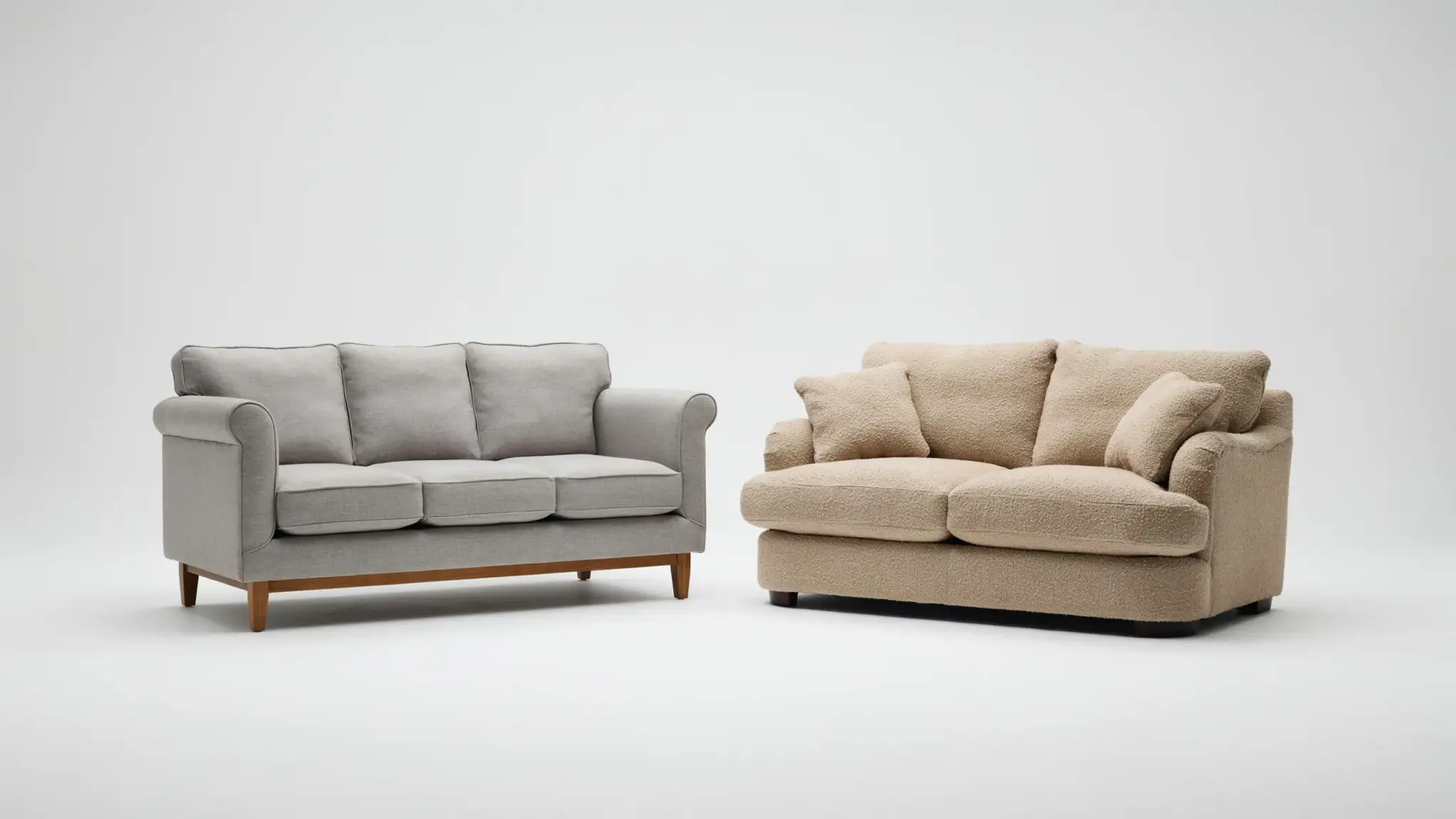
The two words point to the same piece of furniture but differ in ways that become clear once you look at how each is built, used, and styled.
1. Structure and Design
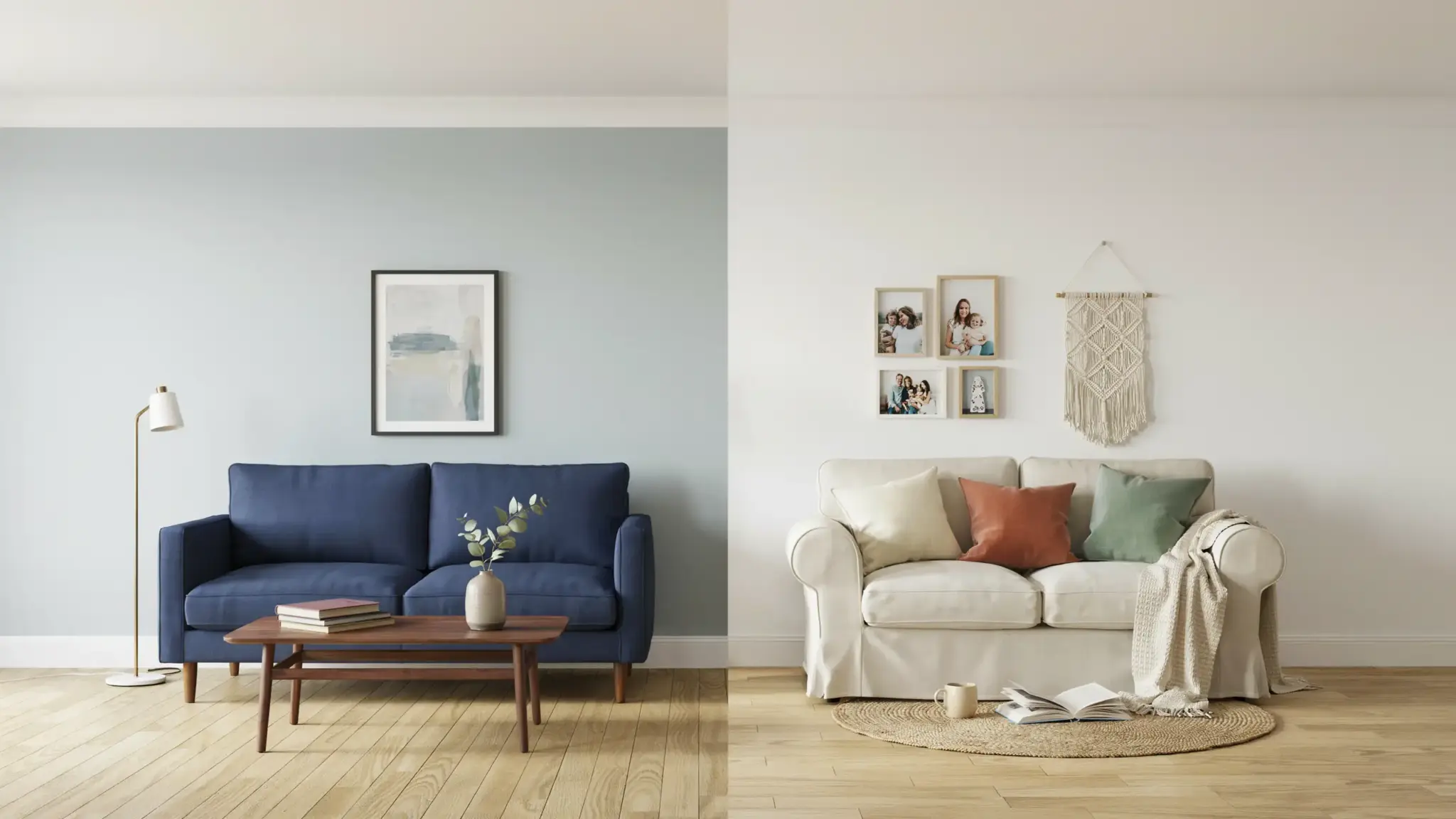
A sofa typically has a rigid frame, defined armrests at a consistent height, and a uniform backrest that runs the full length of the piece. Everything is intentional and matched.
The couch tends to be softer in shape, sometimes with one arm or none at all. The overall structure leans relaxed rather than tailored, built for comfort over visual precision.
2. Size and Space
A sofa is generally larger, seating three or more people, and suited to open-concept living rooms or formal areas where the piece anchors the space.
Couches run shorter but deeper, making them a better fit for compact rooms, family spaces, and apartments where comfort takes priority over scale.
3. Comfort and Seating
A sofa has firmer cushions and a more upright seat angle, designed to support posture and keep conversations comfortable for extended periods.
Couches prioritize plush, deep seating built for lounging, napping, and long evenings in front of the TV rather than structured sitting.
4. Formality and Usage
A sofa signals a polished, guest-ready setting. You would use it in interior design writing, real estate listings, and formal living rooms where presentation matters.
“Couch” is the word people reach for in everyday conversation, family rooms, and casual settings, where the focus is on how the piece feels rather than on how it looks.
5. Style
Sofas suit formal and design-forward interiors, clean lines, coordinated furniture sets, and rooms where visual balance matters as much as function. This includes spaces built around a minimalist style, where a single sofa often carries the entire room.
Couches fit casual, family-friendly spaces where comfort drives the room rather than a considered aesthetic, and mixing furniture styles is perfectly fine.
Where you live plays a big role in which word you reach for, and that is what the next section covers.
6. Materials and Upkeep
Sofas typically feature premium upholstery such as leather, linen, or velvet. These materials look refined but need regular care and are less forgiving of spills or heavy daily use.
Couches lean toward durable synthetics and microfiber fabrics that handle pets, kids, and everyday wear without much upkeep.
Both options are also expected to meet the federal flammability standard for upholstered furniture, which sets safety requirements for cover fabrics and filling materials regardless of how casual or formal the piece looks.
How to Choose Between a Sofa and a Couch for Your Home
Picking the right piece comes down to how you actually live in your space. A few simple questions can point you straight to the right answer.
- Think about how you use the room: Formal living room? Go with a sofa. Relaxed, everyday hangout space? A couch fits better.
- Consider who’s using it: Families with kids or pets usually do better with a couch that’s built for comfort and heavy use.
- Match it to your layout: Sofas work well in structured, symmetrical arrangements. Couches are more flexible with casual setups.
- Set your budget early: Sofas tend to cost more due to their structured build and formal detailing.
Once you know how your space works, the choice becomes obvious. Go with what fits your life, not just your floor plan.
How Does the Word Change by Country?
The words you grow up using often depend on where you live. Sofa and couch split fairly cleanly across English-speaking countries, with regional habits and local alternatives shaping which term feels natural.
| Region | Preferred Term | Notes |
|---|---|---|
| United States | Couch | Used in everyday speech, “sofa” is used in formal or retail contexts |
| United Kingdom | Sofa / Settee | A couch is rarely used, and a settee is still common in older generations |
| Canada | Couch | Follows American usage; “sofa” appears in retail, but “couch” dominates casual speech |
| New Zealand | Couch | Informal default, though “sofa” is used in design and retail contexts |
| Australia | Couch | Follows American usage patterns closely |
| South Africa | Couch | Informal default across most households |
| India | Sofa | British colonial influence made “sofa” the standard term |
Knowing which word fits your region is one thing, and knowing which one fits your room and setting makes the choice more practical.
Which Word Fits Your Room? Sofa or Couch
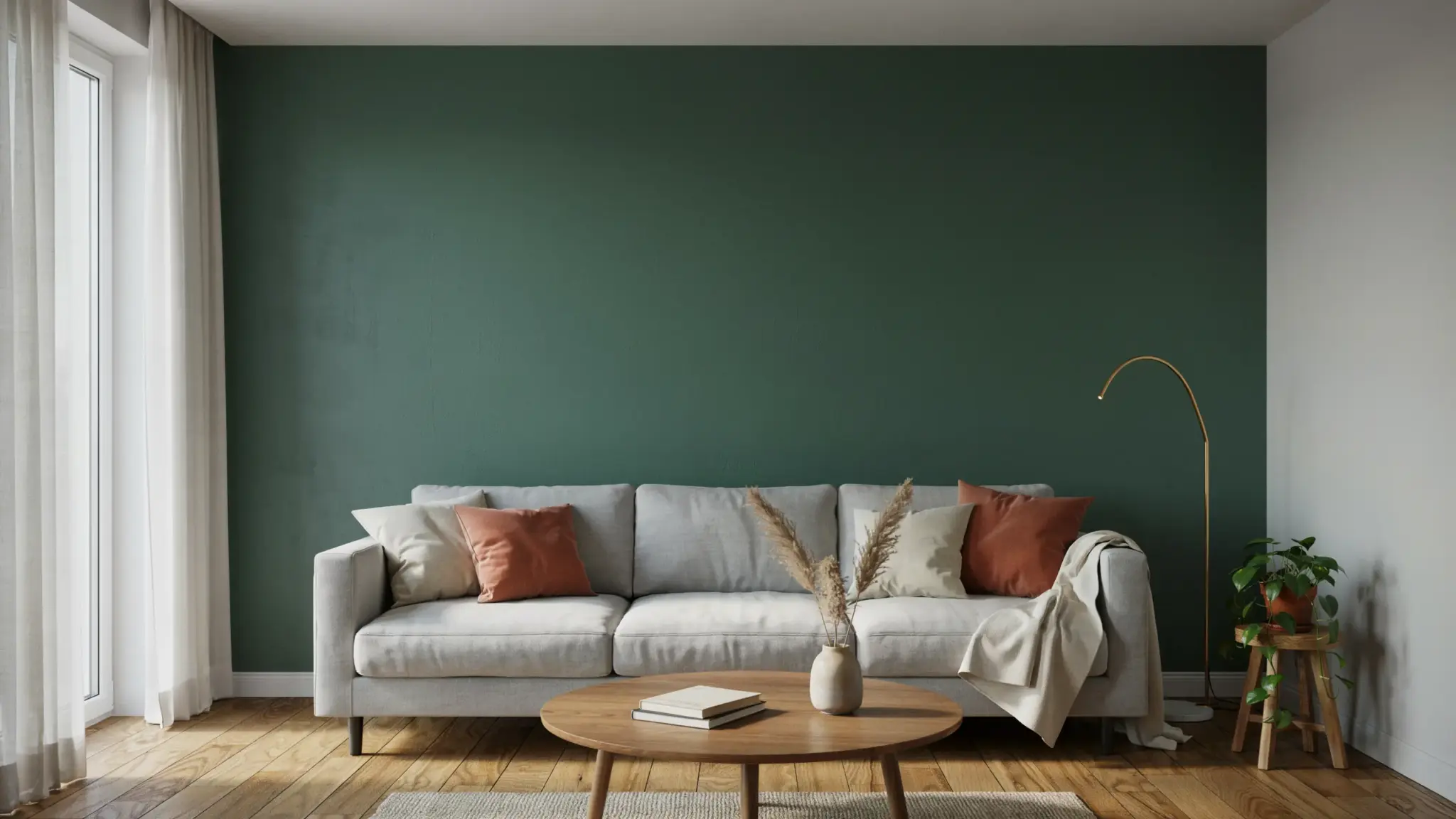
The word you use often reflects how the room is meant to feel. Here is a quick breakdown by room type and context.
- Formal living room: A sofa is the right word here. The word matches the tone of a space built around guests, clean lines, and a considered layout.
- Family room: The couch fits naturally. It means comfort, everyday use, and a space where function matters more than appearance.
- Basement or entertainment room: Use “couch” consistently for spaces designed around comfort and downtime; this term fits the setting perfectly.
- Home office or study: “Sofa” fits a home office or reading room where the piece needs to look intentional without being overstuffed or casual.
- Open-plan living and dining space: The sofa anchors the open-plan living zone and keeps the overall look coordinated with the rest of the space.
Once you find the word that suits your space, it helps to know how sofas and couches compare with other seating types you may encounter.
Other Seating Types People Confuse With Sofas and Couches
While shopping and decorating, you’ll encounter more than just the words “sofa” and “couch.” These four pieces are often confused with sofas and couches, so it is worth knowing the difference before you buy.
| Seating Type | What It Is | How It Differs From a Sofa or Couch |
|---|---|---|
| Loveseat | A two-seater upholstered seat | Smaller than a sofa, it seats only two people and is often paired with a full sofa in the same room. |
| Sectional | A multi-piece modular sofa | Made up of separate connected sections and larger than a standard sofa, it suits open-plan spaces. |
| Settee | A compact, upright two-seater | More formal and decorative than a sofa, shorter in length, and common in UK households. |
| Chaise Lounge | A long single-seat reclining chair | Built for one person to stretch out fully, not a sofa or couch replacement. |
| Davenport | A large sofa, often convertible | Vintage American term for a full-size sofa that sometimes folds into a bed. |
Knowing what each piece is called helps when shopping and decorating. Mixing up these terms is one of the most common mistakes people make.
Common Mistakes When Using These Terms
Most mix-ups come down to habit rather than ignorance. These are the ones worth correcting before they cause confusion in a design or shopping context.
- Using Couch in formal writing: Interior design briefs, real estate listings, and room descriptions should always use Sofa. Couch reads as too casual in any professional written context.
- Confusing a settee with a sofa: A settee is shorter, more upright, and more decorative than a standard sofa. Using the terms interchangeably in a UK context will cause confusion.
- Searching only one term when shopping online: Most retailers default to Sofa in product listings. Searching only Couch will return fewer results and miss a large portion of available options.
Getting the terms right matters more when you are buying than when you are talking. That is what the next section covers directly.
Does the Difference Actually Matter When Buying Furniture?
For most shoppers, no. The label on the tag rarely tells you anything useful about how the piece is built or how it will feel.
What actually matters is fit, fabric, and function. Seat depth, cushion firmness, and room scale will steer you toward the right piece every time.
The one place where the difference matters is search. Most retailers default to “sofa” in their listings, so use that term to get the broadest results when shopping online.
Final Thoughts
Now you know the difference between sofa and couch, and it’s not as complicated as it sounds. One leans formal, the other keeps things relaxed. Both have their place depending on how you live.
Here’s the thing, though. The best choice isn’t the most expensive one or the prettiest one in the showroom. It’s the one that actually works for your home and your habits.
And that’s something only you can decide. So take what you’ve learned here and go pick the piece that genuinely fits your life, not just your living room.
Frequently Asked Questions
Is a Sofa More Expensive than a Couch?
No, the price depends on frame, fabric, and brand, not the label. Either can cost more than the other.
What Is the Difference Between a Sofa and a Couch in Interior Design?
A sofa is always used in professional design contexts. It means a structured, formal piece suited to a considered room.
Is a Loveseat a Type of Sofa or Couch?
It sits closer to a sofa. It has defined arms, a consistent back, and a structured frame throughout.
Which Word Do Furniture Stores Use More Often?
Sofa. Most Major Retailers Default to “Sofa” in Product Listings, Regardless of How Casual the Piece Actually Is.