Most of us just want a beautiful home. We pick the aesthetic, save the Pinterest boards, and hand it off to someone who “gets it.”
But somewhere between the mood board and the final wall, you hit a question like: shiplap or tongue and groove?
And suddenly you are knee-deep in building materials you never asked to learn about. By the end, you will know what each one actually is, how they differ, and which one belongs in your space.
Key Differences: Shiplap vs Tongue and Groove
Shiplap and tongue-and-groove look similar at a glance, but they behave very differently once installed. Here is where they actually split.
| Factor | Shiplap | Tongue and Groove |
|---|---|---|
| Joint type | Overlapping rabbet with a visible shadow gap | Interlocking tongue and groove with a flush finish |
| Installation | Overlap and nail, no locking needed | Precise alignment required at every joint |
| Appearance | Rustic, layered, farmhouse character | Clean, polished, craftsman finish |
| Performance | Best in dry indoor spaces | Handles humidity and movement better |
| Cost | More budget-friendly | Costs more due to precision milling |
| Maintenance | Shadow gaps trap dust more easily | Flush joints wipe clean with less buildup |
Neither system is the wrong call. Your room conditions and the finish you want will point you toward the right one.
Quick Tip: Whichever option you choose, let the boards acclimate to your room’s humidity for 48 to 72 hours before installing. Skipping this step is one of the most common causes of warping and gapping, regardless of material.
What Is Shiplap?
Shiplap boards have a recessed notch called a rabbet along each edge. When stacked, one board overlaps the next, leaving a small shadow gap.
That gap is shiplap’s signature look, and the boards simply overlap and are nailed in, making installation beginner-friendly.
Best Uses for Shiplap
- Accent walls in living rooms and bedrooms where texture and character are the goal
- Farmhouse, rustic, and cottage-style interiors that lean into the visible shadow gap
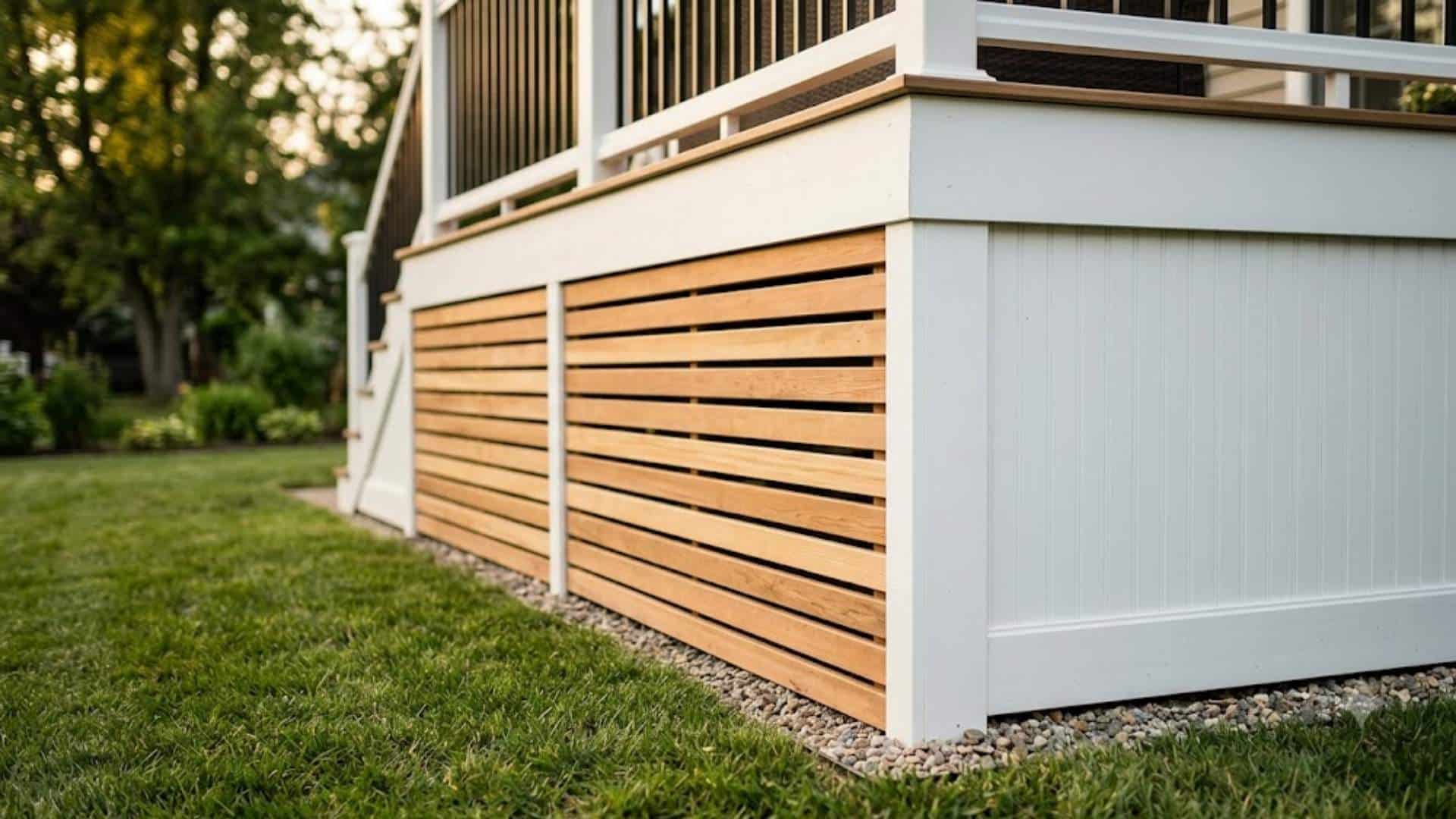
- Exterior siding on sheds, barns, and outbuildings where a traditional look is preferred
- Ceiling treatments in spaces where a layered, informal finish works better than paint
What Is Tongue and Groove?
Tongue-and-groove uses an interlocking joint in which one edge has a protruding tongue, and the other has a matching groove.
The two lock together into a tight, flush fit that disappears into the surface, giving walls and ceilings a cleaner, more polished finish than shiplap.
Best Uses for Tongue and Groove
- Bathrooms and laundry rooms where moisture resistance and a tight joint help with long-term moisture and mold control
- Hardwood and engineered flooring where a stable, interlocked surface is required
- Ceilings in craftsman, traditional, or Scandinavian interiors where a smooth finish is the priority
- Wainscoting and paneled walls where a refined, built-in look is the goal
Origin Story of Shiplap and Tongue and Groove
Shiplap originated in a centuries-old shipbuilding method where overlapping boards created a water-resistant hull.The technique moved inland and became a go-to for barns, sheds, and farmhouses.
Tongue and groove has older roots in fine interior work, used in Victorian homes for flooring, wainscoting, and paneled ceilings where a cleaner finish mattered.
Both crossed into mainstream interior design through the farmhouse revival of the 2010s, turning a once-rustic material into a modern staple.
Types of Shiplap
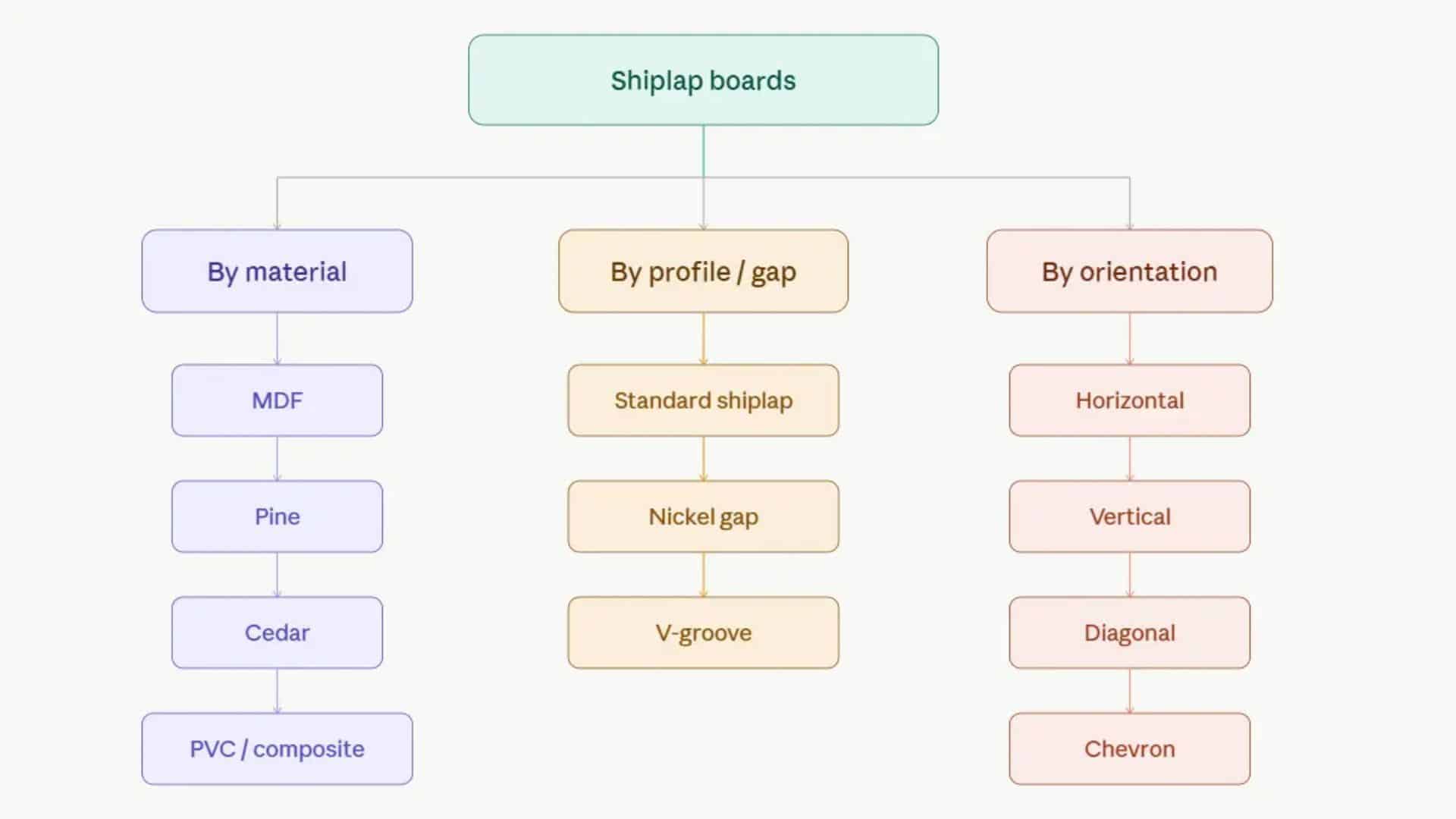
Shiplap comes in several variations across three main categories: the material it is made from, the gap profile it creates, and the direction it is installed.
Types of Tongue and Groove
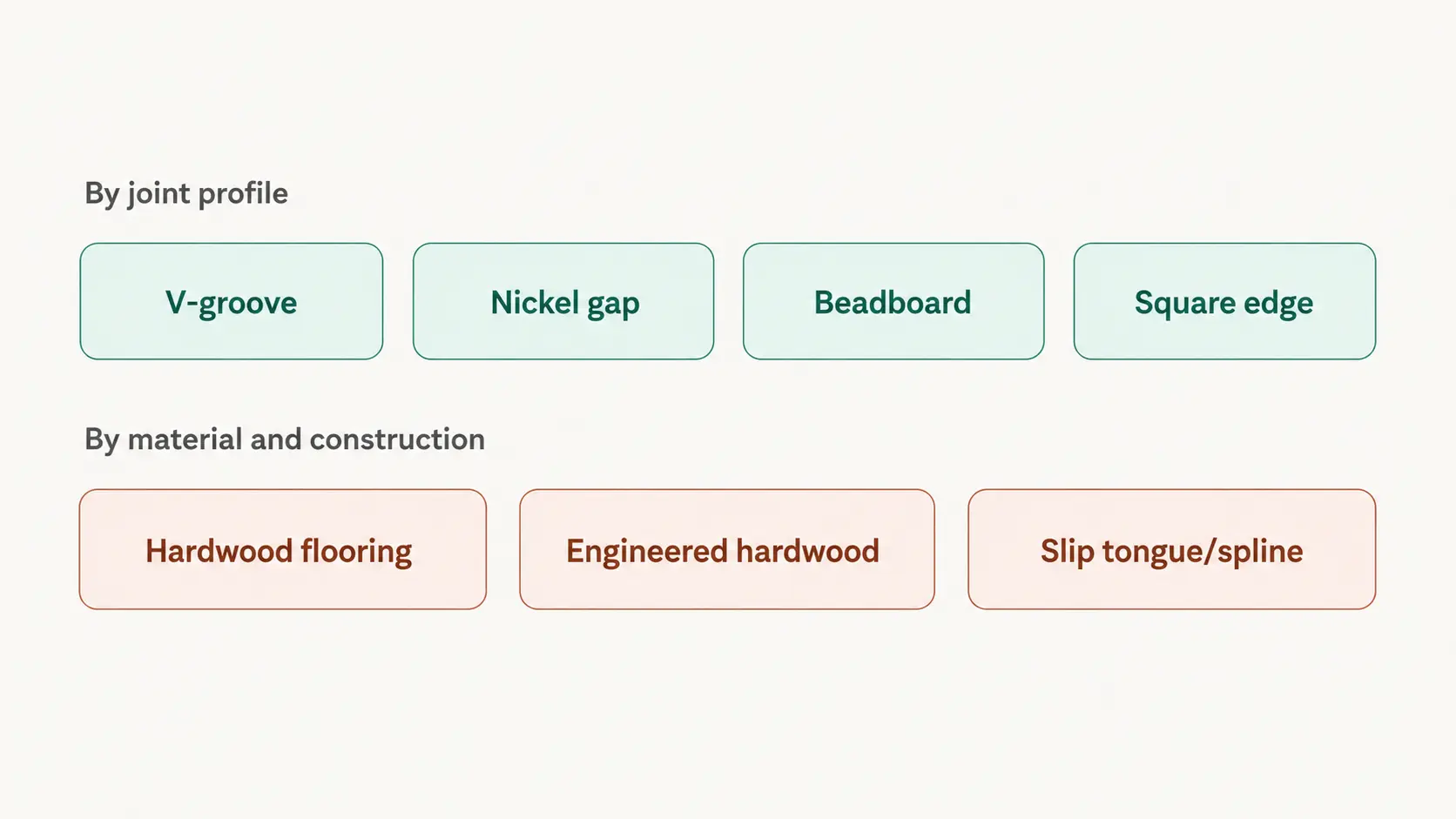
By joint profile
- V-groove: Angled edges form a V-shaped channel at each seam, creating a classic, structured look.
- Nickel gap: Reveals a narrow, uniform gap at each joint for cleaner sight lines than a standard V-groove.
- Beadboard: A rounded bead runs along the joint edge or the center of the board, giving a classic cottage or Victorian look.
- Square edge (flush): Boards sit completely flush at the joint, with no visible gap or decoration.
By material and construction
- Hardwood flooring: Solid wood boards milled with a tongue and groove, the standard for hardwood floor installation.
- Engineered hardwood: A hardwood veneer over a plywood core with standard T&G edges, more stable in humid conditions.
- Slip tongue/spline: A separate joining piece connects two grooved boards where a standard tongue is absent.
Differences Between Shiplap and Tongue and Groove
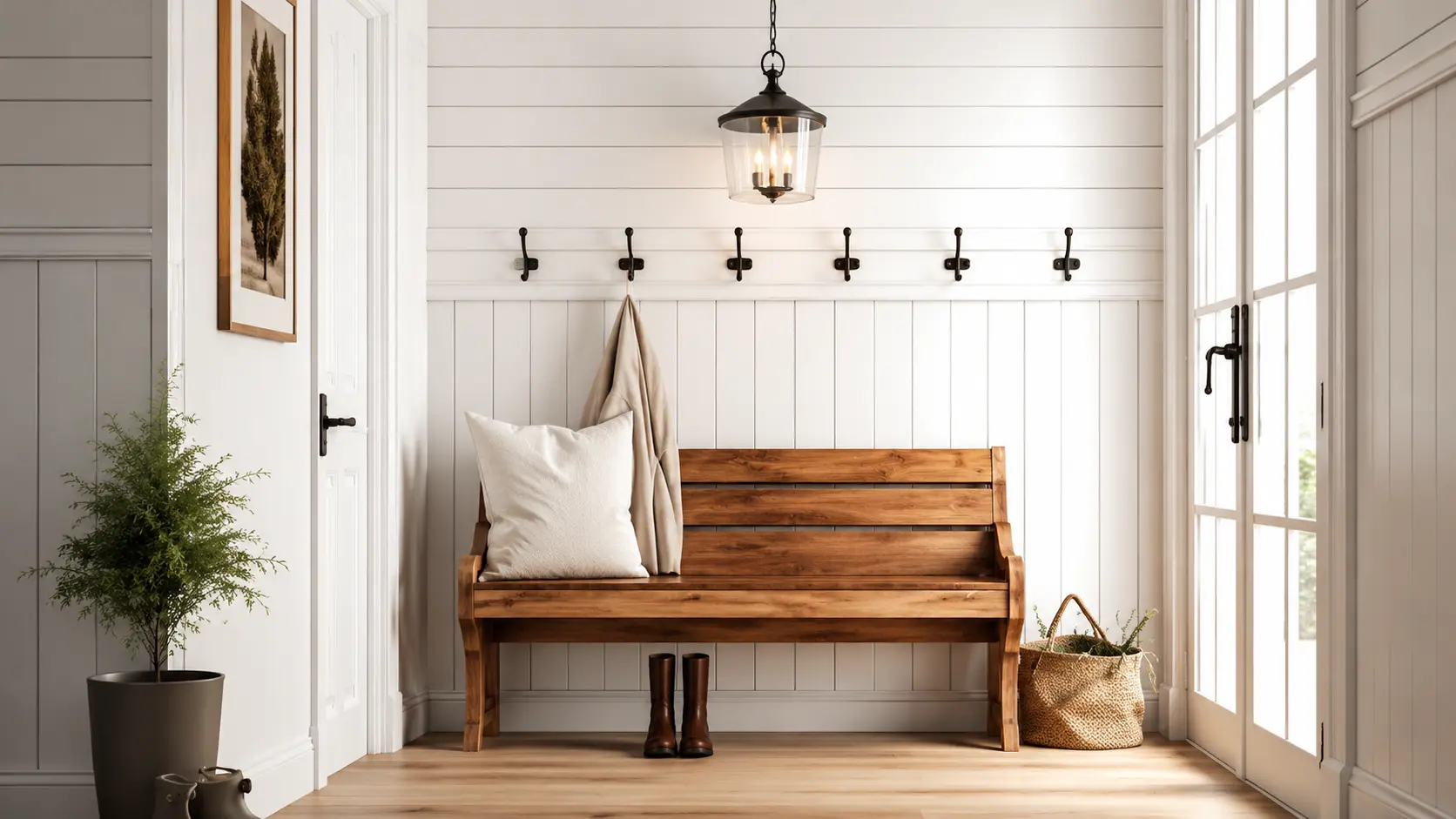
Both systems use wood paneling, but they behave and look quite different once installed. Here is how shiplap and tongue-and-groove compare on the factors that matter most for your project.
Installation
Shiplap overlaps and nails in with no locking needed, making it a solid DIY option. Tongue-and-groove requires precise board alignment at every joint, adding slightly more time to the install.
Appearance
Shiplap’s shadow gaps give walls a relaxed, farmhouse-style character. Tongue-and-groove joints fit together with no visible joint, producing a cleaner finish suited to refined or craftsman interiors.
Performance
Shiplap works well in dry indoor spaces but can shift slightly in moisture-heavy areas without the right materials. Tongue-and-groove handles humidity and seasonal movement better, as the interlocked joint resists gapping.
Cost
Shiplap is the more budget-friendly pick, with pine and MDF keeping costs low. Tongue-and-groove costs more due to precision milling, and hardwood options further increase the price.
Maintenance
Shiplap’s shadow gaps trap dust more easily and need more frequent cleaning. Tongue-and-groove flush joints wipe clean with less buildup overall.
Similarities Between Both Wall Systems
Shiplap and tongue-and-groove are often compared because they share more in common than most people expect.
From material options to installation versatility, these are the areas where the two systems actually align.
1. Shared Use in Walls and Ceilings:
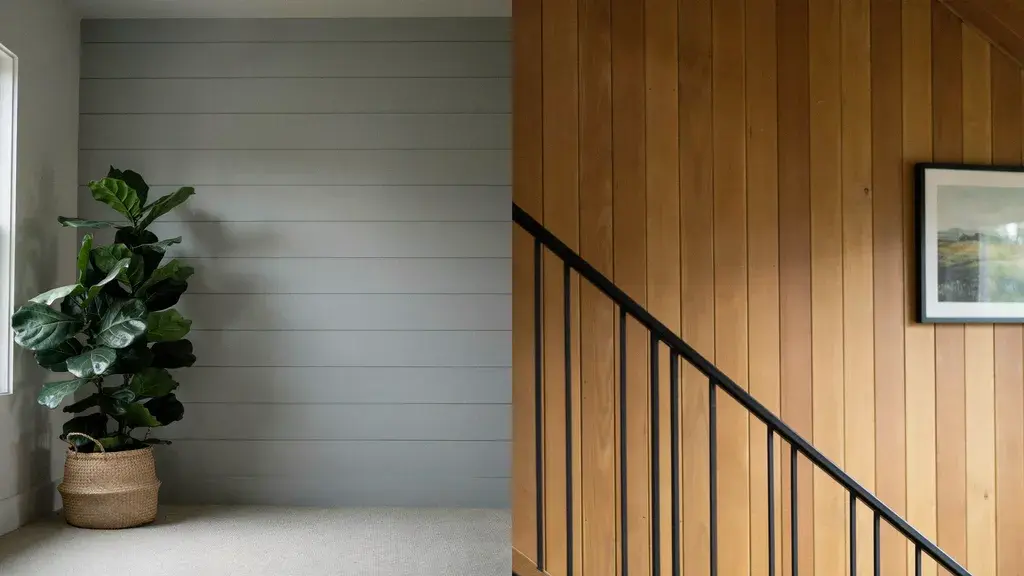
Both work on interior walls and ceilings and can be installed horizontally, vertically, or diagonally. Either delivers a layered, textured look that drywall cannot replicate.
2. Natural Wood and Composite Options:
Both are available in pine, cedar, MDF, engineered composites, and moisture-resistant PVC, making either system viable across a range of budgets.
3. Decorative and Structural Applications:
Historically used as structural sheathing, both now serve primarily as decorative paneling in modern homes. Either adds dimension, warmth, and texture that paint or wallpaper simply cannot match.
Shiplap vs Tongue-and-Groove: Which Is Better?
The right choice comes down to two things: where you are installing it and the look you are going for.
Choosing Based on Room Function
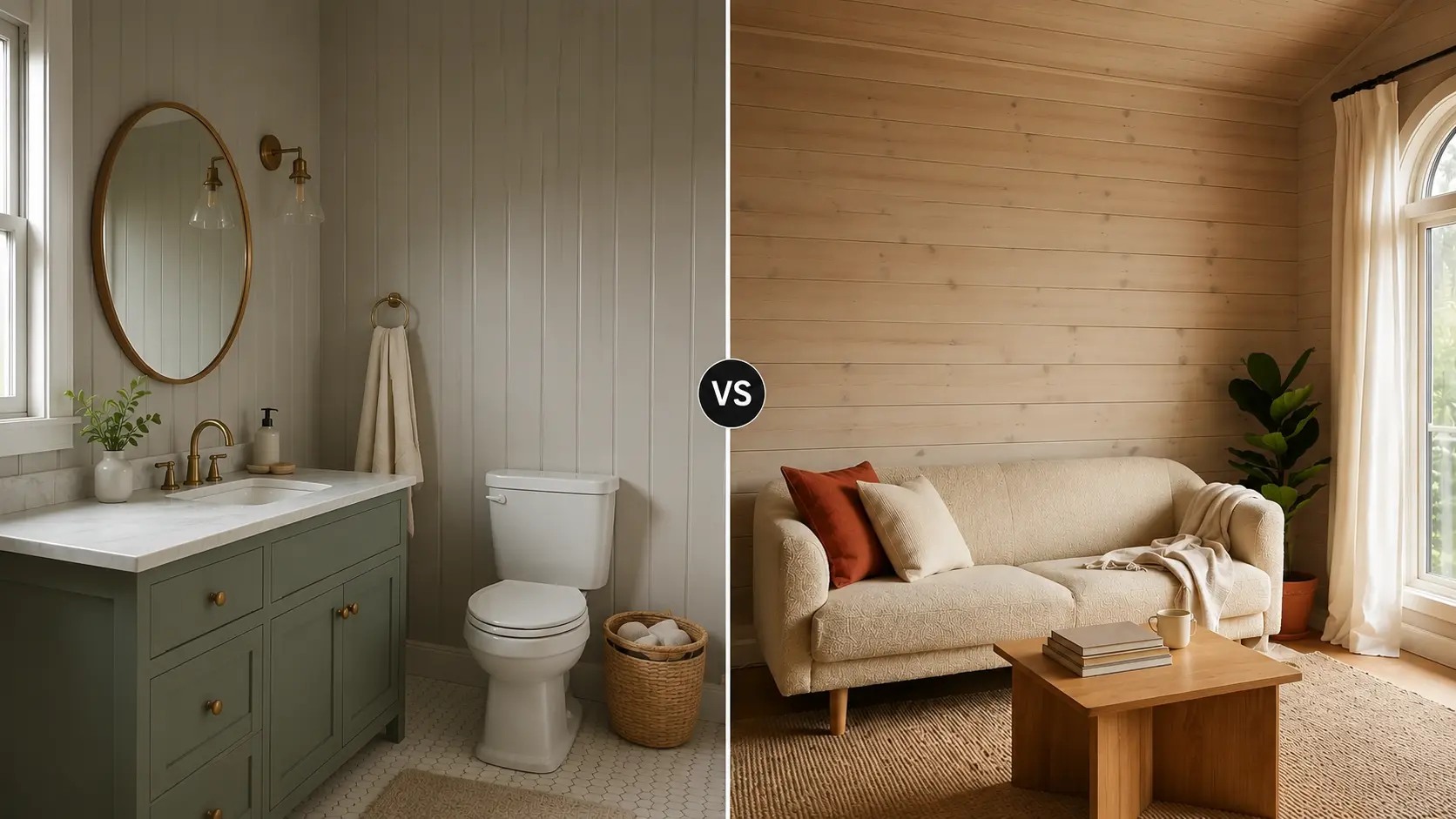
High-moisture spaces like bathrooms and laundry rooms call for tongue-and-groove. For living rooms, bedrooms, and ceilings, either works, and your budget or style can decide.
Matching Style with Interior Design Goals
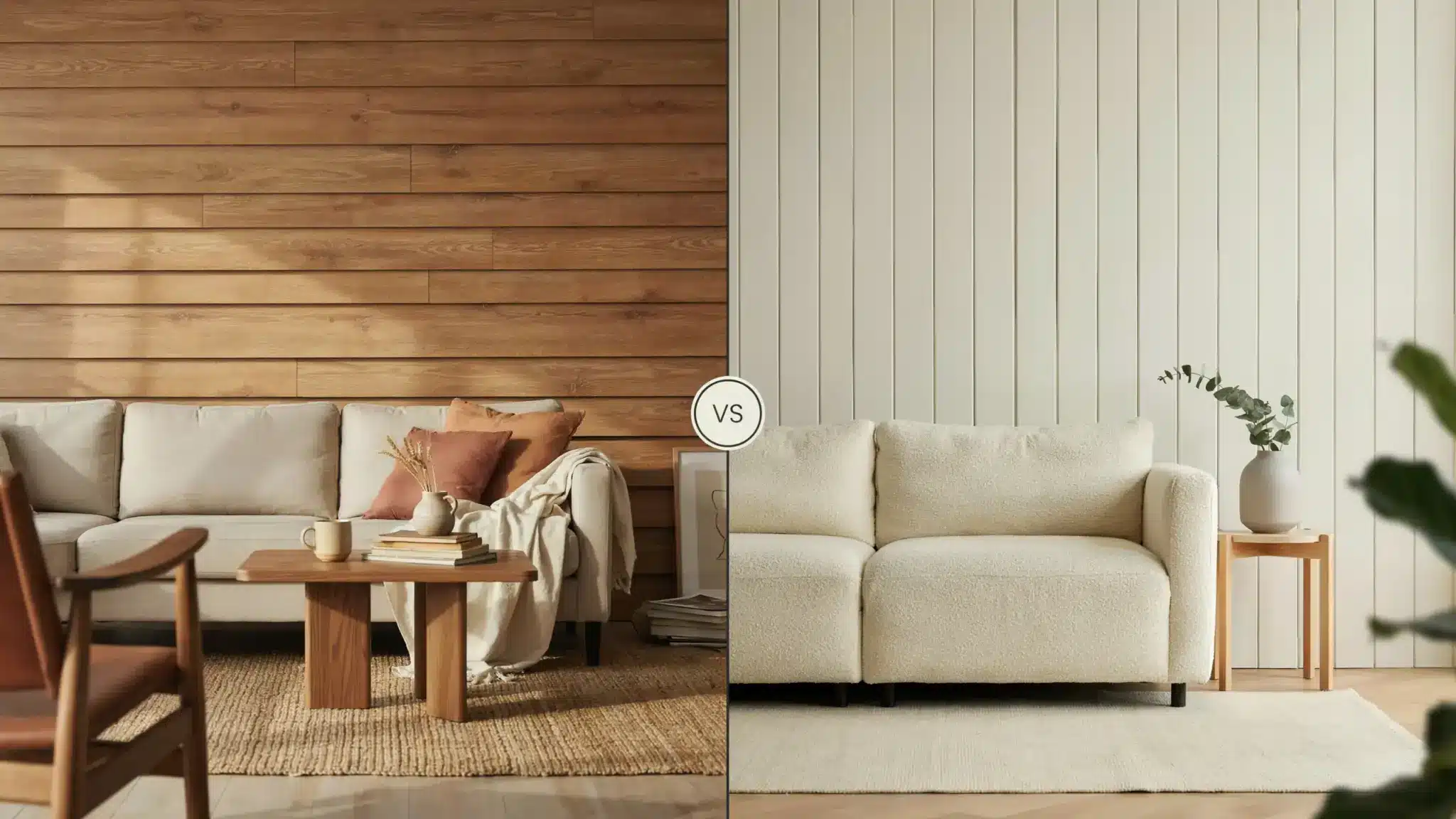
Shiplap suits warm, rustic, and layered interiors where the shadow gap is the point. Tongue-and-groove fits tailored for craftsman or Scandinavian spaces where a smooth surface matters.
Common Mistakes To Avoid
Both materials are forgiving when installed correctly. These common missteps can cost you time, money, and the finish you were going for.
Installation Mistakes
- Skipping expansion gaps with tongue and groove in humid rooms.
- Nailing shiplap too tightly causes warping over time.
- Not checking for level before the first board, throwing off the whole run.
Material Mistakes
- Using standard pine tongue-and-groove in bathrooms without sealing it.
- Choosing MDF shiplap for exterior or high-moisture applications.
- Picking the wrong profile (e.g., nickel gap vs. standard shiplap) for the interior style.
Aesthetic Mistakes
- Running shiplap horizontally in a low-ceiling room makes it feel shorter.
- Mixing shiplap and tongue and groove in the same sightline without intentional contrast.
- Over-scaling the shadow gap in small rooms, which visually fragments the wall.
Prep and Planning Mistakes
- Not acclimating wood boards to the room’s humidity before installation.
- Skipping primer on raw wood before painting, especially on MDF.
- Buying to exact square footage, with no waste buffer (usually 10-15% extra), is the standard.
Conclusion
Shiplap and tongue-and-groove paneling each suit different needs.
Shiplap offers an affordable, easy-to-install option for dry spaces where a rustic, textured look is the priority.
Tongue-and-groove paneling delivers greater durability and moisture resistance, making it the stronger pick for bathrooms, mudrooms, or high-traffic areas where a polished finish matters.
Choosing between the two depends on the room’s function, the budget, and the overall aesthetic goal.
Both materials add character and value to a home when matched correctly to the space and its practical demands.
Frequently Asked Questions
What is Cheaper, Tongue-and-Groove or Shiplap?
Shiplap is generally cheaper. Pine and MDF shiplap boards cost less per square foot, and the simpler installation process keeps labor costs lower, too.
What is the New Trend Replacing Shiplap?
Limewash walls and plaster finishes are gaining ground. Tongue-and-groove with a nickel-gap profile is also replacing standard shiplap in more refined, contemporary interiors.
What is Better: Shiplap or Tongue-and-Groove?
Neither is universally better. Shiplap wins on cost and ease. Tongue-and-groove wins in durability and moisture resistance. Your room and style decide.
What are the Disadvantages of Tongue and Groove?
Higher material cost, slower installation, and less forgiveness for alignment errors. In dry spaces, the extra precision required rarely justifies the price over shiplap.