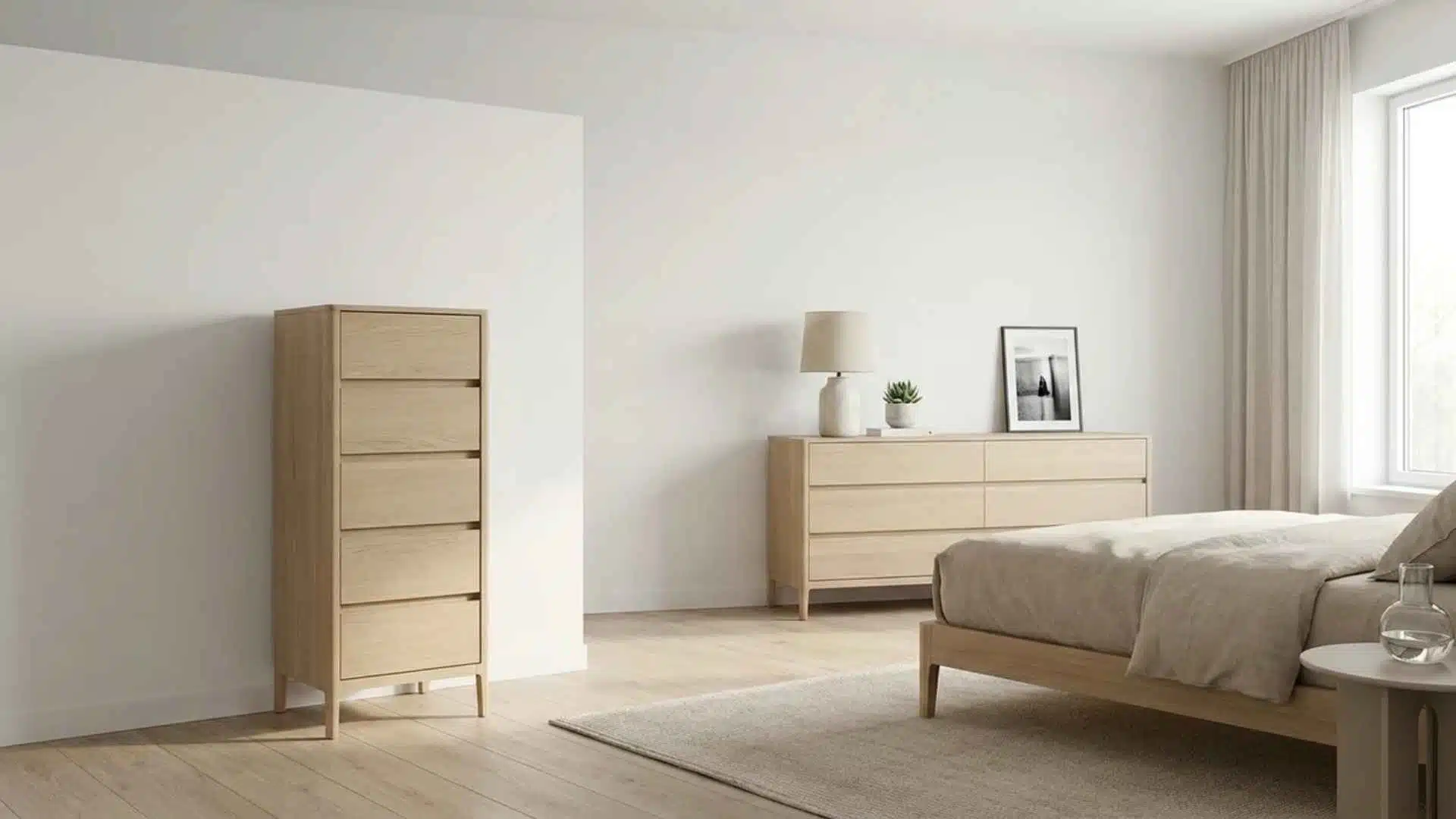
Choosing bedroom furniture can feel confusing, especially when two pieces look almost the same. The chest of drawers vs dresser comparison often comes down to space, storage, and daily use.
Both offer storage for clothes, but they function very differently in a bedroom. A chest of drawers uses vertical space to save floor space and fits easily in smaller rooms.
A dresser spreads out wider, providing more surface space for daily routines. Understanding the differences helps in choosing the right fit for comfort and organization.
The right choice depends on room size, lifestyle, daily storage needs, and overall balance. Small details like drawer depth and layout can also change everyday convenience.
What Is a Chest of Drawers?
A chest of drawers is a tall, narrow storage unit designed to make efficient use of vertical space.
It typically has drawers stacked in a single column, ranging from 4 to 6 drawers, with an overall height of about 42 to 60 inches and a width of 24 to 40 inches.
The depth is usually shallow, around 16 to 20 inches, making it less bulky than wider dressers. This design makes it a good fit for small bedrooms, studio apartments, and kids’ rooms where floor space is limited.
The top surface is narrow but can hold small items such as a lamp, a photo frame, or a plant. It is best suited for folded clothing such as T-shirts, socks, underwear, and light sweaters, rather than heavy or bulky storage items.
Pro tip: If your bedroom is under 120 square feet, a chest of drawers saves space and is more efficient than a dresser.
Where Does a Chest of Drawers Work Best?
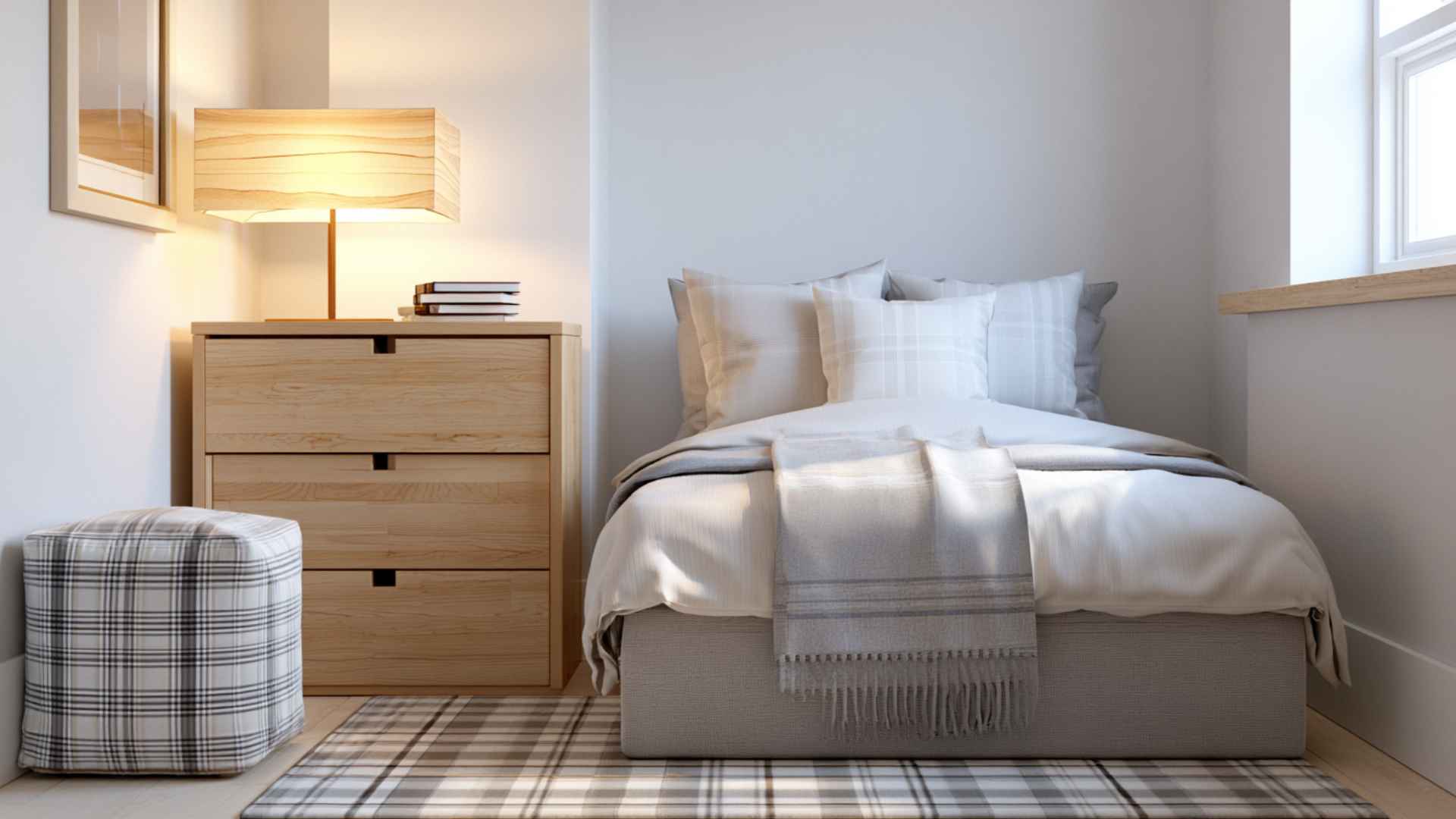
A chest of drawers works best in compact spaces where vertical storage is needed without taking up much floor area.
- Small bedrooms under 120 square feet
- Studio apartments and shared rooms
- Kids’ rooms and guest rooms
- Any wall that is too narrow for a full dresser but has ceiling height to spare
- As a secondary storage unit alongside a dresser in a larger bedroom
Overall, it suits smaller rooms and secondary storage needs, offering practical organization when floor space is limited but height is available.
Shop here: Gray 7-Drawer 25 or CONCETTA
What Can You Put on Top of a Chest of Drawers?The top surface of a chest is small. A lamp, a small framed photo, a jewelry dish, or a plant can sit there without issue. You cannot hang a wall mirror above a chest in any practical way because the piece itself is already tall, and a mirror placed above it would end up near the ceiling. |
What Counts as a Dresser?
A dresser is a wide, low storage unit built horizontally, unlike a chest of drawers, which rises vertically.
It usually has drawers arranged in two or more side-by-side columns and measures about 30 to 70 inches wide, 30 to 36 inches tall, and up to 22 inches deep.
A standard six-drawer dresser is roughly 52 inches wide, 30 to 36 inches tall, and 19 inches deep. Its wide top surface allows for mirrors, décor, or even a TV, making it useful as a vanity or display area.
Deeper drawers store bulkier items like sweaters, pants, or bedding, and they suit larger bedrooms with more floor space.
Pro tip: TIf two people share the bedroom, a double dresser 60 inches or wider can replace two separate pieces of furniture, reducing clutter.
Where Does a Dresser Work Best?
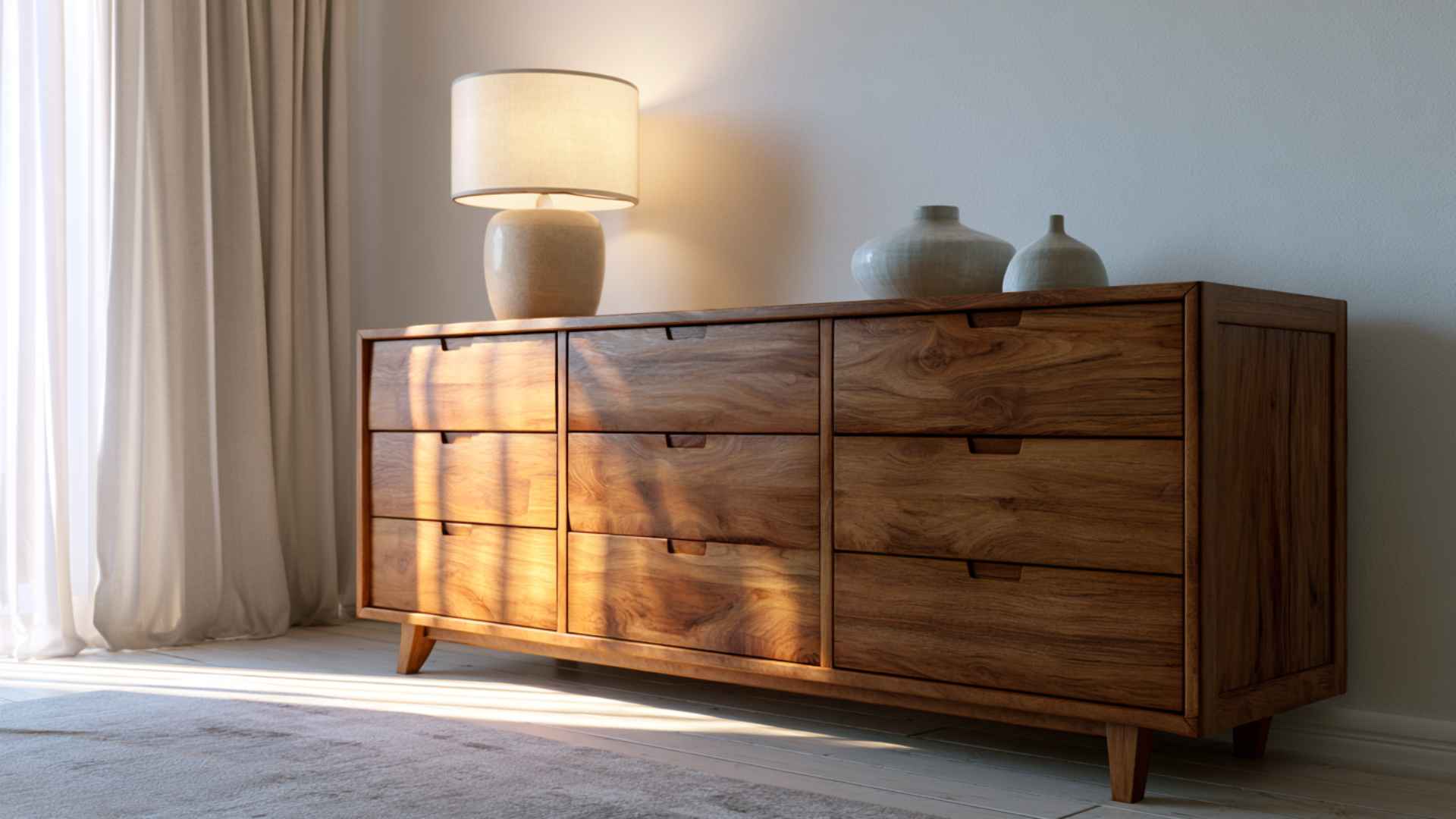
A dresser works best in larger bedrooms where width, storage capacity, and a functional surface area are needed for daily use.
- Master bedrooms with a long, open wall
- Rooms shared by two adults who need to split storage
- Anyone who gets ready in the bedroom and wants a mirror
- Rooms where you want the furniture to anchor and define the space visually
Overall, it suits shared or master bedrooms, offering practical storage while also grounding the room and supporting everyday routines.
Shop at: Lofka 6 Drawer or RAST
What Can You Do with the Top of a Dresser?
The wide, waist-height top surface is one of the dresser’s biggest assets. It is flat, wide, and at a height that is easy to use every day. Most people use it for one of three things:
| Use | What Goes There | Best For |
|---|---|---|
| Vanity station | Mirror, skincare, perfume, jewelry tray | Getting ready in the morning |
| TV stand | Small to mid-size TV, remote, streaming device | Bedrooms where the TV faces the bed |
| Display surface | Framed photos, candles, plants, and a lamp | Adding personality to the room |
A dresser top adds versatile functionality, serving as a storage, display, or entertainment space, helping keep essentials organized while enhancing the room’s overall style and usability.
Understanding Bureau Furniture
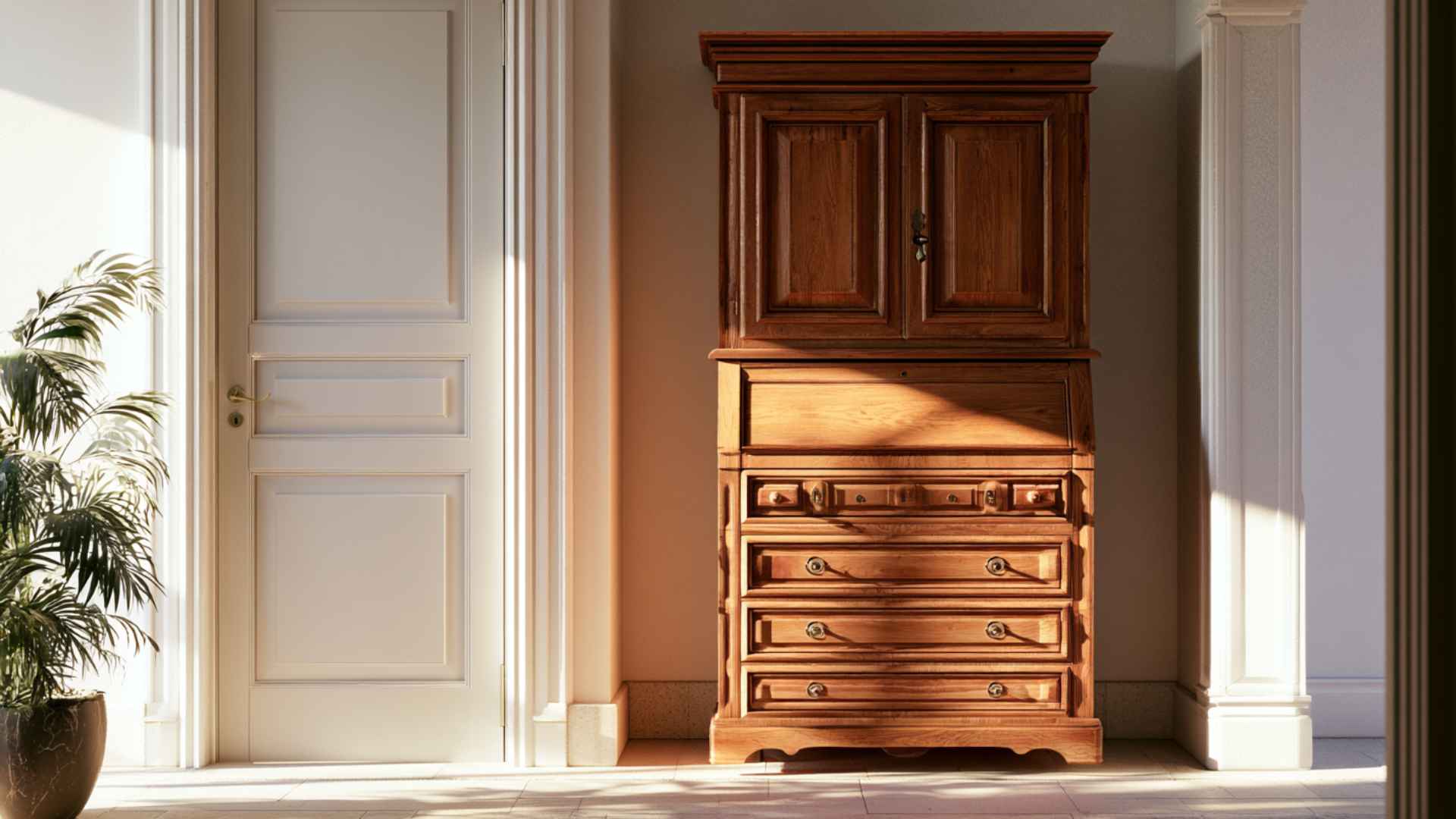
Bureau is the term that causes the most confusion, and for good reason. Its meaning has changed depending on the era, the country, and even the region of the United States you are in.
Bureau Dimensions to ExpectBureau furniture typically measures 48 to 60 inches tall, 30 to 40 inches wide, and 18 to 22 inches deep. These dimensions overlap heavily with a chest of drawers, which is part of why the two terms get swapped so often. |
What does the Bureau mean in 2026
In American furniture retail today, the term “bureau” is used loosely. Depending on the retailer, it can mean:
- A tall, narrow chest-style unit (essentially a chest of drawers by another name)
- A hybrid piece with drawers and a fold-down or pull-out writing surface
- Any storage unit with drawers placed outside the bedroom, in a hallway, home office, or living room
The simplest rule: Put a chest of drawers in a bedroom, and most people call it a chest of drawers. Put that same piece in a living room, home office, or hallway, and most people will call it a bureau.
Pieces used outside the bedroom tend to overlap with storage cabinet types that serve those spaces differently.
Shop here: Peek 6 Drawer
Archivist Dark Wood Bureau
Chest of Drawers vs. Dresser vs. Bureau
This comparison outlines key differences between a chest of drawers, a dresser, and a bureau, focusing on size, structure, and storage use to help choose the right bedroom furniture.
| Feature | Chest of Drawers | Dresser | Bureau |
|---|---|---|---|
| Orientation | Vertical | Horizontal | Usually vertical |
| Typical height | 42 to 60 inches | ~30 to 36 inches | 48 to 60 inches |
| Typical width | 24 to 40 inches | 30 to 70 inches | 30 to 40 inches |
| Typical depth | 16 to 20 inches | 18 to 22 inches | 18 to 22 inches |
| Drawer count | 4 to 6 | 6 to 9 | 4 to 6 |
| Drawer layout | Single column | Two to three columns | Single column |
| Top surface use | Small decor only | Vanity, TV, display | Small decor only |
| Best room | Small bedroom | Master bedroom | Any room |
| Best for storing | Folded basics, light clothing | Full wardrobe, bulky items | Folded clothing or miscellaneous items |
| General price | Lower | Higher | Mid-range |
| Child safety | Anchor required (tall) | Lower center of gravity | Anchor required (tall) |
In summary, each piece serves a different storage need, from compact vertical units to wide dressers, making selection dependent on room size, storage demand, and how the space is used.
How to Choose Between a Chest of Drawers and a Dresser
Before you commit, run through these four questions. The answers will tell you which piece belongs in your room.
1. How Much Floor Space Do You Have?
In small bedrooms under 12 by 12 feet, a chest of drawers saves floor space. Wider rooms with long walls can comfortably fit a dresser without blocking movement.
2. How Much and What Kind of Clothing Do You Store?
A chest of drawers suits one person with folded basics like T-shirts and socks. Dressers work better for two people or for bulky items like jeans, sweaters, and accessories because of the larger drawers.
3. Do You Get Ready in the Bedroom?
A dresser works well for grooming since it pairs with a mirror at a usable height. A chest is too tall, making mirror placement impractical for daily routines.
4. Are There Children or Pets in the Home?
Dressers are more stable due to their lower height and center of gravity. Chests must be securely anchored, especially in homes with children, to prevent tipping hazards and ensure safety.
Quick Decision Rule: Room under 12×12 feet? Choose a chest. Room with a long wall and two people sharing storage? Choose a dresser. Only need basic folded clothing storage on a tighter budget? Choose a chest.
Can You Use Both a Chest of Drawers and a Dresser in the Same Bedroom?
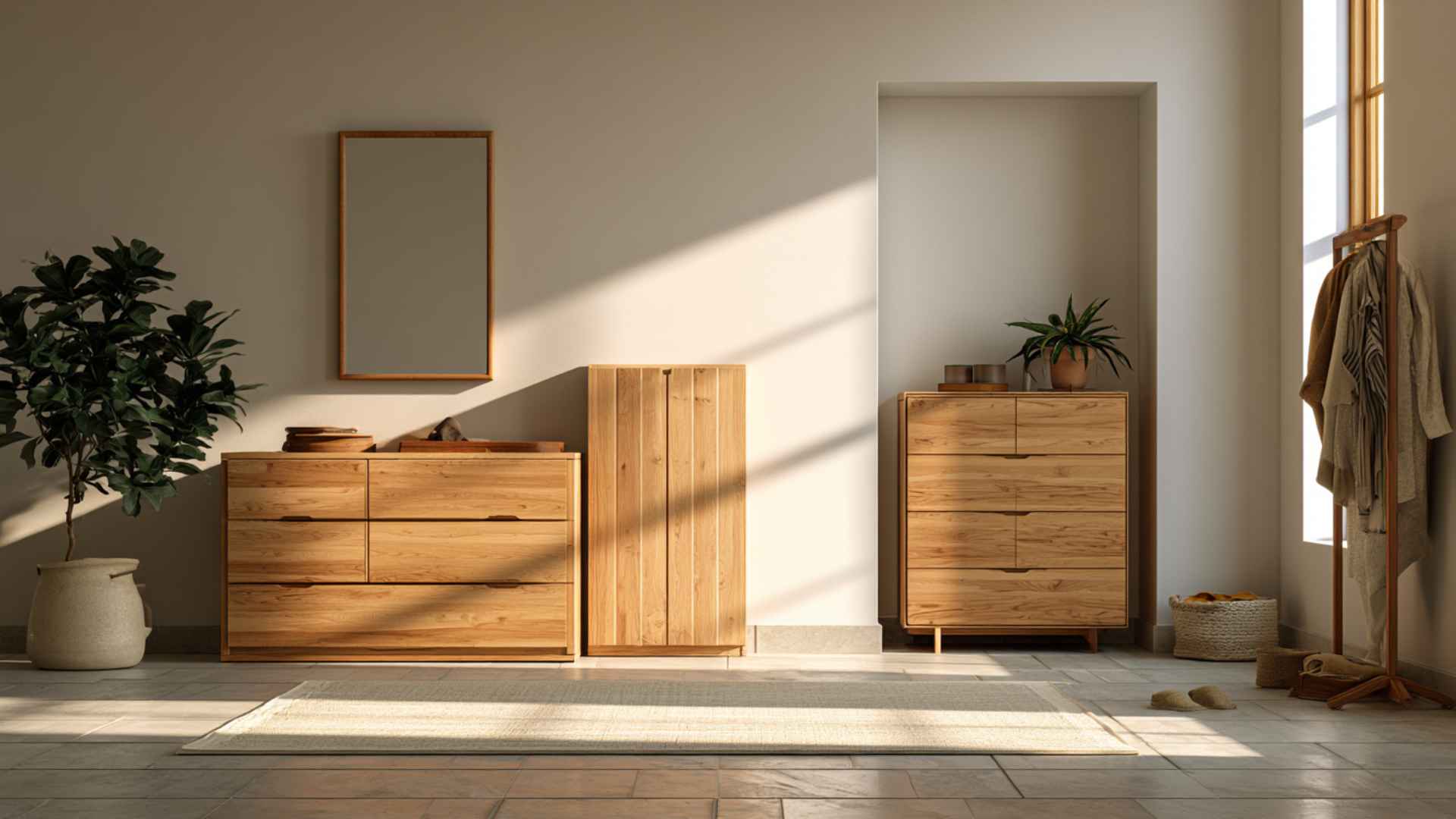
Yes, and many bedroom furniture collections are designed around this. A dresser handles everyday clothing and doubles as a vanity surface.
A chest of drawers provides overflow storage for off-season clothes, extra linens, or a second person’s basics without the need for another long stretch of wall space.
The combination works best in primary bedrooms shared by two people. One piece can hold the clothing you need daily; the other handles seasonal rotation and extras.
Buy both from the same furniture line so the wood tone and hardware stay consistent; the room will look intentional rather than pieced together from different places.
If you are still weighing whether you need a cabinet or a dresser for a specific room, the storage type and location should drive that decision more than style alone.
How to Organize a Dresser or Chest of Drawers
Buying the right piece is only half the job. How you organize it determines whether you actually keep it tidy for more than two weeks.
The Drawer-by-Drawer System for a Dresser
Assign each drawer a single category and stick to it. Mixing categories is what causes drawers to fall into chaos. A practical layout for a standard six-drawer dresser:
- Top left: Underwear, socks, everyday basics, placed here for quickest morning access without bending or searching through deeper storage.
- Top right: Accessories, belts, jewelry, and small items, kept in a shallow space for easy visibility and organized daily use.
- Middle left: T-shirts and lightweight tops, stored at a comfortable reach height for frequent use without unnecessary bending or effort.
- Middle right: Loungewear and pajamas, used daily but not a first priority, are placed for balanced mid-level accessibility and organization.
- Bottom left: Jeans, pants, and workout wear, heavier clothing stored lower to support the structure and reduce strain during handling.
- Bottom right: Sweaters and off-season items, the least-used clothing kept at the bottom for long-term storage and space efficiency.
Proper drawer organization improves daily efficiency, keeps essentials accessible, and maintains a balanced, clutter-free storage system suited for everyday bedroom use.
The Drawer-by-Drawer System for a Chest of Drawers
A chest works the same way, top to bottom. Items you reach for most often go in the drawers closest to your hand height. Items you use less often go at the top (if you are tall) or the bottom.
- Top drawer: Everyday basics; underwear, socks, daily accessories
- Second drawer: T-shirts, light tops (file-folded upright so you can see everything at a glance)
- Third drawer: Gym clothes, workout gear
- Fourth drawer: Pajamas and loungewear
- Bottom drawer: Seasonal clothes, extras, less-used items
This system keeps daily essentials within easy reach, improves organization, and uses vertical storage efficiently, making a chest of drawers practical, tidy, and simple to maintain.
Three Organizing Rules That Keep Drawers Tidy
Simple drawer-organizing rules help maintain order, improve visibility, and make daily access to clothing faster and more efficient.
| Rule | Short Description |
|---|---|
| File-fold, do not stack | Keeps clothes upright and visible, making items easy to access and preventing clutter from hidden piles. |
| Leave 10 to 20 percent empty | Prevents overcrowding, allows smooth drawer use, and leaves space for new laundry without disrupting order. |
| Use dividers in wide drawers | Creates organized sections that stop items from mixing and keep categories neatly separated and stable. |
Consistent application of these rules keeps drawers functional, tidy, and easy to maintain throughout everyday use.
Common Mistakes to Avoid
Most people only realize they picked the wrong piece after it is already assembled in the bedroom. These are the mistakes that cause that moment.
1. Buying without measuring the wall first
Always measure wall width, door swings, vents, and switches before buying furniture. Also, check hallways and doorways for delivery clearance to avoid items that cannot fit or pass through properly.
2. Choosing a dresser for a small bedroom
In bedrooms under 144 square feet, wide dressers can overwhelm floor space. If movement feels tight between the bed and furniture, a chest of drawers offers better storage with a smaller footprint.
3. Assuming all six-drawer dressers hold the same amount
Drawer count alone is misleading. Storage capacity depends on drawer depth and internal build. A shallow 14-inch drawer holds far less than a deeper 20-inch one despite an identical appearance.
4. Not leaving clearance in front of the drawers
Each drawer needs at least 36 inches of clearance to open fully. Without space, drawers hit beds or walls, forcing awkward angles and making daily use uncomfortable and inefficient.
5. Skipping wall anchoring on a tall chest
All clothing storage units should be anchored to the wall to prevent tipping, especially in homes with children. Under the STURDY Act and the ASTM F2057-23 standard, units sold since September 2023 must include anchoring hardware, and the CPSC recommends wall anchoring for all such units, regardless of age.
One rule that covers most of these: Measure your room, measure the piece, and open every drawer in the store before you commit. Most buyers’ regret about bedroom furniture comes from skipping one of those three steps.
Final Thought
In the end, choosing between a chest of drawers and a dresser comes down to how a bedroom is used every day. A chest of drawers works best in smaller rooms where saving floor space matters more than surface area.
A dresser suits larger rooms, offering wider storage, deeper drawers, and a useful top for mirrors, décor, or even a TV. Both pieces serve the same purpose, but in different ways depending on layout and lifestyle.
The key is to match furniture to room size, storage needs, and daily routines rather than just looks. The right choice makes the space easier to move in and more organized without effort.
Frequently Asked Questions
Is a Chest of Drawers the Same as A Dresser?
No. A chest is tall and narrow with stacked drawers. A dresser is low and wide with side-by-side drawer columns.
What Is Bureau Furniture?
A bureau refers to a tall, narrow storage unit with drawers. In American English, it is used interchangeably with chest of drawers, especially outside the bedroom.
Can a Chest of Drawers Have a Mirror?
Practically, no. A chest is too tall for a wall mirror to sit at a usable height. Dressers are the right piece for a mirror pairing.
Should You Anchor a Chest of Drawers to The Wall?
Yes. The CPSC recommends anchoring all clothing storage units to the wall, especially in homes with children. A chest of drawers is tall and narrow, making it easier to tip than a wide, low dresser.