
You’ve invested in beautiful teak furniture, and now it’s starting to look a little tired. Maybe it’s lost that warm honey glow, or perhaps there’s some stubborn grime building up.
The good news? Figuring out how to clean teak wood is way simpler than you think. Teak has a reputation for being low-maintenance, but that doesn’t mean it takes care of itself.
A little knowledge goes a long way here. You’ll need the right approach, the right tools, and most importantly, you’ll need to know what NOT to do.
Because here’s the thing most people don’t realize: the biggest mistake isn’t neglecting your teak furniture. It’s using the wrong products that actually damage it.
Why Clean Teak Wood?
If you’re wondering why and how to clean teak wood without turning it into a whole weekend project, the answer usually comes down to timing.
Teak doesn’t need constant fussing, but it does need a basic rhythm. Give outdoor pieces a quick rinse every couple of weeks.
Do a light wash with soap and water about once a month, especially during dusty, rainy, or humid seasons.
Deep clean a few times a year when you spot mildew, black marks, or stubborn grime.
The sooner you clean a stain, the less aggressive you have to be later. That’s how you avoid heavy chemicals and sanding most of the time.
Tools and Materials Needed
Before you start cleaning, grab everything you need. It makes things easier, and you won’t have to stop midway to hunt for supplies.
| Item | What it’s used for |
|---|---|
| Soft brush or cloth | Removes loose dirt before washing |
| Mild soap and warm water | Gentle routine cleaning |
| Garden sprayer or spray bottle | Applies cleaner evenly |
| Nylon bristle brush | Scrubs safely with the grain |
| Garden hose | Thorough rinsing |
| Vinegar and water | Light mildew and surface dullness |
| Bleach and detergent | Heavier mildew and dark staining |
| Trisodium phosphate (optional) | Extra boost for deep stains |
| Commercial teak cleaner (optional) | Fast option for stubborn black stains |
| Oxalic acid (optional) | Brightening and stain removal after cleaning |
| Gloves and eye protection | Safety from splashes and chemicals |
Having the right tools and materials makes the cleaning process easier and more effective. With these essentials on hand, teak furniture can be cleaned safely while preserving its natural beauty and strength.
How to Clean Teak Furniture Step-by-Step
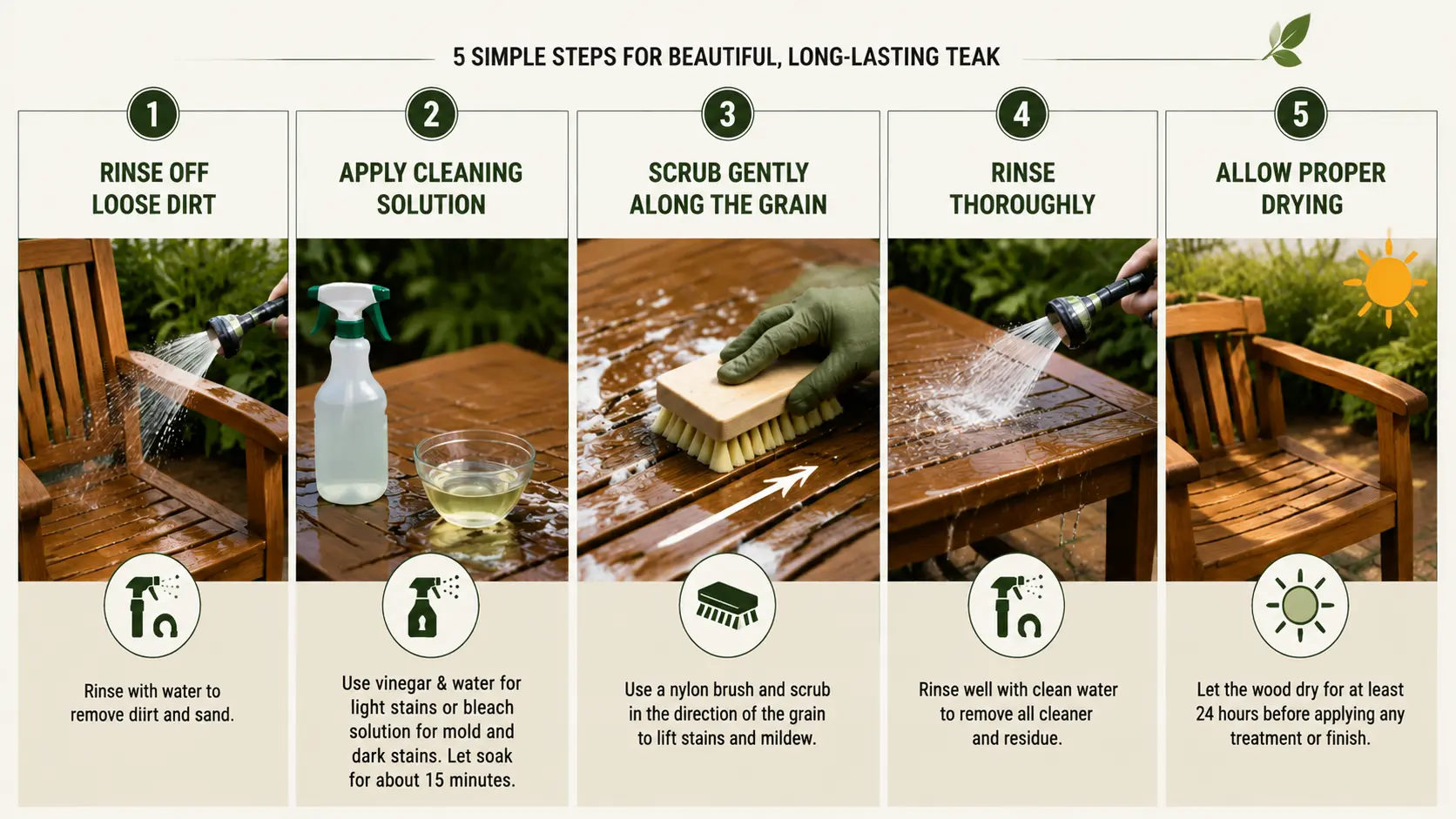
Before you deep clean, it helps to know this: most pieces don’t need the strong stuff right away. I always do a quick, regular clean first, then decide if I need to go further. It saves effort, and it’s gentler on the wood.
Step 1: Rinse Off Loose Dirt
Rinse the furniture with a hose or water to remove dirt and sand first. This prevents scratches when you scrub.
Work in the shade so cleaners don’t dry too quickly, giving you time to scrub evenly. Always work in a well-ventilated area, especially when using bleach or commercial cleaners, for safety.
Step 2: Select the Right Cleaning Solution Based on Stains
If light cleaning is not enough, you can move to a stronger solution and test it on a small, hidden area first. A vinegar-and-water mixture works well for light mildew.
A bleach-and-detergent solution is better for darker stains or mold. For heavily stained teak, a commercial teak cleaner may be the most effective option.
Step 3: Apply The Cleaner Evenly And Allow It To Soak
The cleaning solution is applied using a spray bottle or garden sprayer to fully wet the surface. The teak is kept damp so the cleaner can work for about 15 minutes.
This step should be done in a shaded, well-ventilated area to prevent the wood from drying too quickly. During this time, the surface should be monitored and lightly misted if needed to keep it evenly wet and active.
Step 4: Scrub Gently And Rinse Thoroughly
A nylon bristle brush is used to scrub the teak carefully, following the direction of the grain. Once clean, the furniture is rinsed thoroughly with a garden hose to remove any residue and loose dirt.
Extra attention is given to corners, grooves, and joints where grime and mildew tend to build up. After rinsing, they perform a quick visual check to ensure no cleaner remains, as residue can cause uneven color or future buildup.
Step 5: Allow Proper Drying Before Further Treatment
After cleaning, the teak is left to dry for at least 24 hours. If stains remain, a brightening solution such as oxalic acid can be applied using the same process.
When applying any protective oil or finish, they wait 24 to 48 hours to ensure the wood is fully dry. Proper drying helps the wood absorb treatments evenly and prevents moisture from becoming trapped in the grain.
For more detailed instructions, refer to the YouTube video by Concord Carpenter | Tool Lab below:
Specific Stain Removal Techniques
Different stains need different approaches. Some come off easily with soap and water, while others need special treatment. Here’s how to tackle the most common stains on teak furniture without damaging the wood or stripping its natural oils.
| Stain Type | What To Do |
|---|---|
| Oil & Grease Stains | Absorb excess with paper towels, clean with dish soap and a brush, and lightly sand if needed. |
| Water Rings | Apply toothpaste, rub with a toothbrush, and wipe clean. Use a warm iron on the cloth to remove stubborn rings. |
| Wine & Coffee Stains | Blot immediately, clean with soap. For set stains, apply teak cleaner and soak for 3 minutes. |
| Bird Droppings | Remove immediately with a damp cloth and soapy water. Acidic droppings stain permanently if left. |
| Black Spots & Mildew | Apply a vinegar-water mix, wait 5 minutes, and scrub along the grain. Use a commercial cleaner for heavy mildew. |
| Stubborn Grey Weathering | Sand along the grain to remove the oxidized layer, then apply the teak sealer. |
Not all stains on teak are the same, so treating them correctly helps protect the wood while restoring its appearance. Using the right method for each type of stain ensures effective cleaning without causing unnecessary damage.
Why You Should Never Use Teak Oil for Outdoor Furniture
Many people assume teak oil is the right product for teak furniture, but it causes more harm than good outdoors. Despite the name, commercial teak oil isn’t made from teak trees.
It’s linseed or tung oil mixed with solvents and varnishes. The oil creates a temporary shine for a few weeks, then evaporates in the sun and wind, taking the wood’s natural protective oils with it.
This leaves the teak drier and more vulnerable. The surface becomes sticky and attracts dirt, creating perfect conditions for mildew and black spots.
Furniture turns dark and feels gummy over time. Worst of all, teak oil doesn’t prevent graying and requires constant reapplication, creating an endless maintenance cycle.
Teak Sealer vs Teak Oil: The Right Choice for Furniture
Understanding the difference between teak sealer and teak oil helps ensure proper protection for furniture. While their names sound similar, they work completely differently.
| Feature | Teak Oil | Teak Sealer |
|---|---|---|
| What It Does | Adds foreign oils to the wood surface for temporary shine | Locks in teak’s natural oils without adding artificial products |
| Outdoor Use | NOT recommended for outdoor furniture | Designed specifically for outdoor teak protection |
| Duration | Lasts 2-4 weeks, needs constant reapplication | Lasts a full year with one application |
| Effect on Wood | Strips natural oils, leaves wood drier and more vulnerable | Preserve natural oils and protect from UV damage |
| Long-Term Result | Creates a sticky surface, attracts dirt, and turns dark/black with a gummy texture | Repels dirt and moisture, keeps furniture cleaner and protected |
| Best Use | Indoor teak furniture only | All outdoor teak furniture and exposed pieces |
Use teak sealer on outdoor furniture and save teak oil for indoor pieces only. Sealer protects without leaving the sticky, mildew-prone mess that teak oil does.
Protecting and Sealing Teak Furniture
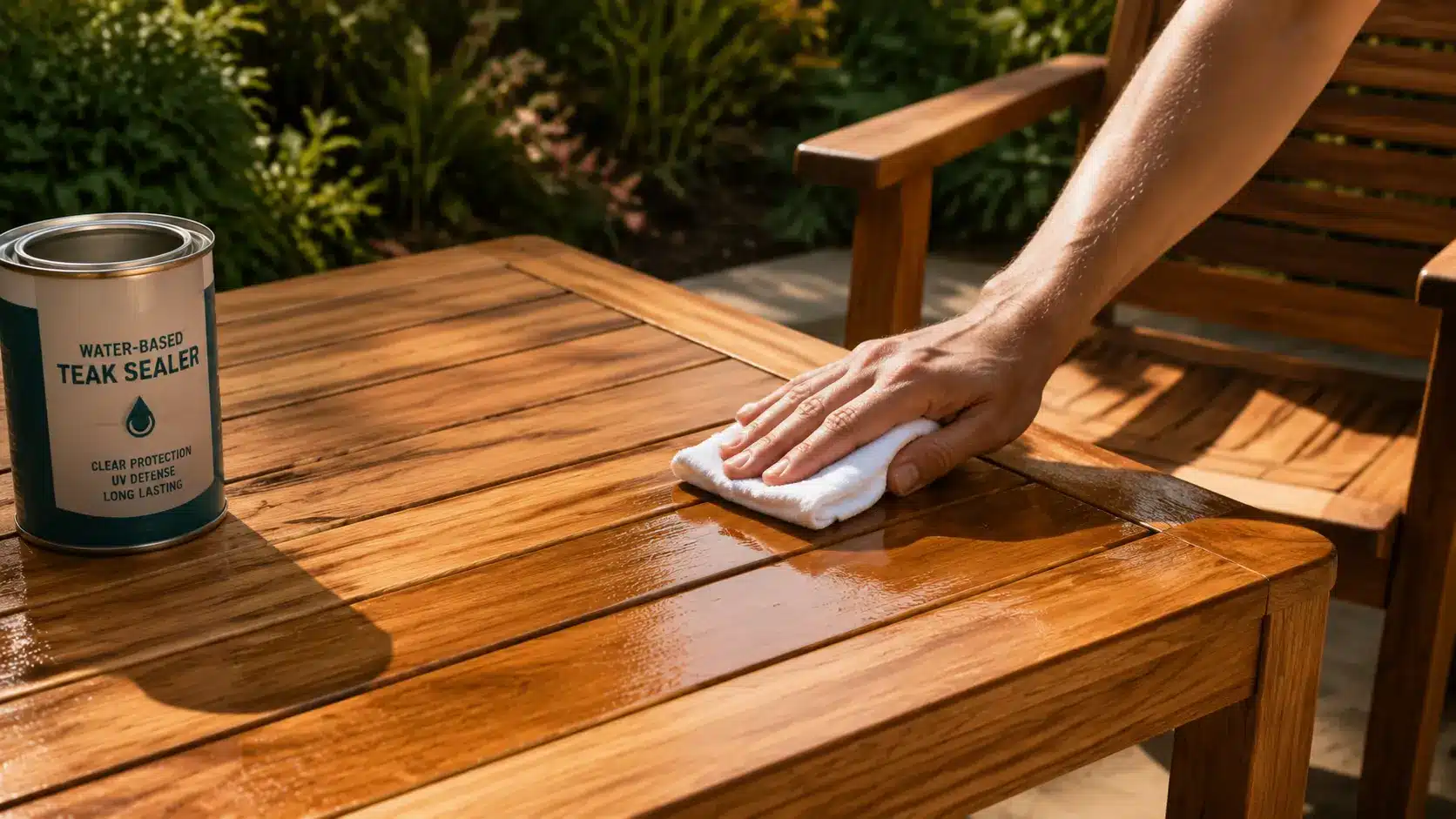
Once your teak is clean, you’ll want to decide if sealing is right for you. If you love the golden-brown color, a good sealer can help lock it in and protect against UV damage.
- Sun exposure first: Leave your furniture in direct sunlight for two weeks before sealing to open the wood grain
- Clean and dry thoroughly: Any dirt or moisture will trap under the sealer and cause problems later
- Apply thin, even coats: Use a soft cloth to rub in the sealer, avoiding drips and pooling
- Reapply annually: Most sealers last about a year before you’ll need to refresh them
- Skip teak oil outdoors: Use water-based sealers instead, as oil attracts dirt and encourages mold growth
Remember, sealing is completely optional; unsealed teak will naturally develop a beautiful silver-gray patina that’s equally stunning. The choice is yours based on the look you prefer!
Indoor and Outdoor Teak Care Differences
Your teak furniture needs different care depending on where it lives. Indoor pieces face different challenges from outdoor ones, so let’s break down what each requires.
| Aspect | Indoor Teak | Outdoor Teak |
|---|---|---|
| Cleaning Frequency | Dust weekly, deep clean 2-3 times yearly | Quick wipe-downs weekly, deep clean seasonally |
| Main Challenges | Dust, spills, and watermarks from drinks | UV rays, rain, dirt, mold, pollen |
| Color Changes | Stays golden-brown with minimal fading | Naturally grays in 5-12 months |
| Oil/Sealer Use | Light oiling is acceptable for shine | Skip oil, use water-based sealer only |
| Protection Needs | Coasters for drinks, gentle dusting | UV protection, regular hosing down |
| Winter Season | No special care needed, just regular dusting | Can stay outside year-round, light cleaning before spring |
Indoor teak stays pretty low-maintenance since it’s protected from weather extremes. Outdoor pieces work harder and need more attention, but they’re built to handle whatever nature throws at them!
Common Mistakes When Cleaning Teak Furniture
Even with good intentions, small mistakes can damage teak furniture or create more work later. These errors are easy to make but also easy to avoid once you know what to watch for.
- Letting Cleaner Dry on the Wood: Rinse cleaners while still wet. Dry cleaner residue leaves uneven coloring and attracts dirt. Work in sections and rinse each area before moving forward.
- Not Rinsing Thoroughly Enough: Quick rinses leave soap residue that builds up, making furniture look dull. Spend extra time rinsing until the water runs completely clear after every cleaning.
- Storing Teak Products in the Garage: Temperature fluctuations can cause teak products to separate, thicken, or spoil. They become chunky and unusable. Store all teak care products indoors at room temperature.
- Scrubbing Against the Grain: Scrubbing perpendicular to the grain creates visible scratches appearing as light lines. Always scrub parallel to the grain, following the natural direction of wood fibers.
- Skipping the Test Spot: Every teak piece reacts differently to products based on age and weathering. Always test on a small hidden area first before treating the entire furniture piece.
Even though teak is strong and weather-resistant, certain cleaning habits can do more harm than good. Avoiding common mistakes helps maintain the wood’s natural oils, prevent discoloration, and extend the life of the furniture.
Final Thoughts
Learning how to clean teak wood doesn’t have to feel confusing. It’s actually one of the easiest furniture materials to maintain, which makes it a smart investment for any home.
The real question isn’t whether someone can keep their teak looking great; it’s simply deciding which look they prefer.
Golden-brown with a sealer, or that gorgeous silver patina? Both are beautiful, and both require minimal effort. Armed with the right cleaning techniques and a clear maintenance schedule, anyone can keep their teak furniture stunning for decades.
A soft brush, mild soap, and a little attention go a long way. Plus, skipping that teak oil outdoors saves time and prevents headaches down the road.
Ready to turn weathered teak back to its former glory? Grab that soft-bristle brush and get started today. Your furniture will thank you!
Frequently Asked Questions
How to Clean Teak Wood Furniture Without Sanding?
Most of the time, you don’t need sanding at all. Start with a hose rinse, then scrub with warm water and mild dish soap using a soft nylon brush.
Can I Clean Teak With Dish Soap Like Dawn?
Yes, you can. Mild dish soap is one of the safest first steps for cleaning teak furniture. Mix it with warm water, scrub gently with a nylon brush, then rinse well for everyday dirt and light grime.
How Do You Remove Black Stains From Teak Wood Furniture?
Try a commercial teak cleaner first: spray it on, let it sit for 15 minutes, scrub, and rinse. If stains remain after 24 hours of drying, use oxalic acid: 1/2 cup in 1 gallon of hot water, then rinse thoroughly.