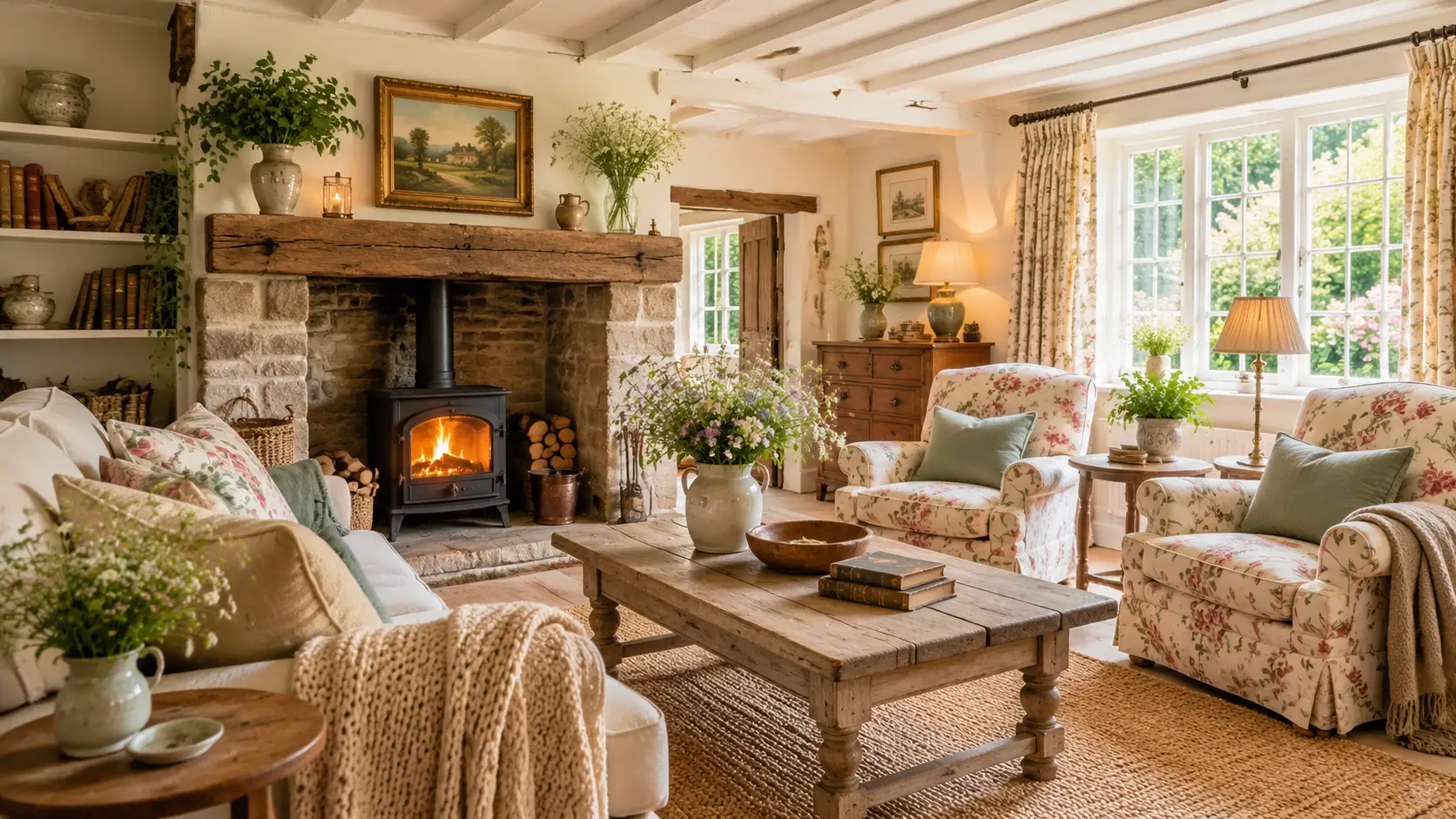
Some homes just feel warm the moment you walk in. Soft colors, worn wood, and cozy textiles all working together to create that easy, lived-in charm.
That is English cottage style, with roots that go all the way back to the English countryside. The good part is you do not need a big budget or a complete renovation to get the look.
With the right colors, fabrics, and a few vintage pieces, you can bring that same cozy feeling into your own living room, bedroom, or kitchen. Here is what makes this style work and how you can start using it today.
What Is English Cottage Style?
English cottage style is a design aesthetic inspired by the traditional homes of the English countryside. It is warm, layered, and full of character. The goal is not to look perfect. The goal is to feel comfortable and personal.
Origin and History of Cottage Design
The word “cottage” originally referred to small rural homes in the British countryside from the 17th century.
These modest houses were built for farmers and craftsmen, using local stone and thatched roofs, with a focus on practicality rather than style.
In the 18th and 19th centuries, the English cottage style saw a romantic revival. Wealthy landowners and artists began imitating its cozy, rural feel in country estates and homes.
Over time, it shifted from a necessity to a design style valued for its warmth, simplicity, and charm.
Key Characteristics of English Cottage Style
English cottage style is defined by interiors that feel layered and naturally lived-in rather than overly styled or polished.
It relies heavily on natural materials such as wood, stone, linen, and wool to create warmth and texture throughout the space.
Furniture is typically vintage or handcrafted, often showing signs of age and wear that add character.
Floral and botanical patterns are also common, appearing on fabrics, rugs, and even walls to reinforce the soft, nature-inspired feel.
Core Elements of English Cottage Interior Design
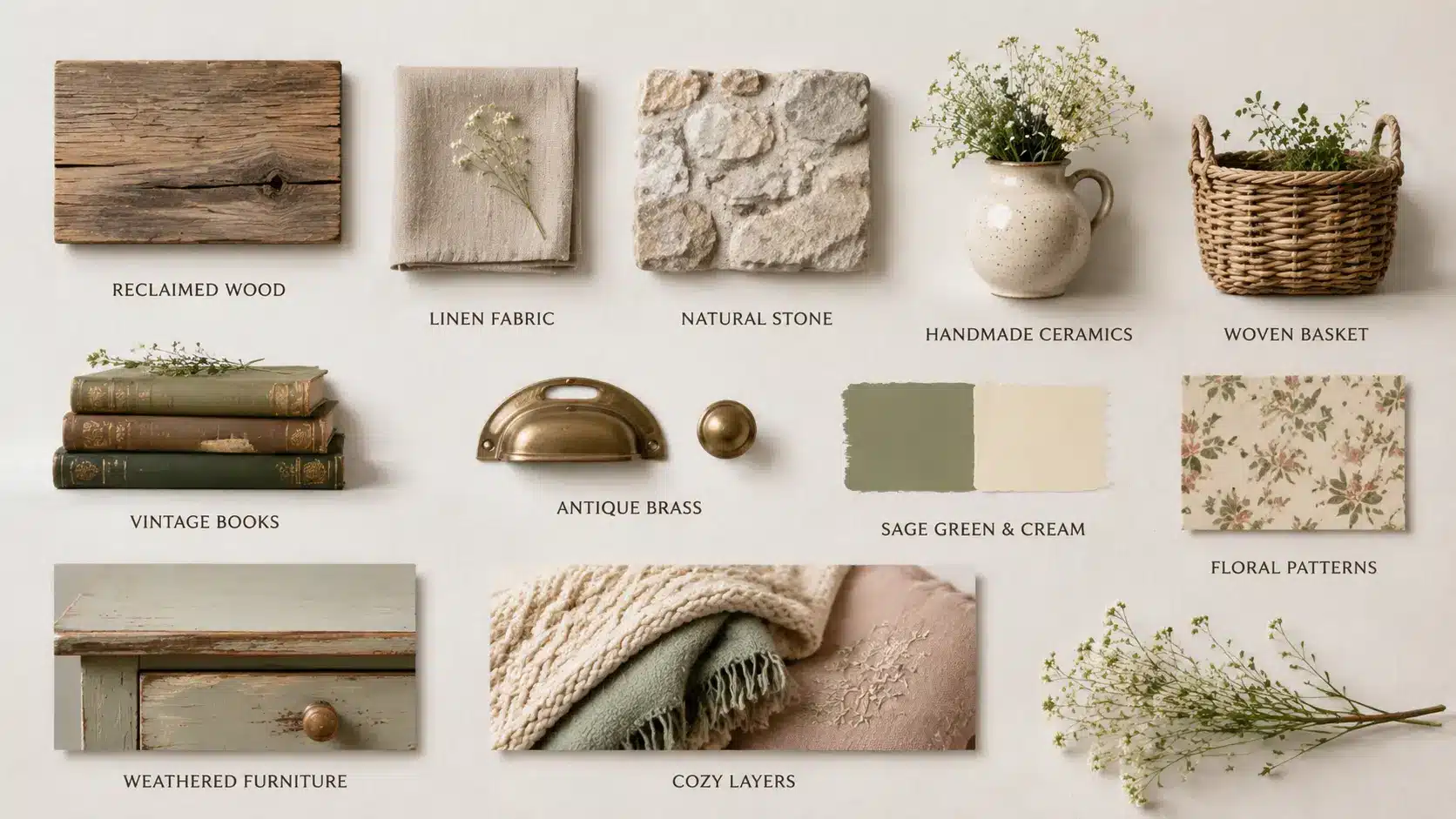
English cottage interiors focus on natural textures, soft colors, and a lived-in, layered atmosphere. The style feels relaxed and unpolished rather than staged or modern.
- Use natural materials like raw wood, linen, cotton, stone, and handmade ceramics with minimal processing.
- Choose aged or weathered finishes instead of polished surfaces to keep the space feeling original and timeworn.
- Work with a soft, nature-inspired palette including cream, sage green, pale blue, warm brown, and muted pastels.
- Layer decor with books, baskets, ceramics, and personal objects to create a collected, lived-in character.
- Mix old and new elements in a slightly imperfect way to build warmth, depth, and a sense of history in the space.
English Cottage Living Room Ideas
The living room in an English cottage style focuses on warmth, comfort, and a naturally lived-in feel. Every element works together to create a space that feels inviting and relaxed.
Fireplace as the Focal Point
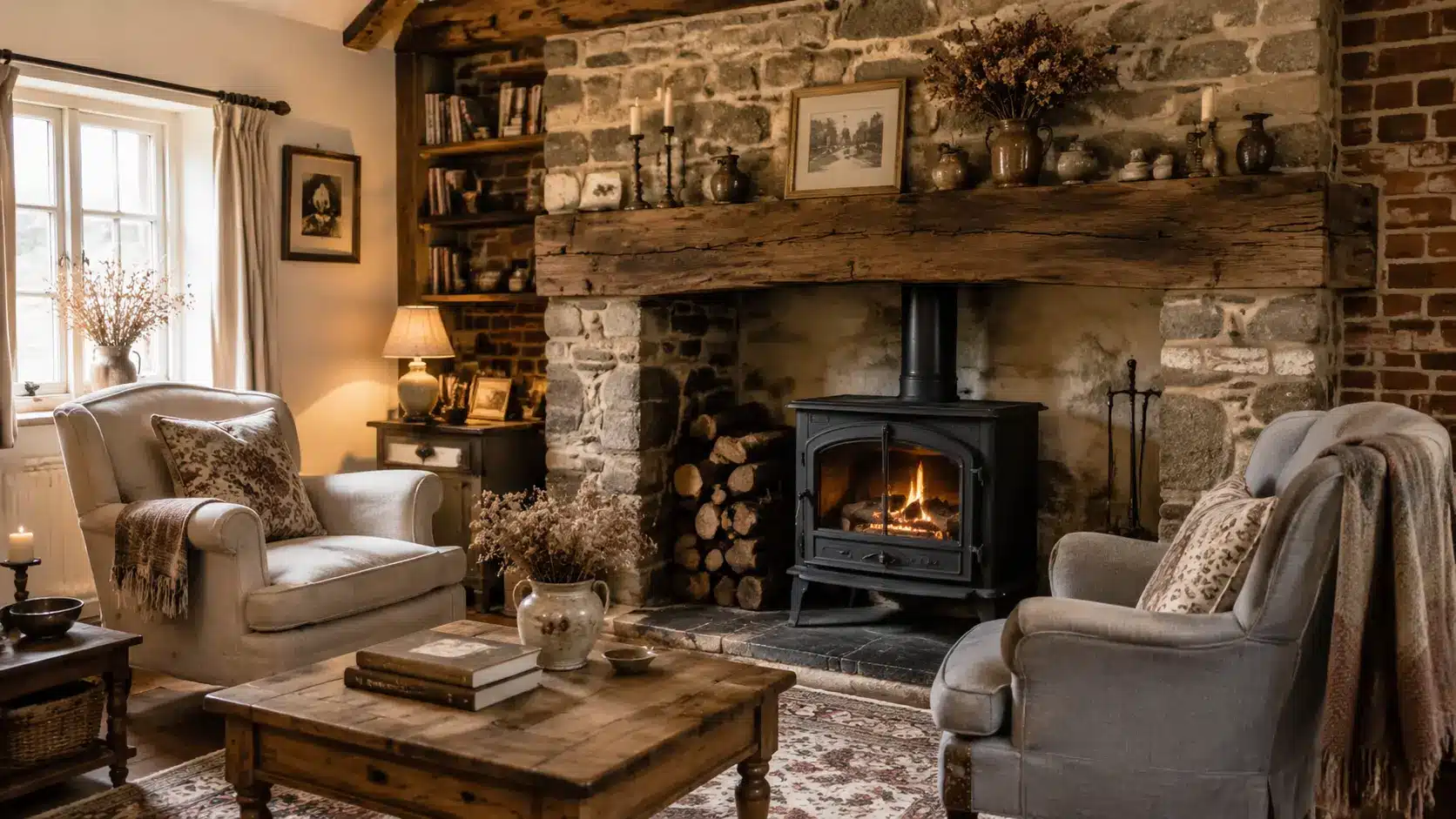
The fireplace is usually the heart of an English cottage living room, often paired with exposed brick or stone that adds to the warm, lived-in feel.
Arrange seating around it rather than around the television. Use a stone or brick surround if possible, or add a simple wood mantle with candles, small frames, and dried flowers on top.
Cozy Seating and Soft Furnishings
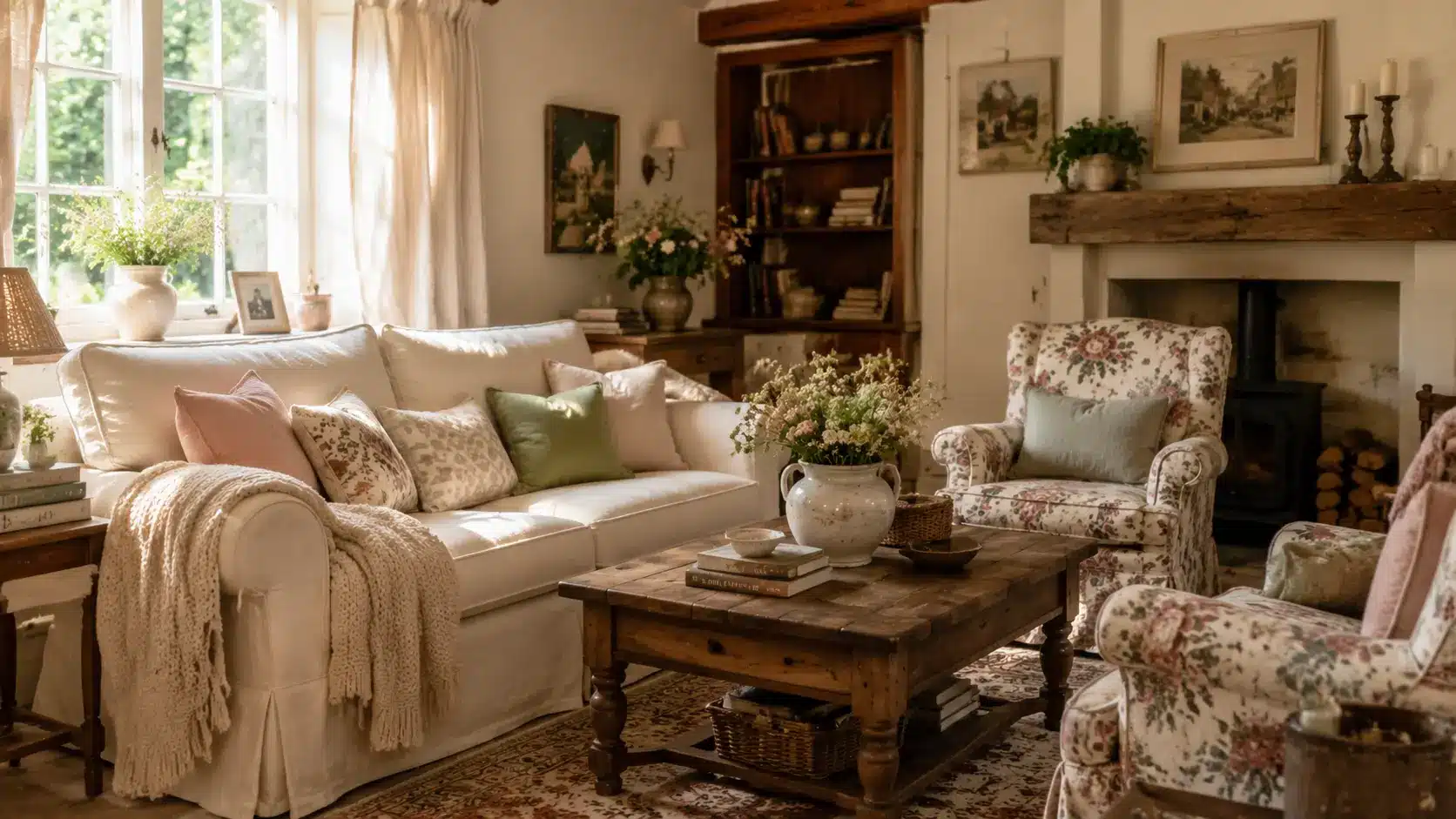
English cottage decor encompasses a wide range of fabrics, typically including breathable fabrics like cotton or linen, mixed with warm, textured wool or velvet.
Choose slipcovered sofas in white or cream. Add armchairs in a faded floral or stripe print. Layer in cushions, quilts, and a chunky knit throw. The more textile layers, the better.
Vintage and Decorative Details
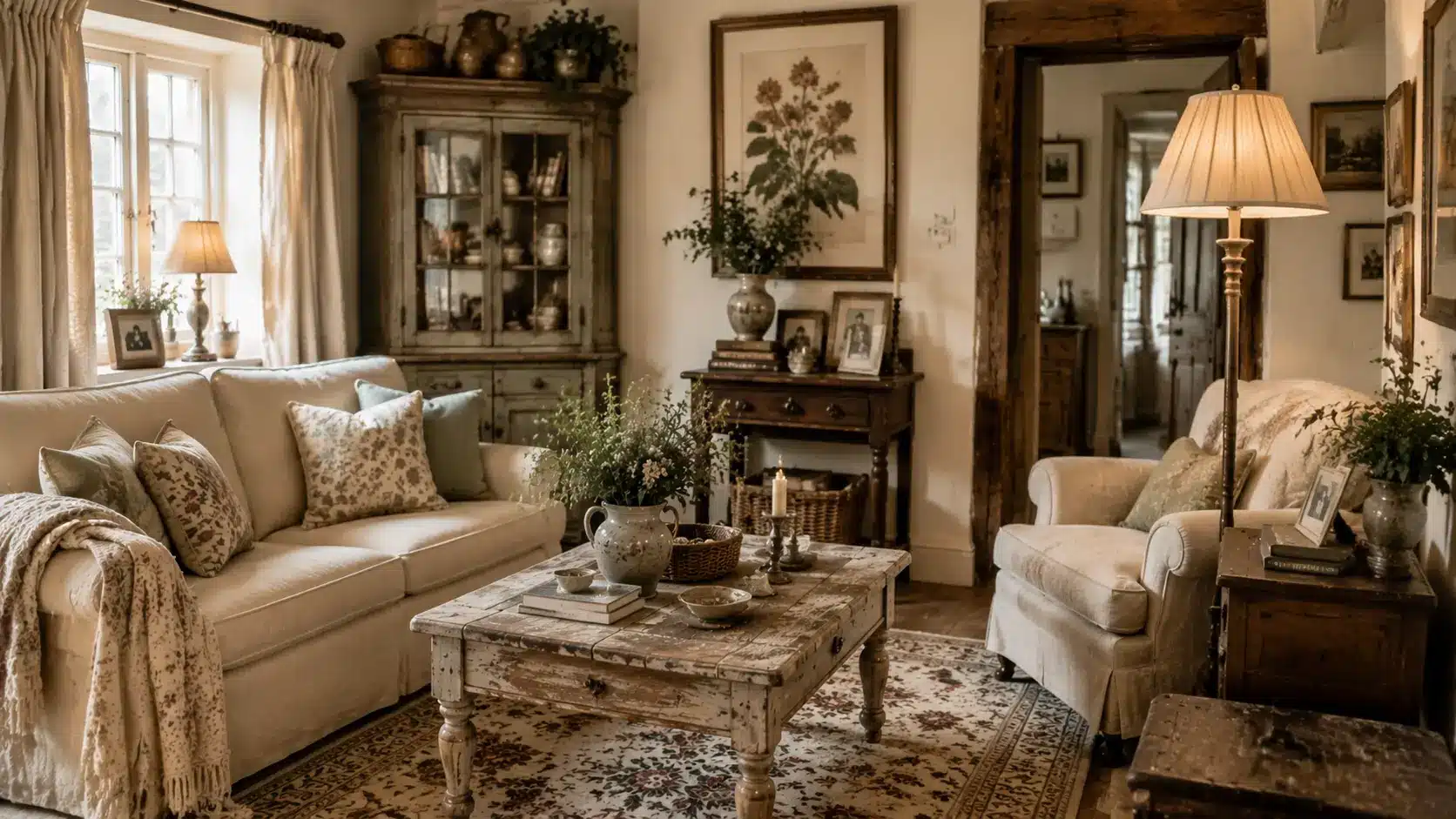
Furniture in English cottage interiors is characterized by a quaint, vintage-inspired look. Pieces are typically well-worn and showcase a mix of textures and finishes, from weathered woods to painted surfaces.
Overstuffed sofas, wooden tables with a distressed patina, and antique cabinets contribute to the lived-in atmosphere.
Add a floral rug, warm floor lamps, and curtains in a soft linen or printed cotton fabric to complete the living room look.
How to Create an English Cottage Interior in Your Home
To create an English cottage interior, start with a soft, natural base using warm whites, creams, or sage on the walls, along with wood, stone, or terracotta flooring that feels simple and timeworn.
This approach works just as well in smaller, low-maintenance apartment layouts as it does in larger countryside homes.
- Avoid glossy or overly modern finishes, as the style depends on an understated, natural foundation.
- Add character with vintage or secondhand furniture, such as worn wooden cabinets, aged tables, or old mirrors, since imperfect, well-used pieces define the look.
- Then layer textiles generously, mixing florals, gingham, plaid, and other traditional patterns across cushions, rugs, curtains, and throws.
- The key is not coordination but contrast, where different patterns and textures sit together comfortably.
Turn Your Home Into an English Cottage-Style Space
Small changes go a long way with this style. Pick even a few of these ideas, and your space will start to feel warmer and more lived-in right away.
1. Use Soft, Muted Wall Colors
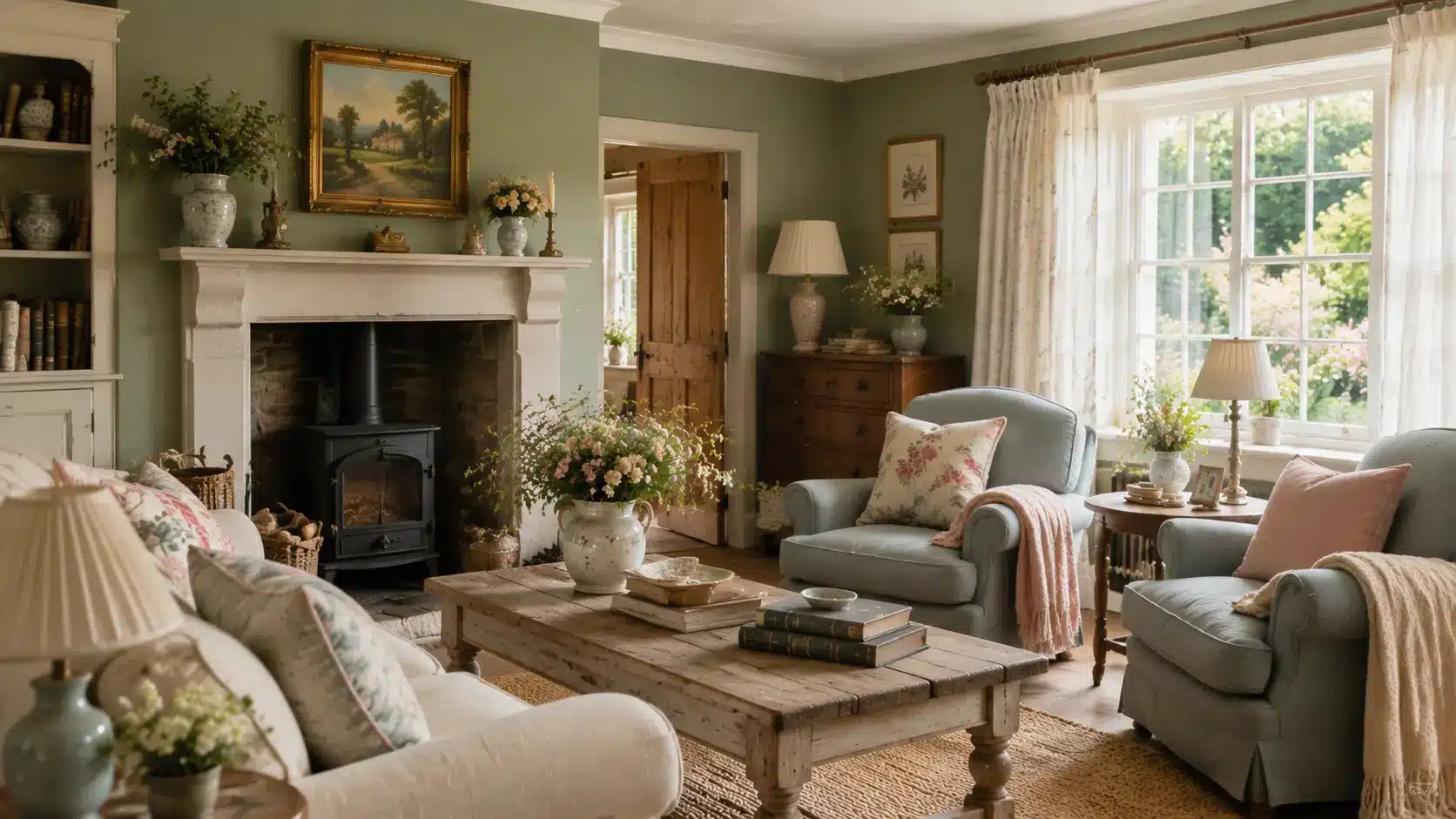
Sage green, warm white, dusty blue, and blush are all great starting points for a cottage look. These tones keep the space calm and grounded without feeling flat.
These shades also reflect natural light beautifully, making even smaller rooms feel brighter and more inviting.
Stick with matte or eggshell finishes to create the soft, understated look that cottage interiors are known for.
2. Add Natural Wood Elements
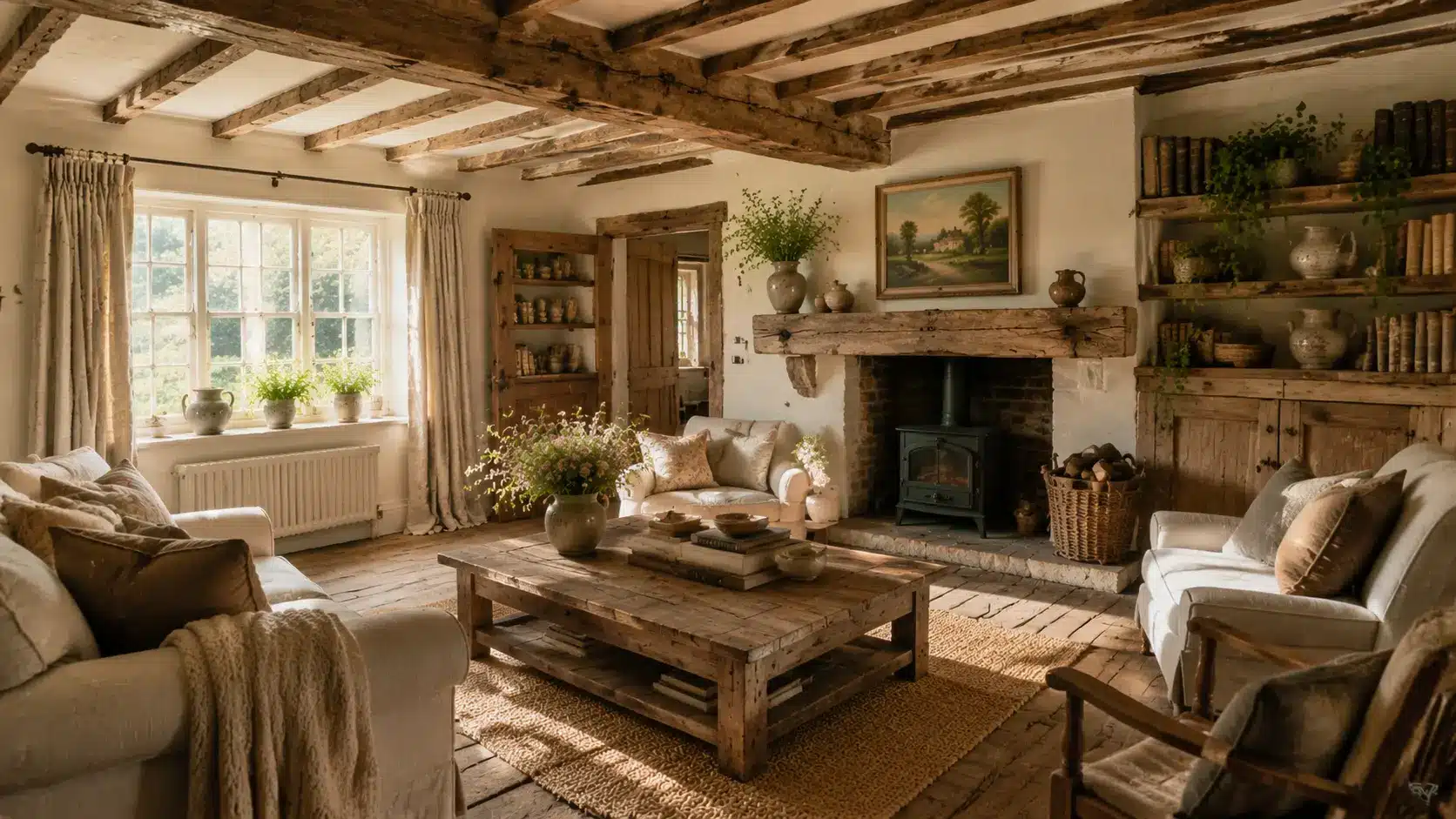
Reclaimed or distressed wood on floors, shelves, beams, or furniture brings instant warmth to any room. The more worn and aged it looks, the better it fits the style.
You do not have to replace everything with reclaimed wood to achieve the effect. Mixing one or two wooden statement pieces with your existing furniture is often enough to introduce warmth and character.
3. Layer Vintage and Antique Furniture
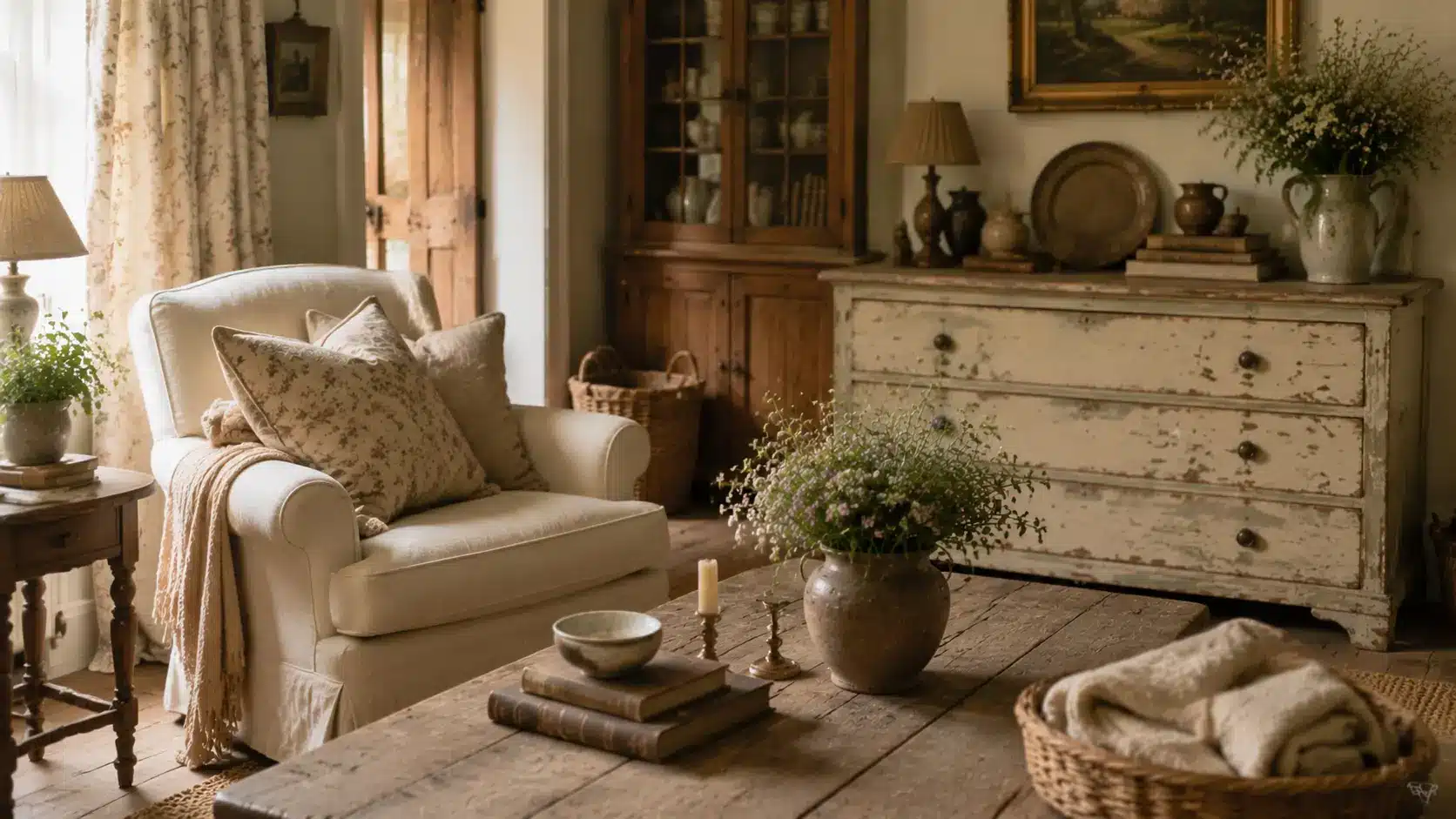
Mix a worn wooden table with a painted dresser and a slipcovered chair for that collected, over-time feel.
This soft vintage furniture look relies on painted wood, light metal accents, and airy fabrics rather than anything sleek or new.
Look for furniture with curved edges, carved details, or gently distressed finishes instead of perfectly polished pieces.
Mixing different wood tones also makes the room feel naturally collected rather than carefully coordinated.
4. Incorporate Floral and Botanical Prints
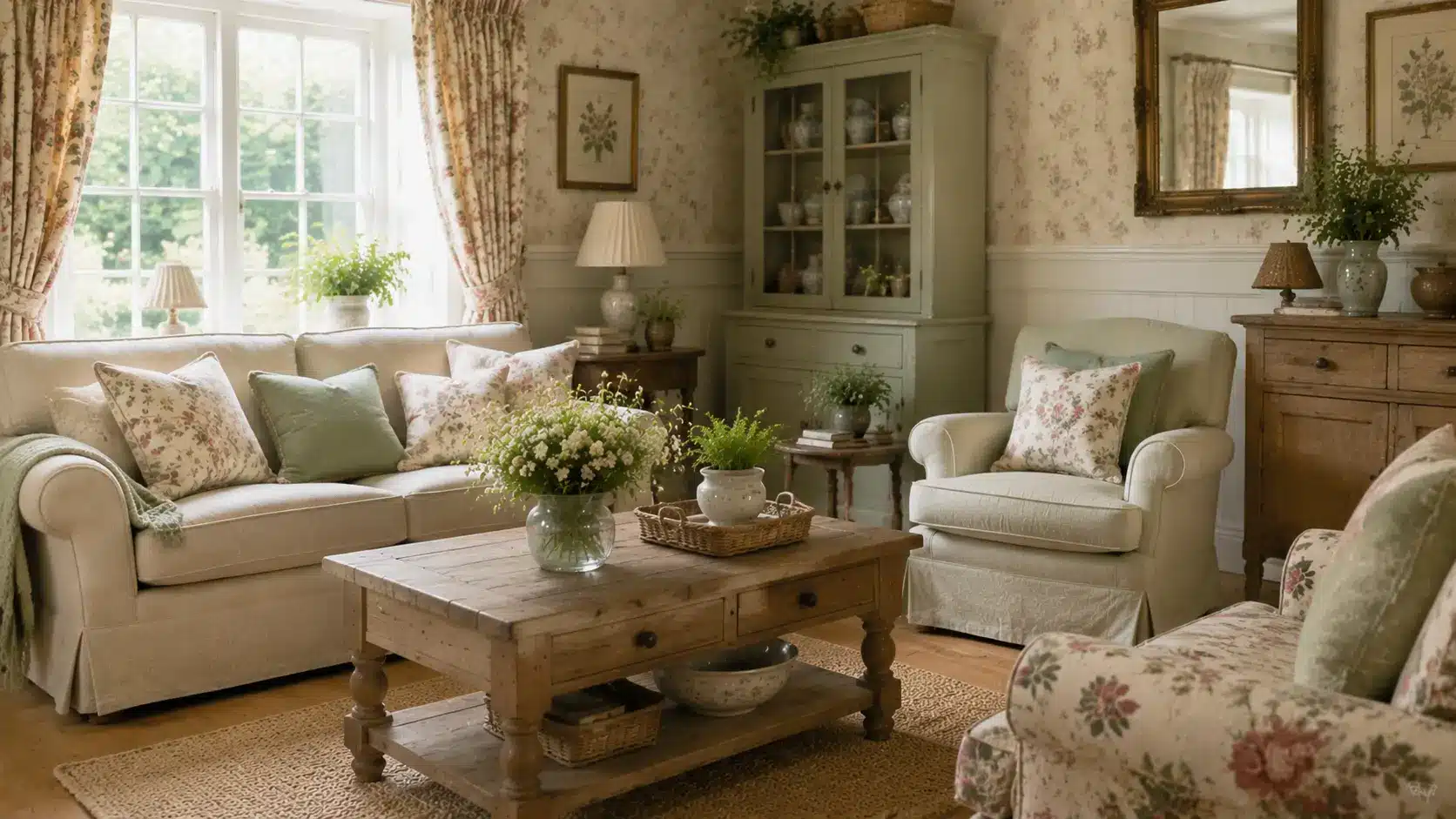
Floral and leafy patterns on curtains, cushions, rugs, or wallpaper tie the whole look back to the English countryside. Even one floral piece in a room makes a big difference.
Choose smaller-scale prints if you want the room to feel subtle instead of overly traditional. Repeating similar botanical patterns in different areas helps create a cohesive look without making the space feel busy.
5. Use Cozy Layered Textiles
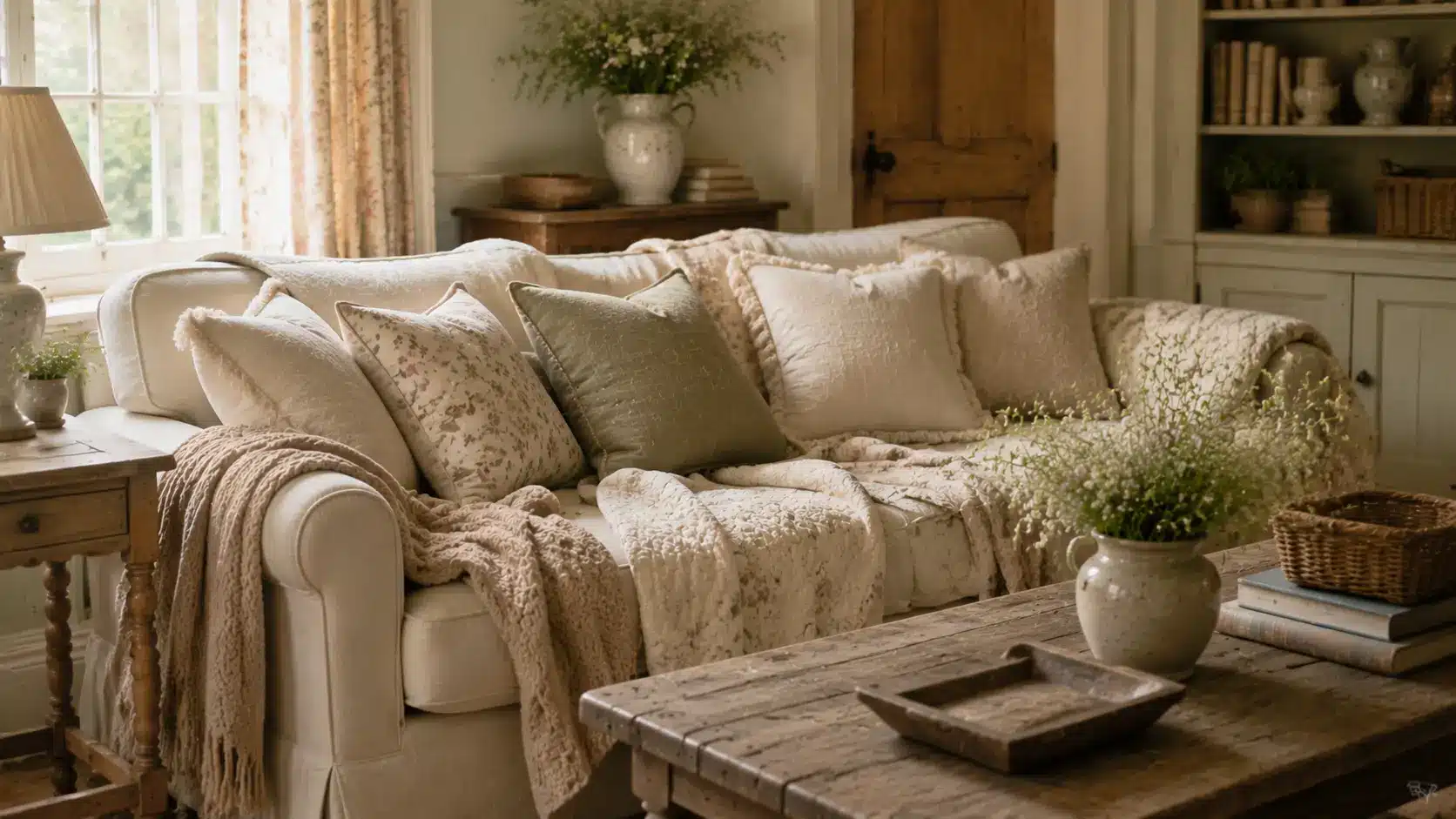
Stack throws, cushions, and quilts in cotton, linen, and wool to build up softness and warmth. The more layers you add, the more comfortable and cottage-like the room feels.
Varying textures is just as important as adding more layers. Combining smooth linen with chunky-knit throws or woven cushions creates a richer, more inviting space.
6. Create a Fireplace Focal Point
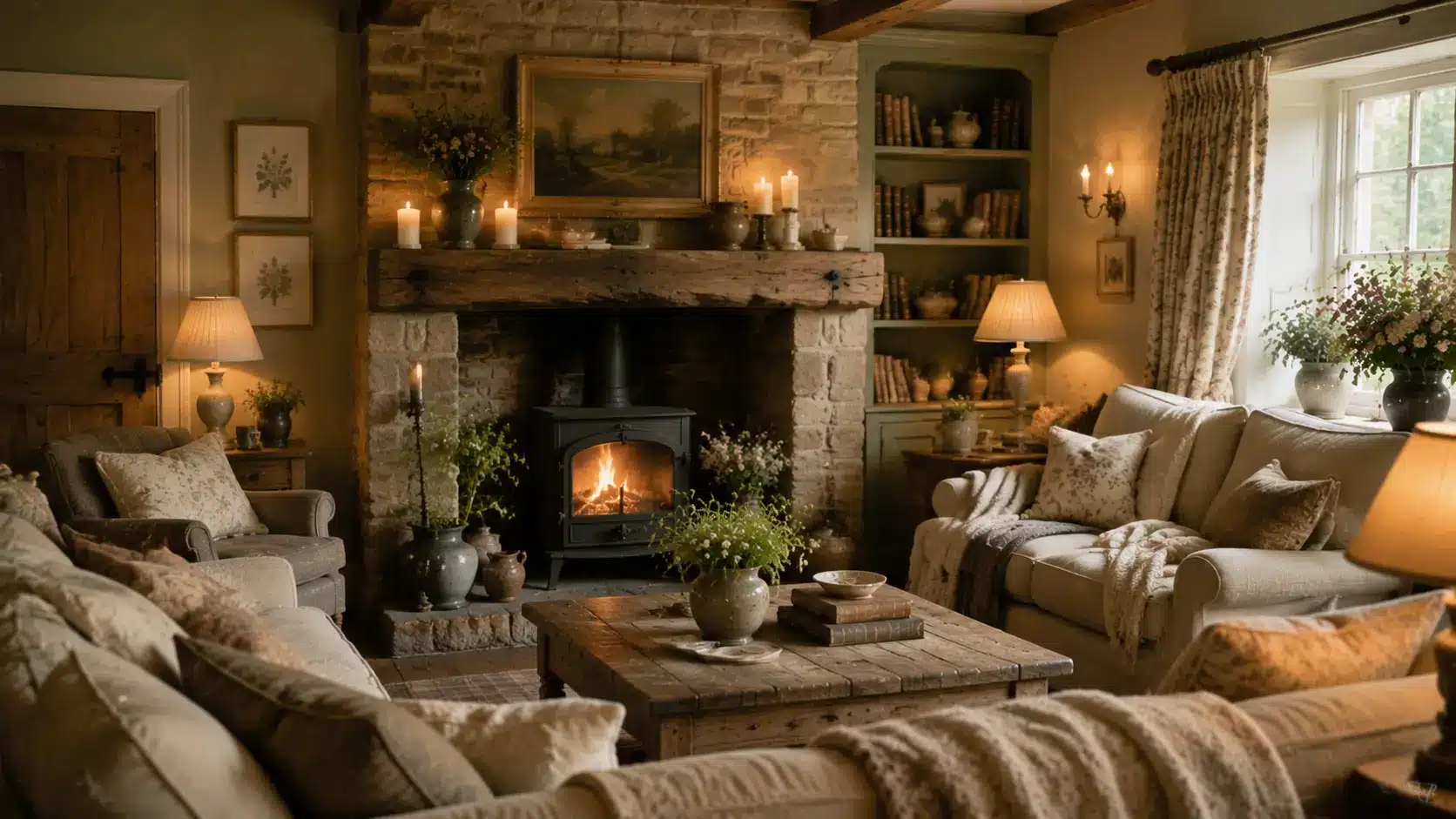
Even a decorative fireplace filled with candles can anchor a living room and draw the eye. Add a simple mantle and place a few personal objects on top to make it feel lived-in.
Surround the fireplace with comfortable seating to encourage conversation and relaxation. Even if the fireplace is nonfunctional, decorating it thoughtfully can make it feel like a natural centerpiece.
7. Add Open Kitchen Shelving
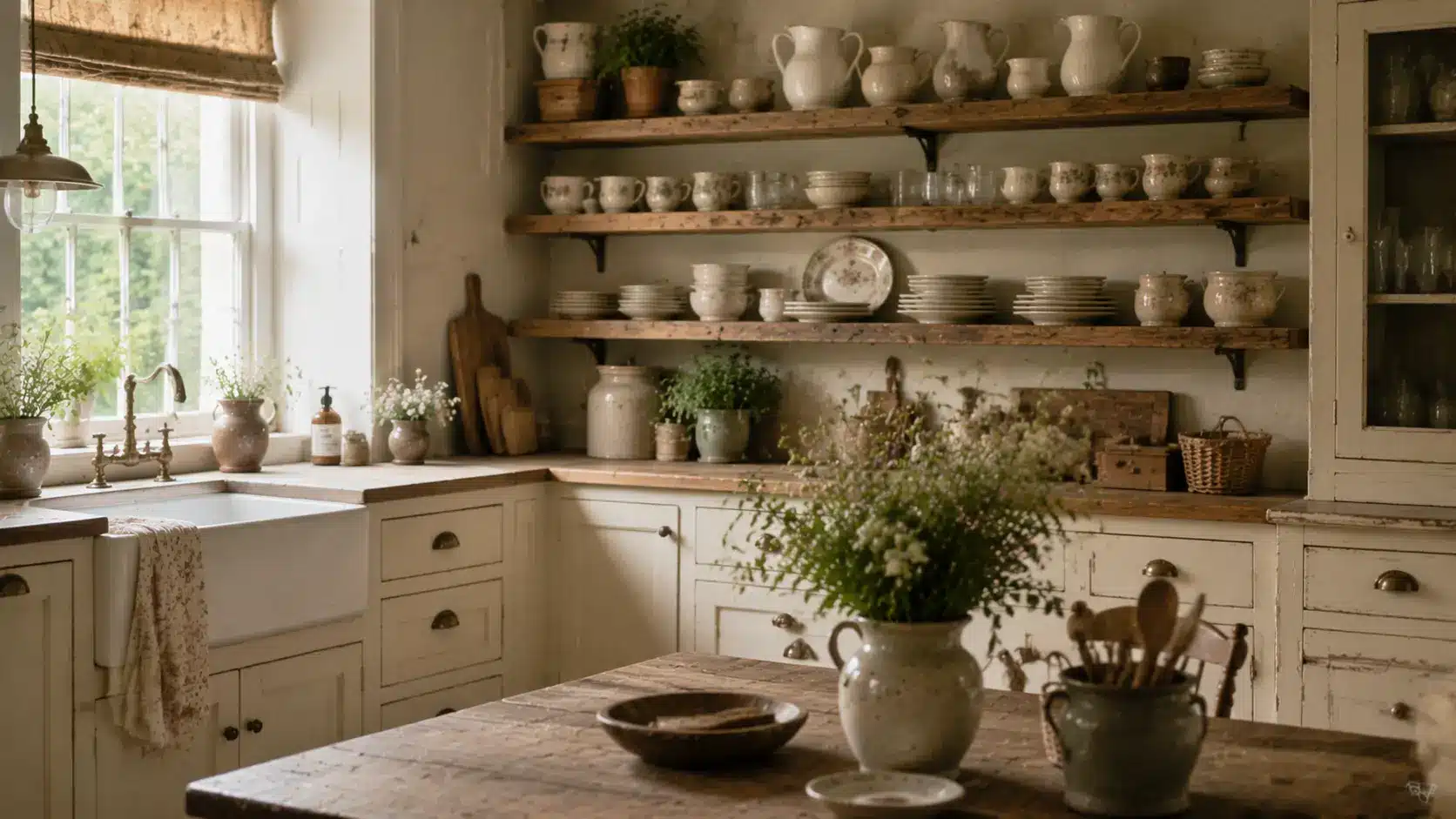
Display ceramic mugs, old glass jars, and stacked plates on open shelves instead of hiding everything behind cabinet doors.
If you want more warm and welcoming kitchen ideas beyond shelving, layering in soft fabrics and vintage hutches can push the room even further into cottage territory
Keep everyday dishes and frequently used items within easy reach so the shelves remain both decorative and functional.
Avoid overcrowding the shelves, since leaving some open space helps the display feel relaxed.
8. Use Woven and Natural Decor
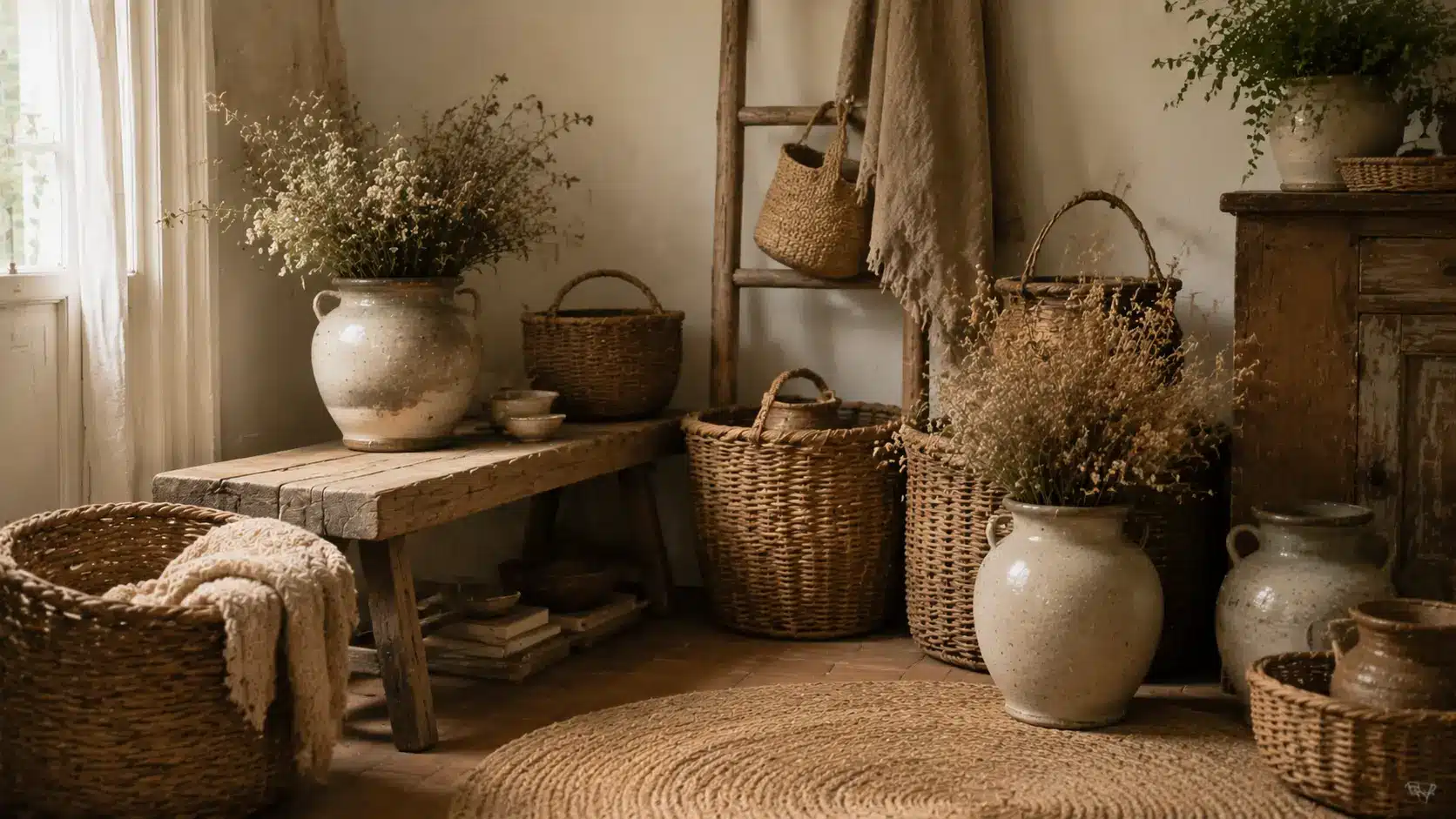
Wicker baskets, jute rugs, and bundles of dried flowers add texture and warmth without spending much. These small natural touches go a long way in a cottage-inspired space.
Natural materials also add visual interest without relying on bold colors or patterns. Mixing different textures like wicker, rattan, and woven grasses adds more depth to the room.
9. Mix Patterns Instead of Matching
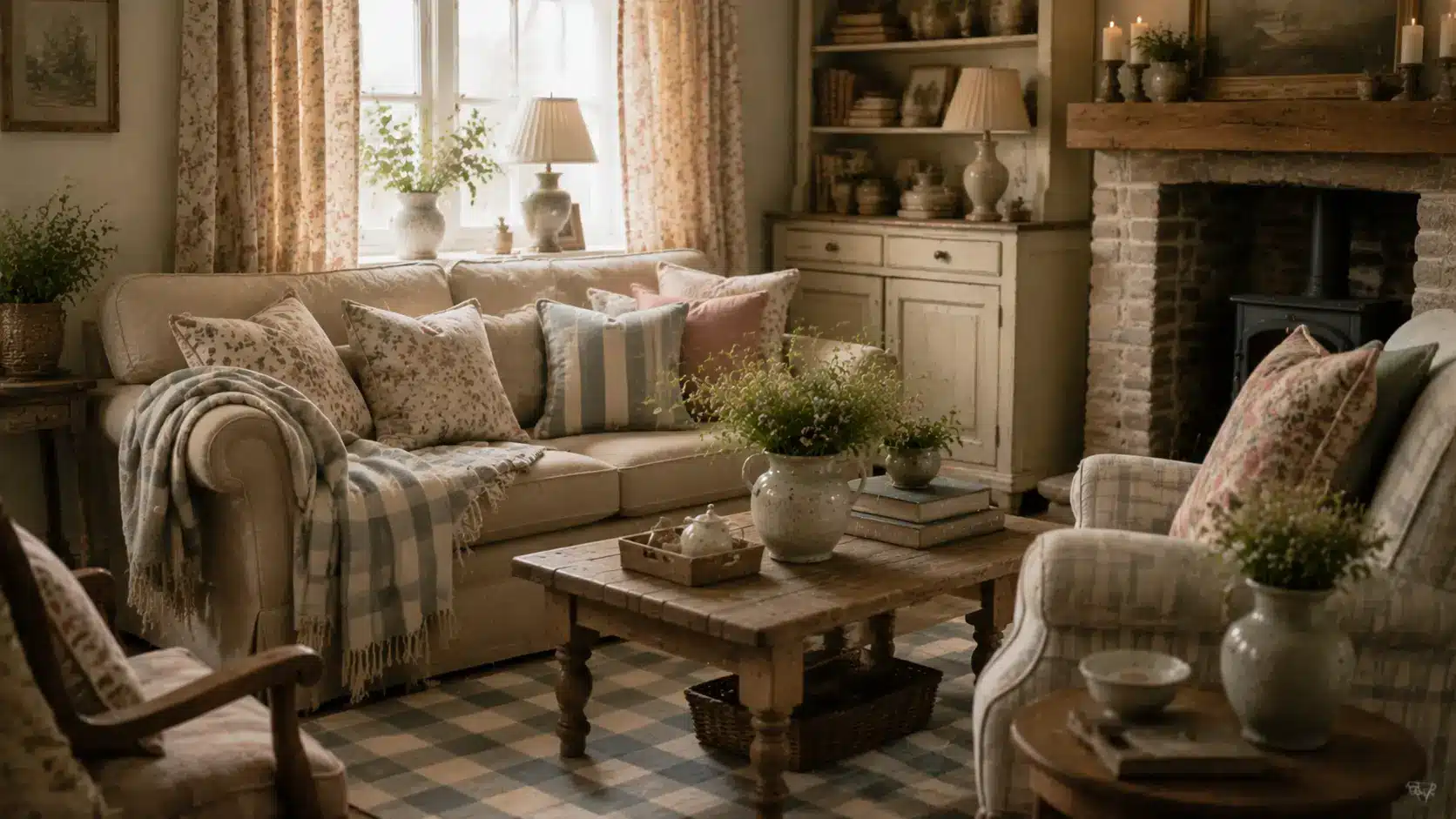
Pair a floral cushion with a striped blanket or a check rug and let the mix do the work. Keep the color tones soft and muted so the different patterns feel easy together rather than loud.
Start with two or three patterns before adding more to avoid overwhelming the room. Keeping a consistent color palette allows different prints to work together effortlessly.
10. Use Warm, Soft Lighting
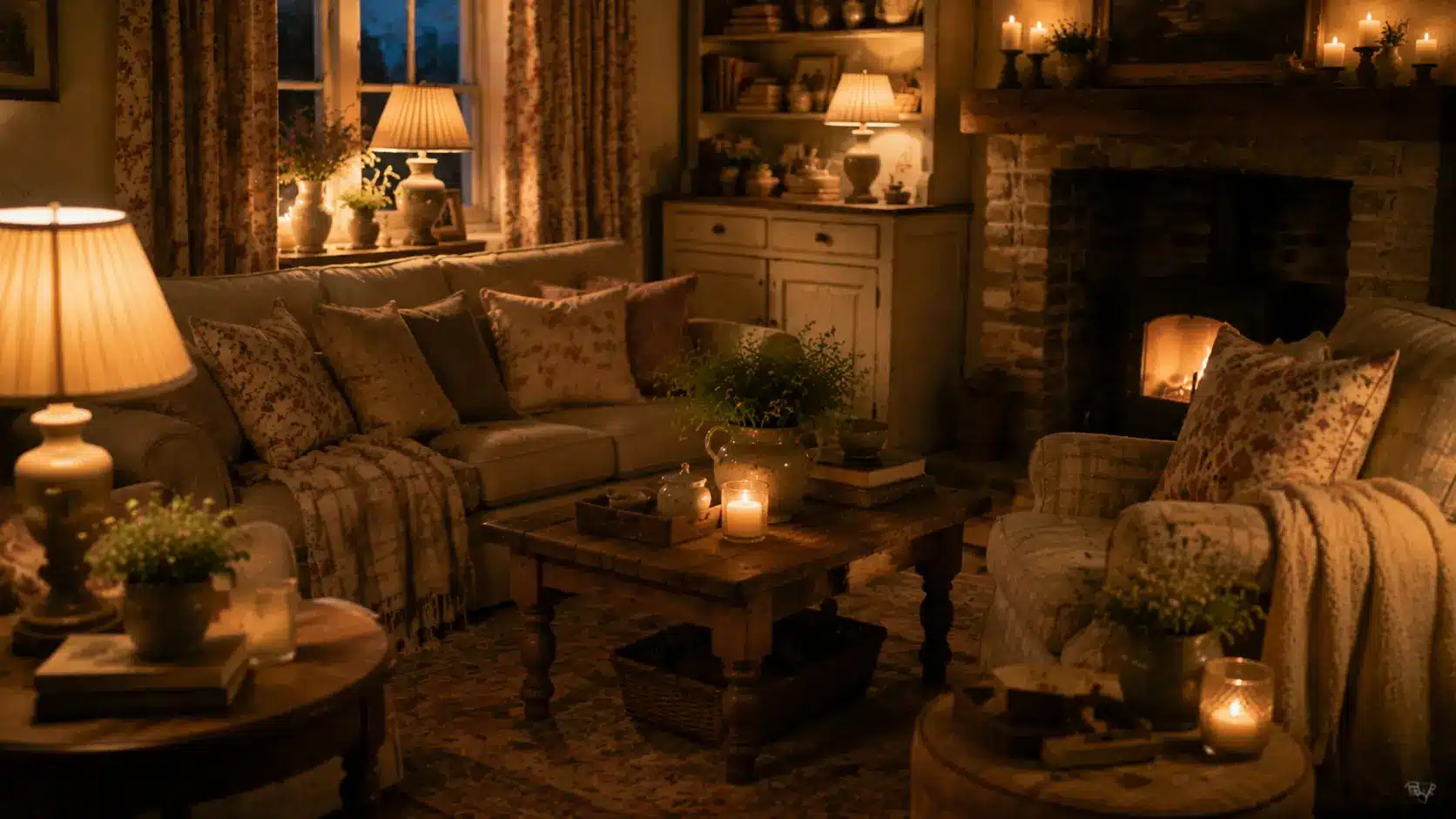
Replace bright overhead lights with table lamps, floor lamps, and candles wherever you can. Warm bulb tones soften any room and give it that cozy, golden cottage glow.
Choose warm white bulbs instead of cool daylight bulbs to maintain a cozy atmosphere throughout the evening. Layering multiple light sources also helps eliminate harsh shadows and creates a softer ambiance.
11. Display Books and Collected Objects
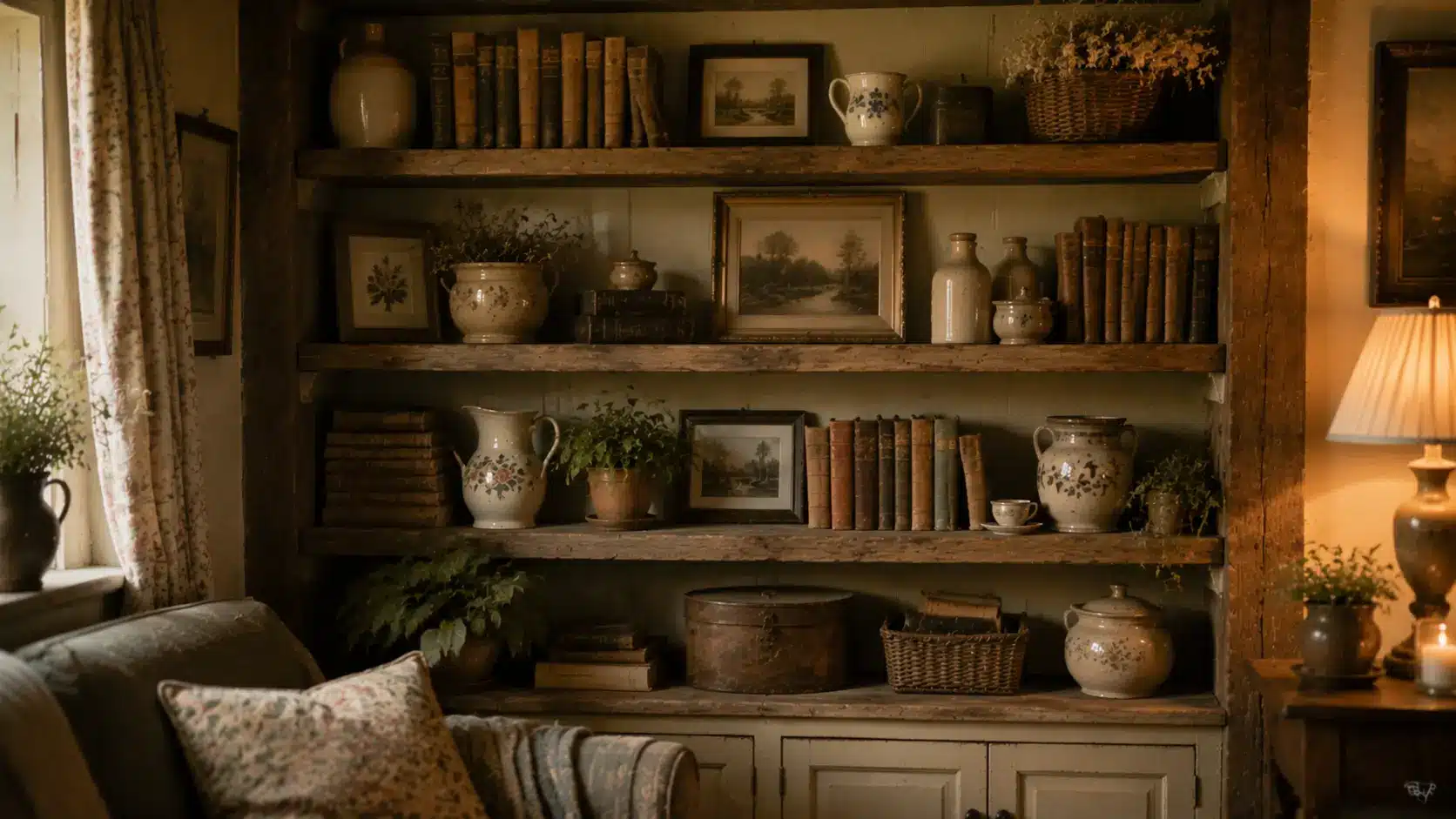
Stack books on shelves and side tables, then fill in the gaps with small ceramics, vintage tins, and framed photos. A space that looks collected over time always feels more personal and warm.
Choose items that have personal meaning rather than buying decorations simply to fill shelves. Leaving a little empty space between objects keeps the arrangement feeling intentional instead of cluttered.
12. Choose Slipcovered Sofas
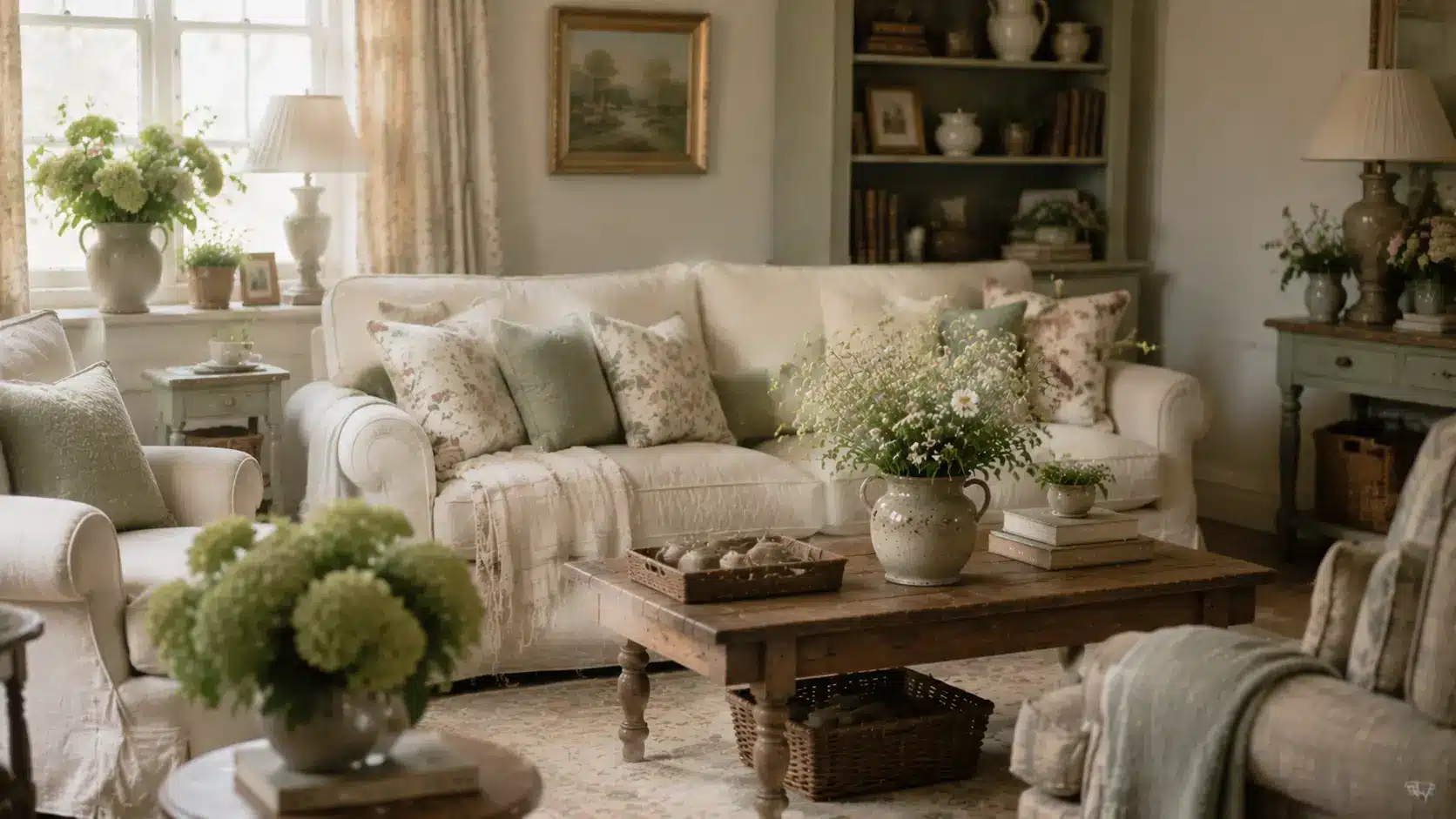
Loose-fitting slipcovers in cream or natural linen give a sofa that casual, comfortable look that fits cottage style perfectly. They are also easy to wash, making them a practical choice.
Neutral-colored slipcovers make it easier to refresh the room with seasonal cushions or throws. Their relaxed appearance also complements both vintage furniture and modern cottage-inspired pieces.
13. Add Rustic Kitchen Finishes
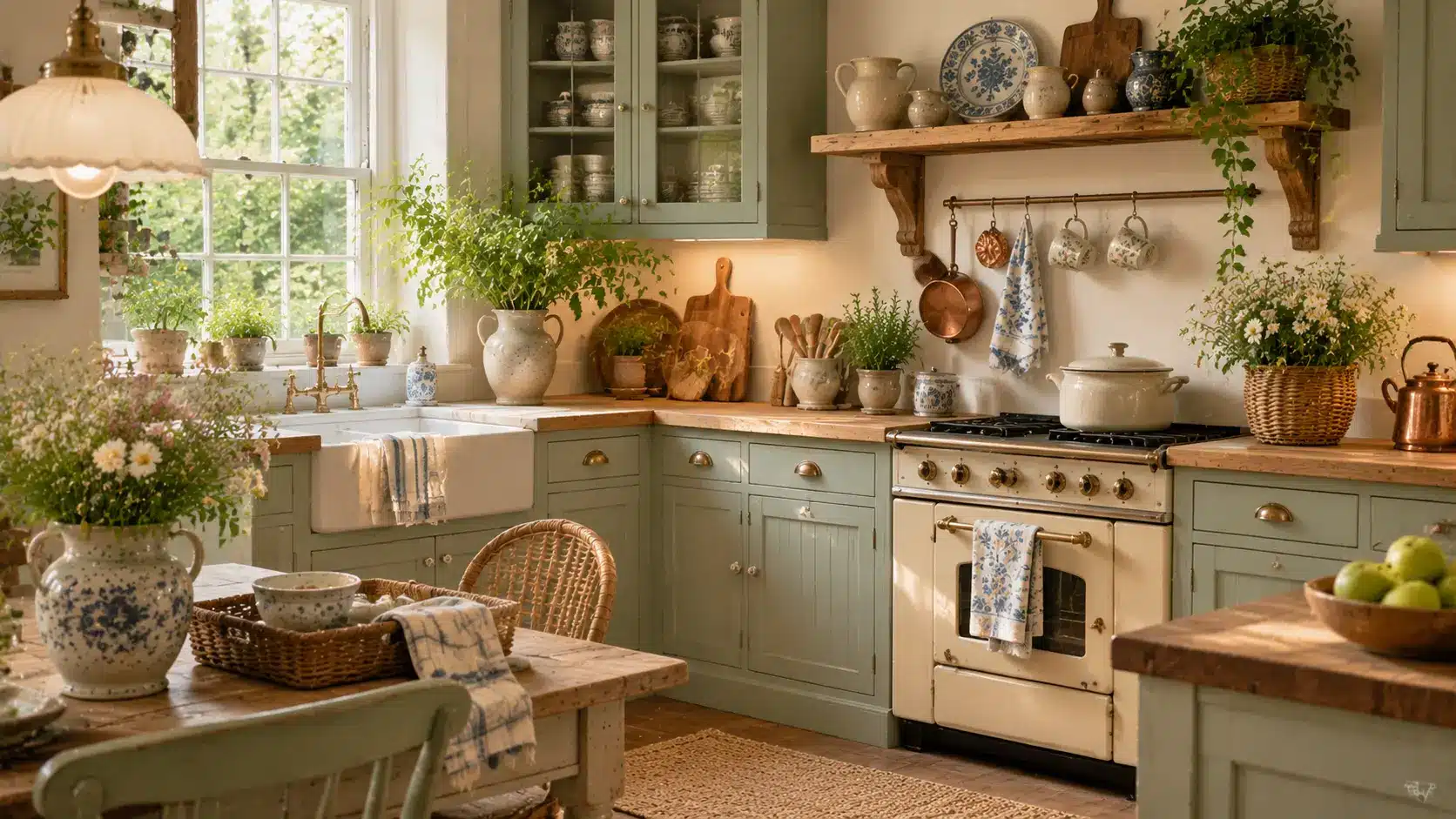
Painted cabinetry in soft green or cream, worn wood countertops, and ceramic handles bring the cottage feel into the kitchen.
Grooved beadboard kitchen cabinet styles, in particular, add texture and charm that fit this style well.
Open plate racks, wooden cutting boards, and vintage-inspired faucets can reinforce the overall cottage look. Small hardware upgrades are often enough to make standard cabinets feel more traditional.
14. Bring in Fresh or Dried Flowers
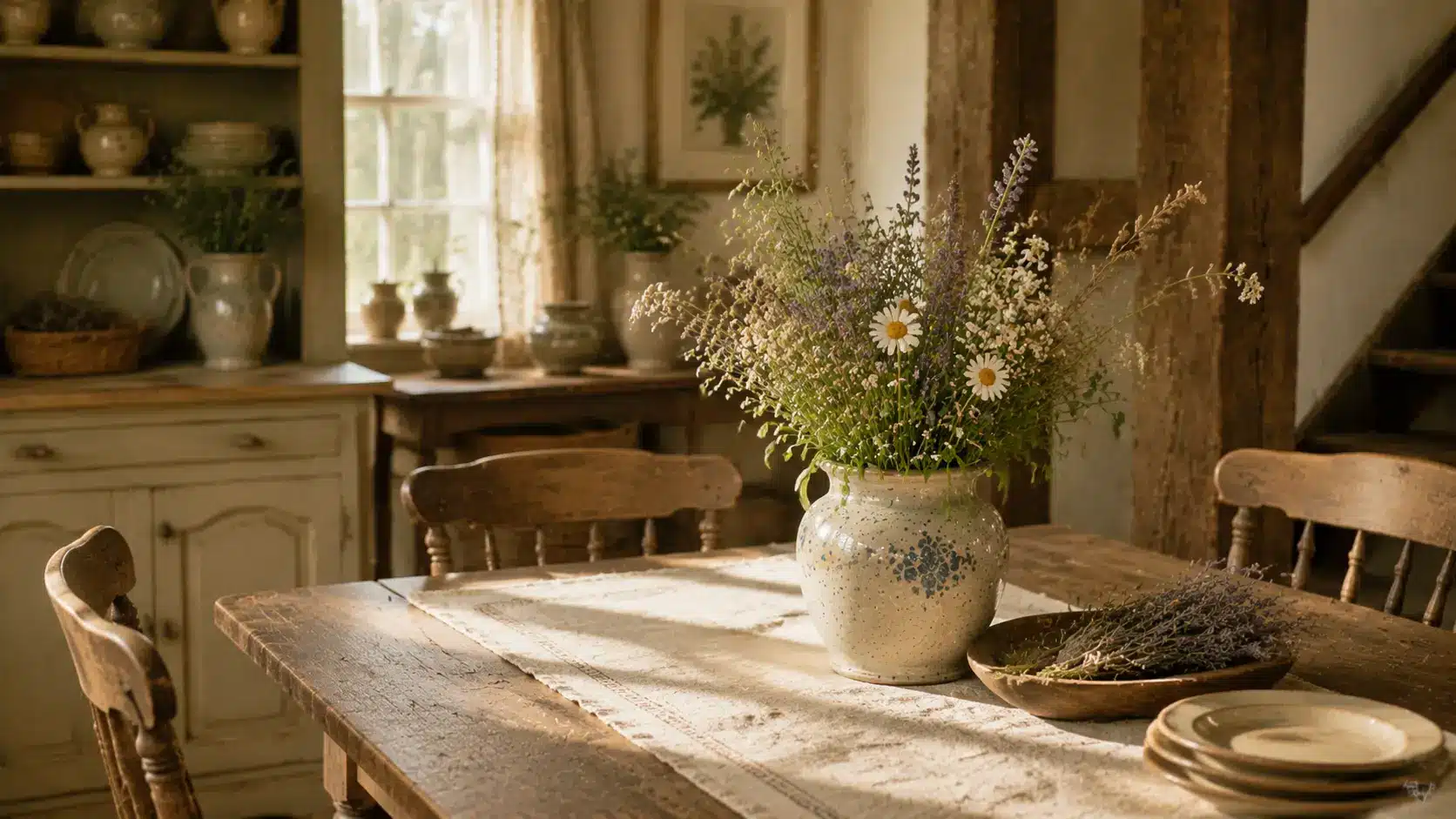
A simple bunch of wildflowers or a stem of dried lavender on a table adds life and softness to any room. It also bridges the gap between the indoor space and the cottage garden outside.
Rotate seasonal flowers throughout the year to keep the space feeling fresh and connected to nature. Simple ceramic pitchers or glass jars make charming alternatives to expensive decorative vases.
15. Use Vintage Artwork and Frames
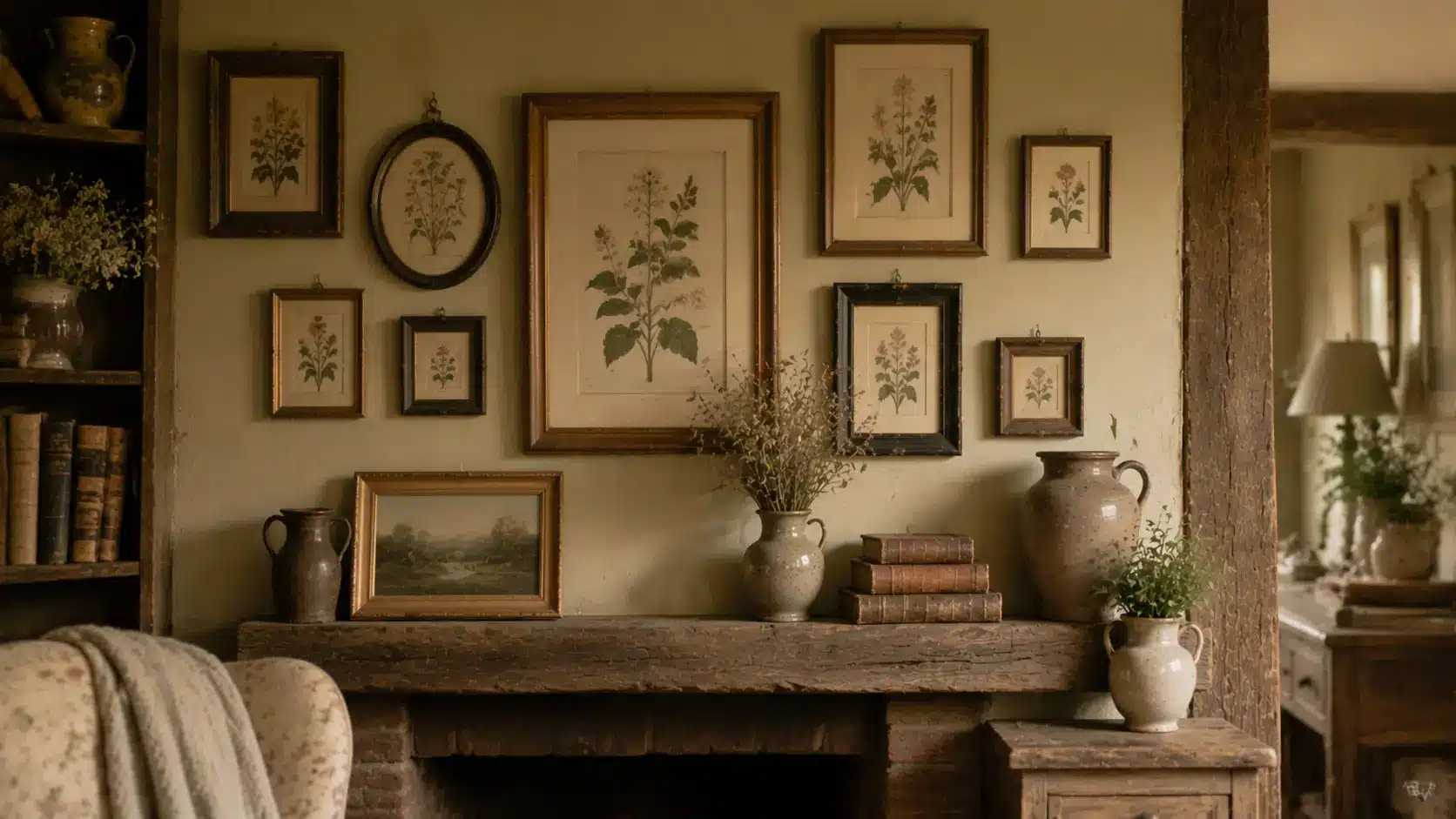
Old botanical prints, soft landscapes, or simple watercolors in mismatched frames work beautifully on cottage walls.
Leaning a few pieces on the mantle or starting a gallery wall of mismatched frames keeps the display feeling personal rather than staged.
You can also mix artwork of different sizes to create a display that feels collected over time. Soft landscapes, nature sketches, and pressed botanicals all work especially well in cottage-inspired rooms.
16. Soften Windows with Curtains
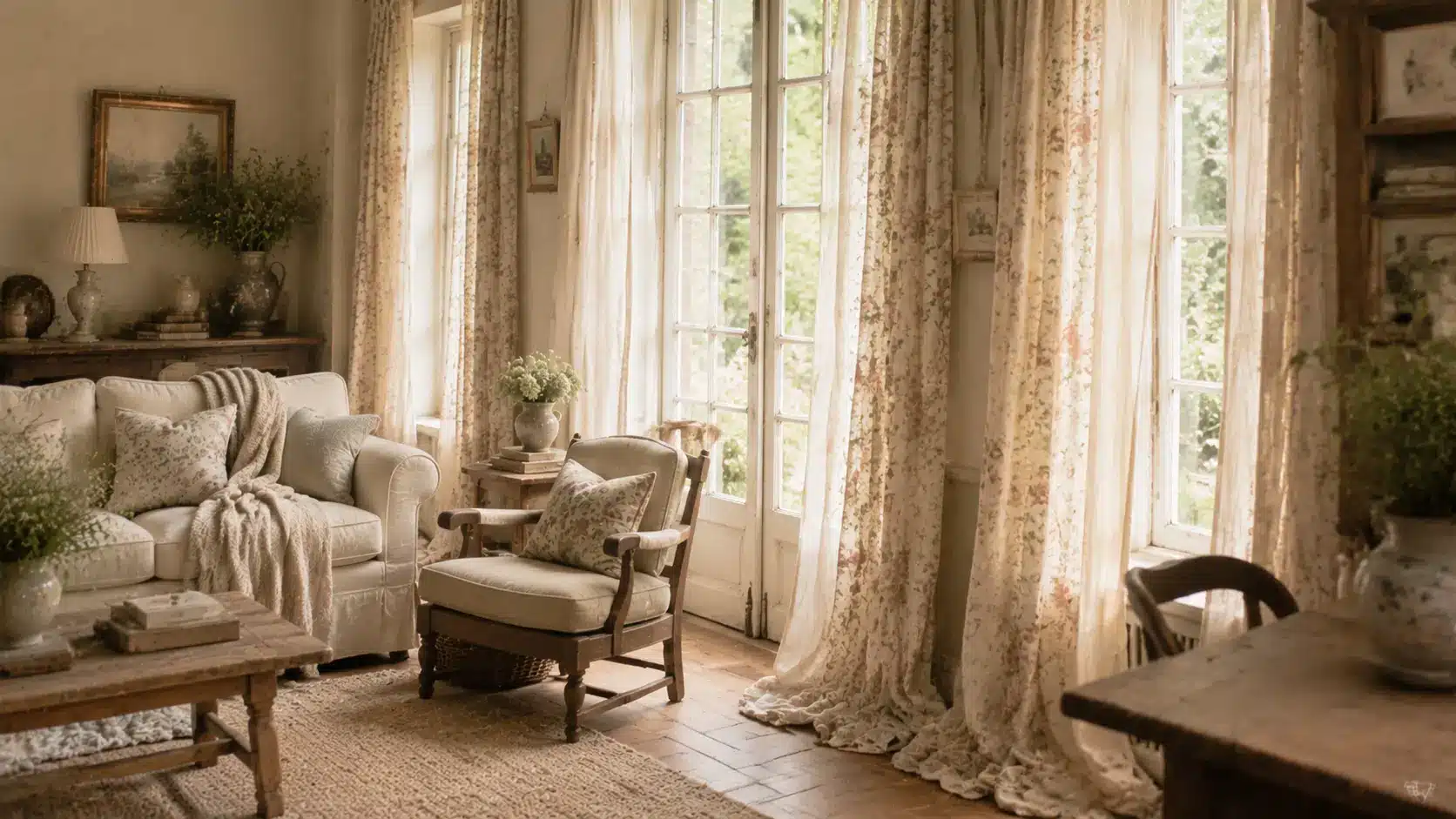
Linen, cotton, or light floral curtains in soft tones frame a window without making it feel heavy or formal. Let them puddle slightly at the floor for a relaxed, unfussy finish.
Natural fabrics allow more daylight to filter into the room while still providing privacy. Hanging curtain rods slightly higher than the window frame can also make ceilings appear taller.
17. Adopt Imperfect Styling
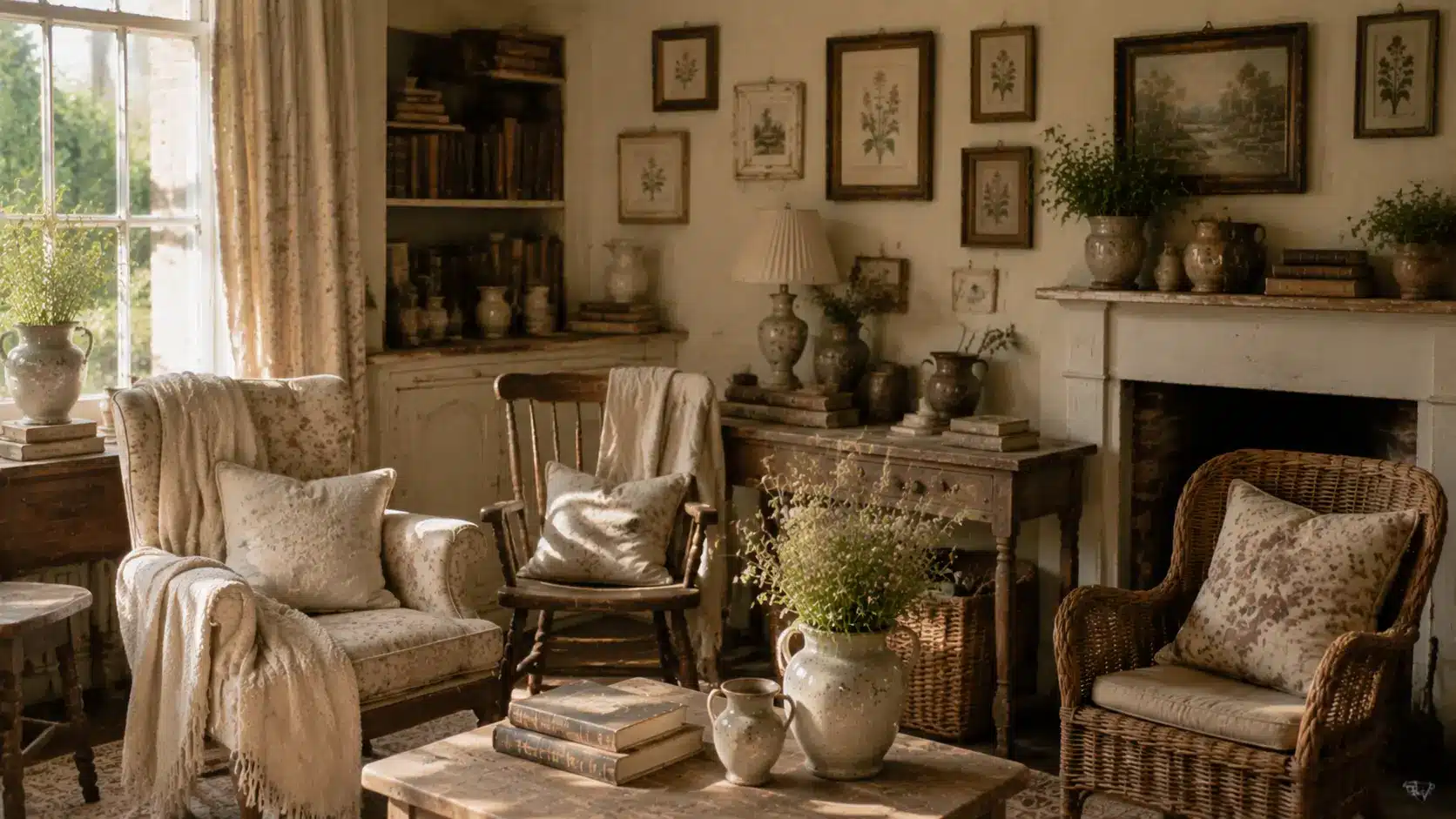
Crooked frames, mismatched chairs, and worn edges are not mistakes in this style; they are the whole point. Work with what you already have and add small antique or vintage touches to pull the look together over time.
Focus on comfort and authenticity instead of trying to create a perfectly styled room. Over time, adding meaningful pieces gradually will make the space feel far more genuine than decorating everything at once.
English Cottage Style Room by Room Guide
English cottage style works best when each room feels soft, functional, and naturally layered. The goal is to maintain consistency while allowing each space to have its own subtle character.
- Living Room: Focus on the fireplace, cozy seating, and layered textures. Add a floral rug, soft curtains, and a mix of old and new objects on the shelves.
- Bedroom: Use soft, white, or floral bedding. Add a wooden headboard, a patchwork quilt, and a small antique bedside table. Keep the room calm and soft.
- Kitchen: Open shelves with ceramic ware, painted cabinets, and rustic wood finishes create the cottage kitchen feel. Add a few bunches of dried herbs and a worn wooden cutting board.
- Dining Room: Choose a sturdy wooden table with a slightly worn finish and pair it with mismatched chairs for a collected look. Use simple table linens, soft lighting, and vintage crockery to keep the space warm and inviting.
- Bathroom: Keep it light and simple with white or soft neutral tiles, vintage-style fixtures, and natural materials like wood or stone. Add woven baskets, linen towels, and small plants for a fresh, cottage-inspired touch.
Materials and Finishes in English Cottage Homes
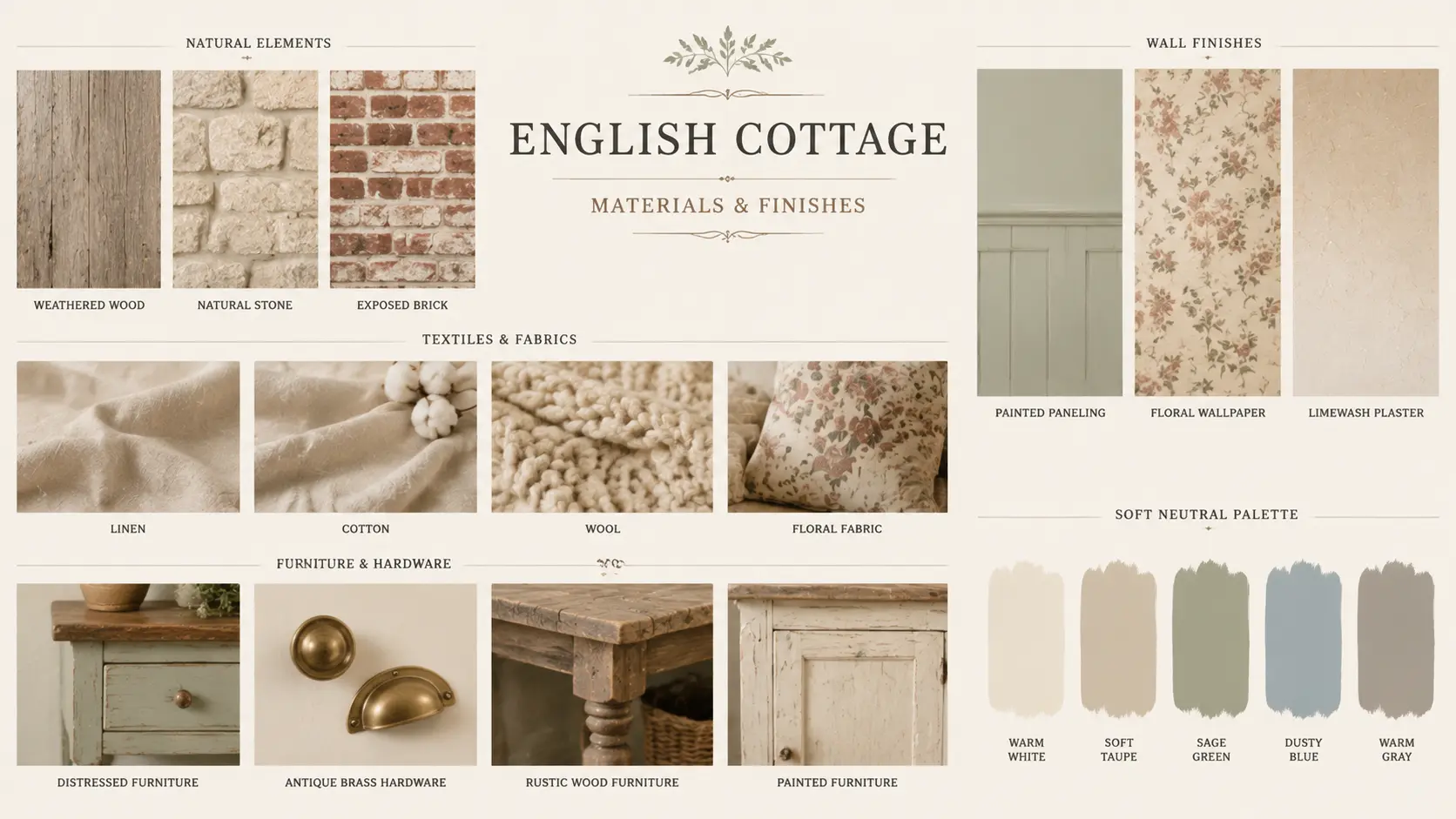
English cottage homes use natural materials that feel warm and timeless. Walls often feature painted paneling, wallpaper, exposed brick, or natural stone.
Floors are usually wide-plank wood, brick, or stone. Linen, cotton, and wool are the most common fabrics because they add softness and texture.
The style also favors aged finishes over polished ones. Letting natural wear show through, like weathered wood, distressed paint, and vintage hardware, gives the home its genuine, lived-in character.
Modern vs Traditional English Cottage Style
Both versions share the same cozy foundation but differ in how they achieve the look. Your choice depends on whether you prefer a classic or updated style.
| Feature | Traditional Cottage Style | Modern Cottage Style |
|---|---|---|
| Overall Look | Rustic, layered, and full of character | Clean, simple, and uncluttered |
| Materials | Dark wood, stone, and antique finishes | Natural materials with smoother finishes |
| Furniture | Vintage, handcrafted, and decorative | Simple pieces with classic details |
| Color Palette | Warm earthy tones and soft florals | Neutral colors with subtle contrast |
| Styling | Collected, cozy, and heavily layered | Open, balanced, and lightly decorated |
| Best For | Historic homes and countryside settings | Smaller homes and modern interiors |
Traditional and modern cottage styles both create warm, welcoming spaces. The difference is simply how much rustic character or simplicity you want in your home.
Common Mistakes to Avoid
Small details can make or break the English cottage look. Avoid these common mistakes to keep the style exact.
- Over-modern interiors that lose warmth: Too many sleek or industrial pieces remove the cozy cottage feel. Keep modern elements soft and understated.
- Overly polished or glossy materials: High-gloss finishes, lacquered furniture, and shiny metals feel out of place. Choose matte, aged, or natural surfaces instead.
- Lack of layering and textural depth: A cottage interior needs rugs, cushions, throws, books, and decorative objects to feel warm and lived-in.
- Using matching furniture sets: Perfectly matched furniture can make the space feel staged. Mix different pieces to create a collected, lived-in look.
A cottage home should feel comfortable, personal, and naturally layered. Focus on character instead of perfection for the best results.
Final Thoughts
English cottage style is not built in a day. It grows slowly as you add soft colors, natural materials, and pieces that mean something to you.
The goal is never to look perfect. It is to make a space feel warm, personal, and comfortable to live in. Start small with one room or even one corner.
Add a worn wood table, a few floral cushions, or a basket of dried flowers. Over time, your home will start to feel like the cozy countryside escape you were aiming for, full of character and built around comfort first.
Frequently Asked Questions
Can You Mix English Cottage Style with Modern Decor?
Yes, as long as modern pieces have simple shapes and warm finishes instead of a sleek, industrial look. Balancing clean furniture with vintage accents and natural textures keeps the space feeling cozy.
Is English Cottage Style Expensive to Achieve?
No, many cottage interiors are built over time using second-hand furniture, thrifted decor, and family heirlooms. The style values character and authenticity more than expensive designer pieces.
What is the Difference Between English Cottage and French Cottage Style?
English cottage style feels more layered, cozy, and collected, with floral patterns and darker wood tones. French cottage style is generally lighter and more refined, often featuring softer curves and decorative details.