You open a cabinet showroom tab, and suddenly, there are dozens of options staring back at you. Shaker, flat-panel, stock, custom, base, wall, inset, the list goes on.
If you have ever felt lost trying to figure out which types of cabinets are right for your space, you are not alone.
Knowing the different types of cabinets before you buy or remodel can save you thousands of dollars and a whole lot of frustration.
If you are planning a full kitchen renovation, upgrading your bathroom vanity, organizing a home office, or replacing worn-out bedroom storage, the type of cabinet you choose affects how your space looks, functions, and holds up over time.
The Ways Cabinets are Categorized
Before you start shopping, it helps to know that cabinets are not all classified the same way. There are three different axes used to describe and categorize them.
- By build grade: How the cabinet is manufactured and how much customization is available. The four grades are stock, ready-to-assemble (RTA), semi-custom, and custom.
- By location and function: Where a cabinet sits in a room: on the floor (base), on the wall (upper), floor-to-ceiling (tall), or in a specific room like a bathroom or office.
- By door and aesthetic style: The visual design of the door itself: shaker, flat-panel, raised-panel, glass-front, beadboard, and more.
Most buying decisions involve all three. You might want a custom shaker base cabinet or a stock flat-panel wall cabinet.
Understanding all three layers helps you shop with clarity and avoid paying for features you do not need or missing ones you do.
Cabinet Grades Compared
Cabinets come in different types, affecting cost, design flexibility, and installation time. Choosing the right option depends on the budget, space, and needs.
| Grade | Cost (Installed, Per Lin. Ft.) | Lead Time | Lifespan | Best For |
|---|---|---|---|---|
| Stock | $100 – $400 | 1 – 2 weeks | 10 – 15 years | Rentals, bathrooms, tight budgets |
| RTA | $75 – $250 (materials) | 1 – 2 weeks | 5 – 25 years | DIY projects, budget remodels |
| Semi-Custom | $150 – $700 | 4 – 8 weeks | 20 – 30 years | Most kitchen remodels |
| Custom | $500 – $1,200+ | 8 – 12 weeks | 40+ years | Unique layouts, luxury builds |
These figures reflect national average pricing reported across current cabinet industry guides, and your local quotes may run higher or lower depending on material costs and installer rates in your area.
Understanding cabinet types helps you balance cost, durability, and design, ensuring your kitchen or space works efficiently and looks cohesive.
Main Types of Cabinets Based on Structure
Cabinet structure determines how each unit fits into your space and supports the overall kitchen layout.
1. Base Cabinets
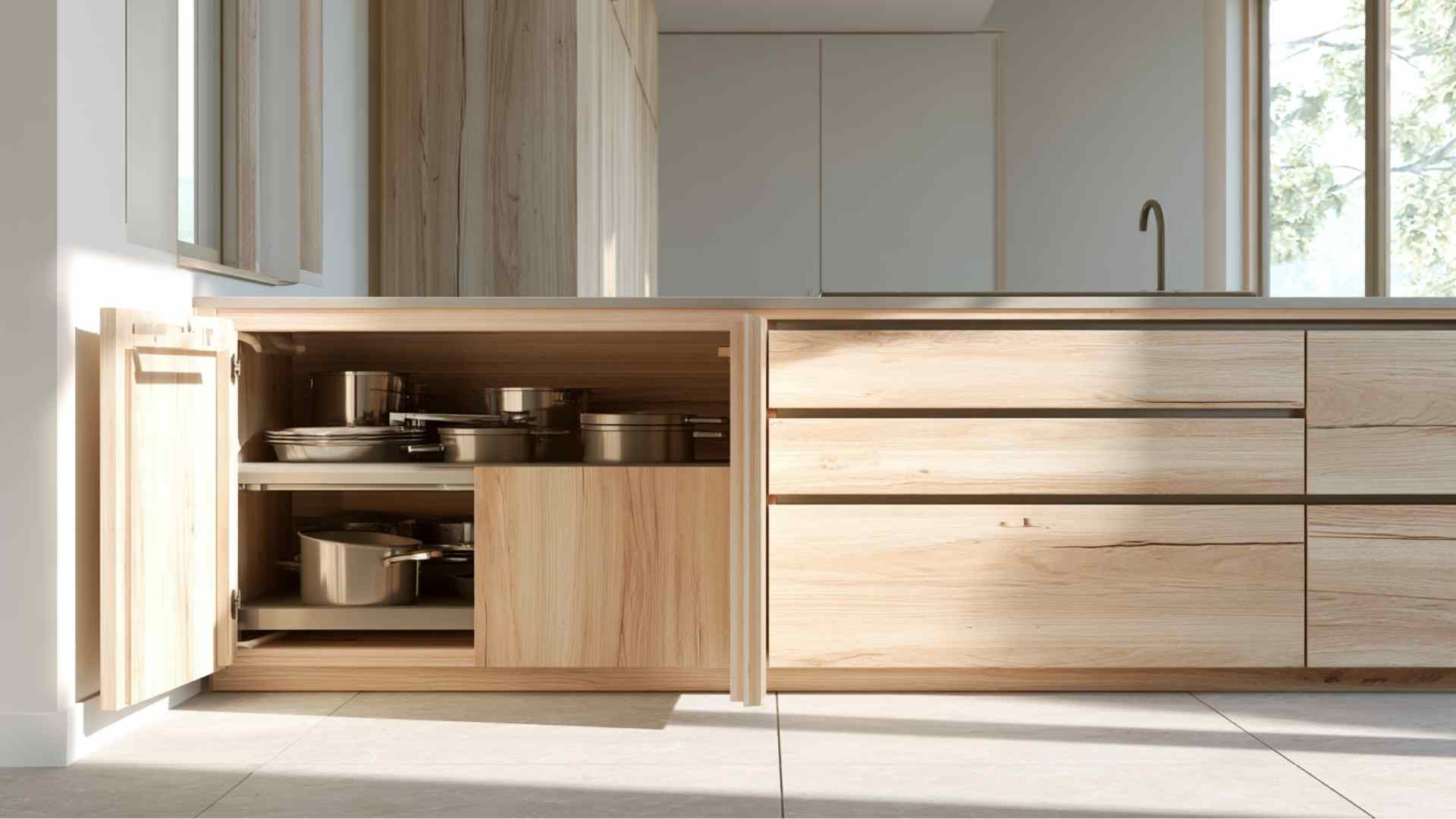
Base cabinets sit directly on the floor and form the backbone of any kitchen layout. They support countertops, house sinks, and store heavy items like cookware and small appliances.
Typically 34.5 inches tall and 24 inches deep, these units bear the most daily wear and anchor the entire room’s storage system.
| Pros | Cons |
|---|---|
| Strongest storage support for heavy items | Fixed in place, not flexible after installation |
| Ideal for countertops and sinks | Can be hard to access deep back storage |
| Maximizes lower kitchen storage | Requires bending for lower items |
2. Wall Cabinets
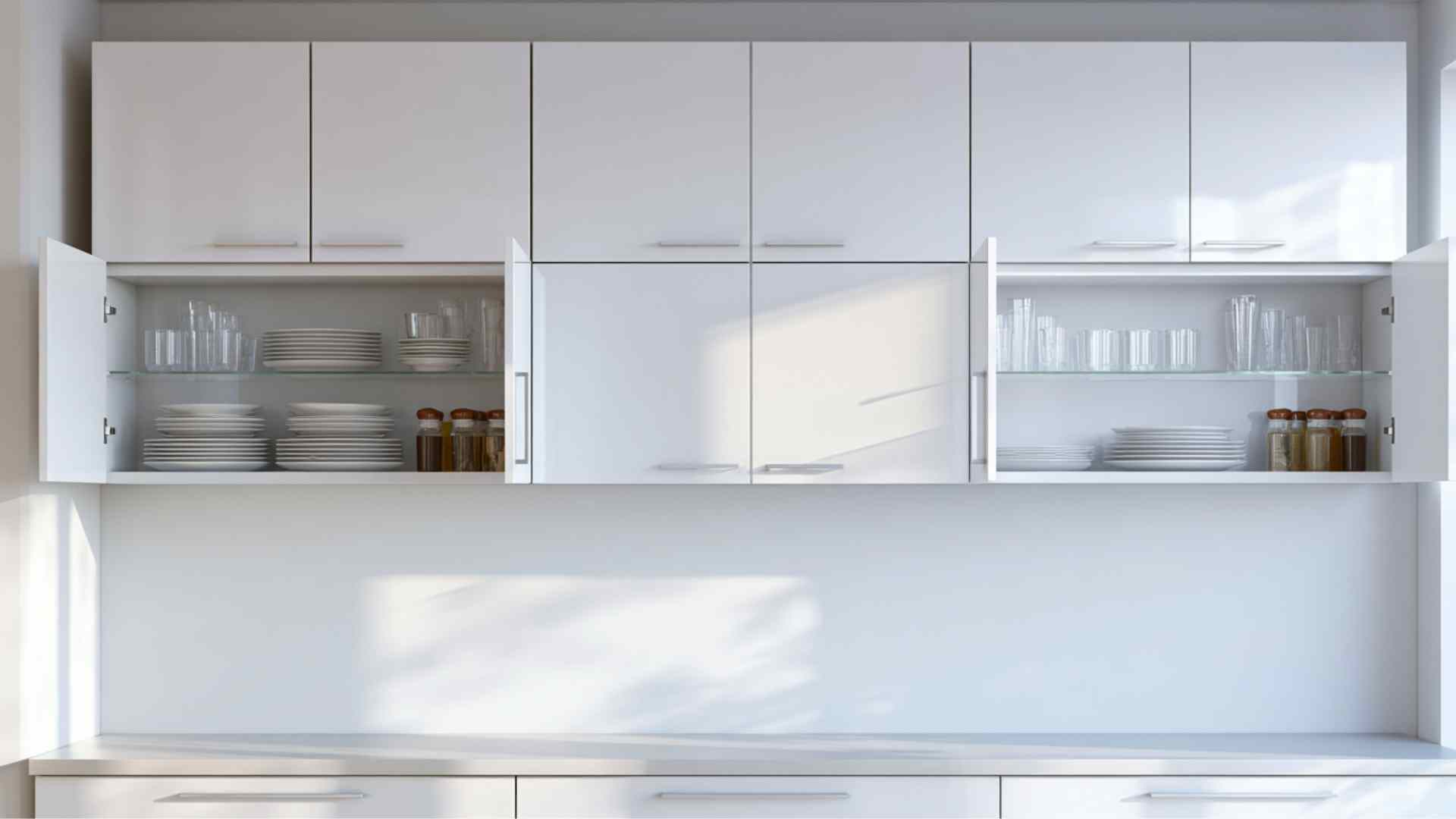
Wall cabinets mount directly to the wall above countertops, keeping everyday essentials within easy reach without occupying floor space. They store lighter items like dishes, spices, and glassware.
Shallower than base units at around 12 inches deep, they help maintain clear counter space while improving vertical storage and overall kitchen organization.
| Pros | Cons |
|---|---|
| Saves floor space | Limited weight capacity |
| Keeps essentials at eye level | Hard to reach for shorter users |
| Improves vertical storage efficiency | Can make small kitchens feel crowded if overused |
3. Tall Cabinets
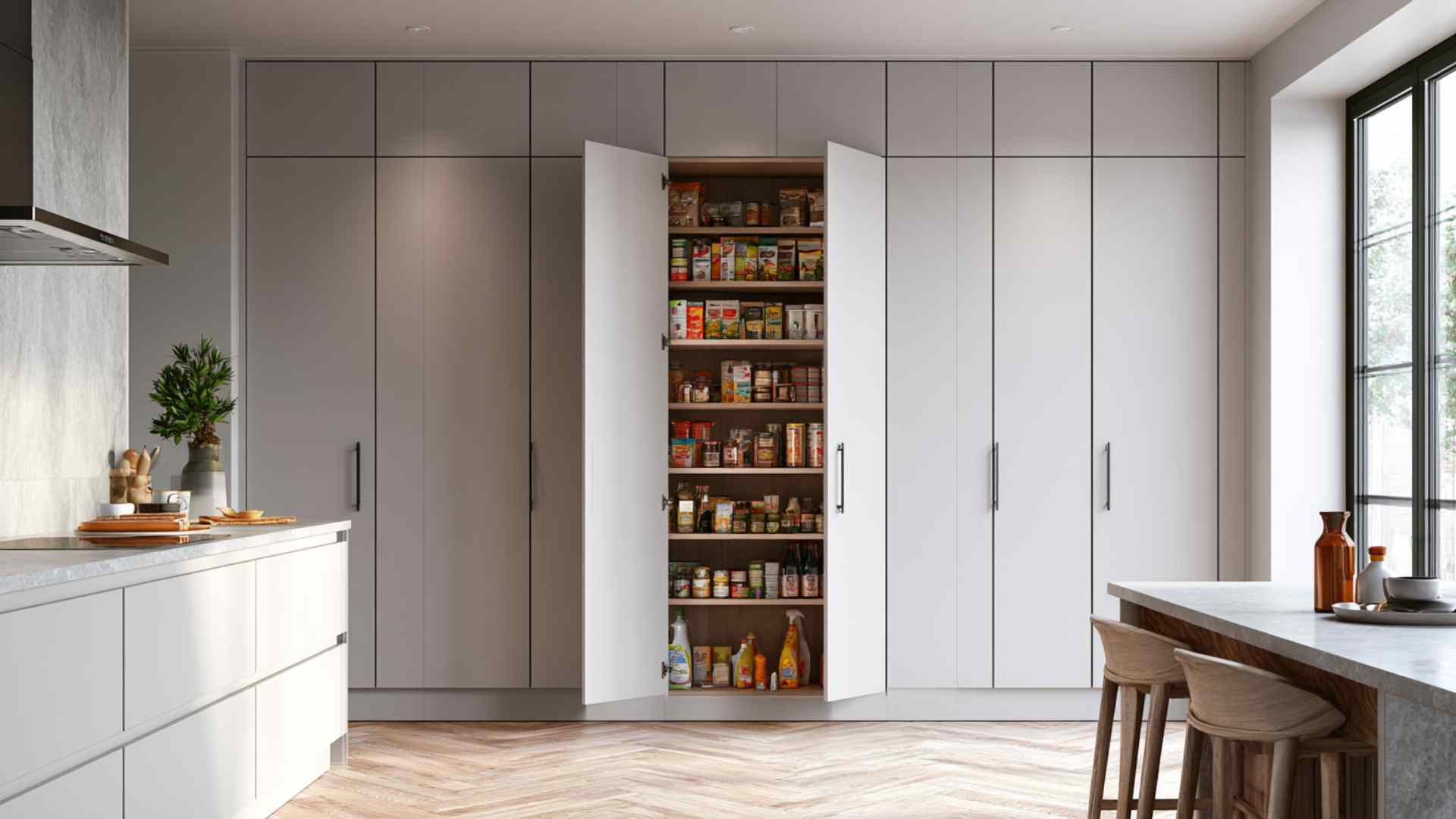
Tall cabinets run floor to ceiling and maximize every inch of vertical space available in your kitchen. Used primarily as pantry units, they store bulk groceries, cleaning supplies, and larger appliances.
Their full-height design makes them the highest-capacity storage option in any kitchen, ideal for reducing clutter throughout the room.
These three structural types work together to balance storage, support, and efficient use of available kitchen space.
| Pros | Cons |
|---|---|
| Maximum storage capacity | Takes significant wall space |
| Great for pantry organization | Can feel bulky in small rooms |
| Reduces clutter in main kitchen areas | Higher cost than standard units |
Specialty Cabinet Types
Specialty cabinets solve specific storage problems that standard base, wall, and tall units simply cannot address on their own.
4. Corner Cabinets
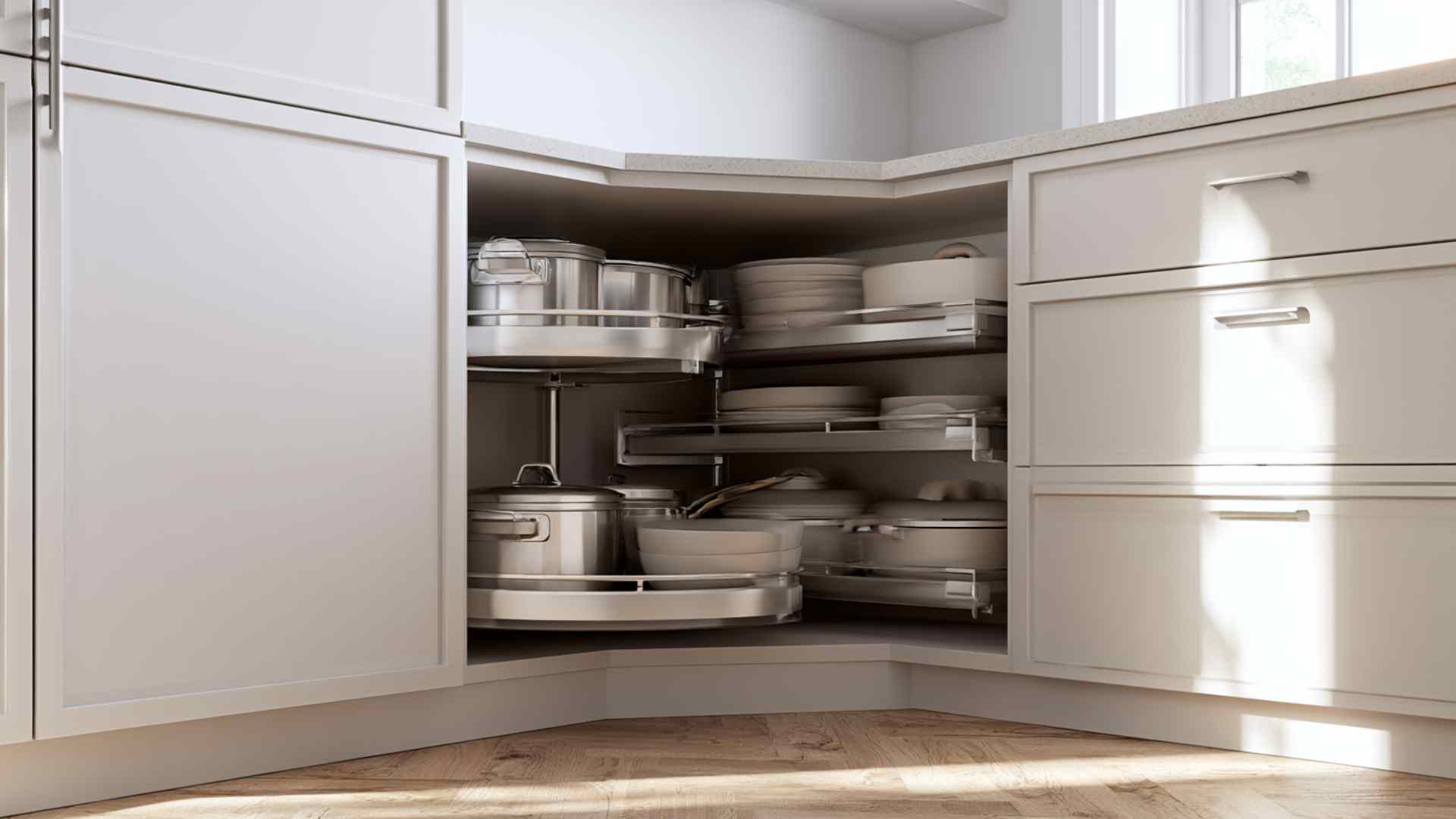
Corner cabinets are built to fill the awkward dead space where two cabinet runs meet at a right angle. Options include lazy Susans, blind pull-outs, and magic corner systems that bring items stored in the back fully forward.
They prevent wasted square footage and improve accessibility in a notoriously difficult kitchen zone.
| Pros | Cons |
|---|---|
| Uses otherwise wasted corner space | Can be expensive with mechanisms |
| Improves layout efficiency | Hard to install and align properly |
| Can include rotating or pull-out systems | Rear space can still be underused |
5. Sink Base Cabinets
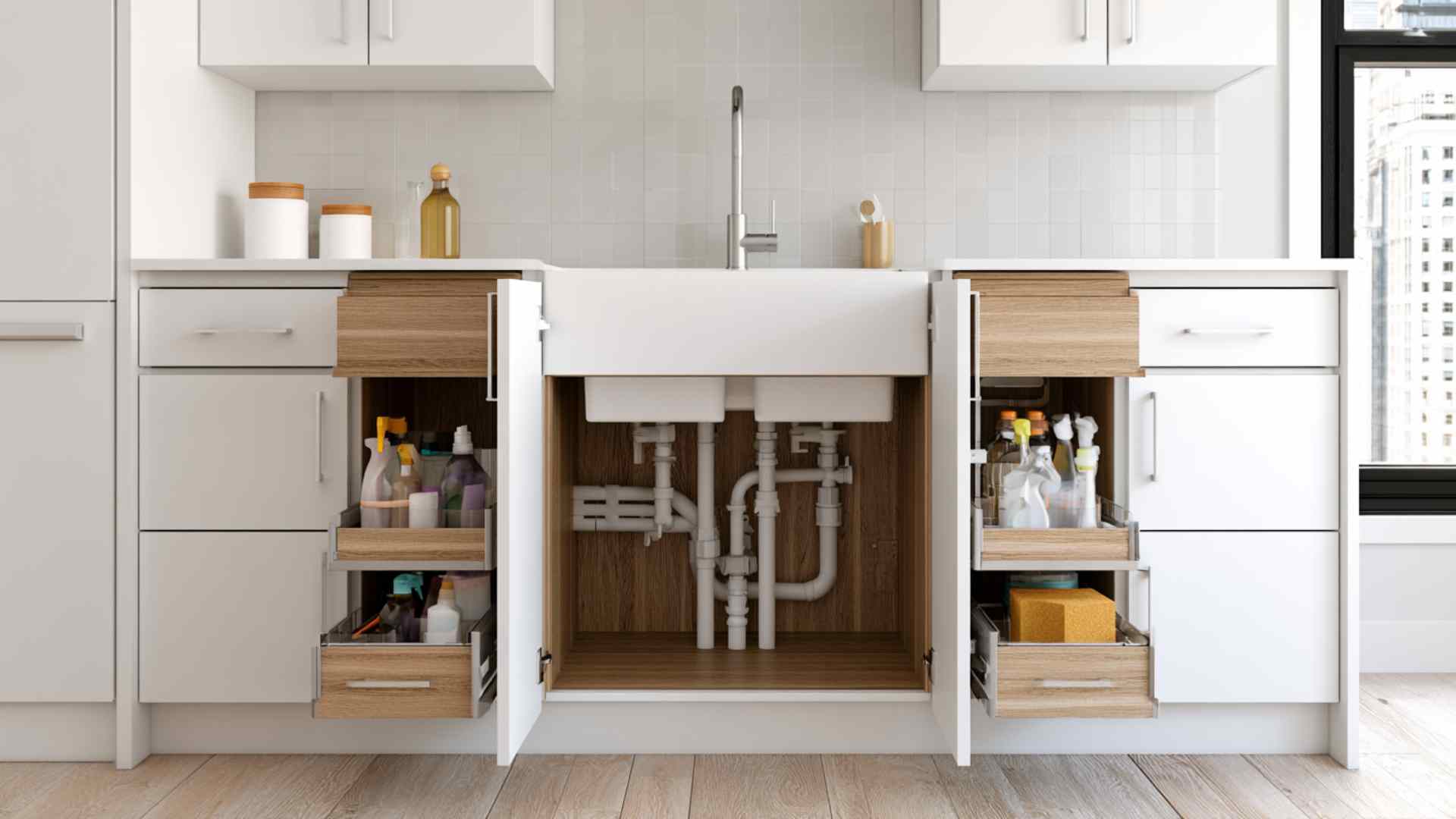
Sink base cabinets are specially designed to accommodate plumbing, drain lines, and the underside of a kitchen sink.
They typically have no center shelf to leave room for pipes, instead using storage space along the sides. Some models include pull-out trays or a tilt-out front panel for storing sponges and small cleaning tools.
| Pros | Cons |
|---|---|
| Designed specifically for plumbing access | Reduced usable interior space |
| Keeps the sink area organized | No full base shelf in most designs |
| Allows hidden cleaning storage | Moisture exposure risk over time |
6. Drawer Cabinets
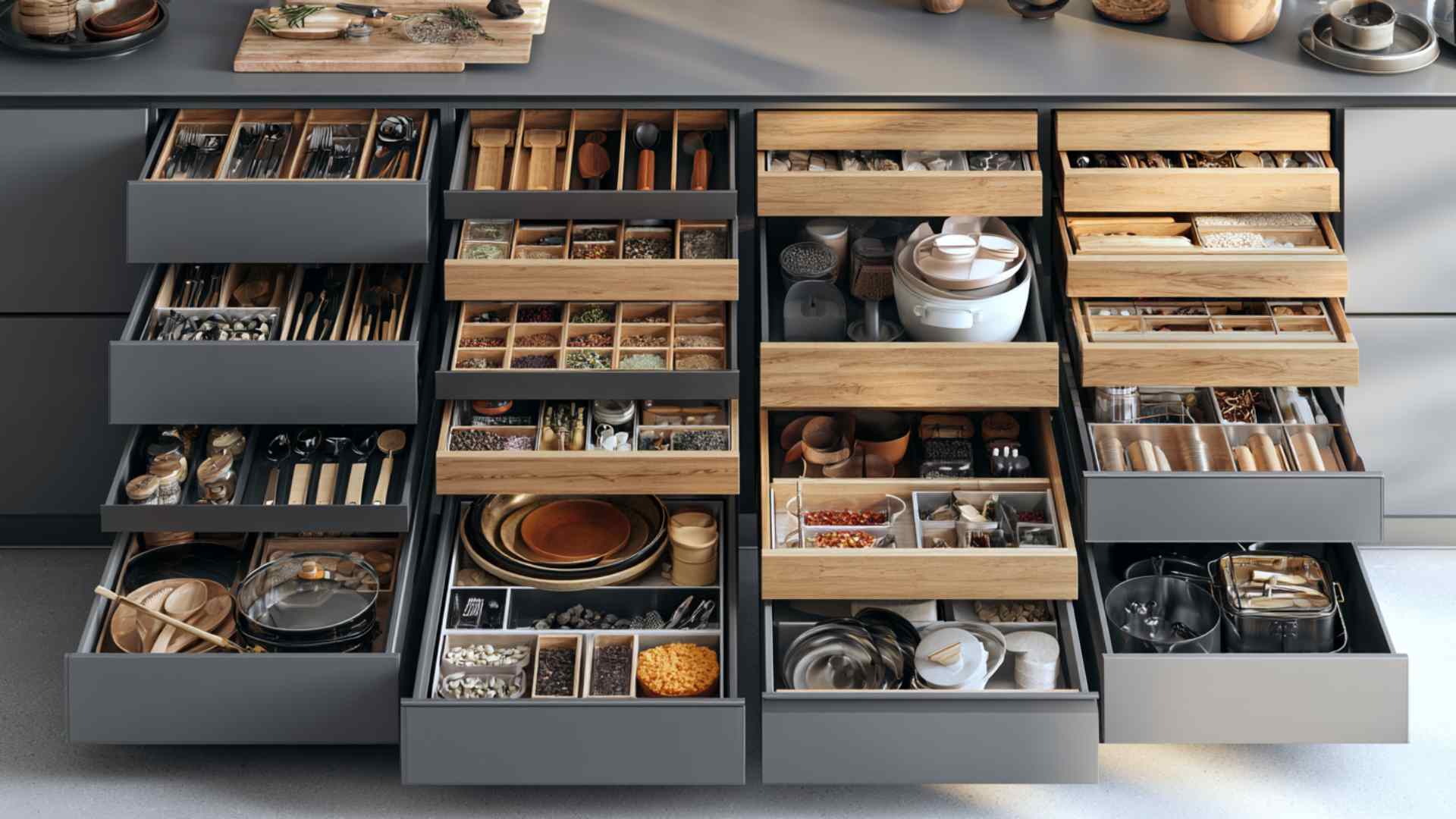
Drawer cabinets replace traditional shelved interiors entirely with stacked drawers of varying depths.
They provide much better access to stored items than door-and-shelf configurations do, since everything pulls forward rather than sits behind a closed door.
Commonly used for utensils, spices, pots, and pantry staples where daily grab-and-go convenience is the priority.
| Pros | Cons |
|---|---|
| Easy access to all stored items | Higher hardware cost |
| Better organization than shelves | Can reduce overall storage depth |
| Ideal for daily-use items | Requires strong slides for durability |
7. Appliance Cabinets
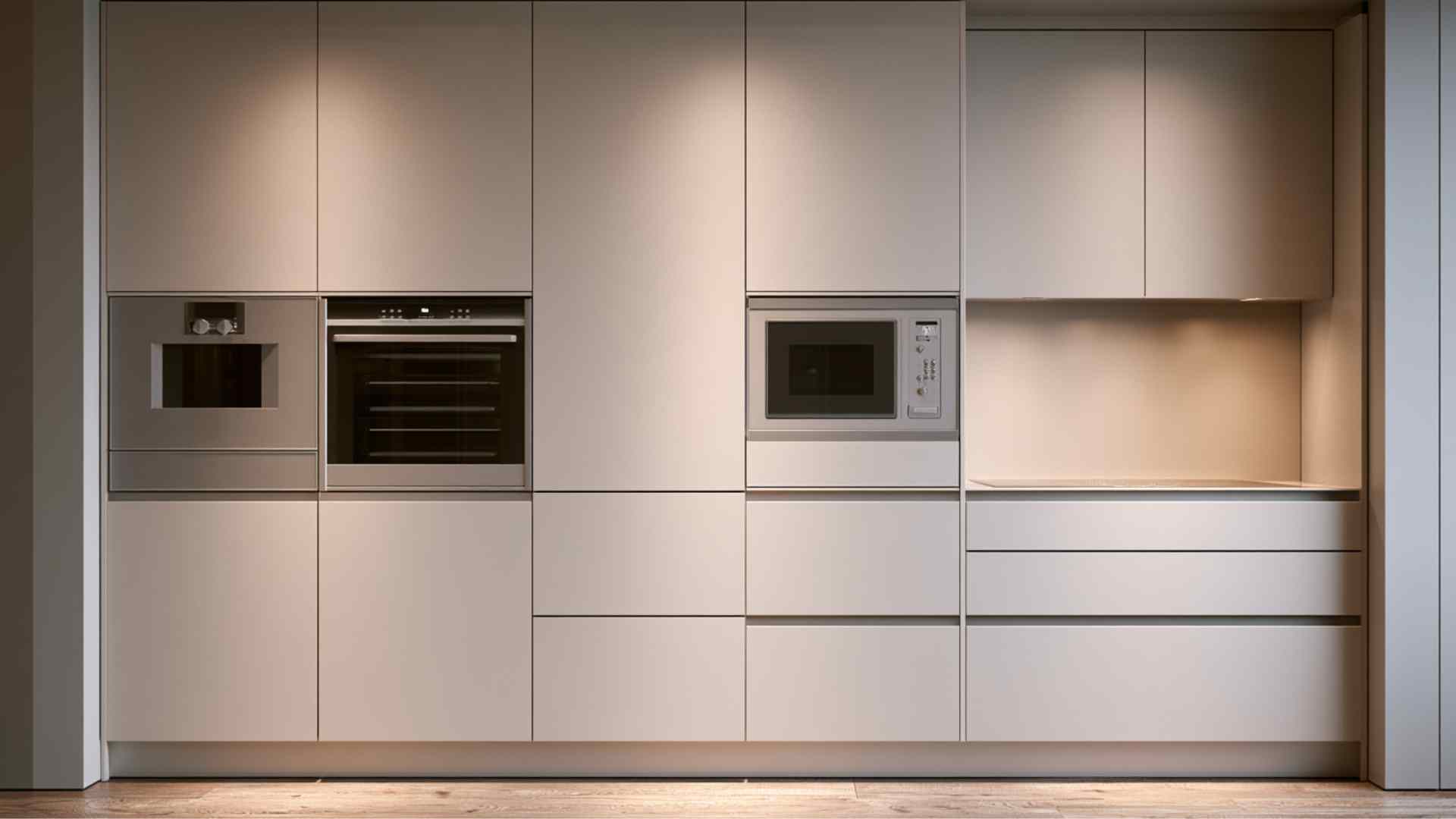
Appliance cabinets are built around specific kitchen equipment, such as wall ovens, microwaves, warming drawers, and dishwashers.
They are sized and reinforced to handle both the weight and heat output of installed appliances. These units create a cleaner, built-in look by concealing appliances within the cabinetry rather than leaving them freestanding on the counter.
| Pros | Cons |
|---|---|
| Built-in, seamless kitchen appearance | Expensive and appliance-specific |
| Saves counter space | Limited flexibility after installation |
| Designed for safety and heat handling | Requires precise measurements |
8. Pull-Out Cabinet Units
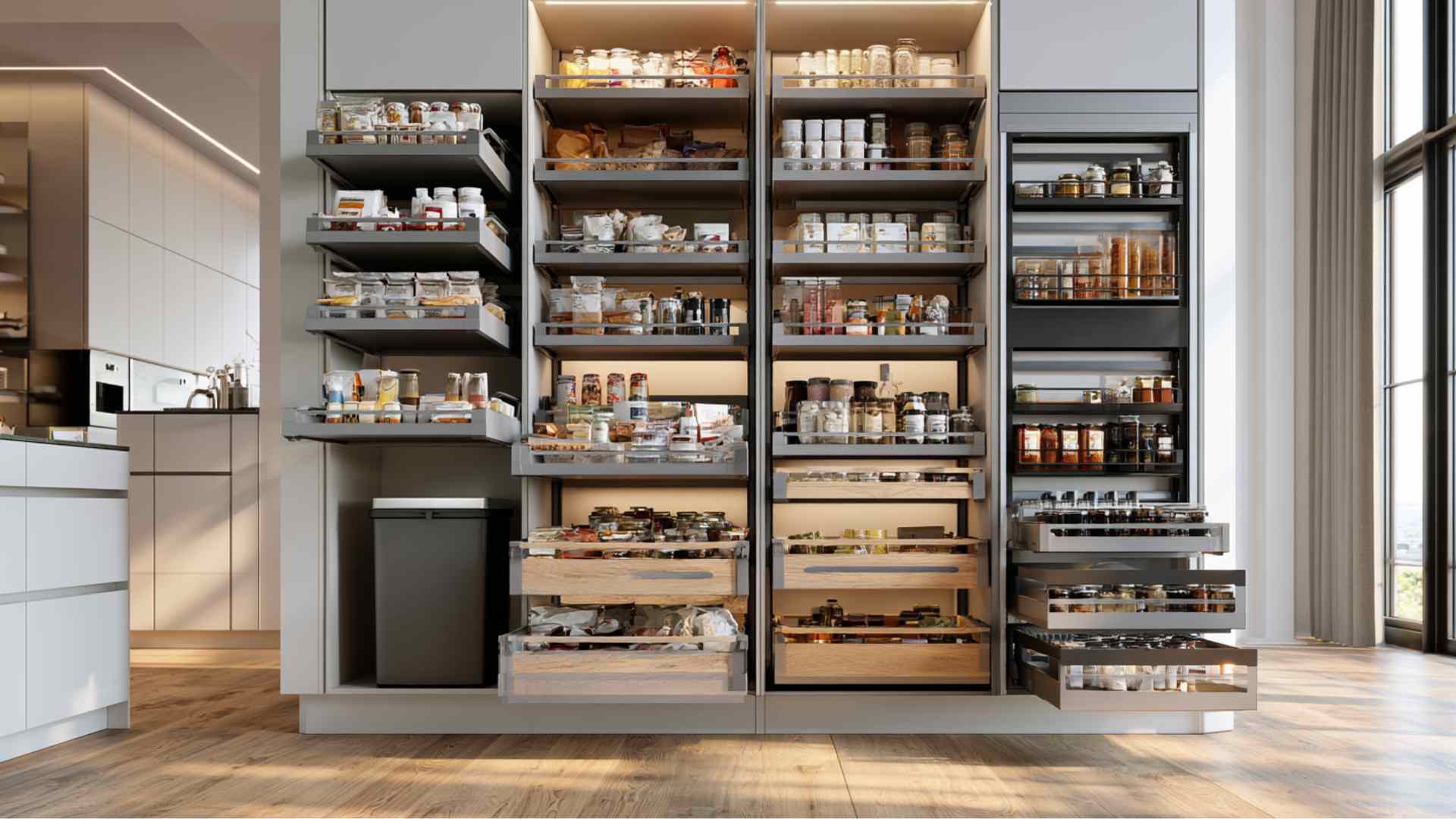
Pull-out cabinet units use sliding mechanisms to bring the entire interior forward, eliminating the need to reach deep into fixed shelves.
Common applications include pull-out pantry towers, trash and recycling units, and spice organizers. They dramatically improve accessibility in base cabinets and tall pantry units where items stored at the back otherwise go unused for weeks.
The right specialty cabinets turn problem areas into functional storage, making even the most awkward kitchen zones work harder.
| Pros | Cons |
|---|---|
| Excellent accessibility | Mechanical parts can wear out |
| No wasted back space | Slightly higher cost than fixed shelves |
| Great for narrow storage areas | Requires proper installation alignment |
Types of Cabinets Based on Installation Style
How a cabinet is manufactured and installed affects your budget, timeline, customization options, and how well it fits your space.
9. Stock Cabinets
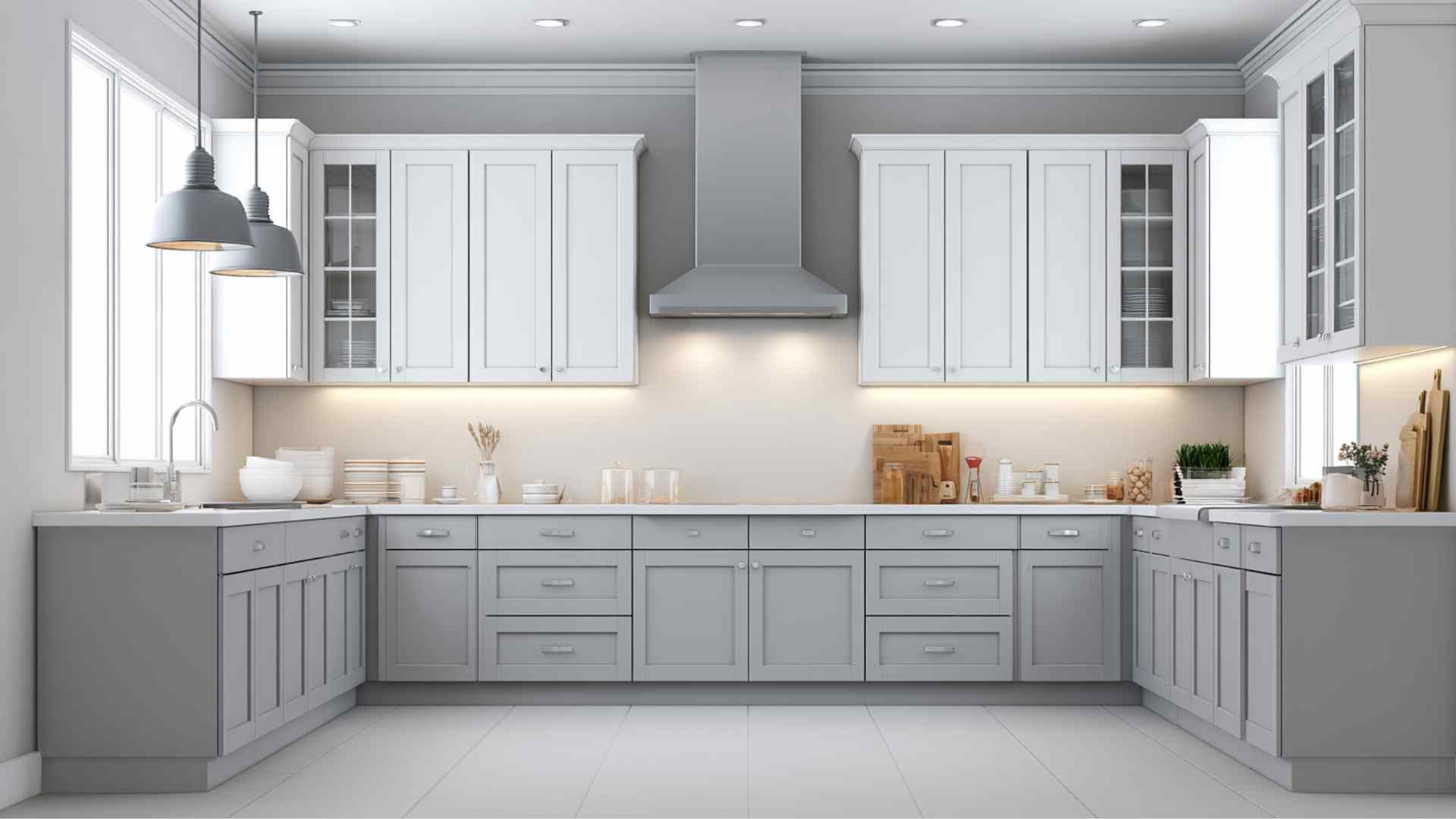
Stock cabinets are pre-built in fixed standard sizes and available immediately at home improvement stores.
They cost the least and install the fastest, making them a practical choice for rental properties, secondary spaces, or tight remodel budgets. The tradeoff is limited size increments and fewer finish options, which can leave gaps in non-standard kitchen layouts.
| Pros | Cons |
|---|---|
| Budget-friendly | Limited sizing options |
| Fast availability | Fewer design choices |
| Easy to replace or upgrade | May require filler gaps in custom spaces |
10. Semi-Custom Cabinets
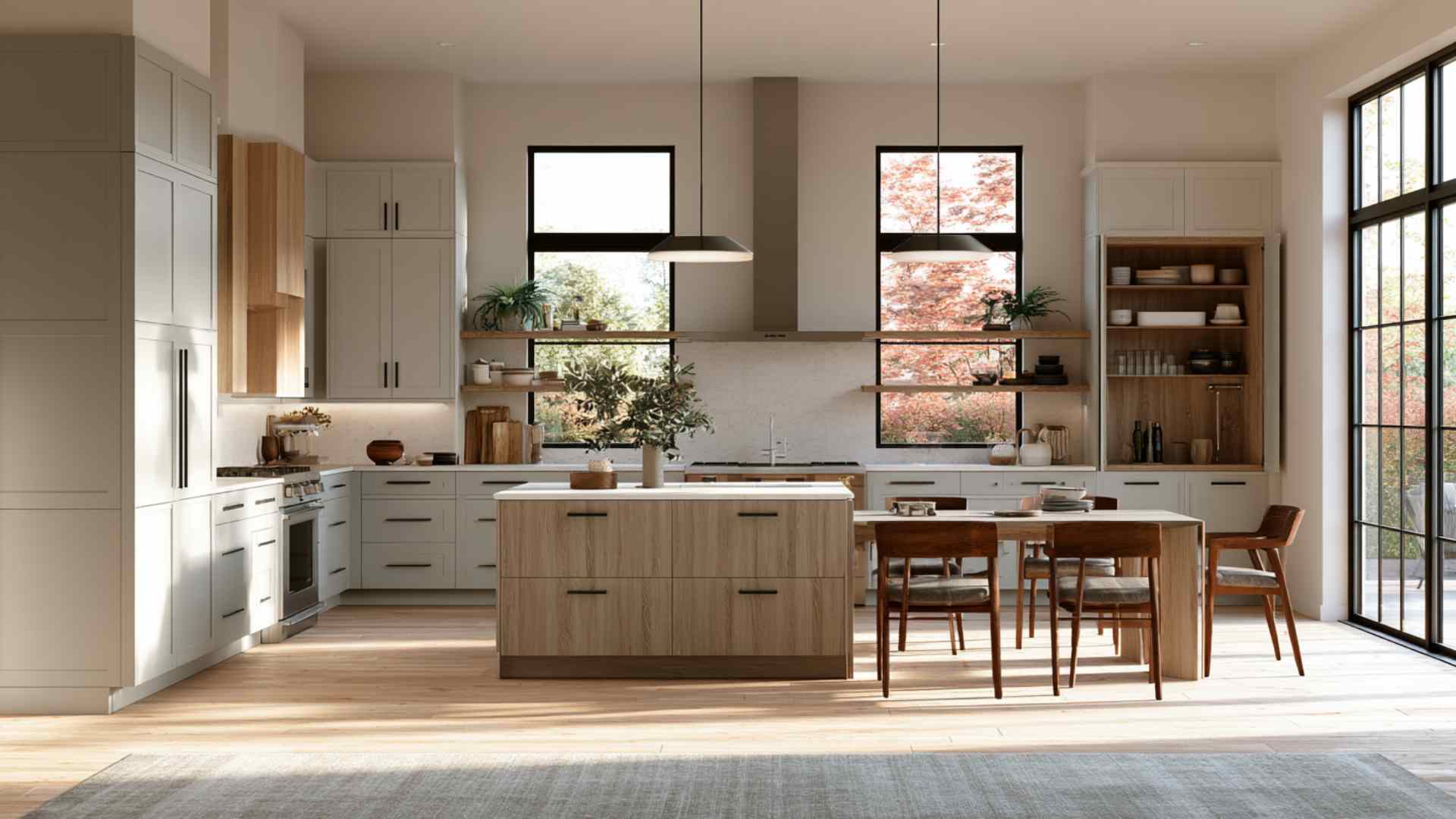
Semi-custom cabinets offer adjustable sizing, finish choices, and storage accessories beyond what stock options provide.
Manufacturers build them within a defined range of modifications, giving you a better fit without the full cost of completely bespoke work.
This is where most homeowners find the sweet spot: enough flexibility to fix an awkward layout or add a pull-out trash bin, without paying custom-shop prices for a straightforward kitchen.
| Pros | Cons |
|---|---|
| Balanced cost and flexibility | Longer lead time than stock |
| Better fit for unique layouts | More expensive than ready-made options |
| A wide range of finishes and upgrades | Still limited compared to full custom |
11. Custom Cabinets
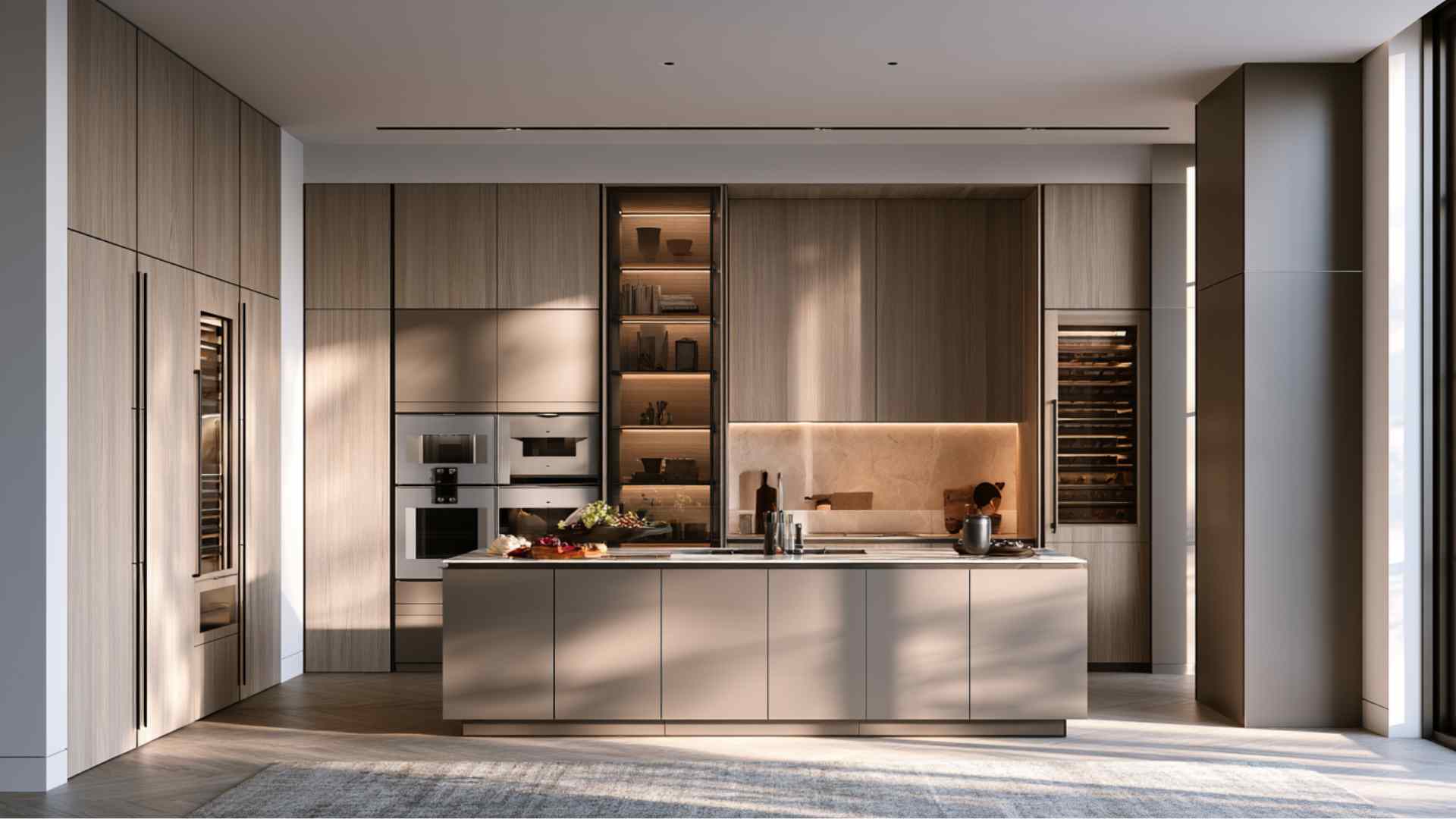
Custom cabinets are built entirely to your specifications, with no standard size constraints or finish limitations.
A cabinetmaker works from your exact measurements and design preferences, giving you complete control over materials, layout, and storage features.
They carry the highest price and the longest lead time, but deliver unmatched precision for unusual layouts or luxury builds.
| Pros | Cons |
|---|---|
| Fully tailored design | Very expensive |
| Perfect fit for any space | Longest production time |
| Highest quality and durability potential | Requires detailed planning and design decisions |
12. Floating Cabinets
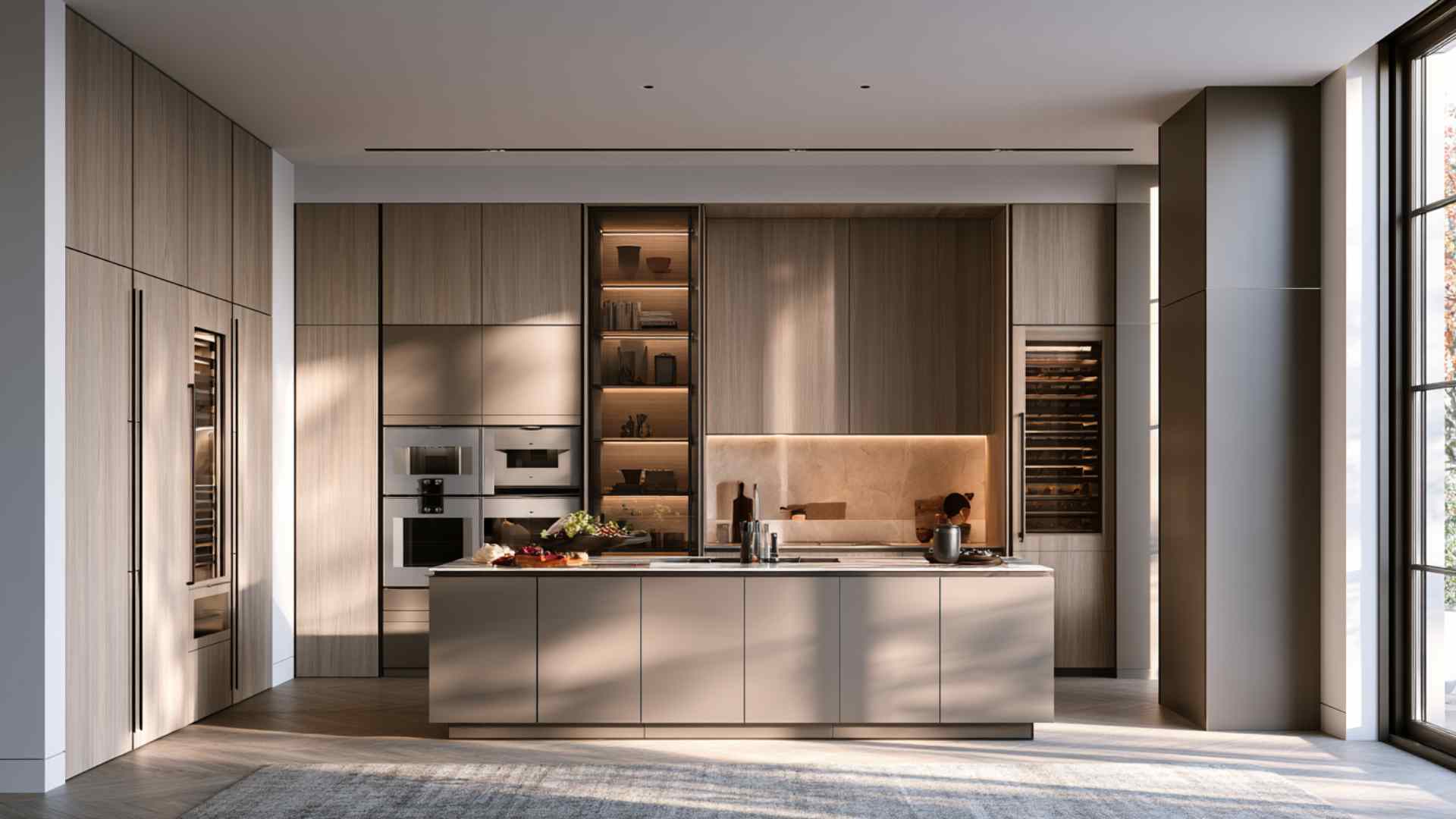
Floating cabinets are wall-mounted units with no floor contact, leaving open space underneath. That gap makes rooms feel larger, simplifies floor cleaning, and creates a sleek, modern visual effect.
They are widely used in contemporary kitchens and bathrooms where a minimal, airy aesthetic is a priority. Proper wall anchoring is critical given the load they carry.
| Pros | Cons |
|---|---|
| Modern, minimal look | Requires strong wall support |
| Makes space feel larger | Limited weight capacity |
| Easier floor cleaning | Not ideal for heavy storage |
13. Ready-to-Assemble (RTA) Cabinets
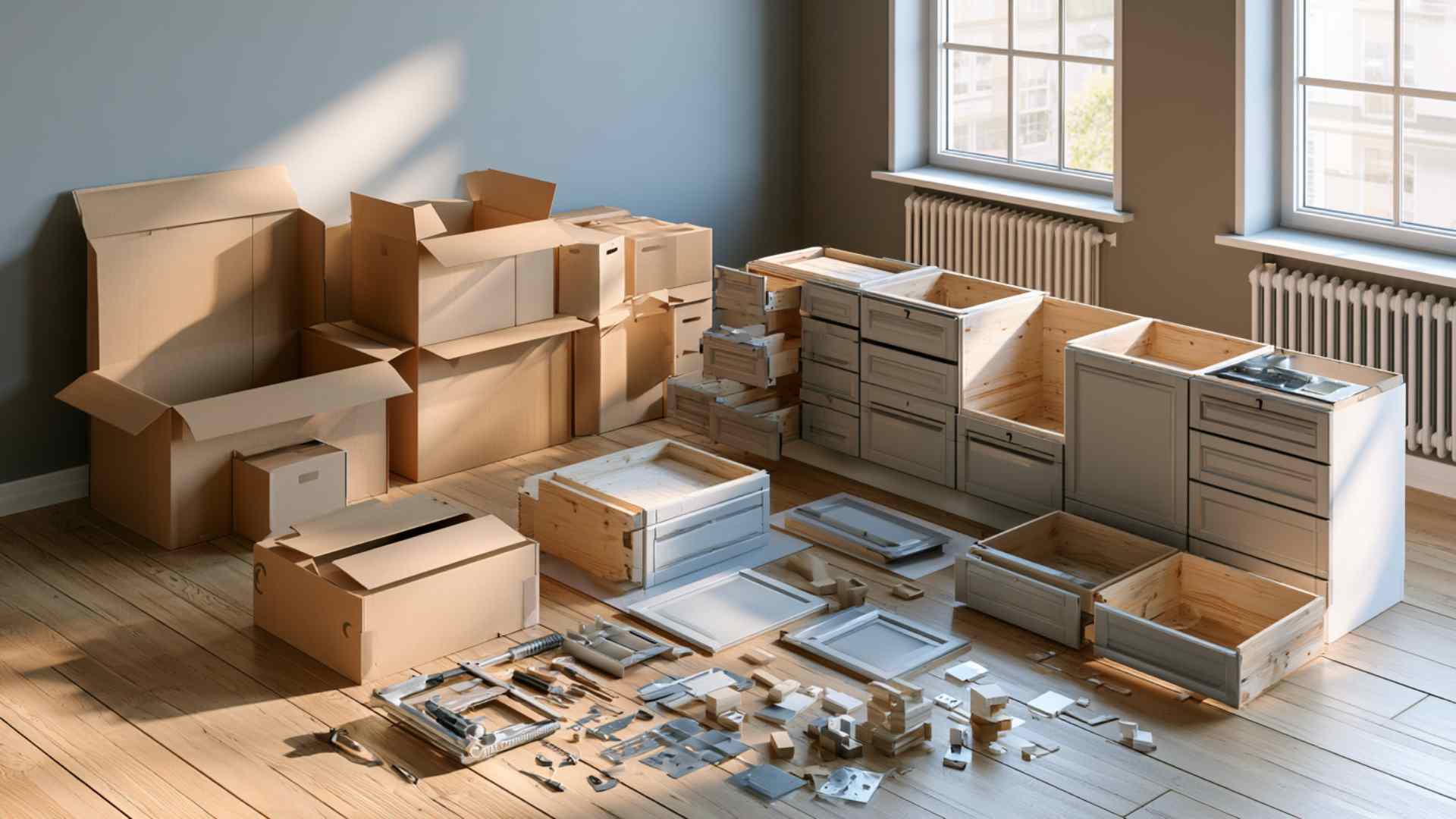
Ready-to-assemble cabinets ship flat-packed and require on-site assembly before installation. They cost less than pre-assembled stock cabinets because shipping flat boxes reduces freight expenses.
Quality varies widely across manufacturers, so checking box material and hardware quality before ordering matters. For confident DIYers, RTA cabinets offer a genuine way to stretch a remodel budget further.
| Pros | Cons |
|---|---|
| Low-cost option | Assembly required |
| Easy to ship and transport | Quality varies by brand |
| Good for DIY projects | Can take time to install properly |
Matching installation style to your budget and timeline upfront prevents costly surprises and ensures cabinets fit your space properly.
Types of Cabinets Based on Design Style
Cabinet door style shapes the entire visual personality of a kitchen or bathroom more than almost any other single design decision.
14. Shaker Cabinets
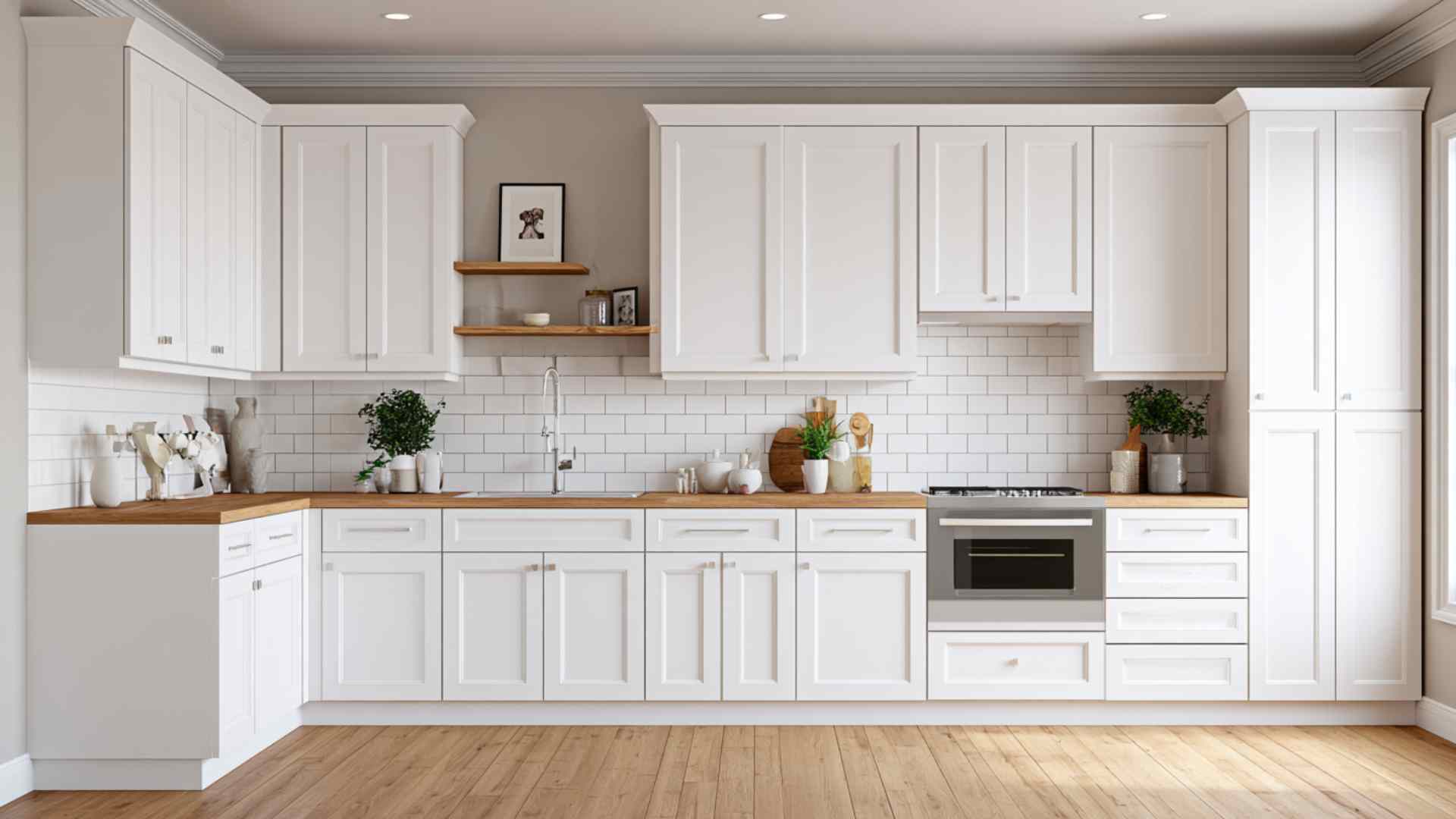
Shaker cabinets feature a five-piece door with a flat recessed center panel framed by four straight rails and stiles.
Their clean lines work across traditional, transitional, farmhouse, and modern interiors. They take paint and stain equally well, giving you broad flexibility with color and finish choices.
| Pros | Cons |
|---|---|
| Timeless, versatile style | Very common design |
| Works in modern and traditional kitchens | Can feel plain in luxury builds |
| Easy to maintain and repaint | Shows dirt in grooves over time |
15. Flat Panel Cabinets
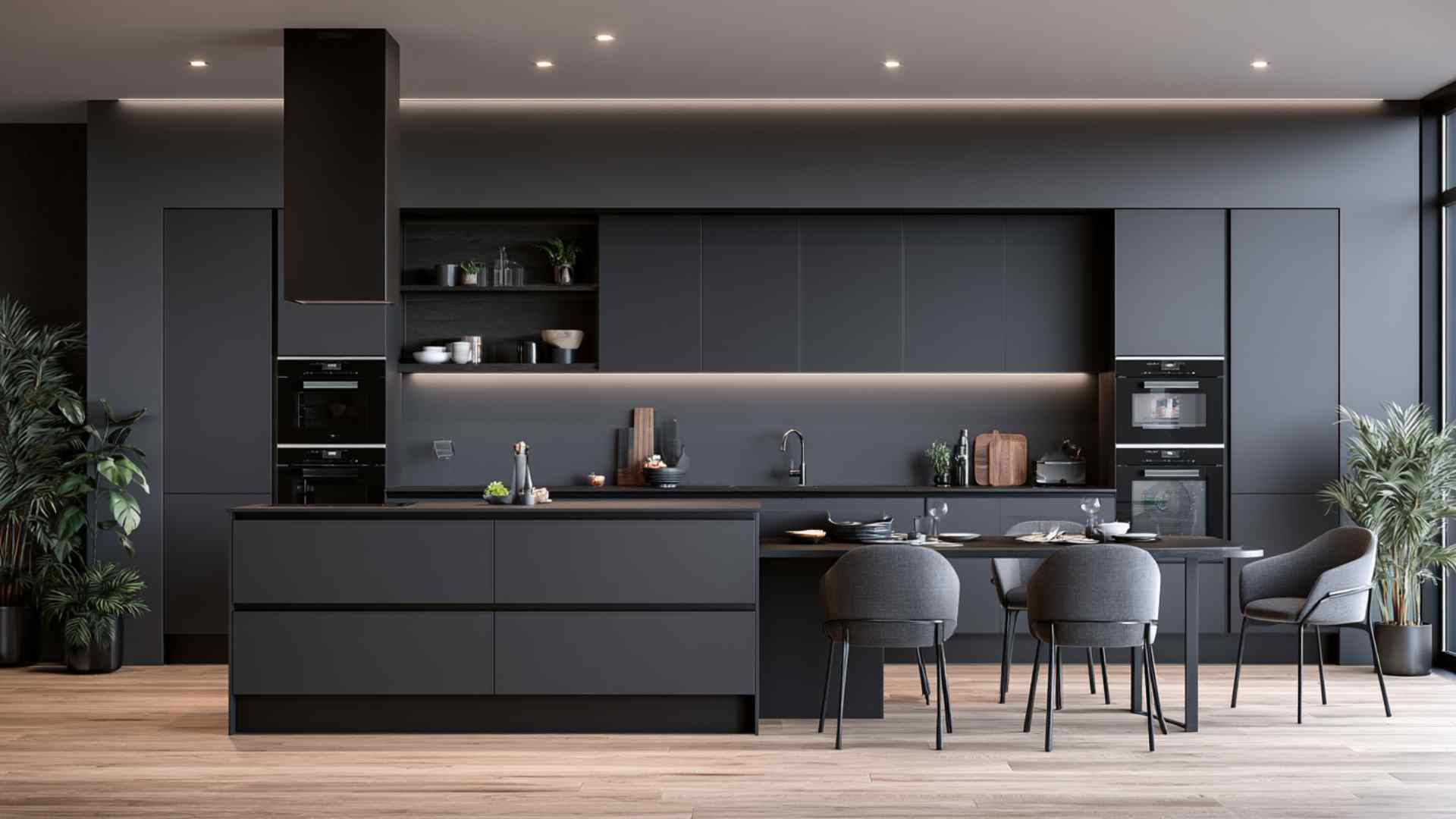
Flat-panel cabinets, also called slab cabinets, feature a single smooth door surface with no frame, groove, or raised detail.
The result is a minimal, seamless look that suits contemporary and European-style kitchens. They are easy to wipe clean and pair well with integrated hardware or handleless push-to-open systems for a completely uninterrupted surface.
| Pros | Cons |
|---|---|
| Clean, modern aesthetic | Fingerprints more visible |
| Easy-to-clean surface | Less decorative appeal |
| Works well in minimalist kitchens | Can feel too plain for traditional homes |
16. Raised Panel Cabinets
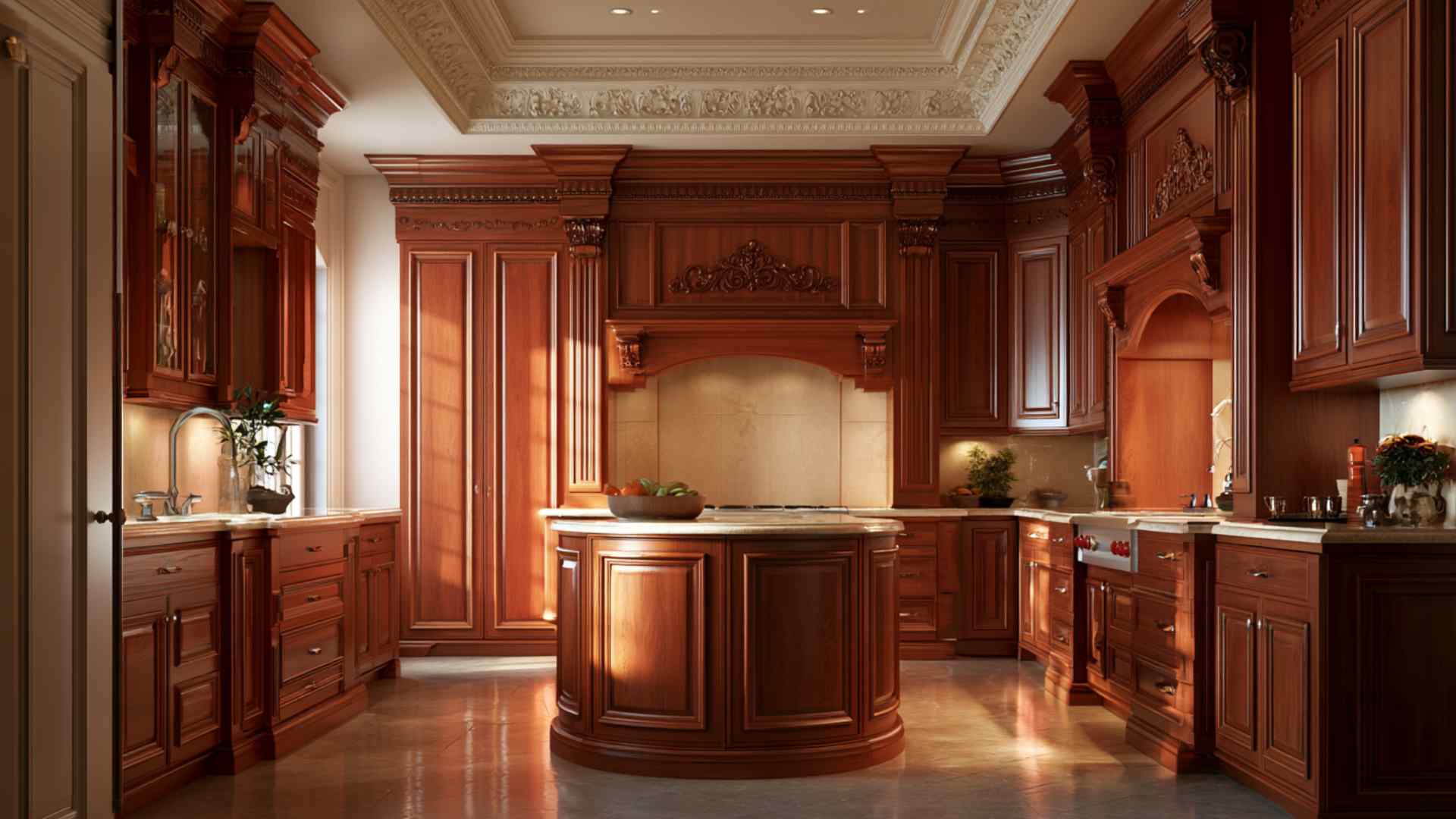
Raised panel cabinets have a center panel that sits higher than the surrounding frame, creating visible depth and a layered, three-dimensional appearance.
Almost always crafted from solid wood, they suit traditional, formal, and classic interiors where decorative detailing is intentional. Intricate profiles and carved molding options make them the most ornate standard style available.
| Pros | Cons |
|---|---|
| Elegant, classic design | Harder to clean carved areas |
| Adds depth and detail | More expensive craftsmanship |
| Strong resale appeal in traditional homes | Not suitable for modern minimal interiors |
17. Glass-Front Cabinets
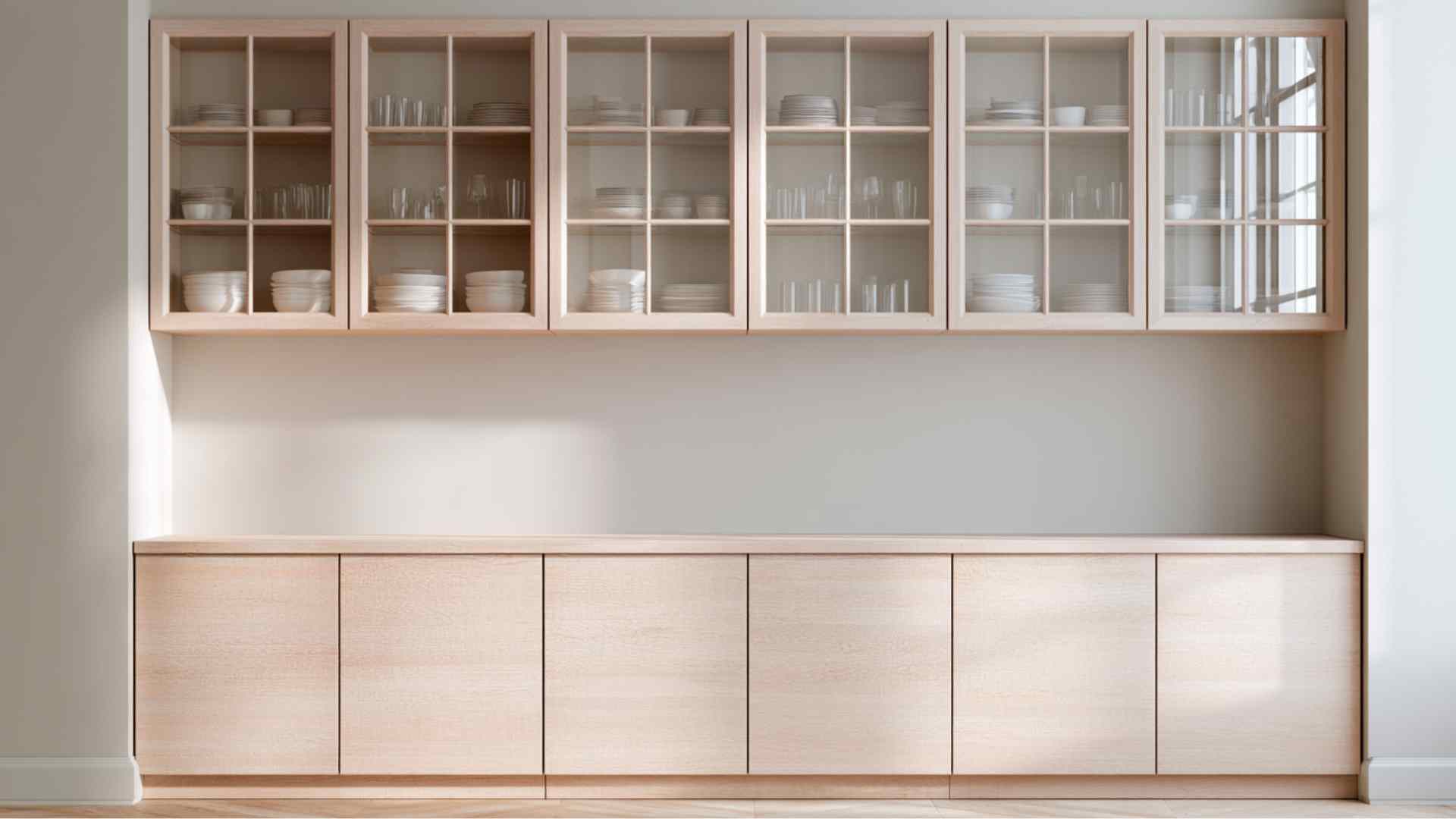
Glass-front cabinets replace the solid door panel with a glass insert, adding visual lightness and a display opportunity to upper wall units.
Clear glass offers full visibility, frosted glass diffuses light softly, and reeded or seeded glass adds texture with partial privacy. They work best paired with solid lower cabinets to balance openness with practical concealed storage.
| Pros | Cons |
|---|---|
| Visually lightens the kitchen space | Requires constant organization |
| Great for display storage | Items are always visible |
| Adds decorative appeal | Glass needs regular cleaning |
18. Beadboard Cabinets
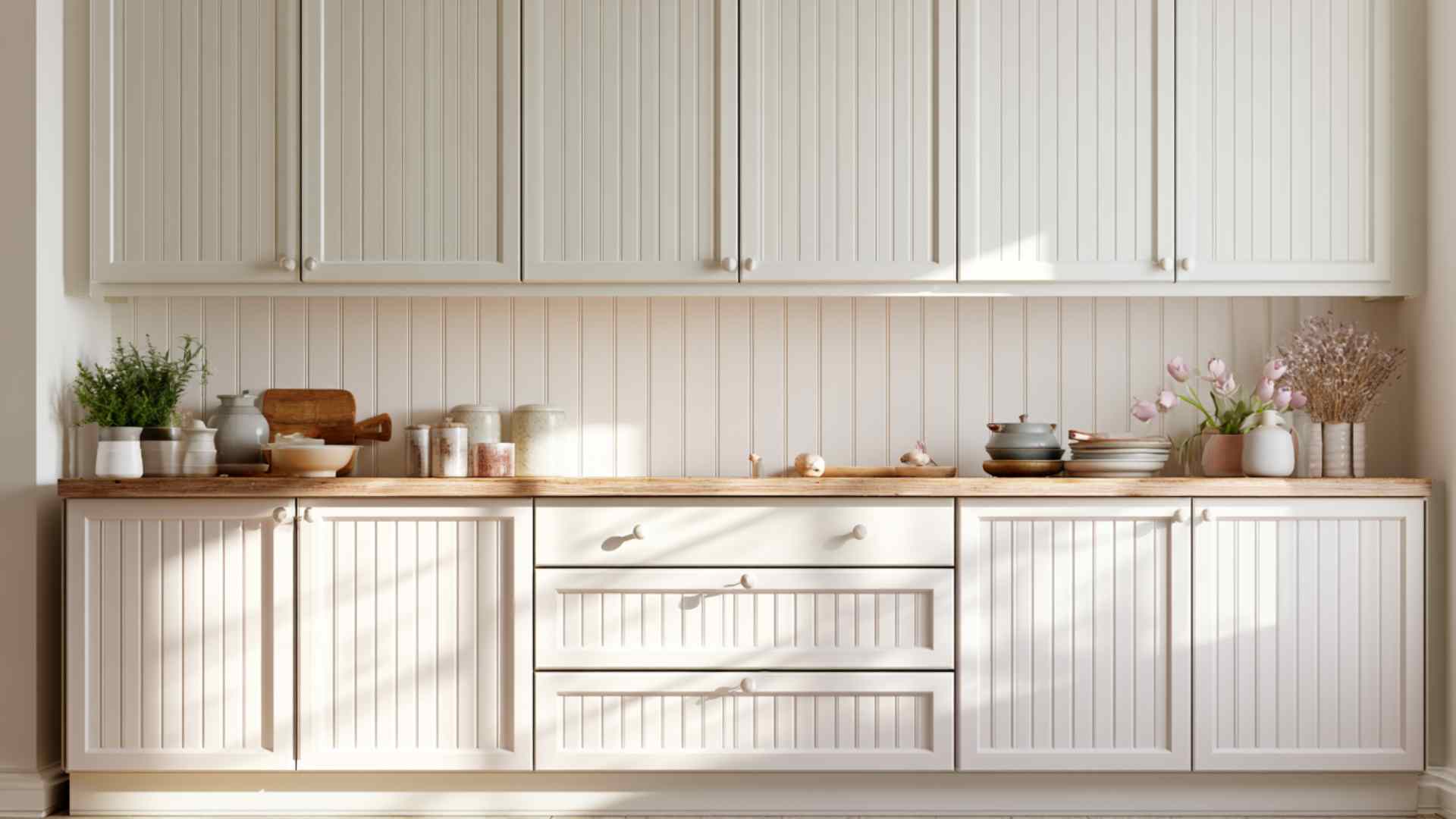
Beadboard cabinets feature vertical grooved paneling on the door face, creating a textured, cottage-style appearance that adds warmth and character.
The pattern references traditional wainscoting and works especially well in farmhouse, coastal, and country-style kitchens. Painted white or soft neutrals, they add visual interest without the formality of raised-panel designs or the starkness of flat-slab doors.
| Pros | Cons |
|---|---|
| Warm, textured appearance | Grooves collect dust |
| Ideal for farmhouse and coastal styles | Can feel too themed for modern homes |
| Adds character to simple kitchens | Harder to refinish or repaint evenly |
Choosing a door style that fits your overall design direction keeps the finished space looking intentional, cohesive, and well-considered throughout.
Framed vs. Frameless Cabinets: What Is the Difference?
Beyond door styles, one of the most important structural choices you will make is whether to go with framed or frameless cabinet construction.
| Feature | Framed Cabinets | Frameless Cabinets |
|---|---|---|
| Construction | A solid wood face frame is attached to the front of the cabinet box. | No face frame; doors attach directly to the cabinet box. |
| Appearance | More traditional with visible framing around doors. | Sleek, modern, European-style appearance. |
| Storage Space | Slightly smaller opening due to the face frame. | Wider cabinet opening with easier access. |
| Strength | Extra rigidity from the face frame. | Relies on a thicker cabinet box for strength. |
| Best For | Traditional, farmhouse, and transitional kitchens. | Modern, contemporary, and minimalist kitchens. |
Door overlay styles affect appearance, cost, and craftsmanship. Once you lock in the overlay, where hardware goes becomes your next decision, since pull placement shifts depending on whether you have inset, partial, or full overlay doors.
Common Cabinet Features Worth Considering
The right cabinet features can improve storage, organization, and daily convenience. Here are the most useful upgrades to consider before buying.
- Soft-Close Hinges: Prevent doors from slamming shut, reducing noise, minimizing hinge wear, and extending cabinet life while creating a smoother, more premium everyday experience.
- Soft-Close Drawer Slides: Allow drawers to close gently without force, protecting the cabinet structure while making heavy drawers easier, quieter, and safer to use daily.
- Pull-Out Shelves: Sliding shelves bring items at the back into easy reach, improving accessibility and reducing the need to bend or reach into storage.
- Full-Extension Drawers: These drawer slides extend completely outward, giving full visibility and access to contents, making storage more practical and eliminating wasted space.
- Adjustable Shelves: Shelves can be repositioned to fit cookware, pantry items, or decorative pieces, allowing storage to adapt as your household needs change.
- Built-In Organizers: Features like spice racks, tray dividers, utensil inserts, and trash pull-outs maximize storage efficiency while keeping frequently used items neatly organized.
Choosing practical cabinet features improves everyday functionality, increases storage efficiency, and helps your cabinets remain convenient, organized, and durable for years.
Cabinet Materials Quick Reference
Cabinet materials affect durability, price, moisture resistance, and appearance. Here is a straightforward breakdown of all the materials you will encounter while shopping.
| Material | Durability | Moisture Resistance | Cost | Best Use |
|---|---|---|---|---|
| Solid wood | Very high | Moderate | High | Traditional, high-end kitchens |
| Plywood | High | Good | Moderate | Cabinet boxes, all rooms |
| MDF | Moderate | Low | Low – Moderate | Painted cabinet doors |
| Wood veneer | Moderate – High | Moderate | Moderate | Affordable wood-look cabinets |
| Laminate | High | Very good | Low – Moderate | Modern kitchens, bathrooms |
| Thermofoil | Low | Moderate | Low | Budget projects, laundry rooms |
Pro Tip: Always look for plywood cabinet boxes, not particleboard, when choosing semi-custom or custom cabinets. Plywood holds screws far better over time, which matters most for hinges and drawer slides after years of daily use.
Common Cabinet Buying Mistakes to Avoid
Even experienced homeowners make avoidable errors when buying cabinets. Here are the most common mistakes to watch out for before you place an order or sign a contract.
- Not Ordering Finished Samples First: Cabinet colors look dramatically different in a showroom versus your actual kitchen. Always request physical samples and hold them up in the room at different times of day before finalizing your finish choice.
- Choosing Style Before Function: Glass-front cabinets look stunning but require near-constant tidying. Distressed finishes hide wear beautifully but may not suit a high-end home’s resale profile.
- Ignoring Lead Times: Semi-custom cabinets take 4 to 8 weeks, and custom cabinets take 8 to 12 weeks or more. Ordering too late can stall your entire renovation.
- Using MDF in High-Moisture Rooms: Standard MDF swells, warps, and degrades quickly in bathrooms, laundry rooms, and near dishwashers. Always confirm the cabinet box material before purchasing.
- Buying Stock Cabinets for Non-Standard Spaces: Stock cabinets come in fixed 3-inch increments. If your kitchen layout is not standard, stock cabinets will leave awkward gaps that require filler strips, which look cheap and waste wall space. In that situation, semi-custom or custom is worth the extra cost.
Avoiding common cabinet mistakes saves money, time, and frustration while ensuring better fit, durability, and design decisions that support long-term kitchen functionality and value.
The Bottom Line
There are many cabinet options out there, and the sheer number of choices can feel overwhelming.
But once you understand how cabinets are classified by build grade, room, and door style, the decision-making process becomes far more manageable.
Whether you are renovating a kitchen, refreshing a bathroom, organizing a home office, or building out a garage workshop, there is a cabinet type built for exactly what you need.
Use the breakdowns, comparison tables, and decision steps in this guide as your starting point before heading to any showroom or clicking buy. The right cabinet is out there; you just need to know what you are looking for.
Frequently Asked Questions
What Are the Four Basic Types of Kitchen Cabinets?
The four basic types are base cabinets, wall (upper) cabinets, tall pantry cabinets, and specialty cabinets like corner units, appliance garages, and sink fronts.
What Is the Difference Between Stock and Custom Cabinets?
Stock cabinets are pre-made in fixed sizes and ship in 1 to 2 weeks at a lower cost. Custom cabinets are built to your exact specifications with full design freedom, but take 8 to 12 weeks.
What Type of Cabinet Is Best for a Small Bathroom?
Floating wall-mounted vanity cabinets, recessed medicine cabinets, and corner cabinets work best. They maximize storage while keeping the floor open and the room feeling larger